Country music is all about place. Songs and locale, joined together. It’s a relationship so ubiquitous within the music we often lose sight of it, forest for the trees. But there would be no country music without… well, the country – or without rural places and their communities; without farms and ranches; without Texas or California; without Appalachia or the Southeast. Country also wouldn’t exist without urban centers, and the country folks who migrated to cities to find work, or reunite with their families, or build a better life. Even in concrete jungles seemingly divorced from country ideals, whether drawn by homesickness or nostalgia or longing for home – real or imagined or aspirational – country music and place always go hand-in-hand.
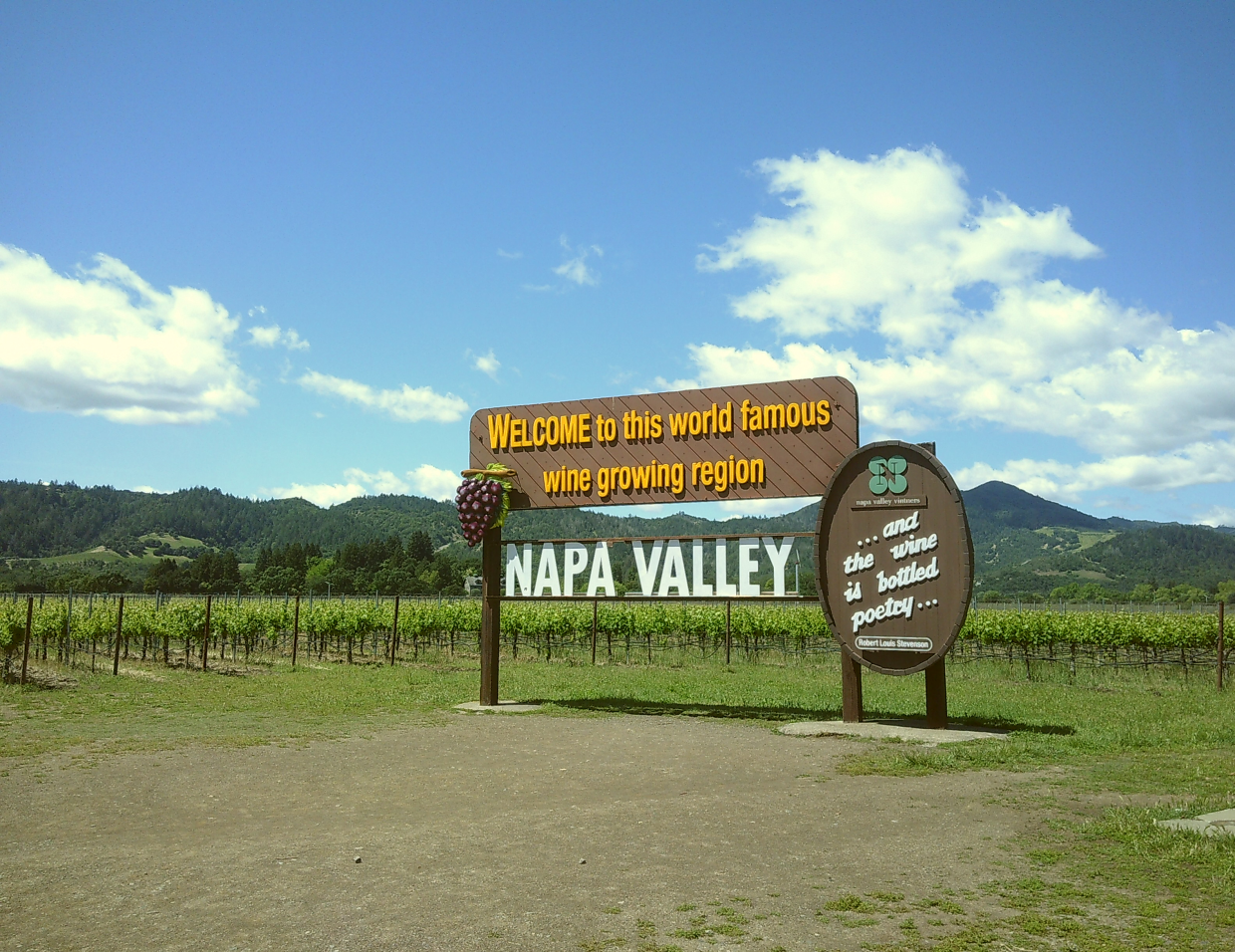
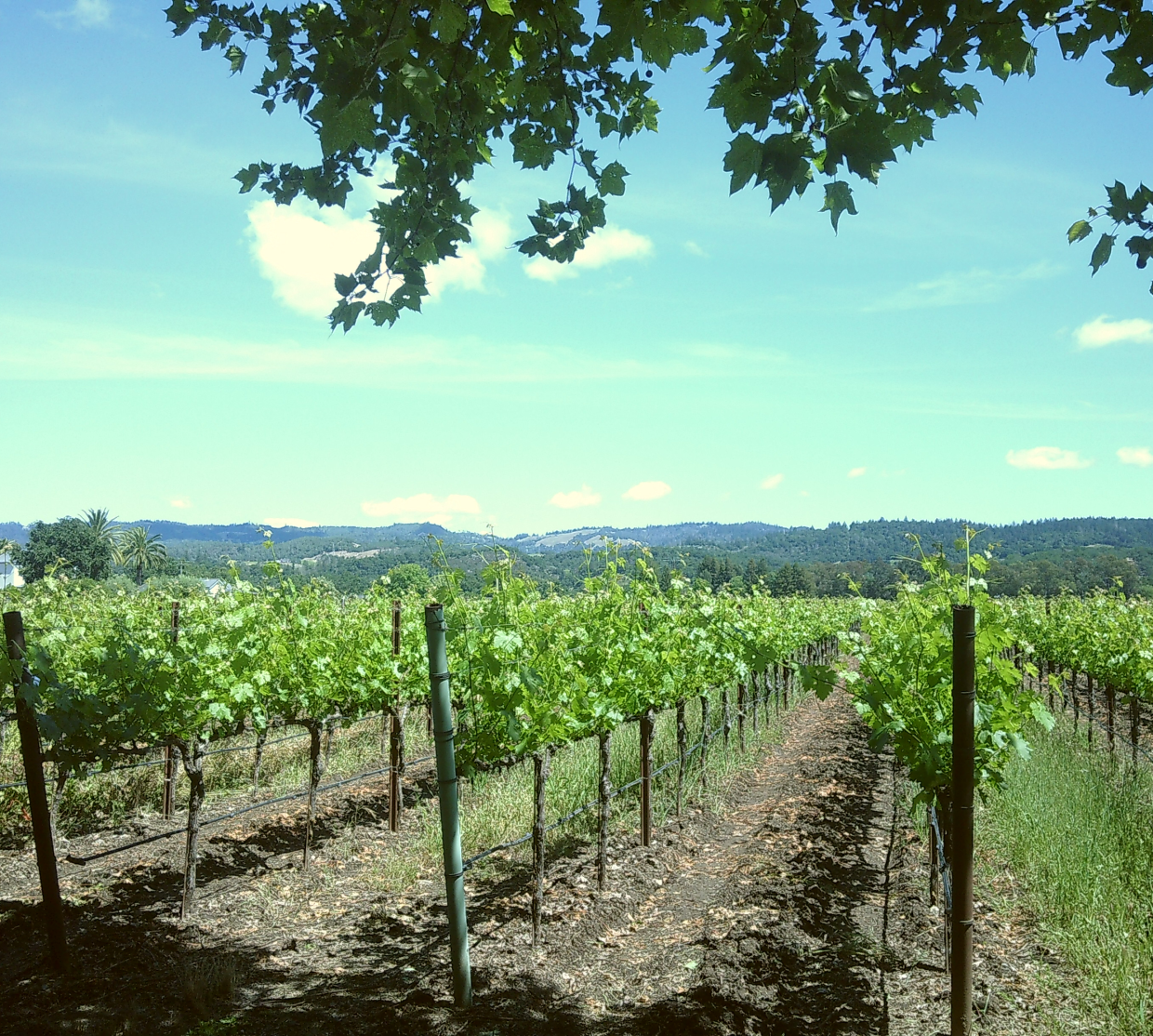
Lucky for all of us, this is a genre well-suited for a variety of places, from honky-tonks to front porches to internationally appealing festivals. Or even Napa Valley, California, vineyards.
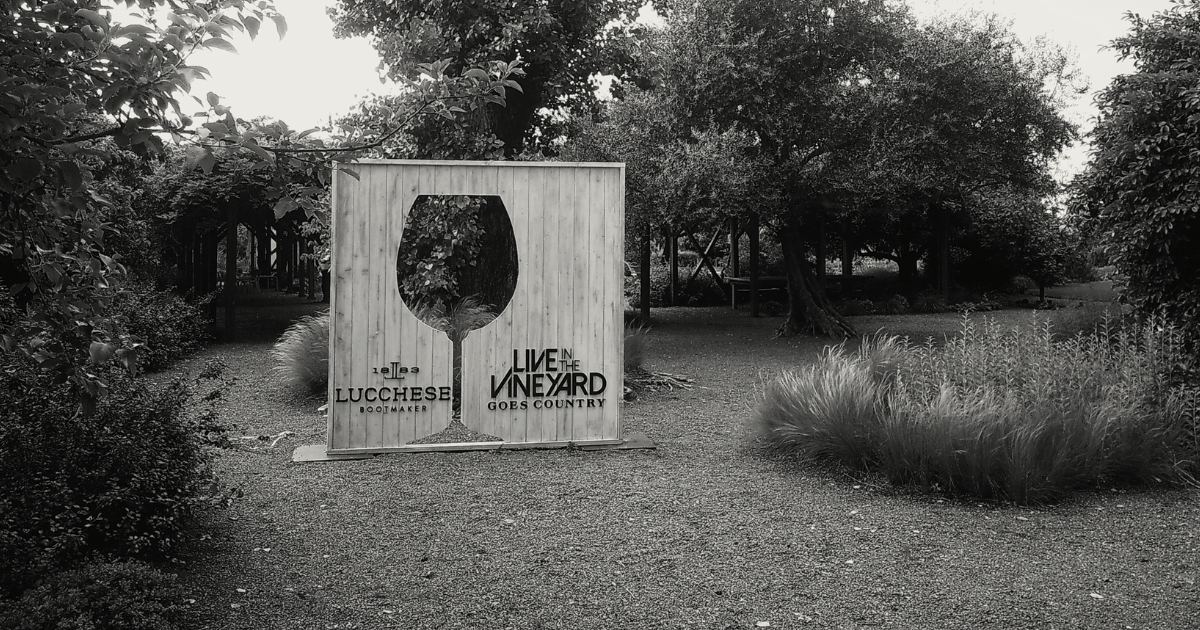
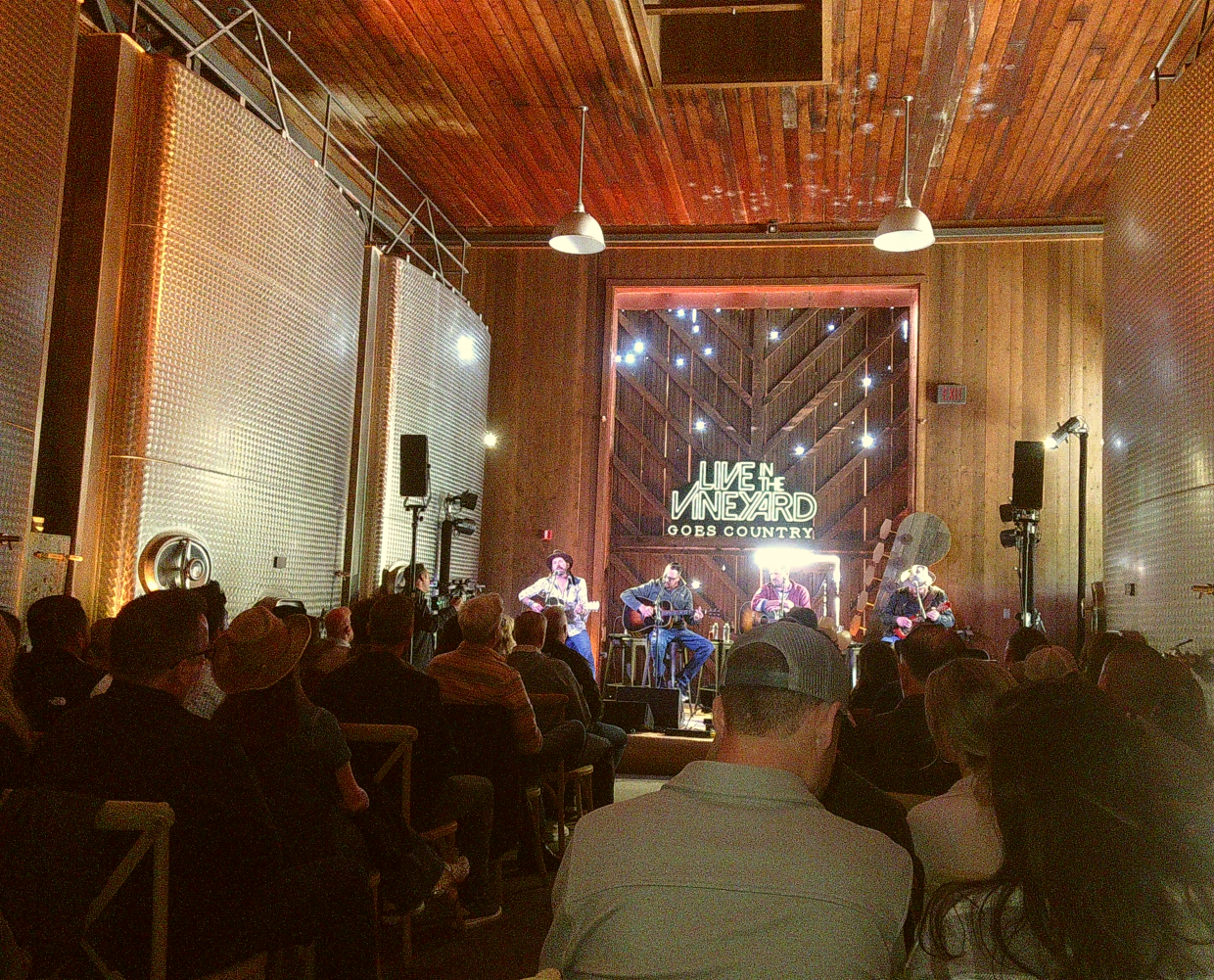
Last month, we attended Live in the Vineyard Goes Country, a production of Austin, Texas’s Forefront Networks, an intimate three-day event that effortlessly denoted and celebrated that relationship between country and place. Guests, industry professionals, and country artists – from festival headliners to fresh discoveries – gathered at gorgeous locations on April 21, 22, and 23, throughout Napa and Napa Valley to enjoy stripped-down and essential performances, gourmet farm-to-table meals, delicious organic and biodynamic wines, and the lovely weather, views, and settings of California’s wine country. The eighth installment of the country edition of Live in the Vineyard, it showcased the genre with an elite yet still approachable level of quality, care, and intention.
Guests enjoyed a welcome reception featuring Jackson Dean, Lauren Watkins, and Chandler Walters on day one, sipping bubbles at Chandon in Yountville during golden hour. From there, separate groups of attendees were sorted into waiting coaches to be swept off to dinner for delicious food paired exquisitely with local wines – and still more small, up-close-and-personal musical performances. Our green group dinner, for instance, were treated to hilarious and touching stories and songs shared by Lauren Watkins and her husband, hit songwriter Will Bundy, at Cakebread Cellars over jaw-droppingly delicious chardonnay and perfectly lacquered short ribs.
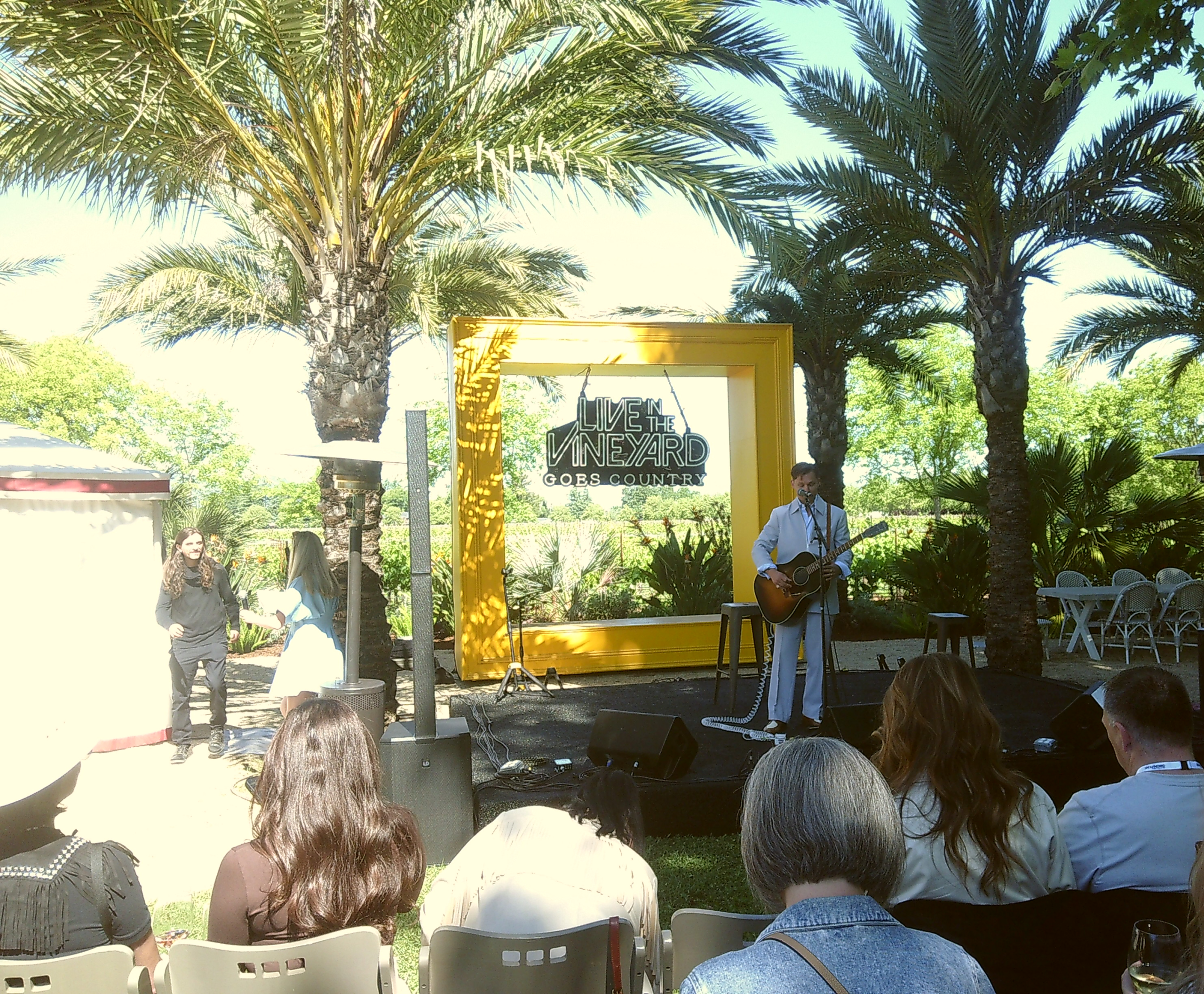
The sun shines on Raymond Vineyards on day three of Live in the Vineyard Goes Country.
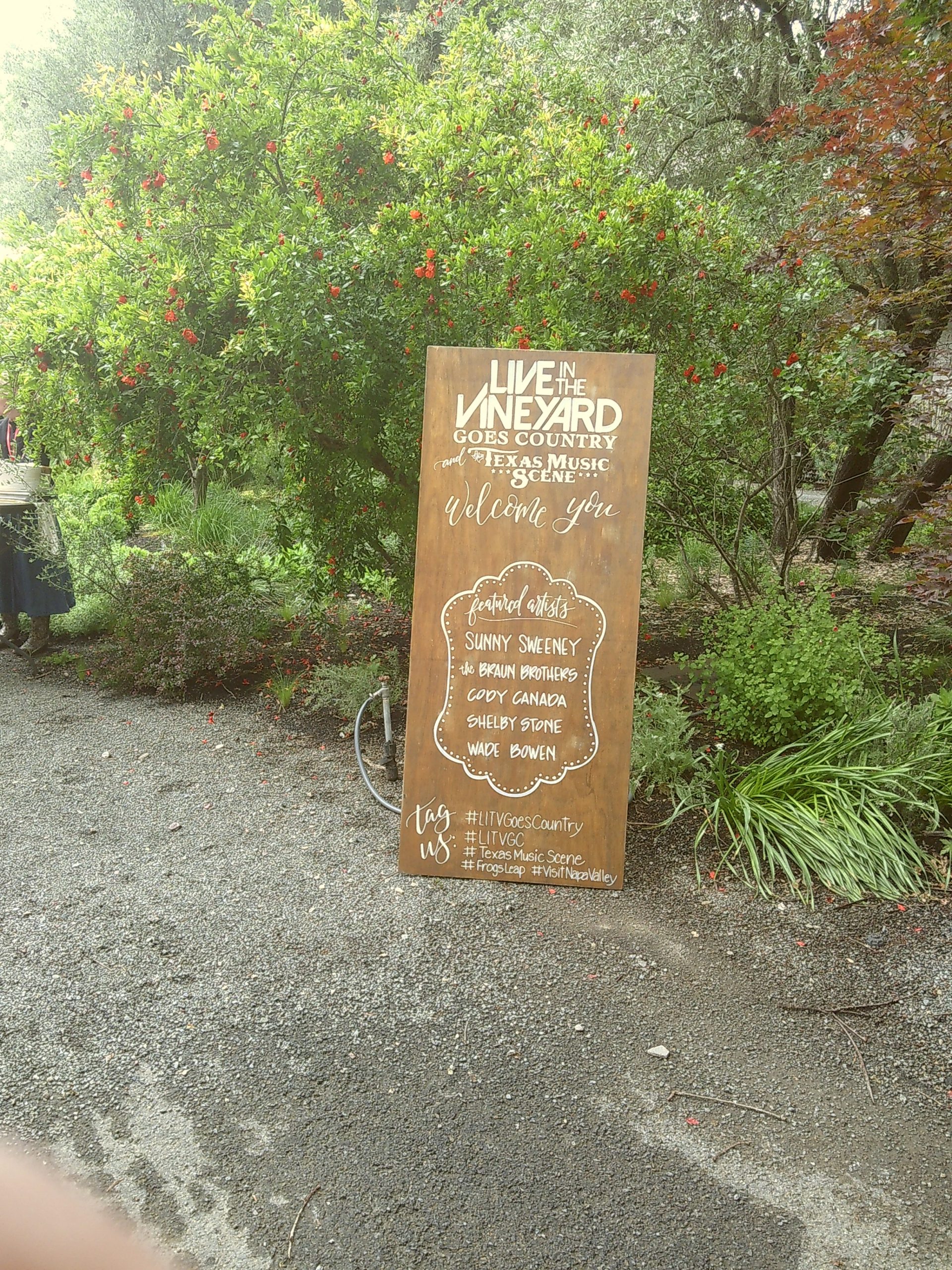
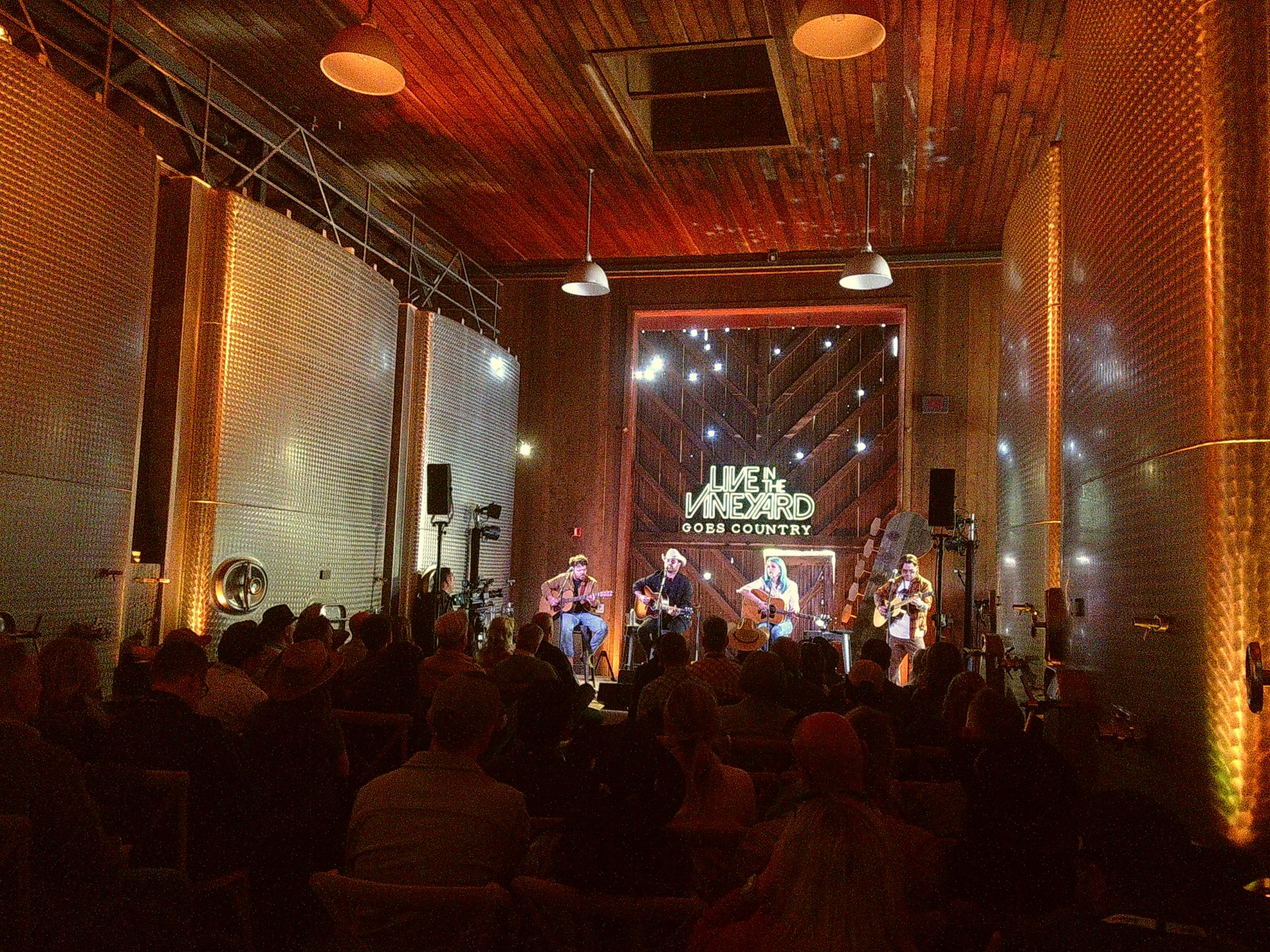
Though days one and two were punctuated with bursts of spring rain, throwing a logistical wrench into the works, the Forefront and LITV teams reacted with grace and ease, allowing attendees to relish the rarity of rainfall in Napa Valley without a second thought, and increasing the magical feeling of country music and country people basking in such a space. Day two began with the Texas Music SceneTailgate, featuring performances by Sunny Sweeney, the Braun Brothers, and a songwriter round including Wade Bowen, Shelby Stone, and Cody Canada. During the live taping for Texas Music Scene’s long-running TV series, guests relaxed between sets by strolling the grounds, eating fresh Napa-grown produce, enjoying complimentary wines and sweets, and ducking in and out of the Frog’s Leap Winery barn to catch country songs sung amid the bright brass vats.
The Braun Brothers (L to R: Micky, Gary, Willy, and Cody)– known from Micky & the Motorcars and Reckless Kelly – swap songs and stories while performing at Frog’s Leap Winery for the ‘Texas Music Scene’ Tailgate.
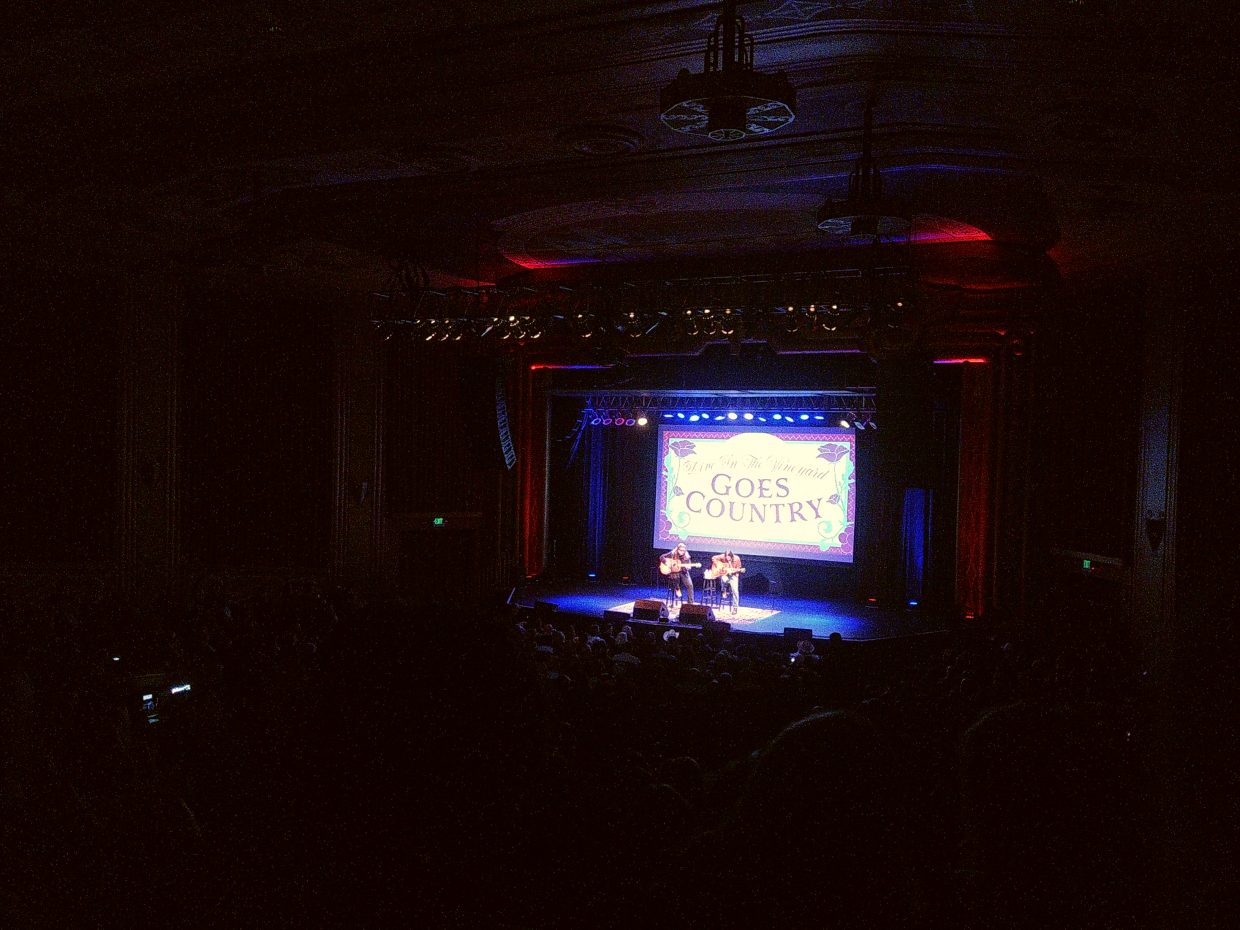
On the evening of day two, the entire Live in the Vineyard Goes Country entourage traveled together to the Uptown Theatre in gorgeous downtown Napa for the headline show of the event, featuring sets by Abbie Callahan, Alex Lambert, and Marcus King. Once again performing in pared-down, intimate setups for the around 800-seat venue, the crowd was nevertheless animated and engaged, hooting and hollering as if they were polishing the floorboards for rowdy, full-band sets on a stage wrapped in chicken wire, rather than a gilded theatre in wine country. Even in as manicured and lovely a location as Napa Valley, the old saying holds: You can take the folks out of the country, but you can’t take the country out of the folks!
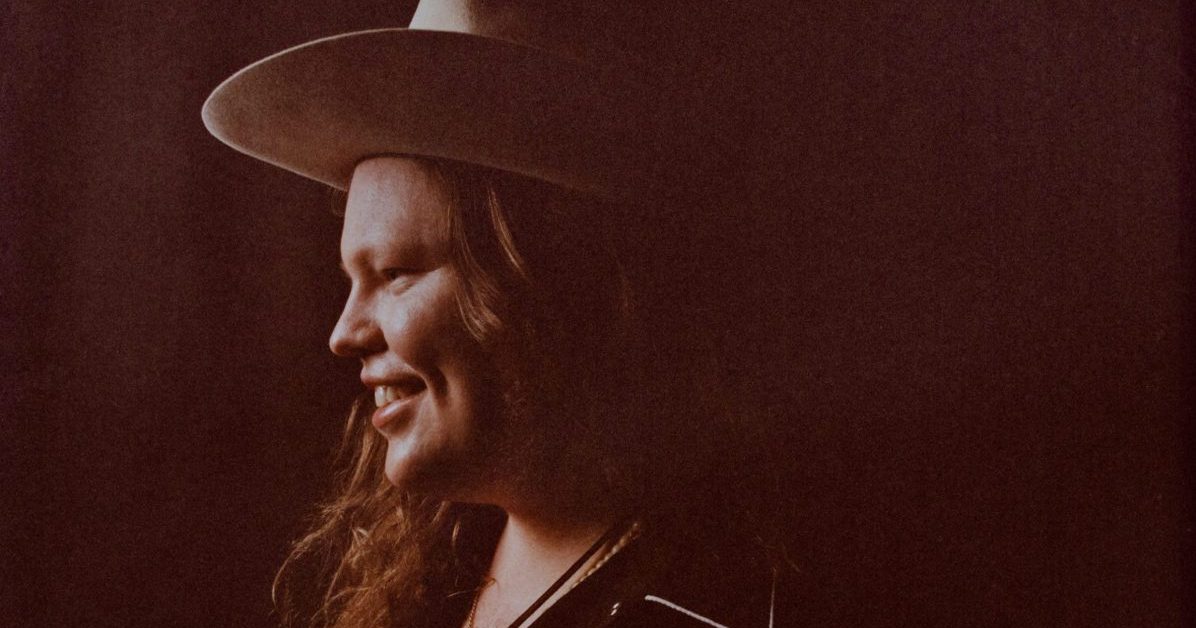
Marcus King performs for the Uptown Theatre audience at Live in the Vineyard Goes Country.
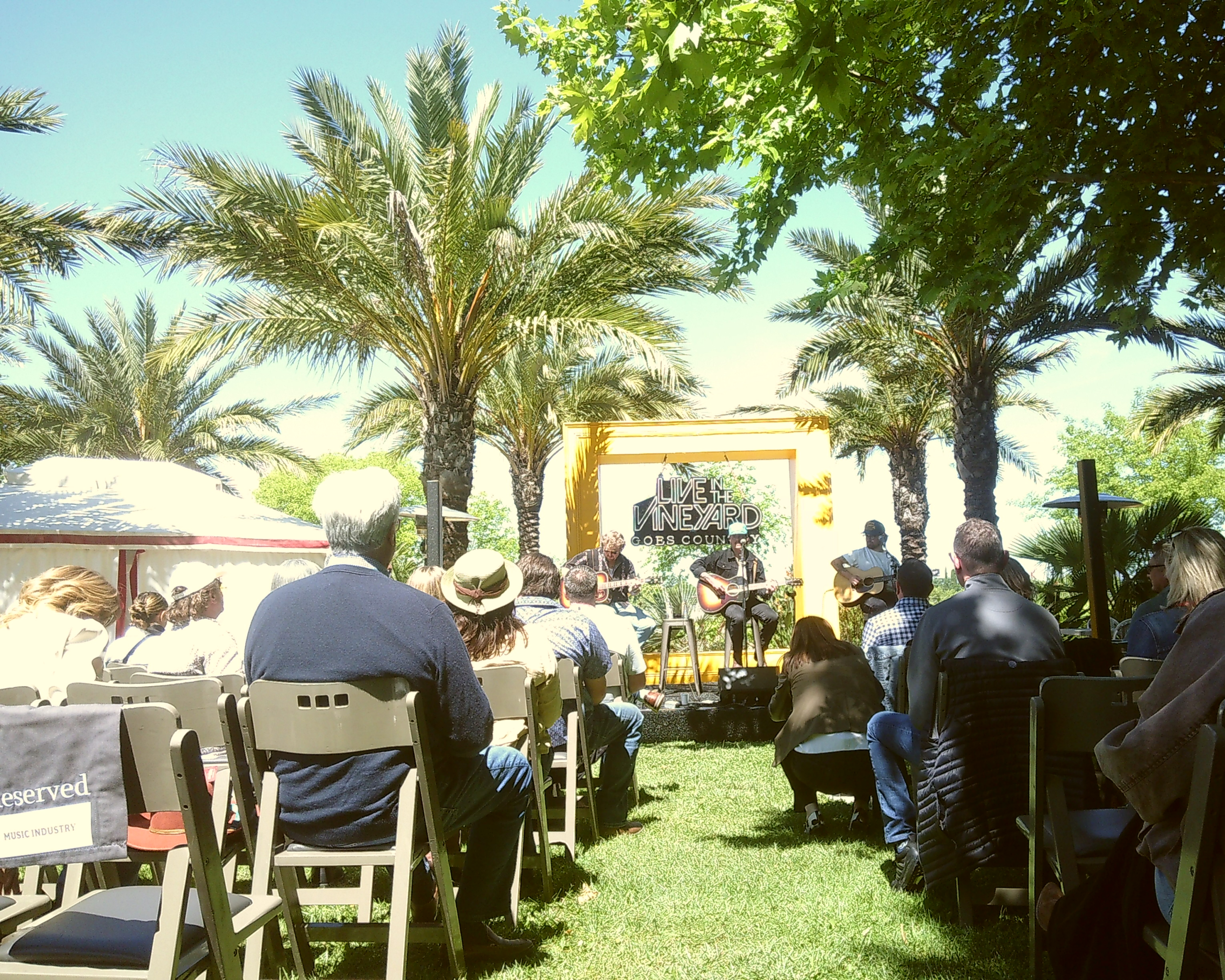
On day three, already feeling like Live in the Vineyard was much too short, attendees gathered at Raymond Vineyards in St. Helena, California, for one final hoorah, a lovely send-off brunch featuring a mimosa bar, lemon-blueberry pancakes, JCB Wines, and performances by Frankie Ballard and Zach John King. In the shade of palm trees and snacking on scratch-made frittatas, it was clear – from start to finish – that Live in the Vineyard Goes Country gives this genre, the folks who make it, and the fans who love it the treatment they all deserve. Yes, country is made for barn dances and radio shows and flatbed trailers in pastures, but isn’t it made for Napa Valley, too? For barns aging fine wine, for farms growing gourmet salads, luxurious wines, and handmade breads?
Country is a music for everyone, for every setting, and for every place imaginable. The GC team was excited to be on hand for Live in the Vineyard Goes Country 2026, capturing lo-fi photos with our trusty Camp Snap camera and reflecting on how delicious country music can be when it’s made with this level of intention and care in a beautiful setting such as this. Scroll to enjoy even more photos and dispatch notes from our trip with LITV to Napa Valley.
A little rain and a few puddles won't deter Live in the Vineyard! The clouds cleared just in time for the fun to begin.
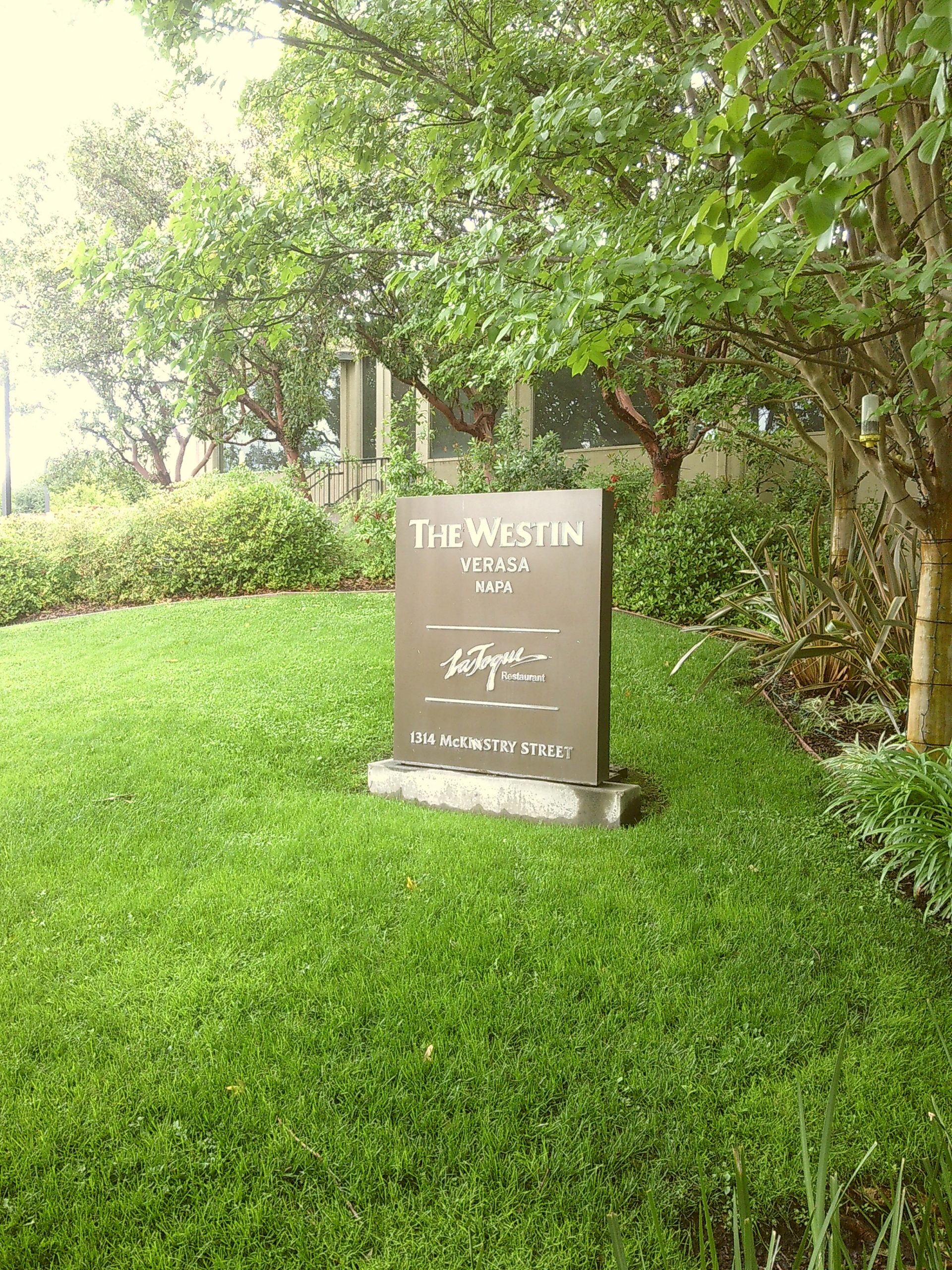
Attendees were accommodated at the beautiful Westin Verasa Napa, a short walk from downtown and steps away from the Napa Valley Wine Train, Oxbow Public Market, the riverwalk, and more.
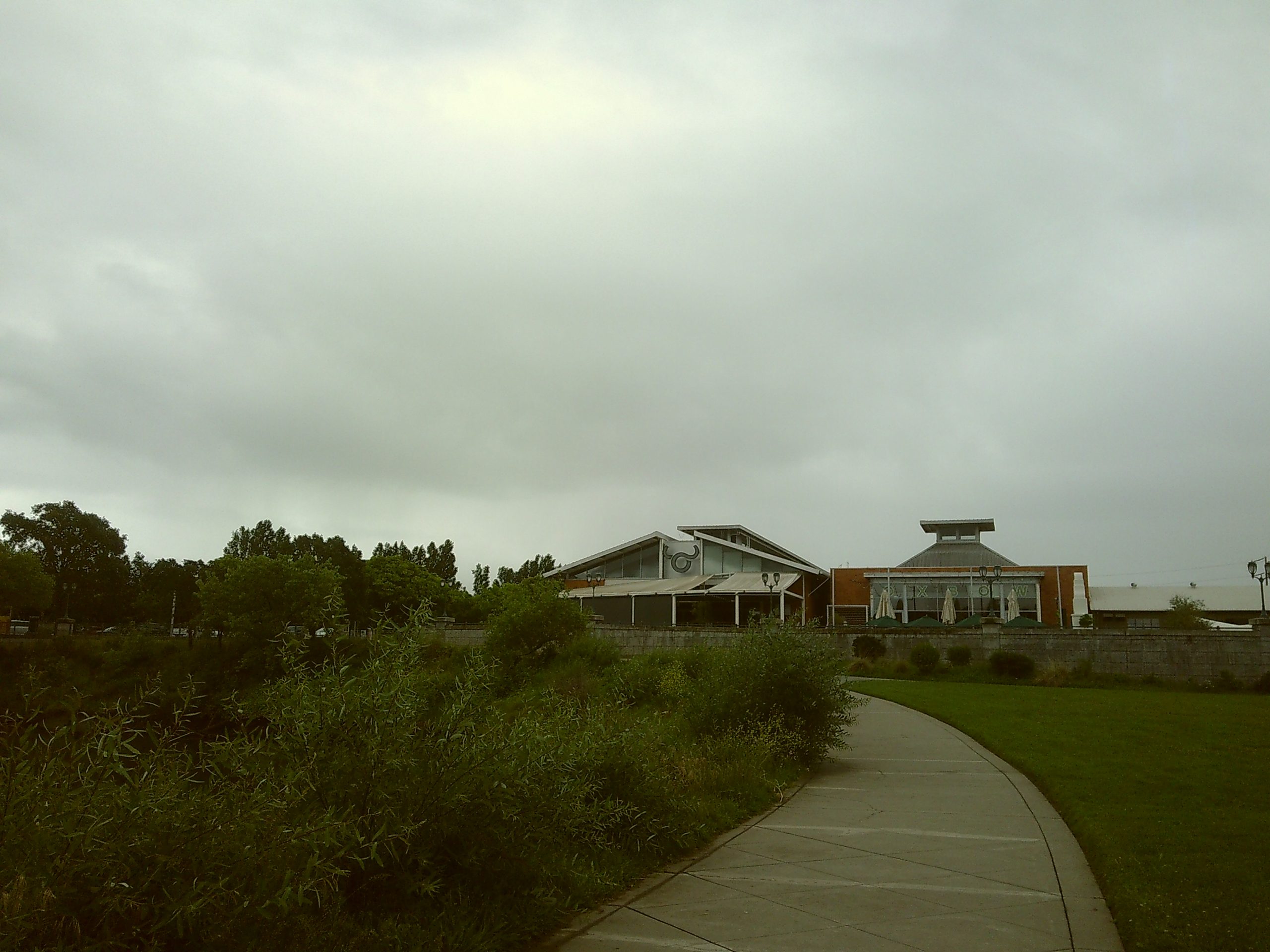
A view of the Westin Verasa Napa and the Napa River from Oxbow Commons.
The Napa River, lovely under overcast skies.
Oxbow Public Market, which features many excellent food and beverage vendors.
The Napa Valley Wine Train, a huge attraction for tourists and visitors exploring this fertile country.
The Napa Valley Wine Train waits to depart, on a bridge overlooking Oxbow Commons.
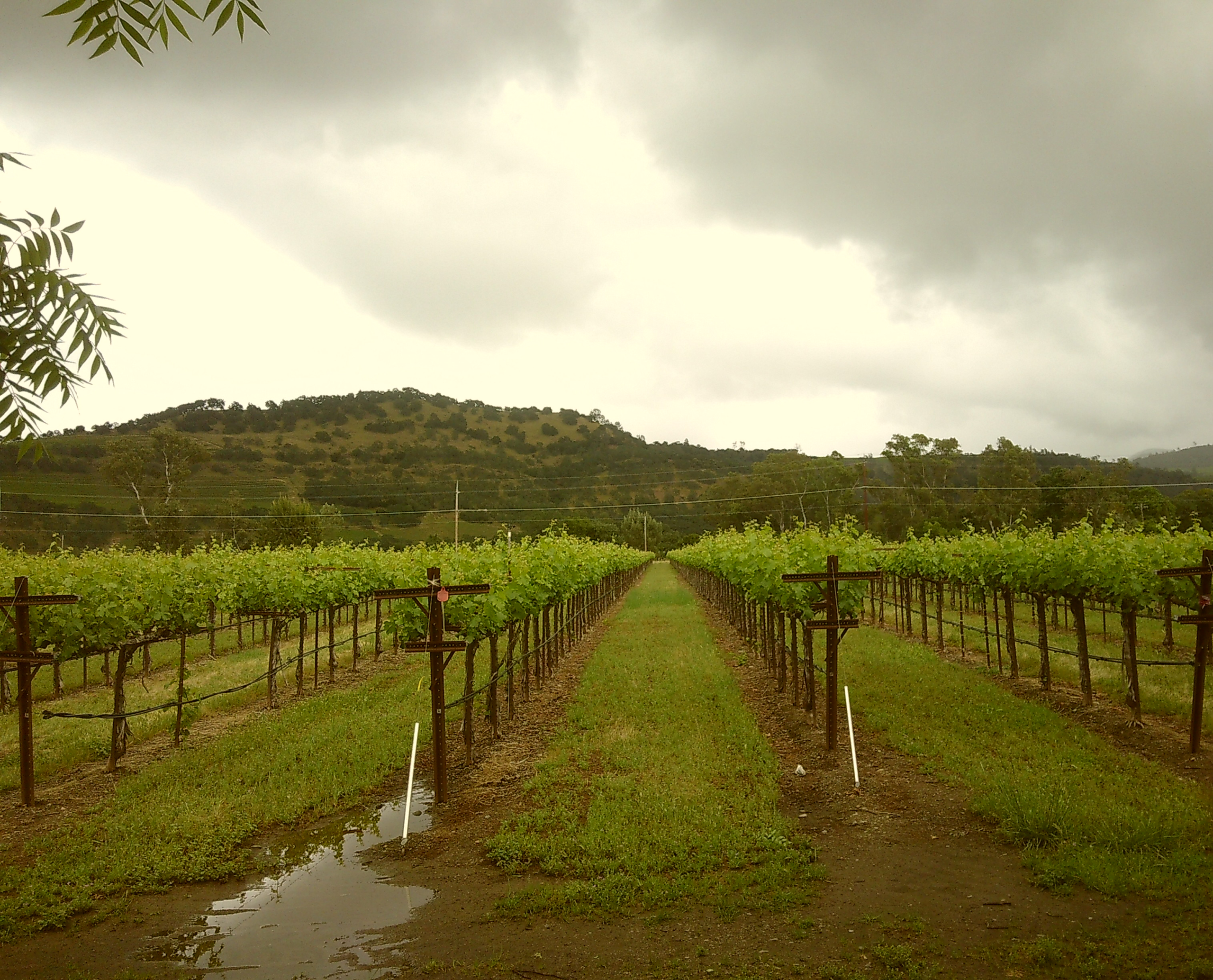
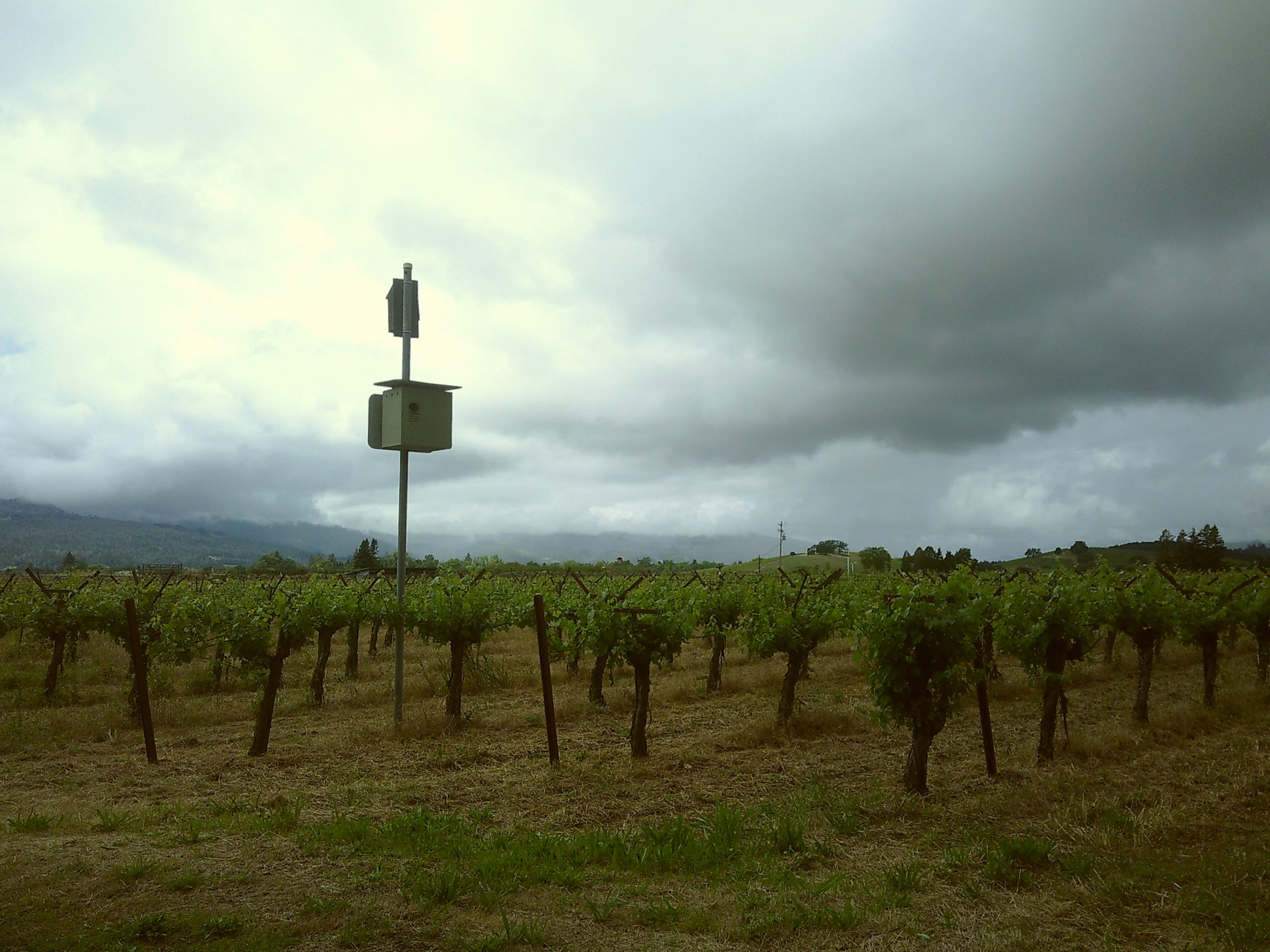
Vineyards beneath gray skies at Frogs Leap Winery in Rutherford, CA.
The stellar lineup for 'Texas Music Scene' Tailgate to kick-off day two of Live in the Vineyard.
Calendula and sweet alyssum in bloom, California spring in full force. The gardens at each location and winery were stunning.
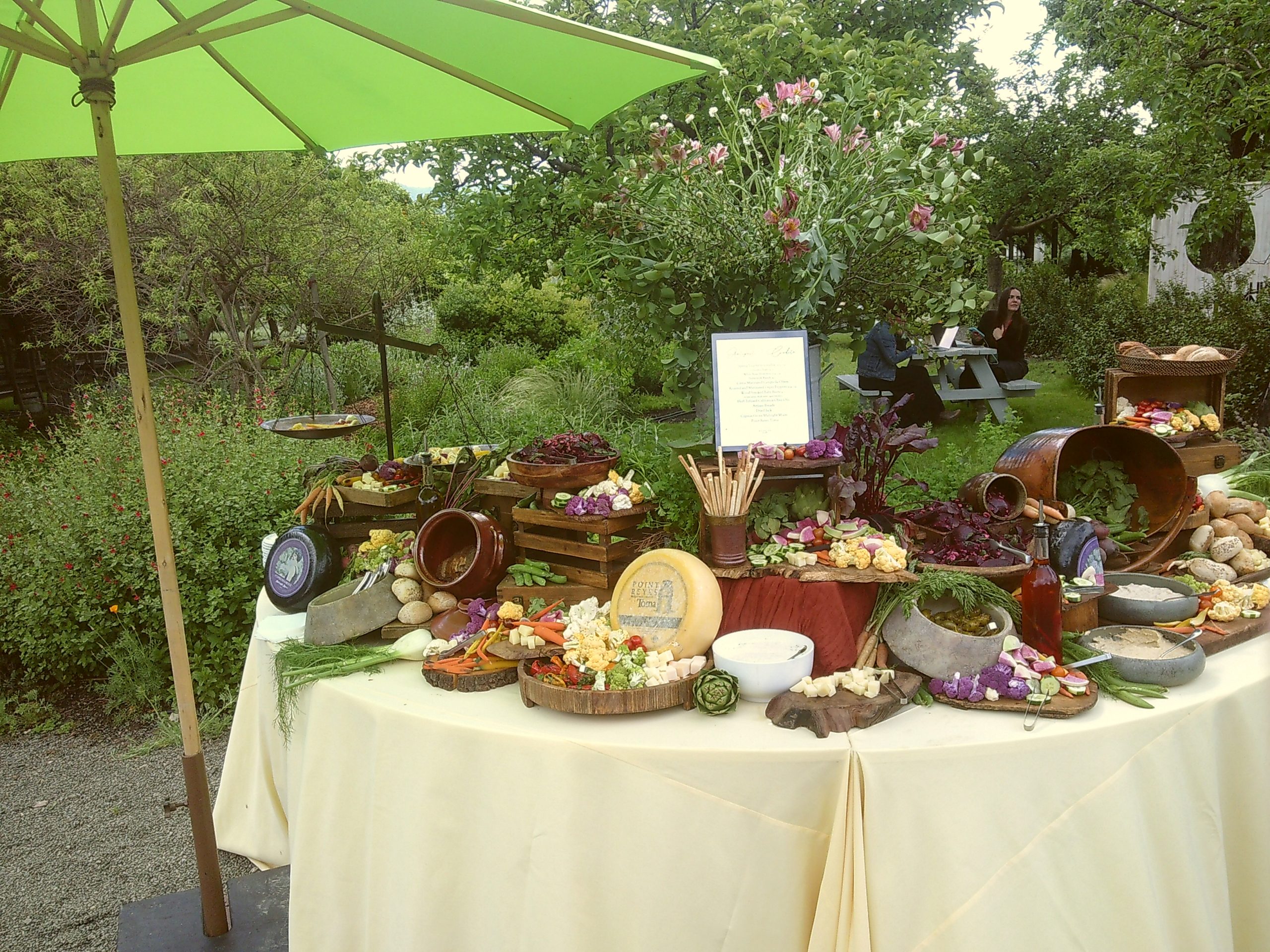
Some of the culinary offerings at Frogs Leap Winery, showcasing fresh, local produce alongside cheeses, breads, sweets, and snacks.
A zen and relaxing water feature at Frogs Leap Winery, perfect for a restful break from the action.
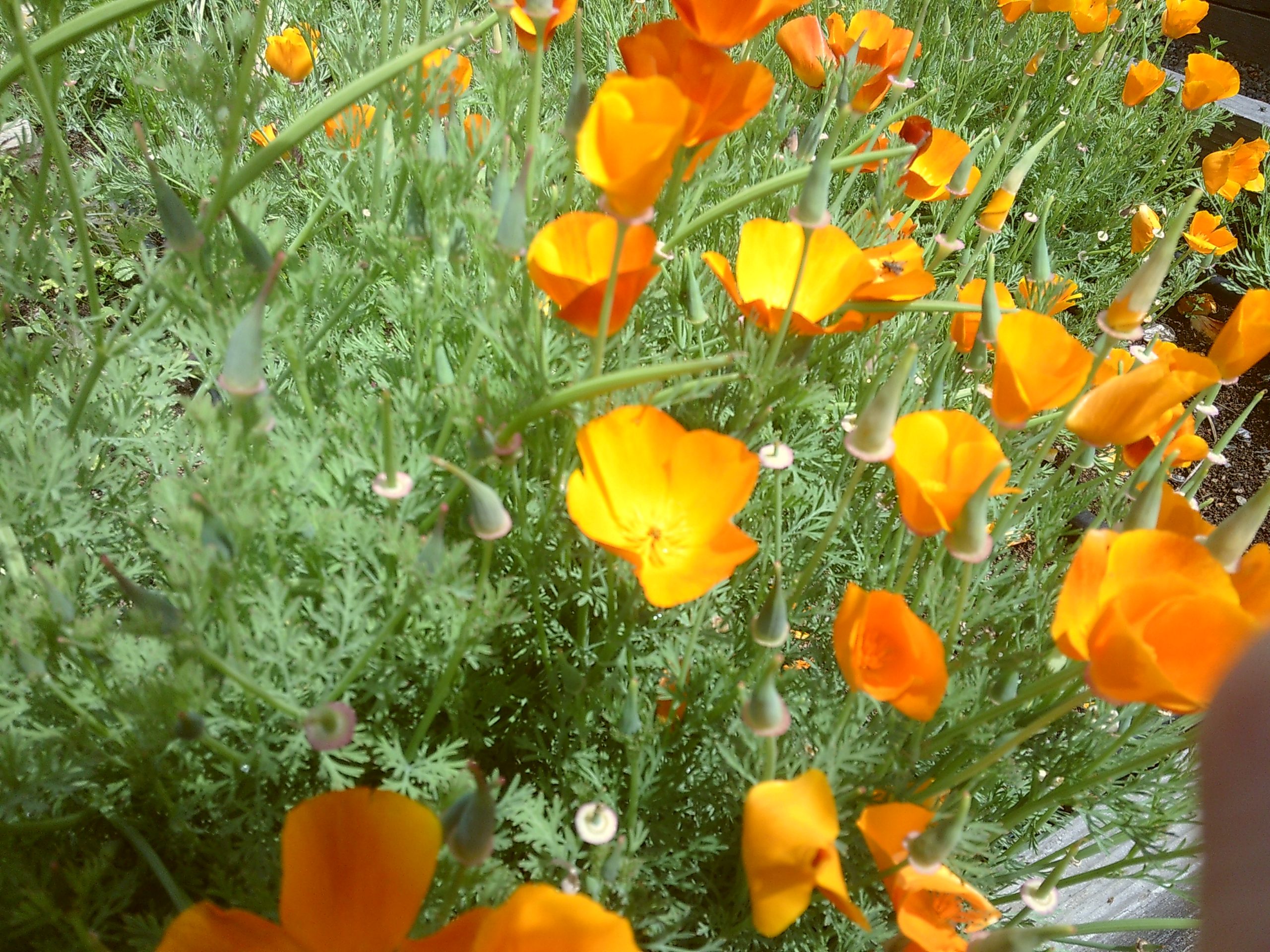
The ever-famous California poppies, in full bloom.
Wade Bowen, Shelby Stone, and Cody Canada give the Napa audience a taste of a Nashville writer's round. The crowd – and her comrades on stage – were all blown away by Shelby Stone's voice and lyrics.
On a picturesque walk to the Uptown Theatre, enjoy views of beautiful downtown Napa and the Napa River.
The clouds clear fully away in time for the biggest show of the event.
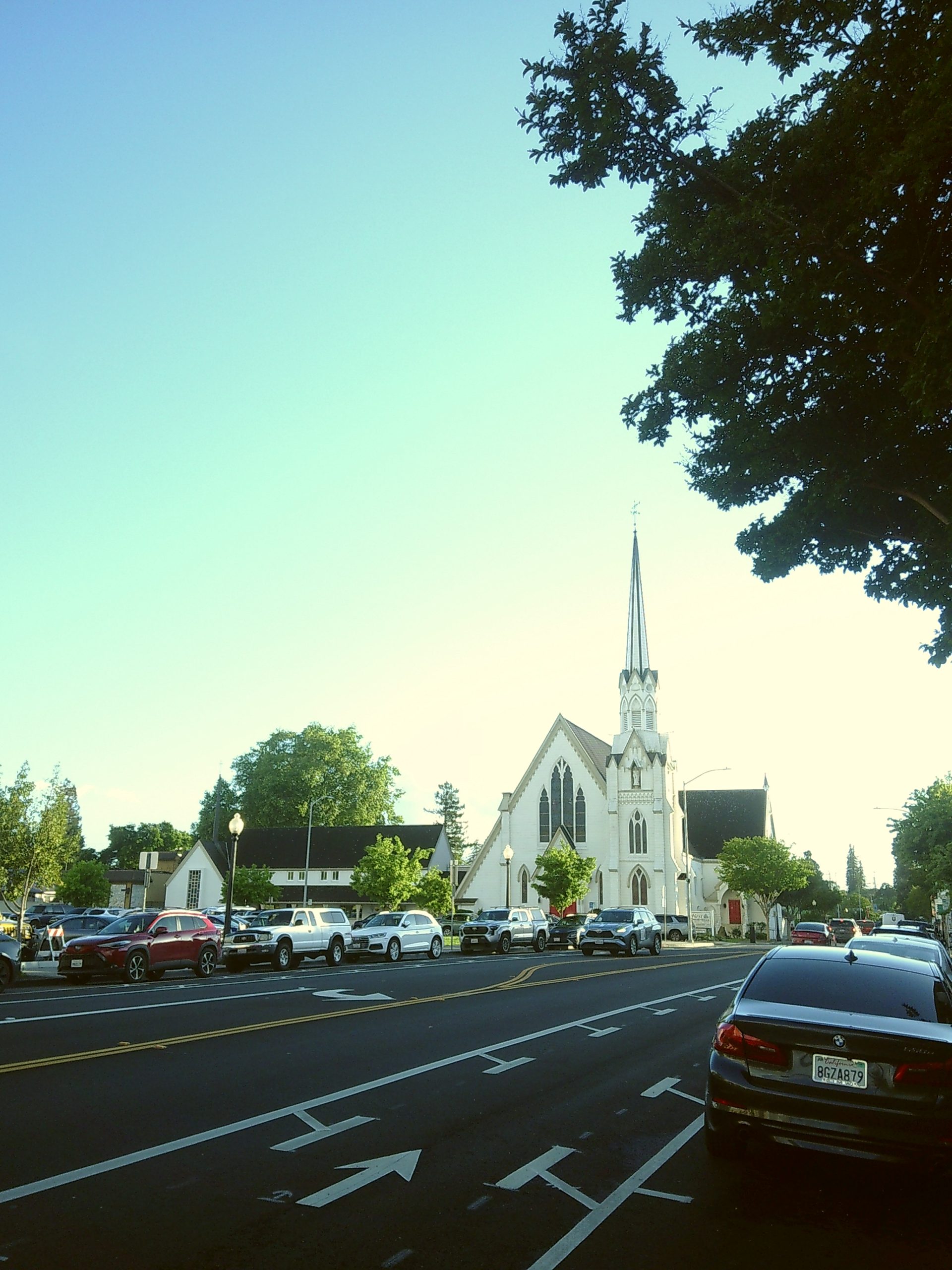
First Presbyterian Church of Napa looking gorgeous in the waning sunlight.
LITVGC on the marquee for Marcus King, Alex Lambert, and Abbie Callahan at the Uptown Theatre.
The crowd waits in excited anticipation for Abbie Callahan. (Stay tuned for our LITV interview with Abbie coming soon to Good Country!)
Alex Lambert's soulful country vocals filled the room and then some.
Frankie Ballard elicits cheers, laughs, and singin' along during his set of hits, favorites, and new material.
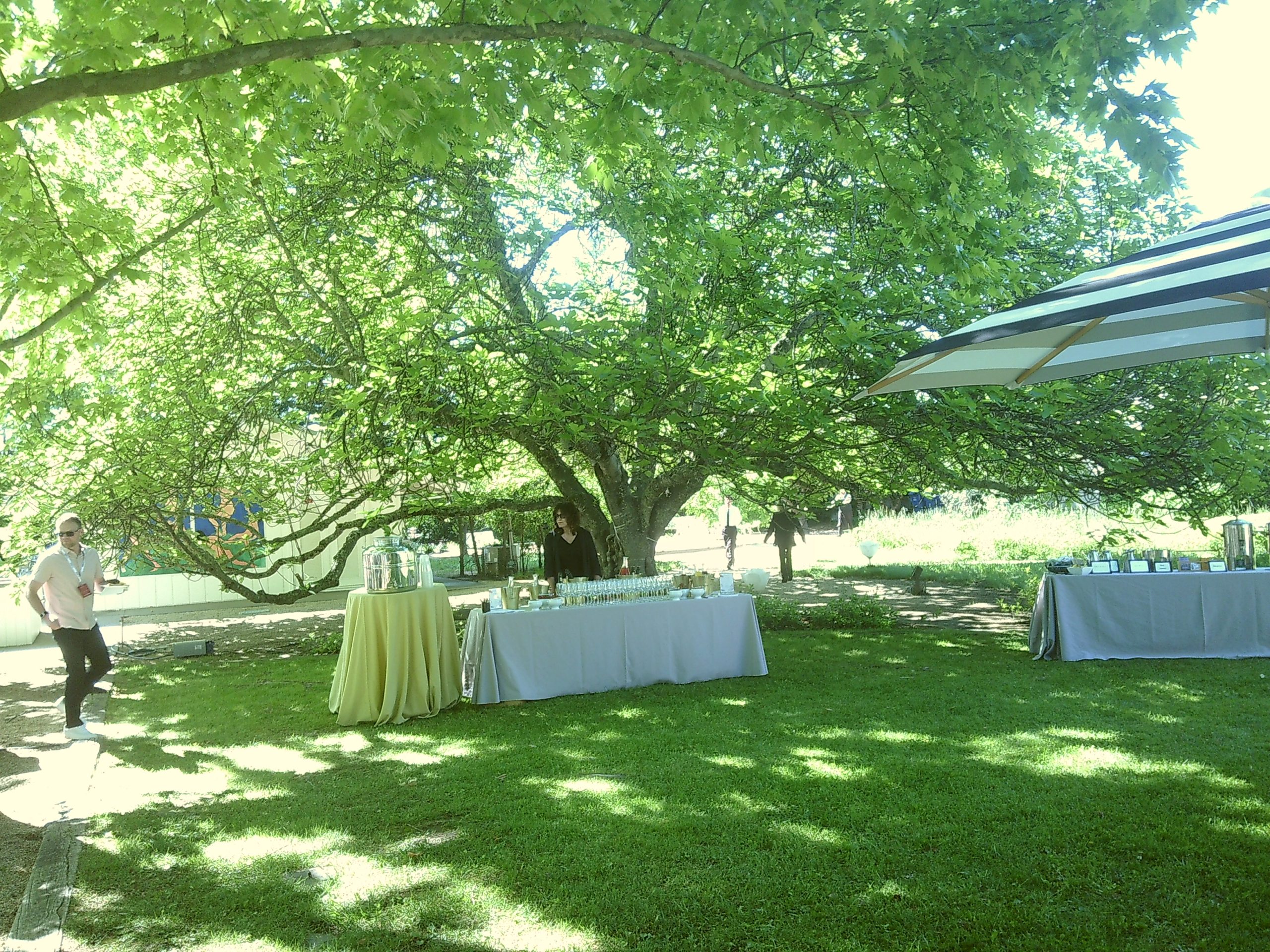
Sun filters through the sycamore trees as guests enjoy the Send-Off Brunch at Raymond Vineyards.
A mimosa and coffee bar wait to re-energize LITV attendees for the Send-Off Brunch.
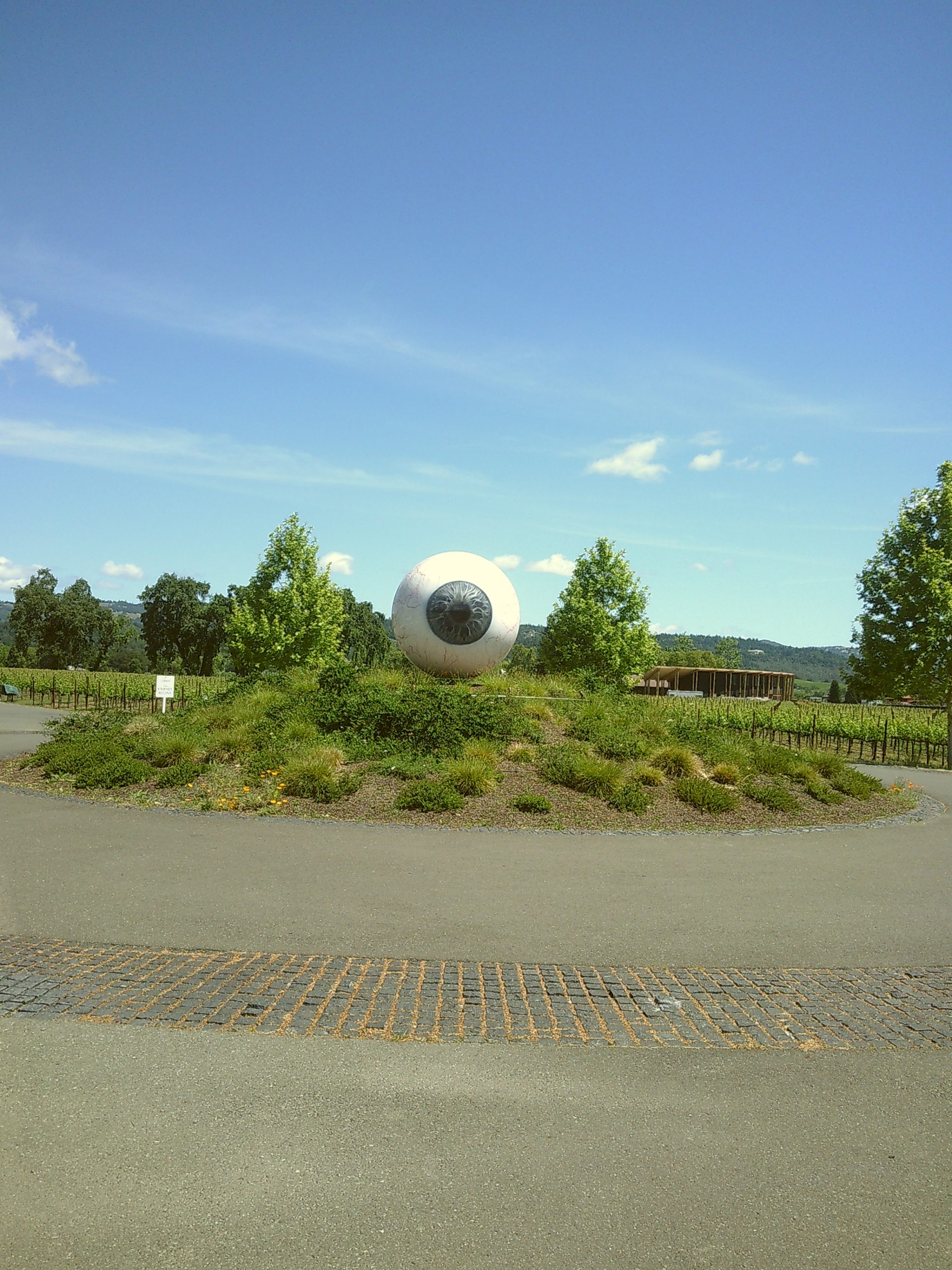
The JCB Eye greets visitors at Raymond Vineyards. A sculpture by artist, vintner, and proprietor of JCB, Jean-Charles Boisset (modeled after his own right eye), who himself greeted attendees and sabered a 1969 bottle of bubbly to serve to guests to open the LITV brunch.
Zach John King was the perfect final performance with which we bid adieu.
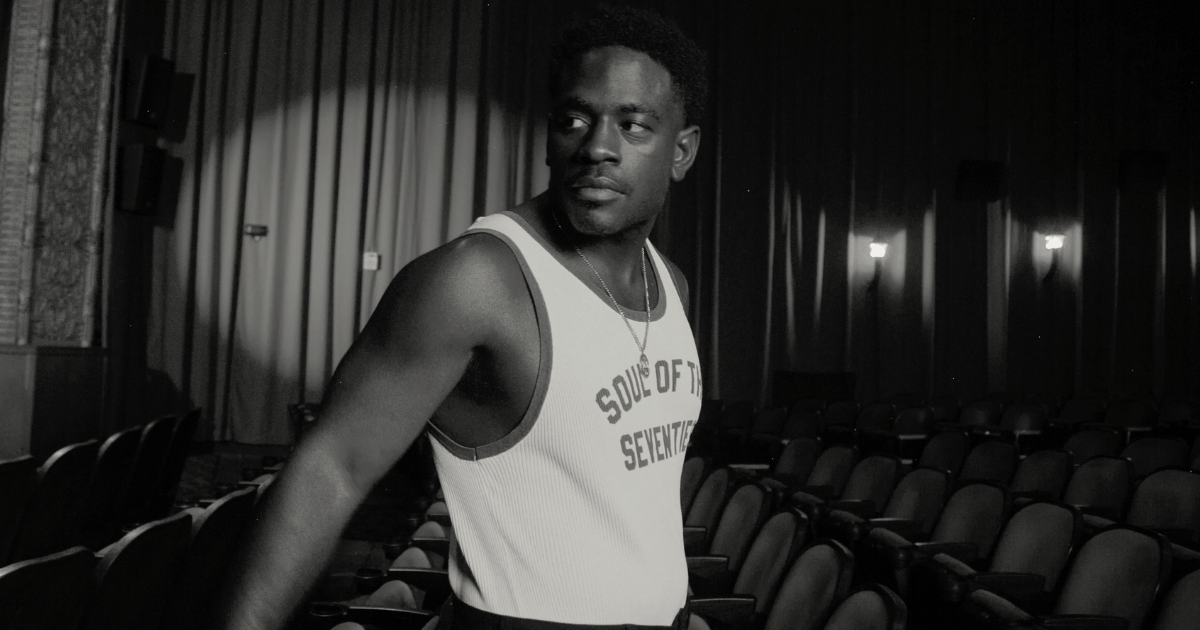
Elton John described him as “if Bill Withers made country music,” but for Kashus Culpepper that only scratches the surface of his unique sound, the multitudes of which are displayed in full force on his full-length debut Act I, which was released January 23.
Growing up in Alexander City, Alabama, the singer was always around music, whether it be in church or in the car, but aspirations for a career performing didn’t materialize for the former firefighter and EMT until he found himself stationed in Spain as a Navy corpsman during the pandemic.
“I wasn’t much of a player, but I was listening to so much music growing up,” recalls Culpepper. “I had headphones on all day, even at school, which caused me to get in trouble quite a bit. I would’ve loved to play back then too, but garage bands weren’t really a thing in our town when I was growing up. If they were, I would’ve tried jumping in with folks in a flash.”
During his period of isolation abroad, Culpepper was gifted a guitar, leading him to learn how to play and to eventually post cover songs online. After leaving the Navy in 2022, he returned stateside and began booking cover act shows at honky-tonks and dive bars across the Mississippi Gulf Coast. Although he immediately loved what he was doing, he also noticed that only playing other people’s material would have a short shelf life.
“Once I realized the cover thing would run its course, I knew in order to make a career in music that I needed to start writing my own songs,” he explains. “For so long the thought of writing my own songs and having people sing them back to me was just a silly dream, but now, less than three years later, I’m releasing an 18-track album I helped write the entirety of.”
Ranging from country to blues, rock and roll, pop, and soul, Act I is a full-on musical onslaught that caps off an amazing five-year journey for Culpepper, setting the stage for a continued meteoric rise in the years to come. On the album he’s joined by fellow stars-on-the-rise Marcus King (“Southern Man”) and Sierra Ferrell (“Broken Wing Bird”). But where the compilation really shines is on the tracks in between, like “Alabama Beauty Queen” and “Break Like Me,” that see Culpepper not only pouring his heart out, but doing so with catchy hooks and differentiating styles while remaining fully authentic to who he is – a Southern man making Southern music.
Less than two weeks before Act I’s arrival, Culpepper spoke with Good Country over the phone about his love for Tyler Childers, the importance of co-writing all the album’s material, what it was like earning the support of Samuel L. Jackson, how his collaboration with Sierra Ferrell on “Broken Wing Bird” came about, and more.
How far back do the origins of these 18 songs go? Are most from those early days of writing in 2023 or more recently as you’ve refined your voice?
Kashus Culpepper: Well, the ones that’s already been out [as singles], they’re definitely from around the same time that I was starting out writing. But a lot of songs that haven’t been put out yet, aside from “In Her Eyes” and “Mean To Me,” are all a little more recent.
In reality, none of these songs are that old if you didn’t start writing until 2023!
Exactly! When you think about it, none of these are that old. There’s so many artists who’ve been holding on to songs for years and years – like Chris Stapleton, who just won a GRAMMY for “White Horse” over a decade after first writing it.
Why was it important for you to have a hand in writing all 18 of these songs?
I’m all about developing myself as a songwriter, because it’s something that I can do for the rest of my life even after all the performance stuff is done. Songwriting is something that I truly believe in and love, so I want to be the best at it that I possibly can be. And to be the best at what you’re trying to do, you have to do it all the time and you have to write with people that are way better than you. That’s what I’ve been able to do with this record. I’ve been writing with people that are way better at writing than me. It’s been amazing.
The record is called Act I. Does that mean it’s part of a larger body of music to come?
At the moment, I don’t really know. I called it Act I not as an introduction to who I am, but because I’m a big movie guy. I love theater, movies, dramatics, all of it.
With that in mind, I know you had a run-in with A-list movie star and one of your biggest heroes, Samuel L. Jackson. What was that like?
Samuel L. Jackson is one of my favorite actors of all time. I got a connection with him when “After Me?” was coming out. It definitely makes the world feel a lot smaller when some of your favorite actors or your favorite artists know who you are. A lot of times growing up you think you will never be in connection with your idols, so it really was a humbling experience. It made me realize that anything is possible.
If you have a dream, you can do it. If one day you want to talk to Oprah Winfrey, you can. Don’t take your foot off the pedal just yet!
Has that one happened for you?
No, I have not talked to Oprah Winfrey, but I would like to! And you get a car! And you get a car! [Laughs]
With regard to “After Me?,” wasn’t that one of your first original songs to gain traction online?
My first big song on socials was “Who Hurt You,” but following that I posted a clip of “After Me?” and everything just went crazy. I’m really glad I put it up on socials after writing it with my boy Mark Addison. We didn’t think anything of it at the time – we were just writing. It’s been insane seeing what the song has turned into since then, especially live.
That’s another thing – it’s been cool to see all the new songs develop their own personality with the crowd. For a while, “After Me?” was people’s favorite song, but now it’s been overthrown by some of the newer ones, which I like because it tells me that I’m continuing to write new songs that people want to hear.
Was it always your vision for your debut project to be this massive or did it unknowingly balloon to 18 songs while in the studio?
I think it was the fact that I had so many great songs in my brain that showed the timestamp of a point in my music career and what I’m doing as an artist. Also, I didn’t want to hold back songs that I thought would be cool for my next project – I needed to put them out right now. When people listen to it, I want them to know exactly what was in my head at the moment I was creating it. That way it and everything I do that comes after it can always stand on its own.
You mentioning a desire to curate a specific moment in time reminds me of the intro track that kicks off Act I, where you’re playing the role of a radio DJ on KC 97 FM. Was that intentional on your part?
That’s exactly where I was trying to go with it. I was just trying to show people what it’s like in my head and trying to transport them to a new world as soon as the record starts. If you listen to it start to finish it feels like a radio station tailored by me. My goal is to bring listeners into my world. I hope people don’t skip it, because if they listen to it top to bottom, they’ll understand. It’s like, “Okay, Kash is curating a playlist with all kinds of influences, because he is a man with different sides to him as a person and musically.” I don’t really care about this or that in terms of genre, so long as the song makes me feel something.
And who knows… maybe someday Apple Music or iHeartRadio will come calling and give you the keys to your own real-life KC 97 FM?!
Don’t tempt me! [Laughs] I would love to do something like that. I don’t have time for it right now, but I would make time!
I know the church was a large part of your early musical upbringing, but what role did the radio play in all of it, if any?
For sure. I don’t remember the name of the radio stations, but there was something about summertime in small town ‘Bama, driving around with the windows down that was so freeing. And country music has always given me that same type of feeling. At the same time, I have so many memories not only with country, but also with soul and pop records. I remember a time when I’d even go around singing along to Lady Gaga.
Then when I was in the military and I found out about guys like Tyler Childers, Sturgill Simpson, and Kolton Moore, they turned into my backroad jams and even went on to inspire me to eventually start writing songs myself.
Speaking of Tyler Childers, didn’t you have a moment with his song “Messed Up Kid”?
Yeah, that was one of the first ones that really started popping off for me. Since then I’ve also done “Lady May” – which got a good response, too. I just love Tyler’s music. He’s got one of the most soulful voices I’ve heard in a long time. It reminds me of people I was in church with. In a way, I feel like Tyler and I probably went to the same church growing up. I’ve just connected with his music so much. Not just Tyler, but a lot of other people in Kentucky, too, now that I think about it. One thing musicians from there have in common is they love singing from their soul and being authentic.
Since you were just speaking about soul, one of the most soulful songs on Act I from my perspective is “Break Me Like.” Mind telling me about it?
That song definitely draws from the fact that I am with someone that I should not be with, but it’s okay because we’re in this moment and I know what she’s gonna do to me and it’s fine since right now I need to be with somebody. “Break Like Me” started with that idea in mind, then I had these really weird chords that I came up with while writing with Grady [Block] and Hank [Compton] over at Big Loud. After fumbling around with the lyrics that I had in my head, I came up with something that had a real funky, low-fi kind of vibe. We wanted it to tell a story and be relatively heavy, but while giving it production worthy of cruising to and vibing out with.
What about “Broken Wing Bird” with Sierra Ferrell. How did you bring her aboard, and did you always envision the song as a duet?
I wrote that song with my producer, Brian Elmquist, and at the time wasn’t thinking about it as a duet. We’re both lovers of Willie Nelson and wanted a song that felt like you could be on your back porch and listen to it morning, afternoon, or night with a drink in hand and not have to think about it too much. It’s a song that makes you feel warm and feel at home, but it wasn’t until the production of it when we thought about doing it as a duet.
Once the idea got brought up, one of us made the comment that whoever it is, it would have to be someone that has a voice that feels like it’s not from this time. Eventually Sierra’s name came up and it was like a lightbulb going off. She’s literally the first person that I would want in the whole world to be on this record, but I wasn’t sure if she’d be available to do it. Once we got the green light my excitement went through the roof. I’m so proud that she’s on this record, because she’s an artist that I truly love. I’m hoping somewhere down the line we might have something in the works that’s a bit longer of a project too.
I (and most other people) would not be against that one bit!
Looking back over the past five years, what has your musical journey thus far and bringing Act I to life taught you about yourself?
For so long, I thought I didn’t belong in places, that I wasn’t able to do this or that. The biggest thing I’ve learned is to just dream big because you never know what could happen. You just have to believe in yourself and you can do anything, no matter how crazy it sounds. For the longest time, I didn’t have a dream of doing music because I just thought I couldn’t do it. I thought I wasn’t the kind of person to be singing songs on stage, but look at me now!
With you referencing dreaming big I have to ask, what’s next on your musical bucket list?
My goal is to just keep creating, growing as a songwriter and learning more about myself along the way. If I do that I feel like everything else will follow and I’ll keep growing as a songwriter and as a promoter.
Welcome to BGS Bytes! Our shiny new column has one goal: to bust – or enable – your social media scrolling habit by rounding up all the most important bluegrass and roots music related posts in one place. Give your thumbs a break — we’ll post all the hot goss and goings-on every month.
In no particular order, let’s take a look back at everything that happened in bluegrass social circles in February!
Dolly Parton Responded Gracefully to Elle King’s Grand Ole Opry Debacle
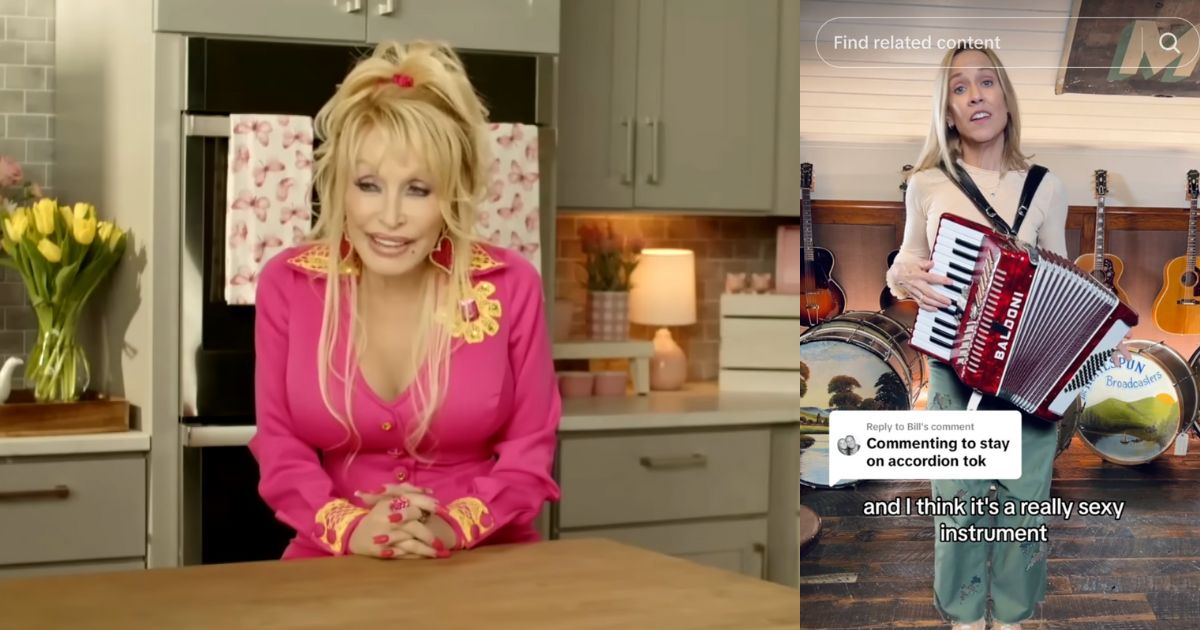
In a positive conclusion to a social media fiasco that lit up news feeds, Dolly Parton responded to Elle King’s controversial January Grand Ole Opry performance. The “Ex’s & Oh’s” singer appeared on the Opry stage January 19 as part of birthday celebration for Parton, who was turning 78. King, however, was quite inebriated and made comments that left some ticket holders and several social media commenters upset at her behavior. In February, though, Parton did an interview with E! News and encouraged everyone to show King support instead of condescension.
“Elle King is a doll,” Parton told the news outlet. “I called her, and I said, ‘You know, there are many F-words. Why don’t we use the right one? Forgiveness, friends, forget it.’ She feels worse about it than anybody. She’s going through some hard times, and I think she just had a little too much to drink and then that just hit her. So, we need to get over that, because she’s a great artist and a great person.”
If only everybody online was as gracious!
Sheryl Crow Plays Her Songs on TikTok Following UMG’s Decision to Pull Their Catalog
It’s probably nobody’s favorite mistake — we’re talking about Universal Music Group choosing to remove many of their most popular tunes from TikTok, which is arguably one of the most important marketing tools for musicians currently. Understandably, many artists were upset. Some began to record live performances of their music to share on the app so fans can go on recording videos with their “sounds.”
Sheryl Crow joined the crowd making their songs available in other formats, and the “Soak Up the Sun” singer recorded acoustic versions of songs like “My Favorite Mistake” and “Strong Enough.” Many of the tunes she picked are requests, including “The First Cut is the Deepest.”
After the Tennessee Legislature Refused to Acknowledge Allison Russell, Celebs Voiced Support Online
In February, Tennessee State Rep. Justin Jones proposed resolutions to the Tennessee General Assembly designed to honor both Paramore — who won a Grammy for Best Rock Album and Best Alternative Music Performance — and Allison Russell, who took home her first Grammy for Best Americana Performance. Unfortunately, Tennessee House Republicans allowed the resolution honoring Paramore to pass, but blocked the similar measure honoring Russell, who is Black and won for her song, “Eve Was Black.”
Russell took to Twitter (now known as X) to respond:
That you & @VoteGloriaJ presented this resolution is a high honour. That the TN GOP blocked it, I take as a compliment. Their bigotry, sadly, is on relentless display. We have a chance this year to make a real change in TN #loverising#rainbowcoalition#register#vote#rise✊🏾🌈
Everyone and Their Mamas Are Line-Dancin’ on TikTok
Speaking of Beyoncé, her new single, “Texas Hold ‘Em,” is only one of many, many popular line dance tunes on TikTok right now. Whether it’s a duo gettin’ down on the pavement outside, or a group boot-stompin’ in a downtown Broadway bar, line dancing is officially cool again!
Willow Avalon, an up-and-coming country singer-songwriter, went viral for debuting her new single, “Getting Rich Going Broke,” on TikTok. This tune also comes with a line dance — we told y’all this trend is on fire!
This year’s Super Bowl halftime show might’ve been dominated by Usher, but our favorite bits of the biggest sports event of the year happened before the game even began. Rapper Post Malone donned a clearly Western-inspired outfit and sang a stunning, acoustic version of “America the Beautiful.”
Marcus King Celebrated Molly Tuttle’s Grammy Win With a Sharp Cover on TikTok
Last, but most certainly not least, alt-country singer-songwriter Marcus King gave an excellent cover performance of “Down Home Dispensary” online to celebrate Molly Tuttle‘s Grammy win. Tuttle even responded, commenting that he “crushed” the song — and we agree!
So, a lot happened in January, February, and the beginnings of March! We’ll continue rounding up the hottest social media conversations and goings-on for BGS readers every month — let us know on social media and tag us in a post if you think something deserves to make the list!
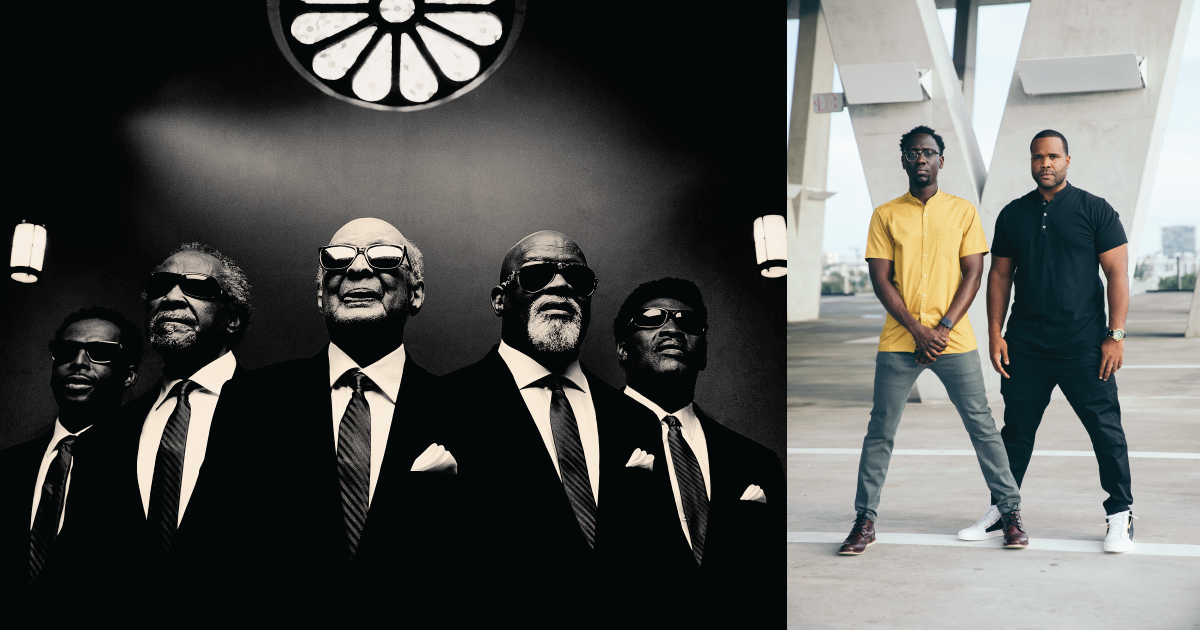
Artist:Blind Boys of Alabama Hometown: Talladega, Alabama Song: “The Message” (Feat. Black Violin) Release Date: September 9, 2022 Record Label: Single Lock Records
In Their Words: “This song was written by our friend Peter Levin, who played keyboards with the Blind Boys for many years. We nicknamed him ‘Church Boy’ because he was so good at getting that gospel sound, especially from the Hammond B3. The sound of this song is very modern. It’s not a gospel sound in the traditional sense, but the message is one the Blind Boys can stand behind – that God is still in control. We have enjoyed getting to know the guys in Black Violin and we loved collaborating with them on this song. They are pushing boundaries in their field of music, and we’d like to think we are doing the same in our field.” — Blind Boys of Alabama’s Jimmy Carter
“We like this song because it talks about people needing other people to come together and stand strong in the face of adversity. It also talks about relying on God. Those are some of our main themes, because people do need people and God is still in control. Musically, between the violins and the guitar solo by Marcus King at the end, it’s quite a bit different than usual Blind Boys recordings. But it works for us because we like songs that are upbeat and have a message.” — Blind Boys of Alabama’s Ricky McKinnie
“It was a real honor to co-write and co-produce ‘The Message’ for the Blind Boys of Alabama featuring Black Violin. The song touches on some important social issues and feels very relevant to this moment in time. It was exciting to have Black Violin add their part and then having Marcus King add guitar, including a blistering outro, was the cherry on top of the song. I have worked with the Blind Boys as a keyboard player since 2008 and we are like family at this point, so it was a thrill to collaborate with them in this new capacity. There is absolutely no one better to bring this song and message to life than the Blind Boys.” — “The Message” songwriter Peter Levin (Blind Boys’ keyboardist)
“We were blessed to be able to tour with the Blind Boys of Alabama last summer and they are truly an inspiration not only to Black Violin but to the world. Our mantra is that we ‘inspire, uplift, and entertain’ and the Blind Boys of Alabama do the same.” — Black Violin’s Wil Baptiste
Photo of Blind Boys of Alabama by Jim Herrington. Photo of Black Violin by Mark Clennon
Artist:Ida Mae Hometown: Nashville / London Latest Album:Click Click Domino (out July 16, 2021)
What was the first moment that you knew you wanted to be a musician?
As a kid my dad had a load of music documentaries on VHS. I can remember watching one on Jimi Hendrix which opens with Pete Townsend talking about Jimi Hendrix’s performance at Monterey Pop Festival… the film then begins with Hendrix storming into “Rock Me Baby” at Monterey Pop, a Stratocaster and fuzz pedal plugged in to a Marshall stack. I can remember getting shivers from my head to my toes! I remember also being fascinated by the guitar, I’d go to my posh mates’ houses and would stare into their music rooms and silently look at their guitars like they were strange, rare holy relics.
What’s your favorite memory from being on stage?
Joining Willie Nelson and Alison Krauss on stage was an incredible moment and an honor that we’ll never forget.
What other art forms — literature, film, dance, painting, etc. — inform your music?
We love film but in particular for me photography plays a big part in how I visualize my songs. I love the work of Garry Winogrand, William Eggleston, Martin Parr and Stephen Shore to name a few. I very often have a place or time in the back of mind when I’m writing, even if its not explicitly mentioned in the lyric and I find photographs are able to open up and inform all sorts of creative decision making and lead ideas.
Since food and music go so well together, what is your dream pairing of a meal and a musician?
We’d like to share a tube of Pringles with Bob Dylan. Maybe a trifle with Mavis Staples? Oooh or share a Twix with Richard Thompson.
How often do you hide behind a character in a song or use “you” when it’s actually “me”?
Fantastic question. I think persona plays an incredibly important part of what any artist does. It allows you to inhabit characters and roles as almost as an actor. It’s important for the self preservation of the artist to make the distinction between the picture they choose to paint and their personal lives. As a songwriter, things can get very self-indulgent and self-obsessed and that gets tedious after a while. I often imagine painting myself into some sort of impressionist’s painting… it’s you almost, but the lines are blurred and reality is more based in what’s on the edge of your conscious mind, in raw emotion and letting the story play out in the atmosphere you create sonically and poetically. Every song is relatable to us in some way, sometimes they are incredibly personal and other times they’re explorations of the way you were feeling at some point in your life… and sometimes it’s just fun to play with words!
There’s some serious sleight of hand going on with Tony Joe White’s new album, Smoke From the Chimney. Well, sleight of sound, really.
Listening, you can easily picture the sessions: the musicians playing together with White, taking cues from him as they spin out a tableau of characters and scenes that flow as if they were chapters in a book. It’s the latest volume in a legacy of witty, gritty songs stretching back more than 50 years to “Polk Salad Annie,” “Willie and Laura Mae Jones,” and “Rainy Night in Georgia.”
And leading it all with a sly grin is the Swamp Fox himself, as he’s known, with his still-strong, speak-sing baritone voice echoing his origins in the tiny town of Goodwill, Louisiana — a barely-there dot on the map a bit east of Shreveport.
Only one thing.
These sessions were done in the summer of 2019, a year after White died of a heart attack at age 75. Producer Dan Auerbach built the record around basic vocal-and-guitar demos that White had made over a period of years before he died. The illusion, though, is by design.
“I approached it very much the same way I would have any other album we do here,” Auerbach says from his Easy Eye Sound studio in Nashville. “I hired a band and we played live. And instead of Tony being in the room, he was in the headphones with us. You are hearing performances.”
He pauses.
“I’ve had people in the room that were less ‘there’ than Tony Joe was!” he says, laughing heartily.
The results are vibrant, a lovingly made set bringing out the full richness of White’s signature storytelling, steeped in his singular brew of soul, blues, rock and backwoods boogie. It’s the kind of stuff that over the decades led to his songs being recorded by dozens, from Elvis Presley to Waylon Jennings to Dusty Springfield to Tina Turner, but which had something extra when sung by White himself.
It’s not the only bit of deception going on in the album. There’s the matter of some of the most moving, affecting songs in the set. Take “Over You,” a heartwarming-turned-heart-wrenching ballad of love and loss. White sings touchingly of a relationship that started as friends at 7 years old, later growing into romance and a wonderful life together — until the woman, his soulmate, became ill and died.
Only one thing. Again.
“That’s not true,” says Jody White, the son of Tony Joe and, if you would have it from the song, the woman who died.
“No,” he says in a separate interview from his Nashville home. “My mom is still alive.” In fact, Tony Joe White and Leann White were married in 1964, raised three kids and were together until the day he died. “And they didn’t meet when they were 7,” Jody says. “There’s nothing true about ‘Over You.’”
It’s as big a whopper as the record-size widemouth bass that mercilessly taunts its would-be conqueror in “Bubba Jones,” another highlight of the new album. But even Jody, who at 46 has spent his whole life surrounded by his dad’s work and became his manager 20 years ago, could get sucked in to the depth of the song.
“That’s the great thing about Tony,” he says. “He’d write these songs and you’re like, ‘Oh man. Poor guy!’ Like he must have been going through it now.”
This is nothing new. There’s a lot of did-it-really-happen running though his vast, vaunted catalog. “There was a ‘Rainy Night in Georgia,’” Jody says, noting at least some truth behind the song his dad wrote, which was a big hit for soul singer Brook Benton in 1970. “But a lot of his best songs are just fictional tales. Sometimes you can’t differentiate. ‘Polk Salad Annie,’ is that a real girl or not? And ‘Over You’ is kind of the same thing.”
Smoke from the Chimney, in both the songs and sound, builds on a resurgence that started in the early 2000s when, after laying low some, White had resumed touring and recording, finding enthusiastic receptions among both older fans and new ones. Auerbach, now 41, was among the latter. “I was a little bit of a latecomer to his music,” Auerbach says. “But as soon as I heard his original version of ‘Rainy Night in Georgia,’ I was hooked.”
Having established himself both as half of the Black Keys and as an in-demand producer (his extensive credits include Yola, Valerie June, Ray LaMontagne, Lana Del Rey, the Gibson Brothers, and dozens more), Auerbach started pushing to produce a Tony Joe album years ago.
“Dan and I met probably 15 years ago,” Jody says. “And he said, ‘For the last 10 years I’ve been wanting to produce a Tony Joe White record.’ And it just didn’t happen. He only co-wrote with a few people, like Jamey Johnson. They would come out to the farm and sit by the fire with him. That sort of thing. He wasn’t going to go to a studio and collaborate with someone. It just wasn’t what he did.”
Even after Auerbach moved from Ohio to Nashville a while back, it still didn’t work out. “We did get a chance to meet, though,” Auerbach says. “We were on tour with the Black Keys and we were both on a festival in Australia. Hung out backstage. I played his Strat. We hung out and talked. Pretty awesome, actually.”
When Tony Joe White died, Jody’s job changed, he says, “from ‘What are we going to do next?’ to ‘What did he leave behind?’” What he found was daunting. “I discovered that there was probably more unreleased music than there was released music,” he says.
Sorting through the archives, Jody found hundreds of songs put down on tape over decades of time — experiments with electronic keyboards from the 1980s among them. Some will surprise even the most devoted fans. But he was drawn to several reels from a few years before his father’s death.
“There was really no rhyme or reason why he recorded all those songs in that period of time,” he says. “Some are old, some were new. It’s all over the place. But it was weird how they all lined up.”
In July 2019, he texted Auerbach the demo of the song “Smoke From the Chimney.” Auerbach loved it and asked for more. “I sent him probably 11 songs and he said, ‘They’re all perfect.’ My dad knew what he was doing when he recorded those songs together.”
The timing was perfect, too. Auerbach had an unexpected break in his normally crammed schedule, and about four weeks later he told Jody he had most of the songs finished. “I’ve never seen anything happen so fast,” Jody says.
Auerbach says it was simply a natural fit for him and his label, Easy Eye Sound, which is releasing the album. “He embodies everything I’ve tried to do, and everything Easy Eye is,” he says. “It’s steeped in what he was about — diversity and the love of music, of all kinds. He so obviously loved so much music. Diversity and soul. That’s what he had. Boy. Some people just got it, you know?”
It’s a mission for him.
“I’m figuring out the big part of the reason you find people who didn’t know about Tony Joe,” Auerbach says. “Tony Joe had no category, which made it hard for labels to market him. Calling him swamp-rock doesn’t do him justice. Country doesn’t do him justice. Calling him blues doesn’t do him justice. Which is maybe why we need to tell his story a little bit louder.”
That’s played out through the wide emotional and musical range of the nine songs he picked. From the wistful title track to the swamp-voodoo chooglin’ of “Boot Money” and the campfire-side “Scary Stories” to the border ballad “Del Rio You’re Making Me Cry.” The achingly evocative “Someone Is Crying” is arguably the album’s sentimental peak, with strings swelling over the story of a young girl walking into the sunset after seeing her village burn.
With the band he assembled, Auerbach threaded that diversity of material together, consciously connecting, or transcending, genres. There are slide guitars (some by him, some by Marcus King) and steel (Paul Franklin) — a little touch of George Harrison here (the title song), Duane Allman and Dickie Betts there (“Listen to Your Song”). There’s Ray Jacildo’s Hammond B3 organ, a foundation for a wealth of Southern traditions touched on throughout.
On that ensemble he hangs such touches as the background vocals by Mireya Ramos and Shae Fiol of the all-women mariachi ensemble Flor de Toloache and evocative fiddles by Ramos and veteran Stuart Duncan on “Del Rio You’re Making Me Cry;” the strings on “Someone Is Crying” are the work of Matt Combs. Ultimately, it’s all there to illustrate the stories White tells.
Speaking of… there’s the closing “Billy,” a farewell to a life of drifting and to a lifelong friend “just like a brother to me.”
That has to be real.
“Didn’t happen,” Jody says of the song that’s the oldest on the album, having been recorded by Waylon Jennings back in the 1970s. “My mom and I were laughing about that. She came over and listened and she is like, ‘I don’t know how he makes this stuff up.’ She and I were speculating over who Billy could possibly be. And he was never homeless, walking the streets. None of it happened. None of it ever happened.”
Photo credit: Jim Marshall (black and white); Leann White (color)
The 63rd Annual Grammy Awards were held yesterday afternoon and evening, Sunday March 14, 2021. Here are the nominees and winners in the American Roots Music fields:
Best American Roots Performance
Black Pumas, “Colors”
Bonny Light Horseman, “Deep in Love”
Brittany Howard, “Short and Sweet”
Norah Jones & Mavis Staples, “I’ll Be Gone”
John Prine, “I Remember Everything”
Best American Roots Song
“Cabin,” Laura Rogers & Lydia Rogers, songwriters (The Secret Sisters)
“Ceiling to the Floor,” Sierra Hull & Kai Welch, songwriters (Sierra Hull)
“Hometown,” Sarah Jarosz, songwriter (Sarah Jarosz)
“I Remember Everything,” Pat McLaughlin & John Prine, songwriters (John Prine)
“Man Without a Soul,” Tom Overby & Lucinda Williams, songwriters (Lucinda Williams)
Best Americana Album
Courtney Marie Andrews, Old Flowers
Hiss Golden Messenger, Terms of Surrender
Sarah Jarosz, World on the Ground
Marcus King, El Dorado
Lucinda Williams, Good Souls Better Angels
Best Bluegrass Album
Danny Barnes, Man on Fire
Thomm Jutz, To Live in Two Worlds, Vol. 1
Steep Canyon Rangers, North Carolina Songbook
Billy Strings, Home
Various Artists, The John Hartford Fiddle Tune Project, Vol. 1
Best Traditional Blues Album
Frank Bey, All My Dues are Paid
Don Bryant, You Make Me Feel
Robert Cray Band, That’s What I Heard
Jimmy “Duck” Holmes, Cypress Grove
Bobby Rush, Rawer Than Raw
Best Contemporary Blues Album
Fantastic Negrito, Have You Lost Your Mind Yet?
Ruthie Foster Big Band, Live at the Paramount
G. Love, The Juice
Bettye LaVette, Blackbirds
North Mississippi Allstars, Up and Rolling
Best Folk Album
Bonny Light Horseman, Bonny Light Horseman
Leonard Cohen, Thanks for the Dance
Laura Marling, Song for Our Daughter
The Secret Sisters, Saturn Return
Gillian Welch & David Rawlings, All the Good Times
Best Regional Roots Music Album
Black Lodge Singers, My Relatives “Nikso Kowaiks”
Cameron Dupuy and the Cajun Troubadours, Cameron Dupuy and the Cajun Troubadours
Nā Wai ʽEhā, Lovely Sunrise
New Orleans Nightcrawlers, Atmosphere
Sweet Cecilia, A Tribute to Al Berard
Also, note these Americana winners in other categories:
Welcome to the BGS Radio Hour! Since 2017, the show has been a weekly recap of all the great music, new and old, featured on BGS. This week we bring you music to provide a fresh start in 2021 and to celebrate the many roots artists nominated for Grammy Awards this year. Remember to check back every Monday for a new episode.
20 years following his death, John Hartford is still being honored by a whole world of roots musicians. The John Hartford Fiddle Tune Project, Vol. 1 just happens to be the most recent, an album of songs Hartford composed but never recorded, only to be found later by his family when sifting through his archival collection. A collaborative recording, this track is performed by Alison Brown and Hawktail (Brittany Haas, Paul Kowert, Jordan Tice, and Dominick Leslie) — and the album is up for a Grammy!
From Nashville, Carl Anderson brings us a co-write this week from his upcoming Taking Off and Landing. The single is about vulnerability, forgiving and becoming comfortable with yourself, and embracing your inescapable imperfections.
Minnesota-based singer and songwriter Luke LeBlanc brings us a new song this week! From his Better Now EP, “All My Love” is a resurrected voice memo, one that took some time to navigate but is undeniably better with age.
From the 2020 film Black Boys, Ben Harper brings us a song this week which he composed for the cultural documentary. The film is a timely reckoning on Black, male identity in America, through sports, education, and our broken criminal justice system.
Frequent visitor of our pages here at BGS, Texas-based Charley Crockett brings us a new single this week from The Next Waltz, Vol. 3. “I Can Help” is a Billy Swan number, one in which recording was not planned, yet somehow nailed in one take by Crockett and his band.
From Wilmington, NC, Brent and Ben of Beta Radio bring us the title track from their Afraid of Love EP. The pair sat down with BGS for a 5+5 — that is, five questions and five songs — where we went over influences, how different types of art relate to their music, and the toughest go at songwriting they’ve ever had.
An undeniable legend, Loretta Lynn brings to us this week a mountain-style recitation on her famous song (and film title) “Coal Miner’s Daughter.” The new release commemorates the 50th anniversary of the original song, as well as being part of her upcoming Still Woman Enough — Lynn’s 50th studio album.
Durham’s M.C. Taylor of Hiss Golden Messenger is back with a new single, following 2020’s Terms of Surrender, which is nominated for a Grammy. “Sanctuary” is a reflection on the past year, and the way in which we care for ourselves and those around us. Bidding farewell to John Prine — “Handsome Johnny” — who was lost in the storm of 2020, Taylor finds shelter within it.
After the collapse of their family, the Rough & Tumble borrowed a Michigan kitchen and worked through the darkness. But, the Nashville-based-but always on the road duo realized not everything had to be lost, telling BGS, “We have as much right to a family to call our own as the family that won’t call us their own, anymore.”
Silence is perhaps the most detrimental plague to justice. Los Angeles-based Chris Pierce brings us a song this week on silence, striking that if we smile and applaud for people different than us, we are responsible to fight for them too.
No matter how much we prepare in life, there is always someone or something that will catch us by surprise. From Haywood County, NC, Balsam Range brings us a song this week about stumbling, being unable to speak, completely taken by surprise when that someone comes around.
The great fall of gigs in 2020 hit young performers hard — especially those who had just broken through and had rarely seen momentum, like 24-year-old Marcus King. After his January 2020 release El Dorado, King was poised for a busy year that slowly unraveled, turning his attention to songwriting, drive-in concerts, and a performance on the Tonight Show With Jimmy Fallon. This January, King has reclaimed that momentum with a GRAMMY nomination for El Dorado!
From Boulder, CO, Cole Scheifele brings to us this week a song about chasing what invigorates you. For many, including Scheifele, 2020 was a year to revisit old ideas, providing us with a stagnant, neutral state of stillness, and giving Scheifele the answers to this previously begun, for years unfinished song.
2021 celebrates the 20th anniversary of O Brother, Where Art Thou?, the Coen Brothers’ film which ignited a modern revival of roots music. This month, we’re celebrating by making the entire soundtrack our January Artist of the Month, where all month long we’re featuring music from the film. This week’s selection is brought to us by artist Chris Thomas King, aka Tommy Johnson, the blues man that we meet at the crossroads early in the film, just after his soul was sold to the devil.
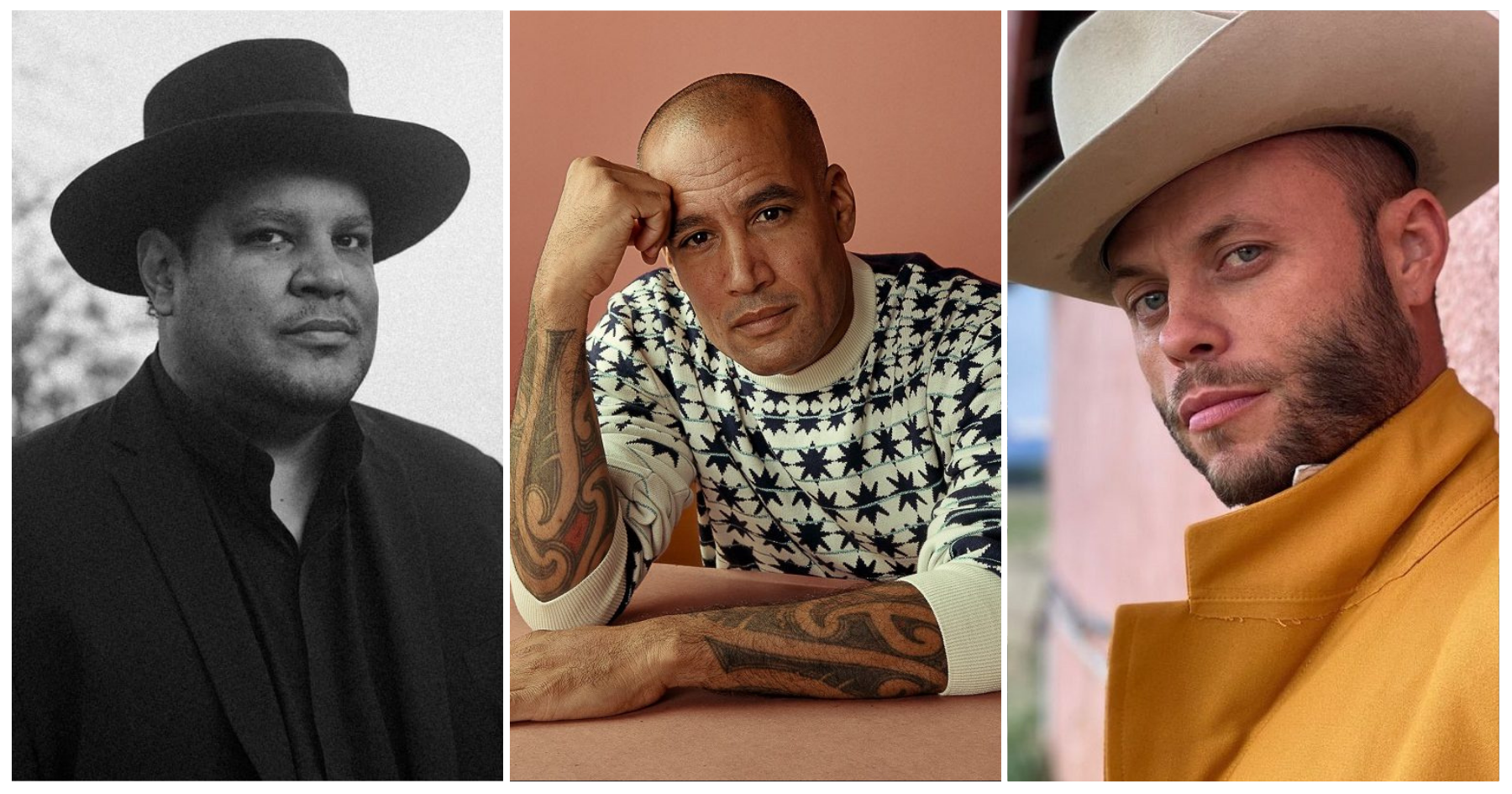
Photo credit: (L to R) Chris Pierce by Ross Kolton; Ben Harper by Jacob Boll; Charley Crockett by Taylor Grace
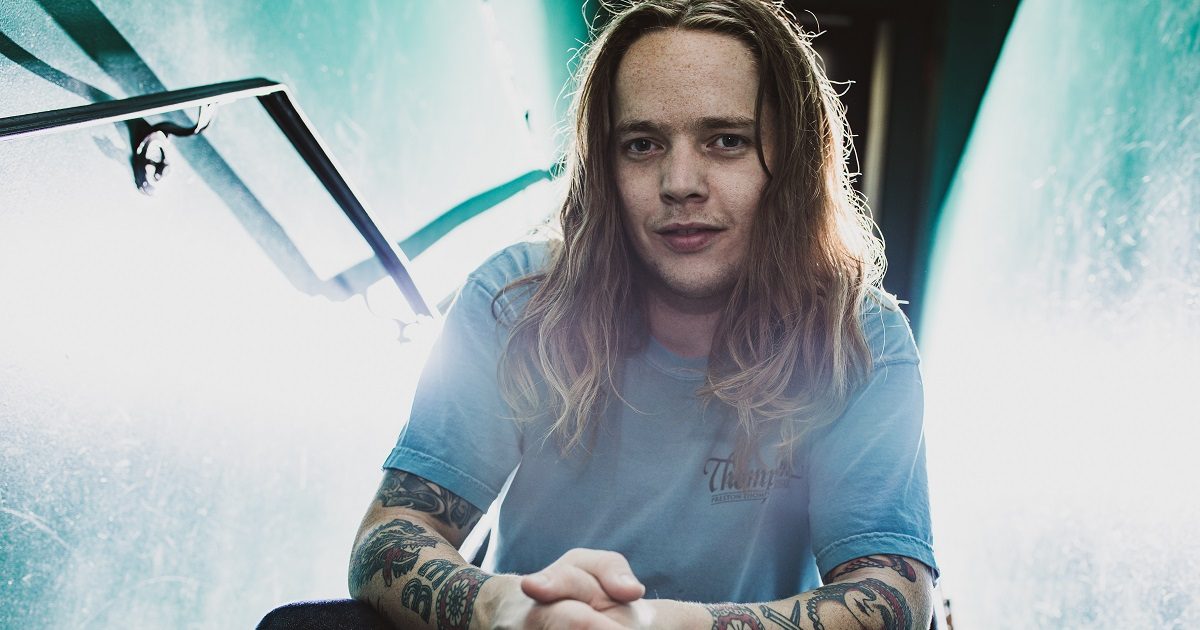
Thanks to a Grammy nomination for Best Americana Album, Marcus King is getting a second chance to make a first impression.
At the dawn of 2020, he’d been poised to become a breakout star in roots music, able to deliver an electrifying show with the soul chops to match. After three albums billed as The Marcus King Band, his solo debut record, El Dorado (produced by Dan Auerbach), received positive notices just about everywhere, including BGS. But as the year unraveled, so did his touring plans. In response, he turned his attention to songwriting, ended up booking some socially-distanced shows at drive-in movie theaters, and even landed a spot on The Tonight Show With Jimmy Fallon. And with attention from the Grammys, he’s back in the game — although he’s been surrounded by music from the time he was a kid.
“I don’t remember a time when it wasn’t entirely prominent in my life,” he tells BGS. “Just a focal point of every conversation or thought that I had.”
In the interview below, the 24-year-old performer talks about the family influence of his father and grandfather (who were both musicians), his earliest years on the stage, and the advice he’d give to teenagers with an equally burning desire to pursue a life in music.
BGS: There’s a lyric in “Wildflowers and Wine” that refers to an “old scratchy record.” I’m assuming you’re a vinyl collector. How did you go about building your collection?
King: It started when I was about 11 years old. I started with my mother’s collection and my dad’s collection, because in the early ‘90s that was dead technology, you know? They had tapes and CDs, so I inherited everybody’s collection. I inherited my Grandpa Pete’s big old stereo from the ‘50s when nobody wanted to carry it around anymore. The first record I bought on my own was Robin Trower, Bridge of Sighs. I just remember that smell of the record store and all those gatefolds and tools that went with it for cleaning your records. You know, the care that goes into it.
Who are some of your country influences?
Man, my grandfather spoon-fed me on all the good things country when I was growing up. We lost him when I was 14. He was a big country music proponent his whole life. He played in the Officers Band when he was in the Air Force in the ‘60s and he and his band backed up Charley Pride when he came over and played Ramstein Air Force Base [in Germany]. He backed up a number of legends over there. They asked him on the base television that they had over there, what he had to say to all the troops, and he said, “Long live country music!” So, he started me young on Charley Pride, of course, and George Jones was our jam. That’s what we listened to the most. Willie Nelson, Merle Haggard, Waylon Jennings… The list goes on and on, you know how that is.
Who are your influences when it comes to showmanship?
As far as showmanship’s concerned, I mentioned that my grandfather was really into country music and I grew up listening to country music with him. And my father turned me on to the Allman Brothers and Southern rock and blues guitar players like Albert, B.B., and Freddie King. What I discovered on my own was soul music. And the first artist I remember really, really digging was James Brown. I just loved the way that he controlled the stage and the way he controlled his band.
You know, to speak about my grandfather, Bill King, again, his biggest advice to me was that you’ve got to dress for the show, never get on the stage without your boots on, and you just need to dress like you’re not there to see the show – but you’re there to put the show on. Showmanship was always instilled in, early on. Well after the importance of knowing how to play your damn instrument, but it was an important one.
I’d read that you started playing professionally at 11 years old. What kind of gigs were those?
It was a lot of Christian bookstores, a lot of coffeehouses. We just played anywhere that would take us. My father is a born again Christian and a blues guitar player, which was a really niche market at the time. So, he wanted to play Hendrix covers but he would rewrite the lyrics from like “red house” to “church house.” And that would be our foothold into the Christian community. He went through his fair share of hard times with that, trying to be accepted into a gospel music community. Because he had long hair and played “the devil’s music.” But that was the kind of venues I started playing.
Were you with your dad’s group, or playing with your own group?
I started playing with my dad’s band when I was about 8 years old. I was playing what I knew. He would let me come up and play. That’s where I cut my teeth. When I was 11, I got my first experience in the studio, playing with my dad’s group. That’s when I started going out with his group.
From there, I tried to be whatever he needed. If he needed a rhythm guitar player, I’d do that, or if his drummer couldn’t make it, I’d play drums. Or his bass player, same situation. I was just there for whatever needed to be done. I just liked to play. When I was 13, that’s when I took on the leadership role, or started the process.
At what point did you start driving? Did they put you behind the wheel when you had gigs?
I was real tenacious about that, man. I had a real roaming nature about me. I was a Bassett Hound. I’d put my nose to the ground, look up, and be lost as hell. I wouldn’t know where I was. So, I was just ready to go and didn’t care where. I got my learner’s permit when I was 14 in South Carolina. The only stipulation was that I could drive as much as I wanted in the daytime, but in the evening, if I needed a licensed driver in the car with me.
So, to me, that meant I needed to hire a band of adults who could act as chaperones for me in the bars, and that could be licensed drivers in the car. Then I could be the sober driver at the end of the night. I had a good situation for anybody who wanted to come play with me. I would drive them there. You could drink as much as you want because I’d drive us home. And I’d get you paid good because I kept us working, at least four or five nights a week. I’d book us under a fake name, through my email, so people would take us more seriously.
What was it like being 14 years old, up on a stage in a club? Did you like it?
Oh man, I loved it! I saw my future ahead of me when I got there. I had to deal with my first drunk audience member. Or I had to play louder than a drunk argument. Or I had to have my first encounter with a lousy club owner that didn’t want to pay us. I saw my first bar brawl. I loved it, I ate it up. You go in there and you’ve got to have an assertiveness about you, but then again, you don’t want to be a 15-year-old asshole that nobody wants to work with.
I’m glad that that didn’t happen. But you had to be assertive because, being 15 years old, there was a lot of opportunity. You know, I have a lot of faith in human beings but there is the opportunity that people will try to rip you off. There was a lot of navigating those waters and it worked out good. I had a lot of great experiences in those days.
Were you going to high school during this time?
I was. I was going to high school and playing four or five nights a week. But, you know, I wasn’t up to no good, so my dad didn’t really see much harm in it. He was supportive of my dreams, but he was torn, though, because I was having trouble in school. I was just not interested and I was hyper-focused on music, so that was difficult for him as a parent but also as a supporter of my dreams. But it worked out.
For teenagers now in that same situation, what message would you send out to a kid who’s frustrated at the moment, but knows they wants to have a career in music?
I’ve always said, you knock on every door, and if they don’t answer the door, knock ‘em down. It’s sometimes better to ask for forgiveness than it is for permission in this industry. You know, it’s a thin line you’ve got to walk. You’ve got to know your worth but you can’t have a big head. You should never be overly confident. Never be your biggest fan, but be your second-biggest fan.
Billy Strings completed a nine-day virtual tour of Nashville venues this year that let fans all around the world get up close and personal for full-production live shows. The Streaming Strings 2020 Tour saw the band in five Music City stages alongside guests such as Marcus King, Anders Beck, and Bryan Sutton, through venues like Brooklyn Bowl, Station Inn, City Winery, Exit/In, and 3rd & Lindsley, with all but the latter hosting two consecutive nights. Strings’ calling card is the electrifying live show that he and his band put on, and the Streaming Strings tour was no exception. The tour also offered authentic poster prints, adding a welcome touch of normalcy to a concert series made for a socially-distanced life.
Not only did the event bring live music to fans, the tour donated resources to select charities with a portion of proceeds from the nine shows. The ACLU, Backline, and the NAACP Legal Defense and Educational Funds were beneficiaries of the award-winning guitarist’s uncompromising dedication to live performance. (Learn more: read our BGS interview with Billy Strings.) To raise awareness for another entity, the National Independent Venue Association (NIVA), Billy Strings featured “Taking Water” from one night of the tour at the World Famous Station Inn on Jimmy Kimmel Live!, hosted on this night by Joel McHale. Get your helping of live bluegrass, watch the clip below.
Photo credit: Jesse Faatz
This website uses cookies to improve your experience. We'll assume you're ok with this, but you can opt-out if you wish.AcceptRejectRead More
Privacy & Cookies Policy
Privacy Overview
This website uses cookies to improve your experience while you navigate through the website. Out of these, the cookies that are categorized as necessary are stored on your browser as they are essential for the working of basic functionalities of the website. We also use third-party cookies that help us analyze and understand how you use this website. These cookies will be stored in your browser only with your consent. You also have the option to opt-out of these cookies. But opting out of some of these cookies may affect your browsing experience.
Necessary cookies are absolutely essential for the website to function properly. This category only includes cookies that ensures basic functionalities and security features of the website. These cookies do not store any personal information.
Any cookies that may not be particularly necessary for the website to function and is used specifically to collect user personal data via analytics, ads, other embedded contents are termed as non-necessary cookies. It is mandatory to procure user consent prior to running these cookies on your website.