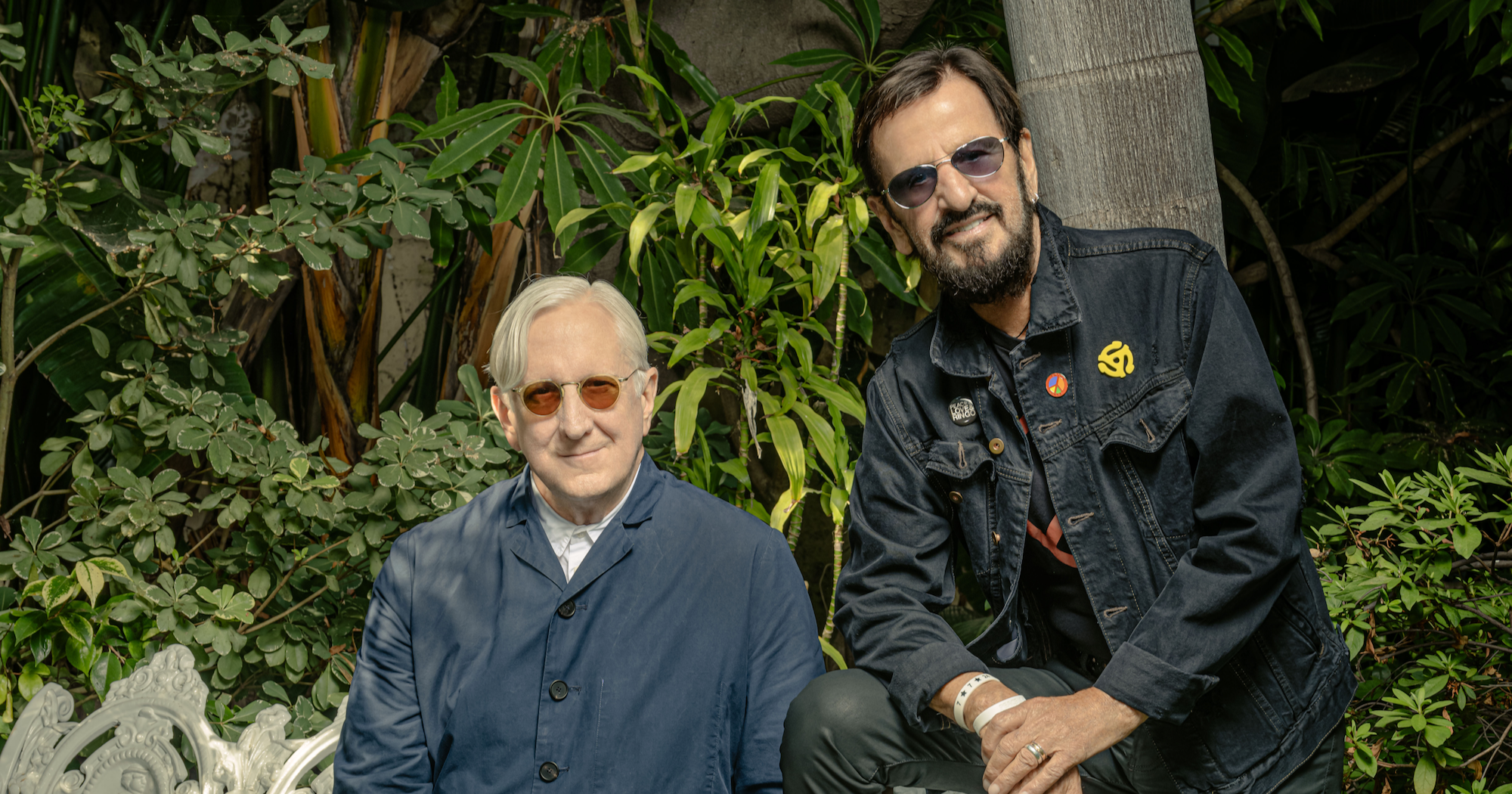
Ringo Starr and T Bone Burnett in Conversation

On a sunny day in late April, I stood outside an ad hoc interview room at the Sunset Marquis in West Hollywood waiting for my turn to speak to Ringo Starr.

Sporadic laughter boomed through the door as the hazy afternoon light danced on the doorknob hanger. Instead of the usual “Do Not Disturb,” this one simply said, “Peace.” The verbiage, apropos for Ringo, served as one part levity and one part beta-blocker as I prepared to speak to a Beatle.

When the door opened, I was surprised and delighted to come face to face with Phil Rosenthal (of Somebody Feed Phil). The unabashed smile on his face foreshadowed the similar joy I would feel taking the same steps through that door just 25 short minutes later.

And yet another revelation unfolded as I walked in the room to find both Mr. Starr and T Bone Burnett, producer of Ringo’s newest album, Long Long Road. The ensuing discussion covered their relationships with genre, synesthesia, and inevitably bobbed and weaved across the rich musical history of these two icons.

Do I get both of you today?

Ringo Starr: Yes!

Excellent!

T Bone Burnett: Only if you want.

RS: Hi. I’m Ringo.

Ha! Yes. The man of the hour. How are you?

RS: Good. Excellent.

Thank you so much for having me.

RS: Oh, it’s our pleasure.

TB: Her dad is a great songwriter, a great guitar player from Muscle Shoals.

RS: We were just talking to someone else about that today.

Really? You were talking about Muscle Shoals today?

RS: Well, we didn’t actually mention it, but we were talking about the music that, for me, started with Johnny Ray and people like that. I was a teenager, and then it went up to country music, and then I got into blues music, and then I got into pop of the day music.

I love country music. And he’s the country boy [as he points to T Bone Burnett].

That’s a fantastic segue to my first question. So as we mentioned, I grew up in Muscle Shoals, and I had this record player that was a little battery-operated blue Volkswagen bus. Do you remember these?

TB: Yeah, I do!

It would ride around the record, and it had a little speaker in it, and I would lay on the ground, and I’d listen to Abbey Road. But it was also around the same time that the video for “Act Naturally,” the duet with Buck Owens, came out. So, for me, you were very genre-fluid from a very early age. I’m curious about a couple of things genre-wise, and T Bone, please jump in on this too.

TB: Okay, I’ll jump in, and I’ll say that the Beatles probably invented what became known as “country rock.” You know, with “I Don’t Want to Spoil the Party.”

RS: And what were the two that were Carl Perkins?

TB: “Honey Don’t” and “Matchbox.”

RS: “Honey Don’t” was the best line I ever heard.

TB: Yeah, it is a killer title.

RS: “Matchbox” was a blues song, really.

TB: Well, “Matchbox” was an old Blind Lemon Jefferson song.

RS: Yes. The interesting thing is I did those in the ’60s, and we just found a Carl Perkins tune that we’d never heard, and we’ve done it on this record. “I Don’t See Me in Your Eyes Anymore.”

I love it.

RS: It is so beautiful and he was just a cool guy. You know, I was a teenager when I first heard him, and it was like, “Oh yeah!”

T Bone: Yeah, he was cool. He, [Carl], had heard “Matchbox” or his dad had heard it by Blind Lemon Jefferson, but they could only remember a few words of it, so he rewrote it as a rockabilly song.

So you knew of country music when you were growing up, you were aware of it.

RS: I did. I was aware of country music. I loved it because it was emotional, and I was a teenager. That’s what we are at that age.

[Ringo singing:] “ Well the wife is dead and I’m leaving home. I got no money for the jukebox.”

Perfect for teenagers.

When I say the words “country music” to you now, what do you think of? Who or what or how do you think of it?

RS: I still think a lot about the people from yesterday, who I came in with. You’ve got to say Willie. I mean, he’s magical and still out there. Thank you, Willie. And who used to open for Willie?

TB: Waylon?

RS: Waylon! He was great. I have to think back.

TB: Well Hank Williams…

RS: Well, no, Hank was where we came in. And Hank Snow. No one mentions him. He was Canadian. Patsy Cline. There’s too many really.

I was talking to someone the other week and they asked, “What is your all-time favorite record?” I couldn’t answer. There is too much that I love. “Who’s your favorite artist?” I start with Ray Charles. And Stevie, and down that line. But I can’t answer it. We were on TV, and I stopped it. I said, “I just can’t answer.” There are too many in my life to say, “That’s the one.”

Plead the 5th.

Do you ever feel constrained by genre? Or inspired by it? What is your relationship with the idea of it?

RS: I’m a pop-rock music drummer. I’ll play whatever you’re gonna give me. If you want it heavy, I’ll hit the cymbals. Heavy metal has some great acts going down. We would jam sometimes and be that.

TB: Oh, well, I mean, the Beatles invented heavy metal, really.

RS: Yeah. It’s just playing the same shit, but heavier.

TB: “Everybody’s Got Something to Hide Except Me and My Monkey” or “Helter Skelter.”

RS: “Helter Skelter” was a jam. We had no song, nothing, we were just jamming, and then Paul came in with, “Hey! Helter Skelter.” Like “Say It’s Your Birthday,” there was someone in the newspaper who we knew, and it was their birthday, and we were jamming. Paul stepped up again, and we got another song. We were like that. You could jump in, any one of us could jump in. I’ve got odd lines we aren’t gonna talk about on certain tracks.

[A publicist chimes in to say:] “T Bone you have five more minutes before you have to leave and then you’ll go and he’ll stay in.”

RS: And then I’ll go and then you’ll stay in. [Laughter]

Well, let’s go back to the Volkswagen.

RS: Let’s get back to it.

Because I have a little bit of synesthesia, I think.

TB: I have that, too.

RS: What have you got?

TB: I see colors when I hear music.

RS: Oh, great!

So, “Octopus’s Garden” was very purple for me. “Act Naturally” is very orangey gold. I’m curious if you’ve ever experienced anything like that. And if it’s not colors, if there are certain textures that you’re looking for in a song, when you’re casting songs for an album? And T Bone, this question’s for you too, since you have it.

RS: T Bone will give me a lot of songs, and I listen to them and I picked my six at the beginning. There were only three I didn’t use. That’s how we started this. In the end, we were talking in my little studio and I said to him, “How many songs have you got?” And he had nine. It gave me the courage to ask him if he would produce the record. All the songs were not on my mind; we were just hanging out like two guys. But it turned into a fellowship.

TB: Well, I can tell you that the Beatles stuff that first came out was very dark blue, all of it. “Don’t Bother Me” especially was the most dark blue of them. It was interesting that the album cover that first came out over here [in the U.S.] was dark blue. So it all sort of coalesced, I think.

That was one of those blessed moments that happen occasionally on earth, you know? Where everybody heard the same thing at the same time.

Absolutely.

RS: I never saw colors. I mean, I did see colors some days… You know what I mean?

[All laugh]

RS: When I listened, it’s how I felt. A sad song, a happy song, a rock song– some of it will move you, and some of it moved me.

TB: Well, I’d better go. But thank you, great to see you again.

Yeah, you too. Nice to see you again.

[As T Bone got up to leave, his wife entered the room and chatter ensued, but he added before walking out the door:]

TB: By the way, “I Want to Hold Your Hand” was very dark blue.

Well, you know, what’s funny is, I had a synesthesia question for Ringo about you, because I didn’t know you were going to be here. But I was going to say that your musical color and texture is exactly like what you are wearing, to me.

TB: Oh, is that right? That’s wild. Thank you! Nice to see you all.

RS: God Bless, peace and love!

Tell me about what it is like for you working in Nashville? Tell me what it feels like working with those players.

RS: I did have experience in the early ’70s when Pete Drake invited me to come, because we were working on a George Harrison record. You know, we keep talking about the steps we take, the moves we make. And I was there with George, and I’m playing for him and he’d called Pete – I didn’t know Pete. Pete had landed at Heathrow, and the car George was sending broke down, so we sent my car. And then he arrived. “Hey, hoss, I see you like country music.”

“Yeah, yeah, I do. How do you know?”

He said, “All those cassettes in your car.”

And then a few days later, he’s saying, “You should come to Nashville.” And I thought, “I’m not going to Nashville. I’m doing stuff here. I don’t have a month or six weeks to go to Nashville.” He said, “A month? Six weeks? Nashville Skyline took two days.” And I said, “I’m coming.” And I went, and we did the same thing.

On the first day, five songs were picked in the morning. Between us, we listened to them all. Five songs were recorded, and five songs were finished. And the next day, we picked five songs. Anyway, it went on the same way, and it was finished. And it took two days, so that was great.

Well, Ringo, you have one of the finest reputations in the music business.

RS: As a drummer or else?

EM: As a drummer, as a human.

RS: Or as a tall person?

The tallest around.

Just for being so kind to people and emanating peace and love, obviously. And you’ve been such a beacon of that for so many decades. Especially in the last couple of weeks I’ve been thinking a lot about that, after finding out that I was going to talk to you. I was curious, I’m sure it’s mostly innate, but do you ever feel like it’s a responsibility – in terms of how you are in the public, in terms of what songs you’re picking? I’m particularly thinking of “Choose Love.”

RS: I just do my best, you know, to pick the songs that give you some movement, and you say, “Oh, I’d like to sing that.” That’s what I’m with these two country songs with T Bone. I mean, I don’t really do it in a political way, that it says this or that. It’s usually peace and love. If I write it, it’s always peace and love – I don’t know what the question was.

Just wondering if it ever feels like a responsibility to you.

RS: You know, I’ve had many a good year, but some years I’ve made really bummer mistakes. It’s like that’s when your brain wins. I mean, even on this record, I’ve got the lines about “let the stuff come in, but let it go.” And I’ve been pretty good at that for a long time. Not that it’s every second of my life. Sometimes it gets in. And it stays in your thoughts. Then you’re in hell. I’m blessed that that doesn’t happen half as much anymore. I can just dump the thought that comes in and deal with whatever it is.

I was going to ask you about that line in particular, because I think it does this beautiful job of talking about a meditative quality of finding peace without being preachy or telling people “how to” and I really love that.

RS: I meditated this morning. I meditate every morning, this time since ‘92. You know, we went to the Maharishi in India with the boys. And I was worried, you know, “Am I doing it properly?” I was talking to him [Maharishi] and he says, “Ringo, even if you fall asleep, you must have been tired.”

And it taught me a great lesson. I was into like, madness and stuff, you know, “It must be this. It must be me. What’s the problem?” And now I get quite calm.

That’s wonderful. Yeah. It comes across on this album. You’re talking about your own experience and that’s–

RS: What else can I talk about? I can’t talk about yours, you know? But thank you.

Tell me about the band that played on this record.

RS: T Bone’s whole band is great. The rest of Nashville is so great. They all came out to help me. To be there. It is in my heart.

Last January, when I was there and back three times. And every time when I’ve played at the Ryman… I’ve been playing there for the last 15 years with the All Stars, but when I go on that stage, I feel all the guys and all the gals who stood on that stage.

And then what happens? The Grand Ole Opry invited me to do three songs. And I go on that stage that has the Ryman circle that the singers stand on. It is magical. For me, coming from England, it was really magical to get on that stage. And the people are great. It is built for music coming out and hitting everybody, because it was a gospel church. I’m still moved. I get on the stage, and I have to go through a minute of, “Wow, wow!”


Photo Credit: Dan Winters
Amy Grant Launches New Podcast Exploring The Me That Remains

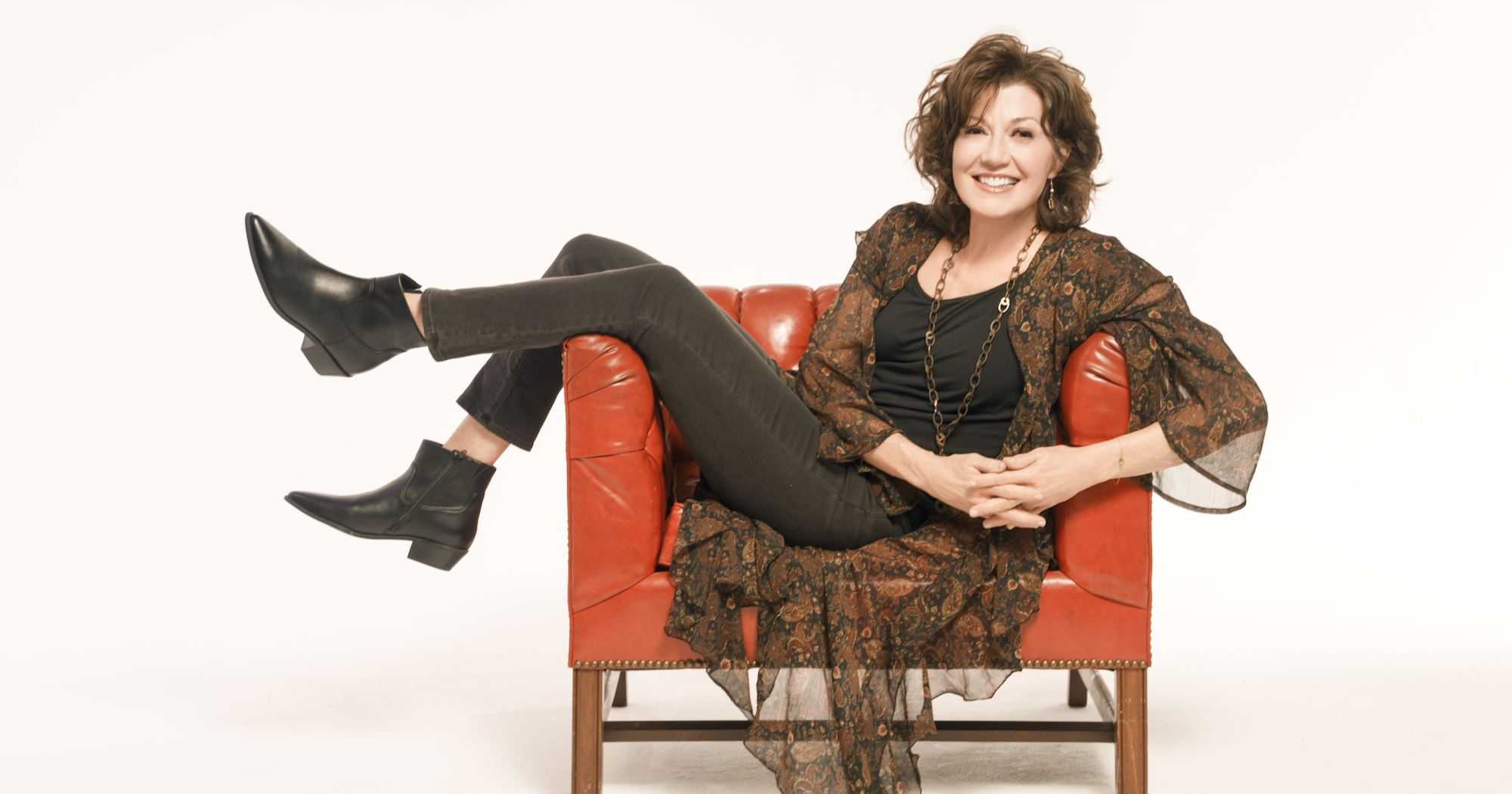
Amy Grant didn’t set out to make her first album of original material in more than a decade. What started as a way to reconnect with herself gradually became The Me That Remains (released May 8), a deeply personal collection of songs about healing and finding ourselves again.

As a compendium to the project and in tandem with host Khalil Ekulona, Grant has launched a new podcast that invites listeners to delve deeper into the stories behind the songs and learn more about what and who shaped the record. (Watch the first episode of the podcast, which has just premiered, below.)

I recently sat down to speak with Grant about the unexpected path that led to The Me That Remains, which she created alongside producer Mac McAnally – full disclosure, that’s my dad. Her candid reflection on some of her life’s most difficult moments was crafted into something that deeply resonates with her fans and is a great reminder that sometimes, when we close a door or two, we open new ones.

Well, I feel very honored to have been tapped to do this, and I also think it’s an interesting perspective because I got to have a backseat to the making of this record through Dad’s eyes. I know he’s told you, but he was just so thrilled and joyful to work on this. We had some screen-free, dedicated listening sessions in the studio and he gave me lots of behind-the-scenes stories about the recordings and some of the stories behind the songs. It was a really special time for me to get to see him through that process, and I hope you know how much it meant to him.

But I was curious as to what led you to pick him for this project.

Amy Grant: I didn’t realize we were doing a project. I reached out to Mac when I had written a song, really the first lyric that I wrote as I was launching into being creative.

To me, this whole project was such a chapter of life that was a recovery journey. I had a bike wreck the summer of 2022 and then not quite two years later I had to go back to Vanderbilt to see a neuropsychologist to get my new baseline. I did a day of testing. I received three different scores. Two were in the 90s, and a third was under 30 percent. I was like, “Oh my gosh, this makes total sense to me.” It makes sense how I’m experiencing life. Everything is happening in the family room, and I’m down the hall in a back bedroom, three steps behind.

The doctor asked how it was exhibiting in my life and I said, “I feel a slow withdrawal in me from everything.” And his advice was, “Lean in. Lean into the things that matter to you, even when you feel uncomfortable. If you feel like you are three beats behind, lean in.”

Within a few weeks, I had created a space in my home to be creative, because creativity is leaning in for me. My watercolors. My dress-up clothes. I know it sounds silly, but my grandkids and I dress up. And I have a record player and my 45 collection and my instruments. Creativity always grounds me, always makes me glad to be alive.

When I created that space, I sat down in the only chair in the room – which is a child’s chair – and top to bottom, I wrote the lyrics to “The Me That Remains.”

Wow.

I was just talking to myself and said, “Hey, this is who you are.” At the time, I was bored with my own musical ideas and still dealing with my short-term memory. I reached out to Mac to say, “I’ve got a lyric. Any chance you would help me with some music?” I think I instinctively reached out to him because he’s fun to be with and a great storyteller. On some level, I trusted him as a person and I felt at ease.

He said, “I’m so busy right now; this could take a while.” Weeks would go by, but he’d say, “I think I’m on to something.” Months went by. I told him, “No sacred cow. Change anything you want.”

In the meantime, I was leaning into creativity and lyrics were coming. So I initiated more conversation with Mac and let him know I was writing more songs. By the end of 2024, life was busy for all of us, but I reached back out and told him that I had two songs I would love to record. “Any chance you would put together a rhythm section? Would you oversee this?” It was such a natural step, and he said yes. But we didn’t have a contract. I didn’t have a record deal. That’s how the whole rest of the record emerged. Weeks would go by, and I would reach out and tell him I had more songs.

“Any chance we can do that again?”

Six weeks later, he’d booked a double session. By then, he was saying, “Hey, I’ve got some songs I’d like to play you.” A month later, we had another session, and then he said, “Hey, we’ve got a whole record.” I so appreciate Mac and his style of producing. It is “come as you are.” He’s very welcoming of everyone’s ideas.

My friends joke about me that it feels like I could hobble together my life, clearly and completely, with a roll of duct tape and a roll of twine. I couldn’t care less if things are perfect. And I really found a great creative match in Mac. He’ll work on something exhaustively. He’ll sing every potential background part until he knows what he wants, and that’s what he’ll ask the singer to do. But he’s also open to things. He looks for honesty and believability over perfection.

And Mac and Vince [Gill] are old friends, and they get in the same room, and the storytelling starts. You feel lucky to be in that space.

That’s wonderful. I find it very inspiring that creating the space for yourself and pulling together the things that make you feel like you helped open those gates. Do you feel like they’re still open?

I do. Yes. I was in that space today. It’s funny. It’s just a little pass-through room, but you can actually close the doors. We live in a house that’s very open and sprawling. There’s not a space that I can close the door and feel like nobody’s going to walk in. I think sometimes, for some of us, that’s important creatively.

I nicknamed that space “Craftopia,” and I was encouraged to create that space by my youngest daughter. She pointed out that there are lots of places to sit, but no place that I can cloister away. She said, “This house, you’ve got a lot of places to sit.” I love to cook, but our kitchen’s wide open. I’ve got my desk with all my books, but it’s a pass-through area. It’s like my life is an open passageway. And just to say it was okay for me to close the doors, be alone, and welcome myself. That’s good for everybody.

Well, that’s a good segue, talking about your daughter. One of the things that gave a twinkle to Dad’s eye was your daughters singing on this record. He loved that process. Can you talk a bit about what that was like for you, and what brought that about?

Well, I have two daughters singing on this project and my daughter Sarah was singing on a song that I wrote with Tom Douglas. Sarah sang underneath me on the song, “The Other Side of Goodbye,” and I wanted Corinna to sing above me. She quietly asked Mac, “I’m not asking to be on the record, but would you let me have the experience of going into the vocal booth? Can I sing with my mom on this song, ‘Beautiful Lone Companion’? I listen to it all the time, and I have all these parts that I sing.”

And I’ll never forget what Mac said to Corinna. He said, “Corinna, you will spend the rest of your life taking what is in your head creatively and getting it out, and then deciding if you like it. I got nothing but time.” She went and got her journal and she had done a chart, just like with solfège. I don’t really know the do-re-me-fa-sol-la-ti-do, like I wouldn’t know how to make a chart with that, but she had made a vocal chart. She ran through it once and asked if she could have another track to double the part and Mac said, “You just saved me from asking you to do that.”

Here’s what was so beautiful. Mac had hired an arranger to do what he was calling a “mandolin symphony” that took up that same space as her parts. His openness to hearing what she had was so lovely. To watch him look at that song, or listen through her lens. At one point, she asked me to come into the vocal booth to listen, and I wrapped my arms around her and she burst into tears. Vince was in the doorway and he came in and we had this three-way hug.

It is true that music comes to us and through us. Creativity is a sacred space. With songwriting, I find that if I’m writing with someone in the same room, you can have an idea musically or lyrically and they’ll say, “Okay, sing it to me.” But I’ll get choked up, even if it is a fun song, because the emotion of landing on something is, well, hard to explain. But it is emotional.

I have this very silly thing that I’ve had since I was a kid, where if I sing gibberish, just words flowing out of my mouth, I cry. It can be the silliest noises coming out. It makes my husband laugh so hard. I can do it at the drop of a hat. Immediately, tears stream down my face. It feels like a deep emotion that I can’t really put my finger on. Not joy, not sadness.

Free. It’s free. We’re all born with a freedom to just be. To classify, not categorize. And we lose that. I think anything we can do to return us to being childlike is good.

Now I want to hear you sing gibberish. I’m not going to ask you to do it right now, but I think I want to try that. It’s funny because, six months ago I started doing a pattern of movements in the mornings, and I do it consistently. It is basically just moving like a child. I call it child’s play. It always makes me laugh.

That’s wonderful.

It is a pattern that I do four times a day: first thing in the morning, last thing at night, and a couple of times during the day. I’m just mimicking the way children move. If you want to be exhausted, follow a 2-year-old around for five minutes and do what they do. There is not a pilates workout that will put you through [that]…

Well, I’m actually really excited that we’re talking after the release of this album, because I’m curious to hear about how you feel about it now that you’ve been able to play this in front of audiences. What has it been like to be out in the world with these songs?

Well, it has felt so comfortable. The response I’ve mostly gotten is that people say, “I feel like I’m stepping into a conversation that’s already going on in my head. You are singing my life.”

I know that there’s such a welcoming, honest observation of life in all these songs. And the songs that are hard are never “us and them.” You know, whatever we’re sitting in, we helped create it. And if there’s moving on, then we will think of a way to move on. The record is very observational and honest and hopeful.

It just makes me so glad to be making music at 65, because my intention is not to try to be center stage anywhere. Job well done is just the experience of creativity. You can’t control it. This project has been met with exponentially more positive feedback than I ever imagined. Well, I didn’t imagine anything. I was just glad for the experience, and that was the gift. The gift was being in the studio with all those incredible musicians, and with Mac.

At the end of the third day of recording, we were just sitting around and Glenn Worf said, “You know, when I first came to Nashville, I wanted to be in a band and I had several misfires, and then that dream kind of went by the wayside. I became a studio player and that’s been great. Time and technology are kind of editing that experience in all of our lives. But we all just had the experience in the studio of feeling like we are in your band.”

I had that same experience. I love my road band. Music truly creates road families. But that experience of being in the room with everyone, Chris Stone at the soundboard, I mean, everybody. I’m so glad we had that.

Yeah, that was a lovely group of deep-feeling people in one room.

Has your relationship to the songs evolved now that they’re out in the world? Have you fallen more deeply in love with any particular song on the album since it’s out there?

Well, first off, these songs all wear well with time, and the relationship I had to develop with the songs was to not get choked up because you can’t sing with a lump in your throat. With “How Do We Get There From Here,” I got to sing that with the Staten Island PS22 fourth- and fifth-graders. I had to steel myself. It’s just hard not to get emotional. Kind of the same as when you are doing your gibberish singing. I feel a greater appreciation for each one of the songs.

The songwriting, whether it’s the songs I wrote alone or with other people, nothing happens without great patience, intention, and time. I know that each one of the writers on this took a great deal of time and attention and patience writing these songs, and I feel very grateful for it.

I’m reminded of the story about Sherwood Anderson and William Faulkner when Faulkner was experiencing some misses, and Anderson encouraged him to write about what he knew. And that is when he created Yoknapatawpha County. It doesn’t matter how specific something is to you. It will resonate with others.

I feel like this record is a great example of that because it is very specific to you. To that pass-through room with the closed doors. To everything that you have been through in the past few years. It is resonating because it is specific.

Let’s talk about the new podcast, The Me That Remains, hosted by Khalil Ekulona. It’s a wonderful companion to the record. Tell me how it came about with Khalil and what it was like to make it.

I met Khalil when he was a guest in our home for Easter one year. My sisters and I all cook. My nieces and nephews add to it. It is definitely a big spread, and I’m always meeting people in my home because somebody else invited them.

I was on a Southwest flight not too long ago, and the flight attendant said, “I came to a party at your house once.” And I said, “I thought you looked familiar.” I’m the youngest in my family, and there were just always people in my parents’ house. And so an open door is the way I grew up.

I met Khalil, and then he invited me to be on [the show he hosted on WPLN], “This Is Nashville.” It’s such a rich exploration of Nashville, and I so enjoyed talking to him that when it was time to create some material, we chose him as the interviewer. He’s such a lovely human, and so thoughtful. I enjoyed my first conversations about these songs being with him.

That’s wonderful. I particularly loved the episode about the album artwork. The way it was pulled together is really beautiful. I strongly encourage readers to check out that episode. It’s wonderful.

Every one of our lives should be turned into a multimedia art piece, because only you know what is important to you.

That’s right.

When you see it all gathered together, it’s extraordinary. I had so many collections when I was younger. Now I’m kind of at the point of passing things on or letting go, and I do think there are stages in our lives.

There’s a collection stage, when you are appreciating that season of life, whatever it is, and the things that you’ve collected. And then there comes a time to lighten the load. And to leave a minimal imprint in some areas, you know?


Photo Credit: Ed Rode

Interviewed by His Daughter, Mac McAnally Recounts a ‘Lifetime’ in Music

Mac McAnally is a highly-decorated and prolific multi-instrumentalist, producer, songwriter, and artist. He tours with Jimmy Buffett’s Coral Reefer Band, plays on countless sessions in Nashville and Muscle Shoals, and produces a number of independent artists, too. But more important to me, he’s my dad. And he’s a great one. On the occasion of the release of his new album, Once in a Lifetime, we discuss guitars, bluegrass, moments of social change, why he covered a Beatles song, and the process of making this record amidst a pandemic. And though I get to talk to him most days of my life, it is heartening to hear him put a fine point on his eternal optimism.

BGS: Growing up, music was constant in the house and one of the most pervasive cover songs you played was “Norwegian Wood.” What do you think it is about that song that sticks in your craw and drew you to record it?

Mac McAnally: As you know, I’ve always loved that song. In the very first line, from a lyric standpoint, “I once had a girl/Or should I say/She once had me,” you can tell any story in the world after that. That is something that I subconsciously try to do and have since the beginning.

Specifically, why I recorded it is because I bought an octave mandolin about four years ago. I did a show with Sarah Jarosz and she had one and let me play it and I thought, “I am going to have to get me one of these.” I always feel like I have to do something to justify the purchase so I play it on as many sessions as I can to try to amortize the cost, but I also came up with this new way to play it that is kind of a cool arrangement that I’ve never heard. I don’t in any way challenge the Beatles version and don’t mean any disrespect; I’m trying to find ways to justify the guilt of buying an octave mandolin.

On almost every record that you’ve made there’s a nod to bluegrass, like “Brand New Broken Heart” on this record. Who are some of your biggest bluegrass influences?

I have to preface this by saying I am a bluegrass fan, I am not a bluegrass player. Anything that I might be doing would just be trying to pay homage to what the greats can do. I’ve gotten to play with some of them, which I count high among the blessings of my life. When I wrote “Brand New Broken Heart,” I envisioned I would someday pitch it to Ricky Skaggs or Dailey & Vincent. I recorded it because I was a lazy song plugger who never pitched it to anybody.

Doc Watson was one of mine and my dad’s heroes. He was sort of my intro to real bluegrass. And all the way through my life, Emmylou Harris. We played her songs in bands when I was a teenager. Bryan Sutton is just frighteningly good. I can’t even fathom what he is doing, let alone try to do it myself. He inspires me to go get a pick out and play differently than I play because I love so much of what he does. And I’m crazy about I’m With Her.

What brought about recording “Changing Channels” for this record?

I have always loved that song. It is the second song that Jimmy (Buffett) and I wrote together. We wrote it in one my favorite places I have ever been. He had a spot down in Thomasville, Georgia, with a big porch. As you know I’m a porch guy. We sat out on the porch and wrote that song. He did a great version of it on Off the See the Lizard and I honestly never imagined myself cutting it but I love to play it. It has worked its way into my shows over the last ten years and his fan base will come up after and ask which one of my records the song is on. They had cash out trying to buy it and I don’t have it. You know better than anybody how terrible of a businessman I am, but eventually enough people tried to buy a version of it that I listened.

You have collected a lot of guitars, and in various ways: some saved from landfills, some gifted, some cast for you by friends and colleagues. How do you pick which guitars make your records?

It is certainly not an exact science but sometimes it is the guitar that the song came out of. The main thing that has always made me select guitars is if I think they have songs in them. I would happen to be holding them and a couple of my stories got mashed with them. In more cases than not, if I wrote a song on a guitar, that’s the one I’ll record. You end up learning over the years. In the same way when you are photographing someone, you learn what the best side of their face is. … A Gibson with dead strings is an awesome rock ‘n’ roll rhythm guitar. A Martin with new strings is an awesome fingerpicking guitar.

We are in a moment of social change. Music has the power to both inspire and record change. You moved to the Shoals in the ‘70s. Thinking back on those early days in the studio, what was it like in those moments?

Playing music in Muscle Shoals was extremely encouraging from the standpoint of equality. They didn’t really think of it in terms of race. Music transcended that. And I love that. And I still love that. I’m standing in Muscle Shoals right now proud to be part of that. You can be encouraged on some levels and discouraged on some levels and I am both of those things. I haven’t in my life ever thought that I was better or worse than anybody else and I look forward to that being a more prevalent vantage point for everyone.

I want to challenge you on that a bit. One of your dear friends and longtime collaborators, Ralph MacDonald, told you that he never felt comfortable coming to Muscle Shoals and we’ve heard from more folks that it wasn’t an inviting place to come collaborate, so a lot of those musicians opted for Detroit or Miami. With that added perspective, does it make you feel differently about the time?

Absolutely, it makes me more aware of the context. As I said, Muscle Shoals would have been advanced in terms of racial relations in the music community in the South. As I look back now, I realize that doesn’t mean it was great. It was just better relative to the surroundings.

Ralph and I, we were like brothers. He told me he would’ve been scared to death of a big red-headed dude from Mississippi. And he was a Black man from Harlem. I could not have imagined that we would connect on as many levels as we did. We both had misconceptions that got better. He was one of my heroes. He was one of the best percussionists that ever played. And I loved him. It is hard to get into racial discussions without stirring stuff up. But we made each other better. Music is one of the best ways to bridge across preconceptions. I think it’ll play a big part of getting us the rest of the way home. ‘Cause we ain’t there yet.

Stirring stuff up is the way we make progress.

That’s true and they are not easy discussions. I don’t think of myself as someone with prejudices, but when I think back, some of the things I laughed at growing up as a kid in Mississippi I’m embarrassed of. And I was mainly laughing because everyone around me was laughing, but when I think of what it was we were laughing at, it is embarrassing. I don’t really want to talk about it, I just want to be a better person, because I know it was wrong. But you are right. Talking about it is better. Air it out.

What does it feel like to release an album in a pandemic?

Well, not speaking ill of either thing, but I hope it is a one-time thing. I hope I never have to try to beat a pandemic album with a second pandemic album. My records are normally made in what I call “the cracks of time.” I make them in the cracks of my schedule because I work full-time as a Coral Reefer, a fair amount of time as a session musician for other people, writing songs for other people and producing other folks. But because of the circumstance of this record, it is really special to me because I got to sit and think about what I felt was important and what was not. I wouldn’t wish a pandemic on the world just to get extra time to make my record. I think maybe next time I’ll just take the time on my own.

Even in your darkest lyrics, there is a balance that shows your shining optimism. We are surrounded by a heavy dose of dark right now. Are you feeling optimistic?

Absolutely. I absolutely am. I wish we weren’t where we are right now and that everyone could see that it is better to find a way to coexist than it is to hate one another. I’m not someone who has any room for hate. As you recall, I don’t even like the word. I’ve probably pestered you about it for your entire life. Actual hate hurts me. We’ve been celebrating the life of John Lewis the last few weeks and John is a great example of figuring out a way to make it better by not hating the people who hated him. I think things are going to get better and I intend to try to help.


Erin McAnally is a regular contributor to The Bluegrass Situation

Photo Credit: Jeff Fasano