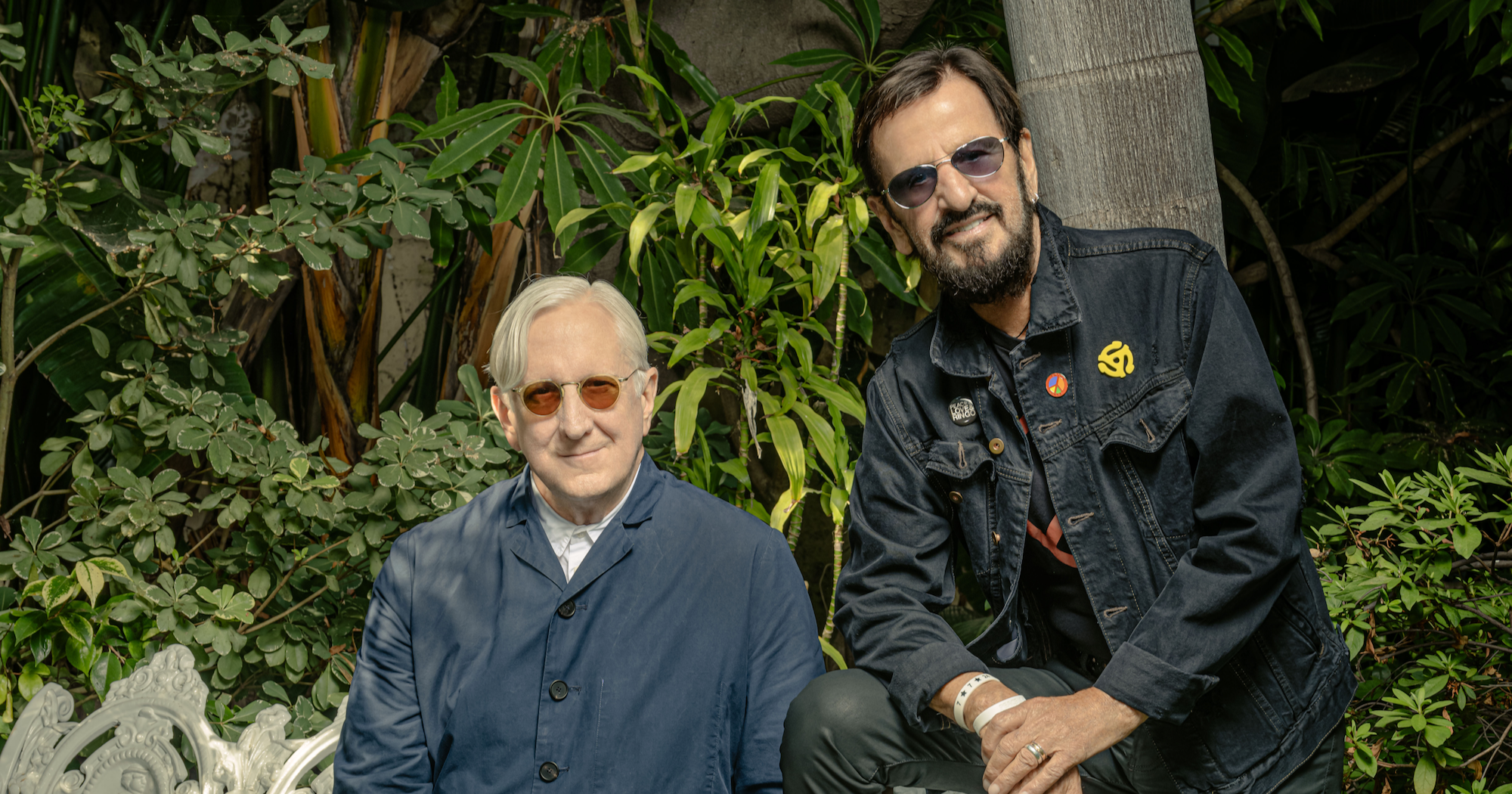
Ringo Starr and T Bone Burnett in Conversation

On a sunny day in late April, I stood outside an ad hoc interview room at the Sunset Marquis in West Hollywood waiting for my turn to speak to Ringo Starr.

Sporadic laughter boomed through the door as the hazy afternoon light danced on the doorknob hanger. Instead of the usual “Do Not Disturb,” this one simply said, “Peace.” The verbiage, apropos for Ringo, served as one part levity and one part beta-blocker as I prepared to speak to a Beatle.

When the door opened, I was surprised and delighted to come face to face with Phil Rosenthal (of Somebody Feed Phil). The unabashed smile on his face foreshadowed the similar joy I would feel taking the same steps through that door just 25 short minutes later.

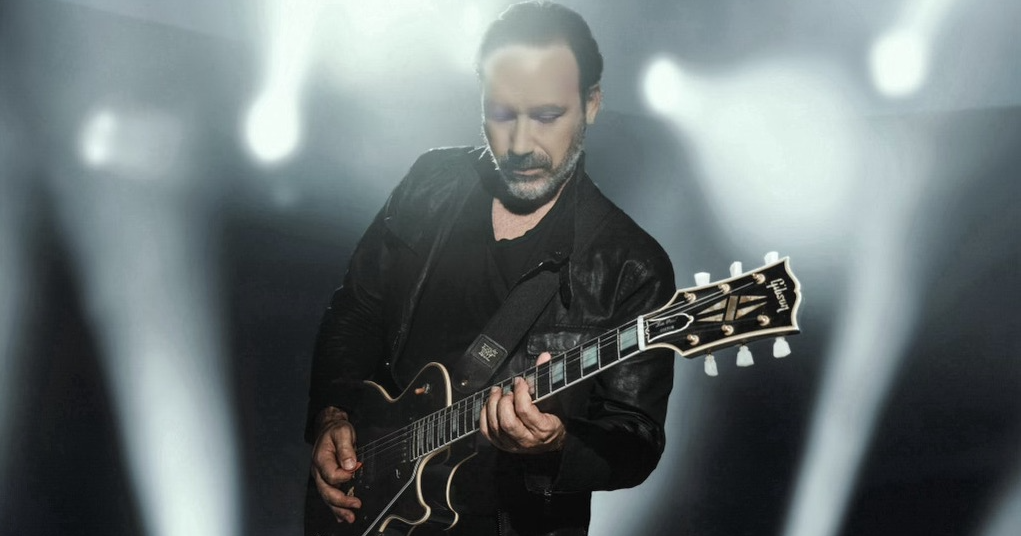
And yet another revelation unfolded as I walked in the room to find both Mr. Starr and T Bone Burnett, producer of Ringo’s newest album, Long Long Road. The ensuing discussion covered their relationships with genre, synesthesia, and inevitably bobbed and weaved across the rich musical history of these two icons.

Do I get both of you today?

Ringo Starr: Yes!

Excellent!

T Bone Burnett: Only if you want.

RS: Hi. I’m Ringo.

Ha! Yes. The man of the hour. How are you?

RS: Good. Excellent.

Thank you so much for having me.

RS: Oh, it’s our pleasure.

TB: Her dad is a great songwriter, a great guitar player from Muscle Shoals.

RS: We were just talking to someone else about that today.

Really? You were talking about Muscle Shoals today?

RS: Well, we didn’t actually mention it, but we were talking about the music that, for me, started with Johnny Ray and people like that. I was a teenager, and then it went up to country music, and then I got into blues music, and then I got into pop of the day music.

I love country music. And he’s the country boy [as he points to T Bone Burnett].

That’s a fantastic segue to my first question. So as we mentioned, I grew up in Muscle Shoals, and I had this record player that was a little battery-operated blue Volkswagen bus. Do you remember these?

TB: Yeah, I do!

It would ride around the record, and it had a little speaker in it, and I would lay on the ground, and I’d listen to Abbey Road. But it was also around the same time that the video for “Act Naturally,” the duet with Buck Owens, came out. So, for me, you were very genre-fluid from a very early age. I’m curious about a couple of things genre-wise, and T Bone, please jump in on this too.

TB: Okay, I’ll jump in, and I’ll say that the Beatles probably invented what became known as “country rock.” You know, with “I Don’t Want to Spoil the Party.”

RS: And what were the two that were Carl Perkins?

TB: “Honey Don’t” and “Matchbox.”

RS: “Honey Don’t” was the best line I ever heard.

TB: Yeah, it is a killer title.

RS: “Matchbox” was a blues song, really.

TB: Well, “Matchbox” was an old Blind Lemon Jefferson song.

RS: Yes. The interesting thing is I did those in the ’60s, and we just found a Carl Perkins tune that we’d never heard, and we’ve done it on this record. “I Don’t See Me in Your Eyes Anymore.”

I love it.

RS: It is so beautiful and he was just a cool guy. You know, I was a teenager when I first heard him, and it was like, “Oh yeah!”

T Bone: Yeah, he was cool. He, [Carl], had heard “Matchbox” or his dad had heard it by Blind Lemon Jefferson, but they could only remember a few words of it, so he rewrote it as a rockabilly song.

So you knew of country music when you were growing up, you were aware of it.

RS: I did. I was aware of country music. I loved it because it was emotional, and I was a teenager. That’s what we are at that age.

[Ringo singing:] “ Well the wife is dead and I’m leaving home. I got no money for the jukebox.”

Perfect for teenagers.

When I say the words “country music” to you now, what do you think of? Who or what or how do you think of it?

RS: I still think a lot about the people from yesterday, who I came in with. You’ve got to say Willie. I mean, he’s magical and still out there. Thank you, Willie. And who used to open for Willie?

TB: Waylon?

RS: Waylon! He was great. I have to think back.

TB: Well Hank Williams…

RS: Well, no, Hank was where we came in. And Hank Snow. No one mentions him. He was Canadian. Patsy Cline. There’s too many really.

I was talking to someone the other week and they asked, “What is your all-time favorite record?” I couldn’t answer. There is too much that I love. “Who’s your favorite artist?” I start with Ray Charles. And Stevie, and down that line. But I can’t answer it. We were on TV, and I stopped it. I said, “I just can’t answer.” There are too many in my life to say, “That’s the one.”

Plead the 5th.

Do you ever feel constrained by genre? Or inspired by it? What is your relationship with the idea of it?

RS: I’m a pop-rock music drummer. I’ll play whatever you’re gonna give me. If you want it heavy, I’ll hit the cymbals. Heavy metal has some great acts going down. We would jam sometimes and be that.

TB: Oh, well, I mean, the Beatles invented heavy metal, really.

RS: Yeah. It’s just playing the same shit, but heavier.

TB: “Everybody’s Got Something to Hide Except Me and My Monkey” or “Helter Skelter.”

RS: “Helter Skelter” was a jam. We had no song, nothing, we were just jamming, and then Paul came in with, “Hey! Helter Skelter.” Like “Say It’s Your Birthday,” there was someone in the newspaper who we knew, and it was their birthday, and we were jamming. Paul stepped up again, and we got another song. We were like that. You could jump in, any one of us could jump in. I’ve got odd lines we aren’t gonna talk about on certain tracks.

[A publicist chimes in to say:] “T Bone you have five more minutes before you have to leave and then you’ll go and he’ll stay in.”

RS: And then I’ll go and then you’ll stay in. [Laughter]

Well, let’s go back to the Volkswagen.

RS: Let’s get back to it.

Because I have a little bit of synesthesia, I think.

TB: I have that, too.

RS: What have you got?

TB: I see colors when I hear music.

RS: Oh, great!

So, “Octopus’s Garden” was very purple for me. “Act Naturally” is very orangey gold. I’m curious if you’ve ever experienced anything like that. And if it’s not colors, if there are certain textures that you’re looking for in a song, when you’re casting songs for an album? And T Bone, this question’s for you too, since you have it.

RS: T Bone will give me a lot of songs, and I listen to them and I picked my six at the beginning. There were only three I didn’t use. That’s how we started this. In the end, we were talking in my little studio and I said to him, “How many songs have you got?” And he had nine. It gave me the courage to ask him if he would produce the record. All the songs were not on my mind; we were just hanging out like two guys. But it turned into a fellowship.

TB: Well, I can tell you that the Beatles stuff that first came out was very dark blue, all of it. “Don’t Bother Me” especially was the most dark blue of them. It was interesting that the album cover that first came out over here [in the U.S.] was dark blue. So it all sort of coalesced, I think.

That was one of those blessed moments that happen occasionally on earth, you know? Where everybody heard the same thing at the same time.

Absolutely.

RS: I never saw colors. I mean, I did see colors some days… You know what I mean?

[All laugh]

RS: When I listened, it’s how I felt. A sad song, a happy song, a rock song– some of it will move you, and some of it moved me.

TB: Well, I’d better go. But thank you, great to see you again.

Yeah, you too. Nice to see you again.

[As T Bone got up to leave, his wife entered the room and chatter ensued, but he added before walking out the door:]

TB: By the way, “I Want to Hold Your Hand” was very dark blue.

Well, you know, what’s funny is, I had a synesthesia question for Ringo about you, because I didn’t know you were going to be here. But I was going to say that your musical color and texture is exactly like what you are wearing, to me.

TB: Oh, is that right? That’s wild. Thank you! Nice to see you all.

RS: God Bless, peace and love!

Tell me about what it is like for you working in Nashville? Tell me what it feels like working with those players.

RS: I did have experience in the early ’70s when Pete Drake invited me to come, because we were working on a George Harrison record. You know, we keep talking about the steps we take, the moves we make. And I was there with George, and I’m playing for him and he’d called Pete – I didn’t know Pete. Pete had landed at Heathrow, and the car George was sending broke down, so we sent my car. And then he arrived. “Hey, hoss, I see you like country music.”

“Yeah, yeah, I do. How do you know?”

He said, “All those cassettes in your car.”

And then a few days later, he’s saying, “You should come to Nashville.” And I thought, “I’m not going to Nashville. I’m doing stuff here. I don’t have a month or six weeks to go to Nashville.” He said, “A month? Six weeks? Nashville Skyline took two days.” And I said, “I’m coming.” And I went, and we did the same thing.

On the first day, five songs were picked in the morning. Between us, we listened to them all. Five songs were recorded, and five songs were finished. And the next day, we picked five songs. Anyway, it went on the same way, and it was finished. And it took two days, so that was great.

Well, Ringo, you have one of the finest reputations in the music business.

RS: As a drummer or else?

EM: As a drummer, as a human.

RS: Or as a tall person?

The tallest around.

Just for being so kind to people and emanating peace and love, obviously. And you’ve been such a beacon of that for so many decades. Especially in the last couple of weeks I’ve been thinking a lot about that, after finding out that I was going to talk to you. I was curious, I’m sure it’s mostly innate, but do you ever feel like it’s a responsibility – in terms of how you are in the public, in terms of what songs you’re picking? I’m particularly thinking of “Choose Love.”

RS: I just do my best, you know, to pick the songs that give you some movement, and you say, “Oh, I’d like to sing that.” That’s what I’m with these two country songs with T Bone. I mean, I don’t really do it in a political way, that it says this or that. It’s usually peace and love. If I write it, it’s always peace and love – I don’t know what the question was.

Just wondering if it ever feels like a responsibility to you.

RS: You know, I’ve had many a good year, but some years I’ve made really bummer mistakes. It’s like that’s when your brain wins. I mean, even on this record, I’ve got the lines about “let the stuff come in, but let it go.” And I’ve been pretty good at that for a long time. Not that it’s every second of my life. Sometimes it gets in. And it stays in your thoughts. Then you’re in hell. I’m blessed that that doesn’t happen half as much anymore. I can just dump the thought that comes in and deal with whatever it is.

I was going to ask you about that line in particular, because I think it does this beautiful job of talking about a meditative quality of finding peace without being preachy or telling people “how to” and I really love that.

RS: I meditated this morning. I meditate every morning, this time since ‘92. You know, we went to the Maharishi in India with the boys. And I was worried, you know, “Am I doing it properly?” I was talking to him [Maharishi] and he says, “Ringo, even if you fall asleep, you must have been tired.”

And it taught me a great lesson. I was into like, madness and stuff, you know, “It must be this. It must be me. What’s the problem?” And now I get quite calm.

That’s wonderful. Yeah. It comes across on this album. You’re talking about your own experience and that’s–

RS: What else can I talk about? I can’t talk about yours, you know? But thank you.

Tell me about the band that played on this record.

RS: T Bone’s whole band is great. The rest of Nashville is so great. They all came out to help me. To be there. It is in my heart.

Last January, when I was there and back three times. And every time when I’ve played at the Ryman… I’ve been playing there for the last 15 years with the All Stars, but when I go on that stage, I feel all the guys and all the gals who stood on that stage.

And then what happens? The Grand Ole Opry invited me to do three songs. And I go on that stage that has the Ryman circle that the singers stand on. It is magical. For me, coming from England, it was really magical to get on that stage. And the people are great. It is built for music coming out and hitting everybody, because it was a gospel church. I’m still moved. I get on the stage, and I have to go through a minute of, “Wow, wow!”


Photo Credit: Dan Winters
You Gotta Hear This: New Music From Jarrod Walker, Dailey & Vincent, and More

Welcome to another edition of our weekly round-up of new roots music! You Gotta Hear This…

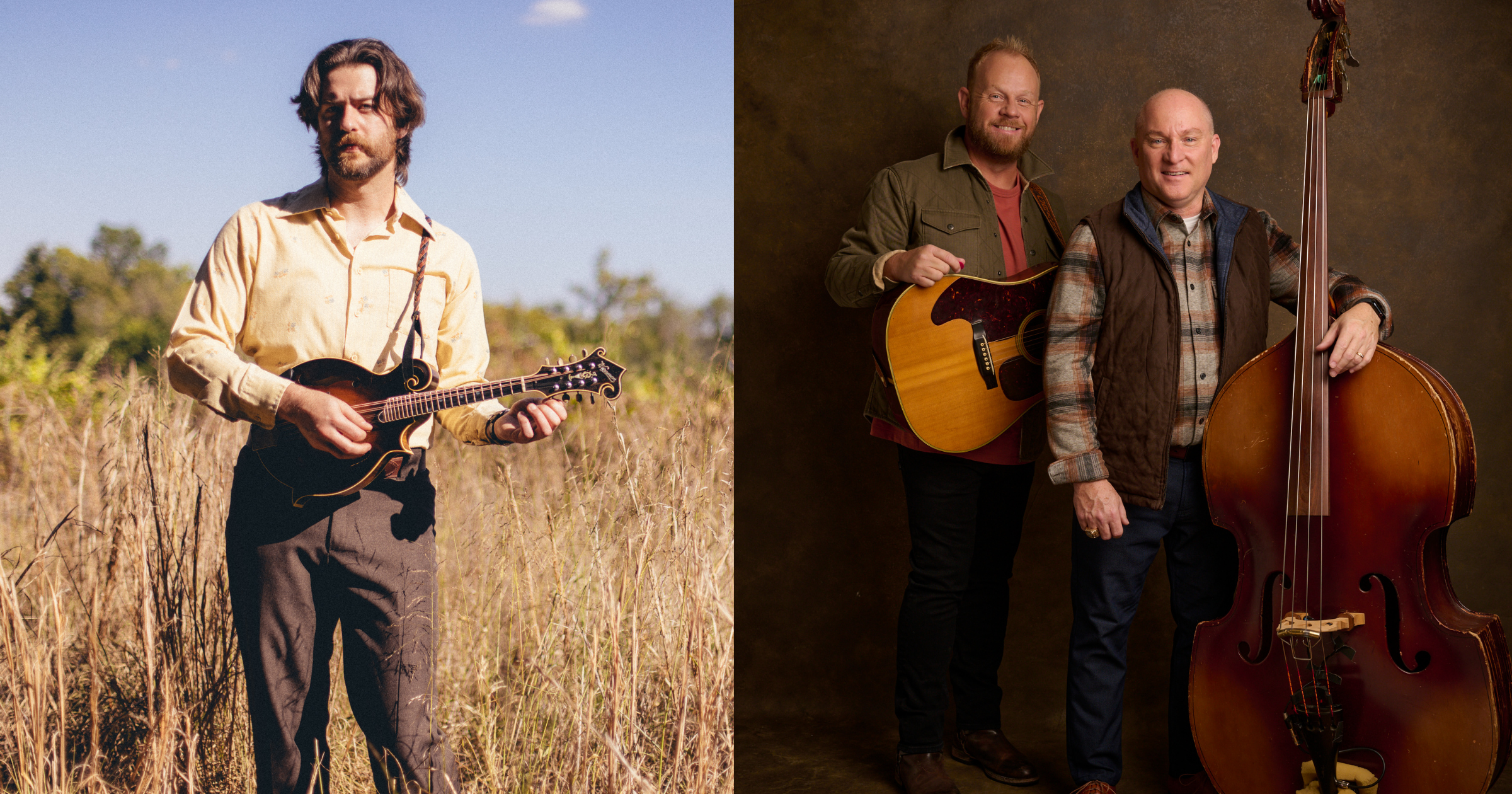
To get us started this week, Dailey & Vincent continue to tease tracks from their upcoming album, A Beautiful Life, which will arrive on June 12. In the meantime, they’re sharing a music video for “Moon Shines on the Still,” another delightfully bluegrassy number for the country-and-gospel-and-bluegrass powerhouse duo. The fresh single’s breakneck tempo doesn’t stymie any of the fine pickers who shred throughout the feisty song about moonshine running and that good ol’ mountain dew. For another bluegrass duo, check out fiddlers Deanie Richardson & Kimber Ludiker launching their new track, “Rutland’s Reel.” It’s an acrobatic and challenging tune by Howdy Forrester with several complicated parts, but these two turned it into a stellar twin fiddle number anyway. What, like it’s hard?

From Asheville, North Carolina, Appalachian string band TANASI infuse their songs and tunes with influences from around the world. “Give Me Love (Give Me Peace On Earth)” is their timely rendition of a George Harrison song, on which Dobroist and multi-instrumentalist Billy Cardine plays a chaturangui, a slide instrument that draws from Indian classical music traditions. Watch a performance video for their cover below. Singer-songwriter Maisy Owen has shared a new music video today, too. “Dark On A Sunny Day” is lush indie folk wrapped in a sonic dreamscape, with a slightly dark and gritty tinge to pair perfecdtly with her evocative lyrics. The beat pulses forward, pushing and pulling the track ahead.

Plus, mandolinist Jarrod Walker – who you may know from Billy Strings’ band – just this week announced an upcoming solo album, Nighthawk, his first release as an artist in his own right. Prior to the album announcement Wednesday, Walker unveiled an upcoming tour in May. Now the lead single/title track from his debut LP is available everywhere, and we’re sharing the lyric video visualizer for the remarkably straight-ahead bluegrass number below. Nighthawk arrives in full on May 8.

Bluegrass, folk, and indie; mandolins, fiddles, and banjos; moonshine, darkness, and emotions – there’s something for everyone to enjoy. You Gotta Hear This:

Dailey & Vincent, “Moon Shines on the Still”

Artist: Dailey & Vincent
Hometown: Nashville, Tennessee
Song: “Moon Shines on the Still”
Album: A Beautiful Life
Release Date: April 10, 2026 (single); June 12, 2026 (album)
Label: Pillar Stone Records

In Their Words: “‘Moon Shines on the Still’ is a fun, up-tempo song with a lot of personality. It’s the kind of record that makes you want to roll the windows down and enjoy the ride.” – Jamie Dailey

“We had a blast recording this one. ‘Moon Shines on the Still’ has energy, heart, and a sound that feels both fresh and true to who we are.” – Darrin Vincent


Maisy Owen, “Dark On A Sunny Day”

Artist: Maisy Owen
Hometown: Nashville, Tennessee
Song: “Dark On A Sunny Day”
Album: Dark On A Sunny Day
Release Date: April 10, 2026 (single); May 1, 2026 (album)
Label: Tompkins Square

In Their Words: “There was a period of time two years ago in the summer when I was writing almost every night. ‘Dark On A Sunny Day’ was one of the first songs I kept. There’s a kind of honesty that comes with someone’s early work, something I always look for when I deep dive into a new musical obsession. Something early is something pure. This is the only song on the album with a full band arrangement. The instrumentation is dark and unceasing. There is no metaphor or veil regarding the lyrics, they are candid.” – Maisy Owen


Deanie Richardson & Kimber Ludiker, “Rutland’s Reel”

Artist: Deanie Richardson & Kimber Ludiker
Song: “Rutland’s Reel”
Release Date: April 10, 2026
Label: Mountain Home Music Company

In Their Words: “‘Rutland’s Reel’ was written by one of my ultimate fiddle heroes, Howdy Forrester. In typical Howdy fashion, it’s got several parts and is challenging to play. It was a lot to take this one on as a twin fiddle piece and Kimber took on the challenge of learning the harmony part. She nailed it! I’m so proud to have this tune on our record honoring the great Howdy Forrester.” – Deanie Richardson

Track Credits:
Deanie Richardson – Fiddle
Kimber Ludiker – Fiddle
Cody Kilby – Acoustic guitar
Hasee Ciaccio – Upright bass
Tristan Scroggins – Mandolin
Kristin Scott Benson – Banjo


TANASI, “Give Me Love (Give Me Peace On Earth)”

Artist: TANASI
Hometown: Asheville, North Carolina
Song: “Give Me Love (Give Me Peace On Earth)”
Album: TANASI
Release Date: April 9, 2026 (single); May 8, 2026 (album)

In Their Words: “This song by George Harrison feels especially relevant right now – we need as many songs about peace and love as possible in difficult times. It echoes both backward and forward, carrying layers of meaning that resonate personally and globally. In addition to honoring the song itself, we wanted to pay tribute to Harrison’s influence – particularly his role in bringing classical Indian instruments like the sitar into popular music. Alongside his signature Dobro, Billy Cardine plays the chaturangui, a slide instrument developed by his teacher in India, Debashish Bhattacharya. With its 22 strings, it creates a rich, shimmering tone reminiscent of the textures heard in many of Harrison’s recordings. Mary Lucey and Anya Hinkle share the lead throughout, trading lines and weaving their voices together in sister-like harmony.” – TANASI

Track Credits:
Billy Cardine – Dobro, chaturangui
Mary Lucey – Bass, vocals
Anya Hinkle – Guitar, vocals


Jarrod Walker, “Nighthawk”

Artist: Jarrod Walker
Hometown: Lithia, Florida
Song: Nighthawk
Album: Nighthawk
Release Date: April 8, 2026 (single); May 8, 2026 (album)

In Their Words: “A few years back, I stumbled upon the word ‘Nighthawk’ in The Dictionary of Obscure Sorrows, a collection of definitions for newly invented words that describe unnamed emotions, feelings, and experiences. Initially, ‘Nighthawk’ began as a moody, vibey track, but Christian Ward and I soon realized it worked better as a straight up bluegrass song. Once we committed to that approach we were able to lock down a couple verses, a chorus, and everything started to take shape. One of the trickest parts of songwriting is revisiting an unfinished song, returning to that headspace to add final touches Eventually we added a third verse which tied it all together with a big ribbon and bow. Now I couldn’t imagine it without it. I find that with trad bluegrass it’s best to keep things close to home or else you risk losing the essence of the song. I say that now, but ask me how I feel next year. The band knocked this one out in a few takes and later Billy [Strings] added a killer tenor harmony. Ultimately, ‘Nighthawk’ wound up being by far one of the grassiest tracks on the record.” – Jarrod Walker

Track Credits:
Jarrod Walker – Vocals, mandolin
Cory Walker – Banjo
Jamie Dick – Drums
Christian Ward – Fiddle
Jake Stargel – Guitar
Royal Masat – Upright bass
Billy Strings – Background vocals


Photo Credit: Jarrod Walker by Jesse Faatz; Dailey & Vincent by Gregg Roth.

Jason Sinay’s Peace & Love Playlist

It’s 2026 and the world remains deeply shaped by persistent conflicts and social divisions, making songs of peace and love an essential “universal language” for fostering unity. As global tensions in regions like Ukraine and the Middle East continue to create an us-versus-them mentality, music serves as a critical bridge that transcends cultural and linguistic barriers to remind us of our shared humanity.

These songs do more than provide comfort; they act as a tool for disarming hearts and promoting reconciliation in an increasingly polarized landscape. By lowering anxiety and increasing empathy – the emotional foundation for peaceful coexistence – music provides a rare space where diverse groups can connect without prejudice. Now more than ever, these songs are needed to shift the global narrative from division and “moral degradation” toward a future built on compassion, harmony, and collective resilience. The lyrics of these amazing songs epitomize “peace & love” and speak for themselves. – Jason Sinay

“Imagine” – John Lennon

This song still remains a timeless global anthem that serves as a “hymn for peace.” It transcends cultural and political boundaries by challenging listeners to envision a utopian reality free from the divisions of nationality, religion, and material possessions.

“Blowin’ in the Wind” – Bob Dylan

Dylan uses evocative symbols like the “white dove” to represent the enduring human quest for a world without conflict. Its series of rhetorical questions challenges listeners to confront social injustices and the “cannonballs” of war, suggesting that while the answers for global harmony are as ever-present as the wind, they require collective courage to grasp and implement.

“Get Up, Stand Up” – Bob Marley & the Wailers

Marley emphasizes that true harmony can only be achieved through justice and the active defense of human rights. The song challenges listeners to seek fulfillment and equity “on earth,” rather than waiting for divine intervention, serving as a global rallying cry for unity against all forms of oppression.

“Give Me Love (Give Me Peace On Earth)” – George Harrison

This amazing song’s lyrics act as a personal mantra for divine guidance, asking for the “light” and “life” necessary to heal a world filled with conflict and social burdens.

“Ripple” – Grateful Dead

“Ripple” promotes a sense of shared humanity by acknowledging that while every individual must walk their own path, we are all “in the same boat” and should reach out to help one another.

“Heart Of Gold” – Neil Young

Written while Neil was physically vulnerable and recovering from a back injury, he describes himself as a “miner” traveling across oceans and forests. The song emphasizes that the pursuit of a loving and compassionate soul is a lifelong, global journey that connects us all.

“She’s a Rainbow” – The Rolling Stones

This incredible tune captures the vibrant spirit of the Summer of Love through its whimsical, baroque-pop arrangement. It functions as a “pure love song,” departing from the Stones’ typically gritty style to offer a colorful, psychedelic tribute to femininity and universal beauty.

“Ophelia” – The Band

While this song is often interpreted as a lively, Dixieland-style track, it functions as a song of peace and love in exploring the deep emotional bonds and protective concerns shared between friends or lovers.

“Feels Like Home” – Randy Newman

This song truly captures the profound sense of safety and belonging found in a deep connection. The lyrics contrast a harsh external world with the sanctuary of a relationship.

“The Best Part of the Day” – Elton John & Leon Russell

This incredible tune celebrates the simple sanctuary of a deep, lifelong friendship. It portrays a serene “peace of mind” found in the presence of someone who has shared one’s “crazy ways” and provides comfort through life’s trials.


Photo courtesy of the artist.

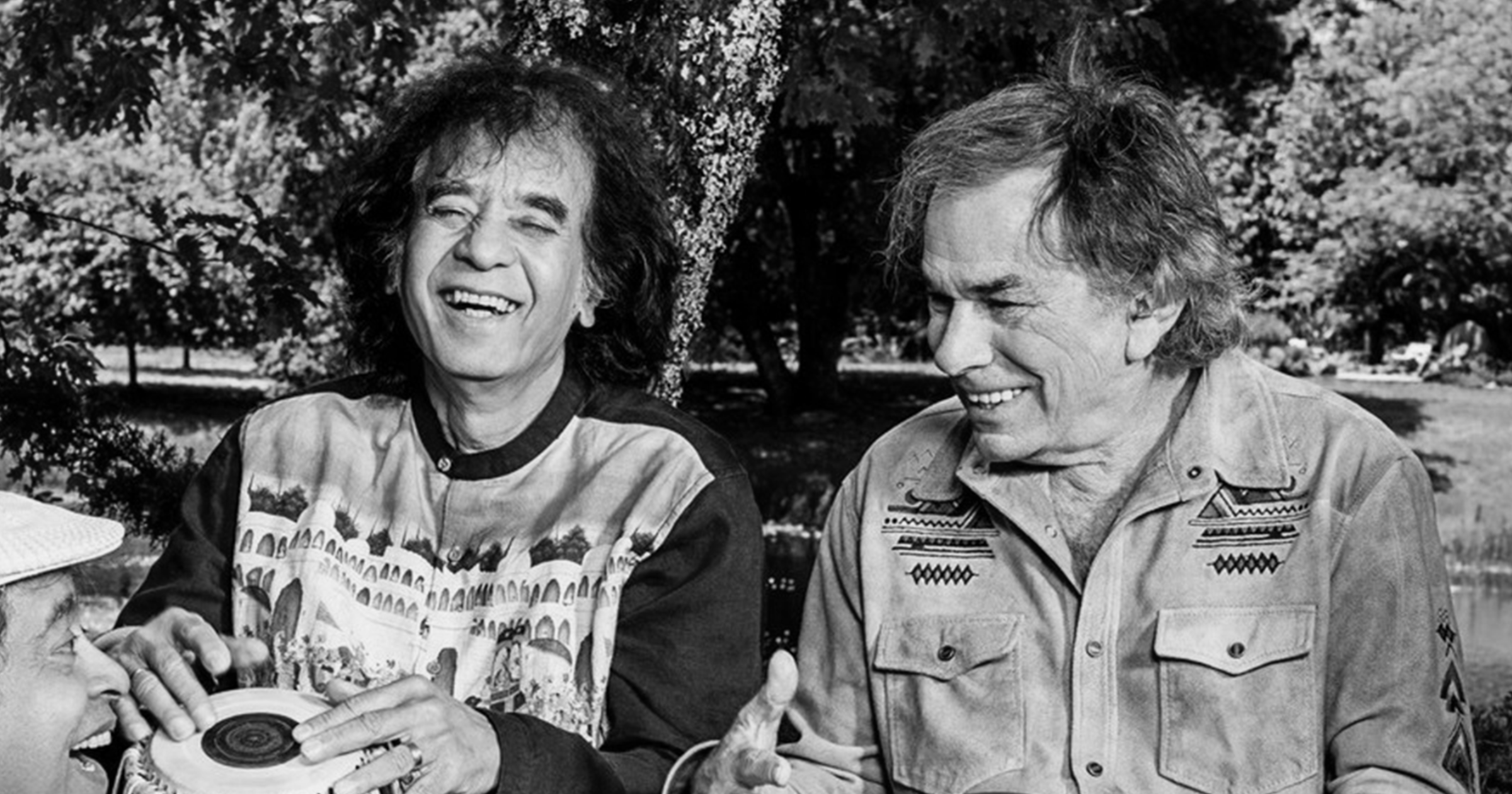
Grateful Dead Drummer Mickey Hart Remembers Tabla Genius Zakir Hussain

“I am here. I’m ready to play.”

That, Mickey Hart recalls, is the first thing Zakir Hussain said to him when the young Mumbai-born tabla player, having recently arrived in the U.S., knocked on the door at the Grateful Dead drummer’s Marin County ranch.

“Oh, okay,” Hart says he replied. “Here we go.”

That was 1970 and go they did, forming a deep musical and personal bond that lasted from that day until Hussain’s death from lung disease on Dec. 15 at just age 73. Hart had been studying with Hussain’s father Ustad Alla Rakha, Ravi Shankar’s long-time tabla partner.

“His father said, ‘I can’t play with you because I play the quietest instrument in the world and you play the loudest,’” Hart says, laughing in the den of his ranch house on a recent Zoom chat. “But he said, ‘My son, he could play with you. I will send him to you.’ And so he did.”

And? “It was just magic,” Hart says, beaming with the memories.

Soon Hussain moved into the barn studio facility at Hart’s ranch. And they played. And played.

“We played for four hours one time,” he says, then realizing that was nothing. “We played for four days and nights! Four days and nights! We really got to know each other and played every day. He was the crown prince of tabla, and when his father died he became the king.”

Father and son, in fact, duetted on Hart’s first solo album, Rolling Thunder, released in 1972. Soon other collaborations followed, including the creation of the Diga Rhythm Band, which grew around a multi-cultural percussion ensemble Hussain formed at the Ali Akbar College of Music in Berkeley. The group’s lone 1976 album also featured Hart’s Grateful Dead mate Jerry Garcia on two tracks.

“He loved Jerry, they just loved each other,” Hart says. “Their personalities were very similar. Jerry was really kind, loving, thoughtful, and so was Zakir.”

Hart and Hussain sparked creative energy in each other and an eagerness to explore.

“He taught me various ways rhythms could be used, exposed me to rhythms that I could never imagine, which I took to immediately, and I wanted to learn them,” Hart says. “When we did Diga Rhythm Band together, that was the first time I had to learn composition. He composed half of it and I composed the other half.”

If Hart had to learn new discipline, Hussain had to unlearn some.

“When he came to America he kind of picked up on some American traits, and he liked the looseness of my style,” Hart says, slipping back and forth between talking of Hussain in the present and past tenses with the freshness of this loss. “It freed him from the strictness of Indian classical music. My gig was a little serpentine, you know. His is straight down the pike. As accurate as he could be, it is like a machine. He’s the Einstein of rhythm, so playing with Einstein was really cool. But I didn’t have that sensibility. That’s not the way we did it in the Grateful Dead, right? And he loved that. He really took to it. And that’s what he said I taught him. It was a wonderful combination, a meeting of the minds and a meeting of the hearts.”

The meeting, and the mutual growth and openness to new vistas, continued as Hussain had key roles on Hart’s 1990 album At the Edge, 1991’s Planet Drum (which won the first-ever GRAMMY Award for World Music), 1996’s Mystery Box, 1998’s Supralingua and 2000’s Spirit Into Sound. Each brought together a world-circling community of percussionists on stage as well as in the studio.

With 2007’s Global Drum Project, the Planet Drum ensemble coalesced around a core of Hart, Hussain, Puerto Rican conguero Giovanni Hidalgo and Nigerian talking drum master Sikiru Adepoju, the quartet mounting several dazzling concert tours and coming together again for the 2022 album In the Groove. The joy they brought each other was clear to anyone who saw their shows.

The same spirit sparked much exploration throughout Hussain’s life. Around the same time he was creating Diga, he teamed in Shakti with jazz guitar boundary-breaker John McLaughlin, Indian violinist L. Shankar, and Indian percussionists Ramnad Raghavan and T.H. Vinayakram, rooted in traditional styles but reaching to new territories. Hussain and McLaughlin teamed regularly through the years with several other lineups (at times called Remember Shakti) and a triumphant final Shakti album and tour in 2023.

Hussain also had his own regular tours and recording projects with different ensembles under the name Masters of World Percussion, as well as a 2015 tour leading an East-West ensemble with veteran jazz bassist Dave Holland inspired by the oft-overlooked world of Indo-jazz.

Taking another tack, with Béla Fleck and Edgar Meyer he created a banjo-bass-tabla triple concerto, “The Melody of Rhythm,” crossing lines of progressive bluegrass and both Western and Indian classical as documented on a 2009 album with the Detroit Symphony Orchestra. The three came together again in 2023 for the album At This Moment, which also features Rakesh Chaurasia on the Indian bamboo flute, the bansuri.

Other collaborators, among many, included Yo-Yo Ma, Van Morrison, George Harrison (Hussain played on the 1973 album Living in a Material World), Bill Laswell, and even Earth, Wind & Fire. He also had a long association with saxophonist Charles Lloyd that produced several wonderful albums, including 2022’s Sacred Thread, a trio with guitarist Julian Lage. And, of course, he made countless concert appearances and recordings with the top artists of Indian classical music.

“No one has crossed more borders than him,” Hart says. “Yeah, I’ve crossed a few myself. Not like him. He’s gone beyond me or anybody else I’ve ever met or heard of. He took to the air and went to all these different places, interacted magnificently with all these different cultures. What an incredible ambassador of music.

“And he was very kind when he played with you. He never overplayed, which he could do in an instant. But he was so kind, such a great person that he reserved himself. He never tried to show you up, he was never in competition with me. He was harmonious and rhythmically blissful, in a way. I guess you could call this bliss, bring the bliss word into this.”

Can Hart hear Hussain in some of his own and the Dead’s music?

“Oh God, yes!” he says. “Think of all the Grateful Dead rhythms.”

He cites “Playing in the Band,” for which he wrote the music with Bob Weir, adapting a piece called “The Main Ten,” a version of which appeared on Rolling Thunder.

“That’s 10/4 rhythm,” he says. “Nobody played 10/4 then! And there was ‘Happiness Is Drumming,’ which became ‘Fire on the Mountain.’ That was one we did in Diga. And the 7/4 on ‘Terrapin Station,’ and a lot on Blues for Allah. That was what we were playing in Diga and Phil Lesh picked up on it and everybody picked up on that rhythm and that became ‘King Solomon’s Marbles.’ No one did that in rock ‘n’ roll.

“So Zakir influenced me in so many ways, subtle ways and obvious ways. He was a big influence on the Grateful Dead. And he loved the way Bill [Kreutzman] and I interacted. That became kind of a model for him in some ways because it made it, I don’t know how you’d say it, legal for him in a way. He said, ‘Oh! Now I can do this! This is okay!’ Because only two drummers could do something like that.”

With all that, where would Hart recommend someone wanting to get to know Hussain’s music start? At first he insists that he couldn’t possibly narrow it down.

“I’d rather not,” he says. “Anything he ever played on is a wonder.”

But he gives it a little thought, mentioning several of the cross-cultural albums they made together, before focusing on Venu, a very traditional session he recorded in 1974 featuring Hussain in duet with Indian classical bansuri flute player Harisprasad Chaurasia. This came about when George Harrison’s “Dark Horse” tour, which featured the Indian all-star ensemble Ravi Shankar & Family (including Hussain’s father) as well as Western musicians, did shows in the Bay Area. Harrison and Shankar arranged for a private concert to be held at the historic Stone House, a granite building in Fairfax.

“We brought a bunch of them back to Marin County,” Hart says. “I had just got a 16-track machine from Ampex, threw it in the back of my pickup with a bunch of hay and all that. We went there and did the first 16-track remote recording.”

The music on the album is gripping, two long pieces featuring the venerable Rag Akir Bhairav, a devotional melody meant for the early morning hours, unfolding with grace and power. The first part is largely Chaurasia solo, with Hussain coming in for the second half, the pairing at times delicately rippling, at others building to frenzies, always in perfect, empathic sync.

Hart also cites Sarangi, a second album which he and Hussain co-produced at the same event with Ustad Sultan Khan’s sinewy playing of the bowed instrument that gave the album its title, accompanied by tabla player Shri Rij Ram.

Legacy is a difficult thing to predict. But to Hart, Hussain’s artistic importance is found in the drive the two of them shared to experience all music and cultures and to bring them together.

“He brought together cultures that no one had ever dreamt of, from Egypt with me and [oud player] Hamza El Din, from Nigeria with [drummer] Babatunde Olatunji, with Airto from Brazil. We introduced into the Western world something filled with all these gems and wondrous rhythms. That’s something that will never be forgotten. And all the cultures he touched around the world for all these years. He made quite a difference. There is no place that he’s played that he is not revered.”

It’s talking on a personal level, though, that Hart becomes emotional, effusive, as he reaches back through time to that day Zakir Hussain came to play.

“We just fell in love with each other,” he says. “We really liked each other. He is such a kind man. I don’t know anybody who doesn’t like him. I can’t say that about anybody else, actually.”

He throws his head back and laughs.

“He’s singular in that respect. And it reflected in his music and the way he played with other people.”


Photo Credit: Jay Blakesburg

BGS Class of 2023: Reading Recommendations

I call January my reading month. To be clear, I do of course still scan words and decipher syntax throughout the remaining 11 months that fill the calendar, but I always seem to start and finish the most books in the first month of the year. I don’t think it’s because I have a romantic notion of what my new self will be like in this new year – always reading and writing more or doing xyz to “better” myself (though if I’m being honest, that’s probably part of it). Rather, I think it’s more so that in the hangover of the holidays, when the gatherings are over, and there are months of dreary winter to look forward to, I take comfort in the ability to transport myself to another time or place, or simply get lost in someone’s thoughts for hours at a time. 

This community, as much as any, understands the import of passing stories on – allowing a new generation to take the torch and keep honored traditions burning while evolving its culture and extinguishing the shameful parts of its priors. That’s why we at BGS compile notable books that tell the stories by or about these genres’ songs and songwriters and the scenes, places, and events that made them. 

Maybe you’re like me, looking for ideas of books to get lost in this winter, or maybe you are looking for a way to turn the page on the calendar and become your most “badass self” (we’ve got a book for that). You might be here looking for a last minute gift idea for that special music-loving person in your life. In all those cases, you’ve come to the right place! 

We’ve got a book by an esteemed songwriter who waxes poetic on the art form he loves. We’ve got titles about how certain times in certain places scenes have blossomed and sub-genres formed so palpable that listeners can identify a song by its roots. We’ve got biographies of famous musicians, and some of whom have looked back at their own lives and careers. Find all that and more in our list of reading recommendations, organized by categories below: 

Sense of Place

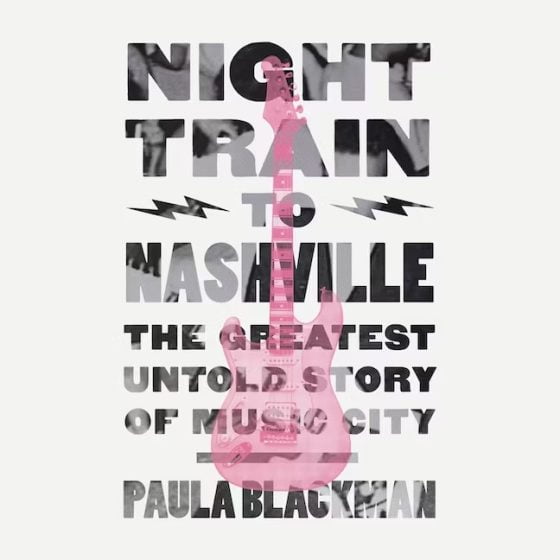
Night Train to Nashville: The Greatest Untold Story of Music City, Paula Blackman

Drawing on stories from her grandfather, E. Gab Blackman, a 30-year radio executive at WLAC, Paula Blackman shares the story of how the Nashville radio station became a pioneering source for Black rhythm and blues music in the 1940s and ‘50s. Seeing the opportunity to reach a more diverse audience – not, as Paula notes, to be a “white savior” – Gab teamed up with disc jockey Gene Nobles to play “race records.” In Night Train, Blackman also profiles William Sousa “Sou” Bridgeforth, the owner of New Era Club, a prominent Black nightclub in Nashville that blossomed as a result of the new artists being spun on WLAC airwaves, many of whom were introduced to Gab by Sou. Fitting that the story of Nashville, in the time leading up to the civil rights era, is told through the music played on the AM radio speakers throughout the city. 

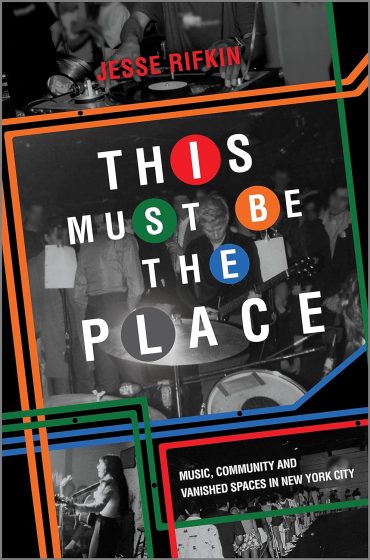
This Must Be the Place: Music, Community and Vanished Spaces in New York City, Jesse Rifkin

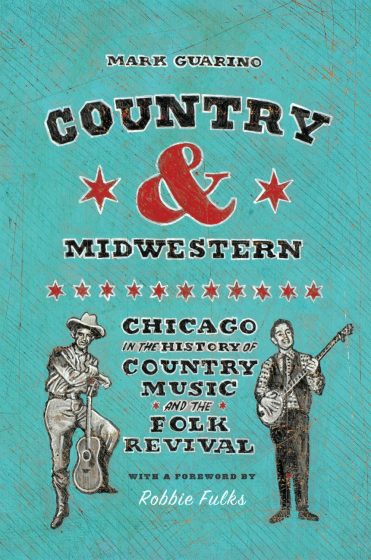
Country and Midwestern: Chicago in the History of Country Music and the Folk Revival, Mark Guarino

In Their Own Words

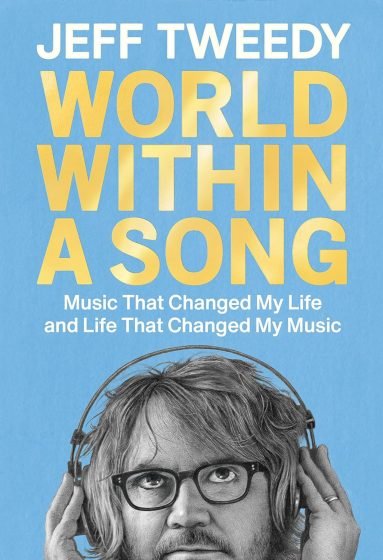
World Within a Song: Music That Changed My Life and Life That Changed My Music, Jeff Tweedy

Wilco frontman and New York Times bestselling author Jeff Tweedy follows up on Let’s Go (So We Can Get Back) and How To Write One Song with a gushing love letter to songs. In it, Tweedy dedicates chapters to many (but clearly not close to all) of the songs that have resonated deeply with him for one reason or another. From Bob Dylan to Billie Eilish, from The Clash to ABBA, Tweedy sheds any and all pretense of what might be considered “cool” in his selections. 

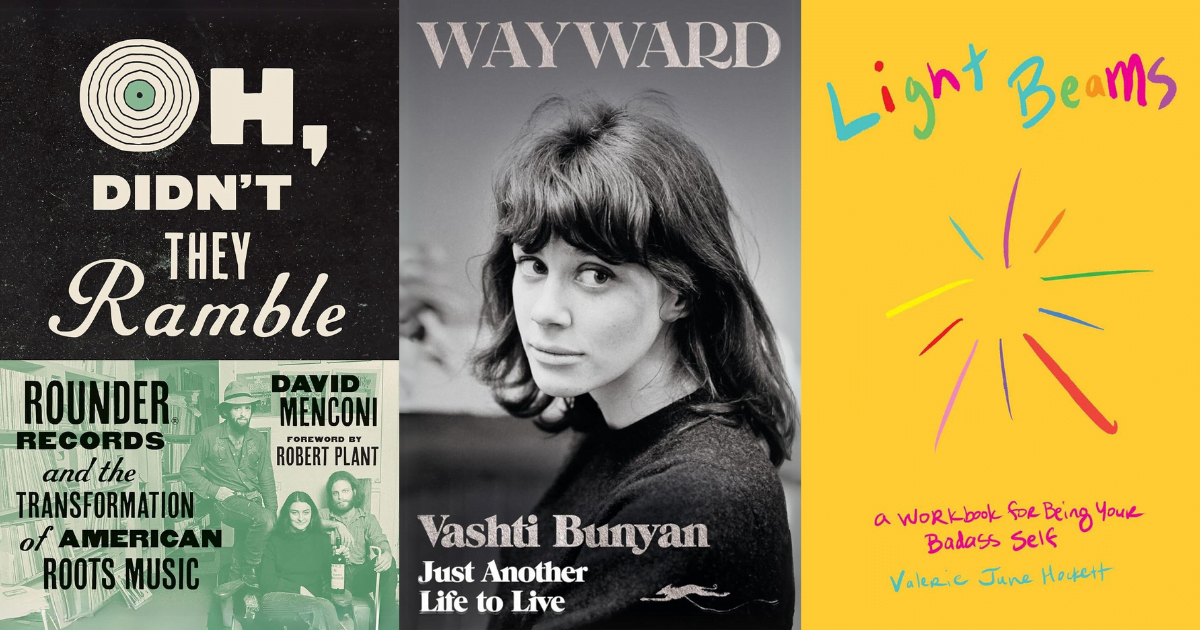
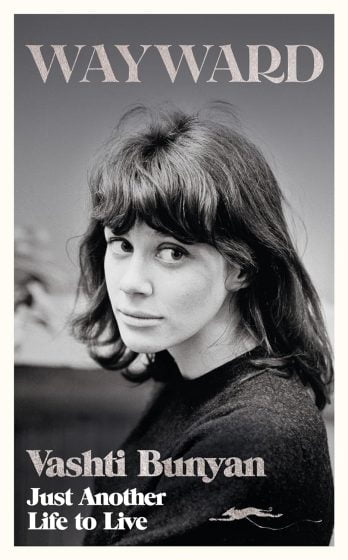
Wayward: Just Another Life to Live, Vashti Bunyan

In Wayward, Vashti Bunyan, an English singer-songwriter, recounts her early career in the mid ’60s leading to her debut release, Just Another Diamond Day, in 1970. Disillusioned by its lack of success (at the time) and the fact that her songs, life, and career were all dictated by men, she left the music industry entirely before re-emerging in the early 2000s. Pick this up for the story of what happened in between, how she reclaimed her life, and is taking her second act in music on her own terms. 

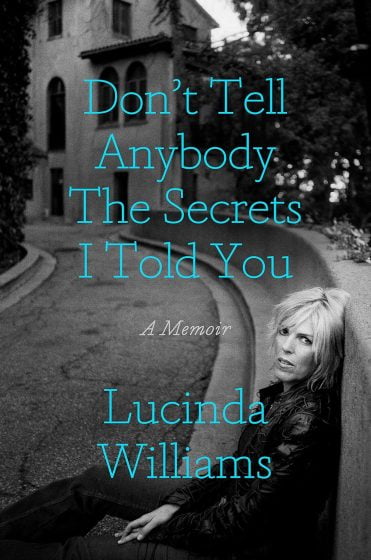
Don’t Tell Anybody the Secrets I Told You: A Memoir, Lucinda Williams

3-time Grammy award-winning songwriter and now New York Times best-selling author, Lucinda Williams, recounts her upbringing and bumpy ride to fame. Once getting feedback from a record company who said her music was “too country for rock and too rock for country,” Williams stayed the course, and became one of the greatest and most influential songwriters of our time.

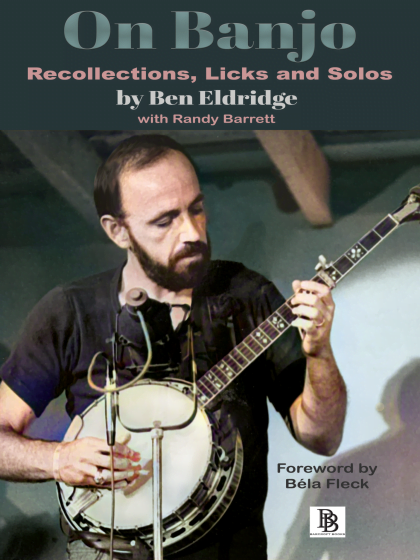
On Banjo: Recollections, Licks and Solos, Ben Eldridge

Born in Richmond, VA, Ben Eldridge fell in love with roots music watching WRVA’s Old Dominion Barn Dance. In this memoir-meets-tablature book, he recalls his path from upbringing to moving to D.C. to become a mathematician, and ultimately going from jam sessions to forming a group that would change bluegrass henceforth – the Seldom Scene. This conversational book with pictures that set the scenes even comes with licks and transcriptions for banjo playing fans. 

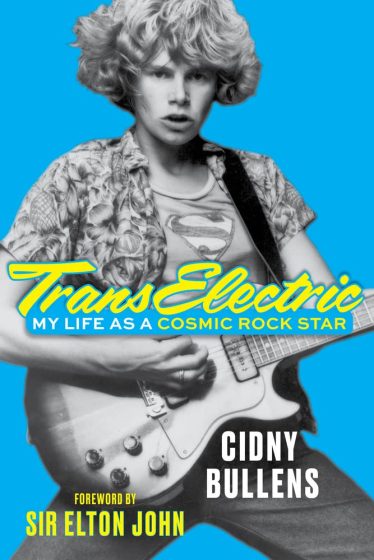
TransElectric: My Life as a Cosmic Rock Star, Cidny Bullens

This book starts with a bang! And I’m not even talking about the foreword from Elton John. As just a 24-year-old Cidny (then referred to as Cindy) had shown up uninvited to a live recording session for Dr. John at Cherokee Studios in Hollywood, and eventually found himself starting an impromptu jam with Ringo Starr, Eric Clapton, Dr. John, and Joe Cocker. This retrospective traces his arc from a backing vocal career in the drug-fueled ’70s for the likes of Elton John and Rod Stewart, and having trouble finding his footing as a solo artist who had expectations of how a woman could behave and perform. Bullens settled into the life of a typical suburban mom, experienced a personal tragedy, and eventually found his true voice. 

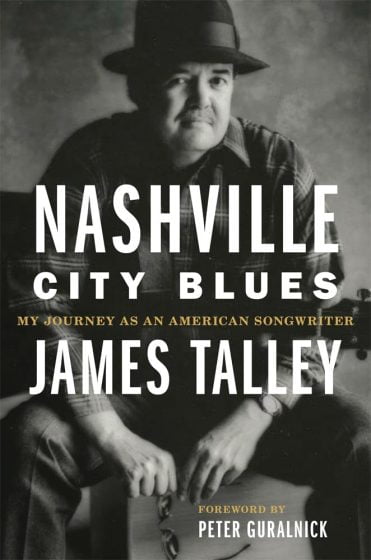
Nashville City Blues: My Journey as an American Songwriter, James Talley

Biographies & Histories

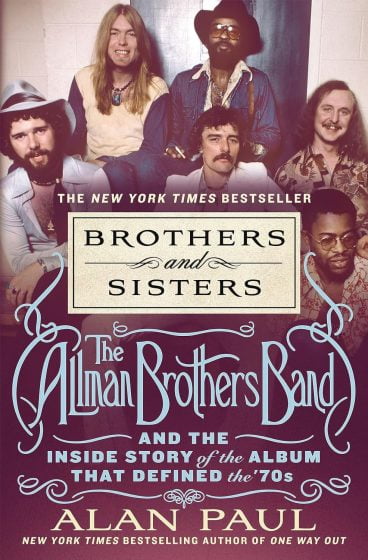
Brothers and Sisters: The Allman Brothers Band and the Inside Story of the Album That Defined the ’70s 

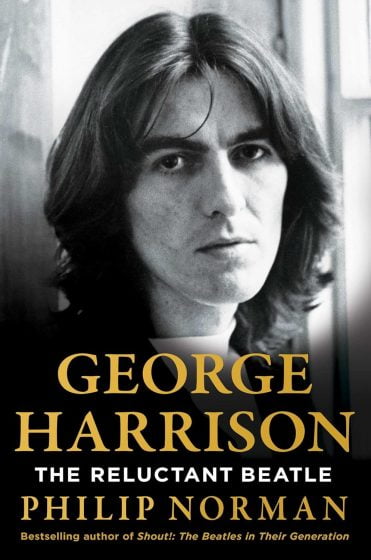
George Harrison: The Reluctant Beatle, Philip Norman

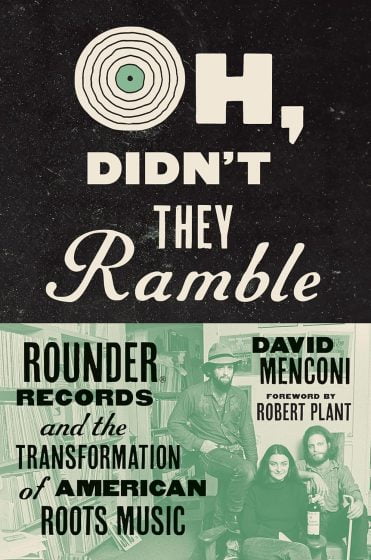
Oh, Didn’t They Ramble: Rounder Records and the Transformation of American Roots Music, David Menconi

Oh Didn’t They Ramble chronicles the comprehensive history of the quintessential folk record label for the last 50-plus years. With extensive access to Rounder artists, staff, and founders Ken Irwin, Marian Leighton Levy, and Bill Nowlin, BGS contributor David Menconi is able to tell Rounder’s story, from its humble but audacious and idealistic beginnings to becoming one of the most influential record labels in the history of recorded music. 

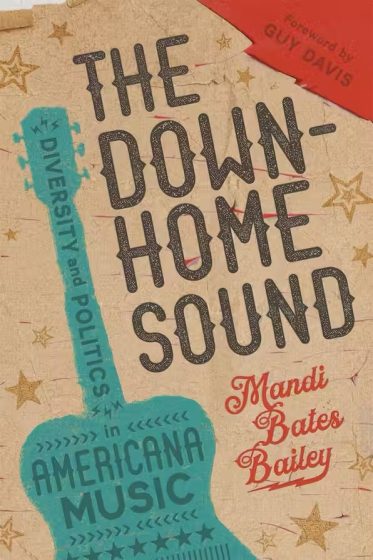
The Downhome Sound: Diversity and Politics in Americana Music, Mandi Bates Bailey

How-Tos

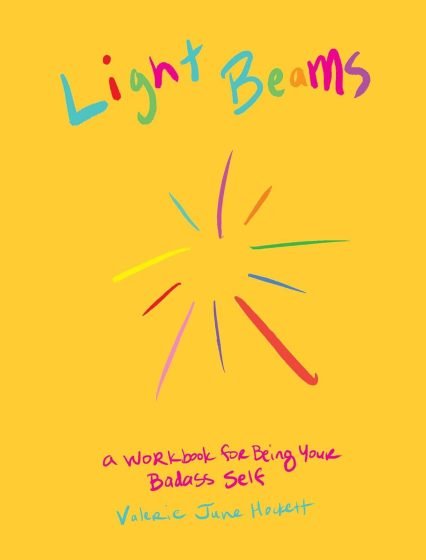
Light Beams: A Workbook for Being Your Badass Self, Valerie June

Like I mentioned, this workbook/journal might be coming just at the right time as you resolve to become your most “badass self.” But even if you’re reading this well into the new year, then there’s no time like the present! Published on Jack White’s Third Man Books, Valerie June’s Light Beams offers its readers “contracts and agreements, self-healing wishes and spells, and maps and prescriptions in exercises” on a journey to self-love and waking up with a promise of choosing kindness and shining like a “badass.”

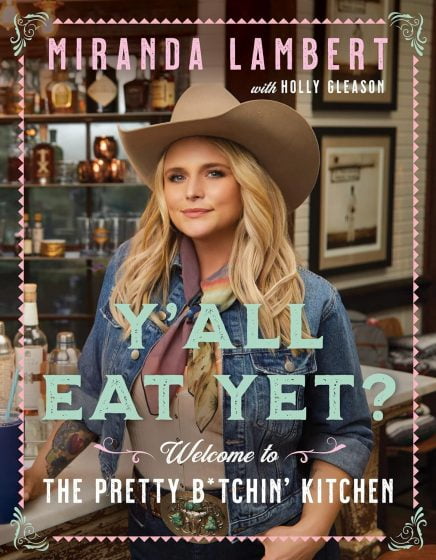
Y’all Eat Yet?: Welcome to the Pretty B*tchin’ Kitchen, Miranda Lambert

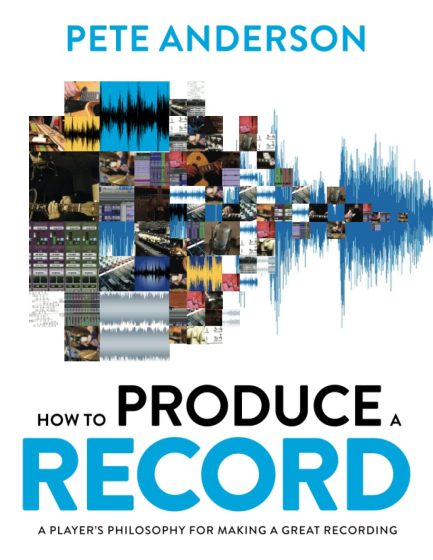
How To Produce A Record: A Player’s Philosophy For Making A Great Recordings, Pete Anderson

Other

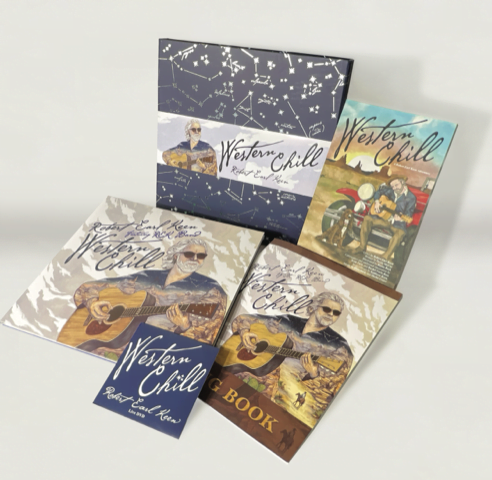
Western Chill, Robert Earl Keen

As a set that features a double sleeve album, a DVD with music videos for every song, a graphic, illustrated novel that explains the writing process, and a songbook with lyrics, notes, and chords so the purchaser can play along, this title certainly belongs in a category of its own. 


BGS 5+5: Coco Reilly

Artist: Coco Reilly
Hometown: Buffalo, New York
Latest Album: Coco Reilly
Personal nicknames: Coco

What other art forms — literature, film, dance, painting, etc. — inform your music?

Oh, literature definitely. I buy books way faster than I can read them. I rotate books during the week depending on my mood. I’m usually working my way through 3-5 books at any time and they’re usually a mix of psychology and science with an occasional biography sprinkled in. I know it’s not very cool to say that science informs most of my songwriting, but it does trigger a lot of the introspection and curiosity about how things work and why we do what we do. Aside from that, comedy is my go-to in second place for most inspiring. It helps balance out the heavier parts of my brain and there’s also nothing better than making fun of yourself, which, as a musician, is really easy to do. It’s healthy for the ego.

What rituals do you have, either in the studio or before a show?

I usually do some quick stream of conscious writing in the morning to clear my head. I do that every morning, but it’s extra important on show days, because I get pretty anxious about performing and have to work really hard to keep my inner critic at bay. Any other middle-aged activity such as drinking tea, exercise, or a nice walk also helps. If I’m feeling really locked in I’ll meditate and try to set an intention, remind myself to relax and enjoy the moment.

What’s the toughest time you ever had writing a song?

If a song isn’t working I usually just let it go. I don’t fight too hard for them because it takes the fun out of it. Sometimes ideas just need more time to grow so I come back and check on them later without rushing them. That being said, arranging the songs in the recording process can be really tough for me, because I like to hear a lot of options before I settle on the thing that feels best. I struggled to arrange “Oh Oh My My” and “Mirror” the most. It was hard to find the balance of organic sounds and the bigger, more cinematic parts without tipping the scale too far in one direction. I think we recorded “Mirror” four or five times with different tempos and the band almost died from boredom. It’s a very long song. They have the patience of saints.

If you had to write a mission statement for your career, what would it be?

Well, the last song on the record, “Be True,” was really written as my personal mission statement. Be true, no matter who surrounds you. Regardless of what I choose to do in my life I just want to do it authentically, and try to leave the world better than I found it.

Which elements of nature do you spend the most time with and how do those impact your work?

Water and fire. I light a candle at my desk every morning and I am lucky enough to have a view of the sea for the first time in my life from my apartment in Reykjavik. I think fire helps soothe and keep me focused. It adds a nice warmth to the work space. Water helps me think. I could sit by water for hours and never get bored. There’s always so much going on beneath the surface, especially in the ocean. I do my best thinking near water and always leave it with inspiration and new perspectives.


Photo credit: Juliette Rowland

The Show On The Road – David Bromberg

This week, The Show On The Road features living folk-blues legend and underground guitar icon David Bromberg.


LISTEN: APPLE PODCASTS • MP3

Host Z. Lupetin got to speak with the now 74-year-old Bromberg in a hotel room before the pandemic shutdown, prior to Bromberg playing a show at the El Rey Theatre in Los Angeles back in February, 2020.

Coming out of the fertile Greenwich Village scene on the heels of Bob Dylan, Ramblin Jack Elliot and other shaggy troubadour-storytellers, Bromberg’s encyclopedic knowledge of American songwriting traditions made him a coffee house wunderkind who refused to be pigeonholed in one genre. By the age of thirty, Bromberg was the go-to guitarist for Dylan, Willie Nelson, John Prine and Ringo Starr, and he could be found jamming at dinner parties with George Harrison.

A man of many interests and talents, Bromberg actually stepped away from performing for nearly two decades at the height of his notoriety, moving to Chicago to learn how to build and then appraise violins. He became obsessed with identifying the best instruments just by sight, and even opened a respected instrument shop in Wilmington, Delaware called David Bromberg Fine Violins.

He returned after twenty two years off the road with the triumphant and Grammy-nominated Try Me One More Time in 2006, and has assembled an energetic band of friends that continues to join him on his new, high energy offerings.

Bromberg’s muscular and ever genre-bending 2020 release, Big Road pays homage to his heroes like Charlie Rich and 1930’s bluesman Tommy Johnson, but also injects heavy doses of swampy rock, horn-heavy funk, and good-humored, folk storytelling along the way.

Stick around to the end of the episode to hear him play a new acoustic tune called “Buddy Brown’s Blues.”


Jim James, ‘The World is Falling Down’

“The news is really very sad,” so goes a line in Abbey Lincoln’s 1990 song “The World Is Falling Down,” a poetic lament with the contrast of jubilant horns laced through. Singing through the Civil Rights movement and nearly up to her death in 2010, she is one of music history’s most dynamic and under-appreciated figures, particularly in the mainstream: While lovers of jazz would hold her modern influence as tantamount, particularly as a vocalist, she didn’t become the kind of household name to survive the internet generation.

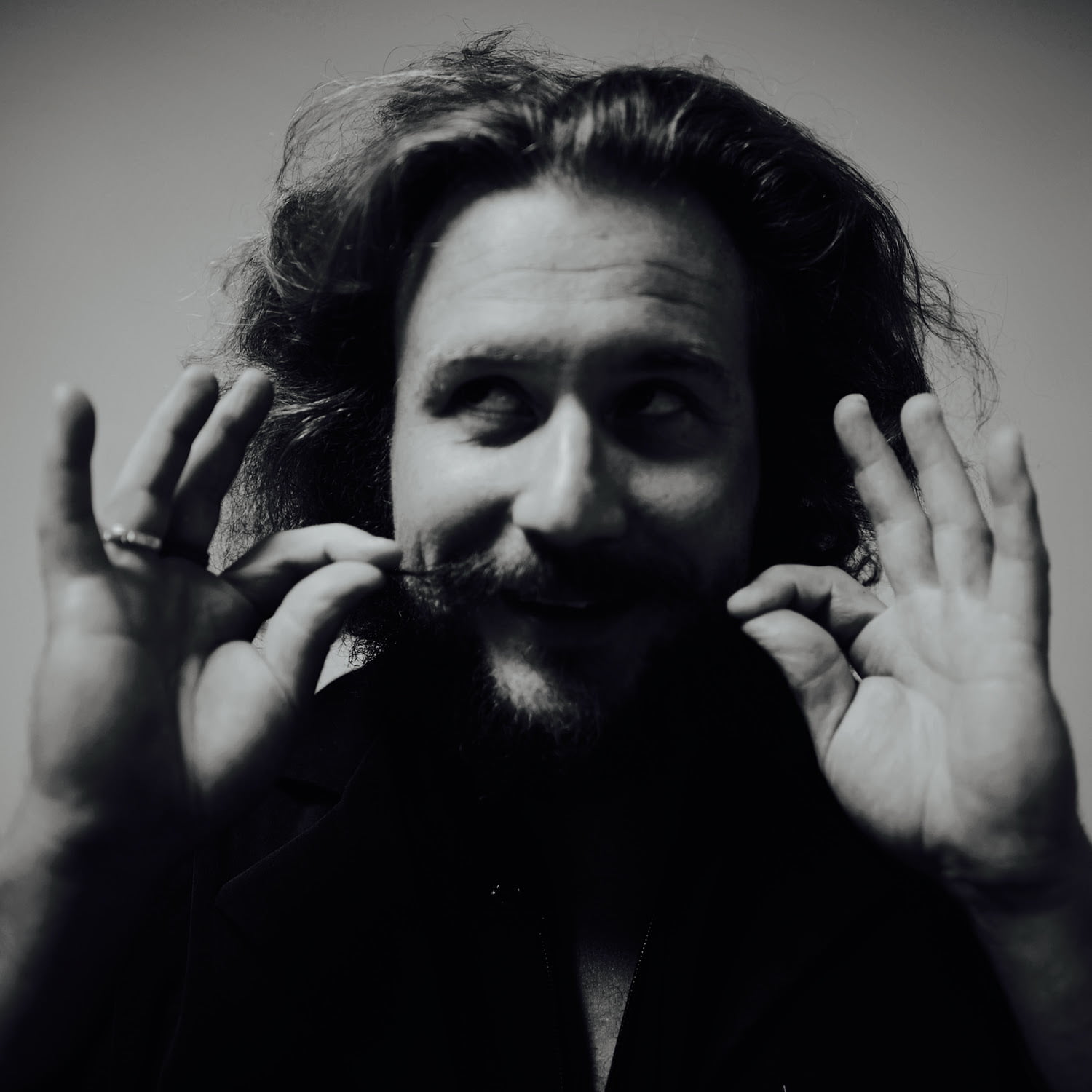
Jim James, of My Morning Jacket, tried to change that in his version of “The World Is Falling Down,” off of his new LP, Tribute To 2. It’s a follow up to his first record of covers, 2009’s Tribute 2, devoted to George Harrison. This time, James picks songs that could easily have come straight from current times — and, looking back on 2017, it has often felt as if the world was indeed falling down. And fast. Beneath the news and the Twitter feeds and the noise, it’s hard not to panic, and even more difficult to find beauty beneath it all. James takes Lincoln’s version and slows things down into a gorgeous, acoustic folk song, gently singing in the softer side of his range through lyrics that so closely mirror our daily struggle. But he makes sure to reinforce the most important point: When times are tough, reach out. Find a hand to hold, and walk together through turmoil. And don’t let go. “The world is falling down, hold my hand.” Don’t let go.

3×3: Jesse Terry on Hendrix, Harrison, and Hotel Room Exercise

Artist: Jesse Terry
Hometown: Stonington, CT
Latest Album: Stargazer
Personal Nicknames: JT, J-Breeze, Breeze-daddy, O’Terry, Breezy

If you could go back (or forward) to live in any decade, when would you choose?

Oh definitely the ’60s. I can’t imagine what it would be like to hear the Beatles for the first time, when everything was brand new. Or hear Hendrix, for that matter, when he was brand new and freaking everyone out. That would have been unreal. It’s still unreal and it’s 50 years later. There was no time like it.

Who would be your dream co-writer?

Gone or still with us? I would choose George Harrison for folks that have left this world. I love them all, but George was probably my favorite Beatle. He seemed like such a gentle soul with such a beautiful, humble spirit. And, wow, George wrote the most amazing songs — some of my favorite Beatles songs, not to mention his work on All Things Must Pass and his other solo albums. I have this feeling that co-writing with him would be really relaxed. I picture us drinking tea in his garden and just talking about life and spirituality until an idea hit us.

If we’re talking about someone still with us, I’d probably choose Jeff Lynne, one of George’s best friends and one of my biggest heroes. He’s another guy that seems very grounded and chill — and he seems like a hilarious, sharp dude in his interviews. I’d love to see how Jeff’s mind works, as he’s writing. He plays like seven instruments, and I’m sure that would affect his writing process. I wonder how much he’s producing and thinking about arrangements as he’s writing. I think he’s one of the best melody writers of all time and certainly one of the greatest producers. I’d take that co-write.

If a song started playing every time you entered the room, what would you want it to be?

“All You Need Is Love” because that’s totally true, huh? What a simple and perfect lyric. And that melody makes me forget about all of the negative things in the world.

What is the one thing you can’t survive without on tour?

Exercise. Well, my wife and dog, too, but we’re a trio, so that goes without saying. We always make time to take our pup Jackson out to a local park when we’re traveling. Or we do some exercise together using this great app my wife found. This very calm lady on the app has us do a bunch of crazy moves in our hotel room and it totally kicks our ass. I think we get a better workout on the road than we do at home at the YMCA. If I don’t get exercise, I can get down and go a little batty. I tour so much that we really don’t have much time to drink or party, but I really don’t mind at all. I dig what we’ve got going on. ROCK ‘N’ ROLL!

What are you most afraid of?

Clowns and zombies … okay, mainly clowns.

Who is your celebrity crush?

My wife already knows this one … Scarlett Johansson.

Pickles or olives?

I don’t like either, but if I had to choose, I would go with pickles.

Plane, train, or automobile?

I dig all three big time, but if you can take one of those trains that goes from Italy to Switzerland with the glass roof, JUST DO IT! Wow, that was the best freaking transportation of my life. You go right through the Alps and over all of these crazy bridges and cliffs. You have a sneaky feeling that you might not survive the journey, but it’s almost okay at that point. What’s left to see after that?

Which is worse — rainy days or Mondays?

You’re talking to a touring troubadour and a coffee addict. I LOVE rainy days and Mondays. Rainy days are a great excuse to wear pajamas all day and drink an excessive amount of coffee with the windows open. And Mondays are like the weekend for me, after a long week of shows. We hardly ever book shows on Mondays, so they are usually my recuperating/movie watching days, too. What’s the best kind of day for me? A rainy Monday.