WATCH: Liz Simmons, “Who Knows Where the Time Goes”

Artist: Liz Simmons
Hometown: Brattleboro, Vermont
Song: “Who Knows Where the Time Goes”
Album: Poets
Release Date: August 4, 2020 (single)
Label: Morgana Music

In Their Words: “I have known Sandy Denny’s ‘Who Knows Where the Time Goes’ (written circa 1967) since I was a teen and I’ve always loved it. It has that elusive poetic appeal in that it manages to say so much with very few words. There’s not much needed to preface it, as it speaks for itself so well in Sandy’s beautiful lyrics. I was raised steeped in the music of the folk revival, roots, and ’60s and ’70s rock ‘n’ roll, so it feels very fitting to have Pete Grant (Grateful Dead, the Incredible String Band) lend his beautiful pedal steel playing to my arrangement of this fittingly timeless song.” — Liz Simmons


Photo credit: Sid Ceaser

WATCH: Molly Tuttle, “Standing on the Moon” (Feat. Taylor Goldsmith)

Artist: Molly Tuttle
Hometown: Palo Alto, California / Nashville, Tennessee
Song: “Standing on the Moon” (Feat. Taylor Goldsmith of Dawes)
Album: …but i’d rather be with you
Release Date: August 28, 2020
Record Label: Compass Records

In Their Words: “I didn’t grow up listening to a lot of Grateful Dead music, but being raised in the San Francisco Bay Area, the Dead was part of the mythology of my family and the area I grew up in (kind of how I imagine people who grew up in Tennessee, where I live now, might feel about Dolly Parton). Our specific family lore was that Jerry Garcia had gone to my high school (Palo Alto High) and my mom’s older sister, my Aunt Titia, knew them and used to take guitar lessons from Bob Weir in Menlo Park. That’s a roundabout way of explaining that this song means so much to me, because it brings me back to my roots. Even though I love Nashville, sometimes I do feel like I’m standing on the moon wishing I were with my friends and family in San Francisco. The line, ‘A lovely view of heaven, but I’d rather be with you’ is my favorite and it’s why I named the album …but I’d rather be with you. Life is messy and imperfect but I’d rather be here in it with all of you!” — Molly Tuttle

“One of the greatest feats as a musician, in my opinion, is taking a Grateful Dead song and creating a version of it that goes beyond the stigmatized identity of a ‘Dead Cover.’ It’s hard to do and takes a lot of courage to make it happen. But Molly reached for that brass ring and then somehow even went beyond it. Her version has given the song new parameters, makes me feel new things, and surpasses any sort of referential quality and becomes Molly’s own song. I’m just happy I got to be one small part of bringing it to life.” — Taylor Goldsmith


Photo credit: Zach Pigg

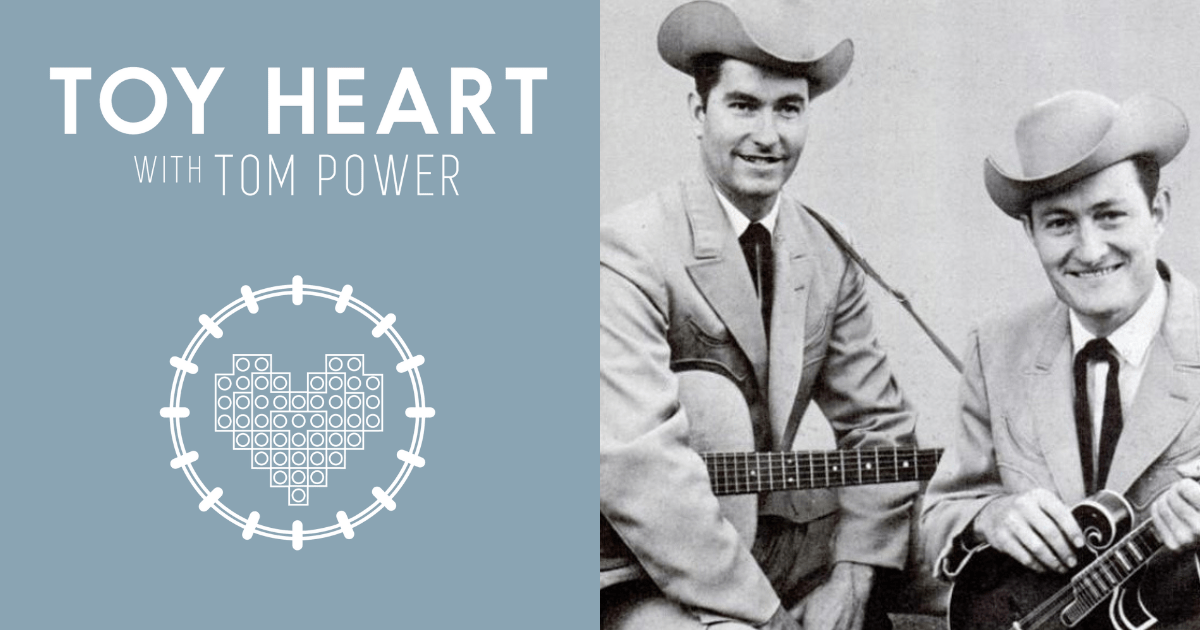
Jesse McReynolds – Toy Heart: A Podcast About Bluegrass

Host Tom Power talks to Bluegrass Hall of Fame member Jesse McReynolds of Jim & Jesse and the Virginia Boys about his career in bluegrass.

LISTEN: APPLE PODCASTS • MP3


One of the last founding fathers of bluegrass, Jesse McReynold’s story is the story of bluegrass — a music that emerged out of the country, into rural schoolhouses, onto rural radio, finding sponsorship along the way, enmeshing itself into the mainstream of American culture.

McReynolds tells the story of his grandfather, who played in the first recorded country music session, talks about being offered a gig with the Stanley Brothers, serving with the armed forces in Korea and singing alongside Charlie Louvin. He relates hunting down record deals and successes with his brother Jim, starting their own label, being sought out by counter cultural icons like the Grateful Dead and The Doors. Now nearing the age of 91, McReynolds spends some time reflecting as well, on his brother Jim’s death, his own struggles with the Opry, and how he feels about his legacy in the music. This is an icon of American music whose story isn’t often told, and we’re honored to play a part.

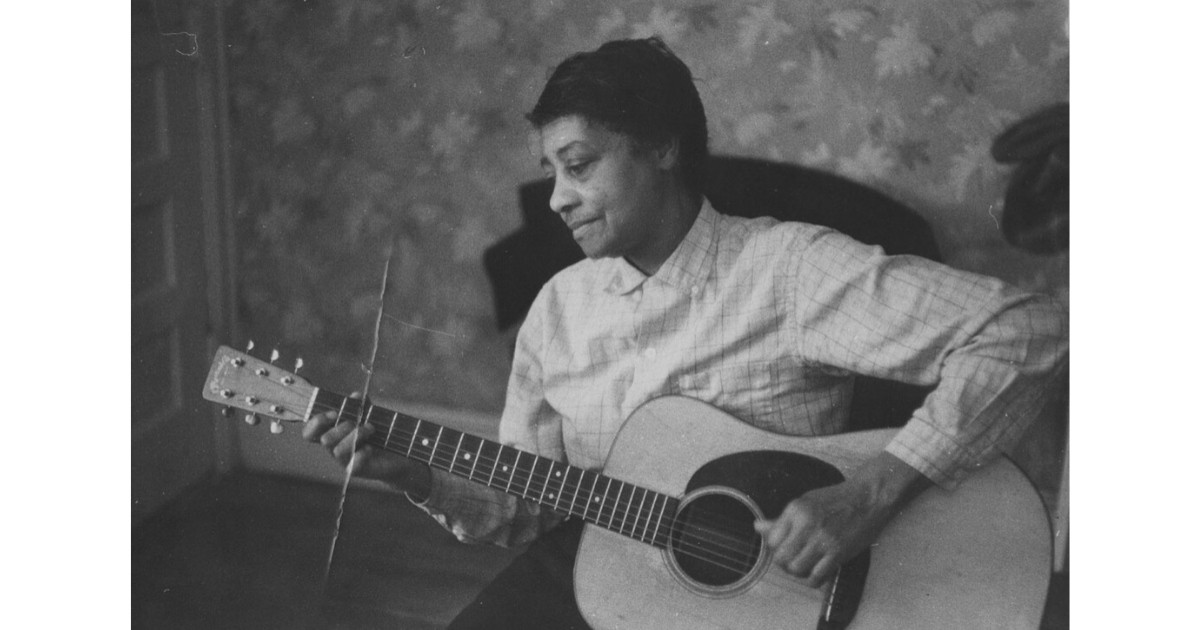
Elizabeth Cotten: The Domestic Who Wrote a Folk Classic

At age 9, in 1904, she quit school to work as a maid. A song she wrote at 11 became a folk classic. She married at 15. She made her first recording at age 62. And she won her Grammy at age 90.

Even the best novelist would be hard-pressed to create a more remarkable heroine than Elizabeth “Libba” Cotten. From the time she sneaked into her older brother’s room and flipped his banjo over so she could play left-handed, Elizabeth broke rules and boundaries.

Her legacy song, “Freight Train,” written at age 11, is among the most loved in folk music. Her left-handed, finger-picking guitar style — an alternating bass with her index finger and melody played with her thumb — is much emulated. She was immensely talented, creative, and wicked funny. For a great example of her humor, listen to Cathy Fink and Marcy Marxer talk about a chance encounter at the Toronto Folk Festival.

While Elizabeth was raising her daughter, she rarely played outside her home — and only at church. But a chance meeting much later in life led her to become one of the most revered names of the folk revival. While working at a department store, she befriended a frightened little girl who had become separated from her mother. The little girl was Peggy Seeger. Peggy’s mom, Ruth Crawford Seeger, almost immediately invited Elizabeth to work for the family as a domestic.

Ruth was a composer and teacher, her husband Charles created the field of ethnomusicology, but it was Peggy who first heard Elizabeth playing one of the family’s guitars. As a family that studied and documented traditional music, they were delighted to hear the music Elizabeth carried from her North Carolina home. Their son, Mike Seeger, a folklorist and musician, began recording her singing and playing. They released her first album in 1958, when she was 62.

Elizabeth became a vitally important figure in the folk revival, performing at the most acclaimed festivals in North America. Her songs and style frequently were covered by others. Artists in the Skiffle movement recorded and claimed credit for “Freight Train,” a big hit in Great Britain (the Quarrymen, John Lennon’s early band, used to perform it). With the Seeger family’s help, Elizabeth got the copyright in her name.

Her songs have been central to bringing rural southern music to commercial audiences, paving the way for bluegrass as well. Performers as varied as the Grateful Dead and Rhiannon Giddens have recorded her songs, and “Freight Train” is in the repertoire of almost every folk, bluegrass, and rock band on this continent.

It is virtually impossible to summarize Libba Cotten as a person, a musician, or an influence on American music. Her honors are countless. As examples, in 1984, the National Endowment for the Arts declared her a National Heritage Fellow. The Smithsonian Institute declared her a “living treasure.”

Elizabeth performed right up to her death at 94 in 1987. And musicians around the world pay tribute to her daily when they sing “Freight Train.”

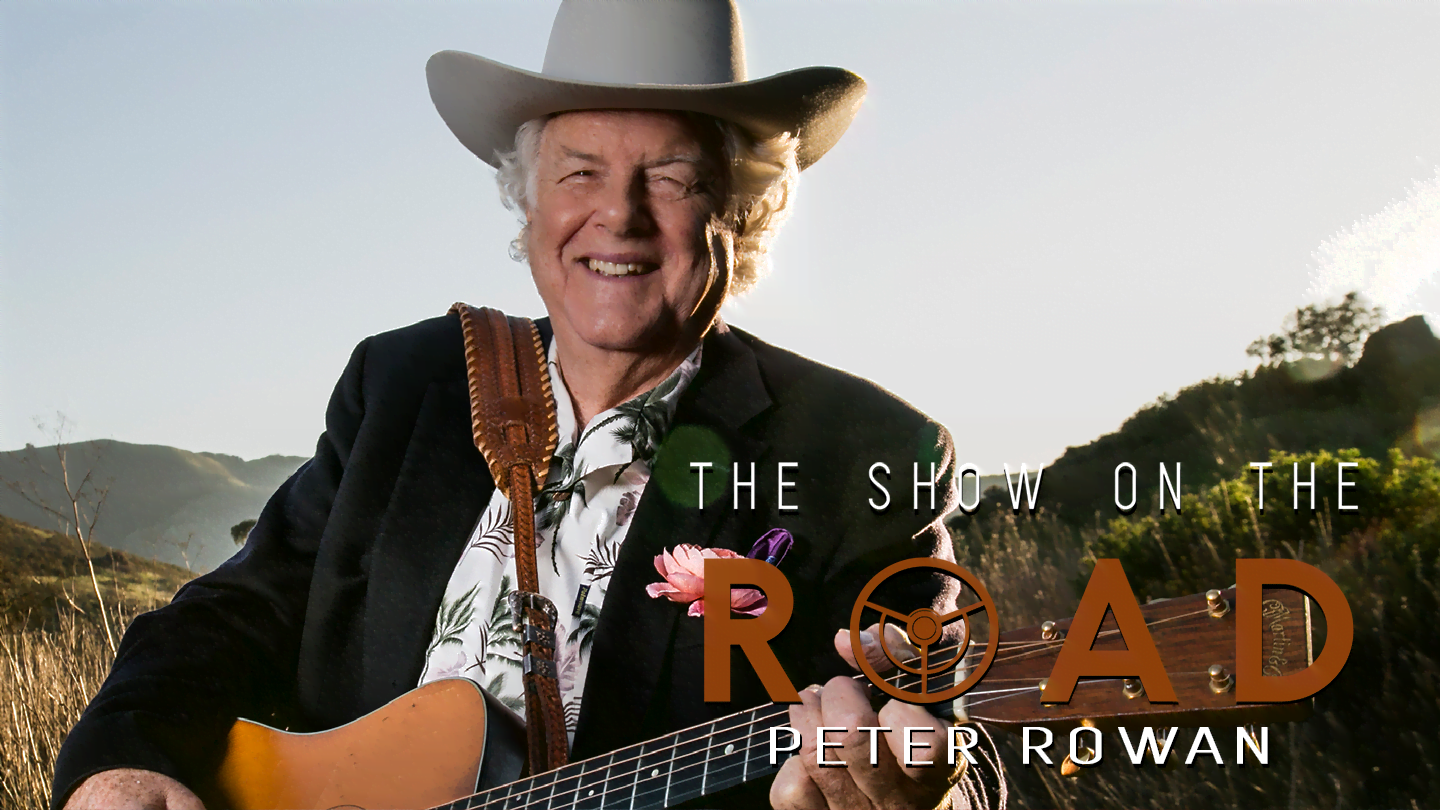
The Show On The Road – Peter Rowan

In this episode, host Z. Lupetin speaks with Peter Rowan, the affable elder-statesman of roots music, who was there at the crucible beginnings of bluegrass and has joyfully jaunted across a plethora of folk music styles over the course of his five decade-long career.

LISTEN: APPLE PODCASTS • MP3

These days, despite it getting harder for him to get around, he’s still on the road constantly, and you can see him at Telluride Bluegrass Festival, Red Wing Roots, Rockygrass, and wherever young folks and old folks are still gathering around whatever stew folk music is cooking these days. Stick around to the end of the episode to hear Peter set up outside in the sun with his Free Mexican Airforce Band to perform a sweet Tejano tune under the trees.

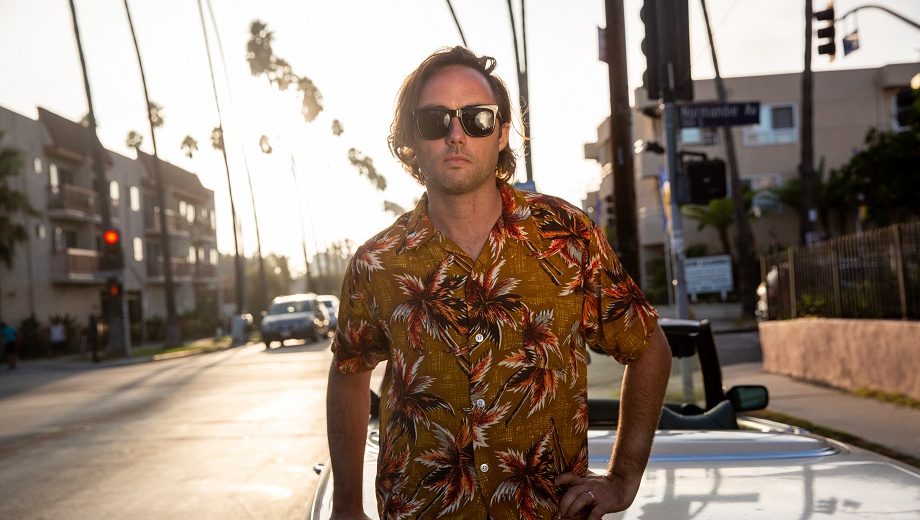
MIXTAPE: Stevie Redstone’s Roots Music to Drive To

I love me some driving. Whether it be for touring, or just a hankering to get out there and see some place I’ve never seen, I always enjoy packing up and hitting the pavement. While I do plenty of searching for new tunage, here are a few of my longtime staples you’d likely hear if you were in the passenger seat on a long ride with Stevie. — Stevie Redstone

The Band – “Across the Great Divide”

Nothing quite says road music to me more than The Band. They have so many great ones to travel to, but “Across the Great Divide” sticks out for me.

Paul Simon – “Graceland”

It’s no secret to those who know me that Paul is probably my favorite American songwriter. The Graceland album is a personal fave and the title track always gets me in that happy driving mood.

Allman Brothers Band – “Ain’t Wastin’ Time No More”

I love everything about this song. Lyrics, message, melodies, vocals. It’s all there.

Grateful Dead – “Promised Land”

This Chuck Berry-penned tune covered by another driving music titan of a band, The Grateful Dead, will get your motor runnin’. It’s also quite literally about traveling around the country. See what I did there?

Creedence Clearwater Revival – “I Heard It Through the Grapevine”

Originally written by Barrett Strong and Norman Whitfield of Motown fame, there are many adaptations of this great driving tune, including of course Marvin Gaye’s. I love this CCR version when I’m out there, in part because they really went for it with the jam. Eleven mins of gritty joy.

The Beach Boys – “Here She Comes”

Among  my favorite Beach Boys tunes. It has an infectious piano part/groove and the best bridge maybe ever.

The California Honeydrops – “When It Was Wrong”

One of the best and most underappreciated bands of our time. Just listen, mmk?

Crosby, Stills, Nash & Young – “Suite: Judy Blue Eyes”

A pinnacle of songwriting, harmonies, movement, etc. Simply stunning, and it never gets old.

My Morning Jacket – “Evil Urges”

I’m so impressed by Jim James as a solo artist and for his work with My Morning Jacket. This one’s always stuck out for me, but the catalogue of greatness is extensive.

Phish – “Down With Disease”

I’ve seen Phish live FAR more than any other band. I love a good jam and they’ve taken me to some of the highest highs that I’ve experienced for a live show. The sheer amount of songs and live recordings is too daunting to pick any one in particular, so I threw a YouTube dart and landed on this old video of “Down With Disease.”


Photo credit: Shelby Duncan

BGS 5+5: Boo Ray

Name: Boo Ray
Hometown: Western Mountains of North Carolina
Latest album: Sea of Lights
Personal nicknames (or rejected band names): “During the few-years span that I just couldn’t seem to stay out of jail, the other incarcerated guys that I gambled with on Spades and Tonk called me ‘Boot-a-rang.’ I didn’t ever bother to correct ‘em. In grade school, my very first band was also called Rhythm & Booze; it was a 4 piece band and Marshall Tucker’s “Can’t You See” was a feature of our set.”

What other art forms — literature, film, dance, painting, etc — inform your music?

Ahh that’s a cool question… Well, it might could be that Southern writers like Harry Crews, Ron Rash, and Mark Twain make me think it’s important to have a writing voice, and that there’s something powerful and magic about the just right combination of words used to tell the truth of our human experience.

I knew this guy everybody called Mr. Jack that ran a sawmill-–an old V-Twin Harley motor bolted to a 12″x12″ post frame and a great big 15-foot 2″ bandsaw blade that pitched and twisted so wildly when it ran that it just seemed impossible it could have ever made a straight cut. But it did cut 18-foot-long, perfectly straight slices off the huge logs he used to run through that mill. He’d cut some 1/4″ thin cedar for me to use as lining on chests. The way Mr. Jack cussed at and about his sawmill, the logs, the lumber and his equipment, expressed his passionate care, deep affection, forgiving humor and humble mastery of his industry. I suppose my affection for the way Mr. Jack carried on about his sawmill might be responsible for my cussin’.

My great buddy, artist James Willis, is constantly teaching me about perspective and how to use detail and lack of detail as creative storytelling devices. Sean Brock’s amazing passion, depth of knowledge, agrarian approach, his wood coal cooking and his completely inclusive use of information, style, technique, perspective and philosophy, have certainly influenced me.

If you had to write a mission statement for your career, what would it be?

The point of the spear is compassion, inspiration and empowerment. I’m compelled to express to my fellow man that the troubles of life are not for nothing. The singer-songwriters that have moved me the most write songs that are part of the classic American songbook. So the purpose of my endeavor as a singer-songwriter is to land some songs, or a song, in the classic American songbook, whatever that is. I think that songbook includes songs by Lowell George, Leon Russell, John Hiatt and Fiona Apple. My favorite Grateful Dead record is the one that Lowell George produced, Shakedown Street. The word “Pop” ain’t necessarily blasphemy to me, unless it’s in front of the word “country”…

After writing the songs my mission is to perform the songs with my badass guitar-slingin’ band and build a dynamic, powerful and unique live sound around the character and nature of each of the songs. Live performance is more important to me than recording records, but I use the records as templates, stylistically, and to suggest possible arrangements. For me, the style itself demands that the records are exciting soundscapes, and experimental in the recording and engineering. If my records sound like someone else I’ve fallen short.

For me the singer-songwriter/guitar band-sound bar is set by acts like: Tom Petty and the Heartbreakers, Little Feat, ZZ Top, Marty Stuart & His Fabulous Superlatives, any of John Hiatt’s bands (from The Goners and Little Village to his Trio), and Jason Isbell & The 400 Unit. So what’s my mission statement? I want to be Jerry Reed.

Boo Ray & Sean Brock

Which elements of nature do you spend the most time with and how do those impact your work?

I don’t spend enough time on/in the water lately. As a kid, I was at the river every week and in the woods all summer long. Sunrises and sunsets are important to me. I really tried to get up to my buddy Sean Minor’s for spring branding and spend some time roping, riding and working cattle this year, but had shows and sessions I couldn’t get out of. I like to do tractor work, eat homegrown tomatoes, negotiate the price of a late ’50s step-side GMC truck or dispute the shape of the taillights on a ’68 Chevelle while cracking pecans against each other, and get caught in a torrential downpour and soaked to the bone after doing some farm work.

Since food and music go so well together, what is your dream pairing of a meal and a musician?

Agreed, and I totally dig a supper club-type show. How about Sean Brock doing some kind of Low Country spread with Ossabaw pork sock-sausage, rice peas, Geechie Boy Grits with a fresh catch, and some kind summer vegetables, with Billy Gibbons giving his take on Hill Country Blues. Billy and Sean are both great historians, passionate technicians and intuitive as hell. That’d be the dream pairing.

How often do you hide behind a character in a song or use “you” when it’s actually “me”?

The artists I like definitely seem to have character-driven numbers in their repertoire: Tom Petty’s “Break Down” and “American Girl,” Eddie Rabbitt’s “I Love a Rainy Night,” and Don Williams “Tulsa Time,” written by Danny Flowers. Those kind of songs hold you up as a performer and don’t require you to emote and be so intimate, at least for three or four minutes at a time anyways. Sometimes I might jokingly introduce “Redneck Rock & Roll” as a song that I wrote first-person as Kenny Powers. But I certainly do keep a few of those songs in my set: “I Got the Jug,” “Johnny’s Tavern,” “Six Weeks in  Motel”, even “Sea of Lights” is that way now, most of the time. There’ve been a few times that singing “Sea of Lights” made me involuntarily weep and cry…

On the “you”/”me’ thing; I saw this Mary J. Blige performance once, she was singing this devastated lovesick number and my heart was just broken for her, you know? Then in the last chorus, nothing left but ashes and pain, she flips the script on the “you”/”me” switch and starts singing “bye bye” and waving as she left, and I realized she was singing my blues, and she was the one that was leaving. I was leveled. It was like a damned magic trick she’d just performed. I’ve tried variations of that writing device in my songs “Constantina,” “Six Weeks in a Motel,” and the “Hard to Tell” collab with Lilly Winwood all have a moment where they pivot or twist like that a little bit.


Photo of Boo Ray: Courtesy of Sideways Media
Photo of Boo Ray with Sean Brock: Price Harrison

MIXTAPE: Bobby Britt’s Songs of Hard-Won Joy

The songs and artists on this playlist evoke a sense of hard-fought, hard-won, deep and rich joy. It is not a simple, one-dimensional joy. It has the sound of being churned about, tried and tested again. And now, just maybe, the joy being properly vetted, can be enjoyed. I look up to these artists, as they convey a message of calm and confident optimism.

We are all faced with the dualities of a temporal world…birth and death, gain and loss, pleasure and pain.

These songs speak to the strength of the human spirit amidst that world, and give me courage to carry on regardless of what’s happening, good or bad. They also provide a glimpse at an eternal reality of peace and balance (that has nothing to do with time, space or duality) that is hard to see or believe in when I am churning in the opposites…fear of loss, a craving for more and more solidity, and the dread that I will never have or be enough.

We need artists for this very reason; to go beyond our normal, conditioned ways of thinking about life, and to give us a new perspective with which to test our old and sometimes outdated paradigms.

My area of expertise is bluegrass and old-time fiddle. Though I am not a vocalist or pop artist, I gain inspiration from all styles. The feeling and sound of the above mentioned “hard-won joy” is what transcends specific genres for me. A goal of mine is to take this base emotional element, and with it, transfuse my fiddle playing and songwriting.

My hope is that you can find some joy and something to relate to in these songs as I did. Thank you for listening.


Photo Credit Louise Bichan

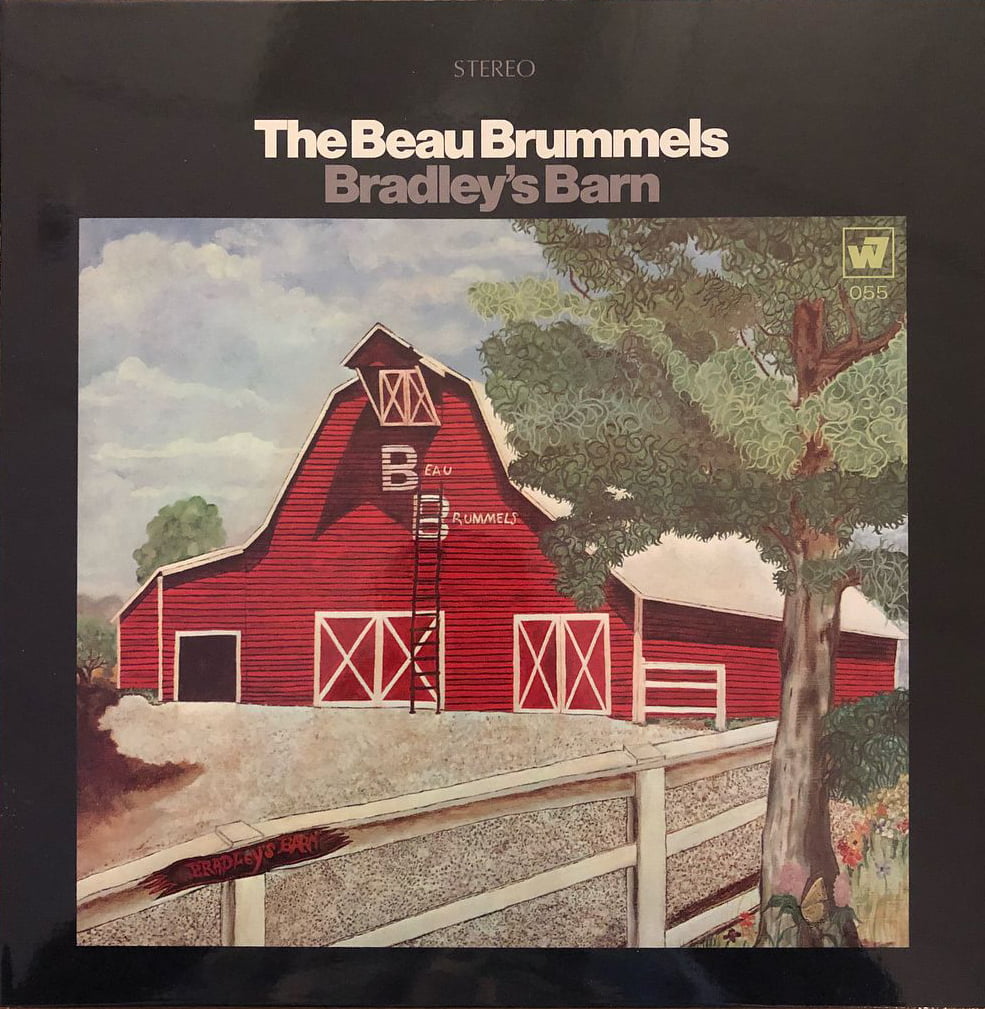
Canon Fodder: The Beau Brummels, ‘Bradley’s Barn’

Who invented rock ‘n’ roll?

Don’t answer that: It’s a trick question. Rock ‘n’ roll, like most complex sounds and genres and world-conquering forces, wasn’t actually invented. Instead, it germinated and mutated and mushroomed and erupted. It’s not the product of Elvis Presley or Sam Phillips, nor of Jackie Brenston or Louis Jordan. Rather, it is the product of all those people and more — all conduits for larger cultural ideas and desires. Rock wasn’t an invention, not like television or the telephone or the automobile or the atomic bomb. Similarly, its sub-genres and sub-sub-genres in the late 1960s weren’t inventions, more like waves swelling and cresting through pop culture.

The Beau Brummels didn’t invent country-rock in the 1960s, although they did help bring it into being. Long before the San Francisco rock explosion in the late ’60s shot the Grateful Dead and Jefferson Airplane to national prominence, they were gigging around the Bay Area as one of the first American bands to respond to the British Invasion. In 1965, they recorded their breakout hit, “Laugh Laugh,” with a kid named Sly Stewart, later known as Sly Stone. They held their own against Southern California groups like the Byrds, the Standells, and the Electric Prunes (who were marrying their garage rock to liturgical music in one of the most esoteric experiments of the era). While tiny Autumn Records could never fully capitalize on their success, the Beau Brummels did achieve enough notoriety to appear in films and television shows. (The quality of those outlets, however, remains questionable: Village of the Giants, a kiddie flick starring Beau Bridges and Ron Howard, was skewered on Mystery Science Theater 3000.)

They have a full slate of excellent hits, each marked by songwriter/guitarist Ron Elliott’s melancholic lyrics and Sal Valentino’s unusual vibrato, which had a way of turning consonants into vowels and vice versa. The line-up shrunk from a sextet to a trio, which meant fewer harmonies, but a more streamlined sound. Released in 1967, Triangle strips away the electric guitars and, in their place, inserts folky acoustics and chamber-pop flourishes. It’s a song cycle about dreams, simultaneously baroque and austere, and it finds the band stretching in weird directions. For example, they cover “Nine Pound Hammer,” which had been a hit for country singer Merle Travis in 1951. Perhaps more surprising is how well they make it fit into the album’s theme.

In fact, the Beau Brummels had been peppering their sets with country covers since their first shows in San Francisco, and their 1965 debut, Introducing the Beau Brummels, included a cover of Don Gibson’s 1957 hit “Oh Lonesome Me.” They weren’t alone, either. As the “Bakersfield Sound” became more prominent on the West Coast for mixing country music with rock guitars, rock musicians were completing the circle and borrowing from country music. In 1967, Bob Dylan traveled to Nashville to make John Wesley Harding, his own stab at a kind of country-rock.

The trend culminated in 1968, when the Beatles covered Buck Owens on The White Album and the Everly Brothers released Roots. In March, the International Submarine Band released their sole studio album, Safe at Home, and five months later, the Byrds released Sweetheart of the Rodeo. Both were spearheaded by Gram Parsons, a kid out of Florida who was in love with the kind of mainstream country music that most West Coast hipsters had long written off. He is still identified with the country-rock movement, often declared its architect or instigator — and with good cause.

Early in 1968, at the behest of their producer, Lenny Waronker, the Beau Brummels decamped to Nashville — or to rural Wilson County, just outside of Nashville — to record a new album at the headquarters of Owen Bradley. The previous decade, Bradley had helped to define what came to be known as the “Nashville Sound,” a more pop-oriented strain of country music meant to appeal to as wide an audience as possible — not just rural folk, but urban listeners, as well. Even so long after his heyday, he would have been revered for countrypolitan classics by Patsy Cline, Brenda Lee, Loretta Lynn, and Conway Twitty.

Although it bears his name, Owen Bradley didn’t produce the Beau Brummels’ Bradley’s Barn. Instead, Waronker remained at the helm. But working in Nashville meant they had access to local session players, including Jerry Reed on guitar and dobro, Kenny Buttrey on drums, and Norbert Putnam on bass. The Beau Brummels had withered down to a trio at the beginning of the sessions and, by the end, bassist Ron Meagher was drafted into the Army and sent to Vietnam. As a duo, Elliott and Valentino were able to craft a very distinctive sound that’s more than just rock music played on acoustic instruments.

Bradley’s Barn crackles with ideas and possibilities, from the breathless exhortation of “Turn Around” that kicks off the album, to the ramshackle lament of “Jessica” that ushers its close. “An Added Attraction (Come and See Me)” is a loping rumination on love and connection, as casual as a daydream under a shade tree. The picking is deft and acrobatic throughout the album, as playfully ostentatious as any rock guitar solo, and Valentino sings in what might be called an anti-twang, an un-locatable accent that renders “deep water” as “deeeep whoa-ater” and pronounces “the loneliest man in town” with a weeping vibrato.

Bradley’s Barn wasn’t the first, but it was among the first country-rock albums. It was recorded and mixed by March 1968, when the International Submarine Band’s Safe at Home was released, but for some reason, the label shelved it for most of the year. It was finally released in October, perhaps as a means to capitalize on success of the Byrds’ Sweetheart of the Rodeo, which hit stores in August. Once leading the way in country-rock, the Beau Brummels were suddenly playing catch-up. And yet, compared to those two Parsons-led projects, Bradley’s Barn feels like much more of a risk, less self-conscious about its country sound. Safe and Sweetheart were primarily covers albums, with only a few of Parsons’ originals and a handful of Dylan compositions. Their purpose was to define a sound, to translate hits by Merle Haggard, Johnny Cash, and the Louvin Brothers into the language of rock ‘n’ roll. As such, they’re landmark albums, showing just how malleable rock ‘n’ roll could be — how it could stretch and bend to accommodate new sounds and ideas.

Save for the Randy Newman tune that closes the album (and was recorded in L.A. right before the Beau Brummels went to Tennessee), Bradley’s Barn is all originals, each one penned or co-penned by guitarist Ron Elliott. He has a deceptively straightforward style, evoking complex emotions with simple words. Alienation and isolation are his favorite topics, which lend all of his songs, but especially this album, its distinctive melancholy. “Every so often, the things I need never seem to be around,” Valentino sings on “Deep Water.” “Every so often, I pick up speed. Trouble is, I’m going down.”

On “Long Walking Down to Misery,” Reed’s dobro answers Valentino’s vocals with a jeering riff, turning his yearning for love and comfort into something like a punchline. That sadness and the music’s response to it — alternately bolstering it and undercutting it — is perhaps the most country aspect to this country-rock album. Elliott, in particular, understands how country works, just as much as Parsons does or Dylan does. Every song is a woe-is-me lament, lowdown and troubled, but not without humor or self-awareness. Even “Cherokee Girl” uses the imagery that would be identified with outlaw country in the next decade.

Bradley’s Barn flopped, when it was finally released, overshadowed by the Southern California bands and generally abandoned by the label. In 1969, when “Cherokee Girl” failed to register on the pop charts, the Beau Brummels broke up. They’ve reunited a few times since then, most famously in 1975, but generally they live on in reissues and oldies playlists. “We weren’t trying to do country,” Elliott told rock historian Richie Unterberger in 1999. “We were trying to do Beau Brummels country, which was a totally different thing. But it didn’t really catch on.”


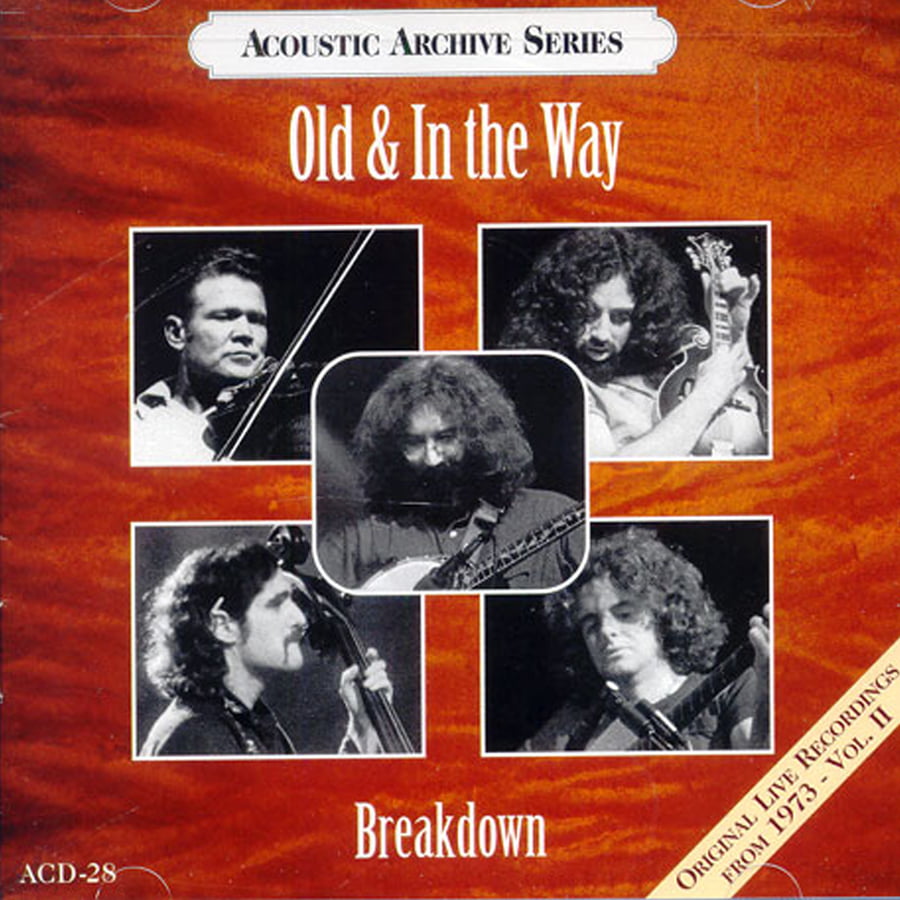
Old & In the Way, ‘Old & In the Way Breakdown’

As a genre, bluegrass has always had outward-facing ambassadors — bands and musicians with platforms that enabled them to reach a wider audience than the usually insular ‘grass niche. The Dillards, as “the Darlings,” brought bluegrass to thousands of TV viewers on The Andy Griffith Show; the Nitty Gritty Dirt Band birthed an entire generation of fans with their iconic Will the Circle Be Unbroken album, showcasing the genre’s founders and heroes; Alison Krauss, with her wildly successful crossover-and-back career — she has won more Grammy Awards than any other woman ever — showed the masses that bluegrass can be aesthetic, understated, and artful without sacrificing its raw, rustic energy. It just takes a tiny taste, a glimpse behind the curtain, to hook outside listeners with that high lonesome sound.

In 1973, Jerry Garcia, David Grisman, Vassar Clements, Peter Rowan, and John Kahn coalesced as Old & In the Way, becoming one of the most influential bluegrass ambassador bands in the history of the music. Their eponymous debut record is widely regarded as the best-selling bluegrass album of all time — before the soundtrack for the infamous O Brother, Where Art Thou? surpassed it. Though Old & In the Way only lasted a year, their legacy lives on, extended and expanded through several live recordings. Released in 1997, Breakdown was recorded live at the Boarding House in San Francisco, California, by Owsley “Bear” Stanley in October 1973. The “Old & In the Way Breakdown” showcases that Garcia was not only a fan of old-time and bluegrass, but he had the chops, too, tearing it up on the five-wire. Budding bluegrass fans take note: We call this tune “Patty on the Turnpike,” too.

Join BGS as we celebrate Jerry Garcia’s songbook, from the Grateful Dead to Old & In the Way and beyond at the Theatre at the Ace Hotel in Los Angeles on March 30. With bluegrassers Sam Bush, Molly Tuttle, Billy Strings, Sean Watkins, and many more. Get your tickets for Jubilee: A Celebration of Jerry Garcia now.