Crossroads Label Group Sets a New Benchmark With Dolby Atmos

Like a lot of bluegrass musicians, Infamous Stringdusters fiddler Jeremy Garrett had never given much thought to “spatial audio.” He already had a good professional setup for home recording and playback in conventional stereo, and that seemed like more than enough. Getting into the next generation of three-dimensional sound, highly touted though it is, just didn’t seem important.

All that changed, however, as soon as Garrett actually heard his own music in Dolby Atmos, Dolby Laboratories’ surround-sound mixing process. It happened at the North Carolina headquarters of Crossroads Label Group, where Garrett records as a solo act. It just took one demonstration for him to come away a believer.

“It blew my mind,” he says. “Seriously. You can try to explain it ‘til the cows come home. But until you experience it, you won’t understand just how eye-opening it is. Stereo can give you a pseudo-in-the-room feel. But Dolby Atmos is like really being in the room, where you hear everything in depth and full spectrum from low to middle to high range. Even listening on a phone, you could tell the difference.”

This next iteration of surround sound is quickly becoming the sonic standard for the record industry’s high-rent district, with most major-label releases coming out in the format. But it’s also the new benchmark for Crossroads and its labels, Mountain Home and Organic, which is taking a far more proactive approach to high fidelity than most roots labels. Crossroads has been evangelizing about Dolby Atmos for the past year and making moves to put out all its new music in surround sound.


Of course, doing this takes major investments in terms of both hardware and time. Crossroads has gone so far as to build its own studio facility in California to do Dolby Atmos mixes and stay in control of the process. Company management is firmly convinced that this will be essential to survive, with Crossroads co-founder Mickey Gamble touting it as the future of the record industry – especially online, where the vast majority of business takes place now.

“Every single reproductive method before this, from wax cylinders to vinyl and up through the chain including compact discs, has had flaws,” says Gamble. “This doesn’t, which is why it’s important for us to be there. We still sell a little bit of physical product, but that’s mostly by artists at the table at their show. The business is drastically different now, and everything we do is aimed at increasing an artist’s streaming profile. This is just another piece of that. The time is not too far off where, if you want to have a streaming profile, it will have to be with Dolby Atmos because the technology is taking over the music business. If you can’t or won’t do it, you won’t be in the business.”

This kind of high-end immersive surround sound has long been the standard in movie theaters, but it’s only recently emerged for listening to music. Major streaming services including Apple, Amazon and TIDAL all use variations of three-dimensional surround sound — although Spotify and YouTube remain two notable stereo-only holdouts (and for that reason, Mountain Home continues to do conventional stereo mixes of its music alongside the Dolby Atmos versions).

Nevertheless, the overall trend is running toward universal adoption of three-dimensional surround sound for music, and major labels have been busily upgrading their catalogs. Among the albums that Gamble routinely plays for visitors to show off Dolby Atmos sound are Queen’s 1980 album The Game (“which I swear will take your head off,” he says) and the 1959 Miles Davis masterpiece Kind of Blue.


One metric to track surround sound’s rapid growth is the number of studios set up to mix in Dolby Atmos. There were just 30 Dolby Atmos-capable studios in the spring of 2020, but that figure has gone up to around 600 in 2022, according to Billboard. On the consumer’s end, there are also more and more playback devices for surround sound on the market, including car-stereo systems.

“The business aspect of it is huge and growing really fast, which is why we feel like we need to be in it,” says Gamble. “Personally, I’ve been listening to almost nothing but Dolby Atmos for the last year and a half – classical, jazz, rock, bluegrass, everything. And if I go back and try to listen to something in regular stereo now, it sounds dull and uninteresting. The difference is just that powerful. Without exception, every artist we’ve brought in to hear it has come out saying, ‘I want this for me.’”

To that end, Crossroads started by releasing immersive-audio mixes of its top songs of 2022, from artists such as Balsam Range, Tray Wellington, The Grascals, Lonesome River Band, Sister Sadie, and Sideline.

Surround sound is not the record industry’s first new technology to be touted as a major sonic revolution, going back to four-channel quadraphonic sound in the 1970s. But where quadraphonic failed to catch on because it required listeners to shell out for new hardware, Dolby Atmos doesn’t require an equipment upgrade to get improved fidelity (although the effect is more impressive on modern playback devices).


“The amount of immersion you get changes depending on the device,” says Crossroads Music chief engineer Scott Barnett. “But the immersive experience will scale to the system you’re listening on, automatically and in real time, whether it’s in your living room with 13 surround-sound speakers or on an iPhone through earbuds. The sound is object-based rather than channel-based – not just left or right but with a three-dimensional field. Dolby Atmos can present an enhanced experience without sacrificing any tone or dynamics.”

Another improvement that Gamble cites is that surround sound does away with the sonic compression of stereo sound, which limits the tones you can hear, and that improvement applies to any listening device. Indeed, Garrett has been demonstrating the dramatic differences of surround sound to friends using mobile phones – dialing up his song “River Wild” on Spotify stereo on one phone, and then in immersive audio on Apple Music on another. Even when heard on small phone speakers, there’s an audible difference.

“There’s a curve to go along with this, of course,” says Garrett. “It’s an extra process, and it takes quite a bit to get an entire record mixed for surround sound. But if it’s at all possible, I want every single song of mine to be in Dolby Atmos from now on because there’s no comparison. The experience is over the top, nothing else comes close.”

If Gamble has his way, that will be possible to do.

“I’ve always believed that presenting music with clarity will have an influence on listeners’ attachment,” Gamble says. “That’s true for the casual listener as well as the audiophile. What makes it dramatic are the placements in space, and the harmonics you can hear because there’s no compression. It helps music sound the same way it does if you’re standing right in front of the people playing it.”
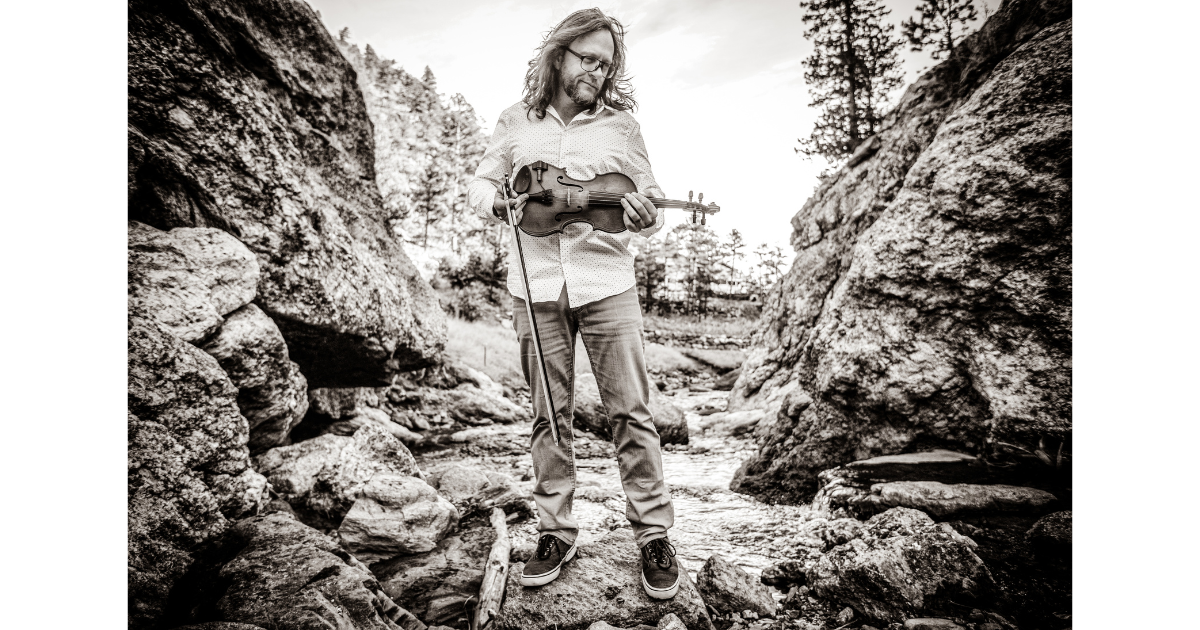
WATCH: Jeremy Garrett, “I Am the River Wild”

Artist: Jeremy Garrett
Hometown: Loveland, Colorado
Song: “I Am the River Wild”
Album: River Wild
Release Date: March 25, 2022
Label: Organic Records

In Their Words: “‘I Am the River Wild’ is a song that supports a double meaning. It is actually about the spirit and the wildness of a raging river, but it’s also about personality. Perhaps that personality is mine as the songwriter, or maybe it translates to you that way as the listener when you hear the lyrics to the song. Like a free-spirited person, a river has calm waters, and rough waters… free waters and from time to time, raging waters. We made the video for this song in a pristine part of the southern Colorado wilderness, way up in the mountains, where life to rivers begins. The wolf and the moose bring an amazing feeling to the video and the story unfolds nicely in that setting. I hope you enjoy ‘I Am the River Wild.'” — Jeremy Garrett


Photo Credit: George Trent Grogan, Mountain Trout Photography

The Infamous Stringdusters’ Travis Book and Jeremy Garrett Take the Long View

Now in their 17th year, the Infamous Stringdusters have established themselves as one of the most prominent and prolific bands in modern bluegrass. Asked if he ever thought the Stringdusters would be together that long, bassist Travis Book candidly replies, “Yes. That was the plan when we started the band, not to be side guys working for someone else or to go it alone. If we needed to, any of us could be a bandleader at this point. When we started, our plan was to do this for as long as we could. Looking at each other, we all wanted this group to keep making music together for 30 or 40 years. I hope that’s not conceited or hubris to say.”

Fiddle player Jeremy Garrett adds, “I’ve been in side bands and seen the writing on the wall as to how far you can go that way, as opposed to taking the risk of taking the leap yourself. Many struggle and have difficulty with that. Every time I think about it, I’m glad we took the risk. It’s a big step to believe in yourself enough to do that, and I feel lucky that we realized that early on. We’ve all spent a long time in the trenches, building it up. Looking back, we have an awesome band and business, and we still love each other. We’re having the time of our lives out here.”

The band’s musical passion and mutual respect are evident on their new album, Toward the Fray, and indeed throughout their catalog. In April, they’ll head to Las Vegas where A Tribute to Bill Monroe is nominated for a Grammy Award in the Best Bluegrass Album category. (They won their first Grammy for their 2017 project, Laws of Gravity.) BGS caught up with the Stringdusters — our Artist of the Month for March — for a series of three conversations on the road. Here is part two with Book and Garrett, who each wrote multiple songs for Toward the Fray.

Editor’s Note: Read our BGS Artist of the Month interview with Andy Hall and Andy Falco.

BGS: So you’re up for another Grammy, and of course you’re going, right?

Travis Book: We are. When they rescheduled it to April in Las Vegas, that just so happened to be the weekend we’ll be at Wondergrass. We have Sunday off and it’s within driving distance, so we’ll bus down there. We went the first two times, too. Even though it’s a massive undertaking and not cheap, you’ve got to go. We make it a priority. It can be hard for people who aren’t intimately involved with the music industry to understand what we’re doing. You know, aunts or uncles thinking “our nephew and his little bluegrass band.” Winning a Grammy definitely helped them have a better perspective on us having some success. It especially made my dad happy. He’s a hardcore music fan, subscribes to the magazines. He’s the one who turned me onto Pearl Jam and Radiohead. He was happier about it than anybody.

Were you into alternative rock first, before bluegrass?

Book: That and classic rock — Led Zeppelin, Jethro Tull, Pink Floyd. That was the music that really got me, although I remember wearing out Red Hot Chili Peppers’ Blood Sugar Sex Magik in middle school. Getting from there to bluegrass wasn’t that complicated. I was into Grateful Dead and Phish when I ran into some guys in a garage jam band that needed a bass player. When that ended, the guitar player asked if I’d ever played bluegrass. He was from Georgia, turned me on to Yonder Mountain String Band, Old and In the Way. We started jamming on bluegrass and the harmony singing is what really got me into it.

I grew up singing hymns with my parents, and those three-part harmonies really resonated as fundamental. Singing is my jam, it’s why I got into music in the first place, and singing harmonies is what drew me in. It was not long until bluegrass was all I wanted to do, go to bluegrass and folk festivals. I’d go to the college library and print off pages and pages of traditional bluegrass lyrics. Bluegrass Album Band, I learned all that stuff. I thought it was so cool that you could go anywhere with acoustic instruments, no electricity required, and have this massive shared lexicon you could play with people.

On the new album, your song “Pearl of Carolina” is particularly good.

Book: I co-wrote that with Jon Weisberger, my neighbor in Brevard, North Carolina. The hook to that song came from me writing a script for my show, Travis Book Happy Hour, which livestreams from the Grey Eagle in Asheville. I’d say it’s Late Night meets eTown. I was trying to write an introduction: “Live from Asheville, it’s BLANK of Carolina.” I was wondering what should go there, “pearl” came to mind and then I thought, “That should be a song.” The melody and chord change came to me while I was riding my bike, and I sang that into my phone. It felt a little “country” to me and I did not have the guts to finish it. That descending chord change seemed a little down the middle. The main thing Jon helped with was making sure I didn’t dilute it and miss the opportunity to write it right. He really kept me on track. It’s a song that feels like it wrote itself.

Jeremy, you have side-hustle projects, too — a new solo record, right?

Jeremy Garrett: Yep, River Wild. Music abounds. It’s a really good time right now, music flowing out of everyone. I’m stoked to be coming out of the pandemic with great new songs and tunes to play. There’s the Stringdusters album, and my record is out March 25. We can’t stop creating, writing about things in our world. As a musician and aspiring poet, I want to put things into words and share them.

Since you’re writing material for both the group and your own thing, how do you know where a song should go?

Garrett: There’s definitely a Stringdusters flavor, to where I can usually tell if something will be a Stringdusters song right away. Not always, I do get surprised sometimes. When we do the show-and-tell song-sharing, I’ll keep one wildcard song I throw out to see what everyone thinks and sometimes that’s the one that catches their ears. A lot of times I know the spice level needed to bring to the Stringdusters pot — a certain energy that will go over good live. That’s our MO, bringing the live show in the hottest way we can.

Travis, you mentioned that “Pearl of Carolina” initially felt too country. Another of your songs here, “I’m Not Alone,” seems like it could also pass for country.

Book: I try to stay out of my own way with that stuff. I remember Paul McCartney saying about early Beatles songs, “We didn’t write them to be memorable, we wrote them that way because we had to remember ’em ourselves.” There’s something to be said for songs that stick with you and are memorable. I can come up with crazy ideas, but the stuff that keeps running around in my head days later, that’s when I know I’m onto something. The older I get, the less afraid I am about writing stuff that’s straightforward. You want to make music that’s quality and creative, complex, interesting. But it’s better if it resonates and sticks, becomes a part of lives and minds.

All three songs I wrote for this album are in that vein. “Pearl of Carolina” is a little more complicated, but “I’m Not Alone” is just that one-line chorus. The first three lines are the same melody, the third line I reharmonize; change the chord structure, then the last line the lead drops down to something very similar to the baritone part from the first two lines. It’s such a simple idea, but it still knocks me on my ass when I listen. It makes the chorus pop right out. The old me might have thought it was too sappy or not complicated enough. I feel fortunate to have grown up enough to get past that. It seems so simple, but essential, like a mantra.

Beyond who plays what instrument, how would you summarize each person’s role in the Stringdusters?

Garrett: I think we are that rare democracy among bands. Everyone has their individual talents, things they’re better suited for. But I think we’re all into the big picture. That’s something we often discuss all together, vibing on the same wavelength about the band’s trajectory, how to create records and unify messages with five different guys. There are issues where we disagree, but we almost never have to vote on it. We just talk it out and eventually come around to being of the same mind about it almost all the time. We’re lucky that way. Panda (banjo player Chris Pandolfi) is very technically minded, handles a lot of the business, and Travis is a great booking agent, keeps an eye on the schedule because he knows how to make that flow. We hope to all bring something to the table. It’s always been that way.

Book: Everyone can kind of choose their level of engagement. We’re all allowed to integrate and contribute however we want. Business, music, interpersonal stuff all continues to move along and different people are engaged with different parts at different levels. But every year, we grow more alike. Every tour, we’re more on the same page. Ten years ago, there were a lot more differences of opinion than there are now. To me, the decision-making on goal-setting, recording, the way to approach shows and everybody’s role musically is all so much easier now than a decade ago.

Garrett: Even a decade ago, it was already better than most bands. We’ve always been lucky for sure.

Book: A major priority is keeping everyone involved and equal and on the same page to make sure everyone gets what they need out of this. Everyone has an equal say and there’s no bandleader. That can make it challenging to be a fan. So much is going on and everybody gets a chance to lead. If you just want to be fed the same singer doing the same type of songs all night, we’re maybe not the band for you. It’s highly dynamic. Any given song or even moment, a different guy can be the leader. That’s part of what keeps us interesting as a band — everybody getting a chance to take the reins, get support and then on to the next thing. We’re Jeremy’s backing band during his solo, then mine when I’m singing the hook. Moment to moment, everyone is fully supported.


Want to win tickets to see the Infamous Stringdusters at the Echoplex in Los Angeles? Enter our ticket giveaway.

Photo Credit: Jay Strausser Visuals

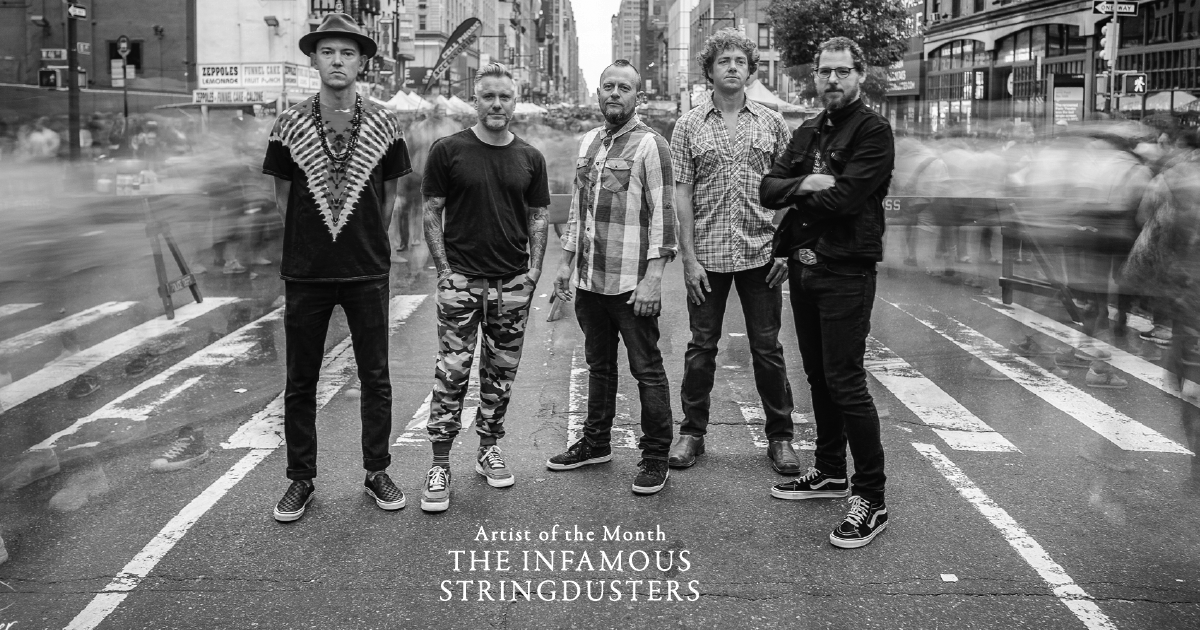
Artist of the Month: The Infamous Stringdusters

The Infamous Stringdusters continue their career ascent with Toward the Fray, a new album that comes on the heels of a Grammy nomination for a Bill Monroe tribute EP and hosting duties at the IBMA Bluegrass Music Awards. Their first new album in three years, Toward the Fray captures the live energy of the band, though all five guys put an emphasis on the lyrics, too. Upon announcing the project, band member Andy Hall stated, “Sometimes the times call for some serious reflection, and these songs really hit home. Get ready to go deep with us!”

As the Bluegrass Situation’s Artist of the Month for March, the ‘Dusters paired off for upcoming interviews, with longtime sound engineer Drew Becker joining the fray. Look for the award-winning band in Colorado later this month before the ensemble travels the West Coast. Then it’s back to Colorado for a stop at Red Rocks Amphitheater just before Memorial Day — another reason to look forward to summer.

Although the world has seen its share of upheaval over the last few years, which is certainly reflected in Toward the Fray, the band lineup has remained consistent: Travis Book on bass, Andy Falco on guitar, Jeremy Garrett on fiddle, Andy Hall on Dobro, and Chris Pandolfi on banjo (and he’s also the only member who doesn’t take a lead vocal). The band released the album on their own label, Americana Vibes.

In our 2019 interview, Book stated, “Our band can be challenging to listen to because it’s not one-dimensional. You’ve got four guys that sing, and every song sounds a little different, and certainly the way I approach every song is as though it’s its own universe. The people who are into our band, they’re ready to go wherever. If you’re into one singer or one style, you’re not going to get very much of that when you come to our show.”

That’s still the case with Toward the Fray, as the band members shuffle the songwriting credits among them, including the exceptional instrumentals. It’s a project that should easily sustain the band throughout the festival season. Keep an eye out for our BGS Artist of the Month interviews in the coming weeks, and meanwhile, enjoy our Essentials playlist.


Photo Credit: Jay Strausser Visuals

MIXTAPE: Jeremy Garrett’s Melting Pot of Influential Music

My mind has been concentrated on making music for my latest record, Wanderer’s Compass. I let Wanderer’s Compass be a collection of as many influences in music I’ve had as possible. I’ve been playing long enough that I used to learn my fiddle parts from an LP and move the needle back to catch the solo parts. Then of course over time, with the advent of the internet, the influence highway, so to speak, became much wider. I’ve always thought it is hard to put music in a box, since it is art, even though I essentially understand the reason for genres. To me the whole point of art is to let all of your influences and experiences be the palette in which to create your vision. This playlist is really fun for me to listen to, and I hope you enjoy it as well. — Jeremy Garrett

Dire Straits – “Where Do You Think You’re Going?”

This song was off a record that I heard early on in my life and the soul that Mark Knopfler brought to this song continues to influence me to this day.

Larry Sparks – “Blue Virginia Blues”

Larry is a master of song delivery, selection, singing, and incredibly soulful guitar playing that is old school, yet crosses any boundaries from that world into the new because art like that knows no bounds.

Tony Rice – “Urge for Going”

From the album Native American, this track is the epitome of how to produce a song to pull all of the essence from it for the listener to hear. Any bluegrass musician can tell you that Tony Rice is the man to listen to for song production, not to mention his unmatched guitar skills.

Jeremy Garrett – “Wishing Well”

“Wishing Well” is an original and on this track I stretch way out on the fiddle for a jam.

David Grisman – “Fish Scale”

David is one of the best and truest musicians of our time. This is a one-of-a-kind song from a one-of-a-kind artist, David Grisman. I particularly love Tony Rice’s playing on this track.

The Stanley Brothers – “The Lonesome River”

This is one of history’s most eerie and interesting sounding bluegrass duos. Their songs and the way they sing them are my personal favorite sounds of the traditional bluegrass era.

Strength in Numbers – “Blue Men of the Sahara”

This ensemble was one of the most creative in acoustic music. This particular song showcases what happens when you marry music stylings from around the globe, and Mark O’Connor rips a fiddle like nobody’s business.

Merle Haggard and Willie Nelson – “Pancho and Lefty”

This cut is pure magic if you ask me. I love everything about it, from the wacky-sounding synth stuff to the magic that Haggard brings when he comes in for his verse. Sends chills up my spine.

George Jones – “Choices”

There may not be any better country singing than this right here.

Jimi Hendrix – “Red House”

There is perhaps no one more inspiring to a musician who wants to tap into soul and vibe. Hendrix is the one who paved the way for all of us in that regard.

Deep Forest – “Sing with the Birds”

This music was an indicator for me at an early age that I loved world music and the technology that continues to evolve to help create some of it. This is programming at its finest and it’s flowing with creativity.

Jeremy Garrett – “Nevermind”

This is a Dennis Lloyd cover that I love to perform. Dennis is an Israeli pop artist. It’s a culmination of my bluegrass chops on fiddle, guitar, mandolin, along with effects, experimentation, and programmed beats.


Photo credit: J.Mimna Photography

‘Bluegrass at the Crossroads’ Series Displays a Big-Tent View of Bluegrass

Over the last several years, it’s been fun watching the rapid creative growth happening at sister labels Mountain Home Music Company and Organic Records. Their rosters are musically diverse — a reflection of the music-rich mountains of Western North Carolina where the label group is based — thanks to the effort they’ve put into signing adventurous bands that redraw musical boundaries on stage every night, along with artists that are able to sound like themselves while keeping tradition’s torches shining. The prevailing attitude in the building, among staff and artists alike, is decidedly forward-looking; the music these groups and artists create is mutually influential, and the territory between them fertile ground for collaboration.

Mountain Home’s new series of releases, Bluegrass at the Crossroads, takes advantage of this by putting these artists together in unique and intriguing combinations to record mostly new music. The label’s team gets that this homegrown stylistic breadth is a great asset, and they aren’t shy in their commitment to the highly cooperative, big-tent view of bluegrass that’s proudly on display in the series.

Bluegrass styles cover a remarkable amount of ground — from Red, White, and Bluegrass to Red Rocks, if you will — while still remaining totally recognizable as the genuine article. As a result, there’s enough range within the genre that a gap exists to be filled by an ongoing project of this kind. And, since touring has been largely benched for the time being, this is the moment to gather these threads together, invite great players into the studio for new creative partnerships, and press “record.”

Music in general has become so cross-pollinated that you never know what you’ll find on another musician’s playlist or turntable, and as more musicians and producers jump their creative tracks to explore different genres, bringing their tastes and vocabularies along with them, they’re invariably influenced by the new sounds and ideas they encounter, and they exert their own influence in return.

Bluegrass is good at absorbing new ideas while holding on to its identity — the sometimes regrettable, sometimes successful, move of giving the bluegrass treatment to rock and pop hits is a perfect example – and so, as the music grows, bluegrass musicians of all kinds freely pull new ideas from all directions, incorporate them into their own expressions of the style, and wind up with something that is still absolutely bluegrass.

It’s easy to pick out classical music, jazz, indie rock, folk, metal, even electronic music, in the sounds of some of today’s bands. Other bands choose reach into the past to create new interpretations of Celtic music, old-time, classic country, and Tin Pan Alley. Turn your ear to a record from any performer on Bluegrass at the Crossroads and you’ll hear these influences effortlessly knit into the songs and arrangements.

It’s not surprising, then, that Bluegrass at the Crossroads is good, but it is striking how much fun it is to listen to. One-off bands like these can be like wrapped presents: lots of promise on the outside, but what’s inside might or might not meet expectations. Happily, there’s nothing to be disappointed about on these tracks; they’re full of life, maybe given a boost by a collective sense of cabin fever.

It also likely helps that most of the material is new. A few tunes from the standard repertoire appear, but few of the songs have been heard before. This keeps a lot of baggage out of a performer’s approach to a tune — each one is a blank slate, with no so-called “definitive” version to consult, and that extra space leaves room for a kind of subtle magic to happen.

Bluegrass may have a restless heart, but it also tends to hew close to tradition where it can be found (if you don’t believe me, listen to five different bands kick off “Steam Powered Aereo Plane,” you’ll see what I mean), and songs with unwritten histories don’t have conventions that must be attended to. So players are more free to search for new ideas, calling on their wide-ranging taste and experience, to create statements that seem more personal, the best of which sound as if they had always been there — just like the best songs.

These sorts of moments are everywhere in this series, and even though the players are all going for it, they’re also paying close attention to each other. The level of ensemble play is high, there are moments that have the intensity of a live performance, and a feeling that everyone involved was making themselves fully present for the project. That sense of life can be hard to come by in studio recordings, and the energy that’s captured is a refreshing reminder of what playing music is really about. It comes at a time when I know a lot of us could use something like this, and I’m excited for more!

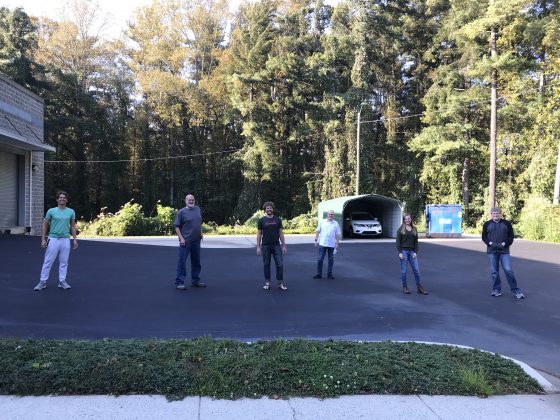
A socially-distanced Bluegrass at the Crossroads session. (L to R: Joe Cicero, Sammy Shelor, Travis Book, Jon Weisberger, Carley Arrowood, Wayne Benson)


SPONSORED CONTENT: Occasionally, BGS brings you content curated by featured partners and sponsors.
Photo and graphics courtesy Crossroads Label Group

LISTEN: Jeremy Garrett, “The World Keeps Turning Around”

Artist: Jeremy Garrett
Hometown: Loveland, Colorado
Song: “The World Keeps Turning Around”
Release Date: October 9, 2020
Label: Organic Records

In Their Words: “These days it just seems like we are going around in circles with many of the conversations we are having — especially online. Someone has a good idea for good change, and then the barrage of disagreements on how to achieve that fires up. When we look at the big picture though, are we all just beating our heads against a brick wall, so to speak? Never realizing how powerful all of us truly loving one another could be? Maybe that message is too simple and naive, but perhaps we need to break it all down, go back to the basics and realize that we are one country, one world. We can’t ever escape that, and when we learn from each other, we would never want to. So the goal of this song for us was to simply ask that question: are we going to keep heading down a path of division over and over and over again? Or can we ask ourselves what we can do to break this cycle?” — Jeremy Garrett


Photo credit: J.Mimna Photography

MIXTAPE: An Organic, Mountain Home Playlist

There’s never been a time when working people haven’t needed to lean on one another — and to look beyond the present day — just to get by, but the present moment often seems especially fraught. Nothing speaks better to each present moment than music, whether it’s making space for respite and healing or providing encouragement and inspiration for the struggle.

Here at Mountain Home Music Company and Organic Records, our artists speak in unique, distinctive voices, yet each of these mostly southern artists have been unafraid to offer up songs that address the universal themes and social challenges of our times— whether they’re looking inward or to the outside world. — Ty Gilpin

(Editor’s Note: Find the entire playlist below)

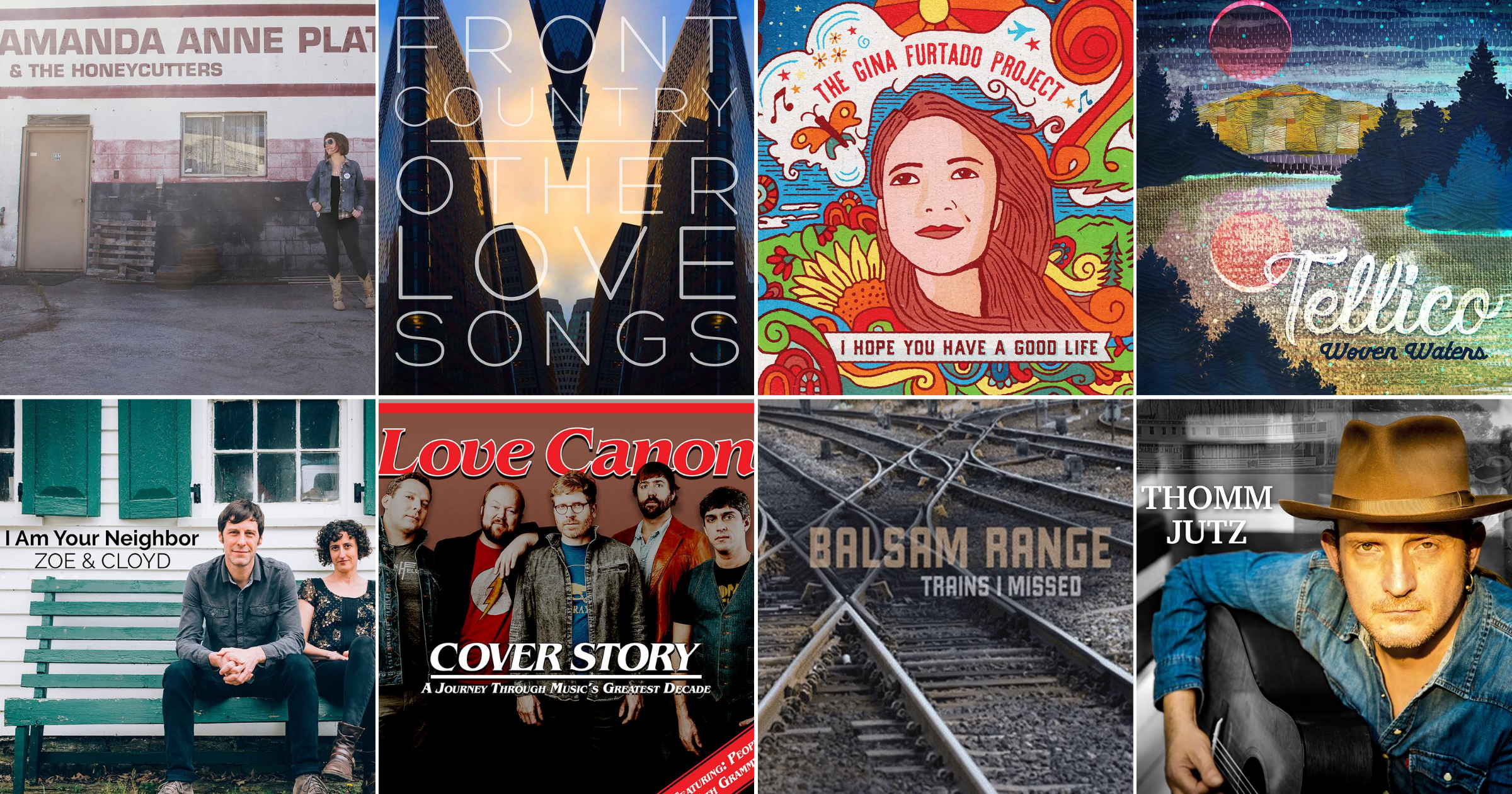
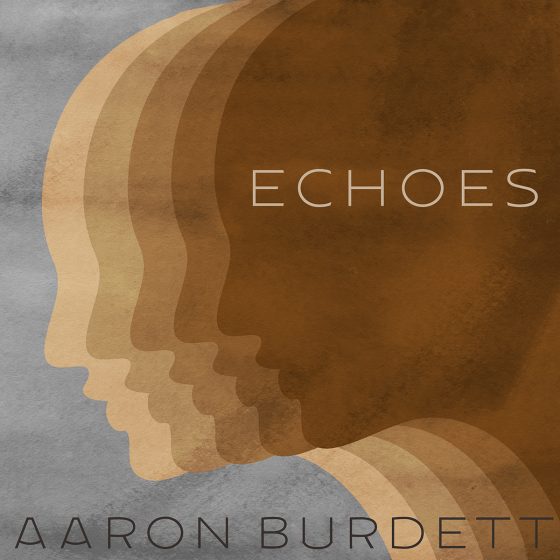
Aaron Burdett — “Echoes”

“Echoes” is a product of this era, a processing of my own thoughts and feelings. I have questions about my surroundings and myself. It’s about current conditions but also about elements of our humanity that are centuries old. Uncertainty defines much of life in the year 2020 and I believe in recognizing and honoring it. Answers will not arrive until the right questions are asked. — Aaron Burdett

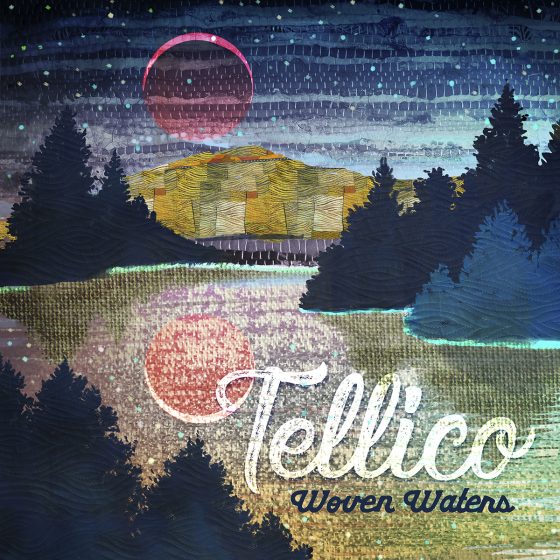
Tellico — “Courage for the Morning”

I was thinking about how people’s actions can inspire others, from the great revolutionary leaders to the everyday efforts of ordinary people. So, if you sing along to this song, you will be saying to yourself “I will walk, I will sing, I will bring a little courage for the morning.” That is something each one of us can take to heart and really think about: What is it that I can do to help another person in this world? — Anya Hinkle, Tellico

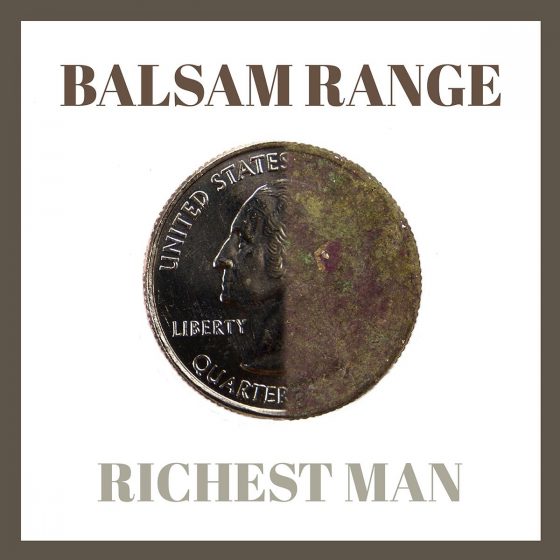
Balsam Range — “Richest Man”

Who has not thought about being the Richest Man? But what defines being rich? To have a life without regrets is easier said than done. The sacrifices made for gain can seldom be undone. The things lost and those won will only show with time. — Buddy Melton, Balsam Range

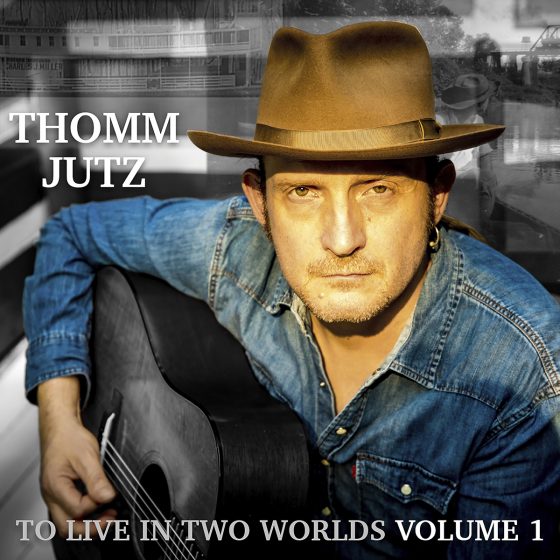
Thomm Jutz — “What’ll They Think Up Last”

When you enter John Hadley’s Fiddle Back Shack you are immediately in the moment and in a different world. I can’t think of any other house like his. Hadley is one of the most stunningly great creative minds I know — so is Peter Cooper. We gathered at Hadley’s funky Madison, Tennessee home one Sunday morning, talking over coffee. Hadley said something like “I wonder what they’ll think up last…” yeah, me too. — Thomm Jutz

The Gina Furtado Project — “The Things I Saw”

All throughout my childhood, I went to the river when I needed comfort of any kind. No matter what happened in my life, good or bad, the river was always the same. The plants and critters and smells and sounds became like old friends; always welcoming and beautiful in every way. I imagined a secret society whose mission was to fight hatred with love.

I’ve taken that little vision into my adult life, and enjoy trying to spot members of this secret society (and trying to be one myself!) They can be flowers, animals, sunsets, people you pass on the street — any person or thing that refuses to let darkness and negativity take over, and instead chooses to exude pure and unstoppable love. — Gina Furtado

Love Canon — “Things Can Only Get Better”

Love Canon has made a career from expertly covering classic ’70s and ’80s pop songs with acoustic instruments. In this Howard Jones hit, they found an anthem for trying times. — Ty Gilpin

Amanda Anne Platt & the Honeycutters — “Brand New Start”

Asheville-based, Americana-leaning outfit the Honeycutters have built an increasingly storied career through their sensitive, skilled musicianship and the distinctive songwriting and voice of Amanda Platt. “Brand New Start” is about a scenario we could all use right about now. — Ty Gilpin

Balsam Range — “Trains I Missed”

Do we recognize when opportunities missed are really fate taking us in a better direction? How many times have you found yourself missing one train and taking another to right where you’re supposed to be? — Ty Gilpin

Zoe & Cloyd — “Where Do You Stand”

“Where Do You Stand” is a commentary on the state of our national discourse. Often, it’s the farthest ends of the political spectrum that make the news and it seems like inflammatory rhetoric is the only thing that gets heard these days. I’d like for us to remember that we’re all connected and are more alike than we are different, no matter who tries to convince us otherwise. For us to move forward, we have to find common ground on which to build a path toward a sustainable future. — John Cloyd Miller, Zoe & Cloyd

Jeremy Garrett — “Circles;” “What Would We Find?”

“Circles” is a song I feel like many people can relate to. Sometimes you feel like you’re going in circles, but there is always light on the other side if you can just keep going and perhaps change your vantage point.

For “What Would We Find?” we were riding out through the Black Hills and it struck me how it looked as though, if you could take all the timber away and expose just the rocks and barren land, what would you find? It seemed as though there were hidden layers of possible treasures in the rocks under the timber — perhaps like relationships can be sometimes. I only had the idea and a basic melody, and had the opportunity to write with one of my heroes, Darrell Scott.  — Jeremy Garrett

Front Country — “Good Side”

Almost a capella from a group that has never shied from issues of social justice. Hailing from the west coast but now residing in Nashville, Front Country has consistently campaigned for marginalized members of our community. This powerful message is both personal and universal. — Ty Gilpin

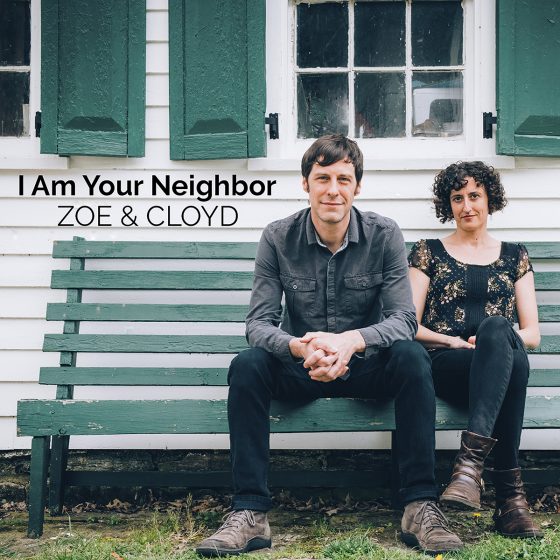
Zoe & Cloyd — “Neighbor”

“Neighbor” is a song meant to inspire us to act with empathy, and to remember our shared humanity. It’s important to recognize our similarities rather than fear our differences. — Natalya Zoe Weinstein, Zoe & Cloyd

Aaron Burdett — “Rockefeller”

“Rockefeller” is, on the surface, just a fun song about wishing for more than you have and being envious of others. Dig a little deeper though, and the song brings in hints of income and economic inequality. But then the chorus is all about making do and being content with what you do have. So it’s a song with a few layers to jump back and forth between. — Aaron Burdett

The Gina Furtado Project — “Try”

The societal pressure to be a certain way can be overwhelming. ‘Try’ just came to me one day when I felt particularly defeated. We win some, we lose some; we do admirable things and less than admirable things. That is what it is to be a human, and as long as you know you try, it’s not a big deal either way. — Gina Furtado


SPONSORED CONTENT: Occasionally, BGS brings you content curated by featured partners and sponsors.

Gig Bag: Jeremy Garrett

Welcome to Gig Bag, a BGS feature that peeks into the touring essentials of some of our favorite artists. This time around, Jeremy Garrett details the items he always has nearby when out on the road.


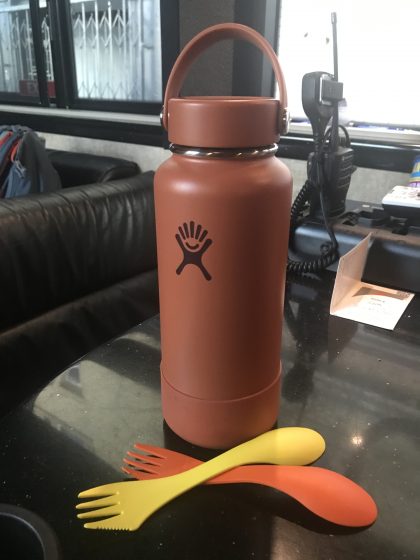
The main thing I take on the road in my gig bag is some reusable utensils and a water bottle. So much waste can be generated while traveling, and it’s important for us all to do our part to curb that waste as much as possible. Cutting down on one-time-use water bottles and plastic ware can be a great way to reduce our impact on the environment.


Another thing that I bring on the road always, especially when riding in a bus, is a very comfortable pair of “house shoes.” Sometimes even just bringing one small familiar thing from home on tour can help tie those two worlds together a little better and keep you grounded.


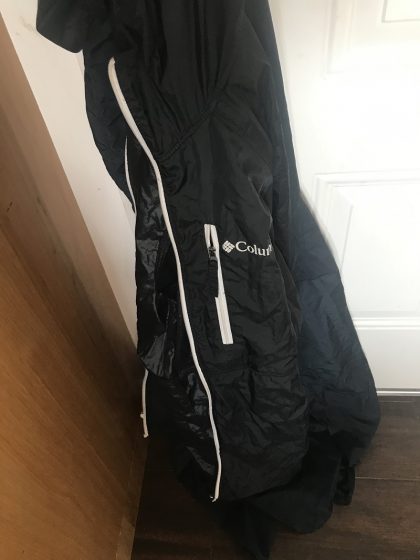
I always pack two raincoats. Especially during festival season. There’s been more than one occasion where the extra one has come in handy, for a crew member, band member, or even a second dry one for you to wear. They are small and light weight and wrapped up, take almost no room in a suitcase.


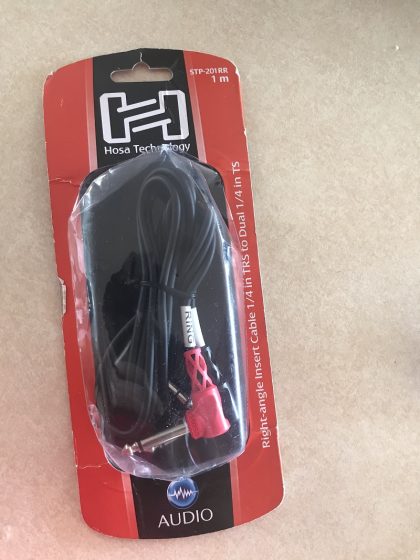
This extra insert cable never leaves my suitcase. These things can stop working on a pedal board sometimes and leave you in a bind. Not me!!


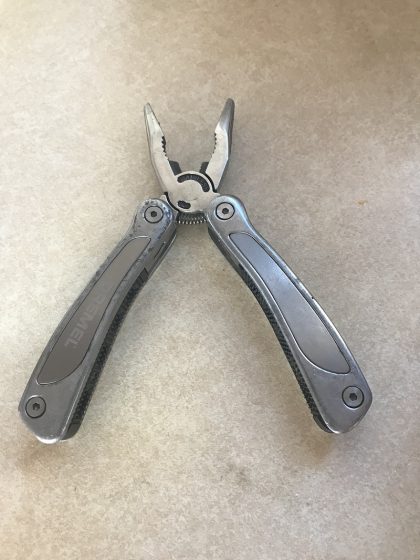
A multi-tool is a great thing to have along.


I throw this bottle of Benadryl in my case, because you never when you might eat something or get bit by something that you are allergic to. Last year I found out was allergic to shiitake mushrooms. The hard way. Having Benadryl on hand really helped with this matter.


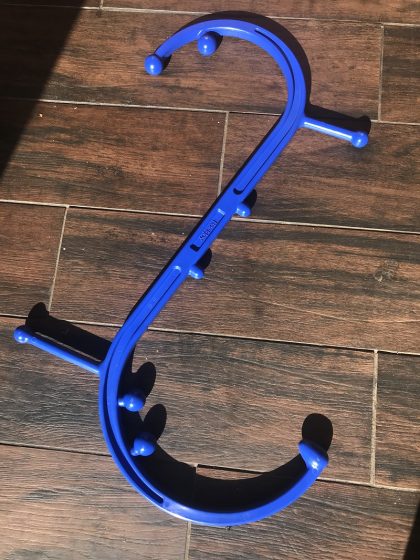
One more thing that I’ll try to squeeze into my suitcase at the end if there is space, is a Theracane. Sometimes a back can get sore playing music a lot or sleeping in a different place every night and this has helped me to be able to work those playing knots out after the show.


Photo credit: J.Mimna Photography

WATCH: Jeremy Garrett, “I Can’t Lay Your Lovin’ Down”

Artist: Jeremy Garrett
Hometown: Loveland, Colorado
Song: “I Can’t Lay Your Lovin’ Down”
Album: Circles
Label: Organic Records

In Their Words: “‘I Can’t Lay Your Lovin’ Down’ was a song that I co-wrote with Jon Weisberger and Josh Shilling. I just loved the vibe of the tune and how it fit with my style, so I decided to record it on my upcoming solo release, Circles. I blend guitar, mandolin and fiddle with a looper to create this arrangement for the song. Conner Pannell shot the video for me and I love how he captured this song. All of it was shot in the studio, partly while tracking and in-between takes.” — Jeremy Garrett


Photo credit: J.Mimna Photography