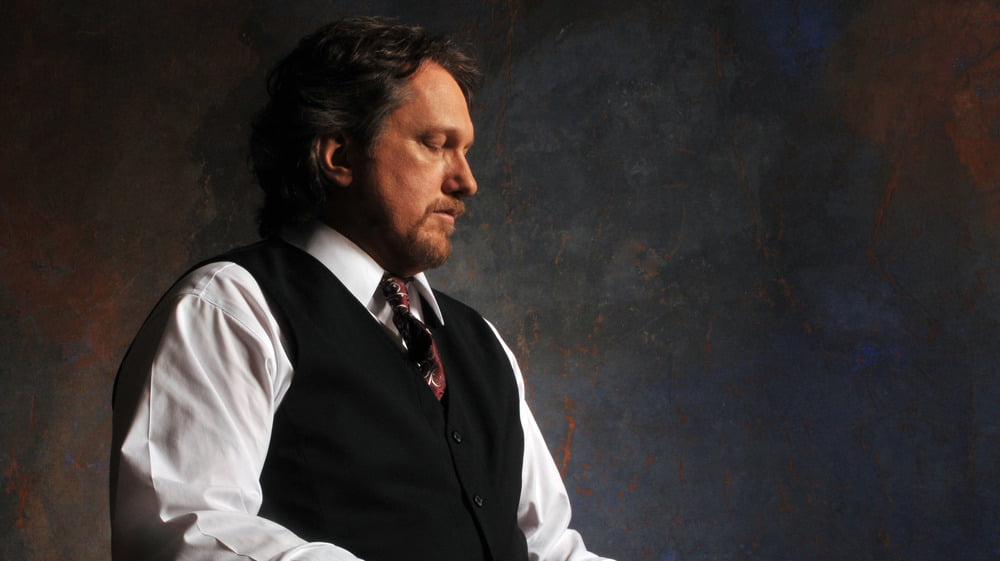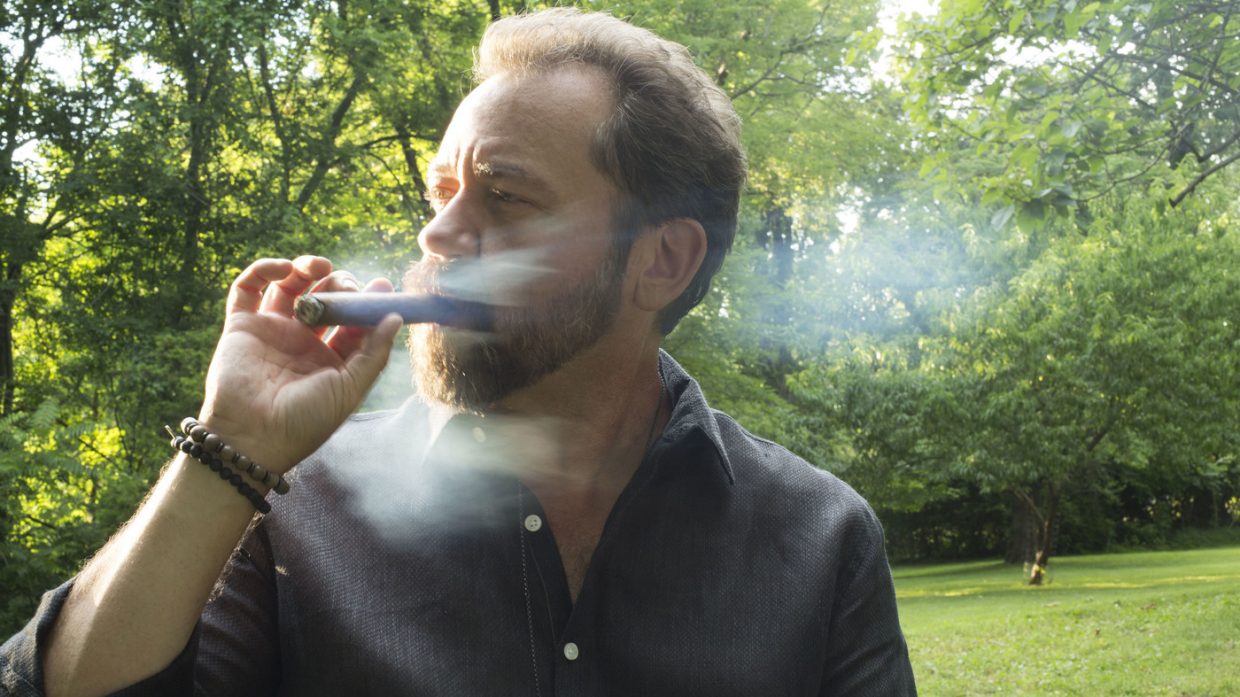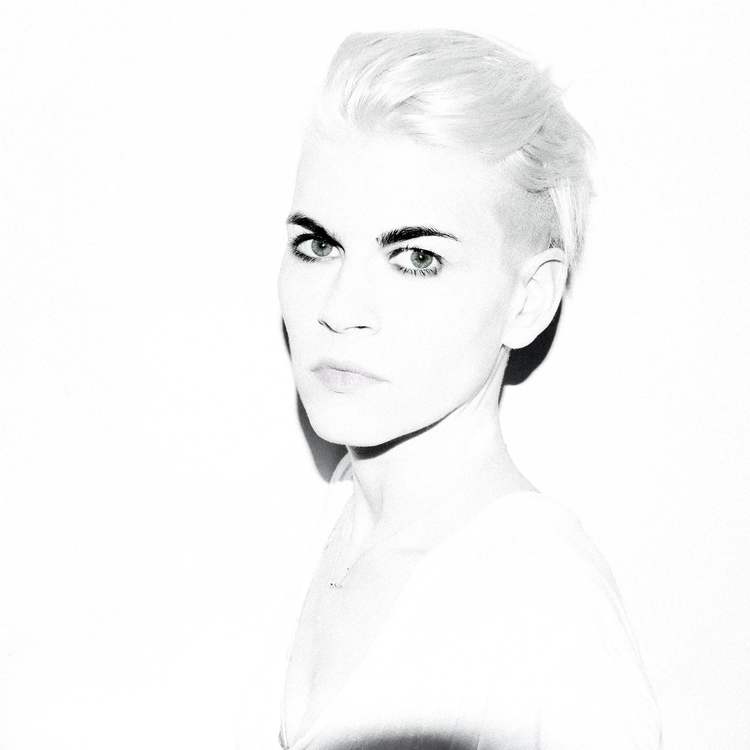
The Language of Music: Kaki King in Conversation with Dan Tyminski

“One of the worst ice storms in my life was in Nashville,” says Dan Tyminski. “Go figure. I grew up in Vermont, and I had to go to Tennessee to get the ice.”

Kaki King remembers that ice storm, because she was stuck in the Volunteer State, as well. She had two nights booked at OZ Arts, a venue just outside of Nashville. “The night before, everything was fine. We set up everything, all of our gear, then went back to the hotel. We ended up getting trapped there for two days. We could make it to the highway, but we couldn’t get our stuff!”

These two instrumentalists may come from very different musical worlds, but their experiences during ice storms — and not during ice storms — are actually very similar. Tyminski is a bluegrass veteran, playing countless festivals as a kid and serving as a lynchpin with Alison Krauss + Union Station for a quarter-century. King, on the other hand, spent her teenage years playing in pick-up punk bands before developing a very complex playing style that treats her acoustic guitar like a drum set.

And yet, both of them kick and push against the strictures of their chosen genres, constantly ripping it up and starting again. Tyminski is most famous to younger generations of listeners for his collaboration with Swedish DJ Avicii, and on his new solo record, Southern Gothic, he mixes country and bluegrass with EDM production techniques and looped beats. And King recorded her latest album, Live at Berklee, live at Berklee, with a small orchestra of student musicians filling out new arrangements of old compositions. Both releases are outliers in catalogs full of outliers.

First of all, do you know each other? Are you familiar with each other’s work?

Dan Tyminski: Just a little bit.

Kaki King: I know a little bit about you, Dan, and the things that you’ve done.

DT: I just did a little bit of recon before the call. I heard some wonderful guitar playing, and then the phone rang.

You’re both known for your guitar playing, but you’ve both released albums where that instrument takes a back seat to these larger arrangements.

DT: It’s funny. On my album … I actually opted out. This is the first album I’ve done where I really opted out of the playing. I had Jesse Frasure produce this record. We were going down a different avenue of sound and, when he was putting together the band to track all of this stuff, I really felt like I would have a better chance of getting in the way from having him have the freedom that he needed to explore. So, I really stayed out of the playing on most of my record. I’m on new ground, where I let someone else come in and do it all.

KK: That’s cool.

DT: The bad part is, now I have to learn how to play all this stuff. And, it turns out, that some of it is hard.

KK: The idea for Live at Berklee was to put together an ensemble and reimagine a bunch of older tunes with strings, and brass, and woodwinds — and then do it live. This wasn’t the kind of thing we wanted to go a studio and make perfect. The liveness of it is what’s exciting. For me, it was doubly hard because, on one hand, I had to write a few arrangements, which is out of my wheelhouse. But I enjoyed it. And then … I had to go to college. I was working in a classroom with a conductor and 13 really good players. I never went to music school, and I haven’t been conducted since I was in high school band. I really had to buckle down. It challenged my guitar playing to be able to keep up with these really great players. It wasn’t something where I could do this freeform thing that I do, or change the tempo, or drop a measure. I had to be perfectly accurate every time.

DT: From what I heard, it sounds like it was no problem whatsoever. It does not sound like you were struggling.

KK: Well, thank you. The end result was fine, but the initial rehearsals were a bit like, “Oof. This is gonna be a hell of a ride.”

DT: In a way, it’s somewhat similar, playing the live stuff on my album. This is the first time in my life where I’m playing with some tracks. It’s a very strict arrangement and, if you veer off at any point — miss a bar, add a bar — it’s a train wreck. I’ve never had to pay so much attention, and I am easily the weak link of the live band version of all of this new stuff.

It sounds like these two projects kind of forced you not to improvise.

DT: I can definitely say that what she’s doing is much more difficult. Most of the effort in what I did with Southern Gothic was in the creation of the music, and then I was able to let someone else take the reins. Whereas, it sounds like you had to really step up to the plate and get outside the comfort zone a little bit.

KK: Well outside my comfort zone. But there was really no improvisation. I’ve been working with strings and arrangers for about five years, in one form or another. Every couple of months, I’ll get a gig with a string quartet or do a little tour. And, each time, I learn something new. It always is along the theme of, “You can actually change that. You can give directions. Just because you didn’t go to music school and you’re not the brightest kid in the class, doesn’t mean you can’t say, ‘Don’t play that.'” The process, for me, was learning how to sit in an ensemble and play a song I was familiar with but not to deviate too much from my original arrangement. But there was constant conversation and feedback among the musicians and the conductor.

DT: What a beautiful thing to get into a situation like that, where you have that type of canvas to work with. It sounds like we did the same exact thing, but we just did it so differently. You had string sections with people working together, and I had one guy trying to say, “Okay, now this is where the string sections are, and let’s do this.” I’ve got someone creating these string sections on a computer, which then we later went back and had live people play. It’s a weird process. But there are a lot of ways to get there.

KK: That’s what people want to hear, especially people who are being trained now. They realize that the people they play with are not all going to have the same background.

DT: What matters is, does someone have a vision? And is it translatable?

What are your backgrounds? Are you both self-taught? It sounds like you’re taking very different approaches that maybe aren’t the norm for people.

KK: I can’t find anyone who does the norm anymore.

DT: I was gonna ask, “What is the norm?”

Fair question.

DT: There are so many ways to get there — even when it comes down to writing the songs. Of all the different songs that have made their way onto this project of mine, no two of them came about the same way. They all started differently. They were all from different conversations. Some started lyrically and we found music. Some started with music and we found lyrics. Yeah, there is no normal. There’s just, “Does something make you feel what it’s supposed to make you feel?”

KK: I can certainly say that all my previous records started with a riff here, a drum thing there. Some songs wrote themselves in an hour. Some songs took a year to get out. I cannot sight-read guitar music, and since I play in different tunings anyway, it would just be … Well, there are, like, two people in the world who can sight-read guitar music in different tunings, and they have social problems. I am fortunate that I understand enough about music, and about intervals, and about turning a major into a minor to be able to convey that style of information to other players. I was fortunate enough to just be given enough basic information to have something like this not just explode my brain.

DT: I had this conversation with someone earlier this morning, but I would have loved to have spent some time on a theory and be able to verbalize things. But anything you ask me to do, there’s a reasonable chance I could do it, if I hear it. But there’s nothing that I can see or hear explained that would get me there. I have to hear it.

KK: Everyone comes from a different background. I’ve seen enough to know that no one who has serious musical training is going to judge you if you don’t. They’re very accepting of talent or excellence in all of its form, even if it’s a very simple thing that you do.

DT: That’s the truth. I’ve never run into it as a roadblock or something that’s stopped me from completing my gig. On a personal level, it would be nice to feel like I was more in tune with changes that are going on. I’ve found myself in settings before, playing with orchestras, and having people say, “Could we try this and this?” I hear it all going down, but I have to wait until it passes before I understand what was said. It would have been nice to have a little training.

KK: It’s never too late.

DT: Well, I’m starting to think that way now. Maybe it’s time to get back to the drawing board.

But you two have both been challenging yourselves throughout your careers, right up to these new albums.

DT: Any time I’ve ever stepped outside of the box, or any time that I’ve heard other people stretch beyond what I normally hear them do, it’s always been rewarding. I’ve always been happy when I’ve made myself uncomfortable, when I put myself in that weird spot where I had to dig, you know? And when I hear other people do it, I feel the same thing. There’s a reward there. It’s easy to stay in your little box and do what you’ve done before. But when you stretch, that’s when you really get to discover who you are.

KK: I couldn’t agree more. In some strange way, I feel the most comfortable when I’m uncomfortable. I had done two solo guitar records in my early 20s, and I’d already had a lot of success, even though I didn’t really know what was happening to me at the time. But the last thing in the world I wanted to do for a third record was another solo guitar record. I just couldn’t fathom it. So I made a record that was a little more than half-instrumental. I worked with John McEntire from Tortoise, who’s a very post-rock kind of producer. We played a ton of different instrumentation and a lot of electric stuff, which was outside the box for me, at that moment. Each subsequent album started to take on a different hue. Prior to doing the Berklee thing, my last project was a multimedia show integrating video lights to the guitar and having the guitar control what you see.

DT: There’s something in the whole process of creation that people can connect to. I’ve been a big advocate of live music my whole life. For me, there’s all the room in the world for recorded music, and people need that in their lives to take home and be able to turn something on. But I’ve found that, when I watch something being created in front of me, it touches my soul in a different way than when I hear recorded music. So, when you say your guitar can control what people see with your lights, that’s beautiful. That’s the missing element to what you get when you just hear recorded music. When you get to see the effect of what’s being created right there and feel that new emotion … oh man, there’s just nothing else like it.

KK: I agree. Especially when I see a group of people playing together and I know they’re all feeling it, and they’re hitting their stride, it doesn’t get better than that. I’ll never hear that on any record. I’ll never see those musicians onstage smiling at each other. People getting in the zone is such an incredible thing to watch, and it’s an incredible thing to feel when you’re doing it.

DT: There’s nothing else like it. There’s nothing to compare it to.

KK: I’ve been playing my whole life — since I was a little kid. I grew up playing in bands and I was normally the bass player or the drummer, but I have this strange thing happen where I can be in a room with a bunch of people, men or women, who I normally don’t want to hang out with. Maybe our tastes run a little different, but something brought us together musically. Especially as a teenager, when we would play songs that we all wrote our own parts for, and then we play them together perfectly, all of a sudden we’re sharing the same heartbeat. It’s weird, because these are guys who would otherwise be making fart jokes or talking about some stupid movie. That has rung true throughout all types of ensembles that I’ve played with.

DT: Exactly. Music is its own language. I’ve been with the same group of people for 25 years, and what we have is rare, in that we have five people who truly love music for music’s sake. Everyone is able to listen and respond. It’s a language that you speak with each other. You can be upset with somebody in your personal life and still speak words of love, musically. When you have people who you can communicate with that way, there’s beauty in music. There’s a language there that you can only hear through it being played.

I definitely think music, as a social medium, is very important right now. Not to get political, but when things are so divisive, anything that brings people together from different backgrounds is a pretty profound vehicle.

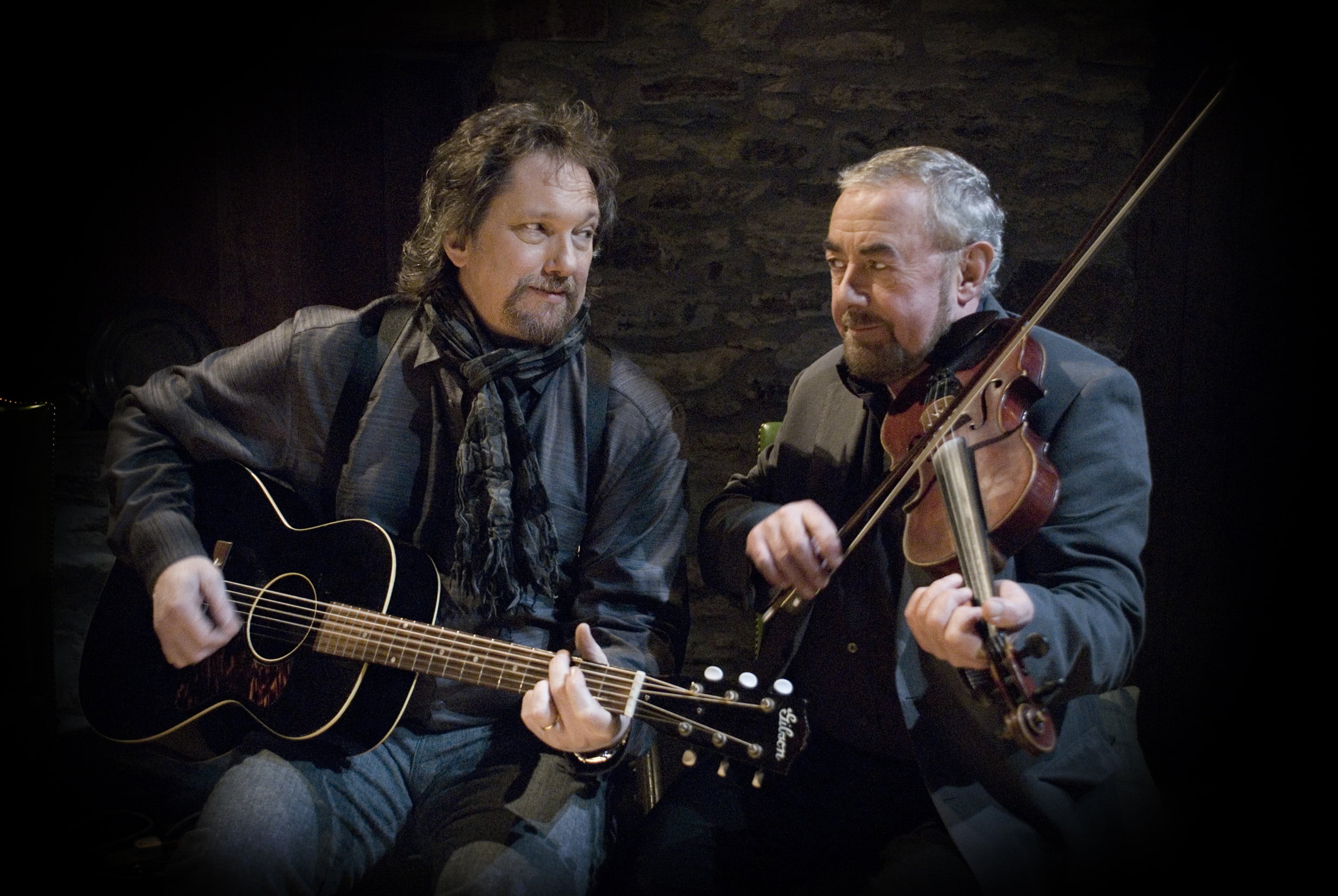
DT: It always surprises me. I remember the last time I was way outside of my comfort zone: I had gone with Jerry Douglas to Europe to do Celtic Connections, and we decided we were going to play a couple of songs we’d been playing for a while, but all of a sudden we’re playing with whistles and pipes and accordions. And I was looking at Jerry thinking, “Why would we choose this song? How can this even work?” But then I realized that we were all speaking to each other through the song? It’s like someone who spoke Chinese or French or some language you didn’t understand, but yet you knew everything they were saying. That’s how I felt with being over there. We were speaking in different tongues, but we were communicating. There’s a beauty in that.

Even just being in a crowd and watching an artist playing, I know I’m having a similar experience to the stranger next to me.

DT: Songs definitely hit everyone differently, as they listen to them. Depending on the mood that you go in with, you can draw completely different conclusions out of what you’re hearing. That’s one of the things I love about listening to music. It speaks to you in a way that nothing else can. Music has saved me, my whole life. It’s been my food. If I’m happy, I play music. When I’m sad, I need it even more.

KK: These days I’m more often the person on stage than the person in the audience. I wish I could flip that ratio because I love going to see live music. I’ve just got two young children right now. Recently, I had a friend named Matt Sheehy come and open shows for me in a couple of towns. I’d been listening to his music for a long time and I think he’s amazing. We first toured together in Italy, years ago. On this recent tour, he started to play this really beautiful song, uplifting in a lot of ways, and it took me back 10 years to listening to him play in Europe. I was suddenly a decade younger, and I was just sobbing. I was seated to the side of the stage and the lights were on me. I wasn’t trying to make a scene, but I found myself just bawling my eyes out. The acknowledgement of time passing, the feeling that something about this music and this feeling is eternal … it was a profound experience.

DT: That’s amazing. That’s what music should do.

I feel like I’ve talked to a lot of people recently who’ve said similar things. At a certain point, they find themselves playing more shows than they see, so they try to find ways to flip that around and become part of the audience again.

KK: I don’t know if you feel this way, Dan, but when being in a venue is your job and you’re backstage, I get really spoiled. There are a lot of shows I want to see, but then I think about buying a ticket, standing in line, being in a crowd. Then it becomes the last place I want to be. It’s something that’s severely lacking from my life, that I have been really missing.

DT: I share that with you. All the live music that I’ve heard, by and large, most of it was before the age of 16. From the point of being 15 or 16 years old on, I’ve always been the one on the stage, so attending shows … I can count on my two hands every show I’ve been to as an adult. It’s less than 10. Less than 10!

KK: We should go to more shows, man.

DT: I know. Going to more shows is on my to-do list. I should definitely be spending more time in the audience.


Kaki King photo credit: Shervin Lainez

Tommy Emmanuel: Swinging for the Fences

There’s a moment at the beginning of “Saturday Night Shuffle” — one of 16 duets from Tommy Emmanuel’s new album, Accomplice One — where the song’s guest, Jorma Kaukonen, turns to his host and says, “You’re a badass cat, man.”

It’s a nod of approval from one guitar great to another. Accomplice One is filled with those unplanned exchanges: a shout of encouragement here, a surprised laugh there. Raw and real-sounding, the album feels like a jam session between friends, mixing off-the-cuff solos and first-take performances with the virtuosity of an instrumentalist who’s been doing this for a long, long time.

Emmanuel began touring more than a half-century ago, hitting the Australian circuit as the youngest member of a family band. Now 62 years old, he still plays 300 shows a year. He doesn’t use a pick. He doesn’t use a regular amp. In a world whose most well-known guitarists — Eric Clapton, Jimmy Page, Chuck Berry, and the like — inevitably tend to be electric players, Emmanuel has remained true to the acoustic guitar. He’s the king of the unplugged.

With appearances from 20 guests, Accomplice One shows just how far the king’s empire extends. Americana poster boy Jason Isbell joins Emmanuel on the album’s opening track, a soulful reimagining of Doc Watson’s “Deep River Blues.” Bluegrass heavyweight Jerry Douglas stops by to swap solos on Jimi Hendrix’s “Purple Haze.” Mark Knopfler, Ricky Skaggs, and Rodney Crowell all make their own cameos, too. Recorded in studios across the world, these songs nod to the core ingredients of American roots music — Emmanuel’s bread and butter — without losing their global perspective.

“I grew up with music that came out of America more than the music that came out of Australia,” says Emmanuel, who was raised in New South Wales. “It was a combination of sounds that were coming out of Nashville, Detroit, Chicago, Kansas City, and New Orleans. I love all kinds of music, but that’s still the stuff that really touches my soul.”

Those childhood influences resurface on Accomplice One. “Saturday Night Shuffle” flips the Western twang of Merle Travis’s original on its head, sounding instead like the funky work of a New Orleans jazz band. Madonna’s dance-pop hit, “Borderline,” is turned into a lilting folksong with help from Amanda Shires. Emmanuel trades country licks with banjo phenom Charlie Cushman and blues-rock guitarist J.D. Simo on “Wheelin’ & Dealin’,” then bounces between Celtic shuffles and barn-burning bluegrass on his Clive Carroll collaboration, “Keepin’ It Real.”

It’s during “Djangology,” though, that the album truly goes international, with Emmanuel and his guests looking far beyond the Lower 48 for inspiration. A tribute to Django Reinhardt’s laid-back, jazzy phrasing, the song was recorded alongside Frank Vignola and Vinny Ranioloa in Cuba, during the middle of the country’s first-ever guitar camp.

“I was teaching 120 international students — everyone from 18 years to 80 years — for four days, and playing shows at night,” Emmanuel remembers. “One of the days, we went to the studio where they recorded Buena Vista Social Club. All the original microphones were there. We brought in some plastic chairs, and all the students sat in the main orchestral room. We had mics set up in front of us, and we worked out the arrangement in front of the kids. Then we recorded it twice and played it back, so they could hear it. The second take was the best, so that was the one we kept. It was very simple.”

Remember Santana’s Supernatural and its biggest hit, “Smooth,” which paired the guitar legend with Matchbox 20’s Rob Thomas? That song was inescapable for years, but it never truly sounded believable. Did anyone actually think Santana and Rob Thomas hung out together? Could anyone imagine them co-leading a guitar camp in Cuba?

That’s what makes Accomplice One so compelling: It’s believable. There’s fret noise on these tracks. There’s studio chatter between the musicians, all of whom are fans of one another. During the Cuban recording, you can hear someone tapping a foot on the studio floor, unable to resist keeping time with the music. The imperfections that would’ve been bulldozed by Supernatural‘s high-gloss production are, instead, put on a pedestal and celebrated by Emmanuel, whose album emphasizes feeling and intention over perfection.

That said, there’s a good bit of perfection here, as well. Emmanuel attributes his refined playing to a lifelong Chet Atkins obsession, which brought him face-to-face with — and eventually under the wing of — his idol during Atkins’ later years.

“Chet lived a life with a lot of great experience,” says Emmanuel, who became friends with the guitarist in 1980. “He had a lot of great people around him. He didn’t just make great music; he made the people around him great, too. He taught me a lot, not just about music, but about human nature. That’s the stuff I can write about.”

Nearly two decades before they met in Nashville, Emmanuel first head Atkins on the radio in 1963.

“It was a sound that I knew, deep in my soul, was what I wanted to make,” he remembers. “I wanted to sound like that. I just wanted to be like that. I think it’s nature’s way that all of us start out emulating somebody.”

If Emmanuel’s approach to the guitar began as emulation, it’s since grown into something signature. Like a one-man band, he’s learned to simultaneously pluck out a song’s melody, underscore it with a walking bass line and beef up the mix with accompanying chords. Listening to “Deep River Blues,” it’s easy to assume that Emmanuel and Isbell are tag-teaming the song’s guitar duties, filling its verses with blue notes and densely stacked chords. But that’s Emmanuel playing alone, with Isbell opting to leave his guitar in the case and, instead, channel his inner soul singer.

“When Jason started to sing that song, you’ve gotta imagine the chicken skin I got,” says Emmanuel, happy to refocus the spotlight on Isbell’s voice rather than his own playing. “I was doing the thumb-picking Doc Watson part and, when you add his voice to mix, it’s totally a soulful experience. It’s real, and that’s what I love about playing music.”

The feeling appears to be mutual. Accomplice One is filled with the sympathetic interplay of musicians who want to be there and that’s what elevates it above the usual catalog of guitar-heavy duets. Filled with covers, originals, (“Rachel’s Lullaby,” a Beatles-inspired song written for Emmanuel’s baby daughter, is one of his most compelling compositions in years.) and top-shelf playing, the album is for guitar nerds and casual Americana fans, alike. It’s the sound of a roots music lifer who, a half-century into the game, is still swinging for the fences.


Lede illustration by Cat Ferraz.

The Transatlantic Sessions Hop the Pond for MerleFest

Named in honor of guitarist Eddy Merle Watson, the 30th anniversary of MerleFest is taking place on April 27-30 at Wilkes Community College in Wilkesboro, North Carolina. Flat-picking legend Doc Watson founded the annual four-day festival in memory of his son, highlighting music that embodied the “traditional plus” moniker he ascribed to the genres they played together. Every lineup since has included a range of styles from bluegrass, folk, and old-time to jazz, roots, and blues. Keeping in line with this multi-genre approach, a special collaborative production is making its U.S. debut on the MerleFest stage this year: The Transatlantic Sessions.

The Transatlantic Sessions began as a series of televised musical performances produced by the BBC that brought together accomplished UK and North American roots musicians to play music from Scotland, Ireland, England, and North America. Since its inception in 1995, a total of six sessions have been recorded in various locations in Scotland and subsequently released on CD and DVD. Under the direction of dobro extraordinaire Jerry Douglas and Scottish fiddler Aly Bain, the core group of musicians who comprise the Sessions’ “house band” took the Transatlantic Sessions on the road throughout Ireland and the UK, rotating special guests in and out along the way.

“We all have so much fun with each other that we’re all kind of like a family at this point, after doing this many shows,” says Jerry Douglas. “And I think we have about 250 songs filmed and recorded in the can, and it’s quite a legacy for me and for everybody involved.”

So when the organizers of MerleFest approached Douglas and asked if he had any ideas for a special set for the festival’s 30th anniversary, he immediately thought of the Transatlantic Sessions.

“I wanted to bring it over here because people would completely get it here, you know, because of all the Scottish people and the Irish people that have immigrated to this country and are such a big part of it and have a lot of that blood running through their veins,” Douglas says. “And a lot of old-time musicians, especially at MerleFest, that music there, that was created in Scotland. So it’s nice for the people who live in North Carolina. I mean, you have a Highlands in North Carolina that still has Scottish games. And so there’s a huge connection between this country and Scotland and Ireland.”

In addition to the house orchestra, the Transatlantic performance at MerleFest will also feature special guests James Taylor, Sarah Jarosz, Maura O’Connell, Declan O’Rourke, Karen Matheson, and Joe Newberry.

“It’s all about collaboration — this whole thing — so the American guests, I tell them, ‘Just think transatlantic.’ You want songs that these musicians can relate to or you can hear them playing some version of some song of yours,” Douglas explains. “It’s the transatlantic style. You rehearse for that and some of it you remember and some of it you wing, but it’s always in the same spirit and it always turns out just great — everybody’s smiling. It’s a smiley kind of music. And then the Celtic guys, Aly [Bain] and Phil [Cunningham], and the fiddles and the pipes and all of that, when all of that starts going, it’s like blood-boiling music; it’s like viking music. But we’ve all got a little bit of that in us somewhere and it just kind of brings it to the surface, and it’s just impossible not to smile and not to just have a really great time.”

Seminal Irish guitarist John Doyle has been part of the Transatlantic house orchestra since 2000.

“One of the most beautiful things about it is, you get people who are very, very high up in the musical world to come in and play … and you’ll see them kind of be tense because there are 14 people looking at them going, ‘Okay, what do you have for us?’ But by the end of the first day of rehearsals, it’s just great fun,” Doyle says. “We just have a great laugh and enjoy ourselves and it’s become something more than music. It’s a collaboration of ideas and a collaboration of souls, in a way, and that’s what we love about it and that’s why we keep coming back to it because there’s something undefined about it that we can all sit down together and play music from any culture because it really is true that music goes beyond boundaries. And that’s the beauty and the joy of it: We communicate through music.”

The Transatlantic Sessions will make its Stateside debut on the Watson Stage at MerleFest on Friday, April 28, with musicians from the band playing additional sets throughout the weekend. Tickets for MerleFest 2017 are on sale now and may be purchased at MerleFest.org or by calling 800.343.7857. An advance ticket discount runs through April 26, 2017. Gate pricing begins on the first day of the festival.


Photo credit: Louis DeCarlo

MIXTAPE: Mark O’Connor’s Bluegrass Basics

From Bill Monroe on down the line, bluegrass has always stayed rooted even while it has reached its branches out to embrace each new generation of players. Fiddler Mark O’Connor knows a thing or two about that history, growing up listening to the greats and, eventually, playing with many of them. He collected a dozen bluegrass basic tunes for anyone wanting to explore the form.

Bill Monroe — “New Muleskinner Blues” (1940)
The virtuoso singer Bill Monroe introduced his new bluegrass sound in 1939 to the Grand Ole Opry with “New Muleskinner Blues.” Jimmie Rodgers also called it his “Blue Yodel No. 8” on his recording of the song 10 years earlier. In an Atlanta recording session in 1940, Bill and his Blue Grass Boys revved the song up with his high tenor voice, a faster tempo, and his trademark hard-driving rhythm. Along with his unusual lead mandolin solos and the bluesy fiddling by Tommy Magness, it set the pace for bluegrass to come. I am proud to say that I got to record with Monroe on one of his signature instrumentals, “Gold Rush” in 1992.

Flatt & Scruggs — “Foggy Mountain Breakdown” (1949 Mercury Single)
Flatt and Scruggs made bluegrass wildly successful, bringing it to the mainstream of television, the movies, and to Carnegie Hall. Lester Flatt had, perhaps, a more accessible country music voice than Monroe did, but it was his instrumental counterpart, Earl Scruggs, who lit the music scene up with the perfected five-string banjo roll he adopted from North Carolina banjo pickers. Forward, backward, and alternating, he was an absolute virtuoso on the banjo. I had the Scruggs book and tried to learn banjo the way he did it, as did thousands of others. A thrilling opportunity for me was to record with Earl on his second instrumental banjo album produced by his son Randy Scruggs.

Osborne Brothers — “Rocky Top” (1956)
When the mandolinist and virtuoso singer Bobby Osborne recorded “Ruby, Are You Mad at Your Man?” featuring his astonishingly clear tenor voice, the bluegrass world had another standard-bearing tenor after Monroe. The brothers soon took “Rocky Top” to being one of the most successful bluegrass songs in history. Not many have the chops to sing “Ruby,” but our own Kate Lee sure can in the O’Connor Band! We recorded it in a loving homage to these greats from the 1950s.

The Stanley Brothers — “Angel Band” (mid-1950s)
My mother had nearly 30 Stanley Brothers albums during my childhood. Like with Mozart, mom thought that listening to the Stanley Brothers on the phonograph was good for her children. And it was. Ralph had the most alluring lonesome tenor voice in bluegrass music, and there is no one really close to him on that account. When the old-time mountain soul singer comes in on each chorus to join his brother Carter, Ralph’s was a lonesome, enchanting beauty. The sacred quartet singing of the Stanleys moved the soul.

Doc Watson with the Nitty Gritty Dirt Band — “Tennessee Stud” (1972)
When I was 11, this is the album that I actually took to bed with me at night. It replaced my stuff animal and security blanket, I loved it so much. I wanted this music more than anything else really, and so did a lot of people as the three-LP set went platinum. Besides the virtuoso performances on it by Vassar Clements and Earl Scruggs, I was transfixed by Doc Watson’s guitar playing and voice. He was a larger-than-life figure on this recording. I joined Doc on the road, along with his son Merle, for a few years in my early 20s on the fiddle and mandolin, and it gave me the mountain groove for a lifetime that I will never forget.

Old & in the Way with Jerry Garcia, David Grisman, Peter Rowan, and Vassar Clements — “Midnight Moonlight” (1973)
The folkies and hippies from the unlikely bluegrass stronghold of California were blowing minds in the ’70s. For the next generation like me, it appealed to my contemporary sensibilities. These rockers navigated the bluegrass byways with their long hair, virtuoso playing chops, and a modern attitude with the old music. While it was hard for Monroe to accept, this generation of bluegrass was among the best thing that happened to his music. It gave bluegrass music its future, and prevented it from becoming a museum piece. I must have played “Midnight Moonlight” on stage with former Monroe sideman Peter Rowan hundreds of times in the ’80s.

J.D. Crowe and the New South with Tony Rice, Ricky Skaggs, and Jerry Douglas — “Ten Degrees” (1975)
At the same time that the California bluegrassers were establishing the genre’s jamband future, Crowe ran his ship tightly with this group of new bluegrass virtuosos out of Kentucky. In much the same way that Monroe rehearsed his boys, the New South vintage 1975 album achieved perfection in bluegrass music for their time. Ricky became a superstar and Jerry became a person for which the dobro could have been renamed. And there was the legend in the making — Tony Rice. He was defining what bluegrass guitar was to become and, at the same time, bringing modern songs and singing into bluegrass repertoire.

David Grisman Quintet with Tony Rice — “E.M.D.” (1976)
When this album came out, it changed my young life and musical direction. I knew what I wanted to be, all of the sudden. Although I loved the old bluegrass, I could not see myself embarking on a career doing it. Tony’s switch to the DGQ from traditional bluegrass gave many of us bluegrass musicians permission to partake in swing and jazz, and that we did. I got to join the David Grisman Quintet just three years after this recording was made, replacing Tony as the lead guitarist and playing Dawg music.

Strength in Numbers — “Slopes” (1989)
Once upon a time, there was this group of bluegrass players that upped the ante from the swing, modern country, and rock explorations of its predecessors, bringing in modern jazz and classical sensibilities to the bluegrass music, successfully, for the first time. No one really knew what to call it or knew what to do with it, at the time. Decades later, the words “seminal” and “iconic” are ascribed to the five Nashville lads who dared to take it another step further.

Mark O’Connor — “Granny White Ridge” (1991)
This is one of my recordings and one of the biggest-selling albums I have released. Receiving two Grammys, this album put Nashville session musicians from the 1980s front and center. For a blistering track, the bluegrass and newgrass cats of Nashville were summoned: I called on Béla Fleck, Sam Bush, Jerry Douglas, Russ Barrenburg, and Mark Schatz who all rose to the occasion and answered bluegrass’s call once again!

Alison Krauss & Union Station — “Every Time You Say Goodbye” (1992)
Alison made history as the first great female bluegrass star. With the voice of an angel and great bluegrass fiddling to match, she took a page from J.D. Crowe’s seminal bands and made bluegrass about smart, contemporary songs for a new generation of music lovers. Two of my best memories of getting to know Alison are when she beat me in a fiddle contest at age 13 and her parents apologized to me! And when I arranged the old tune “Fishers Hornpipe” for both of us to play fiddles with Yo-Yo Ma. Today we carry that arrangement of the old hornpipe into the O’Connor Band.

Kenny Baker — “Jerusalem Ridge” (1993)
I was like a kid in a candy store when I got to create an album that featured all of my fiddle heroes on it — all 14 of them! But the fun didn’t end there … I got to play fiddle duets with each of them on the album, and recording the very music of theirs that inspired me to play the violin in the first place. The largely out-of-body experience culminated in one of my classic records. For one of the cuts, I got to record with the bluegrass great Kenny Baker on a fiddle tune he wrote with his boss at the time — the Father of Bluegrass, Bill Monroe. Perhaps the greatest bluegrass instrumental tune of all time. We added the tune to the O’Connor Band repertoire as well with our three fiddles in the mix. Always a highlight, it is timeless.


Photo credit: mauxditty via Foter.com / CC BY.

7 Artists We’re Itching to See at MerleFest

As winter begins to thaw and festival season creeps in with the spring flowers, we find ourselves looking forward to one thing: MerleFest. Held in Wilkesboro, North Carolina, the four-day festival — taking place April 27-30 this time around — hosts the biggest names in bluegrass, old-time, and acoustic music, all while providing lucky attendees with local grub, artisan crafts, midnight jams, and scenic nature walks. While we wish we could catch every single artist on this year’s stacked bill, we’ve highlighted seven acts we just can’t miss.

Transatlantic Sessions Hosted by Jerry Douglas and Aly Bain

BBC’s Transatlantic Sessions are well-known for bringing together some of the globe’s best musicians for unforgettable performances. Jerry Douglas and Aly Bain are hosting the MerleFest installment, with scheduled guests including James Taylor, Sarah Jarosz, John Doyle, and more.

Tift Merritt

Recent Squared Roots subject Tift Merritt will bring songs from her excellent new album, Stitch of the World, to MerleFest, hopefully throwing in some old tunes from her far-reaching catalog of thoughtful, incisive folk songs, too.

Mipso

BGS favorites Mipso just released Coming Down the Mountain, a newgrass/pop-folk album that should appeal to those longing for the days of Nickel Creek. Look for a lively, jam-packed set from the North Carolina natives who will also be hosting the BGS Midnight Jam.

Jim Avett

Jim’s sons, the Avett Brothers (maybe you’ve heard of them?), may be headlining the festival, but don’t miss this opportunity to see where the young barn-burners got their chops: from their also-talented father.

Chris Jones and the Night Drivers

You’d be hard-pressed to find a better live act than Chris Jones and his crack band, the Night Drivers. Look for Jones and company to perform tunes from their new album, Made to Move.

Sierra Hull

Sierra Hull, our Artist of the Month way back in January 2016, is hands-down one of the most talented young musicians around — she’s a virtuosic mandolin player with songwriting chops and a sweetly strong singing voice, to boot. Live, Hull is a force to be reckoned with, so don’t miss this chance to catch her perform.

Chatham County Line

Raleigh bluegrass band Chatham County Line have been at it for nearly two decades now, honing an acoustic sound that blends traditional bluegrass with forward-thinking arrangements. Their 2016 album, Autumn, shows the band at their most adventurous, and their live set likely will, too.

Tickets for MerleFest 2017 are on sale now and may be purchased at MerleFest.org or by calling 800.343.7857. An advance ticket discount runs through April 26, 2017. Gate pricing begins on the first day of the festival.


Photo credit: Sasha Israel

Six Stellar Spring Festivals

SXSW’s Music Festival took over Austin last week, a musical milestone that marks the transition out of winter and into spring. More importantly, it heralds the coming of the spring festival season, with a number of excellent smaller festivals whetting our appetites for the big things to come this summer. Get ready to kiss those winter blues goodbye and check out six of our favorite spring festivals.

Treefort Music Festival — Boise, Idaho — 3/22 – 3/26

Treefort doesn’t limit itself to just one genre of music so, if you enjoy more than roots music, this Idaho fest is a good choice. For the roots fans, though, there’s plenty on tap — Courtney Marie Andrews, Angel Olsen, Joshua James, and many other BGS-approved artists are scheduled to perform.

WinterWonderGrass Tahoe — Squaw Valley, California — 3/30 – 4/2

Yeah, it technically has “winter” in the title, but since it kicks off 10 days after the first day of spring, this California festival gets a pass. Look for Greensky Bluegrass, Yonder Mountain String Band, Sam Bush Band, and many more of your bluegrass faves.

Old Settler’s Music Festival — Driftwood, Texas — 4/20 – 4/23

Enjoy beautiful weather and beautiful scenery at this Texas festival, which is a little over half-an-hour (by car) outside of Austin. Highlights this year include Mandolin Orange, River Whyless, and Sarah Jarosz.

High Water Festival — North Charleston, South Carolina — 4/22 – 4/23

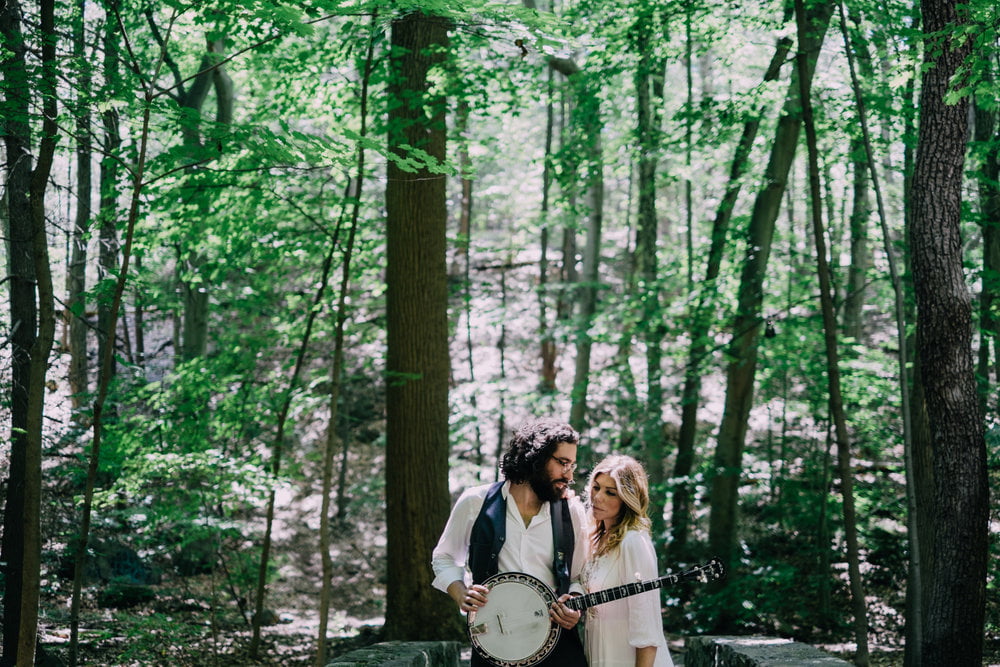
A festival curated by Shovels & Rope? Sign us up! This is the first year the husband-and-wife duo are trying their hand at festival curation and, by the looks of the line-up — which features Charles Bradley, Dawes, John Moreland, and more — it won’t be the last.

MerleFest 2017 — Wilkesboro, North Carolina — 4/27 – 4/30

It goes without saying that MerleFest is one of our favorite festivals, thanks to consistently killer lineups, on-site nature walks, midnight jams, and so much more. This year we have Chatham County Line, Jerry Douglas, and Front Country on our radar.

Shaky Knees Festival — Atlanta, Georgia — 5/12 – 5/14

One of the biggest festivals of the spring season, Shaky Knees brings musicians from around the world to Atlanta for three days of music. Ryan Adams, Dr. Dog, Margaret Glaspy, and Shovels & Rope are among the many artists on the festival’s fifth-anniversary lineup.


Lede photo credit: theglobalpanorama via Foter.com / CC BY-SA

Turn Up the Radio: A Conversation with Woody Platt of Steep Canyon Rangers

One of our favorite bands is Steep Canyon Rangers, the North Carolina complement of bluegrass boys who’ve spent the last 15 years winning our affections with magical songs and superior playing. Their saga continues this month as they tour the country behind their new album, Radio. Lead singer and guitarist Woody Platt dialed us up from a hotel room in Colorado to chat about what went into making their newest release.

I enjoy learning about what goes on behind the scenes when a band makes a record. So let’s start by talking about the songwriting process. You’re all involved in the songwriting, right?

We are. We have a “whole band” approach to writing our songs. Typically, the bulk of our material starts with Graham [Sharp] and Charles [Humphrey], the band’s banjo and bass players. They’re constantly writing songs. We can be in the studio making a record and they’ll be writing a song for the next record. So, we’ve had a lot of material for this album kickin’ around since we made the previous record, Tell the Ones I Love [in 2013]. Usually, it works out to where half the songs are already together — we’ve been performing them and shaping them and seeing how they work with a live audience — and then the other half take shape and come to life in the studio.

I’d say that, if we have an 11- or 12-song record, typically we might show up with 20 “candidates.” We like the producer to have a clean slate. He doesn't need to know who’s written what song, so there’s no personal interest attached to anything as we approach a record. There’s always the obvious batch that everyone loves, the ones we start with. And then, when we’re rounding the record out, we select from the remaining songs based on what the record needs, to kind of fill out the puzzle at the end. And we appreciate a producer’s input, helping us narrow songs down.

I was going to ask if you decided on the songs before you met with Jerry [Douglas, the album’s producer] or after things got rolling. You read my mind and pretty much answered the question.

Yeah, it’s kind of done throughout. There are the obvious ones that everyone knows should be included and then you round it out.

But, the actual songwriting process is really cool. Usually Graham and Charles present a song to us individually. If it’s something I might sing, they might come to me with a guitar and we’ll learn it. If it seems fitting, we’ll take it to the band. But, every member is involved and I really respect the writers for that. They don’t say, “This is the song. This is how it goes.” They say, “Here’s a song. What do you think?” We’ll try everything — different time signatures, different keys — and the songwriters are very open-minded and accepting of input. That makes the process enjoyable.

It also makes it challenging. As Jerry likes to say, “You turn over every rock.” He was the perfect producer for us at the perfect time. His connection to the tradition of bluegrass — you know, the Country Gentlemen — all the great traditional bluegrass players he learned from and played with. Combine that with his ability to stretch out the music and cross it into other genres, and he was perfect for us, especially since we’ve added percussion to our band. He was the perfect guy to help us stay rooted and explore at the same time.

That’s the key to a good producer … someone who can give you input on the songs and, at the same time, help shape the sound. When you talked about the sound of the record, the texture of it all, what kind of ideas did you throw around?

Well, there are so many things you can do in the studio. [Laughs] There are endless opportunities. For us, we wanted to pretty much capture something we could recreate on stage. We avoided doing a lot of layering, stuff that we can’t do on stage. We did use some delay and a few things that we haven’t used in the past, but those are things we can incorporate into our show. As far as the final soundstage, that was really Jerry’s doing. We trusted him so much. He mainly mixed it with the engineers and we just dropped in. He did a great job.

He really did. It blends the traditional elements of bluegrass but has a very rich, modern texture. A little bit of, dare I say it, “rock 'n' roll.” It’s a little bit beyond what a lot of traditonal bluegrass bands will do these days.

Yeah, we cut the drums, bass, and mandolin in one big cathedral type room. We got the drum sound really rich. Those three instruments are on each other's tracks. The rhythm section has a real room sound, a real live sound, because they’re all together.

That must be it. And I can hear it. It’s also a very light-hearted record and I like that.

We’ve been known to have darker records, thematically. But it’s cool you can hear that coming through on this one.

The first single, “Radio,” is a fun tune, name dropping Casey Kasem and all that. Why did you choose that as as the lead track?

Well, we’ve really been into that song since the first time it came around, since Graham showed it to us. Jerry jumped right on it; he immediately loved the track. It kind of strikes a chord with our generation … how we got music, how you had to chase down and catch it off the radio and try to catch it on a blank cassette. How different that is to how music is listened to today. It seems like a good time to have that throwback kind of thing, to remind our generation and people a little older how it used to be to listen to music.

It was exciting, a sense of anticipation sitting next to the radio …

Absolutely.

… waiting for your song to come on and you’d jump on the button to record it. It was an entirely different world than what my kids experience. They want to hear a song? “Hello, Spotify.”

And then when you’re waiting to listen to a song, you’d hear a bunch of other songs you didn’t even know about. I feel like Spotify and all those other ways of listening to music are so popular right now that it’s a good time to remind people about the radio and other ways you can listen to music.

I like all the songs on the record, but the groove of “Simple Is Me” is pretty infectious, as they say.

It’s got a nice pocket to it. It’s kind of like “Stand And Deliver,” from our last album. It’s one of the songs that came up later in the process of making the record and it really stood out.

I think one of the misconceptions people have outside our little community is that bluegrass doesn’t have a groove. But then you go see any number of different bands — you guys … the McCourys are one that come to mind — and there’s no shortage of groove.

For us, we picked up a lot of groove when we got our percussionist because he’s got that kick drum. He’s really helped us catch a groove. We’ve always had something in the pocket, but it’s really been enhanced by him.

My other favorite is “Blue Velvet Rain.” But, then, I’m a sucker for a country waltz.

Yeah. [Laughs] Charles wrote that. It features a nice quartet vocal, which we’ve always liked to do and focused on. We used to do a lot of a cappella singing and we have the voices to do that stuff. It’s a nice tune; it’s gone over well at our shows.

I had the chance to talk with a friend of yours, James Griggs.

Oh yeah!

Are we hearing his guitars on this record?

Actually, no. I got one of his, but I didn’t play it one the record. My wife [Shannon Whitworth] has one of his guitars and she plays it all the time, every show. He’s a good builder and good friend.

You’re out on the road right now. I’m assuming all these songs are getting workouts.

They are. Gosh, I think nine or 10 of them are in the show. We did a show in Boulder in July and every song we played was from the record. We’re using “Blow Me Away” as a closer; putting “Simple Is Me” and “Radio” at the top of show. They’re all equally exciting right now because they’re all so fresh.


Photo by Sandlin Gaither

Nitty Gritty Dirt Band: An Unbroken Circle

In 1971, Richard Nixon was president and the United States was divided. It was an era marked by civil rights struggles, Vietnam War demonstrations, and labor union losses. The counterculture movement that evolved in the 1960s was continuing to take shape and was intrinsically linked to the outpouring of a whole generation’s worth of musical innovation. Amidst social upheaval, at a time when your music reflected your politics, a common ground was forged among unlikely sources. The Nitty Gritty Dirt Band’s milestone 1972 album, Will the Circle Be Unbroken, single-handedly bridged generational and cultural gaps by pairing country music veterans with young hippies from Southern California.

“I don't think we realized the sociological impact that that record would have,” says Jeff Hanna, founding singer and guitarist of the Nitty Gritty Dirt Band. “On the surface, it looked like, 'What the hell are they doing making music together?'”

The Nitty Gritty Dirt Band formed in Long Beach, California, in 1966 and became a staple of the wave of California rock that included acts like the Byrds, the Flying Burrito Brothers, and the Eagles who were all exploring old-time country sounds in their own music. By the time the recording sessions for the Circle record began, the Dirt Band was fresh off the success of their cover of Jerry Jeff Walker’s “Mr. Bojangles,” which had become a Top 10 pop single. Record executives and fans, alike, were anticipating a follow-up in the same vein. But the band’s manger and producer, Bill McEuen — brother of band member John McEuen — had another idea: to get the band in the studio with the bluegrass and country musicians that had influenced them when they were coming up.

“I have a lot of respect for [the Dirt Band] for doing it, for going out on a limb, you know, and doing that kind of thing in the middle of a career that was just really on its way up at that point,” says multi-instrumentalist and longtime Dirt Band collaborator Jerry Douglas. “They were the famous people on the record and their guests were the people that they were introducing to their audience, you see. So it was kind of going out on a limb for them. You know, the record company didn't wanna do it. Nobody wanted to do it. They just kind of pushed it through and it was a success.”

When it came time to recruit a slew of Nashville greats for the project, the generational divide ended up working in the Dirt Band’s favor. Their friendship with the Scruggs family began when Earl Scruggs brought his children, who were fans of the band, to a gig they played at Vanderbilt University in 1970. Scruggs became the first artist they invited to guest on the Circle record. They snagged Doc Watson the same way: his son, Merle, was a fan of the band.

“One of the things that was really interesting with a lot of these acts is, their kids were fans of the band. There was kind of a stamp of approval from the younger generation,” recalls Hanna. “And Merle Watson said something like, ‘Well daddy you love the way they sing and play.’ And also the invitation was, ‘We've got Earl Scruggs.’ And Doc said, ‘Yeah, that sounds like fun,’ so there it went.”

Other guests included heavyweights like Jimmy Martin, Mother Maybelle Carter, and Roy Acuff.

“I mentioned to Bill McEuen, at one point, that I'd read this article about Roy Acuff where he said he'd play real country music with anybody anywhere. And we talked about that and Bill said, ‘Well, let's see if he'll put his money where his mouth is,’” Hanna says.

But Acuff wasn’t an easy sell: His initial meeting with the band didn’t go as well as they were hoping. It turns out that the idea of West Coast hippies in their early 20s recording in Woodland Studios in Nashville was a bit of a hard pill to swallow.

“[Acuff] came in and he was just largely unimpressed with us. He was kind of like — he wasn't totally negative — it's just kind of flat and he said later, ‘Well, I don't trust a man that I can't see his face,’ and we all had like massive beards and mustaches and long hair,” Hanna remembers. “Meanwhile, we got in the studio and recorded our tracks with Merle Travis and, lo and behold, Roy Acuff comes strolling in, or sort of quietly walks in the back of the studio at the end of the day. And Bill played him — it was either ‘Nine-Pound Hammer’ or ‘Dark As a Dungeon’ — one of those. And Roy got this big smile on his face and he said, ‘Well, that ain't nothin' but country. I'll be here tomorrow. Be ready.’ So we cut those tracks, so he was in.”

The result was a monumental cross-generational album that combined genres and styles.

“Just to put it in context: You've got Merle Travis's Travis-picking; you've got Earl Scruggs' Scruggs-style banjo; you've got Maybelle Carter, Carter scratch; and Doc Watson — even though flat-picking isn't named after him, it should be,” says Hanna. “I mean, just all these guys that were just so big in our world.”

The Dirt Band’s love of country and old-time sounds goes way back, so it was a natural progression for them to want to honor and record with these musicians.

“A lot of us got into bluegrass because of the folk boom in the mid-60s. A lot of us also had older siblings and they'd bring home these records by Peter, Paul, and Mary or the the Kingston Trio,” says Hanna. “When I first started playing guitar, I bought a Pete Seeger instructional LP and book that had a section about the Carter Family and Maybelle Carter and her playing style, as well … I was a huge fan of the Everly Brothers. We all were. The Everlys, Buddy Holly, Eddie Cochran, Chuck Berry, Little Richard: that stuff killed us. But I think something we all had in common was our deep love of the sounds of Appalachia. And blues for that matter. But a lot of it was acoustic music, I've gotta say.”

Singer/songwriter Jackson Browne joined the Nitty Gritty Dirt Band when he was 17 years old, after meeting them at a gig at the Paradox club in Tustin, California, a little town in Orange County. “Getting to play with them was a huge installment in my musical education because I got to sit there and play these really intricate songs,” Browne recalls. “I mean, they were all better players than me, so I learned a lot.”

What struck him immediately about the band, he says, was their vast musical palette.

“The Dirt Band was great because they were true music fans and music aficionados. They weren't just kids that were playing folk music that they heard. They dug deep, is what I'm saying,” says Browne. “They found recordings of the Memphis Jug Band and those things were hard to find. I mean, like that wasn't just lying around. And they were kind of musicologists even then, from the very beginning.”

This year, the Nitty Gritty Dirt Band celebrated their 50th anniversary as a band. In commemoration, they returned to Nashville for a star-studded concert at the famed Ryman Auditorium last September, which aired on PBS and was released on DVD. Aptly titled Circlin’ Back, the show was both a nod to the first Circle record and a career retrospective that incorporated the musicians that have impacted the band’s history. Vince Gill, Alison Krauss, Rodney Crowell, Jerry Jeff Walker, John Prine, Jerry Douglas, and Jackson Browne were among the handpicked guests.

“What was even cooler to me than playing the show that night was the rehearsals that we had before,” Douglas recalls. “The first time you do a run-through of one of those songs is so magical. It has all of this extra spark and fear and everything in it. So there were sparks flying in the rehearsal hall when we were doing these things and trying to figure out who played on what.”

Just as the Dirt Band introduced their audience to their earlier influences on the first Circle record, the Circlin’ Back anniversary show connected the next generation of artists and fans together. Musicians like Vince Gill and Jerry Douglas, who remember buying the first Circle record when it came out, are now considered “little brothers” of the Dirt Band. Although they are each musical powerhouses in their own rights, the anniversary show was an opportunity for them to play with some of their heroes.

“I think the first time I played on the song with Jackson Browne that I played lap steel on, I held my breathe through the whole thing,” Douglas says. “I'm such a fan of all of those guys and then they bring Jackson Browne in, and I'm playing on this thing with Jackson Browne and I'm just going nuts inside. So much raw emotion that's happening.”

The Nitty Gritty Dirt Band has always had the ability to tap into emotion. Through their shared love of traditional music, they impacted legions of listeners by bridging generations and styles. Their legacy is littered with stories of parents and children bonding over the first Circle record, which is arguably one of the most significant releases in the history of music. At a time of cultural unrest, it showcased music’s ability to bypass divides and cross boundaries. The Nitty Gritty Dirt Band was Americana before Americana had a name, and their genre-bending illustrates the most important facet of music: how it connects us all.


Photo of the Nitty Gritty Dirt Band in the early 1970s courtesy of the artist.

STREAM: Hugh Prestwood, ‘I Used to Be the Real Me’

Artist: Hugh Prestwood
Hometown: El Paso, TX
Album: I Used to Be the Real Me
Release Date: November 18
Label: Wildflower Records/Cleopatra Records

In Their Words: "Judy Collins discovered me back around 1978, recorded two of my songs on her Hard Times for Lovers album, and arranged for me to get my first staff songwriter gig. Simply put, she is entirely responsible for me getting my foot in the music biz major league door. It was — and remains — a huge stroke of good fortune. When she got the CD I'd sent, she loved the songs and immediately said she wanted to record some of them herself, and also put out a record of yours truly's on her Wildflower label.

Regarding the 13 songs, four of them have been recorded by other artists: 'The Suit' by Jerry Douglas and James Taylor, 'The Song Remembers When' by Trisha Yearwood, 'April Fool' by Colin Raye, and 'Laura Nadine' by Billy Dean — all wonderful renditions. Most, if not all, pretty much represent my attempts to write great songs without giving much consideration to writing 'hits,' although my basic style always aims at involving a wide audience. I am delighted with, and excited by, this record, and am permanently amazed at my having such remarkable validation and support coming from Judy Collins, a genuine artist whose body of work — recording the Great American Songbook — is peerless." — Hugh Prestwood