Artist of the Month: Tenille Townes

(Editor’s Note: This article originally published on Good Country in December 2024. At that time, Good Country content was available exclusively on Substack.

Townes was included as part of our end-of-year coverage in 2024, examining how many country artists across the continent have blurred genre lines to connect with new audiences and plumb greater depths of self-expression. Jewly Hight spoke to Townes about her recently becoming an independent artist at that time and together they examined where she stood and where she was headed. 

Now, on April 10, 2026, Townes will release the first full-length album of her independent era, The Acrobat. To celebrate, we’re naming her our Good Country and BGS Artist of the Month. And we’re re-sharing this piece from the archives to kick off the month. Below, enjoy an excellent interview on our website for the first time and check out our Essential Tenille Townes playlist. Dive into our brand new feature interview with Townes on The Acrobat and a special bonus article of Townes in her own words.)

“Genres are a funny little concept, aren’t they?” Linda Martell poses rhetorically during the spoken intro to “Spaghettii,” roughly halfway through Beyoncé’s western epic Cowboy Carter.

“In theory,” Martell goes on with sly poise, “they have a simple definition that’s easy to understand. But in practice, well, some may feel confined.” Martell knows what she’s talked about. She endured all manner of efforts to hem in her musical sensibilities and diminish her agency back when she was country music’s most visible Black, female talent.

And now, because she lent her voice to a track where Bey and Shaboozey go hard with down-home boasts over a lurching beat, she’s up for a GRAMMY for Best Melodic Rap Performance. Other tracks from Cowboy Carter are in pop, country and even Americana contention, a staggering range of styles for one project to cover.

That’s the kind of boundary-blurring year it’s been, with Shaboozey translating country gestures and imagery to broody, contemporary hip-hop cadences with tremendous savvy and both Jelly Roll and Post Malone furthering their paths from rap origins to ever more fully embracing – and being embraced by – the country music industry.

Things haven’t been any tidier on the rootsy side of the spectrum. After being treated like a pop prodigal during her Star-Crossed era, Kacey Musgraves’ shimmering, urban folk revival-echoing ruminations on Deeper Well have been received as a country homecoming of sorts. Noah Kahan has helped bring on a resurgence of cozily folk-forward, singer-songwriter sensibilities in pop music.

A major country record label snatched up the Red Clay Strays, the type of crowd-pleasing, Southern blues-rockers that have long been celebrated in the Americana scene, where many other pivotal voices – first Allison Russell last year, then Sarah Jarosz, Amythyst Kiah, Adeem the Artist, Kaia Kater and others – experimented with lusher or more polished arrangements and production aesthetics in their latest work.

Tenille Townes offers us a particularly compelling example of an artist charting her course against the background of that extreme slippage between genre lineage, stylistic markers, and industry affiliation. She tried the major label country route in 2018, greeted as a promising new voice at a moment when the broad appeal of Kacey Musgraves’ Golden Hour ruminations made the industry a little more receptive to artists with a personalized, writerly bent, and she’s emerged independent on the other side. In her mind, being unfettered in a time of great genre fluidity is cause for optimism.

Townes began her tenure on Columbia Nashville with spare acoustic recordings, and concluded it this year in similar fashion. She was, and remains, an ardently openhearted singer-songwriter, bent on tapping deep veins of empathy whether she’s in observational or confessional mode. When I first interviewed her, it made all the sense in the world to hear her say she felt a kinship to singer-songwriters like Patty Griffin and Lori McKenna. It also struck me that Townes’ singing – curling syllables and stretching out lines with feeling, a style sometimes called “cursive” singing – was far from the hearty enunciation for which country music has been known.

In between then and now, Townes dropped an album that bore a super-producer’s digitally sharpened touch, won a pair of ACM awards to go with the pile of honors she’s received from the Canadian Country Music Association – which began to recognize her promise when she was a teen with dreams of pursuing music beyond Grande Prairie, Alberta – and she toured with big country names like Miranda Lambert and Dierks Bentley. Townes also faced enough professional hurdles, and observed enough changes in the landscape around her, to reconsider where her songs might belong. And I very much wanted to hear about that.

You’re presently on tour in Canada, aren’t you?

Tenille Townes: I’m having the best time on this run. It feels like a community at these shows. We’ve done a few tours through Canada at this point, but this was our first time going as far east as we did. I feel like live music in general is a little bit more scarce over there. They don’t get as many people making the trek. And so [I could feel] the appreciation.

They sold out the shows so fast and they’re singing all the words. And very quietly listening intently and leaning in a really vulnerable way. And then also having a blast and being loud, which is so cool to me, for it to feel like a living room and a rock club at the same time. That’s been such a big part of my vision.

I don’t know how far out you planned this tour, but I wonder if it’s become an important chance for you to return to your home turf, regroup and get reinvigorated.

Yeah, it honestly feels really essential in my creative journey. I could not be more grateful for the way the timing has aligned this year for this moment on the road. It feels like the ingredient that I’ve been craving. In January, I’m going to be so ready to dive in with my whole heart and make [the music] I’m going to share next. I don’t think that the recipe could have ever been complete without this tour in this moment. It feels so timely, because so much of this past year has felt terrifying.

And just standing on my own two feet as an artist again, pretty much entirely, I feel so excited and grateful to be making this leap into the arms of these people showing up at the shows who are so excited about this new chapter. And it’s such a wave of encouragement to go, “Oh yeah, I think I’m on the right path, doing the right thing.”

How is it different from when you’ve toured the U.S., in terms of headlining versus being an opener, the size of venues and how you’re engaging with the audience?

There’s been a lot of theaters for us on this run, which have a bigger capacity than some of the clubs that we’ve played in these towns before. It’s our first time playing a handful of these [places], but this is our third headlining tour in Canada.

What I noticed that’s different is when it’s our shows and our community, it just feels like people show up with open arms and they’re requesting songs that I haven’t played in so long. They know the deep cuts. They’re showing up excited for a night of feeling whatever they need to feel. And I think that emotional permission feels different at our shows than it does at a show where we’re a guest [in the opening slot] going to make some new friends. And it’s been really cool hearing from people that were like, “I saw you on the Dierks [Bentley] tour and this is our third Tenille show.”

One thing I always say at the top of the shows is I want our time together around my songs to be a place where everyone who walks in the door feels safe to show up and be whoever they are and to feel embraced and welcomed for that. And I thank everyone for buying a ticket and for showing up as that community. And I really feel like they’re embodying what that means.

Years back, I took note of the fact that Corb Lund had what was considered fairly mainstream country success in Canada, but he played Americana events when he came to Nashville. I’m curious whether you’ve seen folk, Americana and country are treated as separate genre categories in the Canadian market, like they are in the U.S. How do you tend to get categorized in Canada?

At least from my experience, it feels different to me. Because in Canada, I have been really grateful to have felt super embraced by the country community, by the CCMAs, by country radio, by the community of people listening to country music. And we have fit in that bubble there. And I don’t know that we fit the same way in the States.

I relate to what you’re saying about Corb Lund. I think maybe the lane is just not as narrow in Canada. And I think that they’re just more in it for live music of any capacity. I think most fans [who come see me] would be like, “Oh, I’m at a country show.” Which is funny because when we play shows here, that doesn’t necessarily feel the same. I do feel like the Canadian country music community definitely jumped on board with what I’m creating. And the music [I release in both markets] is very much the same, so it’s so strange.

I will say that the people coming to our shows, our headline club shows that we’ve done in the U.S., they feel very similar, like-minded people to me.

You’re a little more than a decade into your Nashville tenure at this point. Why is it important to you to stay?

Even though this town has a lot of jagged edges or hard things about it, I really do still feel inspired here. I feel like there’s a tapestry of artists who have come to this town with their dream and worked at sharing their art and building a group of friends and people around them who support that. I have a front row seat, you know, going to an Emmylou Harris fundraiser at City Winery and watching all of these people that she’s embraced in her life that she’s written with or jammed with that’s really a legacy.

I love this community, and I do feel inspired musically, having access to so many songwriters and musicians and producers. There is a heartbeat to this town that I want to continue to be present in and be a part of for sure.

I can picture the show that you were just describing. The atmosphere was very similar at the tribute to Mary Gauthier during Americanafest, a multi-generational gathering of Nashville’s singer-songwriter community.

When we first talked all those years ago, you described being an astute student in Nashville, paying particular attention to singer-songwriters like Lori McKenna and Patty Griffin. At the time, you considered them touchstones because of how they used the language of the heart in their storytelling.

In terms of their career arcs, their material’s been recorded by big names in country, but as respected as they are among songwriting connoisseurs in that world, they’ve had contemporary folk careers as performers. They’ve often released their music on independent labels. Were you also taking note of what their professional paths have looked like? Or are you now?

I honestly don’t know that I was conscious of it back then. It was just the music that I loved. I don’t think I even had an understanding of the choices made on an artist’s path to stay true to that route.

I’ve learned a lot in the last handful of years: “Oh, that makes sense why a certain path, like Patty Griffin’s, unfolds in a certain way.” I never thought of it as a ceiling or an alternate route. It just was where the music had taken her. That’s been inspiring to me.

I never want to look at any options of teams to work with or whatever with any closed-doors feelings. I would love to play the music that I make in stadiums. That’d be great if that still unfolds that way. But I also just really want to tell my stories and my truth, and whoever is going to come as the audience, that’s amazing to me. The idea of seeing it as a wider horizon than maybe a stereotypical path, that doesn’t seem scary to me. I think that’s because I’ve looked up to people like Patty or Lori, people who have always stayed true to what they’re doing and figured out the path there regardless. But I don’t know if I’ve ever actually intentionally thought about it that way.

Your intention has been clearer than ever this year. It wasn’t lost on me that the final two songs you released earlier this year, before you parted ways with your label – “As You Are” and “The Thing That Brought Me Here” – each were expressions of commitment to staying the course. What did you want to communicate?

I love that you noticed these themes. At the end of that journey, “As You Are” felt like such a great theme to end that season on. There was lots of resistance [from the label] in several years of working on music and getting to a point of actually getting to put it out. But that song always had a green light from them, which I really appreciated.

I wrote that song thinking it was about showing up and being a support system for someone. I had friends in mind that I was thinking of. It was just like, “I will be that safe place.” And then listening back to the demo after the [session] on the drive home, I was like, “No, I wrote this ‘cause this is what I want to hear when I’m struggling to let somebody in.” That’s been something that I’ve felt even in my professional journey for sure, just wanting to feel seen.

@tenilletownes if you’re hearing this song I’m glad you’re here 🫶🏼 can’t wait for where we’re going together next #songwriter #newmusic #indieartist #aboutme #doglover ♬ original sound – Tenille Townes

It really seems like you’re the one communicating on your own TikTok. In recent months, a lot of your posts have been about celebrating your professionally “single” era. When you shared the news that you were no longer in your major label deal, you framed it as a breakup that you were happy about. What felt right about striking that tone?

It felt honest. It was a lot building up to that decision, and it was not easy, and it was terrifying. All of those emotions were a part of it. I just felt like, “I can’t continue to share the music I want to make if I’m not letting people in on my process of that vulnerability, even when it’s hard.” Making those videos felt scary, for sure. But that just feels like the kind of artist that I want to be, to walk the walk.

Also part of my intention was, “This is something that creatively feels really empowering to me, to take back the ownership of my music.” And for any young girls out there, I want them to know, “That’s a possible feeling for you, to stand up for yourself at any moment in any kind of career, or on any path of your life.” It’s brave to take that step. And I guess I just want that invitation to be there for anyone following along.

And I want to bring together the community of people. Like, it is an “independent artist,” but I think it should be called a “community village artist,” because you can’t get your stuff out there without people believing in what you’re doing and coming with you. I wanted it to be very clear that we’re in this together. We’ve always been in it together, but it feels very defined to me now. And I wanted to make sure everyone knew that.

And now we have the benefit of accumulated perspective, so I want to reflect back. At the beginning of your label journey, what was in the atmosphere at the time in Nashville or the country music scene in the U.S. that contributed to a sense of possibility for you?

At the beginning, it was excitement. And [I] look back and think, “How crazy cool that I got to be a part of a major label deal that let me put out a debut single about homelessness, and then follow it up with a song called ‘Jersey on a Wall’ about losing someone in a car accident?” I’m so glad they gave me a chance to put out songs that were different and that sonically didn’t sound like a sure bet. I will always appreciate that. And it set me up with so many people who heard this record and the songs because of the way that they helped lift it up.

So I have nothing but love for that season. It might not have hit the thing over all of the world’s fences by any measure of what you measure as success. But to me, it’s a win to think that I got to share that art and that people found it and that they get to keep finding it because of that.

Years back, you told me that in one of your initial meetings, when you played some songs in a boardroom, the head of the label compared you with Jeff Buckley, which was a funny thing. In hindsight, I think that kind of speaks to the fact that you were bringing a sensibility as a singer-songwriter that might’ve been a little bit outside of their frame of reference.

And maybe the Jeff Buckley comparison – as much of a stretch as it was – was a gesture of someone who lacked the frame of reference or language for what they were hearing. Because the way you elongate your vocal phrases and hold onto lines is more akin to the “cursive” singing style that’s been a thing in indie music, folk, pop and R&B than in country, with its crisp enunciation. What kinds of conversations did you have about what you were doing, how they heard it and how they thought it fit into that world?

It is really fun to reflect on that. I definitely think from that initial meeting, they were going, “This is something that doesn’t necessarily fit in what that normal trajectory would be.”

I think that has been the compass that’s directed it a little bit left of where things would traditionally fit coming out of the system that they’re used to. I think they knew that all along. And at moments, that definitely made things a little bit bumpier or harder, because it wasn’t something that naturally made all the sense in the world, I don’t think. And I’m totally great with that.

I revisited the body of work that you released on the label, and I didn’t hear you bending your songwriting approach, singing style or artistic identity to any kind of mold that was really popular in country music at the time. What did it take to maintain that?

There was never an intention of, “Okay, that’s mainstream, so I’m closing the door to that.” I’ve always felt very openhearted in the writing room. It’s just what was coming out of what I was making that I loved the most. The Lemonade Stand came out in 2020. Then I wrote the songs for Masquerades all on Zoom in my house by myself. It was a time when I didn’t feel as much outside influence of commerciality. I was just honestly writing to express something and feel better.

We certainly, production-wise, had moments of trying to be strategic about what kind of things might — I don’t know — reach more people or something, or sonically be something that could be more mainstream. So there wasn’t a lack of strategy in that. I just had to follow the songs, I think.

On TikTok, you’ve shared clips of songs that you’ve had in the can for years that you said the label didn’t want to release. How did the disagreements over your artistic direction begin to emerge? And what was at stake for you when they did?

I think the biggest rub maybe was being able to plan far enough down an artistic vision, because it was just like, “We’ll see how this one does.” And the targets just kept moving. Mentioning putting out an EP or a record was scary. They were like, “No, we can’t. We gotta just take it one step at a time.” So I think that became the hardest thing, and where a lot of songs fell through the cracks, because we didn’t hit certain measures to be able to go to the next. We still found ways to push through and get music out. It just didn’t happen in a guaranteed, planned-out manner, necessarily.

“It's like the metaphor of having a [limited] number of crayons in your hand and trying to make a picture out of that. I felt I wanted the whole box back.” - Tenille Townes
What brought you to the place where you were ready to part ways?

I could feel it building for a while, for sure. And when it came to the point of putting out “As You Are,” there was a group of songs that were ready, and we were just getting resistance on putting out more than one or two out again. And honestly, they came to us and [said], “I don’t think we can put out the rest of these.” And it was like, “Okay, I think it’s time to go.” It wasn’t like I’d arrived at this place of courage. Circumstances were like, “Okay, I think the arrows are really pointing that this is the moment to take the leap, and I’m just going to do it.”

What did you see yourself as leaving behind and moving towards instead?

The idea of taking back ownership of what I create and jumping into this place of freedom in the sense of less hoops to get through to actually get songs to people. I think creatively, I needed change as well.

I’m so proud of that whole journey. I have no regrets, but in a lot of ways, it’s like the metaphor of having a [limited] number of crayons in your hand and trying to make a picture out of that. I felt I wanted the whole box back. I never felt like I was trying to create something to fit within [the industry], but I do feel like that kind of a system can’t not have an effect on what you’re doing creatively. I feel this freedom in my hands. What do you do? That’s a whole other process that I’m in the middle of right now, trying to figure out exactly what I want to say and how I want to sound next. It’s so liberating, and it’s also just, “Oh, this is up to me now.”

When you look back on it, do you think that label partnership was no longer the right fit for you, or that the mainstream country marketplace that it exists in was not the right fit for you?

I don’t know. I think maybe a little bit of both. But mostly, I think the major label system just ran its course for me. And I feel open to whatever team there may or may not be in the future. I wouldn’t write that experience off ever again. I think it just depends on the season I’m in creatively and what people are behind it.

What’s funny to me is looking back on the history of country music, the things that have [at certain moments] laid on the outside have actually [become] pillars of what’s created the format that we love and know. So it doesn’t scare me to [say], “I don’t actually feel like I belong in what we call right now the mainstream of country music.” I’m just going to do my thing and whatever we want to call it later, looking back, it’s fine with me.

Earlier we were talking about the singer-songwriter ecosystem that’s long existed in Nashville and has amorphous boundaries – those songwriters play their own intimate shows and write for bigger names in other lanes.

But there’s been far more visible crossing of boundaries than that this year. We’ve had pop superstars going country, and Kacey Musgraves – who never fully left her country label, but was viewed as drifting towards pop – made a folk-pop album that’s gotten her country awards nominations again. And then there are artists like Noah Kahan. I know you’ve expressed admiration for what he does. He’s been having great success with songs that are grounded in folk, but he exists in the pop world – and yet he’s also gotten Americana and country nominations. Have you been looking around you and taking note of how other artists are transcending genre boundaries?

Yes, and it feels so encouraging to be like, “How about you just make what’s you?” And then, what if there are different categories of music lovers who want to listen to stories and songs and voices and actually don’t care what sticker you put on it?

[As for] Noah, that’s just songs that are speaking to people at such a loud volume. I don’t know what you call it, and it doesn’t matter. Longterm-wise, I think Brandi Carlile’s path is a flashlight, to have something that’s just evolved with her as an artist and fit in so many different places. And I think about Patty Griffin. Even somebody like Billy Strings, Marcus King, I think is incredibly inspiring looking at all of these people who are not sticking to one lane.

You are actively narrating the decision-making process for your audience and frequently discussing what it looks like to be an independent artist, what that means, what your aims are, what challenges you face. From what I’ve read, you’ve kept some important parts of your team, management and publishing, but other aspects of the model have changed. What do you feel are the most significant differences in how you’re operating at the moment? What do you most want people to know about your present reality?

I think the biggest shift is how much making videos is a part of actually getting a song to be heard at all. And the creative output of just trying to make noise in a place that’s got way too much noise going on, the internet. That’s the most overwhelming thing that’s very different than what I thought it meant to be a singer-songwriter and write songs and tour.

I’m trying to balance the creative output of constantly being like, “Hey, I’m over here. This is what I’m working on.” And also making sure that my soul is in a good place, not just spinning on a hamster wheel, so that I can make something that I’m really proud to stand on in my life.

I’ve heard that you are working on new music. Are you broadening your circle of collaborators?

Yeah, definitely. I’ve been reaching out to people I’ve not written with before, people I’m just fans of their music and [asking], “Hey, let’s write or let’s get together and just jam.” And then I’m in the stage [where] I’m always writing. I’m at a point where I have a lot of songs and I’m trying to just zoom out and go, “Which ones are speaking the loudest to me?” The theme for me right now is very much about betting on yourself and getting to the heart of the matter without everything feeling too heavy and serious.

I’m at the spot of taking song inventory and trying to make some new friends and keep writing, and working on what might be next.

Won’t it be wild if you have an album that is on a Canadian country chart and then in the U.S., is on Americana and folk charts, the same collection of songs?

I think it’s possible. I believe it is. I love you putting that out there. I’m declaring it right now.

The expression of music is going to fit differently in different places. And I think that’s more possible in the landscape we’re in now than it ever has been.


Read our 2026 interview with Tenille Townes on her brand new album, The Acrobat, here.

Want more Good Country? Sign up to receive our monthly email newsletter – and much more music! – direct to your inbox.

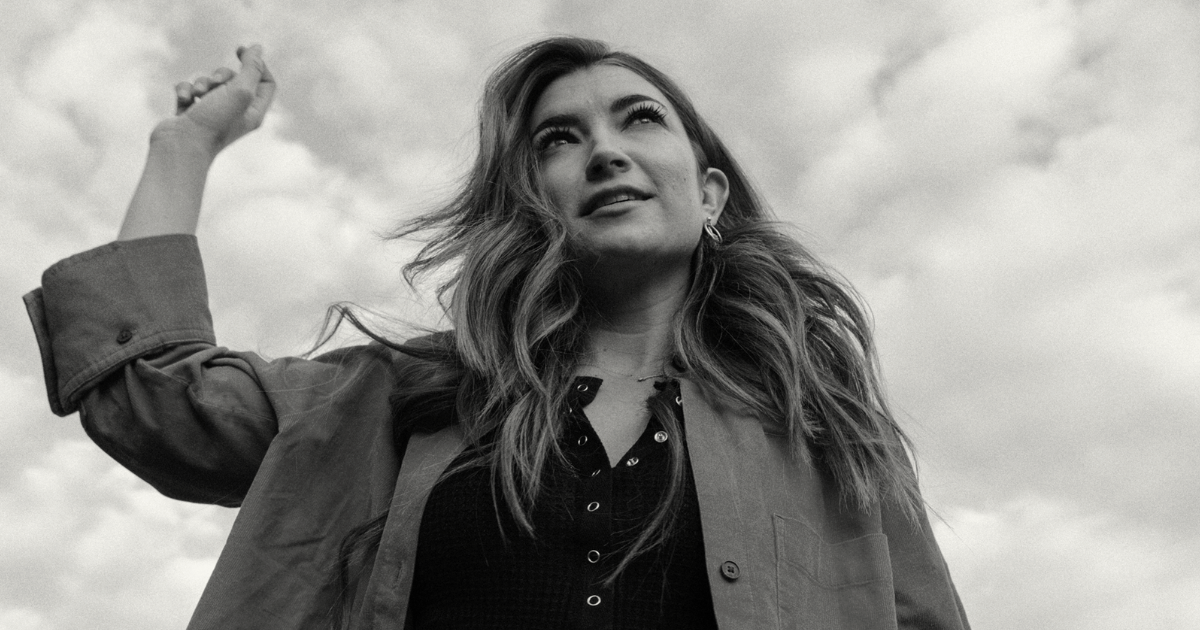
Photo Credit: Lead image by Madison Rensing; inset image by Robert Chavers.
Watch Brittney Spencer’s Gorgeous Tiny Desk Concert

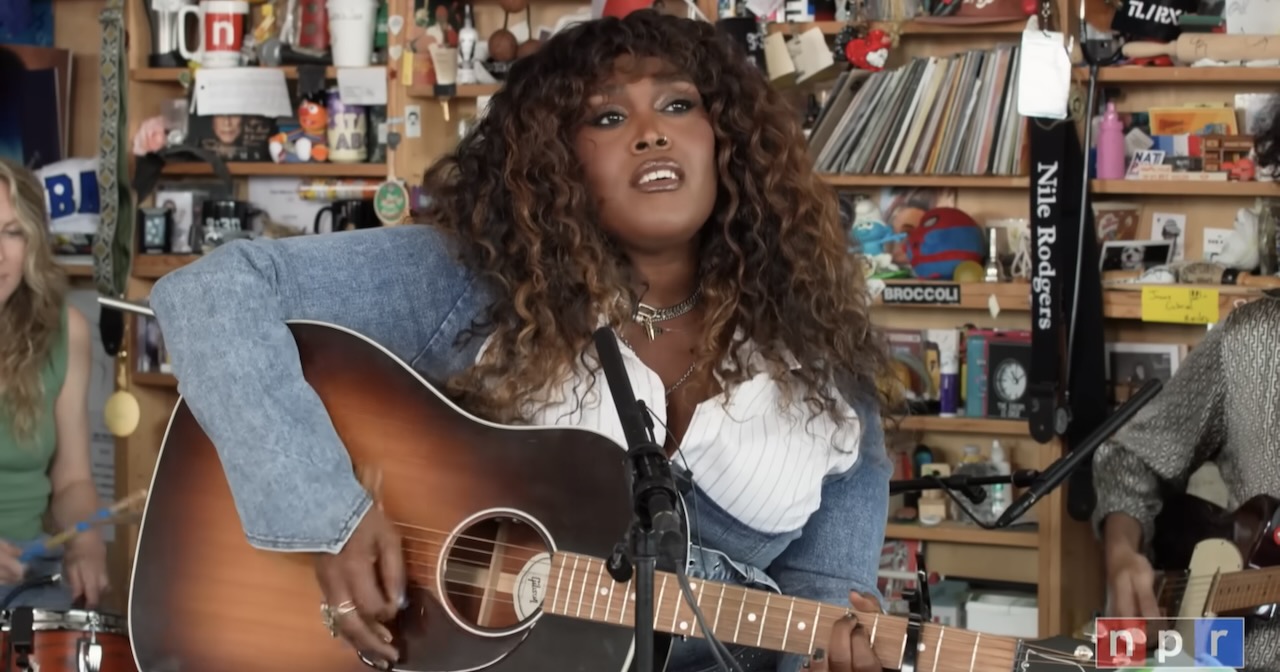
Artists from all across the genre spectrum shine in the stripped down and focused setting of NPR’s Tiny Desk Concert series, but roots musicians often stand out from the rest. Even a big-voiced, high concept, maximally-produced country artist like Brittney Spencer is seemingly at her best in this simplified context, where her impeccable, controlled, and artful voice can deliver songs from her 2024 debut release, My Stupid Life, as if they were always intended to be played by only a handful of musicians behind a desk in a corporate headquarters.

Spencer and her ensemble utilize space and restraint to center her acrobatic and athletic vocals, which are tender and powerful, passionate and nuanced. The group kicks off their six-song Tiny Desk set with “Bigger Than The Song,” a track that’s something of a mission statement for Spencer and the new album. The lyrics name check artists who have inspired and blazed a trail for the vocalist and songwriter, from Beyoncé – with whom Spencer collaborated on Cowboy Carter and “Blackbiird” – to Whitney Houston to Maren Morris, an adept and technical singer who’s not only a peer of Spencer, but a community member of hers, as well. The number points out how, even in Music City and on Music Row, the priorities of creators in country and beyond should always be bigger than just a profitable, “hit” song.

The concert continues with an easy, deliberate flow and with Spencer confidently inhabiting a vibe that feels most like a living room guitar pull or a back porch jam session. Her energy may be off the cuff, but this singer is intentional and in the driver’s seat. The group play through a handful more tracks from My Stupid Life, culminating with “I Got Time,” an apropos closer that longs to run away from the noise and the rat race to a kudzu-draped back road. Spencer is more than comfortable playing around in these classic and familiar country idioms and she uses her variable and virtuosic singing to sell each and every archetype and stereotype she references. But it’s remarkable that she does so as often with touches and styles from outside of “traditional country” as from within it. And that might just be the most traditionally country thing about Brittney Spencer.

Read more about Spencer, My Stupid Life, and her unique approach to utilizing her voice as an instrument in our recent Good Country feature, from BGS and GC contributor Jewly Hight. You can find that story here.


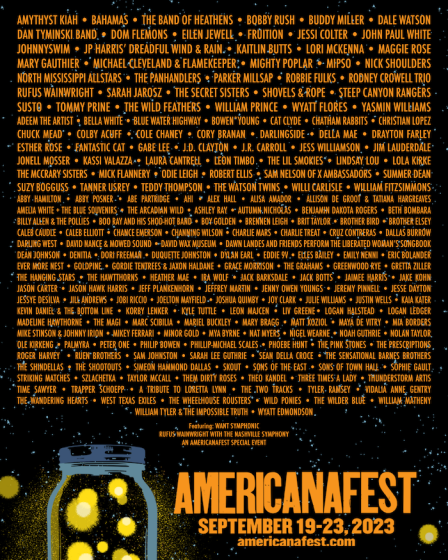
Preview: The BGS Scoop on AmericanaFest, September 19-23 in Nashville, TN

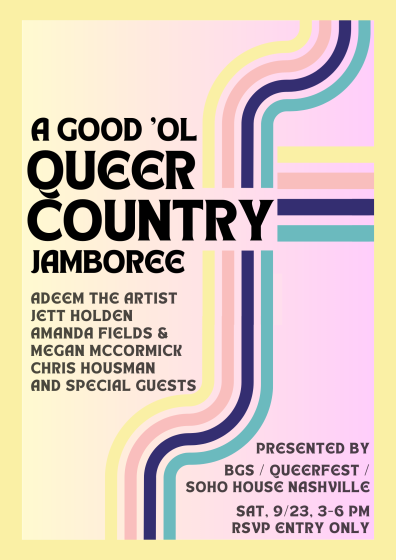
AmericanaFest is HERE! The annual festival, business conference and roots-music extravaganza will once again take over Nashville beginning today, September 19, through Saturday, September 23. While of course we’re most looking forward to our event presented with Queerfest, the Good Ol’ Queer Country Jamboree, on Saturday from 3 p.m. to 6 p.m., the entire week is filled to the brim with must-see, must-hear, must-do events, panels, showcases, parties and hangs.

As we do most years, below we lay out a variety of items starred by BGS staff on our AmericanaFest apps – which, BTW, is a festival and conference essential. You can add performances, panels, and keynotes to your own personalized scheduled complete with lineups, panel rosters, details and more. Plus, you’ll be able to easily see which events require special tickets or advance RSVP directly in the app and which are accessible with your conference badge or festival wristband. Download the official app on the app store here. Download via Google Play here. See the full AmericanaFest daily schedule in your browser here.

We want to hear from you, too! Which AmericanaFest events and shows are you most excited for? Which of the more than 200 showcasing bands and artists are at the top of your lists?

Panels, Parties, & Events

Check-in and pass pick-up begin today, Tuesday, September 19, at 12 noon at the Westin Nashville in the Gulch, but most panels and conference programming gets rolling tomorrow, on Wednesday. If you thought ahead, you already RSVP-ed to the Country Music Hall of Fame & Museum’s conversation and performance by two of our faves, Rosanne Cash and John Leventhal, this afternoon at 3 p.m. They’ll chat about their careers plus the 30th Anniversary re-issue of The Wheelhear a track from that project on BGS here.

There are quite a few more conversations, panels and events we’re eyeing this week around Nashville:

Roots & Branches – Kentucky Music – WED. SEPT. 20 10:00 AM @ The Westin Vanderbilt III

Kentucky poet laureate Silas House – who recently wrote the story behind Tyler Childers’ sensational new music video – will chat with fellow Kentuckians and musicians S.G. Goodman, Kelsey Waldon and Nat Myers about “the history, legacy and current state of Kentucky’s music and the way it has helped to shape American music…” The bluegrass state means more to American roots music than just bluegrass and these folks know it. An enlightening conversation is sure to be had.

Where the Action Is: Americana Artists and Activism – WED. SEPT. 20 11:00 AM @ the Country Music Hall of Fame & Museum Ford Theater *RSVP REQUIRED*

Moderated by veteran BGS contributor Jewly Hight and hosted by the Country Music Hall of Fame, this conversation will feature performances by Adeem the Artist, Mya Byrne, Autumn Nicholas and Allison Russell, all artists who leverage their music making in Americana spaces to advance activist causes, social justice and representation and inclusion. The event promises to connect the present and each of these artists to this vibrant tradition in roots music and folk.

Hillbillies and Hot Dogs – WED. SEPT. 20 11:30 AM to 2:00 PM @ Compass Records *RSVP REQUIRED*

Our friends at Compass Records and No Depression host one of the best hoedowns every year at AmericanaFest, replete with hot dogs and the recording studio that birthed the Outlaw movement. Hear music by Robbie Fulks, Kelly Hunt, Mattie Schell and the business queen of banjo herself, Alison Brown.

NMAAM Songwriters Rounds – WED., THURS., FRI. SEPT 20, 21, 22 12:00 PM to 1:00 PM @ National Museum of African American Music

A music conference and festival in Nashville is the perfect time to visit the National Museum of African American Music, which opened during the pandemic and has slowly but surely built momentum and an audience for the history, culture, and tastemaking of African American music. And situated right in the heart of Nashville’s lower Broadway neighborhood, it’s the perfect venue to make such points. NMAAM’s daily writers rounds will feature artists and songwriters like AHI, guitar phenoms Joy Clark and Yasmin Williams, BGS One to Watch Julie Williams and more.

An Intimate Conversation with Nickel Creek & Sarah Silverman – WED. SEPT 20 1:00 PM @ RCA Studio A *RSVP Required*

You read that right! Nickel Creek and Sarah Silverman in conversation at RCA Studio A moderated by Jewly Hight!? Pinch us! Clearly one event not to miss this week. RSVP is required, hope yours has been submitted long ago!

Indigenous Americana – WED. SEPT 20 4:oo PM @ the Westin SoBro I & II

You are still on stolen land. While you occupy the historic lands of the Cherokee, Shawnee and Yuchi this week, set aside time to appreciate, ingest and center Indigenous music makers, their songs and their stories. This panel conversation on the future of the thriving Indigenous music community will feature Amanda Rheaume, Crystal Shawanda, Nicole Auger of the Indigenous Music Summit and Trenton Wheeler. More events for/about Indigenous music below.

Kentucky Bluegrass, Past and Future – THURS. SEPT. 21 2:30 PM @ the Westin Gulch I & II

From our friends at the Bluegrass Music Hall of Fame & Museum in Owensboro, a conversation about the arc of bluegrass in the bluegrass state featuring BGS contributor Craig Havighurst, Bluegrass Hall director Chris Joslin, fiddler Jason Carter, the legendary Sam Bush, educator and picker Scott Napier, and Jessica Blankenship of the Kentucky Music Hall of Fame.

Who Are the Gatekeepers of Americana Anyway? – THURS. SEPT. 21 4:00 PM @ the Westin Gulch I & II

If your immediate reaction to this panel title is skepticism, this is definitely for you! The roster of Omar Ruiz-Lopez (of Violet Bell), Rissi Palmer and Yasmin Williams immediately indicate this conversation will critically unpack and explore the construction of Americana as a format, just how multi-cultural the music really is, and why that strength is worth spotlighting while we dismantle systems of gatekeeping and exclusion.

Transgender Artists Arriving and Breaking Through in Americana – FRI. SEPT. 22 1:00 PM @ the Westin Gulch I & II

Just a few short years ago there were almost no LGBTQ+ spaces at AmericanaFest, so we’re ecstatic to see a trans-specific space like this opened up at the conference. Hear from Ally Free, Cidny Bullens, Mya Byrne, Paisley Fields and moderator Marcus K. Dowling on historic and current challenges and opportunities for trans, non-binary and gender non-conforming Americana musicians.

From ‘Queer Jolene’ to ‘Pay Gap’: Teaching Social Issues Through Americana in the Classroom – FRI. SEPT. 22 3:30 PM the Westin Gulch III

Using two songs as a springboard, scholar-musician Nadine Hubbs and showcasing artist Beth Bombara will be joined by Aimee Zoeller, Ethan Anderson, and renowned writer/thinker Tressie McMillan Cottom to discuss the use of Americana music and texts to teach and highlight current issues of race, class, gender, sexuality and identity in university and college classrooms and academic spaces.

Americana Honors & Awards


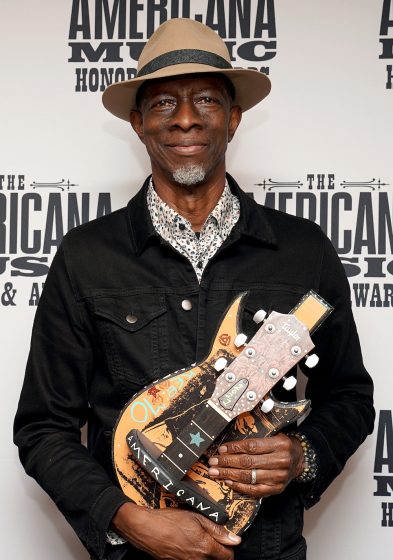
Keb’ Mo’ attends the 20th Annual Americana Honors & Awards in Nashville, Tennessee. (Photo by Erika Goldring/Getty Images for Americana Music Association)

The marquee event of the week, the 22nd Annual Americana Honors & Awards will take place on Wednesday evening beginning at 6:30 p.m. See the full list of honorees and nominees here. The awards show promises appearances and performances by so many Americana friends and neighbors: Adeem the Artist, Allison Russell, Brandy Clark, Jessi Colter, Marty Stuart, Nickel Creek, William Prince, Sunny War and many, many more. Recipients of this year’s Lifetime, Trailblazer and Legacy Awards include The Avett Brothers, George Fontaine Sr., Bettye LaVette, Patty Griffin and Nickel Creek.

Not able to be in the sacred pews of the Ryman Auditorium for the show? You can watch online via Circle All Access’s YouTube Channel or the Americana Music Association’s Facebook page.

Good Ol’ Queer Country Jamboree at Soho House Nashville

A rare opportunity to utilize the gorgeous facilities of Soho House Nashville at this members-only and conference passholders-only event! Plus, enjoy the absolute best in queer country being made today as we celebrate the announcement of BGS’s new outlet, Good Country, coming in 2024! Space is limited, so make sure your RSVP is in for the Good Ol’ Queer Country Jamboree featuring music by Adeem the Artist, Jett Holden, Amanda Fields & Megan McCormick, Chris Housman and special guests.

You can get more information and RSVP here.

The Good Ol’ Queer Country Jamboree
Featuring Adeem the Artist, Amanda Fields & Megan McCormick, Jett Holden, Chris Housman, and more.
Saturday, September 23, 3 p.m. – 6 p.m.
Soho House Nashville

Showcases, Artists & Bands

Here are just a handful of the showcases, lineups, artists and bands we’ve got our eye on this week:

Americana Proud: A Voice for All – TUE. SEPT. 19 8:00 PM & 9:30 PM @ the City Winery

Hosted by singer-songwriter Autumn Nicholas and Nashville-based drag queen Vidalia Anne Gentry, Americana Proud will bring two showtimes of their highly-anticipated showcase to the City Winery on Tuesday evening, the first at 8 p.m. and another immediately following at 9:30 p.m. Hear from artists and musicians such as ISMAY, Jobi Riccio, Kentucky Gentlemen, Palmyra and many more.

Bourbon & Bluegrass – FRI. SEPT. 22 4:oo PM to 6:30 PM @ the Vinyl Lounge

Join us and our friends from Visit Owensboro and LogStill Distillery for one of our most favorite pairings, bourbon and bluegrass presented by BGS! Fresh off of our rollicking time in Kentucky at Bourbon & Beyond, we’ve still got a hankering for whiskey and tunes – this time from Mama Said String Band and the Owensboro Bluegrass Band. Join us Friday afternoon at the Vinyl Lounge in Wedgewood Houston!

Willi Carlisle

We can’t get enough of this lonesome troubadour’s poetic, old-timey country. He’s in and out of Nashville quick this week, so catch Willi Carlisle’s official showcase at the Vinyl Lounge on Thursday, Sept. 21 at 8:00 p.m. (Read our most recent feature on Carlisle here.) Now THAT’S good country!

Michael Cleveland & Flamekeeper

Fiddler Michael Cleveland burnt down our BGS Stage at Bourbon & Beyond last weekend when he brought on his friend and ours, Billy Strings, as a surprise guest. Later that evening during Strings’ main stage set, he brought Michael out in front of 40,000 roaring fans. We LOVED that moment – don’t miss his official showcase with his band, Flamekeeper, at Analog at the Hutton Hotel on Thursday, Sept. 21 at 9 p.m.

Jessi Colter

This legend of country has a new, Margo Price-produced album, Edge of Forever, out on October 27, so it’s the perfect week to check her off your live performance bucket list. Colter will have an official showcase at 3rd & Lindsley on Wednesday, Sept. 20 at 10 p.m., plus she appears as part of Mojo’s Music City Mayhem on Thursday, Sept. 21 between 3 and 6 p.m. Also some good country.

Della Mae

We’ve been keeping up with Della Mae lately – from Earl Scruggs Music Festival to Bourbon & Beyond to AmericanaFest! – and we’ve loved every second. If you haven’t heard their new four-person lineup, it’s worth checking out this week. If you’re not in Nashville at the conference, stream their newly released Neil Young cover instead. (Below!)

Liv Greene

AmericanaFest is all about discovery and if you haven’t discovered this singer-songwriter yet, this week is your chance. Hear Greene’s award winning songwriting – which is equally winsome and pining while gritty and bluegrassy – on three different occasions throughout the week: Tuesday, Sept. 19, 8 p.m. at Americana Proud at City Winery; their official showcase on Thursday, Sept. 21 at 10 p.m. at the City Winery Lounge; and during the Tribute to the Songs of 1973 Part 3 on Friday, Sept. 22 at 10 p.m.

Jaimee Harris

You know what Jaimee Harris’s music is? Good country! It’s all over this AmericanaFest lineup, for sure. Harris will have your heart firmly in hand with her grounded, earnest and effacing nostalgia. It feels so country and effortlessly Americana, but with endless queer, subversive wrinkles. Get acquainted with Harris and her latest album, Boomerang Town, at several different performances during the week: Tuesday, Sept. 19, 8 p.m. at Americana Proud at City Winery; Thursday, Sept. 21, 4:30 p.m. at the Lone Star Shindig at the Bobby Hotel; Friday, Sept. 22, 1:20 p.m. at Bowery Vault for SHC East Coast Social Club; her official showcase on Friday, Sept. 22, 8 p.m. at the City Winery Lounge; Friday Sept. 22, 11 p.m. at the Basement East for A Tribute to the Songs of 1973; and Saturday, Sept. 23 at Dee’s Country Cocktail Lounge at 1 p.m.

Lola Kirke

All of Lola Kirke’s exes live in LA, so luckily she’s in Nashville this week! Kirke was a highlight of our BGS Stage last week at Bourbon & Beyond in Louisville before heading to AmericanaFest, where you can see her at SiriusXM Outlaw’s Americana Most Wanted guitar pull on Thursday, Sept. 21 at 12 p.m.; also see her official showcase at the Blue Room on Thursday, Sept. 21 at 10 p.m.; and at Imogene + Willie’s Round Up – a free, unofficial, buzzworthy event certainly worth a drop-by at least – on Friday, Sept. 22 at 7:15 p.m.

Native Guitars Tour – Voices of Native Americana – THURS. SEPT. 21 12:00 PM to 4:00 PM @ The Blue Room

Native leaders in music, art and fashion will bring authentic songs and stories to the Blue Room at Third Man Records on Thursday afternoon. Hear from Dach Martin, Jir Anderson, Levi Platero Band, Mike Bruno & the Myriad Mountains, Mozart Gabriel, Olivia Komahcheet, Rico Del Oro, Sage Bond and Scotti Clifford. From Native blues to crooning country and everything in between.

Emily Nenni

Get your boot scootin’ in while you’re in Nashville with honky-tonker Emily Nenni, whose country & western picked up a few tricks and twists in California’s Bay Area before landing in Music City. Nenni will jam a handful of Nashville shows into a packed tour week that takes her away from and back to AmericanaFest in the blink of an eye. Hear her at Honky Tonk Tuesday at the American Legion in East Nashville on Tuesday, Sept. 19; plus an appearance at Musician’s Corner at Centennial Park on Friday, Sept. 22 at 4:35 p.m.; and her official showcase at Eastside Bowl on Saturday, Sept. 23 at 10:30 p.m.

Autumn Nicholas

Nicholas has already appeared on this preview in a few places, and rightly so, as the North Carolinian Black Opry alumnus continues to build momentum behind their stratospheric voice and introspective, emotive songs. Hear the voice Nashville has been buzzing about for months – and that will open for Jason Isbell at the Ryman this fall – throughout the week: Tuesday, Sept. 19 at Americana Proud at City Winery, 8 p.m. and 9:30 p.m. shows; “Where the Action Is” panel at the Country Music Hall of Fame on Wednesday, Sept. 20 at 11 a.m.; and their official showcase at the Basement on Friday, Sept. 22 at 8 p.m.

Queer Cowpoke Roundup – SAT. SEPT. 23 2:00 PM to 5:00 PM the Groove

On your way to/from the Good Ol’ Queer Country Jamboree at Soho House on Saturday, stop by the Groove record shop in East Nashville for another LGBTQ+ centered event, the Queer Cowpoke Roundup! With music by Austin Lucas, Julian Talamantez Brolaski, Julie Nolen, Melody Walker, Mercy Bell, Secret Emchy Society, Shawna Virago and Wiley Gaby plus a special tribute to the legacy of Lavender Country and Patrick Haggerty to kick it all off.

Jobi Riccio

We are sweet on Jobi Riccio’s new album, Whiplash, a showcase of powerful, talented songwriting done up in checkered gingham and starchy denim and the perfume of broken in leather. We’ve had our eye on Riccio for a few years now, so it feels gratifying to watch the music industry discover and get behind the Berklee graduate. Hear Riccio perform during the Americana Honors & Awards on Wednesday night, but also elsewhere during AmericanaFest: Tuesday, Sept. 19 at Americana Proud at City Winery at 9:30 p.m.; Thursday, Sept. 21 at WMOT Day Stage at Eastside Bowl at 4 p.m.; and her official showcase will be at Exit/In on Thursday, Sept. 21 at 8 p.m. (Plus, Riccio’s social media tease a “to be announced” appearance on Friday, September 22, so keep your eyes peeled.)

The Shindellas

Americana is all about making music outside the lines, about exploring the rootsy fringes of these genres we all hold dear. The Shindellas are one of the most exciting groups to come out of Nashville in recent memory, but because of their glitz, polish and crisp production values they’re rarely categorized as Americana – which they certainly can lay claim to, through blues, R&B, soul and so much more. Their new Louis York-produced album, Shindo, drops in October, so make sure you catch them this week on Saturday. You’ll be glad you did! See the Shindellas at the 11th Annual Thirty Tigers Gospel Brunch at the City Winery, Saturday, Sept. 23 11:00 a.m. to 1:00 p.m.; and their official showcase at the Basement East on Saturday, Sept. 23 at 7 p.m..

Dan Tyminski

The man, the legend, he needs no introduction to the BGS reader (except, perhaps, when introduced as his mononym, Tyminski). Hear Dan fresh off his Bourbon & Beyond appearance on the BGS Stage with his new bluegrass band lineup, who are certainly worth a listen, at their official showcase on Thursday, Sept. 21 at 10 p.m. at the Analog at the Hutton Hotel. This new lineup of pickers backing up the famed voice of George Clooney on O Brother, Where Art Thou? are one of the most exciting things to come from Tyminski, musically, in the last handful of decades.

Yasmin Williams

If you’ve never seen Yasmin Williams play guitar, prepare to have your mind blown. Her approach to the instrument doesn’t just wow her audiences, it wows her fellow guitarists as well, from Bryan Sutton to Tommy Emmanuel. We’ve been fans of Williams for more than a few years, since before her Shout & Shine appearance even, and we’re glad to catch her again this week at AmericanaFest: “Wide Open Spaces – The Rise of Ambient Americana” Panel, Thursday, Sept. 21, 1 p.m. at the Westin Gulch I & II; “Who are the Gatekeepers of Americana Anyway” Panel, Thursday, Sept. 21, at 4 p.m., the Westin Gulch I & II; NMAAM Songwriters Round Friday, Sept. 22 at 12 p.m.; and her official showcase Thursday, Sept. 21 at the Blue Room at 9 p.m.


Poster graphic and photo of Keb’ Mo’ courtesy of the Americana Music Association.

Lead images: Yasmin Williams by Kim Atkins Photography; Amanda Fields & Megan McCormick by Lindsey Patkos; Adeem the Artist by Shawn Poynter; Michael Cleveland by Amy Richmond.

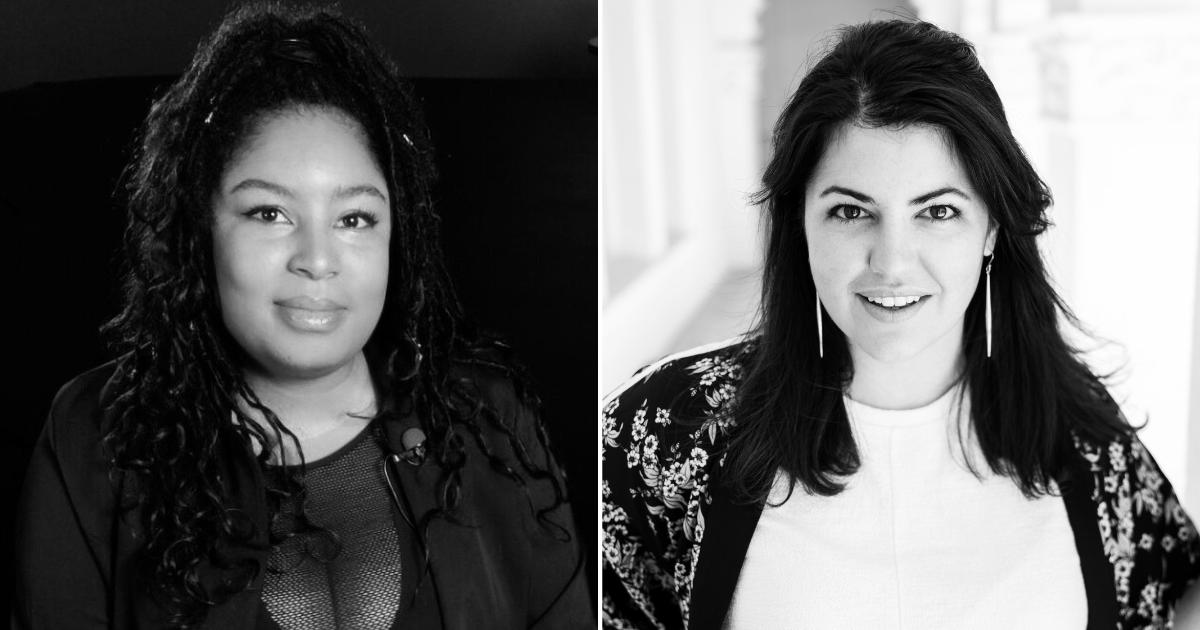
Black Opry’s Holly G in Conversation with BGS’s Amy Reitnouer Jacobs

(Editor’s Note: This conversation between Black Opry co-director Holly G and BGS executive director Amy Reitnouer Jacobs was moderated by journalist Jewly Hight and marks the culmination of our Artist of the Month coverage of Black Opry. Find more on Black Opry here.)

“I just wrote this down, because I need to look at this every single day,” Amy Reitnouer Jacobs informs Holly G while scribbling on a sticky note: “Your name’s on there. You get full credit.”

Holly G, the creator of the Black Opry, has just dropped a gem of practical, principled wisdom that she’s developed through dealing with event organizers, entertainment companies, and institutions who expect her to lend them her presence, while withholding her critiques of the racial biases baked into how they operate. Her hard-line posture? “My participation is not an endorsement.”

Even in a matter as small as pinning that sentence to her wall, an act we observe on the Zoom screen, longtime BGS leader Reitnouer Jacobs knows well the importance of receiving proper credit, and compensation, as a persevering music industry dreamer and doer who’s also a woman.

These two founders of influential, community-shaping music platforms have crossed paths on plenty of occasions, but they’d never before stopped to compare notes. Their work addresses the insularity of music scenes in different ways, Holly G’s taking aim at country music’s exclusion of Black performers and Reitnouer Jacobs’ at bluegrass’ fierce protectiveness of perceived threats to its purity. Still, the similarities between what they’ve experienced, how they’ve responded and who they’ve paid attention to pile up rapidly in our Zoom conversation. 

By the time we’re through, Reitnouer Jacobs signing off from her Los Angeles home office and Holly G abandoning her laptop to check on guests she’s invited to a Black Opry mixer at a rented house in Nashville, they’re feeling a significant overlap in their labor and making plans to actually, some day, do something together.

Jewly Hight: You both had careers completely outside of music and then your own fandom drove you to start blogs and put your stakes in the ground in the digital space. I was thinking back to the crossroads moment that you each must’ve reached where you were starting to get a response and see other ways that you could decide to get involved in those musical spaces. What really mattered to making the decision to expand each of your missions?

Holly G: I don’t feel like it was a decision for me. I’ve never consented to any of this. [Laughs]

I feel like it really, really shifted right after you interviewed me for the first time, and that article went up on NPR. That’s when everybody was like, “Oh, this is serious.” And because what we were actually doing was so vague, because I didn’t have a plan, people were just asking me to do everything; I had never said what I could or couldn’t do. By the time people started asking me for heavier lifts, I had already met these artists and I was so invested in the artists and seeing how hard they worked. I was like, “I’m never gonna say ‘No’ to anything. What could be good for them? What could push them forward?” A lot of it just went over my head, ‘cuz I was just saying “Yes.” And then I was like, “Oh shit, how did we get here?”

Amy Reitnouer Jacobs: That actually really resonates, when you said once you started meeting the artists that suddenly you saw where the needs were. That was a huge shift for me. I mean, I got into this as a fan, but I really didn’t think about writing about this community, this genre until I started to become friends with the artists that were involved and get to know them and become kind of part of their circles.

I think there was definitely a moment of, “Oh wait, you’re not being served? We’ll work on that. We’ll start covering that. Wait, you also are not being represented over here? Let’s cover this, too.” I’ve had to learn how to say “No” over the years, but my immediate instinct is always to say “yes” and then figure it out.

HG: My rule is if it’s not gonna negatively affect my mental health, then I say, “Yes.” That’s where I draw my line at. As an outsider, when you come in, you see the gaps, but then you also see how easy it would be to fix them. Sometimes people don’t know or they’ve just never been asked to do the right thing. But if you can have somebody [involved] that’s not an artist, they’re like, “There’s no ulterior motive.” Nobody thinks that I’m asking for Black people to get on stage so that I can go sing, ‘cuz we all know I can’t. 

JH: It changed everything when you each were put in close proximity to artists who were working toward things, and had ambitions and scenes that they were part of or wanted to be a part of. What did it actually look like to turn your desire to help into strategies?

ARJ: When you’re actually given real responsibility that you have to show up for and deliver, suddenly it all becomes a lot more real. I had to go through a perspective shift.

I would say producing the IBMA Awards was a really big thing, because it was suddenly very, very real. It wasn’t just me being like, “What the fuck, IBMA? Come on, get your shit together.” It was like, “Now they’ve handed me something that I can make a change in, and I have to do it and I have to do it right. And I have to do it to not only to an industry standard, but to the personal standards with which I wanna move forward and I wanna see this industry move forward.” So that and doing a [BGS] stage at Bonnaroo, doing a lot of the curatorial stages, like what Black Opry does as well. I think when you suddenly are putting this out in a packaged way for everyone to see, it kind of makes it all a little bit more real.

HG: It’s really cool to hear your perspective, because as you know, there’s not a lot of people who have journeys that are like ours.

When you say going from yelling about it to being in the room and they’re asking you what to do about it is a very weird feeling. Especially because I wasn’t criticizing [the country music industry] with any intent for anybody to ask me any questions. It’s like going into somebody’s house and you’re like, “I hate this wall color.” And they’re like, “Okay, well paint it.” And I’m like, “Well, I’m just giving you my opinion.” You know what I mean?

JH: There’s a big difference between critiquing from a distance and being handed a thing and asked to work on changing it. That raises the stakes.

HG: I was speaking before I knew what I know now, but as a fan, you’re not thinking about how the industry works. You’re just seeing the flaws and you’re like, “Well, this doesn’t make any sense.” But you’re not ever thinking with the expectation that you’re gonna have to be the one to fix it.

When we started booking shows that we were actually getting paid for, as soon as money started coming in, I was like, “Whoa, that always feels like a big responsibility to me.” Because it wasn’t a career aspiration of mine, not in any real substantial way. Once money started coming in, I’m like, “Number one, this needs to be distributed fairly.”

It took me a long time to take money from shows. My agent would yell at me all the time. She’s like, “Why aren’t you paying yourself?” And I’m like, “Well, because I wanna make sure the artists get paid.” And she’s like, “This is a business. You’re doing work. You have to pay yourself.” Finally, after exhausting myself and realizing that the exhaustion was because of the work that I was putting into it, I’m like, “Okay, I’ll pay myself.” 

ARJ: Holly, that really struck a chord with me, what you said about the money. When those stakes came in, it was like, “Oh, this isn’t just a blog anymore.” There is something on the line and there’s someone investing in me and in this idea, too, and they’re investing with the trust that I’m gonna do the good work. 

It took me over five years not to start necessarily paying myself, but to start prioritizing myself and considering myself part of that package, rather than just putting everything I had into it, at the sacrifice of personal life and sometimes physical and mental health and financial choices. 

HG: I wouldn’t have made it that long. But you know why, though? I got to that point so much quicker, only because a lot of the things that people were asking me to do were so emotionally draining, like to constantly go through racial trauma and explain myself. That shit is so exhausting. I very quickly was like, “What am I getting out of this?” I do not mind taking money from that at all. 

I still don’t think that I’ve seen the changes I would like to see overall – in any facet of the industry. But what I have seen is individual artists’ lives completely changed. They can tour in a different way because of the way that we tour. Our tour minimum is $400 per show. So they can go out and play a show with us for $400, and that means that they can go to that area and play a couple other bars where they might not really get paid anything, but they’ve gotten something to get up there to help them get a little bit of a leg up.

JH: You were talking about learning how things work in the industry. I imagine that part of that involved coming to understand the established pipelines that exist in country music, in bluegrass, and in roots music, how they work, who they work for, and who they don’t work for. Realizing that they are not built in a way that is meant to serve everyone. You didn’t just accept that those established models are the only options. What kind of relationship do you each have to the industry? And where do you place your trust?

HG: I don’t trust anybody. My mission is to serve the artists. My personal feeling is that we need to build systems outside of what exists and so that we can build it in a better way. Because you’re not gonna go into an institution that’s been around for a hundred years and fix things that have been wrong for a hundred years. It’s not gonna happen, especially not gonna happen quickly. 

However, it is not my right or privilege to tell an artist that they shouldn’t participate in the industry. So that being said, I have to work in parallel. Yes, I’m building things, but I also have to interact with the industry in a way that I can advocate for the artists that wanna participate in that.

And so when I do interact with the industry, it’s basically like, “What can I get out of you?” Because I know this is how they look at me. And so my first thing is, “What do you have that I can get that will serve me, that will serve my artists, that will serve my mission and my brand?” If what I can get from you feels like it’ll be worth whatever it is that you want to take from me, then I do it. But if I can’t get something back, that’s gonna make that exploitation worth it–because that’s what the whole industry is, exploitation–then I just move on.

ARJ: It took me a while to realize that, when I was talking about not prioritizing myself and not paying or taking care of myself, that in doing so I was actually falling into the trap that so many of these institutions had established of not paying women the same amount, not paying us what we’re worth.

I know that there are industry standards of not paying Black women what they’re worth, even less. I thought for a while that just by being part of this panel or whatever, I’m doing the right thing, ‘cuz I’m there and I’m representing something new and different and fresh and modern.

But by accepting an honorarium that I would find out later was less than some of the male names also appearing at a conference, I was falling into the same trap. It still enrages me, still gets me mad and so I feel like now I can be in, but not of a lot of these institutions. I’m happy to work with them if they’re gonna pay up and have us there for a reason, but I’m not going to serve them. I am not going to help, assist or fix what is institutionally wrong.

That’s partially why I’m really proud that BGS has continued to be independently run and owned this whole time, because we don’t answer to anybody, and nor do I plan to.

HG: I’ve pissed quite a few people off, ‘cuz I’ll work with them, but then after it’s over, they do something else. Then I criticize them and they’re like, “But wait, you came and did a panel for us.” And I’m like, “My participation is not an endorsement.” My presence does not mean you are off the hook for everything that you have done or going to do in the future. And so it has been interesting to watch them fall apart as I continue to criticize them and to see which ones come back after that. And that’s how I can tell whether or not they actually wanna do the work. If I criticize you and you come back for more, that tells me how you wanna do the work. That’s been a really good filtering tool for me.

JH: Even with the healthy skepticism that you’re each describing, you’ve managed to execute really massive events and partnerships. How do you make those decisions about what powerful people or institutions are worth partnering with?

HG: There’s no science to it, I feel like, because the other thing is there’s good people at bad places and that’s across the board. If I can find the good people at the bad place, then I’ll work with those people. And that’s just kind of how I do it. 

I’ve gotten to the point now where I tell them that part up front: “This does not absolve you from anything that you do. I’m still gonna speak up.” One of the things that I’m afraid of happening is for people to look at what I’m doing and be like, “Okay, well she got in the room now, so I guess everything’s fine. She’s not speaking out anymore.” I don’t want it to look like I’ve closed the door behind me. If you can’t handle that, then we don’t have any business together. And as long as you find those good people, they’re gonna understand that and they’re gonna push forward anyway.

And sometimes because of that, I’ve had people tell me, “Please continue to criticize us, because that’s the only way I can get my bosses to do [anything] is when you won’t shut the fuck up on Twitter.”

ARJ: For the most part, I find that there are really good people on the ground, doing the work and for me, a lot of it just comes down to – I don’t know – intuition. It’s not necessarily a financial thing. It’s not necessarily a visibility thing. I think that’s kind of my unofficial business strategy, which is probably not something that they teach you to do when you have an MBA. But I never planned to get into this job to begin with, so I just go on intuition and I work with people I love. I return to things that I love and places that take care of our artists and take care of our community and take care of us. Those are the people that I will continue to invest in and go back to.

JH: Bluegrass, Americana, roots, and country are so often spoken of as though they are strongholds of authenticity insulated from commerce, to an extent. But we know that all of these spaces are inherently commercial if anyone’s trying to make a living off of them. So as people who are very invested in building community where it doesn’t exist in the ways that it needs to, how do you hold those two things next to each other?

HG: I do not. I think that also the whole conversation about authenticity is bullshit. It’s a way to move the goalpost, so that they can keep the people they want in and keep the people they want out out: “That’s not real country. That’s not real Americana.” It doesn’t fucking matter, because what makes it real is usually who makes it. If they look at somebody and they recognize that person as somebody that they want in that space, they’ll accept anything. It doesn’t matter what it sounds like if it comes from the right person. It’s a tool that they use so that if somebody comes along that they don’t feel like fits in because of their gender, their sexuality, their color, whatever it is, they can then say, “Oh, well then it’s not real X, Y, Z,” and they can get away with it. 

JH: I also want to get at how you’re acknowledging that this is commercial, but also insisting that building community matters. How do you do both at the same time?

HG: Very easily. ‘Cuz you do things where you bring people together behind the scenes when you know everybody’s in town. That’s what we do. We get a house and we make sure everybody has somewhere to come together. But when you ask me to show up at the thing, I’m gonna ask you for a check. You’re gonna pay me to have official participation, but behind the scenes, we do things that build community. I feel like that’s all relative, right? So I’m not gonna go to a festival that’s just starting up and be like, “We need $20,000.” But if you’re paying everybody, make sure you pay us what’s fair in relation to what you have. So it’s just figuring that part out, but also always making sure you’re asking for it. I’ve learned to ask upfront, “What’s your budget?” Because that way I know where the conversation is gonna go.

JH: That’s sort of like reverse gatekeeping, in a sense. When you put together events or decide to gather artists to participate under the name of Black Opry, some of those things are for the public, outward-facing performances. Then there are things you do, like rent this house and invite who you want to be here, where you’re creating a safe, private space.

HG: The way that I curate the shows is more community driven. I try to pair up artists, especially if they’re traveling for a tour, that I feel like their personalities either mesh or there’s something in their story that I know would [connect] with each other or like things like that. It doesn’t matter if two artists’ music would sound great on the same bill, if those people don’t connect. I mean, I can put people together that sound completely different. I’ve had Jake Blount and Kentucky Gentlemen on a show together before, and they all were so excited to be with each other. The best part of our shows is usually the green room. That’s kind of a private, intimate space.

ARJ: You keep saying a lot of parallel things to what we do. I didn’t realize how parallel some of our experiences have been, and it just makes me love you more, Holly.

So much of what we’ve done over the years, it will never be public facing and the public will never even know about, because it’s not why we do it. And I think it’s what makes artists continue to come back to BGS events or wanna be covered on the site. Artists that, 10 years ago, I would’ve never thought I’d ever get the time of day from will say “Yes” to things because we put them first and we have given them a safe and fun and communal space to be together.

When I started BGLA originally, and then BGS, I wanted it to be this place for modern fans, for younger fans, for all fans that I didn’t think were being served or represented. I think for a while I was really susceptible to this yarn that they were spinning of, “There’s just not enough women in bluegrass. There’s just no Black people in bluegrass.” And I’m like, “Wait, I don’t know if that’s right.” And then the more you dig and the more you get involved, you’re like, “These communities have been here the whole time.” This is not only about creating community, this is about connecting community. This is about bringing communities together, representing them, and, and connecting the dots, whether it’s a digital community or artists in a green room or in a house to hang out for a jam.

HG: It’s so funny, like how the parallels keep coming up. Cause people have asked me a lot recently in interviews, “How do you feel about this revolution in country music?” And I’m like, “It’s not a revolution. It’s recognition.” This has been here the whole fucking time.

JH: There are deeply entrenched perceptions about what the country fan base looks like that are based on the continual and artificial segregation of the industry. And there are equally entrenched perceptions of what a bluegrass fan base looks like, based on the fervent reverence for the models laid down by the first generations of musicians. How have you developed ways of speaking to audiences within audiences, those that have gone unseen and overlooked?

HG: I’m telling you, I thought I was the only one when I started Black Opry. It was more like a search and explore mission than it was like an intentional, “I’m gonna find these people.” Because as a Black person that loves country music, I promise you, anytime you tell somebody that, you get looked at like you just fell out of a UFO.

I was equally surprised when I found artists. I didn’t think there were more than five artists. I was like, “We got Mickey, Jimmie, Kane and Darius.”

There was so much passionate relief when people started seeing you and feeling seen. It still surprises me. And I’ll be honest: We still haven’t gotten to where we need to be as far as the fan base with country music. There are a lot more queer fans simply because there are a lot more white, queer people that like country music. So we’ve built up a really, really big white, queer fan base. 

A big priority for me this year is how do we connect with Black fans? Because the Black publications and the places that Black people go to for music typically don’t interact with country music.

But I will say, every show that we’ve had that I’ve been to, there’s at least one Black person that comes up to me and goes, “I thought I hated country music, but I saw the word Black in front of it, so I came just to see what it was. ‘Cuz it sounded weird. And I loved all of this. If I knew country music was like this, I would’ve known I liked it.” We’re trying really hard to figure out how we get to those people in a more broad way and get more of them. We need our audiences to look like what we want our stages to look like.

A lot of the places I’ve been to, regardless of how kind the organizers have been, it doesn’t always feel safe. And so there’s no part of me that wants to advocate for Black people to come into some of these spaces, because I can’t guarantee they’re gonna feel good. At Newport [Folk Festival], we felt good, even with being all white people. It’s just the type of people that they attract; they’re good people. And so we’ve really, really been interested in seeing how we can figure that piece of it out, where we get more Black people to these spaces. But, I can’t consciously advocate for too much of that yet, because I need to see the institutions doing the work to make it safe.

JH: So it’s still very much an open question of how you find, reach, and speak to Black country fans.

ARJ: Something that we asked ourselves very early on was not how do we reach other Bluegrass fans or where do we look for other Bluegrass fans, but where are we not looking? Who are we not reaching? What’s gonna be unexpected in that crossover Venn diagram of fandom?

Because like you were saying, you felt like you were the only one. I felt like I was in a minority of young, urban dwelling, West Coast, female fans that didn’t grow up in the South, you know? I started the whole thing from a need to connect with other people. I mean, it really stemmed out of loneliness. But I realized that my online demographics wouldn’t have made me a targeted fan if I were launching BGS. Like, any advertising or any kind of targeting we would’ve been doing, I myself wouldn’t have been found.

I think we just realized within our first three, four years, we have to turn ourselves outwards and reject everything that we’ve been told of who fans are and who communities are. And we have to be looking elsewhere, and we’re continuing to do that. It’s a question that we’re constantly asking ourselves, and I think it’s something that you’re never done searching for because there’s always someone else who feels like they have been excluded or that they are alone in this, whether they’re a fan or a player, or they don’t know what they are yet.

I remember one of the first meetings that I had with some IBMA folks. They were like, “You keep putting up all this like modern stuff and this isn’t real bluegrass.” And I’m like, “You’re gonna tell me if a kid walks in to McCabe’s guitar shop in Santa Monica and wants to buy a Deering banjo and pick up a banjo for the first time ever because he watched a Mumford and Sons video, that you’re gonna tell him ‘No’? That you’re gonna say ‘No’ because that’s not bluegrass?” Fine, we don’t have to put a label on it. Why don’t you open up that door and introduce ’em to Earl Scruggs. Let’s take them down that rabbit hole and connect the dots once again for that person. How about we take their hand and help guide them through this expanse of everything?

JH: Since you mentioned a first-generation bluegrass icon, something that’s baked into country, bluegrass and roots music is venerating elders and creating canons. And that’s just as much about excluding people as it is about who belongs in the canon. 

You each make elders very present in what you do. Holly, you recently advocated for the Country Music Hall of Fame exhibit that includes the Black Opry to also include its predecessors, Frankie Staton and the Black Country Music Association. Amy, you make decisions about meaningful coverage of multiple generations of performers all the time, and BGS just published an appreciation of an underappreciated first-generation picker, Gloria Belle. How do you think about ways of doing that better than you’ve seen it done? 

HG: I don’t wanna make it seem like I strong-armed [the Country Music Hall of Fame and Museum]. I would not have had a problem strong-arming them, but they were gonna do it anyway. So they said, “We’ve already sent a letter to [Frankie]. Calm down.” And I was like, “Oh, okay.”

I don’t really think of it so much in that light that you’re describing as I do that we don’t have a record of Black country music history. For me, it’s about building that record. There’s so many people – like Wendy Moten. Wendy’s been singing with Faith Hill and Tim McGraw and Vince Gill for years and years and years. She’s part of Black country music history to me, and we have no record of that. Nobody’s ever talked about it. It’s about finding those people from the other generations that have been doing this long before it was something I ever thought about, and making sure they’re included in this narrative so that whoever comes up after us doesn’t have to work so hard to find these things out.

There’s no reason I shouldn’t have known the things that I’m finding out now until I had to literally dig for them — and I get access to a lot of it, ‘cuz people see what I’m doing and will bring stuff to me. But it’s not out there and ready for the public.

ARJ: Building that history is such an important part. And because we have a platform, because we have this online record that we are building, that’s part of our responsibility, is to help maintain that. 

Gloria Belle, like we heard about her passing and then we waited and there were no obits. And we were like, “Who’s, who’s gonna cover this? Oh wait, it’s us. We have to be the ones to cover it.” I should know that 10 years on. But I still get reminded time and time again, we still have to do the work. 

I am not one to venerate folks who maybe don’t deserve it. But I do think it’s the same idea of you’ve gotta know the rules in order to break them. You have to know the history in order to figure out where you’re going and how to break out of that and how to change it.

JH: You both are continually adapting how you present and position what you’re doing. Do you feel like you have come up against the limitations of genre? And have you looked for ways to free your efforts up from those limitations?

HG: Yeah, that one’s been tough. I know what kind of music I personally like, and I like music that would be described as Country music by literally anybody who heard it. It’s usually not a gray area, the things that I like personally, and that’s what brought me to where I am.

But also, all of the artists that I talk to across the board say that genre is a harmful concept to their careers. And so it’s deconstructing that concept, but also realizing too that the advocacy, everybody needs all of this stuff. It’s not just people in this space. So it’s like, “Where do I fit into that?” Regardless of how I feel about anything, there’s enough people in [all parts of] the industry telling Black people “No.” And so if a Black artist comes to me and wants to work with us, I really don’t give a shit what they sound like. The answer is gonna be “Yes.” I’m never gonna turn anybody away. Right now where I’ve kind of settled is anybody can come and play with us with any style, but the advocacy work that I do is going to focus on country music spaces and institutions, just because that’s where my passion is and that’s where I see the greatest need for it. I do acknowledge that there’s problems across the board. If you look at the work that the Black Music Action Coalition does, they’re doing it across all genres. 

I’m sure you get this too, Amy, where it’s like you want to work on the things that you care about and you like, but also once you have this level of responsibility, that really doesn’t matter anymore. It’s out the window. It should never be about what personal taste is. It should be about what’s best for the group at large.

ARJ: It was very confusing, I think, for folks to initially come to the site and realize that it wasn’t just Bluegrass. And our whole point was like, “This is pulling from the traditions of the genre that is called Bluegrass.” But that has taken on different incarnations and iterations over the years since it was established. I guess you could say, by the IBMA standards of 1945, you know, Bill Monroe. For a while it was about bucking people’s expectations when they would get to the site of what they thought they were gonna get versus what they were given on the website.

Then we made a very conscious shift to be called BGS. We still use the Bluegrass Situation. A lot of people still know us as that, but we have really made a conscious effort to switch over to BGS, in the long tradition of things like CBGB, or NME Magazine. After a while, it just becomes those letters. So that’s always been my hope, that it becomes more of an umbrella organization and that it’s not limited. I still lean on genre when I feel like it’s advantageous. Because at the end of the day, I’m not going to stop it from existing. It exists. It’s how certain people can identify what they want to listen to or how we search for a playlist, even. It’s just how things are organized, whether we like it or not.

So when I can be disruptive within those structures, I will utilize it. I know that I can make certain calls, or I can show up to certain conferences and I can make an impact within this community and I can have some kind of small change within this community. And that is what drives me, and that is when I’m willing to use genre, if it means that I can insert myself and continue to be a part of that and enact change.

HG: A lot of artists tell me that they feel like genre is weaponized against them. I feel like we have an opportunity to take that and then weaponize it back against the industry itself. Because it’s literally just a marketing tool, so you just have to figure out how to play the game so that it helps the artist more than it hurts him.


MIXTAPE: Jewly Hight

JEWLY HIGHT knows her roots.  You could even say she wrote the book.  One of the most well respected and hard working women in music journalism today, Hight is the author of the 2011 book Right by her Roots: Americana Women and Their Songs and is in the early stages of her second [as-yet-unnamed] title.  Her words are commonly included on CMT Edge, Nashville Public Radio, American Songwriter, Relix, and Nashville Scene.  And now, we can add The Sitch to that list.  Hight will be contributing her unparalleled perspective to the blog in the coming months, and we couldn’t be more thrilled.

To kick things off, we invited Jewly to submit this month’s MIXTAPE and, true to form, she brought her own vision to the task.  Here’s what she’s listening to right now:

‘Lately I’ve been pondering the attention that the lyric prowess of singer-songwriters gets in the broader roots music world. Literary-caliber words and complex storytelling tend to earn not only critical respect but a rapt listening room audience. But there are loads of other ways that music makers can put their intelligence to use. So I’ve built this playlist from a small batch of examples of how I’ve heard it done in recent years….’

Track: “Right Down the Line”

Artist: Bonnie Raitt

‘Raitt experienced a career resurgence after releasing Slipstream last year. I’m sure I wasn’t alone in being thoroughly relieved to find her supple musicality intact. She’s as comfortable in her skin and as warmly conversational as any blues-pop singer, slide guitarist or band leader I’ve yet heard. She also celebrates the sex in the music in a way that’s both self-aware and deeply felt, and that’s a hell of a rare thing.’


Track: “A Change Is Gonna Come”

Artist: Ben Sollee

‘I was impressed with the seemingly infinite array of tone and syncopation that Ben Sollee could coax out of his cello from the moment I heard him with Otis Taylor and The Sparrow Quartet. But it was when I heard him render this Sam Cooke classic with such a fluent, rhythmically nimble groove—not to mention lustrous crooning—that he really got my attention.’


Track: “King of the Road”

Artist: O’Brien Party of 7

‘I’d been wondering why nobody had ever tackled any sort of Roger Miller tribute album. And last year, Tim and Mollie O’Brien and some of their kin did just that. This Tim-led track feels like an especially natural fit: one fount of musical and lyrical wit covering the work of another.’


Track: “You’re the One I Love”

Artist: Sara Watkins

‘Last year, I talked with Watkins about how the fact that she’s primarily a fiddler—as opposed to, say, a guitarist—has led her to feel out her phrasing differently in her solo singer-songwriter work. Sometimes she’ll dig into the downbeat as hard as she would a fiddle solo. This Everlys cover is one song that she attached particularly aggressively, and she wound up with a take on it that’s worlds away from anybody else’s.’


Sara Watkins – You’re The One I Love (Feat. Fiona Apple) from Gerardo Mariscal on Vimeo.


Track: “I Ain’t Studdin’ You”

Artist: Bobby Rush

I’ve been seriously digging Bobby Rush’s upcoming album, the way the grooves are simultaneously so taut and so loose and swampy, the sex and knowing sense of humor in his delivery. So I went searching for a video of him in action on stage. Talk about attitude.


Track: “My Generation”

Artist: The Lost Bayou Ramblers

Perhaps you heard these guys in Beasts of the Southern Wild this year. They’re a young band led by brothers Louis and Andre Michot, a fiddler/singer and accordion player, respectively, who know Cajun musical traditions inside and out. They sing in French, even when covering the Rolling Stones, but they also spike their sound with psychedelic effects and experimentation on their instruments.