Folk Hero Reggie Harris Faces a Moment of Reckoning ‘On Solid Ground’

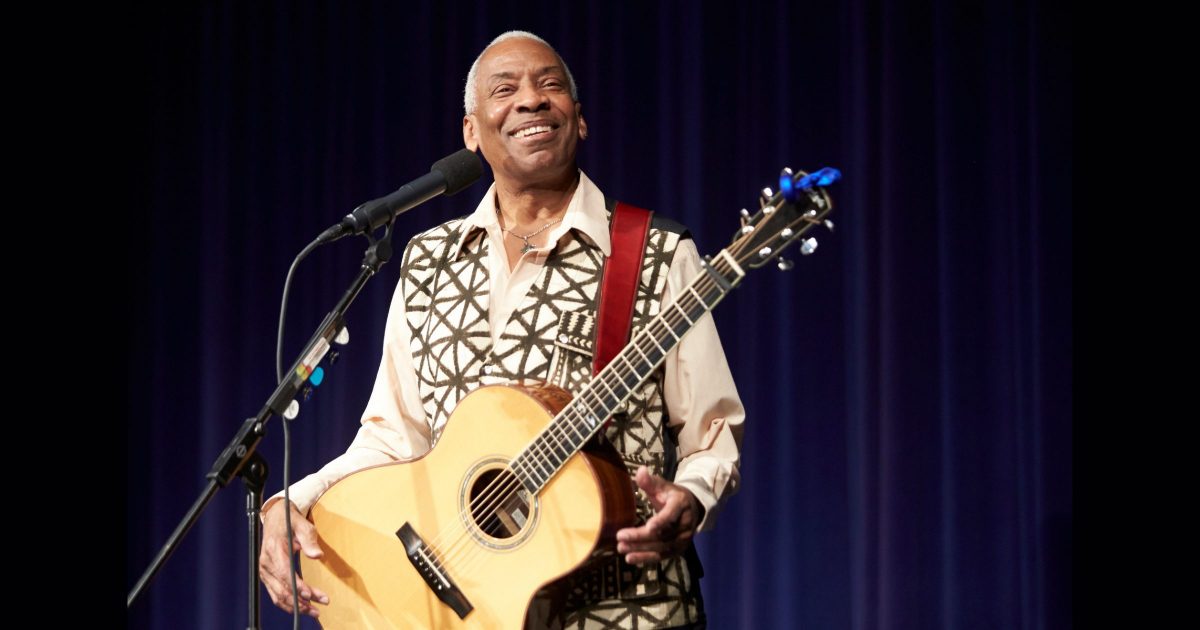
Reggie Harris is a songwriter, storyteller, educator, and folk icon. No, literally. This year, Harris was awarded The Spirit of Folk Award from Folk Alliance International — as well as W.E.B. Du Bois Legacy Award by the Du Bois Legacy Festival in Great Barrington, Mass. His career as a folksinger has spanned four decades, with musical collaborators and activist compatriots such as Pete Seeger, Dr. Kim Harris, C.T. Vivian, Cathy Fink & Marcy Marxer, Greg Greenway, David Roth, and many more. BGS is proud to host Harris on the sixth episode of our Shout & Shine livestream series on Wednesday, June 23 at 4pm PDT / 7pm EDT. (Tune in here via the video player below, our YouTube channel, or our Facebook page.)

The joy and hope evident in Harris’ 2021 release, On Solid Ground, stem from a rooted sense of perseverance and from his intentional decision to face each and every moment, in the moment, and to find hope within each. It’s why such heavy topics don’t feel gargantuan or burdensome as they make appearances and anchor songs on the album. Harris, watching the social, political, and racial reckonings that bubbled onto the sidewalks and streets of every city in America over the course of the last year, didn’t sit down or give up in the face of the unclimbable summit of translating that reckoning into song. 

Instead, Harris draws upon the wisdom, insight, and hope given to him by his own elders and communities throughout On Solid Ground. In choosing to keep himself open in each moment, Harris found himself receiving inspiration, nuggets of ideas and stories, glimpses of songs and arrangements in so many of those moments, simply because he was there, with a still heart and still soul, to receive them.

On Solid Ground feels solid and grounded, but also soars – unencumbered by whatever aspects of its content and lyrics might be perceived as pitfalls or minefields to so many. Harris, as only a folksinger-storyteller can, weaves a reality that can indeed rise to the occasion of this twenty-first century civil rights movement. We just have to choose to be present to usher in that reality — which, it’s important to note, will have an excellent soundtrack.

BGS caught up with Reggie Harris over the phone on May 28, Memorial Day weekend and the 100th anniversary of the Tulsa Massacre.

BGS: I wanted to start off with “It’s Who We Are,” which leads off the album. It makes the point that the political and social turmoil of the last few years aren’t really anything new, but rather are pretty natural outgrowths of who we’ve always been — as a culture and as a society. I wonder if you could talk a little bit about why you wanted to reinforce that point and kick off your album with that song? You’re making the point that this isn’t an aberration, this is who we are. 

RH: [Laughs] I do a lot of work, a lot of educational and historical performing — both in schools and around the country — and the question always comes up, with audiences of all ages, “How far have we come?” And, “Who are we?” These things happen around the country, incidents like George Floyd and Breonna Taylor, and also the incident in New York City with the Coopers — Amy Cooper and [Black birder, Christian Cooper]. People are constantly tweeting as if [these incidents] are one-offs, that each is an aberration. So I’d been working on writing a song for a while that basically says our nation was founded with white supremacy and racial issues from the very beginning. And we have been struggling with that. Obviously, we have made some progress over time, but we see that these things are so temporary — and the proliferation of them over the last two years particularly, and through the pandemic, really brought it to the fore. 

I kept looking at all of that, and I started writing that song– I’m not a writer that likes to just put things out there, constantly pointing out all the difficult and sometimes dangerous events. I love to tie into hope and I couldn’t talk my way through it. I wrote about twenty-seven verses. And it was getting more and more dark all the time! [Laughs] 

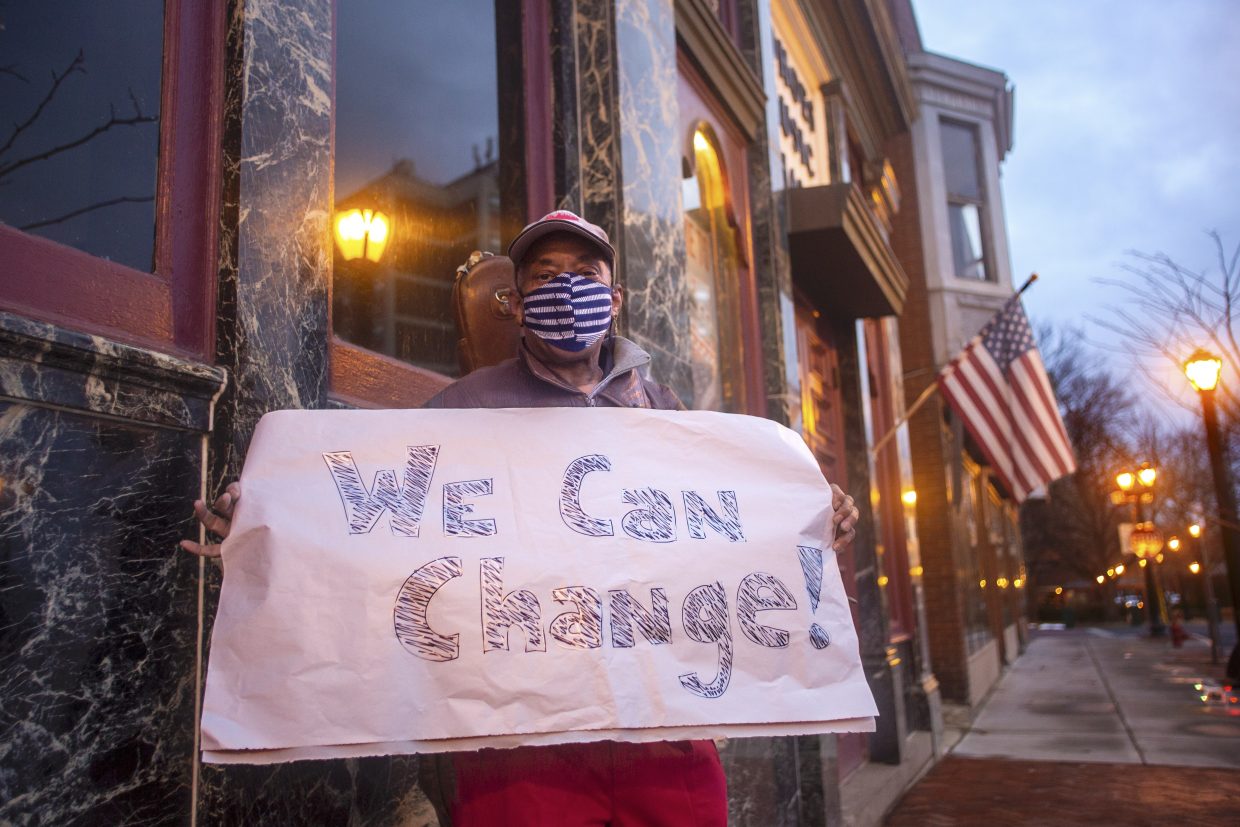
Even this week, we’re acknowledging the massacre in Tulsa, Oklahoma, a hundred years ago. All of those — there are so many of those incidents and events, I really wanted to say, “Yes. This is our legacy, this really is who we are.” But, there is something about what is happening, particularly with young people, particularly in the last year. So, when I saw people flooding into the streets all across the nation, in Portland, Louisville, and all these places I saw the diversity of faces and the diversity of ages. I thought, “You know, something has changed.” We’ve had a lot of false starts in our nation, but that became the critical point when I sing, “Yes, we can change! / Reshape the future of our reality.” We can define ourselves. Any way we choose to.

I have to admit, when I finished recording the song, I turned to Greg Greenway, my co-producer, and said, “I don’t know if I want to put this first.” [Laughs] We went back and forth and back and forth and finally — I was actually going to begin with Malvina Reynolds’ “It Isn’t Nice” and Greg turned to me one day and said, “No, this is the album statement. I think we gotta just put it out there.” And I said yes, and there you go! You need to have some courage in the work that you do. I’ve been looking to people like C.T. Vivian and John Lewis and all the sacrifices that people like Fannie Lou Hamer made. And all the amazing icons of civil rights history. 

As I was thinking about this point — that this is exactly who we are and always have been — I was listening to “Let’s Meet Up Early,” and there’s a lyric, “It ain’t no mystery… don’t try to act surprised.” 

[Laughs]

So this is a point you are making indelibly across the record! [Laughs]

Yes, well it is. And this came out of about three weeks of just sitting at home, watching the nation unravel. I wrote “On Solid Ground,” because that’s kind of where I live, you know, in the spirituals, saying that we can make it through this, we can persevere. But we can’t make it through it if we don’t acknowledge it. 

Exactly.

I’m glad you bring up perseverance, because something I find striking about the record is that even though the songs do feel that they carry strong messages and morals, and explicit calls for justice and equity — and perseverance — they don’t feel too heavy, they don’t feel burdened by the gravity of the issues they confront. Like, “Maybe It’s Love” is very whimsical and wry and sweet. And you just mentioned “On Solid Ground,” which is gorgeous, but really also fun, a cappella, bouncy and bubbly with cheer. How do you strike that balance, when you’re thinking about writing music that has a strong sense of conviction like this, but you do want it to also evoke hope and joy?

I feel very blessed to have come up in a community in Philadelphia and throughout that demonstrated having hope. The folks that I grew up with, in Philadelphia, my elders, and then as I progressed not only as a person, but as a musician I have had such amazing [role models]. If you look at the musicians — and all those folks in my community, they’d sing, “Ain’t gonna let nobody turn me ‘round!” And, “Oh, Freedom:” “Before I’d be a slave/ I’d be buried in my grave/” 

One day we will be free. And we’re going to keep working at this. 

We had C.T. Vivian at a conference I helped to put on in 2015 and he said, “We knew that we were working for something bigger than ourselves. We knew that we needed to have good leadership — and we did. We knew that we were working in the frame of love. For something, not against.” I try to keep those messages at the forefront of my writing, at the forefront of my performing. I know that a lot of white Americans have trouble embracing a lot of this because it brings up a lot of guilt, or it brings up this feeling there’s this huge thing you weren’t aware of. I just want to say to people: There are forces and systems that are trying to make sure you don’t know about this stuff. You’re not to blame for not knowing, but once you know — I think it was Maya Angelou that said, “When you know better you do better.” [Laughs] 

I look at that and my own role in this is just to pass along what was given to me. I came up in a community that understood the nature of perseverance, that understood the nature of hope and working towards hope realizing that you’re not going to get everything at once. But, you might get some of it and then you pass that along. I think the songs, for me, are conduits to giving away this gift that I’ve been given. As I write I just always try to remember that people always gave me hope – and they did it mostly through songs. 

As I was reading some of the song inspirations and contexts in the liner notes, I noticed you seem to really keep yourself so open to inspiration and new song ideas. You mention that “Come What May” came to you right after one of your regular livestreams and you began writing “Tree of Life” you were teaching. How do you keep your mind — and your heart — open to those kernels of inspirations, when new song ideas present themselves to you?

I’m not a writer who’s working at it all the time. I know friends of mine, folks who sit down every day and they either write a song or they tape something. I’ve never been that way, I really have kind of evolved into a person who’s eyes-wide-open in the moment. I’m very much focused on what’s happening around me and focused on noticing those opportunities. That’s one of the things that doing a lot of work with kids [has honed]. You really have to be present with kids. [Laughs] You come in with an idea of what you want to do, but if it feels at all like you aren’t including them or that you aren’t present, they’ll entertain themselves! I think I’ve developed a real sense of being in the moment, being charged with seeing those small windows of opportunity. Of course, I had a lot more of them in the pandemic! [Laughs] At home an unbelievably impressive amount of time. 

A lot of it is also balancing. I’m very careful not to watch the news early in the day. I think my liver transplant, in 2008, really shifted me, in a way. It changed the temperature of my observations in the world. I think that it’s really benefited my writing, because as I approach life living hour by hour, I notice things. I live out in the country, so I have time and atmosphere to hear myself think. Particularly with the time I started writing the album, right at the end of March [2020]. I’m kind of in my own element, I’m watching, carefully and selectively, what’s happening in the world, but I’m also in an environment where my heart and soul could get quiet. I love what happens when those two things occur. It allows me to then go to that other place and to find the message. 

A lot of times when you start to write a song, you think you know what you’re going to say. [Laughs] And the song has another idea altogether! It might be pulling things out of your subconscious you might have been working on for months — or years! It could be a thought I jotted down in my journal, or some phrase that I had been playing with. I think, for several of the songs, I was doing these online performances and it could just be the look in some peoples’ eyes as I sang a song. Or some comment someone would leave. Someone once said, “I wasn’t going to tune in, but you look hopeful.” I thought, “Wow, what a responsibility.” I try to carry that responsibility and be accountable for not making things… harder than the world. 

Lead photo: Courtesy of Reggie Harris
Inset photo: Anthony Salamone

LISTEN: Maggie Pope, “The Bird Painter”

Artist: Maggie Pope
Hometown: Philadelphia, Pennsylvania
Song: “The Bird Painter”
Release Date: June 25, 2021

In Their Words: “‘The Bird Painter’ was written after a conversation I had with a songwriting mentor of mine: Steve Varney, frontman of Kid Reverie, and banjoist/guitarist for Gregory Alan Isakov. It was a nod to my love of ‘train songs’ as we called them… those that have a steady, relatively unchanging chord progression as a foundation. Humble little tunes that invite the listener to embark on more of a meditative, introspective journey rather than incorporating a more traditional song structure with a big chorus (which is also fun).

“Steve ended up producing this one, arranging and adding almost all of the elements beyond my own vocal and acoustic guitar; that cool electric slide, his warm vocal, and a tambourine that suddenly made me realize that tambourine sounds are some of my favorite sounds in the world. Music will do that sometimes. My dear friend (and another musical mentor) Adam Monaco then topped things off with a perfectly simple piano addition that somehow and inexplicably captures my love of twinkly lights. Music will do that sometimes, too.” — Maggie Pope


Photo credit: Robert Stolpe

LISTEN: Carsie Blanton, “Mercy”

Artist: Carsie Blanton
Hometown: Philly (via New Orleans and Virginia!)
Song: “Mercy”
Album: LOVE & RAGE
Release Date: April 30, 2021
Label: So Ferocious Records

In Their Words: “I wrote ‘Mercy’ for my husband Jon, who I’ve been with for thirteen years. My early experiences of love were a mixed bag; what seemed like love was often more about control. Through Jon, I found out that love can be a gentle force that allows us to become more ourselves. Once I discovered that, I was able to envision a whole world of love; a world that’s less about control and more about compassion.” — Carsie Blanton


Photo credit: Shervin Lainez

The Show on the Road – Low Cut Connie

This week, we call in to Philadelphia for a conversation with the highly-theatrical pianist and tireless, much-adored performer Adam Weiner, who for the last decade has gained a cult following around the world fronting his soulful bizarro-rock outfit, Low Cut Connie.


LISTEN: APPLE PODCASTSSPOTIFYSTITCHER
Some artists have retreated into obscurity during the pandemic shut-down, some have turned lemons into personalized, livestream lemonade. But Adam Weiner took it to another level when he launched his often twice-weekly vaudevillian interactive web show “Tough Cookies” in March. Charging around his small home stage like a schvitzing piano preacher, often losing clothing along the way, Adam has learned nearly six hundred covers in the last eight months alone — from Barry Manilow to Cardi B’s “WAP” to Macho Man to an entire Little Richard set, which he performed to honor his hero after his passing. He then interviews anyone from Beyonce’s dad to members of Sly and the Family Stone. In short, it’s a rollercoaster every week — one that you kind of have to watch to believe.

Alongside his 2020 LP Private Lives, Low Cut Connie’s heartfelt and sweat-dripping sets have gained Weiner some famous supporters: Elton John for one, fellow New Jersey-born hero Bruce Springsteen for another. Up-and-coming playlist presenter Barack Obama unexpectedly placed Low Cut Connie’s defiant cabaret rocker, “Boozophilia,” on his must-listen list. Indeed, this taping, which often showed Adam jumping from his piano to his guitar to play favorites (like the Kinks-esque, “Revolution Rock N Roll”) initially had to be delayed so he could play an inauguration event for new president and Philly-piano lover Joe Biden.

While Weiner is basking in some much-earned attention, it hasn’t always been an easy road. He readily admits to scraping by on side jobs into his mid-thirties, for years playing around dim New York City piano bars as his sequined alter-ego, Ladyfingers. If Low Cut Connie has learned anything during this strange era, it’s that people desperately still need live music. In all its spur-of-the-moment, sweaty glory. One of the more moving stories he tells is seeing groups of nurses in beleaguered hospitals taking a much needed break to watch his livestreams. Much like his role model and patron Elton John, Low Cut Connie’s songs can leap from intimate folk-rock to greasy soul to bombastic musical theater and back with ease and his relentless spontaneity keeps fans waiting for that he will do next.


Photo credit: Skylar Watkins

LISTEN: Greg Sover Band, “Feelin’ Sumthin'”

Artist: Greg Sover Band
Hometown: Philadelphia, Pennsylvania
Song: “Feelin’ Sumthin'”
Album: The Parade
Label: Grounded Soul

In Their Words: “‘Feelin’ Sumthin” is a song I wrote because I wanted to make people feel good. Beyond the upbeat music that you can dance to, the main goal was to make the listener feel somewhat spiritual. That’s why I chose the gospel/country and blues sound. I remember having this melody in my head and the words feeling something kept coming up. I added my resonator guitar in open E tuning with a little distortion to add the edge.” — Greg Sover


Photo credit: Jeff Fasano Photography

The Show On The Road – Langhorne Slim

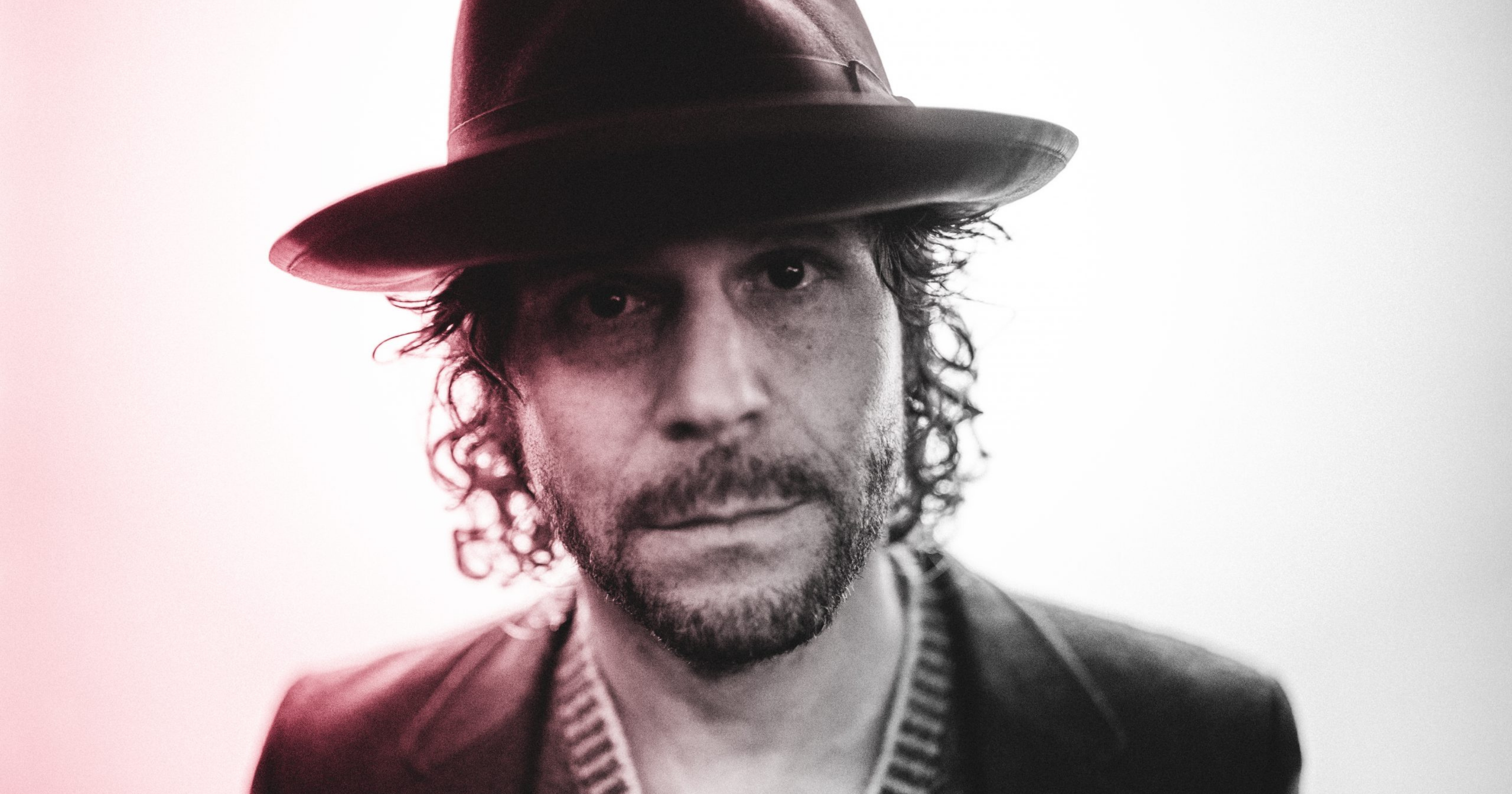
This week on The Show On The Road, a wide-ranging conversation with the peripatetic, Pennsylvania-born, confessional folk songwriter Sean Scolnick, who for the last fifteen years has become a troubadour truth-teller of the Americana circuit, amassing a devoted following performing as his many-hatted, impish alter-ego: Langhorne Slim.


LISTEN: APPLE PODCASTSSPOTIFYSTITCHER
Host Z. Lupetin caught up with Slim to discuss his much awaited new LP, Strawberry Mansion (just released last week via Dualtone), which is named after the neighborhood in Philadelphia where both of his grandfathers grew up. Coming out of a deep creative funk, Slim produced a record of many entwined reckonings. A flurry of twenty-two diaristic sonic sketches, incantations, and emotive story-songs follow his struggle with mental illness, sometimes in real time, his pandemic isolation, and sobriety. It’s an overall hopeful collection that shows Langhorne may finally be finding his true calling on the other side of the darkness.

Sean Scolnick is never shy about revealing how his mental health and creativity are ever-evolving. Without playing the hundreds of international shows and festivals a year he normally does, Scolnick had to create at home in a new way. A note his therapist gave him still holds true, as he releases his newest record without being able to take his guitar and his trademark worn hat in public to support it: “When you’re freaking out, just play.”

Make sure you stick around ’til the end of the episode when Slim plays an acoustic rendition of “Morning Prayer,” joined briefly by his cat, Mr. Beautiful.


Photo credit: Harvey Robinson

BGS Wraps: Lullanas, “Blue Christmas”

Artist: Lullanas
Album: Christmas Together (Wherever We Are)
Song: “Blue Christmas”
Release Date: December 4, 2020

In Their Words: “The lyrics to ‘Blue Christmas’ hit a little harder this year (2020). We know many people won’t be having their typical gatherings, and chances are, a lot of us will be feeling blue missing someone. We grew up on Elvis’s version of ‘Blue Christmas’ and couldn’t help but put our own spin on it. We also perform this song every year at the Christmas Village in Philadelphia, so recording this song brought back the warm feeling of live music to us.” — Atisha and Nishita Lulla, Lullanas


Enjoy more BGS Wraps here.

LISTEN: Susan Werner, “To Be There”

Artist: Susan Werner
Hometown: Philadelphia, Pennsylvania
Song: “To Be There”
Album: Flyover Country
Release Date: September 27, 2020

In Their Words: “In the early months of this year I’d been writing a ‘country’ album, and when the pandemic hit I thought, ‘Well, we aren’t the first generation to face something like this, somebody must have written a plenty good song already.’ I went through the Carter Family and Louvin Brothers and Hazel Dickens catalogs and couldn’t find anything about a flu; black lung yes, influenza no. Having written a ‘gospel’ album in 2007, I remembered that one element of the best gospel music is hope, the anticipation of something better, whether on Earth or in Heaven. And in this moment, everybody on Earth is united in hope, hope that we arrive safely on the other side of this dark time to see and embrace our friends and family, to hold them close, and for the musically inclined among us, to stand shoulder to shoulder with them and hear them singing on either side of us. That was always Heaven itself to me; I don’t know that until this year I realized it.

“I grew up in a kind of magically musical singing family; my farming parents and all six kids, we’d spontaneously harmonize in the car on the way to church, to my grandparents’ farms for holidays. We had no idea other families did not do this, by the way. I was home in Iowa this February (yes, for the caucuses) and went with my folks to church — I’m an agnostic, honestly, I just go to see friends and family and to sing with them. To my left I heard my father, to my right, my mother. Who knew that something could arise that would take that, singing, away from us? Unthinkable. So I had to weave that into the lyrics of this ‘hymn.’ Heaven might have singing angels, but I know for a fact Earth does and I can’t wait to get back in the company of others in church or on stage or in the bar, it’s all good and it’s all the work of God.” — Susan Werner


LISTEN: Caiola, “Alaska”

Artist: Caiola
Hometown: Philadelphia, Pennsylvania
Song: “Alaska”
Album: Only Real When Shared
Release Date: October 2, 2020
Label: Workaround Records

In Their Words: “‘Alaska’ tells the story of a brief yet impactful love affair. Someone who has been emotionally closed off for years has their eyes opened to the opportunity of a relationship. The stripped-down instrumental arrangement draws glaring attention to the lyrics as warm textures build around a droning, woody, repetitive fingerpicked acoustic. The stacked vocals both doubling and harmonizing were meant to add to the width of the track, sonically. I’ve always liked doubling my vocals and wanted the chorus to be set apart from the verses with all the added layers. I think guys like José González, Justin Vernon, and S. Carey do this really effectively and that’s sort of what we referenced, production-wise.” — Caiola


Photo credit: Kirby Sybert

The Show on the Road – Mt. Joy

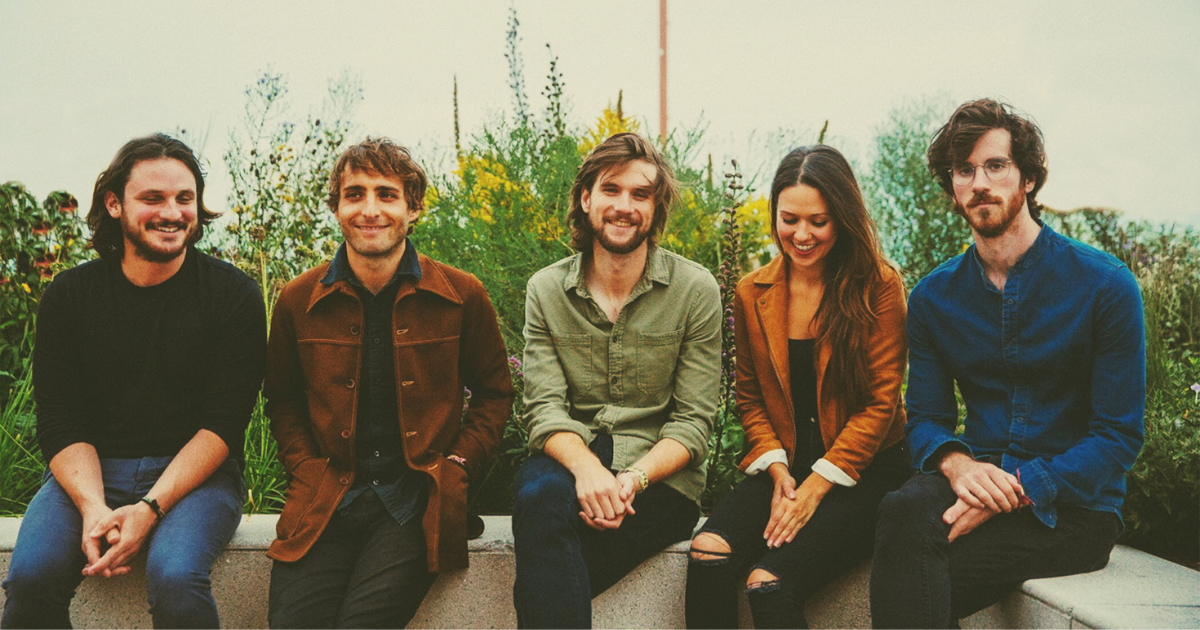
This week we feature a conversation with songwriter and singer Matt Quinn of jangly-pop phenomenons Mt. Joy.

LISTEN: APPLE PODCASTSSTITCHERSPOTIFYMP3

Much like host Z. Lupetin’s group Dustbowl Revival, Mt. Joy began thanks partially to some Craigslist kismet. After Quinn took the leap from PA to LA and reconnected with fellow guitarist Sam Cooper (who he used to jam with at their high school in Philadelphia), the band found their bassist Michael Byrnes, and Byrnes’ flatmate, producer Caleb Nelson, helped create their infectious breakout singles “Astrovan” and “Sheep.”

While most rising bands might shy away from writing extensively about addiction; or describing Jesus as a reborn Grateful Dead-loving stoner; or examining generational violence and brutality in Baltimore; with some deeper listening, it’s not hard to notice that Mt. Joy’s bouncy, arena-friendly sing-alongs are admirably subversive and often quite heavy below the pop shimmer.

A whirlwind of touring on some of America’s biggest stages followed the resounding streaming success of their first homemade singles, bringing the band from tiny rehearsal spaces and obscurity to the most hallowed festivals in America — like Newport Folk and Bonnaroo — and huge white-knuckle tours opening for The Shins, The Head and The Heart, and The Lumineers. By 2018 their joyous, full-throated rock sound had fully gelled with the addition of Sotiris Eliopoulos on drums and Jackie Miclau on keys. Their catchy and confident self-titled record arrived on Dualtone and seemed to go everywhere at once — with the acoustic-guitar led anthem, “Silver Lining,” surprising the band most of all by hitting #1 on the AAA radio charts.

But, as Quinn mentions early on in the talk, by the time the band released their much-hyped sequel record, Rearrange Us, in early 2020, the group of friends and collaborators were fraying at the seams. Relentless time away from loved ones caused breakups that were a long time coming, and trying to match incredibly high expectations had forced the band to ask themselves what they really wanted out of this new nomadic, whiplash life. Thus Rearrange Us dives courageously into darker shadows than its predecessor. In emotional standout songs like “Strangers” Quinn has an achy-voiced knack for pinpointing that exact moment when good love goes wrong — and how feeding off the endless adoring energy of the strangers he meets in every new town can only sustain him for so long.

In a way, the pandemic-forced time off coinciding with their record gaining steam was a blessing in disguise, allowing Quinn and the band to reflect and recharge. But of course, with a feverish fanbase from Philly to LA waiting, Mt. Joy wasn’t about to rest long. If you’re a fan, you may have noticed that they are currently playing safe, sold out drive-in shows across the East coast and Midwest with more on the way.


Photo credit: Matt Everitt