Queen Esther Made a Civil War Album Unlike All the Rest

Civil War albums are all too common in roots music, bluegrass, country, and Americana. Usually, these concept projects romanticize and valorize one of the darkest periods in our nation’s history, while cheerfully and cartoonishly detached from reality and untethered from the nuances of this horrifying and violent period of tumult in the U.S. Revisionism and imperialism are enacted by fiddles and banjos in loose, contrived musical period garb.

Audiences seem to devour this kind of idyllic reimagination of the Civil War and the issues that gave rise to it. Though chattel slavery and its foundational role in our economy were central to the conflict, Civil War concept albums rarely interrogate those facts, instead leaning on listeners’ love for story songs and cursory understanding of “brothers against brothers” narrative paradigms to sell records and tickets. The sketchiness of this practice is overlooked across the board, perhaps due to the sheer ubiquity of such efforts.

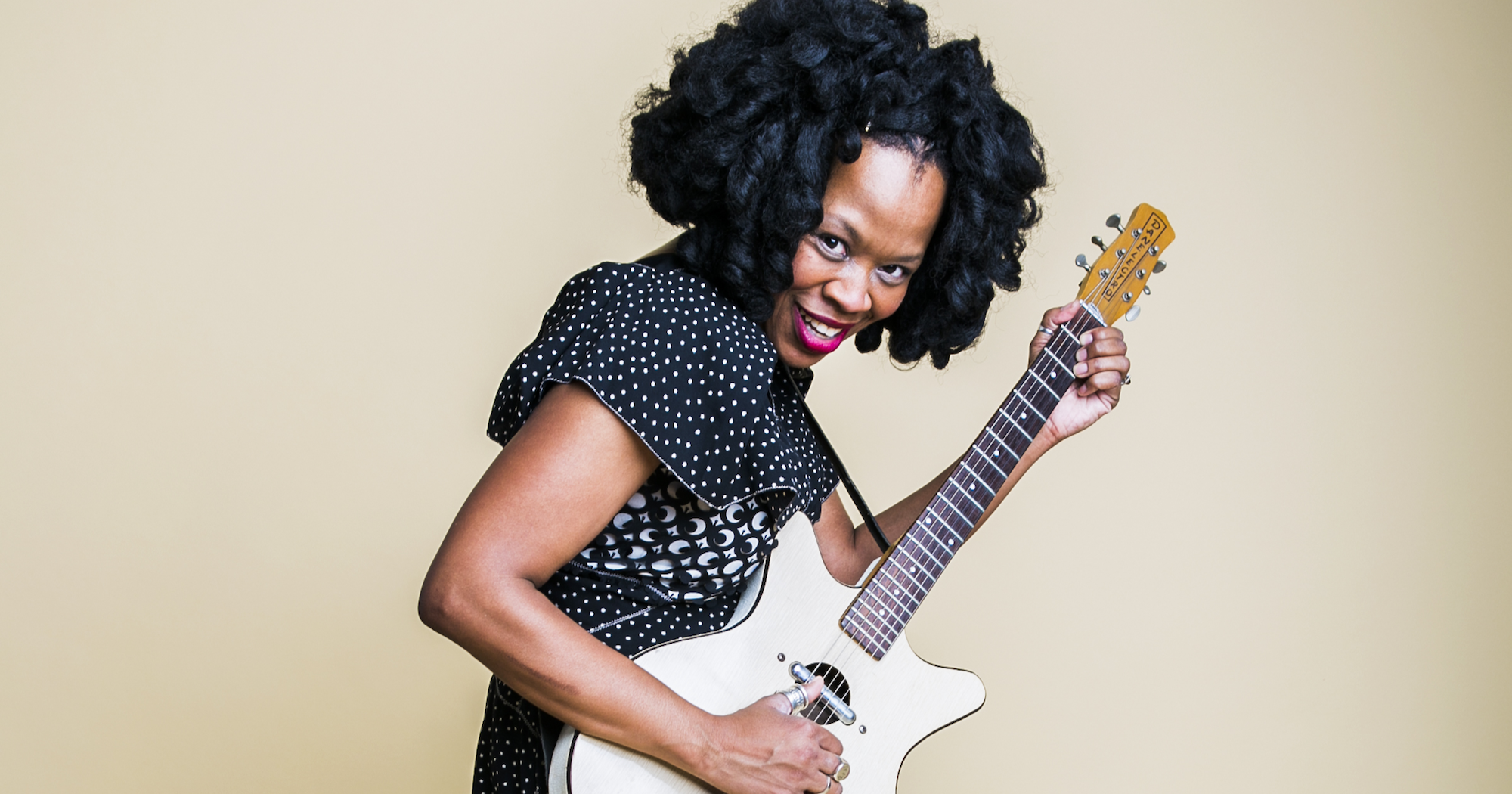
On February 6, artist, musician, songwriter, actor, and playwright Queen Esther released a very different sort of Civil War album, Blackbirding. Enabled by a grant from The National Parks Arts Foundation, Queen Esther worked and lived in residence at Gettysburg National Military Park in Gettysburg, Pennsylvania, for a month in 2020. During that time, she communed with the land, the place, and the losses and griefs seeped into the blood-soaked soil, plumbing stories, myths, memory, and feelings to craft her 12-song reckoning with the Civil War. Original songs, songs from that time period, and fascinating covers combine into a work of roots music and theater, dramatization and storytelling interwoven with knowledge-bearing and memory-keeping.

Queen Esther being a Southern Black feminist multi-hyphenate creative is exactly why Blackbirding stands out among its peers in the curséd Civil War concept album space. There is no idealization or revisionism happening in Queen Esther’s songs. Instead, there’s a tangible humanity and an awe-inspiring alchemy of grief, loss, and crimes against humanity into beautiful, redemptive music.

Queen Esther first brought Blackbirding into the world as a piece of performance art with a staged reading in 2024. Even now, in its LP form, these songs lean forward, doing narrative work perceptible whether on stage or off, and coaxing listeners to abandon passive listening and – as all theater asks – inhabit a third, artistic, creative space together in our interaction with these compositions.

The central point of the album is made over and over again across the 12 tracks and throughout our lengthy and in-depth BGS conversation. “Blackbirding,” the 19th-century practice of kidnapping free Black folks and selling them into slavery or back into slavery, never really went away. The Civil War was not won. Reconstruction failed. Slavery itself was not abolished, but rebranded. As such, Blackbirding, whether from the perspective of its content or its genre aesthetics, isn’t a throwback or time capsule album. This is music made in the present, for the present, about the present, and it calls on all of us – again, in the present – to reckon with and consider how we each contribute to or act in defiance of the continuation of racial apartheid and imperialism in the United States.

Do not fear, though, because Queen Esther’s approach to such musicmaking is remarkably joyous, grounded, and compassionate. It’s clear she’s not only ready to engage in the conversations this music evokes, but that is exactly her purpose. And the ultimate culmination of her many talents. In this way, she yet again distinguishes herself from other such concept albums in Americana.

I’ve been a fan of yours for a few years, ever since we discovered your TED Talk. When I first watched it, it was so revelatory. It felt like you supplied vocabulary – and knowledge and expertise – that I wish I would’ve had my whole life to help describe the multi-ethnic origins of roots music and bluegrass and country. If all of this came from “Scotch-Irish tradition,” then why does bluegrass sound like bluegrass? Why does country sound like country? Why doesn’t it sound like Irish music or Scots music or music from the British Isles? It sounds different.

I just wanted to start by saying thank you for that talk – and thank you for all of the insight, feeling, and emotion that you bring to these intellectual topics that people tend to forget are about real humans, real experiences, and real music.

Queen Esther: Absolutely. I really appreciate you saying that. I think more often than not, Black people have these conversations amongst ourselves. We wait until the door is closed and then we talk. I think we should have more conversations with everyone in the room. As long as they’re willing to listen. That’s a tall order. Much more so than you would think.

I’m really happy about this album, especially because people are starting to have conversations around the songs, topics, and everything that I’m bringing up. The fact is that slavery has never ended. It was just modified. The Civil War has never ended. It just evolved. “Blackbirding” has never ended. It just got a lot more inclusive.

Those three things are standing in the way of America being America. There is the America that is on paper – the one that is in the brochure with the Statue of Liberty, the flag behind it, and mom, and apple pie, and all of this stuff. And none of it is true. It’s all a marketing ploy. The actual America that really exists, that’s the one that Black people have had to endure and survive for hundreds of years. That’s the America that turned its back on us.

You know as well as I do that there are so many Civil War albums in bluegrass, folk, string band music, and Americana. So many are built upon the revisionist history that you’re talking about. The manicured, sanitized “picket fence and 2.5 kids” version of the “American Dream.” So, normally when I get a pitch about an album like this, it just goes straight to my email archive. Knowing you and knowing your work – and especially the way that you bring theater and all of your multi-hyphenate titles into crafting and creating – I was so excited to have a chance to talk about approaching the Civil War and approaching Gettysburg as an inspiration for music.

Blackbirding is set in the present. You’re talking about how slavery never went away, how reconstruction failed, and how the Civil War was not won. You’re contextualizing this art in the present sonically, as well. Because, like you’re saying, the Civil War never ended, slavery never ended, blackbirding never ended. Can you talk a little bit about placing all of this discourse in the present and not just in period garb, as it were?

I have to say perspective is a powerful thing. As a Black woman, as a Southerner, as someone that’s two generations removed from slavery, as a creative, I never heard any of this told from a Black perspective. It was always “the lost cause”: “These Yankees came and they just attacked us from out of nowhere. We were living this beautiful life and they just ruined everything.” When nothing could be further from the truth.

They literally terrorized Black people. They tore us apart, they raped our children. They did all manner of evil constantly, under the guise of Christianity. And it was even uglier than anyone would dare to imagine. Which is why they’re struggling to hide Black history, to hide lost history, to make sure that it stays lost. To not have anyone like me turn over the rock to see what’s underneath.

At the same time, these songs from minstrelsy, these songs from not that long ago, they’re important songs. They should be rediscovered. The problem that I’ve always had is that once you have that technical prowess as a musician and once you plumb the depths with that music, no one was bringing that music forward into the present. Not unless they were … putting it in a historical context, and that’s important, but to bring it into the now [is just as important]. …

Having a sense of intellectual curiosity, it’s really important. It doesn’t matter that you’re not the smartest, but that you are curious intellectually and that you are brave enough to explore that curiosity is way more important. That’s really my bedrock. That’s where I’m coming from now.

I’m a generative performing artist. … We are the ones who generate our work and we perform that work. Some people don’t necessarily perform their work. They just write it or they create it and they’re looking for other people to do the work, to perform the work, so that they can get their work out there. Lots of songwriters like that. Lots of lyricists are like that. That’s beautiful. That’s great. …

The songs would come to me, they would just float up in my head. It’s like a patchwork quilt. You take all these different kinds of fabric and all these bits and pieces. But you’re making this mosaic that turns into this overall image that is bigger than whatever bits and pieces you brought to it in the first place.

Talking about that mosaic, it makes me think that of course we would end up at this point, with a project like this, with a conversation like this, and with a body of work that couldn’t have been made if you had tried to step outside of yourself or your own identity to make it.

Exactly. All of that fueled me. I was reaching out in different genres, not just musically, but in the world. I was doing a lot of alternative theater, I was doing cabaret. I was doing performance art, I was doing solo performance. I was doing storytelling. I’d get up on stage and I would do just about anything. That was a world in and of itself.

Now, after a certain point, when you’re a generative performing artist, you’re looking for grants so that you can develop the work in general. It takes seven to nine years to develop a musical. It takes five to seven years to develop a play. When you see someone go, “Oh yeah, my new play, it’s up.” They put in a heavy grind! That’s five years of rewrites and workshops and readings. Some theater taking them on with their theater company and developing that work until it was ready for a test audience, not even necessarily ready [to open]. It’s just a lot of hard work and a lot of heavy lifting. There are certain grants that make that possible, where you just have to go away and you have to write and create.

I found a grant that would let me do that with this album through the National Park Service. The National Parks Arts Foundation has grants to at least a dozen National Parks. You can go to the park, you can live on the park, and they will pay you.

This project is also a work of theater. What jumped out to me first and foremost in that regard is what you’re talking about – the residency, the grant, being on location. Bluegrass, roots music, country music, they all ask us to be in a place together, but not in the same way that theater does. Theater is very much created so the audience are not passive participants. It actively invites listeners and collaborators and bystanders into a space and into a place.

You are doing that with this body of work – and with your residency at Gettysburg. I thought that was one of the most fascinating things about this project. Using theater, with a capital T, to help do that work of transporting all of us to the battlefield, to Gettysburg, to the geographical place that you are evoking with these songs.

I’ve been doing theater ever since I could stand up straight. Think about the cavemen, just standing in front of their brethren and telling a story about what happened to them that day. If my grandmother were here right now and in on this conversation, she’d tell you that I was telling stories ever since I could talk. I would just make things up. She would be sitting there washing dishes and I would try to distract her by making up something wild or crazy or imaginative. I don’t know, I just gotta say something to make her drop that dishcloth or at least laugh or something. [Laughs]

What is fantastic realism? Fantastic realism is when you have ordinary circumstances and then something extraordinary just pops right in. … So the idea of theatricalizing whatever was happening around me as a little kid, [that’s fantastic realism]. If we were sitting here at a table talking, for example, and then an elephant came along and took the hat off your head – that kind of a thing. Just the outrageous Southern tall tale. Bombastic storytelling is always floating just beyond your reach, I think, as a Southerner. It’s just how we do.

And of course, like everything in the South, this is an African tradition. This is an oral tradition handed down from West Africa. West African traditions [are] something else that people have a really hard time saying out loud and acknowledging. It’s not that other cultures didn’t tell stories, but our influence as Africans, as enslaved Africans, of our African ancestors on the South and on America, is seismic. It’s time for people to make the shift however small, however great, and center that and acknowledge it. They can’t even acknowledge it. …

I’m going to tell you a story. I almost always start [performances] with, “You wanna hear a story? I got a story to tell you.” Sometimes I’ll sing it, sometimes I’ll say it with music happening around me or behind me. But this is a story that you’re gonna want to hear. And every single song on [Blackbirding] is wrapped up in a story. There’s a story that’s around it that’s historical. There’s a story that resonates into the now, and there’s a story that I bring to you as an audience when I’m performing the song itself.

I’m thinking about how there’s so much music made in these genre spaces that is also putting on a costume, or telling a story, or doing theater, but that often isn’t grounded in reality at all. It’s all construction. So where some people might interface with your art and think, “Oh, this is a musical, this is theater, this is going to be a play, this is going to be ‘make believe.’” It’s actually so much further from that.

Oh no, it’s reality!

Exactly. And to me, that’s the whole story here. The thing I wanted to talk about most about Blackbirding is the point that you made right at the top – and that you’ve made throughout this conversation. You’re not talking about something that was happening a while ago and isn’t happening today.

Look, the 13th Amendment said slavery’s over “except.” Except? That’s a gigantic loophole. Except for what? Except for incarceration. That means if you’re incarcerated, you’re a slave. What if someone said to you, “You’re fired except on Tuesdays”? Then I’m not fired. You have to come in on Tuesday for four hours. Other than that you’re fired. You don’t work here. How much sense does that make? No one would hear an employer say that and go, “Am I fired or not?” Am I free or not?

You are free. Except they had to make that exception. They had to. Why? Because when the Civil War ended, this country was in absolute shambles. And because Black people were the actual currency. There were 4 million of us and we were basically worth trillions in today’s money.

We went off and we started our own little hamlets and towns, and we started working for ourselves. Suddenly there was this massive tilt. Black people were the money and had all of these resources, energy, and power. And just by sheer force of will, we started building for ourselves, which is why they started tearing us down. Showing up to each and every single community and just murdering people, burning people [alive] in their homes. Coming up with all of these lies built on pseudoscience to justify all of the things that they did. …

But it never ended. Pulling Black people over on the road, out in the middle of nowhere for no reason whatsoever. Beating them up. Maiming them, murdering them in some instances. This has always been the way. This has always been the case.

I’m imagining you on site at Gettysburg. How do you take that sort of emotional devastation or the intrinsic triggering and challenging nature of these topics and turn them into something beautiful? Do you see them as beautiful to begin with? I’m trying to imagine how you take care of yourself emotionally and psychically as you’re doing this important work. Because I think there must be an emotional toll to it, but you clearly are built for it as well. This feels like your wheelhouse – and the way you talk about it and the comfortability you have in having these conversations.

Simple. I am not an atheist. I am not an agnostic. I believe in God. I believe in Jesus. I’m a Christian, and I know that God is with me. I feel God’s presence upon me. I feel God hovering over me, protecting me divinely. I feel that I’m walking in divine purpose and in divine order. I know that I am divinely protected, that the blood of Jesus covers me everywhere I go. …

There’s this point at which inspiration takes over. There’s a point at which you are no longer there, and inspiration is there instead. An actor prepares– the idea is that you have technique, right? Your technique is there whether you’re playing an instrument or singing or washing the dishes or driving the car.

Let’s say driving the car. I don’t know how to drive. So, every time I get behind the wheel and the car is moving, even if it’s moving slightly, I’m screaming like a banshee. I’m so excited. But when I get in a car [with my partner], he just does what he’s been doing. He doesn’t think about it. He adjusts the window here and he readjusts this here, he puts the key in, and he does all of these dozen or more motions. He just does it automatically.

That’s the idea. When you make art, when you’re on stage, when you’re performing, when you’re creating, there has to be something that takes over. Inspiration takes over. Once you’ve got the technique, set the technique, learning how to drive the car, what do you do? Something else takes over. And I’m telling you, that’s something else for me, personally, is not my ego. For me, that’s the Holy Spirit.

I remember when I got to the house [at Gettysburg], everything was explained to me, and they gave me the keys. I’m sitting there in the parlor, I’m arranging everything, and it’s still light outside. I thought, “You know what? Why not?” I took my camera and I walked to Devil’s Den. The first song that I wrote was “The Devil May Care (But Jesus Knows).” I came back and I wrote that down like I was writing someone a letter. It just poured right out of me.

I can’t even begin to explain the process. I wrote it down and I wrote down the chords. I shaped it around everything that I did and I thought, “This is a complete song.” What is that song about? It’s about Devil’s Den, the Valley of Death, which is what they called that area in between Devil’s Den and Little Round Top. These soldiers would climb into Devil’s Den, which is these hulking, gigantic rocks. There was this big snake that lived there. It was huge. They called it the devil. It was so huge, it was as big around in the middle as a grown man’s waist. There were children that liked to play around that rock, so the townspeople got up the courage and killed it.

They would climb inside of that perfect coverage for a sniper and they would shoot Yankee soldiers that they could [see] from Little Round Top and they would fall into the Valley of Death. That was a run, Plum Creek – a run is a creek – and it was so filled with blood they just called it a bloody run. From where the creek started, all the way past the house that I lived in, all the way through that valley of death, was just nothing but human blood.

To be a soldier caught in [Devil’s Den] meant that you could not be saved. Someone would have to come and get you if you were wounded. More often than not, those soldiers died, not because they were shot and they fell down and they died. They died because no one came to get them. They died because they were wounded and the wounds got infected and they just bled out or [succumbed].

That Valley of Death comes for you, not just at the end of your life. It comes for you at any given moment, at any crisis that you have. Over and over and over again.

Can you talk a little bit about how you approached genre on these songs? Because I really love that you didn’t make a “time capsule” record that’s trying to sound like it came from the 1800s. At the same time, you’re collapsing time musically and creatively so that you can draw on those textures and on those sort of old-timey elements to do that storytelling for you, sonically. How did the production process actually look or feel as you were putting this collection together?

I think that when you have a kid or when you give birth to a kid, you just let that kid be the kid. You’re not sitting there going, “I want this kid to be this,” or “I want this kid to be that.”

That’s a really good metaphor. Just let them be themselves.

And what you’re doing, really, is sitting back and waiting to see what that kid turns into. You have no idea how they got so great at math. This kid is a mathematician. You can’t balance your checkbook. This kid is just explosively running in this whole other direction that you can’t even fathom. You have no idea what your children will do, what they will become. And none of it really has anything to do with you.

It’s the same thing. These songs came to me and when they came to me, sometimes fully formed, I literally wrote down what I heard in my head. And that really is it. Each song is its own world. I just let the song be what it is, whatever it is. However it came to me, I just let it be what it is.

I consider myself to be a transcriber of the song. I’m sitting there. The song is in my head and I’m just writing it down as quickly as possible. I’m someone with a butterfly net chasing the butterfly through the jungle. I’m running after the butterfly and I’m hoping that it doesn’t get away. It’s fluttering. It’s right above my head. Sometimes I capture it, sometimes I don’t. My job as a producer is to make sure that song sounds exactly the way it did in my head.

Even the cover songs, the Olivia Newton John song, “Magic.” When Olivia Newton John is singing that, it’s one way. It’s interesting. But I’m a Black woman and I’m singing that about my ancestors, and my family, and all of us in community. It turns into a completely different song.

You have to believe that we’re magic. Nothing can stand in our way. You have to believe that because, ultimately really, Black people never thought we were supposed to survive any of this.
Toni Morrison says that in an infamous speech that she gave, we were not just supposed to survive any of it. …

When the song comes, it comes as it comes. I knew that I had the goods as a producer, because the song sounded in the room the way they did in my head. That’s the best feeling. But moreover, more than anything else, you have to develop your own aesthetic. You have to know what’s good, what’s not good, and why. You have to know your own mind. You have to know your own aesthetic. And you have to have the courage and the willpower to stand on it.


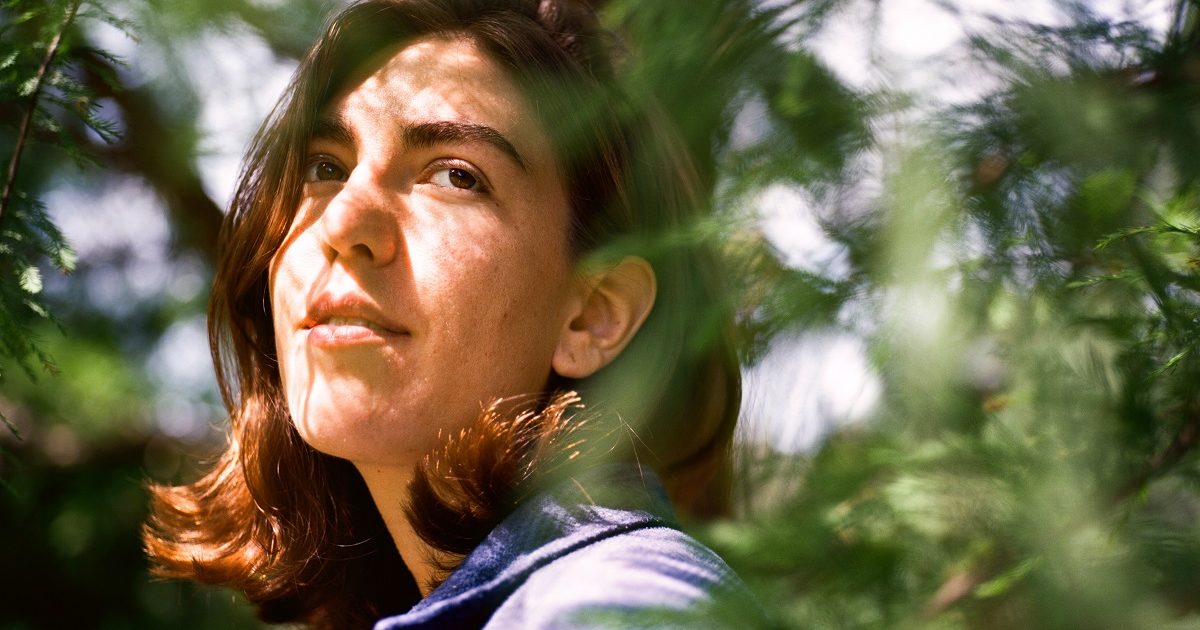
Photo Credit: Whitney Browne
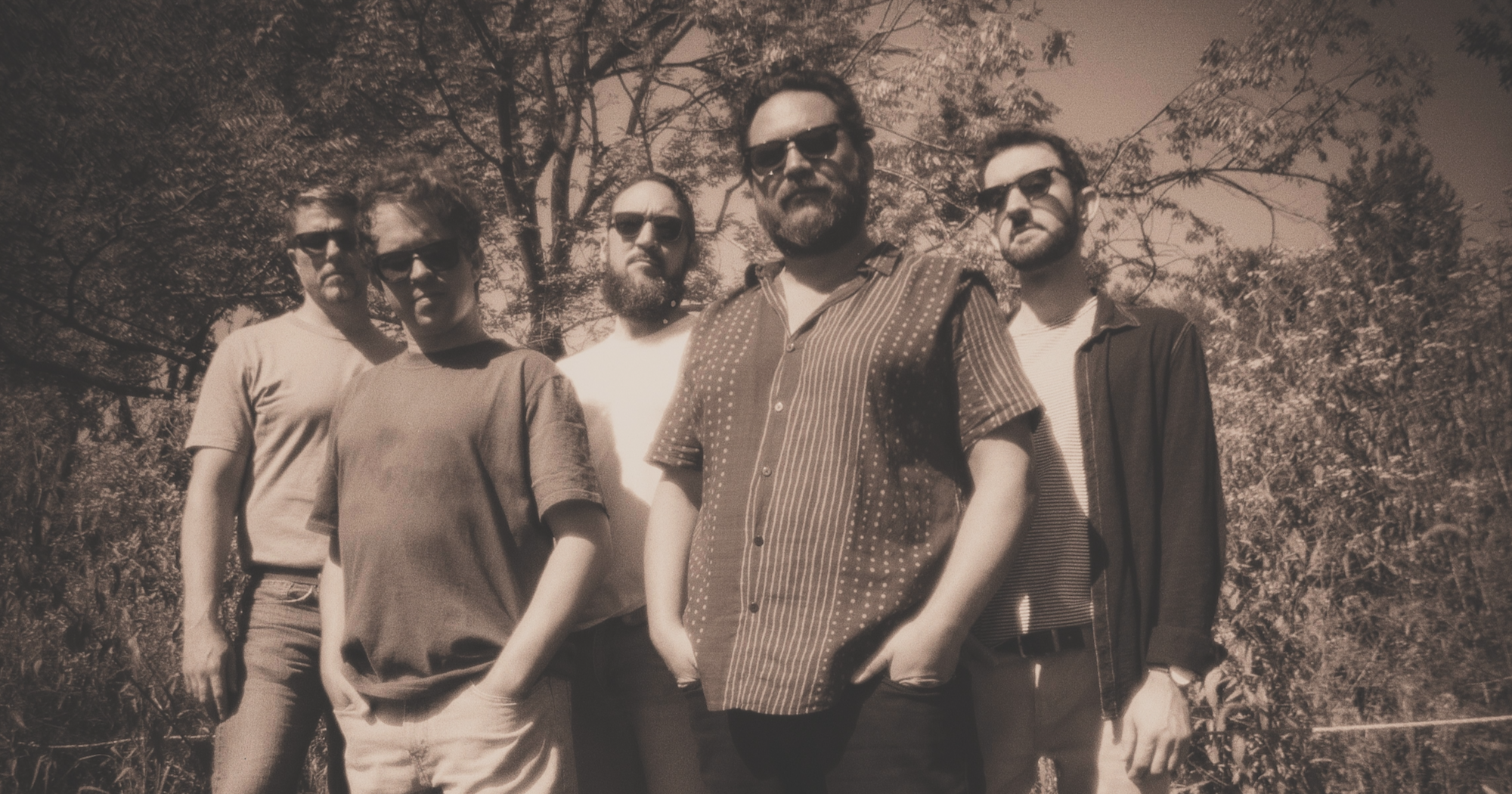
BGS 5+5: The Naked Sun

Artist: The Naked Sun
Hometown: Philadelphia, Pennsylvania
Latest Album: Mirror in the Hallway (set for release January 30, 2026)
Personal nicknames (or rejected band names): “Fully Clothed Moon”; “Naked! Son.”; “The Naked Sons”

(Editor’s Note: Responses provided by The Naked Sun guitarist and singer-songwriter Drew Harris.)

What was the first moment that you knew you wanted to be a musician?

I have a very vivid memory from when I was maybe four years old. My mom wasn’t home from work yet, so I was being watched at someone’s house – some kid I barely knew. I was only there once in my life, a strange one-off moment that almost feels like fate. They had one of those old Casio-style keyboards with preset drum loops and out of pure boredom I started messing with it.

To this day, I can remember the feeling of a sort of flow state and being sucked into the music I was making. It’s really that exact feeling that keeps me coming back to the profound play that is making music. Something clicked. When my mom came to pick me up, I didn’t want to let the keyboard go. Something in her must’ve recognized that spark, because not long after we were driving around to strangers’ houses looking for a used piano that we could afford. I started lessons soon after and kept at them for the next six or seven years.

Which elements of nature do you spend the most time with and how do they impact your work?

We all spend a lot of time in nature. Tom, Dylan, and I are pretty avid cyclists. We have some incredible trails in and around Philadelphia that we spend a lot of time riding. Tim’s a trail runner and very recently took up bow hunting. James loves hiking the Wissahickon.

For me, the place that shapes my writing the most is the Delaware Bay. I walk those beaches for hours – staring at the tide, the sky, the sand shifting beneath me. I started doing it out of boredom, stuck at the shore when everyone else was gone, needing some way to fill the time. (Turns out: boredom = creativity.)

One night I walked all the way toward the Cape May–Lewes Ferry and watched a storm crawl across the bay – lightning slowly getting closer. It was beautiful and terrifying and overwhelming. I think that was the first moment I felt truly connected to nature, and something inside me clicked open. I’ve been returning to that shoreline ever since.

I think the ever-changing shoreline informs my music in a deep way. The beach is never the same twice – shaped daily by tides, wind, and waves, scattered with shells, rocks, horseshoe crabs, footprints, and whatever people leave behind. Every sunset lands at a slightly different angle, filtered through a new cloud formation or dropping into a clear sky without interruption.

Change.

Like the shore, our lives are constantly shifting – subtle in some seasons, dramatic in others. Music is how I process that movement. It lets me catalog who I was and who I’m becoming. When change feels heavy or uncertain, music is the valve that releases that pressure. Because the music will always be there, I know I can change.

How often do you hide behind a character in a song or use “you” when it’s actually “me”?

This is a really interesting question, because I think that, at least in my music, every song is about me in some way, shape, or form. Even when I’m writing from someone else’s perspective, when I pull the thread it always comes back to me. Even if it’s years and years after I’ve written a song I’ll look again with a fresh set of eyes and be like, “I thought that was about my mother, but damn, that was really about me.”

I remember writing in a journal years ago that all of my songs are really just letters to myself. And how could they not be? Even when I think I’m writing about someone else, I usually circle back later and realize it was me the whole time. It’s not that I’m hiding behind “you” – it’s that sometimes I don’t yet recognize the reflection I’m writing from.

But I’m increasingly drawn to exploring the true “you” in a song. The songwriters I admire most are shapeshifters – they step into other lives completely, almost like actors. They embody characters, perspectives, flaws, desires. They can disappear into someone else and still reveal something human and true.

That kind of writing fascinates me. It’s difficult – maybe the hardest thing to do, honestly – but I feel like it’s where I’m headed next. If writing has been a mirror, maybe now it becomes a window too.

What is a genre, album, artist, musician, or song that you adore that would surprise people?

Most people don’t expect this, but my all-time favorite band is the Canadian punk group Propagandhi. I first heard them at 14 or 15, walking into a head shop on the Wildwood boardwalk. It was angrier, smarter, sharper than anything I’d heard – political, passionate, direct. Perfect for a rebellious Catholic school kid

I’ve been listening to Propagandhi since their very first record. I’ve even been up to Canada to see them play and met Chris, Todd, and Jord. This style of music is so different from the music I make. I tried, believe me, I tried to write fast punk-metal riffs, I just wasn’t very good at it. (Propagandhi shreds.) I found Bob Dylan at the right age, taught myself how to play guitar and harmonica at the same time, and adopted a more folky sound.

But I think Propagandhi and folk share a similar ethos: anti-corporate, pro-people. I like to think that I’ve combined the two genres at times in my own abstract and artistic way.

Since food and music go so well together, what is your dream pairing of a meal and a musician?

I love to cook and have spent time working in kitchens as a line chef, and I even taught cooking for several years, so cooking, food, and of course music are always paired together. I have a little tradition when I go down the shore in the summer; the first summer meal that I prepare, which is almost always shrimp, scallops, and Jersey corn, I turn on “Mississippi” by Bob Dylan off of The Bootleg Series, Vol. 8: Tell Tale Signs. I just absolutely love this version of this song and it transports me back to making meals at my Mom Mom’s house down the shore.

Sorry, Bob, but since this is a dream meal, my dream meal is with Bob’s friend, Tom. My dream meal would be picking blue crabs, sipping beers (and probably a couple joints), listening to music, and chatting with Tom Petty. Tom’s a southern guy, so I think he’d appreciate some blue crab, corn, shrimp, potatoes, and of course a joint or two.

We’d sit outside down at the Jersey Shore and I’d let Tom control the aux and just shoot the shit while we imbibed. A crab feast is always really long, too, so I’d get some extra time to spend with my hero. Not sure I’d ask Tom any specific questions, I’d just want to listen to his tunes and listen to him tell me why he chose them, what he liked about them, what they remind him of, etc., while we sweat out light beer and fill up on blue crab.


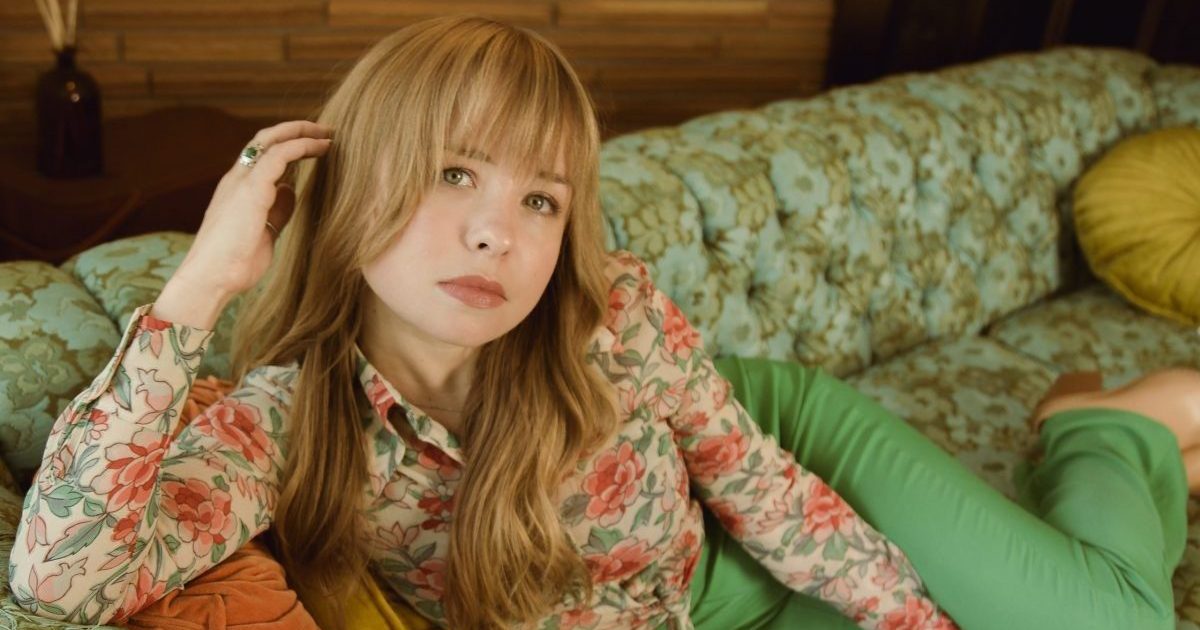
Photo Credit: Bob Sweeney

BGS 5+5: Bonnie & the Mere Mortals

Artist: Bonnie & the Mere Mortals
Hometown: Avella, Pennsylvania
Latest Album: Take Me to the Moon (available August 29, 2025)
Personal Nicknames (or rejected band names): I get Bonald a lot. Bon Bon, Bonners, Bonnie Romano.

What’s your favorite memory from being on stage?

Two years ago for our Halloween show, I looked out in the crowd and saw a complete stranger scream-singing along for the first time. As an artist, I constantly question what I’m doing. This is a hard path we’ve chosen that can beat you down a lot, but you can’t fabricate that moment. You’ve reached someone, you touched their lives in some way. I’ve since had that experience dozens of times and have even gotten to do a Bonnie & the Mere Mortals tattoo on a fan, but you never forget your first.

What other art forms – literature, film, dance, painting, etc. – inform your music?

I truly think the difference between art forms is no wider than the difference of medium: oil or watercolor? Everything is how you choose to express your idea. I have a literature degree and I grew up in an abandoned coal town; I wanted to make music the way Southern Gothic writers like Michael McDowell made me feel. Southern Gothic is often seen as just slow Americana in a minor key, but I wanted to expand that thinking to include my experience growing up in a Southern Gothic tableau. I also dress up like a drag queen because I want the Mere Mortals to be as visual as we are musical. Our presentation is always firmly tongue-in-cheek because every murder ballad has a punch line and I never think you should take yourself that seriously.

What’s the most difficult creative transformation you’ve ever undertaken?

When I was growing up, it was the golden age of pop-country. Miss Shania Twain, Garth, the Chicks? Everywhere. I grew up on the values of Hank and “Raise Hell, Praise Dale.” Post 9/11 though, I really started to resent my upbringing. I discovered the Cure, Queen, and Bowie, and put aside Ralph Stanley. I moved to the city, came out as queer, and started a metal band. I never truly felt fulfilled though. I felt I had to hide a part of myself that made up so much of my character.

It wasn’t until I heard Gillian Welch for the first time that I started to dive back into myself and realized that I wasn’t really making art authentically. I bought a banjo and started to learn clawhammer. I rediscovered so many loves I had put aside and I began to feel myself again. I realized that what I loved about the Smiths was the same thing I loved about Jason Isbell, and I couldn’t see why they shouldn’t go together. Some of my folks couldn’t understand the transition, but they certainly do now.

What would a perfect day as an artist and creator look like to you?

Film an episode of The Muppets as a special guest and then head over to Dolly’s house to cook her a pasta dinner.

If you didn’t work in music, what would you do instead?

My day job for the last 15 years has been working as a tattoo artist. I co-own a shop in Pittsburgh called the Kindred Spirit Tattoo Co. It can be hard making it as an artist on both sides of the sun, but I feel so grateful I get to do two things I love so much.


Photo Credit: Veronica Baron

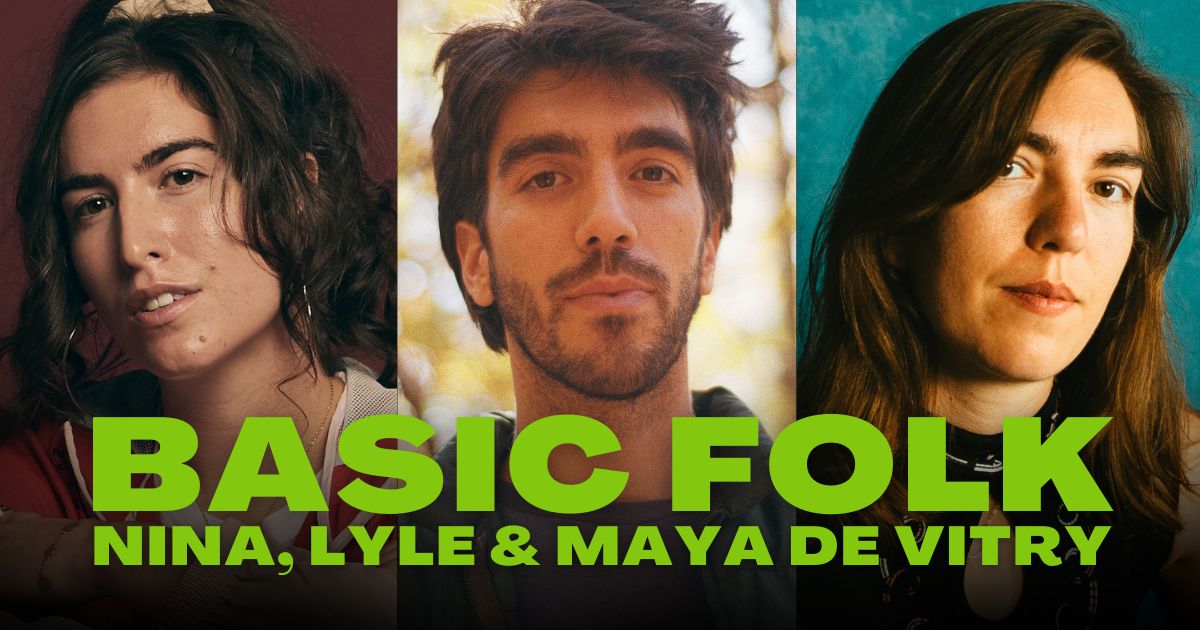
Basic Folk: Maya, Nina, and Lyle de Vitry

Maya, Nina, and Lyle de Vitry’s life, beginning in Lancaster, Pennsylvania, has been music and family, festivals, old-time, songwriting, and folk. The de Vitry siblings (including sister Monica, currently teaching art in Western Mass) grew up amongst music and nature in their rural home and even had a family band called Old-Time Liberation Front. Many jams around the campfire, music lessons, and encouragement from their parents lead all three siblings to careers surrounding indie folk music – and jazz! (Thank you, Nina.)

All three have released albums in the past year: Maya’s new album The Only Moment is her fourth record in only six years of performing solo in her post-Stray Birds career. Lyle just released his debut album, Door Within a Dream, while simultaneously working alongside other banjo makers at the Pisgah Banjo Company, his current day job. Nina’s excellent debut, What You Feel is Real, came out last year, but she’s been busy lately playing on the Noah Kahan tour as “the utility player.” Nina’s singing harmonies and playing fiddle, mandolin, banjo, guitar, and 12-string guitar while finding creative inspiration from the energy of the crowds and her new found musician siblings in Kahan’s band.

LISTEN: APPLE • SPOTIFY • AMAZON • MP3

In our special Basic Folk conversation with the de Vitry sibs, we talk about how they feel about each other’s creative processes, songwriter practices, and musical inspirations. They get into how being at all these music festivals and jams as kids bonded them together and we learn about made-up words that their family uses to this day – stay tuned to find out what a “butchabee” and a “taffy bub” is.

Elsewhere in the episode, they each talk about how disconnected they feel from the mainstream – Nina had never heard of Noah Kahan’s music until she was asked to audition for his band. Also, Lyle gets into how being around three sisters, female musicians, and female songwriters has impacted him and his musicality.

Don’t miss a very special de Vitry “Which One” lightning round wrapping up one of the most special singer-songwriter interviews we’ve done on Basic Folk.


Photo Credit: Chase Denton

LISTEN: Dave Hause, “Tarnish”

Artist: Dave Hause
Hometown: Philadelphia, Pennsylvania
Song: “Tarnish”
Album: Drive It Like It’s Stolen
Release Date: April 28, 2023
Label: Blood Harmony Records/Soundly Music

In Their Words: “My life is getting increasingly less interesting. And that’s by design. You want to be steady, you want to be at a baseball practice or taking your kids to gymnastics or whatever it is. You don’t want to necessarily be staring into the abyss all the time and trying to determine your existential weight. I don’t want my life to become fodder for songs — I want my creativity to be the fodder for songs. I had kids later in life, and it turns out kids ask an awful lot of questions. Sooner or later I’m gonna have some explaining to do for the four decades of living I did before they showed up on the scene, and I sure hope when they hear the answers, they take it easy on me.” — Dave Hause


Press Credit: Jesse DeFlorio

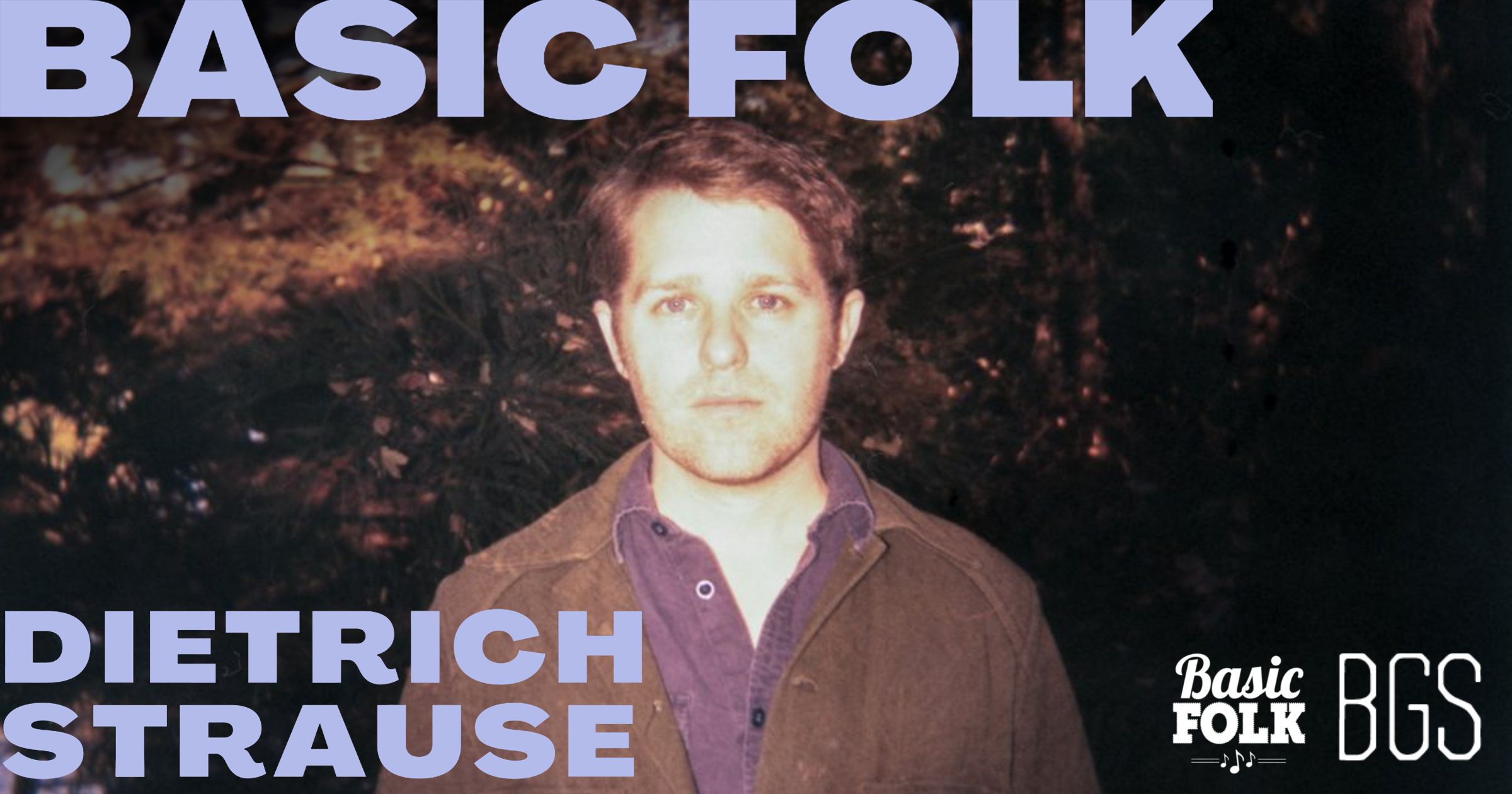
Basic Folk – Dietrich Strause

Dietrich Strause, raised in Lancaster, Pennsylvania, was classically trained on trumpet growing up, but the allure of songwriting and performing his own music pulled him into the Americana world. He found his way to the Boston area and into its super collaborative and supportive community.

LISTEN: APPLE • SPOTIFY • STITCHERAMAZON • MP3

On his new album, You And I Must Be Out Of My Mind, Dietrich found himself more in control of the creative process thanks to spending years cultivating his skills at Great North Sound in Parsonsfield, Maine. Under the mentorship of producer Sam Kassirer, he became empowered in his craft by offering up his services as a session player, engineer and studio handyman. The record took several years to record, but due to his experiences with Sam, he was able to see the way that bands made decisions in the studio and how a record takes shape, which all culminated on his latest record.

Dietrich’s known in the Boston area for sitting in on sessions and live shows with people like Rose Cousins, Kris Delmhorst, and Session Americana. He’s built a home and a community there. Now, Dietrich is in the process of moving his base to London, which sounds challenging to do at any time, never mind during a global pandemic. He talks about how it’s been a strange move and how the pandemic has impacted his relationship with touring. Full disclosure: Dietrich is a close pal of mine and one of my favorite hangs. When I spend time with Dietrich, I feel like a little kid: anything is possible and the day is ours. His music gives me that feeling, too. Hope you enjoy getting to know Dietrich and his perfect songs.


Photo Credit: Sam Kassirer

WATCH: Buffalo Rose, “I Give You the Morning” (Feat. Tom Paxton)

Artist: Buffalo Rose
Hometown: Pittsburgh, Pennsylvania
Song: “I Give You the Morning”
Album: Rabbit EP
Release Date: February 22, 2022
Label: Misra Records

In Their Words: “Working with Tom on this entire project was an incredible gift and joy. He was so gracious with his time, his creative energy, and his enduring passion for music and songwriting. This song is just so well-written, with such stunning and unique imagery, so we were really excited to put our own spin on it, and create some moments where the harmonies and instrumental passages could accentuate the lyrics. We were all down at Pulp Arts studio in Gainesville, Florida, and had just tracked our parts and sent it off to Tom to record in Virginia. We got his final verse and played it in the control room. It was so powerful and emotional to hear his voice on this track, revisited 50 years later. Seeing it side-by-side with some footage of him singing in the ’60s really connects us with the power of music to connect people across space and time, and how there are aspects of humanity that transcend both.” — Shane McLaughlin, Buffalo Rose


Photo Credit: Zian Meng

WATCH: Maya de Vitry, “Dogs Run On”

Artist: Maya de Vitry
Hometown: Lancaster, Pennsylvania
Song: “Dogs Run On”
Album: Violet Light
Release Date: January 28, 2022
Label: Mad Maker Studio

In Their Words: “I grew up with a black lab named Georgia who was like a fifth sibling in our family. A little while after Georgia passed away, my parents got another black lab named Sylvie (she’s the one in this video). A lot of my musician friends got to meet Sylvie over the years, snuggling with her for a little bit while passing through Pennsylvania on tours. When Sylvie got sick in 2020, I really thought I was going to get to see her again, and at first I wrote a completely different song — it was called ‘Hold On, Sylvie.’ I finally realized I just wasn’t going to get to see her again, and the song became ‘Dogs Run On.’ My parents cared for their sweet friend until the difficult end, and Sylvie passed away in the sunshine in my mom’s arms in November 2020. Many thanks to Chris ‘Critter’ Eldridge for embodying the playful spirit of dogs in his gorgeous lead guitar playing on this track. Critter, Kristin Andreassen, and Ethan Jodziewicz are all such dog lovers, and it was really meaningful to make this song with them. This song is for all the best dogs, running through our hearts forever.” — Maya de Vitry


Photo Credit: Laura Partain

LISTEN: Katie Frank, “Come Clean”

Artist: Katie Frank
Hometown: Elizabethtown, Pennsylvania
Song: “Come Clean”
Album: Small Town Minds
Release Date: October 8, 2021

In Their Words: “I started writing ‘Come Clean’ while I was still living in Philly. I was 29 at the time and going through a big growth period, where I was really taking a good hard look at who I was, who I had been, and who I wanted to be. I was trying to heal from past traumas and change the way I responded to things emotionally, because I couldn’t stand being on that rollercoaster anymore. When you change the way you respond, it can make an impact on relationships, which is something I experienced. Come Clean is about trying to evolve and become, but having people in your life who still remind you or hold you to who you used to be. On one of my first trips to Nashville, I brought this song to a writing session with Carl Anderson and Kirby Brown. They are both amazing songwriters and they helped me bring the song to a whole other level. It was after that session that I decided I needed to move here.” — Katie Frank


Photo credit: Natia Cinco

Danny Paisley & Southern Grass Find a Family Blend on ‘Bluegrass Troubadour’

After nearly 50 years in bluegrass, Danny Paisley has reached something of a breakout moment. He won Male Vocalist of the Year honors at the 2020 IBMA Bluegrass Music Awards — his second time in the past five years and his third IBMA trophy overall.

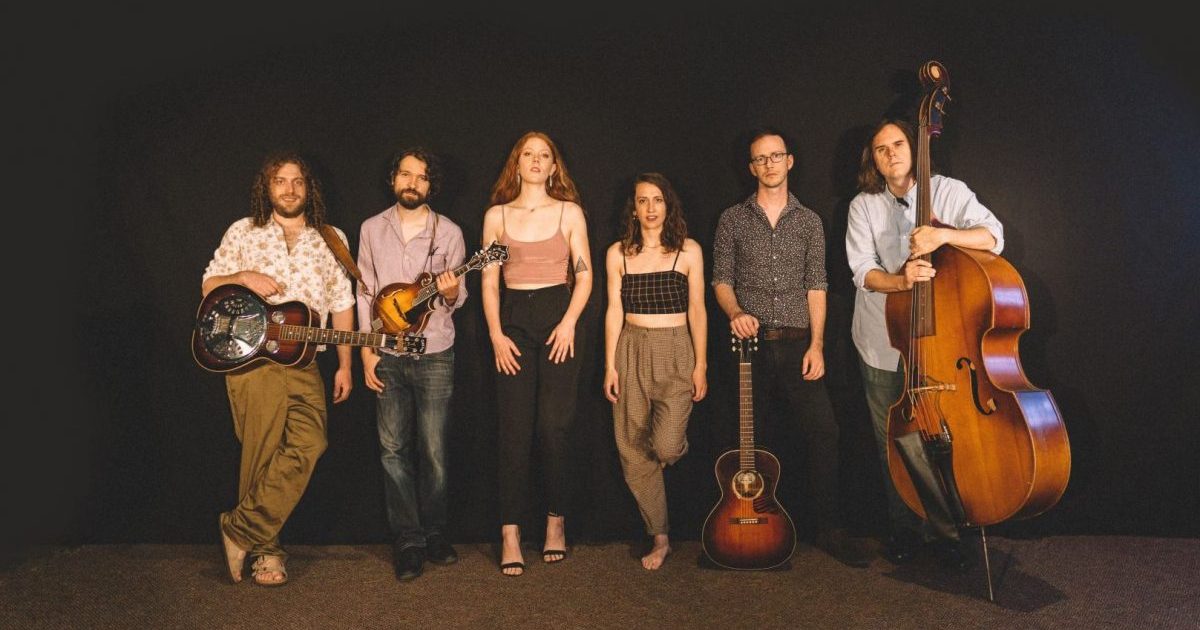
Paisley started performing bluegrass music as a teenager when he joined the Southern Mountain Boys, a band his father Bob co-founded with Ted Lundy. Lundy’s sons, TJ and Bobby, played in that group too, and now are in Southern Grass, the band Danny now leads. The lineup also features his son, Ryan, giving this traditional bluegrass group a unique two-family, three-generation legacy. Earlier this month, the band released Bluegrass Troubadour, their first album for Pinecastle Records. They recorded it last fall with producer Wes Easter, whom Paisley praises for his good ideas and good vibes, sharing that “after every session we were just happy and couldn’t wait to go back the next day.”

Speaking to BGS from his home in Landenberg, the southeastern Pennsylvania town where the singer-guitarist grew up, Paisley talks about how his not-strictly-traditional sound was shaped by that area’s rich musical history and how the new generation is rethinkng bluegrass.

BGS: You’ve been a bluegrass professional almost your entire life. When did you join your father’s band?

Paisley: I started playing with my father and traveling the rooms around 1974-75. Ted Lundy and my dad had a band for years. Ted’s sons, TJ and Bobby, started playing and I started playing, so we became a family group within the two families. Totally like a big family. Their mom is like my mom. And they call my mom “mom.” We grew up together. Basically all our lives we’ve been playing music together. That pretty much carried all the way through, because the Lundy brothers are back playing with me.

How was it being in a band where your dad was the boss?

Sometimes I would say to my dad, “I have this great idea.” Ever patient as he was, he always knew how to handle every situation. He’d always look at you and go: “That’s great, that’s great, when you get your own band you can try that.” To this day, I laugh about that. And I use that, too, on my son.

Now you have a similar situation with your son Ryan in Southern Grass. Does he bring a different generational perspective?

He wants to do more things [with technology], where I’m still old school and like to do things my way. He has good ideas and it makes me have to rethink… Young minds are sometimes way better than old minds. It’s hard for the younger generation today — for the third generation of bluegrassers to relate to the “Blue Ridge Cabin Home on the Hill.” They love the song, but not that theme of the cabin on the hill and things like that from the old days. I have heard of that from my grandparents. Now with the next generation, it is washed down even more.

The area where you grew up seems to have been a great musical influence.

I was very lucky. I grew up in a place here where there was a country music park, Sunset Park. On Sundays, they would have a major country or bluegrass artist… Bill Monroe, Mac Wiseman, Osborne Brothers… I got to see all of my heroes within five miles of my house. Down the road about 15-20 miles was another park called New River Ranch. It had the Stanley Brothers, Jim & Jesse, Reno & Smiley. Any given Sunday within 20 miles, you could go somewhere and hear some incredible music.

When I was very young, Flatt & Scruggs came and everyone was there to see Earl Scruggs. He was god to every banjo player and rightfully so. I remember that day leaving with this impression of Lester Flatt — just how calm he was and how he talked from the stage. He was in control of the whole thing so easily. … Del McCoury lived the next county over from me, so we often played shows with him. I loved his rhythm guitar playing and his voice. He could play that rhythm guitar and keep that band in time – he’d drive that band with that guitar. There was nothing like hearing him live.

Your music has been associated with “Baltimore Barroom Bluegrass” What was that scene like?

When I got older, there were all these bars and clubs in Baltimore, which is about 30 miles from home. I ended up playing in these clubs, four or five nights a week… you’d played from 9 p.m. to 2 a.m., sometimes four or five sets. You got your chops in. You had a broad repertoire and you were playing to people who knew the music because Baltimore became a hub for Southerners who moved up from Virginia, West Virginia, and Kentucky for work. They were hard-living, hard-drinking, and hard-driving bluegrass fans. There’d be fights. There’d be carrying on, but boy you could have fun!

And another regional musical influence on you was the Galax sound, right?

Galax is a town in southern Virginia, on the state line of North Carolina and Virginia, and the Old Fiddlers Convention there draws thousands from all over the world. The Galax sound features a lot of fiddle — maybe not your standard bluegrass fiddle tunes, but a lot of different fiddle tunes that made their way into bluegrass music. …

Their banjo players had a certain sound to their playing. Ted Lundy had it. He came from Galax and my dad’s family came from over the state line in Ashe County, North Carolina. So naturally they would be drawn together when they got up here. Ola Belle Reed, who wrote “High on a Mountain,” lived a few miles from where I’m at here. She was from that same region. The driving banjo — there is a certain style in their hands and in their noting. You can tell they are from the Galax area. I play [guitar] with a thumb pick where a lot of the bluegrass guys play with a flat pick. That was from my dad also.

So Southern Grass’ driving rhythms are like a handed-down legacy?

Yes, of that area and of our fathers. We keep the rhythm sort of pumping, but you’ve got to play to each song. We’ll work the song. As the singer eases off singing, the rhythm will pull back, too, and then you can build back up. We do a lot of stuff like that dynamic. That’s what I like about my style of music, knowing and feeling the song.

Bobby Lundy used to play the banjo in the band and decided he needed some time off. When he said he was able to play, I needed a bass player. I call him my utility man of bluegrass, like he could play any position on a baseball team — he’s that talented. Because he has known me for so long, he knows what I am going to do on a guitar. He knows what I am going to do singing. He can walk me right into the singing with his bass. He can lead me right into the voice. He can just push the band and keep that timing from not going too fast or too slow. He can just keep it rock steady.

How did you pick songs for your new album?

Two of them [“He Can’t Own Them” and “I Never Was Too Much”] were written by Eric Gibson of the Gibson Brothers. He’s always one of my favorite writers. He sent a gang of songs he had not recorded. Every one of them was a great song. Those were the two that fit my style. Brink Brinkman — another excellent bluegrass songwriter — told me, “I have a song that I’d like you to hear.” As soon as I heard it [“Date With an Angel”], I wrote back: “I want it!”

“May I Sleep in Your Barn, Mister,” I learned from a guy named Cullen Galyean, a banjo picker and a great mountain singer from down in the Galax, Virginia, area. “Eat at the Welcome Table” is an old-timey spiritual song. When my dad moved up here to Pennsylvania, his neighbors were an African-American farming family. They had an old-timey string band and played gospel songs. They would sing that song. We put our own spin on it.

The album has an interesting mix of songs that come from different styles and influences.

That’s how music generally works for me. I love it all, and then I make it my own. My band is rooted in traditional music and traditional ways, but that shouldn’t hamper or restrict you. So, I keep my ears open to all kinds of things. You can sometimes take an idea from a non-bluegrass artist and use it in bluegrass.

It’s that way with my singing. I listen to everything from George Jones, Jerry Lee Lewis and Vince Gill to opera singers like Pavarotti – these guys all amaze me. How they control their voice and present it with such tone. For me that was lacking in my singing and I had to work at that… I learned to sing a little different as I got older – to take the edge off the high tenor part a bit. Things like that, and I noticed that people were responding better.

Congratulations on winning your second IBMA Male Vocalist of the Year win. Was the victory sweeter the second time around?

The first time I was so shocked. Any category when you are up there with Russell Moore, Del McCoury — all these guys that I enjoy. You’re shocked that people would appreciate what you do. The second time, it was like, “Oh my goodness.” It didn’t really set in until the next day or so. I love to go out and play to make people happy. I never thought of being something like Male Vocalist of the Year. It’s always the dream for everybody. It’s always a dream to play the Grand Ole Opry, but you’ve got to keep it realistic. A life lesson early on that I got from my dad: never get to where you think you’re better than anybody else. Because as soon as you do that, you’ll realize that you’re not.


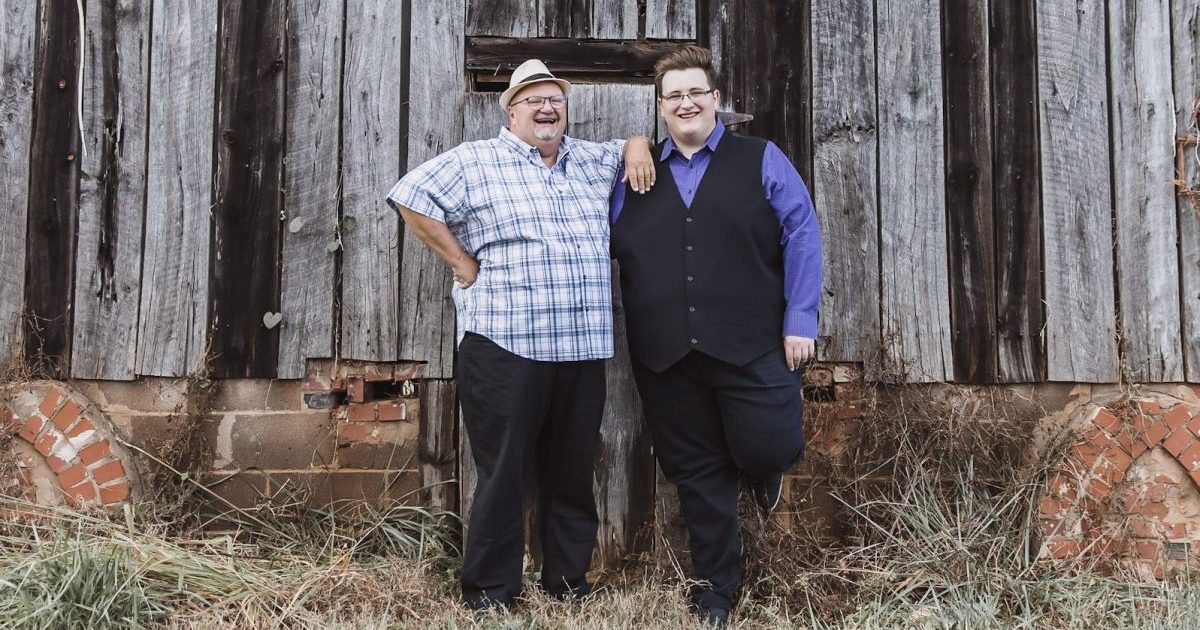
Photo of Danny Paisley and Ryan Paisley courtesy of Pinecastle Records.