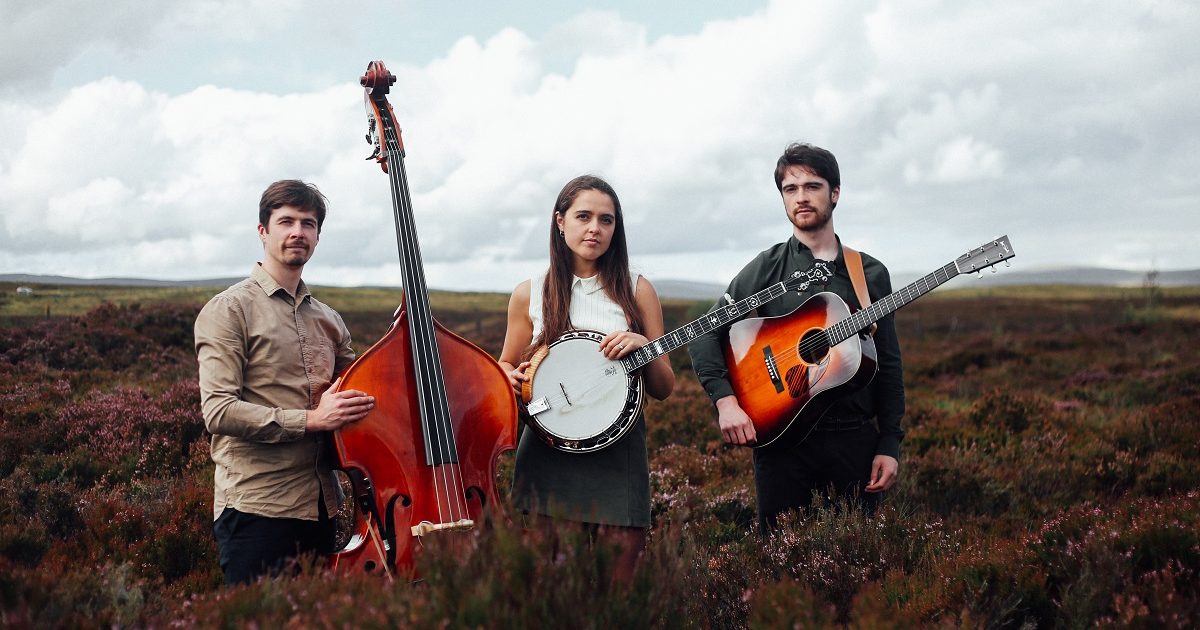
BGS 5+5: The Foreign Landers

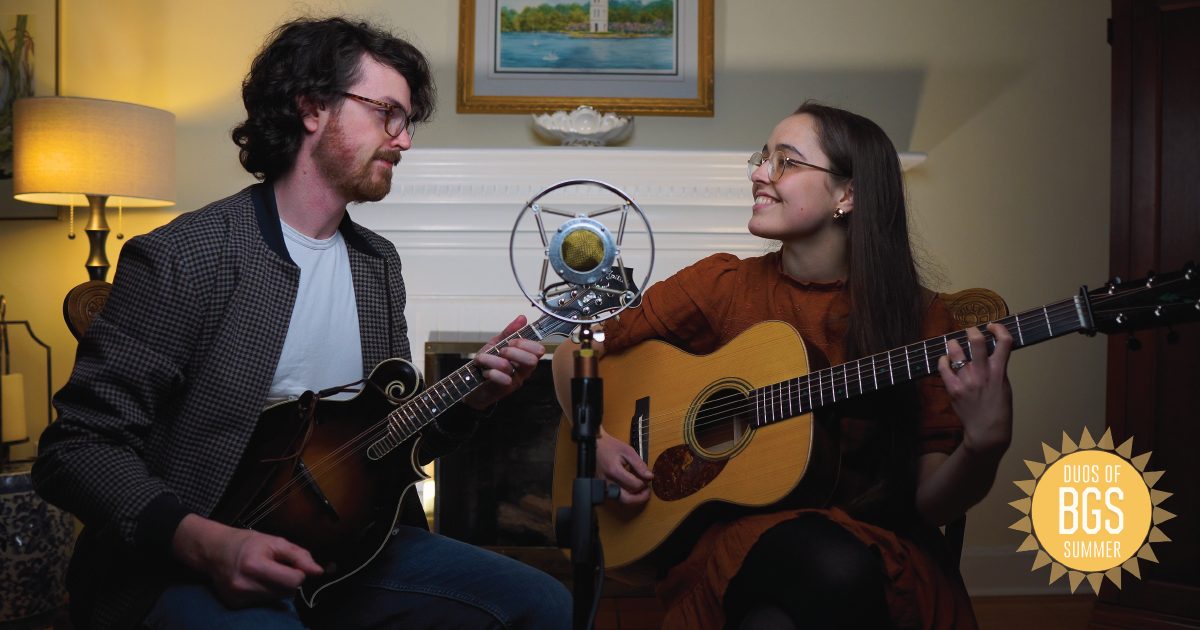
Artist: The Foreign Landers (David and Tabitha Benedict)
Hometown: Travelers Rest, South Carolina
Latest Album: Travelers Rest
Personal nicknames (or rejected band names): Tabs and Doodles

What’s the toughest time you ever had writing a song?

“Traveler,” the first track on our new album, is a song we wrote from the perspective of Tabitha’s family back in Northern Ireland. Since we moved to the States at the end of 2020, it’s been so difficult being so far away from family, a feeling I’m sure a lot of people are familiar with since the start of the pandemic. We wanted to find a way to capture that sentiment in this song, but it ended up being one of the most difficult writing experiences we’ve had. Not only was it hard to find the words to communicate these feelings, but it was also an emotional process. But after a couple months of challenging writing sessions, we came up with “Traveler” and it’s become a focal point for this new Travelers Rest album.

Which artist has influenced you the most … and how?

We’d have to say Alison Krauss has been one of our biggest inspirations. Tabitha first picked up the banjo in Northern Ireland after hearing Ron Block on Alison’s Every Time You Say Goodbye album. Hard to beat that title track, too! I once heard a 10-year-old kid in New Zealand play Adam Steffey’s mandolin kickoff on this song note for note. Just another testament to how far reaching bluegrass is and how much we owe to Alison and her music!

Which elements of nature do you spend the most time with and how do those impact your work?

Tabitha loves to walk so much! We often take our crazy dog Finn to our favorite hiking haunt Paris Mountain State Park not too far from our home here in Travelers Rest, S.C. While we walk among the beautiful forests and lakes in that park, we talk about songs we want to write and make plans for future music projects. We love that spot so much that we commissioned artist Dealey Dansby to do a linocut interpretation of an iconic reservoir at the park. That same spot was an inspiration in part to another new song of ours called “Garden” — a song all about planting roots in the place you’re in, no matter what the circumstances.

Since food and music go so well together, what is your dream pairing of a meal and a musician?

We absolutely love the clawhammer banjo playing of the great Adam Hurt! His Earth Tones record in particular is played almost nonstop in our car journeys. And since he’s playing a gourd banjo on that record, we think the perfect meal and musician pairing would be stuffed and roasted acorn squash with Adam’s warm banjo tones! Check out one of our favorite tracks from that Earth Tones album, “Old Beech Leaves/Sheeps and Hogs Walking Through the Pasture.”

If you had to write a mission statement for your career, what would it be?

We love this quote from C.S. Lewis, who said, “If I find in myself a desire which no experience in this world can satisfy, the most probable explanation is that I was made for another world. If none of my earthly pleasures satisfy it, that does not prove that the universe is a fraud. Probably earthly pleasures were never meant to satisfy it, but only to arouse it, to suggest the real thing. … I must keep alive in myself the desire for my true country, which I shall not find till after death; I must never let it get snowed under or turned aside; I must make it the main object of life to press on to that other country and help others to do the same.”

Since Tabitha and I are both from different countries, we often feel like there’s no real place where we can both feel at home. And in a deeper sense, we know that there won’t ever be a place in this life that will fully satisfy our desire to belong somewhere. And I’m sure most people feel that way, too, no matter where you’re from. Our mission statement for our career would simply be to convey with our music that universal longing for something better, and point people to the truth and hope of this deeper reality as Lewis suggests. Nashville songwriter Andrew Peterson really captures that sense of longing for “another world” in his song “The Far Country.” Love his music!


Photo Credit: Nicole Davis

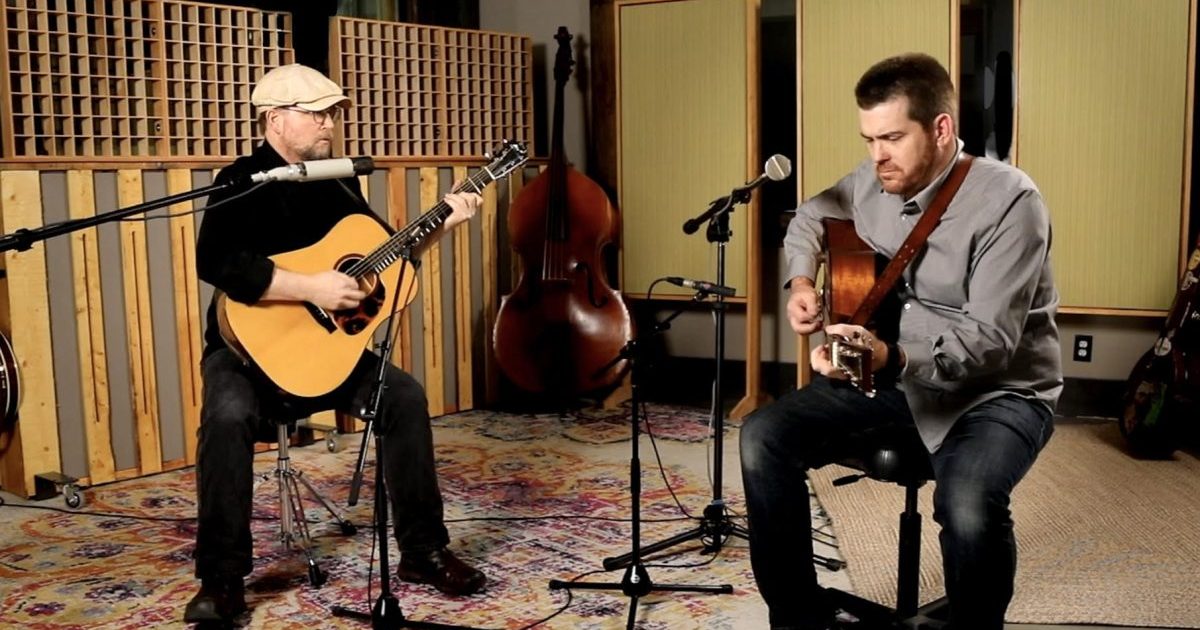
WATCH: Ron Block & Clay Hess, “The Old Spinning Wheel”

Artists: Ron Block and Clay Hess
Hometown: Nashville (Ron Block); Peebles, Ohio (Clay Hess)
Song: “The Old Spinning Wheel”
Album: Live at Reverb And Echo
Release Date: October 19, 2022

In Their Words: “‘The Old Spinning Wheel’ is a tune I first heard through Larry Sparks, years ago, on an instrumental album he recorded. It’s an old song from years past, and I always love to play simple song melodies on the guitar.” — Ron Block

“I first heard ‘The Old Spinning Wheel’ from a guy named Dave Starlin. He was one of my mentors starting out. He used to sing it. I usually try to sing the song with the guitar on simple melodies like this. This style of song is so much fun to play.” — Clay Hess

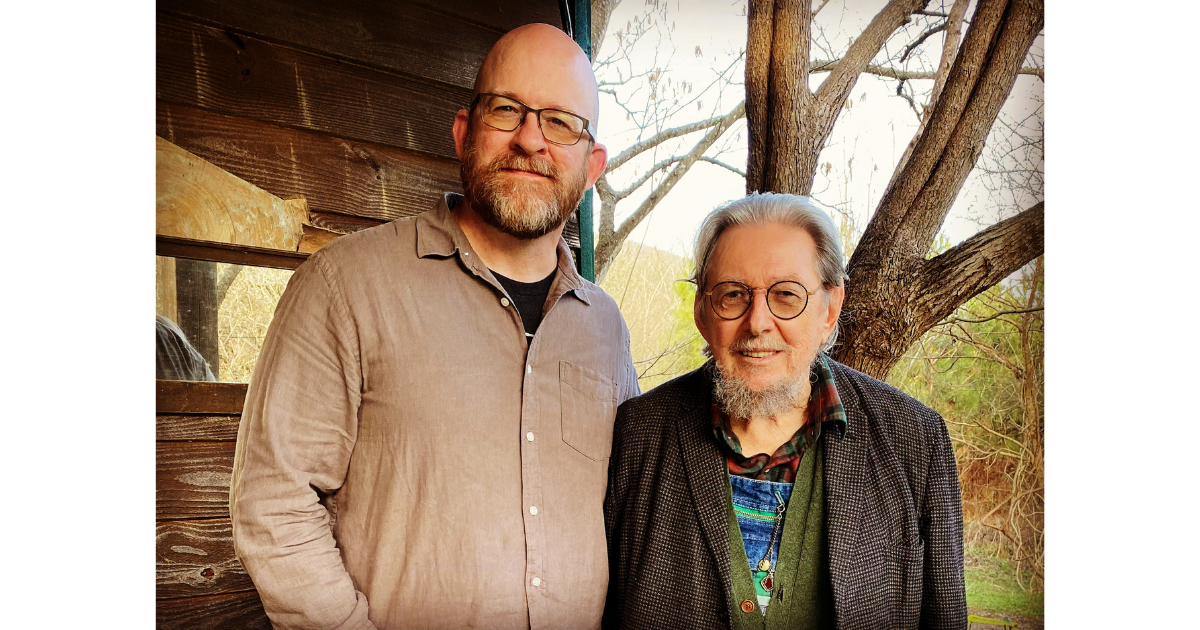
LISTEN: Bob Minner, “Ginseng Sullivan” (Featuring Ron Block)

Artist: Bob Minner
Hometown: DeSoto, Missouri
Song: “Ginseng Sullivan” (Featuring Ron Block)
Album: From Sulphur Springs to Rising Fawn
Release Date: March 11, 2022
Label: Engelhardt Music Group

In Their Words: “As musicians, we’re instinctively drawn to songs and the people who write them. That’s been my musical life with Norman Blake. His classic ‘Ginseng Sullivan’ is a true gem in both Blake’s legacy and the bluegrass, Americana, and folk genres. Recording this fresh interpretation with my old friend Ron Block was such a great experience. And the friendship with Norman and Nancy that has stemmed from this project is truly one of the most cherished experiences in my life. I hope you all enjoy what we’ve done.” — Bob Minner


Photo Credit: Ginger Minner

MIXTAPE: The Foreign Landers’ Transatlantic Story

Each of us having grown up on either side of the Atlantic, our common interests and musical influences could not have been more similar. All of these tracks hold sweet memories in our years of being a couple, and each artist has definitely influenced our sound as The Foreign Landers. David and I thought we’d share some of our transatlantic story together through a few of our favorite songs. — Tabitha Benedict, The Foreign Landers

Paul Brady – “The Lakes of Pontchartrain”

This is one of our favorite tracks of all time. This version of the popular ballad is from Paul’s album Nobody Knows: The Best of Paul Brady rereleased in 2002. With Paul’s flawless storytelling ability and tasteful guitar playing, it makes it a joy to come back for a re-listen.

Crooked Still – “It’ll End Too Soon”

David and I have been big Crooked Still fans for a long time and they will often be our first choice of car music on any long journeys. Here’s a beautiful song written by banjoist Greg Liszt for Aoife O’Donovan that is just so sweet to the ears. This was one of the last songs they recorded before the band stopped touring in 2012 and it appears on their EP Friends of Fall.

Tatiana Hargreaves – “Foreign Lander”

This is where the inspiration for our band name “The Foreign Landers” was drawn from. Aside from having more of a story behind our name than just that, we both love this old song and especially love this version from Tatiana Hargreaves debut album Started to Ramble released back in 2009.

Alison Brown – “Fair Weather”

This title track of Alison Brown’s album Fair Weather released back in 2000 is a common favorite of ours. Vince Gill features on lead vocals and guitar, Alison on banjo, Stuart Duncan on fiddle, mandolin, and vocals and Gene Libbea on Bass and vocals.

Ron Block – “Ivy”

Well, we knew we had to involve some of Ron’s writing and performing in this mixtape. We love this track, “Ivy,” off his album Walking Song. This is a perfect album for all year round, with guest appearances from a host of our favorite players.

The Weepies – “I Was Made for Sunny Days”

I first was introduced to The Weepies through hearing them on the radio back in Northern Ireland many years ago. My family instantly fell in love with their songs and sound, so I was so delighted to introduce David to their catalog when we were dating. Another favorite for long drives and singing along in the car. Here’s a real feel good song of theirs called “I Was Made for Sunny Days” from their album Be My Thrill released back in 2010.

The Boxcars – “You Took All the Ramblin’ Out of Me”

We just had to stick some good bluegrass in this mix of songs, and we’re so glad we chose this one. When David and I started dating, we would sing this to each other, and it has to be one of our favorites from the Boxcars album It’s Just a Road released in 2013.

Hot Rize – “You Were on My Mind This Morning”

At one of our first-ever performances about three years ago at the well-loved Cantab Lounge in Cambridge, Massachussetts, David sang lead vocals on this track written by Hot Rize. They recorded this on their 2014 release When I’m Free.

Dori Freeman – “If I Could Make You My Own”

We are big fans of Virginia-based singer-songwriter Dori Freeman, and especially love this track of hers from her 2017 release Letters Never Read. We recorded a cover of this song on our honeymoon on the Isle of Skye about two years ago now, so it holds a sweet spot in our relationship!

John Reischman – “Little Pine Siskin”

One of our favorite tunes off John’s album Walk Along John! John had been touring with the wonderful Greg Blake in Ireland back in January/February 2018, right when David took his first visit to Northern Ireland, and right when we started dating. We went to see them at a wonderful show at the Red Room in Cookstown. It was just a couple of days prior to making things “official.” I remember David playing this tune on that visit and it brings back happy memories!

The Foreign Landers – “I’m Not Sayin’”

We discovered this Gordon Lightfoot song from the late great Tony Rice on his album Tony Rice Sings Gordon Lightfoot. We have both loved this song for many years, and knew that when he would start a duo we would definitely be covering this one. We recorded this version on our EP Put All Your Troubles Away that we released in May 2021. We’re so thankful we did and hope you enjoy it!

David Benedict – “Colonna & Smalls”

David released this tune on his solo project The Golden Angle in 2018, named after the specialty coffee shop in Bath, England, back when we were dating. He has the amazing David Grier and Mike Barnett playing on this track with him.

Cup O’Joe – “Till I Met You”

David and I also tour and record with my two brothers in Cup O’Joe, our band based out of Northern Ireland. I wrote this song back in 2018, and recorded it on Cup O’Joe’s most recent album, In the Parting. I wrote this one with David in mind, not thinking that he would be playing mandolin on it a few months later!


Photo courtesy of The Foreign Landers

Tim Stafford Shares Memories of Steve Gulley, Alison Krauss, and Tony Rice

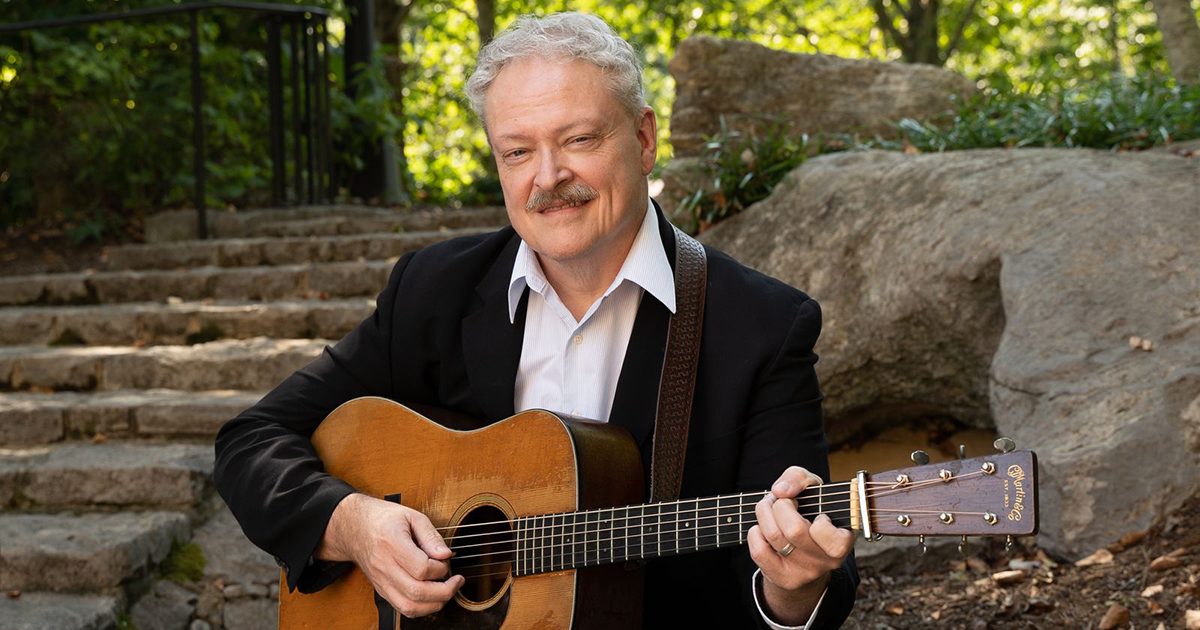
Tim Stafford could be renowned for any one of his many contributions to bluegrass music over his prolific career, his talents as a musician and writer having been showcased in so many of its important creations. He is perhaps most well-known as a founding member of Blue Highway, one of the most influential and decorated bands in bluegrass. Prior to that, he formed Dusty Miller in the late 1980s, and Alison Krauss hired him in 1990 as part of her band, Union Station, with whom he recorded the Grammy-winning album, Every Time You Say Goodbye.

Stafford is also an accomplished author. In 2010 with Caroline Wright, Stafford issued Still Inside: The Tony Rice Story, the authorized biography of the flatpicking icon and Bluegrass Music Hall of Fame member. As a songwriter, Tim has placed more than 250 cuts and was named IBMA’s Songwriter of the Year in 2014 and 2017. He notably co-wrote IBMA’s 2008 Song of the Year, Blue Highway’s “Through the Window of a Train,” with Steve Gulley. Tim and Steve were frequent collaborators and released a duo album in 2010 called Dogwood. Ten years later, they created another album of co-written material, but Gulley passed away suddenly from cancer soon after it was completed, making the title, Still Here, all the more meaningful.

BGS: How does it feel to release this record? With Steve’s unexpected passing I imagine it must be a more heavy feeling than a typical record release.

TS: Yeah, I’m really glad it’s finally out. Steve was really looking forward to this record coming out. We were both excited about the songs and it ended up being his last recording, which was hard on all of us. And now it’s part of his legacy. After Steve passed, I talked to the label about maybe coming up with a different title besides Still Here, but we decided it was a very appropriate title because his music is still here. He would have been proud of it. I know that for sure.

How long had you known Steve?

I didn’t know him when I was younger, although he was around and playing. He was mainly playing up at Renfro Valley in Kentucky and he didn’t travel much until he joined Doyle Lawson & Quicksilver which would have been in the late ‘90s or around 2000. I was playing a festival somewhere with Blue Highway and he came up to the record table and we started talking like we’d known each other forever because we knew a lot of the same people. We just hit it off. He was the one that first suggested we write and it was either the first or second time we got together we wrote four songs in one day. And all four of them got cut. I felt like at that point we had something special. We seemed to have a wavelength that we could touch off of each other. That’s really rare. You don’t get that with a lot of people.

The subject matter in the songs on this record seems very personal, and often about people you know. I would imagine that it’s sort of therapeutic, maybe in the same way that journaling might be, to write about personal things like that. Is that how you feel about it?

That’s a good way to put it and I did used to journal. Some of them, like “Back When It Was Easy,” are just about general topics that we know about. Whereas “Long Way Around the Mountain” and “She Threw Herself Away” are about things that actually happened that we chronicled about friends. And sometimes they are big stories that you just can’t stay away from. “She Comes Back to Me When We Sing” is a story we’d both seen on Facebook about this guy’s mother who was in advanced stages of Alzheimer’s and didn’t know anybody until she sang with her son. And when that happened, she remembered all the words and she could remember everything. We thought that was a really inspirational story and deserved to be a song.

You’ve been writing for so long that it seems like you’ve been able to build the skill of telling a story through song, rather than narrating a timeline to music.

Yes, that’s where it’s at. That’s where the craft comes in that you only develop by doing it. I really didn’t know how to write a song when I started. But you learn little things along the way through trial and error. It’s like anything but it’s really difficult to learn how to do something like write a song out of a book — although I have a whole collection of them here. I have lots of books about songwriting like Jimmy Webb’s Tunesmith and Sheila Davis’ The Craft of Lyric Writing which is really good. You can learn tips, but you’re not going to learn how to write from a book. So it’s a matter of doing it.

I don’t remember exactly where I heard it, but I think I remember Jimmy Webb talking about writing “Wichita Lineman” and him saying that it was fully fictitious. But that he felt like, as a songwriter, he should be able to write about people he didn’t know. That he should be able to understand people well enough to write a story that was convincing without it having to be true. I could be misremembering that, though.

You may not be. I think that there’s actually a book out about that song, “Wichita Lineman,” that I finished here last year and I believe you’re right and he’s right. I think that being able to tell a story about somebody you don’t know is important. There’s a song that I wrote really early on called “Midwestern Town” that Ronnie Bowman recorded. That song is totally fictional. I didn’t know anybody like the character in that song. But I’ve had a lot of people come up and say that they did know someone like that or that it could have been them and that song made a big difference to them. It was a comforting song. You’ve got to be able to get inside people’s heads and think the way that they would. You have to know what your character might do in any given scenario. I can’t remember all the times I’ve been co-writing and said, “What would this guy do?”

Have you written songs as long as you’ve been playing guitar? When did you started writing songs?

I guess I wrote all the way back when I first started playing guitar, but I wasn’t really serious about it. I had written some songs before I played with Alison in the early ‘90s and we actually recorded one of them, but it never came out which was my fault. She wanted to put an instrumental I’d written called “Canadian Bacon” on Every Time You Say Goodbye, but I talked her out of it. I told her we needed to record “Cluck Old Hen” because we were so psyched about Ron [Block] being in the band and his playing on that. And I don’t regret that though it probably would have meant more money.

You were in Union Station from 1990 to ‘92, right? That was a very cool lineup of that band. How did you feel about it at the time?

I was blown away by it. I loved it and it was really cool that it worked out because the first time she talked to me about playing with her, it was back when I was in a group called The Boys in the Band. We played at SPBGMA and her band was there but her guitar player, Dave Denman, was leaving. She called me a few weeks after that and asked if I’d be interested. At that point, she had only recorded Too Late to Cry and I was really impressed with the songs, with John Pennell’s writing, and her singing. I had already committed to playing with a different group though so I had to decline.

About two or three years later I had started a group called Dusty Miller that she was a fan of. That band had Barry Bales and Adam Steffey in it. The three of us kind of grew up together playing music. We’re all from Kingsport, Tennessee. I actually gave Adam his first mandolin lesson, which is such a joke. [Laughs] Adam didn’t know anything about the instrument at all at the time. I tried to show him some stuff and I just kept thinking, “That guy’s never gonna get it.” And I barely knew how to play myself but I tried to show him “Bluegrass Breakdown” and he just couldn’t get it. He got with a different teacher after that and got real serious about it. The next time I saw him play, I was like, “What happened here?” [Laughs] It was like the most amazing thing I’ve ever seen in my life. I take absolutely no credit for that whatsoever.

Barry Bales was a student of James Alan Shelton. And James and I both taught at the Guitar Shop in Kingsport. That’s where I met Adam and gave him that lesson, and I met Barry down there, too. We all three ended up playing in The Boys in the Band. And then we started Dusty Miller. Alison liked that rhythm section so she offered the job to all three of us at the same time, and we took it. This was early 1990 and we played our first show in May — I think it was at the Station Inn. It was just incredible. We played some amazing places, but it was during the period of the band when we were all traveling in a van and staying in one hotel room.

I was playing with Alison when I met Tony Rice. We ended up playing a lot of shows together because he and Alison had the same agent and were on the same label. I never will forget the first time I really ever talked to Tony much. We were playing right before him at Winterhawk (which is now Grey Fox) and I broke a string on the last song we played. We got a standing ovation so I was backstage digging around, trying to find a string so we could do an encore. And Tony walks over with “the antique” and says, “Hey, man, here, play this.” I had a smile from ear-to-ear and Alison was smiling too.

What was it like getting to put that biography of Tony together? What led to that?

Well, a few years after that, after I left Union Station and started Blue Highway, I was still playing shows with Tony because Blue Highway had signed with Rounder, too. We were at a show with Tony and I said, “Man, have you ever thought about a biography?” And he said, “Well, actually, yeah, I have thought of that. But I’ll tell you what,” he said, “I think you’d be the ideal person to write it.” I said OK and started on it. That was about 2000 and it took 10 years to finish.

Three years into it, Caroline Wright came on board through Pam [Rice, Tony’s wife]. Caroline is a journalist and her mom was a member of the bluegrass community from New York state. Caroline lived in Hawaii at that time and had written a really well-done article about Tony in Listener magazine. I had started Tony’s book, but I was bogged down with it and wasn’t making a lot of progress and Pam suggested that Caroline come on board. We did four or five major, huge interviews with Tony that could have each been a book by themselves. And when we started transcribing them, we realized that Tony was so eloquent that we had to put it in Tony’s words. We couldn’t make it a narrative biography. That’s why it’s laid out the way it is. It’s chronological but in Tony’s words.

I’m really glad that we got to do it. Somebody would have done a book on him eventually, but I’m really glad that it came out before he left us. He’s one of those generational talents. I just don’t know that there’s going to be many people ever come along again who have an impact like that. He’s in the same league as Earl Scruggs, a top talent who created a language on the instrument.

So, it’s been a weird year, obviously. What have you been doing during this time?

I’ve been doing a lot of co-writing over Zoom. The other day I wrote my one-hundred-and-fourteenth song since the pandemic started.

Whoa!

Thomm Jutz and I’ve written 40 or so, just the two of us and, you know, you just get into the habit of doing it every week. I feel like Zoom is going to stick around and be the standard after the pandemic. I think it’s changed the way a lot of people think about co-writing. It makes you more disciplined and more productive. The technology just makes it easy. There’s no reason now for me to make a trip to Nashville, which is like four and a half hours, and get a hotel and all that when I can do all of it from home on my computer.

When you’re writing or doing work, are you the sort of person that has to change into regular people’s clothes to feel productive, or can you stay in your pajamas and be productive?

I think I’ve written at least a hundred of those 114 songs in my pajamas. [Laughs] I’m not going to dress up, I just want to be comfortable.


Photo credit: Ben Bateson
These Artists Take Irish Banjo Beyond Four Strings

Editor’s note: Tunesday Tuesday is changing slightly in 2021. What began in 2017 as a bi-weekly tune feature and short review will now be expanded into a monthly roundup of interesting, engaging, and groundbreaking instrumental music and the themes we trace within it. 

One of the most thoughtful and virtuosic clawhammer banjoists around, Allison de Groot (Molsky’s Mountain Drifters, The Goodbye Girls) has released a brand new video with fellow Canadian, guitarist Quinn Bachand. The two old-time musicians found themselves with free time hunkering down on British Columbia’s coast last fall and joined together on a gorgeous rendering of a couple of tunes — not rousing old-time or bluegrass fiddle melodies, though. Instead they chose a pair of Irish jigs: “Tom Billy” and “Trip to Athlone.” 

“I love working up fiddle tunes outside of the American old-time repertoire,” de Groot relays via email. She arranges old-time and bluegrass with a striking, clean precision and unmatched rhythmic pocket for a frailing banjo player — facets of her playing style which might not seem to lend themselves to the often staccato or triplet-heavy or frenetic flurries of licks and trills in Irish music. 

“When I’m playing in a new style,” she goes on, “I try to capture aspects of what makes the music special to my ear while still embracing the unique qualities of clawhammer banjo.” And on “Tom Billy” and “Trip to Athlone,” she does just that, impeccably so. De Groot is a player that at times can perfectly disappear into her source material, but her obvious embrace of clawhammer’s idiosyncrasies is what makes these Irish forays so entrancing.

 “Adapting jigs to the five-string banjo is not a historically new endeavour, but there is lots of room to explore clawhammer banjo in this setting. I find a lot of freedom in that space!” That freedom is perhaps the most charming aspect of this set of tunes — second only to the joy always apparent in de Groot’s picking. 

Though perceptibly rare, other banjo players have indeed been enticed by that very same freedom (de Groot is right that it’s not a new endeavor). The five-string banjo, especially post-Earl Scruggs, is an instrument with intrinsic qualities of innovation, acrobatics, and thinking outside the box. The physical instrument itself and the lore driving the mystique behind it lend it perfectly to Irish and Celtic folk music. 

Ron Block, longtime member of Alison Krauss’s band, Union Station, and an award-winning multi-instrumentalist, has long been an acolyte of five-string Irish banjo. On a 2018 duo release with Irish songwriter and picker Damien O’Kane entitled Banjophony, the pair explore not just the mind-bending beauty created by a five-string banjo’s interpretations of traditional Irish musical vocabularies, but also the ways in which the five-string and four-string instruments bump into each other — often delightfully — in these contexts. The linear-laid-out four-string banjo and the more bouncy, melodic five-string each naturally settle into their roles in this dialogue, like old-time and bluegrass’s primordial band structure of fiddle and banjo, but with more aggression and dissonance — and a heavy dose of the stark sort of beauty that grows from the spine-tingling friction between such gregarious and bold instruments.

Irish music fully embraced the banjo — the four-string iteration of the instrument, most often tuned in fourths (C, G, D, A) — by the mid-twentieth century, closing a transatlantic feedback loop that began in Africa, landed the banjo’s precursors in the Americas brought by enslaved Africans, and then transported the instrument in its modern form back across the Atlantic to Ireland. This conclusion occurred after the four-string banjo (and any/all banjos with varying counts of strings) skyrocketed to the height of fame in America’s popular music of choice throughout the nineteenth century: minstrelsy.

Its punchy volume, its bubbly, single-string triplets, the low buzzing of the wound strings were each folded into the greater sound of Irish folk so naturally, from the purest traditional instances to the most daring punk affectations. The banjo’s subversive, trailblazing tendencies are ripe for exciting forays and experiments. One such experiment is banjo player, builder, and inventor Tom Saffell’s behemoth Infinity 8-String Banjo.

In this 2007 video with acoustic Irish-bluegrass band Plaidgrass, Saffell demonstrates how the Infinity 8-String Banjo combines Irish banjo approaches on both four-string and five-string instruments. The two lower, wound strings, while droning or being picked, round out the natural high-end of five-string banjos, bringing in some of the punch and gravel we know and love in Irish banjo. Meanwhile, the higher strings — with one additional above the typical D first string — equip Saffell to efficiently execute Irish turns of phrase with a simple bluegrass roll of the right hand. 

Whatever it is about Irish banjo playing that just works, these pickers demonstrate there’s an entire world to be discovered not just in other genres that may be seen as outside of the norm for our instruments, but even more so in the space created between those genres. That’s as close to a definition of American roots music as we might get, the “melting pot” quality we all know and love, evident and flamboyant in each of these examples of Irish banjo on more than four strings. 


Photo credit: Patrick M’Gonigle  

BGS 5+5: Callie McCullough

Artist: Callie McCullough
Hometown: Nashville, Tennessee
Latest album: After Midnight
Personal nicknames (or rejected band names): “Floofy” which is based on my giant hair and “Muckoluck” which is a riff on my last name “McCullough.” We’ve decided the Muckoluck is some sort of mythical bird creature that should be made into a cartoon…

What other art forms — literature, film, dance, painting, etc — inform your music?

I’m a proud book nerd and definitely guilty of being a movie binger! The title track of this album After Midnight was heavily inspired by the movie Midnight in Paris. I am somewhat of a nostalgist myself, so I really connected with that movie, I’ve watched it at least five times. I’ve got a deep love for not just the music but for the writing of the past; language was just more fluid and poetic before we all started texting short forms. I’ll read things as old as 14th century literature, although sometimes it can take a little deciphering. The more I am reading the more my brain is thinking lyrically; I tend to be a melody driven writer so it helps me to draw inspirations, sometimes even subconsciously. When we wrote “Feathers” I didn’t realize the influence until my producer, Dustin Olyan, pointed out that it reminded him of Edgar Allan Poe’s “The Raven.”

How often do you hide behind a character in a song or use “you” when it’s actually “me”?

Almost never in my own writing… I didn’t really think about it as we were writing these songs or even pulling them together for the album, but every one of these songs is from the “me” perspective. There’s a vulnerability in that for sure, but these songs are my stories, it seemed obvious writing them in that way.

What was the first moment that you knew you wanted to be a musician?

I’m not sure there was an exact moment. I just always did. I was putting on soapbox shows in the living room for my family, and wandering around the yard making up little songs and singing them to myself by the age of 3. Both of my parents were full-time musicians and it all seemed pretty normal to me. I was playing guitar and piano by 8 years old and by the time I was 14 I had started really working at it, going out and getting my own gigs, joining a few bands and trying to write songs. I’ve always loved music on a visceral level, I couldn’t imagine not singing or playing an instrument; it’s a part of me and it’s in my blood.

What rituals do you have, either in the studio or before a show?

Studio traditions… Well, food is a big priority when we’re in bigger tracking session days. Everyone is always happy when there are snacks! Tracking the bigger sessions of After Midnight I was pretty intimidated starting out surrounded by an all-star cast of our musical heroes like Ron Block and Barry Bales (Union Station), Jeff Taylor, Billy Thomas (The Time Jumpers) and the legendary Stuart Duncan! But quickly we were all laughing it up in the most casual way — and of course eating cookies.

There was a funny little tradition in the vocal sessions of this album. My sister had given me this silly white winter hat for Christmas (we call them “tooks” up in Canada) and it made me look like a Conehead; I had put it on to keep my hair out of the headphones the first day and we dubbed it “my cone.” I ended up recording all my vocal tracks that way, sitting in a cozy chair, wearing my “cone,” wrapped in a blanket sipping tea like a 90-year-old lady! I’m definitely at ease in smaller sessions, the pressure is gone and you are just making music.

If you had to write a mission statement for your career, what would it be?

To make music that moves people. I make music because I love it and I need to do it to stay sane; but it is my hope that something I make will matter. I hope that somewhere along the line I will write a song that stands the test of time, or sing something in a way that catches someone’s heart, if even for a second. Because I think music matters, even if we sell it for less than a cent these days…


Photo credit: Chrissy Nix

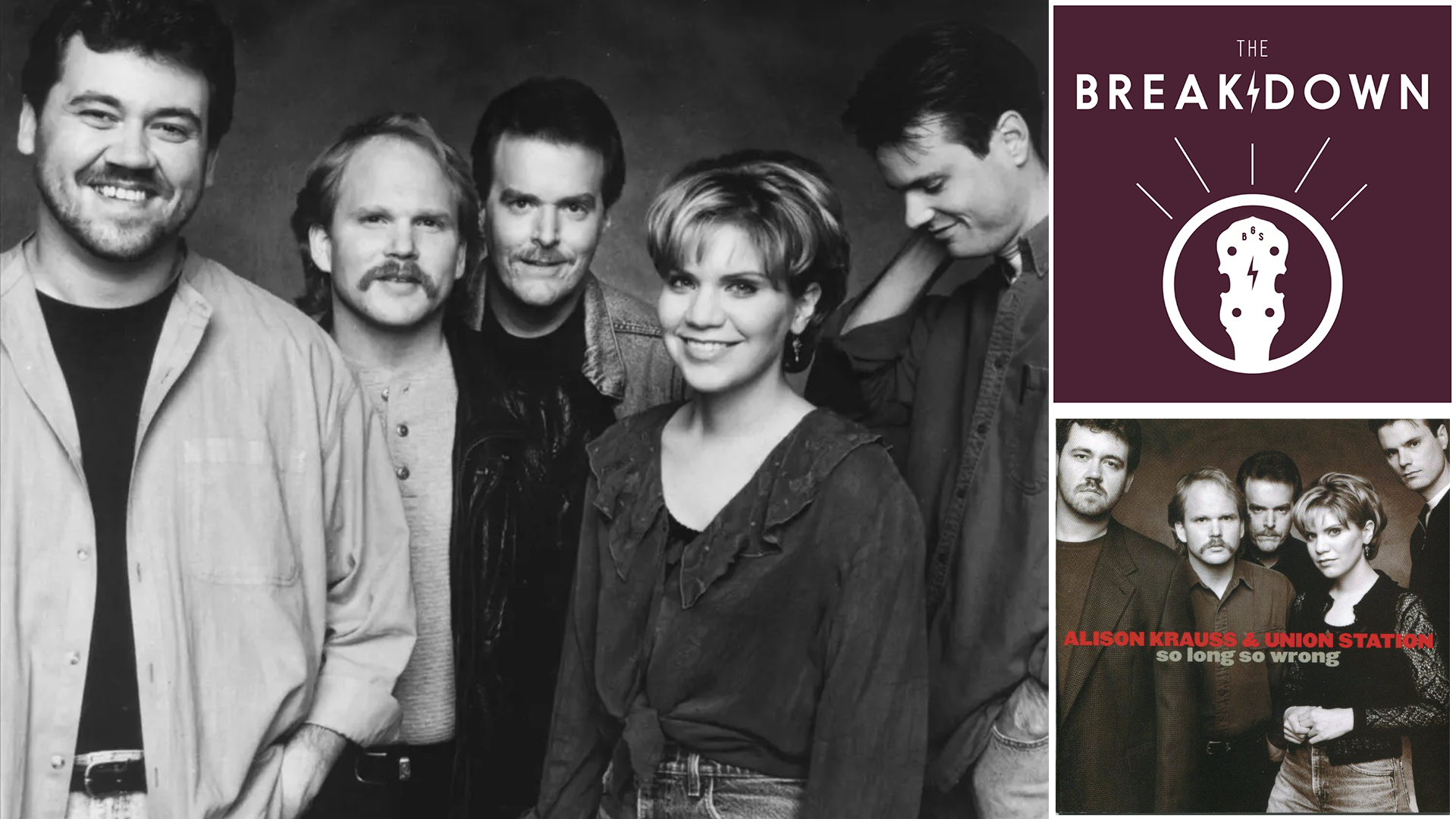
The Breakdown – Alison Krauss & Union Station, ‘So Long, So Wrong’

Advertisement

Episode 3 of The Breakdown’s second season explores Alison Krauss & Union Station’s 1997 album So Long, So Wrong.

LISTEN: APPLE PODCASTS • MP3

It was the album that nearly broke them – but instead, it made them. If you weren’t in love with Alison Krauss and Union Station by the end of their third album, So Long, So Wrong, you needed to check your pulse. Patrick and Emma find out the stressful story behind the second best creation of the ’90s (after Pop Tarts, of course).

Season 2 of The Breakdown is sponsored by The Soundtrack of America: Made In Tennessee. Visit TNvacation.com to start planning your trip.

BGS 5+5 Cup O’Joe

Artist: Cup O’Joe
Hometown: County Armagh in Northern Ireland
Latest album: In the Parting
Personal nicknames (or rejected band names): Mug O’Tay

Answers provided by Tabitha Agnew

Which artist has influenced you the most … and how?

I would have to say that it would be Alison Krauss! Her solo recordings and recordings with Union Station have been some of the most impactful recordings for me. The first introduction to bluegrass music that I remember hearing was “Every Time You Say Goodbye” from Now That I’ve Found You: A Collection. Her releases have swayed within the bluegrass/country/gospel realms and I’ve been enjoying her music for years.

What’s your favorite memory from being on stage?

One of my favourite moments being on stage with COJ was probably getting to play at IBMA in North Carolina back in 2017 in a lineup with our good friend Niall Murphy on fiddle. It was a hoot! Glancing around on the workshop stage representing the international scene and trying to not get too nervous when we saw legends and some other top pickers walking by!

What rituals do you have, either in the studio or before a show?

I try to have had at least one cup of sharp black coffee before a show and lots of water! (Both are definitely needed!) Yep, I know it sounds like a cliché, but I definitely run on coffee!

Which elements of nature do you spend the most time with and how do those impact your work?

This question has really made me stop and think, but I think I can safely say that trees are a big source of inspiration that impact our songwriting. Two songs off the new album refer to the concept of change happening as quickly as the changing of the leaves on the trees in each new season. Currently living in the countryside of County Armagh is a big source of inspiration in general, with rolling green hills and plenty of apple trees (County Armagh is “orchard county”).

Since food and music go so well together, what is your dream pairing of a meal and a musician?

Oooh! What a tough tough question! After getting to know Mr. Ron Block, I would have to say that I would pair him with a Scottish Cheese board (with Rough Scottish Oatcakes). I think that’s a pretty 10/10 combo in my opinion and I think he would totally be okay with that!


Photo credit: Katie Loughrin Photography

LISTEN: The Vintage Martins, ‘The Unclouded Day’

Artist: The Vintage Martins
Hometown: Southern California
Song: ” The Unclouded Day”
Album: Traveled
Release Date: May 11, 2018
Label: Eastwood Records

In Their Words: “‘The Unclouded Day’ was written in 1879 by Josiah Alwood and is a hymnal favorite in many churches. It is a song about Heaven, and it has been recorded and admired by many through the years, including Willie Nelson and Bob Dylan. Mr. Alwood wrote beautifully of his inspiration of seeing a midnight rainbow against a dark cloud. After a good night’s sleep, he penned this classic sacred tune.

Eric and I have been doing this song for many years. It has that high bluegrass harmony. Eric’s sons, Austin and Christian Ward, played their hearts out on this one, as Ron Block shows everyone his respect for straightforward Scruggs-style banjo.” — Bud Bierhaus


Photo credit: Rolly Ladd