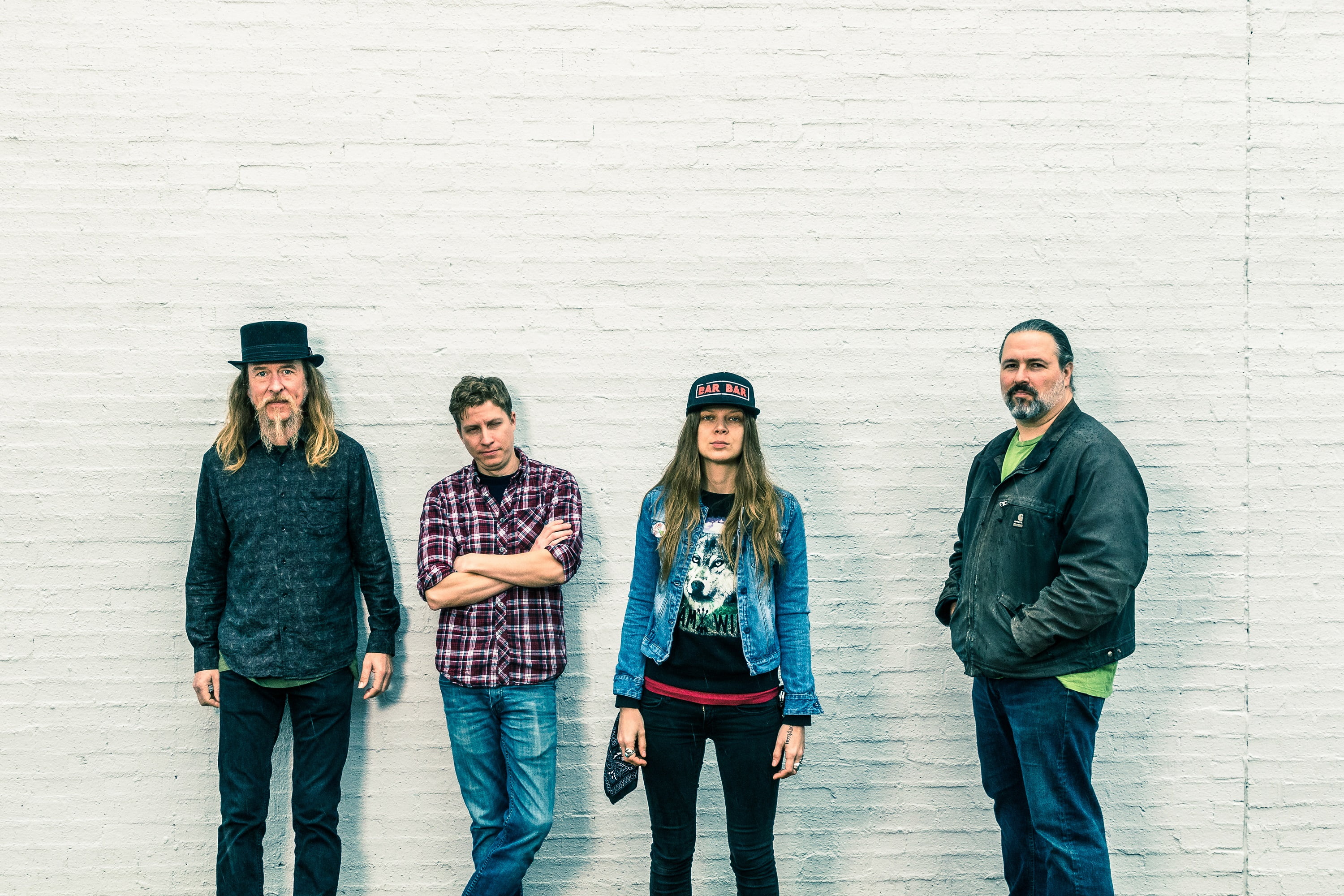
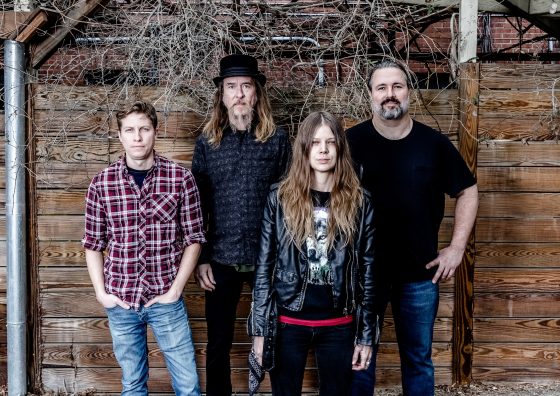
STREAM: Twisted Pine, ‘Dreams’

Artist: Twisted Pine
Hometown: Boston, MA
Album: Dreams
Release Date: June 8, 2018

In Their Words: “As a band, we have a diverse range of influences in many genres of music. Dreams is an experiment in stretching our stylistic boundaries, mixing bluegrass instruments with some of our favorite pop music, and represents just a glimpse of the many artists we are inspired by.”

Sometimes It’s a Whisper: A Conversation With Liz Vice

Despite never having desired a musical career, Liz Vice set about answering a higher calling with her 2015 debut album, There’s a Light. She spread a message of inclusivity and love, even while self-doubt, impostor syndrome, and a hellacious tour threatened to upend her very sense of self. Making it to her sophomore album, Save Me, therefore became an incredibly personal celebration—a heady reminder about how faith in something bigger than yourself can serve as a beacon in this messy world.

Across Save Me, she touches on personal topics (the illness that very nearly ended her life when she was younger, the crippling doubt that got in her way at the start of this journey) while looking outward to the community. On “Brick By Brick,” she reminds listeners about the central tenet, “Love thy neighbor,” as a rippling synth takes the brooding gospel track into a clarion call for kindness. No matter what listeners’ relationship with faith, religion, or belief might be, Vice’s message is as old as time – and more necessary than ever.

There’s this saying I’ve always appreciated: “Sometimes the wrong train gets you to the right station.” Here you set out to pursue film production, but life led you to music instead. How do you feel about your journey?

It’s always, “What the hell am I doing? How did I get here?” It’s only been four and a half years; I still wonder. I feel like this record is so different, it’s so much more me because it does involve my storytelling abilities, and working with somebody who’s also a great storyteller—Micah Bourne. I get to use aspects of film—storytelling—but instead of the camera, it’s with a melody. It’s still hard, but I think about, man, production’s really hard. You’re not getting paid much, you still get treated like crap, and I was typically the only brown person on set.

Which has its own complications.

Oh, one hundred percent.

Besides the opening cover song, the other tracks are all originals. What did your writing process look like this time?

I wrote with Micah Bourne, a spoken word artist, and Dana Halferty, who I met on set. I was listening to music, and I was like, “God, I’ve never written a song, and I’m terrified to do this thing that I feel like you’re calling me to do. Am I doing this out of a religious mindset?” Honestly, I don’t think Jesus would be very religious. We can’t earn our way into his good side, so am I doing this because I feel like he’s given me an opportunity to reach people and remind them that they’re loved? Or am I doing this because I feel a sense of religious duty?

Slowly, I feel like He’s been undoing this mindset of religious duty. The first time I ever heard this was when I was playing a blues festival—it was like my fifth show ever playing in front of an audience. This was the first time I got so nervous I cried. I sat on my couch and I felt God say, “I’m not asking you to save them; I’m just asking you to sing over them.” There have been so many shows where people say, “Oh my gosh, like I’m an atheist but I love your message. It’s something we can all relate to.”

You said you got more personal on this album.

“Baby Hold On,” I wrote that after one of the worst tours I’ve ever been on; I was like, “I’m done.” One of my drummers had to be sent back because his mom got sick out of nowhere, and then she ended up dying three months later. Then I fell down the stairs and broke my toe and had to drive three hours to sing in New Hampshire with my foot elevated on Vicodin.

It sounds like a testing ground, like “How much do you want this?”

I’m like, “I don’t want this!” This broken foot, and one of my drummers who I freakin’ adore, his mother passes away. This comes after our suitcases were stolen in San Francisco and then a month prior to that I got in a car accident—my friend’s car was totaled and I had a herniated disc. I’m just like, “God, I don’t want this. You have the wrong person. I told you I wasn’t strong enough, I told you that I didn’t want this bad enough” So having this real Moses moment. I listened to “Baby Hold On” and as soon as the “oohs” came in with the choir I started to cry. Sometimes I feel like it’s the words unsaid that hit me the most.

Even if you have a contested relationship with faith or you don’t believe in anything, there’s such a good message about kindness and community on Save Me.

Right, and I also think that we make God so small. He’s not logical, he’s not realistic. There are things I will never understand, and I have to let myself be OK with that. It’s not just me and God, me and the Bible, it’s me and people around me. … Everyone has a story, and it might not fit into this pretty package that we want it to fit in.

Even [Plato’s] Allegory of the Caves, I love that story. These three men are hanging from shackles and they’re living off the shadows of the world, and then one actually goes in the world to experience it, and he’s like, “Oh my gosh, so that shadow is this, and that shadow is this,” and the other prisoners beat the hell out of him. It’s like, how many times do we choose to live off of the shadows instead of the actual source?

Especially with social media, which might be the biggest metaphor for living off the shadows. What was a big turning point for you on this album, a way out of the shadows into the truth?

I want to be OK in my body. Once I can accept that I am a created being and there’s beauty in all that I am, even my deep voice that sounds like I smoke cigarettes every day and I don’t at all. Once I can love myself for who I am in a whole way, I really do believe, if you love yourself, you can love other people well.

Absolutely. I think that’s where it needs to start. In order to look outward, you need to start inward.

That’s one of the top commands—love God with all your soul and with all your might, and love your neighbor. If you want to love God, you have to love your neighbor. That is a sign you love God because He made them too. I’m not perfect at that, but what does it look like to start the conversation about what it actually means to love your neighbor?

How has your connection to God changed since moving from Portland, Oregon, to New York City?

I love living in New York City, and the reason why is because of something I didn’t necessarily get when I lived in Portland, like diversity.

Yeah, there’s that.

For the lack of nature, people try to tell me, “You can go to this park or that park,” and I’m like I literally lived at the bottom of an extinct volcano [in Portland]. I lived by the Gorge, where you drive 20 to 30 minutes east and you’re seeing waterfalls and canyons. I’ve lived here for a year and half, and already so much has changed since I moved here, so it really is like a constant recalibrating—like GPS—of how do I silence my mind, how do I connect with a spiritual being who doesn’t tend to work in a way that most would want to—with fireworks and earthquakes and raging fires? Sometimes it’s a whisper and you have to lean in more, but you have to position yourself in order to hear the whisper.

It’s got to be an interesting practice to explore. As you said, in the city you have this greater sense of humanity to remind you of something bigger.

No one looks at each other on the subway so it’s perfect for people-watching. I see every shade of people next to each other, and so many different languages, it really feels like heaven to me. Even though this place can be a hot mess, I just look at it and I think, “Man, God is in love with this city.” Even people who don’t even know Him! I love it here. It hurts so good.


Photo credit: Katrina Sorrentin

LISTEN: Ana Egge’s “Girls, Girls, Girls”

Artist: Ana Egge
Hometown: Brooklyn, NY
Song: “Girls, Girls, Girls”
Album: White Tiger
Release Date: June 8, 2018
Label: StorySound Records

In Their Words: “When I first moved to NYC it was such an exciting time. Like it can be for so many people to find such freedom in a city of millions of people in constant change. I lived in a 6’x10′ room that looked out at a brick wall 4′ from the window and slept on a piece of foam on the floor where my head and toes touched either wall. I loved it. My friend Anthony and I would walk along the water on the west side and around Chelsea and laugh about who we didn’t see pass us. He’d see the gay boys and I’d see the girls. My freewheeling early days in the city are in this song. Maybe that’s why it feels so good every time I sing it.” — Ana Egge


Photo credit: Shervin Lainez

Live What You’re Singing: A Conversation with Sarah Shook

Within the bounds of country music, pronoun play doesn’t come easy, but Sarah Shook believes listeners are more than capable of finding ways to see themselves in her songs. With her band, the Disarmers, she deals with gender in her songwriting as a means to challenge the heteronormative forms of representation within country music.

On “The Bottle Never Lets Me Down,” from the band’s new album, Years, she sings about becoming the man she used to be, while on “Parting Words,” she addresses a woman, her former lover, about the way things ended. Not only does she weave together traditional country, honky-tonk, blues, punk, and more, but she conscientiously flips country music’s perspective around in order to be more inclusive.

There’s a definite sense of who belongs and who doesn’t in country music, but that’s slowly shifting.

It’s a really very cool and exciting time for women making country music, especially the sort of throwback traditional country. There’s a lot of buzz centered around this new wave of women outlaw country artists. I think that’s a really good thing, and industry-wide it’s a lot more prevalent than you realize. One of the things that was frustrating for me last year when we put Sidelong out, I probably did 50-some odd phone interviews, and two of them—two of them!—were with women. I had a whole conversation with my manager, like it’s hard enough being a woman playing music, but it’s a tough field to be a woman in journalism. This year with this release, I feel like there’s been more of a balance as far as speaking with male and female journalists, and that’s been encouraging too.

You’ve been mentioned along with country outsiders like Sturgill Simpson and Margo Price. How do you see your relationship within the genre?

I think that we’ve been branded outlaw, and I feel like people interpret that in different ways. Of course outlaw country is the super old school Waylon Jennings beat, but I think the term is evolving pretty rapidly into something that is more inclusive to people doing it their own way. That’s one of the things that was really cool about country music in its heyday, when it was first starting out and all those classic artists were on the radio. As soon as the song started—a few bars in—you could tell whose band it was because all those bands had such a distinct sound. That is really hard to find today, everything sounds the same. It’s very clear that people are just looking for patterns that have achieved success and are popular. And then you have folks out there like Margo Price and Kelsey Waldon and Kacey Musgraves, and they’re kind of doing their own thing. Their bands have respective sounds that are unique and identifiable. That is really cool and very exciting.

You’ve been forthright about your sexual identity. How do you navigate your personal story within the larger scope of representation?

To a degree, I feel like there are certain points in time where it’s paramount to be very outspoken about that stuff. Most of the time, I feel like doing what I’m doing—touring relentlessly, putting out records, and being unapologetically myself—is a very powerful and political maneuver as well. Sometimes it’s more effective in a palpable way to live what you’re saying and be the person that you’re talking about. I think it’s a cool and different way for people to realize, especially within country music, which has a certain, specific demographic of people, that, yes, you can be a pansexual atheist vegan making country music, and does that affect the music? Sometimes lyrically, yes, but the overarching theme is just that I don’t necessarily have to have everything in common with my fans. We can have differences. It’s really cool to have interactions with people who are like, “I never felt comfortable with the idea of homosexuality or bisexuality, and I meet you and we’re talking and hanging out and having a good time. You’re just a regular person.” I’m like, “Exactly, we’re regular people, believe it or not.” [Laughs]

When you put it like that, it’s so depressing, but it rings true. Every time I meet someone who’s uncomfortable about anything outside heterosexuality it’s usually because they haven’t spoken to anyone who’s different from them.

Exactly. And that is such a big thing. We can play New York City and that’s a totally different experience than playing a small town in Alabama. I think consistently being the person who is always willing to talk to fans after a show and be real and be myself and form unlikely friendships, I think that’s a really cool way to create change.


I always thought action over verbiage is the way to go about it. But then looking back, we’ve seen from the Dixie Chicks how speaking your mind can be dangerous. Do the repercussions ever concern you?

You know, I’ve never been concerned about that because I feel it’s important to be honest and forthright as a human being, and as an artist and certainly lyrically as well. The other thing to me that’s really important, from the word go I’ve been very strategic about how I wanted to grow this band and how I wanted to see success. It’s never been my prerogative to go after the country music fan base—and certainly that’s the majority of our fan base. My thing was, “Yes, this is country music, but this is music for anyone who likes it.” It’s inclusive, and anyone that these songs resonate with, it’s for you. Taking that stance and being strategic about it has certainly helped. It’s really encouraging to be a country band playing outlaw country and have a very diverse audience, and I think that’s a thing a lot of traditional artists struggle with. They get pigeonholed. Being outspoken in an honest fashion but not a combative fashion, I feel that’s really helped push our music to demographics that it wouldn’t necessarily otherwise reach.

All this talk of the new outlaw makes me excited for a tour one day, or even a festival.

We need our own cruise. [Laughs] That would be amazing.

An outlaw lady cruise.

Exactly. Oh my god, that’d be a lotta fun.

Critics have referenced the underlying sense of menace in your voice, but your vocals on “New Ways to Fail” have such a biting, sarcastic note. Where does that darker sense of humor come from?

I’m very nihilistic. [Laughs] I’m one of those people that thinks life is way too short to take yourself too seriously. Within this world, there’s this huge danger of being, “I’m so and so, do you know who I am?” I’m just a person playing music and having a good time. Music should be fun, and, yes, it’s business too, but if it’s all business you’re going to get burnt out. You gotta have fun with it.

There’s also a tone of defiance in both your voice and music, which requires constantly stoking that fire inside you in order to stay angry enough to fight. How do you find yourself doing that?

I definitely have a lot of personal experiences that certainly stoke the fire. I have a lot of trans and non-binary friends here at home in Chapel Hill. Chapel Hill is a progressive little community, but even within the context of a progressive community, I’ve been out at bars before and had people give them shit about how they look. That’s a real thing. It’s so wild to me that the trans community is what’s being targeted because they’re already vulnerable to begin with and they’re probably the most non-combative people. They’re not putting up fights, they’re just trying to exist and have a life and be comfortable, like everyone else wants to do. You witness injustice like that firsthand, and you try and de-escalate situations like that. It’s a very real thing and there’s still a lot of work to be done in terms of showing people that we’re not the enemy, and yeah we’re kind of freaks but we’re not out to destroy morality.

Everyone can exist together.

Exactly, yup.

I noticed you play with gender a lot in your lyricism, either by not using specific pronouns or by flipping them in other interesting ways. Can you talk a bit about that process?

I’ve always liked pushing the boundaries with that. I think blurring gender lines is really important because it totally leaves the story open to listener interpretation. People can be like, “Well, I’m not really sure if this song is written from a man’s point of view about a woman, or a woman whose woman lover left her.” Leaving that open to interpretation and letting people wonder and figure it out for themselves and how it applies to them personally, I think that’s a cool way to let people arrive that their own conclusions, and also realize that they feel perfectly OK not really knowing.


Photo credits: John Gessner

ANNOUNCING: 2018 Americana Music Awards Nominations

The Americana Music Association announced the nominees for its 17th annual Honors & Awards show this afternoon at an intimate members-only ceremony held at the Country Music Hall of Fame and Museum. The live-streamed event featured performances by its hosts The Milk Carton Kids as well as Daniel Donato, Brittany Haas, Jerry Pentecost, Molly Tuttle and more special guests. The winners of each category will be announced during the Americana Honors & Awards show on September 12, 2018 at the historic Ryman Auditorium in Nashville, TN.

Americana Music Awards Nominees

Album of the Year:
All American Made, Margo Price, Produced by Jeremy Ivey, Alex Munoz, Margo Price and Matt Ross-Spang
By The Way, I Forgive You, Brandi Carlile, Produced by Dave Cobb and Shooter Jennings
The Nashville Sound, Jason Isbell & The 400 Unit, Produced by Dave Cobb
Rifles & Rosary Beads, Mary Gauthier, Produced by Neilson Hubbard

Artist of the Year:
Brandi Carlile
Jason Isbell
Margo 
Price
John Prine

Duo/Group of the Year:
I’m With Her
Jason Isbell & the 400 Unit
Lukas Nelson & Promise of the Real
Nathaniel Rateliff & the Night Sweats

Emerging Artist of the Year:
Courtney Marie Andrews
Tyler Childers
Anderson East
Lilly Hiatt

Song of the Year:

A Little Pain,” Margo Price, Written by Margo Price
“All The Trouble,” Lee Ann Womack, Written by Waylon Payne, Lee Ann Womack and Adam Wright
“If We Were Vampires,” Jason Isbell & the 400 Unit, Written by Jason Isbell
“The Joke,” Brandi Carlile, Written by Brandi Carlile, Dave Cobb, Phil Hanseroth and Tim Hanseroth

Instrumentalist of the Year:
Daniel Donato
Brittany Haas
Jerry Pentecost
Molly Tuttle

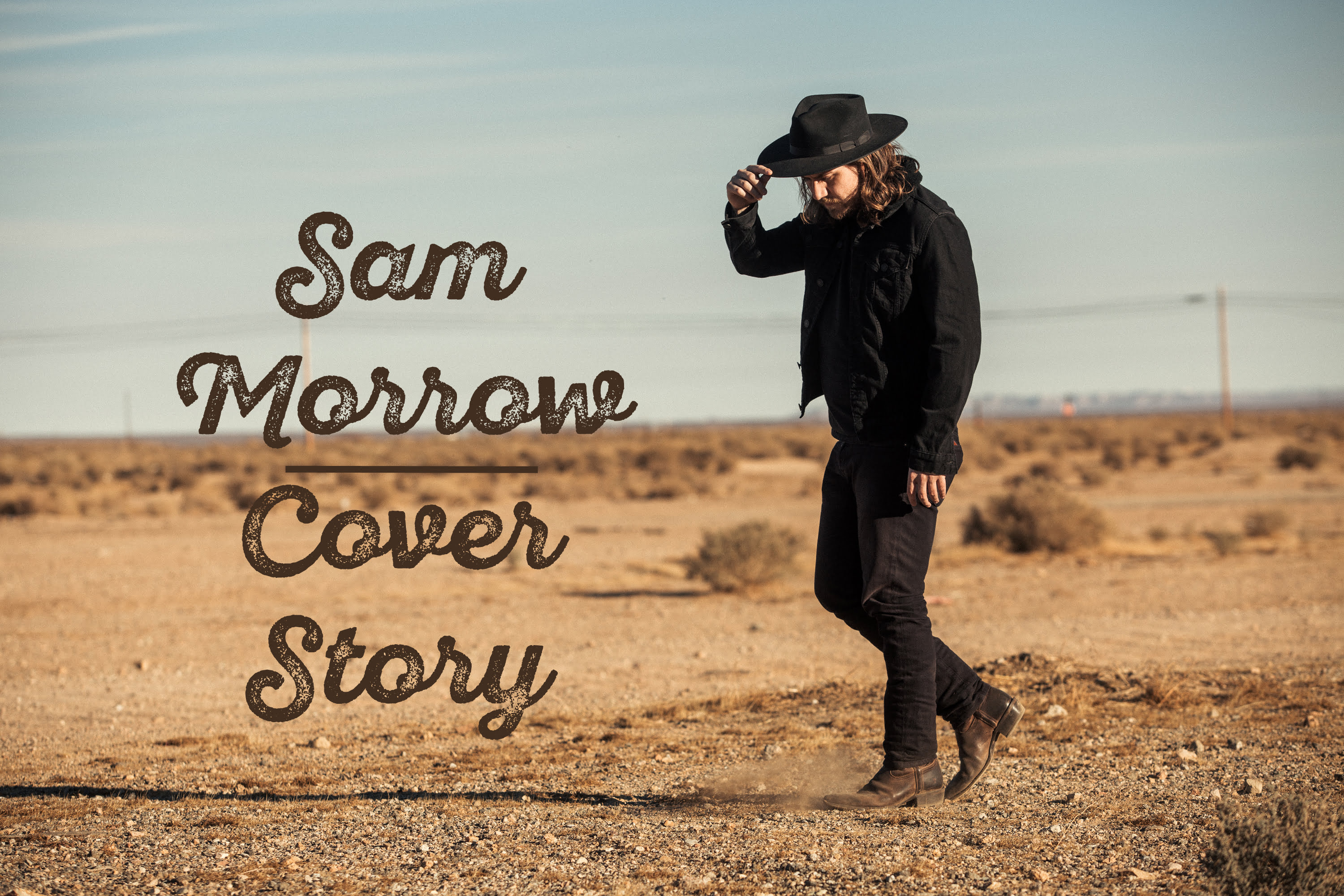
From Sad Bastard to Groove Master: A Conversation with Sam Morrow

Apart from going all TSwift-style pop crossover, the easiest way to distance oneself from modern commercial country is to make loud and clear references to an old older era of the genre — or to just play it straight throwback style. But at a time when honoring the past has become so fashionable that it may elicit a blasé response from the more cynical of listeners, Sam Morrow remains grounded in the present through a commitment to his own ears and a desire to grow and try new things. He intentionally breaks up and flips sonic variables, but only to a degree that the studied listener will still recognize the presence of bygone innovators such as Gram Parsons, Little Feat, Lynyrd Skynyrd, and Waylon Jennings, while guessing at the precise methods used to achieve those sounds. If the progression of his works to date means anything, and as Morrow continues to put forth new recordings, expect evolution and growth. It wouldn’t be surprising to see both deeper dives into and further departures from his current country funk/Southern rock sound.

Morrow is an artist committed to finding and refining his true voice, but on his newest album, Concrete and Mud, he doesn’t weigh that pursuit down with an agenda or a need to sound too profound. He laughs at his foibles and winks at his vices. Like so many artists before him, when the Los Angeles-based Morrow got clean from an opiate addiction, he had strange emotions to process, so he turned to songwriting in an effort to root out a bevy of conflicting feelings and past wreckage.

2014’s Ephemeral was his first artistic exorcism, expressed in the emotional, sincere style of a Damian Rice or a Justin Vernon. However sincere, Ephemeral doesn’t sound like someone who has quite discovered his authentic voice yet. Despite its title’s indication to the contrary, Morrow’s second album, There Is No Map (2015), sounds more like someone who knows where he’s come from and where he’s going. But his newest work, Concrete and Mud, displays the confidence, mastery, and winsomeness of an artist who knows exactly who he is, what he wants to say, and what he is doing. The set marks the moment Morrow rightfully claims his place among the very best that country and Americana have to offer.

You’re from Texas, which has a pretty rich musical heritage. What Texas musicians were you into growing up?

I’ve had a really weird musical journey. I started out playing in church, kind of a natural path for any musician from the South. I’m super grateful to have all of that because it got me practiced playing with a band. It got me a lot of experiential stuff that I wouldn’t have learned, if I wasn’t playing every Sunday with a band or had to learn new songs all the time. No matter how good the songs were, they were still songs. So I did that, and once I was maybe 15, I got into rap a little bit — like Screwed Up Click, Houston rap … Paul Wall, Lil Flip, all of those kind of dudes. I don’t real listen to them anymore, but that’s just kinda how it went.

So your Texas influence is not necessarily a Texas country influence?

No, I was very like — I didn’t listen to punk rock, but I had a punk rock attitude when I was a kid. So, being from Texas, I didn’t want to like country music because that was like … everyone in Texas likes country music, so I wanted to go against the grain, you know? So I liked rap. I liked ZZ Top, or emo/screamo, or whatever it was. I didn’t start really listening to country music until I got sober almost seven years ago.

I mean I’d always kinda heard it. I knew a bunch of Garth Brooks songs. I knew a bunch of George Strait songs. You know, all those Texas country musicians — Robert Earl Keen, Jerry Jeff Walker. I knew those songs, but I had an aversion to the whole thing because of my punk rock sort of attitude. Then I kinda saw the light, I guess, and realized that it’s just what I related to the most.

Country, traditionally, has that whole thing about the primacy of the song, and you seem to be quite the songwriter type of guy.

I mean, whenever you get sober, you’re super raw and vulnerable and everything feels weird. So, really, through the three years that I was just a gnarly junky, I used being a musician as a reason to not have a job. Or I would get out my guitar every once in a while during an acid trip, and we would all freak out about it or something like that. I wasn’t really into it. Even in that phase, I was listening to electronic stuff. I got really into dubstep and Skrillex, so it just blows my mind thinking about it now, but in any case that’s where I was. When I got sober, I wanted to start writing songs, and I had all these weird feelings and vulnerabilities.

Did you feel like it was a way to get out all the weird emotional turmoil that comes with getting sober?

Yeah, exactly. And naturally I kind of gravitated toward more folk and singer/songwriter stuff because that’s where that kind of songwriting lies. And it wasn’t something that was necessarily foreign to me. It was just something that I kind of pushed away for a long time. But yeah, my first record was just like sad bastard, super depressing shit.

I can definitely hear the progression from Ephemeral through There Is No Map. And even that one is not quite as straight-ahead country as Concrete and Mud.

Yeah, I don’t know. Concrete and Mud definitely has it’s country tracks and what not, but I didn’t want to make a country record. Everyone and their mom is making a country record right now, so I wanted it to be … like, obviously that’s kinda the music I play — Americana, whatever you want to call it — but I wanted to have a uniqueness to it. I didn’t want it to just have pedal steel and some violins here and there. Though there’s nothing wrong with that.

You definitely have some weird sonic stuff going on that’s out of the box.

Right. I wanted it to get a little weird in some spots. Four years ago, I got super into Little Feat and started listening to a lot of deep Skynyrd stuff.

Is Little Feat kinda where the funk element came from?

Yeah, and I’m very groove-oriented when writing songs. If I’m sitting at a desk or something, I’m always banging on it. I don’t know. It’s just kinda there. I’ve just kinda always had that funky element. One of my favorite things to see is people actually dancing to the music I play live. And a lot of the country covers I was doing, like Don Williams, I consider him like country disco. Even Willie Nelson’s Shotgun Willie, it’s pretty funky that record.

Going back to what you said about the dance thing, you never get people dancing to sad bastard music. So what was the turn for you? Did you suddenly discover your love for groove? What happened there? Because it’s a pretty hard turn.

Going on the road and playing more bar gigs, like, “Here, we’ll give you this much money to play three 45-minute sets,” or something like that … I don’t have that many original songs. And also just seeing how people would respond to my sad bastard stuff in a weird bar where people are trying to eat their pizza and shit. So I learned covers that had a good groove or were a little funky, or I could put my own twist on and make it groovy and funky. And a lot of the songs on this record are just grooves that I took from covers that I’ve been playing for the last two years. And to answer your question: I don’t know if I really did. I just kinda hit that point where I was playing songs that people were dancing to and I was like, “Oh, this is what I like to do.”

So it was a response to the joy that you witnessed?

Yeah, just people having fun. I’m not really a dancer, but I can dance with my guitar in my hand. That’s about it.

There are some serious themes on this record, but you have a lighter approach to those themes. Was that a conscious move? Do you think about being sincere without being too sentimental?

Right, yeah that was, of course, intentional. I was definitely conscious to make this record lighter and sort of more sarcastic. I almost didn’t even understand that you could do that — that songs could mean a lot but be light or sarcastic or whatever. I could have never written “Quick Fix” six years ago, just poking fun at all my vices, noticing all my vices in everyday life. That’s not something I would want to point out — my flaws — even now, and make fun of. Maybe “make fun of” is not the right word, but make light of them or talk about them in a naïve sort of light.

You’re sober, which to me says that you take care of yourself, but then you sing a song like “Quick Fix,” and it makes me think that you’re not heavy-handed about the way that you take care of yourself, or prescriptive or preachy in some kind of way. Right?

Right. I mean, I still do a lot of shit. Like I play poker all the time. I’m super impulsive. I still have these addictive behaviors, but I’m in control and I recognize them. I keep them somewhat healthy. And that’s just a sign of maturity, I guess.

Kind of like, if you can wink at them, you’re giving them less power?

Yeah, exactly.

You nod to some funky and psychedelic country sounds, but then, at times, you take them a bit further. What made you decide to push the sonic envelope, so to speak?

I think we tried to do that on a couple tracks on the last record, but just didn’t quite get there or didn’t think it out enough. For instance, on “Paid by the Mile,” we initially had my phaser pedal on my guitar, and I was like, “This sounds cool, but how many people have put a phaser pedal on a guitar? Everyone fucking does it. Why don’t we try to put the phaser pedal on the Wurly?” So that’s what we did. We put the phaser pedal on the Wurlitzer, and it sounded fucking killer. And it still gives the whole mix that phasey, wobbly thing, but it’s just coming from a different place than where you normally hear it in a guitar.

So me and Eric [producer Eric Corne] both were willing to take more chances, I guess, this record. And the guy that plays keys — his name is Sasha Smith — what I really love about the way he plays keys is, he’s so percussive and rhythmic that it couldn’t have been a better person to play on this record. He fills in all the spots and uses whatever he’s playing like a rhythm instrument.

Yeah, even the organ on “Weight of a Stone” is so precise and punchy that it works like a rhythm instrument.

Right, exactly. And yeah, we took influence from … have you ever seen Peaky Blinders? So the Nick Cave song that’s the show credits opener…

“Red Right Hand”?

Yeah, so we wrote the song, and it’s sort of a murder ballad sort of song, but we wanted it to be sort of droney and have a keyboard theme in it. It’s pretty close to it. I don’t know how many people I should tell that we took it from that, but it’s far enough apart.

You do have a way of nodding to influences without aping them. There are some nods to Gram Parsons, for example, like the amphetamine queen line in “Coming Home.” Is that an homage to “Return of the Grievous Angel”?

That’s kinda where it came from. I don’t remember if I exactly took it from that. I think I just wanted to use “amphetamine” in a song. Like Jason Isbell uses “benzodiazepine” …

Yeah! How does he do that?!

I know! Dude! And it’s so perfect, too, the way he phrases it and everything is so perfect. So I wanted to have an elongated, full drug name in one of the songs and it just kinda fit. But yeah, Gram Parsons … “Skinny Elvis,” we referenced pretty closely “Ooh Las Vegas.”

Right, but Concrete and Mud doesn’t sound like a Gram record at all.

And that’s what we wanted. I was a little bit worried about “Quick Fix.” At first, I was resistant to the Clavinet because I didn’t want it to sound too much like “Cripple Creek” [by the Band], but then we started playing it, and it just didn’t sound as good without the Clav, so we were just like, “Aw, fuck it.”

To quote our mutual friend Jaime Wyatt, “Texans like to sing the shit out of a song.” What happened to your vocal performance? You’re earlier stuff is good, but you sound like a completely different vocalist on this record. You’ve got a level of control that I’d say is as good and as professional as it gets.

Thanks! I really appreciate that. Yeah, I think just playing out a lot. I’d never really taken a guitar lesson or a voice lesson, and I took a few voice lessons in the past couple years just to kind of understand my voice a little bit. And since my first record, I was playing with a friend doing a show four or five years ago, and we were playing this song and he said, “Why don’t you add some growl to this part? You can do that.” And I was like, “I don’t really have a growl to my voice, man.” And he was 100 percent right. My voice is like 98 percent growl, just like howling and seeing what comes out, and I just didn’t realize that until he said that to me.

So that’s kinda shaped my tone a little bit, too. And then I sorta started growling and yelling too much, so it was a matter of honing that in a little bit, and I think I’ve found a balance. Once you figure out you can do a new trick, you just do it all the time.

You do that really well at the top of the chorus on “Weight of a Stone.” There’s a lot of power in the attack. It’s really cool, one of my favorite moments on the record.

That one, we were a little bit worried when we first started. That was the hardest one to sing in the studio, for some reason. I think it was just a weird key or something for me. Initially we wanted to keep that song kinda soft. I even toyed a little bit with doing it falsetto, but once we got that kind of cool growl in there, it sounded a lot more epic, I guess.

One more thing: I’ve seen a term thrown around a lot lately, and it’s been used of you, and I wondered if you have any thoughts about it — “left-of-center country.” Does that mean anything to you?

Honestly, it doesn’t mean anything to me. Cool, you can call it whatever you want. You know, when people ask me what kind of music I play, I say country music just because it’s easy. You don’t have to sit there and explain it to them. Although these days you kinda have to explain to most people that it’s not the kind of shit you hear on the radio. A lot of lay people don’t know what Americana music is. When you say “Southern rock,” they don’t know what you’re talking about. You can call it whatever you want. We just made the record that we wanted to make, and we’re happy with the way it turned out.
BGS Takes Britain with the Long Road Festival

Britons, rejoice. We know it’s not been an easy year for you, what with Brexit, and Prince Harry being taken off the marriage market. But we have good news. The first-ever BGS event hits the UK this summer, and it’s going to be, as they say over there, bloody brilliant.

BGS’s overseas debut follows the launch this week of the Long Road, a major new festival taking place September 7-9, 2018. A celebration of everything Americana, the Long Road is set to bring a slice of the South to the English countryside. For three days, the elegant grounds of Stanford Hall — a 17th-century stately home in Leicestershire — will rock out to the sounds of dozens of country and roots artists, including Lee Ann Womack, the Wood Brothers, Parker Millsap, and the Lone Bellow. And, when it’s not too busy, it’ll be doling out bourbon, moonshine, and Southern cooking, and inviting you to swim in its beautiful lake.

On Sunday, September 9, BGS will takeover the Long Road’s Honky Tonk stage to celebrate some of the fiercest females in modern roots music. The all-female line-up includes artists making waves on both sides of the Atlantic. From the U.S., we’ll be bringing you Ashley Campbell, Angeleena Presley, and Amythyst Kiah, while breakthrough British acts Danni Nicholls, Cardboard Fox, and the Worry Dolls will be flying the home flag. Look out, too, for Australian singer/songwriter Ruby Boots.

This is a thrilling — dare we say, pivotal — time for American music in the UK. The Long Road is one of three brand new festivals celebrating roots music to open this summer, including the Black Deer Festival, headlined by Jason Isbell and the 400 Unit. In August, Rhiannon Giddens will curate the Cambridge Folk Festival for the first time, and the Guardian recently reported that this year’s Country 2 Country festival, at the O2 arena, has enjoyed a four-fold increase since it began in 2013.

With so much good stuff happening just a plane ride away, BGS has exciting plans to bring you more great music both from and in the UK. Keep your eyes peeled for future announcements.

Crowd-Fun-Ding: March

One of the universal commonalities between people is that it is hard to ask for help. If money is involved, the task is all the greater. That’s why crowdfunding an album is such a brave and beautiful thing for artists to do. And it’s why we’ve decided to lend our support each month to roots music campaigns that could use a boost.

Danni Nicholls

Danni kicked off celebrations at AmericanaFest UK 2018 and, as a BGS favorite, she kicked off showcases in our Folk Alliance International suite, so how about helping her kick off her new project? There’s a reason she was nominated for UK Artist of the Year. Could be her breath-taking voice. Might be her heart-melting songs. Hard to say, really. Pony up to find out.

Oliver the Crow

Not at all sure who Oliver is, but this project by Kaitlyn Raitz and Ben Plotnick is a musical amalgam of folk, chamber, old-time, gypsy jazz, and something else entirely. And it’s just plain cool. On top of that, they pull it off with nothing* but cello, fiddle, and voice. WHAT?!

(*Rumor has it, whiskey played a sizable part, as well.)

Circus No. 9

As their album title, Modernus, implies, Circus No. 9 is an innovative bluegrass band tinkering with and innovating classic new acoustic methods and tropes, without falling into the self-infatuation that too often bogs down cerebral string bands. Banjo players and five-string fans should also take note: Banjoist Matthew Davis, a National Banjo Champion, is one of the most exciting young pickers out there today, artfully expanding on Noam and Béla-esque playing styles.


WATCH: Rod Picott, ‘On the Way Down’

Artist: Rod Picott
Hometown: Nashville, TN
Song: “On the Way Down”
Album: Out Past the Wires
Release Date: March 30, 2018
Label: Welding Rod Records

In Their Words: “’On the Way Down’ is song about taking account of what is important to you. It’s a song born out of watching people cling, white-knuckled, to the very things that are pulling them down. Some people grab onto the anchor to keep themselves from drowning. Watching that sort of slow motion suicide is incredibly painful, when it is someone you care about. You just want to shake them. That’s what this song is — an attempt to grab someone by the collar and pry their fingers from the anchor.” — Rod Picott


Photo credit: Neilson Hubbard

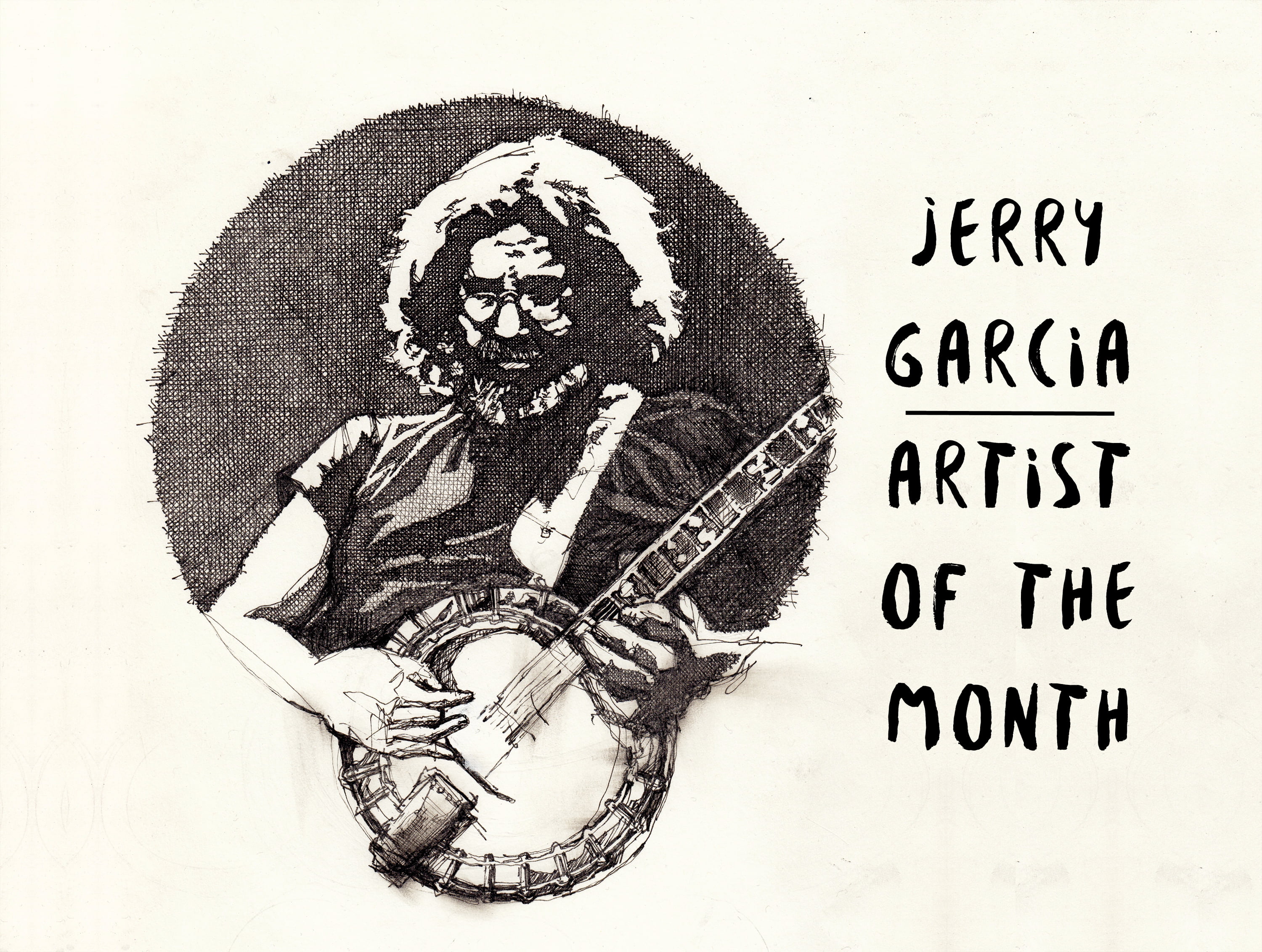
Jerry Garcia: Expanding the Musical Consciousness

Before becoming the psychedelic guitar-playing icon of the Grateful Dead, Jerry Garcia was already living a life completely dedicated to music. Heavily immersed in the folk idioms that coalesced with the beat poet scene in San Francisco — and in the peninsula towns of Menlo Park and Palo Alto — in the beginning of the 1960s, Garcia’s concentration, determination, and passion for musical collaboration planted the seeds for a force that would not only influence the world in song, but that would let loose a seamless tie to multiple genres through multiple generations. What’s now viewed as Americana, Garcia was creating with the Dead right from the outset. His impact looms far and wide, perhaps even greater as the years since his passing roll on. From the bluegrass world of the McCourys to esteemed guitarists like Mike Campbell of Tom Petty and the Heartbreakers, David Hidalgo of Los Lobos, and David Rawlings, to jam bands like Leftover Salmon, and the current generation of musicians like the National, Jenny Lewis, and Ryan Adams, Garcia’s ethos is being deeply felt and utilized.

Garcia had a mind hungry for knowledge and interested in art, comics, and horror films, even as music ran through his family. After initially getting an accordion for his 15th birthday and successfully trading that in for a guitar, the quest for constant improvement was born as he devoured the styles of Chuck Berry, Jimmy Reed, Buddy Holly, and Bo Diddley. As the ‘60s approached and the initial rock boom faded, Garcia and his friend (and soon to be Grateful Dead lyricist) Robert Hunter found themselves in the middle of a very fertile Bay Area folk scene. Being steeped in Harry Smith’s Anthology of American Folk Music led to a fascination with the Carter Family and then Flatt & Scruggs.

It was at this time, in 1962, that Garcia began his complete immersion into the banjo and the bluegrass style of Earl Scruggs. He formed the Hart Valley Drifters with Hunter and David Nelson (later of New Riders of the Purple Sage and the Jerry Garcia Acoustic Band), and the scene grew to encompass the likes of Eric Thompson, Jody Stecher, Sandy Rothman, Rodney Albin, Janis Joplin, Jorma Kaukonen, David Crosby, Paul Kantner, and Herb Pedersen. The Hart Valley Drifters performed at the Monterey Folk Festival in 1963 in the amateur division and won Best Group, and Garcia took the Best Banjo Player award, which strikes with irony as, throughout his career, Garcia would never consider music to be a competition of any kind. He was more into turning people on.

While absorbing as much music as possible and focusing on his craft with diligence, Garcia came into cahoots with people like Ron “Pigpen” McKernan and John “Marmaduke” Dawson through a string of continuous collaborations and a rotating cast of characters at joints like the Boar’s Head, Keppler’s Bookstore, and the Tangent. McKernan was the blues aficionado with the biker looks and heart of gold who would lead Garcia into the electric blues band the Warlocks, which then became the Grateful Dead, while Dawson would be the one who had the canon of songs for Garcia to base his pedal steel guitar learning around to form the New Riders of the Purple Sage.

But it was on a cross country road trip with Rothman in 1964 that Garcia met David Grisman, the young mandolin player to whom Thompson had tipped him off. It was at Sunset Park in West Grove, Pennsylvania, where acts like Bill Monroe and the Osborne Brothers were featured, where Garcia and Grisman first did some pickin’ together, and a friendship was born that would lead to musical ventures that would have more than a lasting impact.

Both Garcia and Grisman were imparted with some crucial advice from Monroe, which was to start your own style of music. Garcia, no doubt, led the Dead (as much as he refused to admit to any leadership role) to their unique musical domain, while Grisman created his own “Dawg” style of music that was the precursor of “New Grass” in the ‘70s. According to Grisman, “Jerry was always the true renaissance music man.”

While each had gone on to create their own paths, it was 1973 when they started hanging out together at Stinson Beach, picking and having fun, when Peter Rowan (a former Bill Monroe Bluegrass Boy member) joined in along with legendary fiddler Vassar Clements, and, needing a bass player, John Kahn was brought in. Old & In the Way was born. In typical Garcia nature, the musical fun led to some local gigs which, thankfully, were recorded by Owsley “Bear” Stanley. With the guitar and the Dead being Garcia’s main drive, getting back to the banjo and picking with his pals in Old & In the Way was not only stress free, but fun and a piece of his musical puzzle that really exemplified how the muse consumed him. It wouldn’t be out of the norm, at the time, to find him in the span of a week or two playing gigs with the Dead, Old & In the Way, and one of his other musical soulmates, Merl Saunders.

The release of Old & In the Way, taken from Bear’s recordings at the Boarding House in San Francisco in October of 1973, hit the world in 1975 on the Dead’s Round Records label. It was through the Dead Heads fan club mailing of a 7-inch, 33 rpm sampler that many fans got their first dose of Old & In the Way. Many of that generation — and a few that followed — were exposed to bluegrass thanks to that release. The album continued to turn on the masses and was widely respected as one of the best-selling bluegrass albums of all time.

While fame was never of interest to Garcia, the expansion of musical consciousness was, perhaps, the most beneficial and unintended consequence of his popularity. Just like the Dead were doing with their music — turning kids onto Merle Haggard, Buck Owens, and Johnny Cash songs — here, Garcia and Old & In the Way were turning rock and rollers onto bluegrass and the songs of Peter Rowan, the Stanley Brothers, and Jim and Jesse McReynolds. The aspect of turning people on to music was certainly not limited to bluegrass, where Garcia was concerned. The Jerry Garcia Band was his outlet for a good 20+ years, wherein he’d groove to just about any and everything. Motown, Louis Armstrong, Los Lobos, Allen Toussaint, Irving Berlin, Bob Dylan, Bob Marley, Van Morrison … the stream of tremendous musical taste was just about endless. And, of course, adding his own flair, passionate vocals, and one-of-a-kind guitar to it all made for hundreds of satisfying shows and numerous albums.

Jerry Garcia made music that was loaded with adventure. Improvisation was his nature, always seeking out what was around the bend, never wanting to play the same thing the same way twice. That adventure is what drew so many to him and his music. That adventure lives on, not only eternally in his music, but also through the lives, songs, and good deeds of those he inspires.


Illustration by Zachary Johnson