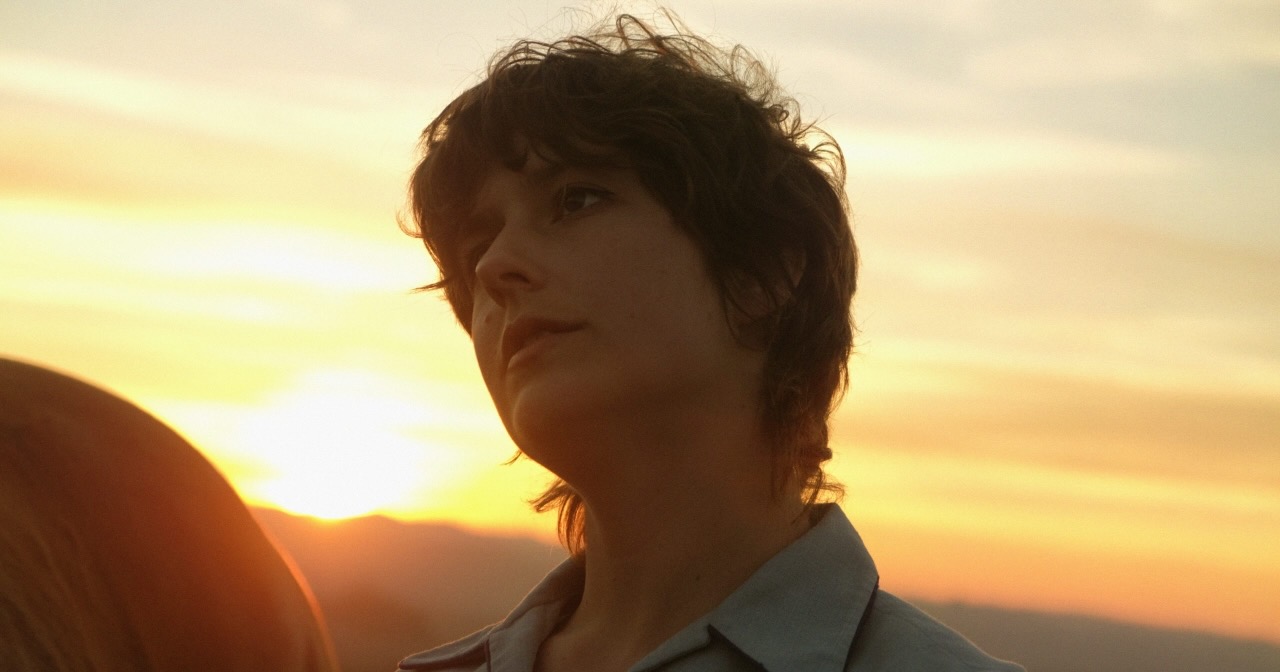
MIXTAPE: Growing Up Hardly Strictly with ISMAY

I consider myself to be amongst the luckiest of music lovers. Growing up, I saw some of the most incredible roots artists from backstage while holding my Jack Russell terrier and playing with my cousins. When I was 8 years old, my grandfather Warren started a free bluegrass festival in San Francisco called Hardly Strictly Bluegrass. These artists shaped me since they were the first ones I watched perform, but the connection went on to become even deeper. When my grandfather passed away in 2011 I started performing music, and the larger community of Hardly Strictly was where I found my encouragers and mentors.

This is a compilation of the artists who I heard from and listened to as a child, and those whose songs I learned when I first became a musician. – ISMAY (AKA Avery Hellman)

“Dark Turn of Mind” – Gillian Welch

Just after high school I spent time working on some small homesteads with a farm labor trade for room and board. This was the same time that The Harrow & the Harvest by Gillian Welch came out – a literary masterpiece. Every time I listen to this record it reminds me of those homesteads and my borrowed car with a faulty battery. It brings me back to the day I arrived late to a new farm in West Virginia while my roommate was still sleeping and how odd it felt to be in a house with a stranger. I got up in the morning to make sourdough toast with an egg wondering what that person who was asleep in the loft of that ’80s wood cabin would think of me.

“Concrete And Barbed Wire” – Lucinda Williams

In the ’90s I was fortunate that my mom had great music taste. She took us around in a magenta suburban car and played Lucinda Williams. She said us kids used to sing along with silly accents to the words “concrete and barbed wire.” It took me another 20 years to fully appreciate Lucinda Williams and the masterful lyricist she is. Over the last four years, I’ve been working on a documentary about her, and it’s been so rewarding, because Lucinda’s music is the kind that gets better the more you know it.

“Dallas” – The Flatlanders

My grandfather was not a professional musician for most of his life, but in the final years he played in a bluegrass band with his friend Jimmie Dale Gilmore. What a kind man Jimmie is, with a voice that reminds me of a dove fluttering away. Because of this relationship he had with my grandfather, I heard about this record Jimmie made with his band The Flatlanders that was lost for 40 years. It was raw and made me feel like I was under a tin roof in Texas. It’s said that this tape helped mark the birth of alt-country.

“The Times They Are A-Changin'” – Odetta

A few years ago I was asked to perform at an event that compared and contrasted Bob Dylan and Leonard Cohen. I’m more of a Cohen person, so I had more trouble finding a Dylan song that felt like it would fit my feel. That was when I came upon this remarkable Odetta cover and I was inspired. She changed the whole feel of the song to make it her own. In 2008, she performed at Hardly Strictly Bluegrass just two months before she passed away, it was one of the final times she ever performed.

“St. James Hospital” – Doc Watson

I know that most people know Doc for his flatpicking, but I’ve always been much more drawn to the fingerpicking style of guitar in general. “St. James Hospital” feels like a fascinating departure from the more well known Doc Watson performances, and I love hearing him playing in a less linear fashion. This shows he can do it all. In the music that I’ve recorded I sometimes feel a bit out-of-the-norm and nowhere-to-belong, but this song feels similar to one I recorded called “A Song in Praise of Sonoma Mountain.” Hearing “St. James Hospital” makes me feel less out-on-a-limb in roots music.

“Permanent” – Kenneth Pattengale & Joey Ryan (The Milk Carton Kids)

As I started playing music I found this record by The Milk Carton Kids before they had that name, and played under Kenneth Pattengale & Joey Ryan. Listening to this song now, it is still unreal that it was all recorded live at a concert. It was deeply inspiring to see artists like Gillian Welch and Dave Rawlings generating a new live sound that was somehow very modern and yet felt like a continuation of original folk music. As if the ’80s and ’90s had never happened! What a gift. Then, seeing The Milk Carton Kids take that torch and carry it on was so exciting for me as a 19 year old.

“Boulder to Birmingham” – Emmylou Harris

I listen to Emmylou every year on Sunday night at Hardly Strictly Bluegrass. Her silver hair and steadiness feel beyond time. I can’t believe she is still here, with that same strong presence since I was just 8 years old. As a performer she has a strong sense of worthiness to the audience, a sense of mutual respect for the relationship between listener and performer. I hope that I can hold just a bit of her steadiness within myself.

“Restless” – Alison Krauss & Union Station

I was in 6th grade and didn’t much enjoy recess out on the playground. I brought my CDs over to an empty classroom, and sat in the back listening to Alison Krauss & Union Station. Sometimes I’d show these CDs to my friends. This was before I figured out that it was cooler to be listening to rock music. But I loved that music, and the songs were amongst the first I tried to learn in singing lessons.

“The Silver Dagger” – Old Crow Medicine Show

Old Crow Medicine Show was playing at Hardly Strictly as they rose up in mainstream culture. I appreciate the edge that this recording preserves. There’s even a moment where it sounds like someone might have dropped something or hit their instrument on another (01:35). I wish more recordings kept imperfections preserved within them.

“Pretty Bird” – Hazel Dickens

Part of the reason that my grandfather started Hardly Strictly Bluegrass was because of his love of Hazel Dickens. They were from very different backgrounds, but they became friends and saw the common humanity in one another through music. She played every year until she died. This is my favorite song of hers. What is beautiful to me about Hazel’s take on bluegrass is the imperfections and raw emotion. She brought her whole self to the song.

“Harlem River Blues” – Justin Townes Earle 

I can still picture Justin on the stage with his impeccably curated suits. Back around 2018, I opened a show for him in Santa Cruz, California. He drove up to the venue in a red convertible, which I thought was the coolest thing ever. Just a guy and his ride. He was very kind to me and I wish I had more chances to see him play again. May his music never fade away.

“Tiniest Lights” – Angel Olsen 

When I was 20, I went into a record shop in Ohio. The guy there said they only really carry more obscure records. No problem, I thought, I was here for Captain Beefheart and PJ Harvey. But when I asked, he said those artists were too well known. He pointed me towards Angel Olsen and I heard something in songwriting I had never heard before. My world opened up, and I knew there was so much more that was possible after listening to “Tiniest Lights.” She performed at Hardly Strictly in 2015 and her voice was as real and penetrating as the recordings.

“If I Needed You” – Lyle Lovett

What’s better than Lyle Lovett playing a Townes Van Zandt song?? We listened to Lyle a bunch when I was a kid. No, I’m not from Texas, but I do love those Texas songwriters.

“Long Ride Home” – Patty Griffin

The first time I performed at Hardly Strictly (although somewhat tangentially) was at an artist after party. I chose this song, because it had a fun fancy guitar line I could play with my beginner fingers. Someone who was performing came up and said they thought I was talented. I think that might have changed my life right there. It was the first time anyone had come up to me and said I was good enough to do this as a job, not to mention amongst professional musicians.

“Are You Sure” – Willie Nelson

Willie played Hardly Strictly in 2003 and I remember that big black bus sitting behind the main stage. I can’t even imagine the thrill of the audience members, his fans are as dedicated as they come. I heard this song at a recently released film that is fantastic called To Leslie.

“Little Bird of Heaven” – Reeltime Travellers

This band was part of that wave of old-time style artists that came at the same time as Hardly Strictly. The vocals are so unexpected, but real and honest. One of their band members became a mentor of mine and helped me get my start in the music business and I am forever grateful.

“Essay Man” and “The Golden Palomino” – ISMAY

These are two songs from my latest release, Desert Pavement, that would never have happened if it weren’t for Hardly Strictly. I am trying to find my way with my own version of folk, and can’t help but be inspired at what a rich trove of artists I have to draw from.


Photo Credit: Aubrey Trinnaman

Rainbow Girls’ Latest Album, ‘Welcome to Whatever,’ Is Anything But Apathetic

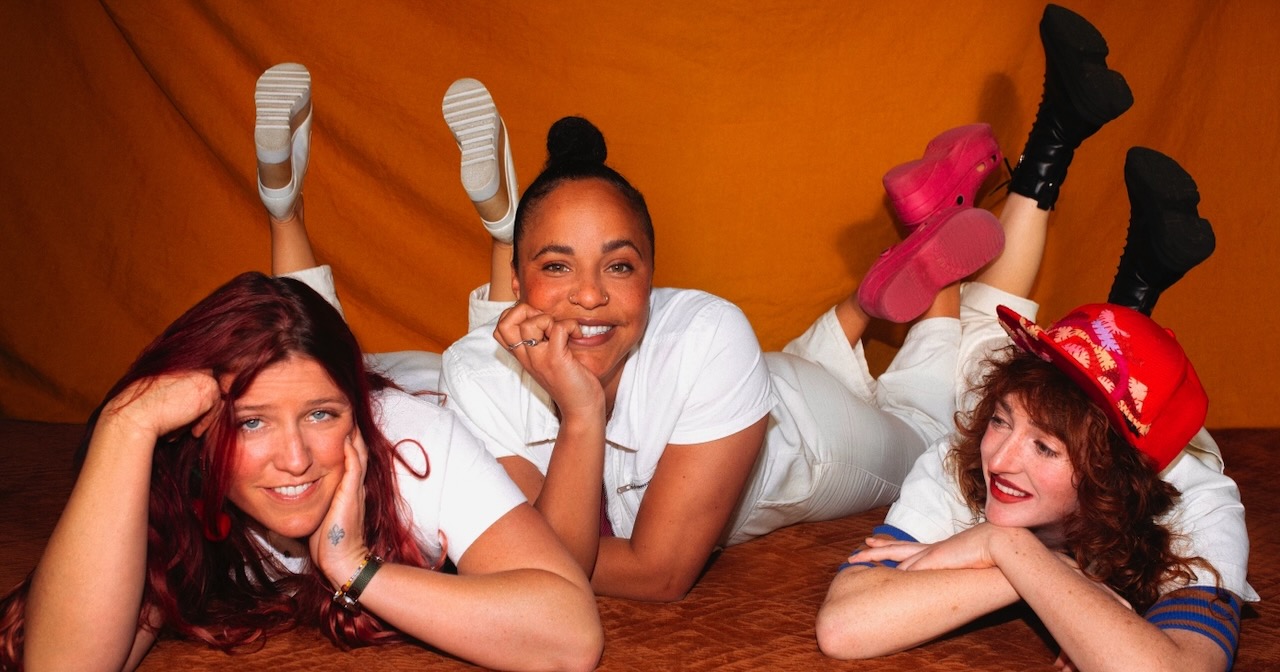
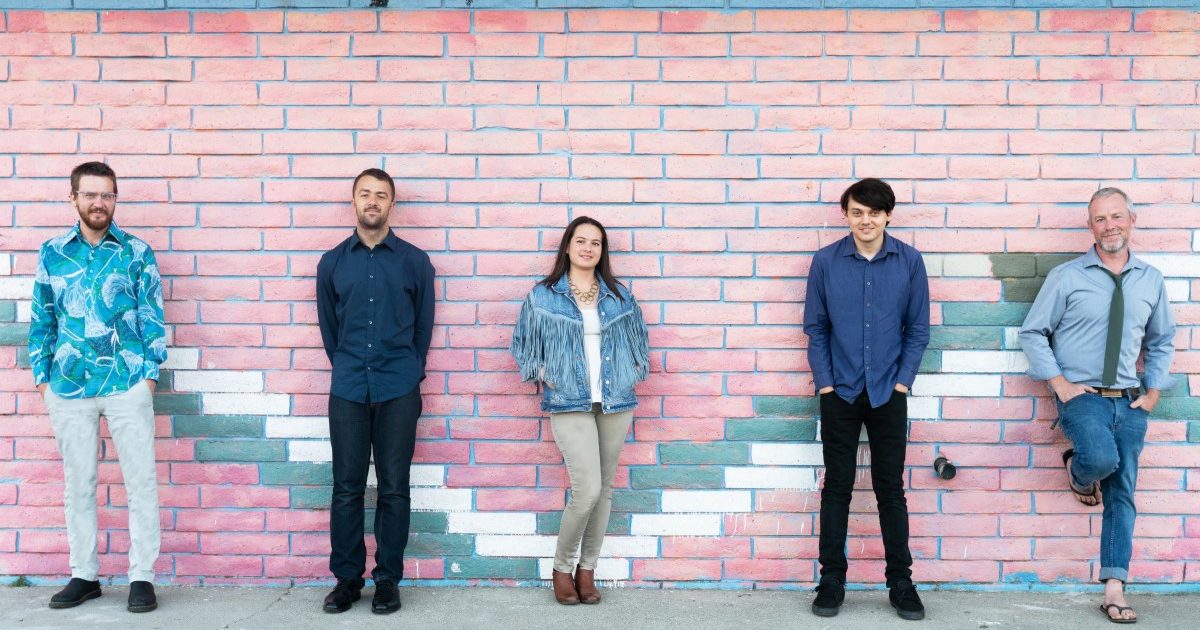
Northern California folk-rock trio Rainbow Girls have always been committed to a grassroots approach to their band. Despite amassing a large community of fans, they remain an entirely independent and self-described mom-and-pop shop. Their new album, Welcome to Whatever (released in early December), spans a broad range of genre references and topics, but is rooted in the trio’s attitude of stubborn tenacity and joyful resilience – in the face of gentrification, capitalism, racism, and a generally challenging world.

In an industry which largely favors solo professional efforts over more complex group dynamics, Rainbow Girls have flourished over more than a decade of playing together and they remain a close-knit family. Most recently, the band has been nominated for Folk Alliance International’s Album of the Year award.

Curious to know more about how they have been able to make their collaboration work for so long and to such a beautiful end, BGS reached Vanessa Wilbourn, Erin Chapin, and Caitlin Gowdey via email to chat about the new album and how they feel about being a hold-out band in Northern California, when a lot of the region’s artistic class has been pushed out due to expense.

I loved reading about how you formed as a band and how long you’ve been playing together. Now that you’ve established yourself as a professional unit, how do you see your different roles in the band musically and personally? Who does what?

Vanessa Wilbourn: In terms of music, for the last few years we have tended to write individually. Once the idea has taken its initial form, its writer will bring the bare song to the collective. At times, the songwriter will have a clear idea for some or all of the vocal and/or instrumental parts. Other times, the song will be shared in its raw form and we as a collective will work to compose instrumental and vocal parts and arrange the song.

In terms of our business, we all play our parts. Our band is in every way a mom-and-pop shop. Mom, who is our best friend/live-in manager [Hannah Spero], keeps all of it together. She does the hard work of making sure we can keep the doors open. Dad, who is Erin, along with the support of mom, makes sure people know that we’re the best place in town for a good laugh and cry. He does Everything Internet plus a billion other things. Sis, Caitlin, does all of the design work; the albums, the merch, the promo material. Bro, Vanessa, runs our store. She makes sure that all of Caitlin’s designs make it on to shirts, hats and LPs so that our fans can have a piece of the pie.

In terms of interpersonal dynamics, we’re a family – so you know how that goes.

Friendships shared over formative years are special. How do you feel that you’ve seen one another grow and change since being students at college together? How has the band unit been there for you as people?

Our sweater game has immensely improved, because we live further north now.

We’re all better at putting on lipstick and I guess we’re also better at writing songs.

Erin used to be the blind one, but now it’s Caitlin.

I read that you have done extensive traveling and touring in Europe. What are some of the main differences you’ve found between touring in Europe versus the U.S.?

Caitlin Gowdey: We love where we come from, but boy howdy it’s wild how much better touring in Europe is. First of all, you can confidently eat any sandwich at any gas station and it’ll be a solidly good sandwich. Secondly, most major cities in Europe have bigger budgets for music and art, because it’s a larger, more embedded part of the culture.

Artists just generally get paid more, no matter where you’re playing. If you play a show at a venue they feed you and give you somewhere to stay as a part of the deal. If you’re a busker playing on the street (which we were for many years), there’s an understanding that you’re adding to the romantic atmosphere for tourists, and a respect that comes with that. More cities are designed for foot traffic, and people are just wandering around looking at giant clocks and waiting to be serenaded. We’ve met dozens of full-time buskers who sign up and clock in to the same couple spots every day and make a good amount of money. It’s kind of mind boggling.

So far, the only thing we’ve found about being a musician in Europe that’s worse is having to pay to use the toilets at a highway rest stop. Outrageous.

The album’s title, Welcome to Whatever, evokes a kind of slacker rock apathy, but there is a lot of thought and compassion behind the songwriting. What do you feel that the album’s title is getting at?

CG: [Laughs] Well, slacker rock is near and dear to my heart after years in the suburbs spent quoting Dazed and Confused and getting high in the Safeway parking lot, but the title is definitely not about apathy. The “whatever” is more an acknowledgement that the world is complicated and messy and we’re here for it. Nothing is guaranteed and nothing is constant, but we have each other and we’re ready to take on whatever might be coming next. Also the songs are definitely heartfelt, but they’re also all over the place in terms of vibe/genre.

I’m glad the rest of the girls liked the name, because the other album title idea I had written down in my notes – which I was gonna go to bat for – was “EAT PREY LOVE” with a bad drawing of a T-Rex.

On “City Slickers,” you sing about your nostalgic love for San Francisco. What is it like being a musician in the Bay Area these days? Are there things you still love about the place?

CG: It’s tough. It’s expensive. A lot of favorite venues have shut down, a lot of friends have moved away. It’s gentrification and technology and capitalism. Rich white people and oat milk and AirBnB are ruining Oakland. Tech companies and tech money could help homelessness, but they don’t because they don’t have to. I don’t even know what to say about it, it’s not a new story.

But cities are made of so many different types of people, shitty and amazing both, you can’t just claim it’s ruined. There’s a cool new punk club called Kilowatt. Hopefully it stays. People are still being weird and funny and queer and proud and making art, hanging on, and working their asses off to stay. There’s still an old guy named “The Professor” who rides around on his bike and hangs out when the shows get out to tell you about what he did yesterday. Scary Gary is working the door at Cornerstone and will buy you Doritos from across the street when the venue doesn’t provide food in the greenroom. At least we can still have abortions.


Photo courtesy of the artist.

LISTEN: Kathy Kallick Band, “Just Lonesome Ol’ Me & the Radio”

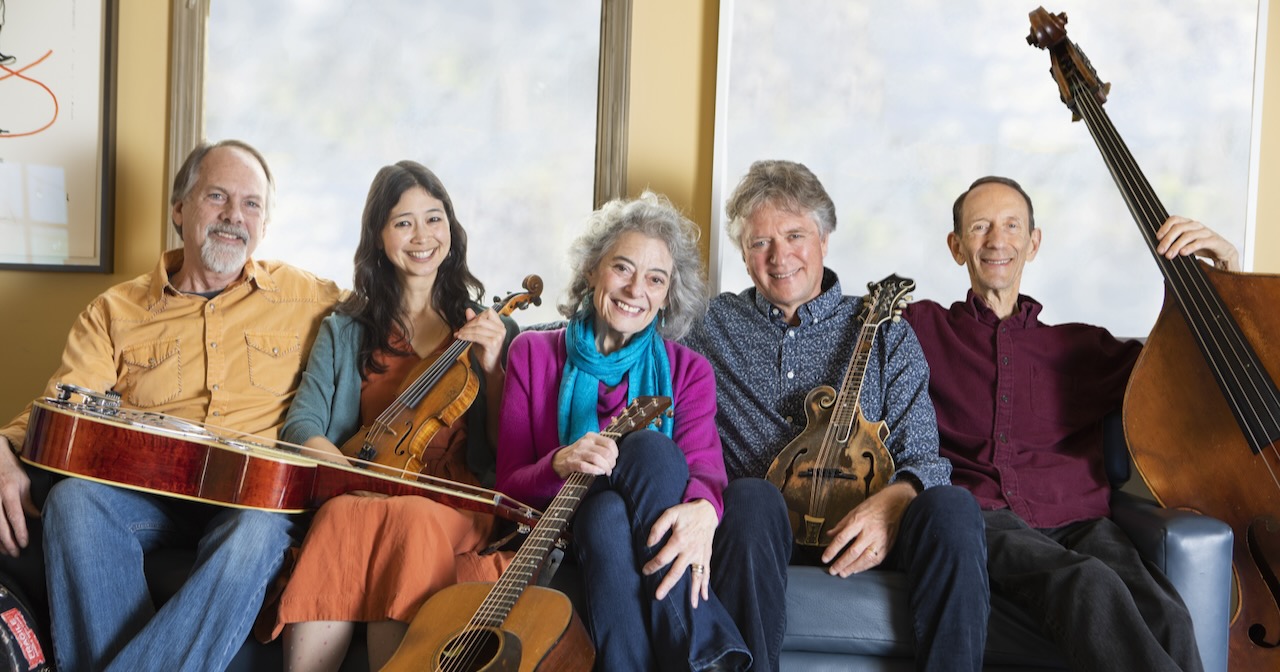
Artist: Kathy Kallick Band
Hometown: San Francisco Bay Area, California
Song: “Just Lonesome Ol’ Me & the Radio”
Album: The Lonesome Chronicles
Release Date: September 19, 2023 (single); October 17, 2023 (album)
Label: Live Oak Records

In Their Words: “People of different ages will feel their engagement with radio in different ways. As part of a family gathered around the radio for a specific show, as a teenager listening to a transistor radio under their pillow, as a traveler on a long car trip with the radio tuned in to whatever signal it can find, or as a listener with that favorite show tuned in on a laptop from anywhere in the world, the radio means connection. In that bizarre time of lockdown, we all looked for ways to ‘be’ with other people, and a dear friend and I started having a listening date, tuning in to the same radio show from our separate places, and commenting to each other via email, text, or calling on the phone. It made us feel like we were having a little party!” – Kathy Kallick

Track Credits:
Kathy Kallick: composer, lead vocal, guitar
Annie Staninec: tenor vocal, fiddle
Greg Booth: baritone vocal, dobro
Tom Bekeny: mandolin
Cary Black: bass

Photo Credit: Anne Hamersky

WATCH: Wreckless Strangers, “Sun State” (Live)

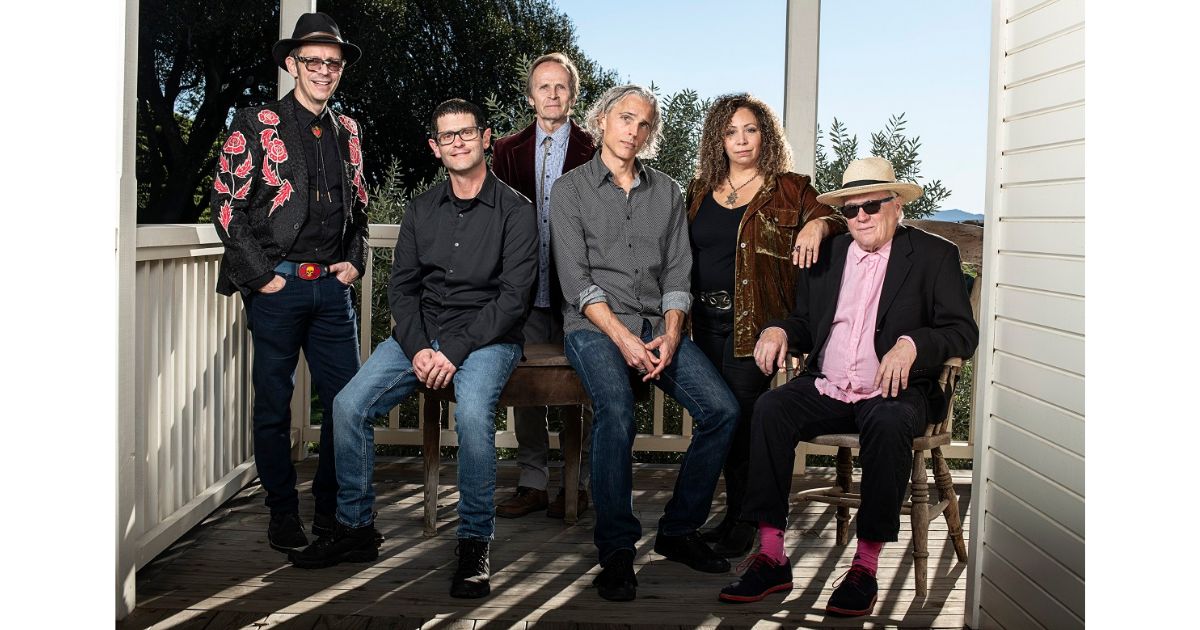
Artist: Wreckless Strangers
Hometown: San Francisco Bay Area
Song: “Sun State”
Album: When the Sun and a Blue Star Collide
Release Date: March 25, 2022
Label: Neanderthal Records

In Their Words: “With ‘Sun State,’ we wanted to put out something positive — something that inspires people. In my mind, the song is about when talent and passion collide and create this bigger, beautiful thing. Everyone has their own ‘Sun State.’ It’s just a matter of finding their talent and passion, and allowing them to collide head-on. Playing ‘Sun State’ live is just so exhilarating. There’s no way to micromanage or change the take, like you can in a studio. You have to live with the imperfections, and that’s the joy of it! I love letting the song hit the audience and receiving their genuine reaction. You get as much energy back from them as you give out, sometimes more! Plus, playing with the Wreckless Strangers almost feels like having ESP…you can feel what your bandmates are thinking, feeling, all at once.” — David Noble, Wreckless Strangers


Photo credit: Jay Blakesberg

LISTEN: AJ Lee & Blue Summit, “Monongah Mine”

Artist: AJ Lee & Blue Summit
Hometown: The Bay Area
Song: “Monongah Mine”
Album: I’ll Come Back
Release Date: August 20, 2021

In Their Words: “In my teen years, I went through a phase where I would Google historic events and I came across the Monongah mining accident from 1907 in [West] Virginia. There’s a line in the first verse, ‘where darkness down below is lit by wicks,’ that I wrote because an open flame or spark is what most likely caused an explosion, trapping the immigrant miners inside. The second verse starts with ‘wives and daughters and mothers gathered around, to sing to all the souls trapped underground’ — all true, according to the story. The workers’ loved ones tried to offer whatever comfort they could in such a hopeless time. Eventually ‘came the U.S. Bureau of Mines in 1910’ to provide thorough investigations in areas including the mining process and safety regulations. I’m no history buff by any means, but this story is so powerful I had to write about it.” — AJ Lee


Photo credit: Hannah Ballinger

LISTEN: Midnight North, “Silent Lonely Drifter”

Artist: Midnight North
Hometown: Bay Area, California
Song: “Silent Lonely Drifter”
Album: There’s Always a Story
Release Date: July 23, 2021
Label: Americana Vibes

In Their Words: “Here we have a folk melody reminiscent of the timeless string music heard in the Appalachian region. Lyrically simple, the tune gives thanks to the inevitable and natural balance that exists in this universe — no matter the day or the moon. I shared the tune with Grahame [Lesh] on a day off down south a few years back. It definitely still needed something on the lyrical side, and Grahame had the idea to identify each verse with different full moons in the yearly cycle. Each full moon carries a unique weight to those surviving down below — so we made a connection from each moment (verse) to each full moon.” — Nathan Graham, Midnight North

“Nathan would play us snippets of ‘Silent Lonely Drifter’ on tour whenever he would get ahold of a banjo, and once he showed me the full song I always hoped we’d get a chance to play and sing it with Midnight North. The song was close to fully formed when he brought it to the band, and the melody and chord progression were so intuitive that we latched onto it quickly when we finally started tracking it in the studio. It really came together when we made Nathan sing the melody as Elliott [Peck] and I wove harmonies around him. Now that we’ve played it live ‘Silent Lonely Drifter’ is one of my favorite of our songs to sing in harmony!” — Grahame Lesh, Midnight North


Photo courtesy of Midnight North

LISTEN: The Brothers Comatose, “Too Many Places”

Artist: The Brothers Comatose
Hometown: San Francisco, California
Song: “Too Many Places”
Release Date: July 2, 2021
Label: Swamp Jam Records

In Their Words: “This song was a big collaboration with the whole band. It started with a set of lyrics from our tour manager, Joe Pacini, and morphed into a story of a man fighting an internal battle between the road he believed he was destined for and a more domestic life with a woman he loves. It’s a constant push and pull and a common thread with most touring musicians we know. How does one balance a home life and life on the road? It’s a delicate dance that requires a lot of give and take in a relationship and for those that have figured it out, we applaud you! Tell us your secrets!” — The Brothers Comatose


Photo credit: Giant Eye

A Role Model and Mentor, Laurie Lewis Still Seeks Out Bluegrass Masters (Part 2 of 2)

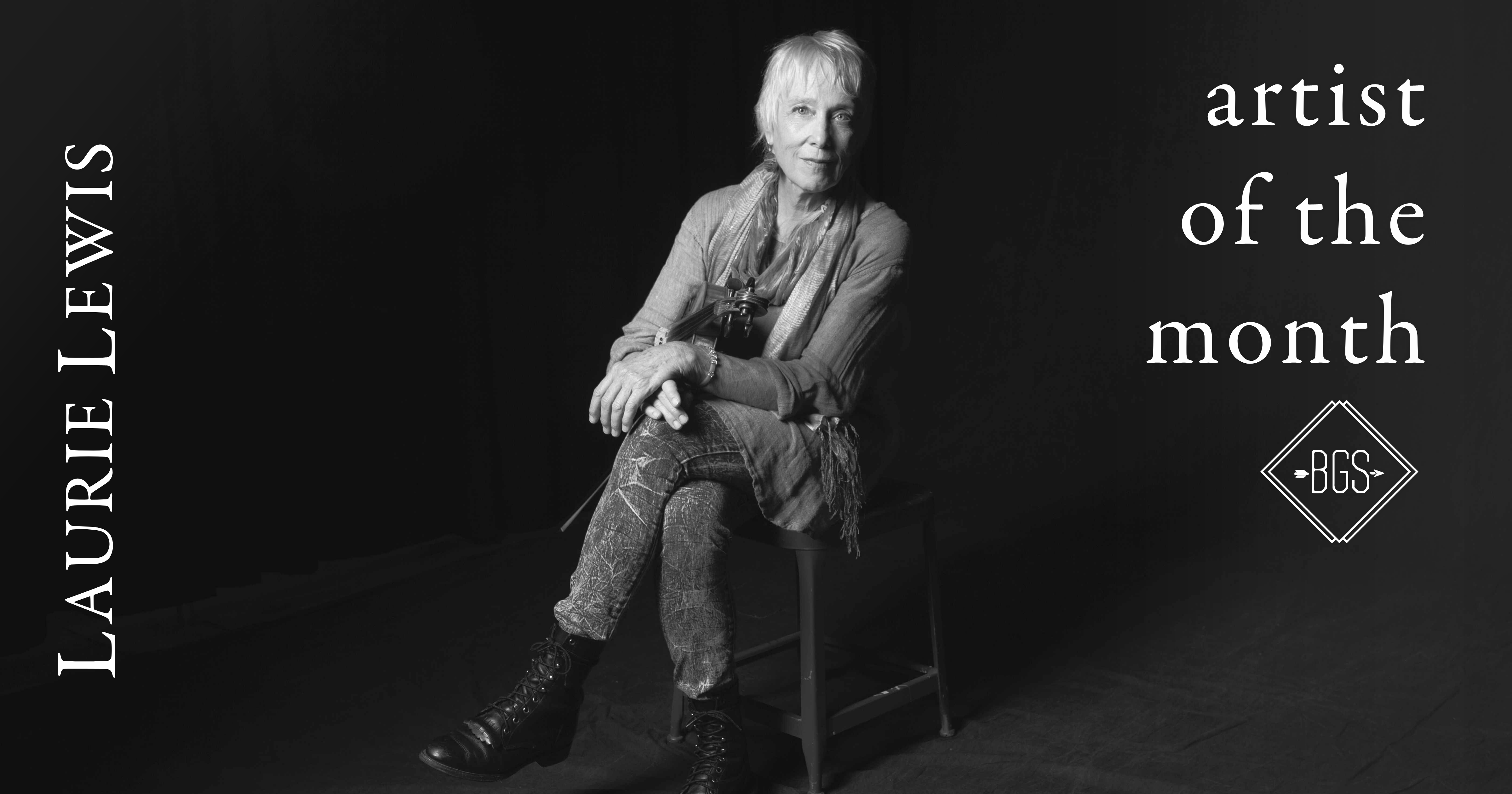
Laurie Lewis’ new album, and Laurie Lewis, is as much a tribute to her strong relationships as it is to her musical talents. Featuring old friends like Kathy Kallick, Todd Phillips, and Tom Rozum, and younger collaborators like Tatiana Hargreaves, Molly Tuttle, and Leah Wollenberg, her embrace of great friends and great music is on full display. In the second half of our conversation, the IBMA Award-winning artist talks about her history in the Bay Area, her aspirations and challenges, and the things that give her joy.

Editor’s Note: Read part one of our BGS Artist of the Month interview with Laurie Lewis.

BGS: Years ago, you and Kathy Kallick gave bluegrass a female voice. Were you conscious of breaking barriers at the time? And are you aware of what a model you are to women our age?

I appreciate that in hindsight. In the moment, we were just trying to make the best music we could make together, and we were both in a musical community in the Bay Area that didn’t have the barriers that the outside world had for women in bluegrass. We were doing what we wanted to do, what was fun for us. And not thinking that it was the most special thing or groundbreaking or ceiling-shattering stuff.

It was when I started performing more outside the Bay Area that I began to realize that what we had been doing was unusual. But at that point, I was just headstrong and I was just going to do what I wanted to do and not be stopped. I had disdain for festivals that would only book one girl bandleader at a festival, while they would book 12 male bandleaders at a festival. It pissed me off, but it didn’t stop me. And things are still a little bit like that — it’s amazing how slowly things change.

Did you set out to mentor young women?

Life for me just sort of unfolds, and I have to say I don’t set out to do these things in advance. I didn’t decide, “Now that I’m a wise older woman…” to mentor younger people. What actually started it was when younger people started showing up at music camps. I was a little afraid of that, because most music camps I had been doing were with adults. And I was a little afraid of my ability to relate to and coach young people.

When I was first asked to teach at a fiddle camp specifically for young people, I was sort of daunted by it. But the relationships that grew out of that camp have been incredibly important to me. Tatiana was there — she also went to Bluegrass at the Beach when she was like seven, that’s when we met. And Emily Mann, who wrote one of the songs I sang with Molly, was a preteen at that camp.

It has been a thrill to watch them blossom. It has been so gratifying to me. I don’t have children, and that’s a choice on my part, but I really appreciate them. I really enjoy hanging out with them and being able to have them in my life. I didn’t decide to focus on young women, but I suppose just because I am a woman, that has happened. People want role models – to see someone who’s like them. I am more like a young woman than I am like a teenage boy!

Any comments about being a role model?

Well, I feel very, very grateful that that’s happened. I’m really just trying to do the best I can do and play what’s in my heart and express myself in the best way I can, which seems to be through music. I am very gratified that people see me as a role model. I have a feeling of responsibility about that — so I better not fuck up.

Why is teaching important to you?

I get very excited teaching about things that excite me. Music excites me, and I want to spread the gospel. I am evangelistic about things like Chubby Wise’s fiddle playing, and how his solos are the bedrock of bluegrass fiddling. Singing harmonies, and how to work on making a vocal blend, are is endlessly fascinating to me, so I like a chance to talk about it and explore it with other people.

It also helps me, because when I am teaching I go back to the masters and I listen again to things maybe I haven’t listened to in 10 years. I always hear new things and I always learn myself. It keeps the music fresh for me in that way. It’s not just a one-way street. Teaching’s definitely a two-way street.

Do you want to talk about your shyness? You’ve said you are incredibly shy, and yet when you are on stage you fill auditoriums with your presence and your energy. How does that work?

I’ve certainly conquered a lot of my shyness. Shyness is really fear-based. You have to learn to face your fears. And in many, many instances, by facing them they just melt away. They are like a wraith. They just go away. I have learned that over the years. I used to be afraid to talk on the phone. It was so hard for me to call people up and just be a regular person on the phone and have a one-on-one conversation. I made myself do it. I made myself get on stage. I made myself open up to an audience. Sometimes it’s easier to open up to an audience than it is to open up to three people in the room with you. Strength in numbers when it comes to shyness.

I was really shy — and I’m not so shy any more. I still very seldom will talk to strangers. I told Tom yesterday that I was on a hike, and I met this young man and we talked a whole lot (this guy was named after Superman’s father, Jor-El). Tom said, “How did you start talking to him?” And I said, “I don’t know, it was a beautiful day….” and Tom said, “This is so unlike you.” It is unlike me that I would talk to a stranger, but we had a very great conversation. It turns out we were both born in Long Beach, we have a lot in common. … I’m still breaking down my barriers. By the time I’m 90 I’ll be talking to anybody and everybody. You won’t be able to shut me up.

How is today feeling for you? You have this great new album – and the world is upside down.

It’s frustrating, but — it’s just my own little personal problem. It’s really too bad, but so many people are suffering so much right now. I don’t have it in me to be all upset about it being a bad time for me. The album will still be here, the music will still be here when the virus has run its course. The virus is not going to kill my music.

How are you keeping your spirits up?

I go up into the hills and I walk. And right now it’s springtime, it is so beautiful. The world is just so gorgeous. There are wildflowers everywhere. If you can get out into nature, it is the most healing balm that I know of, and that’s what works for me. It makes the human problems seem so small, and it connects me to the universe. It takes me outside of myself.

What’s next for you?

I’m loving playing with the current Right Hands configuration: Brandon Godman on fiddle, Patrick Sauber on banjo and Haselden Ciaccio on bass (along with Tom). We’ve been planning a new album. We’ve got so many things we’re cooking up: new songs and old stuff that we’ve been doing. I feel like we need to have a record of how we sound together.

Do you have a special goal, something that you want to achieve that you haven’t done before? 

I would really love it if other people would sing some of my songs and make them part of the folk tradition. That would thrill me more than anything. I would like to get interviewed by Terry Gross. That would be pretty great! Of course, because I’ve been doing this for so long I would like to get broader recognition, but I’m fine with things the way they are. But mostly I’m just very, very grateful that I get to do what I want to do. I can put together a life out of it and I can keep playing. I’m in my 70th year. I just feel lucky.


Photo credit: Jeff Fasano

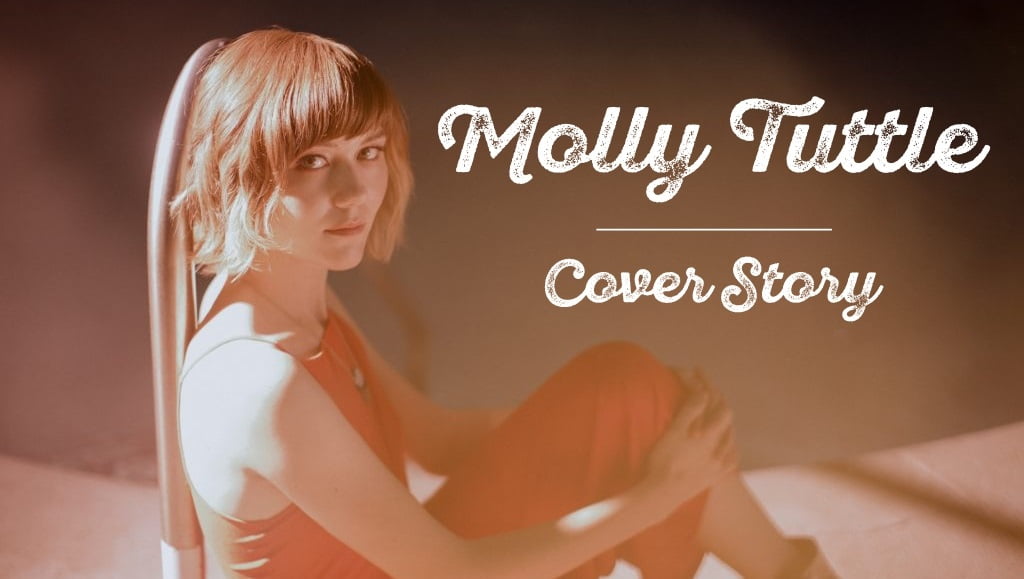
Molly Tuttle: Confident and ‘Ready’

Even before releasing her first full-length album, Molly Tuttle made history. She became the first woman to be named IBMA Guitar Player of the Year, a title she’s won twice, in addition to winning Americana Music Association’s Instrumentalist of the Year, all on the strength of her 2017 EP, RISE. But to focus exclusively on Tuttle as a guitarist would be a mistake. She isn’t interpreting others’ songs. She’s writing and singing her own, and as her debut record When You’re Ready proves, she’s doing it not only with classically trained musicianship, but with an exciting willingness to explore and trust her own wide-ranging artistic instincts.

Tuttle talked with BGS about When You’re Ready, feeling optimistic about women in music, and why California’s Bay Area has her heart.

BGS: When You’re Ready is such a confident debut. Were you feeling confident from the jump, or did your confidence grow as you recorded?

Tuttle: I think it grew. As I was writing the songs, I got more and more confident just saying what I felt and what I was thinking in the songs. I remember feeling really confident in the studio in what I was saying and in the parts I was playing. Ryan Hewitt, who produced it, helped me feel confident. He wanted everything to sound really strong – it was a good experience.

A lot of these songs seem to explore relationships and how we interact with each other. Do you feel like there are some currents that run through thematically and connect all of these songs?

I think there’s kind of a theme of longing on the album, and also a theme of just being confident in who you are and what you’re feeling. When I was writing it, it was, “I’m just going to say where I’m at.” The theme on the album for me would be accepting your feelings and embracing them.

You’re from California, then you went to college in Boston, and now you’re living in Nashville. Do you feel like all of that geographic diversity changed the trajectory of your music?

I think so. I got exposed to lots of different kinds of music in California, and then especially when I was at Berklee, there were all sorts of different kinds of music going on all the time at school. Then, obviously, Nashville is one of the most amazing music cities in the world. I think living in California was influential, growing up there. I really relate to the Bay Area and a lot of my songs are still inspired by California. It’s where my soul is, still.

What is it about the Bay Area you love so much?

I really love the ocean. I love the nature there, the scenery. I think people are really open there. Everyone — well, not everyone, but a lot of people in the Bay — are just trying to be good people and trying to be accepting of other people. That was something I was taught in school a lot as a kid: that you should accept everyone as they are. Of course, nobody is perfect at that. But I think people are trying to do that there, and that’s a feeling I’ve tried to carry with me.

When you write, are you focusing on the guitar part first and then the lyrics, or does it vary?

There are times when I do the guitar part first, but for this album, I was really focusing on the lyrics and melodies. The guitar parts were the last parts that came with these songs — and I really wanted to have interesting guitar parts on this album. I thought it’d make it more interesting to have a singer/songwriter record with guitar lines that could weave it all together, so I worked on that after I finished writing the songs.

The guitar playing on “Take the Journey” jumps out: the percussion, the lead, the bass, the counter-melodies — that’s all you on acoustic guitar. How’d you come up with this song?

I wrote that with Sarah Siskind. We wrote it pretty quickly in a couple of hours, which for me is quick for writing a song. We had a song that was in that modal-key feel — you don’t really know if it’s major or minor. When we were writing it, I went into this different tuning: it’s an open G tuning, but you get rid of the third and tune the B up to C, which makes it like a Gsus4.

I like that style of guitar playing. When I was a teenager, I learned clawhammer banjo because I really liked old-time music. Someone showed me that you could move the clawhammer style onto the guitar and play a really percussive-sounding style. I went with that and created different rhythms that I like to use — more syncopated — and really worked on getting the bass notes to pop out, letting my hand hit the guitar so it’s percussive sounding.

Your vocals on “Don’t Let Go” move between smooth and comfortable verses to more of a staccato and breathy chorus. How’d you decide to approach the vocals this way?

Where the melody is in my range, I naturally had to go up to a breathy head voice, so we thought that could be a really cool thing, to make it sound really emotional. And on this one, when I was singing the chorus, I did get really emotional in the studio. That helped me get the quivers in my voice. I think you can hear it in the track. There are little things that came out in my singing that I hadn’t really done before recording this. I had to go to an emotional place to get the take that worked.

Do you have a favorite song on here or is that impossible?

I think my favorite is “Sleepwalking.”

All of that imagery on “Sleepwalking” – and on some other songs too – blurry screens, white noise, and even sleepwalking itself: it’s such a direct contrast to the specific, refined sounds you’re making. What is it about the hazy imagery that you’re drawn to?

Yeah, I think a lot of my songs have themes of trying to make a connection with a person or a place or a feeling. There are a few songs that talk about white noise or static or anything that’s kind of blurring the connection. That’s something I feel — like with technology, sometimes it makes me feel like I’m not actually connected to anything and not connected to myself.

I think that comes through in my songs. “Sleepwalking” is a song I wrote about that specific feeling of being disconnected from the world around you. Maybe you’re relying on one person or one place or feeling to be your connection. It’s kind of a love song, but it’s kind of a cry for help in a way. [Laughs]

Of the women who are widely known first as guitar players – a number that’s still too low – most aren’t acoustic, steel-string players. It’s also a physically demanding instrument, especially the way you play. Why were you drawn to it? Why do you think you’ve succeeded?

I’ve never really seen limitations on guitar for me as a woman. I remember, I was first drawn to it in a really natural way when I was a kid. I just liked the mellow sound of it. So I don’t remember specifically what drew me to it, but I remember seeing guitars around, and I told my parents I wanted a guitar. That was after I’d tried like three different instruments and failed at all of them. [Laughs] I tried to play fiddle, and I think I got tired of just not sounding good on it. Guitar is a lot less abrasive when you’re first starting out. I had a tiny guitar when I started, and my dad showed me some stuff on it.

I really liked that you could play it while you were singing. I never thought about it being a physically demanding instrument, even when I first played and my fingers got really sore. It felt pretty natural to me. Then, when I went to Berklee, I was 19 and all of a sudden there were no other women in any of my guitar classes. [Laughs] That was weird. It was definitely an uncomfortable experience at times.

But it was good because I’d walk into class and be the only one, and because all this attention was instantly on me, I thought, “Oh, I better practice and be good or they’re just going to write me off as some girl trying to play guitar.” It felt like there was some added pressure there, which is not really fair, but at least it made me practice more.

You’re not the “best woman guitar player.” You’re the best guitar player. Do you feel like the industry and culture in general are beginning to consider contributions of women more fairly – that you’re weighed equally?

I think it’s definitely changing at a rapid pace right now, especially with the #MeToo movement. Now that’s starting to affect the music world. I’m seeing so many women coming up and their careers are just exploding in new ways – like at the Grammys. There were so many women winning awards and playing.

I think women are feeling really empowered to just say, “No. I’m not a female musician. I’m just a musician.” Women are fully embracing feminism more and just feeling like we can say what’s on our minds. We don’t have to tiptoe around these issues anymore. I think that’s helping everything change. We are not accepting any crap anymore — like “you’re a female guitar player.” [Laughs] I certainly don’t want to be pegged as a female guitar player. My gender doesn’t have anything to do with my guitar playing. We’re talking about the issues more and that’s helping everything to change.


Photo credit: Alysse Gafkjen
The Show On The Road – T Sisters

This week on the show, Z. speaks with Oakland’s soulful singing T Sisters. For this trio of sisters, singing harmony-rich songs isn’t just their full-time job, it’s a way of life. It’s what they do — and damn do they do it well.

LISTEN: APPLE PODCASTSMP3

Sisters Erika, Chloe, and Rachel Tietjen are harmonic masters. Whether it’s demonstrated in their sassy originals accompanied by upright bass, guitar, banjo, and mandolin, or with their delicious vocal-layer-cake covers of hits by Kylie Minogue and Paul Simon, family runs deep through the music. T Sisters will be releasing their next EP, We Are Bound, produced by Oliver Wood (The Wood Brothers) in March 2019.