Jamie Dailey’s Vision for Dailey & Vincent is Bigger Than Bluegrass

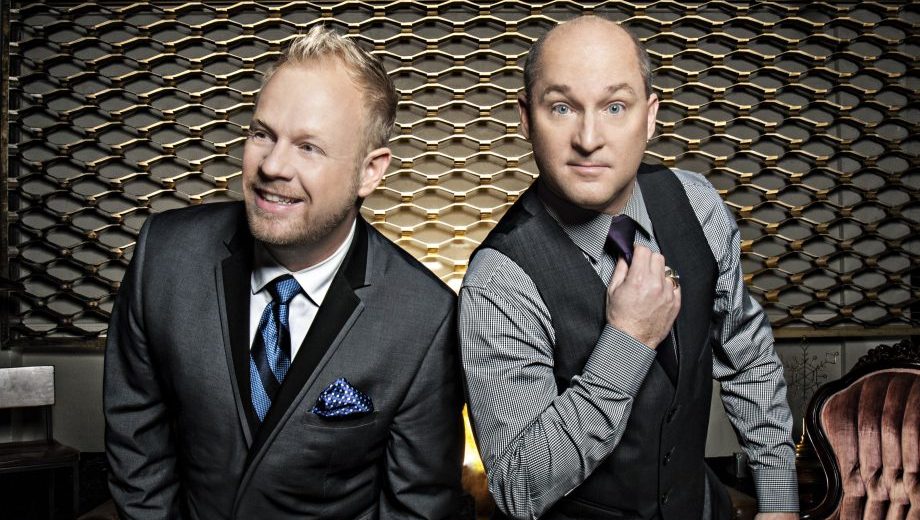
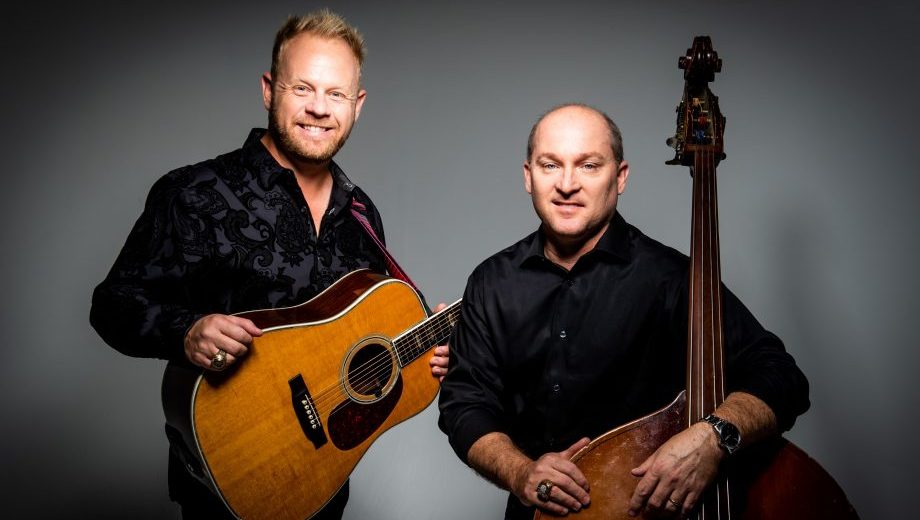
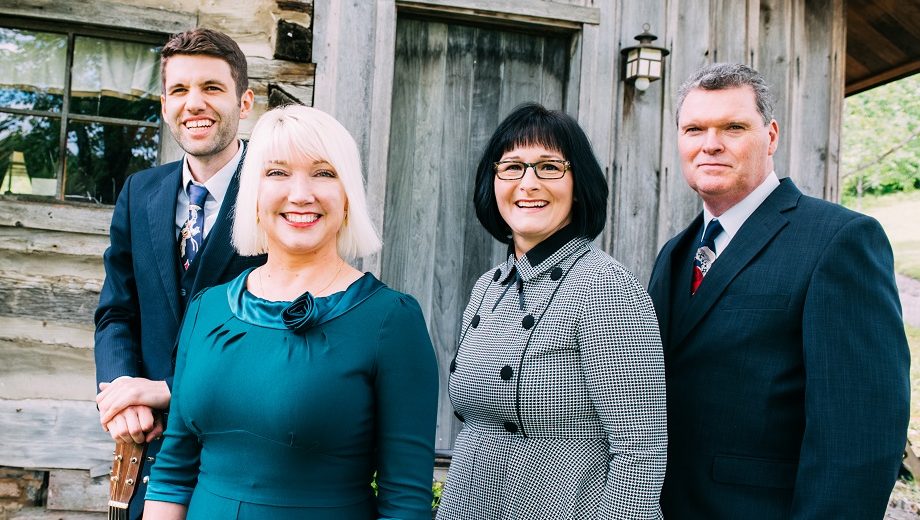
Dailey & Vincent, the Nashville-based band led by Jamie Dailey and Darrin Vincent, is among the most honored acts in all of bluegrass. They’ve won multiple IBMA and SPBGMA Awards, had all nine of their records crack Top 10 on Billboard‘s bluegrass albums chart and, since 2016, they’ve been full-fledged members of the Grand Ole Opry.

Their newest release is 2018’s The Sounds of Christmas, which they’ll be supporting on tour this month. As our December Artist of the Month, BGS caught up with each frontman separately before they hit the road, starting with Jamie Dailey.

(Editor’s Note: Read our interview with Darrin Vincent.)

BGS: Where do you think The Sounds of Christmas ranks in your catalog?

Dailey: Well, it was something seeing it between Michael Bublé and Pentatonix in the Top 10 of the holiday chart, and it stayed up there for several weeks. It really is just about my favorite of all the records we’ve ever done – just the quality of the vocals. It’s bragging, I guess, but it’s the best-sounding vocals we’ve ever recorded, for sure.

I am of course a lover of Christmas music, and also Christmas. I grew up in a very modest family that couldn’t afford a lot, but we always put up a tree and had Christmas lights all over the property. Mom still cooks a big traditional American family Christmas meal. You’d think my mom would be used to it by now, but I like to sneak into her kitchen, highjack her laptop and put something crazy on Facebook. That’s always fun. One time a couple of Christmases ago, her preacher was calling within 10 minutes to ask if she was OK. I could hear her: “WHAT?! Jamie, I am gonna KILL you!”

It’s time for another record, what’s the story on the next one?

We just signed our first country music deal, with BMG, to do a country album. We’ve never done one so we’re very excited about that. We’ve said from day one that we never wanted to be boxed in and we wanted to write and play and sing and record whatever we wanted. We’re working with Keith Stegall, who has produced Zac Brown, Alan Jackson, and a whole bunch of others. We just signed a new TV deal, too, to do a more mainstream TV show than what’s been on RFD all these years.

Out of all the awards you’ve won, which one means the most to you?

Hands down for both of us, joining the first family of country music in the Grand Ole Opry. It’s only 200-some members and 84 of us still living, so it’s very special to be part of that family. We work the Opry six to nine times a month between tour dates, which makes us busy, but we’re happy to be there. It’s always a joy. Hard to explain the feeling you get when you’re there.

Before Dailey & Vincent, you spent almost a decade in Doyle Lawson’s band. What’s the most valuable thing you learned from him?

How to be a constant road professional, and how to be more consistent onstage and not just listen to yourself, but to your fellow bandmates to make up a well-oiled unit. He’s a good man. The lessons were priceless. And if you’ve ever led a group, you also learn things you don’t want to do. As leaders, we all run across those times when you’re trying something that doesn’t work.

You did the IBMA keynote speech last year, on “Branding Bluegrass.” What do you think that is?

We live in the most interdependent age in history. Everyone has the ability to reach more people than ever before. We all have to figure out ways to become more involved. I’d tell young musicians to stay absolutely focused and follow your heart. Record labels and managers are right about a lot, but not always about everything. So don’t allow yourself to be led down a road you don’t want to be on. Be persistent and aware, and learn as much as you can to stay up with what’s going on.

The Dailey & Vincent brand is bigger than just bluegrass, which we make no bones about. We’re gospel and country as well as bluegrass, and we’re happy to do all of that. You can tell from the TV show and the Opry, we’ve tried to diversify our craft to get into buildings we would and could not have before. We’ve been blessed to perform at Carnegie Hall three years in a row, which would not have happened if we were doing only bluegrass.

What do you tell people who want to go into the music business?

The business is changing constantly, so you have to stay on top of that. Living in this interdependent world, it’s like there are a lot more nets than walls and you can reach a lot more people. We’re artists, so let’s make music, let those who like it find it and cater to them.

Some years ago, a lot of bluegrass festivals were kind of stagnating without a lot of growth. So we decided to pull back and go into more venues on our own to draw our own crowds and grow that way rather than getting beat over the head for not fitting some narrow mold. We did not want to be in that box, so that’s some of the changes we’ve made the last eight years — out of 12 going on 13. That’s what we’ve done and why we’ve done it, and it’s had tremendous impact on our career and vision.

Who among your peers do you admire and enjoy?

I love Keith Urban, what a good guy and a great musician and singer. Very creative. I love Norah Jones and Adele, too. The music I listen to ranges all over. Sinatra and Tony Bennett, too. I love orchestras and symphonies, and go to [the symphony] in Nashville when I can, and it’s what I listen to when I’m reading. I love going back to Guns N’ Roses and Journey as well as Conway Twitty. It’s a broad list.

You participated in some diplomatic missions to Germany and Switzerland a bit more than a decade ago. How did that happen?

It was terrifying in some aspects, but I learned a lot from my dear friend now passed, U.S. Ambassador Faith Ryan Whittlesey. We met at Yeehaw Junction, a bluegrass festival in Florida, when her daughter took her. I was with Doyle at that time, 23 or 24 years old, and I’d been praying for the Lord to use me to help my country because I regretted not joining the military.

So we do this show and her daughter came up afterward to say she wanted to meet me. Sure. “Hi, Jamie, I’m former Ambassador to Switzerland, on the U.N. Security Council.” My eyes are getting bigger and bigger. “I need you to travel with me to do some diplomatic work. Use your country bumpkin charm, sing a song here and there, and engage with foreign and business leaders.” I almost passed out.

But she called the following Monday morning and I started flying to D.C. and New York every few months to learn table etiquette, receiving-line protocol and things like that. She was stern and very, very formal. But after she saw how stupid I can act, I got to know her enough to break into her humorous side. I started traveling with her to Switzerland and Germany to participate in some things, which was a wonderful experience I’ll cherish the rest of my life.

Do you have any interest in going into politics someday yourself?

At one time, maybe so. But the more I see of what goes on, especially these days, not so much. I believe I can be more effective where I am in my career than in political office, where you have to deal with incoming fire and problems that weigh you down and keep you from doing things. But I can move in and help without having to worry about the politics and trash that goes on now.

I’ve been asked, but no. Maybe later in life, if a president I can believe in strongly wins and I get involved, maybe I’d consider being Ambassador to another country for a few years. But who knows. There’s a lot to it, and a lot can happen. I may end up dying from too much chocolate.


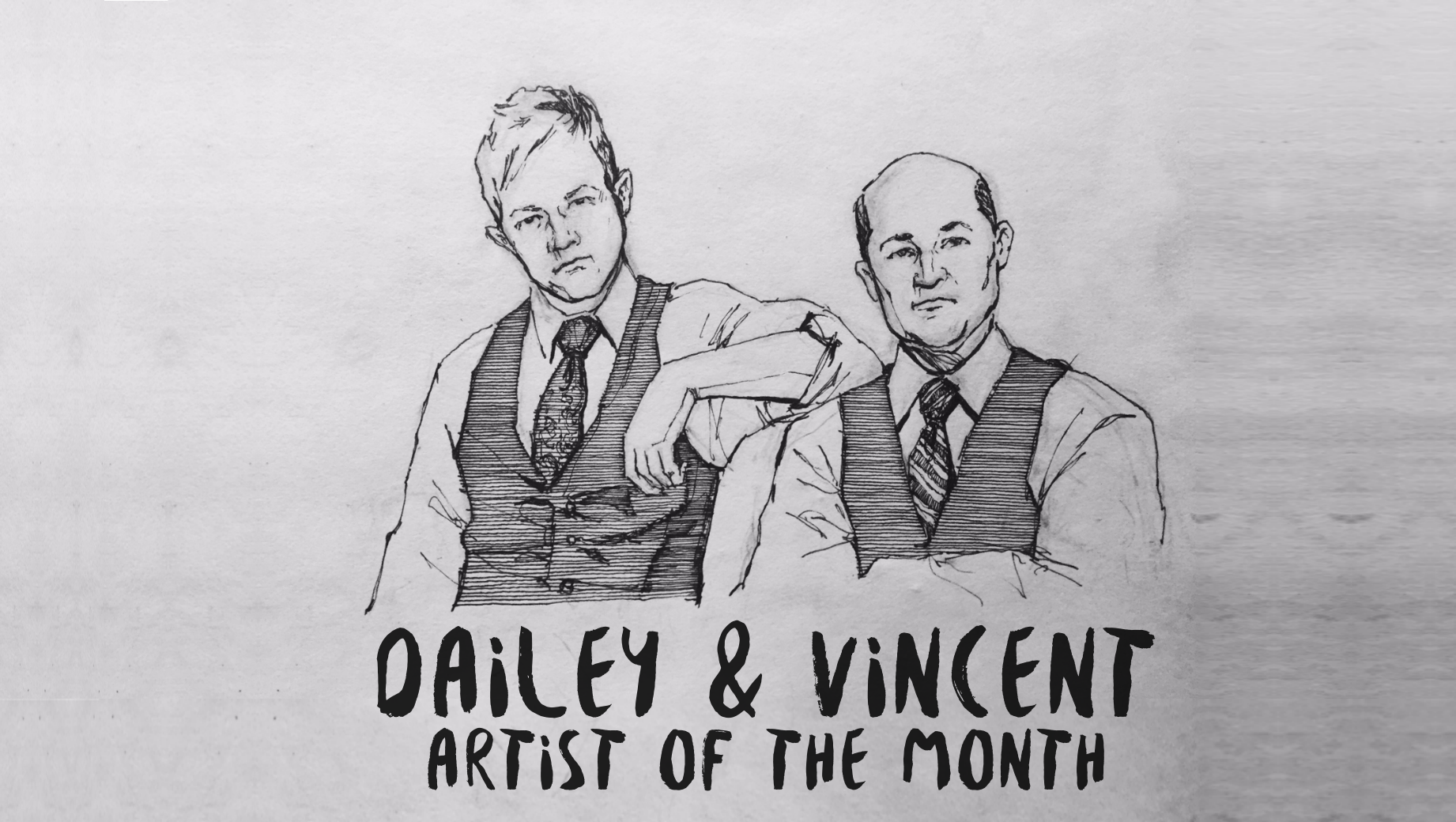
Illustration: Zachary Johnson
Photo: Erick Anderson
The Show On The Road – Liz Vice

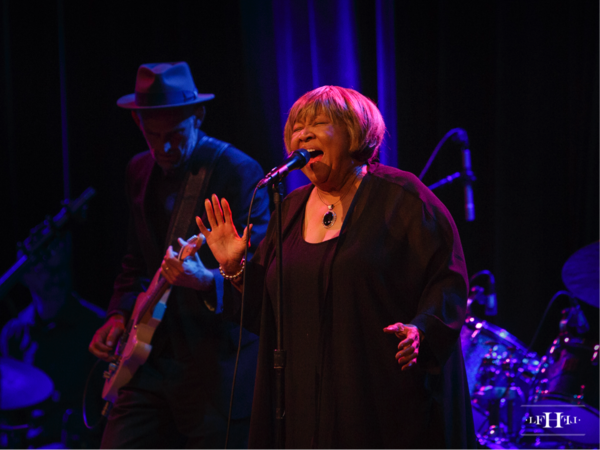
On this week’s episode of The Show On The Road, Liz Vice – a Portland born, Brooklyn-based gospel/folk firebrand who is bringing her own vision of social justice and the powerful, playful bounce of soul back to modern religious music.

Listen: Apple PodcastsMP3

Liz Vice is following a rich tradition that goes back generations to powerful advocates like Sister Rosetta Tharpe, Sam Cooke, the Staples Singers, the Ward Sisters, Aretha Franklin, and especially Mahalia Jackson, who was the soundtrack to the civil rights movement. It was Mahalia who pushed Martin Luther King Jr. to tell the assembled masses in Washington, D.C. about his dream.

We often forget how much religious music was infused in the counterculture back in the 1960s, and as the BBC mentions in a great article about the era, “The music of the black church was infusing and inspiring the political consciousness of folk music; gospel was no longer just for the religious but the foundation for much ‘60s protest.” And so we bring you Liz Vice — and a little clear-eyed Christmas spirit to usher you into the twinkling darkness of December.

Artist of the Month: Dailey & Vincent

Dailey & Vincent have ventured well beyond bluegrass by paying respect to musical tradition, singing like siblings (although they aren’t), and delivering their signature goofy one-liners. Year in and year out, they bring an entertainment value to their show, whether it’s on a tour of performing arts centers, starring in their RFD-TV series, or appearing at the Grand Ole Opry.

Although Jamie Dailey and Darrin Vincent came from highly regarded bands before forming their duo, they are now certainly trailblazers in their own right. For example, Dailey delivered an insightful IBMA keynote address in 2018 about branding bluegrass. And they have shown the ropes to a decade’s worth of rising talent.

Coming up later in the week, BGS will post exclusive, one-on-one interviews with both Jamie Dailey and Darrin Vincent, shining a year-end spotlight on their remarkable career. In the meantime, please enjoy our brand new BGS Essentials playlist.


Illustration: Zachary Johnson

LISTEN: Libby Koch, “How Long”

Artist: Libby Koch
Hometown: Houston, Texas
Song: “How Long”
Album: Redemption 10: Live at Blue Rock
Release Date: October 18, 2019
Label: Berkalin Records

In Their Words: “This record definitely incorporates spiritual themes into love songs, and ‘How Long’ is a great example of that. I structured this song around the text of Psalm 40, with lines of each verse and the chorus tracking the Psalm: ‘I waited patiently for the Lord, and he turned to me and heard my cry. He brought me up out of a slimy pit, out of the miry clay, and set my feet upon a rock, and gave me a firm place to stand.’ This piece of scripture has been put into song and hymn many times, and I hope this song is a worthy addition to that tradition. When I originally cut this song 10 years ago, it was a more somber, stripped-down track… for the live anniversary cut, Patterson Barrett and I decided to pick up the tempo and give the song a bluegrassy feel, which I just love. It’s one of my favorite tracks on this live album.” — Libby Koch


Photo credit: Valerie Fremin

WATCH: The Chuck Wagon Gang, “Somebody’s Boy”

Artist: The Chuck Wagon Gang
Hometown: Knoxville, Tennessee
Song: “Somebody’s Boy”
Album: No Depression In Heaven, The Gospel Songs of The Carter Family
Release Date: August 30, 2019
Label: Mountain Home Music Company

In Their Words:: “The Carter Family began singing about the same time frame as the Chuck Wagon Gang. Both groups shared not only the last name Carter but a very similar style of singing. We felt it would be an honor to put together an album that would pay tribute to their gospel songs. Filming this video at the Carter Family Fold was such an amazing experience. There was something so special about being out there in the humble, yet beautiful location where it all began for the Carter Family.

“The song ‘Somebody’s Boy’ is actually not considered a gospel song, but is more what the old-timers call a heart song. Its message is one that speaks to the desires of a mother’s heart for her wayward son, and, though it dates back to 1894, is as relevant today as when it was penned. The Chuck Wagon Gang has recorded other heart songs over the years, like ‘Church in the Wildwood.’ Our hope is that ‘Somebody’s Boy’ will become as meaningful for our fans!” — Shaye Smith (the alto singer who is also the granddaughter of The Chuck Wagon Gang’s original alto singer)


Photo credit: Sandlin Gaither

LISTEN: Liz Vice, “It Was Good”

Artist: Liz Vice
Hometown: Portland, Oregon (currently Brooklyn, New York)
Song: “It Was Good”
Release Date: Single — May 31, 2019

In Their Words: “We are more alike than different. I like to erase the line between the stage and the audience by bringing some people on stage (when possible). When I perform ‘It Was Good,’ I always break the ice by saying this is my ‘Make America Great Again’ song. The crowd reaction is about 50/50 haha. My hope is to transport the audience back to a time, that I believe describes the creation of the world and humans in a poetic way; a short time of innocence before humans decided to play god and draw the line between good and evil/’us vs. them.’ If I only have 5 minutes to remind a group of people that they are made from love to love freely, then I hope ‘It Was Good’ does the job and in the process, through their faces, I, too, am reminded to love.” — Liz Vice


Photo credit: Chimera Rene

How Andrew Bird Assembled ‘My Finest Work Yet’

Sometimes you have to be willing to make sacrifices for your art. Sometimes you spend extra hours rehearsing or extra days touring; sometimes you have to become a martyr for a larger cause. Sometimes all you have to do is wax your chest.

On the cover for his latest album, the cheekily titled My Finest Work Yet, the Chicago-raised, LA-based multi-instrumentalist and virtuoso whistler Andrew Bird lies in an old tub, his head hanging askew: the poet on his deathbed, expiring after scribbling his final testament. He recalls, “A few days before the shoot, the photographer said, ‘OK, you have to wax your chest!’ She wanted me to be as smooth as a dolphin. My first thought was, ‘Oh lord, is she just testing me? Is she just seeing how committed I am to the concept?’”

Bird’s chest hair. “We just ran out of time,” he says, no small amount of relief in his voice. Despite his hirsute torso, that image is startling, beautiful yet gruesome, and strangely fitting for an album that examines in a roundabout way the artist’s responsibility to his audience.

The cover is based on Jacques-Louis David’s 1793 painting The Death of Marat, on view at the Royal Museums of Fine Arts of Belgium. “I stumbled across that image in a book called Necklines, which is a funny title for a book about the French Revolution. I had already decided to go with My Finest Work Yet for the title, and I was trying to find an image that would make that title work, that would make it funny. When you don’t know the history of that painting, you just see the suffering poet on his deathbed penning his last words with his dying breath. I thought it was pretty tongue in cheek,” he says.

The more research he did on David’s painting and its subject, the more it revealed a slightly more serious, slightly less self-deprecating undercurrent running throughout these new songs. Jean-Paul Marat was a radical journalist during the French Revolution and one of the leaders of the insurgency against the Crown. He took frequent medicinal baths to soothe painful skin infections, and he wrote most of his most famous works while soaking in his tub. That’s where he was assassinated by the conservative royalist Charlotte Corday; shortly after, David painted him as a martyr, a stab wound to the chest stained his bathwater red. “We went to great lengths to re-create the painting,” says Bird. “There’s a lot of detail, but we drew the line at blood. It felt like if I had the wound and a bathtub full of blood it would go just a little too far.”

An album that might actually live up to that title, My Finest Work Yet, makes clear that we are living in revolutionary times, that we are at the precipice of some great calamity, some great upheaval. “The best have lost their conviction, while the worst keep sharpening their claws,” Bird sings on “Bloodless,” a sober, even scary examination of American factionalism. “It feels like 1936 in Catalonia.” That last line might sound cryptic, but it is a reference to another revolution – not the French uprising, but the Spanish Civil War. “There’s a lot to unpack in these songs,” Bird admits. “Maybe you don’t know what happened in Catalonia in 1936, but you’ve got Google and three minutes to figure it out. I think that makes people a little more invested, maybe not quite knowing what the references are but hopefully thinking, ‘I need to find out.’”

His lyrics have always been brainy, often bordering on merely clever, but the allusions to the French Revolution and the Spanish Civil War — not to mention to Greek mythology, J. Edgar Hoover, Japanese kaiju, and whoever Barbara, Gene, and Sue are — lend the album weight and timeliness, as though we might better understand our current political predicament simply by looking to the past. And the artist in 2019 might understand his duties by looking to past examples like Marat. “The flipside to music being devalued as a commodity these days is that it can maybe make even more of an impact than any other medium can. Everything is commodified, but music is slipping away, but it’s still this thing that is very powerful. It helps people get through hard experiences,” Bird says.

Released back in November following the midterm elections, “Bloodless” was the first song on which he found just the right vocabulary to sing about issues that he and so many other artists are pondering. It was also the moment when a sound gelled alongside his lyrical strategy — a sound that incorporates bits of folk, pop, gospel, even jazz. Bird was fascinated with what he calls the “jukebox singles of the early ‘60s,” when jazz vocals were popular, when the piano was a prominent pop instrument, when bands worked out songs and recorded them live together.

“The piano contains so many references, a couple centuries’ worth,” he says. “Our ear gets taken in certain directions, but something was happening during that period in terms of not overly complicated jazz and gospel. I knew I wanted to make a piano-driven record with Tyler Chester, and I knew I wanted to make a jazzier record with a good room sound. And ‘Bloodless’ was the first time we got it right.”

Bird and his small jazzy combo recorded live in the studio, which wasn’t easy. It involved rehearsing heavily and using only a handful of microphones. He says, “There is so much work before you record the first note, so it’s risky. But if you spend the time, you end up with something that I think is weightier and has more value, even if it goes against the last 34 years of production trends.”

There is a lot of bleed between the instruments, which creates an intimacy even when you’re listening over your computer speakers. However, it means you have almost no opportunity to make changes after you’ve recorded a song. “If you want to change the vocal sound, you have to change the drum sound. If you want to change the drum sound, you have to change the bass sound. Everything is connected,” he explains.

It became a house of cards. Remove one and the whole thing tumbles. That meant Bird had to surrender his usual self-criticism to focus on other things besides listening to his own voice. “When you record, you have to have something to fixate on and fetishize — something that has some ceremony to it. Maybe it’s a certain microphone that gives you a certain sound, or a tape machine. It helps you remember who you are,” he says. “I tend to forget who I am when I’m recording. I know exactly who I am when I step onstage, but you have to trick yourself into being yourself in the studio. I liken it to hearing your voice on an answering machine, and you’re like, ‘That doesn’t sound like me.’ Same thing happens when you’re recording: You hear yourself back and you don’t recognize yourself.”

During the sessions for My Finest Work Yet, Bird focused on the piano and more generally on the live-in-studio approach to keep himself centered. Rather than make him more prominent, however, it only makes him one musician among many: the singer and creative force, certainly, but only one member of a lively band. That connectivity — that sense of musicians joining together in a common artistic goal — is “philosophically important,” says Bird, as are the pop references he’s making with that approach. “The music I’m referencing was deep in the Civil Rights era, the beginning of all this activism and turmoil. I wasn’t thinking about that when we were in the studio, but I think it makes sense,” he says.

In other words, those connections weren’t planned, which means My Finest Work Yet lacks the self-seriousness of a concept album or the self-righteousness of a political album. Instead, Bird wrote and arranged and recorded intuitively, as though posing a question to himself that would be answered on this album. “I’ve always had a tendency to say, ‘Here’s some stuff I’ve been thinking about,’ but I’ve always trusted that the listener has the curiosity and intelligence to think about what I’m bringing up.”


Photo credit: Amanda Demme
Illustration: Zachary Johnson

16 Stories to Celebrate Black History Month

We’ve said it before, but it bears repeating: black history isn’t just American history, it’s American roots music history — they are inseparably intertwined. As such, one month out of the year simply cannot do this cause justice. To mark the occasion we’d like to travel back over a year’s worth of writing and reporting to revisit just a few of the incredible black artists, creators, and activists whose indispensable perspectives and awe-inspiring work moved us.


Angelique Kidjo’s reimagining of the Talking Heads’ landmark album, Remain in Light, was not only one of our top albums of 2018, it was the subject of an exhaustive deep dive for an edition of our Small World column, which points out the stunning amalgamations and consistencies that made the record a perfect vehicle for Kidjo’s singular talents and sensibilities.


For Canon Fodder, we examined the remarkable success of Tracy Chapman’s self-titled, debut album. In 1988, Chapman appeared as the culmination of pop’s newfound social engagement, and the record captures the sound of a young artist clinging to her optimism, even in the face of so much cynicism.


Our inaugural season of The Show On The Road, hosted by The Dustbowl Revival frontman Z. Lupetin, included many black voices, including husband-and-wife duo, Birds of Chicago. Their special brew of soulful rock and roll and goosebump-raising secular gospel is a much needed shot of pure positive energy.


Alt-folk singer/songwriter AHI answered five questions and gave us five songs to go with them in an edition of BGS 5+5 that touches on Bob Marley, Thunder Bay, and oh so much more.


Writer, storyteller, historian, and songster Dom Flemons released Black Cowboys in 2018, an album whose depth and breadth rivals that of a museum exhibition. For our Shout & Shine interview he unpacked the forgotten histories and untold stories of black identities that shaped the American “Wild West,” and thus, the country as a whole.


The Journey, the latest album from Benin native, guitarist Lionel Loueke, tells stories of migration historic and modern, with musical textures and flavors that demonstrate our world — musically, culturally, and otherwise — is entirely interconnected. We featured Loueke in our Small World column.


Guitarist and songwriter Sunny War gave us a stripped-down, stunning rendition of “He Is My Cell” for a Sitch Session, showcasing her unique picking approach and the complicated emotions channeled through her writing.


Kaïa Kater’s most recent album, Grenades, was an exercise in self-love and self-learning. Our Cover Story unpacks how the project spans generations, hemispheres, and textures, and left the singer-songwriter “swimming in her own shadow.”


In 2018 we lost one of music’s brightest lights and most ethereal talents when Aretha Franklin passed. We did our best to tribute her everlasting legacy by diving into her best-selling album, Amazing Grace, for an edition of Canon Fodder.


Americana duo Nickel&Rose premiered their EP, aptly titled Americana, on BGS after being inspired by touring across Europe, noting the way international audiences reacted to and consumed American roots music. They offer their own personal musings on perseverance, loss, and compassion without empty promises that everything is going to be okay.


Charismatic, dynamite performers the War and Treaty (AKA Michael Trotter Jr. and Tanya Blount) told us the stories that led to the making of their latest album, Healing Tide — from the beginning, with a piano in Saddam Hussein’s palace basement, to the pair meeting at a festival, to the present, as their music and mission of love gain steam across the country.


In another edition of Small World, we take a look at cellist and songwriter Leyla McCalla’s brand new album, The Capitalist Blues, and the myriad themes and influences from around the globe that went into the writing, production, and execution of the songs and stories therein.


Gospel singer/songwriter Liz Vice balances intensely personal experiences with universal ideas like the Golden Rule on her album, Save Me, and our conversation with Vice gets into the nitty gritty of that balance and the personal growth and reckonings behind it.


Jerron “Blind Boy” Paxton made his case for why down home blues and old-time American music are not simply relics of bygone eras in his Shout & Shine interview. He is not merely a preservationist mining bygone decades for esoteric material or works that fit a certain aesthetic or brand. He simply takes music that is significant to his identity, his culture, and his experience and showcases it for a broader audience.

Host Craig Havighurst spent some time with Cedric Burnside on his podcast, The String, where they discuss the blues, soul, and regional folk’s growing influence and representation within the Americana community — as well as Burnside’s own commitment to the spread of Hill Country blues.

Legendary song-interpreter Bettye LaVette’s first major label release since 1982 focused on the work of one artist and songwriter, who just happens to be Bob Dylan. In our interview LaVette gives us a frank and engaging peek inside her mind: “Oh, honey, I am 72 years old. I basically don’t give a fuck. Nothing at this point wears me down. I know that all of this going on right now, either it’s going to pass or we’re going to pass.”


Photo of Kaïa Kater: Raez Argulla

Mixtape: Jackie Greene & Band’s Soul and Funk

This is a playlist about the new band’s favorite soul and funk music at the moment. We’re a diverse group of musicians with different tastes and backgrounds, and these are genres we all like and listen to together while rehearsing and recording.

Jackie Greene (Lead):

Sly & the Family Stone – “You Can Make It If You Try”
Who doesn’t love Sly? This is the funkiest circus I’ve ever heard.

Lee Dorsey – “Neighbor’s Daughter”
Sort of an obscure record, The New Lee Dorsey has a bunch of Allen Toussaint songs and all of them are awesome, but I always really liked this one.

Bill Withers – “Ruby Lee”
One of the baddest, rawest grooves ever. The album +’Justments is one of my favorite albums of all time.


Ben Rubin (Bass):

Marvin Gaye – “Got to Give It Up (Pt. 1)”
I love this song because the pocket is so deep and sparse and Marvin lays on top so sweet (yes I meant that figuratively and literally).

Prince – “Sign ‘O’ the Times”
I love this song, because to me it represents some of Prince’s best work. When the song came out, it was so ahead of the times in terms of lyricism AND production.


Megan Coleman (Percussion):

Aretha Franklin – “Day Dreaming”
The groove and musicality of this song legit brings tears to my eyes. Also, I’m a sucker for a good ole fashioned love song.

Michael Jackson – “Don’t Stop ‘Til You Get Enough”
I mean…how beautiful is he in this music video? This was one of the first songs I fell in love with as a child and it will always hold a special place in my heart.


Jon “Smoke” Lucas (Drummer):

D’Angelo – “Playa Playa”
This is the intro to the era that captured my soul at 12 years of age. The sound, feel, and performance of this record is priceless! All-time favorite of mine…


Nathan Dale (Guitar):

Otis Redding – “Ole Man Trouble”
I wore out both sides of my The Dock of the Bay cassette during the summer of ’92. “Ole Man Trouble” was the last song before the auto-reverse tape deck flipped back to side 1. The song hooked me every time. There is some kind of magic happening between Cropper’s guitar parts and Otis’s painful vocal delivery. Otis opened the door to soul music for me.

Prince – “Sign ‘O’ the Times”
Prince’s brew of pop craftsmanship is something I was never embarrassed to admit I loved. His blend of funk, soul, blues, and R&B along with the addictive hooks is a perfect kind of music to me. The genius of his artistry is captured brilliantly in “Sign ‘O’ the Times.” Its sparse musical approach keeps the funk but leaves room for the lyric’s heavy topics of the 1980s.


Alex Kettler (guitar tech)

Lettuce – “Phyllis”
It’s a simple groove that opens up to a plethora of synths and horns. The song keeps progressing while always lightly grasping the main line until it goes full-circle.


Photo credit: Michael Weintrob. Pictured front: Jackie Greene; Back row (L-R): Nathan Dale (guitar), Jon “Smoke” Lucas (drums), Shannon Sanders (musical director, organs), Megan Coleman (percussion), Ben Rubin (bass).

The War and Treaty Bring Their Love to ‘Healing Tide’

More often than not, it seems, the telling of the story of the War and Treaty begins with the war, specifically a piano in the basement of one of Saddam Hussein’s palaces. It is a tantalizing tale, and we’ll get to that.

But this time, let’s start with the Treaty: the moment Michael Trotter Jr. and Tanya Blount first met and two formidable talents took hold in life and in music.

“We have probably two different accounts,” Michael says by phone from Nashville, Tanya audible in the background, laughing as she agrees with the prediction.

Spoiler alert: There is to be much laughter in the ensuing chat, from giggles to hearty peals, and much weighing in from whoever doesn’t have hold of the receiver. And some tears and choking up too. It’s a real delight, everything up-front and on the table, just as anyone who has seen them perform would expect, and every bit of it captured in their new debut album, Healing Tide, a wonder of gospel-soul-country-rock-folk carried on their from-the-heart vocals, both of them capable of gale-force belting and whispered-breeze tenderness, sometimes, somehow, both at once.

It’s a love story through and through, evidenced in song titles along: “Love Like There’s No Tomorrow” (the album’s foot-stomping gospel invocation), “Are You Ready to Love Me?,” (swampy Southern soul), “Here Is Where the Loving Is” (fiddles and guitars and Emmylou Harris!) among them. And a belief that love is contagious, that it can repair the world — the boisterous title song (a bit of Ike and Tina and a lot of Delaney & Bonnie, perhaps), the steamed-windows twinkle of “Jeep Cherokee Laredo.” And in “One and the Same” they have given us unity anthem for the ages. All of the ages. And in album-closing “Little New Bern,” Michael wrote a vivid ode to Tanya’s large, loving family and the former plantation land where it began and at which all the cousins still gather with her grandparents (73 years of marriage!) every summer.

But back to that meeting: “I remember going to Laurel Lakes Park for an event, the Love Festival, Aug. 28, 2010,” he says of a day of music in Laurel, Maryland, near where each lived at the time, at which they were both scheduled to perform. “I was led under this awning and I saw this most beautiful woman I ever saw in my life.”

A “wow” is heard in the background, as if she’s never heard this before.

“And she did what any beautiful woman would have done with a slouch like me. She ignored me,” he says. “We introduced ourselves and she thought nothing of me. I thought everything of her. So I got on stage and performed, and then after I saw this woman running across the field in heels toward the stage, and it was her. She just wanted to know about my songwriting. The rest is history.”

Tanya grabs the phone: “He’s kinda telling the truth,” she allows. “Mine is the part where he says I ignored him. I was out there with some friends and a young lady working with me at the festival kind of whisked me away and said, ‘I want you to meet Michael.’ Which kind of came as he said it. It may come off as I was ignoring him. But I wasn’t. I was trying to do two things at once.”

As to her reaction to his songs, well, on that she agrees wholeheartedly.

“Oh my goodness! I lost my mind!” she says. “After he finished performing I ran over and bought six of the CDs he had and was a crazy person handing them out to people — ‘This is the best thing I’ve heard!’ He was amazing.”

And then?

“We exchanged numbers — and he would have a different account here,” Tanya says. “He lost my number! Threw it in the trash can. So I proceeded to call him and ask him if he could write songs for my brother and I. We were working on a project. I invited him over to the house. He wrote 10 songs in about two hours. He had songs ready, came over and sang them to me and we became friends, inseparable friends. And after I had a birthday party, that was September of 2010, and from there, the next day, we never separated. He moved into my house the next day.”

Michael’s take?

“You know? That’s accurate.”

Okay, then. Now let’s skip ahead to March this year, when the couple, having made their home in Albion, Michigan, found themselves in Nashville, being produced by Buddy Miller at his house — “We wanted to give Buddy Miller a chance to be discovered,” Michael says, barely containing silly giggles. “Just wanted to help him out” — and surrounded by such stellar musicians as drummer Brady Blade, fiddler Sam Bush, pedal steel and banjo player Russ Pahl and multi-instrumentalist Jim Hoke, realizing the love-filled vision they’d been honing tirelessly in the intervening years.

Oh, and there’s Emmylou Harris climbing the porch stairs, not only to add her voice to “Here Is Where the Loving Is At,” but to deliver a batch of birthday brownies to Michael one day.

“Another lady who might need to be discovered,” Michael says, not succeeding at holding back the giggles, before adding, “Everyone knows her for her singing, but people don’t know she makes the BEST BROWNIES EVER.”

The sound is a realization of an array of influences and passions, some shared ones including Aretha Franklin, Ella Fitzgerald, Nat King Cole, the gospel icons the Gaither Singers and James Cleveland. A big influence when they started performing together, Michael says, was the Civil Wars — he sheepishly notes running into that act’s John Paul White and, tongue-tied, blurting out that his act was called the Civil Wars. But what the War and Treaty draw on together is distinctly their musical DNA.

“We really have different backgrounds,” Tanya says. “My mom was from Panama. I grew up listening to Calypso and opera. My dad was from New Bern, North Carolina, and we also listened to Christian music, gospel, but also secular music — Whitney Houston. A plethora of sounds growing up. My dad loved western, so some country songs. We would have a guitar player in church, or sometimes just foot-stomping and clapping. ‘Love Like There’s No Tomorrow’ comes from that. Michael comes from a Seventh Day Adventist background and grew up listening to incredible harmonies and some of his writing comes out of that. His uncle Zilbert Trotter plays organ like no one I ever heard before. We took all that and married it together and it came together with the help of Buddy Miller as a beautiful piece of art.”

Though they’d made a well-received EP, Down to the River, spawning some viral videos to match the word-of-mouth from their dynamic concert performances, this was a whole other world for them, with new expectations, intimidating ones.

“When you get those musicians in the room, they know that no matter what accolades they have, they say, ‘Lead us,’” Michael says. “I had to learn to lead. Buddy Miller is not going to let you escape that responsibility. You come in and have a vision, he’s going to hold you to it. He’s a sweet man, but he has a way to make sure you stay authentic. He’s not going to do take 17, take 18. We did two takes of everything. We had it in the first one. Did the second one because Buddy felt guilty that we had it in the first one.”

He continues, “They all wanted to see where I wanted to go — show us what you’ve got. The intimidation factor was sky high. I don’t consider myself of the caliber of those giants, but then you have to believe you belong there. I remember playing my minor 7ths and diminished chords and this and that and they were laughing, had to explain to me what I was doing. Russ Pahl said, ‘How does it feel to have millions of dollars of education, and never gone to school a day in your life?’ I said, ‘Feels pretty good, Russ.’ He popped me on the head with a wad of paper and walked away.”

The closest he had ever gotten to a music education was under the most unusual circumstances, which brings us back to Saddam’s piano. Michael, having enlisted in the Army in 2003, was sent to Iraq, scared and unprepared. He found himself in a platoon stationed in one of Hussein’s abandoned palaces. A captain heard him sing, heard the inspirational power of his voice and took him to the basement where there was a piano and told him to go at it, learn to play, make music. Not long after, the captain was killed and Michael was asked to sing at his service, the first time he ever sang a song he wrote in public.

But as he talks here, that wasn’t the part of the Iraq story he wanted to tell.

“No one knows this,” he confides. “This is special. I was singing in Baghdad once, and it was probably two in the morning, singing to the troops. And they were singing and clapping with me. And one of the soldiers on guard duty said, ‘You all gotta come see this!’ And when I looked over the gate, the Iraqis with their tea were sitting down at the gate, listening to me sing. And they were clapping and patting their thighs with me. That’s the power of music, the power of songwriting. The war stopped for at least 30 minutes.”

That’s the kind of thing he remembers as his and Tanya’s life accelerates, as success builds and the demands grow — not least being having to spend more time away from their child.

“I’ve cried on the road and broken down,” Michael says. “We travel with our son, but time has now come where we have to leave him with someone for two or three weeks at a time, all for the call of the mission and honoring our life.”

That mission. That call.

“I’m singing with my wife, songs I wrote for us, and we’re on the road and helping bridge humanity in our way. Toughest thing we have to deal with is leaving our son. But no one’s calling us derogatory words.”

He cites a couple of rough epithets that in past have been hurled at many from various directions.

“No one is doing that. There are no signs that you have to drink from the black water fountain. That’s not happening,” he says. “We are blessed that we have not faced it that way. We have a multi-cultural band that reminds folks of what we have overcome. I’m not here to promote the black race or white race, but am genuinely invested in unifying the human race. I do believe there ain’t no better thing in life. I’m almost coming to tears just thinking about if Dr. King’s dream can be a reality daily. We make sure at every concert that everyone hugs each other and tells each other they matter, black or white, foreign or domestic. We are all human beings.”

As the song says, with equal grace and power, we are all “One and the Same.”

Tanya puts it simply and profoundly: “This project is an act of love.”


Photo credit: David McClister