Reissued Recordings Highlight the Final Years of the Original Kentucky Colonels

Bob Warford remembers a lot about the vibrant Southern California bluegrass and old-timey scene of the 1960s. But he doesn’t remember exactly how he came to be a member of what proved to be the final lineup of the Kentucky Colonels, the near-mythic group anchored by brothers Roland White on mandolin, Eric White Jr. on bass and, at times, guitar magician Clarence White.

“My life was getting complicated at that time,” Warford, a banjo player, recalls. “I knew Clarence slightly. Roland slightly. I knew Eric. Maybe it was Eric who suggested me for it.”

He had grown up in the college town of Claremont, about half an hour east of Los Angeles, where he fell into bands — the Reorganized Dry City Players and the Mad Mountain Ramblers among them — with such future notables as David Lindley and Chris Darrow. After starting college further east at the University of California Riverside, he was in a band that played festivals and on the popular “Cal’s Corral” TV show (hosted by flashy Western-fashioned car dealer, Cal Worthington), appearing on the latter alongside the Gosdin Brothers, the Hillmen (featuring future Byrds star Chris Hillman) and others.

In any case, at the end of ’66 or beginning of ’67, in the home stretch of his undergraduate work and with plans for grad school on his way to becoming an attorney, Warford was asked to join the Colonels for a series of gigs at the famed Ash Grove club in Hollywood over the course of a few months. And in that February, in the midst of the Ash Grove run, the band was recruited to go in the studio for sessions to be featured on the pilot of a radio show titled “American Music Time,” hosted by and featuring  married couple Dave and Lu Spencer and with crowd sounds added to give the impression that it was done in front of an audience.

It seems to have aired that March, though Warford can’t confirm that. It was, however, released on an album in the late 1970s — without the Spencers’ parts or the crowd noise — with the title 1966. On June 30 of this year it was reissued by label Sundazed and doubled in length with previously unreleased recordings of the Country Boys, the pre-Colonels band the White brothers had in the late ’50s and early ’60s.

“These were not done with any high-tech situation,” Warford recalls of the two (or maybe three) sessions held for the radio show. “Everything was played live. We didn’t do a large number of songs.”

There are some bluegrass regulars (“Soldier’s Joy,” in short versions bookending the original release, Earl Scruggs’ “Earl’s Breakdown,” two Osborne Brothers tunes), some adaptations from country (Merle Haggard’s “The Fugitive”) and such. The performances are strong and lively, especially so considering that this was a reconstituted lineup of the band which had not played together a lot. In fact, before this run of gigs, the last official gig had been in October, 1965. Three of the five members were now new. Roland White was still there, and Eric was back, too, after having split from the ensemble some years before. Founding dobro player Leroy (Mack) McNees and banjoist Billy Ray Latham had moved on, as was ace fiddler Scotty Stoneman, who had played with the band in ’65.

“One thing this shows is that with or without Clarence, the Colonels was a good bluegrass band,” says folk music journalist and historian Jon Hartley Fox, who wrote the liner notes for the new 1966 release. “It’s sort of looked back on now maybe as the vehicle for Clarence. But they were a really good band in their own right. I think Roland White has historically been undervalued. Roland was a really good band leader. When it’s just Roland and Eric from the original band it’s still got the spirit and the same feel. The band was way more than Clarence and four other guys.”

As for Clarence, he’d begun his shift to a focus on electric guitar, picking up some major session work, which would lead to him playing on the Byrds’ country landmark Sweetheart of the Rodeo album and then later joining the band. But at that point, he was around some of the time, too. The band Warford joined now was filled out by fellow newcomers Dennis Morris on guitar and Bobby Crane on fiddle — though Morris’ last name might have been Morse and Crane’s first name may have been Jimmy. There’s a lot of uncertainty around this time, not least the status of the band itself, which was fine by Warford.

“I was still in college and was going to start grad school,” he says from his home in Riverside, where he settled into a successful law career. “For me, I wasn’t looking at anything long-term. I was thinking, ‘This is fun and these guys are really good players and we can do this while we do it.’ I didn’t have a view that it was about to end or that it could continue.”

As it turned out, it was about to end. The radio sessions would prove to be the last official recordings by the band. It also, in some ways, captures the last glimmer of that vibrant Southern California roots-music scene.

“If people think it’s tough to make a living playing bluegrass now, which it is, in 1967, especially in California, it was impossible,” says Fox. “If you look around the rest of the country, it was lean times for bluegrass.” Still, the Colonels had earned status.

“Even without Clarence in the band, they would’ve been the leading bluegrass band in California,” Fox says, crediting Roland White for keeping the Colonels alive as a band. “And in the national consciousness they were still one of the biggest things going. They really showed a kind of drive and ambition that a lot of people admired.”

But as time went on, that meant less and less — big fish, shrinking pond. Even at its peak a few years earlier, the scene in the area was not a way for musicians to get big paydays. But once the Beatles arrived and Dylan had gone electric, it was a different world. Locally, nothing captured the change more than Chris Hillman turning in his mandolin for an electric bass and co-founding the Byrds. Bluegrass just didn’t have much of a draw.

In 1961, the band, still known as the Country Boys, had what could have been a big break when it was hired to appear twice on The Andy Griffith Show. Unfortunately, it turned out to be an opportunity that fizzled. The producers wanted to have them back, “But the family moved and they couldn’t find them,” Fox says. “So they put an ad in the paper.”

And answering the ad was, yes, the Dillards, who auditioned and were hired, playing members of the mountain family the Darlings, ultimately performing 13 songs over the course of six episodes from 1963 to 1966 and gaining a national profile.

“In retrospect, I think the Dillards were much better suited to that show,” Fox says, citing again the Dillards’ bigger flair for showmanship. “The Colonels never had a show really,” he says. “They got up and played music.”

“The Dillards were such a mowing-down machine,” says Grammy Award-nominated reissue producer and annotator Mary Katherine Aldin, who worked at the Ash Grove starting in 1960. Through that latter role, she worked closely with the Colonels and later won the 1991 NAIRD Indie Award for producing and annotating the collection The Kentucky Colonels, Long Journey Home and wrote the liner notes for The New Kentucky Colonels Live in Holland 1973. Getting festival bookings became increasingly difficult, she says.

“It was, ‘We already have a bluegrass band, don’t need more,’” she says of the frustrations, and of course the one they already had was the Dillards, more often than not.

An exception was the Newport Folk Festival, and the Colonels did play there in 1964. But any momentum from that appearance was hard to sustain. By the time Warford joined, options had become fewer and fewer, not just on the festival level but on the local circuit that had been at least a steady, if unglamorous, platform.

“Now that I think about it, other than the Ash Grove, which was always a venue for folk and blues and old-timey stuff, there used to be pizza parlors and stuff with bluegrass bands on the weekends,” Warford says. “I don’t recall any still around then.”

The Ash Grove did remain the prime location for the music, regardless, with such future stars as Ry Cooder, Jackson Browne, and Taj Mahal citing it as a place where they could meet and learn from their heroes. The Colonels’ and the club’s legacies were very much entwined, right from the start. The White brothers, with their family having moved from Maine to Burbank on the Eastern part of L.A.’s San Fernando Valley, started playing the Ash Grove shortly after it opened on Melrose Ave. in Hollywood in 1958 with folk and blues fanatic Ed Pearl at the helm.

A year before that, the band was known as the Three Little Country Boys, with Roland on mandolin, Eric on banjo, Clarence — barely in his teens — on guitar, and sister Joanne sometimes on bass. Soon they won a radio station competition and changed the name simply to the Country Boys, with Eric taking over the bass and banjoist Billy Ray Latham and dobro player Leroy “Mack” McNees added to fill out the lineup, though that would change, too, when Eric left and Roger Bush was recruited.

“It was 1959 when I joined them,” Bush says now. “Got a phone call one day from Leroy Mack, said he was playing with Billy Ray and Roland, and the brother Eric played bass fiddle. That is it. The whole little band. They were working, played a radio show and TV show with the car salesman who had live music. Playing at the Ash Grove, had a deal with the owner, if he could call us when somebody didn’t show up and we could come fill some time, we would have the full run of the building during the day to rehearse with the full sound system. Then [we played] every Saturday morning.”

The family dynamic had its tensions, it seems, and the breaking point that led to Bush’s entry was sartorial.

“Roland tried to put everyone in white bucks,” Bush says. “They got up one morning at home, the White family, there was a note hung on the bass fiddle from Eric that said, ‘I quit.’ They opened the back door and there was his white bucks that had been on fire. Leroy called me up, I said, ‘You know, I’ve never played the bass fiddle, but wouldn’t mind giving it a whirl. We did a show, a school or college. That was my first show. I hadn’t gotten together with them but one time. We did the first song, nobody stepped to the microphone. They looked at me and said, ‘Go talk to them.’ That was the beginning of me being the talker in the band. They didn’t call me Flutter-Lip for nothing. I was always the talker.”

This is the time period represented in the album’s expanded tracks. The recordings, raw but lively, show an exuberant, youthful ensemble with vibrant performances of mostly traditional material (“Head Over Heels In Love With You,” “Shady Grove,” “I’ll Go Steppin’ Too,” “Flint Hill Special”) and a modicum of hokum to boot (“Polka on the Banjo,” “Shuckin’ the Corn,” “Mad Banjo”).
Fox stresses that these early recordings were before Clarence broke out as a star attraction.

“He wasn’t playing lead yet,” he says. “He didn’t really start playing any lead until Roland went into the army in 1962.”

For the older brother, that produced something of a crossroads-level shock on return. “Roland talked about how surprised he was coming home from Germany, and here was Clarence playing fiddle tunes [on guitar],” Fox says. “But his rhythm playing on the old stuff is great.”

It was around this time that they recorded an album and, at the urging of mentor Joe Maphis, took on the name the Kentucky Colonels, regardless of the geographical disconnect. The album, The New Sound of Bluegrass America, came out in 1963. Clarence’s flat-picking shined, making him, for many, the band’s star attraction – even more so with the instrumental album, Appalachian Swing!, with fiddler Bobby Slone added to the lineup, released by prominent LA jazz, world, and folk label World Pacific Records.

Katherine Aldin witnessed this transformation and Clarence’s emerging stardom up close at the Ash Grove: “One thing about them – Clarence, even in those days, overshadowed everyone in the band,” she says. “So you’d get a whole flock of people who would come in and sit at the foot of the stage. There was a long metal bar with single seats in a V shape around the stage. The Clarence fanatics would get there early and sit there and glue their eyes on Clarence’s hands for 45 minutes and when they were done, just go away. He would suck the air out of the room. The other guys were really good too and wonderful human beings. But Clarence was head and shoulders above the rest of the world.”

His presence went beyond his skills. “Clarence would sit in the front room — there was a concert room and front room,” Aldin explains. “And he would sit in the front room between sets and any kid who came up to him, he would show them anything. And there were a lot of kids. He would show them a lick, or let them play his guitar, or if they brought a guitar he would play with them.”

But momentum was hard to sustain. Mack left the group in ’64 (he’s only on a few of the Swing! tracks) to work in his dad’s construction business, then Slone left and fiddle star Stoneman came in and for all intents by the end of ’65 the band was inactive until that short, final ’67 stretch.

“I think the band just kinda ran out of work to do,” Bush says.

The members went on to other jobs, in and out of music. Clarence famously became an in-demand session player with his switch to electric guitar and supported by James Burton, one of the top guitarists on the scene and a veteran of Ricky Nelson’s band (and later the leader of Elvis Presley’s TCB ensemble).

“James Burton had heard Clarence and started offering him session work — ‘I’ve got more work than I can do.’” says Diane Bouska, who married Roland White in the 1980s and performed with him until his death in April 2022 at age 83. “So Clarence started doing electric guitar session work.”

Clarence found himself working on Nelson sessions, as well as the Monkees and as lead guitarist on the album Gene Clark with the Gosdin Brothers, the first project for Clark after leaving the Byrds. Then Chris Hillman, still in the Byrds, brought him in to play on a couple of songs for the band’s Younger Than Yesterday album, which led to more work with the group (including on Sweetheart of the Rodeo) and ultimately full membership in the last version of the band.

As such, Clarence wasn’t around much for the 1967 Ash Grove shows or the radio sessions captured for this reissued album, though Fox says that he seems to be on at least one of the songs. Shortly after that, Roland was hired by Bill Monroe and moved to Nashville. He and Bush did reconnect in the early ‘70s in the proto-newgrass band Country Gazette, which also featured fiddler Byron Berline, an LA mainstay who had played a handful of dates with the Colonels.

Clarence made his place with the Byrds, showcasing his dazzling skills on a B-bender — a Fender Telecaster modified by him and Gene Parsons, the band’s then-drummer, with a lever attached to the strap allowing him to bend the namesake string to simulate the sound of a pedal steel. He also continued doing sessions for Joe Cocker, Randy Newman, the Everly Brothers, Linda Ronstadt, Jackson Browne, and Rita Coolidge, among others, as well as returning to his acoustic roots in Muleskinner, a progressive bluegrass-swing group with mandolinist David Grisman, fiddler Peter Greene, banjoist Bill Keith, and guitarist Peter Rowan, a precursor of the groundbreaking David Grisman Quintet.

Then in 1973, Clarence, Roland, and Eric came back together as the White Brothers (sometimes billed as the New Kentucky Colonels) for shows in the U.S. and Europe. Following a show in Palmdale in the Southern California, Clarence was hit and killed by a drunk driver as he and Roland were loading equipment into their car. He was just 29.

It is hard to extricate the Colonels’ legacy from that of Clarence.

“The main thing was Clarence White’s guitar playing,” says country star Marty Stuart in an email. Stuart is arguably the leading authority on all things Clarence White, not to mention the owner of the original B-bender, which he played alongside Byrds founders Hillman and Roger McGuinn on the 2018 tour marking the 50th anniversary of the Sweethearts album.

“To me they are still influential because of the level of musicianship and they remain as the beloved founding fathers of the Southern California bluegrass scene. I had dinner with Gene Autry one time and he said, ‘I didn’t say I was the best singing cowboy, but I was about the first and the rest don’t matter.’ I would place the Colonels as field correspondents, national ambassadors for the world of bluegrass music in Southern California when barely anyone else was there to help out. They also introduced bluegrass music to an entirely new generation of listeners that old timers might not have gotten to.”

But there’s more to it than just Clarence. McNees, who wrote several of the few original songs the band did in the early days, found that out when he learned that modern country-rock band Blackberry Smoke had done a version of one of them, “Memphis Special,” on the 2003 album Bad Luck Ain’t No Crime.

“I didn’t know anything about it,” he says from his home in Thousand Oaks, north of Los Angeles. “I got a phone call [a while later] from an accounting firm to make sure I was the writer. Lo and behold, a couple weeks later I got a real nice check for royalties not being paid and after that another. After that I became an acquaintance of the singer [Charlie Starr]. Then they were coming to Los Angeles to play the House of Blues. I couldn’t go so my son went for me. I said, ‘Ask where they got the song.’ He came back and told me, ‘Well, he said that when he was nine years old he was watching The Andy Griffith Show and saw these guys playing bluegrass and asked his father to buy our album for him. Glad he did.”

And glad it wasn’t one of the Dillards’ episodes.

Is it any surprise that there is still enough interest in the Kentucky Colonels to merit this new release? Marty Stuart has one crisp, pointed word to answer that question.

“No.”


Album cover illustration by Olaf Jens, courtesy of Sundazed.

LISTEN: Cole Gallagher, “The Ocarins of the Tennessee”

Artist: Cole Gallagher
Hometown: Los Angeles, California
Song: “The Ocarins of the Tennessee”
Album: The Confluence EP
Release Date: August 4, 2023
Label: Raggy & Balls

In Their Words: “I got the inspiration for this song from an interview I heard my buddy Jimbo Hart do. He talked about fishing on Wilson Lake with his father and hearing the sound of wind blowing off the river and through caves on the side of the bluffs. Then, when I made it down to Muscle Shoals, Tuscumbia, Sheffield, and Florence, Alabama, it became clear to me it was something I wanted to write about. The song has a lot of different meanings, but I think all I was really trying to make clear was how much I loved the time spent there immersing myself in their community and culture.” – Cole Gallagher


Photo Credit: Chris Martinez 

BGS 5+5: Mapache

Artist: Mapache
Hometown: Los Angeles, California

Answers by Clay Finch

What other art forms — literature, film, dance, painting, etc. — inform your music?

Surfing. It is a wonderful mirror to playing music. It’s the same spiritual exercise, but it’s played out more on the physical plane. It’s spontaneous, super immersive, and requires deep concentration and awareness of your environment. The best wave riding experience is just like a really good jam. And in my best musical moments I feel like I’m gliding across a wave with the same grace.

What rituals do you have, either in the studio or before a show?

Before a show we all do a lot of stretching. I feel like it’s the best way to release stress and tension and get the blood moving, and get your chi meridians all dialed before you make music with everyone. Ten minutes before we go on the green room is a bunch of dudes getting all bendy and weird.

What has been the best advice you’ve received in your career so far?

Some of the best advice I’ve been given is just maintaining a foundation of gratitude. When life gets really challenging or confusing, just putting one foot in front of the other is much simpler when you take a moment to count your blessings. And on a lighter note, another piece of advice that’s stayed with me is one time my friend Ben told me my guitar was too beautiful to have a plastic capo or tuner clipped to the headstock, so since then I always keep those resting on my amp or in my pocket when I’m done using them.

Which elements of nature do you spend the most time with and how do those impact your work?

I spend a lot of time in the ocean and in the sun when I’m home and I feel like that keeps my body pretty relaxed, and I think that keeps a lot of the music I end up writing on the mellow side.

Since food and music go so well together, what is your dream pairing of a meal and a musician?

I think the dream scenario would change depending on the season, but being that it is summer I would love to see Ledward Kaapana playing with a traditional slack key group, with a large serving of sushi and some iced tea and fresh fruit juice.


Photo Credit: Nydia Gonzalez

WATCH: Leon Creek, “High Hopes”

Artist: Leon Creek
Hometown: Los Angeles, California
Song: “High Hopes”
Release Date: June 28, 2023

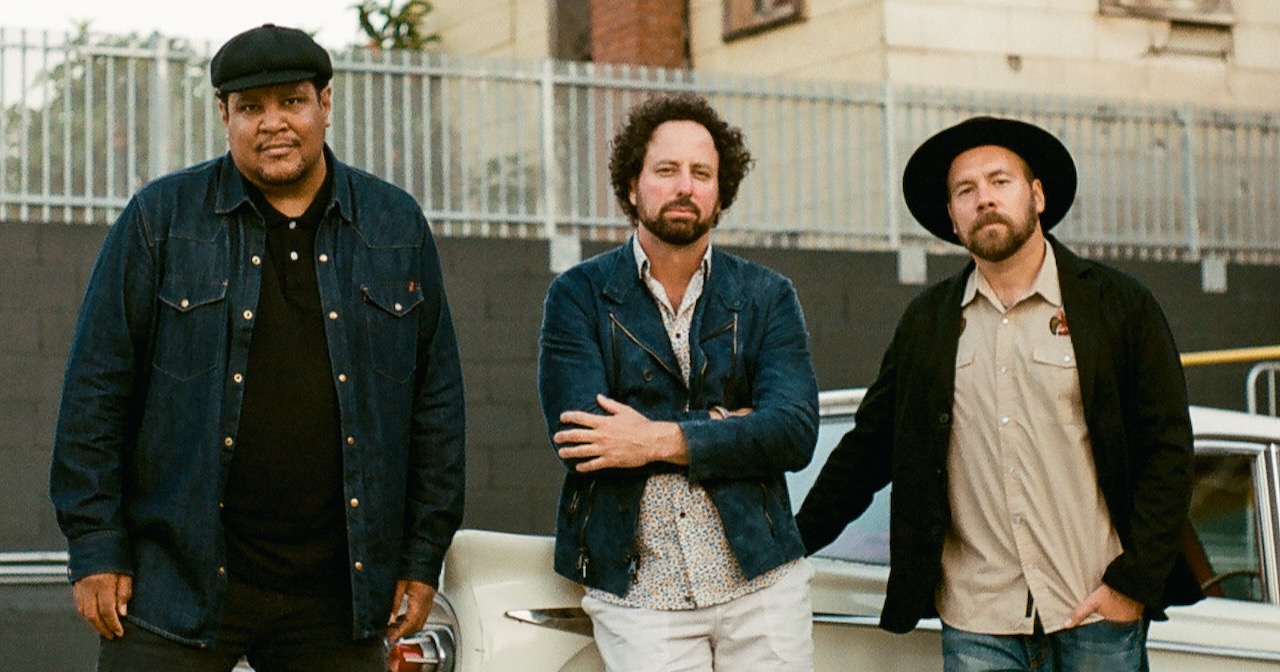
In Their Words: “The origins of Leon Creek as a band stems from our love of story songs in the country tradition. ‘High Hopes’ incorporates this approach, creating a song that is our ode to perseverance. We got the band together in the studio and cut this to capture the energy of our live show blending newly-mined honky-tonk influences with our singer Chris Pierce’s powerful soul vocals.” – Leon Creek (Chris Pierce, Matthew Stevens, and Erik Janson)


Photo Credit: Caitlyn Phu

WATCH: Jacob Sharp, “Other Side”

Artist: Jacob Sharp
Hometown: Los Angeles, California
Song: “Other Side” (feat. Aoife O’Donovan)
Release Date: May 26, 2023

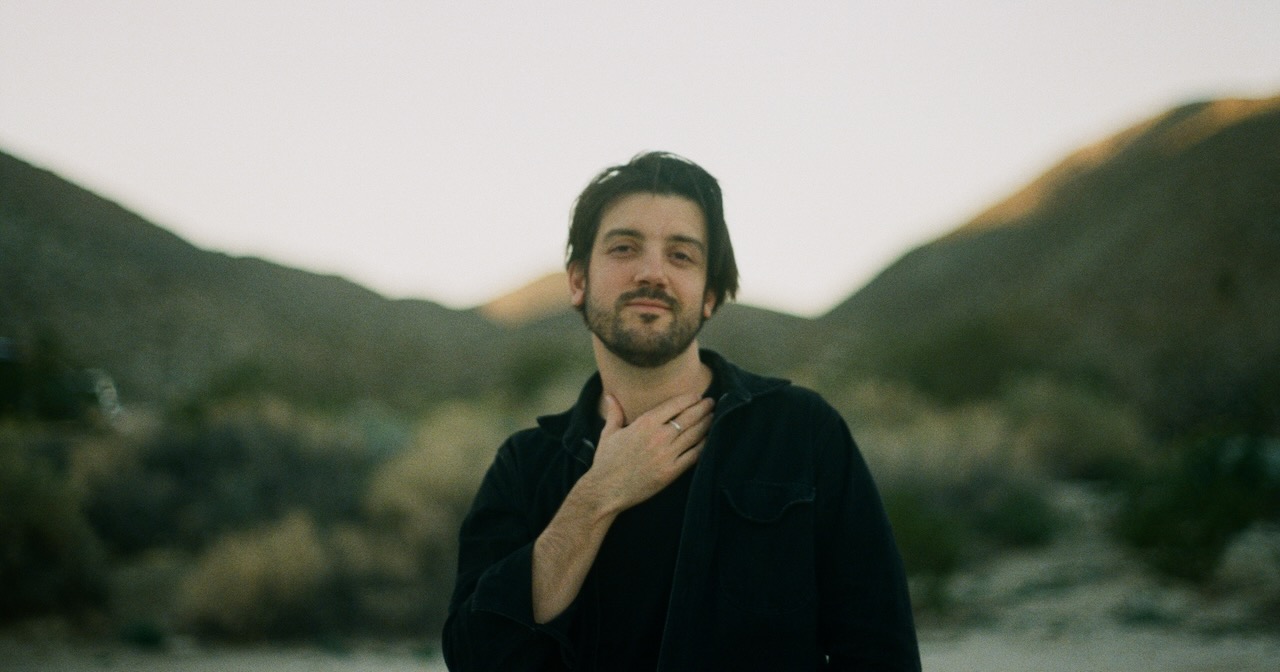
In Their Words: “I wrote this song in early 2020 when I was finally still enough to wrap my head around some of my emotions buried deepest. This one’s about a friend losing a battle with addiction, what I wish I had said more, and what I’ve been trying to say to all my people since. For me, music is for making and sharing with people. It’s why I love bands and being in Mipso. I talked myself out of releasing my own music so many times over the past few years, but when I realized it made for a good opportunity to collaborate with dear friends for the first time, it started to feel alright. I got the band of my dreams together and we recorded this one, mostly in separate locations in 2021.

“There is an amazing winemaker, Jude Zasadski, who is my neighbor in Mt. Washington – it’s a little oasis in the heart of Los Angeles – and he is someone who constantly inspires me. I love that dude so much. When I got the final mix for this tune, he was one of the first people I shared it with and he had an immediate vision for how we could show some of the fuzzier sides of memory whilst memorializing the preciousness of time and those moments when you feel your feelings again. We strolled around the neighborhood, got burgers and milkshakes, and then set up a projector in our friend’s garage. And one of my favorite filmmakers, Brady Lawrence, has been a friend for over a decade. His art always gets to emotional depth quickly and he was the perfect person to edit this video.” – Jacob Sharp


Photo Credit: Cate Parker
Video Credit: Jude Zasadski (director and videographer) and Brady Lawrence (editor)

WATCH: Jess Williamson, “Chasing Spirits”

Artist: Jess Williamson
Hometown: Austin, Texas; Los Angeles, California
Song: “Chasing Spirits”
Album: Time Ain’t Accidental
Release Date: June 9, 2023
Label: Mexican Summer

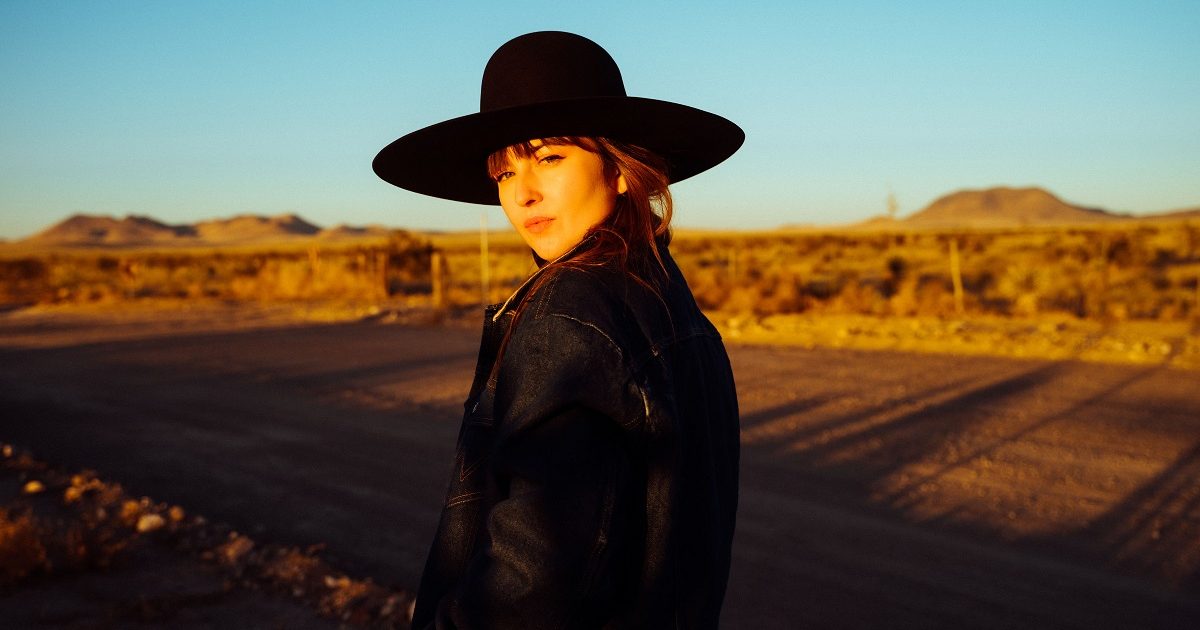
In Their Words: “‘Chasing Spirits’ opens with a question: are my love songs lies now that the love is gone? You can write a deeply devotional love song about a partner and then one day break up. In that same vein, the title of this song has multiple interpretations. Chasing spirits can be a way of trying to connect with supernatural entities or one’s own higher self, and also, you order spirits at the bar or pick them up at the liquor store, maybe with a chaser.” — Jess Williamson

“‘Chasing Spirits’ was shot in Marfa, Texas, where Jess lives half the year, and the video features a lot of her real-life friends. The party in the Marfa Bus was real, shot in the trailer park where it currently sits. The video plays with some true-to-life elements, but in a hyper-stylized manner that feels fitting for a town like Marfa that has been so culturally mythologized, where real life and legend start to blur.” — Rocco & Giles, video directors


Photo Credit: Jackie Lee Young

Minute-by-Minute at Willie Nelson’s 90th Birthday

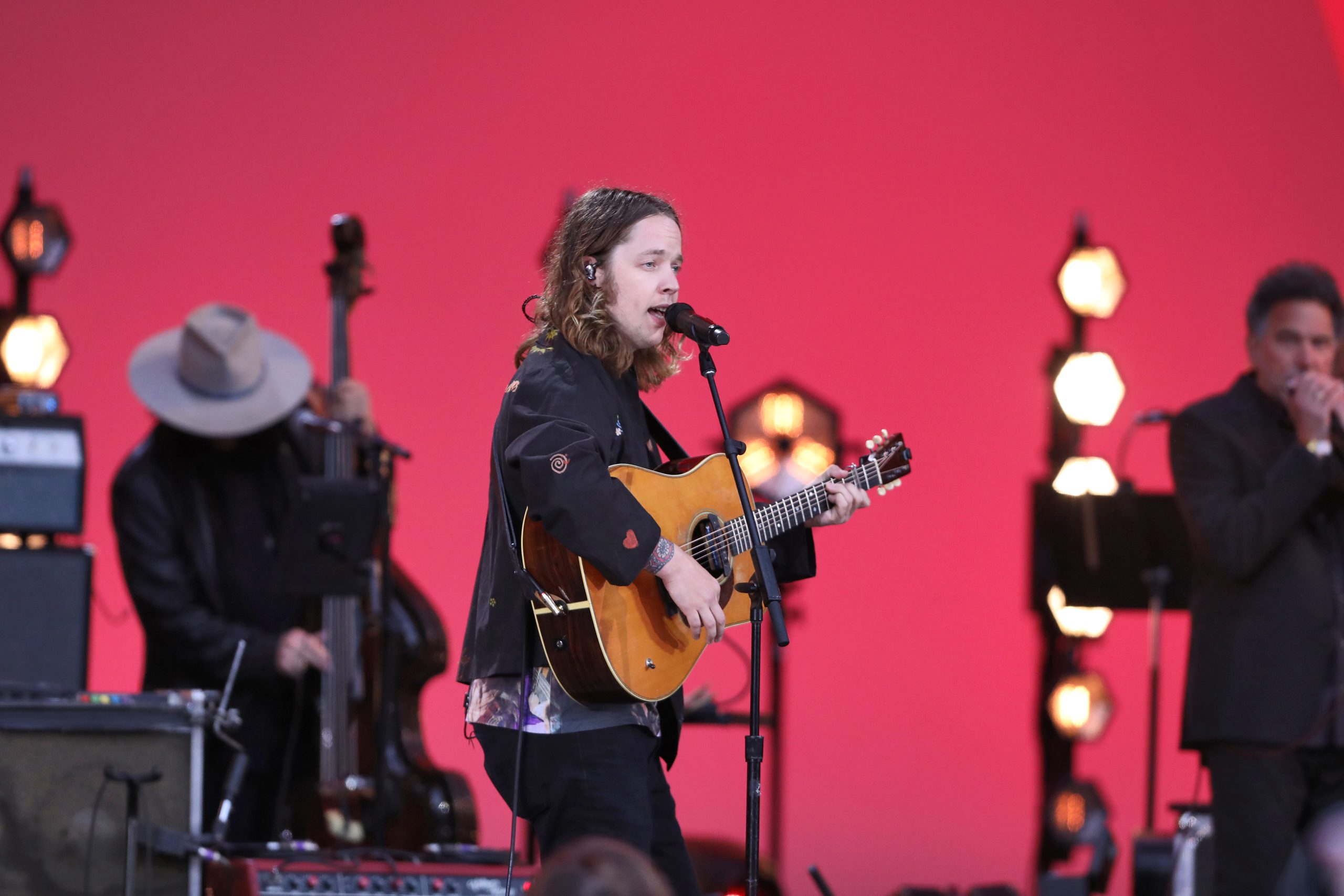
6:35pm – Billy Strings kicks off Night Two at the Hollywood Bowl with “Whiskey River.” It’s the same song as the first night but it’s a welcome repeat number (and face).

Billy Strings by Randall Michelson

6:39pm – Ethan Hawke opens the show, saying “Willie has always stood for equality,” so it’s no surprise to see the next guest…

6:40pm – It’s Orville Peck in a sleeveless vest (Aren’t his arms cold?! It’s freezing tonight) and his classic fringed mask. Performs “Cowboys Are Frequently, Secretly Fond of Each Other.” Makes use of the full Hollywood Bowl stage – he is owning this moment.

6:45pm – Charley Crockett. “Yesterday’s Wine.” Lady in box next to me states loudly, “Now this is real country.”

6:49pm – Allison Russell and Norah Jones do “Seven Spanish Angels.” These two voices are so perfectly in sync… please call me as soon as they do a duet record together.

6:56pm – Chelsea Handler introduces Dwight Yoakam for “Me and Paul.”

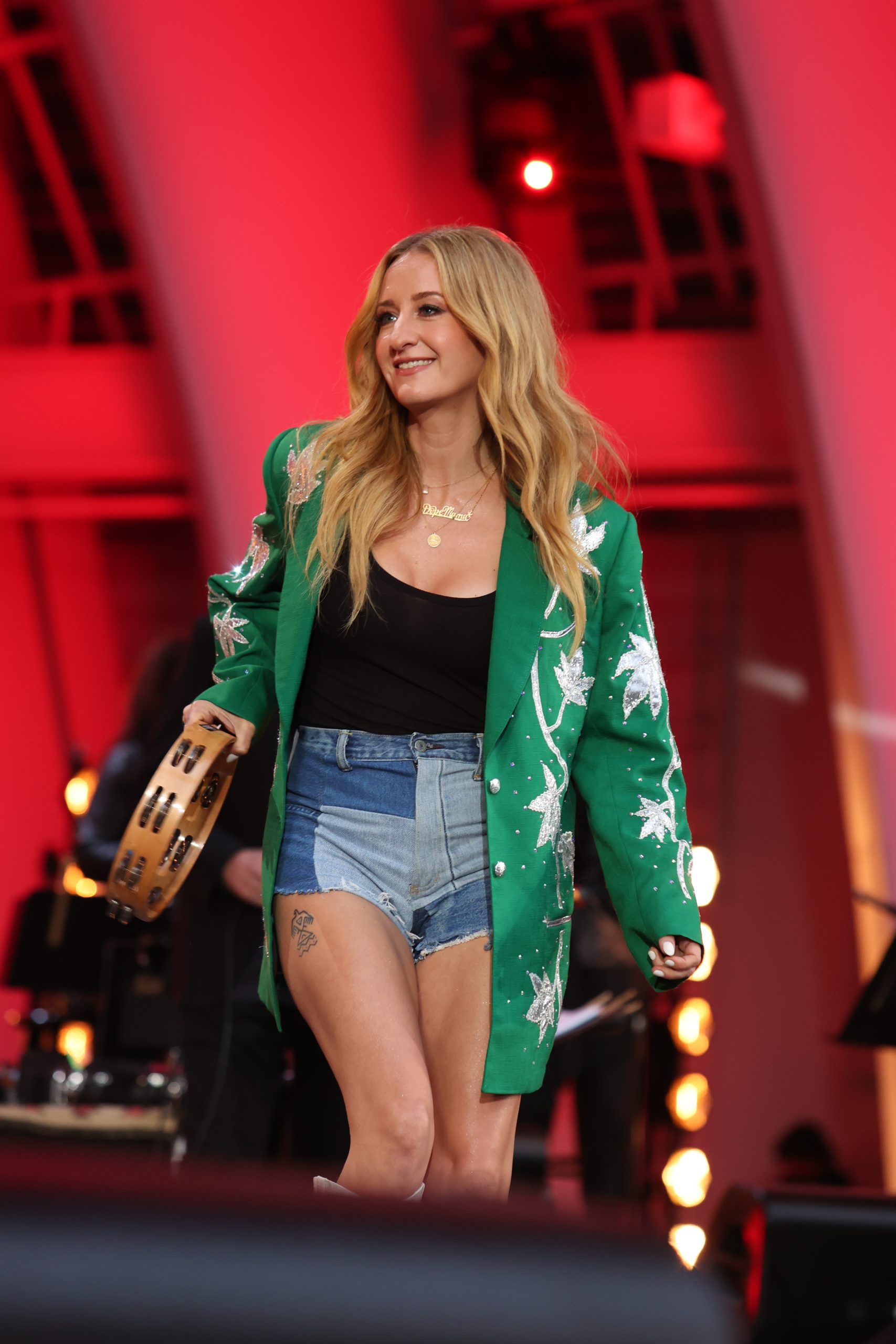
7:05pm – Waylon Payne and Margo Price take the stage together for “Georgia On A Fast Train.” These two are having the absolute best time together. Their chemistry is off the charts. From the box next to me, I hear a fan whisper under their breath, “MARGO IS MOTHER.” Couldn’t agree more.

Margo Price by Randall Michelson

7:14pm – Particle Kid (aka Willie’s younger son, Micah) along with Daniel Lanois. “I went to the garage and got high as shit and wrote a Willie Nelson song.” The lyrics come from a phrase his dad said one day: “If I die when I’m high I’ll be halfway to heaven, or I might have a long way to fall.”

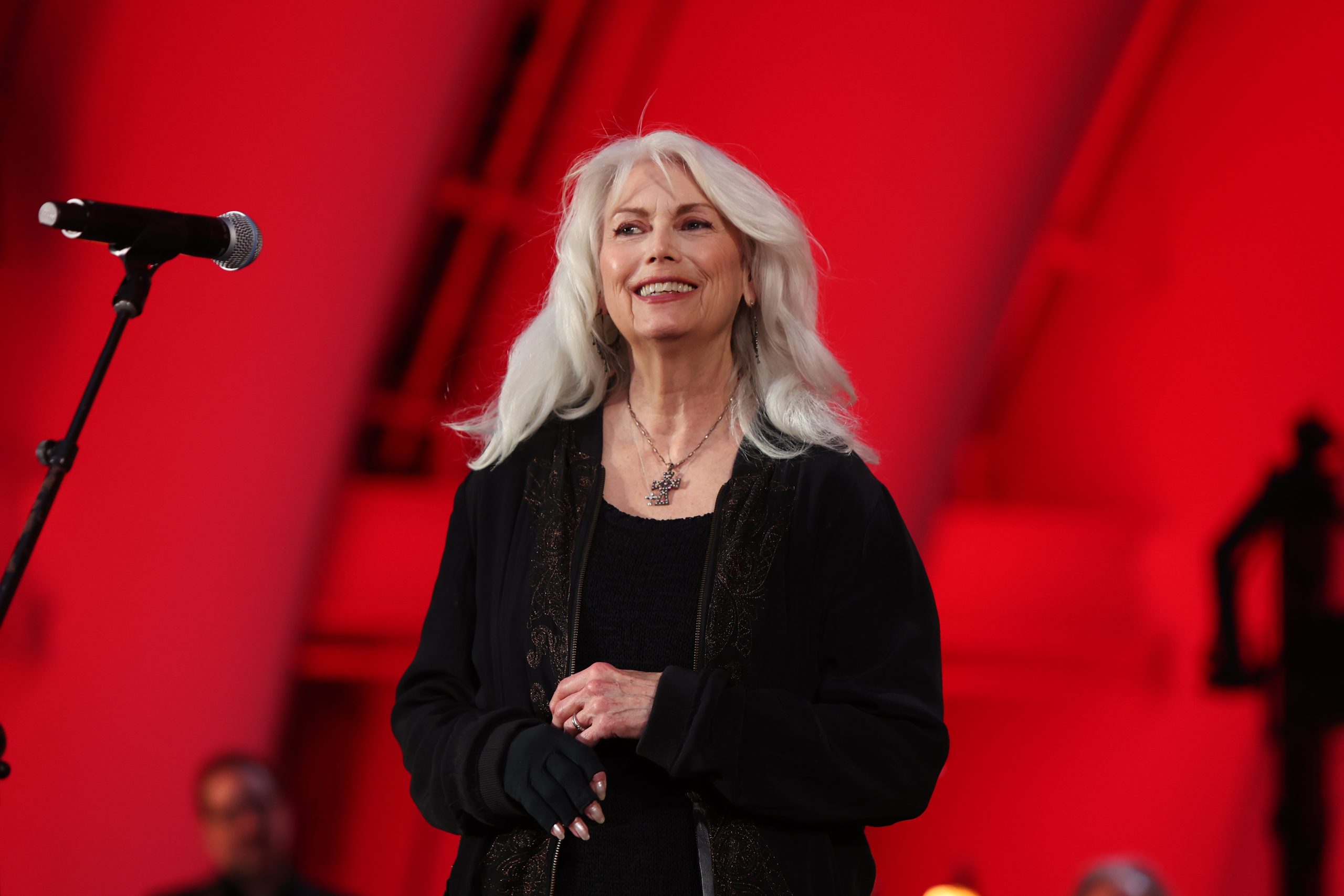
7:19pm – Dame Helen Mirren (!) introduces Rodney Crowell. Emmylou joins mid-song for “‘Till I Gain Control Again.” Crowd goes bananas.

Emmylou Harris by Randall Michelson

7:33pm – Rosanne Cash does “Pancho and Lefty.” Totally different interpretation compared to Night One (where it was performed by Willie and George Strait), but a universally beautiful song nonetheless.

7:46pm – Lyle Lovett melting hearts and brains on “My Heroes Have Always Been Cowboys”

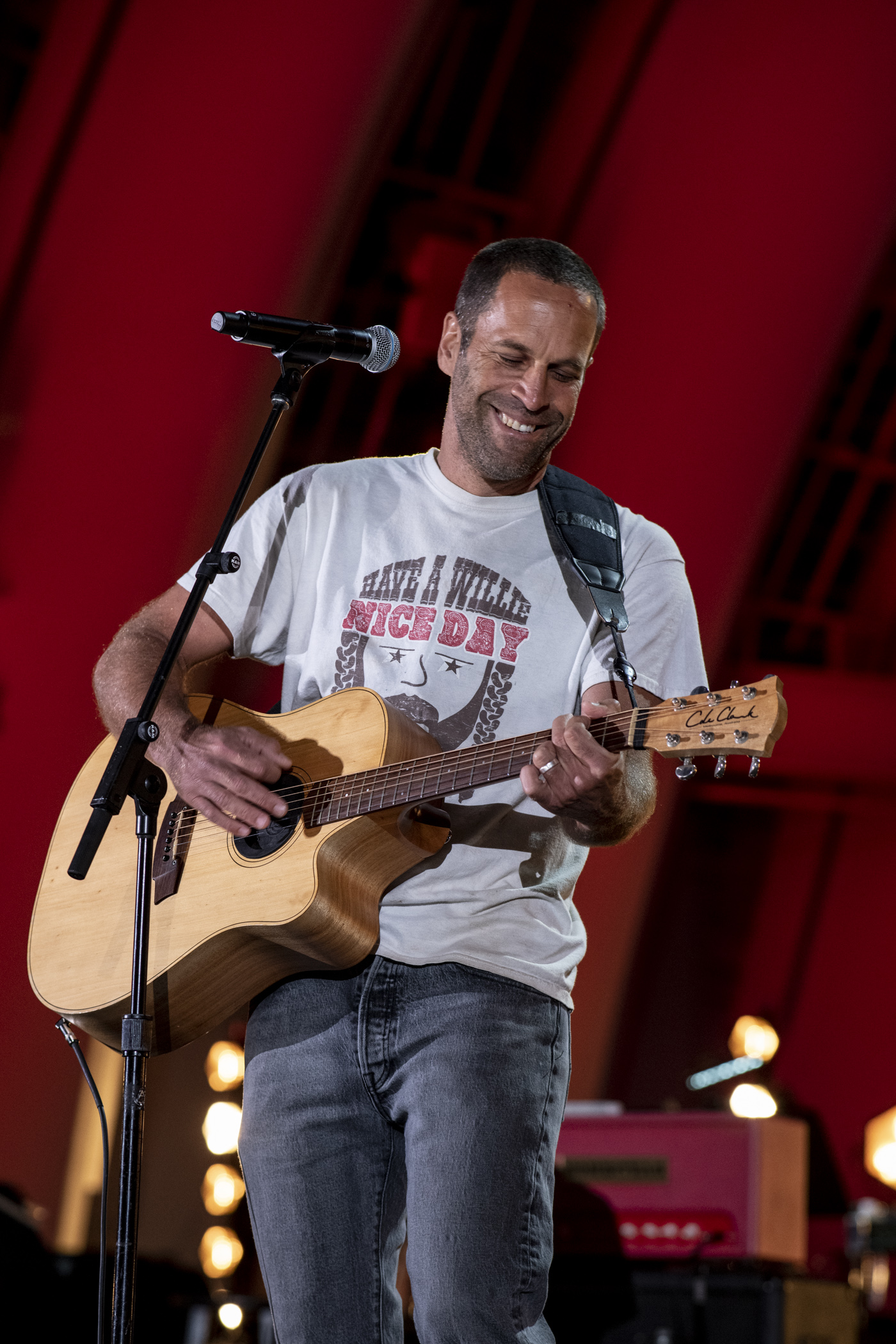
7:53pm – The “Aloha State Statesman” Jack Johnson performs one of the only non-Willie catalogue songs of the night, “Willie Got Me Stoned and Took All My Money.”  He wrote it after Willie got him stoned and took all his money (in a poker game).

Jack Johnson by Jay Blakesberg, Blackbird Productions

7:57pm – Beck (in sunglasses). First artist to acknowledge the unreal house band. “Can you imagine waking up in the morning and opening your eyes and realizing ‘I’m Willie Nelson’? It’s already a great day.” Performs “Blue Eyes Crying In The Rain.”

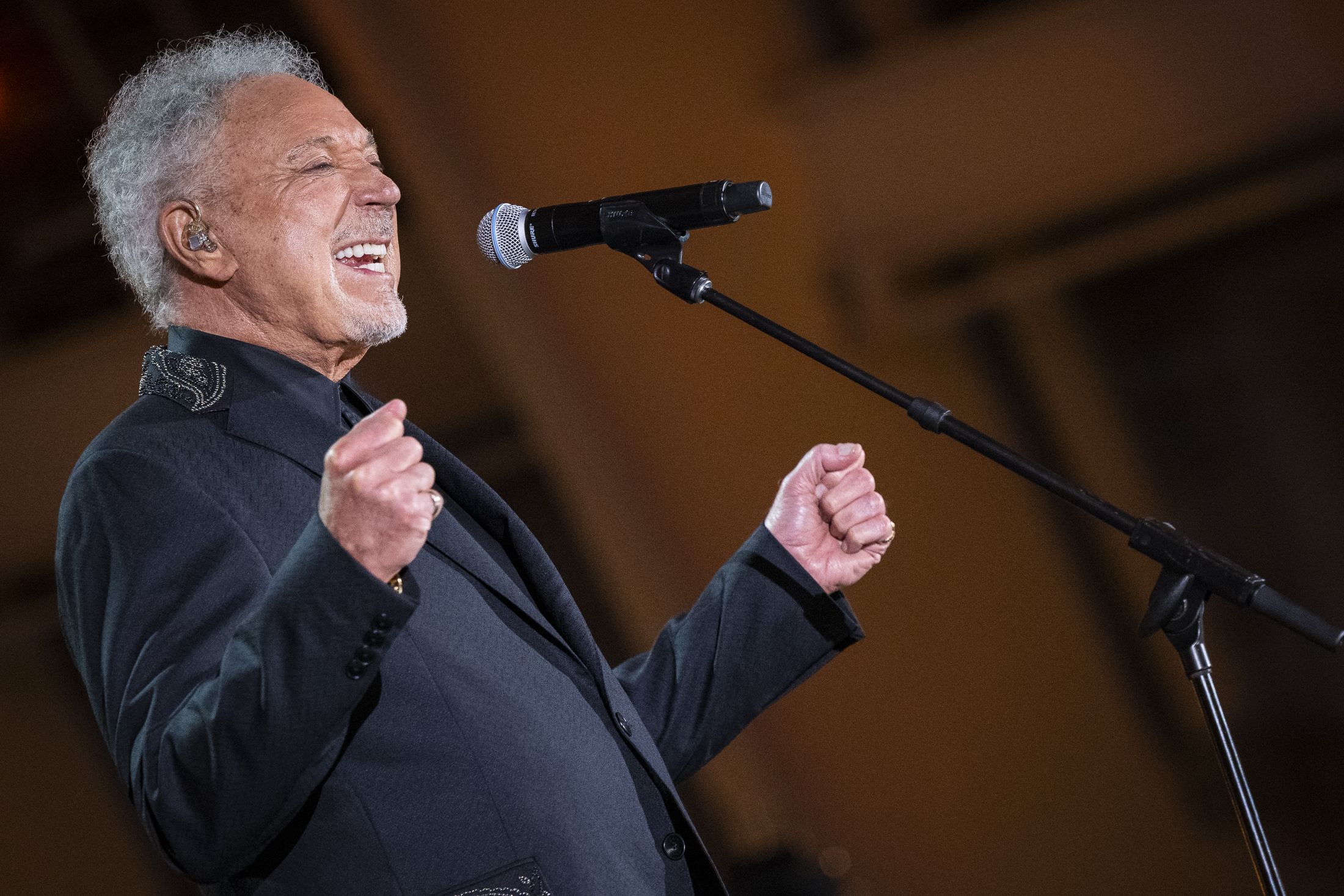
8:03pm – TOM JONES! One of the most unexpected joys of the night. His love for Willie shines through in his performance of “Across the Borderline.”

Tom Jones by Josh Timmermans

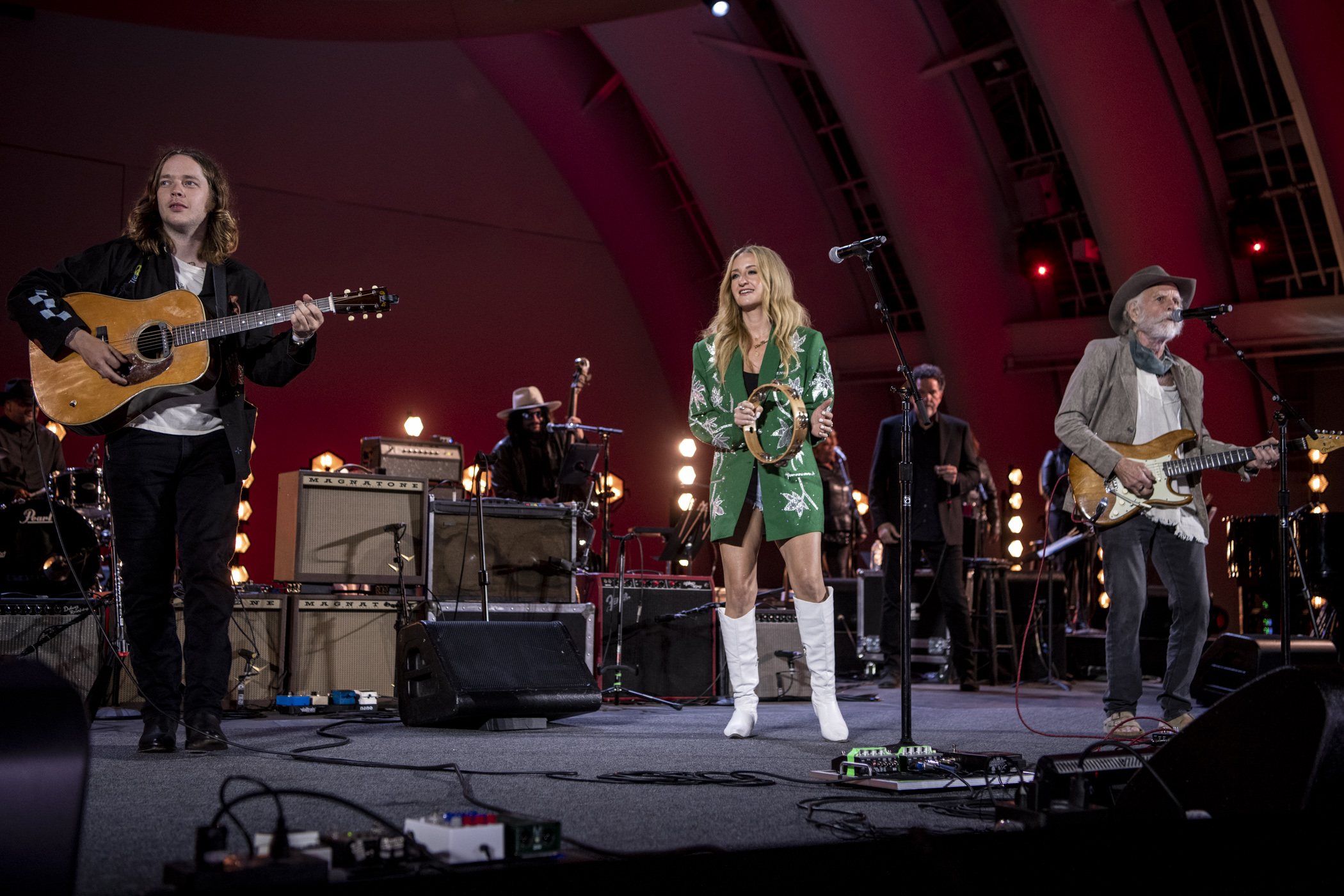
8:12pm – Surprise guest host Woody Harrelson takes the stage. “Not to self-promote, but just so you guys know, I did open a dispensary… seems like the right audience.” He introduces the legendary Bob Weir. Billy Strings and Margo Price join Bob on stage for a fun and enthusiastic “Stay All Night (Stay a Little Longer).”  Margo is having the most fun tonight.

Billy Strings, Margo Price, Bob Weir by Jay Blakesberg, Blackbird Productions

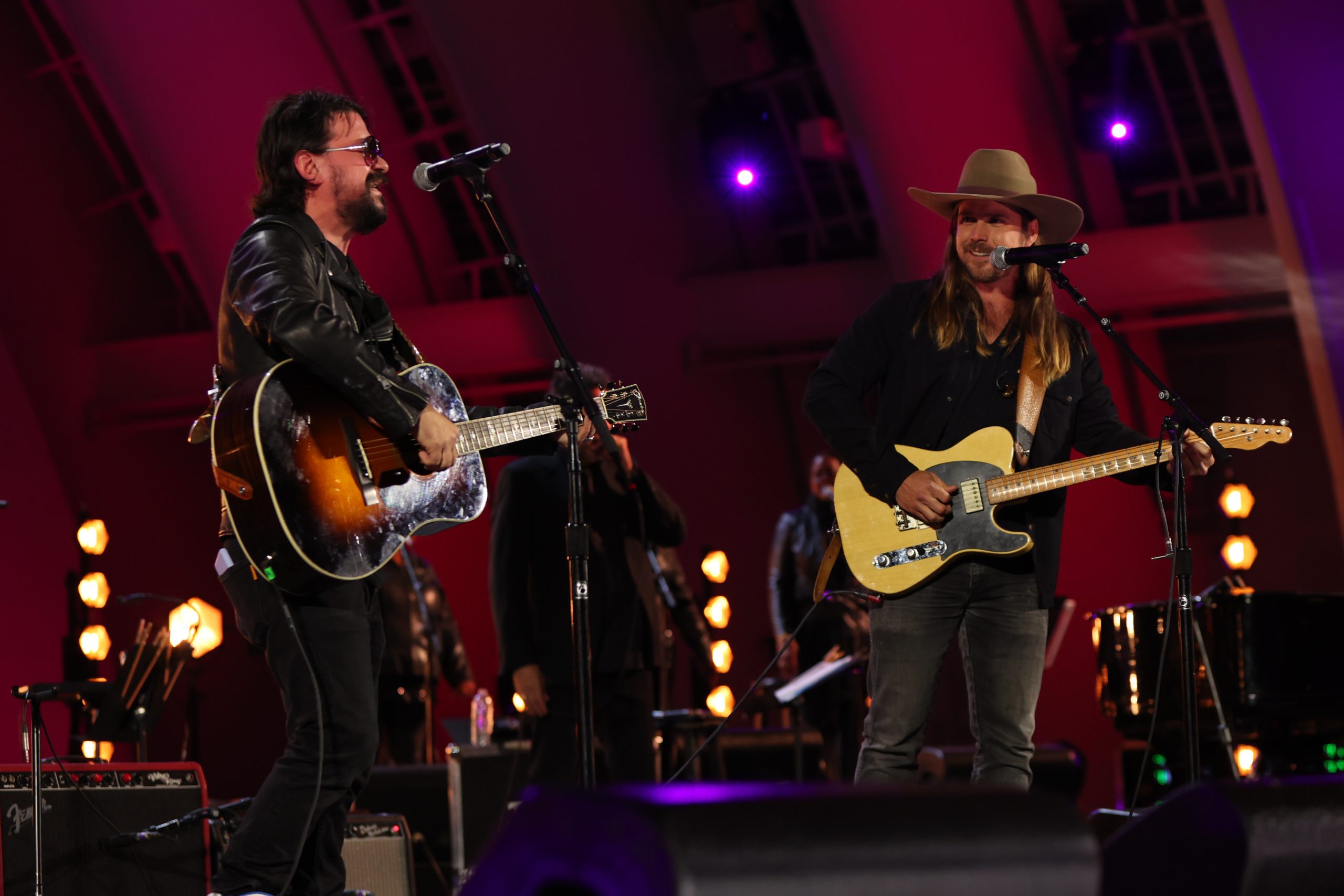
8:18pm – Shooter Jennings and Lukas Nelson together! The next generation doing their fathers proud with own rendition of “Good Hearted Woman.”

Shooter Jennings, Lukas Nelson by Randall Michelson

8:22pm – Lukas performs a heart-wrenching version of “Angel Flying Too Close to the Ground.” Sounds so much like his dad yet simultaneously unique to himself. He has all 18,000 attendees in the palm of his hand.

8:29pm – The Avett Brothers. Wow. They sound so good, and fresh off the MerleFest stage just 48 hours prior. It’s been a few years since I saw them and gosh I missed them.

8:40pm – Chelsea Handler introduces Norah Jones, who performs an instrumental ode to Bobbie Nelson.

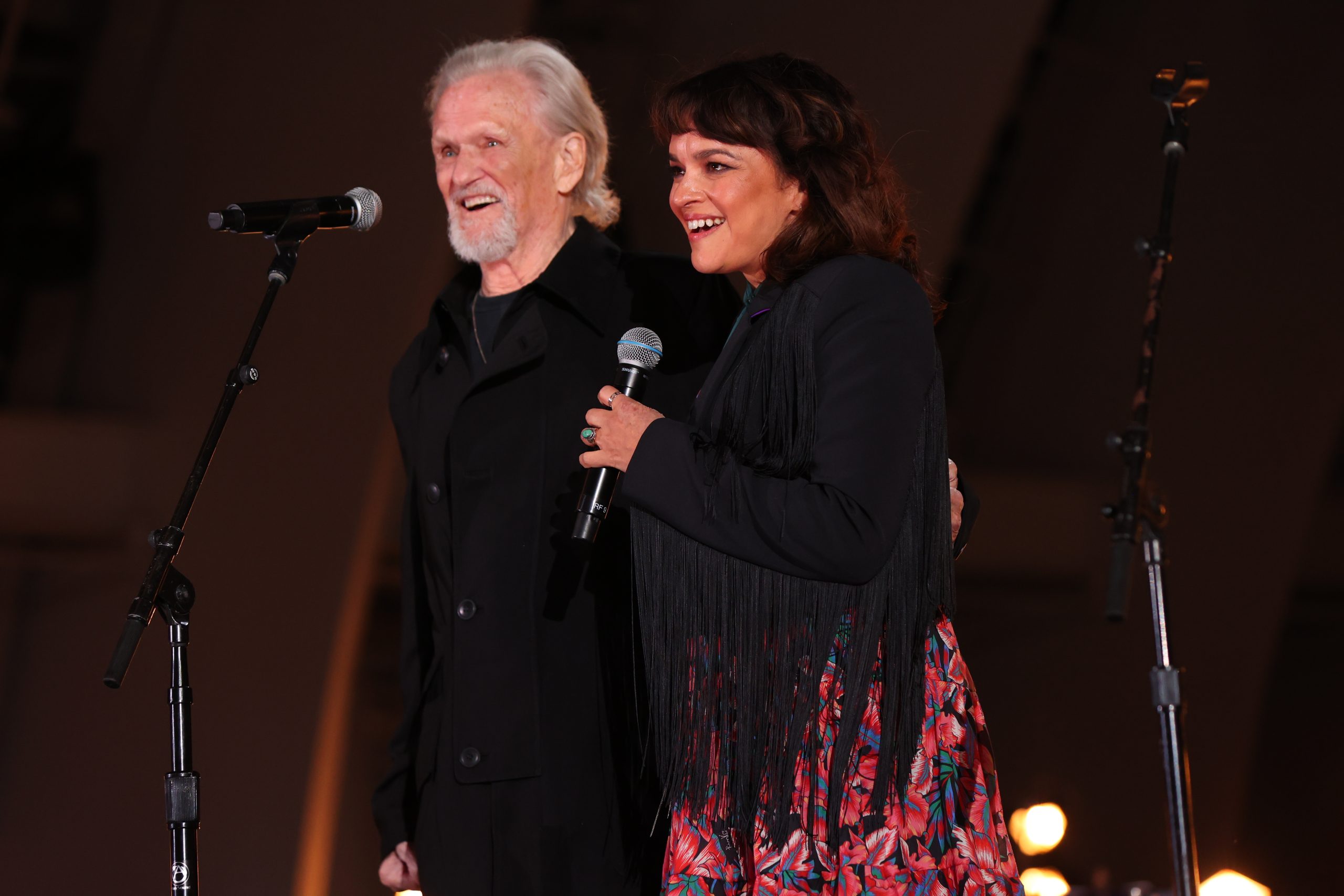
8:43pm – Norah brings on Kris Kristofferson (!) and helps him through “Help Me Make It Through the Night.” There’s not a dry eye in the house.

Kris Kristofferson, Norah Jones by Randall Michelson

8:49pm – Ethan Hawke introduces Nathaniel Rateliff. Not unlike the first evening (where he performed “City of New Orleans”) he steals the show with “A Song For You.” Rateliff is a national treasure who should be protected at all costs.

8:54pm – Sheryl Crow does “Crazy.” Crowd (rightfully) goes Crazy.

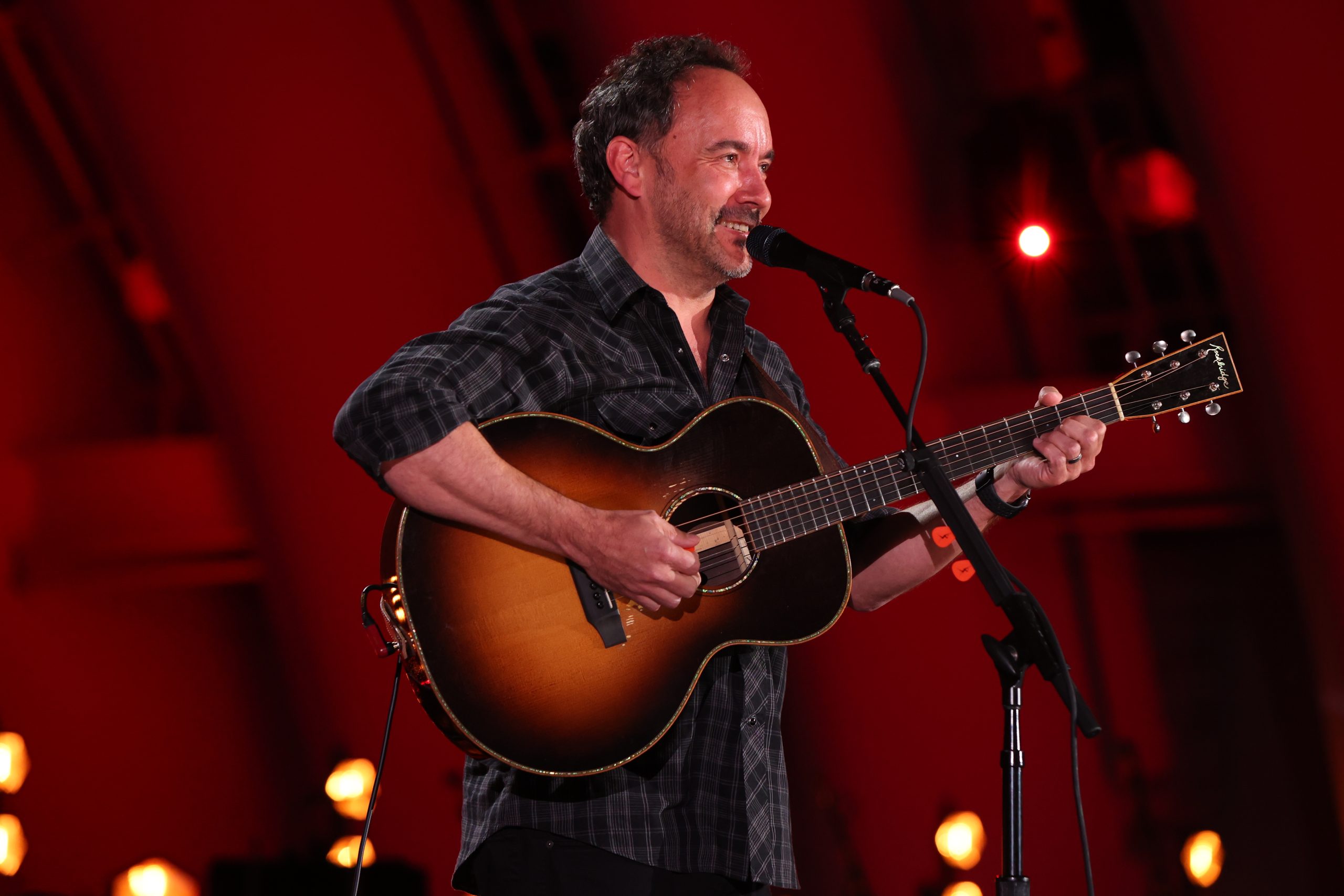
9:02pm – Dave Matthews, overflowing with sheepish charisma, tells an amazing story about getting high with Willie on his bus and how proud his mom was of that moment. The photo of that night is still prominently displayed on her mantle. He performs “Funny How Time Slips Away,” a song that seems to be the theme of the night.

Dave Matthews by Randall Michelson

9:18pm – Jamey Johnson and Warren Haynes perform “Georgia On My Mind.” From the first word Jamey sings, the audience goes wild. These two bring down the house.

9:28pm – The Children of the Highwaymen, including Lukas and Micah Nelson (Particle Kid), Shooter Jennings, and Rosanne Cash. One of the few moments during the show with technical difficulties.

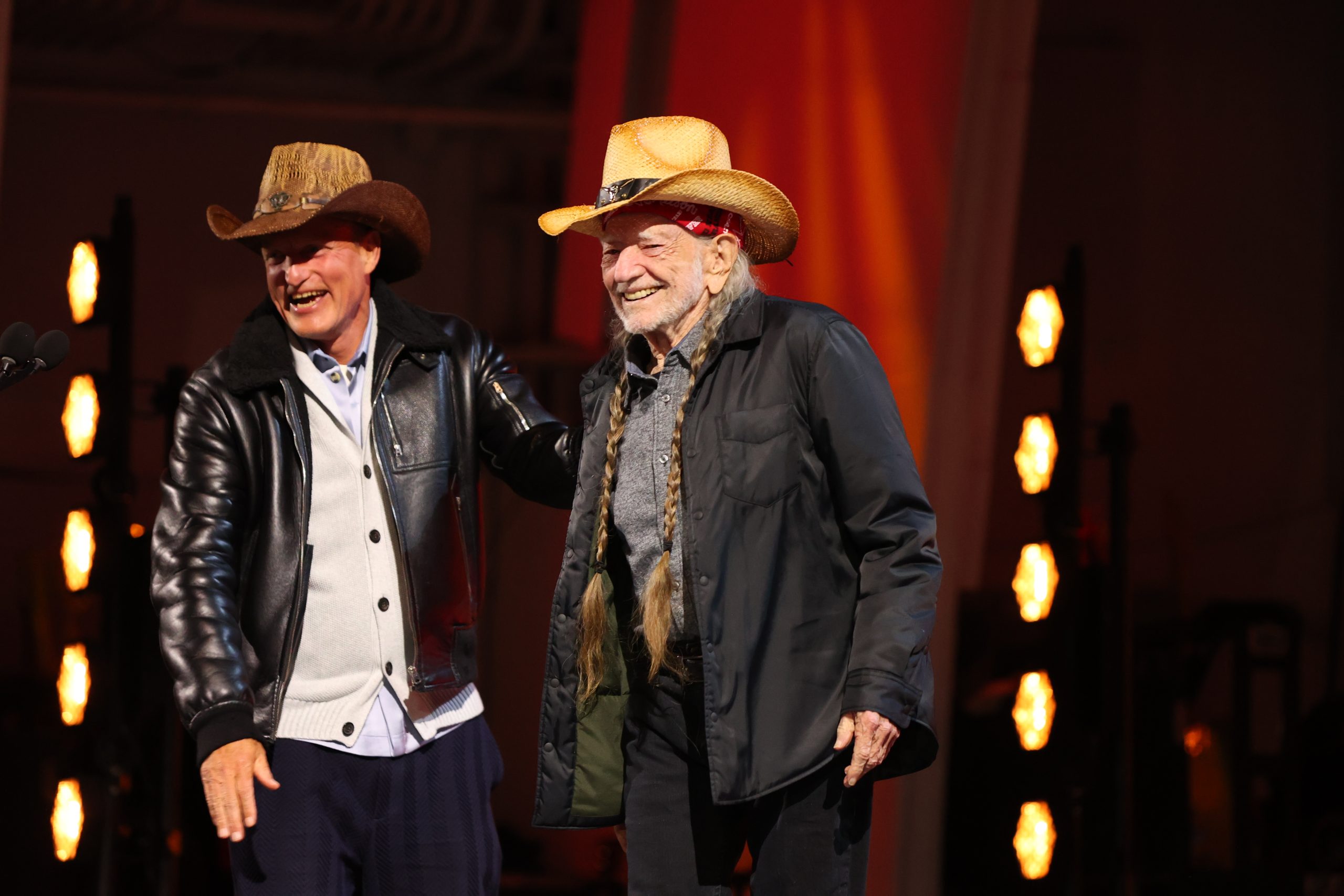
Woody Harrelson, Willie Nelson by Randall Michelson

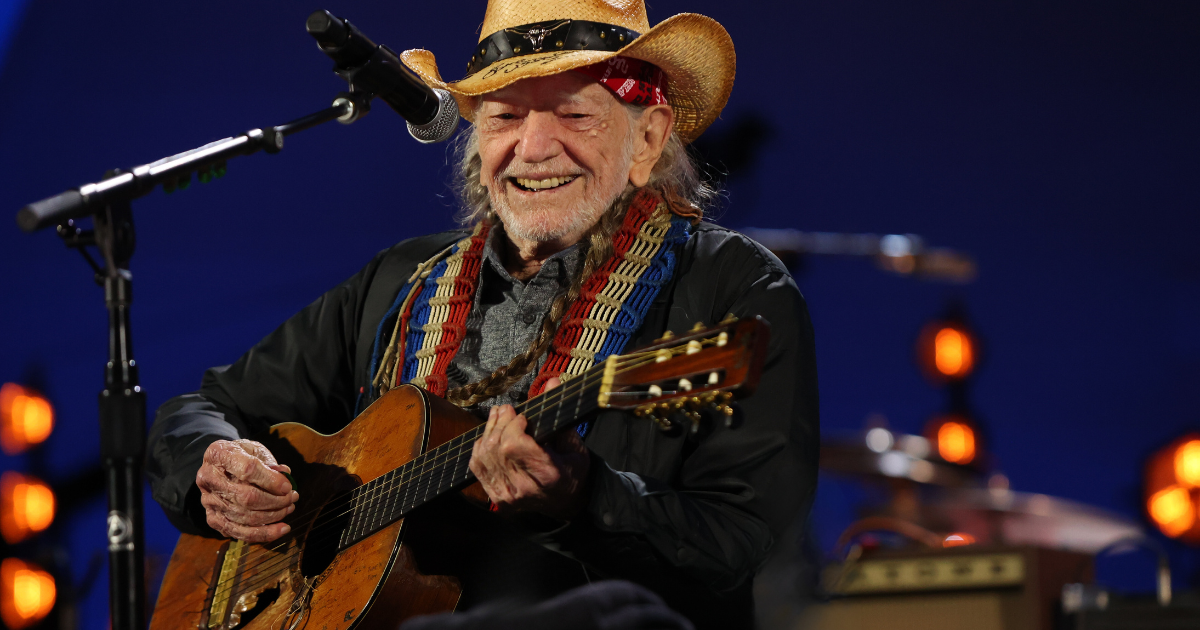
9:35pm – Woody Harrelson returns to the stage to introduce Willie. The man of the hour finally takes the stage. Willie performs “Stardust.” It is perfect. I am crying.

9:53pm – Willie duets with his longtime studio producer, Buddy Cannon, on “Something You Get Through” (which the two wrote together).

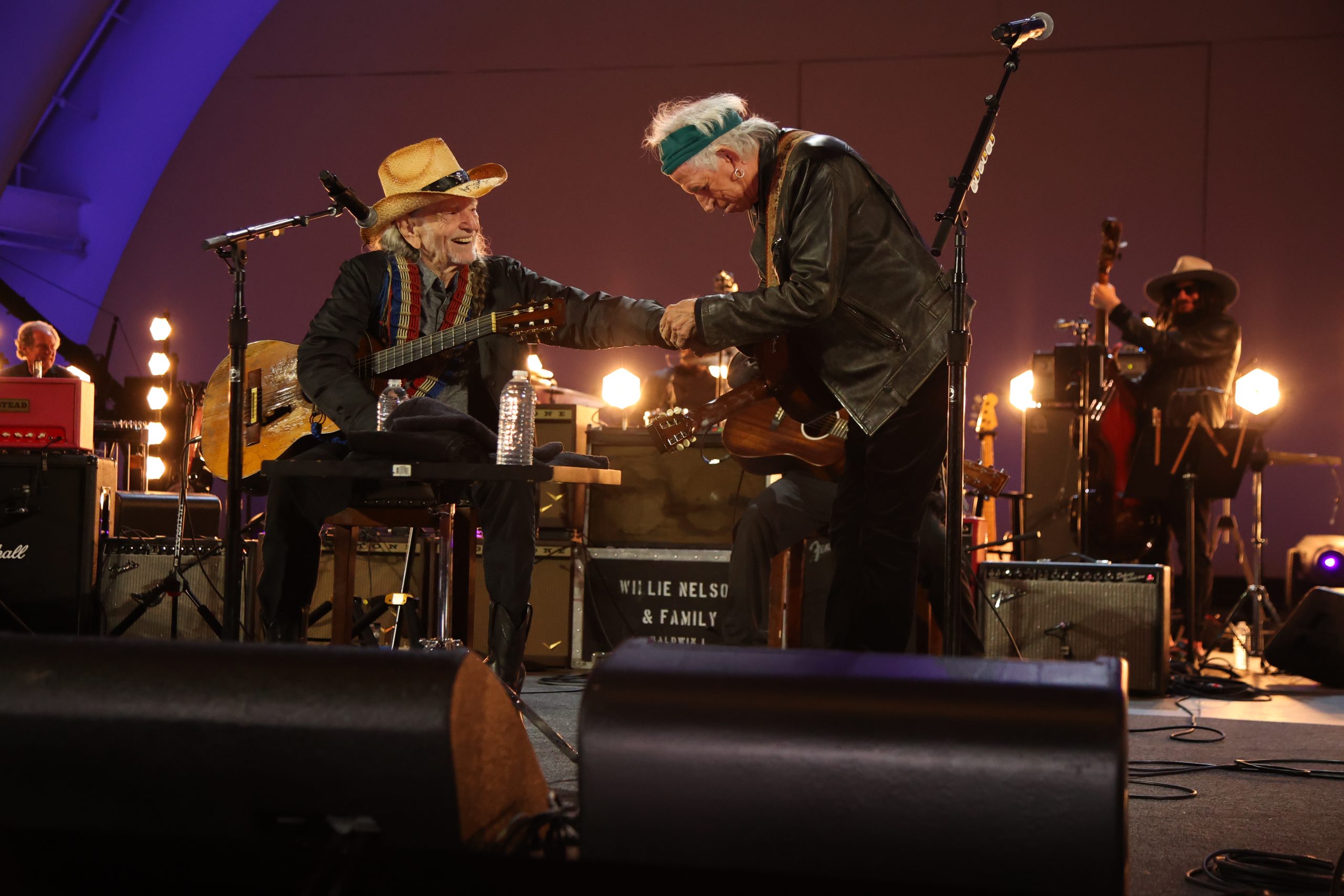
10:02pm – KEITH RICHARDS JUST WALKED OUT. I AM DECEASED. It’s hard to even remember what they performed because everyone is in such shock. (They performed “We Had It All” and “Live Forever”).

Willie Nelson, Keith Richards by Randall Michelson

10:10pm – All skate. “On the Road Again” of course. Willie wraps up the night by taking us all to church, ending with a medley of “Will the Circle Be Unbroken” and “I’ll Fly Away.” It’s going to take an awfully long time to process everything from this weekend.


Lead photo of Willie Nelson by Randall Michelson.

BGS 5+5: Abby Litman

Artist: Abby Litman
Hometown: Bethesda, Maryland
Latest Album: Still on My Mind EP

Which artist has influenced you the most … and how?

The one artist who has influenced me the most is Joni Mitchell. I first discovered Joni when I was in high school, and she became one of the reasons I wanted to pursue music. Listening to her, I was floored. Her lyrics were so relatable yet incredibly smart and observational, grounded in nature and full of poeticism. I spent hours and hours listening to all of her songs, dissecting them, taking them apart and putting them back together. Her albums made up my syllabus in songwriting. I read every biography and article about her I could get my hands on. Now, whenever I feel stuck with my own writing, I often go back to her songs and am quickly reminded why I wanted to be a musician in the first place.

What other art forms — literature, film, dance, painting, etc — inform your music?

I love reading poetry. My favorite poet is Edna St. Vincent Millay. I discovered a collection of her books on the shelves of my great-grandparents’ house in Maine. I was immediately taken in by her writing: blunt, sparse, yet layered with meaning and metaphor. Similar to my relationship to Joni Mitchell’s music, reading St. Vincent Millay’s poetry felt like finding someone who saw the world as I do. I also find inspiration in Sylvia Plath’s poetry and Shel Silverstein.

What’s the toughest time you ever had writing a song?

Sometimes, I struggle with finishing a song. Often, a song comes out all in one piece, almost seamlessly, but other times it can take weeks, sometimes years for a song to feel “finished.” Learning to enjoy the revising process has been helpful, but I sometimes feel like the constant revision takes away from the song’s authenticity, its initial spark. When I was writing my song “Alright,” I went through dozens of verses, melodies, and guitar parts. And the more I messed with the song, the less connected I felt to it. I was getting further from what the song was initially trying to say. It wasn’t until my producer Tyler Chester and I put some of the disparate parts I had written together, that I felt like the song finally revealed itself. Collaborating with Tyler has been one of the best experiences of my songwriting career.

What has been the best advice you’ve received in your career so far?

It sounds obvious, and maybe a bit trite, but the best advice I’ve ever been given is to “write good songs.” When I find myself comparing my music to other artists’, worrying about whether I’ll ever be successful, or feeling jaded by the music industry, I go back to that advice. I go back to writing songs because that’s really the only thing I can do. As long as I focus on my craft and keep making art that I am proud of, things will fall into place. I know that as long as I continue writing songs and making music, I’ll be happy pursuing the thing I love.

Which elements of nature do you spend the most time with and how do those impact your work?

I currently live in Los Angeles and my go-to spot for nature is the beach. My favorite thing to do is grab a towel, sit on the sand and stare out into the ocean. There’s something about the vastness and wildness of the ocean that helps to clear my head. It’s actually a place where I’ve gotten dozens of lyrics and guitar parts. One of my favorite times to go to the beach, perhaps paradoxically, is when it’s cold and cloudy. I love the salty wind, the crashing waves. It makes me feel small and renewed, but most of all, it opens up my mind to accept inspiration that I otherwise wouldn’t find in a city.


Photo Credit: Tammie Valer

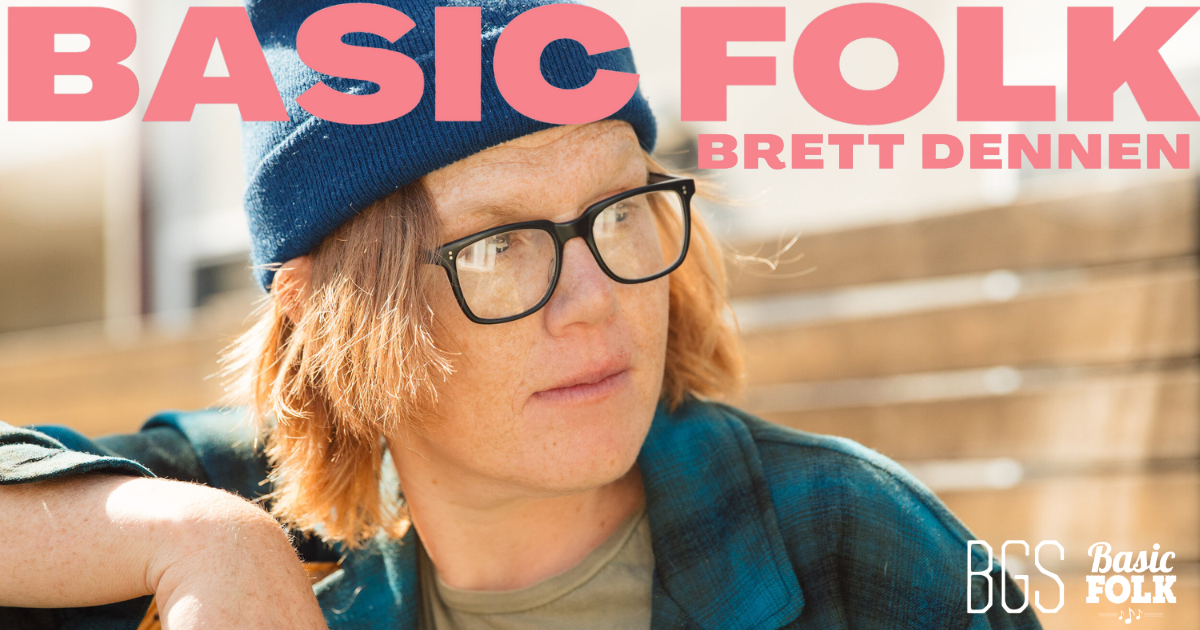
Basic Folk – Brett Dennen

Brett Dennen is a songwriter, painter and summer camp enthusiast. His camp experience was instrumental in developing his musicality. He attended Camp Jack Hazard in the Sierra Nevada Mountains where young Brett was enamored with the music his camp counselors would play on guitar around the campfire. He was introduced to Paul Simon, Neil Young, Joni Mitchell and John Denver thanks to his counselors and his parents. He really developed as a songwriter in college at UC Santa Cruz. After school, he wove himself into the LA songwriter scene, which in the early 2000’s was a haven for musicians like himself, Alexi Murdoch, Damien Rice and Josh Ritter. He developed a large fanbase that remains loyal to this day.

LISTEN: APPLE • SPOTIFY • STITCHER • AMAZON • MP3

Brett talks about running his own summer camp, Camp Dennen, which allows him to create community through nature and art. He shares his experience of writing and thinking about being a dad and how that relates to the reality of fatherhood. And he talks about decidedly not being in the cool crowd and also not caring about it … well, not caring about it as much as he used to. Brett’s written some of my favorite songs of the 21st century. It was an honor to have him on the pod!


Photo Credit: Elli Lauren

WATCH: Alice Howe, “Love Has No Rules”

Artist: Alice Howe
Hometown: Los Angeles by way of Boston
Song: “Love Has No Rules”
Album: Circumstance
Release Date: April 21, 2023

In Their Words: “‘Love Has No Rules’ is a song about following your truth in love and life, setting aside others’ expectations and judgments. It’s about trusting yourself, and listening to that deep, internal knowledge that guides you to what is right for you. In both the writing and the singing of this song, I had to tap into my power, and I’m so proud of the vocal that you hear on this recording. As my producer, arranger, and co-writer, Freebo brought his unique musical sensibility to this song, helping me take it from a sweet ballad, which is how I originally envisioned it, to an infectious track with an ’80s-style groove. ‘Love Has No Rules’ is a strong statement both lyrically and musically, and it’s representative of the collaborative nature of this entire album.” — Alice Howe


Photo Credit: Jim Shea