Since the very beginning of the cowboy genre, cowboy songs and cowboy poetry have been closely related. Many of the best-known traditional cowboy songs started out as poems and many cowboys have recited song lyrics as poetry. The first man to collect cowboy songs was a New York-bred cowpuncher named Jack Thorp. As Thorp observed in his book, Pardner of the Wind: “Cowboy songs were always sung by one person, never by a group. I never did hear a cowboy with a real good voice; if he had one to start with, he always lost it bawling at cattle, or sleeping out in the open, or tellin’ the judge that he didn’t steal that horse.”
That old-time cowboy singing was mostly done a cappella, as there were not many guitars to be found on the trail drives or in the cow camps. It also seems that there was a fine line between “singing” and “reciting.”
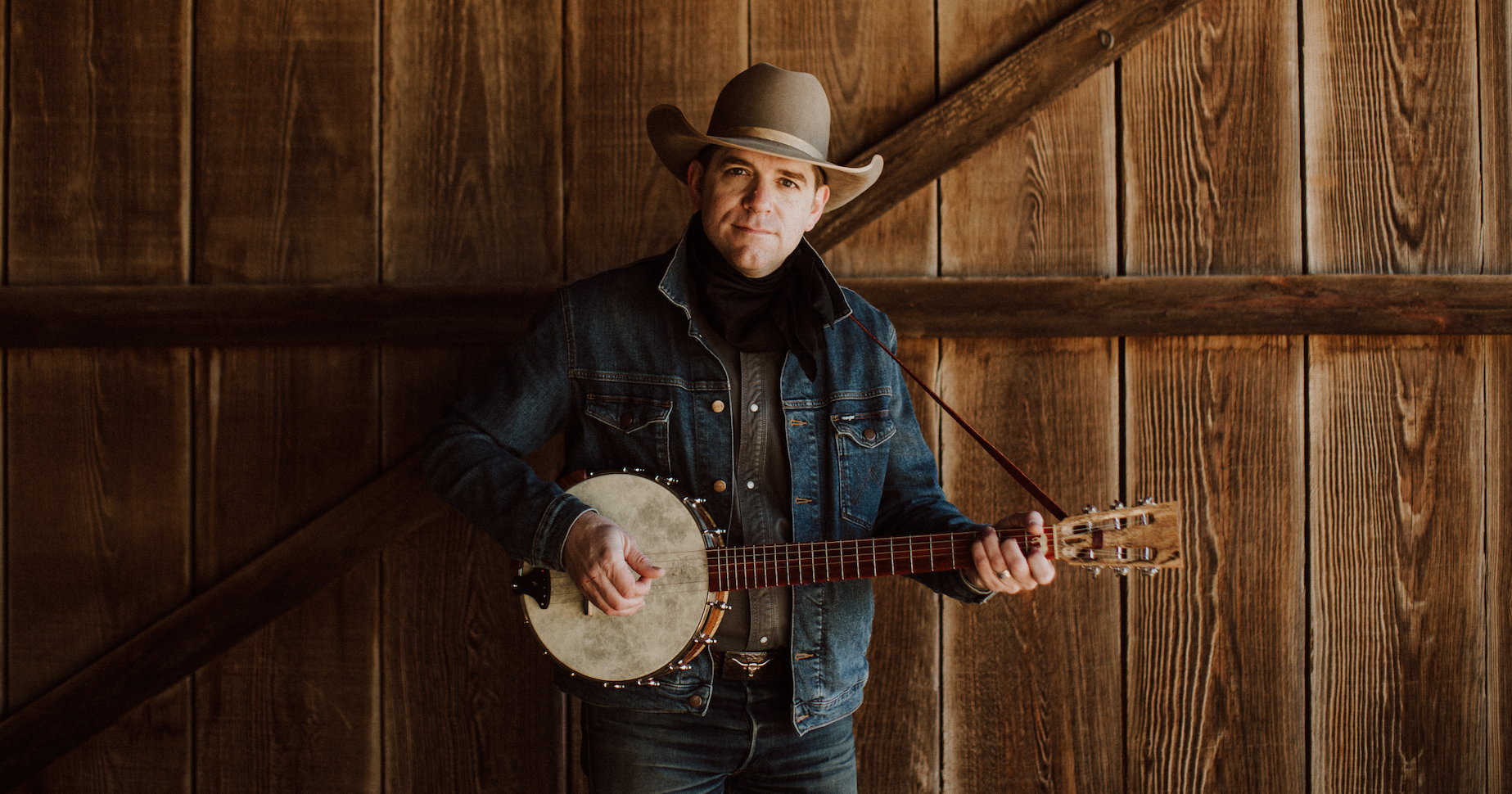
This tradition of setting cowboy poems to music has continued to the present day. My old friend and mentor Don Edwards was master of this. He taught me that if you find an old poem or a set of lyrics with no music, then you just make up your own tune and make your own song out of it. That’s part of the cowboy songster tradition. – Andy Hedges
“The Strawberry Roan” – Harry Jackson
This is the most famous of all bronc ridin’ songs and one of the most famous of all cowboy songs. It was originally written as a poem by Curley Fletcher in 1914. The original title was “The Outlaw Broncho.” Rumor has it that Fletcher wrote the poem about a bronc ride made by the legendary cowboy artist and writer Will James.
Even though the poem became one of the most recorded cowboy songs of all time, Curley Fletcher never made a dime off of it due to unscrupulous copyrighters and publishers. This recording by Harry Jackson is a great example of the old-time unaccompanied style of cowboy singing.
“Sierry Petes” – Gail Steiger
“Sierry Petes” was written as a poem by Arizona cowboy Gail Gardner in 1917. It’s been set to music many times and is better known as “Tying Knots in the Devil’s Tail.” Many folks have failed to give proper credit to Gail Gardner and have also failed to get the words right. This is the original version recited by Gail Gardner’s grandson, Gail Steiger.
“Sierra Peaks” – Ian Tyson
A fun version by the great Ian Tyson with a corrupted title, some incorrect words, and a modern beat. Ian Tyson revitalized cowboy music in the 1980s with both his versions of traditional cowboy songs and his original compositions.
“The Dixie Cowboy” – Taylor’s Kentucky Boys
Montana cowboy D.J. O’Malley published a poem entitled “After the Roundup” in the Miles City Stock Grower’s Journal in 1893. It became known as “When the Work’s All Done this Fall” and a 1925 recording by Carl T. Sprague sold over 900,000 copies. I’ve always loved this obscure version by Taylor’s Kentucky Boys with an alternate melody.
“The Long Road West” – Don Edwards
Henry Herbert Knibbs was a poet, novelist, hobo, and owner of a violin repair shop. He never earned a dime as a working cowboy, but his poetry entered the oral tradition of working cowboys. “The Long Road West” speaks to the kinship between cowboys, hobos, and sailors. It was set to music by the great Don Edwards.
“The Old Cowman” – Andy Hedges & Brenn Hill
In his book Classic Cowboy Songs, Don Edwards tells the story of how he fell asleep reciting this poem one night and woke with the melody in his head. This song is more relevant now than when it was written, over 100 years ago. I recorded this version with my pard Brenn Hill for my 2023 album of cowboy duets entitled Roll On, Cowboys.
“Spanish is the Lovin’ Tongue” – Michael Martin Murphey
Originally written as a poem entitled “A Border Affair” by Charles Badger Clark. I think that Michael Martin Murphey plays the definitive version of this song. And it was also the first song that Murph sang onstage at the National Cowboy Poetry Gathering in Elko, Nevada, when he showed up at one of the early gatherings. It always reminds me of All the Pretty Horses by Cormac McCarthy.
“The Westerner” – Andy Hedges
I found the “The Westerner” in Charles Badger Clark’s 1915 book Sun & Saddle Leather. The poem speaks to the values of folks who live in the rural West. I hope that my melody does it justice. It is the title track of my new album.
“Shadow on the Cutbank” – Trinity Seely
This is a modern-day poem set to music – the poem by horseman, cowboy, and poet Joel Nelson, and the melody by horsewoman and singer-songwriter Trinity Seely. The poem is Joel Nelson’s answer to the historians who have written the cowboy off as a vanishing breed.
“Hitting the Trail Tonight” – Buck Ramsey
“Hittin’ the Trail Tonight” was a signature song for the late great Texas cowboy singer and poet Buck Ramsey. Originally written as a poem by classic cowpuncher poet Bruce Kiskaddon, folklorist and musician Hal Cannon set this one to music sometime in the mid-1980s. I asked Hal about this piece and he told me that he “always felt there is something about Kiskaddon’s words that feel good in the mouth as they come out.” This one will have you singin’ along.
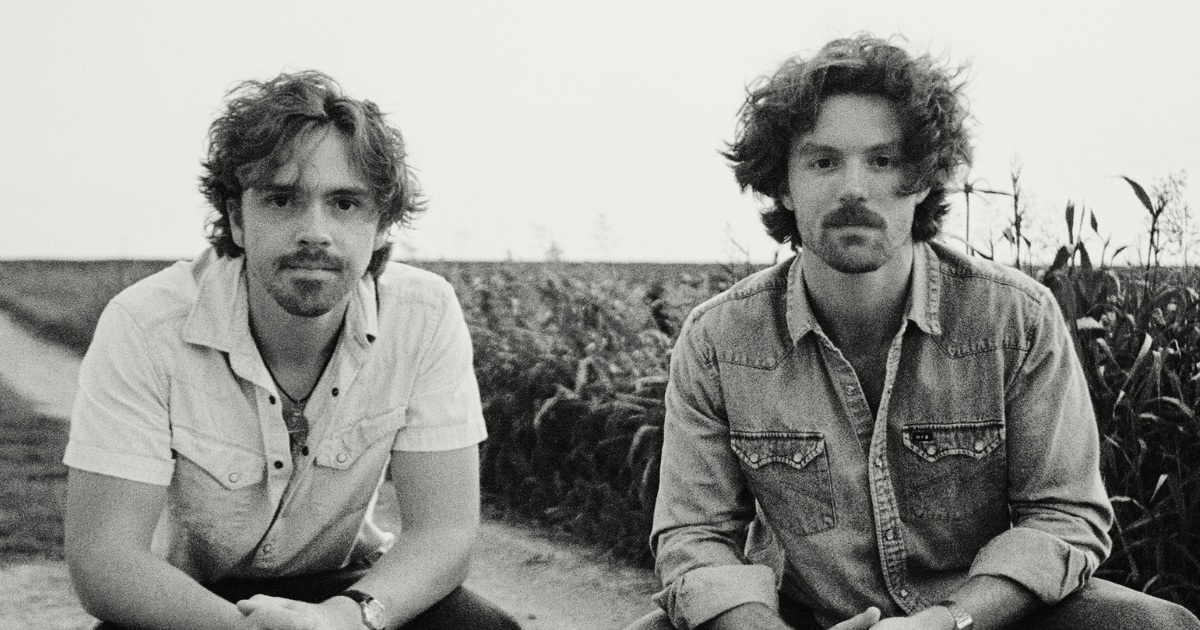
Through the windshield of their Ford Transit van, the duo Briscoe drew songwriting inspiration from the Southwestern landscape during a long, meandering road trip after graduating from the University of Texas. However, this trek was more than just a rite of passage, as band members Philip Lupton and Truett Heintzelman were launching their first national tour. In those seemingly endless miles between show dates, they would trade lyrical ideas to flesh out once they got back home to Austin.
Described by the band as “Texas folk-rock,” those cinematic songs have now surfaced on Briscoe’s second album, Heat of July. Produced by Brad Cook and released by ATO Records, the collection is a generally optimistic highway companion set against the backdrop of sunsets somewhere south of Alpine, Texas, long drives to Denver, and Mexican eagles circling overhead.
During a brief break from the road, Briscoe spoke with Good Country about how banjo fits into their sound, discovering bluegrass through YouTube videos, and the John Prine classic that set it all in motion.
I found it interesting that you were writing this album as you were driving around the country. You’re going 80 miles an hour as these songs are coming to you. Can you set the scene of what that looked like?
Philip Lupton: Yeah, that’s a great question. A lot of this record was written on the road just because we were touring hard on our debut album, West of It All. You’re in the van for so many hours a day that you eventually get tired of listening to music, no matter how much you like music. You just need some silence. I think that’s when Truett and I can find a little bit of inspiration. Like, “OK, cut the music.”
“Arizona Shining,” the second song on the record, is very much written as I’m taking in the landscape through the window. You just start to mumble a few things under your breath. And then you hold up your phone and take a little voice memo. You get back home in a couple weeks, you come back to that idea, and then, finally, get to put it to a progression and bring it to life.
When you’re out on tour, coming out of your hotel, and you see that van hooked up to a trailer, does it ever strike you, like, “We’re really out here making this happen”?
PL: Yeah, absolutely it does! There’s this old Hayes Carll song called “I Got a Gig.” I listen to that song and I’m like, “OK, we’re doing it. We’re road dogging it.” We’re staying at the cheap hotels and playing gigs for cash at the door and whatever. We’ve seen a lot of growth and success in a lot of markets, but when you’re taking it all across the country, up into Canada, there’s a lot of those same stories you can experience any time on the road.
The opening song, “Saving Grace,” seems to set a tone for the album. There’s a very positive tone in that song. Is that a fair statement, do you think?
Truett Heintzelman: Super fair, yeah. A lot of this record is written over the last year and a half to two years and one of the big components of that time for both of us is that we both got married. So that’s what we were wanting to convey. We view marriage in a positive light and, God willing, we’ll always view it in a positive light. “Saving Grace” was written about marrying our respective wives.
For me, that song was about meeting my wife and realizing early on, “OK, this feels different and I don’t want this to go away.” We just tried to write as much as we could about our lives and experiences and our time between now and the last record. And, obviously, getting married is something that takes up a lot of your brain, you naturally end up thinking about it a lot.
You’ve got a cool banjo vibe on “Saving Grace” and a couple other songs on the album, too. Philip, what pulled you into the sound of the banjo?
PL: It goes back to learning guitar when I was middle school-age. I just had a desire to learn an instrument that was different and would allow me to jam with my buddies. So, I bought a banjo at a secondhand music store in San Angelo, where I’m from, for like 150 bucks, and I ended up really falling in love with the Avett Brothers. Back in the day, when Truett and I were both learning to play guitar and sing, I’d play the banjo and Truett would play the guitar and we’d cover the Avett Brothers. That was how we fell in love with playing together.
The banjo always had a strong presence. When we started writing, it was almost second nature to incorporate the banjo in some way. If Truett was handling most of the rhythm guitar, I picked up the banjo in lieu of a lead guitar. We just kind of rolled with that, way back when.
You mentioned middle school. Is that around the same time you guys met?
PL: Yeah, I was a year older than Truett in school and we met at summer camp. We just hit it off and we were both learning guitar and both interested in similar music. We saw each other every year after that at camp and became really close in high school. San Angelo is a smaller town and we’d have to go to a major city for any big need, like a big hospital system. So, my family would go to San Antonio quite a bit. I’d get dropped off at Truett’s house and we’d play guitar until my family was ready to go back to San Angelo.
Do you guys remember the first time you sang together?
TH: Oh yeah, that first summer we met at camp, we met on the first day of the session, which was two weeks long. We both brought acoustic guitars, so it was like, “All right. You play, I play.” “What do you like to play?” “Oh, I like that song too.”
We started going back and forth, kind of jamming all throughout that week. At the end of that week, we played “Paradise” by John Prine at our camp talent show, which was really just for us. We joke that I don’t think anyone else in that camp auditorium had any idea what we were saying, but they were just excited that we were singing and we were too.
How did John Prine hit your radar in middle school?
TH: There’s a guy named Joshua Lee Turner who’s in a band called the Other Favorites and he has this YouTube channel, it’s like a gold mine. He’s super talented, an awesome artist, and he and his buddies cover all these incredible songs. I owe watching Joshua Lee Turner on YouTube for a good chunk of the artists and the music that I love. I consume a ton of bluegrass music and a lot of that is because of him. The song “Old Home Place” is one that I fell in love with after watching him. When Philip and I put it together that we both loved him, that served as a blueprint, too, for us to start posting videos on YouTube.
How did you come up with the name Briscoe?
PL: Briscoe was my grandfather’s middle name. I never met that granddad, but I always loved that name. It’s a name that goes back in my family on that side a few generations. It was in consideration for my name before I was born, but my grandma on the other side of the family didn’t like it. I always liked the name and I started Briscoe in San Angelo before we got to UT, just as a name to put music under. I knew someday Truett and I would be able to do it together, so I just chose Briscoe and rolled with it and then we never had any reason to consider changing it. And that was that.
You guys have seen the whole country by now, touring coast to coast. What is it about living in Texas that makes you want to settle there?
TH: I’ll just get this out of the way now – when you’re born in Texas and raised in Texas, you’re just inherently proud of that. So, from the get-go, you probably have an inflated sense of pride to be from Texas. But we’re now at this place where we’ve gotten to see everything in North America, pretty much. There are so many beautiful parts of this country, and of Canada and Mexico. In all these cities, you’re like, “Wow, this is such a great city. It would be fun to live here.” But I have never found a place where I’ve been like, “I would rather live here than where I live in Texas.” This is where our roots are.
Philip, how about you?
PL: The older I get, the more I appreciate Texas’ contribution in the music world on all different levels, and especially this Texas country/outlaw kind of thing. To name a few guys in particular, Jerry Jeff Walker, Guy Clark, Lyle Lovett, and Robert Earl Keen. The more we appreciate them, the more that we want to resemble what they did. No matter what level of popularity or success they achieved as musicians, they never forgot where they were from. We respect those guys a lot for that, and how they blazed their own path.
We are very proud to be part of the greater Texas subgenre of Americana, folk, and country music, and we feel like that’s where we’re always going to want to be.
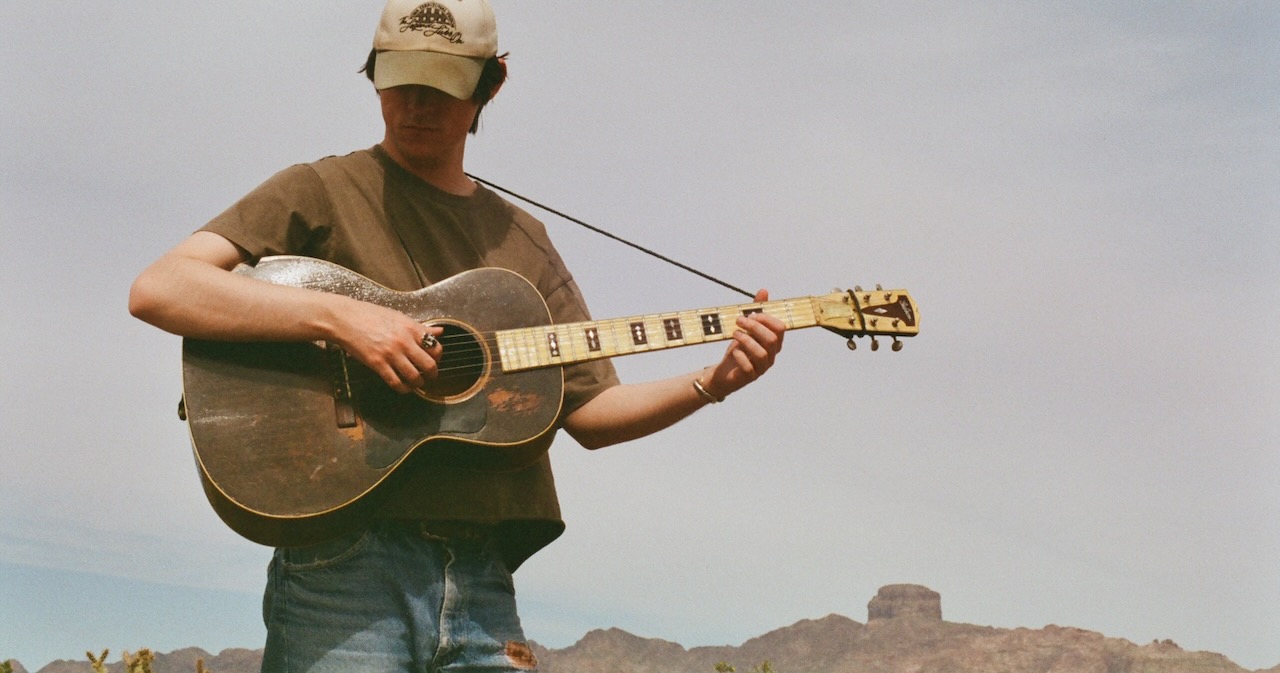
It’s a warm, summery day in early April when I sit down with archivist, writer, and guitarist Cameron Knowler on the shores of Old Hickory Lake in Middle Tennessee. Both Knowler and myself happen to now live in Old Hickory, a small village in Davidson County that was formerly a DuPont company town and is nestled on the edges of the eponymous, manmade US Army Corps of Engineers lake on the Cumberland River.
The setting is a far cry – geographically, topographically, and ecologically – from Knowler’s hometown of Yuma, Arizona, a place that serves as the inspiration, background, and foreground of his stunning new solo guitar album, CRK (released April 4 by Worried Songs). Knowler’s upbringing in Yuma was traumatic and bleak, not exactly a storybook experience by any measure. Still, like many roots musicians and creatives, the landscapes and dioramas of the wild west California/Arizona border town have become the guitarist-composer’s primary muse.
CRK sounds like the desert. Like hot, searing parking lots. Like mesquite and cactuses and roadrunners and mesas and red rocks. Stark flatpicked and finger-plucked melodies give equal consideration and immortalization to sweeping natural landscapes and small, depressingly human settings, too. Unlike so many of his subjects and inspirations in and around Yuma, this collection of compositions never moves to pave over the intricacies, nuances, and subversions Knowler finds in revisiting his hometown in music and memories. Still, the album is as gorgeous and transportive as any of our favorite famous paintings of the Old West, or soundtracks to iconic western films, or depictions of ancient pueblos. Perhaps his subject is a strip mall or a vignette of the proverbial “suburban hell,” but in this context each feels like an entire universe unto itself, a dreamscape – a home.
CRK opens with a gorgeous prose poem set to music, a track titled “Christmas in Yuma.” Immediately, the record is thereby attached through terroir and tradition to other western artists like Steinbeck and McCarthy. The album’s package is ornamented with gorgeous photographs, polaroids, bits of imagery, printed art, and poetry, further evoking artists we associate with the Southwest like Dorothea Lange and Linda Hogan. But the stories herein are told almost exclusively by guitar – usually Knowler solo as centerpiece, but sometimes joined by ensembles including guitarists Jordan Tice (who co-produced the project) and Rich Hinman, as well as other instrumentalists like Rayna Gellert, Robert Bowlin, Jay Bellerose, and more. The guitar is an instrument so pervasive and ubiquitous we often forget how aptly it can showcase these kinds of narratives, and how at home the six-string always feels in the West.
But with CRK, listeners won’t ever forget those facts. This is a narrative album. Is it also a technical achievement, intricate and intriguing and complex? Absolutely. But making an impressive guitar album was clearly not Knowler’s goal. Telling stories, with his medium being the guitar and the traditions that encircle it, was his chief aim. To say the project is successful in this regard would be an embarrassingly trite understatement.
And so, while watching the springtime water birds and snacking on lunch – with Knowler’s neck, wrists, and fingers dripping in Native-smithed silver and turquoise – we two sat down on the banks of a long, twisting lake on the Cumberland River in Nashville to discuss the guitar, the desert, and the little town on the banks of the Colorado River called Yuma – that Cameron Knowler once, and still, calls home.
I wanted to start by talking about place. I’m obsessed with how music has been slowly but surely divorced from its relationship to place over time. Your album, what jumped out at me immediately was it has such a strong relationship to place. How do you take something physical, tangible, geographical – a place like Yuma or Old Hickory Lake – and translate that into your medium? How do you think about evoking landscape or evoking an image with music?
Cameron Knowler: That’s a great question. I have like 10 ways of responding to that. As you said, music is getting divorced from place and I think it’s something of a cliche at this point that we’re losing regionalism. In the sense that, even with bow strokes– fiddlers in Galax, Virginia are different than fiddlers in northern Virginia. Not consciously, necessarily, but just as a colloquialism. As a part of their place. I didn’t [have] an old man or an old woman playing a fiddle who taught me tunes, I never had any of that [regionalism]. Instead, the “white kid from the suburbs” phenomenon happened. When I moved to Texas, I got connected with a regional fiddler in Terlingua, Texas – kind of [where the movie], Paris, Texas started. I learned his repertoire, which was interesting in that he learned a lot from Brad Leftwich when they were young and living in Santa Barbara. That was the void that I was missing. Not even musically, just in my life. I lost my mom, I lost my dad, I didn’t have family, so to me that was a cue, like a clue.
Then it flips, because there is a robust fiddle tradition of the Tohono O’odham [Nation] right there on the Yuma, Arizona/California border. But that’s not my culture. I could have gone in and said, “I’m gonna learn this tune” – or melody or whatever. Then that [could be] my way into the landscape. Instead of coming at it from an internal perspective, it was an external perspective, basically like a western painter. Like an oil painter painting Tucson or Walpi.
To answer your question, it’s slippery, ’cause you can’t go on stage and say, “Okay, this instrumental song is about a grocery store that I grew up driving by.” [Laughs] I can’t say that. It does come from that place, but I don’t say that. For me, the visual aspects of the record, I weigh them as equally, I would say, as the sonics. I think that’s where I can insert song titles – all the song titles on the record are related to Yuma.
There’s this tradition of stark solo or nearly solo acoustic guitar as an iconic sound of “the Wild West.” One of the first things I thought about listening to CRK is the score and soundtrack for Brokeback Mountain, so much of it is just solo plucked, tender guitar. Then of course in other music that evokes the West, you have sweeping strings and countrypolitan country and western. Even in that context you’ll often hear nylon-string guitar out front, solo. There’s something about unadorned guitar that is connected to landscapes.
But what I’m hearing you say is it’s not about translating the grandeur of Western landscapes at all. It’s about the grocery store, or it’s about the building that burned down, or it’s about a stretch of miles and miles of highway.
Totally. Yes. There’s so much programmed into the sound. David Rawling says, “The sound of a minor chord is a cowboy dying,” which is such a great way of saying that.
I believe this is true of the development of the flat-top guitar in general. At a certain point in 1934 or 1933, when the dreadnoughts start to get developed, there’s something about that that conveniently carries forward the agenda of interrelated musics – like Hawaiian music and bluegrass music for two totally different agendas. Then that [sound and body style] becomes the golden standard. But there were so many other brands and makers and thinkers from different cultures making guitars that, in an alternate universe not far from our own at all, would’ve been the golden standard. I feel the same way about the tradition of the music itself, right? And a dreadnought itself can do an infinite number of things, but just the format itself excludes a lot. As a constant instrument to play solo.
Another thing that David Rawlings says about his small guitar is that the smallest things sound the biggest, when they are in their own diorama – describing what he does with Gillian [Welch]. That’s his goal, to convince listeners that the “baby dinosaur” [small guitar] can actually eat them. Working in miniature, making little boats in glass bottles, you open yourself up, it’s an entire universe. The littlest things sound the biggest. In that way, there’s opportunity in the format itself.
I think people like Norman Blake and John Steinbeck are both hyper-regionalists who synthesize very eclectic sources to create something that is uniquely their own, but also totally comes outta left field. ‘Cause yeah, you think about Norman and certain people would say he is a flatpicker. Some people would say he was a pot smoking hippie who played with John Hartford – and they’re both equally true! Tying together otherwise disparate histories is a compelling format and is rewarding to the solo practitioner, I think.
We should talk about Steinbeck. We talked about it a couple of weeks ago when we first met by chance. But you starting the album with “Christmas in Yuma,” immediately I was like, “Oh, I know where we are. I know what we’re doing.” We’re in the West, there’s poetry/prose poetry happening. That song feels like it’s part of a longstanding tradition. Immediately I was thinking about a couple of my favorite Steinbeck passages listening to that.
Starting with poetry, starting with spoken word over that beautiful sound bed that you’ve created for it, what does that accomplish for you as an opening to a record?
Two things come to mind. Kenneth Patchen, who made these poetry records for the Folkways label in the ‘50s backed by a jazz band and it was almost comical, but he took it so seriously and it’s so convincing when you just forget what the format actually is. The great Texas – I don’t even wanna say outsider artist, but in terms of how he’s viewed – outsider artist Terry Allen, with some of his concept records like Lubbock (On Everything) with the pedal steel. You can do anything at that point. That’s why I started [CRK] out that way.
Also, quite frankly, Ice Cube’s records – I’m thinking of N.W.A. – start out with these sound collages of him getting arrested or walking down a cell block, or the imagined character is. To me, he could do anything after that point. He could make the amazing record that it became, or he could have done some something entirely different. I just think it’s an earnest way of saying, “I’m not trying to do what you [already] know.” We all know that everyone is infinitely complex, but in terms of what they release, it’s fine to not be infinitely complex?
For me, it’s not a flatpicking record. It’s not a fingerpicking record. I’m really not trying to make it a guitar record, so to speak. I wanted to make it a narrative record. [“Christmas in Yuma”] was just an earnest way of saying, “I’m not what you think I might be.”
It’s also a tradition in these roots and folk music spaces to play with expectation. People generally know what a solo guitar record is gonna sound like and what it’s gonna be and what it’s gonna do. I’m imagining a program director at a radio station putting on the record and doing the 30-second listen through – and the first song is poetry?!
I think maybe that’s what you’re talking about? Whatever conscious or subconscious projection you might have about what this album is in your hand, or what this is about to be as you put it on, you want to play with that projection. You’re saying, “I’m gonna tell you what this is.”
That is a beautiful point because, not to go too far back [in my history], but I was “unschooled” and I didn’t have a high school diploma or a GED. [Through all the hardships I’ve faced], I’ve learned this notion of leveraging. I surveyed how I was going to be able to reach people, and it gets more representative of myself as [time] goes. But it’s always been under the guise of leveraging unexpected muscle groups towards something else. That’s just built into this like fight or flight thing. I just have nothing to lose.
Your point about the radio DJ – or whoever that’s listening to the poetry – I think that’s a unique opportunity. At that point, they’re suspending judgment. If I wanna listen to a guitar record, I’m gonna listen to Leo Kottke 6- and 12-String Guitar. It’s perfect. It does exactly what it needs to do.
People should continue to try to make records like that. To me, it’s not a push against that at all. It’s starting out on a different foot. You may end up in a place that, by design, is very different than you would if you just tried to hit it on the nose. You can still hit it on the nose. Then you might even have a chance to open it up to somebody. Sometimes people just don’t know who Norman Blake is. But then, there’s a tune like “Yuma Ferry.” Who plays like that? Norman plays like that. If I were to make a whole record of “Yuma Ferry”-style tunes, I think everybody listening would know that it was a Norman Blake type of thing.
Let’s talk about “Christmas in Yuma” a little more in detail, because I’m curious about how you created it. Was it the poem that made the music happen, or the music demanded to have a poem set to it? What was the creative process like for the track?
I woke up from a nap on December 21, 2021, and I just went to Google Docs and typed it out. It just came out like that. The recording process, I had my friends Harry and Dylan sit down with me in our friend Marshall’s studio and we just recorded improvisations with the loose framework. [It’s read by my friend] Jack Kilmer, who similarly grew up in the Southwest. His father, like my mother, was also Christian Scientist. Those are all the things that were vibrating around. I was like, “He has to do it.” He’s an amazing voice actor, amazing actor, and just a great musician. Very musical and a beautiful artist. I had him do it first.
Then we went to the studio and we just said, “This is how long the track is. We’re not gonna play to the track. We’re just gonna play.” There was one take that was like the perfect length of time and I just put it under there. All those sonic features that interact with the vocal are totally incidental.
The music of CRK is so evocative and so visual and is so good at text painting, but I wanted to talk about your work in other media and about how you curated the package for the album, too. You’re so multifaceted in what media you’re working in – archives, photography, visual art, written word, music, melody. How do you see all those forms converging and diverging with this project specifically? Because I see your eye for detail at every level. You can just tell from the package that the whole thing is art to you, not just the songs.
Photography, it is always fiction. That, to me, is the beauty of it. If there’s a picture of someone jumping, you don’t really know where they jumped from. Or if they smile, they are actually crying? Maybe this person crying is not the good guy. Maybe they’re the bad guy.
You can start to track things like that, as the smile gets “invented” throughout photography. But it’s this line of fiction that, if you spend enough time with it, you can infer things right or wrong in there. They can all take you to a different place. Movies are that way, but you lose a little bit with the moving image. ‘Cause then you see the speed at which they’re moving, even if the frame rate isn’t representative of reality.
But then, say you’re playing jazz standards and you’re playing things with semantic content that came from a show, a Broadway show in the ‘40s. You’re shackled by the semantic content of that. I think it’s a convenient metaphor, in my opinion, to see photography and instrumental music as this thing, where – back to working in miniature – smaller things give you more room to insert yourself into it. I shouldn’t say more room, but there’s more fiction to play with, I would argue.
There’s less to compete with.
Right? In terms of things being programmed to you. In movies, you have the aesthetics, you have the costumes, you have the music, you have all this stuff. With photo books, the way that they’re sequenced by gestures is such a fitting way of dealing with sequencing things that aren’t visual. There’s a lot of inspiration from the photo book as a tradition, in terms of sequencing. And how with photojournalism, we don’t really have an American, coalesced identity of the West without the photography of the Dust Bowl. I’ve spent a lot of time looking at FSA photographs and there’s some great Dorothea Lange photographs in Yuma from May of 1935 which can be seen via the Library of Congress. I actually licensed one of them that was not within the purview of her [federal] work from the Oakland Museum and that’s in the song folio for CRK.
Obviously, Norman Blake is a really important musician to you and Dave Rawlings is as well. You’re talking about wanting to make music, wanting to make a record that isn’t just another acoustic guitar, flatpicking, flat-top record. Norman and Dave are great examples of guitarists who make albums that aren’t just the same old same old, and aren’t just products, they’re art. Both showcase that simple solo guitar, that miniature world we’re talking about, can be so expansive and huge and lush. But who are the others? Who are the folks that modeled for you that having your own voice and perspective on your instrument was more important than just doing it to do it. Or to be “best” or to sell yourself as a product for consumption?
For banjo, I think John Hartford. I love the idea that Blake Mills said, he called guitar an instrument for assholes. [Laughs] What I love about that is, no matter how you look at a guitar, the guitar is always a toy. [Andrés] Segovia tried to institute a formal repertoire. The bluegrass people tried to, the rock people [tried to]. Is Jimi Hendrix the definitive repertoire for the guitar? AC/DC? But, it’s still a toy. It’s still marketed as a toy.
I don’t need a million people to listen to my music to make a living or to keep doing it. It’s all within the art/archives, how to make these raw ingredients that are embedded into everyone into something that’s not commercial, but digestible.
In terms of other people [who inspired me]. John Fahey. Leo Kottke, but I didn’t fingerpick up until about three and a half years ago. About 80% of the record is finger picking. To your point about the poem earlier, there’s more outside of the solo, acoustic guitar canon of stuff, too. People like Rambling Jack Elliot and Sam Shepard, yeah.
One final point, I would play these solo concerts in Texas of just flatpicking melodies, like four flatpicking melodies in four different keys. And I was just like beating my head up against a wall, trying to tell some sort of cinematic, fiddle tune-driven [story over an entire set of just flatpicking]. I wanted there to be an arc. Through stubbornness, I decided I was going to learn how to fingerpick convincingly, where I had control of each voice. It’s really hard. It was a pain in my ass to figure that shit out.
But yeah, I see them all as tools: the poetry, the flatpicking, the fingerpicking, the drumming. It could be seen as pushing back against commercialism or whatever, but in some ways it’s actually the opposite. I was like, “I want more. I want a diverse audience. I want as many people to listen to this as possible.” Not sheer numbers, but in terms of who they are and what their listening diets are. Not just everybody in the audience being someone who will already know each of those fiddle tunes.
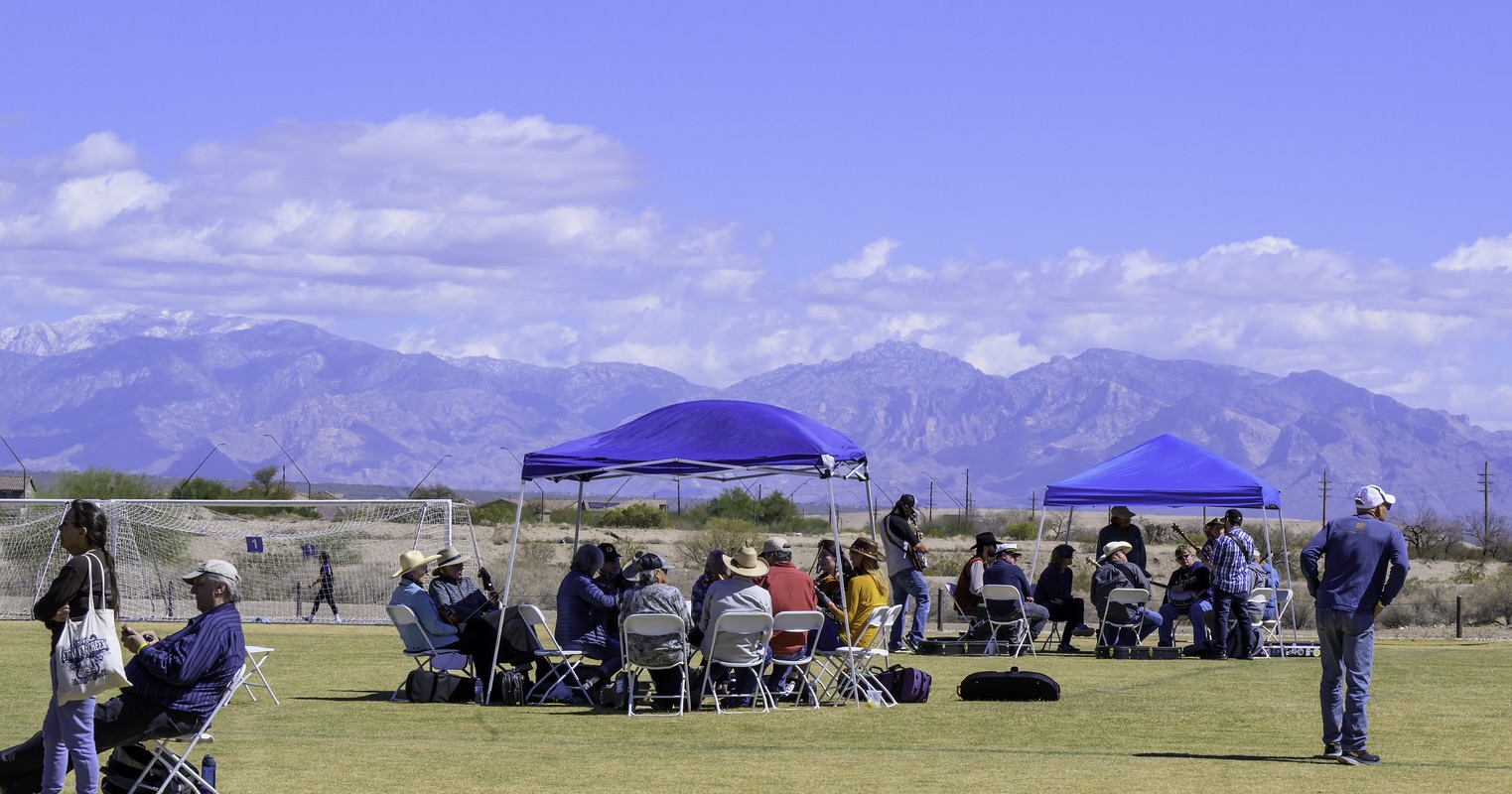
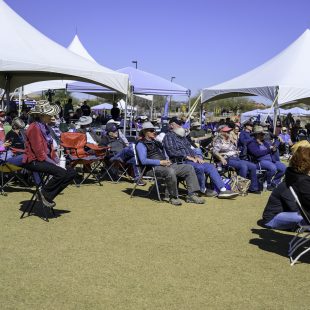
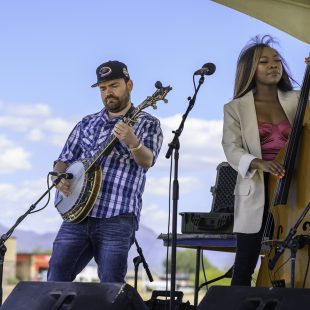
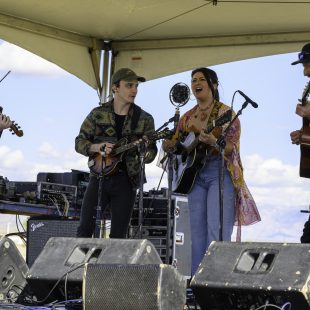
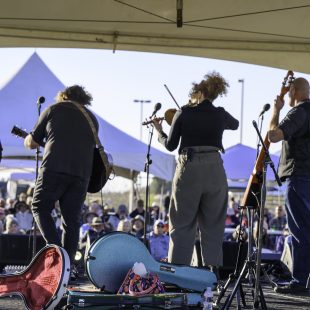
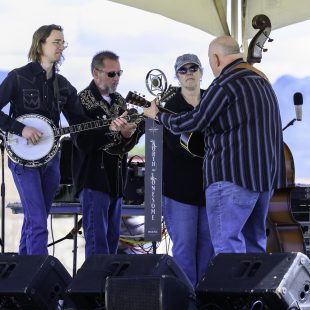
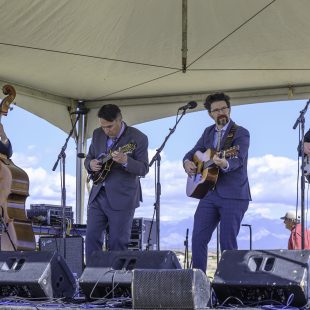
The first Desert Bluegrass Festival was held in 2000. Its 2025 iteration took place over the weekend of March 7 to 9 just northwest of Tucson in a beautiful desert park in Marana, Arizona. Despite a windy and rainy Friday night, the festival artists played on Saturday and Sunday bathed in beautiful south Arizona sunshine. The festival is 100% volunteer-run and its mission is to bring “family-oriented, high quality bluegrass and acoustic music entertainment” to the community and to visitors.
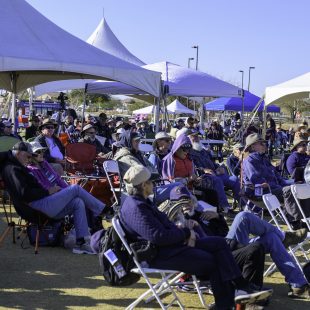
Perhaps this was not a high-powered festival, but it stayed true to its ambitions by creating a friendly atmosphere and a comfortable way to hear and see some excellent performances. The sound system was first class, there was plenty of room to sit, stretch out, or to get as close to the stage as anyone could want. Festival organizers made sure there was enough shade for listeners to cope with the bright desert sun and the artists performed with the beautiful Rincon Mountains and a snow-capped Mt. Lemmon in the background. Several hundred people arrayed themselves around the stage. As is often the case at bluegrass festivals, artists were accessible and friendly. And there were plenty of well-behaved bluegrass dogs enjoying the music.
Saturday’s headline group was the Becky Buller Band. Band members had been slated to lead workshops during the lunch break, but due to the crapshoot that is airline travel they were unable to get to the venue in time. However, they did an engaging set to close out a beautiful evening. Fiddler and band leader Buller led her outstanding fellow musicians through a performance of the song cycle of her newest album, Jubilee, with its message of hope, survival, and healing. This, together with some bluegrass-ified versions of Simon & Garfunkel and Joni Mitchell, contributed a more contemporary feel.
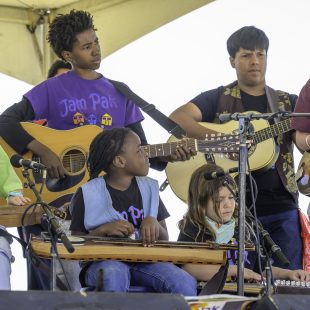
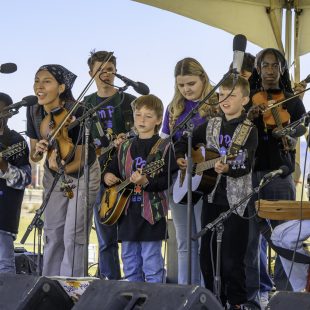
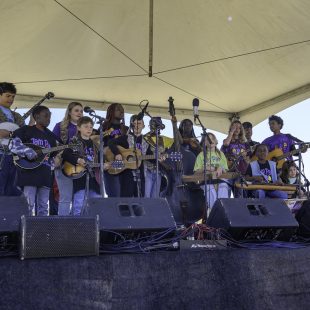
JamPak Blues ‘N’ Grass Neighborhood Band kicked off Sunday morning’s program. Based in Chandler, Arizona, the venerable Mrs. Anni Beach leads this long-running community youth band. JamPak musicians start young and some have played long enough to do some very respectable picking. Musical values are strong, and JamPak has spun off several generations of performers, including another band featured on Saturday, Cisco & the Racecars.
This was never going to be a jamgrass festival (as one attendee grumbed), given that its headline act took the stage before sunset. But the 2025 Desert Bluegrass Festival achieved a good mix of contemporary and traditional music, with consistently high level performances. It was a good chance to catch some regional bands, listen to some good sounds, and enjoy the beautiful desert setting. – Peggy Baker, Mad Angel Photos
Saturday morning festival goers ready for the bluegrass action.
JamPak Blues 'N' Grass Neighborhood Band is all about getting kids into bluegrass, blues, old-time, and more.
JamPak Blues 'N' Grass Neighborhood Band show the future of bluegrass is bright with their Saturday morning set.
JamPak Blues 'N' Grass Neighborhood Band with JamPak founder Anni Beach.
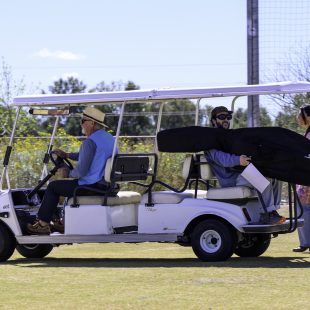
Getting the bass to the green room.
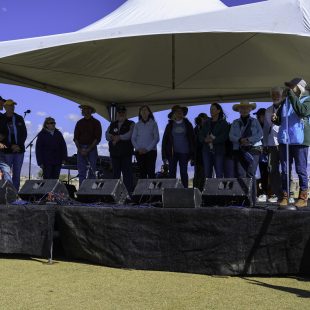
The festival volunteers who made the Desert Bluegrass Festival run.
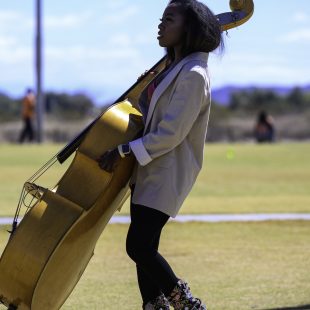
Joelle Tambe-Ebot heads to the stage with her upright bass.
Setting up sound for Cisco & the Racecars.
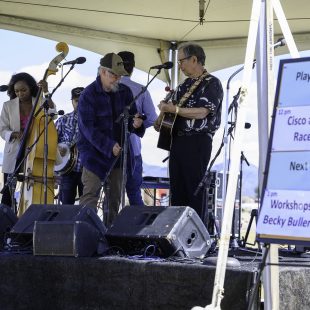
Fracisco Briseno and Joelle Tambe-Ebot of Cisco & the Racecars.
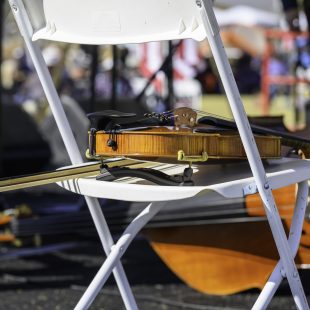
A lone fiddle, ready to jam.
Never Come Down are a Portland, OR based bluegrass group quickly on the rise.
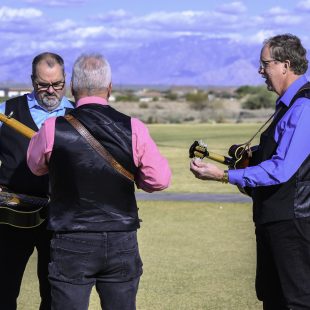
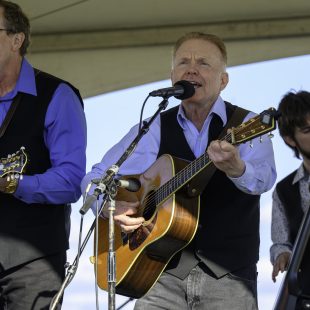
The Country Gentlemen Show tune up backgrounded by the Rincon Mountains.
The Country Gentlemen Show pays tribute to the impactful music of the iconic Hall of Fame bluegrass band.
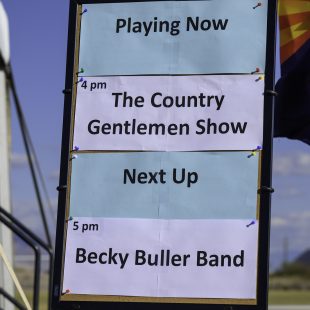
Here's who's on and who's coming up.
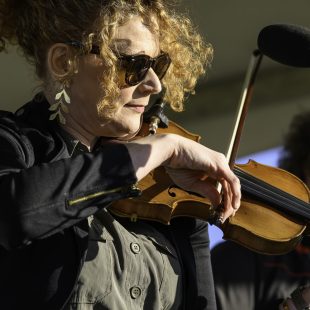
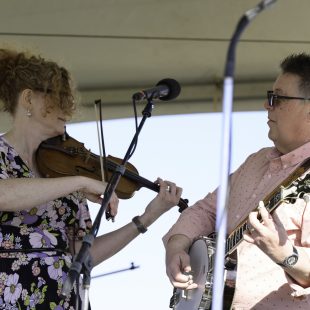
Becky Buller performs in the golden Arizona sun.
Becky Buller and her excellent band perform 'Jubilee.'
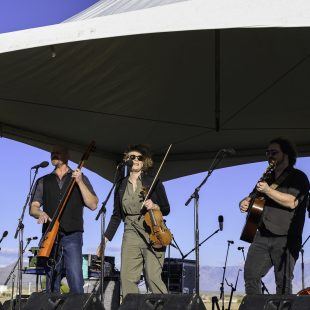
Becky Buller Band take the stage to the delight of the Desert Bluegrass Festival audience.
Saturday afternoon audience members at the Desert Bluegrass Festival.
North of Lonesome are a local, Arizona-based bluegrass band and staples at Desert Bluegrass Association events.
Colorado-based Blue Canyon Boys take the stage.
Becky Buller and Ned Luberecki give a little bit of fiddle and banjo.
It is clear to me that 2024 will be known for being a landmark year in the evolution of Black roots music. Not only has there been tremendous growth in the number of artists that are throwing their hat in the ring for roots music – whether it be country & western, bluegrass, folk or Americana – but it is also a time where the mainstream music world is responding to this outpouring of talent in a way that hasn’t been seen in a long time. In many ways, it’s not surprising that things have grown in this fashion. Since I started my professional music career back in 2005, I have seen quite a few changes in the general musical landscape that have set the stage for a Black Roots music revolution.
In the early 2000s, the musical fabric of Black Roots had already been woven into the tapestry of American culture. Hidden between the more well-known pieces of Black music, these acoustic styles that didn’t fit into the traditional mold of blues, jazz, and gospel remained unseen and unheard, relegated to the fringes. Even though it was simultaneously considered a quintessential piece of the larger puzzle of American popular culture, Black Roots music was held in greater reverence for its historical significance than for being a living musical tradition played by modern musicians of the African Diaspora.
There were great pioneers who set the stage back in the early 20th century. There were songsters, string bands, folk musicians, storytellers, songwriters, composers, and community historians who shared their stories for the early folk song collectors who were searching for the purest forms of black expression. This happened while the commercial recording companies sent their representatives out to the field looking for music that they could sell to a record buying public who wanted a sound that not only reflected the past, but the future as well.
With all that in mind, my goal in becoming a professional musician came not from a desire to be a stage performer alone, but to also expand the scholarship and visibility of Black Roots music. By becoming a touring musician I found I was filling a void that most people are not aware of today. Having the opportunity to evoke the names of people who had not gotten their due in their own time was empowering. Not only have I advocated for the music, I have played it and arranged it to reflect the rich history of American music while at same time writing my own songs that represent the modern Black experience in all of its phases.
When I first began performing in Arizona, there was no Black Roots community for me to lean on, so I had to teach myself everything. I had to learn to play the guitar, the banjo, and all of the other instruments in my repertoire on my own. Before the internet, the library was my main resource for music and I grew up in a time when a good portion of all of the world’s recorded music throughout history was not readily available on streaming platforms. Sometimes, I had to search far and wide through stacks of CDs, LPs, and 78s to gain access to the music, just so I could learn how to play it. As I began to learn more songs, I found out about the history of the performers and the legacies they left behind. Later on, I met others who held a similar passion and those individuals taught me how to play different styles and shared more parts of the history that I didn’t know about.
We are now in an era where people have access to the music that was once very hard for me to find. In many ways, I was at the forefront of these musical discoveries in the roots music community, because I took what I had learned and planted seeds all around the world with the Carolina Chocolate Drops and on my own as a solo artist over the past 25 years.
Once I left Arizona and we formed the Carolina Chocolate Drops, we were able to tap into a certain energy in the crowd that changed the paradigm for Black Roots music, so that now people can see the whole picture of American music in a different way. They could see a Black person playing the banjo in the modern world and be inspired to learn more about the African and Caribbean roots of the banjo. We did that for the better part of a decade and then I decided to move on into a new territory: Black Cowboys and Black Western music. This was a new area of music that the Carolina Chocolate Drops were not a part of in any way. The Chocolate Drops had focused on the music of North Carolina and this new musical venture was an exploration into my own family roots in the Southwest.
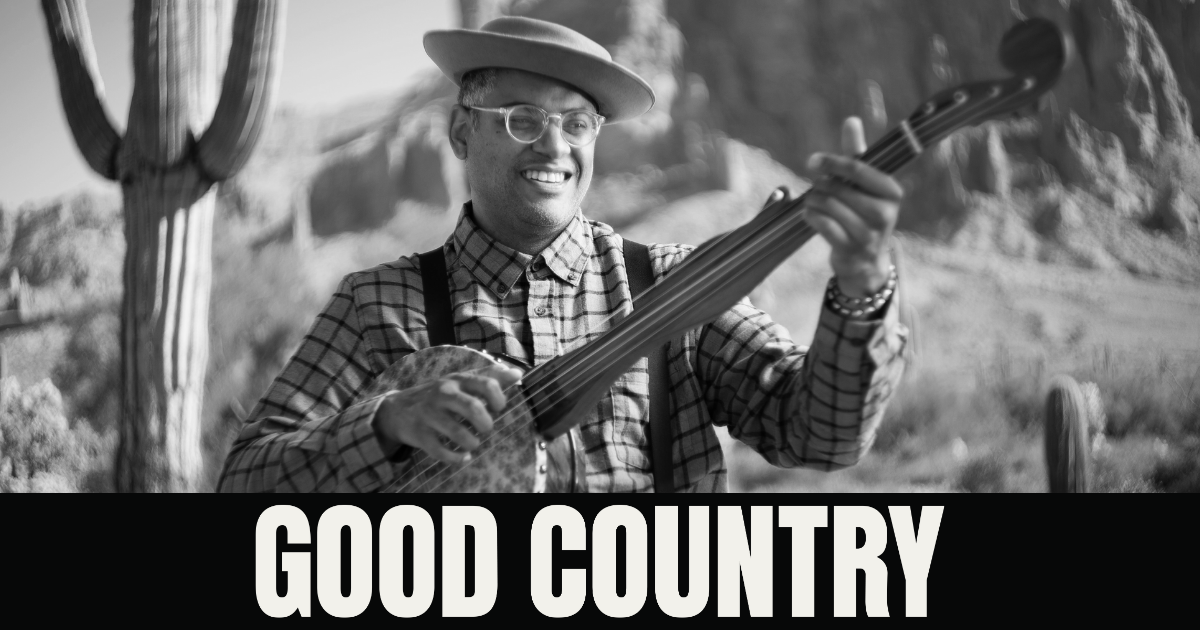
Back in 2010, I had come across a book called The Negro Cowboys, which encouraged me to research about African American cowboys of the West. In 2018, my research came together in my solo album, Dom Flemons Presents Black Cowboys, which came out on Smithsonian Folkways as a part of the African American Legacy Series. Having grown up in Arizona, I knew that the album needed to be a part of the National Museum of African American History & Culture so that future generations could appreciate and respect the history of the Black West as well as activate the communities that had been there all along.
Back when I released Black Cowboys, I was one of the few artists talking about the contributions of African Americans out west and their varied connections to country music. Not only was I sharing this lesser known history, but I was playing the music that we now celebrate as “Black Country” long before Beyoncé, Lil Nas X, the “Yee-Haw Agenda,” or any of the newer Black artists who have risen to fame in the TikTok era. Now that the concept of Black Cowboys has gone mainstream in music, television, movies, and fashion, it’s another reminder to me that the music I created had made a major impact on American culture in both a conscious and subconscious way.
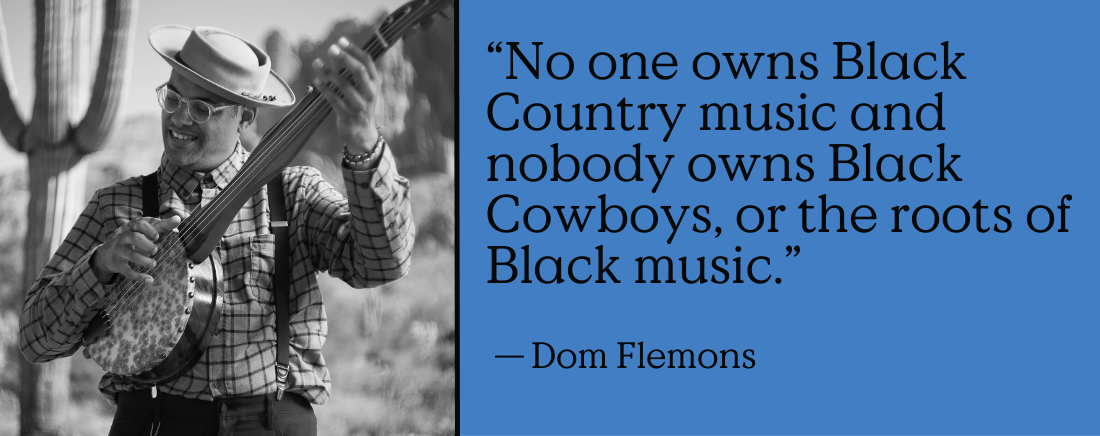
The most important part of it all is that no one owns Black Country music and nobody owns Black Cowboys or the roots of Black music. However, nowadays I am noticing that people are trying to take credit for exposing the history when they have only scratched the surface of it.
What I have learned is that there are so many parts of the Black Country and roots music story that are still missing and are being left out of the media. There are many other artists who should be considered in the conversation and yet they aren’t getting their flowers. I have noticed the Black Country music narrative that has sprung up recently has actively disregarded the work of the many Black artists who are deeply connected to the legacy, including myself on many occasions. My hope is that people will take the time to acknowledge the ones who have paved the way for the current movement and shed light on their individual stories, too.
The main reason I have included extensive liner notes in all of my albums, including my most recent, Traveling Wildfire, is because I always make sure to give credit where it is due. The sources for my traditional songs are clearly laid out for anyone to see and my original songs are exercises in expanding the existing palette of roots music so that both can be presented to a new generation of listeners. I have seen my talking points being used to fuel many of the current conversations, but oftentimes there is no back reference to the work I have done. All of the fanfare has forgotten to give proper credit to someone who has spent the majority of their career trying to set the record straight. As a well known musician in my community, this exposes a general trend that is problematic for the current state of Black Roots music.
If it is acceptable for a mainstream pop star or the media to sidestep and steamroll the pioneers of Black Roots music, it can only lead to a narrative of uplift that will ring hollow in the long term. It will teach the future generations that sleight of hand is the only way to get ahead and that surface level fame is the goal and key to being successful. Bad ideologies take a long time to disperse once they have become a part of the general fabric of society, and if people continue to spout it the integrity of the music can be undermined without them even knowing it.
This is why I am cautiously optimistic for the current state of Black Roots music, because oftentimes it feels more like a one-sided competition than a community of Black artists coming together to be celebrated collectively.
Yet, on a positive note, I believe the current state of Black Roots music is very exciting. People are being activated by the work that has been done by the pioneers of the past one hundred years. They are reinterpreting, reinventing, and showcasing music that is becoming a viable part of the mainstream music industry. They come with a variety of sounds, instruments, and songs that will shift the template of American culture as Black Roots music always has and always will.
More voices are being added every day in places and spaces that would have been unheard of even ten years ago. It can be clearly stated that there are now plenty of young musicians in every field of Black Roots music and there is no shortage of new talent who have proven their worth on the stage, on recordings, and on social media.
The holistic landscape of the modern Black Roots music community is something that I am proud to have helped establish over the past 25 years. Major growth is upon us, but I feel like it can only happen if everyone in the community gets acknowledged, not just the “favorites” or the ones making the most money while begging for all of the attention. The connecting of dots that bind the past and future are within our reach through the technology we have at our fingertips; it is essential for us to use it with great care and responsibility.
I started my journey as the American Songster building a legacy upon a dream. I got the notion to write songs and play the old styles back when I was sixteen years old and this eventually led me to sell everything I own, jump in my car, and drive across America to find where that dream could take me. It then took me all over the world and brought me much acclaim, but I have never lost sight of what inspired me to start this journey.
For me, I’m just getting started and I’ll always be here, no matter who stays and who goes. I’ve done the work to make the music more accessible for others and I can hope that it has reflected well on my own legacy as well as the entire community I have tried to uplift.
Michaela Anne put a lot on the line to make her new record, Desert Dove. Working for the first time with producers Sam Outlaw and Kelly Winrich, the self-funded album was recorded in San Clemente, California. With many of the songs written either on the West Coast or in the Southwest, the pervasive theme of manifesting her own destiny resounds.
All of the songs pull from a mixture of her own life (potentially even her past lives), characters she’s met in real life, and some of whom she’s envisioned in her imagination. We sat down with Michaela Anne to discuss everything from her inspirations, to her transient childhood as the daughter of a submarine captain, to the anticipation of releasing this very personal new material.
BGS: Can you talk about growing up on the move? Were you playing music and writing back then?
Michaela Anne: I started playing piano when I was about 5. I wrote a few songs right away, instrumental piano pieces and the first one I wrote was called “When Daddy Comes Home.” So from the very beginning, it has always been a sad longing feeling, because I missed my dad when he was out to sea. Then we moved a year later and every time we moved there would be a transition period of, “OK, hurry up and find a music teacher!”
I wasn’t writing. I didn’t write any more songs until I was 17, when my grandfather was diagnosed with lung cancer. That was the first time I wrote a song with lyrics. Then the second time I wrote a song with lyrics was when I moved to college. So everything for me, and I’m actually just realizing this, has all been a result of something that was sad. A sad experience or a longing for.
Do you find there is a transient parallel in touring at all?
Oh yeah. It is different because you live in one place but you miss out on a lot of stuff. It is hard to keep friendships together when you’re gone for a month and then you come home and you’re tired and you don’t really feel like going out. How do you stay in people’s lives when you are missing the big events? That feeling of not really being a part of friend circles because you are missing out, that’s been my entire life. This deep FOMO. It isn’t a fear of missing out. I actually miss out a lot.
What led you to record this album in California? When you were writing it, did you know you’d be making the record there?
I didn’t, which is interesting to me because multiple songs mention California. The West Coast, in general, has always had a nostalgic, warm, romantic feeling to me. It’s funny. I’ve never thought I would move back to the West Coast because I feel like I want to keep it as a magical reprieve. So I wrote some songs out there and for some reason, it kept coming up.
I also wrote a bunch of songs in Arizona. So the Southwest, paired with the West, infiltrated my songwriting. But that wasn’t part of the plan when I was writing the songs. I’d toured a bunch with Sam Outlaw and he’d said in passing that he wanted to produce my next record. I blew it off as a joke and thought it was funny.
Then I started considering it when I was really figuring out how to make a new record. I entertained a few different producers and Sam brought in Kelly Winrich, who is from this band called Delta Spirit and he has this more indie rock background. He doesn’t really come from the more country world, which I really wanted.
It just kind of all organically came together. Kelly is from San Clemente and his parents built out their basement into a studio. I went out there for two days to do a trial run to see what it would be like. I’d also never worked with two producers at the same time and didn’t know if that would make things more complicated.
Had they worked together before?
They had. They had worked on one of Sam’s early records together and they were longtime friends. I felt like I was very cautious before I made a decision but it all went really well. Then we hired a bunch of LA-based musicians with the addition of my friend Kristin Weber, who is from here in Nashville. She flew out and did strings and background vocals.
It happened naturally and it was really amazing to record in a beautiful setting but be really focused. I didn’t have to deal with the day-to-day living of making sure my cats are fed and making sure my house is clean and all that stuff. It was an ideal setting, for sure.
Was there a fleeing from Nashville to California to make the record?
I don’t know, maybe a little bit. I feel like I might be one of those people who has a love-hate relationship with wherever I am. I felt this way about New York and I now feel this way about Nashville — that I see the good and the bad. I think when you are surrounded by a lot of people pursuing similar career paths and when everyone around you is about music, it can feel like a bubble, and I think it is not healthy to live in that bubble.
It’s important to remember that there is such a diverse, large world out there of different careers, different pursuits, different passions. I’m really inspired looking around and seeing so many people figuring it out and being creative but it also can trigger insecurities of, “Oh my gosh, everyone is doing this. Why do we need my voice? What do I have to contribute and how am I saying what I’m saying and how is it different or alike with somebody else?”
That can be really distracting. So getting away from it is helpful. To just be creating your work and not be thinking about it in terms of who else is doing what and where you fit in with all of it. That can be poisonous.
How do you typically write lyrics? Does the melody follow or lead that process?
I usually come up with a melody first. I’m never someone who is just writing lyrics. I’m not a poet. I think in melodies and the words come with it. Then I have to consciously go back once I have a melodic structure and think about where I want to get to with it.
I was comforted when I read Jeff Tweedy’s memoir that he just released. He said that the way that he writes songs is that he mumbles a lot and crafts the song while mumbling gibberish. It was the first time I’d heard of a songwriter doing that and it makes me feel so much better. I’ve considered it a weakness. Like I’m just writing based on what sound feels good in my mouth and not looking at it as a piece of literature. I felt very seen when I heard that Jeff Tweedy does that.
The character in “Desert Dove” seems like one that you know a lot about.
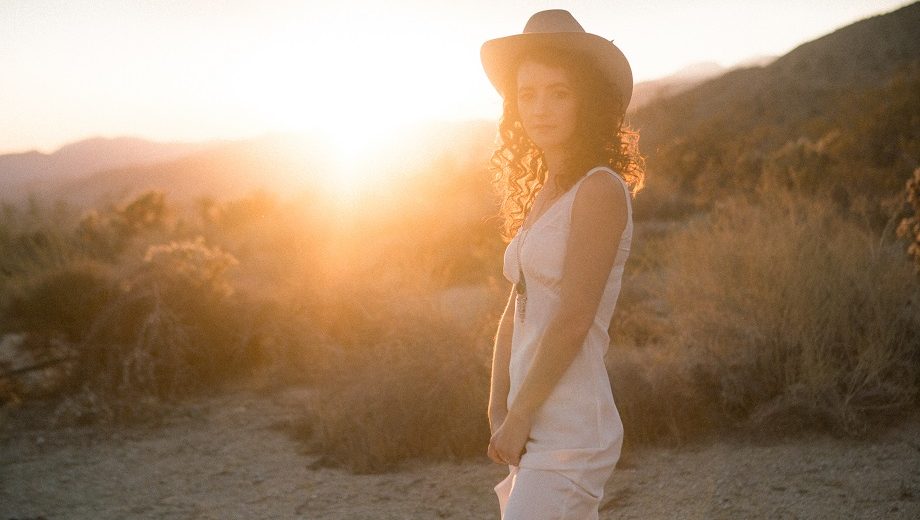
I’m always saying I feel like I could write a novel about that song. It is so many different people to me. I see myself in that character in many ways. I met this woman years ago at Pappy and Harriet’s who was a stripper. Her name was Madeline and she was wearing a white dress that was off her shoulder.
She was this beautiful charismatic woman who I was really drawn to in that one evening’s conversation and then from there it expands to all these other women characters that I’ve read about or learned about from talking to friends. This book Soiled Dove is an historical account of different real-life women who were prostitutes or madames in the Wild West.
It’s like a lifetime of research. How long did it take you to actually write it?
That song came out so fast. I was in Arizona in Cave Creek on a little writing retreat. I knew I had this song about a Wild West prostitute in me for years for some reason. When I was really young, I went to a spiritual healer who told me I was a prostitute in a past life. Maybe that gives you a little glimpse of the complexities of my upbringing.
I was raised in a very traditional family home. That my dad was a nuclear submarine captain but my parents were very interested in lots of different spiritualities and dynamics. When I was back at the apartment I was staying at, I was making a sandwich and I opened my mouth and the first line of the song came out. I think I finished it within a day or two.
Your characters have dimensions of the good, the bad, and the ugly. They feel honest, particularly in “Somebody New.” I read that someone told you once that women shouldn’t be the perpetrator in songs or be in a guilty position. Did that advice ever inform your writing or is it informing your writing now as an act of rebellion from that advice?
I feel like with so many songs there are a few different narratives. Especially in the country world, and this is a huge generalization, but the idea that the woman is the one that gets cheated on but she’s the one that has to then be vengeful. Or like the sad, sullen songs that are like, “I was wronged and as the narrator, I’m the innocent victim in this.”
I just feel like no situation is actually that clear cut. I feel like we have a role in every single situation we find ourselves in. I think it is hard to portray that in a three-to-four-minute song because you’re telling this very complex story of, “I’m really hurt but also I did something that hurt you.” I think that’s real life. How do I portray these very human characteristics? I create these characters, but you know, I’m in every one of those.
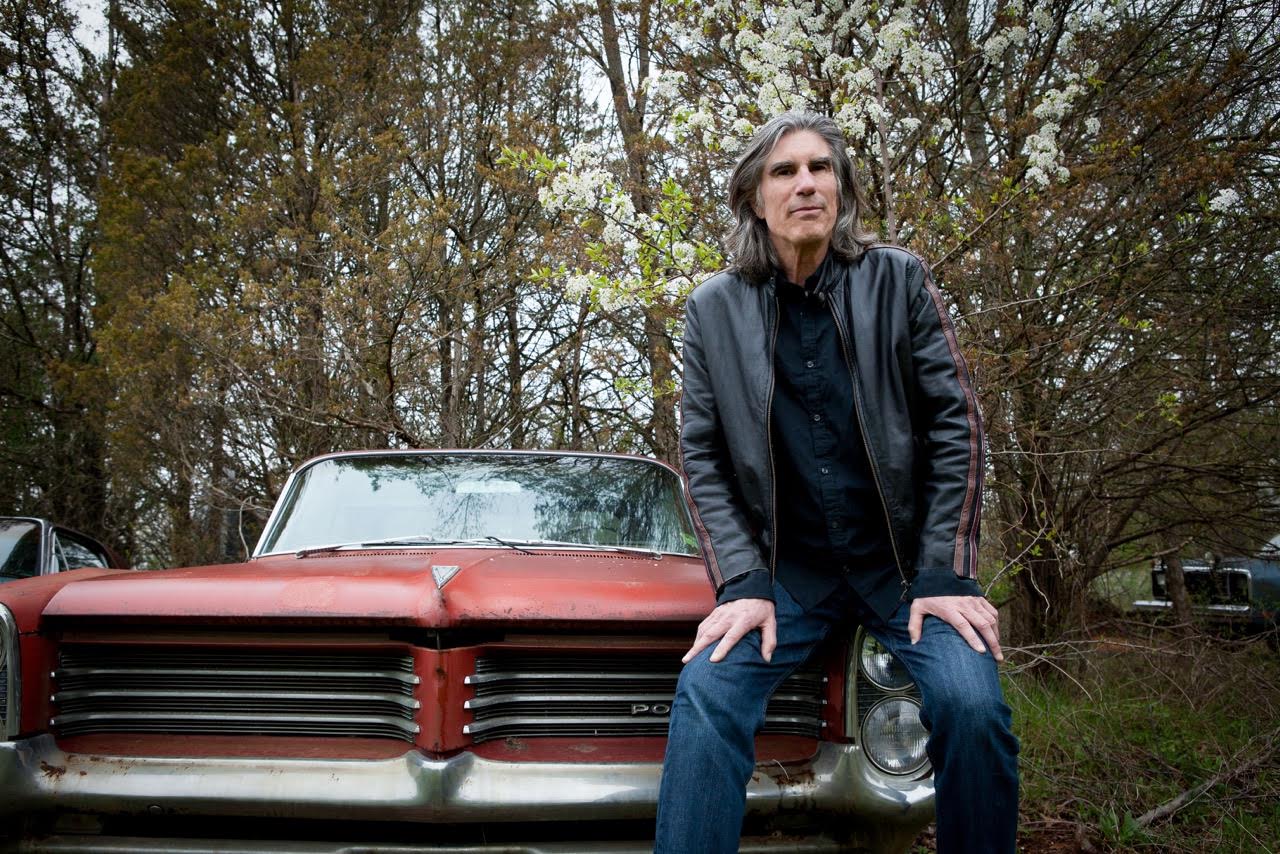
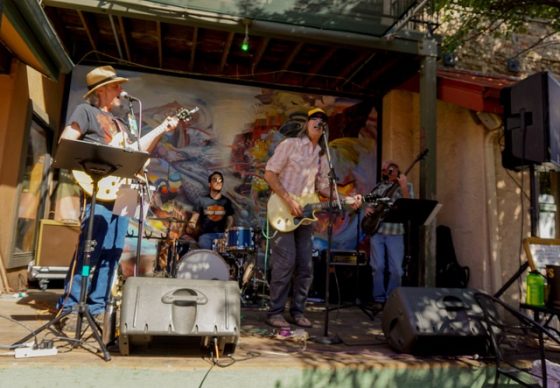
I moved to Flagstaff, Arizona, from New York City. Being used to having every imaginable music and art scene at my fingertips 24/7/365, I was pleasantly surprised by how developed, soulful and energetic the music and art scene is here. There are two really important reasons to live in Flag – the arts and the outdoors. Often the two meld together with incredible landscape art and photography and a music scene rooted in the camping and festival atmosphere of the West. There is every kind of music here with loads of original bands and venues of all sizes, but the most vibrant for me are the blues, soul, psychedelic and jam bands rockin’ it with real instruments and lots of emotion, creativity and improvisation. — Walter Salas-Humara
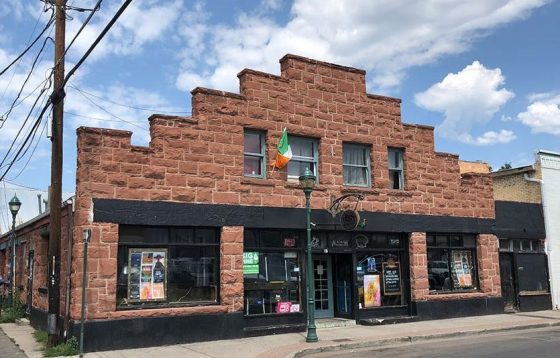
Flag Brew Patio: This downtown pub and brewery has a wonderful patio. In the summer, the Sunday afternoon gigs are the best. We love playing the Flag Brew Patio.
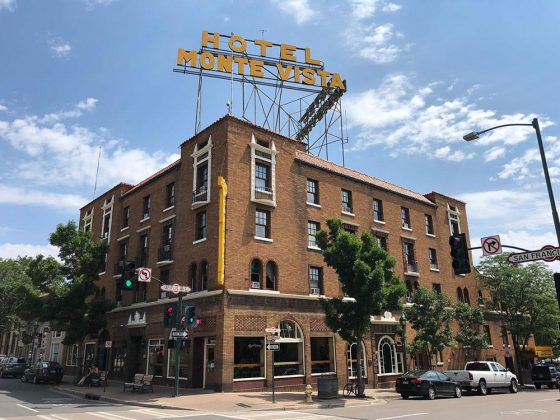
The Hotel Monte Vista: This is a classic old place with tons of character. Right downtown in the middle of everything, it has two tremendous cocktail bars and a small music venue that hosts touring acts both national and international. I saw Tav Falco here with Mike Watt on bass.
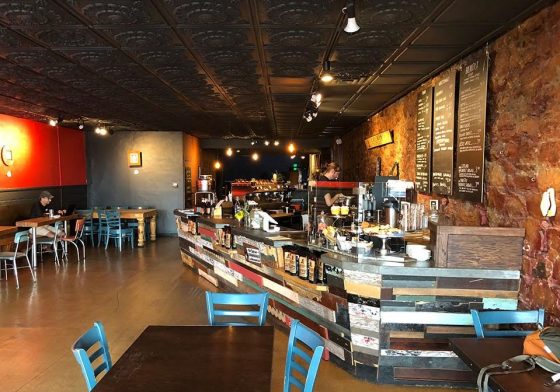
Firecreek: This downtown cafe has a vibey back room that hosts everything from poetry slams to punk bands. It’s perhaps the artsiest scene, full of eccentricity.
The Green Room: This is the mid-size rock club. It has a big stage, lots of room to dance, a clear and loud PA system and good lights. Its casual and unassuming atmosphere makes it a comfortable to place to hang. I saw The Melvins here recently and they rocked hard.
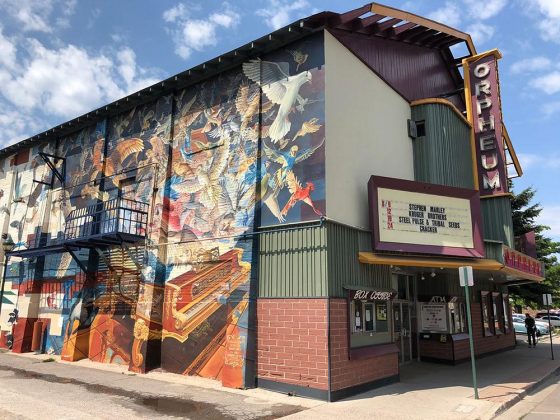
The Orpheum Theater: The old downtown movie hall has become the premiere concert venue for larger touring acts. It’s funky and creaky, but well-run and the best place to perform. The audiences are always great. I’ve opened for Lucinda Williams, Robert Earl Keen and Jerry Joseph here. I love the Orpheum. On the side of the building there is an amazing mural by local artist Sky Black.
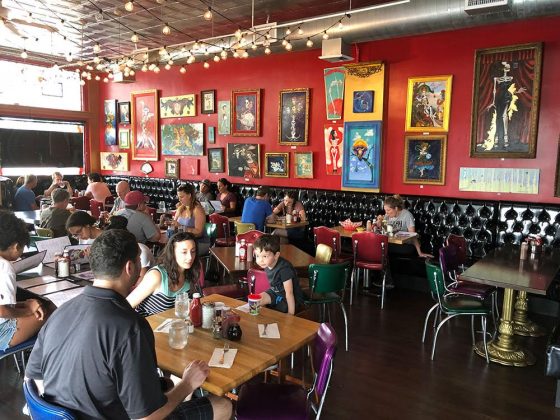
MartAnne’s Burrito Place: If you come to Flagstaff you MUST have breakfast at Martanne’s. The green pork chilaquiles are to die for. I have sent every touring band I know here and all are blown away by the flavors, portions and atmosphere.
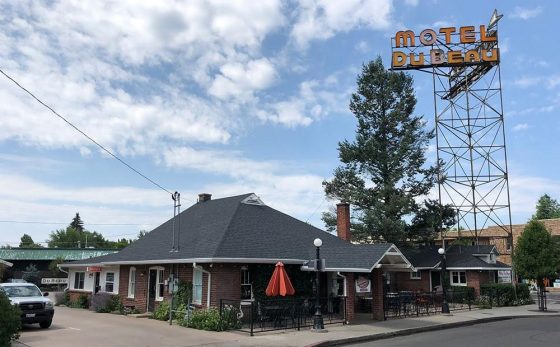
Motel DuBeau: On what was the original Route 66, legend has it this is the original Motel. Mr. DuBeau coined the phrase. Now it’s a very cool hostel full of international travelers. It has a great bar and is a great place to hang with the world traveler crowd.
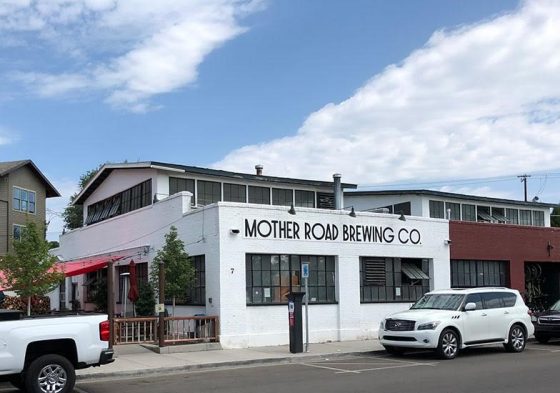
Mother Road Brewery: One of the many, many breweries in town. They brew an excellent IPA they call Tower Station and the patio is a fun place to hang and order pizza from the excellent Pizzicletta next door.
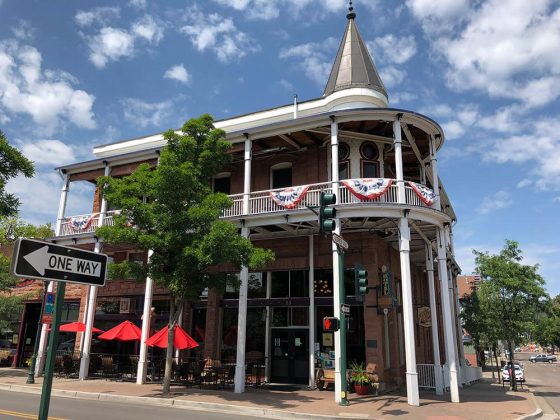
The Weatherford Hotel: This is the oldest historic structure downtown. It’s gorgeous inside and out with live music in the basement bar, great food in the restaurant, and a cool bar upstairs that opens out onto the wraparound balcony. You get views of the whole town and the majestic San Francisco Peak to the north.
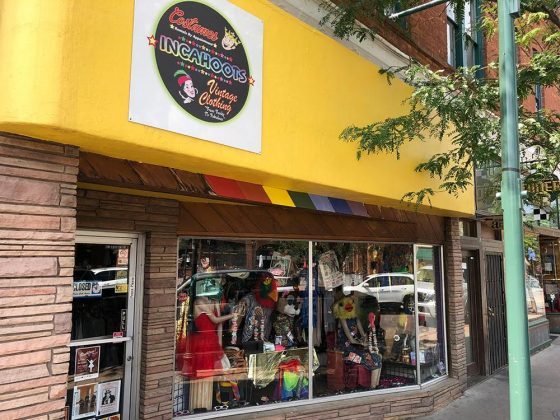
Incahoots: This downtown fixture is where you get your party duds. Flag has a very costumey culture. Where else can you go to a concert and have a dancing costumed 60-year-old offer you a hit of acid? You gotta love that about this town.
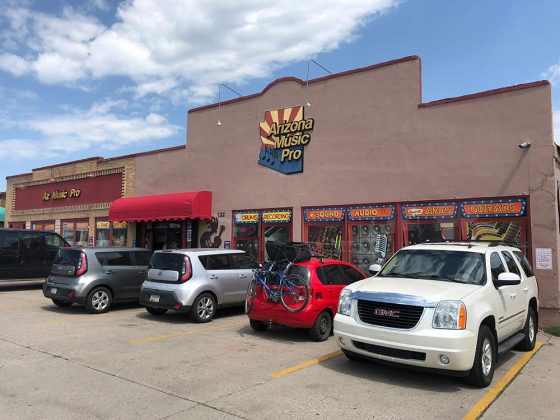
Arizona Music Pro: An excellent full-service music shop. It has everything any musician, local or traveling, could ever need. Plus the manager, Rich Neville, used to play bass for Poco and Vince Gill. How cool is that?
Photo of Walter Salas-Humara: Jean Fordyce
This website uses cookies to improve your experience. We'll assume you're ok with this, but you can opt-out if you wish.AcceptRejectRead More
Privacy & Cookies Policy
Privacy Overview
This website uses cookies to improve your experience while you navigate through the website. Out of these, the cookies that are categorized as necessary are stored on your browser as they are essential for the working of basic functionalities of the website. We also use third-party cookies that help us analyze and understand how you use this website. These cookies will be stored in your browser only with your consent. You also have the option to opt-out of these cookies. But opting out of some of these cookies may affect your browsing experience.
Necessary cookies are absolutely essential for the website to function properly. This category only includes cookies that ensures basic functionalities and security features of the website. These cookies do not store any personal information.
Any cookies that may not be particularly necessary for the website to function and is used specifically to collect user personal data via analytics, ads, other embedded contents are termed as non-necessary cookies. It is mandatory to procure user consent prior to running these cookies on your website.