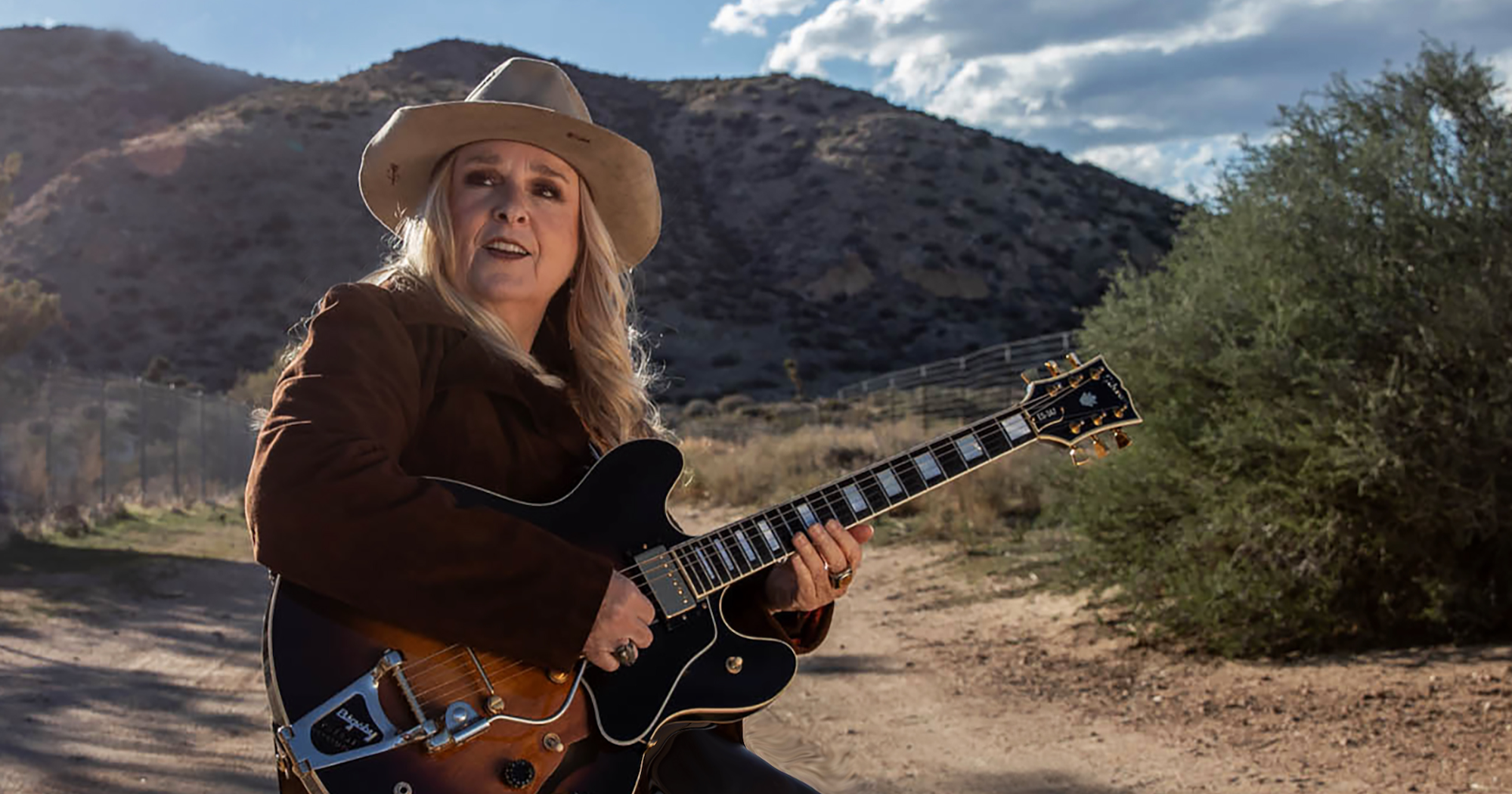
Melissa Etheridge: Rock and Roll and Resilience

Few people have experienced the highs and lows of the music business to the degree that Melissa Etheridge has. Since releasing her self-titled debut in 1988, she has won two GRAMMYs (and been nominated for many others); been hailed as the second coming of Janis Joplin; won the Gibson Award for Best Female Rock Guitarist; become a mom several times over; been a social activist both for the LGBTQ+ community and for people addicted to opioids; written a memoir; and performed a one woman show on Broadway. Not bad for a kid from Leavenworth, Kansas.

That said, Etheridge has also suffered more than her share of setbacks. She has weathered a couple of high-profile divorces, battled breast cancer – who can forget her duet with Joss Stone at the 2005 GRAMMYs when she took the stage bald after undergoing chemotherapy – and, in 2020, lost her son Beckett to addiction.

The one constant throughout all these ups and downs has been her music, a brand of heartland rock that manages to be personal and universal at the same time. Etheridge is nearly as popular with blue-collar men as she is with lesbians, owing to her raspy vocals, formidable guitar chops, and unpretentious persona. And she’s racked up an impressive list of hits over the years including “Come To My Window,” “If I Wanted To,” “Ain’t It Heavy,” “Similar Features,” “I Want To Come Over,” “Bring Me Some Water,” and “I’m the Only One.”

2026 is shaping up to be a big year for Etheridge. She returned on March 27 with Rise, her first studio album in five years. On the eve of its release, she and her band kicked off a six-week tour in Detroit. And for the first time, Etheridge was nominated for induction into the Rock & Roll Hall of Fame this year.

Rise was recorded in Los Angeles with co-producer Shooter Jennings and includes 11 songs. While they’re diverse musically, the album as a whole feels like a complete statement. It’s a testimony to resilience, to sticking with life through all its ups and downs.

The title track and “Bein’ Alive” (which opens the disc) are both life-affirming rockers. “The Other Side of Blue” is a contemplative duet with Chris Stapleton. The playful “If You Ever Leave Me” puts an Americana spin on Mental As Anything’s ‘80s hit, “If You Leave Me (Can I Come Too).”

The shuffling, midtempo “Matches” was inspired by Johnny Cash’s 1970 concert at the U.S. penitentiary in Etheridge’s hometown. But the two final songs on Rise are also its most personal and poignant. “Call You” is a moving tribute to her son Beckett, while “More Love” was written for her daughter Bailey when she got engaged.

BGS recently had the pleasure of catching up with Melissa Etheridge for a Cover Story interview.

Let’s start with Rise. This is your first new album in five years, which is a significant amount of time. But you’ve been very busy in the last five years; I read your book and saw your show on Broadway. So it’s not like you’ve been sitting around! What do you get out of recording an album that you might not get from doing theater or writing a book?

Melissa Etheridge: Even though I haven’t had an album out in five years, the [last] album I put out, One Way Out, was a previous recording that I’d done seven years before that. So it’s really nine years since I’ve written. And I’ve lived so much of life – from loss to the pandemic to just growth. That’s the part about making a record. I knew that I could create a collection of songs that would make an album.

I love the art form of an album. You know, 45 minutes to be with the listener and take them through an emotional journey. That’s my favorite part; the real crafting of it was the writing. And it was about a year’s worth of pulling things together and then writing [in] December of ’24 and January and February. Then going in the studio [last] March. Going in, it’s so much fun with the road band that I have. It’s like putting on a favorite pair of jeans. Then getting Shooter Jennings to produce it! His studio, Sunset Sound, is so amazing. So it was a pleasure recording there.

It really does flow as an album, but it touches on a lot of different moods. Listening to it as one piece, I felt a sense of renewal and also resilience.

Yeah, that’s something I wanted to get across. There’s so much I experienced through the loss of my son five years ago. That’s about the most devastating thing you can go through. Having gone through that loss, [I] decided that I wasn’t going to drown myself in guilt and shame, I wasn’t going to die – that I was going to experience this, heal with my family, keep loving ourselves, knowing that everyone makes their own choices. I could not save him, he had to make the choices for that. And then making art from that – you know, loving yourself enough to be able to say, “God, I love being alive.”

Writing those songs – especially in this day and age when I find such negativity – if you start believing that, then that’s what you’re gonna see. So I wanted to put [out] positivity without being patronizing or [using] platitudes. You know, lifting people up. Going, “Yeah, you’re gonna fall sometimes. You’re gonna taste the dirt. You’re gonna rise.”

[“Rise”] came after the LA fires. That was something I went through with my family. We had to evacuate. It came right up to our neighborhood. I gotta tell you, LA firefighters are heroes. Every single one of ‘em. They were able to keep it from our neighborhood. But there was a moment, when we were watching the fire reports, where it was like, “Okay. There’s a good possibility that we might lose everything.” I was in a hotel with people who were losing everything. To experience that and then say, “They’re just things. We’ve got our health, our family, our pets.” You know, you’re gonna still rise. There are gonna be these things that knock you down, but man! You’re gonna be stronger and better for it. It’s hard to hear but it’s so true.

I was gonna ask you why “Rise” was the title track but you kind of just told me!

The second to last song on the album is “Call You,” which is really moving and I know you wrote about your son. I don’t have children, but two months ago I lost two of my best friends, one to suicide and one to early onset Alzheimer’s. So I’ve been struggling the last couple of months with a lot of existential stuff and wanting to call my friend Mark – and I can’t. So that song really resonated with me. I guess I wanted to share that with you.

Yeah. Life is full of loss. It really is. You’re not living if you don’t have some loss. And the older you get, the more you’re gonna see it. That’s when the existential stuff [comes in]. I am more than just my body, I am a separate soul here experiencing it. The greater part of me is that non-physical place that I’m connected to – that source that everyone is [connected to].

In “Call You,” I tried to simplify that. Because to me, the times when I miss him the most are the times when it’s like, “I wanna call you!” Even my father who died 30 years ago, you know? When I was nominated for the Rock Hall, I was like “Oh, I just wanna call my dad!”

[“Call You”] was actually the first song I wrote for the album. I knew I had to get that emotional experience down. I had to write that song first.

I also wanted to ask you about “Matches.” When I spoke to you last, you told me about Johnny Cash playing in Kansas when you were just a kid and how one of your thoughts was, “Prisons must be the place where you find entertainers.”

[Melissa laughs]

Tell me more about that and maybe your thoughts about The Man in Black.

Well, growing up in a small town, Leavenworth, we have no places for big artists. Kansas City is 45 minutes away. But our town, in the ‘60s, that just wasn’t a thing. All of a sudden, in 1969, he came to the prison. He came to our town! “Oh my god!” Someone who I’d only seen on his television show or [heard] on the radio and was such a cultural icon – he’s in the same space as me! That really kind of said to me, “Whoa. Maybe I could do that.” It felt close to me. [Cash] always made a big impression on me. I always loved his music, his individuality.

“Matches” was supposed to be a scratch pad song for me. I had just come from the I’m Not Broken [docuseries]. I did a concert in 2023 at the Kansas Women’s Penitentiary. So I was still sort of playing off of that and singing. Scratch songs for me are songs [where] I’m writing for fun and it starts the juices flowing. I kept writing these verses and I played a little bit for my wife, [Linda]. And she said, “You have to put that on! What do you mean that’s a scratch song?”

Can you tell me some wonderful things about Linda?

[Laughs] Yes, I can! That’s easy. For 12 years we’ve been married. We were together four years before that. And before that, we were best friends for 10 years! I married my best friend.

She is… everything I needed or wanted or dreamt about. The only way you really get someone like that in your life is to understand your needs and wants. And to have the love for yourself that you are looking for in other people. The minute I really got in contact with myself and understood what I wanted and loved, I was able to see the best kind of love for me. And she was it.

There’s just a constant partnership that is astounding – a love and desire that never goes away. And it’s because I’m not looking for her to fix me or make everything great. I’m looking for her to be by my side as we both make our choices and walk through this world together.

Tell me a little about “The Other Side of Blue” and what it was like duetting with Chris Stapleton.

Ah! Chris Stapleton is just a national treasure. His soul and his talent and his mind and his heart are so beautiful and so rare. He’s such a unique talent and an incredible man.

I really didn’t know him at all, I just was a big fan. And I didn’t really want to do a duet on this album. But I remember telling my manager, “If I ever did do a duet, I would love it to be with Chris Stapleton. Maybe ask him if he wants to write a song together.” So my manager sent out the request. He said yeah, and that made me so happy. I went down and we wrote the song.

We were writing in RCA Studio A in Nashville, which is where Chet Atkins [recorded]. A massive, huge, historic studio! I just walked in and, “Hello, hello.” We sat down and had guitars in hand. We were just talking and five minutes go by and he asked me about my kids. I said, “Well, I had four but I lost one.” He said, “Oh, I’m sorry.” And I said, “No, no. He was my greatest teacher.” He looked at me and he goes, “You talk in song.”

That was the first line: “Sometimes, I listen when she talks in song.” We were writing within 15 minutes of showing up. It just appeared – every line. It took us maybe an hour and a half to write that song.

You mentioned being nominated for the Rock Hall. Tell me how that feels after all this time.

Well, I was eligible for about 12 years. [Laughs] I was like, “Don’t think about it! It’s not a comment on your music.” I didn’t make my music so that I would be in the Rock & Roll Hall of Fame, that’s not what it’s about. It is lovely and feels really good to be recognized by your peers – by a group of people in the music business who say, “Your contribution to rock and roll has meant something.”

I’ve been on the voting body for exactly 10 years now. Obviously, certain things are subjective, but I thought this year there were a lot of good nominees. More diverse than last year’s group.

Yeah, I love Sade. I love Pink. Lauryn Hill I think is a good one. And then Iron Maiden, come on! It’s time, guys!

I always like to ask you about one older song. My favorite, which I’ve already asked you about, is “Ain’t It Heavy.” Is it okay to ask you about one of the really popular ones? I try not to ask the same things everyone asks. But I am curious about “Bring Me Some Water.”

Oh, that’s good! At least it wasn’t “Come To My Window.” No, “Bring Me Some Water” – that’s fun, that’s an older song.

I’d been playing women’s bars in Los Angeles for five years and a lot of record companies came and turned me down. But Chris Blackwell [finally] comes in and signs me right on the spot, for Island Records. Bam! I’d never made a record and I had no idea [what to do]. So my manager gets this producer, Jim Gaines, from San Francisco. This is 1986. It’s the middle of the ‘80s sound – that sort of Steve Miller, Journey [thing]. We made this record and I play it for Chris Blackwell and he hates it! Because it doesn’t sound like the girl he saw at the bar. It sounds overblown – lots and lots of keyboards and my voice way at the top. He hates it and I’m like, “Oh my God, he hates my album.”

I convinced him to give me four days to try it again in the studio. But in between the time that I finished the first album and went into record again – which became the debut – I wrote “Bring Me Some Water” about this relationship I had with a lovely woman named Kathleen. We lived together and we had this open relationship – which is just a mindfuck! [Laughs] I wouldn’t advise anyone to do that.

This is her being gone and me sitting at home in the middle of September, in Los Angeles. I’m living on Melrose and it’s hot. It’s so hot! So I sit down and I’m like, “Okay. I gotta get back to traditional blues stuff.” I’m just playing [the riff], it’s old Muddy Waters but it’s speeded up. I’m singing about, you know, the foul air. I’m just hot and uncomfortable and I’m mad. So, I wrote this song and Chris Blackwell loved it.


Photo Credit: Candice Lawler
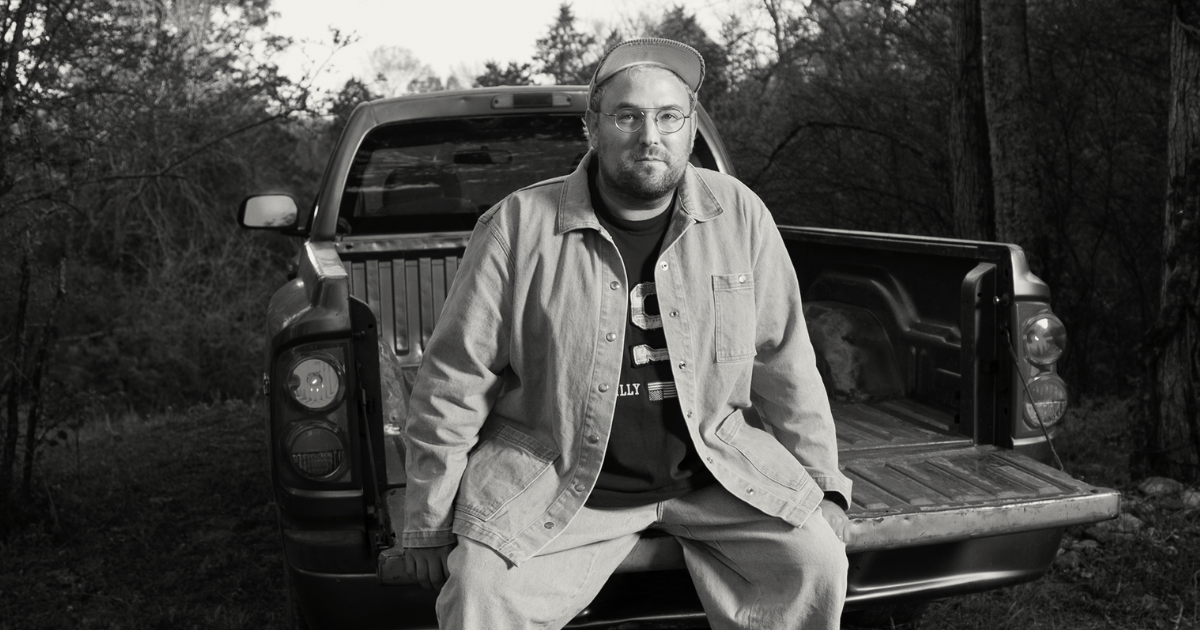
MORGXN: Home Is Where Your Heart Hangs Its Hat

“I don’t know when I became an activist,” MORGXN admits. “I’m just a human being who sings from the heart, but my heart is very broken by the world that we are currently living in.”

The singer-songwriter lived in Los Angeles for 10 years before moving back home to Nashville in 2022. “The minute I came back to Nashville, I ran into a guy once. He was like, ‘I only see you at the Capitol singing,’” he recalls. “When I moved back, they were trying to ban drag queens. They were trying to ban women’s access to health care.”

Most recently, he took to the Tennessee State Capitol to protest bills against same-sex marriage. “This is how rights get tested: one state, one bill, one ‘exception,’ and suddenly the floor moves under all of us,” he wrote on Instagram.

“I don’t even think about it as activism. I think about it as humanity. We are more alike as human beings than the media, the news, and politicians would want you to believe,” he explains. “It breaks my heart. If you have listened to this album, there are songs about love and the human experience. The album is for anybody bold enough to live as who they are in the middle of the heartland.

“That is what I hope people get from this album. I hope they feel less alone in their activism… I wouldn’t even use the word activism. I hope they feel less alone in their humanity, period.”

On March 6, MORGXN released a deluxe edition of his album, HEARTLAND, and while it pulls from country music, he wouldn’t exactly label it as such. “I don’t care what genre you tell me it is. I care that I’m speaking something that is true to me, and that’s how I make music,” he says. “I don’t make music outside in.

“I make music inside out. I find what’s inside, and I try to bring it outside,” he continues. “And the heartland is a place that is normally not reserved for people like me and you. And yet, living in the heartland, I see that everyone belongs in the heartland. The heartland is a space for everybody, and I want to reclaim the heartland for everybody.”

Good Country hopped on a Zoom call with MORGXN a week before the album’s release and chatted about collaborations with Tenille Townes and Maggie Rose, the meaning of community, the political divide in country, and the hardest lessons he’s learned since coming out as gay at 19 years old.

What are some of your favorite lyrics on the album?

MORGXN: “GOD CODED” is maybe the most important song I’ve ever written, whether or not most people hear the song – it’s not a radio song. But it is probably the most important song I’ve ever ushered into being. I have no problem with god or religion. I have a huge problem when people use god and religion as a weapon of their hate.

“WILLOW” I wrote for my friend’s daughter who has cerebral palsy, so that she knows that she is a bright light. Already that song has inspired other people, which really means that she has inspired other people. It’s hard for me to choose… “MIGRATION” is about losing my dog. I don’t have a favorite lyric – it’s like choosing a child. [Laughs]

Okay, here’s my funniest favorite line, “EVERGREENS.” The first line: “Tell me your sign/ And I’ll tell you mine/ And I’ll tell you if we’ll be okay.” I think that’s funny, because if I’m dating somebody, I will be like, “What is your sign?” And I’m going to decide right away if we’re even going to be compatible, which is maybe absolutely chaotic, but I love it.

With the deluxe edition of HEARTLAND you have several collaborators, including Tenille Townes, Ruby Amanfu, and Maggie Rose. How did you choose who you wanted, and what did they bring to the table?

Collaboration is like water to me. You know, I have many liquids here on my table. I am a gay man, so I have tons of liquid everywhere around – iced coffee is always a yes. Collaboration is also like breathing to me. When I think about making music, “the bible” to me is Willie Nelson and “On the Road Again.” The life I love is making music with my friends, and I can’t wait to get on the road again. That is how I think about music.

When I moved to Nashville, there were voices that I saw popping up that were saying really important things, like [Tenille Townes’] “Jersey on the Wall.” They were saying messages that really resonated with me inside of a space that is still not reserved for people like me.

I came here in 2022, which was 11 years after this manager told me I would never make it in music as an openly gay person. In Nashville, there was a thing bubbling up, but it was like you were reserved for this sideshow experience. You can be gay, but only during June, only when there’s a tent for you to stand under. That’s not how I believe in love or life or humanity. I reached out to several people wanting to create. Truth be told, I have people in my DMs who are massive artists, who love what I’m doing, but who can’t align with who I am because it will hurt their fan base. That’s insane. That’s 2026 for you.

But artists like Tenille Townes, Maggie Rose, Ruby Amanfu, Katie Pruitt – who’s obviously a queer beacon – and Langhorne Slim, they were people who were brave enough to collaborate outside of what is the norm for them. I’m really honored that they’re helping me create this version of the heartland where everyone gets to live.

With Tenille, “HEAVEN KNOWS” was the first song we ever wrote together. It was actually the day we met. The song has this sort of inner child: Why do we even keep trying in a world that feels so hard? Why do you love when your heart has been broken so many times? Why do you keep making music when it feels like the music industry is as crazy as ever? And why do you keep being a good person in a world that is hell-bent on trying to make you feel like you are an abomination? I try because I care. I love so deeply, you know.

Having grown up in Nashville, what did community mean to you then, before you came out at 19?

The one thing I’ll say about being queer in America – maybe anywhere in the world – is you’re forced to create community, and sometimes family, when that is not a given for you. I was very lucky that my family was… more confused and scared than they were not accepting. But my husband’s journey with his community – he grew up evangelical and his community kicked him out. He was going to be a pastor, going to seminary, and once he came out, he was kicked out of the church. I didn’t have that experience … but family to me widened the moment I came out. The idea that family was not just the people you were born into, but it is the people and friends and lovers who you collect along the way that were missing for me as a kid. Growing up here, I had a hard time fitting in, because everything I did stood out.

I played the Bluebird [Cafe] last night with Molly Tuttle, Maggie Rose, Liz Longley, and Ketch [Secor] from Old Crow Medicine Show. I’m sitting there singing “MY REVIVAL” – and I’ll cry thinking about this, but it’s like I’m sitting there singing [that song]. My husband is over here and the whole room is singing along with me. I have painted nails, singing my song at the Bluebird with legends. I’m the co-chair of the diversity committee for the Recording Academy in the Nashville chapter. I don’t know if I’ve “made it,” because I don’t think making it is even like the goal here. I want a career and a life, not a moment in time. That’s “making it” to me. For the closeted gay boy who was scared to ever reveal who he truly is, that’s my revival. There’s retribution. There’s deep healing, and there’s tons of gratitude, as well.

The divide in country music right now between people who are willing to sacrifice a fan base and those who aren’t is always widening. It’s cool to see who has come forward to make their voices heard.

Country music is three chords and the truth. That’s still the bible, but it has lost its way. There is a real ricochet happening where people are afraid to be truthful, because truth can sear and truth can be very quiet but very powerful. Nashville is at a breaking point. It’s a small town. We are growing by leaps and bounds. There’s a real deciding line between: do we make this a city for everybody or do we make this a city for the select few? That’s the same for country music, folk, Americana, and gospel.

“HEARTLAND,” the song, definitely pulls on gospel, folk, Americana, and pop, for sure, but it also pulls on country because it’s a story. I thought I’d see my name in lights. I thought that my life would be this flashy thing. It’s not. I fell in love with a man, and we have a farm, and we’re building a life together. That’s love to me. It’s a story. It’s my story. It’s real. So, it’s country; it’s folk; it’s Americana; it’s gospel. Now, will any of those genres accept me? I have no idea.

But the people on my album have accepted me for who I am and love me for who I am. And that, I think, is what the heartland is all about. You know, love thy neighbor. What happened to that?

You turn 39 this year, which happens to be 20 years since you came out. Was there any significance in releasing HEARTLAND (Deluxe Version) this year?

It’s funny. Titles of an album are like mystery buckets. I actually have a title for my next album and I’m so excited about it. Prince once said that he’s like two albums ahead of whatever’s commercially released. And I love that for him. I’m one album ahead of what is commercially released. Album titles visit me like a fever dream. Even HEARTLAND – the song, I gotta call out Josh Dorr, the co-writer on that song, who had a number one with Blake Shelton this year with “Texas.” He’s a legitimate country songwriter. Not even legitimate country songwriters would take a session with somebody like me and it takes guts to do that.

I haven’t thought about how it’s 20 years since I came out, but it makes a lot of sense. I have a song called “home.” When people were like, “Where is home?” I would be like, “Well, anywhere but Nashville, Tennessee, because that place would never accept a person like me.” Now, to be making a life here, building a farm, hosting Pride on our farm, there is something beautiful in that. It may have taken 20 years, but I’m home. It’s beautiful. I hadn’t really thought about time like that.

When we wrote “HEARTLAND,” I wrote it on the piano that I grew up on. There’s always ghosts in the bones of old instruments, but it’s safe where my heart lands. It’s the heartland, but it’s also where my heart gets to land safely. That’s the kind of love and belonging I wish for everybody. I’m not somebody who believes that you have to be in a relationship to be happy, or that you have to be married to be happy. That’s bullshit. That’s heteronormative, capitalist nonsense. You can find belonging amongst community, friends, and lovers. Does your heart have a place to hang its hat? That’s home.

What have been the hardest lessons you’ve learned over two decades?

The thing that comes up in my head is: it’s not over ‘til the fat lady sings. I’ve been a fat lady so… [Laughs] It will fall apart, and that’s okay. The true story is what happens when you pick yourself back up and keep going.

I’m far less interested in talking to somebody who’s never moved across the country once. I can’t really relate to you. If you’ve never sold all your belongings and moved somewhere at least twice, we might not have a lot of similar things to relate to. It doesn’t have to be grand moves. My husband has lived in a bunch of places in Nashville, has not left Nashville, but he’s lived a lot of life. You have to have lost everything once, probably twice, and hopefully that’s it. But it’s really about how you pick yourself back up at the bottom, and keep trying again.

Whether you think it’s good or not, it won’t last, and that’s okay. There’s beauty and grace in that. I have a friend, Kristen Griffith[-VanderYacht], who’s a [floral designer] – I think he’s now in Detroit – and he’s gone through a lot. He was on the Drew Barrymore Show, and the guest host was asking, “How do you keep flowers alive for longer?” Kristen grabbed his hand and he was like, “Here’s the thing, lean in close, I want you to hear this: they’re not meant to last. They’re meant to be beautiful for the moment that they’re there, and you’re meant to appreciate them in all their glory, and then you’re meant to let it go.”

That is really hard. That is maybe [informing] some of the themes about my next album, actually. It’s loving and letting go. Life is not linear. It’s not meant to be. Cherish all of the beauty, because nothing lasts forever. And there’s a ton of freedom in that sentence.


Photo Credit: Gabriel Starner

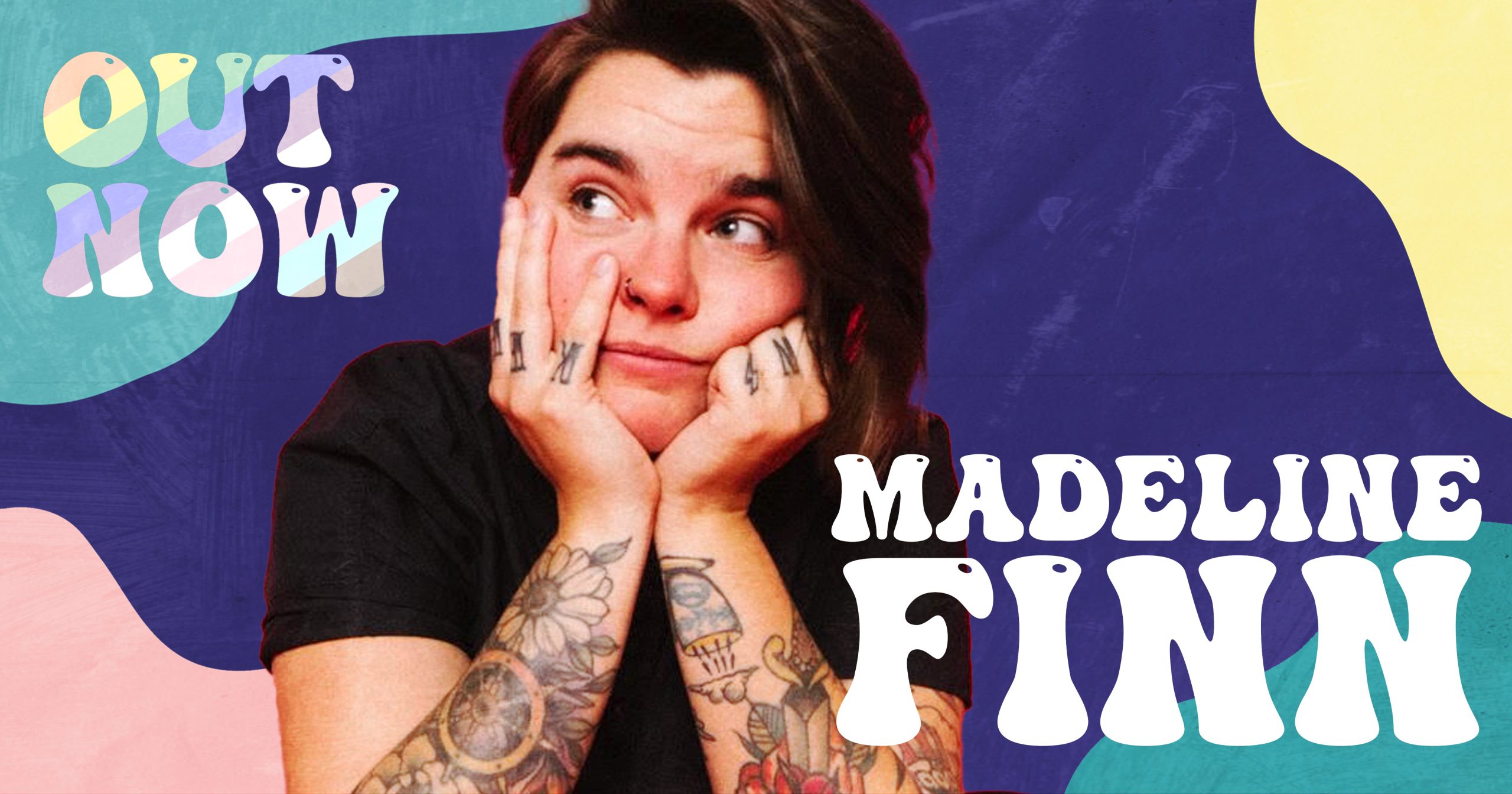
Out Now: Madeline Finn

Madeline Finn is a thoughtful writer and dynamic artist. Madeline transcends the boundaries of genre, crafting pieces that pull elements from folk, rock, and indie. Their songs are honest, relatable, and catchy.

Madeline feels that her role as an LGBTQ+ musician is bigger than herself and she values uplifting her community. She hopes to embody the queer representation that she longed for as a kid. In our Out Now interview, Madeline shares their vision for the future, their upcoming projects, and their journey into self-producing music.

We are thrilled to be featuring Madeline Finn at our next Queerfest show in Nashville at Vinyl Tap on Wednesday, August 7. The show runs from 7-9 pm and features four local LGBTQ+ artists. There’s a ticket suggestion of $10 that goes directly to supporting the artists. Don’t miss out on the chance to hear Madeline Finn live!

Why do you create music? What’s more satisfying to you, the process or the outcome?

Madeline Finn: I used to be more amped up on the outcome, but these days I have really fallen in love with the process. Mostly since I have started self-producing. It’s so much fun and I could do it literally all day.

You create within a wide range of musical genres including folk, rock, and indie. How do you navigate your identity as an artist who works across several genres?

Honestly, I have no idea. I’ve been trying to just let go and make music that’s fun and meaningful to me. Whatever the genre might end up being doesn’t matter that much to me.

What does it mean to you to be an LGBTQ+ musician?

Being a queer musician is a special thing. Especially because it’s becoming less and less special, if you know what I mean. I am one of many LGBTQ+ artists who make up a whole force of nature. I see my role as a part of the whole, a part of something way bigger than me. The more we uplift our community with art that speaks directly to the queer experience, I think the more healing can be done. The more healing that can be done within each individual, the more we heal the human experience as a whole.

I’m so jazzed on the queer music community and wish I would have had more folks like that growing up to listen to. Honored to be what I needed when I was a kid, now.

For anyone reading this who might not be out of the closet, were there any specific people, musicians, or resources that helped you find yourself as a queer individual?

Specifically, I found a lot of help as a kiddo from The Trevor Project. I also was able to find a safe adult/family member to talk to about it before I came out to my immediate circle. For those who are in adulthood I would highly recommend THERAPY!

You’ve been on the team at Wild Heart Meditation Center for a few years. What has that experience been like for you? Do you find that your meditation practice influences your music?

Wild Heart Meditation Center has been the single most important part of my personal growth and healing over the past five to six years. I came to the center interested in meditation and since then have fallen deeply in love with the practice and the teachings of the Buddha. It’s been so rewarding to be offered an opportunity to share that with the community and others as a facilitator. My practice influences every single part of my life, music included. It’s helped me let go of the craving that often surrounds a career like this, I have gained a deep freedom from contentment within my musical career. I honestly think you can hear it in the music. The shows are more fun for me, I am not afraid of what others think, not sitting around waiting for someone to give me my golden ticket. Instead, I know that I can rest in the reality of this moment and have a deep, non-attached appreciation for all the beautiful parts I encounter.

What has it been like for you to work with other LGBTQ+ artists in the music industry?

The LGBTQ+ music scene here in Nashville has been amazing. It’s this collaborative, joyful machine that just runs all on its own. Getting to hear music direct from artists like Autumn Nicholas and to play for so many other queer folks just gets me so pumped.

It’s like “Y’ALL WE ARE DOING IT!!!” I’d like to believe it’s deeply healing for my inner child.

What’s your ideal vision for your future?

My ideal vision for my future is to have chickens, mainly. If I can have a little space in the world with chickens, my wife, and my dog I am all set. Beyond that, I try not to set too many expectations for the future. Instead, I am really practicing following my intuition towards the next most meaningful step. One day at a time.

What are your release and touring plans for the next year?

I have been hard at work on my own record based on the IFS (internal family systems) model of therapy, it’s my first venture into self-production and I’m hoping to have it ready to start sharing singles by the end of the year.

My pop-rock project ENVOI just released a brand new album in May, so there is a chance we may be doing some live shows to support that. In addition, I’m working on a project with Liv Lombardi here in Nashville that is going to totally slay.

As far as touring goes, I’ll be around playing bass, guitar, and singing for a TON of artists throughout the rest of the year and there have been talks about an East Coast run for my solo material in the fall.


Photo courtesy of the artist.

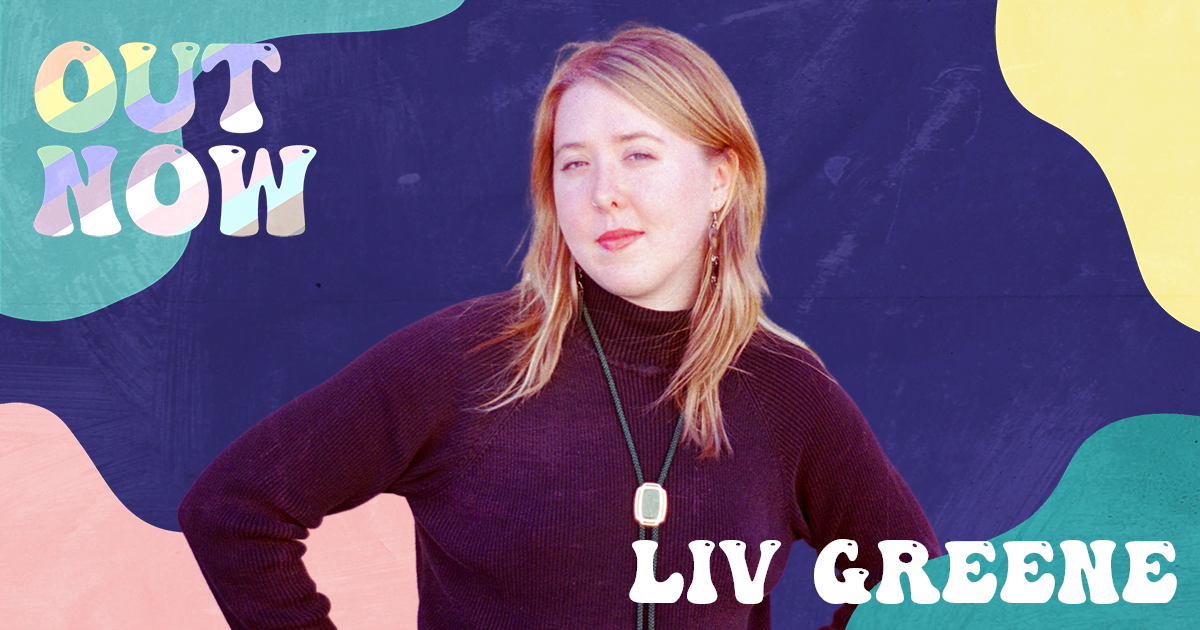
Out Now: Liv Greene

For this edition of Out Now, we’re honored to introduce an artist I’ve known for years. Liv Greene and I met in 2017 at Interlochen Arts Academy. It’s incredible to watch artists like Liv, who have been dedicated to their craft for years, develop careers in the industry. Following our time at a small arts school in Northern Michigan, Liv and I both moved to Boston. After a year at Tufts, grappling between following a traditional path or following her intuition, she transferred to New England College of Music. And we both eventually found ourselves in Nashville.

I have known a small handful of individuals who took this path – following music and intuition from their teen years into adulthood. That kind of persistence and dedication is rare.

I’ve known Liv from before they were out to even their closest friends to now, a time when they are publicly vocal about their identity. To some, these things may seem small. But to teens, up-and-coming artists, and the queer community, it’s incredibly important.

Liv has long been one of the most talented artists I’ve known – even in their teen years. But years of persistence and dedication to their craft have sculpted their music and work into something polished, professional, and bound to take off if they continue on this path. If you don’t know their music, you’re in for a treat: sophisticated guitar lines soaring melodies and reflective lyrics. We are so proud to present Liv Greene for Out Now.

Why do you create music? – What’s more satisfying to you, the process or the outcome?

Liv Greene: The process! I think I make music because I have an ever-burning curiosity and desire to learn new things. Ever since I was 11 and first discovered my ravenous appetite for learning songs on the guitar, my passion has burned brightly and shifted focus a number of times. Recently, the process of recording is really fascinating to me. I am quite new to it overall, and I feel lucky to have some mentors that have really helped me wrap my head around the daunting mystery of it. My first record was produced by my friend and mentor Isa Burke, (you may have heard her shred electric guitar and fiddle with Aoife O’Donovan), and watching her work, as both a session musician and producer on that record, was beyond inspiring. This past year I’ve been lucky to work on a record with legendary engineer Matt Andrews. Matt’s become a friend as well as a mentor and the process of making music with him has taught me more than I can even put into words.

What is your current state of mind?

Recently, it’s not the most positive. With the accelerating climate crisis, I’ve been grappling with big picture plans and visions and considering how it all may need to change in a different world. For example, touring, while once a main dream for my career, now doesn’t feel like the most important thing to me anymore, especially given all the carbon emissions from flying and the gasoline needed to drive. While connecting with people over sharing music on tour feels really sacred to me, I think being intentional about it and how often I’m doing it feels like the only thing that makes sense. With how scary things are these days, I’ve been trying to zoom in on the close-range and try to make it better. Brighten a corner in the space I’m already in now. I’ve been focusing on the things that have always held me, and trying to be the best I can in return to them. My loved ones, family and friends, and my craft.

What would a “perfect day” look like for you?

As much as I love the road, a perfect day would probably be an off day at home. The groundedness of home is unparalleled. I’d wake up around 9, have some coffee and avocado toast, read my book (right now I’m reading this stunning queer novel, Swimming in the Dark), then go out for my favorite 6-mile skate route through the woods near my home (I love rollerskating, particularly trail skating), then come home, and get ready for the day. Once dressed for the day, I’d play some guitar, work on a half-written song or two.

My favorite way to work on songs is to pick up drafts and ponder them by improvising on them every few weeks until they take form. A perfect day of this would probably lead to a completed song and a demo, which I do on cassette on my Tascam portastudio 424mkii with an Ear Trumpet Labs Edwina mic. Four track demo-ing makes my heart happy. Something about the constraints, and the warmth and imperfection of tape, really helps to rise above the minutia and get to the heart of the song. I’d probably enjoy something tasty for lunch, maybe meet a friend or two for some antiquing or thrifting, and then end the day over delicious food with dear friends. Sharing songs, crafting, and drinking wine or tea on a night in, or dancing my boots off to motown or honky-tonk if on a night out in Nashville.

What’s the best advice you’ve ever gotten?

There are two in particular that come to mind. The first is songwriting related, and it’s something I first heard when I was 16 at Interlochen songwriting camp in northern Michigan. My instructor at the time, an amazing North Carolina-based songwriter and community builder named Cary Cooper, shared with us the words of Mary Gauthier: “Sing the song that only you can sing.” That message has stuck with me ever since, for its sobering simplicity and its reminder to look for the story you can tell best, the one on your own heart.

In terms of non-song-related advice, my friend Jack Schneider introduced me to the Stephen Covey quote, “The main thing is to keep the main thing the main thing.” This applies to production work, when you need to zoom out and make sure you haven’t lost the heart of the song, but also to life in general. If I’m ever getting too tied into or stressed over the details of something I try to remind myself, “It’s just music, focus on the music, enjoy it.”

Who are your favorite LGBTQ+ artists and bands?

This answer changes monthly, maybe even weekly, as we are so blessed to have so many artists who are out and proud these days. Growing up it was Brandi Carlile, and she will always be a huge influence for me not only as a writer and musician, but just as a person. Recently, it’s been a lot of my old friends/new friends/mentors, Jobi Riccio (killer classic-style songwriting meets honest new perspectives and modern production), Chappell Roan (kitschy, campy, brilliant pop artist), Olivia Barton and Corook (you may know the smash TikTok hit, “If I Were a Fish“), Mary Bragg (brilliant songwriting, production, and stunning vocals), Melissa Carper (queer woman queen of western swing/classic country), Rosie Tucker (brilliantly clever indie magic), and Izzy Heltai (indie-americana sad boy music that gets to the heart of it). For more pop, MUNA is also one of my all-time favorite bands, period, Saves the World being the record that got me into them. Their live shows are always a religious experience.

What does it mean to you to be an LGBTQ+ musician? And what are your release and touring plans for the next year?

Man, being an out LGBTQ+ musician means the world to me. Being queer is beautiful, it’s a blessing and a gift to be able to access the fullness of who you are without limitations, and I think it’s particularly special to me given how I am able to be proud of it after years of shame around it. Representation matters. I remember seeing Brandi Carlile when I was 14 and didn’t have any other tangible people I saw myself and my queerness in. In a lot of ways, seeing her live at such a young age helped me realize that it was ok to be me.

As for touring plans, you can catch me on the road this fall with fellow queer Americana artist Brittany Ann Tranbaugh, who just released an EP produced by Tyler Chester (Madison Cunningham) that’s damn good, as well as a couple shows in Tennessee in late October opening for one of my favorite songwriters, Margo Cilker. For release plans, I recently finished work on LP #2 and am burning with anticipation to get it out. It’s looking like spring of 2024. Good things take time.


Photo Credit: Courtesy of Liv Greene.

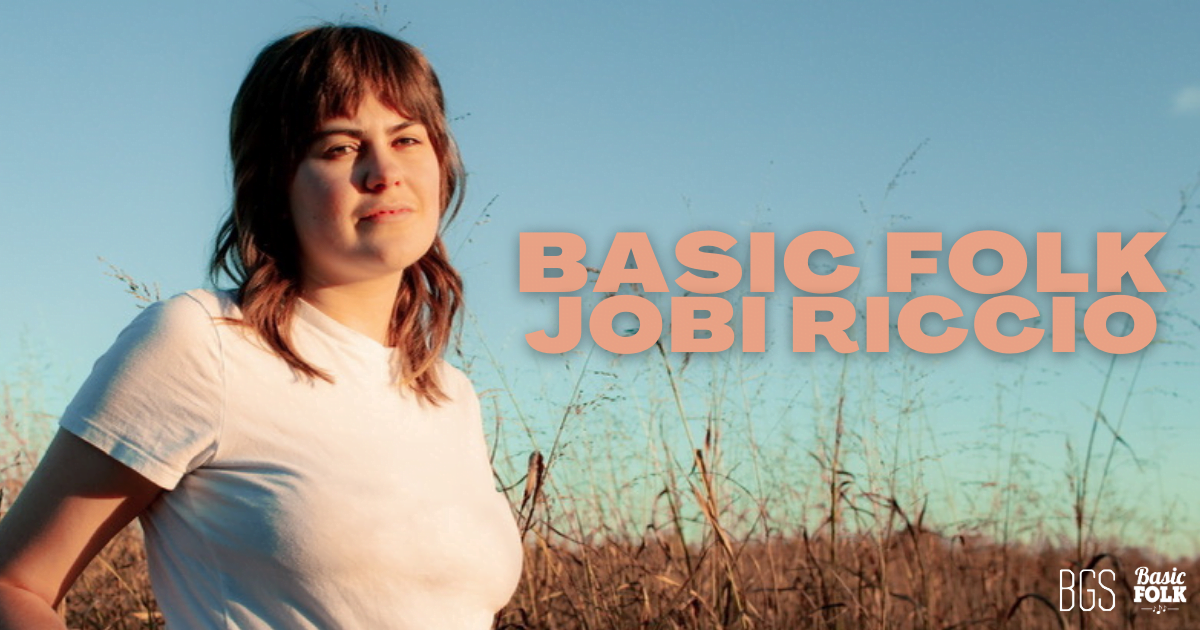
Basic Folk: Jobi Riccio Is an Outdoor Kid

Jobi Riccio has only begun to scratch the surface of what they have to offer on their debut album, Whiplash. The songwriting is centered around self-discovery and mourning past lives, laid alongside super smart country and pop melodies. Our hero grew up an outdoor kid amongst the woods of Red Rocks Parks and Amphitheatre in Colorado. A strong bluegrass community encircled her playing from a very young age, in a way that encouraged her to pursue music as a career. She spent time in Boston attending Berklee College of Music nestled in the folk community centered around the historic venue, Club Passim. Then March 2020 hit.

LISTEN: APPLE • SPOTIFY • STITCHERAMAZON • MP3

Jobi left her new community and found herself back in her childhood bedroom. She was “wrestling with all the complications of finding herself and her place in the world while letting go of her childhood and the sense of grounding that came with it.” Eventually, they made their way to Asheville, North Carolina to work on Whiplash. In the studio, she took her time making the album and discovered that, indeed, she had a strong sense of vision for the music. The trust of her collaborators allowed her to trust in herself and create an album that is turning heads and making Jobi Riccio one of the most exciting young songwriters of 2023. I loved talking to them about their origin, time in Boston and their continuing musical journey. Can’t wait for you to hear her new album!


Photo Credit: Monica Murray

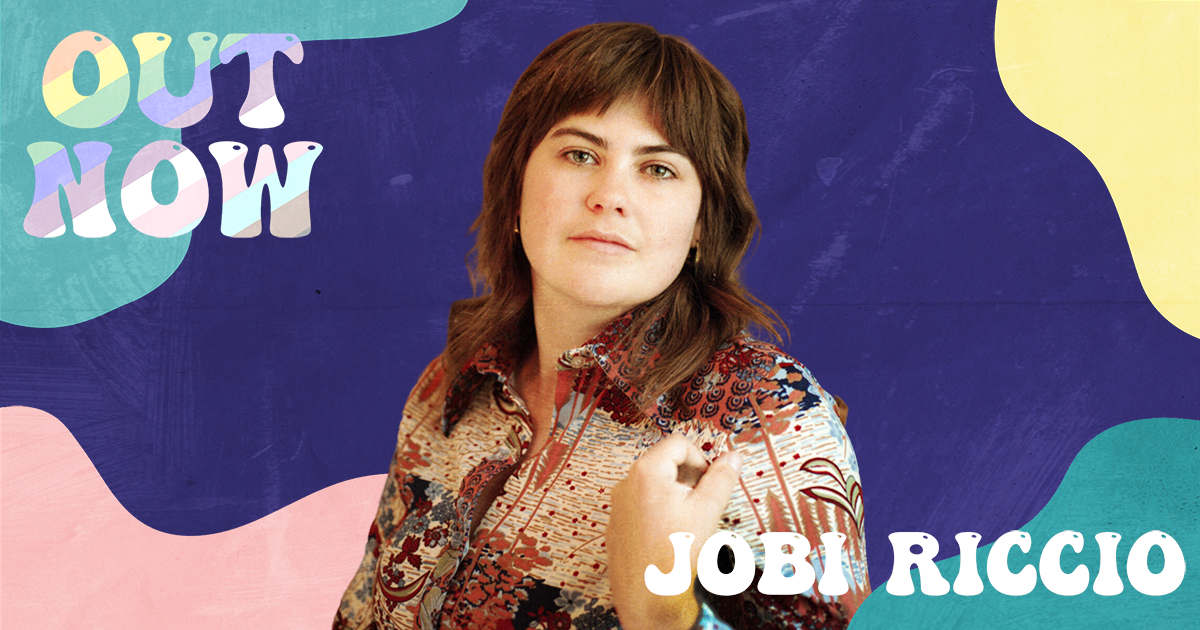
Out Now: Queerfest & BGS Announce New Column with Guest Jobi Riccio

Welcome to OUT NOW! We are so excited to bring you the latest LGBTQ+ folk, roots, bluegrass, country, Americana, and indie songwriters, artists, and musicians. Who am I to guide you through the queer music industry? My name is Sara Gougeon. I founded and run Queerfest, which supports LGBTQ+ music by hosting monthly showcases and an annual festival in Nashville, promoting queer-identifying artists and creating spaces for our community. In 2022 Queerfest was named “Best New Music Festival” by The Nashville Scene.

This column is designed to amplify the voices of queer songwriters, musicians, and industry leaders. I am so excited to share just how talented, creative, and supportive the queer music industry is. We are delighted that the release of this column aligns with Pride Month, but we are even more excited to support LGBTQ+ music consistently year-round, beyond just the month of June. 

Our first artist is one that I am proud to have known for years, and I can write with undeniable confidence that their music is at the start of a career filled with national tours, stunning releases, and larger followings sure to come. 

I met the amazing Jobi Riccio in college when we were students at Berklee College of Music in Boston. They’ve come a long way since then: a record deal with Yep Roc, touring, and the move to Nashville. But I knew from day one that their music was exceptional. It is always a complete honor to promote incredible queer music. 

Jobi’s carefully crafted lyrics turn songs into movies. Melodies blend with smooth vocals, and mournful fiddle solos lift between lines. It’s the kind of music I catch myself playing for hours before noticing that I’ve fallen so deeply for a few songs that I could listen to them on repeat forever. 

And with that, I am deeply proud to present OUT NOW: Jobi Riccio.

BGS: What would a “perfect day” look like for you?

Jobi Riccio: A day spent primarily outside in the sun with those I love that ends playing songs in a living room or around a fire is really hard to beat. I also love being alone exploring nature and any day I spend hiking, biking, kayaking or doing any outdoor activity completely alone is always perfect and healing. 

Why do you create music? What’s more satisfying to you, the process or the outcome?

It depends on the day. I love performing just as much as I love songwriting and I view both as a very gratifying way to connect with myself and other people.

Do you create music primarily for yourself or for others?

I honestly don’t know. I create music when I’m feeling something big and feel I need to or have the ability to express it.  I’m not sure if it’s completely honest to say I write entirely for myself because sometimes those big feelings I’m experiencing stem from a desire to connect with others. 

Who are your favorite LGBTQ+ artists and bands?

Rufus Wainwright, Aaron Lee Tasjan, and Caroline Rose all come to mind as LGBTQ+ artists I’ve had in heavy rotation, but also those I’m lucky enough to consider friends: Liv Greene, Erin Rae, Brennan Wedl, Brittany Ann Tranbaugh, Palmyra, and Olivia Barton are all queer artists/bands I’m very inspired by. 

Is “Green Flash ” based on real feelings/experiences?

I started “Green Flash” during late spring of 2020, when I moved back home with my mom in Colorado. Lots of these existential crisis-y type thoughts were swirling in my head throughout my senior year of college, and the onset of the pandemic just sent them into overdrive. Most musicians have a fantasy of quitting music at some point and leading a “simple life” and I was caught up in that idea as I had nowhere to play and no hope of touring in the future.  Sometimes I find my songs function similar to journal entries — questions I ask myself or little prayers out into the universe — and I think “Green Flash ” functions that way.

One of the main lines in Green Flash is “I’m still learning how to trust a heart.” How do you find a balance between being open to love/vulnerability/life and not getting your heart hurt?

I love this question, I ask myself it almost everyday. More and more I’ve learned to push myself to be vulnerable and honest even when it’s scary because I might be hurt, because it’s the key to real connection with others and is where the true beauty in life lies. Learning how to be authentically myself has a lot to do with learning to trust my heart and myself, and it’s very much a daily practice. All and all, I’d rather be hurt than live in fear of being hurt. 

What are your release and touring plans for the next year? 

I am releasing my debut record, Whiplash, on September 8 and I’m extremely excited to get this body of work into the world. I’ll be touring around the record this year and next! 


Photo of Jobi Riccio: Monica Murray