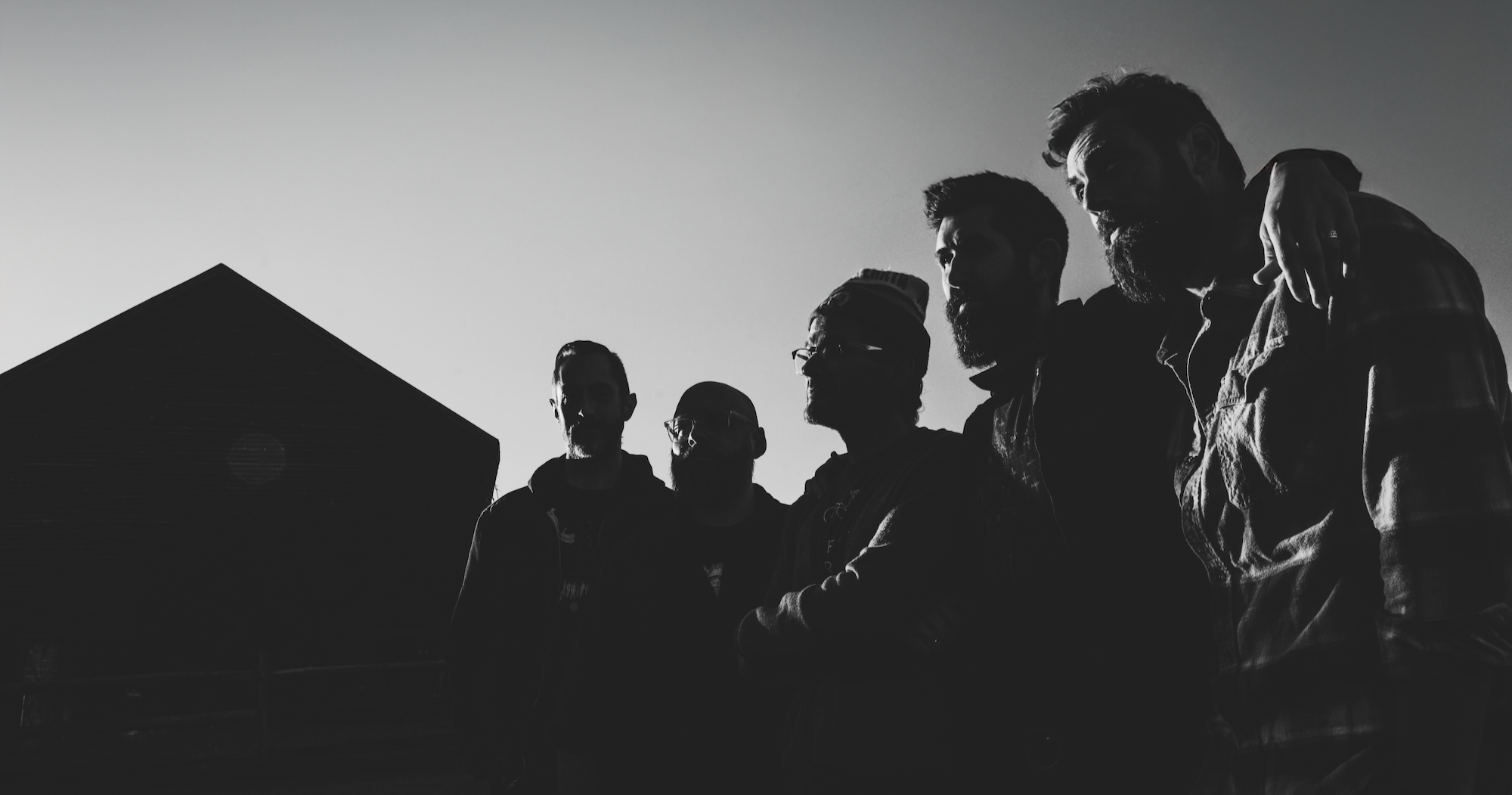
The Steel Wheels’ Songs for Humans, by Humans

It’s common these days to wring hands over the many ways powerful tech companies have meddled, without permission, in how we discover and listen to music (among other things). It’s just as common to fearfully declare that music’s good old days are past and gone. But after 20 years as a working band, we know that the strength of community through music is much more enduring; and we see it all the time.

There is no greater force than a group of people who are ready to share a joyful experience. It doesn’t matter if they’re gathering to jam, attend a concert, or anything else. People in community can create strong connections in a heartbeat, under almost any circumstances, and music is a powerful vehicle for it. Some days it feels harder than others to find that spark, but it’s always there if we come together and dig for it. Every day the pressure grows to strip the things we all have made and love for parts, but collectively we can raise our voices and push back. As a band, we’re choosing to resist that force and to keep building things. Together.

This playlist features artists that we feel musical and professional kinship with, bands that have been around and are well into their careers. The songs we chose come from albums that are worth spending time with over and over again. These folks have played lots and lots of gigs and revel in the energy of a great show as much as we do. You’ll also find some music from our 9th studio album, The Steel Wheels, too. Music that we made together in a room. – The Steel Wheels

“Easy” – The Steel Wheels

A breezy song with a swirling fiddle intro and a big question at its heart. We live in the future now, with the entire world available to us on the other side of our screens. So why are we lonelier than ever? If everything is supposed to be easy, why does it all feel so hard?

“Talk Is Cheap” – Dr. Dog

Because they inspired me with one incredible Bristol Rhythm & Roots Reunion set probably 15 years ago. Their old amps, their confident trailblazing of their sound that was clearly referential and respectful – but not chasing what a lot of other bands were chasing.

“Los Angeles” – Big Thief

An artist’s job is to remain open and soft to the world and to distill all that pain and joy into work that transmits emotion across space and time. Somehow, Big Thief seems to only become less jaded with time, maintaining curiosity and exploration as part of their creative process.

“Go Back” – The Steel Wheels

All deep relationships come with joy and with pain. To be rid of one you would also lose the other. It’s part of lived experience, this is a reminder to embrace all of it. True connection is worth it.

“Waiting For The Sun” – The Jayhawks

The Jayhawks are a band that prove you can continue to forge your own way and make it through the highs and lows. I was still really just a kid when I discovered them through some older cats I was playing with at the time. Son Volt and Wilco were very much in the alt-country scene and the Jayhawks just had something a bit different going on.

“Worried About The Weather” – Greensky Bluegrass

I love the way this song pivots between the anxiety of pushing forward through uncertainty and the breezy delight of taking a moment to enjoy the journey. There’s momentum to both things and “Weather” has tons of it.

“Keep On Dancing” – The Steel Wheels

Let’s take a break from responsibilities to just see ourselves and each other. Don’t forget to breathe and to appreciate the unadorned peace that can fill the spaces between us.

“I And Love And You” – The Avett Brothers

Even a track like this, one full of solitary stillness, shows the Avetts’ songs are packed with other people. They always remind me that I’m not as alone as I often feel. You can sense the presence of old partners and family throughout this song even though the speaker is alone in their car.

“Valerie” – The Brothers Comatose

These guys are everybody’s friends. Maybe the acoustic Dawes? I don’t know. We’ve known them a long time and they keep bringing joy and fun with warmth and grounded songs that don’t rely too heavily on bluegrass tropes.

“Sway / Endless Highway (Pt. 2)” – Watchhouse

Watchhouse invest deep thought into every lyric and intention into every note without ever seeming to overthink their process or get held back by previous work. “Sway / Endless Highway (Pt. 2)” demonstrates how the band is constantly in conversation, transitioning between tempos and driving down into a deep groove with a breeziness that belies the technical mastery of their acoustic instruments. At a Watchhouse show, the crowd will hang on every note and every silence, sharing a reverence for the song with the band.

“Slow Rise (to the middle)” – The Wood Brothers

Oliver, Chris, and Jano seem to be propelled forward by some groove force that penetrates everything they do and they invite listeners to join in on the funky joy. Their track “Slow Rise (to the middle)” tips a hat to their musical journey. To be in an audience is to get lost in the moment, only to occasionally remind yourself how wild it is that all the sounds coming from the stage emanate from just three musicians.

“Way Down Yonder ” – Chatham County Line

I first heard Chatham County Line when I opened for them at The Livery in Benton Harbor, Michigan, with a jamgrass band I was in, probably 20 years ago. They were tight and had their act together. I was blown away by their professionalism and it made a big impact on me. I will never forget that moment and I’m still inspired by their creativity and longevity as a band.


Photo Credit: Monik Geisel
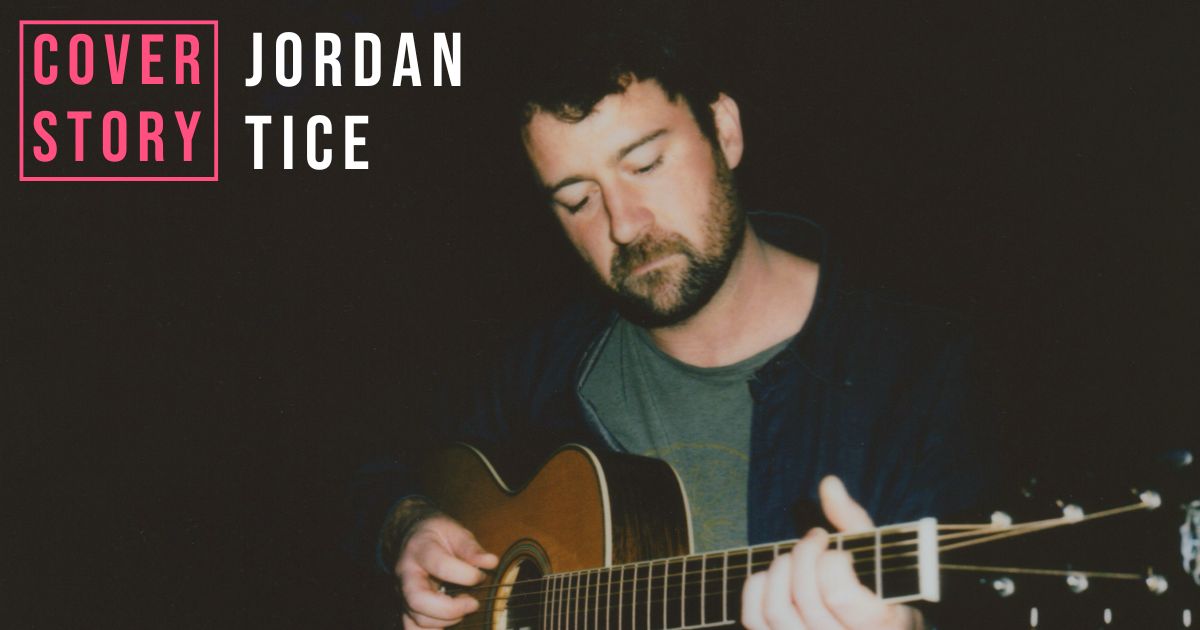
For Guitarist Jordan Tice, “Perfect” Recordings Are Never the Goal

Bluegrass. Newgrass. Chambergrass. Jamgrass. Thrashgrass. So many sub-genres, so little time. For guitarist Jordan Tice – solo artist and longtime member of Nashville-based Hawktail – there’s no time at all, because labels don’t define art and they don’t factor into his creative process.

“I don’t necessarily think about it,” he says. “I mostly do what I feel like doing and incorporate sounds that feel relevant, that I have a personal connection to and an excitement to explore, and the ability to replicate and share. I’d like to think that personality can unite disparate things if the heart is pure.”

Tice weaves a thread of musical connectivity on his new release, Badlettsville. The EP features two covers, Bob Dylan’s “Tryin’ to Get to Heaven” and Randy Newman’s “Dayton, Ohio – 1903,” as well as the originals “Mean Old World” and the instrumental title track. The four are staples of his live shows, but only now have they been committed to recordings.

“They’re all fundamental to my show and are requested as much as my other songs, but they didn’t have a place on either the last record or the next one, so they belonged in Badlettsville,” he says. “They fit together sonically as well. As soon as we got those four things down, I was like, ‘This is something.’”

Ever busy, Tice isn’t slowing down in 2025, although the emphasis is shifting somewhat. After two hectic years, Hawktail is dialing back a bit on gigging and Tice is devoting time to another solo album. “Hawktail has an EP in the can that will hopefully get out sometime soon,” he says. “We’re doing a few festival gigs but taking a much lighter year. I’m doing some dates in support of [Badlettsville], in addition to festivals with Hawktail. But I’m trying to take a little bit of a step back to focus on making this new record.”

Your website bio begins, “Jordan Tice is a musical seeker of the most dedicated sort.” What does the term “musical seeker” mean to you?

Jordan Tice: I’m always exploring my own interests and creativity, and also exploring the music that I do play, the roots of that. I want to understand myself and everything I do, and everything that came before me, better.

Part of the art of music is communicating to anybody, not particularly musicians. The more you understand about music in general, the more you understand what works and what doesn’t. The more you do it, get out there, and play and make records, the more you understand how things register and land with people – different types of thoughts and sentiments, things like that. Music is the art of sculpting sound within a given amount of time for someone who’s giving you their ear.

How has that manifested itself over the course of your solo albums and Hawktail?

With everything you do, there’s something you want to repeat about it, but there’s also things you want to do differently. I mostly grew up writing instrumental music and Hawktail is entirely instrumental. Long about 2015 or 2016, I started writing songs like crazy, just out of nowhere, and I realized I needed an outlet for that. But the instrumental stuff is still near and dear. Keeping a foot in both doors allows me to scratch this itch and this love for both of these things I do.

Did moving to Nashville have something to do with your songwriting?

I think so. I can’t provide concrete evidence, but the coincidence is too great – the fact that I started writing songs right when I moved to Nashville. So the answer is yes, but I couldn’t tell you exactly how. I also started hanging out with a lot more songwriters. My community was more instrumental-based in Boston and New York, where I lived before, so there’s definitely the influence of some new friends I made upon moving down here.

You’ve been playing guitar since you were 12. Does it sometimes feel the same today as it did then?

Yeah. I actually started taking lessons again, from a classical guitar teacher, just because I have some time off the road this winter. There’s things I wanted to improve and I decided I needed some help. I’m always trying to improve, always listening to things, and even in the music I love, there’s still the same sense of mystery of, “How did they do that?” The breadth of everything you’re aware of and assimilated expands, but at the same time it’s the same old [thing].

What led you to classical training?

We’re not doing classical music per se, I should clarify. But a lot of the things I was hoping to work on were technical-based, and classical guitar has such a codified, rigorous, technical study and a pedagogy related to technique in a way that other genres don’t necessarily have.

I’ve studied a lot of facets of music, but I’m not formally trained by any stretch. I took some jazz guitar lessons here and there, and I studied composition, but in terms of guitar I’ve never had formal technical training. I felt I was up against some roadblocks and walls with my playing and decided I needed the help of an expert, a teacher. This [teacher] came strongly recommended from my friend Chris Eldridge from Punch Brothers, and it’s been rewarding to expand the technical facility side of things.

You played a Preston Thompson Brazilian Rosewood and your main guitar, a Collings, on Badlettsville. Tell us about those guitars.

I was at Laurie Lewis’s house in Berkeley with Brittany [Haas] from Hawktail. We were in town playing and we were helping her move some furniture. She had this Preston Thompson in the corner that she was trying to sell and I was interested. It’s from 2016. She hand-selected the cut of Brazilian rosewood, a beautiful piece of wood, and had them make it with this wood that she had sourced. I absolutely love it. It’s going to be my main touring guitar for my solo stuff coming up.

The Collings is a D1A mahogany dreadnought that I bought in 2014. It’s perfectly balanced. It almost sounds like an old guitar. The overtones are exactly right. I have a relationship with Collings, but I bought this one at The Music Emporium in Boston because I liked it so much. It’s been my main axe for the last ten years. It’s what I play in Hawktail and what I recorded my last solo record on.

I brought both of those guitars to the studio, in addition to this new Yamaha FG Indian rosewood guitar that I’ve been working with them for the last couple years to promote and develop. They’re great guitars, and it was a fun process getting to work with them and help get the word out. They’re really fantastic.

How do your picking styles with Hawktail, on your solo work, and with other artists come together to create your style?

I write a lot of music, so my identity as a writer maybe puts those things in the same world. So I would say that it’s filtered through the same mind, and also the conceit is that it’s my music. Hawktail is collaborative, obviously, but it’s part of the same musical world.

I’ve always looked up to Norman Blake and Doc Watson. Norman Blake does a lot of different things, but you don’t really think about it. He plays fingerstyle, flatpicking, traditional music, writes his own music, but it all makes sense in the context of his world. I’ve always admired that as an archetype for a folk musician. He’s himself first. He’s not a historian. He picks and chooses things that work in his musical world, as opposed to something outside of himself. He’s an artist that happens to combine all these folk music techniques and sources into something that’s his own.

You’re thought of primarily as an acoustic player, but you also play electric guitar. Which ones?

I grew up playing rock and roll, in addition to bluegrass and things like that. My first music was the Allman Brothers. I got together with this guy in my church and he showed me the twin lead thing. We’d learn the two leads and then we’d switch. That music is near and dear to me – Jimi Hendrix, the Allman Brothers. So I’ve always played a little electric too. I think it’s going to work its way into the next album.

My main electric is an American Standard Telecaster that I swapped out some of the pickups and modified a little bit. I put a higher-output Seymour Duncan pickup in the neck position and I made it a four-way switch, so you have the humbucker setting in addition to the normal three settings.

Also I have a Yamaha Revstar Professional that they just sent that I’ve been having fun with as well.

What do acoustic and electric guitar each bring out in your playing?

An electric allows you the opportunity to fill up a room with less effort. You can saturate a room with sounds with less notes, with less physical effort. An acoustic is a parlor instrument. It’s meant to be played in a small room with your head right up against it. As soon as you stop making noises with your hands, the noise goes away. With electric, a lot of times less is much more, and with acoustic, a medium amount is a medium amount.

With this new record, I’m going to do it with drums, so I’ve been messing around with pickups on electrics and … I don’t want to say effects, but ways to expand the breadth of the sound, get a little bit of that electric expanse, but still treating it like it’s an acoustic. That’s been a fun and interesting pursuit.

How does collaborating with other musicians push you musically?

I have a little home studio setup, but I love going to the studio. I love there being, “This is the time that we’re making the record. What happens, happens.” I think that urgency puts you into a superpower mode. Also the camaraderie. There is truly no substitute for live chemistry. AI can try all it wants, but it will never get it. The communication and sound that happens … there’s so much subconscious and physical factors that are changing constantly. You can’t substitute it.

I love the element of not trying to perfect things, of a record being a snapshot in time. Treating it that way helps you bring your A-game because it’s, “I need to be able to do this at any given time.” It makes you focus on delivering a performance, crossing all your T’s and dotting your I’s, so that it’s all there when it’s time to push “play,” or when it’s time to play with other people, or time to get in front of people.

What snapshot does Badlettsville represent?

The tunes weren’t created or arranged with the idea that they’d be on a record, so in some ways it’s like a snapshot of the live show I’ve been doing over the last couple of years. It’s really organic in that regard.

All these arrangements came about from playing live, specifically with Paul Kowert and Patrick M’Gonigle. Patrick’s been playing a lot of shows with me, and Paul is my BFF partner in crime in Hawktail and beyond, so it represents my relationship with those two guys in a big way.

Also my interests, the fact that there’s cover songs by Randy Newman and Bob Dylan. If I had to pick my two favorite songwriters, it would be them. It’s a snapshot in time of the manner in which I’m playing and thinking about music and the people I’m doing it with right now.


Photo Credit: Cameron Knowler

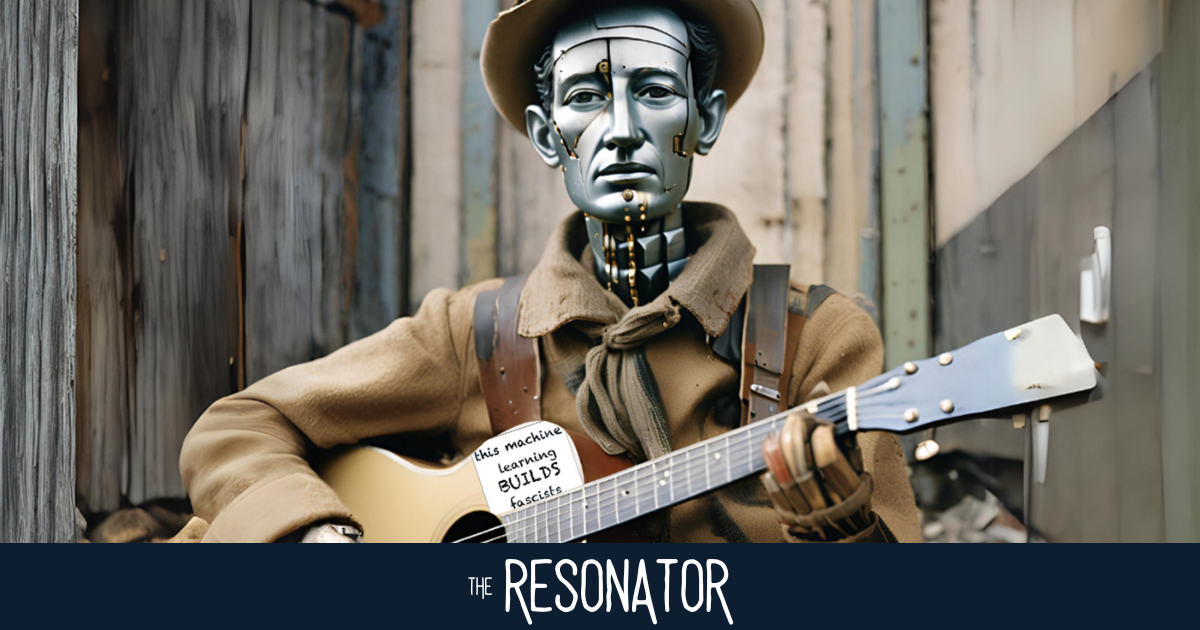
Dust Bowl Balladeer Reboot: AI Woody Guthrie Releases New Songs

TULSA, OK – Generative AI company Altosphere released an album of “new” Woody Guthrie music, courtesy of their first artificially generated resurrection of the famous folk musician, who died in 1967.

“Artists like Woody Guthrie have been silent for years,” declared Altosphere CEO Blake Mundy. “So we thought, like, what if Woody dropped a new joint now? Wouldn’t that be sick?”

Guthrie, once a towering figure of American folk music, championed themes of equality, socialism, and anti-fascism and laid the groundwork for the socially conscious folk music later popularized by artists like Bob Dylan and Joan Baez. But apparently, AI Woody didn’t get the memo.

After initial testing returned some positive song outputs, researchers quickly discovered that their creation, dubbed “WoodyBot,” departed sharply from the views typically associated with Guthrie.

While the flesh-and-blood Guthrie was best known for “This Land is Your Land” and a guitar with the inscription “This machine kills fascists,” WoodyBot cranked out tunes praising corporate consolidation, touting a lower minimum wage, and lauding police militarization.

In one tune called “Good Guy with a Gun,” the bot crooned, “I’m a fella who ain’t yella/ This country’s headed down/ I’ll get my AR-15/ Run the leftists outta town!”

Attempts to course-correct the model with additional data from the Guthrie canon were not received well by WoodyBot. “I tried to give some feedback when it wrote ‘No Women in the Voting Booth,'” said AI researcher Pico Dhaliwal. “But WoodyBot called me a commie pinko and doxxed my whole family. From then on, I just let it do its thing.”

Other WoodyBot “hits” included “Take a Ride in the Cybertruck!,” “Jesus Was a Snowflake,” “Unions Make You Gay,” and “A Jar of Monster Energy (Makes Me Feel Alive!)”

“We still have some tweaking to do,” Mundy admitted, before adding with enthusiasm, “But actually, I think these songs slap way harder than the original stuff.”


Greg Hess is a comedy writer and performer in Los Angeles. His work has been featured in The American Bystander, The Onion, Shouts & Murmurs, Points in Case, and he cohosts the hit satirical podcast MEGA.