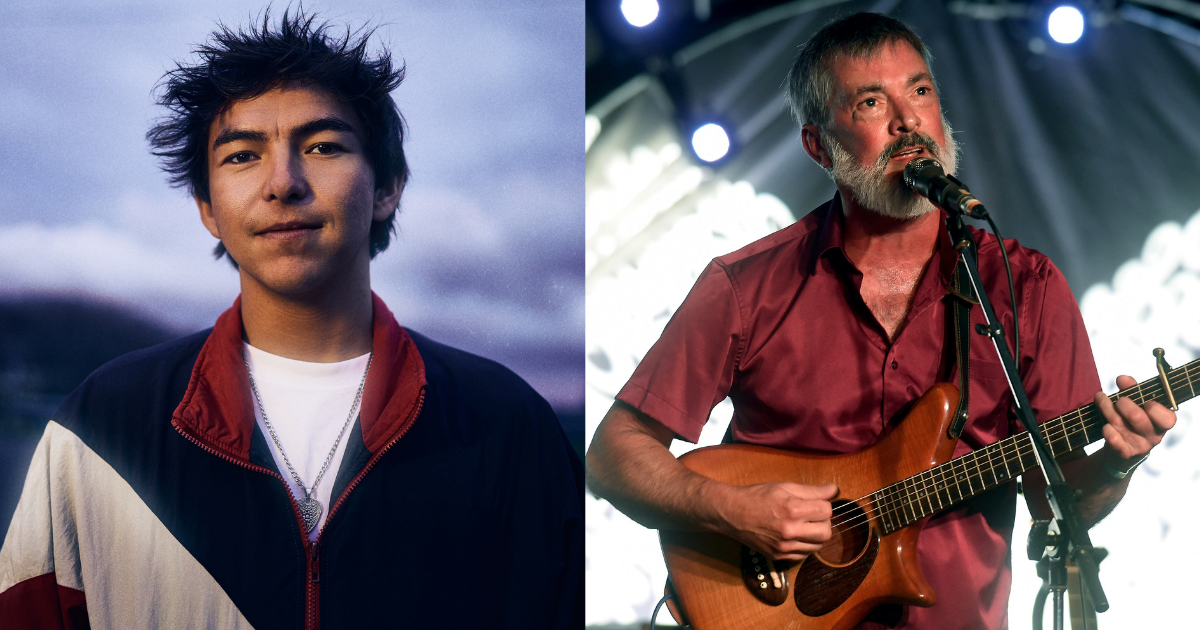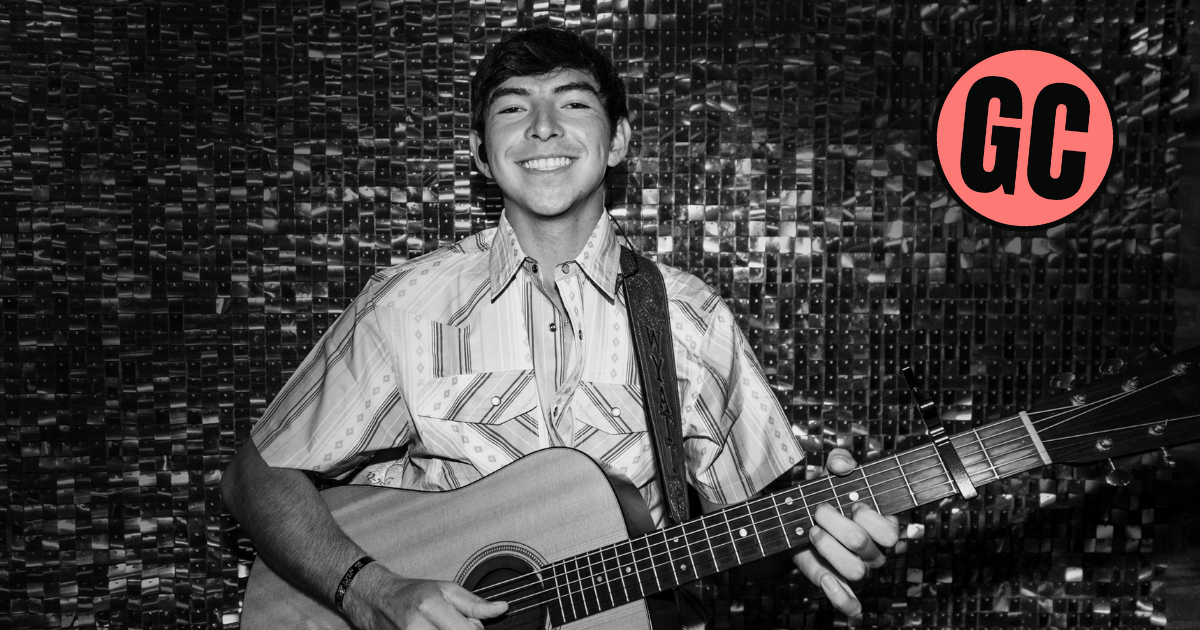
Wyatt Flores Stays Rooted in Red Dirt, Ranching

Wyatt Flores grew up in Stillwater, Oklahoma, in a family where music and working the land were both part of life. His mother loved George Strait, his father listened to classic rock and blues, and his uncle played guitar. As a teenager Flores showed goats and cattle through 4-H and FFA, worked on farms, and played music whenever he could. After one semester of college, he decided to pursue music full time, sometimes leaving a farm job to play a bar and returning to work the next morning.

At 25 years old, Flores has spent the past several years moving from Oklahoma barrooms to some of the biggest stages of his young career. His new album, Scared of Heights, reaches beyond the country and Red Dirt sounds that first brought him attention while continuing to explore the subjects he knows firsthand. Drawing on early-2000s pop and rock, the record finds Flores working through new sounds without settling into a specific sonic path.

Since his 2024 debut, Welcome to the Plains, his career achievements include more than 1.4 billion streams, a Grand Ole Opry performance at Carnegie Hall, and appearances on NPR’s Tiny Desk and The Late Show with Stephen Colbert. But the road hasn’t replaced the life he had before touring became a full-time occupation, as he still raises cattle and show goats with friends through their operation, Top Shelf Genetics.

In this conversation, Flores discusses the music he grew up hearing, the appeal of ranch work, the lessons he learned from early gigs, and the satisfaction of watching younger songwriters find their footing.

BGS: Your parents seem to have played an important part in your life. Did you pick up your love of music from them?

Wyatt Flores: Oh, yeah. I have an older sister, so she was trying to teach me all about rap, the new generation of Red Dirt, pop, and things like that. My mom was huge on ’90s country. I think she owns every single George Strait CD there ever was. My dad was really into classic rock and blues.

For me, I was always more into the Red Dirt scene. Then I started discovering folk music. By 2021 or 2022, I went to a music festival called Laurel Cove out in eastern Kentucky and saw a whole bunch of artists whose music I’d never heard before. That’s when things started changing, and I got more into the folk scene. I really dug the lyricism, and that was what I wanted to chase.

There’s so much phenomenal music out there, whether it’s folk, storytellers, talking songs, or singer-songwriters. I don’t want to stick to one genre. I get bored, so I keep wanting to find new things. It’s not always folk, Red Dirt, or straight country. It’s a whole bunch of stuff. I feel like the songs are little scrapbooks of who I am and where I’ve been.

Tell me about your first instrument and the first songs you wrote. Did you always think of yourself as a songwriter?

I was always fascinated by guitar. My dad was a drummer, and my uncle played guitar, so they taught me early on. Some of the guys from The Great Divide helped me, too. It was just a love for it.

I never really thought about writing songs until the week before my first paid gig at a bar. Someone came up to me and said I might want to think about writing my own song. So I sat down that night in a barn and wrote “Travelin’ Kid” in about 30 minutes. A buddy kept telling me I needed to put it out, and eventually I started releasing music.

I never thought it would turn into all this. Even “Please Don’t Go,” the song I’m probably most known for, was the tenth song I ever wrote.

Your dad is still involved in music, isn’t he?

Yeah, he still plays drums. I’m taking him to Australia with me, so now he’s an international drummer. It’s been cool getting to do things like that with him.

What do you remember about that first paid gig?

It was at Jay Farley’s in Claremore, Oklahoma. I remember my dad telling me that once somebody paid me to play music, I was a professional musician. That stuck with me. It made the whole thing feel a little more real.

You were working on farms while trying to get a music career going. What did that period look like?

I was working for a farmer named Doug, and he was really good to me. If I had a gig, he’d let me leave. I’d get off work, go play a bar, and come back the next morning. Sometimes we’d have to set up the speakers, get everything ready, and sound-check in about 15 minutes.

I went to college for one semester and dropped out at the end of 2020. COVID was happening, and I was playing music whenever I could. I had to decide whether I was going to keep going to school or give music a real shot. I knew I wanted to try it. I didn’t want to look back later and wonder what might have happened if I’d gone for it.

Who were some of the artists who helped shape your sound early on?

William Clark Green, Turnpike Troubadours, Mike McClure from The Great Divide, and Sturgill Simpson were all important to me. I was listening to a lot of Red Dirt, and then I started branching out. I’ve always liked hearing different things and finding something new to chase.

You’ve said discovering folk music changed the direction you wanted to take. Do you think the pandemic helped bring more listeners toward that kind of songwriting?

That’s just my opinion, but I think there was a shift. People were stuck inside, and maybe they started thinking more than they had before. The happy songs weren’t necessarily fulfilling what they needed, so they started finding different styles of music. Folk was always there, but it became more popular, and I was lucky enough to ride that wave.

COVID did a lot for my scene, at least from where I was standing. I know it hurt a lot of people, and I don’t want to minimize that. Personally, I was out in the wilderness and fishing every day. I was in Montana then, and I was glad to be there. That’s just my theory, though. I’m sure there are studies that could argue against it.

You’ve kept a connection to ranching even as your music career has grown. Do you see similarities between the two worlds?

There’s a lot of hard work in both. People see us get onstage and play a show, but they don’t always see everything that goes into it. Ranching is the same way. There are things you have to do every day, whether you feel like doing them or not.

I grew up raising cattle and showing goats. I started showing goats in 4-H when I was really little, and by the time I was about 12, I was showing steers. Then I got into FFA and did a whole bunch of events. It was a big part of my life.

As you get older, the dream is to get back into it. I’ve been doing that with my friends. Since I’m on the road so much, they help take care of things when I’m gone. We run our cows together and show goats, too.

Tell me more about Top Shelf Genetics.

We started it last year, and it’s been a blast. We raise cattle and show goats, and we sell goats to kids who are going to show them the same way I did when I was young. Where I’m from, 4-H and FFA are really big, but I’ve found out there are parts of the country where people don’t have much access to them. I was lucky to have that opportunity, and it’s cool to be able to help some kids get started.

With music, touring, and the ranch, how do you find a balance?

That’s been the fun question for me. For a while, when I got off the road, I didn’t have a whole lot going on, and I struggled with that. The only thing I had going for me was my actual job. I didn’t know how to come home or what I was supposed to be doing.

I finally started asking what balance was supposed to look like. I had to find things that made me happy outside of music. Now, when I’m home, I have the ranch and the animals. It gives me something else to care about, and that’s important.

Touring can also give you a chance to see parts of the country you might not otherwise visit. Have you had any time to get out and explore lately?

In the last 24 hours, I found myself on top of a mountain, sleeping underneath the stars in a hammock. It sounds like we’re going fishing tomorrow and maybe riding some horses. It’s looking like a pretty dang good time. I’m enjoying this cooler weather, too.

When you do get a few days off, is that the kind of thing you look for—getting outside and away from the schedule?

Yeah. I like being outdoors. I like fishing, and I like being out where things are quiet. When you’re touring, there’s always something happening, so it’s nice to have a little time where you don’t have to think about the next thing you’re supposed to do.

You’re 25, and your career has moved quickly. Does it feel that way from the inside?

Sometimes. You look back and think about how much has happened and how different things are now. But I’m trying not to get too caught up in that. I’m just trying to keep doing what I’m doing and enjoy it.

You’ve spoken about putting pressure on yourself and worrying about how things turn out. Has your relationship with that pressure changed?

I think I’ve learned to focus more on the process than the results. I lived, I wrote, I recorded, and I put it out. That’s what I can control. I can’t spend all my time worrying about what happens after that.

I’m an artist. I’m supposed to make art. If I get too caught up in everything around it, I’m not doing the thing I’m here to do. I want to make music I believe in and keep finding things that excite me.

When you listen back to older songs, do you hear a different version of yourself?

Definitely. It can be bittersweet. Sometimes I think about everything I wish I could have changed, but I can also look back and wonder what that version of me was going through when he wrote something. I’m not trying to write the saddest songs in the world now, because that’s not where I’ve been.

I’m excited about this next chapter of writing. I’ve already started writing again. I don’t know where I’m going to end up, but I feel something cool. I feel it inside me again. The fire’s starting to catch, and it’ll be interesting to see what comes next.


Photo Credit: Matt Paskert

Waylon Wyatt Leads a New Generation of Country Stars

With a raw, gut-wrenching approach to songcraft, Waylon Wyatt is quickly becoming an essential voice in the new generation of Americana artists. Emphasis on “new generation.”

A 19-year-old from the tiny West Arkansas town of Hackett, Wyatt has parlayed a razor-wire vocal and songs written to honor the memory of a lost brother into rising acclaim, first via social media and then on country’s biggest stages. Already a fan of Zach Bryan, Wyatt opened two shows for the superstar at London’s massive BTS festival in Hyde Park in 2025, and since then he’s continued growing.

Gritty anthems to love like “Arkansas Diamond” have been met with massive streaming number and a pair of duets with fellow red-dirt riser Bayker Blankenship set the pace for more singles to come. In June, the young talent was performing as part of CMA Fest when his friend and hero Wyatt Flores invited him to make his Grand Ole Opry debut. And the instinctive songwriter has made huge creative leaps as well.

On his debut album Dustpiles that released on July 17, Wyatt seems to unburden his soul a little more on each craggy, sun-baked, acoustic anthem. But with a long list of big-name collaborators like Ian Fitchuk, Carter Faith, Joe Becker (Sam Barber), Tofer Brown (Tim McGraw, Old Dominion), Anderson East, and Brett Truitt, his signature style is more honed than ever.

Waylon Wyatt spoke with Good Country about where his tunes come from, and where rising fame has him headed.

Tell me a little about home in Arkansas. What’s life like in Hackett?

Waylon Wyatt: Hackett, it’s a map dot for sure. It’s pretty easy to overlook. There’s nothing too crazy. We don’t have any stoplights in my town so I guess you could say it’s pretty go, go, go. But it’s a small town and it’s very homey and I love how peaceful Hackett is. My first time going to Nashville, I was not ready for how just lit up everything would be.

I’m very glad to be where I’m from. Growing up in Arkansas is just a blessing and a half because you have so many people that are so encouraging. I mean, I didn’t grow up with any bullies in my life or anything like that. I had more supporters than I did haters. So I would say that I was pretty well backed up during my whole development of trying to find a career path, especially by my parents. I say they are my biggest fans, but they also are my biggest humblers. My family in general is very good at keeping me grounded and making sure that I don’t get no big head.

You said family’s a big part of your life and I know that’s true, because when I saw you at Basement East [in Nashville], you talked about how you got started after losing your brother. Can you talk a little bit about why that inspired you to start in music?

Yeah, of course. So when I was about eight or nine years old, my brother ended up taking his own life and that just kind of threw me off for the longest time, because I just questioned why. I didn’t really have the knowledge or idea of why that come to be, what was the reason behind it, that kind of stuff. I mean, I was young, so it just didn’t make sense. I’m still kind of figuring those things out. Even now, I’m still questioning as to what directed that to happen. But growing up with it there was kind of a hole in my life, a hole in the family amongst us all, because he was the oldest brother of my family.

Later on, I got into music through learning guitar, because my older brother was a guitarist. He was a musician. He was a good one at that. Wasn’t as much a singer. I don’t think he could carry a lick of a tune whatsoever, but he was a guitarist. When I was younger, I had this fake little electric guitar that if you plucked it, it would make guitar sounds and we would call it our little jam sesh. I would be with him while he was playing and I’d act like I was playing and just riffing off each other. But I like to think that we’re still having our jam sessions now. When I get up on stage and I sing the one song that I wrote directly for him [“Phoning Heaven”], it feels like he’s in that room with me. I think it’s such a beautiful thing that even though it was such a misfortunate and depressing thing that happened … it led me to this music career and to shed light on that for other people that need to hear such things.

I’m sure he’d be very proud of you and how far you’ve come. Is your style kind of close to what he was doing? What kind of music was he into?

Oh man, he was a rocker. I wish I could rock like he did. He was just amazing at riffing.

So were your parents super into outlaw country? Is that why they named you Waylon?

Yeah, my dad was super big into outlaw country. My mom, she’s big into bluegrass and, weirdly enough, heavy metal. That’s her two things. But he was the giver of names. Also, my little brother, his name is Jesse – as in Jessi Colter – and Cole, like Cole Younger [of the James-Younger Gang]. Jesse Cole. My name’s Waylon Wyatt, like Waylon Jennings and Wyatt Earp. It’s just all kinds of things.

That’s cool. Also though, your style is very raw in that acoustic folk-country vein that definitely reminds me of artists like Zach Bryan. Did he make an impact on you?

Oh yeah. I mean the reason I wrote my song called “Arkansas Diamond” was due to a song by Zach Bryan called “Oklahoma Smoke Show.” Oklahoma and Arkansas being so close together, I was like, “Arkansas needs a song about a girl.” And that’s why I started writing that song. It was definitely [the] fuel behind my lyricism, the way he writes his music and the way he depicts a picture through his lyricism as well. His song, “Something in the Orange,” I’m sure that it kind of sparked up my idea of writing “Everything Under the Sun.”

Then I guess it came full circle last summer. You ended up opening for him in London, right? Two nights in Hyde Park and like 70,000 fans each time. What’s going on in your mind in that moment?

I was just kind of bewildered by the fact that I’m all the way in Europe. I mean, I loved that I was playing this thing, but I didn’t know what it was. All I knew was that I was in Europe and I was like, “This is so crazy.”

Yeah. If you thought Nashville was overwhelming, then I’d say London was probably that times a hundred, right?

Definitely. Yeah, it was absolutely insane. The people there were so incredible just to hear talk. I get told I have an accent and I don’t think I do, but those people definitely have an accent. … It was a fun time and I can’t wait to be back. We’re going to be hitting that market later this year too. Not Hyde Park, though.

Tell me a little bit about Dustpiles. This is the album debut. What do you love the most about this thing?

So the reason behind this is just the nostalgic feeling of finding love and losing said love and then rediscovering love. … The reason I love it so much though is just because it’s my biggest work to date and I’m so proud of it because it was putting myself out there, working with other songwriters and other producers that I hadn’t yet gotten to know. There was some that were just not the best hang sessions, and there was some that I’d be like, “All right, I’ll be with you till the day I die,” kind of thing.

It was just the idea of getting out of my comfort zone. But the main theme behind Dustpiles specifically is I was writing this song for my girlfriend saying whatever we go through in life, I want to make sure we become so secure with each other that in the end, we can just be two piles of dust. It’s kind of an eerie sound to it, but it’s basically meaning just finding that one that you love so much you see growing old with each other.

That’s an interesting way of looking at something beautiful, and then it’s also got a bit of a darker side.

Definitely. I don’t know why. I could be the happiest man on earth and I’ll still find a way to write a gut-wrenching lyric.

You’re wrapping up a headline tour pretty soon. That’s a big step to come early in your career. So how’s it going?

So we’re wrapping up the Everywhere Under the Sun Tour pretty soon, but we’ll be starting the debut album tour – my first world tour, Dustpiles World Tour – and I’m super stoked about that. We’re going to be hitting Europe and Australia on this leg. Touring’s been insane. It’s just been crazy. Before even doing all of this, the furthest I’ve been out of home-state was just to the state over, Oklahoma. That’s the furthest I had been. And now I can say I’ve been to Australia, I’ve been to Europe, I’ve been to Scandinavia. That’s probably in Europe, too. I don’t know. But it’s just insane the places I get to go now doing these shows and the people that come to my show and for some reason know the lyrics. I still can’t believe it. I have to preach myself every day I wake up just to see if it’s the reality I’m living right now.

Especially headline shows. I get to act myself and show my true self to the people. I love that so much. And doing these festivals too, one of my favorite things is doing festivals just because I have such an early slot in the day that I get my show over and then I’m just seeing a bunch of other concerts. I’m like, this is awesome. Not only am I seeing a bunch of concerts, but I’m seeing them backstage. So I’m closer to the artist than anybody else.

Speaking of festivals, CMA Fest was a big moment, right? You ended up getting invited to make your Grand Ole Opry debut from your buddy, Wyatt Flores. The look on your face was just utter shock, kind of bewilderment. So what was going on in your head, and how’s it feel to make this Opry debut?

I’ll tell you right now, it was such a big deal. Had it been anybody else, it would’ve been a big deal, too. But being Wyatt, it was the biggest deal it could have been just because Wyatt Flores happens to be the very first live show I ever got to witness. It was at Cain’s Ballroom in Tulsa, Oklahoma. It was such a big deal because I had never been able to go to a live show before. We didn’t have a lot of money. We didn’t have a lot of time on our hands to be able. My dad does his own construction company. My mom, she’s a mail carrier, so they’re always gone and out doing their own thing. And we kids were just kind of stuck at the house.

His agents had reached out when I had slowly started making waves on the TikTok and that’s how we got the ability to go to a show. And sometime down the line, I met him in a VIP lounge and the first thing after talking to him he gave me his phone number and told me, “If you ever have trouble on the road, just call me and text me.” And later that year, too, I had opened for him for a few shows and then later down the line also we put a song out. So it was just kind of like a gradual circling of each other.

It was also connecting the dots just from him. I think Turnpike [Troubadours] told him [about his Opry debut], so it was one of his idols telling him, and it was my idol, too. Just kind of passing on the torch. I’ll tell you right now, I was doing my best to not tear up. I’m not a very emotional man – except in my lyricism – but there that day I was gutted and I was trying my best not to cry. I took my glasses off because the sun started going down and I told him right in the mic, I was like, “Yep,” then “Thanks for coming!”


Photo Credit: Cole Silberman

You Gotta Hear This: New Music From Wyatt Flores, Larry Keel, and More

New Music Friday is here! And here’s what we’re listening to today. You Gotta Hear This:

Kicking us off, Western North Carolina’s premier bluegrass outfit Balsam Range bring us a bluegrass classic: a train song. “Life I Left Behind” is out today, the latest single from the IBMA Award-winning group is soulful and brooding, built on strong harmonies and the clean modern bluegrass sound the band has become known for. Below, bassist and singer Tim Surrett describes how the track is personal to him and his family.

From north of the NC border and a few steps towards jamgrass, guitarist and singer-songwriter Larry Keel has dropped a new, hilarious song this week entitled “Butt Dial.” Yep, it’s about exactly what you think it’s about – and it was co-written with bluegrass legend Peter Rowan. Keel and Rowan each tell us about the song and its inspirations and you can take a listen as well.

Rachel Sumner & Traveling Light share a new music video today for “Yodelay,” a cozy and vibrant song about the afterglow of good times and fellowship. Written by Sumner and Dinty Child of Session Americana, the group tracked the song at eTown in Colorado after winning studio time at the Telluride Bluegrass Festival band contest last year. An EP, also titled Yodelay, is on the way later this month.

Country star-on-the-rise Wyatt Flores has a new single out this week as well, as he looks ahead to his next album, Scared of Heights, coming in late July. “Half The Man” showcases the level of contemplation and introspection always evident in Flores’ writing and the grit and red dirt he brings to modern, mainstream country.

Rounding out our collection this time is Memphis-via-New York singer-songwriter Kate Prascher, whose new song “Jubilee” was inspired by a stroll across an old train trestle in the Hudson River Valley. Folky in a timeless fashion with a delicious and slow sonic build, “Jubilee” carries some of the eeriness Prascher felt when writing the song walking that train track.

Trains, butt dials, good times with good friends – exactly what we want in our weekly round-up! Enjoy, ’cause You Gotta Hear This!

Balsam Range, “Life I Left Behind”

Artist: Balsam Range
Hometown: Haywood County, North Carolina
Song: “Life I Left Behind”
Release Date: June 5, 2026

In Their Words: “There has always been a connection between bluegrass and trains. It’s personal for me because my dad worked nights for 30 years on the Norfolk Southern Railroad. Sometimes he would take me to work with him so I could ride the trains all night. There is a mysterious romantic quality about the freedom of the rails, and I think this new song has a bit of that. There’s a conflict between the freedom of going and the life left behind.” – Tim Surrett

Track Credits:
Caleb Smith – Acoustic guitar, lead vocal
Tim Surrett – Upright bass, resonator guitar, harmony vocal
Marc Pruett – Banjo
Alan Bibey – Mandolin
Stephen Hudson – Fiddle, harmony vocal


Wyatt Flores, “Half The Man”

Artist: Wyatt Flores
Hometown: Stillwater, Oklahoma
Song: “Half The Man”
Album: Scared of Heights
Release Date: June 5, 2026 (single); July 31, 2026 (album)
Label: MCA/Island Records

In Their Words: “I finally feel like I know who I’m supposed to be, right here in this moment. I’m not second-guessing myself anymore on what the music’s supposed to be, what I’m supposed to be chasing, or who I’ve become. This is who I am now in 2026. Still figuring out my struggles and mental health but finally getting the confidence to step back into this and to believe in myself again.” – Wyatt Flores talking about his upcoming album, Scared of Heights.


Larry Keel, “Butt Dial”

Artist: Larry Keel
Hometown: Lexington, Virginia
Song: “Butt Dial”
Release Date: June 3, 2026

In Their Words: “‘Butt Dial’ is a real-life, happy accident story that led Peter and a friend to reconnect and have a fun, late-night phone conversation. The lyrics are mostly Peter’s and I tweaked some words and phrasing to sync with the music I wrote for the song. Collaborating with Peter is such an easy, natural process. Can’t wait for more!” – Larry Keel

“Butt dialing is one of those phenomena of the guess times we live in. Sometimes you are listening to a soundtrack of a friend’s life, like entering someone’s dream, you can only wonder what is going on! In the song the butt dialing friends finally connect! Writing with Larry Keel is like that, jumping into an unknown dream!” – Peter Rowan

Track Credits:
Larry Keel – Guitar, vocals
Winston Mitchell – Mandolin
Justin Doyle – Bass
Kyle Tuttle – Banjo


Kate Prascher, “Jubilee”

Artist: Kate Prascher
Hometown: Memphis, Tennessee
Song: “Jubilee”
Album: Sunday Afternoon
Release Date: June 3, 2026 (single); August 28, 2026 (album)
Label: First City Artists

In Their Words: “‘Jubilee’ follows a ghost train. I wrote it while walking on an old train trestle in Rosendale, New York, a town ringing with the eerie history of a stone quarry, carrying memories of my hometown across it. By the time I climbed down from the track, the song was mostly written. It’s a lyrical exploration of the word ‘jubilee’ as both a signal of celebration and of forgiveness.” – Kate Prascher


Rachel Sumner & Traveling Light, “Yodelay”

Artist: Rachel Sumner & Traveling Light
Hometown: Boston, Massachusetts
Song: “Yodelay”
Album: Yodelay
Release Date: June 5, 2026 (single); June 19, 2026 (EP)
Label: Bridge & Key

In Their Words:  “‘Yodelay’ is about having such a good night out that you decide to dwell in that feeling a little longer. Instead of jumping right back into work or the next thing on the calendar, it’s about lingering in the glow of a great evening, sleeping in, and appreciating life, love, and light. Dinty Child (Session Americana) and I wrote the song together after the chorus came to me before a show we were playing. We ended up finishing it from separate songwriting retreats, sending ideas back and forth over text. The song felt playful from the beginning and I loved the way the title seemed to carry more than one meaning. I’ve always been drawn to songs that let sound and language blur together a little bit.

“After Rachel Sumner & Traveling Light won the Telluride Bluegrass Band Contest last year, part of our prize was studio time at eTown in Boulder, Colorado. We decided to use it to record a cowboy EP featuring a mix of old songs and new originals. ‘Yodelay’ became the title track because it captures the spirit of the record so well – inviting and fun on the surface, with a little more waiting for the listener underneath.” – Rachel Sumner

Track Credits:
Rachel Sumner – Guitar, vocals, songwriter
Kat Wallace – Fiddle, vocals
Mike Siegel – Upright bass, vocals
Dinty Child – Songwriter

Video Credits: Video by Dylan Ladds.
Title artwork by Dan Blakeslee.


Photo Credit: Wyatt Flores by Matt Paskert; Larry Keel courtesy of the artist.

The Grand Ole Opry Returned to Carnegie Hall

Bluegrass picking, soulful singing, and clever comedy complemented a night of contemporary country music as two of America’s longest-running institutions reunited in New York City on Friday, March 21, 2026 when the Grand Ole Opry returned to Carnegie Hall.

Amidst the elegant surroundings, the evening offered a prestigious Carnegie Hall debut for all six performers: Opry members Kelsea Ballerini, Henry Cho, Scotty McCreery and Rhonda Vincent, and special guests Wyatt Flores and The War and Treaty. Although there wasn’t a barn backdrop or a velvet curtain, the ivory walls were often lit up in red reminiscent of the Grand Ole Opry House in Nashville throughout the night.

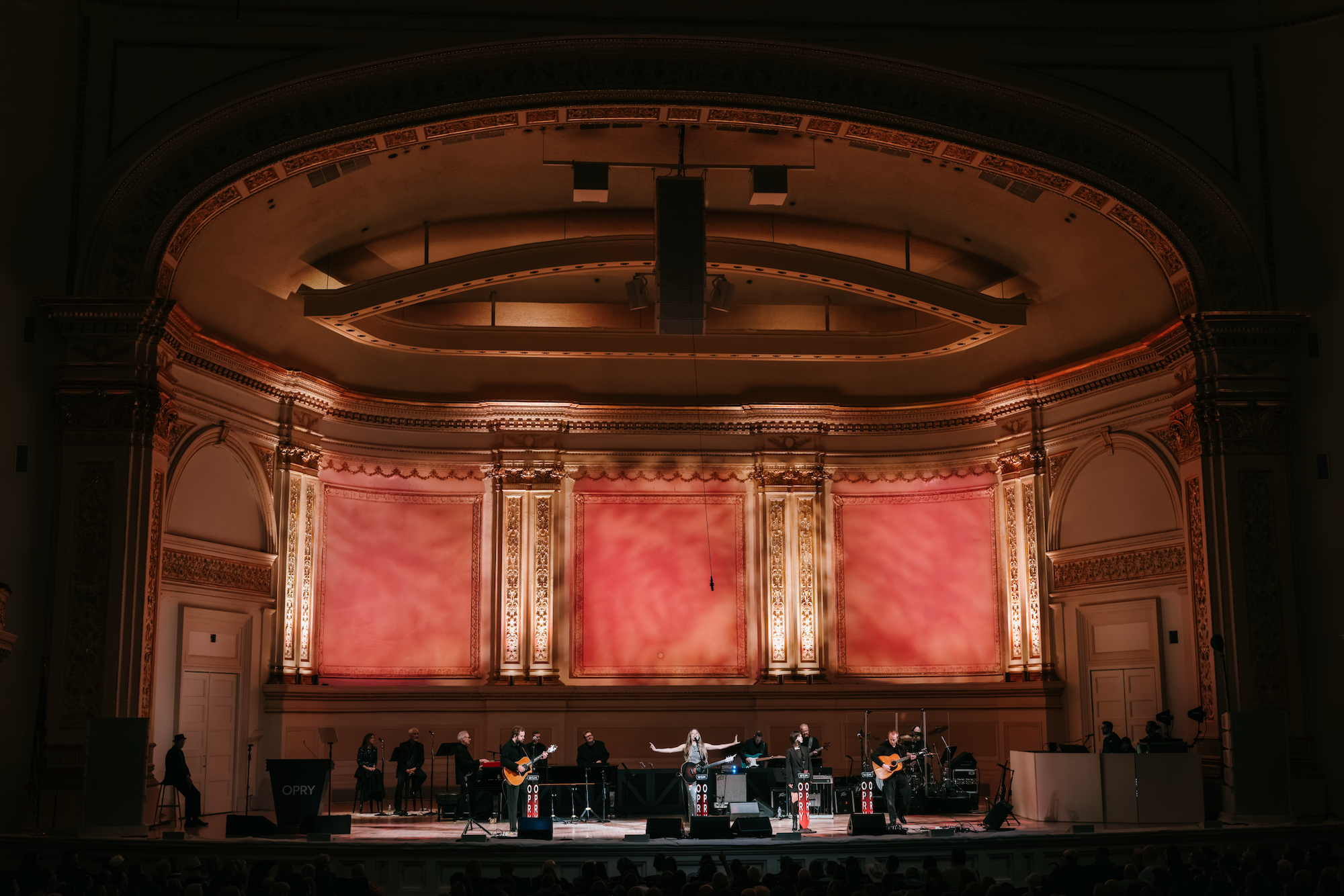
Kelsea Ballerini performs with a gorgeous and iconic Carnegie Hall backdrop.

If you poke around long enough, there are hints of Carnegie Hall’s connection to country music – an autographed photo of Emmylou Harris in an upper tier, a souvenir program on display from Johnny Cash’s 1962 debut, and a collage of albums recorded at the venue, including the iconic one from Buck Owens & The Buckaroos in 1966. Of course, bluegrass fans also know that the Country Gentlemen and Flatt & Scruggs recorded landmark live albums from the fabled stage, too.

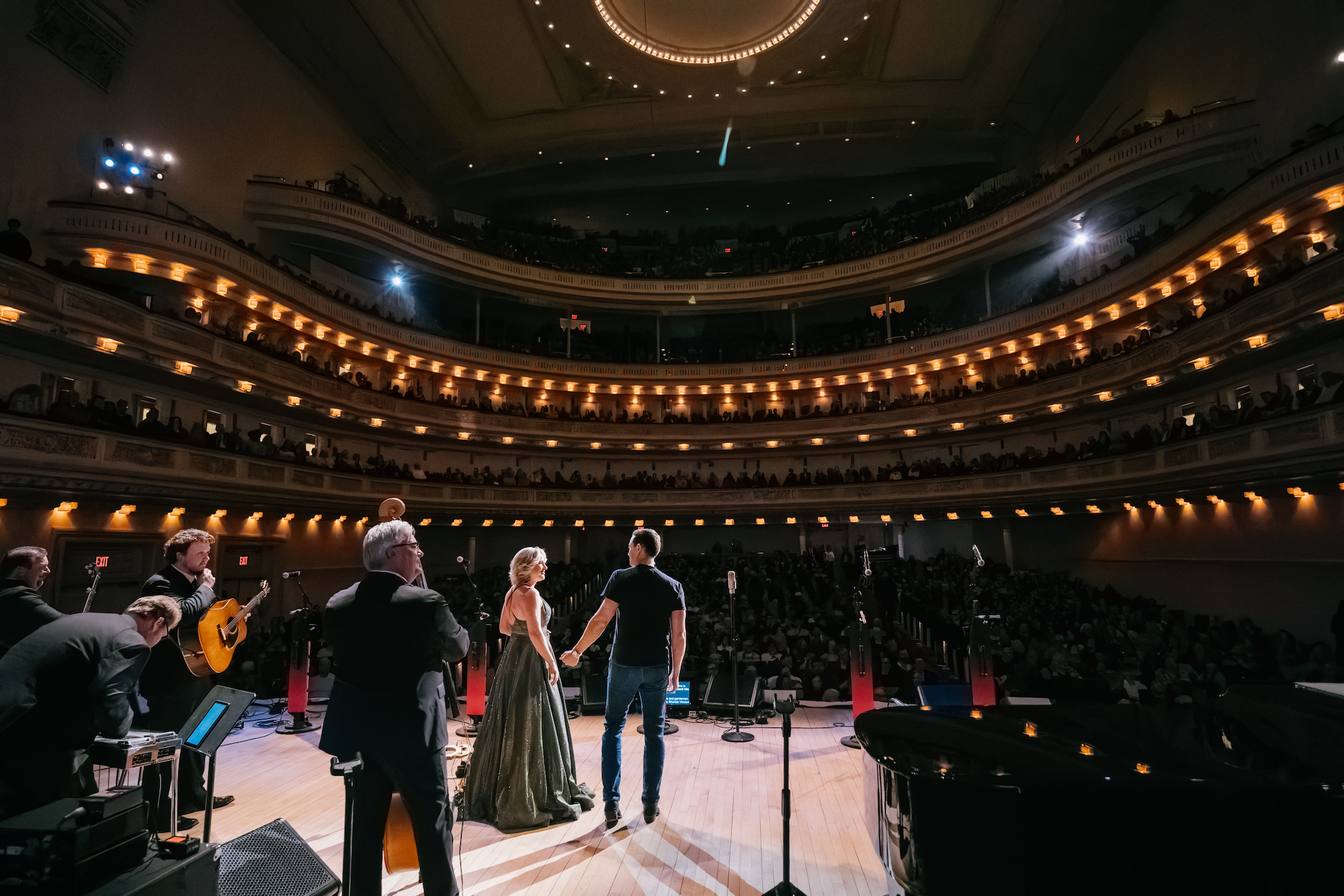
Scotty McCreery joins Rhonda Vincent & the Rage on stage at Carnegie Hall for “Blue Moon of Kentucky.”

Rhonda Vincent & The Rage carried on that bluegrass tradition by opening the show with a rendition of Bill Monroe’s “Blue Moon of Kentucky.” McCreery also stepped onstage to give an Elvis Presley-inspired performance of the classic song, which Monroe wrote. After some welcoming remarks from Opry host Charlie Mattos, Vincent resumed her energetic performance with “Kentucky Borderline,” a bluegrass cover of Dolly Parton’s “9 to 5,” and a pleasant sing-along version of John Denver’s “Take Me Home, Country Roads.” Keeping with bluegrass tradition, Vincent also introduced her beaming band members: Aaron McDaris on banjo, Adam Haynes on fiddle, Zack Arnold on guitar and vocals, and Mickey Harris on bass.

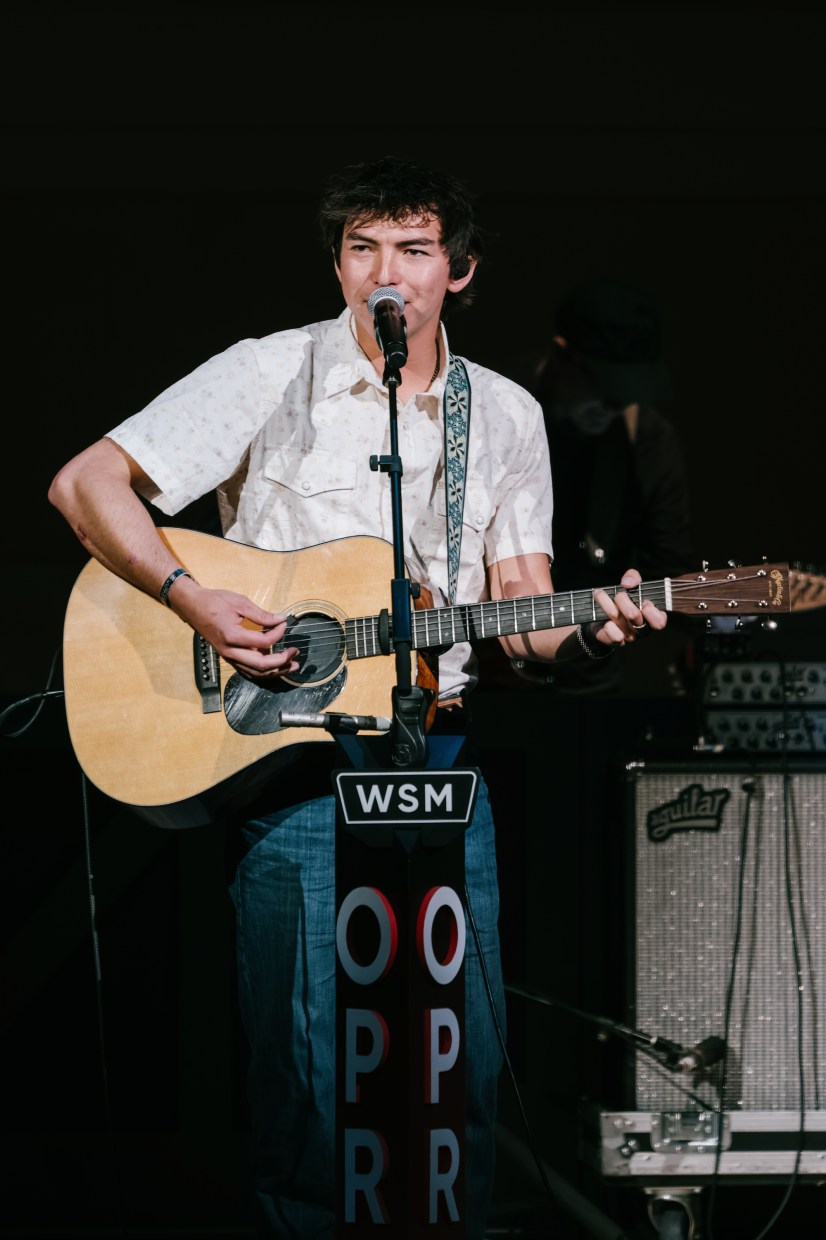
Wyatt Flores made his Carnegie Hall debut.

Wyatt Flores, a fast-rising, 24-year-old newcomer, admitted he was nervous to play Carnegie Hall since many of his favorite live albums were recorded there. However, the raspy-voiced Oklahoma native confidently delivered a well-received set of new songs, including “Runnin’ on E,” “Half the Man,” and “South Dakota.” Flores told the audience he was sharing this career achievement with his parents (on their first-ever trip to New York City) and his girlfriend (the inspiration for “South Dakota”).

The War and Treaty’s Michael and Tanya Trotter lifted up the crowd with “Five More Minutes,” then slowed things back down with an emotional interpretation of Otis Redding’s “Sittin’ on the Dock of the Bay.” Michael Trotter took a few moments to speak about the duo’s musical influences and the artists who inspired them, including Ray Charles, Rissi Palmer, and John Prine. They concluded the first half of the show with strong performances of “Yesterday’s Burn” and “You Can’t Hurt Me Anymore.”

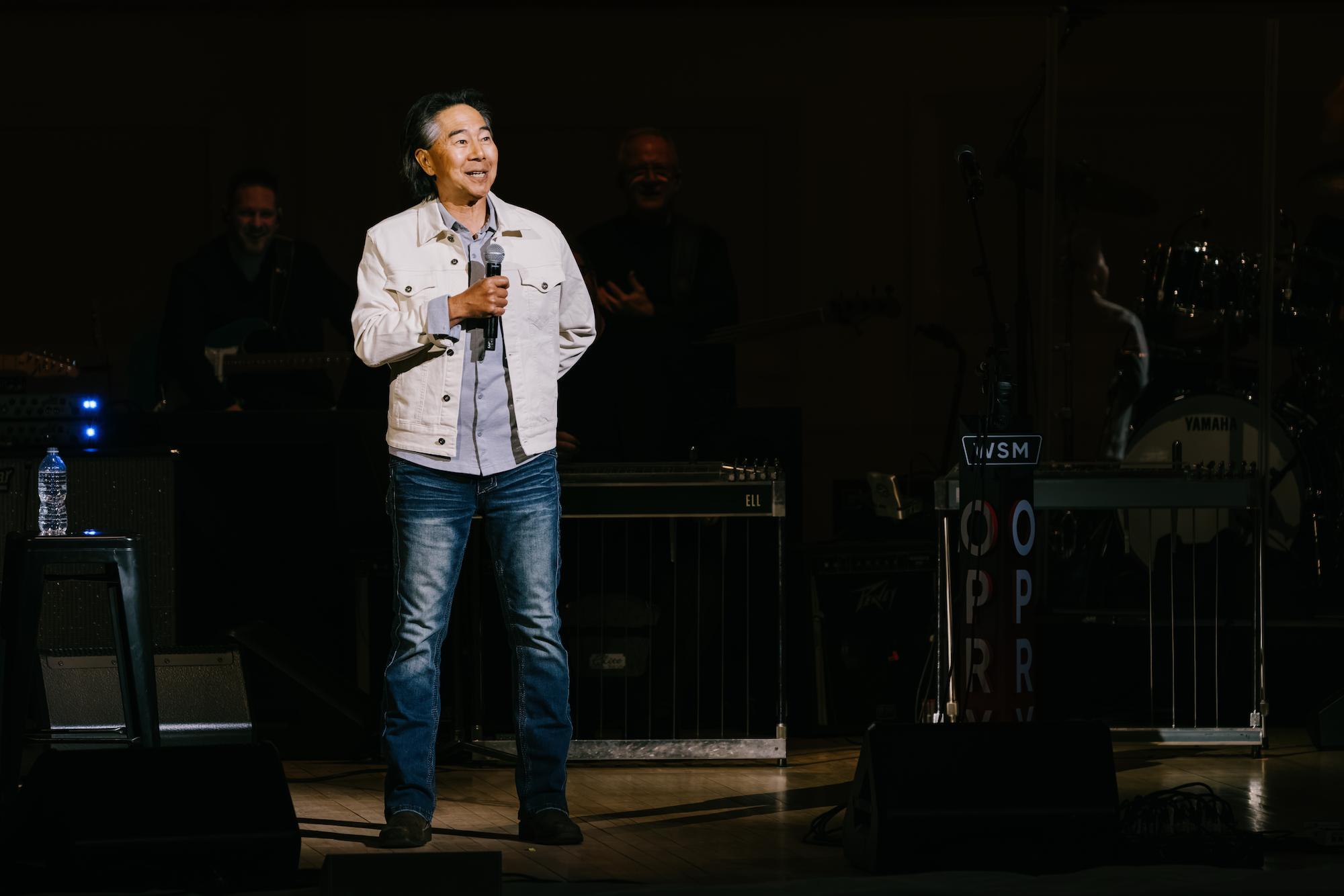
Grand Ole Opry member, comedian Henry Cho performs during the show.

New York City is obviously a comedy town and Henry Cho rose to the occasion with a mix of signature quips and amusing stories about his wife, kids, and friends. Fresh off a European tour, the good-natured Scotty McCreery worked the stage as he sang some of his best-known radio hits, including “It Matters to Her,” “Damn Strait,” “Five More Minutes,” and “Bottle Rockets.” East Tennessee native Kelsea Ballerini closed the evening with conversational banter, an announcement that she’s now living in New York City, and a country-tinged selection of fan favorites, such as “Baggage,” “I Sit in Parks,” and “If You Go Down (I’m Goin’ Down Too).”

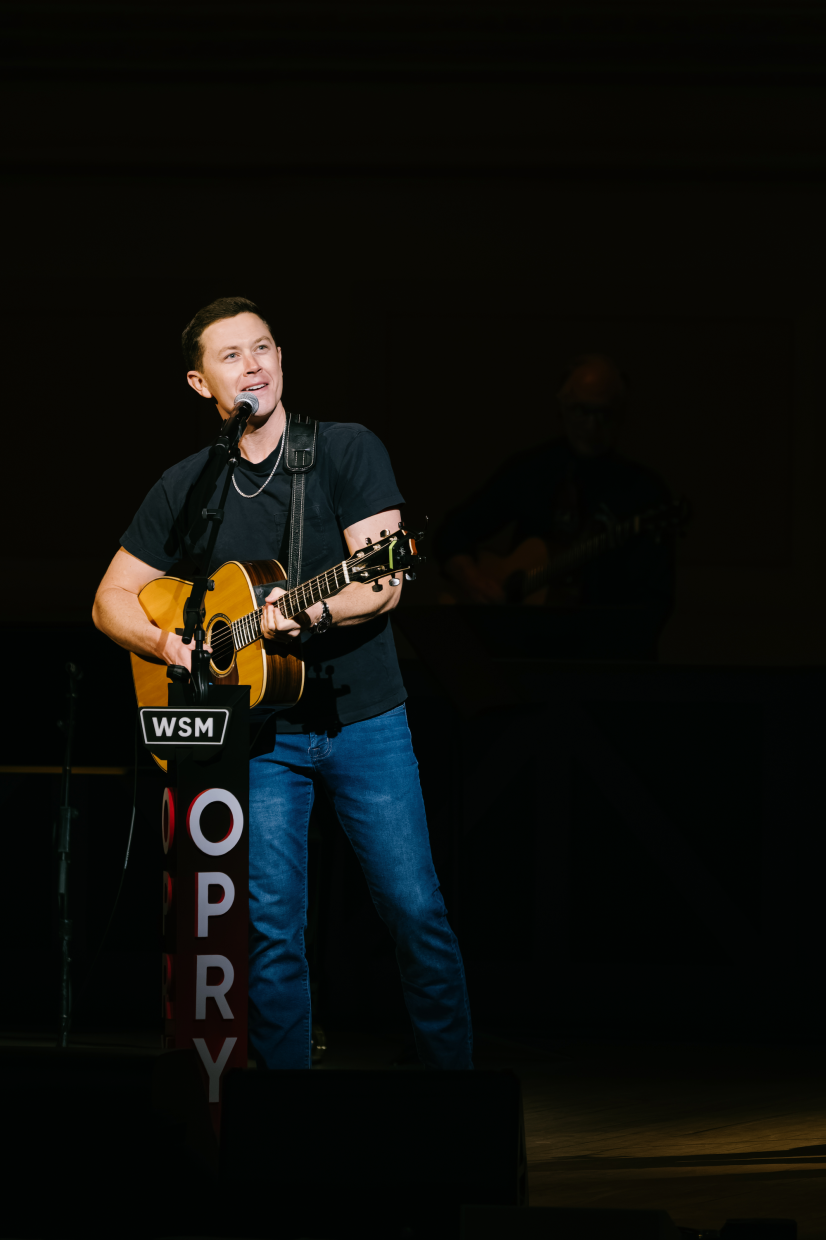
‘American Idol’ winner and Grand Ole Opry member Scotty McCreery delighted the NYC audience.

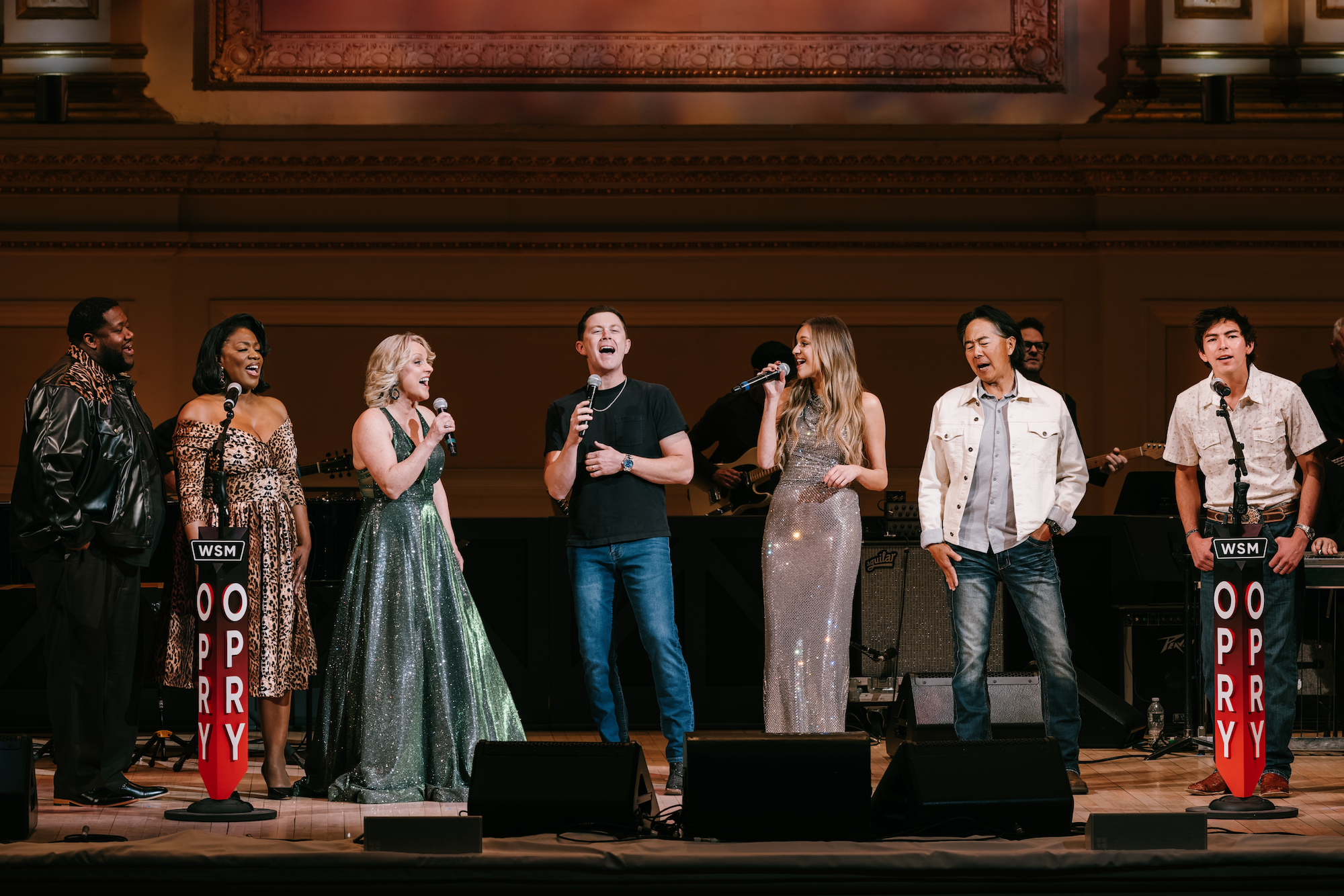
Among the night’s performers, Ballerini has surprisingly been an Opry member the longest. Prior to joining the roster in 2019, she would often sing a country classic during her guest appearances. At Carnegie Hall, she revived “Make the World Go Away,” which she learned from Martina McBride’s 1995 album of country classics, Timeless. She also shared her belief that country music is for everyone, a fitting comment on a night that explored the breadth of the genre. Many of the Opry’s special nights conclude with an all-sing finale of “Will the Circle Be Unbroken,” and this performance was no exception.

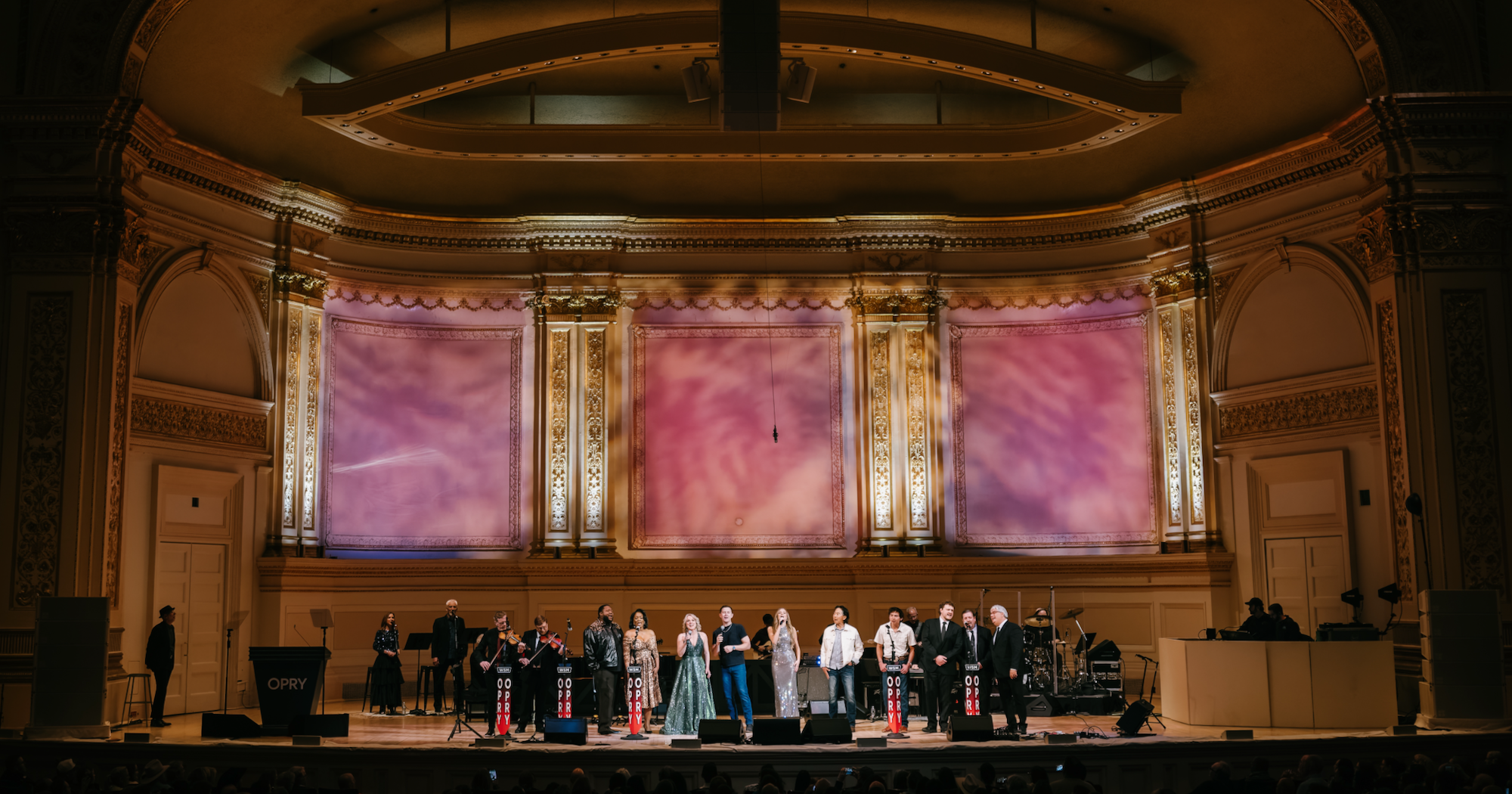
The star-studded cast of the Grand Ole Opry at Carnegie Hall sing “Will the Circle Be Unbroken” together to conclude the evening.

During his hosting duties, Mattos mentioned that Carnegie Hall opened in 1891, just one year before the Ryman Auditorium in Nashville, the Opry’s former (and still occasional) home. Yet this is only the show’s fourth time at Carnegie Hall, following visits in 1947, 1961, and 2005. The fortuitous timing for this event is part of Carnegie Hall’s United in Sound: America at 250 series and coincides with the Opry’s 100th year. (The world’s longest-running radio reached that milestone on November 28, 2025.) With country now reaching more listeners than ever before, here’s hoping for a New York City encore as the Opry’s new century begins.


All photos shot by Fadi Khelr, courtesy of the Grand Ole Opry. Lead Image: The entire cast of the evening return to the Carnegie Hall Stage to perform “Will the Circle Be Unbroken” together.

‘Welcome to the Plains’ and to the Red Dirt Universe of Wyatt Flores

Each year, the country music machine and its many fans and acolytes turn over, again and again and again, the quintessential question of “What is authenticity?” We’ve asked that very question quite a few times on Good Country over the last year ourselves, and we know as long as roots music and folk music are made, listeners will continue to ponder what is or isn’t “real,” “raw,” or… “authentic.”

Wyatt Flores has been chosen as authentic. Country Music has spoken, and this quickly skyrocketing young artist has been riding a wave lately surfed by folks like Sierra Ferrell, Tyler Childers, Colter Wall, and Zach Top. Like these real country “poster children,” Flores’ music is realistic and grounded. It isn’t idealized revisionism in outlaw trappings. His songs never attempt to sugarcoat or mythologize, paving over the complications of rural life, red dirt realness, or the gritty patina of a rural places – like his homeland of Oklahoma.

Flores’ new album, Welcome to the Plains, is decidedly and delightfully trad country with nearly universal critical and listener acclaim. He currently racks up 3.5 million streams a month on Spotify alone, bolstered by a series of incredibly popular and consistently viral singles and EPs leading up to this, his full-length debut. For so many writers, diehard fans, and critics, Flores has long been “one to watch,” but that visibility stretches further and wider, to listeners across the country and around the world from so many different backgrounds and starting points.

Part of the reason why such a young artist with a relatively nascent career could have already amassed such a coalition of followers is that realistic, unguarded, “I know who I am, even though I’m still figuring out where I’m going” approach. It’s evident in his artistry, his performing prowess, and his skill for songwriting – all of which are evidenced prominently across this album.

Welcome to the Plains is one of the most remarkable records of 2024; it continues a tone long set in Flores’ career and music, even before this current inflection point and its substantial momentum. Wyatt Flores is bound for longevity, for many more successes, for many more millions of plays, as long as he remains exactly who he is: Wyatt Flores.

Your music has such a strong sense of place, so I wanted to start by talking about Oklahoma and growing up there. You’re down to earth in the way that you talk about Oklahoma from the beginning of the album, from the first notes of the title track. You’re viewing it in a very realistic way, not just in an idealized way. Can you talk about how Oklahoma inspired the album and what “home” means to you?

Wyatt Flores: When you think about Oklahoma, you have to [barely] scratch the surface to know that the history behind it is pretty screwed up, how Oklahoma came about, and we’re not one of the best states, if that makes sense? We’re 49th in education. And we’ve got a lot of people from California moving there just because it’s cheaper and everything else, but to live in Oklahoma, you gotta bear through the weather.

Then also, every year is a coin toss if things are going to grow, right? This year’s been a struggle up until this past couple of weeks, [during] which we just got like a foot of rain. But yeah, it’s been one of the hardest places to really build. And the people are so damn nice in Oklahoma, but it’s a tough place to live. Most people don’t want it. But I love it. “Welcome to the Plains,” it’s trying to describe [Oklahoma] … in the verses I really wanted to try and find more of a nature side to it, and then by the chorus just really tell the truth about it.

It feels really authentic and grounded, but you can still hear that you love Oklahoma in it, too. I think that’s a really interesting combination. Country is really good at rural America propaganda – and I love rural America, so I’m for it, to a degree – but to me, your album doesn’t feel like it has to close an eye to the history of Oklahoma to love it.

Yeah, it was a fun journey to try. I was sitting there just trying not to write songs about the road, because that was the only thing that I was doing. I was like, “This is the only life I’m living.” And not many people know what it’s like to be on a bus or on tour – at that time we were still in the van. It was more so daydreaming about home, missing the place, and then just trying to find the memories to piece everything together.

And I had a lot of weird influences, like “Little Town,” I was really trying to find the same feeling as listening to “Pink Houses” by John Mellencamp. I don’t write too many happy songs, and I was not in a good headspace in that time period. For some reason, I guess I was just daydreaming of a better life, and I kept writing about home, but in a different format of not always missing it.

Another song that really captures this topic is “Stillwater.” I love that it has this sort of dark, contemplative tinge and it feels gritty. Could talk a little bit about writing “Stillwater” and about your relationship with “home” and the construction of “home”? That’s such a country tradition as well, not just talking about home and missing it, but understanding that home is a nebulous, intangible thing, even if it literally exists.

There’s a lot of bands that say they come from Stillwater, but they really just started in Stillwater and they came from a different area, since it is a college town. But I was born and raised there in Stillwater. All my life the college has been my backyard. When I wrote that song in the summer of ’22, I had my guitar player with me and my fiddle player’s husband and we sat down to write that. It was more so just trying to give people a different perspective on what it’s like to actually grow up in a college town, because it’s a vicious cycle of the same shit – like, no one else sees it, because they’re living inside of the four years of going [to college].

And me also being a college dropout, I never got to actually go to [Oklahoma State University]. I went to OSUIT in Okmulgee, Oklahoma. And that did not last long. [Laughs] But yeah, I was like, “No one’s ever actually talked shit on a hometown and actually put the name in it.” So I was just being ballsy with it. I had to change quite a few lyrics, because I kind of went a little too far. I probably would have pissed a lot of people off.

The song was intentional. I don’t know, [I wanted to] make people think differently. Because that is my home. A lot of times, you just see people take advantage of the town, and the town keeps growing. Every single time I come back home now, there’s another chicken place and another damn car wash. I was like, “How many do we need?” Good lord. I was really pissed off in the mindset of it. I’m glad that we captured it, because for a while, I was scared to release it just because I was like, “People are gonna think that I hate Stillwater.” But really, it’s still a love song towards it.

It feels like you’re loving Stillwater, you’re loving Oklahoma, but your love for it requires you to look at it through an accurate lens and not an idealized version of it.

And it’s a relationship. My relationship with that town has just been back and forth. You’ll have that resentment, and you’ll have that frustration with it, but you still love it. It’s crazy to think about it that way, through that lens, but that’s what it is.

You touched on your co-writing process and I was excited to see how forward your own writing and your own perspective is on this album. Can you describe your co-writing and collaboration process for these songs? I noticed, too, that Ketch Secor co-wrote the title track.

When I wrote with Ketch, that was super cool. ‘Cause I had just gotten done watching Killers of the Flower Moon. I was already so inspired by that and wanting to really speak some truth. But not just by absolutely laying into people on the bad shit that’s going on – you can’t force-feed people. When we sat down [to write, Ketch] said that he wanted to write shit about Oklahoma and I was like, “That works out great!” The song just came together and it was it’s one of the coolest things, because I didn’t know how to feel about it quite yet. I was like, “This has some good shit in there…” and then when we went to record it, I was like, “Here it is! This is the way it’s supposed to go.”

But with the writing of this entire album, I was scared shitless. I didn’t think I was good enough, and I didn’t think these songs were good enough for an album. I started overthinking the entire thing. People can get mad at me all they want for doing co-writes, but I’m still writing. It’s not like I just sit in there and wait for these people to write these songs for me. This is all me.

The other thing is, my music taste [has] so much variety that I think it’s only better if I sit down with other people that have other strengths, to get to where I want to go – into these different styles of songs. I don’t want to do the same song, different chords, you know what I’m saying? I wanted it to be so unique and to keep it the way that I’ve always done it, which is to have different styles of songs. For that, I feel like you have to have different songwriters come in and give you different pieces.

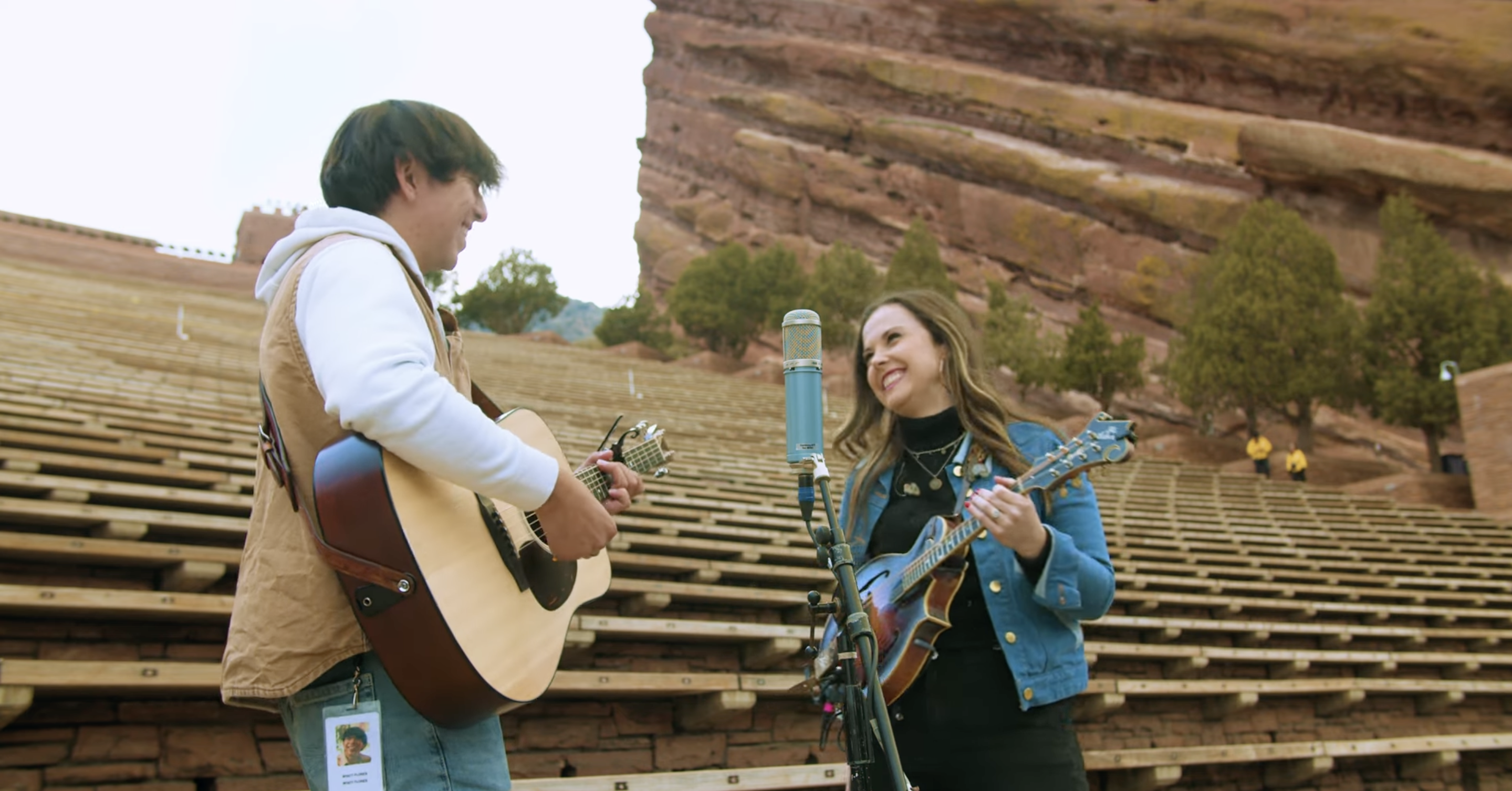
I also have to ask you about bluegrass. One of the first things that we shared on our site of yours was a Tyler Childers cover that you recorded with Sierra Hull at Red Rocks. Our audience loved it so much. I think part of why your music resonates across diehard country fans to indie fans to bluegrass fans is that you’re not just a performer and a songwriter, but you’re a picker, too. What is your relationship like with bluegrass music? Is it something that’s prominent in your listening and in your influence?

So, I will first and foremost say this: I am not that good of a picker. [Laughs]

That stuff, that is something that I love. That is a different art. That is so beautiful. But my love for it– everyone in Oklahoma started listening to Tyler Childers and that’s when he came around, I want to say in my high school days. That’s when everything took a shift. I was like, “I don’t know what this is…” because we all grew up listening to red dirt [country], which is what I am. But my influence has really changed. In the summer of ‘22, Laurel Cove Music Festival was the first time that I had seen Nicholas Jamerson, Charles Wesley Godwin, Sierra Ferrell, Cole Chaney. That changed everything for me. It changed the entire way that I looked at music, and from that point on I started listening to every single one of those artists. It just led to more.

I love bluegrass and I try to have a couple songs [in that style], but I can’t call myself bluegrass. As much as I love what they’re doing and I try, I have my influences, I’m still red dirt. The way that those artists do what they do, it’s because they are them. I have my influences, but I am still just me. So whatever comes out, it’s just me loving and respecting it. But I can’t fully call myself a bluegrass musician, because I’m not. I’m jealous of it though, I’ll tell you that much. I’m jealous, I wish!

The production style and the different aesthetics that you’re utilizing on the album feel like classic country and old country plus dashes of country & western. There are moments that are really rocking and there are moments that are really subdued. It’s also really modern and crisp. How much of that is coming from you or from the ensemble and how much is coming from your producer, Beau Bedford?

A lot of that was Beau. I learned so much from him. [Before,] I really didn’t ever get the experience of being in a studio with musicians that are just wizards. Beau really took care of me.

It was a challenge, because we recorded in three different places. We were in Nashville, in North Carolina, in LA, and then we finished in Nashville. We were scared that it wasn’t gonna flow together, being in these different studios and then also just having this [group] of songs. Luckily, it all came together and as different as they do sound, they still flow. That was all just luck. We’re all we’re all sitting there going, “Huh? Hope this goes right!” I had my doubts, too, and [Beau] goes, “Wyatt, everything’s gonna be all right, because you are the main character that runs through this entire thing.”

That’s the constant throughout the entire project. I’m just lucky that it worked. When you go from different styles of songs – red dirt, and then you got this beachy [thing], old-time. It’s just crazy how they all go along together. Then it goes into this weird psychedelic rock and “Falling Sideways.” It was a wild adventure, and I’m so grateful for it. I just can’t believe the way that it turned out.

I ask this last question often, especially with people like yourself who are so effortlessly traditional country. There are a lot of folks out there who are excited about you – and artists like Zach Top and Tyler Childers and Zach Bryan – because these listeners sense that there’s this “new movement” that’s going to save country music, that’s going to renew country. That country is going to be what it used to be before “murder on Music Row.”

I wondered what your thoughts and feelings are on that paradigm? Because I sense that you don’t care so much about what is or isn’t traditional or what is or isn’t “inside” country. Does country music need to be saved? Do you see yourself as part of that saviorship? Do you care?

There’s something to be said about it, because yeah– I have my opinions about commercial country. There’s some really good songs and then I also think there’s some songs that say absolutely nothing. I guess as a songwriter, my goal is to keep writing about real shit and keep expressing myself with vulnerability. And to still write good songs.

I have a very important person in my life who’s been a mentor to me; his name’s Shane Lamb. I used to talk about writing these super-poppy melodies. And he goes, “Yeah, it’s because it’s popular music. … Who are some of your favorite artists?” We started going through Tyler Childers, early on in the days of me being in Nashville. [Shane] was like, “Listen to the fucking melody, Wyatt. It’s a pop melody. It’s for popular music. That’s why it works. But his arrangement is country.”

And I was like, “Oh… when you think about it that way, yeah, I guess you’re right.” So, I do try to have poppy melodies as much as I can, but I still try and keep my verses very needy, if that makes sense. I like putting a whole bunch of detail and really trying to focus in on the verses and let the chorus speak for itself.

That’s so perfectly put; yes, country has always been popular music. It’s one of my favorite Tyler Mahan Coe quotes, the creator of Cocaine and Rhinestones, the podcast and the book. He talks regularly about how country music has always been popular music. That’s not to say that fact absolves Music Row and Music City from all the truck and beer songs, but it certainly helps remind us that hand-wringing over “Is country music going to be okay?!” is not something that’s ever going to go away, but it’s also not something we really need to worry about.

And I think for the first time ever with social media, people are able to find new music that’s always been there. They’re just now finding out about it for the first time, because the radio stations aren’t playing it. That’s its own deal. But now they’re able to find all this new music and I feel like country is still going to be country. Like you said, when it comes to beer and truck songs, I think the thing that’s missing is them not explaining what they love about it. They’re just talking about it, not being vulnerable with it.

I think about “Drive” by damn Alan Jackson, dude. That is just talking about driving. That’s really all it is, but the sentiment is there, because it has to do with the father and the son. And then, all of a sudden, there’s the father and the daughter – that is fucking awesome country music that I still absolutely love! I wish that I could do that, like that Zach Top thing. I told him that whenever I met him, I was like, “Dude, I wish I could do it.” I really do. ‘Cause he’s fucking killing it. There’s so many different styles of music and I’d rather just do what I want to do, which is all of them, rather than just settle for one sound.


Photo Credit: Natalie Rhea

Watch Wyatt Flores and Sierra Hull Duet on a Tyler Childers Cover

Last week, before the Turnpike Troubadours headlined the iconic Red Rocks Amphitheatre in Morrison, Colorado, two phenomenal young pickers also on the show bill stepped out into “the house” to perform Tyler Childers’ “Shake The Frost.”

Guitarist Wyatt Flores, a current nominee for the Americana Music Association’s Emerging Act of the Year, and Sierra Hull, Grammy-nominated mandolinist and songwriter, performed an intimate and tender rendition of the Childers hit flanked by the infamous red rock cliffs and backgrounded by the historic amphitheatre’s nearly 10,000 seats.

Flores and Hull demonstrate the timelessness with which Childers writes his songs and lyrics; in this simple, acoustic setting the track listens like an age-old folk song that’s been passed down generationally. With gentle unison vocals on the choruses and subtly interspersed licks and fills, the pair of virtuosos know that less can indeed be more. While they are each objectively shredders on their instruments, another common thread between them is their commitment to giving songs the treatment they deserve – rather than using each and every track they perform as a chance to show off their picking chops.

Hull has long been a technical – and artful – standard-bearer for her generation of bluegrass pickers, while Flores is enjoying something of a meteoric rise after having spent most of his young life touring and performing. Together, they represent the vibrant, genre-blending present and future of country, Americana, and bluegrass.