Josh Ritter: Smiling Across a Microphone (Part 1 of 2)

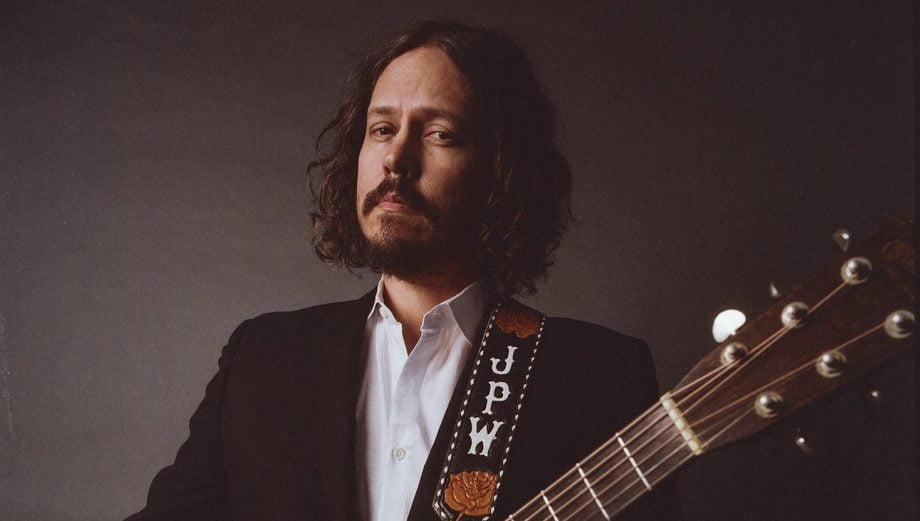
Josh Ritter is the kind of guy who will give you a hug even when you’ve never met him. It’s that warmth and sincerity that has allowed him to build a significant fan base across the US and abroad, not to mention his undeniable enthusiasm for performance. He’s currently on tour with a new album, Fever Breaks, which he recorded in Nashville with Jason Isbell in the producer’s role – along with fiddler-vocalist Amanda Shires and Isbell’s band, The 400 Unit, in the studio.

During a spring tour stop at a cave in Tennessee, Ritter chatted with the Bluegrass Situation about playing these songs for the first time, taking chances, and getting Josh Ritter-y with it. (Read part two of our interview.)

BGS: This album starts with “The Ground Don’t Want Me” and that character’s a bad dude. What led you to kick off the album with that song?

Ritter: For some reason, a lot of this record was totally guided by instinct. Some of those artistic choices felt like there was sort of a still small voice that told me that was the way to start. In fact, “Ground Don’t Want Me” was the first song that we recorded, and the first song that I played for Jason and Amanda when I went down to visit them and was playing through the stuff. So it was kind of the song that was on the tip of my tongue.

When you were playing those songs for Jason and Amanda, were you playing a demo? Or were you saying, ‘Here’s a song I wrote….’ and then sang it?

That’s how I did it, yeah. With my last couple records, I really went in deep with the demos and fleshed them out more on my own. With this one, it felt like the songs were a little more spry and just they needed to be strummed through.

So, they were probably your first audience on some of these songs.

Yeah, totally.

Was that intimidating for you?

No, because that’s one of the moments that I live for. I love the moment when somebody plays a new song for the first time. I think it’s an amazing moment that you can’t ever return to. You can only recreate it. It’s like that moment of ripping a sheet off a statue. That’s how I always think of it — that moment where you can show what you’ve been doing. Playing for them, I was hoping that there would be something in there that they would gravitate towards.

“I Still Love You Now and Then” is a beautiful song and it’s bittersweet, too. What do you hope people will hear in that song?

It’s a song that’s written from a different point of view, in terms of age, you know? I think there’s a time to sing about first love and there’s a time to sing about enduring love. And enduring love can be enduring for all kinds of things! [Laughs] By the time you’re 42, you realize the sort of loves that endure and “I Still Love You Now and Then” is exploring a character who has those kinds of feelings.

I related to it because somebody told me once that there are people in your life that you can never get past. Do you find that experience true for you, too?

Yeah, I find that experience true in so many things. Whether it’s the first book that you read that you really loved and that brought you home, or the first beer you ever had. Those first moments, those are great, and I think one of the reasons that playing music is so fun is that you can be part of that experience. It’s a moment in time that you can’t exchange for anything else.

“On the Water” captures that feeling when you are in love, and when things are going right, and someone loves you back. What was on your mind when you wrote that?

That was a song that I really worked a long time crafting. I started off with an idea in my head and I wanted a new way to say “a leap of faith,” and even a short walk on the water is pretty far. I wanted the song to be about hoping somebody makes a choice, and I worked on it and worked on it… There were a bunch of lines in there that I really loved and I brought it down to play for Jason and Amanda, and they said, ‘This is great, you can go farther here.”

I was like, “OK… I don’t know if this song is anything.” They said, “No, go here in this middle section and get way more Josh Ritter-y with it.” [Laughs] I said, “OK, I can do that!” They forced me to work harder on the song, and that was one of those songs that developed out of constant playing and knowing there was something in there. Once we got into the studio it was clear that it fit the rest of the record.

You must have a pretty good friendship with them, for them to give you such candid feedback and say, “It’s not ready yet.”

It’s what I wanted, you know? It’s what I really craved, and what I hoped for in this situation is that I wanted to make a record in a different situation, with a different lineup of people than I’ve ever worked with. I just really needed that, but working with them was great because I got a chance to work with people who were behind the same microphone, you know? Lyrically they really pushed me to push the songs farther. I took them to different spots than I would have.

Can you tell me more about that need to work that way?

Well, the need is what you really grasp hold of as time goes by. Because you want to stay hungry and you want to be hungry all the time. And you have to take chances, you have to pin what you do to things that might fail. You know what I mean? So, doing that stuff is important because all the nerves — all those fluttery nerves and that weird instinct – was really kicked in to high alert. I really think it’s important to respond to the nervousness that is proactive, especially with art. In the end, it’s just art. It should be fun and it should be exciting, and if it didn’t work, then you tried something. And in this case I took all that advice from them and really embraced it as part of the process for this record.

I’ve read and listened to a lot of interviews with you, and the word “fun” comes up a lot. It seems pretty central to your artistic vision – to have fun while you’re doing this.

Yeah, I don’t like to get into situations where the art gets wrapped up with being something that’s torturous. I appreciate that as part of the story of making a record — like when I got divorced, I had to make a record about that just because I felt like I had to. And that wasn’t the most fun, you know, but in general, making records is a fun thing. You enjoy it and you get a chance to hang out with your friends and make music and have a celebration for a while. I think that that comes across. You can always hear when somebody is smiling across a microphone.


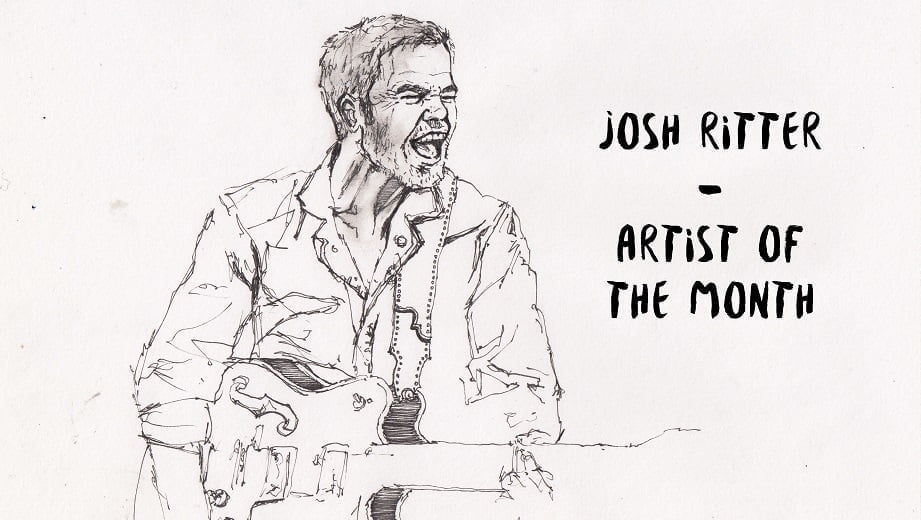
Illustration: Zachary Johnson
Blue Ox Music Festival: Six Reasons to Go

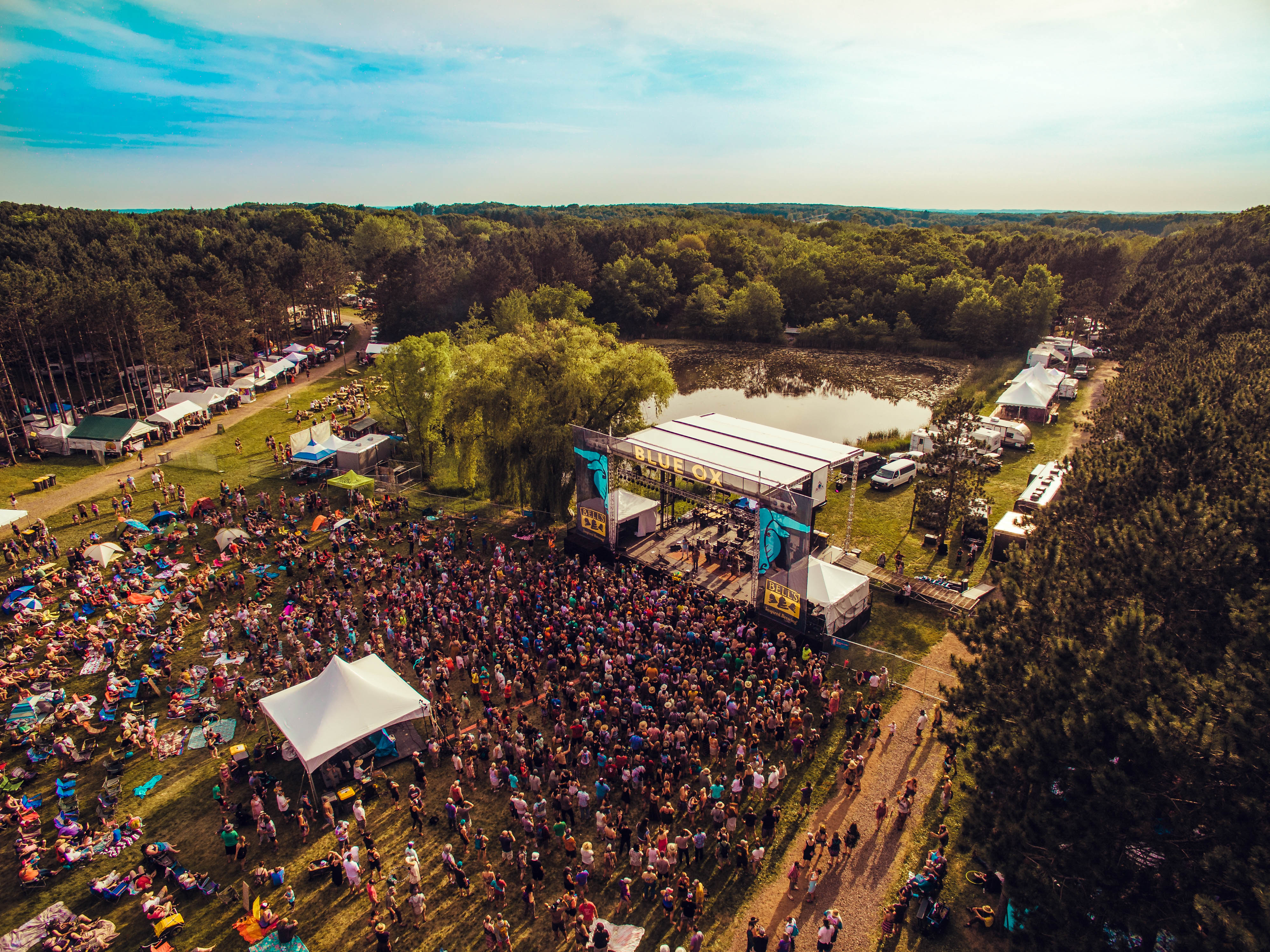
As I have attended Blue Ox Music Festival each of the past three years, I have found it’s about both the music and the people who love the music. A lot of folks come from isolated rural areas or spread-out small towns, so spending a weekend with so many like-minded, friendly, and positive music lovers is a refreshing and special feeling. There’s a strong sense of community — that’s what keeps bringing me back.

Blue Ox Music Festival 2019 will be held June 13-15 at Whispering Pines Campground in Eau Claire, Wisconsin. Here are six reasons to go.


View this post on Instagram


A post shared by Blue Ox Music Festival (@blueoxmusicfestival) on

1. The Mornings
A short stroll through the campground in the morning really shows the best in people. You’re sure to have more than a handful of strangers greet you cheerily or invite you into their campsite for coffee and conversation. Additionally, the festival offers yoga every morning — it’s a great place to wake your body up in the morning, limber up before the long day, and meet new folks.


View this post on Instagram


A post shared by Blue Ox Music Festival (@blueoxmusicfestival) on

2. Friends of Friends
Blue Ox is a meeting point for music lovers from all around the Midwest. You’re bound to run into a friend, a friend of a friend, or maybe even a long-lost relative. The festival is a beautiful representation of how music brings people together.


View this post on Instagram


A post shared by Blue Ox Music Festival (@blueoxmusicfestival) on

3. Diverse Sounds
The lineup draws from a very diverse variety of genres and styles. There’s truly something for everyone, from Deadheads and alt-country lovers to traditional bluegrassers and funky folks. If you were to walk around the grounds and asking passersby which act they’re most excited about you might hear dozens of different answers. It’s really special to see so many fans of so many different styles all in one place.


View this post on Instagram


A post shared by Blue Ox Music Festival (@blueoxmusicfestival) on

4. Emerging Talent
Sure, there will be plenty of names on the bill that you already recognize, but one of the finest features of a music festival is discovery — discovery of new bands and sounds from near and far. Like Armchair Boogie, an eclectic group from Madison, Wisconsin. They offer a totally unique and original cocktail of sounds from rockabilly to funk to bluegrass and beyond. The guys recently began recording their sophomore album, What Does Time Care?, so be on the lookout for some new tunes soon.

The Lil Smokies played the Blue Ox side stage in 2018 and the crowd nearly doubled in size over the course of their set. They combine incredible technique and heaps of talent with extremely well-crafted songwriting. It’s really easy to get hooked on their music.

The Wooks are a string band made up of five absolute shredders who blur the lines between traditional bluegrass, honky-tonk, jam bands, and more. This is their first year at Blue Ox and you won’t want to miss them.


View this post on Instagram


A post shared by Blue Ox Music Festival (@blueoxmusicfestival) on

5. The Backwoods Stage
Twelve hours of music every day can make it easy to forget about (or be too worn out for!) the Backwoods Stage. It’s the place where all the beautiful late-night weirdness happens. You might find Billy Strings jamming a few tunes with Horseshoes & Hand Grenades, or Jeff Austin picking a few with The Travelin’ McCourys. There’s no telling what might go down, but it’s sure to be a highlight.

6. The Jams
Blue Ox jams — whether on the main stage, during late-night, around the parking lot or the campground — are unique in that you’ll hear everything from The Rolling Stones to John Hartford, and Andy Statman to Hank Williams over the course of an hour or so. Most Blue Ox folks are totally open-minded, which makes for some very cool and unique jams. It’s an event that really does have a little something for all roots music fans out there.

Don’t forget to follow along across BGS social media channels this week as well for special on-site coverage from Blue Ox. Even if you can’t make it to the festival, you can watch key sets from the weekend on BGS.com via JamgrassTV.


Photo credit: Scott Kunkel

John Paul White Captures the Countrypolitan Era

John Paul White, who rose to prominence as half of The Civil Wars, has just delivered his most fully-realized solo set, The Hurting Kind. When he couldn’t find a modern album that gave him the feeling of his favorite countrypolitan recordings of the ‘50s and ‘60s (think Patsy Cline and early Roy Orbison), White set out to make an album that would capture the aesthetic of that era without going full-on retro. He wrote with some legendary songwriters of those decades still working in Nashville, including Country Music Hall of Fame members Bill Anderson and Bobby Braddock. One of those Braddock collaborations, “This Isn’t Gonna End Well,” is included here as a duet with Lee Ann Womack.

Recorded at his own Sun Drop Sound studio in Florence, Alabama, with producer Ben Tanner (Alabama Shakes) behind the console, The Hurting Kind finds John Paul White going for broke as a vocalist, flexing his creative muscle as a country songwriter, and speaking his mind about what it means to live and work in Alabama in 2019.

BGS: When you were growing up, your father’s record collection contained a lot of classic country albums, but you didn’t gravitate towards those sounds back then?

White: When I was growing up, I hated those records. It was not my cup of tea. I was more of a rock ‘n’ roll guy. I was listening to Black Sabbath and Led Zeppelin and AC/DC — stuff like that that. When I got to college I started listening to Steve Earle and Rosanne Cash and Emmylou Harris. I realized the reason I was digging those records so much is because of all those country records I grew up with. That’s what they grew up with, too, so we had a common DNA. So, I dug back into all those records that I knew by heart and realized how much I loved them. They influenced my decisions musically all the time whether I knew it or not. I finally just fully embraced it.

Over the last few years, you’ve been drawn to music from the countrypolitan era. Why did you want to tap into that for The Hurting Kind?

I think it was just a huge hole in that part of my discography that I was listening to. I was looking for that stuff everywhere. I’d worn those records out, and I knew them backwards and forwards. I was trying to find something in a modern setting that was doing that thing, because that’s just what I craved and what I wanted to listen to.

I then went out and made the record that I was looking for. I decided, “Well, I’m going to find the guys that wrote a lot of those songs.” So I got to write with Whisperin’ Bill Anderson and Bobby Braddock for this album. I got the seal of approval from them that I was on the right track. That’s huge.

You wanted to capture that countrypolitan aesthetic, but you didn’t want The Hurting Kind to sound retro. How did you achieve that?

I didn’t actively do anything to keep it from sounding retro. I wanted it to sound like a modern record, but with those same sensibilities of the string arrangements, vocal harmonies and that country-jazz Chet Atkins-type guitar style. But I wanted to capture it in the way you capture sounds today and not feel like you have to use all old ribbon mics and old RCA microphones that they were forced to use. We have lots more tools at our disposal. If we had finished this record and were just following our guts and it sounded like an old record, then so be it. But I’m glad it sounds like its own thing.

The aesthetic I was going for was really captured in the songwriting process. I arranged all these songs in my head the way that I thought they should sound, and the way they should progress dynamically, before I ever walked into the studio.

“You Lost Me” is such a great cheating song, and one of the most devastating on an album full of heartbreak songs. How are you so good at writing these sad songs?

I’m not meant to write songs to cheer you up. I’d fail miserably because they don’t move me. They don’t make me feel something. My songs aren’t necessarily sad as much as they’ll stir up an emotion. It might be longing or it might be love, but at an angle. Like, “I love you and you’re so horrible for me.” That’s more interesting to me, ‘cause just the straight up love songs, it’s been done. I come at it from a completely different perspective.

Doomed love is also the topic of “This Isn’t Gonna End Well,” a duet with Lee Ann Womack. Why was she the right fit for that song?

I needed a timeless voice — a voice that could straddle genre, but also, I won’t lie, I wanted a voice that would be recognizable. Lee Ann was every one of those boxes checked. She’s really made strides towards creating true, traditional music and sort of separating herself from the typical Music Row stuff. We’ve known each other for a while and have talked about collaborating and never have. I knew, because of Bobby writing it with me, I could be confident enough to walk in the room and ask her out, as it were. She said yes.

You’re singing with a lot of emotion and vulnerability on this album, which isn’t common for a man to do in 2019. Why is that?

Because it’s ain’t cool, I guess. I love Roy Orbison and Marty Robbins — the guys that just put their heart on their sleeve and are not afraid of the drama and bowl you over with it. They make sure you know exactly what they’re feeling with those big notes and the trills and stuff. I think ever since Nirvana came along, so many wonderful things about that whole movement, but it also became so much shoe-gazing. That’s fine, and I like some of that music, but what I really like is a guy up front with confidence putting it all out there and letting you know exactly how he feels and not giving a shit what you think about it.

It’s not easy to pull that singing style off, either. Your voice has really evolved on this album.

I appreciate you saying that. I think it was a confidence thing, too. I think it was a conscious decision to step forward and be counted and give people what I have and not hold back. Not give them 80 or 90 percent. I honestly feel like I’m singing better now than I ever have. I feel like every time I get in front of a microphone or get onstage or am in the studio, I figure something out. I tweak something that makes it a little less hard, a little more comfortable or easier to project — a little better tone, and that’s exciting.

Being an Alabama native like yourself, I’ve found a lot of meaning in the album’s opening song, “The Good Old Days,” with the news coming out of the Alabama state legislature. You’re now performing that song all across the country and overseas and in some ways representing the state to your audience. I have to say, it’s complicated to be from Alabama these days.

It most certainly is. I get it left and right. I’m proud to be known as an Alabamian. I don’t take that lightly. I don’t tend to want to be the preachy guy around here, because I’ve never gravitated towards those sorts of people anyway. The whole proselytizing thing of, “This is what you should believe and this is what you should not believe” does not sit well with me. But at some point around here, it just gets to a fever pitch to where you can’t keep your mouth shut.

That song was definitely a big middle finger to the idea of “Making America Great Again,” because for most people in this country that aren’t white, straight dudes, it wasn’t great. It hasn’t been great. I’m trying every day to teach my children about tolerance and compassion and making sure they know this country was really, really hard on a lot of people that didn’t fit what people considered the norm.

I don’t ever want to see that shit happen again. I don’t want it on their watch. I want to make sure they’ve got their eyes open and that they change things and don’t ever say we should have it back like it used to be. No. I don’t want that for a minute. I want it like it says in the song, “Our best days are in front of us.” I have to believe in that. There are days when I wonder, but I have to have that hope.


Photo credit: Alysse Gafkjen

LISTEN: Buddy & Julie Miller, “Til The Stardust Comes Apart” + “You Make My Heartbeat Too Fast (Live)”

Artist: Buddy & Julie Miller
Hometown: Nashville, Tennessee
Songs: “Til The Stardust Comes Apart” + “You Make My Heartbeat Too Fast (Live)”
Album: Breakdown on 20th Ave. South
Release Date: 7″ single, June 7, 2019; album, June 21, 2019
Label: New West Records

In Their Words: “We’ve been together for almost 40 years… and although sometimes a bumpy ride, it looks like our love is going to stick. ‘Til The Stardust Comes Apart’ is one of those songs that fell out of the sky…quickly and literally. We often have a television tuned to history or science documentaries and heard of a recent study finding that we actually have stardust in us as old as the universe. Astrophysicist-author Karel Schrijver put it this way: ‘Everything we are and everything in the universe and on earth originated from stardust, and it continually floats through us even today. It directly connects us to the universe, rebuilding our bodies over and again over our lifetimes.’ Julie wrote the song after the show ended.

“‘You Make My Heart Beat Too Fast’ recorded live, not sure when or where or why…… possibly The Bottom Line in NYC or Slim’s in San Francisco. It was fun to play and different every night. Bryan Owings on drums, Rick Plant on bass.” — Buddy Miller


Photo credit: Kate York

WATCH: Anthony da Costa, “Shadow Love”

Artist: Anthony da Costa
Hometown: Nashville, Tennessee
Song: “Shadow Love” (Acoustic)
Album: Shadow Love EP
Release Date: Single – May 31st; EP – June 14th

In Their Words: “This is a song that has followed me around for years. I first wrote this song back in 2015 and have performed it live with my band many times… I always had fun playing it, but never felt like it was all the way there. My friend Ruth Moody (of The Wailin’ Jennys) and I had recently been discussing the possibility of writing songs together. While working on the EP, I decided to send ‘Shadow Love’ to Ruth and asked her to write another verse. She sent me that second verse while on the road, and it haunted me for days afterwards. ‘Maybe I knew you long before I met you / a hologram, a winter mist / Not everything can last forever / Not everything can feel like this.’ The song was done. What was once a loud Weezer-rock shredder became a duet between two loves, two ghosts. I wanted to share this live, acoustic version of the song (featuring Ruth as well as Sam Howard on bass) as a capture of friends sharing a feeling in real time. Enjoy!” — Anthony da Costa


Photo credit: Jacqueline Justice

Robert Earl Keen Explores Americana in New Podcast

Years before the term Americana entered the musical lexicon, Robert Earl Keen was out on the road that goes on forever, playing his unmistakable blend of folk, country, and Texas roots music. With decades of insight to provide, he’s launched Americana Podcast: The 51st State, where he sits down with some like-minded artists for warm conversation. His first two guests are Jamestown Revival (listen) and Lucero (listen).

“Is there a substitute for close-up, in-the-same-room communication?” Keen remarks. “I’ve spent my entire career on the interviewee side of the microphone. We are trying to replicate the environment that in my experience I’ve felt the most comfortable. I’m sure as we move through this podcast journey that we’ll make exceptions or compromises, but for now we want to be up close and face to face with the artists. It’s more real.”

Keen answered some questions by email for BGS.

BGS: What prompted the idea for you to launch a podcast?

REK: As a touring band it’s easy to spend all your time working the road. One can become isolated from the current music culture. Consequently, I keep my eyes and ears open for things that keep me connected.  My producer, Clara Rose, suggested a podcast. We decided Americana was our best route. She secured the name, and started making calls to artists. It’s been an accurate way to keep in touch with the current music culture. We are standing on the precipice of an artistic revolution overlooking the most creative group of artists in the last hundred years. I didn’t know this before our podcast. I’m sure some will argue to the contrary, but because of this podcast, I’m able to contribute to the discussion.

What is it about this community of songwriters and musicians that appeals to you?

I love the warts-and-all quality of Americana. I lived in Austin, Texas, in the ’80s and it was home to the richest artistic and chaotic neutral environments anywhere. Of course, there were world-class songwriters and guitar players (Willie Nelson and Stevie Ray Vaughan), and there were legendary folk heroes (Kenneth Threadgill and The Grey Ghost) but there were unclassifiable things as well. The Uranium Savages, Spamarama, the O’Henry Pun-off, Eeyore’s Birthday Party, Max for Mayor, and an untold amount of crazy music venues. One night I went into what might be considered the first craft beer emporium in the Southwest, Maggie Mae’s, and there was a guy on stage playing pots and pans from his kitchen. Maybe Americana doesn’t encompass a pots and pans player, but I love the kitchen-sink quality of Americana.

Is there a common thread among your guests for far?

Most all the artists were either guitar players or in a guitar sound-driven band. The thread that is most apparent to me is these are all seasoned and passionate musicians. They are all committed for the long haul. Not in for the money or fame, but like me, play music because the idea of any other kind of life doesn’t appeal.

What has surprised you the most as this podcast project has come to fruition?

The interest and positive reinforcement are overwhelming. When I told family I wanted to play music for a living, except for my mom, they were less than encouraging. Even she tried to talk me into going to piano-tuning school to have something as a backup. When I told my friends in the music industry that I wanted to jump from an independent label to a major label, they asked, “Why?” When I tell people that we’re doing a podcast, they send me confetti texts before they even ask what kind of podcast. I don’t know what the difference is but it’s a big difference.

What do you hope the fans will take away from the first two episodes of Americana Podcast?

I hope they hear in the first three minutes of this podcast that we’re dedicated to the highest quality of production values and we are adamantly committed to shining a ten thousand candle power light on the beauty and magic of Americana music. Anything less means we should up our game.


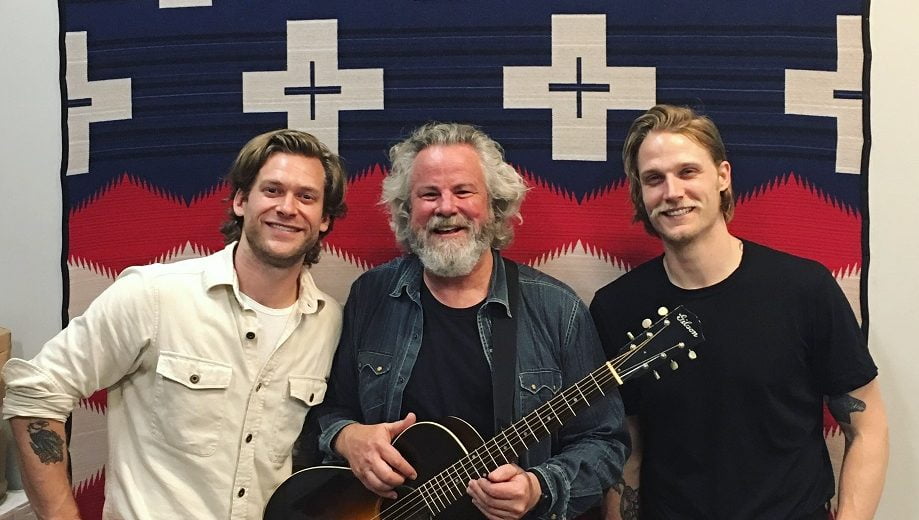
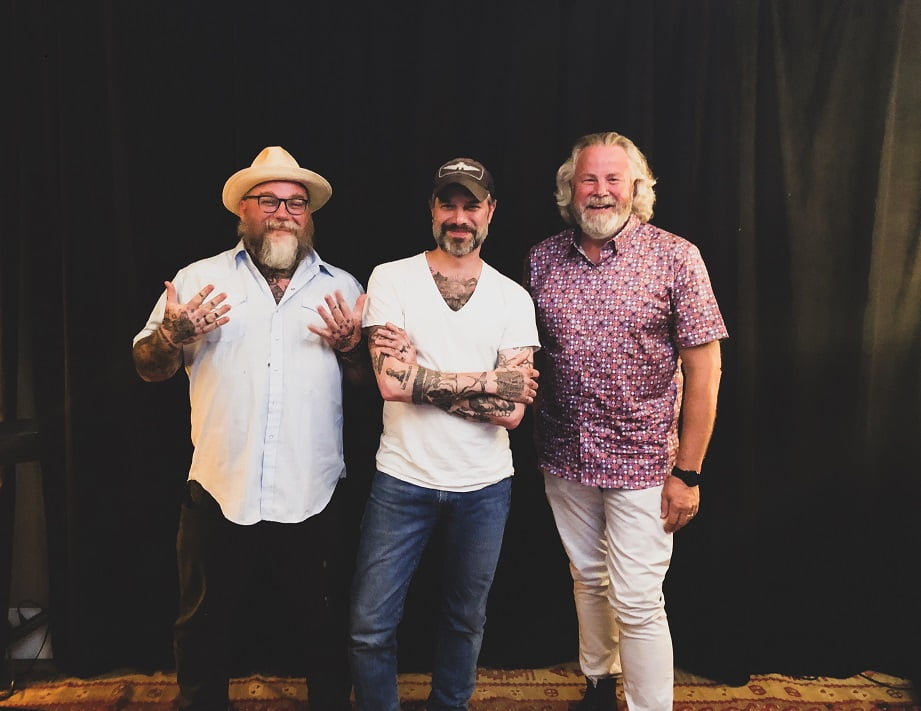
Top photo (L-R): Jonathan Clay of Jamestown Revival, Robert Earl Keen, Zach Chance of Jamestown Revival
Middle photo: Lucero’s Brian Venable and Ben Nichols with Robert Earl Keen
Photos used with permission.

JJ Cale’s Unheard Songs Collected on ‘Stay Around’

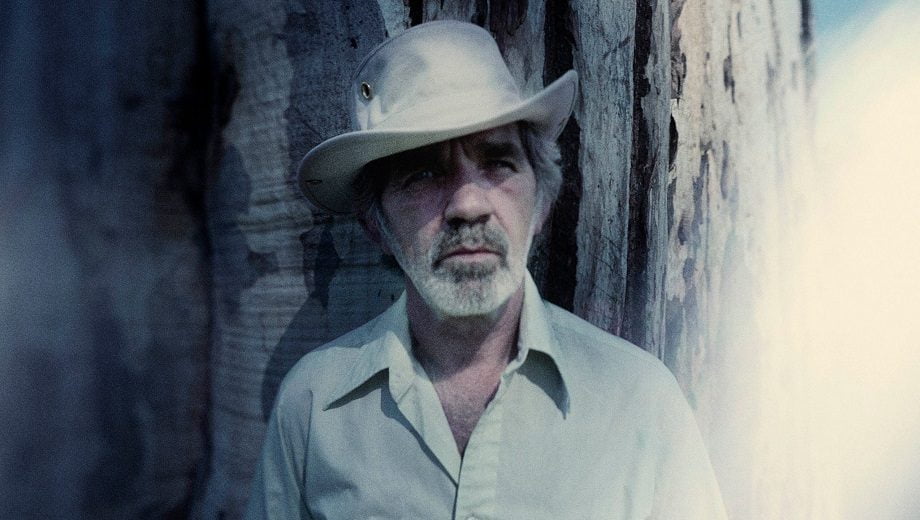
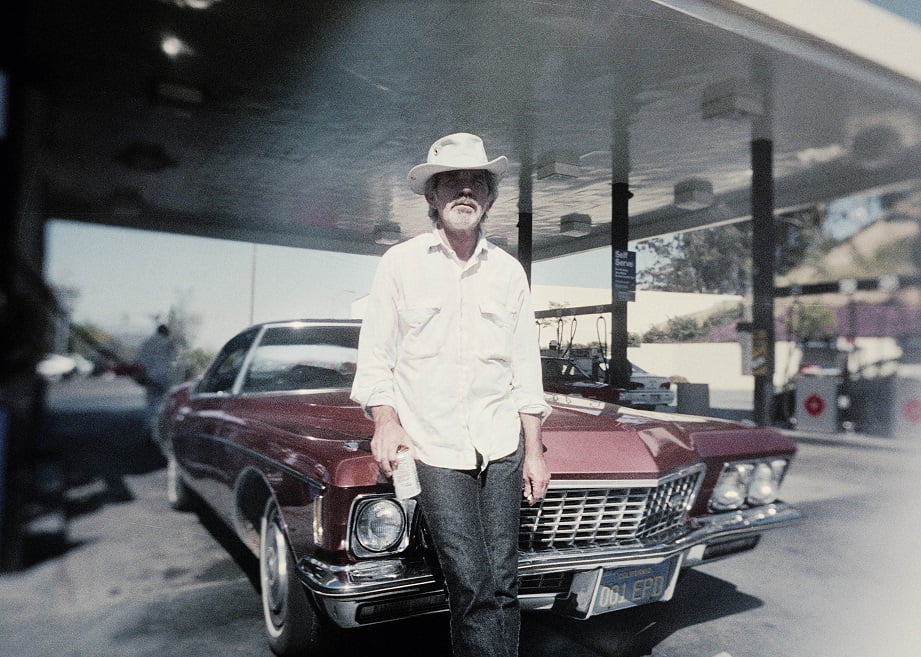
When it came to guitars, gadgets and such, JJ Cale bought plenty of stuff and more often than not wound up giving it away eventually. When it came to his music, however, Cale was not one to cast anything aside. Over the decades of his long and storied career, he amassed hundreds of recordings of songs, fragments, alternative mixes and other sonic ephemera. Fifteen songs, all complete and finished by Cale himself, have been rescued from his hard-drive vaults for the posthumously-released new album Stay Around.

“I wanted to make sure everything on this was really ‘new,’ songs that people hadn’t already heard,” says his widow, Christine Lakeland Cale, who oversaw the project. “You know, you go on YouTube and there’s a bad-sounding grainy video from a gig somebody recorded on their phone. I tried to find things that hadn’t even been out that much. I was looking for the most Cale I could give people.”

Cale, who died from a heart attack in 2013, was a marvel of consistency as a recording artist. Well beyond “After Midnight,” “Cocaine,” and his other signpost compositions, he left behind more than a dozen albums long on relaxed, amiable grooves. So it should come as no surprise that Stay Around offers that same level of quality, even though it consists of recordings spanning more than three decades.

The album’s tracks range from solo recordings to full-band arrangements, with highlights including the loping ode to road life “Chasing You” to the title track’s romantic crooning. Christine compiled the material in collaboration with her late husband’s longtime manager Mike Kappus, who was well-versed in Cale’s working methods. It wasn’t unusual for Cale to leave songs sitting around for years, or even decades, before releasing them. “Roll On,” the title track of Cale’s final 2009 studio album, was a song he’d had in the bag since the mid-1970s.

“I was kind of in on the complete evolution of it all,” Kappus says. “He would send me cassettes, with something like a picture of his driver’s license as artwork, just this private little clever thing between us. We’d be talking about the next album and not everything he sent would make it. At one point I told him, ‘Man, you’ve got a couple of really good, solid records here.’ But the temptation for any artist is to do what’s fresh and that’s what would happen. So there was all this material left over.”

Christine admits it took her “a couple of years of walking around foggy and not all there” until she felt up to diving into Cale’s recorded archive, which was not stored on a pile of tapes. Instead, Cale left behind about 50 hard drives on Alesis HD24 machines, a format Christine says has been obsolete for years. But Cale didn’t upgrade beyond that because the format worked and he was comfortable with it.

“He used to joke to people, ‘I’m too old to learn something new, I like what I have and I use my ears, not my eyes,’” Christine says. “So he never made the transition to Pro Tools. He could hear peaks of distortion that had to come out, instead of seeing a line on a screen to edit. He liked the familiarity of his home studio because he didn’t have to spend any time setting things up — just flip the switch and get creative.”

But just because Cale’s recording methodology was to set it and forget it, one shouldn’t conclude that he was any sort of behind-the-times Luddite. Cale was a skilled studio technician who “loved engineering more than anything else,” according to Kappus, and he had a lifelong fascination with the tools of his trade. After buying new gear or instruments, Cale would usually take them apart and rebuild them. He’d do the same thing with records, after a fashion, going to record stores and buying the entire top 10 bestsellers to study.

“He’d want to check out whatever people were buying,” Kappus says. “Not to try and copy, but to check the engineering and production aspects. We were at McCabe’s Guitar Shop in Los Angeles once, where most of the people working were pretty into acoustic or folk music. And Cale starts talking about the mixes on ‘Back That Ass Up’ and some new Britney Spears record. Everybody there was going, ‘What?!’ They figured he’d only know about Willie and Waylon. But he had a lot of curiosity and he’d appreciate the mixing and recording of that stuff in a very true, knowledgeable way. It was the furthest thing from snobbery.”

Of particular note on Stay Around is its one song that Cale didn’t write, “My Baby Blues” — which Christine calls “my nod of self-indulgence,” because she wrote it herself. “My Baby Blues” is a song she and Cale recorded in 1977 at the first session where they met. Cale’s version here dates back to 1980 and Christine considers it a real find. But her favorite cut on the album is the title track, a meditation on the pleasures of being with the one you love (“Stay around, stay around, girl/And let’s make love one more time”).

“That one just floored me when I found it,” Christine says. “I couldn’t believe that one, and the guys at the label came up with the idea to make it the title because, ‘We hope his music stays around.’ That’s brilliant, how come I didn’t think of it? But I was too close to it. It takes a village.”

Some of the solo recordings are particularly intimate, especially “If We Try,” which comes by its kitchen-table feel honestly. That was one of his favorite places to record when he was home alone, and the track feels “as if you’re right there sitting at the table with him,” Christine says.

While Christine isn’t yet thinking about a follow-up, there’s more than enough material still in the vaults to make another album, which could be 100 percent previously unheard material the way this one is. And she thinks that the spirit of her late husband, who would have turned 80 last December, probably approves.

“I have had a lot of weird things happen,” she says. “Probably more so during the foggy period. But even now, things happen where I think, ‘Somebody’s just making sure things go this or that way.’ This world can’t just be it. I do think there’s something once we leave here, I just don’t know what. There’s got to be another level of intelligence in the universe because we’re such a flawed species. Without sounding too much like an old hippie, it seems like there’s the ability to let somebody know it’s okay. And he has.”


Photo credit: Stephane Sednaoui

Sing to Me: Luther Dickinson & Sisters of the Strawberry Moon

Luther Dickinson trusted his intuition when he set aside two or three days to make an album with like-minded friends who had never met each other. By pulling together these kindred spirits — now known as Sisters of the Strawberry Moon — Dickinson crafted a beautiful roots collection, simply titled Solstice.

“It was amazing that we all converged. We picked two or three days, met in Mississippi, and recorded the record,” he says. “Everybody brought two or three songs and we just took turns backing each other up.”

The luminous cast include Birds of Chicago, gospel group The Coco Mamas, Amy Helm, Amy LaVere, and Shardé Thomas, with finishing flourishes from fiddler Lillie Mae and B3 organ master Charles Hodges. Intimate as well as immediate, Solstice serves as a testament to the power of fast friendship.

The Bluegrass Situation caught up with Dickinson, Amy Helm, and Birds of Chicago’s JT Nero before a show at Nashville’s City Winery.

BGS: You only had two days together, people were bringing their own songs, and not everybody knew each other. You must have been operating on instinct. Is that fair to say?

Dickinson: Totally. I feel the most alive when I’m producing because you’re in the moment and you’re making instinctual decisions, but you’re drawing from your whole life and all of your experiences, and everything I learned from my dad and everything he’s taught me, and everything he’s learned from all the producers who taught him. But also you have to be open and sensitive to what’s going on in the room.

It really is a very exhilarating feeling, producing records. And sometimes it can go completely wrong if you say the wrong thing. But I really do love it. Yeah, you’re running on instinct and you’re running on blood and guts. But it’s like doing anything when you’re in the zone, whether you’re an athlete or a pilot. You’re just trained to be in that moment. Time slows down and everything comes together.

Amy, why did this concept appeal to you, to go to Memphis and make this record?

Helm: I mean, any invitation to go hang out with Luther and a bunch of cool people in Memphis is an instant yes. I had not met any of the other people on the project but I was excited about it and I trust him and trust his compass of coolness. It was a delight to be down there and hang out in Memphis. I rented a Jeep and drove around down South, which is always one of my favorite things to do — to just roll around down there. My aunt Mary lives in Memphis so I got to see her. It was a really, really nice time, and it’s led to some incredible friendships that have turned into other projects. Ally [Allison Russell from Birds of Chicago] and JT came and sang on my record that I made with Joe Henry. Now we’re doing this tour with this record. Those guys made a record together afterwards, so it’s been a nice chain reaction – the right kind of chain reaction.

For this record, everybody brought in their own songs, but the record feels unified as a whole. Do you sense a common thread that runs through the album?

Helm: I would say that, the spirit of friendship is where everybody was coming from with it. So there’s a relaxation that happens with that for me, and I’m sure for these guys. When it’s your own thing and the clock is running and there’s money going down the drain fairly quickly, you’re trying to make it work and hope you got the best performance, it’s really easy to get inside that head for me. So if you’re in a cool room in the middle of Memphis, and you’re eating great food and having great conversations on your way to the studio, and then you get to hear a singer like Allison Russell, that’s it, you’re there.

Nero: The thing that will always be particularly special about this record to me is that you can hear lifelong friendships being made on record. We hadn’t met each other, really, but we’re a family now, and part of that is Luther’s instincts. That’s the thing with music – there are a million things out there that are brilliant but they wouldn’t easily be simpatico with what we’re doing. So finding your tribe members is what it’s all about. I think Luther had an inkling that it would be that way, but you never know – and it was that way. And you can hear that happening on record. It’s rare you get to bottle that lightning.

Dickinson: Man, the music is just an artefact of our friendship. I hope that’s maybe what they’ll feel. A warmth, and we all have longing in our music, and we’re singing about our musical families and our loved ones who aren’t with us. So, hopefully we will generate a place of love. It has a grandmother’s Sunday dinner type of vibe to it.

I like “Sing to Me” — there’s power in that song. What mood were you hoping to set with this recording of it?

Helm: I recorded that song on my first record, with my dad playing drums on it, but I recorded it then with no harmonies. I knew that there were going to be a lot of other voices there this time, and I’ve always wanted to hear that song with an angel choir on it. So I brought it in for that, hoping to gain that, and it became a very cool, vibey thing. I love the way it turned out.

What goes through your mind when you hear that song now, in its new incarnation?

Helm: Just really the mastery of a master player, and how it can change a song and make you sound better! [Laughs] That’s one of the things! Because the playing on it is so exquisite, with the organ that Charles Hodges put on and the guitar that Luther put on. And just also getting to sing it with Ally and finding the magic of that vocal collaboration, and the overtone that she and I get.

Dickinson: Do you remember that take when they walked in? Like, that was the moment that you guys met, right?

Helm: Yeah, that was it.

You met basically in front of a vocal mic?

Helm: We did! They came in and sat down. Ally sat there cross-legged and started listening and closing her eyes. I don’t know, I was a little intimidated …

Dickinson: But that second take — that was the one.

How often did that happen, with the second take being the one?

Dickinson: Oh man, some of this record, especially on Ally’s songs, are the run-throughs! We had to go back and save the run-through because she pours blood and guts into the microphone. Just this heartbreak, I get goosebumps thinking about it! I usually edit two takes together – like the second half of the first take, and the first half of the second take.

But a lot of her stuff was the run-through and we’d patch it up from there. That’s the great thing about modern technology – you can capture moments. Amy LaVere, on the bass, she’d done her homework. She knew every song and had them charted out, and the fact that she was nailing the run-throughs even, really made it work. She really did a good job.

There was a lot of re-interpreting going on, with some of the songs being recorded a long time ago, but Shardé has a real unique beat. She’s a character, man, and growing up with her grandfather [Otha Turner]’s fife and drum music, but also growing up with Beyoncé, who is her idol, she is a very unique musician with great instincts. What I like about her is that you can bring a country song to her, and she won’t play anything near a country beat. And I love that!

Amy, what does that feel like when you’re singing so closely with these people you just met?

Helm: You know what, that is my favorite of all time! That’s the thing that makes all of us gamble everything else in our lives, for better or for worse. [Laughs] For financial distress or not, to keep on doing it because there’s nothing more satisfying than finding that. It revitalizes my faith, honestly. It’s like a spiritual ease that I feel when I get to do that stuff.

It reminds me that all things are possible, and all things are new upon each song and each recording. And it’s limitless, the people you can connect with and interact with in music. There’s such joy in that way. I think for people who make it and for people who listen to it, you’re having that same experience. Following that and finding that – as you can see, I could go on and on about this. It’s magic for me.


Photo credit: Joshua Black Wilkins

Baylen’s Brit Pick: Marry Waterson & Emily Barker

Artist: Marry Waterson & Emily Barker
Hometown: Marry is from Kingston Upon Hull, Yorkshire; Emily grew up in Bridgetown, Western Australia, but now lives in the UK
Latest Album: A Window to Other Ways

Sounds like: A folkier Liz Phair and Lucinda Williams

Why You Should Listen: Is there such a thing as a superduo? There probably should be. And if there were, this pair would be the definition: Emily Barker, named UK Artist of the Year at last year’s UK Americana awards, has a devoted following in her adopted homeland; Marry Waterson, meanwhile, bears the name of British folk royalty. The two women met at a songwriters retreat organised by Liverpudlian singer-songwriter Kathryn Williams, and their connection, born out of a mutual respect and appreciation, was so strong they decided to keep the partnership going after back in the “real” world.

For all their individual, independent success, it turns out that this collaboration suits them very well indeed. Marry hails from the Waterson-Carthy folk clan – her mother Lal, uncle Mike and aunt Norma have lifetime achievement gongs a-go-go — and her vocal style certainly echoes her famous forebears. But Barker’s Memphis-drenched vibe pushes her sound into new realms and while A Window to Other Ways is very much folk it is also at times quite indie rock.

It’s also no-holds-barred on the lyrics front, which speak powerfully of the world we’re all living in right now. Take “Little Hits of Dopamine,” a fantastically trippy reflection on “one-click communication.” “I’d rather be rock’n’rolling, but you just keep on scrolling”, the women croon in different octaves, as text message sounds bing in the background.

At no time are you ever in any doubt that these two have something to say and no one is getting in their way — which sums up their music, too. This project captures a special moment when two great musicians find unexpected synergy – while the songs themselves keeps a close eye on all the little things that make up a life. Sometimes you just know people were meant to meet and this is one of those times.


As a radio and TV host, Baylen Leonard has presented country and Americana shows, specials, and commentary for BBC Radio 2, Chris Country Radio, BBC Radio London, BBC Radio 2 Country, BBC Radio 4, BBC Scotland, Monocle 24, and British Airways, as well as promoting artists through his work with the Americana Music Association UK, the Nashville Meets London Festival, and the Long Road (the UK’s newest outdoor country, Americana, and roots festival). Follow him on Twitter: @HeyBaylen

Photo credit: Rosie Reed Gold

WATCH: The Gibson Brothers, “Sweet Lucinda”

Artist: The Gibson Brothers
Hometown: Ellenburg Depot, New York
Song: “Sweet Lucinda”
Album: Mockingbird
Label: Easy Eye Sound

In Their Words: “We wrote ‘Sweet Lucinda’ with Dan Auerbach and Joe Allen. Before cutting it, I knew we had a song that lent itself to harmony, which it does, but then the band got a hold of it in the studio. What a GROOVE! I remember the guys being pumped after we got the take, lots of smiling and laughing. Here we’re recording with all these legends who have cut countless songs, and they’re excited by what we’ve all just done. I think of that every time I hear this song.” — Eric Gibson, The Gibson Brothers


Photo credit: Alysse Gafkjen