All the Things: A Conversation With The Milk Carton Kids (2 of 2)

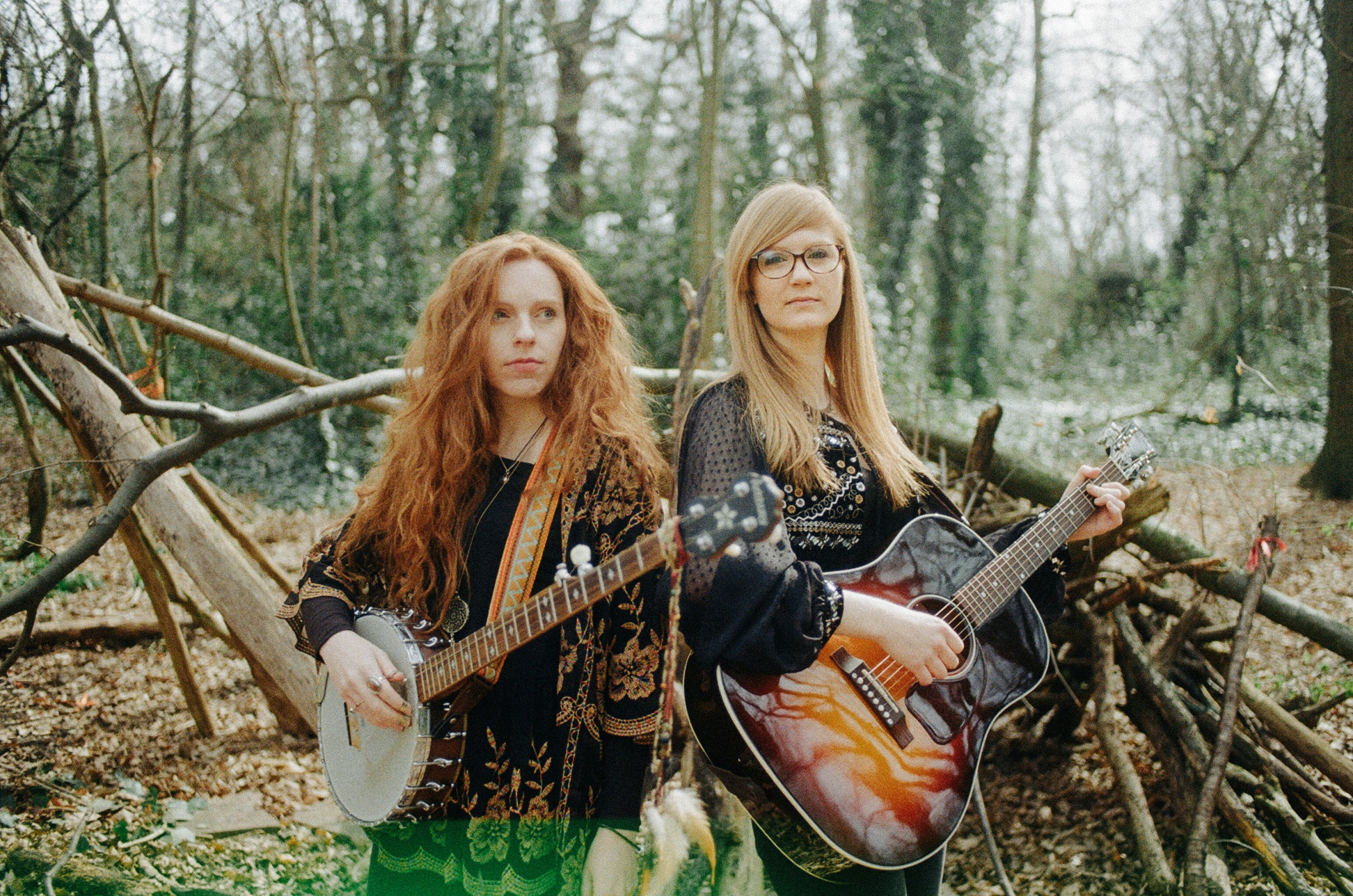
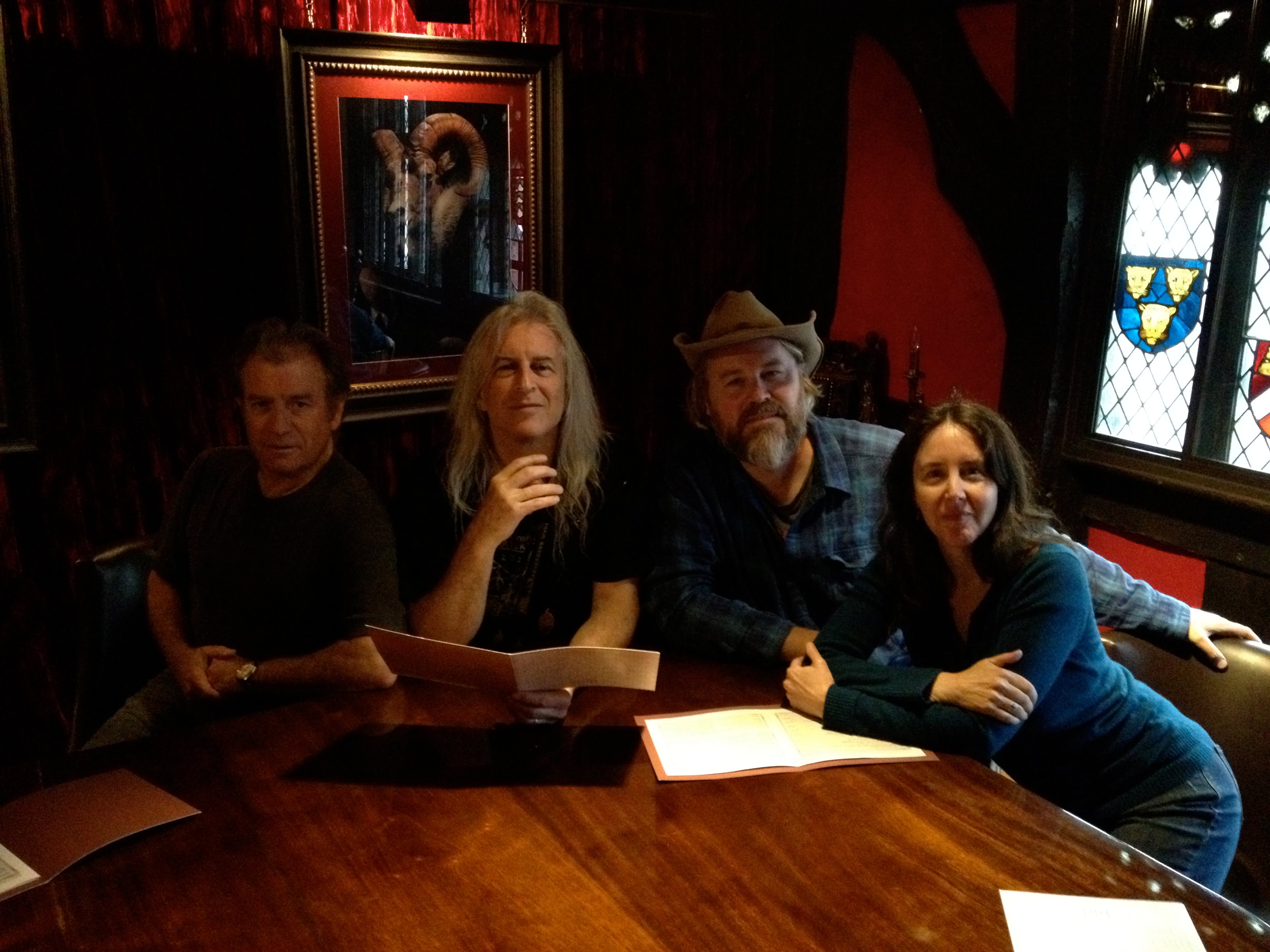
In the second half of our conversation with the Milk Carton Kids, Kenneth Pattengale and Joey Ryan openly shared their disagreement over some pretty serious issues. The pre-release publicity for their new album, All the Things That I Did and All the Things That I Didn’t Do, revealed some of the life experiences the two have been through since their last album. Pattengale dealt with cancer and the painful end of a seven-year relationship; Ryan had a child. And they have a real difference of opinion on whether those things should be brought to listeners’ attention as the subject of these new songs. But beneath the bickering, you may still sense the milk of human kindness.

[Read the part one of our conversation with Milk Carton Kids.]

The fact that you guys live in different cities now [Pattengale has moved from L.A. to Nashville], does that help or hurt the relationship?

Kenneth: The jury’s still out on that one. [Laughs.] It seems to be fine, for now.

Obviously a big part of why people love you on stage is the rapport you guys have on stage. It must feel a little strange now when you have a band on stage and suddenly there are other people there waiting for you to talk.

Kenneth: It’s become such a part of our identity, and I’m kind of confounded as to why. Anything that anybody’s ever laughed at on stage that we’ve said, it’s just what we do in the car or on the phone. And sometimes it’s funny and sometimes it’s not, and we’ve learned how to make it read a little better for an audience with the timing, but it’s how we always are.

With you guys being in such different places geographically as well as probably emotionally, was it easy to sort of come together and write on the same page? There’s a pretty consistent mood to a lot of the album, or at least some sort of thematic undertow, despite your different experiences.

Kenneth: I think that just might reflect a commonality of vision. Because truthfully the songs on this album are the most singular Joey and I have ever written. Outside of “One More for the Road,” which we wrote together in a different era before our band existed, every single song on this record was written by one or the other of us, lyrically. It was not like our song “New York” on Prologue where we sat down together and wrote lines and talked about what would happen to the story if we changed this or that. I showed up with that song “All the Things,” and Joey said, “Would you consider changing this word?” And I said, “Nope!” The same thing for “Unwinnable War,” “Blindness,” and “Just Look at Us Now” when he wrote those.

Joey: The thing that I’m really proud of in terms of the album having a commonality amongst the songs is the thing that the band brought to bear on it. I have a real fondness for albums that sound like they’re played by a band in a room, and where the whole album is sort of treated conceptually, not necessarily from a writing standpoint, but from a recording and production standpoint. And while we did have some musicians come in and out for certain songs, the core of the band that was there for the 11 days that we recorded gives such a strong identity to the record that ties songs together that could feel very disparate… as opposed to something where everybody said, “Okay, let’s take it one song of time. What does this song need? What does that one need?”

There are some very stark, end-of-relationship type songs in here, or maybe the ends of things that aren’t even relationships — looking back on the past, or doing something for the last time. Was it daunting to write in a really direct fashion where there is pretty emotional stuff happening?

Kenneth: Not daunting. Maybe where there existed more insecurity or preciousness in years past, there’s just maybe less f—s given, and maybe some confidence that’s come with artistic, if not financial, success. We seem to have an audience that’ll listen to us. I think that that engenders a specific amount of courage in digging deeper and being more honest, and it was maybe time to do that anyway, so the stars aligned on that front.

And as a songwriter, the hardest thing you can ever search for is honesty. And when you have these sort of traumatic events that happen, that’s a real easy way to sort of cherry-pick some relatable honesty. You don’t ever want to have to suffer to do that. That would be silly. But while it’s there, you might as well take advantage, you know, when you get dumped after seven years.

Joey: It’s true. There was some real stuff that happened.

Kenneth: But with Joey, when Joey had kids, it’s so funny — they write in the press release about him having kids like it’s some seismic shift that nobody’s ever gone through and experienced before. [Laughs.] It’s literally the basis of human existence, and somebody in our organization said, “Man, people are going to be really shocked that Joey had kids!”

Joey: I know. [Sarcastically.] I wish we would just focus on the unique heartaches, like, you know, a breakup.

Kenneth: I wasn’t talking about that. I was talking about beating cancer.

Joey: Oh, yeah, that’s true. That’s something almost nobody’s ever done. [Long pause, followed by awkward laughter.] The whole point that you were making was that they’re relatable! That means that everybody goes through it. But some shit happened in our lives.

Kenneth: Yeah, but having kids…

Joey: My favorite part of Kenneth is when he talks about having kids — either like birthing them, or taking care of them. It’s really cute, Kenneth. Keep going.

Kenneth: Joey went from just wandering around life aimlessly with all this free time to then having kids and having a bunch of people hired to take care of ‘em so that he can just wander around aimlessly with all the free time, but having kids at home that somebody else is taking care of. Just a seismic experiential shift! Everything changed!

Joey: Anyway, to get back to the truth of it all, some shit happened in our lives over the course of the last few years, and there was something to write about. And…

Kenneth: I don’t know.

Joey: We’re not going to argue about this. It’s unquestionably true, and we can list them if you want, but they’ve already been listed in our press release, and…

Kenneth: I would argue that all that happened is we just became better writers.

Joey: Before you finish interrupting me…

Kenneth: You’re interrupting me, technically.

Joey: All right, well, let me finish interrupting you then before you jump back in. It’s the decent thing to do. I mean, you only have to listen to the songs to know what we’ve gone through, which is the whole point of the record. … A lot of things which were actually profound shifts in our lives and ways of perceiving reality happened, and so for me it became easier to write more directly and truthfully than it had been at least on the last record. It’s the reason that I like to write songs, to process things.

Kenneth: I have trouble seeing it, because… Sorry, I know Joey thinks I’m just sandbagging everything now, but I’m not. This is my honest take on it. I think Joey’s always written some really nice songs, and he’s writing them better than ever, and I don’t actually see a very different change. The same thing’s true with me. I’ve always written the best song that I’m capable of.

So whether or not I’ve gotten better at songwriting over the last few years, or if it needs to be contextualized for people to understand that it comes out of some life event, I call bullshit on it, because that to me is just a formal, contextualizing sales pitch for what’s actually just a collection of the best songs that we could write over the last three years. And I think it happens to be better than the ones that came before it, and we’ll see if everybody else agrees.

Joey: It’s interesting for you to reject that sort of attachment to it. But (the closing track) “All the Things” is about your breakup, as is “You Break My Heart,” and there’s no other way to say it than that’s you processing your breakup. I mean, that is a song that you wrote that’s about your breakup. So whether it’s better or worse than others…

Kenneth: Well, I have an issue with that, because it’s not that… Why are you laughing? I’ve being very serious here.

Joey: I’m excited to see how you’re going to say that your song “All the Things” is not about the ending of your relationship.

Kenneth: Because it’s exactly the opposite of that! It has nothing to do with the breakup. It’s about chronicling six years of my life that I look back on very fondly. It has to do with trying to say something that is maybe not able to be said out loud unless you put it in poetry and song. I don’t think that it resounds with people because the human experience is all about breaking up…

I mean, in some ways, yes, maybe it took the trauma of a breakup to put it into words, but it’s about celebrating what was a really beautiful relationship between two people. And frankly, if I’m half the writer that anybody thinks I am, I could have written that song at any moment during the six years, even before it all ended. That song is about reflecting the human condition as I see it and how it relates to me personally, and to couch it in some breakup thing seems like a headline that a publicist thinks would grab some attention. I think that’s crazy. [Pauses.] Did I do a sufficient job?

Joey: I think that was the best you could have done.


Photo credit: Joshua Black Wilkins

Dismissing the Suits: A Conversation With The Milk Carton Kids (1 of 2)

The Milk Carton Kids have been about nothing if not duality. That’s down to their very name, which evokes both comedy and tragedy, and their stage presence, in which some of the stateliest and most delicate songs possible are broken up by riotously deadpan banter. They’ve always been about duo-ality, too — two voices and guitars, gathered around a single microphone, contemplative Everlys for the 21st century, unaugmented by anything that would have seemed rank or strange to the Stanley Brothers back in the 1950s.

But now, suddenly, almost everything you know about the Milk Carton Kids is wrong — at least the formal elements. They’ve dropped the formal suits and picked up separate mics… and a full band, too, while they were at it. Could this be their Dylan-goes-electric moment? Not to worry — there probably won’t be any cries of “Judas!” greeting their fifth album, All the Things That I Did and All the Things That I Didn’t Do, or a touring ensemble that no longer fits in a single front seat. It’s not just that the new material is superb — although that never hurts — but that the fuller arrangements sound like a natural progression in what is still scaled for intimacy.

Before we get to the Kids, we queried producer Joe Henry for his thoughts about how necessary or smooth the transition was, going from duo to band configuration. He admitted there was at least the fleeting consideration of a backlash — “I don’t imagine it possible that the Kids weren’t individually and collectively pondering the response of an audience that has been so steadfast in their devotions to the band’s brazen and brave duo commitment to date.” But, Henry says, “I saw no evidence that the looming question gave them any pause… And no one involved that I’m aware of had any doubt that such a shift was now not only timely but imperative: they’d reached a point where the color of the light, so to speak, needed to reflect their growth as musicians and songwriters––this batch of songs being so particularly strong as to invite, nay, insist on a presentation equal in its evolution.”

The producer adds that the Kids are “still very much a duo in ethos and execution. There is real drama in the intimacy of Ken and Joey pushing up to a single mic in symbiotic solitude, and it was important to all three of us going in that that image remain intact ––even as new sonic weather kicked up and swirled around them.”

When we sat down with Kenneth Pattengale and Joey Ryan at a Van Nuys coffee shop in June, we found that off-stage they’re just like they are on-stage… only more so.

As part of changing things up, you’ve decided this is also the right time to go for street clothes in concert, right?

Joey: Talk about decisions that were never actually made.

Kenneth: Yeah, that one’s still TBD. I mean, we get on the tour bus tonight. Joey’s near his closet, but I didn’t bring anything from Nashville, so if I’m wearing a suit tomorrow, I’m gonna have to go to the Men’s Warehouse in Tucson. The advice I’ve gotten from literally everybody on earth is that they’re gonna be saddened to not see me in a suit, and that we should be wearing them. But… f— ‘em. [Laughs.]

Joey: Well, I never wanted to wear a suit. The reason that we wore suits in the beginning was as a part of a collection of survival techniques.

Kenneth: Given your druthers, you’d dress like an ass-clown, that’s why. And you can quote me on that!

Joey: [Sighs.] See, how can people not love us? No, it was a part of a suite of survival techniques that we developed when we were playing in very…

Kenneth: Techniques or tactics?

Joey: Techniques.

Kenneth: There are survival techniques? I think they’re mostly tactics. It’s interesting to hear you’ve developed survival technique. It sounds like something they’d sell in the Valley.

Joey: Those words are synonyms. It’s a survival tactic and a technique. In any case, in the early days, we were playing this really sonically fragile show, and the only places that would book us were like the smallest rock club or bar or coffee shop sometimes in town. In a dive bar, we would wear suits to visually indicate that it was just something different than what they would maybe expect to see in that room, so that you could have some chance for the first couple minutes of people taking note and going, “Alright, what is this gonna be? I’m going to shut up and listen for one song.” You at least have a song. You have that chance to get ‘em to stop talking loudly in the bars that they’re used to talking in and maybe pay attention to the show, because our show required that.

It’s not like an attention-seeking preciousness. It’s like a physical, sonic fragility that we had, because we mic-ed our guitars, and you just can’t turn it up that loud. The perfect example is how we played at the Beachland Tavern in Cleveland, Ohio, many times. It’s a great place but the beer fridge is louder than we could get the PA, so we had to ask the bar to unplug their beer fridge, and they were so accommodating. I don’t know what happened to the beer. And they would also bring in rows of folding chairs, which literally no other band would ever even ask them to do. But we always wanted to be in a theater where people would be able to receive what we were trying to present, and the suits were just part of that. Now, with the band…

Kenneth: You’re gonna go back to flip-flops!

Joey: With the band… [Long, exasperated pause.] See, people always say we’re antagonistic. I think it’s just him. No, with the band, we don’t have the sonic fragility that we had before. … And so the whole misdirection of wearing a suit in unexpected places is not required. That was a long way of saying: I’m excited to not wear suits.

How early or late in the process did you decide to go with a band for this album?

Joey: We decided three years ago in Dusseldorf, Germany that we weren’t going to make the next album as a duo… It was just a moment. It wasn’t like we even talked it out. [To Kenneth:] You were like, “I think we should probably do the full-band thing next.” And I was like, “Oh, thank God you said that, because I’ve been worrying about how to bring that up.” But you always break the ice.

Kenneth: Yeah. I’m a talker.

I’m always interested in how people who are identified with a very specific thing decide to change it up… or not. A lot of times, people back away from giving up the thing that people identify as unique.

Kenneth: It’s always risky to go down these philosophical rabbit holes in interviews like this, because invariably they come out not reading exactly as intended, but I’ll go anyway, because who gives a shit? One of our blind spots -– and I think it’s a common blind spot for artists specifically — is that Joey and I for a long time had a complete inability to understand what was good about our band, while also knowing it in our core. And it’s necessary. If we knew what that was, I think that we would lean into it, and it would get tired very quickly and wouldn’t mature and evolve.

But for the first year and a half of our band, Joey and I didn’t realize that we were good just because when we sang together, it sounded like something that people either had never heard before or hadn’t heard in a while, or it bore a trueness that was just apparent in its physics. Joey and I thought that it was a result of all the hard work we do about making sure our harmonies are tight or about phrasing or about all these marginal things that we quibble over. You really lose sight of what the fundamental thread is that actually is the reason the whole thing exists. And we still have that blind spot. There’s something that’s just innate in what you do from the beginning that we take for granted.

So what is the thing you have the blind spot about, that your audience totally gets?

Kenneth: To put it really simply, when Joey and I sing together, it reminds people of Simon and Garfunkel, the way they actually physically combine, like alchemy in the air, or the way the Everlys did it, or the Louvin Brothers. When Joey and I sing together, there is some physical chemistry that is actually, like, we have to try hard to f— it up. And we have from time to time, but we’ve got an advantage coming out of the gate to other people singing harmony together, in that there’s something that just works about it.

And then there’s a similar shared vision in our writing and stylistic choices, and even essential life administration, where, outside of a few blowouts where we figured out what the problem was, the way they rub together results in this strange band that people haven’t kicked out of life yet.

Read the second half of this interview.


Photo credit: Joshua Black Wilkins
A Desire to Inspire: A Conversation With Molly Tuttle

I can’t pin down the year I first heard Molly Tuttle picking a few tunes in a Sugar Hill Records suite at the IBMA’s World of Bluegrass, but I know it was before the event’s 2013 move to Raleigh, and I know I wasn’t the first to pay attention to her guitar playing. Indeed, it was only a few more years until Bryan Sutton called her name as a picker to listen to in the course of accepting one of his ten IBMA Guitar Player of the Year trophies—and just two years after that, last fall, she accepted the same award herself.  

Even so, her growing recognition among bluegrassers has led to a higher profile for Molly in the broader musical world; she earned the Folk Alliance’s Song of the Year award in February, and a nomination for this year’s Americana Music Association’s Instrumentalist of the Year title, too. Between that, her own eclectic outlook, and the predispositions of journalists unfamiliar with the bluegrass world, it’s not hard to see why the musical substance of her engagement with the genre can sometimes be given short shrift. Yet the fact is, she appears to be as happy tearing through a bluegrass classic in the company of her youthful contemporaries—or with a certified bluegrass legend or three—as she is playing anything else.

I was reminded of this shortly before our interview, when Instagram presented me with a snippet of video that showed her sitting in with the East Nashville Grass, a collection of pickers who mostly work in other bands, at a ‘grass-friendly’ Madison club—and since the next Molly Tuttle record is still likely months away, it seemed like a good place to start the conversation.

Just this morning, I saw a video of you sitting in with the East Nashville Grass guys, ripping on some bluegrass—“White Freightliner Blues,” which I know you’ve been doing for a while—and it got me to wondering. Your dad was a music teacher when you were growing up; was he more of a folk guy, or an acoustic guy generally, or a bluegrass guy?

What my dad always loved was bluegrass. He grew up playing bluegrass, and that’s really what he studied and what he loves. But he did end up playing some folkier music; he played in a band called the Gryphon Quintet, which was all people who worked at Gryphon Music, the store he teaches out of. And that was jazzier stuff, some swing stuff, four-part harmony arrangements, and some of their stuff was kind of folky, too. So he ended up playing a bunch of different styles, but he really comes from bluegrass.

So when the family band got started, it was a bluegrass band.

Yeah!

You’re getting out beyond the bluegrass audience these days, into the larger musical world, and there’s been a whole line of people over the years who have done that. What do you think you’ve learned as a bluegrass musician that you carry with you when you do all this other stuff?

I think one of the most valuable things I learned was improvising and making up my own solos. Just being creative, really, because it’s such a creative genre. Some of the most incredible improvisers in the world are bluegrass musicians and you can really carry that into any genre—those improvisational concepts, you can take those in so many different directions. So that’s something I feel bluegrass really taught me, something I can use for the rest of my life.

And also, technique. I think it’s so important in bluegrass to have great technique, to be able to play fast, slow…I think that was really helpful for me to learn. And the style itself is so authentic. It has this raw feeling to it, and my favorite bluegrass is old bluegrass, where it’s all so live and energetic—just real, authentic stories from their lives. I think that’s really inspiring.

I’ve heard from some younger musicians that when they found a bluegrass jam or something like that when they were getting started, the older guys were really encouraging and supportive—and then, when they started getting into other kinds of music, those folks weren’t so supportive. Have you run into that?

A little bit. People just like what they like, so people who love traditional bluegrass aren’t as supportive as others about me branching out and doing new stuff. But I haven’t run into too many people who are openly discouraging me from doing what I want—it’s just not their cup of tea, so they’re not as excited.

When you started putting the Molly Tuttle Band together, how did you decide what you wanted? Was that a question in your mind—am I going to have a banjo player?

It kind of was! But it was like the right musicians just sort of presented themselves to me. I’ve played with Wes [Corbett] for three years now and he’s such an amazing musician—he’s so versatile. He plays amazing stuff on my songs that are more singer-songwritery, but he’s an incredible bluegrass musician, too. So it’s been a great fit for me. I think the bluegrass band just made sense. But then, I’ve been working on a new album that has drums on everything, and electric guitars, so I think going forward I’m going to be trying out different band lineups.

Are you working on your new record a few days at a time, or did you set aside a big block of time to make a whole record?

We had six days where we got all the tracks done; eleven songs, all with the same band. We did that at Sound Emporium and it was mostly all live. And then I went in and did harmony overdubs, I overdubbed some vocals, put some other instruments on, tracked strings—that was really fun. Nathaniel Smith worked out these really great string arrangements with Rachel Baiman and Mike Barnett, so they came in. And then we got some special guests on it—Sierra [Hull] came in and played, which was fun. So it’s just been going into the studio and finishing things up whenever I’m back from touring.

So maybe the next big release coming out that you’re on is a Roland White tribute project. And there was definitely an element there of you kind of playing the part of Clarence White on the tunes that you did. How do you prepare for that, for playing the part of Clarence White?

I just went and listened to recordings of Clarence. And with “I Am a Pilgrim,” there’s this great YouTube video of Clarence and Roland playing it, and Clarence was playing the coolest stuff ever. I teach at camps sometimes, and last summer, I thought it would be fun to teach a workshop on Clarence White, so I transcribed his rhythm playing on that, and was teaching it to people. So that was a good one to get to do, because I already knew some of the licks, and I’m obsessed with his playing on that song—it was fun to try to get into that mindset.

It seems like you really succeeded in being Molly Tuttle, but also Molly Tuttle playing Clarence White.

That’s what I was trying to do, so that’s good to hear.

We played a house concert a few weeks ago, where [12-year-old fiddler] Clare Brown and her dad came out and opened for us. I heard her doing a soundcheck with “White Freightliner Blues,” and I thought, I’ll bet I know where she learned that. Does it freak you out that there are even younger musicians coming up who are influenced by you?

I think that’s so exciting and that’s what I wanted to do with my music since really early on: inspire the younger generation, especially younger girls. I think it’s really important for them to see the generation of women before them doing it. So that’s one of the things that keeps me going with my music, to see something like that.

Who were you seeing that way? Who did you look up to?

When I was a kid I looked up to Laurie Lewis, Kathy Kallick, Keith Little, Bill Evans, my dad—all these Bay Area people. There’s a really great scene there and they were all so supportive of me. But especially Laurie and Kathy, seeing them lead their own bands and play shows. They were my biggest heroes and I thought they were the coolest, and I still do.

Is it important to you to keep an eye on and try to inspire young musicians to play bluegrass in particular?

I think it’s a really great tradition, especially for kids, because it’s such a supportive community. And there are jams, so you can get together with other kids your age. That’s a really healthy thing for kids to do for fun. For me, it was really great in high school to have that, to go to festivals, and get together for jams, and play shows—that was a great outlet for me. It’s a great genre for kids to play, and it’s really important to keep carrying on the bluegrass tradition, to keep it alive, so I think it’s great to encourage kids to play it.


Photo credit: Kaitlyn Raitz

Allowing Herself to Be Free: A Conversation with Erin Rae

Quiet may come off as meek, but don’t be fooled; strong doesn’t necessarily present in overly clamorous ways. That’s the central truth Erin Rae unearths on her new album Putting on Airs. Across twelve hushed tracks, her haunting voice depicts the ways in which the past looms over the present, especially how the scenes we witness as children build their own imposing edifices in the psyche. On the title track, she sings with bare-bones honesty, “I never did learn to like myself/ Been chasing down anyone that might could help/ Lure them in with charm, come out stealing.”

Putting on Airs is as much about calling out herself as exploring the circumstances that formed her, but through it all the Nashville-based songwriter’s honesty is manifested through her clear-eyed vocals and deft lyricism. She wants to heal, and her music, functioning like a salve, allows her to do exactly that. For example, on “Bad Mind,” she sings about a lesbian aunt who faced discrimination decades ago in the Alabama court system and how that, and other adolescent experiences, shaped the perception of her own sexuality.

Recorded in Appleton, Wisconsin, during winter’s muted apex, Erin Rae worked with co-producers Jerry Bernhardt and Dan Knobler to make full use of the space—a former Franciscan monastery known as The Refuge. As a result, the production lives, breathes, and echoes, giving her the room to use her voice, both literally and lyrically.

These songs are so tender, and that descriptor strikes me in two ways: Tender like a bruise, and tender as in full of care. When you were writing them, did one apply more than the other?

I think it’s a little bit of both. With “Putting on Airs” in particular, I was like, “Am I just being harsh on myself?” My mom’s Buddhist now, so I’m really [thinking] like, “Is this being kind? Is this causing harm?” It’s been helpful to me to own that behavior and, yeah, it is uncomfortable to feel the reality of that and the consequences of that and how it affects other people and myself. But also, by owning it and saying it, my hope is to continue to get more free from that. It’s a little bit of both: It’s tender temporarily.

How have you seen your songwriting shift on this album?

I guess I’ve always used songwriting to process through my own stuff; it’s been very cathartic for me. My last record was tying my own experience in with that of my parents or close friends. There’s still an element of that, but I feel like this record has become more directly about me. I didn’t really intend for these songs to be that, like “I’m going to call myself out.” “Putting on Airs” is about people-pleasing where it’s harmful to myself and other people, where eventually you just become dishonest in a way.

No kidding. That line, “Lure them in with charm, come out stealing,” got me right in the gut. It almost hurts to hear but it’s so true.

It’s like, “I want you to like me!”

It’s almost like a safety mechanism at first, but it’s interesting how you say it can become self-harming at a point.  

My dad is super outgoing. He’s one of those people who’s never met a stranger. That’s how I am as well, but learning in a way to make sure…especially as far as it goes with relationships. That’s really what I’m focusing on in that song.

Ok, we have to talk about “June Bug.” That transition to the old-timey piano at the two-minute mark is stunning. That riff says so much, and coming after all you’ve confessed, hangs even all the more beautifully.

At the Refuge up there in Appleton, there’s this giant chapel and all these monks’ quarters, 60 little individual bedrooms, and a lounge area on the first floor. It was in the middle of winter, it was still snowing, and the Fox River is right out the back. The room has a wall of windows, so you could see the snow and the bald eagles. There are two hallways, and in the center of that is where we had a lot of tracking stuff set up and the computer and all the gear. Then we ran guitar amps and put the drums in the chapel, so you hear that huge open sound. We tracked vocals in there so we had the room sound.

I have these fond memories of everyone being super sweet to each other. Basically, Jerry played everything. I think he had tracked that piano part and then Dan, when he was mixing everything, surprised Jerry by putting that into the end of the song, because the song otherwise would just be a minute and a half long. We had this beautiful piano track that Jerry had done in this space, and Dan surprised us with the old timey piano outro, and I thought Jerry was going to cry. It was really great.

I’m especially interested in the labels that circulate around Southern women. To that end, “Mississippi Queen” is such a striking song. How have you attempted to battle against the labels about who women should or shouldn’t be?

Nashville is like a blue spot surrounded by red. It’s a town full of creatives. I’ve got a family member that lives in Mississippi and my dad grew up in Missouri, but whenever you go back to more traditional Southern cities, it’s kind of like, “Oh yeah, people more or less adhere to these cultural norms that feel a little outdated to me.” But I’m always drawn to a sense of tradition. The only way I’ve known how to challenge anything is personally, like internally making sure that I’m clear.

That’s what a lot of this record’s about—allowing myself to be free to see what my own personal truth is, so that, hopefully, I’m able to lend that to others and give other people that space. Even in thinking that that’s a way I want to live, it’s still difficult. I empathize with people that have grown up in a more traditional city; I feel like it takes a conscious effort to grow up and be open-minded if it’s not the norm.

Right, if it’s not modeled for you it’s even harder to practice.

My parents are super open-minded and I still grew up in the South and absorbed a lot of the social norms, so I can’t imagine how hard it is for someone else [who didn’t] to feel free enough. With a more conservative or strictly religious background, it’s hard work for everybody to be more open-minded.

The past six months have been fruitful for singer-songwriters wishing to challenge heteronormativity, including projects from H.C. McEntire and Sarah Shook. Why do you think now is such a powerful moment for such visibility?

So much progress that had been made was starting to feel uncertain with this new administration. It kind of worked out to be a timely thing, especially with the song “Bad Mind,” and that story being born out of the state of Alabama. When Roy Moore was almost elected, I was like, “It’s all happening in the same time.” I think it’s so important to keep the conversation going and make opportunities to heal around this stuff, around sexuality, while it’s all being threatened.

It does feel like a backlash, similar to what took place in the ‘80s after women had made significant strides in the ‘70s.

Music helps us process. One image that came to mind while you were talking about a backlash is the Women’s March—the second one that happened recently in Nashville. It ended with a big concert at Bicentennial Mall, and Alanna Royale and Becca Mancari were both performing there. Alanna has always represented real womanhood for me, being a strong and powerful woman. She’s full of life. It was this really beautiful moment to walk with all these people—dads, and little kids, and folks old and young—through Nashville, and then end up at this powerful, beautiful concert with people that I admire in our community. It was such a beautiful way to tie it all together.


Photo credit: Marcus Maddox

Canon Fodder: k.d. lang, ‘Ingénue’

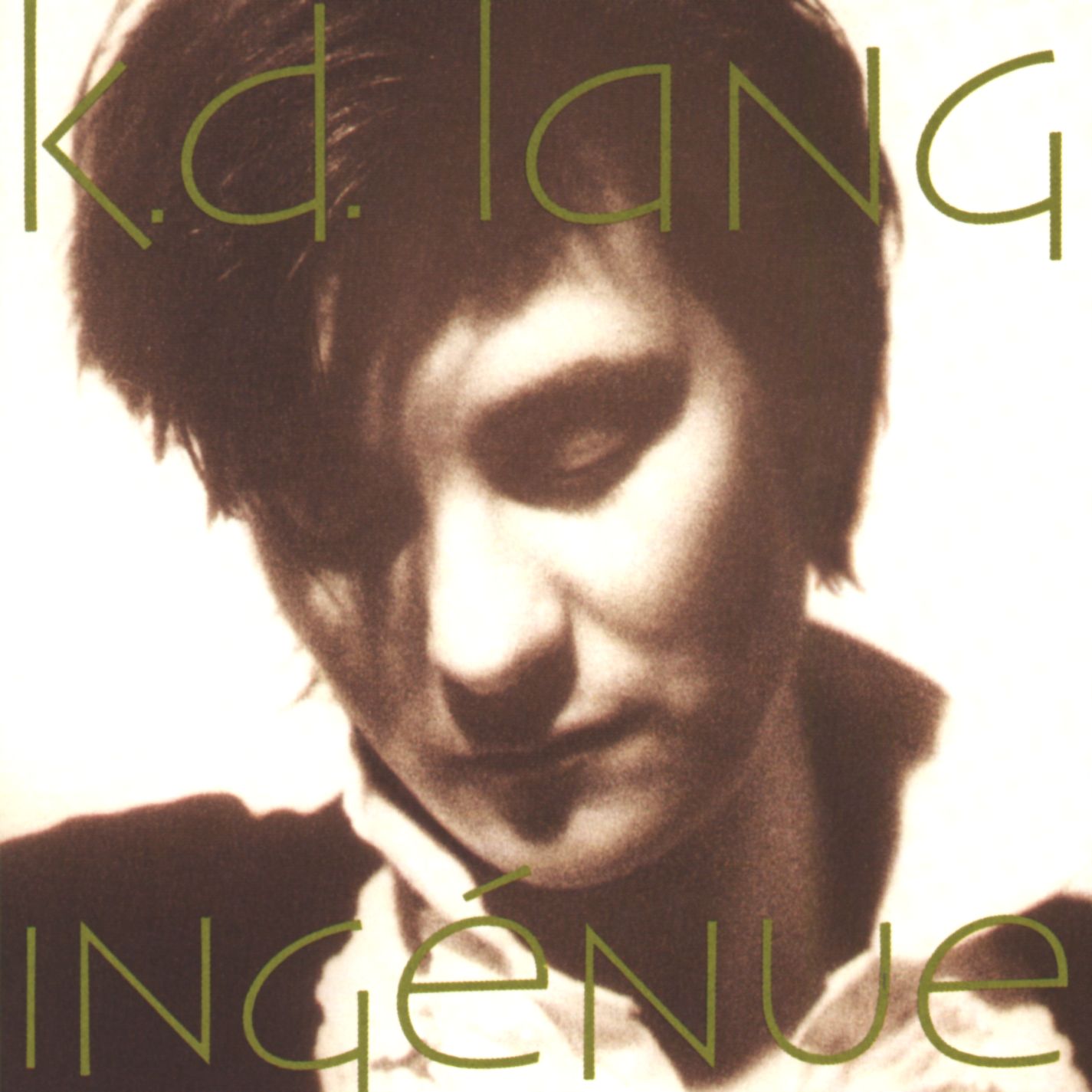
For better or for worse, k.d. lang’s 1992 breakout album Ingénue will always be associated with her coming out. Throughout the late 1980s she had established herself as an unlikely country star, a traditionalist who sang like Patsy Cline and worked with Owen Bradley but whose short punk haircut and androgynous persona branded her as an eccentric like Lyle Lovett. Also, she was Canadian—not a roadblock to country stardom (see: Anne Murray, Shania Twain), but certainly another way in which she was an outsider in Nashville. Nevertheless, she made a place for herself in the country mainstream, winning a Grammy for “Crying,” her 1989 duet with Roy Orbison, and the album Absolute Torch and Twang, released the same year, proved a more-than-modest hit, peaking at No. 12 on the country charts.

And yet, there were rumors that lang was… well, you know. She had come out to her family, but had not made that an explicit part of her public persona, despite playing a lesbian in the independent film Salmonberries. So the media pried into her personal life, posing uncomfortably direct questions to which she carefully measured her answers. lang was going to be made a spokesperson for the LGBTQ+ community whether or not she wanted that responsibility. The pressure came from within that community as well as from without. According to Newsweek, Queer Nation, an activist organization founded in 1990, put up posters around New York with photos of entertainers branded with the words Absolutely Queer. The Advocate outed a top-ranking military official at a time when gays were not welcome in the military, just prior to President Clinton’s infamous “don’t ask, don’t tell” waffle.

To preempt being forcibly outed—essentially, to take control of her own story rather than let someone else come out for her—in 1992 lang gave a lengthy, at times very tense interview to The Advocate. Her sexuality was discussed only generally throughout the exchange, with lang officially calling herself a lesbian near the end of the article. “I feel like it’s a part of my life, my sexuality, but it’s not—it certainly isn’t my cause. But I also have never denied it. I don’t try to hide it like some people in the industry do.” This was largely unexplored territory for any artist, especially one in a traditionally conservative genre and especially one who was going to so radically change her sound.

In retrospect it’s hard to convey just how chancy and therefore how pivotal Ingénue was for lang, who rejected absolute twang for torch songs rooted in jazz and pop, in chanson and klezmer, in Gershwin and Weill, Holiday and Dietrich. She described it at the time as “postnuclear cabaret.” Especially in the 1990s when changing your sound or courting a wide audience could be viewed as selling out, the album was a calculated risk, a means of shedding a long-held persona that might alienate old fans without attracting new ones. Gone were the fringed Western wear and the Stetsons; what remained was that haircut and, most crucially, a voice that sounds like a starry midnight.

The personnel didn’t change, but her approach certainly did. lang worked with co-producers and co-songwriters Greg Penny and Ben Mink, the latter a member of her backing band the Reclines. But this is not a case of treating country songs to new arrangements. The change happens at a conceptual level. Ingénue is lang’s first collection of entirely original material. She and Mink wrote songs outside the country format to find new ways to use her voice and new emotions to express. “Season of Hollow Soul” sounds like a Weimar torch song, as though the singer is playing both Annie Bowles and Cliff Bradshaw in Cabaret. “Miss Chatelaine” is an exuberant love song that cheekily references lang’s own iconography, in this case the cover of Chatelaine magazine, which in 1988 named her Woman of the Year. To contrast the photograph’s Nudie suit glory, lang toyed with her own androgynous look, even performing in a formal gown on Arsenio Hall.

Deep into the twenty-first century, of course, country music seems by nature a porous genre, one which artists drift into and out of constantly, whether it’s a pop star looking for a career renewal (Darius Rucker), a tourist taking snapshots of Music Row (Sheryl Crow), or a country star looking to broaden their audience (Taylor Swift). But perhaps no artist has made that transition with more grace and finesse—with more sense of the inevitable—than lang, whose voice was so much bigger than one genre could contain. Ingénue not only showed how artfully she bend that voice and suppress that twang, but also demonstrated how she could use it to inhabit a very different desire than the pop charts typically allowed. For that accomplishment she’ll receive the 2018 Trailblazer Award at the Americana Music Honors & Awards in September.

The album has been tied to her coming out, a vehicle for her ascension not merely as a pop star but as a gay pop star. This is, of course, not the only interpretation of the album, but it’s one that lang herself reasserted in interviews. She was forthright about the inspiration for the album, confessing that it was inspired by the end of an affair with a married lover. lang was still in love, but accepted that the relationship was impossible; that contradiction became the spark that illuminated these new songs. No names were given, but the implication was that this married lover—the subjects of the lyrics, the object of desire—was a woman. This seems even more radical than the Advocate interview, a means by which lang insisted these songs were personal, first-person, and grounded in gay desire. “Can your heart conceal what the mind of love reveals,” she sings on “Mind of Love,” and if you miss that she’s talking to herself, she calls herself by name: “Why do you fight, Kathryn? … Why hurt yourself, Kathryn?”

Yet, Ingénue is about desire, not orientation. These songs express a sexual, physical, and emotional yearning that is specific to her as an individual, specific to her as a lesbian, but she conveys it in such a way as to be universal on some level: something that might resonate with any listener, regardless of their orientation or even their opinion on orientation. In 1992 this might have had a humanizing, normalizing effect, because the risk paid off and then some: Ingénue was an immense crossover hit, anchored by the smash “Constant Craving.”

That song in particular has stuck with lang ever since: her signature tune, a mainstay of every concert she performs. “I knew it was a hit, and I was mad at it for that. I felt that it was a sellout at the time,” she told the New York Times earlier this year. But it’s not hard to see why the song would resonate with her audience, as it expresses a resilience in the face of prejudice or suspicion. “Even through the darkest phase, be it thick or thin,” lang sings in that voice, which sounds neither angry nor outraged but observant, matter-of-fact, as though a “darkest phase” was natural. “Always someone marches brave, here beneath my skin.” lang draws out those syllables in the chorus, pushing against the backing vocals, putting her words on the off-beats, drawing out those syllables—the consonants in “constant,” the long vowel and sensuous V in “craving”—to hint at possibilities: Craving for what or for whom? Constant as both heroic and burdensome, never satisfied?

Whatever it might mean to any one potential listener, it “has always been.” This craving is natural, lang insists, coded deep into all humanity, as constant in 2018 as it was in 1992.

Cowboy Junkies: Everything Unsure, Everything Unstable

It sounds like the start of a horror movie. A husband and father packs up the car with some clothes and a few guitars, bids farewell to his wife and kids, then drives deep into the Canadian countryside. He bunks at a friend’s country retreat, isolated from society, miles from the nearest human being. Or is he? Cue footsteps in the night, a dead bird on the doorstep, a shadowy figure barely glimpsed at the window. Perhaps there’s a death cult searching for the lost city of Ziox. Or some maniac with a pickaxe. Or some unnamed evil haunting the forest.

“It’s exactly like a horror movie!” laughs Michael Timmins, who is the man in that scenario and who write songs and plays guitar for the veteran Toronto band Cowboy Junkies. To pen tunes for their sixteenth studio album, All That Reckoning, he had to get out where nobody could hear him scream. “When I write, I have to be writing full time. As the years have gone by, it’s gotten harder and harder to do that, because I have more and more responsibilities at home. So I have to get away where it’s quiet, where I can sit around and think about nothing but songs. I have to get my head into it, so I have to isolate myself completely.”

He made it out alive, of course, but if All That Reckoning is any indication, the real horrors are the ones he encountered once he returned to society. An angry album whose outrage simmers coolly just beneath the surface, a thorny collection that ranks among the band’s best efforts, it chronicles a period of alienation, disappointment, fear, and paranoia. The guitars lurch and grind, the rhythm section lays out chunky, funky grooves, and singer Margo Timmins spits her brother’s lyrics with a strident combination of disgust and compassion. This is the Junkies in punk mode, decrying the hate and hostility that are scarier than any boogeyman.

“I’m not a protest writer,” says Michael, “but there are times in one’s life when the two collide. When I was all alone writing this album, I began to realize that the personal songs are little political analogies, and the ones that are a little bit political are really personal analogies. One feeds the other, and you really see how they cross. I felt like I was taking stock of what’s going on in my life and in the Western world, thinking about having to pay the price for a few things.”

Cowboy Junkies don’t usually traffic in dissent or social commentary; they’re better at documenting the personal than the political. Over the last thirty years they’ve crafted a sprawling body of work whose main subject is their own lives, their sons and daughters and wives and husbands and brothers and sisters. The band is rooted in their everyday lives, such that it feels more like an extension of family than a profession. “Margo and I are basically the same age,” says Michael. “We’re only about a year apart in age. We have our separate lives and things we go through, but when I write about something, she can relate that to something that’s happening in her world. And then she’s able to relate it to the listener by singing it, by giving it voice.”

It wasn’t always that way. After brief tenures in a punk group called the Hunger Project and an improvisational act known as Germinal, Michael Timmins and bass player Alan Anton returned home to Toronto, where they started a new band and eventually persuaded Margo to join as singer. Early shows were wildly spontaneous, with the band laying down a groove over which she would improvise lyrics or sing snatches of other songs. They covered old blues songs by Bukka White and Robert Johnson; they played “State Trooper” like Springsteen was an old bluesman himself. Released in 1986, their debut, Whites Off Earth Now!!, was a modest success, further entrenching them in the Canadian alternative scene but doing little to break them south of the border.

“Before anybody was listening,” says Margo, “we were just playing for ourselves—like all bands. You start in the garage or the basement or wherever, and playing music is fun. So you do a rock song. And then you do a country song, and then you do a blues songs. Nobody cares because nobody’s there.”

For their follow-up, they booked time in Church of the Holy Trinity in Toronto, claiming to be a Christian vocal band to allay any suspicions of sacrilege or heresy. The band recorded around a single microphone, capturing an ambience so strong, so distinctive, so immersive that the church becomes a member of the band. They reimagined “Blue Moon” as a eulogy for Elvis Presley, reinterpreted Patsy Cline’s “Walking After Midnight” as an anthem of urban paranoia, and most famously recorded what Lou Reed declared to be his favorite cover of the Velvet Underground’s “Sweet Jane.” The Trinity Session sounded unlike anything else at the time, and it pointed in new directions roots and folk music might travel: lo-fi, place-specific, history-steeped, atmospheric yet conceptual, beautiful and weird.

“What happens is you have any album like The Trinity Session and then suddenly everybody wants you to sound like that forever,” says Margo. “They want you to do that quiet album again and again. And we just couldn’t do that. We knew it would kill us. We’d get bored really fast, and it would be the end of the Junkies. We did it the way we wanted to do it, and we’re still here.”

After the misstep of 1990’s The Caution Horses—a little too clean, a little too slick—Cowboy Junkies proved themselves a deeply curious and extremely experimental band, one that had much greater range that previous releases had hinted. Black Eyed Man from 1992 is their country record, featuring songs rooted in Southern experience, some written by Townes Van Zandt (including a lovely version of “To Live Is to Fly”). They followed it up in 1993 with Pale Sun, Crescent Moon, a lowdown and occasionally abrasive album featuring guitarwork from J Mascis. There can’t be much overlap between John Prine and Dinosaur Jr, but the Junkies made it sound like a natural progression.

Since then they’ve largely forged their own path, never fully embracing or embraced by the roots community but also never feted as a major postpunk influence. Their most recent albums have been a linked quartet of experimental releases based on seasons of the year: One record was based on Michael’s experiences living in China, another gathered eleven Vic Chesnutt covers. Cowboy Junkies have reached a point where they can exist well outside the trends and slipstreams of contemporary pop, indie, and roots music, where they become a scene in and of themselves. Perhaps more crucially they’ve shown how a band might settle into a long career, enjoying a cult audience more than hit albums. They’ve shown how to make a life in music.

In that regard All That Reckoning is all the more surprising for how relevant it sounds, for how well it surveys our current climate, most crucially for how it suggests that the band’s defining traits—the quiet vocals, the erratic guitars, the menacing midtempo jams—are specifically calibrated to speak to this very moment. As Margo sings on “When We Arrive”: “Everything unsure, everything unstable.”

It’s not easy to write about these topics, but it can be even harder to sing about them. Before she even records her first notes, Margo road tests her brother’s songs, playing them in front of audiences, living with them so she can burrow into them, figure them out, and devise a plan of attack. For All That Reckoning she set up a makeshift studio in the ski chalet where Michael wrote the songs. “Often I don’t know what a song is about, and Mike won’t tell me. When he writes them, he just writes them. They’re mine to interpret and bring my life to and figure my way around.”

She has always been an imaginative singer, but these songs contain some of her best and most precise performances. The disgust in her voice on “Missing Children” is palpable, as is the disdain on “Shining Teeth,” but she sings “The Things We Do to Each Other” as matter-of-factly as possible, as though the lyrics were self-evident, as though a little compassion might help the lesson go down easier.

“Mountain Stream” plays like a record skipping, Michael’s guitar jangling like a pocketful of ill-gotten coins and Margo sounding hazy even though she’s relating a very grounded story about a king surveying his crumbling kingdom. “I wanted to sing it like… you know when you have a dream and you wake up the next morning and you tell somebody about it? You’re telling it in that kind of confused, almost stilted way of talking? You’re shaking your head going, I was here and I was there and then this dog came along. I wanted to sing it in that bewildered sort of way. But it eluded me. I don’t think I got it.”

Perhaps not getting it, perhaps hitting just off the mark, is what gives the song its haunted quality, as though nothing quite lines up, nothing quite makes sense. Everything unstable, everything unsure. “There’s something weird out there, something undefinable,” says Michael, pinpointing the album’s appeal. “We can’t really define it or figure it out, but it’s been out there forever, and for some reason it seems to be getting more common, more present.” The Junkies stare it down on All That Reckoning and they never flinch.


Photo credit: Heather Pollock

Sam Lewis, A Blue Jeans Type of Person

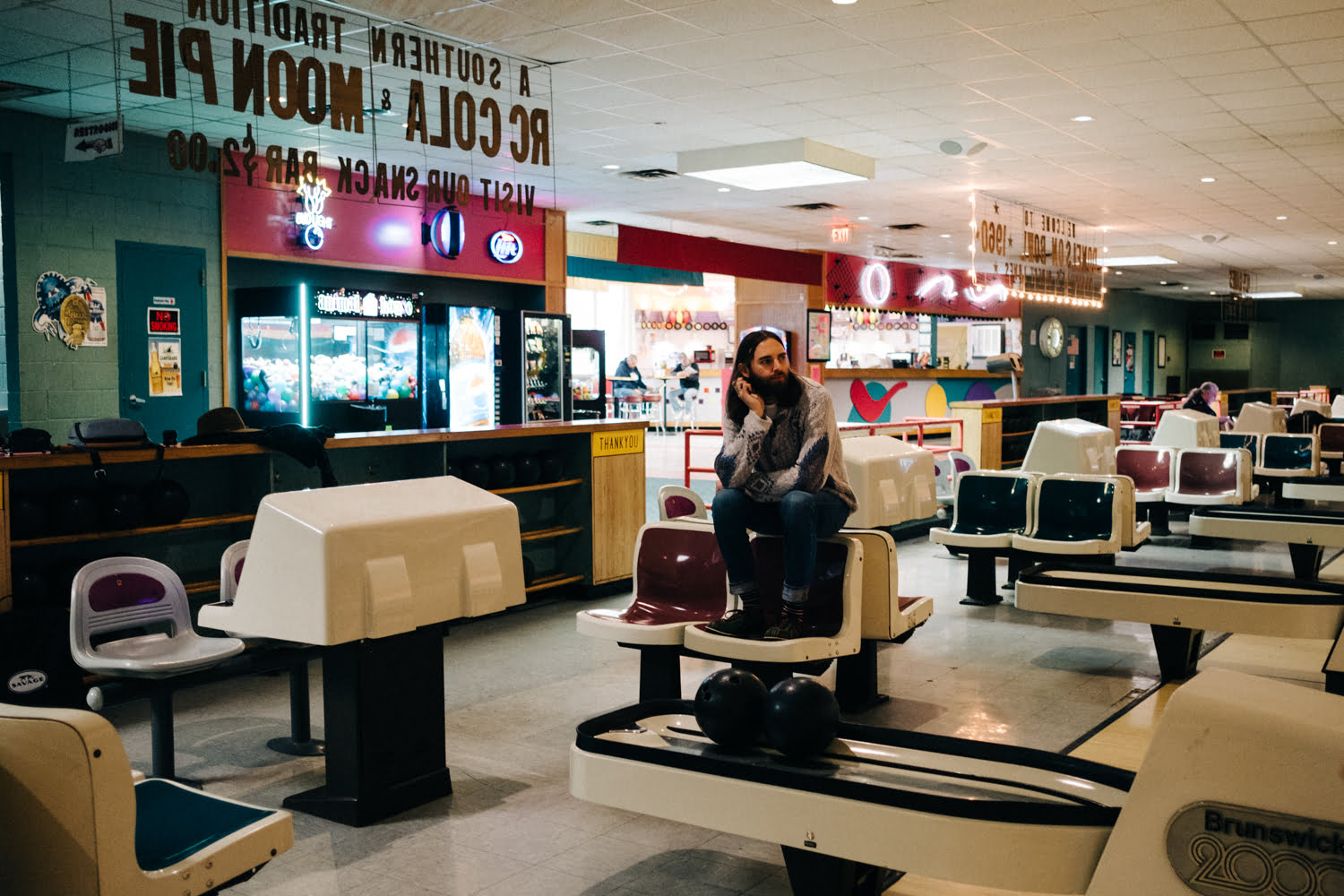
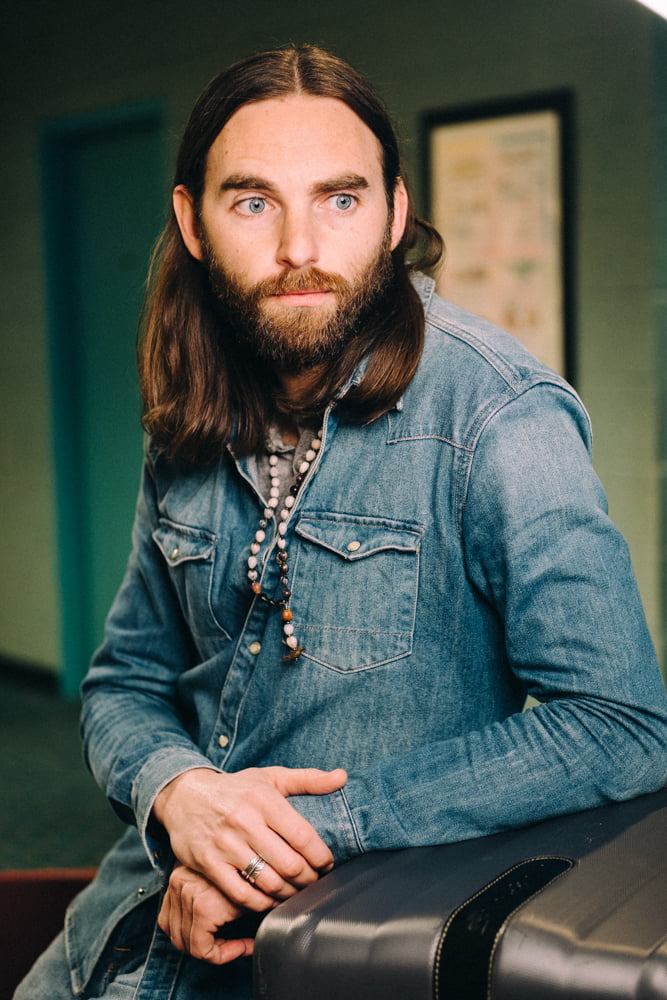
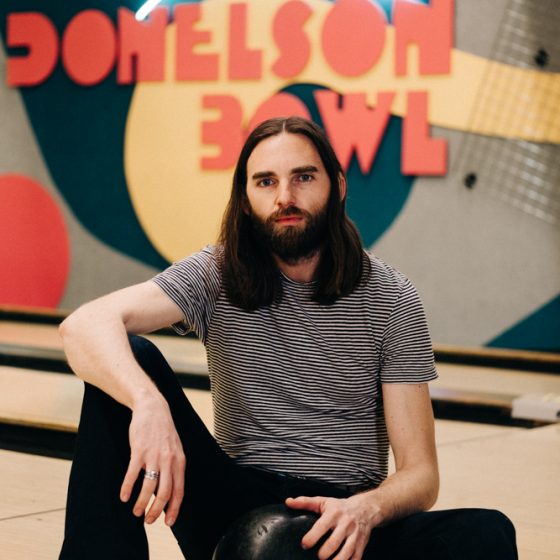
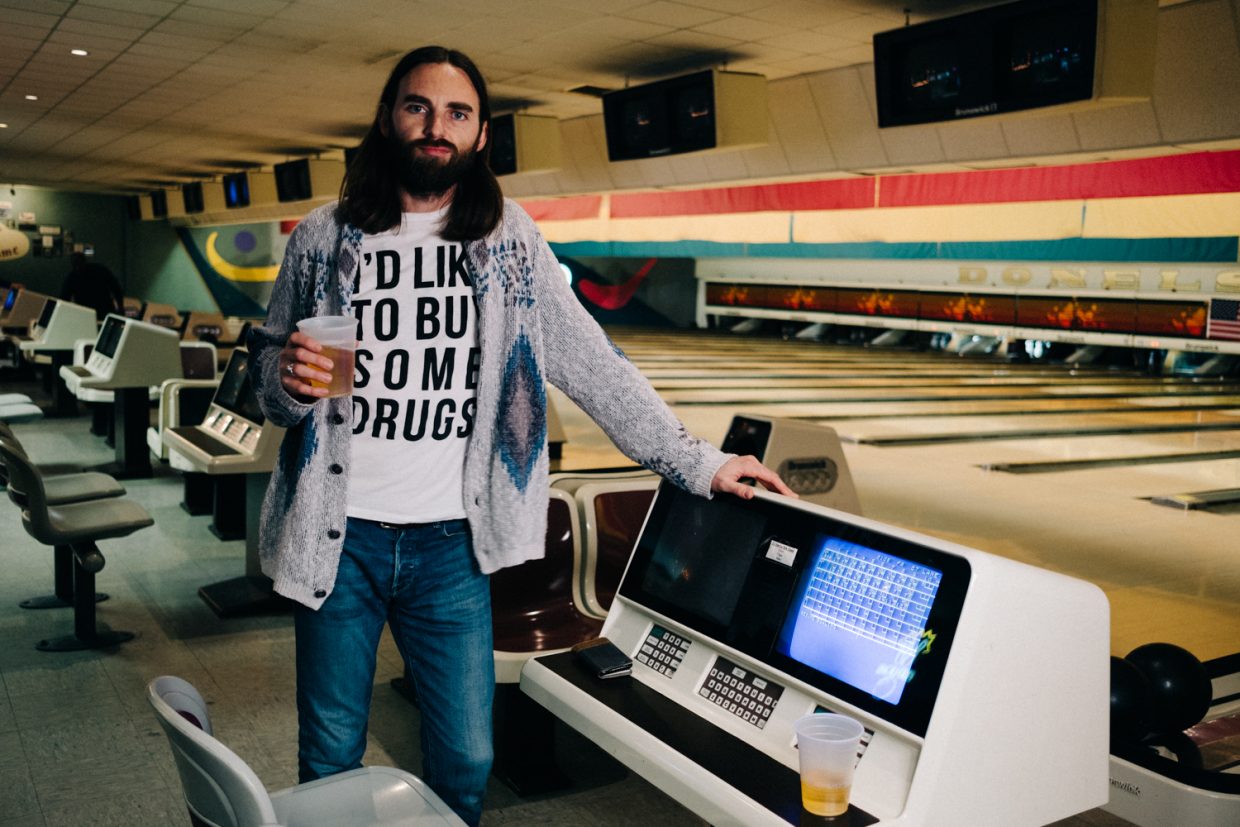
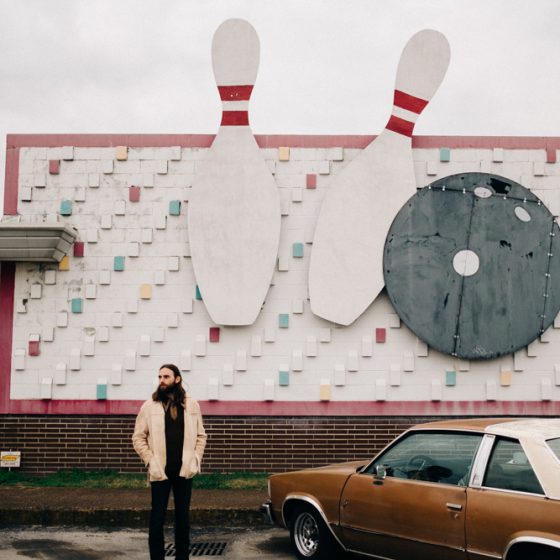
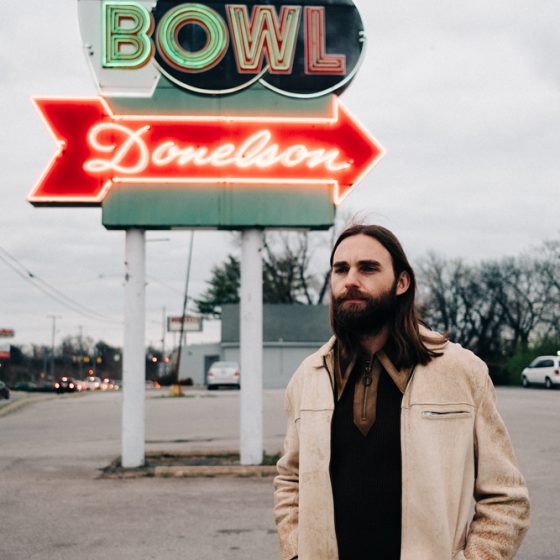
Would you jump at the opportunity to hang out with Americana singer/songwriter Sam Lewis at a bowling alley while he waxes poetic about style? We would — and we did. He may describe his simple, blue jean style as “mediocre,” but his eye for detail, his love of functionality, and the sentimental value of pieces that some would consider everyday or commonplace set his looks apart. 

I’m clueless when it comes to style and fashion. I’m rarely comfortable wearing the clothes that make up my wardrobe and that’s probably why I despise shopping and will happily wear any article of clothing someone might give me before they donate it to a charity shop or, frighteningly enough, throw it away. It truly sickens me that some people throw away clothes… they’re probably the same people that leave the faucet running full blast while they are brushing their teeth.

I got into work boots recently. I’ve been wearing a pair of work boots since November. I don’t remember where they came from, or why I started wearing them, but I love them. It’s been a “get shit done” few months for me and I’m almost compelled to credit my footwear for helping me complete so many tasks. I’m a blue jean type of person — always have been and always will be. I love t-shirts with silly sayings and socks that compliment them. Long johns — thermal underwear, or whatever you call them — are in daily rotation from October through March. I’m not kidding. Ask anyone that knows me well enough and they’ll either agree or ask you to leave them alone. I hate being cold; it hurts!

Accessories can be very telling and extremely personal items; they typically find you and they certainly have stories to tell. The few I own are beyond being called “accessories.” I have a long, beaded necklace with a ceramic dove at the end that’s been with me since 2012. I purchased it from a registered nurse at a fire department fundraiser in Southwestern Virginia. She had a table filled with jewelry she made in her spare time. She told me the beads on the necklace I was holding were given to her by one of her favorite patients, who passed the year prior. They are similar to rosary beads and in place of the crucifix that you usually find sits a small dove that the nurse told me signifies peace.

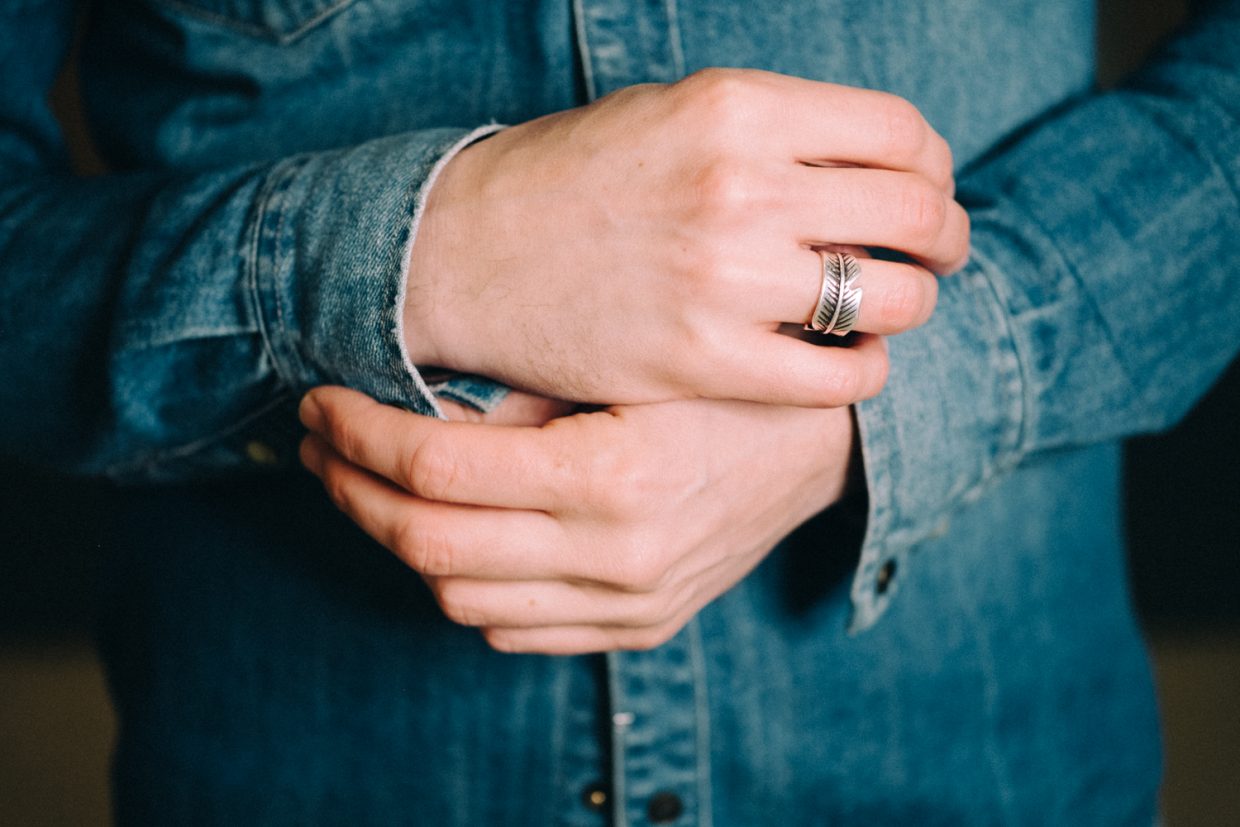
I also have a leather belt that I wear almost daily that I purchased from a charity shop in 2003. It was already worn in when I found it and you can imagine the shape that it’s in currently. A few years ago a friend of mine gifted me an elaborate silver and turquoise belt buckle that now proudly holds the belt together. There’s a ring I wear most days that I found in New Orleans (my favorite city) that has a feather design that unintentionally matches the feathers on the belt buckle. These three items have been with me all over the world yet their stories were shared with very few people. I truly believe most things in life find you and not the other way around. Almost everything I truly cherish was either gifted to me or found me at the right place and right time.

Donelson Bowl is one of my favorite spots in Nashville. If they had better coffee and rented cots for overnight slumbers I would probably be paying rent there right now. Other than that, they have everything else you could want or need. Lots of room too; I like space. Space is so underrated. Space is my favorite instrument in music, but we are not talking about music right now so I’ll spare you anymore insight into that topic.


Photos by Kelly Amber Garcia

WATCH: Worry Dolls, “Tidal Wave”

Artist: Worry Dolls
Hometown: London, England
Song: “Tidal Wave”
Album: Go Get Gone (Deluxe Edition)
Release Date: July 13, 2018
Label: Bread & Butter Music / SFE

In Their Words: ​”​The first verse of the song was a voice memo on ​my phone for nearly a year that ​I kept coming back to but couldn’t really figure out what it was about. I knew tidal wave was a metaphor for when it feels like life is coming at you at full force and there’s nothing you can do to stop it. But it wasn’t until I lost an extremely close family member last summer, very tragically and suddenly, that I came back to the song and realised it was about grief. When you’re grieving they say it comes in waves, but for me it felt like a tidal wave.

Around the same time, I had just got my first Gibson and it was this gorgeous Sheryl Crow edition Southern Jumbo with this beautiful rich, warm bass. Zoe was using a vintage Earl Scruggs banjo and when we got the instruments home, this song just poured out. It was like the stars had finally aligned. Quite soon after finishing it, we produced it ourselves and recorded it live in a converted cowshed just outside of London!​” ​– ​Rosie Jones, Worry Dolls


Photo credit: Finlay O’Hara

At Your Service: A Conversation With Nicki Bluhm

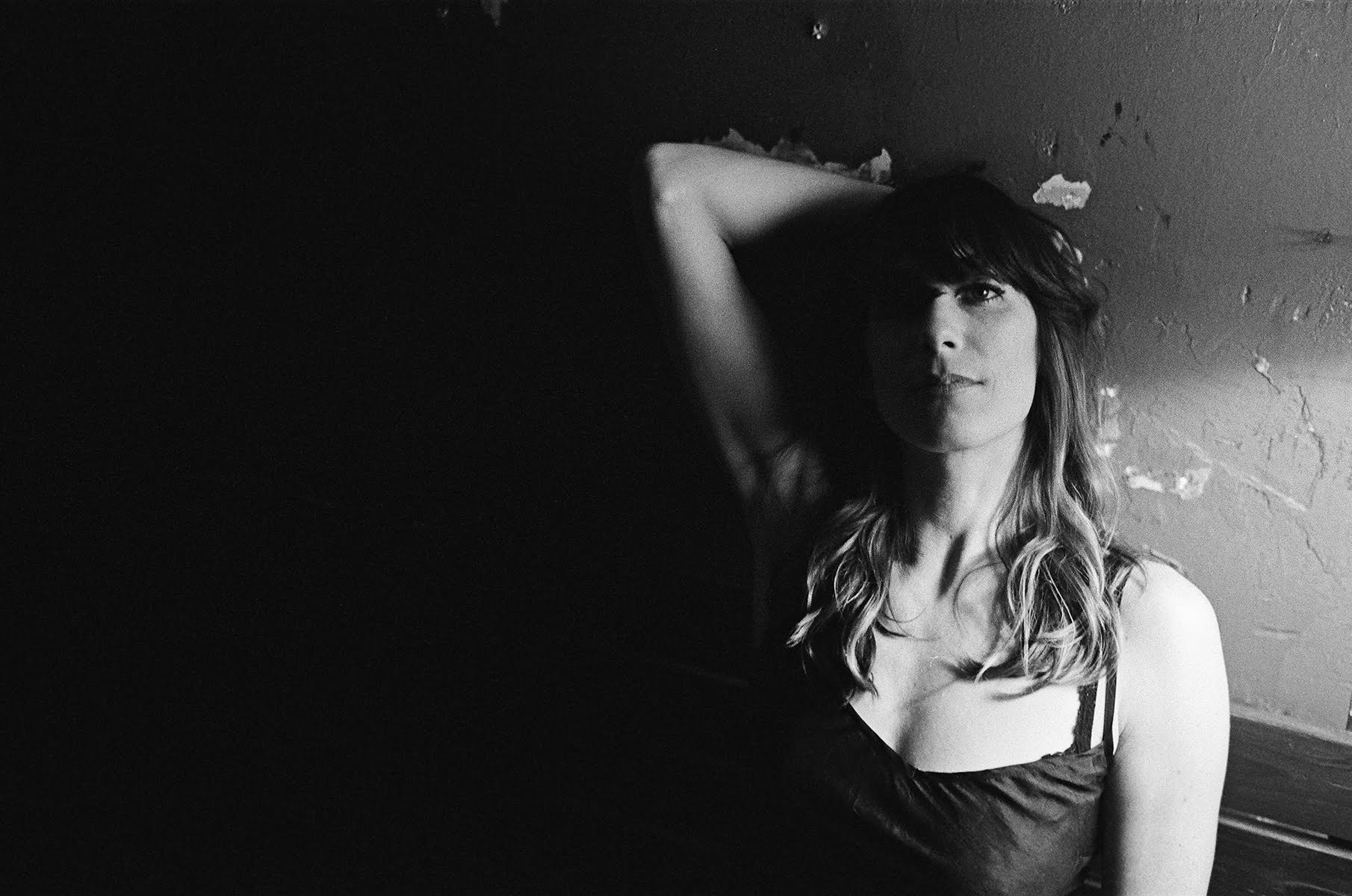
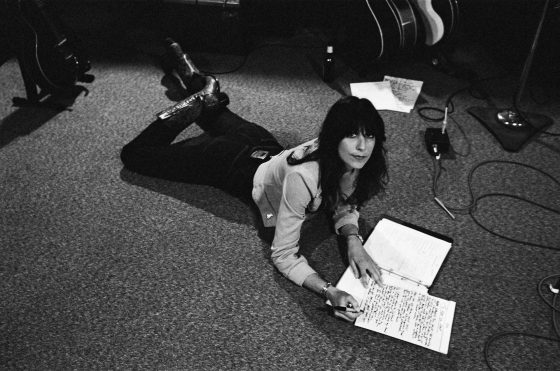
Nicki Bluhm is venturing out on her own with her newly-released solo album, To Rise You Gotta Fall. The aptly titled album chronicles her life since her split from her husband and musical collaborator, Tim Bluhm, and subsequent departure from the Gramblers two years ago. Seeking a change of scenery and a new challenge, the lifelong California resident acted on impulse and made a cross-country move to Nashville in 2017.

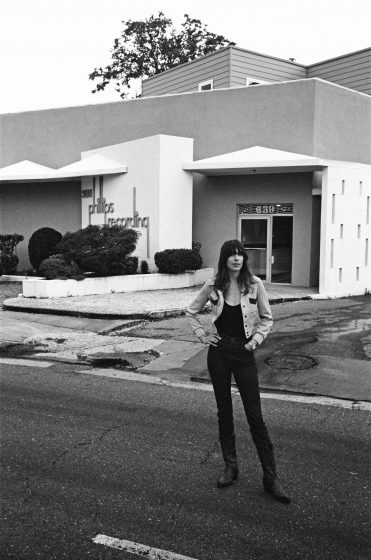
To Rise You Gotta Fall, produced by Matt Ross-Spang (Jason Isbell, Margo Price), features a collaboration with Ryan Adams (“Battlechain Rose”), as well as a Dan Penn cover (“I Hate You”). It was recorded in the legendary Sam Phillips Recording studio in Memphis and captures the raw emotion she poured into her writing over the two-year period. Each song is a different phase in a process of grieving and letting go — a testament that sometimes something beautiful comes out of our darkest times.

When you’re paying homage to that Memphis sound, you get something that’s tinged with nostalgia, but also totally its own and new. Did recording at Sam Phillips Recording play into that sound?

Yeah, I think so, for sure. Matt Ross-Spang produced the record and he’s a Memphian. He basically started working at Sun Records when he was a teenager. His parents got him a session for his birthday to record there. He quickly realized that he wanted to be on the other side of the experience, in the control room, and he started working at Sun as a young teenager.

Then when they started to understand his commitment and passion, and love of that era, and all of the gear that they were using at that time, the people at Sun were like, “Well, we’ve got Sam Phillips Recording Service.” which Sam built in 1958. It has really been left untouched. I mean, it looks the same. All of the decor is the same, everything short of the cigarette butts in Sam Phillips’ office. Sam’s office is exactly the same. So Matt has really been like a steward of reviving Sam Phillips.

How did that factor into you working together?

His love of that era of music is very pure and real. We have so much overlap of the things that we love in music. From my first meeting with him, I knew that we were going to agree on a lot sonically, and also pull inspiration from similar places. One of the records that he sent me to listen to was a Bobby Charles record, which, unbeknownst to him, is one of my favorite records. It’s just like, “Okay, we have a lot of commonality.”

Your record was all done analog, too, right?

Yep. We did it all to tape. We recorded it live and we tracked, I think, everything in five days. At the time, I didn’t really think – I thought that the band would get the songs and I would sing scratch. But I realized I had never met the band before. I entrusted Matt to choose the players and he did a spectacular job. I was beyond happy with the guys who played on the record but I hadn’t met a single one of them. They really hadn’t heard any of the demos either. Maybe Matt had shared the demos with them but it was really day-of stuff.

I realized really quickly that I was going to have to sing for real, because I needed to show them where I wanted the energy and where I wanted the arc of the song. It was a really cool experience. I had a straight sight line to all of them. Particularly Ken Coomer on drums. There was a realness to it. That was really inspiring. It made me fall back into that time where I knew I wasn’t going to, nor did I want to, overanalyze or bring out the microscope. I just wanted to capture the moment, and not get in my head about all the small details and nitpick stuff. So it was a great space, and a great group of people to make that happen.

Obviously, you’re a songwriter, so all songs are personal in some sense, but these are especially personal. Is there ever a fear when you’re writing that something is too personal? Or is it more of a relief that those thoughts and feelings are going to be out there for people to relate to?

Totally. It’s super vulnerable. I felt like I didn’t really have a choice. I tried not to be cruel, but I had to speak my truth, and that was important to me. I didn’t have the opportunity to have a lot of closure or conversations towards the end of this relationship that ended. So this was kind of my way of getting through that, and coming to terms with it, and getting those ruminating thoughts out of my mind, because I knew the toxicity of keeping them in. You have to allow those feelings to happen, you know?

Definitely.

They’re going to happen. And I felt like this was a healthy way for me to move through it. Now, singing them on the stage in front of a bunch of people — I’ve had to do that for the last six months by myself, because I’ve been on these solo tours, and I have solo tours opening for Lukas Nelson, and Josh Ritter, and just recently, the Wood Brothers. I’ve definitely felt what that was going to feel like.

Is it more difficult to do it in a live setting?

It was super vulnerable but at this point it’s almost like a service. It sounds weird but it’s almost like a service I’m providing because we all go through this stuff. For me, music has gotten me through so many hard times. It is comforting to know you’re not the only person that’s suffering and struggling.

While it’s really vulnerable and scary to get up and voice that in front of strangers, it’s really inspiring and comforting when, after the show, I go to the merch table, like I do every night, and people come up with tears in their eyes because they’re going through something similar. Or something has helped them.

For sure. One of the songs on the album that got my attention, and I think it’s because there’s such a cool juxtaposition, was “I Hate You.” It’s not what you expect it to be.

It’s a fantastic song. I didn’t write that. I wish I did. But it’s so good.

Your vocal on it is fantastic because it’s just so raw. But then, you’ve got that Hammond organ in the background, and it reminds me of walking into a Southern Baptist church or something. There’s such a cool contrast there, and that it could be such a melancholy kind of song, but it’s got this odd optimism behind it, too.

It’s interesting because there were definitely many conversations over that song between the creative and the business roles within my camp. The business side was like, “Oh, this is really harsh. This is really harsh language.” And from the creative side, we were like, “You’ve got to listen closer.”

It sounds at first listen like it’s scathing, and by the title, you might think that. But it’s not. It was written by a guy named Dan Penn. When I got together with Matt, he suggested we put a cover on the record. I was like, “Well, if we’re going to do that, I want to pay homage to Memphis. I want to do something that is of that area.” Matt is obsessed with Dan Penn. I heard that song, and I was like, “Wow. That’s it.” So we recorded it, and a month later, I was at my friend AJ Croce’s album release show, which turns out Dan Penn produced, and Dan Penn was there.

So I was introduced to Dan Penn and his wife, and my friend was like, “Dan, I want you to meet Nicki. She just put your song, ‘I Hate You,’ on her record.” His wife’s face just lit up and she was like, “I love that song so much.” She goes, “It sounds mean but he said, ‘I’m trying to hate you.’ And I should know, because that song’s about me.”

It was just so cute, and such an amazing moment to have recorded that song — and to meet the very person who it was written about, and written by. It was this really amazing, full-circle Tennessee moment for me. It’s true. Emotions aren’t always straightforward. You can love someone and hate them at the same time, and that’s confusing. Human emotions are very complex. I think that song does a great job of displaying that in a really simple way. But you have to be open to hearing that juxtaposition.

The first thing that struck me listening to the title track was that it’s probably not one of the first ones you wrote. Was that one that came toward the end?

It did. I had moved out. I had moved into what I call my healing nest, which was this amazing studio in Sausalito, California, owned by my dear friend. I don’t know if you’ve ever been to Sausalito but it’s beautiful and it’s on the water. I had this gorgeous view from where I lived, and it was just me and my cat. I was really feeling the support of my girlfriends and my family.

I had come out of such a dark place. Again, not that I didn’t return back to that dark place after I wrote that song, but it was definitely a respite in time, or a part of that process where I saw some blue sky, which was a huge relief. When you’re deep in it, any relief from that darkness is so welcomed, and for me, that song was a gift because it just made me feel better. I remember the day I wrote it. I was literally smoking a joint on my deck with my cat, and I got into that groove, and it just happened. It was one of those songs that happened quickly, and it just made me feel good.

This is a record that a lot of people could pull off the shelf and use it to make themselves feel better about anything they’re going through. What are some albums that you pull out when you’re going through a hard time?

Oh, well always Joni Mitchell’s Court and Spark, because I love her. Talk about articulating feelings and situations and scenes. She is a master of that. And then, I will just go and binge on J.J. Cale. I’ll listen to J.J. Cale for like a month straight. I love Stan Getz. I love a lot of jazz. I don’t know if it makes me feel close to my dad. But like, you know, a glass of white wine and some Coltrane or Getz, or something like that, always makes me feel relaxed and good. I mean, the list just goes on and on.


Photo credit: Noah Adams

LISTEN: I See Hawks in L.A., ‘My Parka Saved Me’

Artist: I See Hawks in L.A.
Hometown: Los Angeles, California
Song: “My Parka Saved Me”
Album: Live and Never Learn
Release Date: June 29, 2018

In Their Words: “A doo-wop ballad literally based upon our drummer Victoria’s true story about a car crash in the dead of Chicago winter on the banks of Lake Michigan; with narrative and a happy ending. One day in rehearsal, Rob just started playing along and singing her narration as she told the story. Then Paul and Paul chimed in with back up vocals and it felt like we had something unique right there. It’s pretty much just as we created it in that moment in the rehearsal studio.” —Paul Lacques, I See Hawks in L.A.


Photo credit: Melissa Shane