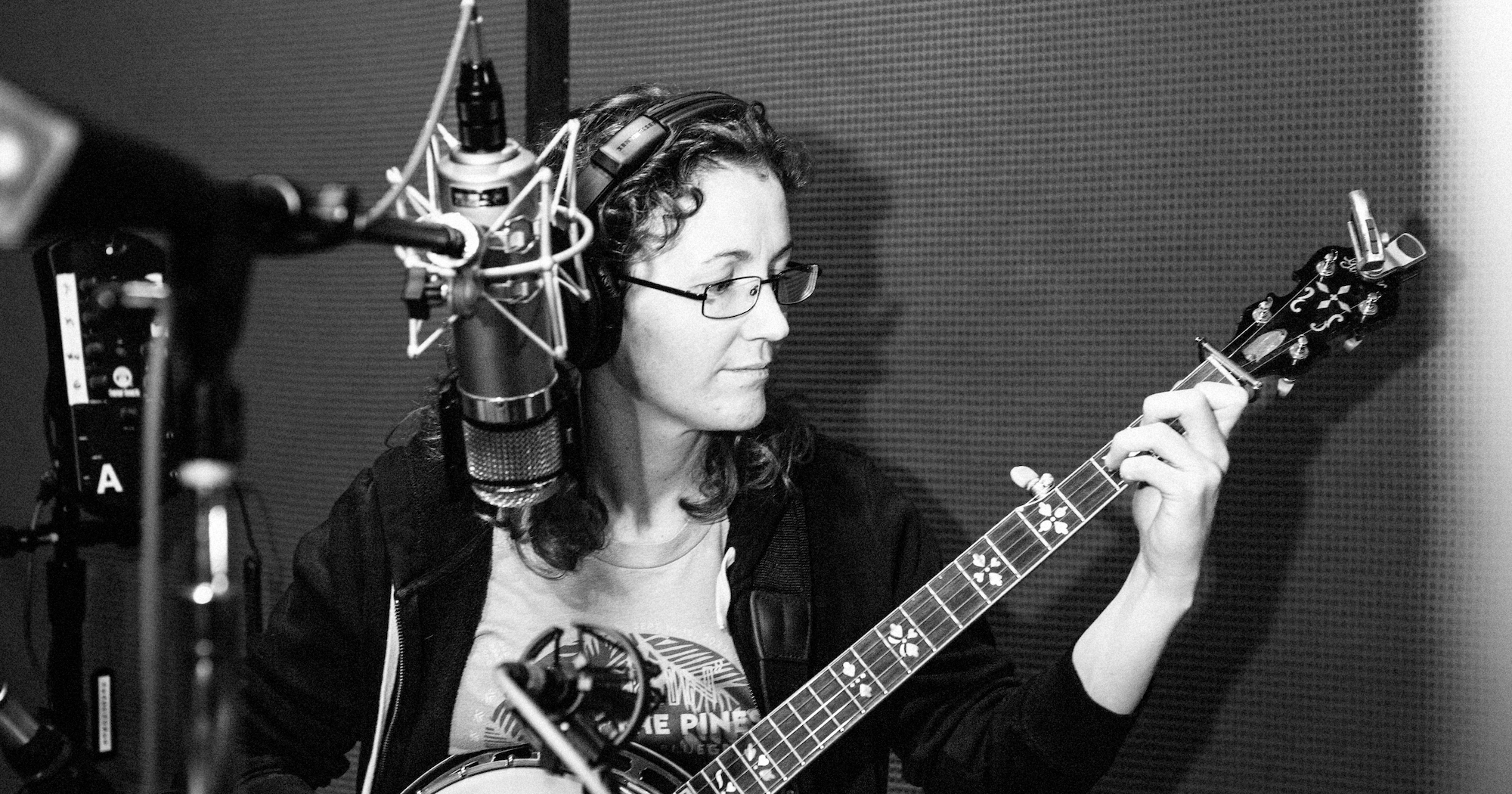
Max Allard Wrote a Banjo Concerto

The banjo, a sonic staple of folk and bluegrass, has often been left to its established devices in traditional circles or, more optimistically, among contemporary newgrass like Punch Brothers, the Infamous Stringdusters, and New Grass Revival, which included the genre-bending banjoist himself, Béla Fleck. Still, some musical spaces, like classical performance and composition, remain largely devoid of the banjo despite its lengthy and socially complex history, global presence, and tonal variety. Thankfully, between artists like Fleck, Noam Pikelny, John Bullard, and others, classical compositions have had a chance to shine on the instrument, paving the way for next-generation players to embrace and mix the traditions of classical writing with the distinct sound and musical capabilities of the banjo.

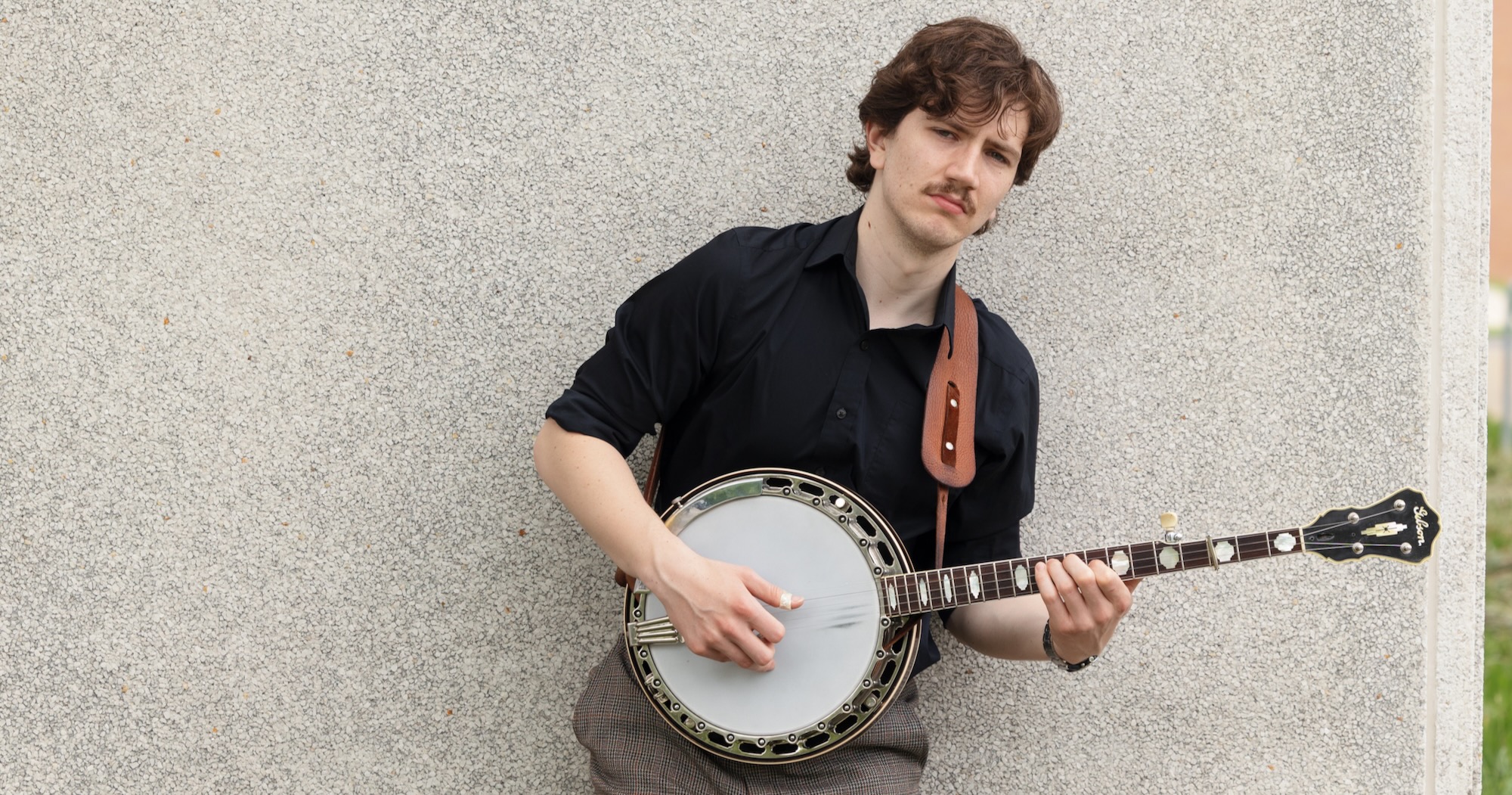
One such figure rising to the occasion is composer and artist Max Allard. A recent graduate of Oberlin College’s Conservatory of Music, the Chicago native is a champion of many cultures and genres in his work, which Allard describes as “an unclassifiable mix of bluegrass, jazz, new acoustic, classical, and pop.”

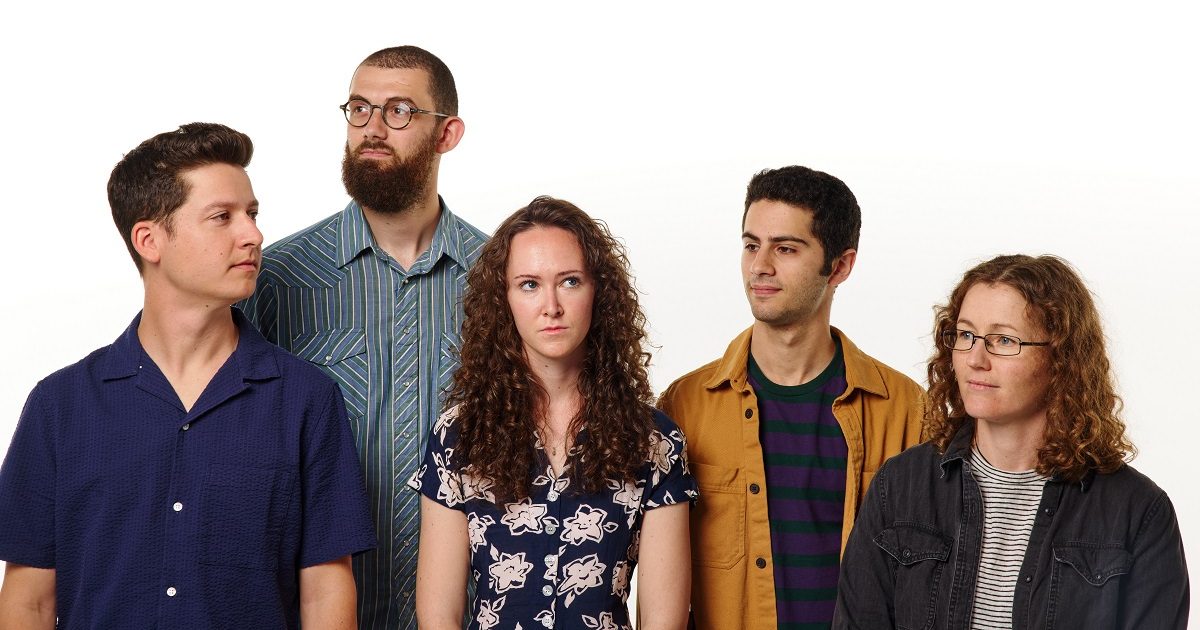
Allard has brought his stylistic openness to every facet of his artistry, including a duo with his brother Otto Allard; a bluegrass ensemble he co-founded, EZRA, that includes mandolinist Jacob Jolliff, guitarist and composer Jesse Jones, and bassist Craig Butterfield; and his touring support of Michigan-based bands Full Cord and Westbound Situation and Virginia-based band the Hackensaw Boys. Another instance finding him pushing banjo boundaries was his collaborative performance with fellow banjoists Bill Evans, BB Bowness, Cassidy Beentjes, and Matt Flinner in an adventurous arrangement of “In C,” the iconic composition by American minimalist composer Terry Riley, as part of a commissioned work series at the 2025 FreshGrass Festival.

Many of these ambitions grew alongside or after Allard’s studies, giving him several creative contexts in which to nurture his knowledge of classical forms and styles. One of the most impactful of these opportunities was part of Allard’s collegiate work itself: A Concerto for banjo and mixed ensemble. Encouraged by his EZRA bandmate and Oberlin professor Jesse Jones, Allard wrote his single movement work in 2023, giving the world premiere with the Oberlin Contemporary Music Ensemble under conductor Tim Weiss in December 2024. Though the piece has long since debuted, Allard’s vision for what the concerto would accomplish and what the experience of writing it revealed to him along the way remain ongoing sources of inspiration and guidance as Allard continues to write and perform for anyone who wants to listen. (Watch a video of Allard’s Concerto below.)

BGS recently spoke with Allard over the phone, discussing the many branches of his work as an artist and composer. We dive into how each stylistic space blends with his classical training, where he sees the banjo’s place in classical performance, his thoughts on cross-genre efforts by other artists, and more.

How would you describe the journey around your Banjo Concerto and its compositional process?

Max Allard: I had anticipated [the piece] for a while. I had gotten into Oberlin College as a composition major and part of the reason I chose Oberlin is because composition faculty member [Jesse Jones] comes from a background of playing bluegrass. He plays mandolin, some banjo, and guitar so I knew that I would have someone in the faculty on my side to help me, to know where I was coming from and to help guide the path forward in terms of a study and a pedagogy that I had not been taught before. So Jesse told me, “I think it would be great for your work here at Oberlin to culminate into a banjo concerto.”

I had the plan of approaching the banjo as a concert instrument – and as a concert instrument with the supporting ensemble. To do that, I had to get away a little bit from the folk aspects of the banjo in terms of a composition process, while still embracing those same aspects in terms of style.

[The concerto] sort of started as a banjo draft. And something I think is interesting to mention is that people have compared my banjo playing before to piano players and it’s a very valid comparison, because I take a lot of inspiration from piano players like Keith Jarrett, Chilly Gonzales, and many European classical composers like Sergei Rachmaninoff and Frédéric Chopin. I have long thought of the banjo as a very capable instrument to take solo composition very seriously on. I had to find ways to creatively think about which instruments to give various roles to. The nice thing was that I got to pick the makeup of the ensemble. I knew I wanted to have celesta. I wanted to have clarinet, flute with piccolo – there were certain sounds I knew I wanted to include.

I had very specific ideas about which instrument fulfills which role. It’s definitely a string-heavy piece and I’m a huge fan of writing for strings. So I had known that this piece would provide me the depths that the banjo doesn’t always have. I thought, “I can fill out these luscious piano-like chords that I usually like to write on the banjo, with the help of the supporting string section that has a much broader range than the banjo has by itself.” It was actually really liberating for me, because having an ensemble with a very diverse range – not just timbre-ly, but sonically and in terms of highs and lows – I had many options. It was a really great blank canvas for me to further explore creativity without some of the limitations of the banjo, be it physical or range related, or what have-you. I was able to basically apply my banjo knowledge and compositional tendencies to a blank slate, which presented a lot more opportunities.

What are your thoughts on the banjo’s “place” in classical music?

The banjo has a very checkered, problematic history and there’s a lot of moral debate that I’ve witnessed amongst people about what the banjo’s role is. It has had many different roles – a lot of it actually being erased. We talk about the problematic history of the banjo being used for minstrelsy but we actually forget about the banjo’s history of being used in parlor music. For a long time, the banjo actually had a role being played in parlors and social events, and even playing classical music.

I find it funny when people sort of criticize the banjo these days because the reputation has been ruined so much. People tend to think of the banjo with the film Deliverance. That film sort of ruined the reputation of the banjo as being this hillbilly folk instrument that’s not taken seriously. Unfortunately, that stereotype still exists, so people sort of scoff at banjo players who want to elevate the instrument into a certain concert environment.

I think all instruments can be used however people want. It’s like the artist has a final say in how they want to showcase their instrument. But for me, I think I’ll always still want to pay my respects to the traditions of the banjo. And as I said, the banjo has, throughout history, been used in a variety of different contexts. What I try to do is bridge the gap of pedagogic composition and folk music. If we’re talking about my banjo concerto, I want to write well-written concert music but [avoid creating] a totally contrived piece of music that just tries its best to fit the banjo in with an ensemble. I want to at least take my understanding of bluegrass, folk music, and old time music and still amalgamate it with concert music.

What do you find you learn most from other banjo players who have thrived in the classical space like Noam Pikelny, Béla Fleck, John Bullard, and others?

Broadly speaking, if [banjo players] want to put our instruments in the classical space, we need to do our best to understand the way the classic musicians think – really get in the minds of classical musicians. If one, as a banjo player, wants to pursue classical music, it behooves them to get at least a decent understanding of concert music. And I think most banjo players [like Fleck, Pikelny, Bullard] who have attempted that absolutely do have a different understanding. I just think the understanding of how deep it actually goes, what details go into really good concert music – it just takes a long, long time to master. And I am nowhere close to mastering it. But I at least have an understanding of how little I knew before attending [Oberlin].

Are there any aspects of Terry Riley’s “In C” that were especially challenging to capture with this banjo-centric arrangement?

I should give a shout out to Cassidy Beentjes, who did all this arranging – a really good pedagogue of the banjo. In terms of limitations though, the key [was one]. With the banjo’s natural key being G major, we took the piece down to a G-major tuning, so it makes much more sense to play the piece in G, especially since we want to achieve certain overtones. We could have played in C with a C tuning, but a lot of complexity would have arisen from playing in a foreign tuning. We were already uncomfortable in the first place, you know, with a piece of music like this, because banjo players don’t get the opportunity to do something like this very often, so we were careful.

What aspect of your musical identity does EZRA help you to fulfill that you don’t necessarily achieve in the same way with other pursuits?

I’d say it’s a good opportunity to write for a smaller acoustic ensemble where there’s a good understanding of not only folk and bluegrass, but also classical and jazz music.

It makes a big difference when you’re writing for people who you’re friends with – writing for people you know. You want to give people roles that you know they’re going to enjoy doing and that they do well. When I write for EZRA, it’s definitely much more stripped down and basic than if I were writing something like the banjo concerto. Because with the banjo concerto, I give very specific instructions, I supply a whole score with those specific instructions for everyone to read from. And when I’m writing for EZRA, usually I’m just writing lead sheets, just chords with the melody. In terms of arrangements, that can be discussed in the studio.

It’s funny though, because anytime we’ve recorded a record, we’ve had such limited studio time that we have to get our act together in just 72 hours or so and make our arrangements studio-ready. But again, that’s freeing for me, because I can write more vague ideas, stuff that I would not feel as intrepid writing with a big ensemble. When I’m with EZRA, I can just do whatever the heck I want and know that we can get away with it in some way. It’s also definitely a great opportunity for me to write contemporary folk music that is absolutely rooted in folk and bluegrass but also has all these other influences. A lot of Béla Fleck influence, a lot of classical music as influence – all kinds of stuff. It’s definitely a very special opportunity for me.

What’s the most unique aspect about the duo you perform in with your brother? How do you both approach playing together?

I guess the main thing that stands out is just the brotherly synergy. My brother is the easiest musician to play with because we know each other so darn well. Not much has to be planned – there’s almost never any stress. We’ve played plenty of gigs where we haven’t rehearsed at all beforehand and it goes pretty well just because we can glance at each other a certain way and know exactly what we mean musically. We’ve also played gigs where like a half hour has gone by and the whole thing is improvised. We just weave sounds together and it’s great.

It’s great to have a brother who plays music because it’s just that very intense, personal connection that one has with their sibling. You know each other so well that no communication really has to be done verbally. In general, playing with my brother is just very fun because we make crazy, spontaneous decisions and do ridiculous things that we would not do in any other setting.

Do you think the folk and bluegrass communities could better embrace the banjo being a genre-versatile instrument? And do you think that schools or community spaces are the best starting place to initiate that shift?

If I were talking to a banjo player who wants to get into classical music, I would say you can learn just as much by surrounding yourself with the right people. I think the most viable option is to try to meet some people who come from that background. And it can be any background. Like, say you want to get into a certain style – find musicians who can do that and try your best to talk to them, befriend them, whatever you can, and surround yourself with that. I think community is always important in the arts. Definitely, it’s very important to surround yourself with people – not even not necessarily like-minded people – but people who have very different experiences and very different backgrounds. Personally and musically in any way.

I think the bluegrass culture and scene could definitely benefit from opening themselves up a little bit. I think sometimes we forget that bluegrass has a very progressive foundation to it. Even Bill Monroe valued when he heard New Grass Revival. He was supportive of it, supportive of all those people who were taking bluegrass in a different direction. So I think it’s very progressive by nature. And music has always evolved and always will evolve and it has to sort of be accepted.

I think the banjo is actually in a very good place right now, because we’ve never had so many banjo players. It’s very good because the banjo is becoming popular for the right reasons – not necessarily gimmicky reasons, with banjos being used in pop music – but it’s being taken seriously amongst musicians from all different types of backgrounds. Broadly speaking, I don’t have too many complaints. I think it’s in good hands.


Photo Credit: Tanya Rosen-Jones
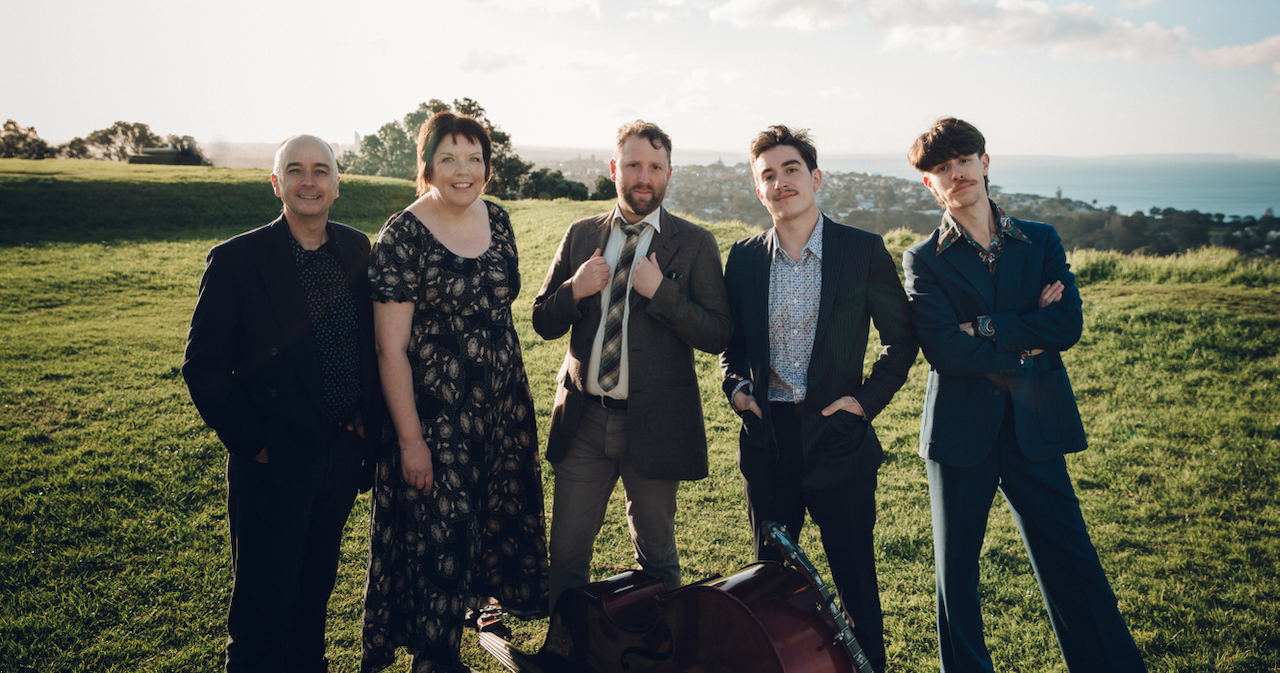
You, Me, Everybody Grow True Roots in Borrowed Soil

Aotearoa (New Zealand) doesn’t have a strong history of bluegrass bands – except one. If you mention bluegrass to New Zealanders, some will have at least heard of the Hamilton County Bluegrass Band. New Zealand has produced some great players, notably fiddle player George Jackson, banjo player BB Bowness, guitarist/singer Cy Winstanley, and bassist/singer Vanessa McGowan. (Now that we write this, these four would make a great NZ bluegrass band!) But while these names are well known in American bluegrass circles, it is fair to say they aren’t known (outside of folk circles) in Aotearoa.

Many of the songs on our new album, Midnight (out January 30, 2026), are situated within a day, or feature characters who are sitting at the cusp of who they have been before delving into something new. That sense of “in-between” also reflects our place within Aotearoa’s musical landscape, where bluegrass arrives without a long local history, but can be shaped in ways that feel natural to how we live and create here.

“Our Kiwi fans know bluegrass from traditional songs and contemporary artists such as Alison Krauss & Union Station, and Billy Strings. But they are more familiar with the other genres that bluegrass sits alongside. We’re also collectively members of the New Zealand folk, country, and jazz communities,” says our bassist, Rob Henderson.

Midnight starts with bluegrass at its core, but gently widens scope, bringing in different genres with their rhythms, broader chord progressions, and influences drawn from our own environment and lives lived in Aotearoa.

Here are the songs and tunes that anchor us in tradition and inspire us to find our own path as the clock strikes twelve. – You, Me, Everybody

“Ain’t No Grave” – Crooked Still

I love groove and the forward motion in all music, so when I heard this tune for the first time I was naturally inspired by the push of the cello part. This feel was a factor in my own bass playing across the album, especially for up-tempo tunes such as “Misdirection.” – Rob Henderson

“Dorrigo” – George Jackson

George Jackson’s tune “Dorrigo” feels friendly and familiar. It’s one of those tunes that will just keep going around and around the jam circle. When the Dorrigo Challenge did the rounds on the internet a couple years ago, it was a reminder of how a tune can bring people together. I had this in mind while writing “Sam’s Tune” on our album. – Sam Frangos-Rhodes

“Wildfire” – Watchhouse

I find when I sit down to write a song, I usually follow the same template or theme. Of course, there is variation in a lot of my songwriting, but I find rhythmically it’s always much of the same thing. A while back I wanted to break that cycle and try to write a more chilled out, slower tempo song, so I wrote “Heart of Stone,” which leads to “Wildfire” by Watchhouse. I enjoy this song because I think it has a very similar vibe to “Heart of Stone.” For me, it captures the same emotion and feeling I was looking for. I find it’s always nice to find what I was looking for in other people’s writing and relate that back to my own music. – Laurence Frangos-Rhodes

“Heart of Stone” – You, Me, Everybody

Laurence originally wrote this while we were producing our previous album, Southern Sky. I love the backbeat to it, but he also writes great chord progressions; they feel natural and authentic to the song and surprising at the same time. I’ve known Sam and Laurence since they were in their early teens and while our audience love our instrumentation, singing harmonies with them feels like home to me. “Heart of Stone” gives us an opportunity to showcase our vocal blend and milk those beautiful chords Laurence gifts to his songs. – Kim Bonnington

“Railroad” – Béla Fleck & Abigail Washburn

When I try to serve the song with three-finger banjo, I frequently look to Béla Fleck’s work with Abigail Washburn. He plays parts and the two of them fill out the texture of a song so well! Ironically, when we arranged “Silver Spoon,” I was hearing Abigail-like clawhammer behind it, so I did my best to provide that kind of sound with three fingers. – Nat Torkington

“A Hundred and Sixty Acres” – Marty Robbins

Our track, “The Ballad of Bubs and Beautiful,” started when I overheard a conversation between two women shearers in a camp ground in Waipukarau. I knew that I wanted to capture their relationship to each other and their working life, all framed within a day. My Dad’s vinyl collection is 50% Marty Robbins and I remembered the picture that “A Hundred and Sixty Acres” colored of a life well lived. That’s why the first line in “Bubs and Beautiful” is, “Up ‘fore dawn to greet the sun.” There’s a tendency for NZ songwriters to still write about American experiences and places due to an inability to describe ourselves that has been labelled “cultural cringe.” But I knew the description of the women was genuine when I heard someone go, “Oh” as we played the last line live for the first time. – KB

“Orphan Annie” – Tony Rice

As a guitarist, I’ve been heavily influenced by Tony Rice – who hasn’t!? Whenever I listen to the Church Street Blues album it leaves me feeling creative and inspired. I love the minimalism; stripped back to one guitar and vocals telling a story. A lot of the songs on Midnight started in this exact same way, guitar and vocals alone. So it only feels appropriate to give credit to Church Street Blues where credit is due. I cannot pick one track from the album as a favorite because they are all great, but here is “Orphan Annie.” – LFR

“Was It You” – Joy Kills Sorrow

“Was It You” is a song I love for how it drives. That rapid mando chop over a fast rolling banjo held down by a thumping bass is a sure way to make a foot stomper. I took a lot of inspiration from Jacob Jolliff’s mandolin playing in “Was It You” when I put together my part for our song, “Busy Without Me.” – SFR

“Busy Without Me” – You, Me, Everybody

Kim writes wonderful slice-of-life songs. The Midnight album has everything from the plight of an unwed mother to mother/daughter sheep-shearers. “Busy Without Me” is perhaps more #relatable, though: we have a short life with ample temptation for busyness, it says, but it’s important to take moments to “sit and breathe and let the breeze wash over me with nothing in my way.” I love the way the busy-ness of the music reflects the lyrics. – NT

“Caleb Meyer” – Gillian Welch

Country/folk/bluegrass songwriters have always done a great job of writing songs about things we won’t talk about, but make us happy to sing about them. Our song “Silver Spoon” was initially written to an Irish jig. But the joyfulness didn’t eclipse the bleakness of the lyrics. At different times when we were arranging it, different band members would say, “What would Caleb Meyer do?” and our producer Rachel Baiman asked exactly the same question when she arrived for our sessions before we recorded. It’s become the quintessential modern murder ballad. – KB

“Distant Sun” – Crowded House

I grew up in ’90s New Zealand with parents who would play in a country band at the local barn dance while my brother was DJing at the rugby club rooms. So while Marty and Merle would be in one ear, Crowded House was in the other. If you think of great bridges in songwriting, “Distant Sun” has one of them. It also has my favorite line ever in a song: “I don’t pretend to know what you want, but I offer love.” The melody lines in our own track, “The Rest of Us,” hark back to years of admiring Neil Finn as a songwriter. – KB

“The Rest of Us” – You, Me, Everybody

When Kim first brought the concept of “The Rest of Us” to the band I was immediately a fan, and thought it would a great fit on the album. Before we went into the studio we all spent some time together to arrange the new material. As a band I feel like we work uniquely well when it comes to putting a song together and it’s one of our biggest strengths. I think “The Rest of Us” is a great example of Kim’s songwriting and a great example of how we function as a band. – LFR

“Natchez Trace” – Béla Fleck

In my mind, this is the classic G minor banjo instrumental, from Béla Fleck’s landmark album, Drive. Recorded with his B string tuned down to B flat, Fleck often plays it live out without the re-tuning. That was the inspiration for me to write my own Gm instrumental for a banjo tuned to open G major. – NT

“What a Fool Believes” – The Doobie Brothers

I wrote “She’s Alright With Me” a few years ago before I joined You, Me, Everybody. At the time, I had been deep diving into a lot of Doobie Brothers music and the moving parts within their songs. When “She’s Alright With Me” was born, it was originally a heavy keyboard driving tune – having written it on an old 1960s Wurlitizer Piano and styled it on some of the Doobies’ keyboard parts. It’s safe to say it’s transitioned a lot as we don’t have a keyboard part, but you can hear the rhythm now being driven in the same way by Laurence’s guitar. – RH

“Old Train” – Tony Rice Unit

Laurence’s epic album-opening “Misdirection” is a straight-ahead driving bluegrass song, which nonetheless has a few surprise chords in it. For some reason that reminds me of this epic Tony Rice track. – NT

“Misdirection” – You, Me, Everybody

“Misdirection” fits nicely as the opener on our album. It’s a fun example of progressive bluegrass while still staying true to its roots. “Misdirection” is my favorite track on the album and I would like to think the amount of fun we had recording this song is reflected in the final result. – SFR


Photo Credit: Ebony Lamb

BGS 5+5: Catherine “BB” Bowness

Artist: BB Bowness
Hometown: Somerville, Massachusetts
Latest Album: Goodtime Revival (released November 1, 2025)
Personal Nickname (or rejected band names): BB (short for Catherine)

Which artist has influenced you the most – and how?

It’s tough to choose just one person, but I’d have to say Béla Fleck. He has expanded what’s possible on the banjo for all of us banjo nerds. Hearing him play classical, jazz, bluegrass and so many other styles, all with stunning fluency, is such an inspiration to me. And his tune writing is masterful, tunes like “Sunset Road,” “The Overgrown Waltz,” and “Big Country” feel so beautiful and singable to me. It’s really hard to write tunes that come anywhere close to that level of completeness.

What was the first moment that you knew you wanted to be a musician?

I’ve always been drawn to music, since growing up in a traveling New Zealand craft market. There was a stage manager in the fair, Ralph Bennett-Eades, who played guitar and sang really great. His boys played guitar and drums so I always saw the cool, older kids playing music. Then after learning banjo for a few years, I headed to the states for the first time and got to attend some festivals and camps including Telluride and Rockygrass in Colorado. Seeing the amazing musicians perform on stage at those festivals made me really want to try music for a living. Fifteen-year-old me thought, “Wow, people do this for a job?!” Turns out it’s not that easy to get those jobs, but it’s been an incredible journey so far.

What has been the best advice you’ve received in your career so far?

The great Tony Trischka once told me it’s great if you can learn to sing. I’ve thought back on that comment frequently through the years, being primarily an instrumentalist. But it really rings true! Being able to sing in a band and contribute to the show as a vocalist by singing harmonies is a big plus. It’s also so great in general for your musicianship to learn to sing so that your ears are more connected to your hands. Having a decent ear is a must for singers and I’ve found it very helpful for my banjo playing to work on developing my ear.

If you didn’t work in music, what would you do instead?

I’ve always fantasized running a New Zealand coffee shop that sells baked goods. It’s got to be a waterfront cafe so that I can wake up early, go for a surf, and then make coffee and baked goods for people.

What would a perfect day as an artist and creator look like to you?

I love the days where you’re not sitting in a van for 10 hours. Any day where the drive is short and you get to play music with your friends for people who’re listening is a very good day! Throw in some vegetables with dinner and a little private spot to practice some before the show and I’m positively delighted.


Photo Credit: Louise Bichan

MIXTAPE: Mile Twelve’s Favorite Short Story Songs

Songs can be truly short short stories. There is so little time, so little space to convey a complete narrative. That challenge has always thrilled us when crafting our music. When we were asked to create a themed playlist for The Bluegrass Situation, I thought through our own songs that formed the new album Close Enough to Hear (out February 3) and wondered what common thread tied them together. Many of them really are conveying a story, something with a beginning, middle and end. We all went back to our favorite short story songs and marveled at the writers’ ability to forge a genuine drama, with a plot and characters, inciting events and climaxes, in just a few short minutes. It’s a high wire act, where every single word counts and nothing can be wasted. Here’s a list of our favorite short story songs. — Evan Murphy (acoustic guitar), Mile Twelve

Bruce Molsky (Molsky’s Mountain Drifters) – “Between the Wars”

This song makes me emotional every time I hear it. Bruce delivers this Billy Bragg song so powerfully and honestly, giving it a distinctly American flavor. – Nate Sabat (upright bass)

Bobbie Gentry – “Papa, Won’t You Let Me Go to Town With You”

I was recently turned on to Bobbie Gentry through the Cocaine and Rhinestones podcast by Tyler Mahan Coe (highly recommended) and stumbled on this song while checking out her catalog. She’s done such an incredible job painting a musical representation of that longing, wishing feeling of wanting to be included. And on a dorkier note, listen to how the phrasing of the hook is different on line one of the chorus than it is on line four. So, so good. — Nate

Cy Winstanley – “Little Richard Is Alive and Well in Nashville, TN”

Our good friends of the duo Tattletale Saints are excellent songwriters from New Zealand, now based in Nashville. This song about Little Richard has beautiful, clear imagery that pulls you right into the song. It’s a mellow performance, not trying too hard and resulting in a memorable story about a unique Nashville music legend. – BB Bowness (banjo)

Jean Ritchie – “West Virginia Mine Disaster”

This haunting a cappella song written by Jean Ritchie is sung from the wife’s point of view as she awaits news of her husband’s fate down in the mine. The song captures the anxiety and uncertainty she feels while she imagines a possible future without her husband. — BB

Jason Isbell – “Speed Trap Town”

A dozen cheap roses in a shopping cart, veins through the skin like a faded tattoo. Isbell’s tight, sparse images bloom into vignettes which form a complete story by the end of this song. A man has reached the limits of his patience with a stagnant life. His father lays dying in the ICU, he has no prospects, nothing to stay for. After long years, he finally decides to pack it up and break free. When I am in a period of writing I actually can’t listen to songs this good. They torment me with their lean, sinewy perfection. To use Isbell’s own language, there is no fat on these lyrics. Everybody knows you in a speed trap town. — Evan

Bruce Springsteen – “Highway Patrolman”

“My name’s Joe Roberts, I work for the state” might as well be “Call me Ishmael.” For me, this is the quintessential short story song. There are major motion pictures with plots less deep. It’s the struggle between two brothers, Joe and Frankie, one a state trooper and the other a struggling veteran who can’t seem to stay out of trouble. “I got a brother named Frankie, and Frankie ain’t no good,” sings Joe. Maybe it’s the fact that I have two older brothers, but when Joe watches Frankie’s taillights disappear across the border I cry, even after hundreds of listens. “I musta done a 110 through Michigan County that night.” How desperate was Joe to catch Frankie, to save him from himself? This song has taught me so much about musical storytelling. Springsteen is larger than life, for me and so many others. I wish I could open the back of his head and see how he does it. Thank God we have his music, it’s sacred. — Evan

Gillian Welch – “Caleb Meyer”

“Caleb Meyer, he lived alone in them hollerin’ pines” opens this exquisitely brutal ghost story. Gillian Welch has reshaped the very structure of modern folk songwriting. She and David Rawlings prove that when the song, the vocals and the playing are flawless you really don’t need anything more. “Caleb Meyer” is a haunting murder ballad. A woman fights for her life, finding a broken bottle to slash the throat of her would-be rapist. I am in that room with her when I listen to this, the hair standing up straight on the back of my neck. It’s a full-fledged Western, and she does it in three damn minutes. She is a force of nature. — Evan

John Prine – “Hello in There”

The lives of Prine’s characters are smaller and simpler than the legends of epic folk ballads. There’s no steam drill, no six shooters, no gallows at dawn. It’s just Loretta, Davie and Rudy, a back porch, a TV that plays the same old news. This is Prine’s genius, making the mundane transcendent in its beauty and its tragedy. It’s like watching modern human life itself dancing on top of his gorgeous finger-picked eighth notes. He was one of our great American prophets, observing, critiquing, reflecting, teaching. He is missed so dearly. — Evan

Josh Ritter – “The Temptation of Adam”

“‘If this was the Cold War, we could keep each other warm,’ I said on the first occasion that I met Marie.” Ritter is a favorite of novelist Stephen King. It’s not surprising, given the literary grandeur of his songwriting. The strange, post-apocalyptic tale of Marie and the missile silo transfixed me when I first heard it. It’s more mesmerizing with each repeat listen. How does someone create a world so fully realized, so convincing, with such simple tools at their disposal? What a gorgeously weird tale. — Evan

Cindy Walker, recorded by Bob Wills – “Dusty Skies”

When I was younger, I had four or five Bob Wills CDs that were pretty much on repeat for my whole childhood. This Cindy Walker song was on a couple of them, and every time I heard that fiddle intro, it would stop me in my tracks. I’d sit there completely absorbed in the stark, dusty imagery. This song is lyrically and musically as simple as it gets, but it packs a heavy emotional punch. When this song was recorded by Bob in 1941, the Dust Bowl was barely history, and I can feel the pain it caused in every beat. You don’t always need fancy chords and poetry to make a statement—sometimes you just need a semi-natural disaster. — Ella Jordan (fiddle)

Joni Mitchell – “The Last Time I Saw Richard”

How can you have a playlist without a Joni Mitchell song? The oppressively ordinary yet starkly evocative imagery in the second half (only Joni can put a dishwasher in a song) somehow reminds me a little of some of Lucia Berlin’s writing. This is one of those songs that if you had never heard anybody sing it and you just read the lyrics, it would still be a beautiful poem. One that takes you on a journey, and makes you feel things. One that makes you question your life choices. We all hope it’s only a phase, these dark café days…. – Ella

Randy Newman – “Dixie Flyer”

This is one of my favorite songs from Randy Newman. He sings about traveling around the United States as a child of a Jewish immigrant family in an attempt to find a home and live the American Dream. He deals with themes such as privilege and the issue of losing one’s culture while assimilating. This is the story of many families during the end of the 19th century and beginning of the 20th and continues to be a relatable topic today. – Korey Brodsky (mandolin)

Songwriter Unknown, Recorded by Hazel & Alice – “Two Soldiers”

The story of two Union soldiers during the Civil War who promise each other they will bring news back to their families if one of them does not make it through the battle. The imagery of war is vivid and the storytelling is masterful. Hazel & Alice bring this one to life in their incredible version. — Korey


Photo Credit: Dave Green Photography