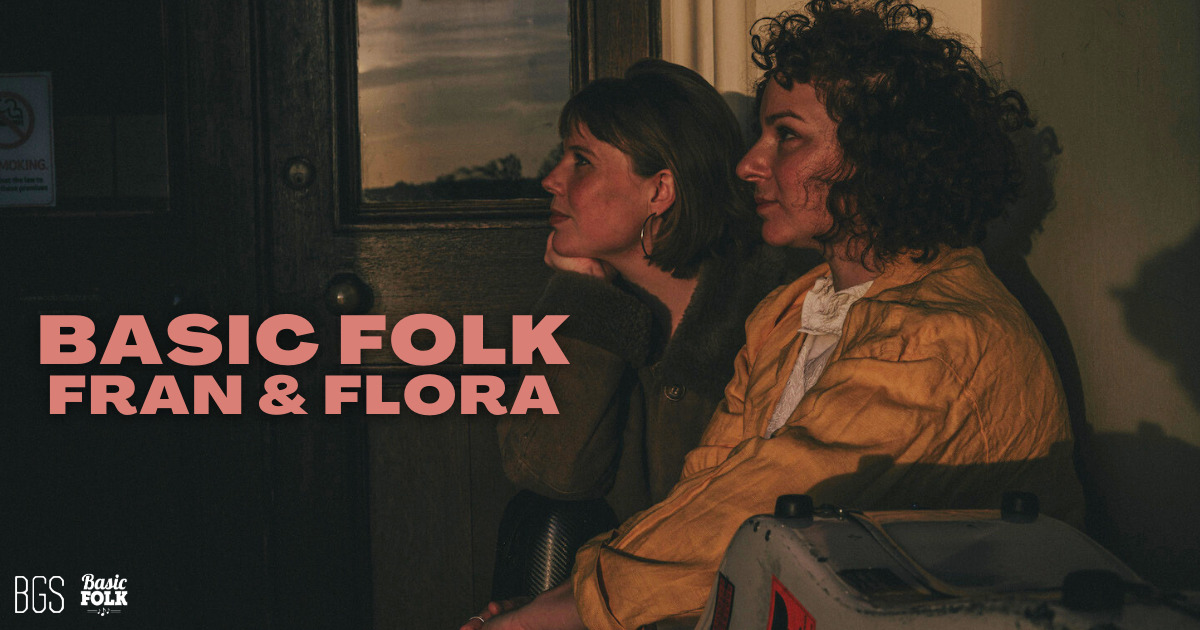
Two long-time collaborators, cellist Francesa Ter-Berg and violinist Flora Curazon, Fran & Flora, have bonded over their obsession with ancient music, rooted in Eastern European and Jewish culture, for over a dozen years. Together and separately, the English musicians have been studying with teachers of ethnomusicology in places like Transylvania and Romanian. There, they took in the music as well as the cultural influences. That’s not to speak of their higher musical education, Francesca holds two masters in music (including in contemporary improvisation from the New England Conservatory of Music) while Flora trained at the Royal Academy of Music, London. They break down the benefits of each learning style and how it impacts their creative process. They also get into their love of klezmer music and the importance of portraying cultural heritage while remaining modern.
We also talk about how as female musicians, they are expected to do absolutely everything and excel at it while people still talk about whether or not you smile on stage. They share “There’s a very deep thing in there that has affected our choices as a band in order to keep it safe and healthy within ourselves.” Their latest album, Precious Collection, features a couple of original tunes, but it’s mostly new and unique arrangements of traditional Klezmer and Yiddish songs. Don’t sleep on the smokey translation that Flora shares of the song “Little Bird” and stick around to learn who is the better roommate. All in all, great conversation with wonderful people who create bonkers music that’s rich in tradition and layers.
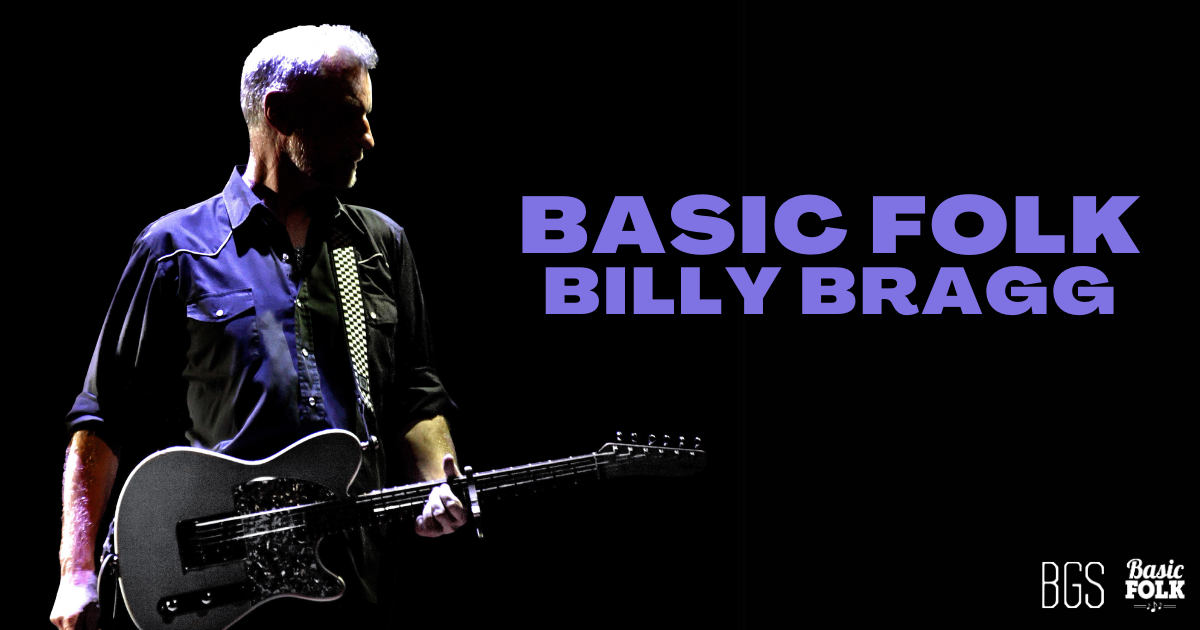
Billy Bragg joins hosts Lizzie and Cindy on board Cayamo to talk about songwriting, social justice, punk rock and, of course, The Little Guy (Bragg’s nickname for Woody Guthrie). In our interview, we talked about Billy using humor as a way to connect to his audience, so that he can bring up his political activism – such as fighting for transgender rights, the importance of unions and abortion rights. It’s interesting to hear how he wants the Americana audience to remain as relevant as he does. Billy talked about his place as a British artist in the genealogy of folk music and how working on Mermaid Avenue with Wilco allowed him to be a part of the folk tradition.
He also shares how he overcame anxiety as a teenage musician. Standing in front of a crowd playing with his friends in a band really boosted his confidence. Meanwhile, the old school “stiff upper lip” of British culture created an emotional barrier between Billy’s and his parents’ generations. The older generation grew up with the cultural heritage of separating oneself from any emotion. When Billy was a teen, his father was dying. The doctor recommended not telling the patient or talking about it at all. Several decades later, his mother insisted that everyone talk to and about her terminal cancer diagnosis.
Bragg also gets into the merits of socialism, why nostalgia rubs him the wrong way and his favorite English treat. Spoiler: It’s marmite. Gross.
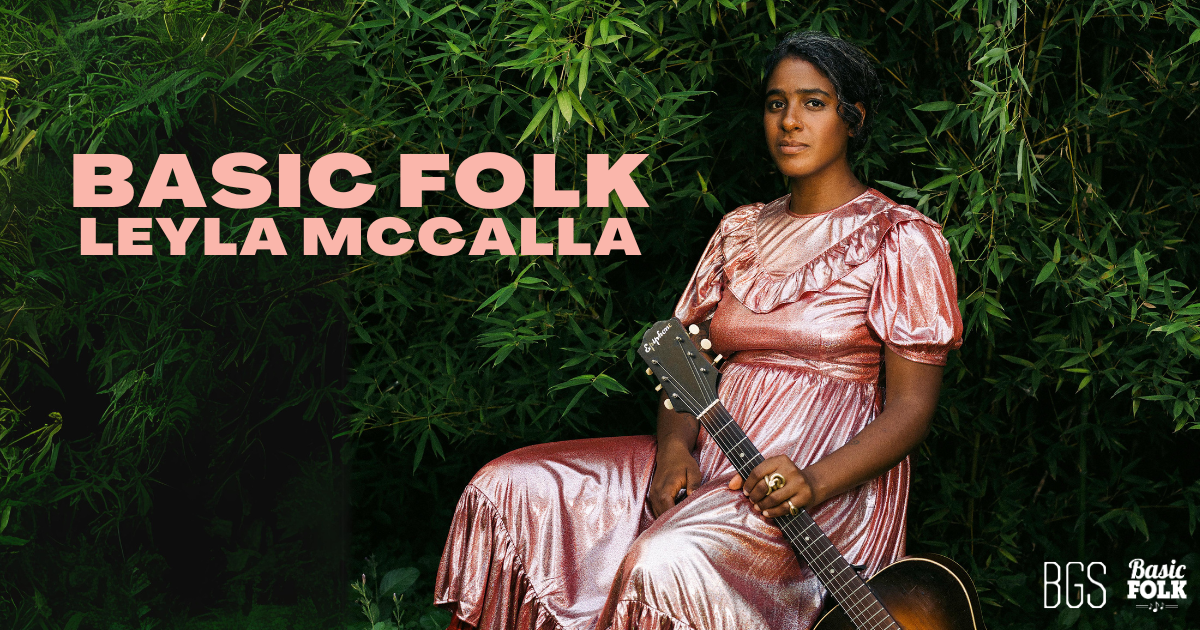
Singer-songwriter Leyla McCalla and her band (bassist Pete Olynciw, drummer Shawn Meyers, and guitarist Nahum Zdybel) join us onboard Cayamo to go through their incredible, righteous and fun new record Sun Without the Heat. It is a Leyla McCalla solo album, but no solo artist is an island! Once we saw Leyla perform with her band, with whom she has collaborated for the past six years, we had to get the whole collaborative outfit in on the interview.
The sounds on the album are inspired by Afrobeat, Haitian music, folk music, indie music, Americana music, Brazilian tropicalismo, amongst others. Leyla calls it, “A record that is playful and full of joy while holding the pain and tension of transformation.” McCalla’s liberatory politics find their way into the record, evidenced by the title – which comes from a Frederick Douglass speech given six years before the Emancipation Proclamation. Leyla explores her cultural heritage while reflecting the African diaspora using elements of Afrofuturism. She’s leaning into a concept that challenges women in music (particularly women of color) of how to free herself from labor that should not be hers, and fighting for her right to be joyful in her creative expression.
When asked about how these new songs feel through the lens of somatic experience, Leyla says the new music feels different and that she’s let go of the idea of perfectionism as a single mom of three kids. A lot of the record was informed by different authors she’s read recently like adrienne maree brown (Pleasure Activism) and Susan Raffo (Liberated To the Bone). Leyla’s really changing the game in Americana, when it comes to incorporating the academic into truly bitchin’ music.
Sidenote: we really loved hanging out with this crew at sea on Cayamo. They had great vibes, good laughs, and also very good outfits. Lizzie even recruited Pete to play bass in an impromptu trio while on board. More good times with Leyla and band, please!
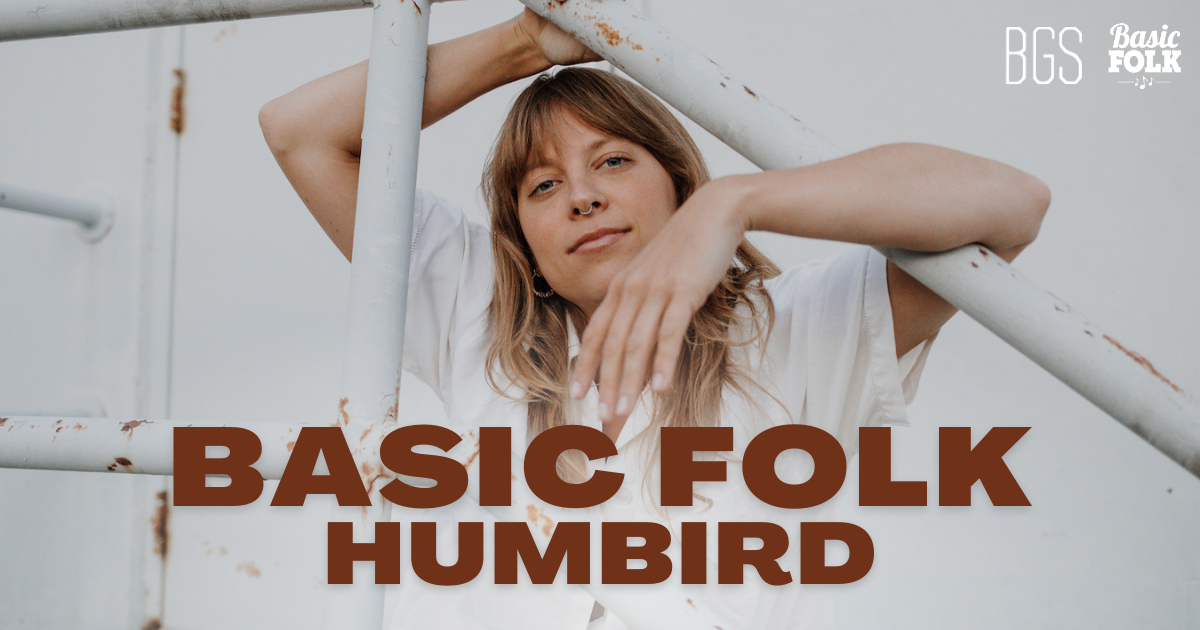
Siri Undlin, better known as Humbird, is a talented singer-songwriter from the Twin Cities with deep roots in Minnesota music and the land that surrounds her. Growing up, she was a true cold-weather kid who loved hockey during winter, but also loved music and feeding her vivid imagination. Her interest in music was nurtured by her parents, religious music, church choir, and also her Aunt Joan, who taught Siri guitar at age 12. Hockey actually led her to her first band, Celtic Club, which would play at Irish Pubs, talent shows, and of course, at the local hockey rink. They introduced her to Celtic music and her first live performances.
In this episode of Basic Folk, Undlin shares her rich experience studying folklore and fairy tales, which greatly influence her musical journey. She discusses her intensive research in Ireland and Nordic countries, exploring how music intertwines with storytelling traditions.
Throughout the episode, Undlin reflects on her upbringing, her time at an art school, and her evolving approach to songwriting, blending traditional folk music with indie music and experimental sounds. On her new album, Right On, Siri is acknowledging and addressing white supremacy in middle America, as highlighted in her song “Child of Violence.” She talks candidly about what writing and releasing the song taught her about white supremacy. Touring has provided Undlin with unexpected challenges and valuable insights, shaping her perspective as a musician and performer. We talk about the importance of being open to chaos and disciplined in one’s mindset while navigating the music industry and life on the road.
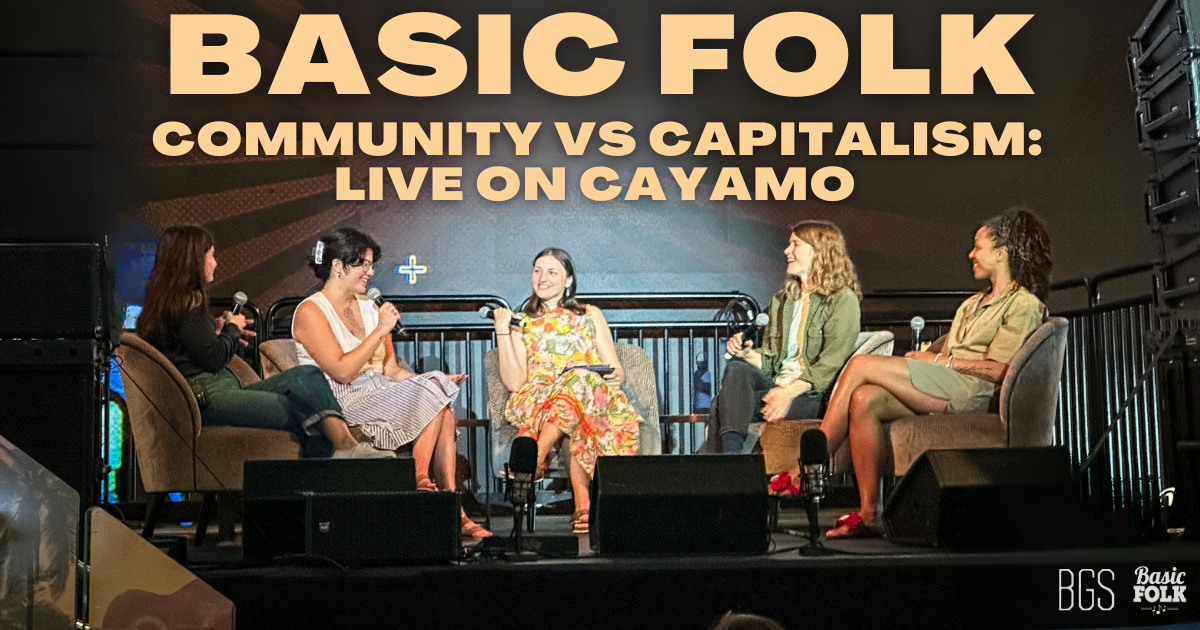
We’re live at sea! Our hosts Lizzie No and Cindy Howes recorded this episode onboard Cayamo, which is a singer-songwriter, Americana cruise that’s been sailing yearly since 2008. It’s one of the best music festivals we’ve attended and it’s another edition of FOLK DEBATE CLUB.
This time it’s “Community vs Capitalism.” Our panel features Jenny Owen Youngs (musician and co-host of Buffy the Vampire Slayer podcast, Buffering the Vampire Slayer), Amy Reitnouer Jacobs (co-founder/executive director of BGS) and Natalie Dean (director of events at Sixthman, which presents Cayamo). We talk about both of these concepts through the lens of folk music and the music industry at large. Community building amongst folk artists and fans in authentic and unique ways will help drive your passion. Organically finding community through event production, online presence, or music promotion is at the core of folk culture. Community trust and cultural diversity are key in ensuring that folk music artists will thrive in our capitalistic society.
How do you build that trust among your audience in a way that allows them to build trust with each other? How do you stay true to your values while being able to pay for your life? How have musical community leaders cultivated their particular communities?
Capitalism is our current reality, but it historically has not mixed well with community. Clearly, one must be pursued vigorously, moreso than the other! Or does it? Is there a way that these two can live side by side in folk music?
If you are listening to this or reading this right now, I can make this assumption: You want to support music financially and with your heart. Music is something that sustains our lives, but it’s also a profession and something people consume. Don’t worry, we “figure it all out” in this episode of FOLK DEBATE CLUB AT SEA!
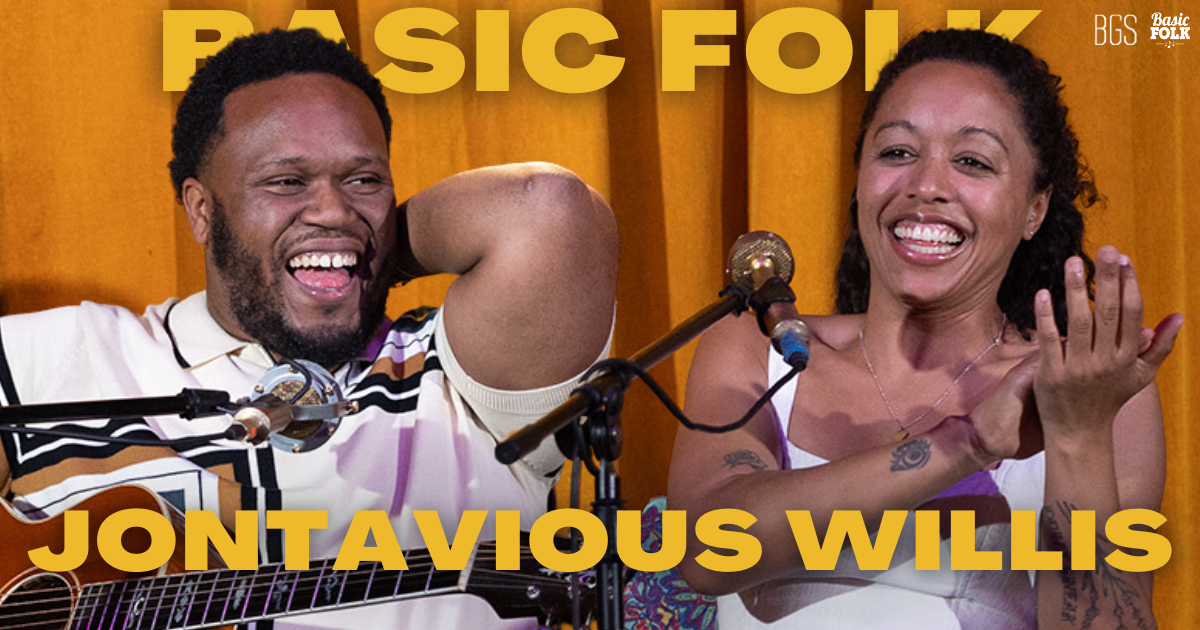
Originally from Greenville, Georgia, Jontavious Willis is a blues music phenom. When we talk about the blues, the phrase “torchbearer” comes up a lot when it comes to young, new blues artists. I think of that word as a double-edged sword. When you think of a torchbearer, you think about someone who’s carrying on a flame that was lit long ago. It’s somebody who’s carrying on a tradition, but it also can come with restrictions. Such as oldheads telling you that you’re not doing it right or asking you, “Have you really paid your dues? Are you really faithful to the tradition?” And asking you questions about whether or not you belong.
Jontavious handles that double-edged sword with such alacrity. His writing is firmly contemporary at the same time that his playing is rooted in the tradition of country blues. He knows so much about the genre that he’s basically a walking encyclopedia of the blues. I don’t want to spoil the surprise, but instead of the traditional Basic Folk lightning round, we played a pop-up game at the end of the interview. I put different styles of the blues (like Delta or Piedmont) in one cup and various 2024 topics, ripped from the headlines, in another. Then we just matched them up. He was so quick on his feet.
Jontavious is a great example of a new spin on a genre that a lot of people think they know already. He is so adamant that the blues is a contemporary genre and always has been. He made the point during our interview that a lot of the blues legends we’ve encased in the amber of memory were young teens or 20-somethings when they wrote their iconic songs. It’s really a genre for free people, for young people, for people looking ahead. It’s not about the past. Another point he made while discussing his Southern roots: When we talk about country, often we’re talking about a musical genre with a certain difficult history. But for him, and I imagine for a lot of other artists, country is a way of life. It’s about being out in the wild. It’s about having a connection to nature. It’s about sitting with quiet. It’s about having time on your hands to experiment with songwriting, or being a singer. It’s about a genuine experience of being connected to a particular place in time.
This interview and live performance was recorded for the podcast live at the Fort Worth African American Roots Music Festival (FWAAMFest). When I was a kid, my dad’s family used to have these big reunions. They’re from a North and South Carolina Baptist family, and it would be a big barbecue at the state park or in a church hall. We would have t-shirts made, people of all ages milling around, catching up. Often there would be an elder getting up to say a long prayer or make an announcement. This sense of belonging and intergenerational connection is what FWAAMFest felt like. Brandi Waller-Pace, the festival founder, is such a visionary, and they bring together artists of so many different genres, all of which fit under the roots music umbrella. There’s this beautiful link between all of the music based on the African American Storytelling Tradition and the Artistic Tradition. In addition to being able to interview Jontavious live onstage, this was my first time headlining a festival, so it couldn’t have been more of a special day for me.
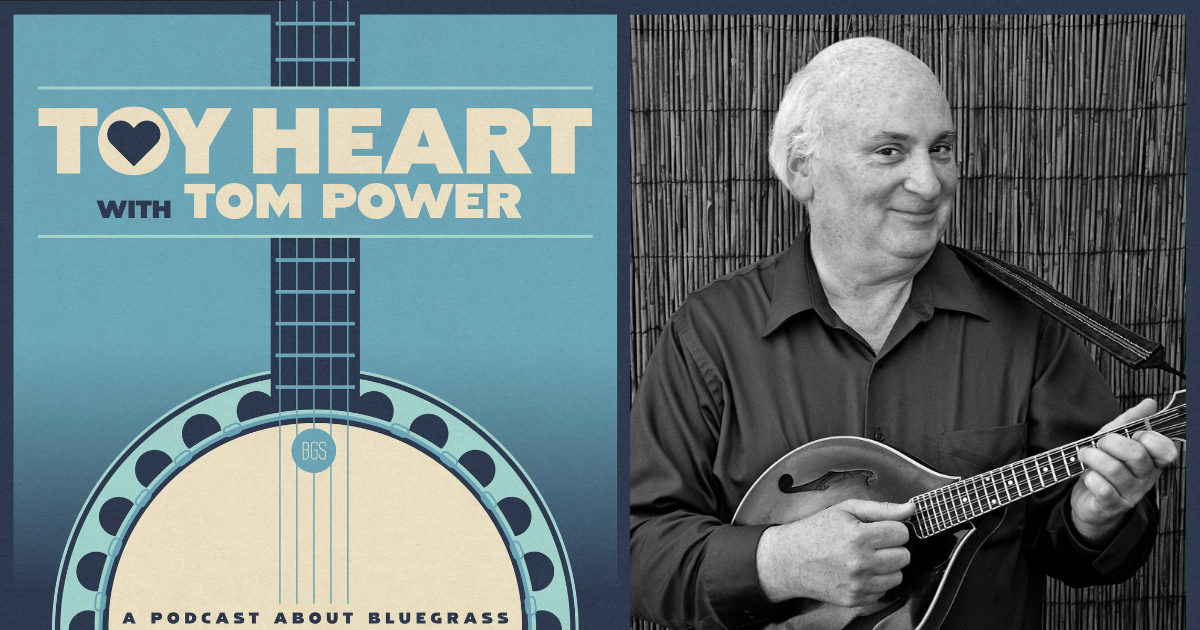
For the latest episode of Toy Heart, we embark on a journey through the primordial musical ooze that birthed bluegrass, old-time, and country music with the incredible Jody Stecher. A multi-instrumentalist adept in many styles and traditions – he even plays sarod, a Hindustani instrument – Stecher’s entire career is a fascinating case study in the interconnectedness of American folk music styles.
Host Tom Power begins their engaging and philosophical conversation by asking Stecher about his childhood in New York City. A grandchild of Eastern European immigrants, he “discovered” country and bluegrass like many in his generation, listening to the Wheeling Jamboree radio program on WWVA and hearing first generation pickers like the Osborne Brothers and Jimmy Martin & the Sunny Mountain Boys, including “Baby Crowe,” a young, just-hired banjo player who went by “J.D.” Soon after, Stecher replaced mandolinist (and one-day industry power player) Ralph Rinzler in bluegrass band The Greenbriar Boys, before joining another group, the New York Ramblers.
From those early years, cutting his teeth in local, regional, and eventually national outfits to iconic albums like Going Up On The Mountain and his current status as a venerated expert and acclaimed elder in American roots music, Jody Stecher utilizes music and his expertise to demonstrate how blurry the lines really are between these folk genres. Power and Stecher discuss teaching, David Grisman – and collaborating with Jerry Garcia! – meditation and music, early sounds and recordings by folks like Bill Monroe and the Stanley Brothers, being a member of Peter Rowan’s band, his duo with Kate Brislin, Utah Phillips, and so much more.
Whether you’re a lifelong fan of roots music or new to these scenes, Tom Power and Jody Stecher’s Toy Heart episode will inspire, highlighting stories, traditions, and techniques that make bluegrass, old-time, and country music exactly what they are today.
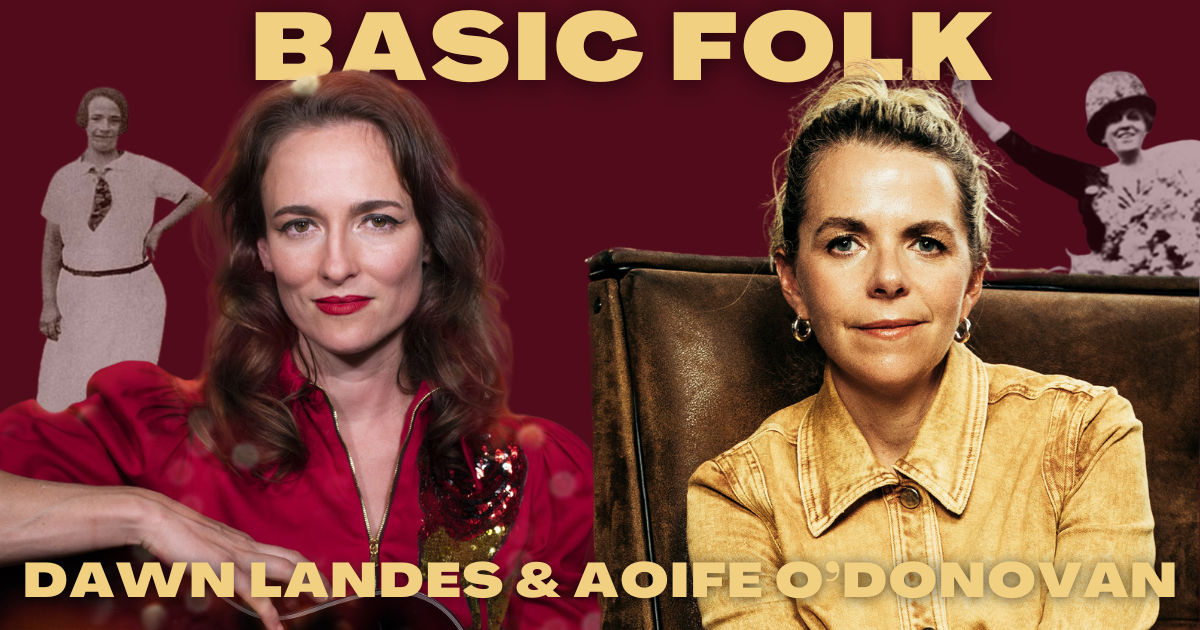
Aoife O’Donovan and Dawn Landes are long-time friends. Coincidentally, they both have new albums with strong feminist themes, so I wanted to interview them together and talk about WOMEN.
Aoife’s album, All My Friends, is specifically centered around Carrie Chapman Catt, a prominent leader in the suffragist movement. Inspired by speeches and letters, one song of Aoife’s, “War Measure,” is based on a letter of support from Woodrow Wilson to Chapman Catt. This album also marks the biggest project Aoife has worked on with her husband Eric Jacobsen, who conducts the Orlando Philharmonic and the Virginia Symphony Orchestras. It’s also the first record she’s released since becoming a mother. Of her song “Daughters,” she says she sings “as a modern woman, not wanting to leave the fight to the daughters of our daughters.”
Dawn Landes, also a mother, has a broader focus with her new album, The Liberated Woman’s Songbook. It features songs from the 1971 songbook of the same title, intended to inspire second wave feminists’ women’s liberation movement, and modern feminism of the 1970s. The songs span from 1830 (“Hard is the Fortune of All Womankind”) to 1970 (“There Was a Young Woman Who Swallowed a Lie,” “Liberation, Now!“), showcasing how women of the past expressed political activism in the struggle for gender equality.
Both Aoife and Dawn released their albums during Women’s History Month, which led us to a discussion of what that choice means to each of them. We also talk about protest signs, the Taylor Swift movie, gender stereotypes, and of course, all waves of feminism. Chatting about the 19th Amendment, we acknowledge that this only allowed white women to vote, which then leads to talk of how suffragists and feminist protest songwriters – like Meredith Tax – contributed to and gleaned inspiration from the civil rights movement.
Aoife and Dawn are legends! We start with what their internal dialogues were like when first undertaking these ambitious and important projects and end with Aoife putting Barbie on blast. All and all, this one’s a winner.
Photo Credit: Dawn Landes by Heather Evans Smith; Aoife O’Donovan by Sasha Israel.
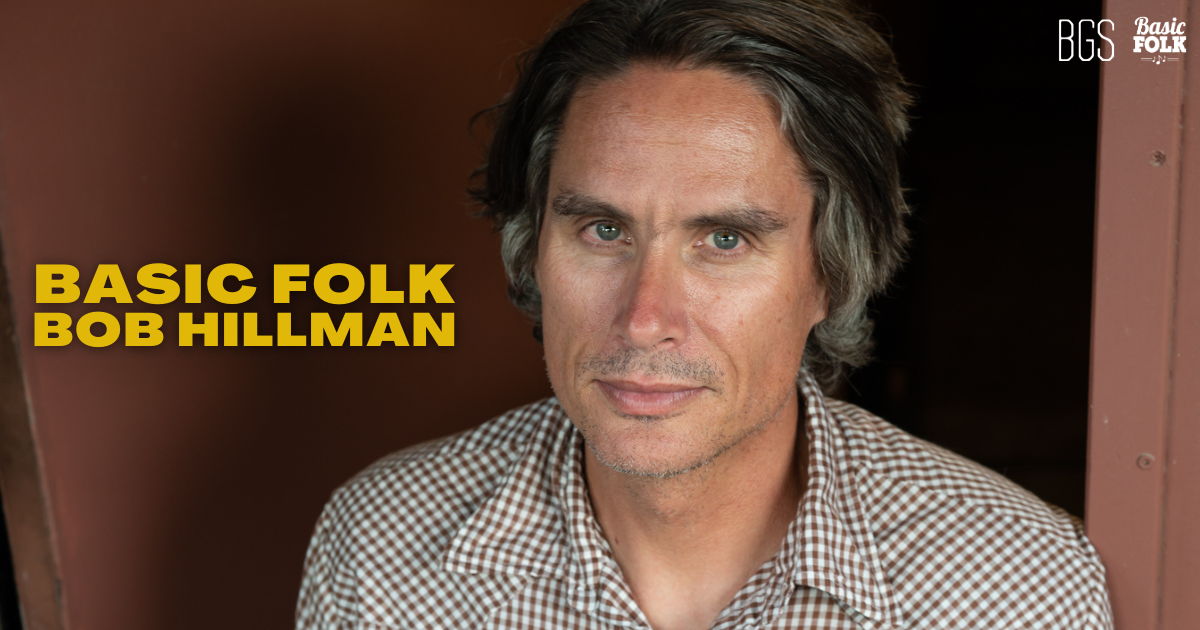
Bob Hillman had a real thing going on in the early 2000s. He had made waves in New York City, rubbing shoulders with some of the finest songwriters of the era at places like Fast Folk and The Living Room. The singer-songwriter was creatively fulfilled, but not gaining the momentum needed to experience strategic growth in folk music. After opening a long list of dates for Suzanne Vega, Hillman decided it was time to step away and get back to business… school that is. He got his MBA in marketing and went on to hold a decent paying job for the next decade and a half, raising his family in the Bay Area.
After a layoff, Bob thought it was time to dig in again and started writing, recording, and performing. Since 2016, he’s released a couple of albums and an EP or two. The most recent is the mostly acoustic Downtown in the Rain. In our conversation, we talk about what it’s like to reignite his creative entrepreneurial musical spirit, how he used that energy in his corporate jobs, and also how he hopes to one day meet his singing partner on the EP, Maria Taylor.
While we could easily be mistaken for “a pair of demure young ladies playing in a mid-19th century parlor” as thoughtfully observed by Bluegrass Today some years ago, we are in fact drawn to folk music not for its wholesomeness, but for its realness and its capacity to have you at the edge, staring down the rocky cliffs of life into the depths of your humanity. The songs that endure and have been carried into the future often tend to have a lot of darkness balanced with beauty (reverence and irreverence), because that’s what resonates with folks. It’s what we’re made of. And anyone who dares to sing complex truths and carry stories around in their heads can be a folk rebel.
On our new album, Listen to the World Spin, we stopped worrying about how traditional we sound or “should” sound and just made the music we wanted to make. These songs tend to have themes of the contrast between connection, solitude, our personal struggles, and how we relate to the greater world around us. We ask a lot of questions on this album, the answers to which could be complicated, but ultimately are simple because there is no answer. Sometimes the best thing one can do in life is just listen.
This playlist of songs features friends, heroes, and legends; inspiratoria from our pasts and present. As we refuse to put ourselves into a musical box, so too do the artists on this playlist. Best enjoyed on a long walk or drive, preferably alone or with someone who gives you company without robbing you of your sense of solitude. Much love, – W & E, Paper Wings
“Same Old Man” – Karen Dalton
I love this combination of rough old-time banjo and electric guitar. What a voice. – EM
“Nine Hundred Miles” – Barbara Dane
I remember hearing this track for the first time on Democracy Now and it hit me as being so so cool… a feeling I only really get from punk music and raw, gritty folk. If you haven’t heard of Barbara Dane, you must look her up. She was a very involved activist during the civil rights movement and also wrote some very sharp political songs. – WF
“Sunlight” – Rushad Eggleston
I am a huge fan of the cello goblin’s love song era. – EM
“I don’t love nobody” – Elizabeth Cotten
Nobody plays guitar this good. Elizabeth Cotten is a legend, not much else to say. – WF
“I’ll Wash Your Love From My Heart” – Hazel Dickens & Alice Gerrard
Hazel & Alice are such heroes of ours! Independent, fierce, deeply committed humanists and musicians who have shone light on the path of living a life that is true to those values. – EM
“What Will We Do?” – Foghorn Stringband
Reeb Willms and Nadine Landry are true modern badasses. This track features them singing a capella on this foghorn record, and somehow it’s just as energetic and captivating as when the whole band is playing. They are incredible instrumentalists, but they don’t even need their instruments to make really good music. – WF
“No Reason” – Sunny War
I first heard Sunny play this song live in Nashville and the guitar part instantly stuck in my head. It’s so satisfying, my brain craves it. – EM
“Bad Repetation” – Woody Guthrie
From the spelling of the title, to the pronunciation of “window,” to the fact that the timing changes on every refrain and I still haven’t worked it out, Woody is the epitome of bad-boy-American-folk-singer-fun-rebel-friend. – WF
“Say Darlin’ Say” – Laura Veirs
It was bold to do this song this way with electric guitar. The hook at the end gets stuck in my head from time to time. There are so many poorly reimagined/re-harmonized trad songs, and to me, this one works because it is sparse, it is catchy, and it isn’t perfect. – WF
“Lopin’ Along Through the Cosmos” – Judee Sill
Our friend John Mailander turned me onto Judee Sill in 2019 and I listened to nothing but her for months, absolutely obsessed. The words to this song mean so much to me, “However we are is ok.” Nobody writes a melody like Judee. – EM
“Cumberland Gap” – Spencer & Rains
I remember hearing Howard and Tricia practicing this version of “Cumberland Gap” at Clifftop as they were camped next to me and being totally obsessed. I don’t know where they dug up this version, but it’s so fun and a good reminder that even when you think you know the coolest version of a song, there is probably a cooler one still out there. Also, this whole album is fun and you can even hear Emily play bowed bass on it, watch out. – WF
“Chewing Gum” – The Carter Family
I dare you to jump rope with your best friend to this song and try not to laugh when you sing the words, “I wouldn’t have a doctor, I’ll tell you the reason why/ He rides all over the country and makes the people die.” – WF
“Left Hand Lane” – Paper Wings
We wrote this song on a night drive home to Berkeley, talking about doing our taxes and being afraid of accidentally doing them wrong. We had borrowed a car from our friend Vynce. I somehow managed to live in the San Francisco Bay Area for 7 years and never had a Fastrak beeper (the toll taking company for bridges, express lanes, IYKYK) but we got to live that Fastrak life on this particular trip and it made it into the song. Thanks Vynce!! – EM
“Pretty Bird” – Laurie Lewis & Linda Ronstadt
I listened to Laurie’s albums growing up and long before I even played music. I am lucky now to call her a dear friend. I love her writing and her taste in covers. To some this might be a song about a little bird but it takes next to no imagination to hear it cautioning a young woman “he would only clip your wings.” – EM
Photo Credit: Kale Chesney
This website uses cookies to improve your experience. We'll assume you're ok with this, but you can opt-out if you wish.AcceptRejectRead More
Privacy & Cookies Policy
Privacy Overview
This website uses cookies to improve your experience while you navigate through the website. Out of these, the cookies that are categorized as necessary are stored on your browser as they are essential for the working of basic functionalities of the website. We also use third-party cookies that help us analyze and understand how you use this website. These cookies will be stored in your browser only with your consent. You also have the option to opt-out of these cookies. But opting out of some of these cookies may affect your browsing experience.
Necessary cookies are absolutely essential for the website to function properly. This category only includes cookies that ensures basic functionalities and security features of the website. These cookies do not store any personal information.
Any cookies that may not be particularly necessary for the website to function and is used specifically to collect user personal data via analytics, ads, other embedded contents are termed as non-necessary cookies. It is mandatory to procure user consent prior to running these cookies on your website.