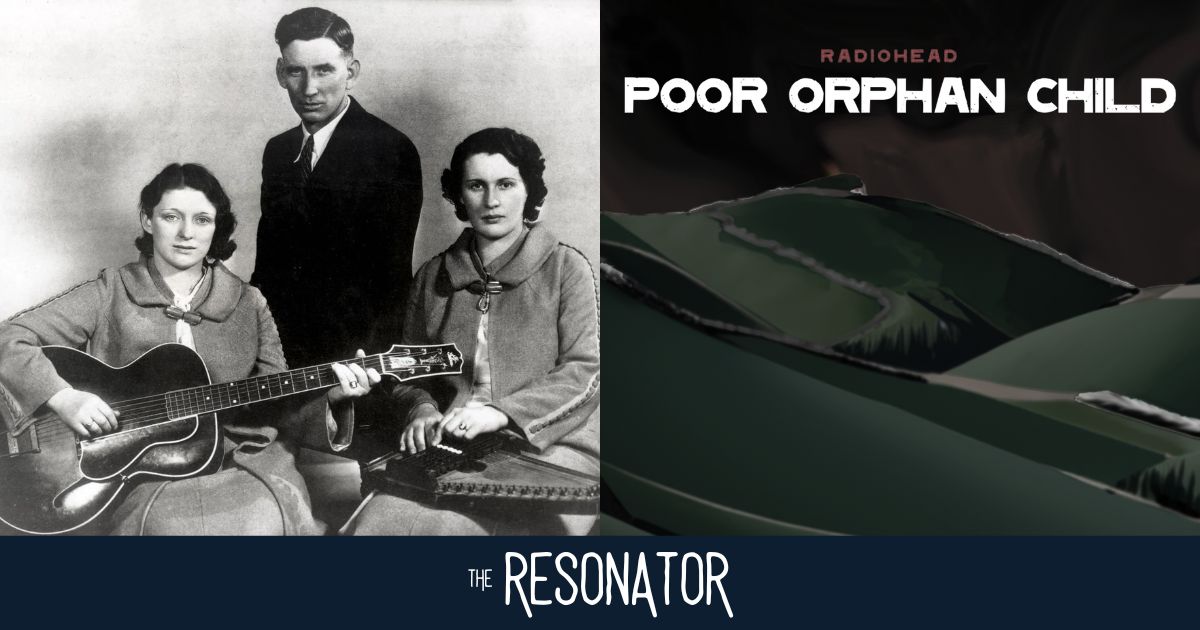
ENGLAND, UK — After a seven year hiatus, Radiohead, the iconic alt-rock band known for its genre-defying sound, has announced their latest endeavor: a tribute to American country-folk pioneers, The Carter Family.
“There is no Kid A without ‘Wabash Cannonball,’” said lead singer Thom Yorke, speaking from the glass orb he calls home in Oxfordshire.
“I felt it was time to finally pay tribute to the only group Radiohead has consistently ripped off for years.”
The new album is a radical departure for Radiohead and will contain no original compositions. Instead, it’s a musical scrapbook of early Carter Family classics like “Poor Orphan Child” and “Single Girl, Married Girl.”
“I like it because the songs aren’t your typical Thom Yorke word salad,” guitarist Johnny Greenwood quipped. “When Sara Carter sings about a wandering boy, it’s not a cryptic reference to late stage capitalism. It’s literally about a time she misplaced a kid and couldn’t find it.”
Radiohead fans were thrown into a whirlwind of excitement with the announcement of the new record. However, tensions within the band were revealed when a demo track from the album leaked online. The tune “John Hardy Was a Desperate Little Man” features Yorke on vocals, Colin Greenwood on upright bass, Ed O’Brien on autoharp, and Phil Selway on spoons. But when Johnny Greenwood attempted to distort a 1928 Gibson L-5 through a Korg Kaoss Pad, it led to an expletive-laced tirade from Yorke.
“You put a f—ing sampler on Mother Maybelle and I’ll rip your f—ing throat out!” Yorke is heard screaming, followed by a loud crash before the recording is cut short. Greenwood was later seen exiting a clinic in rural Abingdon, Virginia with a bandaged head and a newfound appreciation for the dobro.
“I suppose I was ready to move on from all the squawks and beeps and boops I normally toss in there anyway,” he smiled sadly.
Radiohead’s upcoming 2024 summer tour schedule is as surprising as their newfound Carters obsession, and includes appearances at festivals like the Silver Dollar City Pick Fest and Tidewater Tunes Crab Boil before settling into a bi-weekly jam at Shenandoah Pizza Co.
Greg Hess is a comedy writer and performer in Los Angeles. His work has been featured in The American Bystander, The Onion, Shouts & Murmurs, Points in Case, and he cohosts the hit satirical podcast MEGA.
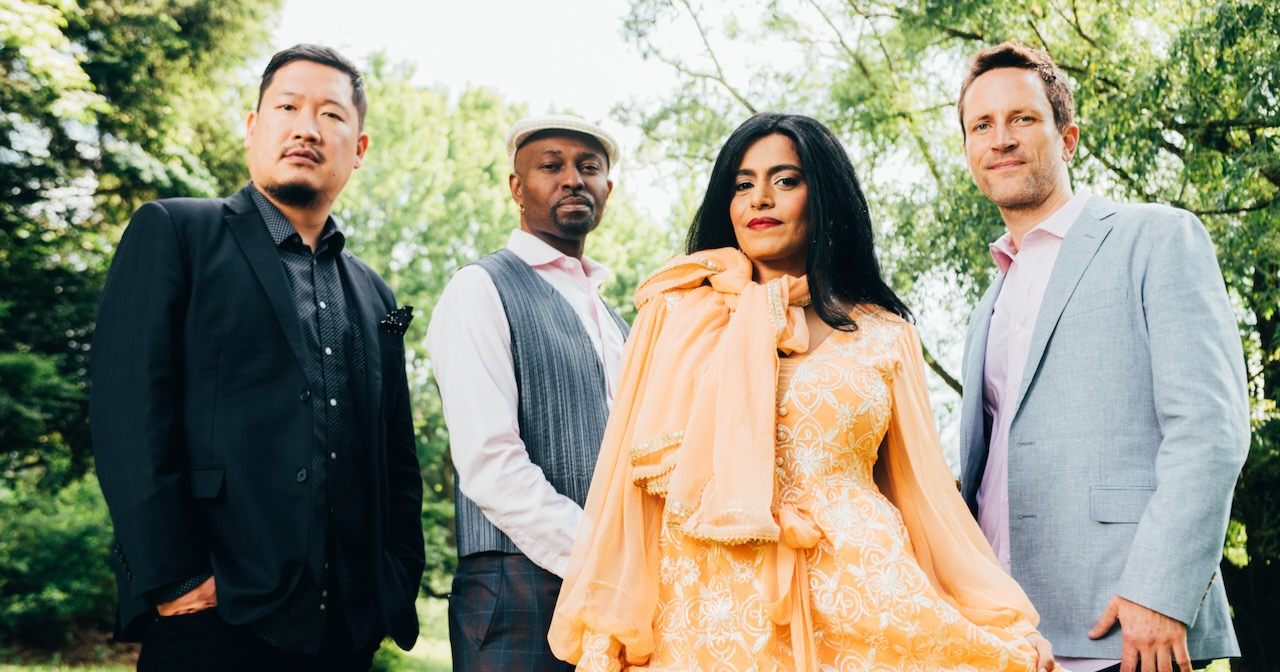
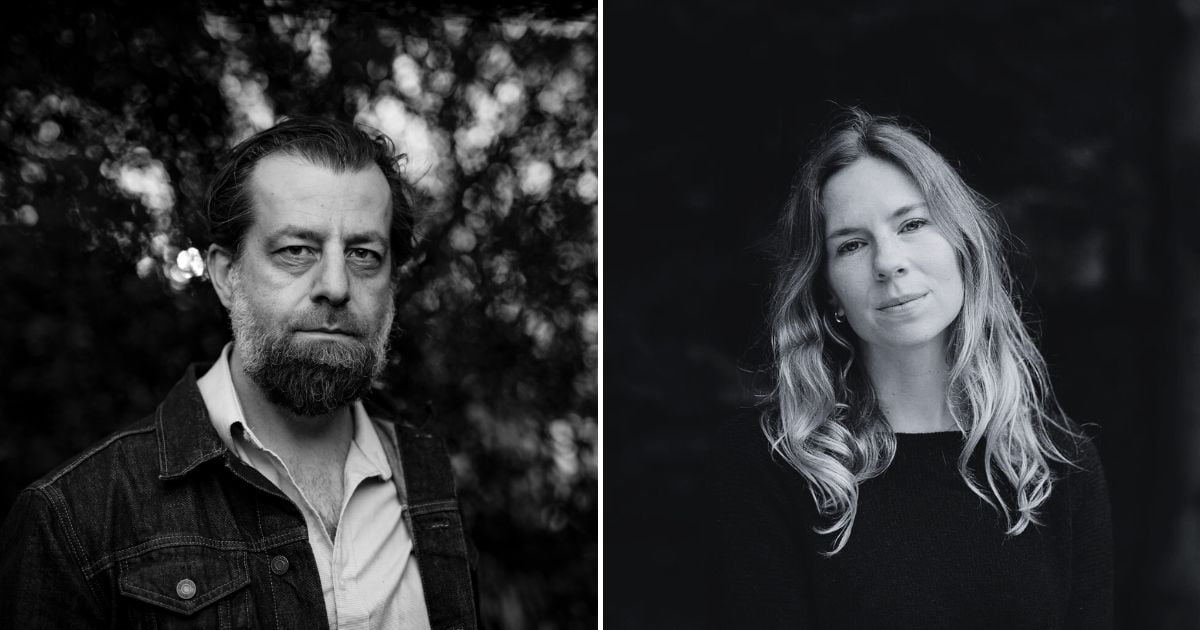
The members of American Patchwork Quartet present an array of diverse backgrounds – both musical and cultural. The group is made up of Clay Ross, multi-Grammy winning guitarist and founder of Gullah group Ranky Tanky; Grammy-winning Hindustani classical vocalist, Falguni “Falu” Shah; internationally acclaimed jazz bassist, Yasushi Nakamura; and Juno Award-winning drummer, Clarence Penn. However, even with the variety of identities and backgrounds they do represent, the ensemble makes it clear in their live performances and in every conversation they have that “APQ” is not a group made for the sake of some exaggerated or token sense of unity. Despite their most prominent accolades and individual backgrounds, this group isn’t a concept band or a supergroup made for shock value.
American Patchwork Quartet was born from a foundation of genuine friendship forged between four people connecting with one another, rather than four musicians immediately rushing to talk shop. It was from there that interest in the differences the way each of them interact with and understand music, inspired the idea to form “APQ.” The group would discover through their curiosity things both mutual and unique to their relationships with music – as well as things mutual and unique to their shared identities as Americans. It’s this aspect of APQ’s bond that made American folksongs the bedrock of their repertoire for performances and their newly released, self-titled debut, which includes longstanding American folk fare like “Shenandoah,” “Wayfaring Stranger,” “Gone for Soldier,” and “Beneath the Willow.”
Through an abundance of performances that have taken them to various regions of the U.S. – and now an album of painstakingly arranged and honed songs – APQ is prepared to show and tell how individuals such as themselves can be connected through contrast. They showcase how folk music can tell specific stories of people, places, and times and can stay true to its past while adopting a new present and future – just the way one does when immigrating to somewhere new.
After attending one of APQ’s performances, I connected with the group to share their story with the diverse community of BGS and beyond, speaking with guitarist-vocalist Clay Ross and vocalist Falu Shah. Our conversation, via Zoom, stretched between New York and Arizona, just days before the group embarked on a cross-country album release tour, which kicked off in Princeton, New Jersey on February 9.
What brought you all together to form a quartet, particularly one that’s driven by more than the aim to “make music for a living?”
Clay Ross: It really started with my relationship with Falu [Shah]. We were working at Carnegie Hall as teaching artists. At least twice a week we’d be together either writing songs or developing a curriculum to teach our students and we really enjoyed being together and we enjoyed becoming friends.
At that time, I was [also] getting Ranky Tanky started and doing a lot of research in the folk archives of Alan Lomax, Guy Carawan and other ethnomusicologists that collected songs from across the United States. One day, I asked Falu, “Tell me what you think of this song, ‘Pretty Saro.'” She listened to it, loved it, and she learned it. Then we learned how to sing it together. We just felt like “Wow, this is something really special!” And we liked the idea of collaborating.
Around the same time, I met Clarence Penn at the Monterey Jazz Festival. We ended up on this flight that got canceled on the way back to New York. So we were in this airport for 10 hours, talking and bonding over all these life things and not about music at all. We became friends first, which was a really great way to start a collaboration. I said, “We need to find a bassist,” and we both immediately thought of Yasushi Nakamura – one of the first musicians that I ever played with when I came to New York 20 years ago. Clarence was playing with him that whole time and they’re like brothers. Yasushi is a family man, he’s got two kids, and so we’re all really connected beyond the music. We connected as people and we can relate to one another as parents and as human beings.
I think between meeting Clarence and knowing that I wanted to deepen this collaboration with Falu somehow, that was where the idea [for APQ] was born. I felt like, we’re all American, you know? That’s the one thing that connects us, no matter how different we are and how radically different our pasts and our backgrounds may be. We are now all connected as Americans and so we all have some access and an entry point into these American folksongs. They can be a part of our story now, whether they were a part of our traditions up until now or not.
Falu, as both a U.S. immigrant and a vocalist primarily trained in Indian classical rather than Western music, how was your experience in becoming part of APQ?
Falu Shah: For me, American folk music was something my mother only played records of. I grew up in India, in Mumbai, and my mom was a big fan of Bob Dylan and Emmylou Harris and growing up she played this music, which I found absolutely intriguing. We only had one one record store in the entire city of Bombay and it was called Rhythm House. My mom had to travel 45 minutes in a train to get to this record store, stay there, and stand in a line for four or five hours. She would bring Michael Jackson and I would think, “Oh, my goodness, why would you bring me all these [records]?” And she said, “Because I want you to have a broad vocabulary of music, not just Indian classical.”
The biggest difference I found in both music styles is harmony. Sometimes I feel Western music is very delighted to use chords. And harmony context was very different for me. Clay used to tell me to sing in a different key. And I’m like, “How do I sing like that?” It’s a different style of learning. So in Carnegie, when we were doing all the songs and all the writing, Clay used to always switch harmonies, and I thought, “I really like this concept.” That was the first thing that intrigued me: that Clay would never sing what I sang – he would always find another note and he would completely change the melody of that song, but it sounded so beautiful when layered together. I had to unlearn a lot of things to learn how to sing [American folk] music. So my journey has been always as a student. I still consider myself as a student and I’m always going to APQ concerts and rehearsals thinking, “What can I learn this time?”
How does APQ decide on repertoire to explore, interpret, and perform?
FS: Clay will send me a song and I will find a folk melody or an [Indian] classical raga that is close to it. And if it’s not, then I’ll tell Clay, “I don’t like this song.” …When I told Clay, “I love this, I don’t like this,” it’s based upon this [idea] of what can I as an immigrant and Indian person, what can I bring to this song that already doesn’t exist? There are so many people who have already sung it and they have sung it so beautifully. What am I adding? Something has to relate because our cultures are so different. For us to break the boundaries of continents and lines between us, we had to connect with the beautiful harmony of music.
CR: I’m looking for songs that are spiritual and not religious – and that celebrate man’s humanity to man. And that speak to the universal qualities of all people – be it love, nature, heartache and longing, loss, or joy.
How do you balance the idea of APQ’s music existing as “teaching tools” or “portals to history” with the idea that music can and should be entertaining?
CR: It’s an organic process of creation that I gravitate towards things that are both entertaining and fun. And [things that] also have a depth and that can guide you into a whole world – whether it’s history or emotional exploration. Because really, for me, I’m trying to live. I’m trying to live in those big questions of like, “Why are we here? Where are we headed? Where have we been? What does it all mean?”
How has the journey been working with one another toward the goal of inspiring enthusiasm and curiosity around multiculturalism through folk music?
CR: I think any endeavor you embark upon with other people, and it doesn’t matter if they’re your own family and your own blood, it’s always a negotiation with oneself… and learning to appreciate the positive surprises that come out of it.
FS: [Clay, Clarence Penn, and Yasushi Nakamura] know rock and they know jazz and they know the [American] culture. I had to do research. I have to give [Clay] microtones that are proper to the mood of the song. Indian music is very balanced and very thought out. I had to have chemistry with Yasushi and Clarence. I kept telling Clay, “I need to understand more to play with them.” I’ve always tried to figure out my journey as a musician.
CR: I think that [Falu’s] persistence is what gave [APQ] life. She could have very easily had an attitude of “I don’t do this.” Falu has had to bend far more than we’ve had to bend to her. The frame of what we’re dealing with is American music. She’s adapted to that frame. I think that process in and of itself is what this band is about. We’ve definitely had to tap into our best human qualities to get to this music. I’m so proud of this music just for this reason, for what it represents, what we’ve had to live to arrive at this document, this album, that we have now.
Where do you think folk music can find its place in a world that often looks ahead, rather than stopping to contemplate who and what’s around us in a meaningful and lasting way?
CR: I think folk music will continue to exist in a place of meaning and quality. [Folksongs] may be ignored in the short term, but in the long term they will remain. We all just have to do our best to find our tribe of people who appreciate what we do… I feel this is an album that is a document that will last, because people can go back to it.
FS: I feel folk music is always going to be amazing, because it is by the people, for the people. And it’s inherited from generation to generation and something that’s worked for 400 years. There is no doubt about it. Our children’s children are going to listen to and learn and sing ‘Shenandoah’ – I guarantee it – because it the power of folk music is so unique and so important and strong that if it has worked for 400 years, I don’t know why it would not work for another 400 years or more.
Barbaro, who take their name from the famous Kentucky racehorse whose life was tragically short, have recently released About the Winter, their second full-length album.
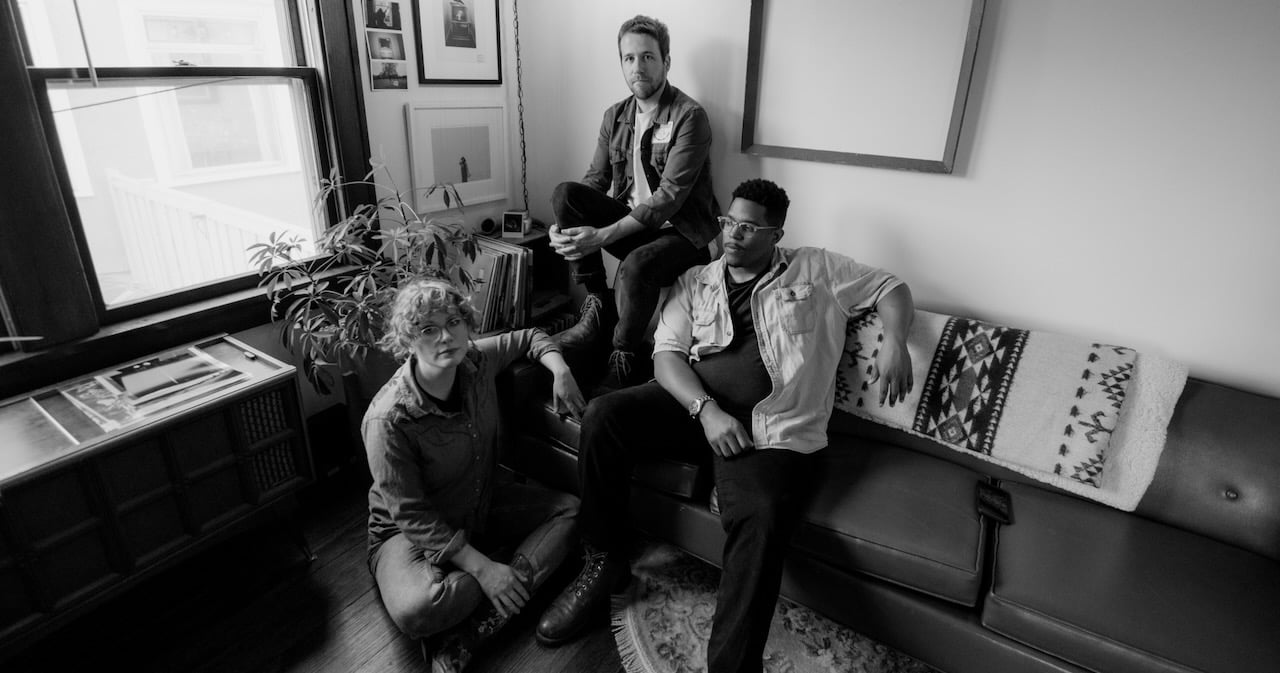
The band was founded as a duo by Kyle Shelstad and Isaac Sammis in 2017, later welcoming Rachel Calvert and Jason Wells into the fold. They released Dressed in Roses in 2020, and while Sammis departed the band after the birth of his second child, he contributed heavily to the new album and left a great deal of inspiration with the rest of his bandmates.
About the Winter, which was co-produced by Shelstad and Brian Joseph (Bon Iver, Sufjan Stevens), features nine original tracks that seamlessly weave in and out of one another, gently guiding the listener through vulnerable lyrics, intimate soundscapes, and technical prowess.
BGS caught up with Barbaro following their month-long album release tour to chat about the new record, their musical process, and recent world travels.
The textures on this album – while ranging from synths and samples to pizzicato bass and fiddle – maintain a familiar sonic foundation for each of these songs to sink into. How did you go about selecting and arranging the material for this record?
Kyle Shelstad: As a group, I think we tend to gravitate towards tunes that we can connect with on some sort of deeper level, tunes that we can internalize in some way that provokes an emotional reaction in ourselves and hopefully those listening. This is the basis for all our song choices in this group, finding tunes that allow our whole selves to buy into the intimate, distant, delicate, and coarse moments that help create the dynamic range found in many of these tunes.
Regarding the arrangements, some of this was pre-planned going into the recording, but many of these songs were somewhat unfinished going in. Our goal was to explore in the studio and Brian allowed us a space to be creative and experimental with these songs. For example, there is a moment in “Subpoena Colada” where Jason is crunching a plastic water bottle full of leaves into the microphone… it’s a sick solo, check it out. Brian took all these experiments and helped us make them musical.
There’s a line in the album’s press release that caught me: “Barbaro’s compositions prioritize texture and expression over technical virtuosity.” I really like that, considering that two of you – Calvert (fiddle) and Wells (bass) – come from the classical world, whereas Shelstad has a stringband background. That said, this music is thoughtfully orchestrated, which I know must require a fair amount of calculation and precision. When putting this music together, where do you find the balance between those two worlds?
Jason Wells: I’d say the balance comes more from each of our instincts than from traditional orchestration. Since Kyle writes the material and brings the songs to the rest of us, I’d say the base of the music is in the string band tradition, but the way Kyle writes and how he uses space and texture is really unique and lends itself to a more classical approach to filling out the other parts.
What makes the songs work is each member’s commitment to really listening for what each song needs and not adding any more than that. As we workshop new material, each of us will try different things and only keep what seems essential to the song, and through that process the form of the song takes shape. It’s a really natural process.
I love the Bruegel piece, “The Hunters in the Snow,” that you chose for the album cover, and the way that it pairs with this music. Can you tell me more about how you came to feature the famous painting alongside this music?
Rachel Calvert: I was researching how winter shows up across art history when I came across the Bruegel painting. I was surprised that it was a 16th century painting, it looked more modern to me. I was seeking something that evoked emotional ambiguity, nostalgia, and the collision of the natural and manmade – and it hit all the marks! I also noticed that the colors matched up with the Barbaro “uniform.” We typically show up to gigs wearing denim, black, and earth tones. “Hunters in the Snow” was already one of us!
The farewell track, “Ike’s Farewell,” is obviously much more than a lone instrumental to close out the album – it’s clear that Isaac Sammis had a big impact on this music, both through his co-founding of the band, and expressive banjo playing. While I know that someone leaving the band can be difficult to navigate musically, I like that Sammis’ contributions are celebrated on this album. I was curious if you could attest to the influence, musically or otherwise, that he’s left with you.
JW: Man, Isaac’s influence on the band’s sound can’t be overstated. He has this unique ability to really push the boundaries of sound and tonality, and I attribute his instinct for tension and release to be one of the primary reasons our songs flow compositionally the way that they do. In addition to his stellar banjo playing, Isaac’s also a hell of a guitar player and you can hear him adding electric guitar effects and note bends on several of the tracks. Those lines and sounds he laid down ended up being foundational to the new sound direction for the album, so his influence is everywhere!
This is unrelated to the record, but I wanted to ask about your 2023 American Music Abroad tour. That seems like a pretty special thing to do – to get to journey to Qatar, Turkey, and Bulgaria to share this music. I know it was after the recording of this album, but how do you think that tour influenced the band?
RC: Our travels abroad reaffirmed our overall mission – to form pathways for all sorts of folks to connect to both their interior emotional world, and to the people and place that form communities around them. Bringing audiences to tears, even through cultural and language barriers, was a powerful reminder that music and art are indeed universal languages that allow us to see the sparks of life and love within ourselves and others.
With your album release tour wrapped up, what’s on Barbaro’s horizon for 2024?
KS: Barb is excited to keep working on and recording new music. We really enjoy the process of writing together and look forward to working on a fresh batch of tunes. I think we found a voice on this record that is uniquely ours, and we intend to keep exploring that.
(Editor’s Note: Musician, forager, and ‘Can I Eat This?‘ host Sean Rowe recently chatted with singer-songwriter and instrumentalist Hannah Read for BGS about her new instrumental fiddle album, The Fungi Sessions, which was inspired by her mycologist father, who passed away in 2020. Their conversation has been lightly edited for flow and clarity.)
Sean Rowe: This is really cool for me, because obviously BGS had secret reasons for pairing us together and I think they made a good choice. I feel like we have some interesting things in common…
Let’s start with your origin. You were born in Scotland, correct? Whereabouts?
Hannah Read: Yep. I was born in Edinburgh. It’s a gorgeous city. I mean, it really is. I was born in Edinburgh, grew up there, and then I also lived on the Isle of Eigg, which is a wee island off the west coast of Scotland. When we lived there – I lived there with my mom and my sister – there were 60 people living on the island. Now it’s up to 120. It’s this incredible, incredible island, and that’s where I really got into music. We lived there full time when I was seven in a little house completely off the grid with no running water or electricity. Music just became my thing at that point.
That was kind of my Edinburgh – Edinburgh to Eigg and back. We were back and forth a lot until I was 18.
SR: I definitely want to talk about this new album, but before we get into that, can you tell me a little bit about the music you grew up with and also how it changed or evolved when you moved to the States?
HR: I grew up playing trad music. I’m heavily immersed in that scene. As I’m sure you’re well aware, the Scottish trad scene is thriving and has been thriving forever – at least in my lifetime. I was very involved in that. I was also very involved in the Scottish jazz scene. That was a big part of my upbringing.
My mum played music growing up. She played cello and we were around a lot of music. My dad was not a musician, but he listened. His record collection was absolutely bonkers and he had hitchhiked across America three or four times in the late ‘60s, early ‘70s, and was super into all the folk revival stuff. I was hearing a lot of that growing up, a lot of California folk stuff. It’s funny that I’m living here now, but a big part of my upbringing was listening to a lot of that stuff, alongside going and seeing any acts that were coming over from America, doing the circuit over there. [At] about 15 or 16 years old, I got super into jazz singing. And actually, I went to Paris and studied jazz vocals for a year when I was 18. I did like a one-year diploma there. Then I went over to Berklee College of Music, because my underlying thing, even when I was doing that, was that fiddle music was my true calling.
SR: And why the fiddle? What does it do for you?
Hannah Read: Oh, the fiddle. When I play the fiddle – I was actually playing yesterday and I had put it into a different tuning, it’s like F B, F B, this tuning that I’d just heard about a couple of nights ago. It doesn’t always do this, but the way it just kind of evokes so much, it’s such a deep resonance in my body, basically. I think I felt that my whole life when I’ve been playing the fiddle, being able to play with people, the community. The fiddle has opened up so many doors for me, it’s just become my whole community.
A couple of weeks ago, I was in Louisiana at Blackpot Festival. There’s this fiddle player called Rosie Newton who lives up in Ithaca and she was down there. She’s a great Cajun and old-time player and we hadn’t actually played tunes before, but we sat down and kind of like locked our knees [together] and played tunes. The way she plays, I was so interested to actually sit with her and play music. As you know, when you are playing just locked [in], there’s nothing in my mind as magical as when a fiddle on fiddle groove together.
SR: Aside from music, I’m also a forager. I have been for many years. I know that your father was a mycologist, how did you get into that world? What are some of your early memories around it? Your dad, I assume maybe he took you out on field trips, showing you things. Tell me about it.
HR: We were around it from when I was born, and I’ve been thinking about it a lot recently, obviously. You know, things from the salt shaker and pepper shaker in our house [were decorated] with little mushrooms. There was mushroomy stuff all over the walls – not in like a, “Bleh, we’re surrounded by mushrooms!” way, it was subtle, but it was very much there.
Dad had a lab at Edinburgh University. So when we would spend our weekends going to dad’s house, we would spend our weekends running around the labs at Edinburgh University. [I remember] the distinct smell of being in the biology lab at the university and checking out the new microscopes.
SR: Did you think it was weird? Compared to what your friends were doing or was it strange to you?
HR: My dad was so passionate, he was contagious. I think his passion for mycology, mushrooms, and his work has been a massive influence on me and my work and the passion that I have towards music and what I do. I mean, it’s an obsession, he was obsessed. Completely obsessed. And I am pretty obsessed with what I do, as well.
I remember going down to Newcastle, dad had some colleagues down there, friends down there, that we would go on forages in the woods with. He would also come over to Eigg and we would go out and look at mushrooms. We were always going off and getting chanterelles and puffballs. It was just what we did. He was always pointing them out. However, I think because it was Dad’s thing, and it was [always] around us, I never took the time to go, “Hmm, I’m going to learn more about this myself,” because I was surrounded by it. When people would talk about being into foraging or mushrooms suddenly I’m like, “Oh yeah, me too!” But, until dad passed away – three and a half years ago, at the beginning of the pandemic – and suddenly mushrooms. It almost felt like dad died and suddenly all this whole world opened up for me, because everybody was stuck at home and able to delve into these curiosities like fungi and being out in nature more, it became this thing. I was like, “Oh, this actually is my thing.”
But I don’t know that much about it. That was a funny bit. You know, the Fantastic Fungi film coming out and all of the buzz around that, and I actually did not realize until the last couple of months that my dad was friends with all of these people and I had met them all. I had met Paul Stamets. Dad was the president of the Royal Mycological Society – also the British Mycological Society. He was president, so he actually organized the 2010 world meeting which happened in Edinburgh at Usher Hall. All of these people came and I met them all then.
I played at the opening and closing event and I was around all of these people, but I never put two and two together until a couple of years ago when these films were coming out and there was all the buzz and until the album was about to come out. I had one of Dad’s colleagues say, “I’ll send the album to Paul Stamets and Merlin Sheldrake” – and all these other people.
So, over this time it had crossed my mind, “I’d like to learn more about this stuff.” I didn’t have the knowledge and I can’t quite talk about mushrooms – because there’s so many people that know way more than me, I feel underqualified – but anytime it came up and someone was like, “I do a lot of foraging,” and I’d [respond], “Oh, you do? I don’t, but I did.”
In the spring, the day after the anniversary of my dad passing, I was contacted by a mycologist at Edinburgh University called Dr. Edward Wallace. The topic of the email just said “Fungi music?” I was like, “What?” It just said, “I would love to commission you to write an album of fungi-inspired music. What do you think?”
Right away I was like, “Yes, this sounds amazing.” Turns out he’s about my age, he is also a fiddle player, and had been to see me play and I’d announced, “I’m playing a tune called ‘Waltz to a Fun Guy,’ which was this tune I wrote for my dad” – which was just a simple little waltz that was on my old-time record.
[Wallace] heard that and he thought, “I would love to hear more of this stuff with more of a focus.” That’s really where it came from. There was a grant from, the Welcome Trust, which is a trust in London, and they funded a full album. They gave me the opportunity to do whatever I wanted. It’s been a really, really interesting process. It came out of nowhere and it actually came at a perfect time… I gave myself a week in May to write the whole thing, because I felt that it was really important for this album to feel organic and feel really grounded and capture a moment in time.
SR: Putting limitations on yourself can sometimes really boost creativity – and art itself, I think, by the limitations. I think that has a lot to do with the kind of thought that’s involved, the analytical side of things can wreak havoc when overdone. When I record, I will record in completely new environments with all new people that I haven’t met before. Could be a total disaster, but it’s the act of creating these limitations that I think make for a kind of danger, it’s a kind of unknown territory. But that can also open things up in a way. It also makes me think of foraging.
This is kind of funny, but I have this kind of superstition where I always joke to myself that if I prepare too much to go out foraging, I’m not going to find what I’m looking for. It’s those moments when I’m really not even looking for that thing, or I’m open to whatever happens, that I find something good – and then I might not even have anywhere to put the stuff to take it back home. There’s a sort of magic in that. The limitations, that’s a really interesting idea all around I think.
HR: I totally agree with that.
SR: When you were approached with this idea for this album, did you immediately think, “Oh yeah, instrumental”? Or did you have to work this out in your brain, whether or not you were going to write songs or do it instrumental?
HR: Great question. My initial reaction was [all over the place]. I just had so many ideas, off the bat. I remember calling my sister after getting that email being like, “I can do this– Oh, could be a children’s album–, Oh, it could be this– Oh, it should be accessible for this…” But it came together slowly more and more. I got a bit more anxious about it and I was like, “Actually, Let’s keep it simple.” Nobody’s asked me for anything. I can do whatever I want here. Nobody is asking me for songs. Nobody is asking me for tunes. Then I was like, “I don’t actually know enough to write songs that will feel authentic.” It feels almost icky to me, writing about something that’s a very precious thing that I actually don’t have the knowledge to back up.
So I thought, keep it simple. I’m going to write, I’m going to just capture each tune. I want to capture a feel of some sort of different species. I actually reached out to one of my dad’s colleagues, Pat Hickey, who he used to work with at Edinburgh. He’s a scientist still based in Edinburgh, but not at the university. He and my dad used to make all these beautiful videos of mycelium growing, time lapse videos of them growing under these incredible microscopes. I asked him if he could send me a bunch of stuff and I just started watching those and seeing what came up.
If it was going to be lyrics and if stuff was going to naturally come that way, great! But it wasn’t. It was just instrumentals. I thought, “Great. This is going to be an instrumental record.” Volume 2 might have lyrics, but it also might not. I might collaborate with a poet, somebody who does have more knowledge on this stuff.
I think it would have been a very interesting, different thing if I had gone down the lyric route – and that door is not closed. I’m super keen to, I think that would involve collaboration. I would love to work with someone who does actually know a lot about it.
SR: Before we go through a few of the tracks, the first thing I’m very curious to know is about the interludes, because the little bit I read about them was that they include dirt and bark decomposing. How were those sounds acquired? It’s very cool.
Hannah Read: My friend, Charlie Van Kirk, lives up in Round Pond, Maine. He and I have been collaborating for years, but I really wanted the album to have something else – rather than just instruments. I wanted the listener to be taken on a journey.
I feel like there’s millions of fiddle tune records out there, but I’m glad that you went for a walk and listened to it. For me, [the goal was] having tracks and links that pull you down to the underworld or the undergrowth, where your imagination can go wherever it wants to go. Like the sounds of leaves. I gave Charlie full creative control with this. He’s a percussionist as well. I just wanted him to just go for it and see where it took him and just break up the album [with] little breathers. I really trust him as a collaborator and his musical instincts. The next album, I think might have significantly more of those sounds, I think they’re a crucial part of the album.
SR: If it were a film, they would be like a sort of filter on a film. A certain color that sort of wraps all of the songs together.
Let’s go through the tracks. When “Silverphae” comes on I get this ominous sense from it, but not a sinister kind of ominous. It’s more like a mysterious kind of feeling, but also inviting, like there’s something to see here. “Panellus Dancer” is the next track, that’s the one that’s in waltz [time], so there’s obviously a connection with dance. Are you referring to the glowing mushroom in this?
HR: There’s this book, which was my dad’s, but there’s a whole section on bioluminescent mushrooms and there are videos that go with it. I’m actually going to share some of the videos online soon. They’re so beautiful, you’ll love them. They’re just amazing.
SR: Totally get that. It kind of reminds me of jellyfish actually, in a way – the grace of it all. And that was another feeling I got from it, there’s a mischievous that came up for me, a playfulness to it, and also joy. I love that one.
I thought “Stinkhorn” was funny, because I do have an experience with that mushroom and I think for most people, the smell comes to mind. But it’s such a celebratory song, I thought it was funny because what immediately came to my mind was kids smelling the stinkhorn and running to go get their friends. You know how kids do that? They love to have each other smell something that smells horrible. That was the image I was picturing, but why so happy about stinkhorn? Tell me about it.
HR: “Stinkhorn” is a bit of a curve ball in the record, because I know what a stinkhorn looks like. I know that they can be slightly repulsive. I just find them funny. They’re funny things. And I also just think the name “Stinkhorn” is a great old-time [tune] name. I was watching stinkhorn mycelium and it’s so beautiful, it’s absolutely stunning. These videos, it’s absolutely beautiful, it’s kind of the opposite of what the stinkhorn physical model looks like.
SR: I felt like it had to be some kind of comedy in there – and it is funny too. It makes me think of the phallic nature of a lot of mushrooms. It’s almost like nature is joking around, like it ran out of ideas to you know to for a unique design. So it’s like I’ll just use this. I got a kick out of that one.
The next song is definitely a departure from the last one, but I was curious about the title, “Celia.” Is that someone’s name or is that related to mushrooms somehow?
HR: That was related to mycelium!
SR: I wasn’t even paying attention to the title of the album when I was listening to it, but I wrote down a couple of things and one of them was “interconnectedness.” Also the mechanistic imagery of nature. In other words, these sort of woven tapestries – mycelium is like exactly what I’m describing here.
I remember I had a psilocybin experience a while back – I know a lot of people share this kind of thing too – where you’re seeing a lot of connectedness in things, like gears in nature. That’s what was going on in my head during “Celia.” So well done.
The next one, “Valley Fever,” from this I got a deep sense of solitude, almost like trying to shut out the noise of life and look closer. Which, is very much a common theme that comes over me in nature, but I felt like this one was powerful. It was like drawing me into a quiet that the other songs hadn’t necessarily done as much.
HR: That is very interesting. This one was written to create a lone feeling. It feels very Western. I was drawing from a few images that I’d been given that were quite orange and they felt like the desert. I was rolling with that. I was writing it [imagining] Utah, and a horse, like just a lone cowboy riding on a horse.
But the more I got into it, the more I was struggling with the name. Struggling, because that [western place] was where I’d been taken with it. I was like, “How does this link in? Is this random?” And then Edward [Wallace] was like, “There is a fungus that is only found in the desert, and it’s called Valley Fever.”
SR: That’s so cool.
HR: I feel like it does have a very lonely feeling and it feels sparse. And it feels sparse in the way we did it just fiddle and guitar and upright bass.
SR: I love that. This next song, “Nick’s,” is my favorite. I’m assuming that’s your father’s name? Nick? To me, this is the most melancholy song on the record. For me, melancholy is a different kind emotion than depression or sadness. It’s not those things. There’s a kind of sadness in it, but it’s almost like an acceptance at the same time. There’s a real beauty in that collective feeling, those things that work together to create that feeling of melancholy. It has a transient quality to it, too. It’s almost like a storm that comes in and is only there for a moment and then blows out, you know?
HR: God, well you nailed it on the head! That’s the one that I wrote the last day in the studio. I listened to everything else that we had done and I was like, “We’re missing this.” We need– I need this feeling. And that was the feeling. A feeling of a cathartic piece at the end of the album.
Because, it is a tribute for me. I wouldn’t have just made a mushroom-related album. I wouldn’t have come up with that if it hadn’t been for my dad. It wouldn’t be interesting. Why should I do that?
I didn’t know the rest of the order of the album at this point, but I knew I wanted to end the album with “Nick’s” and leave the listener with that [melancholy, cathartic] feeling. Because I feel like there’s also a hopefulness in that last track. It’s a very fragile piece for me.
The album came out 20th of October and on the 19th, the day before it released, I played the album at a launch show in Edinburgh. Played the whole thing top-to-bottom with the banjo player, Michael Starkey, who’s on the record, and Patrick Hickey, who I was talking about before, did a video for every track.
By the time it got to that last piece, it was so emotional. That piece is incredibly emotional to play, but it feels so important at that point, at the end of the whole suite. I was shocked and actually overwhelmed and very surprised to feel that way in the live performance. Suddenly, the emotions, I was trying to keep it together, but that’s what music is. That’s why I do this.
I’m really happy to hear that you enjoyed it, that’s a very special tune for me.
SR: I can imagine. I’m sure your father would be really proud of that – and of the whole record, but especially that one. Such a beautiful melody and you really captured the feeling.
Photo Credit: Sean Rowe by Joe Navas; Hannah Read by Samuel James Taylor.
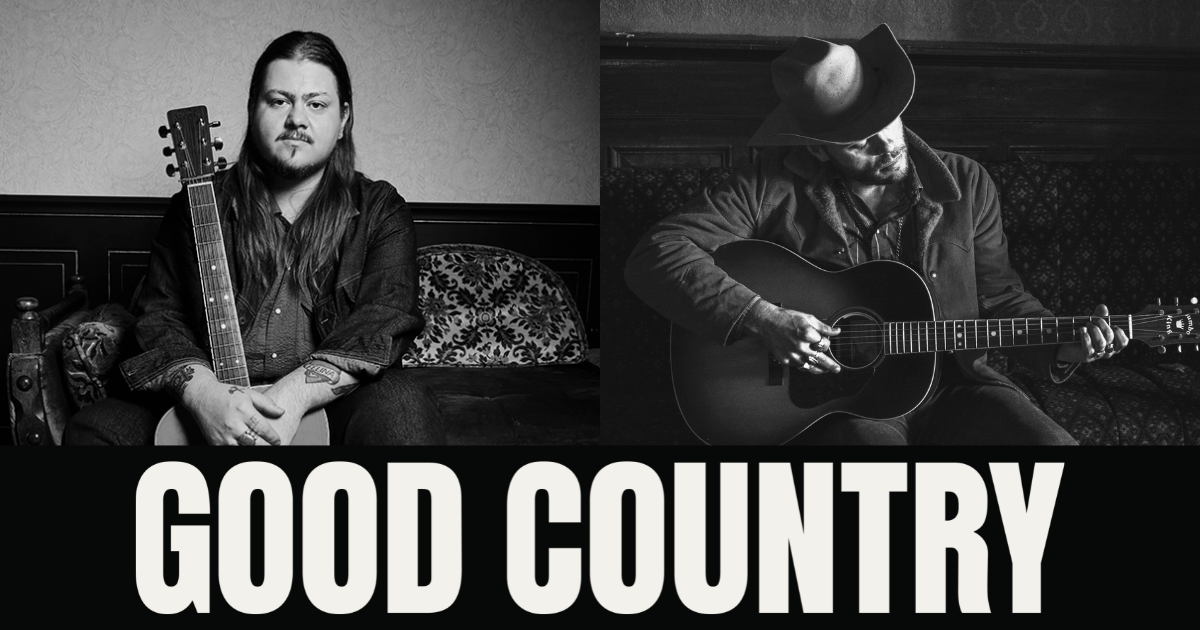
In advance of the release of Vincent Neil Emerson’s latest, critically-acclaimed album, The Golden Crystal Kingdom – which dropped on November 10 – BGS moderated a conversation between VNE and his friend and peer, country & western singer-songwriter and song-interpreter Charley Crockett.
Both artists cut their teeth in music venues in Texas a decade ago. In our conversation, they tell the story of how they came to know each other and discuss ways they protect each other within the business. They talk about covering and cutting each other’s songs and the importance of telling their truths.
Emerson’s new album, produced by Shooter Jennings, veers his sound toward warm ’60s rock and folk influences. He opens up to Charley and BGS about its creation process and what is on the horizon for him.
Charley Crockett: What’s up, Vincent?
Vincent Neil Emerson: What’s up, my boy?
CC: Another day, another dollar.
BGS: Tell me where you both are in the world right now.
VNE: I’m in Asheville, North Carolina, right now, at an Airbnb.
CC: I’m up here in San Luis Valley in Southern Colorado.
Both really nice places to be in the fall.
VNE: You ain’t wrong.
Can you give us a little bit of context about your relationship, where you know each other from, and how long you have been working together?
VNE: Charley, you wanna go?
CC: Oh man, I always tell that story; I wanna hear it from you.
VNE: I met Charley in Deep Ellum. We were playing around town, playing a lot of shows around there and Fort Worth. That was over 10 years ago, maybe?
CC: I was trying to think about it this morning. I think it had to be ’13 or ’14.
VNE: That’s crazy, man.
CC: He remembers it being at Adair Saloon; I remember it being at the Freeman. It really don’t matter, ’cause I’m sure it was both places.
VNE: I’m sure we went and had a drink at Adairs or something like that.
CC: I remember I walked up on him and said, “I like all them Justin Townes Earle songs.” And he said, “I only played one.” I always liked what he was doing, and he used to play solo and do the guitar pools up at Magnolia Motor Lounge all the time. He’d be up there smoking a cigarette, picking through them songs like Townes Van Zandt, and I thought, “Oh lord have mercy, this boy is a force to be reckoned with.”
VNE: Man, I felt the same way as soon as I heard you, brother. I remember a couple of nights I saw you at the Freeman with this band. You had a bunch of guys up on that tiny little stage, and you were just ripping through all these songs, taking all these old honky tonk songs and flipping them on their head and turning them into blues and vice versa. I always thought that was so cool, man.
CC: I don’t remember that well, but I guess you’re right. In those days, every gig we played for both me and Vincent, we ended up getting booked by the same folks, or they were all standing together in some bar, no matter if it was Ft. Worth or Nashville or Los Angeles. One way or another, all them same business folks been standing pretty close to me and Vincent. And that’s the truth.
Well, that’s convenient if you like to work together, I guess. Charley, do you have questions you want to dig in on?
CC: You know, Erin, I don’t even know what the hell we are doing?
Let’s talk about the release of Vincent’s new album.
CC: Well, let me just do this then. Everything he’s been putting out with Shooter [Jennings], like everything else he’s ever done…If you sit there looking at Vincent and he surprises you, it’s like, “Oh damn, I didn’t know old boy was gonna do that.” The very next thing he does, it just happens again — every single time. I remember when he was playing “7 Come 11” way before anybody gave a damn about him and was looking out for his interests or his career. He had all them songs in his pocket way before anybody had ideas or designs on him and his business. I’ve said for a long time that “7 Come 11” is one of the best folk songs written out of Texas in 20 years. Remember Central Track, Vincent?
VNE: Yeah, they did a lot of write-ups on music.
CC: I will never forget that stuff when you did that record and what you were doing live. Erin, he was playing for 50 bucks and a case of Lone Star in them dive bars in Fort Worth, you know? He was living in a 10×10 room. He was hardly ever even standing inside of the damn joint.
A handful of us showed up at the same time, and we are all moving on our own paths, but we’ve all stayed pretty close, or we damn sure weave it together quite a bit even if we get way out there, you know, in the territories, we always come back to each other. I think I met Leon Bridges right around the same time that I met Vincent. I met him in Deep Ellum, too. There is a guy who plays guitar with me now named Alexis Sanchez. He had a band back then, and he was playing at Club Dada there for some little festival, and Leon Bridges was standing there in a trench coat and a bowler hat. I venture to guess that me and Leon and Vincent met each other damn near about the same time. There were a lot of other folks like that. Ten years later, especially for some Texas guys, you know, we’ve all grown a lot, and I think we have always supported each other and loved each others’ music. That’s only grown, and Vincent is standing there as one of the premier, original, authentic talents to come out of Texas since the turn of the damn century. I’m not blowing smoke. I’m just stating what is already happening.
VNE: Man, that is high praise. I appreciate you sayin’ that, Charley.
CC: Well, they want all this shit to write about it, but that’s just the truth. He was playing in Fort Worth and like I said, playing for all that low money. They were calling him Lefty. Why did they call you Lefty? I figured it was because you had a black eye or something.
VNE: Yeah, I had my left eye knocked out of the socket one time, and the nickname stuck for a while.
CC: I remember they wrote about you pretty salaciously there in the Fort Worth Weekly. I know a thing or two about that myself.
VNE: I would say it was because they were trying to sell papers, but it was a free publication.
CC: Shit, they are selling advertisements. I think the Dallas Observer is still doing that to me.
He was playing them bars, we were playing them bars. I don’t know which one of us is which, but more often than not, he sure seems like if I’m Waylon, he’s Willie. I have felt like that for a long time. You could change the names. I think about this stuff a lot. The business folks, it is always hard to tell what they are doing, but you can be sure they are rolling dice and betting and gambling on folks. It ends up being, a guy like Vincent that somebody like me can lean on a lot more. We can trust those guys, and I’m real happy with who I’m working with, and I’m sure Vincent is, too. It is the other artists living life for the song that gets us through. I know I feel like that about Vincent, and I feel like that about a lot of other guys I don’t know as well as him.
Kind of like Johnny Cash said, “We are all family, even though some of us barely know each other.” I think it is because we can see each other and know we are in the same boat and in that way, care more for each other than other people would. I think it is pretty serious. It is life and death.
VNE: That’s a good feeling to not feel so alone in that way and have people out there and doing things similar to you. They probably think a lot of the same thoughts. Me and you are good buddies, Charley, and I feel that way, too. I feel like some guys out there like Tyler Childers – I really respect him, and I feel like he is in the same boat as us. I’m not as well known as you guys, but I think none of that really matters. I think what it comes down to is that we are all songwriters trying to make our own stories happen and be true to ourselves and honest to the world. I think that the reason we can relate to each other is the same reason the fans can relate. Honesty will cut through anything and bring people together.
CC: One way or another, them folks we are selling tickets to, they know.
VNE: You can’t fake the funk, I guess.
CC: Eventually, it comes through. Speaking of Tyler Childers, we ended up on the same plane flying from Nashville to Austin recently… I was there for the Country Music Hall of Fame induction and I didn’t want to go. I get real antisocial and want to hide out from everybody and shit, and I went to Nashville kicking and screaming. Tanya Tucker was getting inducted to the Hall of Fame with a couple of other people. Patty Loveless and Bob McDill, who I wasn’t that familiar with. I had thought that he’d written the Jimmy C. Newman song, “Louisiana Saturday Night”, which I know real well. To be honest with you, it is the only reason I agreed to go out there, ’cause I love singing that song. I made a lot of money writing songs off of that song, so I figured I owed whoever the songwriter was. Long story short, there in the last week, I found out it was a different “Louisiana Saturday Night,” regularly mistakenly attributed to Bob McDill cause he wrote a totally separate song called “Louisiana Saturday Night” that Mel McDaniel had a big hit with, and that’s the one that goes,
“Well, you get down the fiddle and you get down the bow Kick off your shoes and you throw ’em on the floor Dance in the kitchen ’til the mornin’ light Louisiana Saturday night”
That was a big ol hit, right Vincent? He did “Baby’s Got Her Blue Jeans On,” and a bunch of shit like that that I just didn’t realize. My naive, ignorant ass goes up there to Nashville kicking and screaming, and that’s how I feel. A horse gets led to water or something like that. I saw Tanya get inducted. I damn near built my career off of my version of “Jamestown Ferry” when I was younger, and I realized that she had blazed that trail for me, and I had not shown her enough respect. I really hadn’t. Same thing with Bob McDill. All those songs he wrote and the advice he gave in his speech, and my dumbass could really shut up and pay attention to these folks.
Then I ran into Tyler going from there. He was flying to Austin to do a John Prine tribute. That’s how it is. When I see Tyler, I’m on a plane. When I see Vincent, it is at Monterey Fairgrounds. We are ships passing in the night. All these guys like Tyler, Colter [Wall], Leon, Vincent. Whenever I see them, they got a big light around them, and it is shining. You just want it to keep shining for them, and for myself, to keep it going,
I don’t know exactly where you want to go with this, Erin, but I’m excited about this record. Shooter was telling me about your songs and offered to send them and I was like, “No, I ain’t gonna do that. I wanna be like everyone else.” I wanna watch this thing get rolled out, and I wanna be excited. I’m looking forward to going through the songs.
Vincent, can you tell us about working with Shooter on this record?
VNE: I met Shooter a few times. Me and Charley were at this festival in Iowa hanging out, and Shooter came up to me and tapped me on the shoulder. I’d met him before at another festival but I’d never talked to him. He turned me around and said, “Hey man, I really like that thing you did with Rodney Crowell.” He paid me a lot of compliments, and since then, we talked, and when it came time to make another record, Shooter was the first guy I thought of. I thought it would be such a cool idea to work with him on an album. One thing about him is he really is one of the nicest people I’ve ever met, and he is a genuine fan of music. He’s trying to make cool things happen. I’m so lucky I got to work with him on it. That is the big takeaway from the whole thing for me was making a real good friend like that and meeting someone who gets me excited about songwriting and about making an album and making music in general.
Since Charley cut “7 Come 11” and you cut one of Charley’s songs for this record, can you talk about what prompted “Time of the Cottonwood Trees” winding up in this pile of songs?
VNE: Oh man – that song. Me and you were on tour together for three months, was it last summer? We did a bunch of dates, and we were on the road a long time, and I was listening to Charley do that song every night. It was a brand new song that hadn’t come out on his record yet. I got to hear him sing that song every night by himself, and I just think it is one of the best songs I’ve ever heard. It is one of my favorites from you, Charley. I think it is a fine example of songwriting. When it came time to make this album, I always wanted to pay tribute to you and cut one of your songs on a record because you cut “7 Come 11.” That really ties back into that whole Willie and Waylon and all those old timers who cut each others’ songs and lifted each other up like that. I just wanted to pay tribute to you, and that’s why I put it on the album.
CC: Shit, I appreciate it. I’ll be excited to get the check in the mail. You surprised the hell out of me with that one, you really did. I’ve always wanted people to cut my songs. Sometimes, I think I’d be better off that way. I have so many. I’ve always cut a lot of songs that weren’t mine, probably about half of them. And I got about a 250-song catalog of published shit. I would guess about 40-50% are songs I didn’t write. I feel like I’ve caught a lot of heat for that. People have an idea about me that I never wrote a single song. I think that’s because we live in an era where, like what Vincent was talking about, where all those folks back in the day, across genres, and it wasn’t just country it was pop, folk, soul, R&B. It was everything. Everyone was cutting each other’s songs. I just really think that to write a great song, you have to learn great songs from other people.
You have to watch out for these publishers these days. They’ll just put any piece of junk out as long as they’ve got control over it. They figured out they can make money selling junk. If you can make more money than ever before selling junk and you aren’t principled, and you aren’t that close to the music, well, they don’t see the reason not to do it that way. I think it feels like a renaissance.
VNE: Specifically in the genre of country music, there is a lot of junk out there. I don’t want to put anyone down. Most of the time, I just try to ignore whatever I don’t like. I think that’s the best way to go about it. I think there is room at the table for everybody, whatever you are into. I just think it is so cool that Sturgill and Charley and Colter and Tyler, all these other guys that are out here putting out real, honest-to-goodness songwriter songs. And not just that, but real country music. It doesn’t matter if it is your song or someone else’s; if you are telling that story honestly, I think that’s great. I’ve always appreciated you for that, Charley. I think you are a great interpreter of songs, and I think you are an even better songwriter, man.
CC: Damn, I’m glad I talked to y’all this morning. I feel better.
I’m glad that we are talking about cutting songs because that is such a huge part of country music, interpreting other people’s songs or reinterpreting a song. It feels like that art was lost in the past 20 years or so and it is having a resurgence. I’m excited that you guys are at the forefront of that, because great songs have more than one life. And it is an opportunity for songwriters to make more money.
VNE: I think it is one of the greatest compliments that a songwriter could receive – to have an artist who they love and respect cut one of their songs.
CC: There is no question about that. That is the best feeling.
VNE: It is, cause you know that your songs has legs and can go places that you can’t, which is a great feeling.
CC: It really is. It is such a political world, and it is so divided. There is a lot of pressure on people that you step out there into the great mirror of society, and the more out there in front of the public that you get, there is a mirror that starts projecting on you, and it is tough to deal with. It is hard to know what to do, but the thing about it is – being able to write honest songs and tell the truth in your writing; that is the most rewarding feeling. That is why I always look forward to what Vincent is doing. There aren’t a whole lot of people that I anticipate their new works as much as him, if anybody really. That’s the whole deal. You look over, and he’s writing better and better, and it makes me want to write better, too.
Speaking of, Vincent, can you talk a bit about your writing process for this record?
VNE: I kind of pieced together songs over time. Sometimes they jump out real fast; sometimes it takes a while. And thanks for saying that Charley, brother. Damn.
CC: I’ve been saying it for 10 years.
VNE: That’s kept me going a lot of times and I don’t think you realize that. These songs – damn, what was I saying?
CC: You were saying sometimes they come quick, sometimes they come slow.
VNE: I’m very influenced by the music that I’m listening to and that is why I try to be real careful about what I listen to. I think it is like if I’m making a smoothie. I gotta put certain ingredients in my brain, and it comes out me on the other end, hopefully. I was listening to a lot of Neil Young and Steven Stills and David Crosby. A lot of the ’60s rock and roll and a lot of Bob Dylan stuff. That’s just where I was in my headspace, so I was taking in all that. I try to put it all together to make it my own. That’s where I was at when I was making this album.
By the way, I’m excited about this rodeo we are playing together, Charley.
CC: Oh shit yeah! At the Virgin Theater there? Yeah man, I’m excited about it, too. Thanks for doing it.
VNE: Thanks for having me on.
CC: When it comes to money and shit like that, just any time, whatever you gotta do to make it work cause I wanna keep playing with you as much as we can and build up. I’ve played in some arenas recently, and I really don’t like it. I don’t know if country music belongs in arenas. And I just mean opening. I can’t sell tickets to no damn arena. And I take a cue from Colter cause he and Tyler and them boys, they could be in arenas all day long if they wanted to be. I would rather play rodeos and municipal auditoriums and really special theaters and stack ‘em up. I think we need to get a goddamned Dripping Springs reunion tour going. A real one.
VNE: Man, that’d be great.
CC: You know what I mean, just do some of our own shit. My aunt and uncle and a bunch of people who haven’t been out to see me play in a long time are coming out to Vegas. I used to live with my uncle when I was a kid in Louisiana and Mississippi and shit. He’s gonna flip his shit when he sees you.
VNE: I can’t wait, man, I’ve heard so many stories about him.
CC: He’s wild. We gonna show these folks what country music actually sounds like. They might not be able to tell who is left or right. Nahhh I’m just kidding it is a bunch of cool people.
Thank y’all for letting me be a part of this. I’m just happy to help out or talk about this. I’m real excited about the album for real. The imagery in your writing, man, it’s like everything you write is getting more and more vivid. You paint such a picture. I’ll stop blowing smoke up your ass.
I’m gonna get back on the trail and Vincent, I’ll talk to you soon.
VNE: Thank you for doing this brother, I appreciate you.
Personal nicknames (or rejected band names): A Justification for Playing the Banjo
Which artists have influenced you the most?
Our greatest source of fiddle tunes would be the American fiddler Rayna Gellert. We fell in love with her groovy playing and her taste in source material. Many of the tunes we play are from her record, Ways of the World, including the title track which we also recorded for our debut album, New Valley.
Sam Amidon is another source of inspiration. His exploration and retelling of the traditional material with a quite minimalist style of arranging is something that guides parts of our process and something we strive to achieve ourselves.
Anna & Elizabeth would be our go-to when it comes to vocals. What they do is just absolutely astounding and continues to give the shivers to this day, even after hearing their music many times over.
Lastly we have many inspirations from the Nordic, especially from the Swedish trad scene. The duo Hazelius/Hedin and the band Bäsk are both big inspirations. Just like us, they both play traditional fiddle/dance tunes in a modern style and arrange old songs and ballads with a lot of after thought.
If you had to write a mission statement for your career, what would it be?
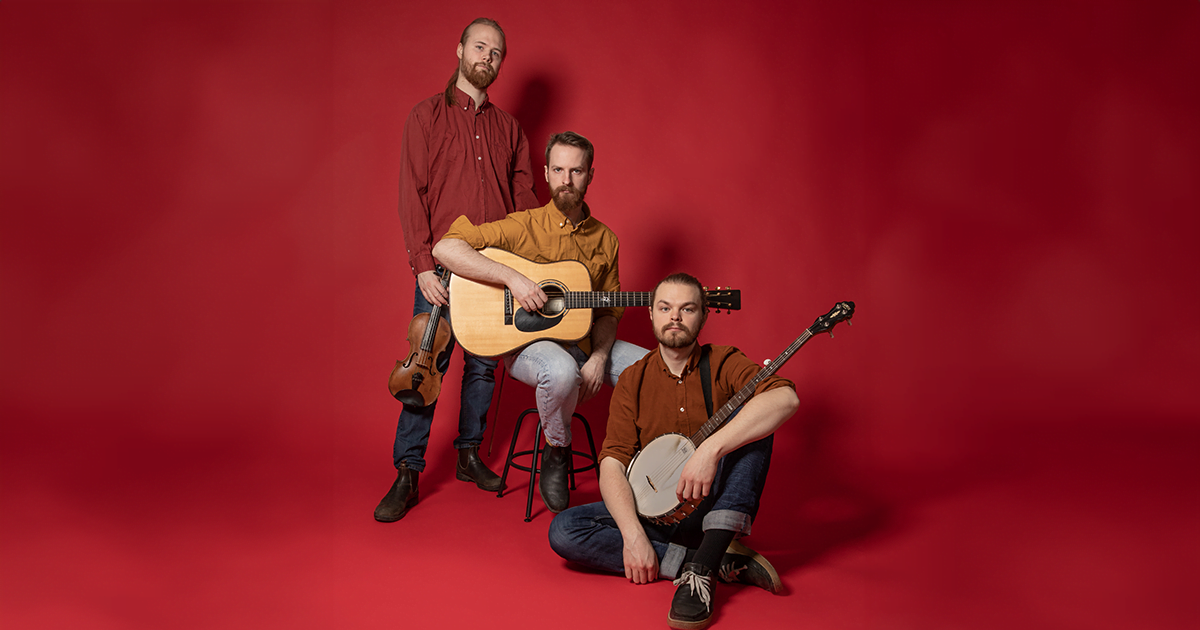
Musically, the three of us all come from the Nordic folk scene and the modern style of playing and arranging traditional Swedish dance tunes. When the band was formed we made a conscious choice that instead of fondly playing old-time music as historically or culturally accurate, we’d rather discover it and express ourselves in the way that we felt most natural. The result of that process became our own unique style of playing the old Appalachian fiddle tunes and songs. With interest and respect for the individual instrumental traditions, we arrange our music in a similar way that we would with the Swedish polskas or schottises. We call this style “Nordic Old Time” and we see it as our mission to explore this concept, and with it we can spread the traditional North American music to our peers and colleagues in the Nordic folk scene.
What has been the best advice you’ve received in your career so far?
Lukas, our banjo player, once met with the great Swedish folk musician Ale Möller, one of the founders of the Swedish world music scene. His advice to young musicians was to choose between being a specialist or a generalist. Either you can fit in any band or project or you establish your speciality so that when someone wants that, you’re the only one to ask. This spurred Lukas to both get more into the old time tradition that is otherwise a bit unknown in the Swedish folk scene, and to learn all stringed instruments there are. With all that being said, which path do you think he chose?
What’s your favorite memory from being on stage?
In April this year we performed at a small festival called Växjö Country Roots Festival. It’s a one day festival where six different bands that play American folk and roots music are doing one concert each during the evening. The event was sold out and there was a nice energy in the room. The performance went well and the audience seemed to like our way of interpreting the old time style, but the best thing about the festival was that it was a great way of gathering a lot of musicians doing bluegrass/Cajun/old-time/Americana music in Sweden.
It was really nice seeing the other concerts, but also jamming backstage, talking to other people doing a Nordic version of American folk music, and realizing how different it can sound. The arrangers did a great job with finding bands doing quite different sounds and even if it was a long night, the audience had a high energy the whole evening and it all ended with the musicians having a long jam session at the hotel until late night.
What rituals do you have, either in the studio or before a show?
As a band, the only ritual we have so far is to warm up our voices together. We’re including more and more songs in our repertoire, and to be able to push our voices on stage it’s important for us to do some warming up and check-ins with our intonation. Apart from that we all have some individual things we like to do before going up on stage.
If Adam has the time he likes to massage his feet. He picked that up from one of his teachers at a camp some years ago. According to this teacher, if you’re comfortable and grounded with your feet, you will be comfortable and grounded on stage.
Michael likes to take some time backstage to do some breathwork and settle his mind. If it’s possible, he also likes to take the time to get familiar with the room/venue from the perspective of the stage before the show, to be more comfortable and prepared for what to expect with that specific stage.
We’ve also learned from experience that Lukas needs to eat something before a show.
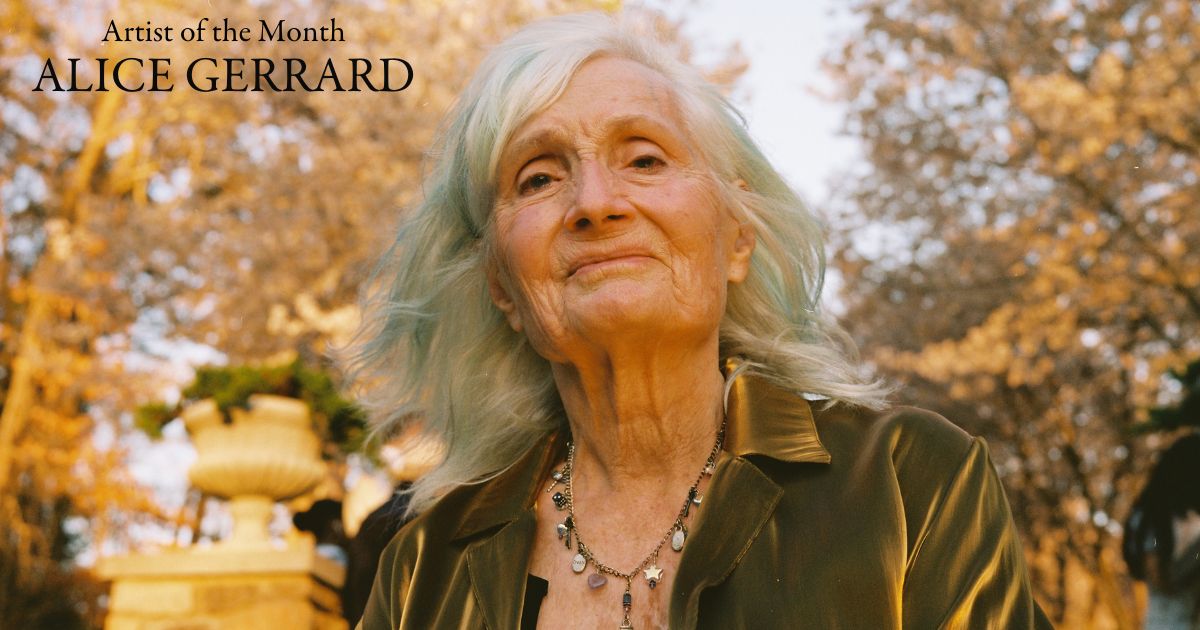
At 89 years old, old-time music community leader, Grammy nominee, and Bluegrass Music Hall of Fame inductee Alice Gerrard continues to place her music making and creativity decidedly in the present. While every lyric she utters and every note she picks feels effortlessly timeless, storied, and burnished – by her lived experiences and by days, weeks, and months of toil – her songs are ultimately forward-looking, leaning into the future with intention and wisdom. They also feel paradoxically light and joyous while at the same time they stand at the nexus of “what used to be” and “what will come.” Gerrard holds this position with equal power, agency, and insight.
Her latest album, the upcoming self-produced Sun to Sun, out October 20 on Sleepy Cat Records, captures the ineffable of the particular center-of-the-Venn-diagram that she inhabits, as a song collector, a knowledge bearer, and a folk music synthesizer of the world’s woes and struggles for justice. As witness to more than a handful of iterations of the modern movement for equal rights and racial, gender, and economic justice, Gerrard is able to challenge the systems and powers that be in grounded, measured, and realistic ways – ways that never limit possibilities for the future. (A remarkable trait in a creative who uses “old-timey” media and formats as her primary form of expression.)
“Remember Us,” the album’s stunning lead single, is – as Gerrard says via press release – an ode to “all the departed whose shoulders we stand on, whose work and lives we benefit from, who came or were transported against their will to this land.” Sung in stark a capella by Gerrard, Tatiana Hargreaves, and Reed Stutz, the track feels pulled directly from the gospel singing traditions of the American South that each stem from Black and formerly enslaved musical traditions. It speaks into community spaces the names, lives, and souls of so many Black, Brown, and Indigenous folks who lost their lives at the hands of empire and the police state.
“Old Jim Crow” makes the apropos point that segregation and racial apartheid in our country were not that long ago nor that far away, calling the partisan gerrymandering, political divisiveness, and waves of hatred befalling the U.S. exactly what they are: a new kind of the Old Jim Crow. “Keep It Off the Seat,” a Gerrard-penned modern classic, was inspired by the North Carolina General Assembly’s transphobic HB2 measure from 2016 – that also inspired our showcase, Shout & Shine, at IBMA in Raleigh and eventually saw Gerrard singing “Keep It Off the Seat” from the Shout & Shine stage in 2017 with Cathy Fink, Marcy Marxer, Hargreaves, and more. At her live shows, she encourages her audience to sing along during the rousing chorus: “Who cares where you pee? Just keep it off the seat!”
These themes and through lines would be notable in any bluegrass and old-time forebear’s catalog, but here, among Gerrard’s lifelong discography, they are certainly not outliers but continuations of a career that has always been committed to telling untold stories, singing unsung songs, spotlighting and amplifying invisible voices. Gerrard’s age, her position as a roots music elder, reinforces the importance of these subjects, and leaves subtle, existential fingerprints over the entire album. We know Gerrard’s commitment to singing and standing in truth, but in these songs and in this collection, we feel that commitment more than see it, we sense it just as strongly as we view it.
Sun to Sun was tracked in Durham, North Carolina – Gerrard’s home turf for decades, now – with a collection of collaborators and musicians pulled directly from her immediate community. Hargreaves, one of the most prominent fiddlers in the old-time and bluegrass scenes of late, has worked for Gerrard for a number of years as an archivist and assistant of sorts and features heavily on the album; Stutz, an in-demand multi instrumentalist who also straddles the fences between folk, bluegrass, old-time, and Americana, plays guitar and banjo. Other credits include first-rate sacred steel player DaShawn Hickman, Hasee Ciaccio on bass, Marcy Marxer guesting on guitar and cello banjo, Gail Gillespie, Nick Falk, and soulful songwriter, singer, producer, etc. Phil Cook – who collaborated with Gerrard on her 2014 album, Follow the Music – as well.
It makes perfect sense that a community builder such as Gerrard, who has always prioritized the most human aspects of roots music in her creative output, would be able to construct a collection of songs that feels pointed and convicting, but also organic and natural. Sun to Sun approaches heavy topics with ease, as a pair of good friends over a cup of tea on the porch can seemingly solve all of the world’s problems with passion, joy, and unbridled care for the forgotten and invisible among us. Gerrard calls on her folks, her musical and personal communities as well as her listeners and fans, to join with her in the journey she has begun and that we must continue, from sun to sun to sun to sun.
To celebrate Alice Gerrard’s selection as our October Artist of the Month, we’ll be diving back into our archive of Sitch Sessions, interviews, posts, and stories that highlight her incredible music – and her exemplary activism through that music and across the decades. In the meantime, enjoy our Essential Alice Gerrard playlist below, plus two of our BGS favorite Sitch Sessions of all time that feature Gerrard (viewable above), and watch for our Artist of the Month feature to come later in October.
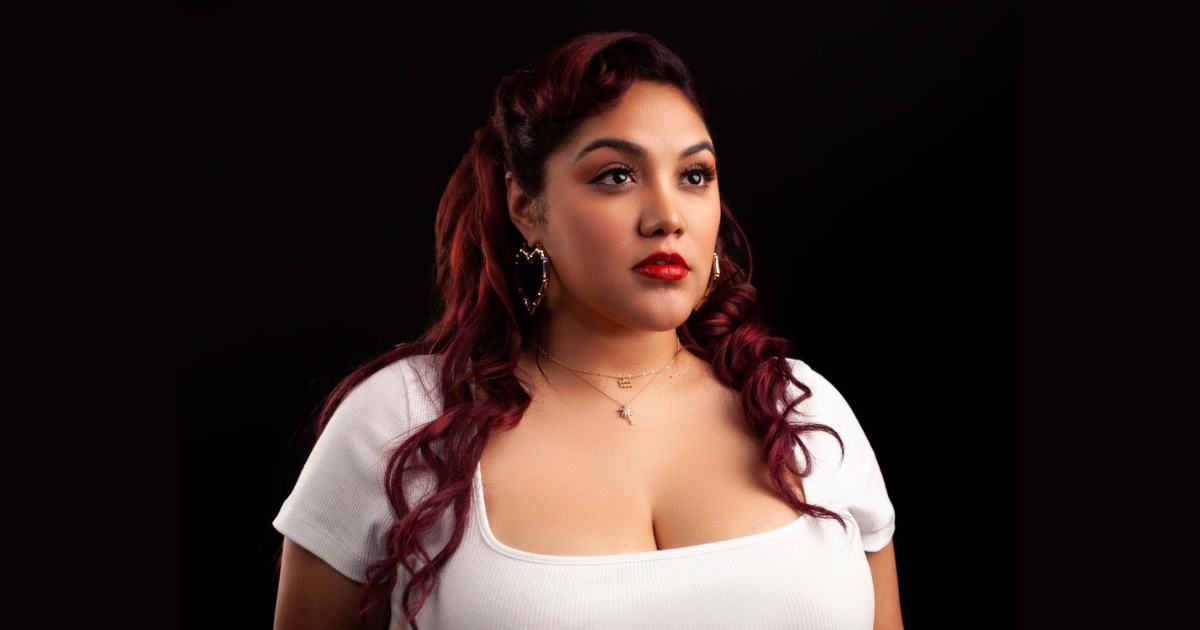
In Their Words: “I wrote ‘Dear Dorothy’ as a playful way to address my luck – or lack thereof – when it came to love in my 20s, and to address the stories that we women tell to and hear from our best friends during a break up. Also acknowledging the hilarity in how life can take the wildest turns, especially when we least expect it. I wrote this song as an homage to my best friend, Dorothy, who passed away, with the hope that the essence of our friendship and humor would shine through. Dating in your 20s is full of wild and crazy stories, and so my thought is… what if after the break up everything went better? This song, along with the many others that I wrote or selected for my album, were to acknowledge and celebrate the seasons of love, heartbreak, independence and self discovery that brought me to the place I am now.” – Veronique Medrano
Track Credits: Written by Veronique Michelle Medrano
Producer: Mariano Herrera, Veronique Medrano Engineer: Mariano Herrera Mixing & Mastering: Mariano Herrera, Veronique Medrano Executive Producer: Mario Davila Recording Supervisor: Javi G Recorded at Produce Sound Studios
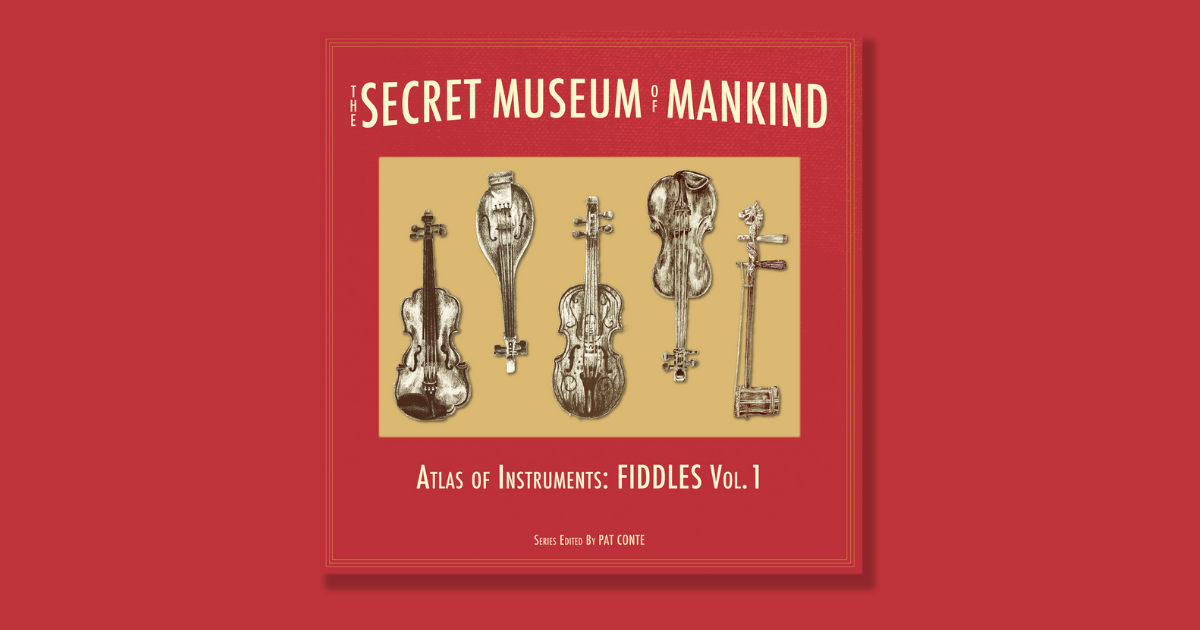
In Their Words: “The museum’s musical atlas of instruments continues with the opening of another wing, the first in a series on bowed instruments. To stretch boundaries over the earth and over time is to forsake them; whether it is a matter of Synchronizität or just the plain unconscious. In Western cultural history, the bowed instrument is a late installment, after centuries, of an almost primordial vibration that we imagine in sound; see in the old paintings; and yet can sample in the remnants of the ancient world captured on gramophone records.” – Pat Conte, curator
“The Secret Museum series is legendary. It opened up new possibilities for me when I first heard it in the 1990s. The curator is Pat Conte, he did something remarkable, even more so because it was before the internet: Starting in the 1970s he began assembling the first and arguably greatest collection of world music recorded in the 78 rpm record era of the 1920s – 1950s, give or take. He did it by casing junk stores in Queens, New York, the most diverse place in the world, and by maintaining letter correspondence with collectors and dealers across the globe. That is the music you will find on the Secret Museum of Mankind albums.
“Conte programs the records by feel, not with a predefined structure. The records are not meant to be academic, they are meant to move the listener. The movement is emotional, using music that was recorded in different places and at different times. Each listener will experience the sequence in their own way, and each track is its own world.
“The Secret Museum of Mankind: Atlas of Instruments – Fiddles, Vol. 1 continues the series and presents fiddle sounds developed and practiced across the globe. The compilation, drawn from Conte’s pioneering and remarkable personal collection of 78 rpm discs recorded in the 1920s – 1950s, offers fiddle music recorded across the world from Crete to Madagascar, Mexico, England, Sicily, Norway, India, the USA, Cape Verde, China and more.” – Eli Smith, producer
Image courtesy of Jalopy Records, Nick Loss-Eaton Media
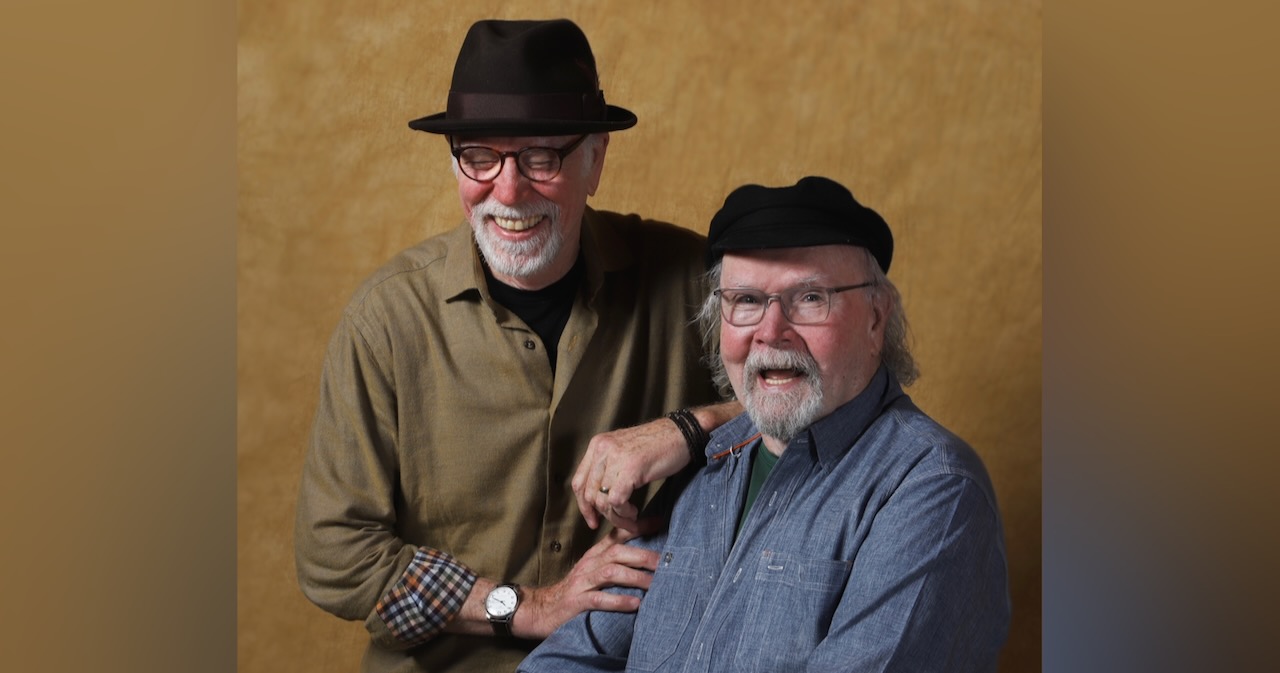
Artist:John McCutcheon & Tom Paxton Hometown: Smoke Rise, Georgia; Alexandria, Virginia Song: “Life Before You” Album:Together Release Date: October 13, 2023 Label: Appalseed
In Their Words: “Tom Paxton and I started writing together early on during the pandemic and, with seemingly endless time on our hands, we tackled all manner of subjects and ideas. This one started out as a pretty standard love song. But, often, along the way, one of us will say, ‘Wait a minute, what if this turned left instead of right?,’ and we’ll bravely go down that blind alley. Sometimes it works, sometimes it doesn’t. Tom was particularly enamored of the way the ending comes out of left field to the listener, a real surprise. He breaks into a big grin every time the end of verse three rolls around. One of the great joys of songwriting teamwork is to see your partner so delighted with the final result. Doesn’t get any better…” – John McCutcheon
Photo Credit: Michael G. Stewart
This website uses cookies to improve your experience. We'll assume you're ok with this, but you can opt-out if you wish.AcceptRejectRead More
Privacy & Cookies Policy
Privacy Overview
This website uses cookies to improve your experience while you navigate through the website. Out of these, the cookies that are categorized as necessary are stored on your browser as they are essential for the working of basic functionalities of the website. We also use third-party cookies that help us analyze and understand how you use this website. These cookies will be stored in your browser only with your consent. You also have the option to opt-out of these cookies. But opting out of some of these cookies may affect your browsing experience.
Necessary cookies are absolutely essential for the website to function properly. This category only includes cookies that ensures basic functionalities and security features of the website. These cookies do not store any personal information.
Any cookies that may not be particularly necessary for the website to function and is used specifically to collect user personal data via analytics, ads, other embedded contents are termed as non-necessary cookies. It is mandatory to procure user consent prior to running these cookies on your website.