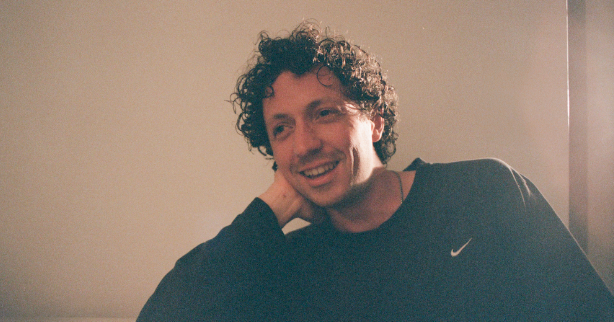
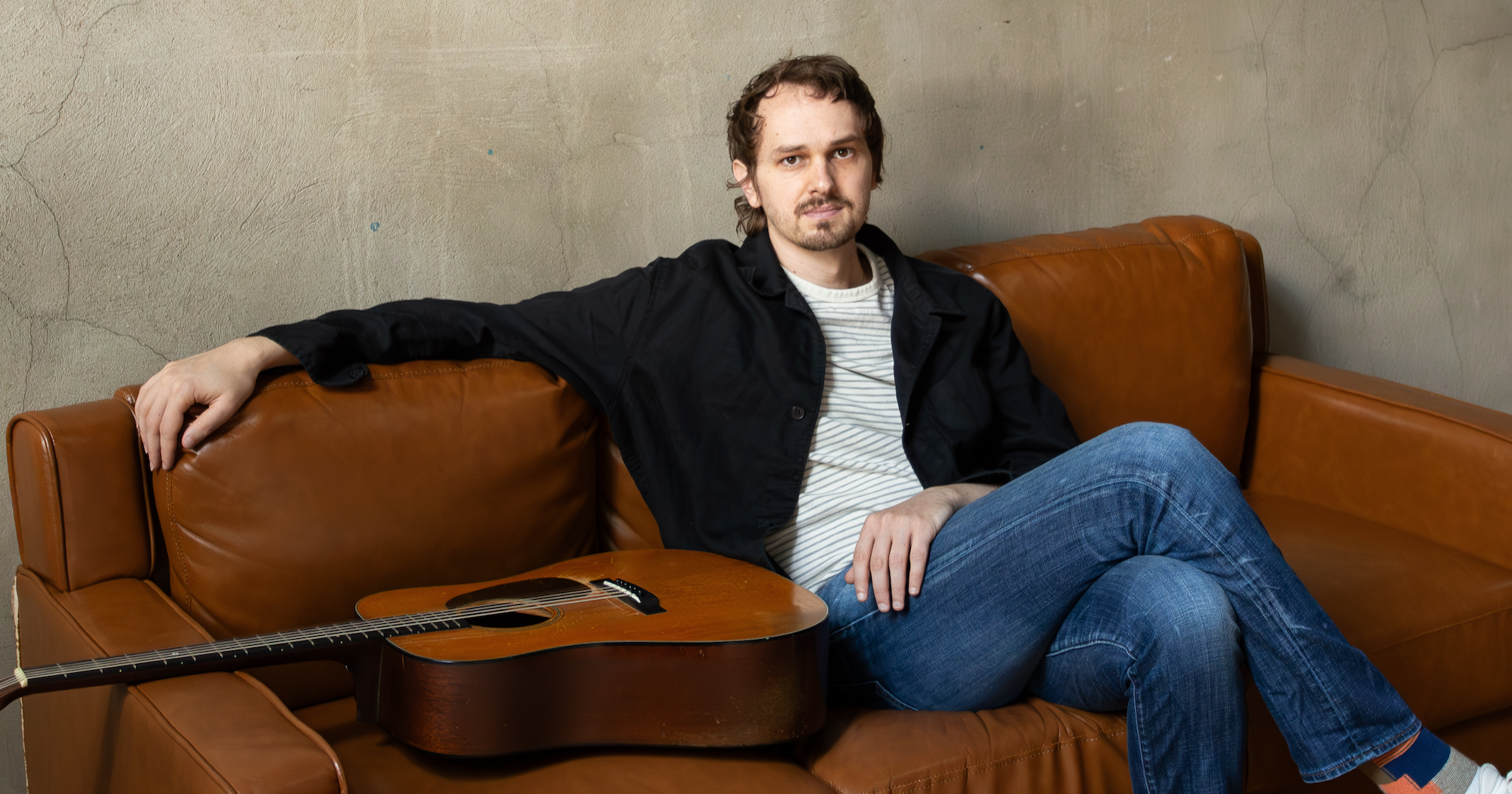
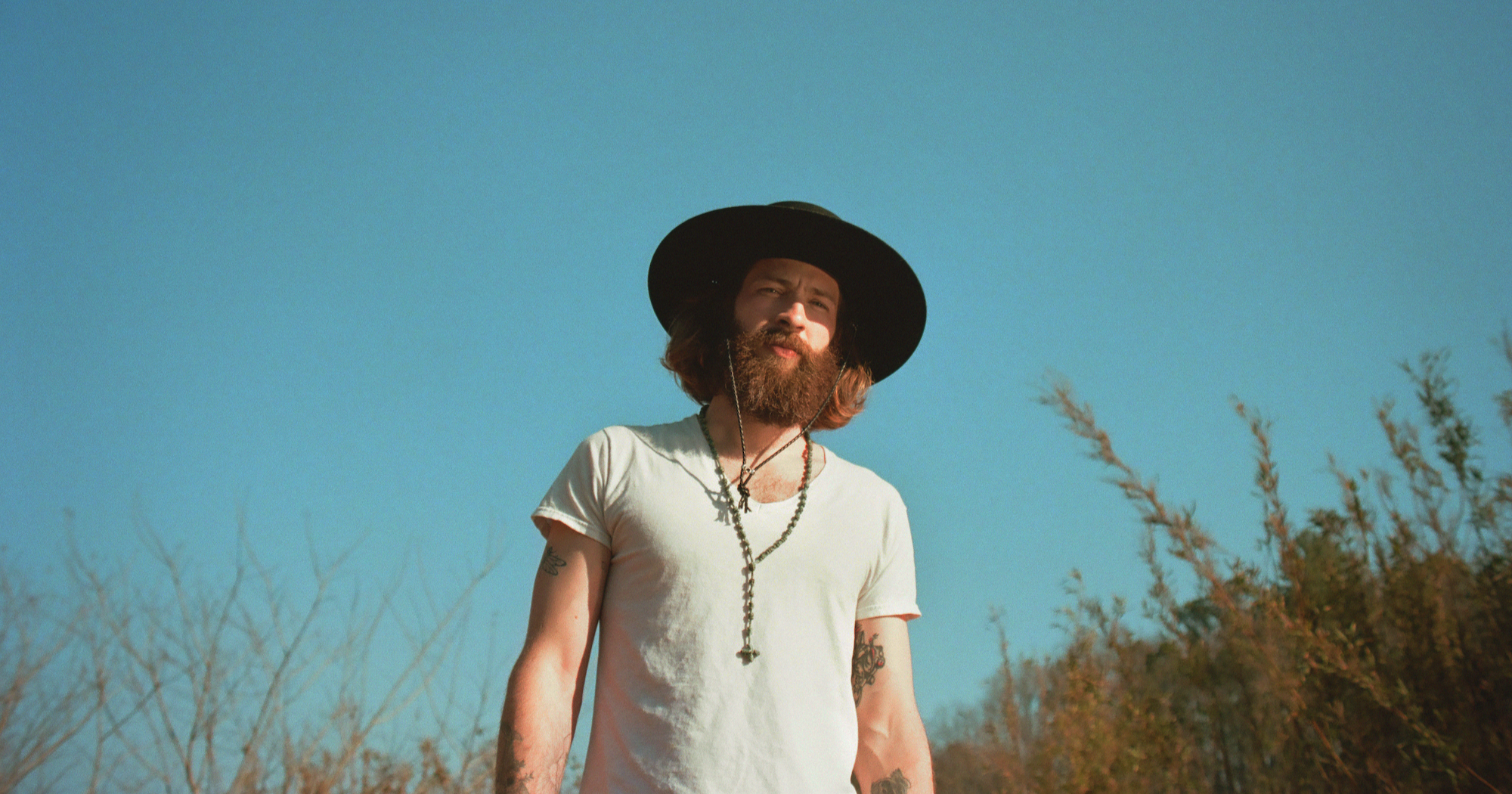
Recently I was on the Outlaw Country Tour with Waxahatchee. Sheryl Crow had invited us all to join her on stage for the last night. Her production folks started passing out little percussion instruments, I think I traded the tambourine with Spencer (drummer) for something reasonable I could play. We all stepped up on the drum riser, me with a drumstick and a cowbell. Then Sheryl turned around and took her guitar off in one smooth motion. She passed it to me and whispered, “D.” Once I made it through the first chorus and got the nod from her guitar player that I was hearing the right chords, I knew this would be the peak of my entire life.
What’s the toughest time you ever had writing a song?
The next one. Not to be cliché, but it’s true. I’m constantly in fear of having written my last song. I always start from a place of “how the hell do you do this?” I’m on tour right now and I’ve been working on a song whenever I have a guitar in my hands. I oscillate between knowing exactly what I think should happen next and feeling like starting over. Both can be the right answer and that’s pretty par for the course. But every once in a while they fall out of you like a dime from your pocket. Wish I knew how to make that happen every time.
How often do you hide behind a character in a song or use “you” when it’s actually “me”?
Flaubert said, “Madame Bovary, c’est moi.”
It’s all me and none of it’s true. I don’t think I could avoid myself if I tried, but I also pull little visions and observations from the people around me all the time. I think you have to be curious about people to be a good writer.
What is a genre, album, artist, musician, or song that you adore that would surprise people?
I would say 50% of the music I listen to is instrumental. Jazz from the ’40s and ’50s in particular. Hard bop and big band music is a constant. Duke Ellington is my favorite American artist. Endlessly inspiring and a huge influence on my melodic sensibility.
Although, recently I have been listening to a lot of Romantic symphonies. Beautiful and mind-altering!
If you had to write a mission statement for your career, what would it be?
I think Woody Guthrie might have said it better than I ever could: take it easy, but take it.
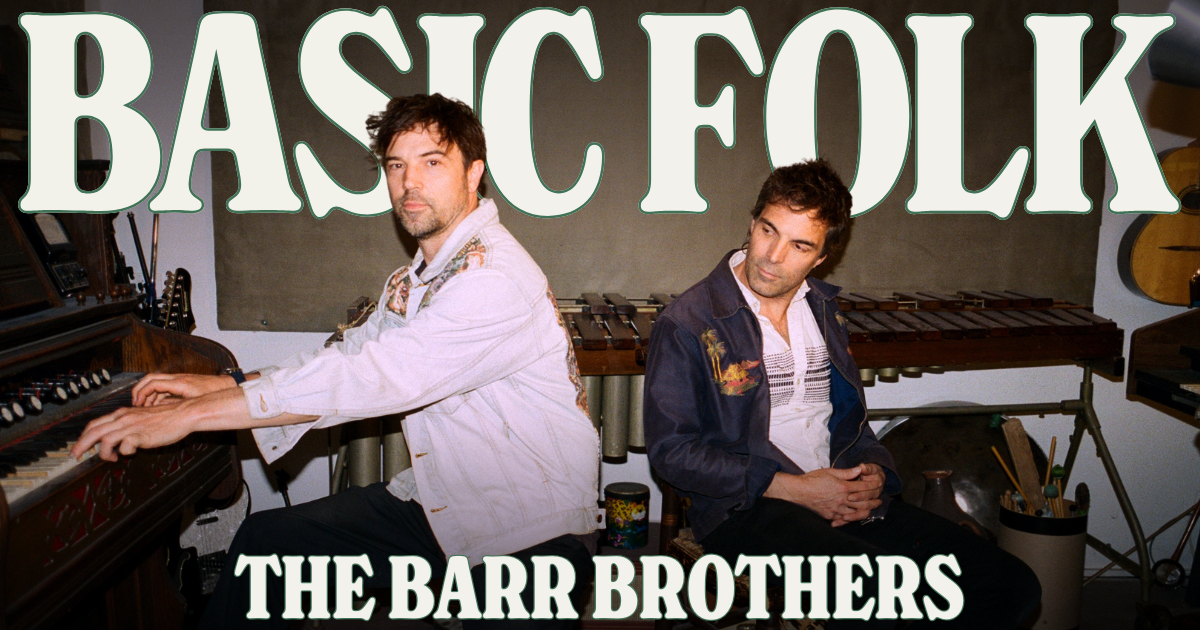
In the eight years since The Barr Brothers last released an album, Andrew has been drumming with people like Feist, Mumford & Sons, and Broken Social Scene while Brad released a solo record and underwent incredible personal change. Brad made the huge decision to get sober, which he talks about candidly in our Basic Folk interview.
Anything you read about the new record, Let it Hiss, might allude to his newfound sobriety while not mentioning it directly. The band made a conscious decision not to include it in any press releases specifically so that their audience could have their own relationship with the new music. It seems like getting sober has impacted every aspect of the album, but one could listen and project just about any personal pivotal shift onto these songs. Regardless, I am so appreciative that Brad opened up about his sobriety, so we could better understand the music and the incredible relationship that he and Andrew share.
Elsewhere in our conversation, we talk about Brad’s deep connection to the number 216, its origin, and why he’s kept that number close to him for most of his life. He shares his reflections on the music lessons given to him and Andrew from visiting Malian musicians, who exchanged their services for free dental work from their father. Those lessons completely changed the musical trajectory of the brothers and still impact them today. We also talk about their former band, The Slip (who are actually still active every now and again), a much-loved Boston group that was fully embraced in the jam band world. I find the music of Andrew and Brad Barr to be completely transformative and not of this world – and I’m so grateful for the new record. Please go see them live, especially if you are into celestial experiences!
Photo Credits: Lead image by Sarah Melvin. Alternate images by Meghan Sepe and Pappy’s Portraits.
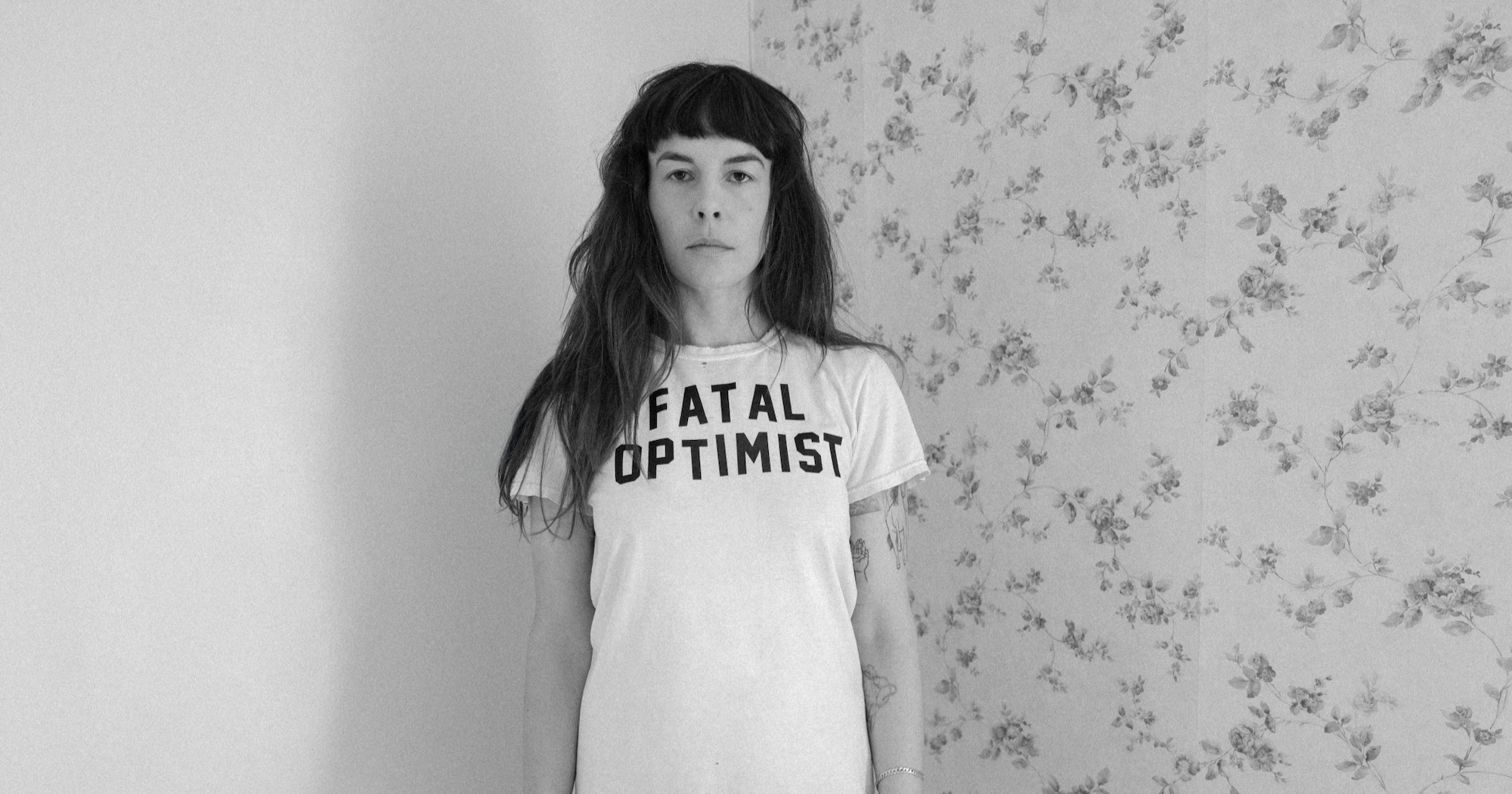
Hitting play on singer-songwriter Madi Diaz’s latest album, Fatal Optimist, one wouldn’t automatically identify her close-to-the-mic, chunky strums and anxious, confident vocals as “metal.” But keep listening and trust.
Fatal Optimist is heavy on numerous elements of metal – fantasy, humor, darkness, anger. For much of its runtime, it feels like the inside of a clenched fist, slowly but surely letting go. With songs that are, this time, centered around her solo voice and acoustic guitar, Diaz turns her liminal songwriting further inward than ever. This is saying a lot for an artist who’s no stranger to personal narrative. While her prior album, 2023’s Weird Faith, brushed up against hopeful optimism, this follow-up proves that earned optimism is perhaps the better version.
After all, Diaz chose to open the disc with the wordplay stunner “Hope Less,” a stiff shot of reality that reorients us to a heart at least as full of darkness as light. If the LP’s vibe is “clenched fist,” its songs play like spokes in a wheel rolling us toward the jubilant title track – a progression Diaz admitted in our recent BGS interview was equal parts intentional and inevitable.
This album starts out very quiet. It feels very close and very intimate, then it slowly opens up. Was that the intentional vibe and arc of the album for you?
Madi Diaz: It definitely ended up being a much more lean-in [kind of] record. The further I got down the road, the more it felt very obvious that was just what the song content needed. It’s kind of heavy stuff, I think. It was a lot of mining of the self, which I did a lot privately. So I felt like I wanted the songs to match that [vibe], in the end.
I was listening to it this morning, thinking about your song “Everything Almost” from the last record. Like, how optimistic and full of hope that song is and then this album starts off with a line like “hope less.” Obviously, when you’re writing about personal events in your own life, it’s easy to see connection in the rearview. But I’m wondering if there’s something more to what feels, to me, like a connection between that song and this project.
That’s funny. I was just talking about this. I do feel like a lot of the songs in the last record … are about following that gut intuition. That gut feeling. So a lot of the songs on Weird Faith are absolutely going like, “I think this is it. I think this is gonna work. I think we’re really gonna get there.”
There was a really funny moment I had recently. I was practicing for this tour and putting [together] the set list. I wrote this song called “This Is How a Woman Leaves” for my friend Maren Morris, her last record that she put out [Dreamsicle, 2025]. I am planning on releasing a version … at some point down the road a little bit. But I was practicing “Everything Almost” and then I wanted to go into “This Is How” because in “Everything Almost,” I’m packing the boxes and moving in. In “This Is How” I’m fucking moving out.
Like, “How it started, how it’s going.”
It’s the “fuck around and find out” journey right there, in a nutshell.
Nice. I was reading that you went to an island when you were writing the album. Can I ask what island you went to? And did you know that’s what you were going to do when you started your trip to that island, planning, like, “I’m gonna get it together.” Or was it just kind of like how life happens?
There were, actually, many islands. Physically, mentally. … I started off coming off of this European tour. We finished this tour in Italy, so I went to an island off the coast of Italy and was there by myself. I did a lot of journaling and walking – so much walking. I’m a big processor by walking and talking, so I would kind of record myself as I was processing things out loud. I really wanted to be in a space where I felt safe to do that. It felt like the safest thing was to just take myself away from everybody, so as to not barrage people with [my feelings].
I started off in Ischia and then I ended up, really wonderfully, being asked to be a part of this [songwriters’] colony in Nantucket. So I did that. I ended up going to Long Island with my dad, to Noyack, and just [did] a lot of journaling there.
Also, [I was] feeling very much like I couldn’t tell whether I was the island or the island was the island. It was just this very unescapable lonerism. Solo mission, you know. Like in a spacesuit, kind of feeling. I just couldn’t shake it, so I just took it with me everywhere I went.
Can you talk a little bit about the process of songwriting? Your songs are so personal, almost uncomfortably so. I wonder if that’s the result of writing in an actual journal on paper and if that’s a different kind of creative experience for you than voice memos on your phone, which so many people do now instead of journaling.
I definitely rely on journaling still. A lot. Sometimes, if I’m in a pinch, I’ll text myself an idea. Or, I have [the] Notes app open. A lot of Fatal Optimist was pulled from about a year’s worth of pretty serious journaling and going back over certain words that kind of stuck out. I love journaling. I think it’s like a life scrapbook, you know? There’s a funny thing that happens. Sometimes I’ll open a journal and I don’t even know what year it’s from, because some of the issues [are] so consistent. … But it’s kind of like a sweet reminder, of survival, I guess.
Totally. Do you remember writing the couplet at the beginning of “Lone Wolf”? “Lamb’s gotta lamb, god planned it/ Wolf’s gotta wolf, goddamn it.” It’s such a perfect little song, but it doesn’t feel trope-y. It feels, really, like a strike of inspiration.
Well, I remember it was dead of winter. I was sitting on my couch with Stephen Wilson Jr. and I was going through my journal. I was talking about what was on my heart that felt so difficult, about reaching this person who chose to be a loner. I mean, he literally said to me, “I’m a loner. I’m a lone wolf kind of guy.” And I [thought,] “You just said that. That’s ridiculous.” Like, have you not seen the Pee-wee Herman movie where he’s like, “I’m a loner, Dottie. A rebel!”
But it was this thing, you know, that I almost didn’t take seriously, because it was such a crazy thing to say. And I should have [believed him], obviously, because here we are. I was talking to Stephen about it and we were laughing about this wolf character and the lines just fell out. In the aftermath of it, it’s funny.
You know, when you push somebody that wants to be alone away, they tend to want to be less alone. They feel very confronted. I mean, I’ve been there. All of a sudden, you’re confronted with your loneliness and wishing that you actually had that connection. So, when I pushed him away initially, he would just kind of show up and stick around. I really wanted him to leave me alone. Damn it. “Goddamn it” definitely came from that.
The lyric on that song is so simple. You don’t go into a lot of poetry, you don’t go into a lot of storytelling. The wolf keeps showing back up, looking good, trying to get back in. Can you talk a little bit about trusting yourself to keep it so simple? Does that come from editing or did it just feel like that’s what the song was?
I try to say it in a way like we were just talking about it sitting in the bar. I’m trying to not be misunderstood. I’m trying not to feel misunderstood even to myself. So I think I try to keep it clear and cutting, and [the way] it comes out. If it’s possible to get even closer to it, I’ll edit, but I don’t really edit a lot.
Oh wow. So it just comes out that way. That’s impressive.
Sometimes it does just come out that way. Not all the time, but sometimes it mostly does.
The other line on this album that I really wanted to unpack is in “Heavy Metal.” The line is, “In some religions, repetition is spiritual.” I wanted to unpack it a little bit, because music is often a place where people will repeat words or phrases, for a whole bunch of reasons.
But that line made me really listen to the words and phrases you were repeating elsewhere on this album: “Whose move is it to move on.” “I always love you.” “God knows how long.” “Ambivalence.” Can you tell me a little bit about how you decide what to repeat? Is it a conscious choice or just part of the process?
I think when I’m repeating something, it’s because it feels different on every lap. I’ll repeat something when the feeling is lingering in a way that– maybe if I say it enough, some magic spell will break and I’ll be released by this thing. Sometimes I feel like the repetition of it comes from a bit of a desperate [place] like, “Just get it out of me.” Maybe if I do this ten times, I’ll never have to do this ever again, which is why the [line,] “In some religions, repetition is spiritual.” …
You’re always going to carry it with you. You can learn how to hold this. I can learn how to learn from it differently every time, you know.
I guess that’s why repeating “ambivalence” is really interesting to me, because it seems like repeating that particular word is a contradiction.
I guess that’s true. Ambivalence means “caught in the middle.” Feeling in so many different directions. For me, ambivalence feels like a very desperate feeling. It almost feels like it should come with a bit of an alarm bell. Like, “Oh God. I’m feeling all of the feelings at the same time and I don’t know which one to choose.”
That makes sense. The other thing in the song “Heavy Metal” – I wanted to ask about your mom. I feel like you have mentioned your parents in other songs on other albums. But this made me wonder about your relationship with your parents. Somehow, I don’t think people talk about their parents much in music. I can’t figure out why. Do you have any thoughts on that?
I think it’s scary. It’s so scary. When I know a song is about me, I definitely tend to listen with a microscope. No one is trying to hurt anyone, but we’re all really trying our best to process love, pain, joy. I don’t know. Our effect on each other. What’s mine, what’s yours. So yeah, it’s not an easy thing to write about. …
I feel like I’ve felt the most loved and I’ve felt the most hurt by both of my parents. I think that that’s pretty normal. Or maybe not? Maybe it’s not normal.
I think it’s pretty universal.
It always kind of ends up that way. The people closest to you hurt you the most, which is why you really have to trust the people closest to you. So that when they do hurt you, you can [heal].
I think “Heavy Metal” felt right to start you talking about my mom, because she’s kind of a badass and kind of a hardass. In all the best ways and all of the hardest ways. There are some things about being tough and resilient that I wouldn’t trade for the world. It helps me survive in so many corners of my life. But also, I’ve had to really undo some of the damage that being tough does. You start to weaponize that toughness against yourself and others in a way that I didn’t even know I was doing for a long time.
Then [again,] you just don’t want to piss them off because you also want to be able to go home for Thanksgiving and stuff.
Right. That’s what makes it such a metal move, you know, to comment on your mother in this way. I’m assuming she’s still alive. Has she heard the song? Does she have any feedback for you?
I haven’t heard [feedback] yet. I really don’t know. But I’m so grateful to my mom for raising me the way that she did and giving me and my brother the lives that she gave us. I feel so lucky that she’s my mom. It’s hard to have a song like this. … But that’s just fucking art, man. It’s so hard, at the end of the day. You know, we can make it as personal as it is or as just-about-me as it is.
The last thing I want to ask about is the song “Fatal Optimist,” which is sort of a sonic departure from the rest of the album even though it’s obviously very on-topic. As a listener, it feels like we just went on this long, arduous, emotional journey, and now we’re suddenly above the tree line and the drums are here and everybody’s in the room. Not to get too nerdy about sequencing and stuff, but was there any world in which that song could have been anywhere else on the album?
It would have been a nice break, wouldn’t it have been? I just couldn’t do that. I couldn’t interrupt the intensity of this record.
I do know that optimism is a soothing balm. When it hits you, it just hits you. There’s no explanation for it. And I knew that, for me, I want a reason to listen to a record again. … This whole record feels like one step after the other. It’s like my attempt at a gift or something [for] going through it. Hopefully, these [songs] can all be like little lights on the path that lead the way to this finish line of fatal optimism. Then we can run it all back again.
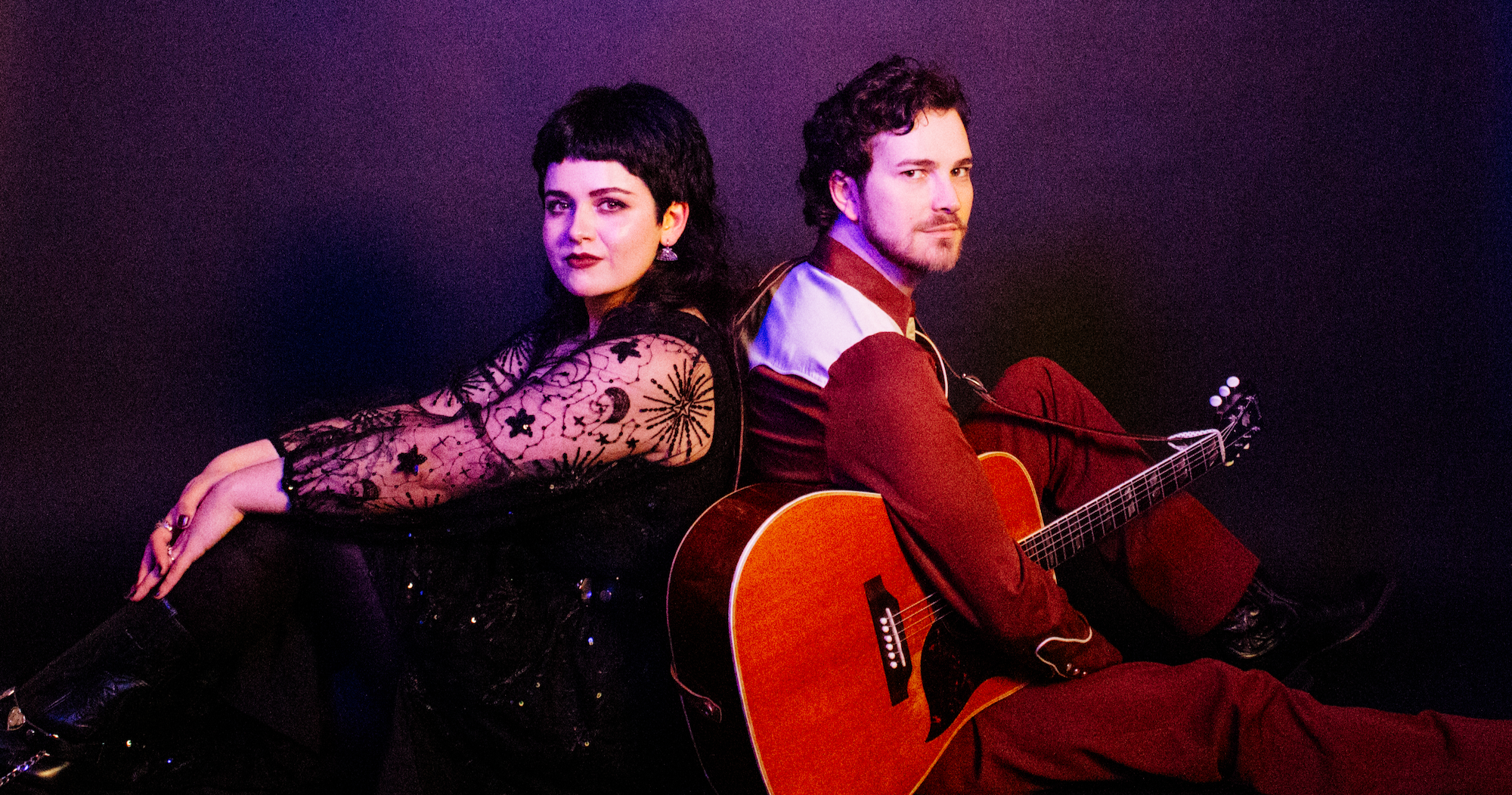
Artist:The Prickly Pair Hometown: Santa Monica, California (Mason Summit), Berwyn, Pennsylvania (Irene Greene). Now Nashville, Tennessee Latest Album:The Prickly Pair (EP) Personal Nicknames (or rejected band names): Sharktooth Necklace
What’s your favorite memory from being on stage?
Last year, we were honored to take part in a tribute to one of our songwriting heroes, Gene Clark, produced by Carla Olson at McCabe’s Guitar Shop, where Mason used to work. It was thrilling to perform alongside Gene’s family and collaborators.
What other art forms – literature, film, dance, painting, etc. – inform your music?
We watch a lot of movies together – foreign films, ’40s and ’50s film noir, and horror. Often, we’ll be watching a movie and when a phrase or line of dialogue stands out to us, we turn to each other at the same time and say, “Write that down!”
We’ve also written songs based on true stories and real people. Our song “Wilderness” was partially inspired by Chris McCandless (Into the Wild) and our latest single, “Swamp Angel,” is about Helen Spence, also known as the Daughter of the White River.
Genre is dead (long live genre!), but how would you describe the genres and styles your music inhabits?
We like to call ourselves an “Angsty Americana” duo – twangy music with a dose of melancholy and fatalism. We also love the recently-popularized term “Y’allternative,” as Mason’s production on our records tends to have some lo-fi and psychedelic elements alongside more traditional country instrumentation. Gram Parsons conceptualized “Cosmic American Music” and that phrase resonates with us as well.
What is a genre, album, artist, musician, or song that you adore that would surprise people?
We love Amyl & the Sniffers and saw them put on a phenomenal show at Marathon Music Works in Nashville earlier this year.
What would a perfect day as an artist and creator look like to you?
It’s a great feeling to finish a song and perform it the very same night.
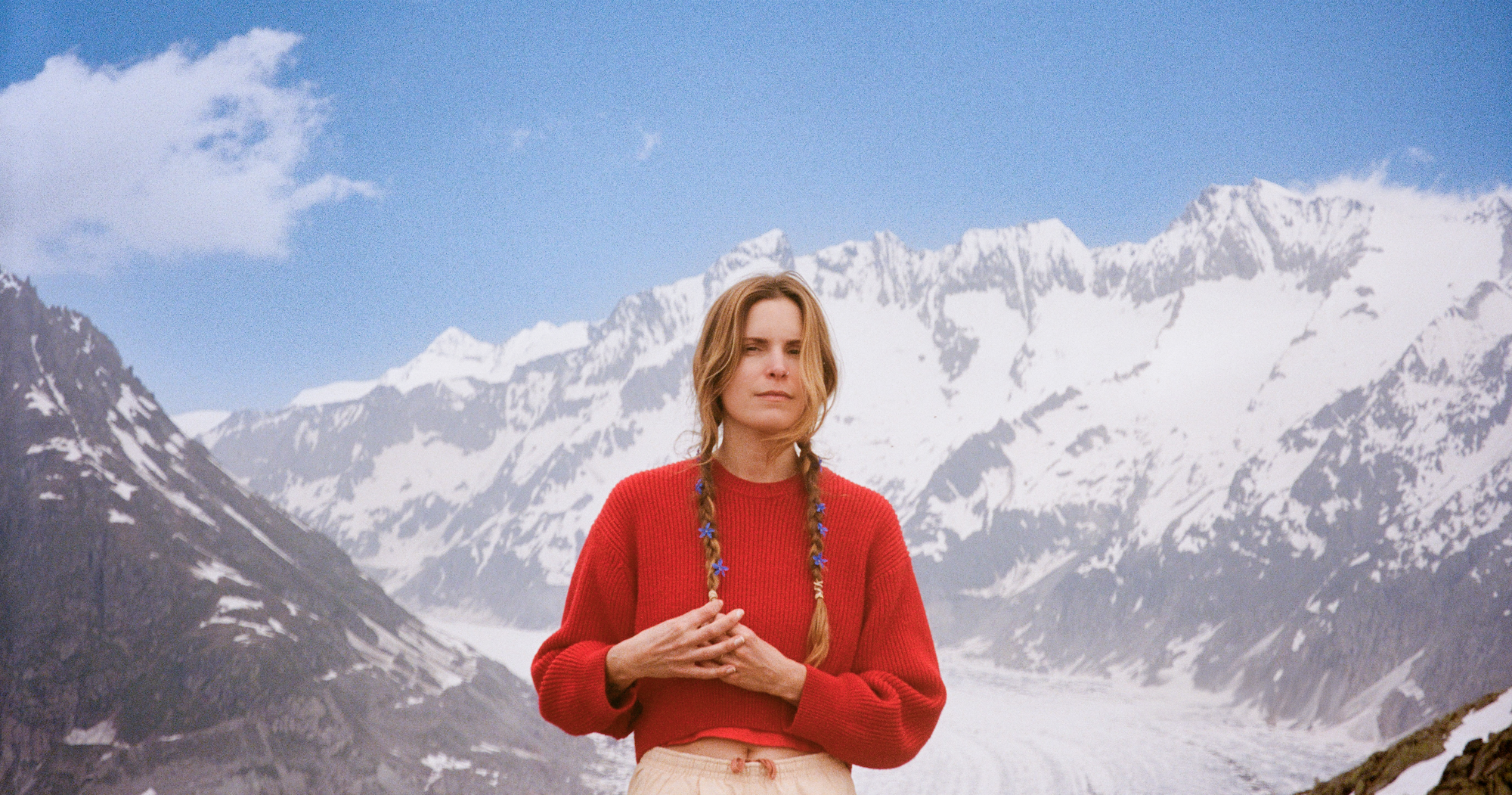
This is a Mixtape of songs I enjoy listening to in nature. I hope you listen to it while hiking or laying in the grass. Hiking and walking are my ways of meditating and connecting with myself. Especially now that we have our baby coming next month. Really trying to center myself in preparation for this beautiful life change.
I never go on a hiking or camping trip and regret it. It always helps to put things into perspective for me. My worries and stresses feel insignificant when I’m staring out at a mountain range after climbing to a peak. The title track of my new album, Mammoth, is about hiking and all of the artwork and music videos were taken while either hiking in the Swiss Alps or the Colorado Rockies. My love for nature seeps out of this new project. I hope it finds its listeners craving the outdoors. – Lydia Luce
“Head in the Clouds” – Mocky
This song is one I keep coming back to. I have spent many moments in nature with my husband camping or in our Skoolie listening to this song. It’s one of our faves.
“Free Treasure” – Adrianne Lenker
Adrianne has a beautiful way of reminding us there is treasure all around us in nature and with loved ones – and we don’t have to pay for it. There have been so many times that I have found what I’ve been looking for just by sitting outside.
“The Wind” – Feist
This song is a perfect poem about the wind. Leslie sings about the power of nature, connecting us to ourselves and to each other. She sings, “You find you, keep on the horizon.”
“Quiet as a Star” – Jon Middleton
This song reminds me of camping by the ocean. The waves, the glow of a fire, and the stars above. It’s such a simple, stunning song.
“Hello Sunshine” – Damien Jurado, Richard Swift
In Nashville we have a big lake called Percy Priest with tons of tiny islands. I love kayaking out to the islands to camp. I’ve done a lot of solo camping trips out there and this song reminds me of those times. Paddling out to watch the sunset glow.
“Pretty Stars” – Bill Frisell
This song is so beautiful. The guitar melody reminds me of night swimming. Growing up in south Florida my brother and I used to go snorkel at night to see the bioluminescence. It feels like swimming in the stars; when you pop up out of the water you see the stars glowing up above. Some real magic.
“The Moonlight Song” – Blaze Foley
There is nothing like camping in the autumn. When the season changes and making a fire to stay warm is a necessity. This song reminds me of camping in the fall with buddies. It sounds like he’s singing to us around the fire, pulling us into the moment.
“The Ocean” – Richard Hawley
I have this distinct memory of driving out of the tunnel in Santa Monica where it turns into the PCH listening to this song. I have lived half of my life close to the ocean and I miss it so much. I moved to Nashville eight years ago from Los Angeles and this song brings me right back to staring out at the Pacific Ocean.
“Pink Moon” – Nick Drake
Who doesn’t love this song? It’s just a perfect song. I love Nick Drake’s open tunings and melodies. This song reminds me of hiking and though I have heard it a million times I never get tired of it.
“Brassy Sun” – S. Carey
This is another song that takes me back to solo camping on the lake. Microdosing mushrooms and watching the sunset. Appreciating the solitude in nature.
Saxophone, mountain dulcimer, mandolins, banjos – what else could you need? Our weekly new music roundup is here!
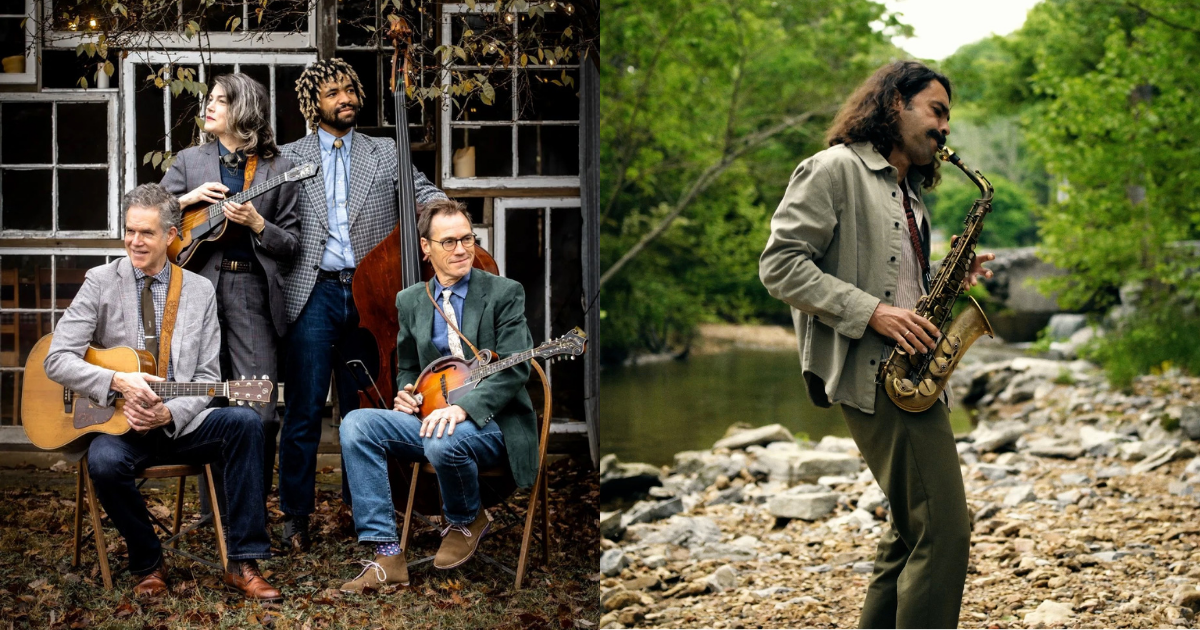
Today, we complete our mini-series with saxophonist Eddie Barbash with a video for “Fort Smith Breakdown,” an old-time fiddle tune performed exquisitely by Barbash on sax in a lovely, natural setting. You can find links to watch all four of Barbash’s live performance videos from his upcoming project Larkspur, below. On the other end of the roots instrument continuum, perhaps the South’s most accomplished and technical mountain dulcimer player Sarah Kate Morgan teams up with fiddler Leo Shannon on a new album, Featherbed, out today. To celebrate, we’re sharing their track “Belle of Lexington,” which they first sourced from a Library of Congress recording made in 1941 before crafting their own arrangement.
Bluegrass stalwarts Chris Jones & the Night Drivers offer a delightful play on words with “Under Over,” a song Jones wrote with broadcaster-songwriter Terry Herd. The uptempo, straight-ahead bluegrass single is available today wherever you stream music. Jones’ labelmate, mandolinist and singer-songwriter Ashby Frank, also launches a new single today. “Mr. Engineer” is a Jimmy Martin and Paul Williams classic that Frank has performed for years, but only just recorded for the first time.
Alt-Americana rockers Keyland release their new EP today, so don’t miss the title track to Stand Up To You below. As you’ll hear, this soulful Oklahoman outfit blend so many roots genres together into a melting pot style all their own. Singer-songwriter Jon Danforth then takes us just across the state line to Arkansas with his new single, “Arkansas Sunrise,” which will be included on his upcoming 2026 album, Natural State. Dripping with childhood memories and nostalgia, it’s an homage to his home state and its moniker, from which he pulled the title of the new LP.
Plus, don’t miss the new music video for a just-released single from singer-songwriter Abby Hamilton “Fried Green Tomatoes” was inspired by a line uttered by Idgie Threadgoode of the novel (and film) Fried Green Tomatoes. The vibey country-folk track explores relationships and friendships – and the parts of ourselves we display or keep hidden away.
There’s plenty to explore and enjoy from all corners of the roots music landscape! You Gotta Hear This…
Eddie Barbash, “Fort Smith Breakdown”
Artist:Eddie Barbash Hometown: Nashville, Tennessee Song: “Fort Smith Breakdown” Album:Larkspur Release Date: November 28, 2025 (The album will be released one song at a time with the last track coming out Nov. 28).
In Their Words: “I learned ‘Fort Smith Breakdown’ from a great Floyd, Virginia, old-time fiddler named Earl White. My favorite old-time guitarist Danny Knicely was playing with him at the time and called it ‘that tune that goes to the 4 all of a sudden.’ This practice of adding or dropping beats in unexpected places is one of my favorite things about the old-time tradition. Four of the nine tunes that I chose for Larkspur are ‘crooked’ like this. We made this recording on a trail through the Larkspur Conservation area’s natural burial ground. After two days on the grounds, I’m completely sold on natural burial. I’d much rather feed the forest and donate my body to the preservation of wild land than to rot alone in a concrete box under a lifeless lawn.” – Eddie Barbash
(Editor’s Note: Watch all the videos in our mini-series with Eddie Barbash here, here, and here.)
Jon Danforth, “Arkansas Sunrise”
Artist:Jon Danforth Hometown: Dallas, Texas Song: “Arkansas Sunrise” Album:Natural State Release Date: October 24, 2025 (single); January 23, 2026 (album)
In Their Words: “‘Arkansas Sunrise’ is about the countless, lazy Saturday mornings I’ve spent in my home state with family and friends. Arkansas is a beautiful state and a wonderful place to be, especially in the fall when the hot temperatures finally drop. There is nothing better than waking up to cool weather, leaves changing, and bacon crackling alongside the people you love. My goal was to capture that warmth and nostalgia in a song that hopefully honors my home state.” – Jon Danforth
Track Credits: Jon Danforth – Vocals, acoustic guitar, songwriter Will Carmack – Bass Aaron Carpenter – Drums, percussion Bobby Orozco – Piano Melissa Cox – Fiddle Hannah Brooks – Background vocals
Ashby Frank, “Mr. Engineer”
Artist:Ashby Frank Hometown: Nashville, Tennessee Song: “Mr. Engineer” Release Date: October 24, 2025 Label: Mountain Home Music Company
In Their Words: “I started performing this Jimmy Martin and Paul Williams classic on stage with Mashville Brigade years ago and recently started adding it to the set list of my Yachtgrass band’s shows. I have wanted to record it since I started singing it live and I am so proud of the finished product. I just love the old-school vibe and super lonesome content of the lyrics and melody, and of course Matt Menefee (banjo) and Jim VanCleve (fiddle) added some wicked and bluesy solos that made the whole track gel. I can’t wait for everyone to hear it!” – Ashby Frank
Track Credits: Ashby Frank – Mandolin, lead vocal, harmony vocal Seth Taylor – Acoustic guitar Travis Anderson – Upright bass Matt Menefee – Banjo Jim VanCleve – Fiddle Jaelee Roberts – Harmony vocal
Abby Hamilton, “Fried Green Tomatoes”
Artist:Abby Hamilton Hometown: Nicholasville, Kentucky Song: “Fried Green Tomatoes” Release Date: October 24, 2025
In Their Words: “‘I’m as settled as I’ll ever be’ is the line from Idgie Threadgoode in Fried Green Tomatoes that inspired this song. It’s about the inner dialogue in relationships and friendships as you never show the world what you question from within. The world sees you as secure and confident, which you very well may be in some ways, but inside you feel a sense of doubt that no one else knows. Maybe just the most intimate of friendships or relationships get questioned. That in whatever you’re carrying on about inside or out, it’s still ‘look at those fried green tomatoes’ in the middle of ‘she’s trying to teach me how to cook.’ Chaos and joy and confusion. You can be all out of sorts about whatever’s in your brain and it’s still just ‘fried green tomatoes.’ The right person will make you laugh and ground you, remind you that you’re not so alone.” – Abby Hamilton
Chris Jones & the Night Drivers, “Under Over”
Artist:Chris Jones & The Night Drivers Hometown: Nashville, Tennessee Song: “Under Over” Release Date: October 24, 2025 Label: Mountain Home Music Company
In Their Words: “I have no idea where the phrase ‘file it under over’ came from; it was just one of those things that popped into my head one day. Aside from the play on words, I just got to thinking about the idea of filing something away for good, whether it be a bad relationship or an addiction of some kind, and I pictured a file with ‘over’ on the tab. I’ve been friends with songwriter and bluegrass broadcaster Terry Herd for many years and he’s written all sorts of award-winning and hit bluegrass songs with a range of writers. But we had never written one together and it’s been something I’ve wanted to do for a long time. We discussed the song concept together when I was at his house in Nashville and we got right to work on it. He was the one who came up with the phrase ‘in a little box of pain,’ which I think is my favorite part of the song. The uptempo, straight-ahead bluegrass feel really fit with the uplifting feeling of filing something negative away and moving on.” – Chris Jones
Track Credits: Chris Jones – Acoustic guitar, lead vocal Jon Weisberger – Bass Mark Stoffel – Mandolin, harmony vocal Grace van’t Hof – Banjo, harmony vocal Tony Creasman – Drums Carley Arrowood – Fiddle
Keyland, “Stand Up To You”
Artist:Keyland Hometown: Tulsa, Oklahoma Song: “Stand Up To You” Album:Stand Up To You (EP) Release Date: October 24, 2025 Label: One Riot
In Their Words: “I’m hoping this song feels like you’ve heard it before and you can’t remember where or from whom. I think most of my favorite music has this effect on me – whether it’s from 1965 or 2025. When I listen to music like this, I feel like I’ve known it forever. And not in a redundant, boring sense, but in a way that feels as though that particular song has just always existed in some deeper, elusive but still tangible reality. Like you’ve always known it, but you can’t exactly remember how.
“I’m unsure if we’ve actually accomplished that, but hopefully it is somewhat close. I also love music that makes you feel like you are in the same room as the artist. I think live-tracked recordings have a lot to do with this particular effect, so we leaned into that with this song – as well as a few others on this EP. I was listening to a lot of Ray Charles, Stones, and Faces (and will always be) when I wrote this one, so I’d guess that will come through as well. In the words of Taylor Goldsmith, ‘Anyone that’s making anything new only breaks something else…'” – Kyle Ross
Sarah Kate Morgan & Leo Shannon, “Belle of Lexington”
Artist:Sarah Kate Morgan & Leo Shannon Hometown: Hindman, Kentucky (Sarah Kate); Whitesburg, Kentucky (Leo) Song: “Belle of Lexington” Album:Featherbed Release Date: October 24, 2025 Label: June Appal Recordings
In Their Words: “This is a very old fiddle tune which I learned as a teenager in my mom’s living room in Seattle, Washington. The source is a recording of fiddler Emmet Lundy made by the Library of Congress in Galax, Virginia, in 1941. (Many thanks to the Slippery Hill archive for facilitating this transmission.) Eighty-four years later, our performance of the tune was recorded live at The Burl in Lexington, Kentucky, by the intrepid Nick Petersen. We dedicate this track to all the beautiful people in all the Lexingtons around the world.” – Leo Shannon
Photo Credit: Eddie Barbash by Jeremy Stanley; Chris Jones & the Night Drivers by Brooke Stevens.
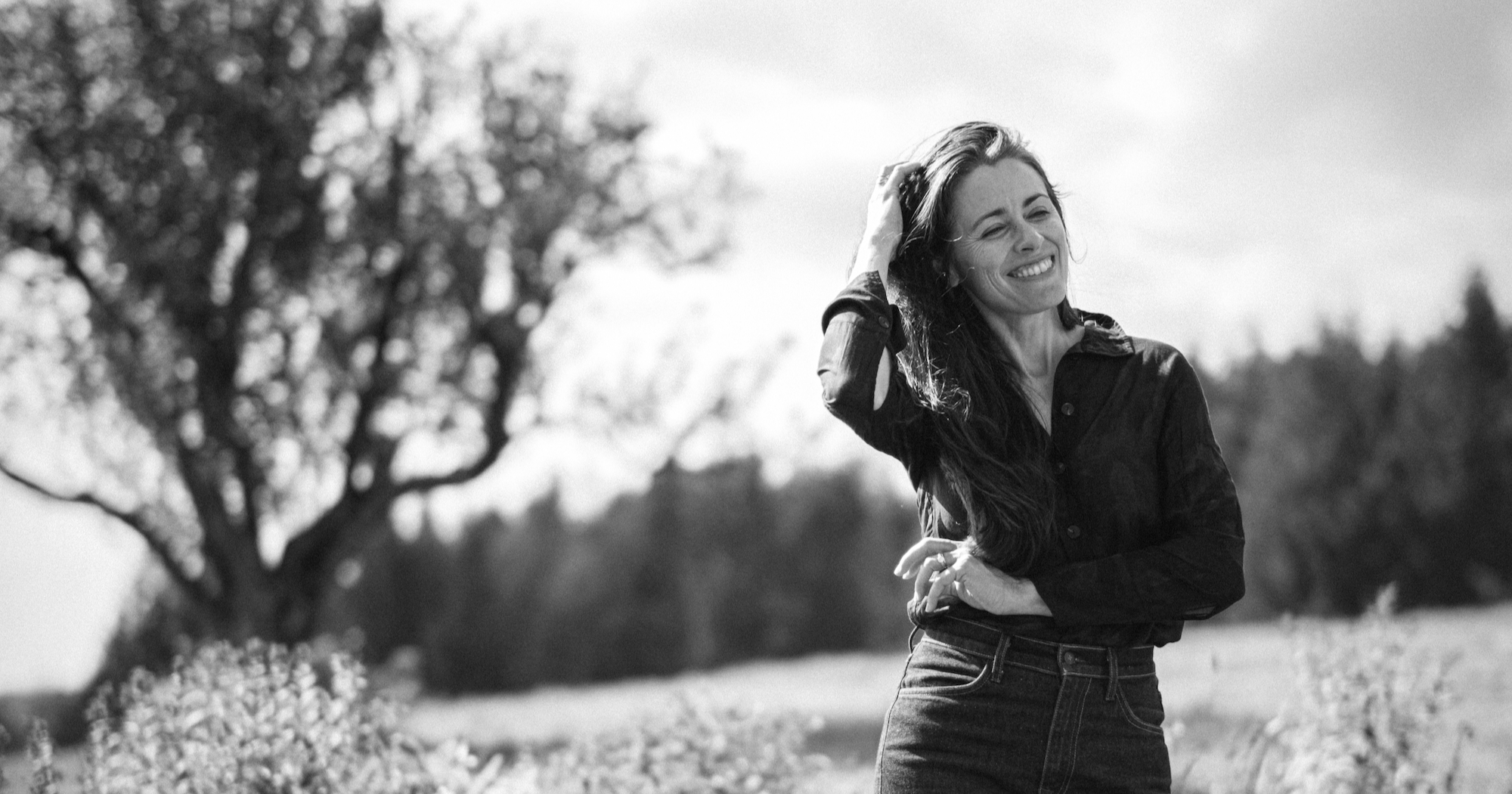
New days and clean slates keep coming for singer-songwriter Caitlin Canty. She is sharpening her skills, raising a family, and continuing to build a body of work that reflects resilience, quiet strength, and resolute honesty. Her new record, Night Owl Envies the Mourning Dove, is a testament to her evolving artistry – an album that turns natural solitude, domestic change, and hard-earned wisdom into a collection of songs that sound both grounded in the earth and untethered from time.
Canty was born in Proctor, Vermont, in 1982 and grew up surrounded by rural landscapes and the gentle rhythms of small-town life. Raised by a schoolteacher mother and a housepainter father, she found song in ordinary moments – singing in chorus and playing trombone in school before receiving her first guitar and VHS-tape lessons at age 17. After earning a biology degree from Williams College she moved to New York City, where she worked for the Emmy-nominated series Live from the Artists Den while pursuing music on her own terms.
Her early releases – including Golden Hour (2012) and the breakout Reckless Skyline (2015) – drew acclaim for her “casually devastating voice” and “hauntingly urgent” Americana ballads. She won the Telluride Troubadour songwriting competition in 2015 and began touring extensively across the U.S. and Europe, collaborating with artists like Peter Bradley Adams and Jamey Johnson, and earning praise from Rolling Stone, NPR, and No Depression for her gritty lyricism and radiant poise.
In recent years, she and her husband, musician Noam Pikelny, moved back to Vermont, settling on a mountaintop near her childhood home. There, Canty continues to record, tour, and write – with the same battered 1939 Recording King guitar that has accompanied her throughout her career.
One of the album’s most tender tracks, “Don’t Worry About Nothing,” carries the voice of a mother consoling and encouraging against the endless churn of small anxieties. It is at once lullaby, sermon, and reminder: that one bad thing does not mean the whole world has collapsed.
“There is a mom’s voice and perspective to focus and worry about the things that do matter,” Canty explained. “But also how little worries and little jealousies can work against us… Tornadoes, awful things, [they] remind you how short life is and what’s actually important.”
The song’s origins stretch back to a small mishap – her young son’s toy castle tumbling down – but its weight comes from deeper, darker places. In March 2020, a tornado tore through her East Nashville neighborhood, missing her home by mere yards. Not long after, the pandemic upended the world. The castle was a metaphor, she realized, for the way everything can crash at once, yet perspective offers a way forward.
For Canty, who released Reckless Skyline a decade ago, the test of time has reshaped her relationship to both music and ambition. “My real goal is to be writing more and better songs,” she said. “My real goal is to be connecting with more people through those songs, playing with musicians that I adore, and getting on good stages. Not worrying about courting people, but to do right by the music.”
Doing right by the music has meant widening her scope. Night Owl Envies the Mourning Dove reaches for longevity, not trends. It sits comfortably in a lineage of songwriters who, like Canty, trust the songs to outlive themselves. “I look to musicians who have had longer careers, like Dolly Parton,” she said. “She is singing songs that she wrote in her 20s. There are so many who have a gorgeous output of songs that are their lifelong friends. It’s not about when they were written or how people liked them then.”
Canty doesn’t wait around for the muse. To her, waiting for inspiration is “a fool’s errand.” She compares songs to photographs – fleeting impressions that must be captured before they fade. “You take a picture and you remember it as notable and beautiful and there is something about it that makes you want to share it. That type of inspiration sparks a song. It happens countless times a day.”
But the challenge, she says, is to honor the purity of that first flash. “You are lucky if you have the time from start to finish to complete the song and make the world go away. The fewer co-writers the better, including myself. If you open it up again in two weeks, or a year, you have different eyes… and that brings too many people and opinions into the room rather than one solid voice.”
Some of her most recent songs arrived in just such a spark – like during a violent rainstorm in Vermont. Alone in her cabin as thunder cracked over the mountains, Canty felt a song arrive like lightning. Hungry, shivering, and unable to leave, she turned to the page. “That’s when it is about honoring your craft and keeping your calluses hard,” she said. “Writing songs and tending to those fires.”
Much of the new album reflects Canty’s sense of place. After years of calling Nashville home, in Vermont the woods, weather, and solitude shape her work. Songs like “Electric Guitar” hum with what she calls “domestic noise” – the sound of home life creeping into the music. “Examining what home means is another strong thread in a lot of these songs,” she said. “There is a lot of domestic noise in ‘Electric Guitar’ of a life settled and tied to the home front.”
The landscape also plays a role. Birds, trees, and storms become metaphors for transformation and survival, grounding her reflections on motherhood and the passage of time.
Every songwriter brings along artists who came before them and for Canty, one such artist is Lucinda William and her landmark album, Car Wheels on a Gravel Road. Canty first heard it in college while working as a server to make ends meet. Living in a big house with wide kitchen windows, she found herself singing along to those raw, unvarnished songs. “The sound, the songwriting, the singing – it all was a high-water mark for me,” Canty recalled. “It had the mystery of how something so simple could be so powerful. Why is this message of another person hitting my heart and staying embedded? How do I do that?”
Since Reckless Skyline, Canty has been described as gentle, quiet, restrained. But she resists those labels. “I don’t think that that is what this record is,” she said. “There might be fingerpicked and more solitary numbers, but a lot of the songs are more electric and grittier, and closer maybe to Reckless Skyline or Car Wheels in that regard.”
There’s grit beneath the quiet, steel beneath the lull. That mix – of softness and resolve – has become her artistic fingerprint. At the core of her music lies a devotion to truth.
“I could never act,” Canty admitted. “As a kid, I loved band and singing. Music is getting to truth and getting yourself out of the way of a song. If it’s the truth, then I feel comfortable singing it.”
That truth may be wrapped in storms or in stillness, in the clatter of home or in the electric hum of a live stage. But it is always there – steady, unpretentious, and deeply human.
With Night Owl Envies the Mourning Dove, Caitlin Canty has crafted more than an album – it is a meditation on resilience, a love letter to songwriting itself, and a statement of intent. She is not chasing spotlights or trends, but tending her fires, shaping her craft, and writing songs that might someday be her lifelong friends.
“My real goal,” she repeats, “is to be writing more and better songs… to do right by the music.”
For Canty, that’s enough. And for those who listen, it is everything.
Long before folks were strumming guitars and picking banjos, they were telling stories. Stories about origin, hopes, dreams, and fears, and lessons learned. These stories guided lives and relationships, became myths, legends, and songs, and were passed down for generations and adjusted for place and time. From “The Knoxville Girl” to “Down in the Willow Garden,” to Lindi Ortega’s “Murder of Crows” and Tyler Childers’ “Banded Clovis,” the spooky story looms large in bluegrass, old-time, and Americana music.
For the season, we asked BGS readers to share their own roots music-themed writing with us in the form of spooky fiction, creative non-fiction, poetry, or cross-genre writing. We were not disappointed! Below, Emily Garcia’s young musician narrator achieves justice for poor Rose Connelly of “Down in the Willow Garden,” and Stuart Thompson details the sad fate of two brother fiddlers who became entangled with the wrong woman.
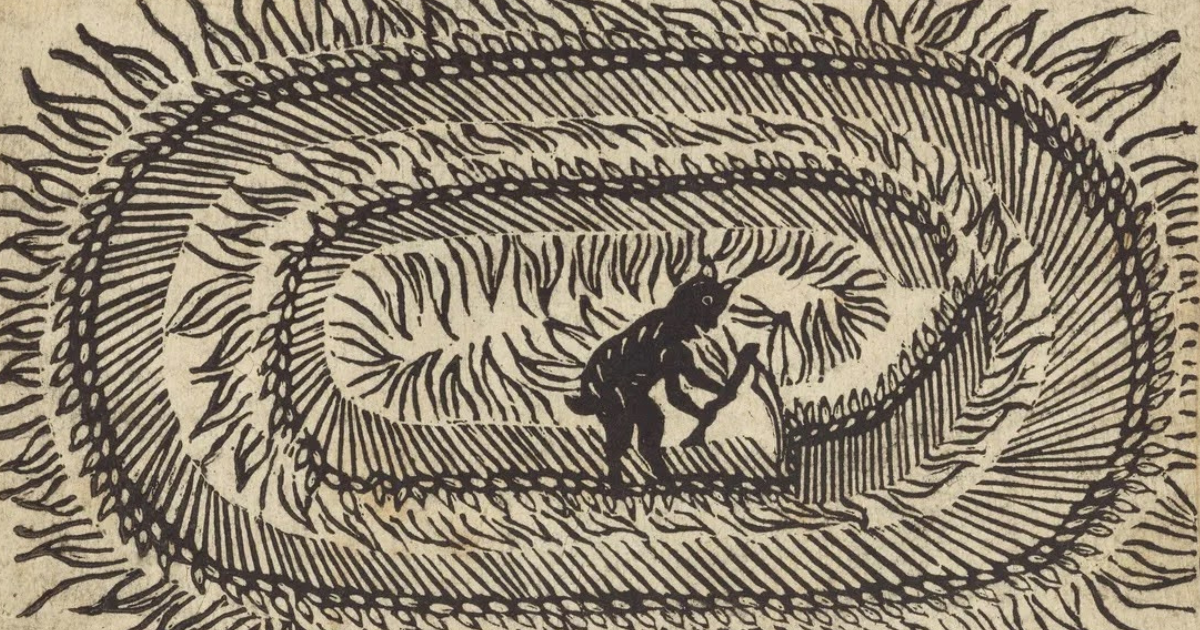
But first, we share with you an old tale of the farmer and the devil, regarding the origin of crop circles, found in a newspaper from 1678 – from which we’ve also pulled the creepy and fantastic woodcut we’ve chosen for lead image.
With this series, we hope to honor and continue the long tradition of storytelling and verse that has lived alongside and contributed to our favorite genres of music.
“The Mowing Devil Or, Strange News Out of Hartford-Shire”
Being a true relation of a farmer, who bargaining with a poor farmer about the cutting down three half acres of Oats; upon the mower’s asking too much, the farmer swore, that the devil mow it, rather than He; And so it fell out, that that very night, the crop of oats shew’d as if it had been all of a Flame: But next morning appear’d so neatly mow’d by the Devil, or some infernal spirit, that no mortal man was able to do the like. Also, how the said oats now lay in the field, and the owner has not power to fetch them away.
The Hunter’s Moon, red from eclipse, slides above the pines and half-bare maple trees, its hollow stare cast over Virginia’s Appalachian Plateau. Behind it, the night is black as pitch.
“You okay, Wills?” asks Annie. No, she hasn’t been okay in months, but Annie doesn’t want to hear that.
“Yeah, of course!” Willow rosins her bow, trying to ignore the wailing in her ears.
Annie glances down, rocking the toe of her boot into a groove on the worn cabin floor. “I hope I wasn’t too pushy…I just thought playing again might help.”
Two weeks earlier, over the phone, Annie had been less concerned about being pushy. “Willow Rose O’Connell, I’m not taking no for an answer. You are coming to Hunter Jam Weekend, just like you have every year for the last four years. I will not let my best friend rot away in some North Carolina suburb just because one tour didn’t work out.”
Didn’t work out. That was the story she let everyone believe: she had quit the gig of a lifetime halfway through the European arena tour, all because she couldn’t handle the pressure and had a nervous breakdown in a hotel room in London. It was a breakdown so bad that she flew straight back to Nashville that night, packed her entire apartment, drove eight hours to her parents’ house in Raleigh, and was now living in her childhood bedroom strung out on Xanax.
“What a shame,” people liked to say.
Now, she forces a smile. “I appreciate it, Annie. I’m good. I’m glad I’m here.”
Relief washes over Annie’s face. “Okay awesome. Let’s go, then. You don’t need to solo or anything, just play.” Annie grabs her mandolin and heads for the door. Willow follows, fiddle tucked neatly under her arm.
They wind through a wooded path lit only by the moon, towards the fire where the rest of their group has already started jamming. She can’t shake the wailing sound. An old recurring nightmare from childhood, a screaming woman next to a riverbank, has resurfaced with a vengeance since she left the tour six months ago. On the worst nights, the screams would weave themselves around memories of her grandmother’s shriveled voice singing old folk songs by the fireplace.
My race is run beneath the sun, the devil is waiting for me.
What no one knows is that an hour before the nervous breakdown, she forced her way out of the back of the tour bus, shaking uncontrollably, the manager’s whiskey breath staining the air. She had escaped the worst, thank god, but his slurred voice taunted behind her. “Don’t even try telling anyone, Will. You know I can ruin you.”
She knows. She knows how this industry works.
They reach the circle and Willow perches on a stump by the fire. There are a few awkward mumbled greetings, her former companions from the Nashville scene now looking at her like the ghost of an old friend. “Okay, where we at?” Annie cuts in. “‘Deep River’?” And with that, the jam resumes. Every time solos reach her, she leans to Annie and passes them off. The screaming is back, louder than usual, mixing with the songs into a sideways cacophony that makes her feel sick to her stomach. Her playing drifts off, she squeezes her eyes shut. The fire feels like it’s taking over her body.
The tune ends, and she gets up. “Sorry guys, I think I need to go lie down for a second. My head is killing me.” A murmur of concern ripples through the group but she can hardly hear it. She heads up the path towards the cabin.
The screaming is getting louder, and the ground feels like it’s shifting beneath her. Vertigo, maybe. The devil is waiting for me. She stumbles forward, barely conscious of where she’s going. You know I can ruin you. She reaches for a tree to steady herself, but the trees seem to be sliding up and down the periphery. She falls, hands driving into the dirt. Eyes squeeze shut.
The screaming stops.
A faint sound of banjo and a slurring male voice touches the air. She slowly pushes herself up, eyes adjusting. The sun is out, hanging red and low over the horizon, as if the moon has reversed its course. A river runs to her right.
In front of her lies a young woman, wispy brown hair fanned across the dry grass, and a half-empty bottle of burgundy wine next to her. She could almost be peacefully asleep, if not for the 15-inch knife sticking out of her chest and the crimson blood soaking her white cotton dress.
She stares at the woman like a mirror, the smell of whiskey burning her nose, when she hears him, gasping. She looks up. He’s in a loose-fitting linen shirt and dirty denim overalls, his eyes bloodshot, a banjo clutched in his left hand. His splotched face drains to white as their gazes meet.
“Rose– I– Rosie, my dear– I– I– I… my God, my God.” His trembling voice is centuries old. He glances wildly at the dead girl’s face, then back at Willow.
Her fingers curl around the knife handle and she pulls upward.
“I didn’t m-m-mean… I– I– I… Rosie please, I love you.”
She raises her bow arm. Her movements are not her own. Virginia turns red beneath the sun. The screaming begins again, different now, deafening.
Then it stops.
Heavenly quiet. And then a heavy splash.
It’s dark again. The moon is fixed to the night sky, and she’s standing at the edge of the circle. “You scared me!” Annie raises her eyebrows. “You okay, girl?”
“Yeah I’m good. Just needed a quick nap.”
Willow picks up her fiddle, which she had left leaning against the stump, and gives it a quick tune. “Okay y’all. ‘Wheel Hoss’? I’ll kick.” Without waiting for a reply, she jumps in. A few hollers from the group, and they all launch after her. Her fingers dance across the strings as everyone else holds back to hear her, finally, play again.
The final notes ring out. Silence, then the circle explodes into wild cheers and laughter.
Annie turns to her, grinning. “See Will, I told you playing again would help…” Her voice trails off.
Willow follows Annie’s stare. Her hands, strings, and fingerboard shine in the firelight, covered in blood.
Emily Garcia is a writer and fiddle player who spent her early career studying and performing within Nashville’s roots scene. She is now based in southern Maine and continues to perform, travel, and write stories inspired by American music and place. You can follow her work on Instagram at @imemilygarcia.
“Brother Fiddlers” by Stuart Thompson
Up in Clear Creek County, when the wind is lying still, They say you can hear it high above the Argo Mill. The sound is lonesome, and the sound is low, Like the fiddlers pointing out the guilty with their bows.
Will and Tom were brothers, bold and bound for gold, They followed the rush where the rivers ran cold. They staked their claim where the tall pines lean, And they carved their camp in a cut of green.
By day they dug with blood and sweat, By night they played in the dry sunset. Twin fiddles rose in the old saloon, And the one they played for was a gal named Lou.
She poured the drinks and danced the floor, With eyes that knew what men were for. She’d kiss you soft, then slip away– Leave you lost ’til your dying day.
Up in Clear Creek County, when the wind is lying still, They say you can hear it high above the Argo Mill. The sound is lonesome, and the sound is low, Like the fiddlers pointing out the guilty with their bow.
They struck it rich – oh, mother lode! A vein so thick it near broke the road. One would sleep while the other stood, Guardin’ gold in the dark pine wood.
But Lou, she schemed with a serpent’s smile, Fed them lies and love the while. “I want the stronger,” she said with a kiss. “One who’d fight for a prize like this.”
So Will took watch on a moonless night, With rage in his heart and death in sight. Tom came quiet, just to check the claim– But Will saw red and took his aim.
The shot rang once, and his brother fell, And all went silent but the echo’s knell. Will knelt down with a choking cry– Then Lou stepped out with a pistol high.
No words she spoke, no tear she shed, Just one quick flash – and Will was dead. She buried them both where the cold creek bends, And set her sights on richer ends.
Up in Clear Creek County, when the wind is lying still, They say you can hear it high above the Argo Mill. The sound is lonesome, and the sound is low, Like the fiddlers pointing out the guilty with their bows.
She bought new gowns and she drank top shelf, But Lou could never escape herself. At night she’d wake with a strangled cry– Hearing bows that scraped like a widow’s sigh.
She climbed the trail where the cold winds moan, To the shaft where the brothers’ blood was sown. And some say madness took her mind– She walked into that hole and left no sign.
Now nothing grows where the gold once lay, Just wind and whispers and strings that play. The miners say, when the stars hang low, You’ll hear twin fiddles weep and glow…
Up in Clear Creek County, when the wind is lying still, They say you can hear it high above the Argo Mill. The sound is lonesome, and the sound is low, Like the fiddlers pointing out the guilty with their bows.
Stuart Thompson is a husband, dad, and mandolin picker from Denver, Colorado. He can be found online at @stu.art.thompson.
Stay tuned for more opportunities to publish your own writing or art on BGS in a future collection!
Collection edited by Rachel Baiman and BGS staff.
Lead Image: Woodcut, “The Mowing Devil Or, Strange News Out of Hartford-Shire”, August 22, 1678. Source: The Public Domain Review.
My conversation with Ben Garnett finds him at about a decade in Music City and in the swing of an album cycle for Kite’s Keep, the guitarist-composer’s second full-length solo record. Our discussion centers around the ethos of modern string band music, what the guitar has to say about it, and the potential for folk music’s inherent narrative quality to uplift and move past tradition itself.
Garnett’s perspective on these topics is one that is quite underrepresented: A graduate of the University of North Texas’s famously rigorous jazz guitar program, he spent his early years in Texas developing the skills needed as a pop-oriented sideman and session player, while making ripples in the experimentally disposed Denton, Texas, before heading east. As we’ll find out, he has made disparate musical worlds come together, informing each other along the singular path he leads.
Upon arriving in Nashville, Garnett was quickly recruited as trailblazer Missy Raines’ go-to guitarist, while contributing his compositions and musicianship to progressive acoustic ensemble Circus No. 9. Though his path wasn’t entirely certain at first, his dedicated, open-minded approach to musicianship quickly yielded success both creatively and professionally. Now touring his original music while balancing responsibilities as a band member, the new album Kite’s Keep was made in collaboration with today’s top-of-the-heap acoustic guard: Darol Anger, Chris Eldridge, Brittany Haas, Ethan Jodziewicz, Paul Kowert and experimental pianist-composer Matt Glassmeyer.
I was surprised to hear Ben describe this project as a “guitar” record; being a guitarist myself, and with kindred reference points, I am conditioned to hear six string-born music through the instrument’s highly subjective – yet unendingly capable – lens, though Ben manages to disrupt this. His distinct transcendence of the instrument comes from embracing its format and stepping past folks’ conception of it, while explosively celebrating the guitar as a compositional tool.
Garnett’s ability to write for the room, so to speak, enables him to accommodate many players’ perspectives while balancing high precision with casualness. This is a blend of skill sets and priorities that are rare in ecosystems historically dominated by performative virtuosity. At every turn, Ben Garnett is courteous and grateful, crediting his achievements to friends, linchpins, and heroes within his scene – ones that he now orates his compelling tale alongside.
Is it safe to say that your new record, Kite’s Keep, portrays a narrative? Was that built into your approach as you wrote and recorded it?
Ben Garnett: Absolutely. Poetically speaking, the album title Kite’s Keep loosely refers to this idea of a child’s inner world – a dreamscape where each song represents a different vignette of imagination. The broader narrative has to do with using the acoustic guitar as a world-building tool. This idea that guitar records can be more expansive than just, “here’s my solo arrangement of such and such a tune.”
My goal was to make a record that celebrates the power of what an acoustic guitar can do as an ensemble instrument – like bringing out what other instruments are capable of. The guitar can act as this stage, or world, that other instruments can then inhabit.
So, in that way, would you say that this is a guitar record?
Definitely.
Interesting, because when I listen to it, it doesn’t necessarily feel that way, which is an aspect I’m quite partial to.
I’m curious why this feels like a guitar record to you. I know you’re facilitating these exchanges and you’re world-building with them, you’re obviously pushing past what the guitar is conceived of, but it sounds like you’re not trying to push past the guitar itself.
I guess the idea is that, in addition to world-building, a lot of the compositional material was guitar-born. I’m thinking of the fiddle and bass as extensions of what I would otherwise play. They’re bringing guitar-born ideas into this other register, carrying them to places where the guitar can only point.
Do you have a compositional process? Would you consider it more passive, or do you sit down to compose in a more dutiful way?
Sometimes it’s dutiful, but a lot of the time it’s passive, like when I’m at the airport. Thoughts come to me and I’ll write them down in my notes app. From there, it’s more like script or scene writing. For instance, I’ll want the tunes to arrive at a certain point and I’ll figure out how to get there in reverse. When I’m being more dutiful, I’ll realize a piece in a program like Ableton or Finale, or just by recording myself.
I wrote one tune in a weird way: I improvised freely for 15 minutes, mostly with long tones. The only directive was to play a note and whatever note I heard after that, I would immediately try to play. I chased my tail for 15 minutes and recorded myself. Then I sped up the recording by 400%. I chopped up the transients, warped it, and put the transients on different parts of the metric grid. I had a groove in mind – a half-time, kind of bluegrass-funky tempo. Since it was my melodic sensibility and the way I heard the notes flowing into each other, there was a certain intention and trajectory there.
So, you were kind of sampling yourself – that must get you out of your own head and off the instrument.
Yes. It gave me rhythms and phrasing that I never would have come across otherwise.
And then you learn it from yourself.
Exactly. … It’s the second track, with Darol Anger, “Tell Me About You.”
For something like that, which is more thoroughly composed, how do you make it sound so fluid in the studio while recording?
The process for that tune involved getting the basic elements assembled in Ableton, but then there was the process of arranging the material. Then after arranging, came “breaking in” the tune, so to speak.
Once I had a basic arrangement, I brought it to Darol. We probably got together four or so times. I remember asking him what would make it more idiosyncratic to his instrument and playing. He’d suggest adding a double stop somewhere or doing something rhythmically a little differently. Basically, it was all about massaging it so it didn’t feel clunky. It had to pass all these “tests” before we even got into the studio.
What are these tests that it must pass?
They have to do with the flow. Even if the compositional material comes from using a computer or another unusual place, the music still has to have this casualness. String band music tends to sound its strongest when the parts rely on each other in a certain way. I generally will “test” my music by playing it with as many people as I can, to make sure it has an inherent interpretive quality. Making sure the ideas are robust enough to hold water no matter who’s playing them.
For people who don’t know, you come from Dallas, you went through UNT’s jazz guitar program, and then you moved to Nashville. I’m curious how you found Nashville with your sensibilities, growing of musical age in an environment that is uniquely experimental, yet highly rigorous. Did you come here with the aspirations of doing the things that you’re doing now?
Not at all. At the time, it was much more open-ended than that. I was mostly driven by wanting to get out of Texas. But I had also just gone to the Acoustic Music Seminar with Mike Marshall, Julian Lage, Bryan Sutton, and Aoife O’Donovan, which was a hugely formative experience. I think it was Sutton who offhandedly mentioned, “You should think about moving to Nashville.” I knew there were acoustic musicians here I looked up to – the whole Sam Bush and Jerry Douglas generation of players and I knew Critter [Chris Eldridge] and Sutton were here, too.
At that time, I was also in a phase of wanting to be an electric guitar player. The idea of being a session musician or side-person appealed to me. I had an electric background playing all kinds of music back in Texas – jazz, rock, country, pop, etc. I remember my cousin and my first guitar hero, Andy Timmons, telling me, “Nashville is definitely where I would be if I were your age.” It just seemed like the most open-ended place for the variety of interests I had.
Did you feel like you could do what you wanted to do at first?
It took a while to figure that out. I got a job with bluegrass bassist Missy Raines two weeks after arriving, which was a great first touring experience. I had the idea of making a solo record in my head for a long time, but I always thought I’d wait until I was 30 or so to make it. However, at one point, I distinctly remember Missy telling me, “You definitely need to make a record before you’re 30,” which was amazing advice.
I also got a job with progressive bluegrass band Circus No. 9, a year or so after moving, and was expected to bring in original music to build out our repertoire. The more engrossed I got in the progressive bluegrass world, the more I realized how rare my perspective on it was. It felt isolating at first, but being on the road with Missy and Circus was like being in a second family where I got to realize my position and perspective.
Fast forward a few years, and my hero Chris Eldridge agreed to produce my first solo record, Imitation Fields.
I’m always fascinated by the Dennis Hopper quote where he says one day an actor wakes up and they decide they’re a producer. I’m wondering if you feel similarly in regard to pursuing your voice as a bandleader, composer, artist. I feel like in the current state of the music industry, with how comically hard it is to do anything, it’s almost like a fatalistic, “Why not?”
I’m curious if you could speak to the process of finding yourself in a record of your own stuff and what advice you might give to somebody trying to figure it out.
It goes back to the validation thing. I probably wouldn’t have made a record without all the help and encouragement from those around me. I hate to even frame it this way, but I just have to count my blessings. In some ways, I feel like I walked into something that was waiting for me.
You could have stayed in Texas and made records, but you wouldn’t have made the records you’re making here in town.
Absolutely. Who knows what those Texas records would’ve sounded like.
Going back to your question on what advice I’d give to somebody figuring it out. If you’re an aspiring musician who wants to make your own music, I’d advise not to be too career-oriented at first. Obviously, you need to do what it takes to pay the bills. But there’s a lot of music out there that, to me, sounds born from a certain careerist mentality, which I frankly find to be taking up space.
All the stuff I’m doing now – booking my own tours, stocking merchandise, making promo graphics, being my own publicist (essentially being a small-business owner) – is all really new to me. I moved to Nashville just to see what would happen. I had no real objective. Even if it at times felt meandering or directionless, I’m grateful for the space I inadvertently gave myself to try things. You find yourself in that process, and I think your art becomes more meaningful as a result.
Another factor worth considering in finding myself was the impact of COVID. Critter and I were in the middle of editing Imitation Fields during this time and I think if it weren’t for COVID, it could have easily been, “Okay, we’ve recorded now – let’s edit, mix, master, then done.” All the sudden, it became a whole process of, “What if we tried this? What if we did that?”
It’s like being in a block of molasses. You’re not thinking, “I have three days in the studio, and we have to figure it out.”
Exactly. We had all this time. No corners were cut. … It was kind of insane. I didn’t quite realize it at the time. I’m just really grateful, even if it ultimately drove me a little crazy.
As someone who puts a lot of meticulous work into the visuals which accompany your music, how do you feel that film informs music and vice versa?
First and foremost, the two seem inseparable. For those of us who can see and hear, we’re always looking at something while we’re listening and we’re always listening while we’re looking. That connection is inherent, so my argument is, why not have a say in both realms of sensory experience?
On top of that, I think there’s something cinematically interesting with the traditions of jazz and folk music. A lot of folk music tends to have this quality of wanting to tell a story, albeit in a fairly literal way. Listening to a song, there can be this mini-movie playing in the listener’s mind. Maybe they’re imagining a character, or their own life experiences – whatever the case may be, it largely seems to be about evoking imagery on some level.
In contrast, that kind of storytelling seems less of an objective in jazz. Jazz tends to revolve around this more abstract, spontaneous kind of communication. Which feels equally as cinematic, but the goal of that storytelling feels distinctly different than with folk music.
Of course these are generalizations and I don’t mean to be reductive with either music. This is all to say – the way these traditions interact with our “cinematic” experience of music is something I find deeply fascinating and is a huge source of inspiration for my writing and playing.
It’s the same phenomenon with a song like “Nine Pound Hammer” that has lyrics and semantic content, but is also a vehicle for instrumental virtuosity. I feel like you’re meeting in the middle there.
Absolutely. This is where bluegrass, in some ways, has the best of both worlds.
What I think initially drew me to folk music, in general, was the cinematic quality I didn’t get playing jazz standards. Obviously, there’s the storytelling you get listening to the great singer-songwriters, but there’s also listening to bands like Strength in Numbers. It feels like cinematic stories are being told in those compositions.
Do you feel like a more approachable rhythmic foundation provides a shoo-in for listeners to more quickly imagine a world?
It certainly can. But I also think it’s this general narrative quality in folk music that provides this. For instance, when I play a tune with Brittany [Haas], there’s almost this unspoken objective between us to build the tune in a certain way. In a way that’s very different from playing a jazz tune.
As an aside, I think that’s why people sometimes misunderstand jazz or say they can’t connect with it. Most of the time, jazz isn’t trying to do what most pop or folk music is doing. It’s not trying to conjure a story in this literal way. What makes jazz work is how it centers around this more abstract, colloquial communication.
Perhaps in that way, music school’s training isn’t always “backwards compatible.” Is that fair to say?
I grew up being taught a certain set of rules about how to make good music from going to jazz school. Then, when I moved to Nashville and started working with string band musicians, I realized what I was working with was quite different from the rules they had grown up with.
I think this intersection is what makes someone like Edgar Meyer a powerful force. In some ways, he’s able to pull out all these things in people like Jerry Douglas, Russ Barenberg, Béla Fleck, Mike Marshall, and Sam Bush by bringing in this other perspective from his classical background.
He also realized that the same rules did not apply.
Exactly. He’s able to take what those musicians are giving him, see what they’re good at, harness it, and arrive at a perspective that none of them would have had otherwise.
Artist:Sam Burchfield Hometown: Seneca, South Carolina (now Jasper, Georgia) Latest Album:Nature Speaks (out October 24 on Cloverdale Records) Personal Nicknames (or rejected band names): Sammy B. Rejected band name: Sam & The Samwiches.
What was the first moment that you knew you wanted to be a musician?
Around the same time my older sister started playing electric bass, I saw O Brother, Where Art Thou? and I heard “Eruption” by Van Halen for the first time. These memories all felt very important to me wanting to start playing guitar. As soon as I started playing guitar there was no going back. It consumed my life in the best way. Started my first band in 7th grade and ever since I have been writing songs and putting out records. (Long live Kelly Sparks The Fuse, my experimental garage rock band from middle school.)
What’s the most difficult creative transformation you’ve ever undertaken?
Becoming a parent. Ha!
But for real, it has so drastically changed who I am. It feels like I have finally unfolded from within myself. The past 3 years – we just had our second child six months ago – have shown the biggest overall life challenges as well as growth that I’ve yet to experience. My wife and I have been pushed in every way to dig deep and push forward. It’s beautiful, it’s painful, it’s meaningful. Creatively, it has really focused me and helped me to cut away some of the fluff.
If you had to write a mission statement for your career, what would it be?
Going off the last question, it has been so hard to keep pursuing being an artist as a “career” over the last decade. I think it has also made me really value the core reason that I’m doing all of this and putting myself and my family through so much chaos sometimes.
Ultimately, I want to inspire people to see the truth, beauty, and goodness of the world.
Does pineapple really belong on pizza?
Without a doubt, but only when it’s next to that ham, babayyyyy!
If you didn’t work in music, what would you do instead?
Well my first dream job was professional Lego builder. So probably that.
Although, nowadays I really love a good home project. Currently building an addition on the house and there is nothing as satisfying as throwing up a freshly framed wall. So maybe a carpenter!
Photo Credit: Erin Burchfield
This website uses cookies to improve your experience. We'll assume you're ok with this, but you can opt-out if you wish.AcceptRejectRead More
Privacy & Cookies Policy
Privacy Overview
This website uses cookies to improve your experience while you navigate through the website. Out of these, the cookies that are categorized as necessary are stored on your browser as they are essential for the working of basic functionalities of the website. We also use third-party cookies that help us analyze and understand how you use this website. These cookies will be stored in your browser only with your consent. You also have the option to opt-out of these cookies. But opting out of some of these cookies may affect your browsing experience.
Necessary cookies are absolutely essential for the website to function properly. This category only includes cookies that ensures basic functionalities and security features of the website. These cookies do not store any personal information.
Any cookies that may not be particularly necessary for the website to function and is used specifically to collect user personal data via analytics, ads, other embedded contents are termed as non-necessary cookies. It is mandatory to procure user consent prior to running these cookies on your website.