When it comes to fiddlers, we all know that more is more is more.
Lonesome fiddle? Great. Twin fiddle? Even better. Triple fiddle? (Who called Bob Wills?)
But with all this great fiddling, it’s hard to keep up with who is who. We are here to help. It turns out that for all the fiddlers that you may know and love, there are probably 10 more that you haven’t heard of – even if you’ve heard their playing!
Here are some fiddlers making big waves and sawin’ big figure eights who may be flying under your fiddle radar.
Ellie Hakanson
Originally from Portland, Oregon, Ellie Hakanson grew up playing music in her family band. Bluegrass fans will have heard her blazing solos as part of Jeff Scroggins & Colorado, with whom she toured and recorded for five years. She now lives in Nashville, where she plays with Missy Raines & Allegheny and Kristy Cox among many other artists.
Ellie’s fiddling is defined by its traditional bluegrass sound and deep study of the genre. The International Bluegrass Music Association agrees, as Ellie has been nominated for several IBMA Momentum Awards – in 2017 for Instrumentalist of the Year, in 2018 for Vocalist of the Year, and in 2019 for both Vocalist and Instrumentalist of the Year.
Here, she plays “Sally Goodin” with the incredible Michael Cleveland during a workshop at Cowichan Valley Bluegrass Festival in Lake Cowichan, British Columbia, in 2024.
Evan Snoey
Multi-instrumentalist Evan Snoey approaches music with a wide lens. Equally comfortable playing old-time fiddle and jazz saxophone, Snoey’s breadth of musical knowledge finds him playing with everyone from young shredders (like the Litch Brothers) to country artists (like Dylan Gossett). Originally from Seattle, Snoey’s stylistic interests include old-time, bluegrass, Scandinavian, Scottish, swing, jazz, and contemporary improvisational music.
In this video, he performs a medley of tunes – “Busta,” “Sjøvald,” and “Primrose Lass” – with Alex Wilder on piano for the Nashville Contra Dance.
Omar Ruiz-Lopez
Chapel Hill, North Carolina-based fiddler and multi-instrumentalist Omar Ruiz-Lopez may be best known for his work with folk duo Violet Bell. Ruiz-Lopez is currently making a name for himself as a sideman (playing cello, guitar, and fiddle) with artists such as the War and Treaty, Franklin Jonas, Lizzie No, and Langhorne Slim. And he has just announced a crowdfunding campaign for his first record of original music. Born in Panama and raised in Puerto Rico and Florida, Ruiz-Lopez is a bilingual singer-songwriter who brings a cross-cultural perspective to his music.
In the above video clip, Ruiz-Lopez performs “Panavueiro da Rabeca” and “Panariqueño,” an original fiddle tune, accompanied by Jamey Haddad and Clay Ross at Casey Driessen’s Blue Ridge Fiddle Camp in 2025.
Josie Toney
Soon after moving to Nashville, Josie Toney hit the road as part of Sierra Ferrell’s band, which went from a DIY van tour to a bus operation during her tenure. In 2022 she released her solo album, Extra, featuring her songwriting and guitar playing as well as extraordinary fiddle work. Originally from Olympia, Washington, Toney studied at Berklee College of Music before moving to Music City. She now tours with country star Hailey Whitters and appears often around Nashville fronting her own band and picking with others.
In 2022, she was a guest on Cameron DeWhitt’s podcast, Get Up in the Cool, performing a version of “Smith’s Reel” that perfectly shows her style.
Libby Weitnauer
Libby Weitnauer grew up in the shadows of the Great Smoky Mountains and studied classical violin in Chicago before returning to her roots in Tennessee to play old-time and country fiddle. An endlessly curious and evolving musician, she has played for Margo Price and Kelsey Waldon and has performed on Broadway in New York City, as well as founding indie band Dallas Ugly and fronting her own songwriting projects. A solo album is rumored to be on the way.
In this video, she performs “Swannanoa Waltz” for the YouTube channel The Old-Time Fiddler.
Amy Alvey
Old-time expert Amy Alvey is a fiddler from California who focuses on building community wherever she goes. In addition to recording and touring with her duo, Golden Shoals, and her indie solo project Mild Windago, she fronts the string band Hometeam Advantage, hosts a radio show on Middle Tennessee’s WMOT, and has cultivated a weekly old-time jam in Nashville. Amy is an encyclopedia of old-time tunes and sources with a wide range of stylistic ability.
Here, Hometeam Advantage includes George Guthrie (banjo), Charlie Fuertsch (guitar), and Ethan Hawkins (bass) performing “Tanner’s Farm.”
Jamie Fox
Montana-based fiddler (and pilot and aircraft mechanic) Jamie Fox grew up on the Fort Belknap Indian Reservation and is part of the Agniih and Nakoda tribes. Jamie, along with her brothers, learned Métis fiddle styles from traditional players on the reservation such as Old Fatty Morin, as well as Métis fiddlers like Jimmie LaRocque, Mike Page, and Johnny Arcand. She currently tours with her band The Fox Family Fiddlers, and as a solo performer.
This video, uploaded in 2019, showcases three reels in the Métis style performed in Denmark with Malene D. Beck accompanying on piano.
Katie McNally
Scottish fiddler Katie McNally grew up in the Boston area and was mentored by the legendary Hanneke Cassel. Her style is fierce and energetic, drawing inspiration from traditional Scottish and Cape Breton styles – as well as Scottish-American players. Katie records and tours her own music and is also a member of The Pine Tree Flyers with Emily Troll (accordion), Benjamin Foss (guitar), and Neil Pearlman (piano).
In 2024, the Pine Tree Flyers performed “Vidita” together for Seirm during Celtic Connections 2024, taped for BBC Alba. Watch above.
Austin Derryberry
As deeply rooted as they get, old-time fiddler and luthier Austin Derryberry plays with the groove of generations. Originally from Unionville, Tennessee, Derryberry’s duo album with Trenton “Tater” Caruthers focuses on the less well-known fiddling of the Middle Tennessee area. He apprenticed with legendary fiddle maker Jean Horner and now makes and plays fiddle in the region.
In this video, Derryberry is joined by his wife Courtney Derryberry and Greg Reish to perform an Ed Haley version of “Chinese Breakdown” in Ireland for the Westport Folk & Bluegrass Festival in 2023.
Connor Murray
Originally from the Chicago area, Connor Murray Ostrow polished his bluegrass chops studying with Michael Cleveland and he can currently be found gigging all over Nashville and around the country. Connor’s playing is clean and focused, with bluegrass drive and country sensibilities.
A graduate of Belmont University, for his senior recital in 2022 he performed a hot club jazz rendition of a Kenny Baker tune, “Bluegrass in the Backwoods,” illustrating the way his approach to the instrument has cross-pollinated with many styles.
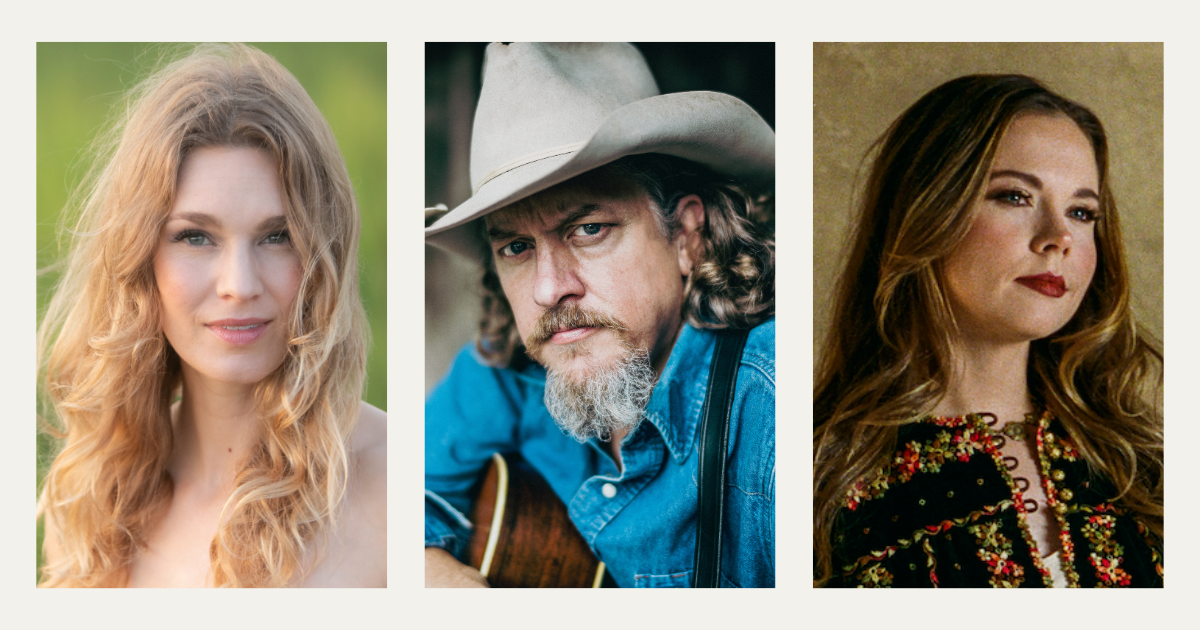
Photo Credits: Lead image (L to R): Ellie Hakanson by Nico Humby; Josie Toney by Natia Cinco; Omar Ruiz-Lopez by Phyllis B Dooney, PHOTOFARM. Alternate image: Ellie Hakanson by Nico Humby.
If you’re looking for a definitive, qualitative, and deliberate ranking; a firm and scientific rubric; or an unbiased, sterile reckoning of the best albums made in bluegrass this year, this roundup may not be for you.
Truthfully, as someone who’s worked, been acquainted, and become friends with many of the artists on this list in various capacities – from bio writing to onstage performances to media coverage to pickin’ parties to recordings and beyond – objectivity isn’t something I, personally, could establish anyway. And such year-end or other merit-based lists and collections aren’t all that interesting, are they, if not just to argue with their curation and selections.
I would not even attempt such things, because to me – to many of us – that’s not what bluegrass is about anyway. Bluegrass is about a feeling. It’s about innovation. It’s about virtuosity. It’s about tradition, loving it or retooling it or coaxing it or turning it upside down. It’s about adrenaline and a high pulse – and passing a mason jar around. It’s about feeling downtrodden or alone, shedding tears into that very ‘shine, and wailing along with the high lonesome sound. It’s folk music as much as it’s abject commercial country in “poor people drag.” It’s endlessly interesting and complex, but pretty damn simple, too.
Anyone with even an ounce of sense knows and understands that bluegrass can’t ever be objective. So indeed, why try? Why not acknowledge that bluegrass is always a matter of taste, of preference, of whimsical or capricious or convicted opinion? Bluegrass is always debatable, because, after all, bluegrass is always in the eye of the beholder.
In the eyes – and especially ears – of this particular beholder, these albums released in 2025 were the best, the most memorable, the most engaging. These collections stick to ribs like ham hocks, or stick in your throat like the tastiest clod of emotional peanut butter. They each advance, subvert, perpetuate, or wrinkle our core ideas of what bluegrass is – and what it can be.
Are each and every one of these LPs the best in bluegrass from 2025? Perhaps not… But also definitely yes.
Big Richard, Girl Dinner
In January, we gobbled down a heaping helping of Big Richard energy with the nourishing and nutritious Girl Dinner. The project may have been the band’s album debut, but this Colorado all-women quartet had already been making remarkable waves in the bluegrass, jamgrass, and string band scenes – and each of the members had extensive and glitzy musical resumés before they even convened. With a new album, Pet, on the horizon for February 2026, a signing with Signature Sounds, and an upcoming co-bill tour with fellow femme outfit Della Mae, we can tell this Girl Dinner is set to become an ongoing traveling feast.
Shawn Camp, The Ghost of Sis Draper
I remember attending Station Inn shows in Nashville in the early 2010s and sitting with rapt attention – like Martha’s sister Mary at the feet of Jesus – as Shawn Camp performed his suite of Sis Draper songs with his star-studded bluegrass bands. Often you’d hear just “Magnolia Wind” or just “Sis Draper.” Sometimes he would perform a more complete handful of the tracks he had written, individually and with his hero and mentor Guy Clark, about the mythical roots music figure from his home state of Arkansas. Now, he’s collected the slate of material – what could easily become a musical or multi-disciplinary theatre work of some kind – into one commanding, lovely, and visceral album. These are timeless songs, written and rendered as only Camp could.
Jason Carter & Michael Cleveland, Carter & Cleveland
Every now and again a new collaborative duo album comes along and makes you think, “Oh! This must have been what it felt like when Skaggs & Rice was released.” Or Tone Poems. Or Ralph Stanley and Jimmy Martin’s First Time Together. A monumental occasion, captured for posterity’s sake in the studio. When fiddlers Jason Carter & Michael Cleveland released their duo debut, that was the feeling. History made in the present, a work that will be regarded as seminal ages into the future being enjoyed in real time. Carter and Cleveland have collaborated quite a bit over the decades they’ve known each other, but what a gift to have that musical friendship ensconced forever on this album. We hope there is more to come.
Wes Corbett, Drift
Look, if all modernist banjo players sounded like Béla Fleck and Noam Pikelny, that would certainly be great. But thankfully there are dozens of five-string pickers continuing to expand on the Fleck (and Pikelny and Munde and Keith and Trischka) school of Scruggs-style, each in their own veins. Corbett is one of the best. Though he blends effortlessly into Scott Vestal’s former role in Sam Bush’s band – or into any number of recordings and one-off pick-up bands that boast his playing in newgrass and bluegrass and beyond – Corbett is a true idiosyncratic banjo player and composer. Drift, his latest, often employs traditional techniques as tools for innovation and contemporary tunesmithing. He recalls the great melodic pickers while always sounding first and foremost like himself.
East Nash Grass, All God’s Children
A few years ago, if you had told me the ragamuffin band holding down Monday nights at Dee’s Country Cocktail Lounge in Madison, Tennessee, would in 2025 release an album you’d describe as “heartfelt, contemplative, and intentional,” I would have probably laughed. East Nash Grass were just as jaw-dropping good then as they are now, but with that down-home silliness and clumsy charm all the great bluegrass bands born of indentured residencies have had. All God’s Children finds the band all the way grown up (but not really), and they never forsake their banter-rich, never-know-what-you’re-gonna-get roots. That overlap – of silly and heartfelt and virtuosic and not too serious – is where most (if not all) of the best bluegrass is born, anyway.
Sierra Hull, A Tip Toe High Wire
Every single time Sierra Hull releases a new album, journalists and critics love to talk about how she’s now “found herself” and “found her sound.” This writer, however, disagrees. I first saw Hull perform when we were both in our mid-teens and then as now I knew, wholeheartedly, this is someone who knows who they are. Granted, Hull has done plenty of finding herself along the way, as we all do, but the songs and tunes of A Tip Toe High Wire were obviously not born of someone just locating her voice, musically or otherwise. They don’t feel experimental or out on a limb, they are each solidly in her wheelhouse. They do still push the envelope, though, and they all tell personal stories, draw on individual experiences, and chase those treasured Hull-ian melodies wherever they lead.
I’m With Her, Wild and Clear and Blue
Perhaps all future I’m With Her albums should be made while basking in the “Ancient Light” of a total solar eclipse, given the striking sonic successes of Wild and Clear and Blue. Is that cosmic magic why their second full-length release feels so distinct and metamorphosed from their debut? Is it all the years and personal growth in between recordings? It’s not like they reinvented the wheel, they’re the exact same band – but something feels different here. Whatever the special sauce may be, all of I’m With Her’s offerings over the course of the band’s lifespan have been stellar, but this latest full-length project stands apart. As long as Jarosz, O’Donovan, and Watkins are making music together, we will be unendingly grateful they offer us these recorded windows into their creativity.
Kissing Other ppl, Kissing Other ppl
Bluegrass and old-time birth new projects, bands, and collaborations all the time. Some are purposefully momentary, some are unintentional flashes in the pan, some are such long strings of last names ampersand-ed together you know there’s no future for them. We hope Kissing Other ppl are here to stay. Rachel Baiman and Viv & Riley joined forces on the album – and band – turning mainstream and pop songs into bluegrassy and old-timey string band arrangements that positively vibrate with passion and life. “Sad boi” covers these are not, though you may at times find them subdued or tender or mild. Long may this old-time Americana musical polycule reign.
Cameron Knowler, CRK
If you’ve been craving a contemporary storyteller and poet who utilizes the guitar as their medium – like Norman Blake or Doc Watson or Tony Rice or so many others – I am so pleased to step onto my soapbox to tell you about Cameron Knowler. Also a writer (at times for BGS), archivist, photographer, and visual artist, Knowler’s guitar-centered album, CRK, is almost anything but a “guitar album,” despite each and every composition centering on the instrument. The LP paints vivid and haunting musical portraits of a place Knowler loves, longs for – and despises or begrudges, too – Yuma, Arizona. Knowler wouldn’t even pretend to compare himself to Norman Blake or state that he’s deliberately taking up Blake’s heavy, heavy mantle in the 2020s, but I’m saying he is. Thank goodness.
Bryan McDowell, Bryan McDowell
You may recognize multi-instrumentalist Bryan McDowell from his time performing, recording, and touring with artists like Claire Lynch, Sierra Hull, Molly Tuttle, Alison Brown, and many, many more. He’s an incredibly talented sideman and session player, so when I first received his new self-titled solo album, I imagined the sort of formless instrumental project most pickers with similar resumés create. What a pleasant surprise to find a fully fledged, well-rounded, complete song sequence chocked full of original songs and McDowell’s lovely, honeyed singing voice. (I know Bryan and I didn’t know he sang like this!) It’s on me, really – I shouldn’t have been surprised at all – but McDowell’s skill set is clearly no longer just geared towards backing others up. I am looking forward to seeing what’s next.
Shelby Means, Shelby Means
Speaking of artists ready to step out of the role of sideperson or session musician. Bassist, singer, and songwriter Shelby Means’ debut solo album is fantastic. Since departing Molly Tuttle’s Golden Highway, Means has already built striking momentum as an artist unto herself, and the quick success of her album has played a huge role in that. With originals, tasteful (and surprising) covers, and a star-studded roster of pickers – Tuttle, Ron Block, Michael Cleveland, and more – the project certainly doesn’t feel like a debut. And it shouldn’t, Means has crisscrossed the country and the globe for decades, she’s more than ready to step to the center of the stage. She’s done it before, she’s doing it again – and now a lot more frequently, I’d bet.
The Onlies, You Climb the Mountain
All the best bluegrass is old-time these days. (I say that over and over again, here’s what it means.) While mainstream bluegrass sounds more like ‘90s country played by a bluegrass string band, or jamgrass, or “MASH” – all of which depart greatly from the 1945/1946 sound of its origin – modern old-time becomes more and more of an audio swatch of essential parts of what bluegrass used to sound like and used to include. One album this year that epitomizes this phenomenon is the Onlies’ You Climb the Mountain. Is it phenotypical bluegrass? Oh, no. It’s not. But it also has plenty of textures and tones endemic to original bluegrass that are becoming increasingly rare in its modern forms. I shouldn’t sell the Onlies short, though, they aren’t here because they’re “better bluegrass” than bluegrass, or more authentic, or more “real.” They’re here because this album is excellent, on its own terms.
Danny Paisley, Bluegrass State of Mind
Danny Paisley is celebrating 50 years of bluegrass with his latest album, Bluegrass State of Mind. Still looking for new challenges and trying to add fresh sparkle to his dyed-in-the-wool traditional sound, the new LP includes Dobro (for the first time), drums (sacrilege!), and a bit of an Americana lean. (Don’t you dare call it “grassicana.”) To BGS readers, the project will most likely sound like straight down the middle bluegrass of the highest order. Longtime fans of Paisley & the Southern Grass, though, may notice that very sparkle Danny has been chasing, as he targets new audiences and still sets new goals, five decades into his career as a bluegrass tradesman. It’s the family business.
Missy Raines & Allegheny, Love & Trouble
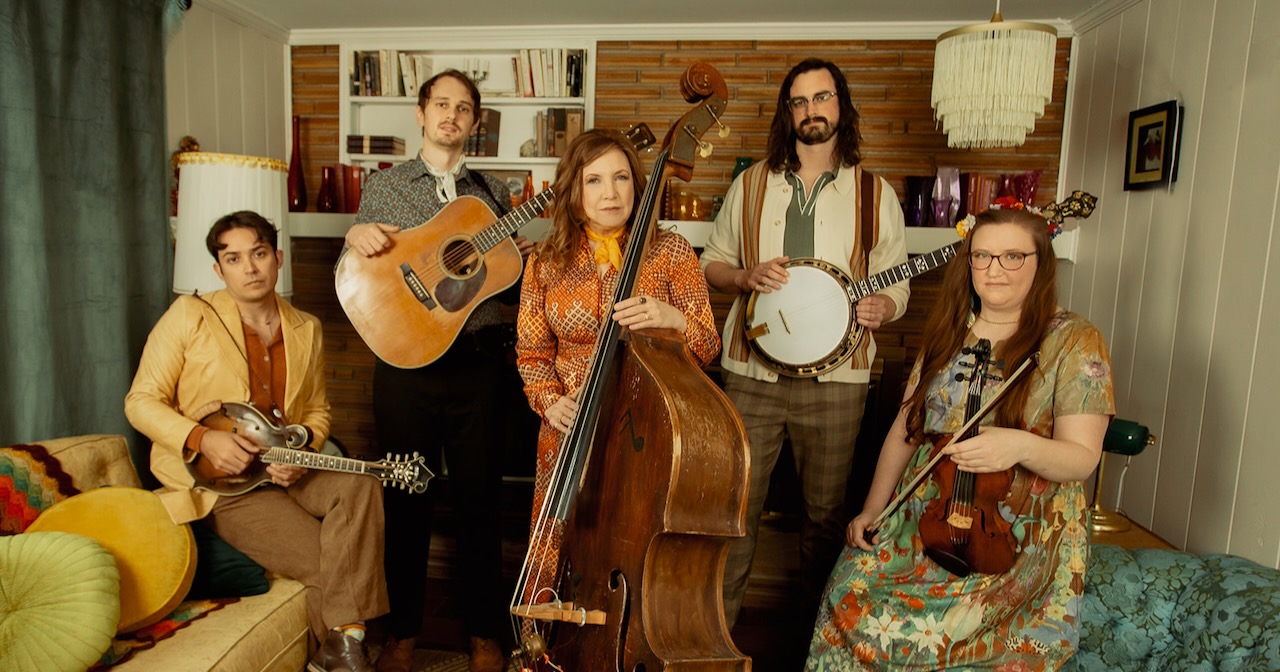
Missy Raines is one of the winningest musicians in the history of IBMA, amassing 10 Bass Player of the Year trophies over the years and and a handful of honors in other categories, as well. She may have won her biggest prize, though, when she landed on her latest band lineup, Missy Raines & Allegheny, a few years ago now. Her second album with the group, Love & Trouble, continues building upon the chemistry and collaboration that dripped from 2024’s Highlander. They often rise to the occasion of my preferred nickname for them, Mashy Raines & Allegheny, but they remain a consistently dynamic group capable of gritty, barn-burning bluegrass and contemplative and emotive slow burners, just the same.
Red Camel Collective, Red Camel Collective
They began as Junior Sisk’s backing band, and like many of the great “spinoff” bluegrass bands of yore – Quicksilver (Authentic Unlimited), the New South (American Drive), and many more – Red Camel Collective have quickly shown they’ve got the chops to take the same route. Their debut self-titled album was released earlier this year and was made at Sisk’s suggestion – and with his blessing. (He regularly steps off the stage at his own shows to spotlight the Collective and their music, as well.) This band of lifelong pickers have clocked so many miles playing bluegrass and executing the visions of others that, when charting their own course as Red Camel Collective, they’re able to sound exactly like themselves. It’s tough to sound singular in modern, radio-inclined bluegrass. But Red Camel Collective do. Is that why they won New Artist of the Year at the IBMA Awards this fall? It sure ain’t coincidence.
Sister Sadie, All Will Be Well
Sister Sadie’s All Will Be Well is like dropping the needle on a 45-minute bluegrass therapy session. I don’t say it flippantly or sarcastically; it is indeed shocking the level of earnest contemplation, processing, emoting, and growth evident in the songs on this album. At the same time, when you hear the tracks played down at a bustling bluegrass festival or a packed rock club or a subdued listening room, they never feel twee or try-hard or sodden with greeting-card level sentiments. They never feel heavy, actually – this is fun, often hilarious, party-ready music. Dance-along music. Shout-along songs. You’ll laugh, you’ll cry. (At the vocals alone.) These are real human ideas, thoughts, and feelings set to bluegrass. Imagine.
Larry Sparks, Way Back When
How does this album seem like it could have been pulled from any year, any decade of Bluegrass Hall of Famer Larry Spark’s sceptered career? Because it could have been, damnit. He’s Larry Sparks. Way Back When sounds warm and live, like listening to tape or vinyl over earbuds or cell phone speakers. Like being in the room with that resonant, vibrant, and patinated voice. The material is timeless, but never tired or lost in retrospection. Sparks is obviously making bluegrass in the present, as he always has. He just sounds exactly like this. And the way he talks about making music – as he did in a BGS interview set for publish in January 2026 – you can tell, for him, it’s essential to inhabit the present and inhabit the song. Bluegrass really is his calling, and we’re all all the better for it.
Billy Strings & Bryan Sutton, Live At The Legion
One of the best bluegrass albums of the year? Of course. One of the best live shows and tours of the year? Doubly, triply, quadruply of course. You’d think it would be brain-melting to listen to hours of two acoustic guitars and an electric bass pick through bluegrass, fiddle tunes, and Doc Watson classics, but it was divine. Trance-like – not with eyes glazed over, but on the edge of your seat. I wasn’t at that show at the Legion when they tracked the album, but was lucky enough to catch their show this fall at the Ryman in Nashville. If you weren’t so fortunate, don’t worry, ‘cause this isn’t an incredibly exclusive club. This record really does capture all that’s ineffable of being “in the room.” (No one is surprised.) Turns out, you can actually bottle and sell it, if you’re these two. Now if only you could buy the skillset, too…
Thompson the Fox, The Fox in Tiger’s Clothing, vol. 1 & vol. 2
Maybe once a year I trip over or into a new music discovery that gets me so excited I start getting annoyed with myself from having to hear me recommend them over and over again. With Thompson the Fox, it never got annoying (not to me, at least) and the excitement of turning folks onto their music still hasn’t worn off. So here we are, again. If this is your initiation, don’t thank me, thank the people who sent Thompson the Fox my way. Jazz, newgrass, bluegrass, bebop, ragtime, and oh-so-many more styles and textures combine in a completely fresh and distinctive form. I’ve never heard new acoustic music quite like this, yet it’s clearly rooted in that tradition. The simple math of xylophone, banjo, bass, and drums doesn’t quite math, but this group sounds resplendent, rich, and fascinating. Takumi Kodera on banjo is a revelation and Rie Koyama (xylophone), Akihide Teshima (bass), and Tomohito Yoshijima (drums) complete the Tokyo-based ensemble.
Cristina Vane, Hear My Call
Cristina Vane exists at an intersection of roots music that far too few inhabit, because very few can manage there. Vane can. She does blues, bluegrass, old-time, country, and Americana. Sometimes blended, sometimes compartmentalized. She’s got short-form, short-attention-span, vertical-video appeal for days, but her songs are never vapid or playing to any kind of commercial common denominator. Her instrumental skills and the passion for learning and song collection across roots and folk genres that she exhibits bring it all together. I’d not want to subject either woman to the corniness of comparing one to the other, but for folks who love Sierra Ferrell and are looking for more artists in a similar roots-meets-mainstream space, Cristina Vane can do it. She is doing it.
Vickie Vaughn, Travel On
Vickie Vaughn has won IBMA Bass Player of the Year for three years in a row and on the heels of that remarkable accomplishment, she’s released her debut full-length solo album, Travel On. Produced by Deanie Richardson of Sister Sadie, it’s Vaughn’s first recording under her own name released in 10 years. Original songs and covers are packaged in a sound that’s always trad bluegrass, but often infused with a dash of Osborne Brothers from the ‘80s or Jim & Jesse with a drum kit. It’s an Earl Scruggs Revue sort of flair, troubadour-steeped bluegrass-country. And it’s divine.
To conclude this long yet non-exhaustive and surely myopic list of the best bluegrass albums of 2025, let me leave you with this gentle reminder. What’s bluegrass and what’s best are always in the eye – and the ear – of the beholder.
What was your favorite bluegrass album of 2025? Let us know on social media. We hope you discover some new music to love in our BGS Class of 2025 and we can’t wait to make new discoveries with you, too.
BGS Staff contributed to this list.
Photo Credit: Shelby Means by Hunter McRae; Shawn Camp by Neilson Hubbard; Sierra Hull by Spencer Showalter.
My conversation with Ben Garnett finds him at about a decade in Music City and in the swing of an album cycle for Kite’s Keep, the guitarist-composer’s second full-length solo record. Our discussion centers around the ethos of modern string band music, what the guitar has to say about it, and the potential for folk music’s inherent narrative quality to uplift and move past tradition itself.
Garnett’s perspective on these topics is one that is quite underrepresented: A graduate of the University of North Texas’s famously rigorous jazz guitar program, he spent his early years in Texas developing the skills needed as a pop-oriented sideman and session player, while making ripples in the experimentally disposed Denton, Texas, before heading east. As we’ll find out, he has made disparate musical worlds come together, informing each other along the singular path he leads.
Upon arriving in Nashville, Garnett was quickly recruited as trailblazer Missy Raines’ go-to guitarist, while contributing his compositions and musicianship to progressive acoustic ensemble Circus No. 9. Though his path wasn’t entirely certain at first, his dedicated, open-minded approach to musicianship quickly yielded success both creatively and professionally. Now touring his original music while balancing responsibilities as a band member, the new album Kite’s Keep was made in collaboration with today’s top-of-the-heap acoustic guard: Darol Anger, Chris Eldridge, Brittany Haas, Ethan Jodziewicz, Paul Kowert and experimental pianist-composer Matt Glassmeyer.
I was surprised to hear Ben describe this project as a “guitar” record; being a guitarist myself, and with kindred reference points, I am conditioned to hear six string-born music through the instrument’s highly subjective – yet unendingly capable – lens, though Ben manages to disrupt this. His distinct transcendence of the instrument comes from embracing its format and stepping past folks’ conception of it, while explosively celebrating the guitar as a compositional tool.
Garnett’s ability to write for the room, so to speak, enables him to accommodate many players’ perspectives while balancing high precision with casualness. This is a blend of skill sets and priorities that are rare in ecosystems historically dominated by performative virtuosity. At every turn, Ben Garnett is courteous and grateful, crediting his achievements to friends, linchpins, and heroes within his scene – ones that he now orates his compelling tale alongside.
Is it safe to say that your new record, Kite’s Keep, portrays a narrative? Was that built into your approach as you wrote and recorded it?
Ben Garnett: Absolutely. Poetically speaking, the album title Kite’s Keep loosely refers to this idea of a child’s inner world – a dreamscape where each song represents a different vignette of imagination. The broader narrative has to do with using the acoustic guitar as a world-building tool. This idea that guitar records can be more expansive than just, “here’s my solo arrangement of such and such a tune.”
My goal was to make a record that celebrates the power of what an acoustic guitar can do as an ensemble instrument – like bringing out what other instruments are capable of. The guitar can act as this stage, or world, that other instruments can then inhabit.
So, in that way, would you say that this is a guitar record?
Definitely.
Interesting, because when I listen to it, it doesn’t necessarily feel that way, which is an aspect I’m quite partial to.
I’m curious why this feels like a guitar record to you. I know you’re facilitating these exchanges and you’re world-building with them, you’re obviously pushing past what the guitar is conceived of, but it sounds like you’re not trying to push past the guitar itself.
I guess the idea is that, in addition to world-building, a lot of the compositional material was guitar-born. I’m thinking of the fiddle and bass as extensions of what I would otherwise play. They’re bringing guitar-born ideas into this other register, carrying them to places where the guitar can only point.
Do you have a compositional process? Would you consider it more passive, or do you sit down to compose in a more dutiful way?
Sometimes it’s dutiful, but a lot of the time it’s passive, like when I’m at the airport. Thoughts come to me and I’ll write them down in my notes app. From there, it’s more like script or scene writing. For instance, I’ll want the tunes to arrive at a certain point and I’ll figure out how to get there in reverse. When I’m being more dutiful, I’ll realize a piece in a program like Ableton or Finale, or just by recording myself.
I wrote one tune in a weird way: I improvised freely for 15 minutes, mostly with long tones. The only directive was to play a note and whatever note I heard after that, I would immediately try to play. I chased my tail for 15 minutes and recorded myself. Then I sped up the recording by 400%. I chopped up the transients, warped it, and put the transients on different parts of the metric grid. I had a groove in mind – a half-time, kind of bluegrass-funky tempo. Since it was my melodic sensibility and the way I heard the notes flowing into each other, there was a certain intention and trajectory there.
So, you were kind of sampling yourself – that must get you out of your own head and off the instrument.
Yes. It gave me rhythms and phrasing that I never would have come across otherwise.
And then you learn it from yourself.
Exactly. … It’s the second track, with Darol Anger, “Tell Me About You.”
For something like that, which is more thoroughly composed, how do you make it sound so fluid in the studio while recording?
The process for that tune involved getting the basic elements assembled in Ableton, but then there was the process of arranging the material. Then after arranging, came “breaking in” the tune, so to speak.
Once I had a basic arrangement, I brought it to Darol. We probably got together four or so times. I remember asking him what would make it more idiosyncratic to his instrument and playing. He’d suggest adding a double stop somewhere or doing something rhythmically a little differently. Basically, it was all about massaging it so it didn’t feel clunky. It had to pass all these “tests” before we even got into the studio.
What are these tests that it must pass?
They have to do with the flow. Even if the compositional material comes from using a computer or another unusual place, the music still has to have this casualness. String band music tends to sound its strongest when the parts rely on each other in a certain way. I generally will “test” my music by playing it with as many people as I can, to make sure it has an inherent interpretive quality. Making sure the ideas are robust enough to hold water no matter who’s playing them.
For people who don’t know, you come from Dallas, you went through UNT’s jazz guitar program, and then you moved to Nashville. I’m curious how you found Nashville with your sensibilities, growing of musical age in an environment that is uniquely experimental, yet highly rigorous. Did you come here with the aspirations of doing the things that you’re doing now?
Not at all. At the time, it was much more open-ended than that. I was mostly driven by wanting to get out of Texas. But I had also just gone to the Acoustic Music Seminar with Mike Marshall, Julian Lage, Bryan Sutton, and Aoife O’Donovan, which was a hugely formative experience. I think it was Sutton who offhandedly mentioned, “You should think about moving to Nashville.” I knew there were acoustic musicians here I looked up to – the whole Sam Bush and Jerry Douglas generation of players and I knew Critter [Chris Eldridge] and Sutton were here, too.
At that time, I was also in a phase of wanting to be an electric guitar player. The idea of being a session musician or side-person appealed to me. I had an electric background playing all kinds of music back in Texas – jazz, rock, country, pop, etc. I remember my cousin and my first guitar hero, Andy Timmons, telling me, “Nashville is definitely where I would be if I were your age.” It just seemed like the most open-ended place for the variety of interests I had.
Did you feel like you could do what you wanted to do at first?
It took a while to figure that out. I got a job with bluegrass bassist Missy Raines two weeks after arriving, which was a great first touring experience. I had the idea of making a solo record in my head for a long time, but I always thought I’d wait until I was 30 or so to make it. However, at one point, I distinctly remember Missy telling me, “You definitely need to make a record before you’re 30,” which was amazing advice.
I also got a job with progressive bluegrass band Circus No. 9, a year or so after moving, and was expected to bring in original music to build out our repertoire. The more engrossed I got in the progressive bluegrass world, the more I realized how rare my perspective on it was. It felt isolating at first, but being on the road with Missy and Circus was like being in a second family where I got to realize my position and perspective.
Fast forward a few years, and my hero Chris Eldridge agreed to produce my first solo record, Imitation Fields.
I’m always fascinated by the Dennis Hopper quote where he says one day an actor wakes up and they decide they’re a producer. I’m wondering if you feel similarly in regard to pursuing your voice as a bandleader, composer, artist. I feel like in the current state of the music industry, with how comically hard it is to do anything, it’s almost like a fatalistic, “Why not?”
I’m curious if you could speak to the process of finding yourself in a record of your own stuff and what advice you might give to somebody trying to figure it out.
It goes back to the validation thing. I probably wouldn’t have made a record without all the help and encouragement from those around me. I hate to even frame it this way, but I just have to count my blessings. In some ways, I feel like I walked into something that was waiting for me.
You could have stayed in Texas and made records, but you wouldn’t have made the records you’re making here in town.
Absolutely. Who knows what those Texas records would’ve sounded like.
Going back to your question on what advice I’d give to somebody figuring it out. If you’re an aspiring musician who wants to make your own music, I’d advise not to be too career-oriented at first. Obviously, you need to do what it takes to pay the bills. But there’s a lot of music out there that, to me, sounds born from a certain careerist mentality, which I frankly find to be taking up space.
All the stuff I’m doing now – booking my own tours, stocking merchandise, making promo graphics, being my own publicist (essentially being a small-business owner) – is all really new to me. I moved to Nashville just to see what would happen. I had no real objective. Even if it at times felt meandering or directionless, I’m grateful for the space I inadvertently gave myself to try things. You find yourself in that process, and I think your art becomes more meaningful as a result.
Another factor worth considering in finding myself was the impact of COVID. Critter and I were in the middle of editing Imitation Fields during this time and I think if it weren’t for COVID, it could have easily been, “Okay, we’ve recorded now – let’s edit, mix, master, then done.” All the sudden, it became a whole process of, “What if we tried this? What if we did that?”
It’s like being in a block of molasses. You’re not thinking, “I have three days in the studio, and we have to figure it out.”
Exactly. We had all this time. No corners were cut. … It was kind of insane. I didn’t quite realize it at the time. I’m just really grateful, even if it ultimately drove me a little crazy.
As someone who puts a lot of meticulous work into the visuals which accompany your music, how do you feel that film informs music and vice versa?
First and foremost, the two seem inseparable. For those of us who can see and hear, we’re always looking at something while we’re listening and we’re always listening while we’re looking. That connection is inherent, so my argument is, why not have a say in both realms of sensory experience?
On top of that, I think there’s something cinematically interesting with the traditions of jazz and folk music. A lot of folk music tends to have this quality of wanting to tell a story, albeit in a fairly literal way. Listening to a song, there can be this mini-movie playing in the listener’s mind. Maybe they’re imagining a character, or their own life experiences – whatever the case may be, it largely seems to be about evoking imagery on some level.
In contrast, that kind of storytelling seems less of an objective in jazz. Jazz tends to revolve around this more abstract, spontaneous kind of communication. Which feels equally as cinematic, but the goal of that storytelling feels distinctly different than with folk music.
Of course these are generalizations and I don’t mean to be reductive with either music. This is all to say – the way these traditions interact with our “cinematic” experience of music is something I find deeply fascinating and is a huge source of inspiration for my writing and playing.
It’s the same phenomenon with a song like “Nine Pound Hammer” that has lyrics and semantic content, but is also a vehicle for instrumental virtuosity. I feel like you’re meeting in the middle there.
Absolutely. This is where bluegrass, in some ways, has the best of both worlds.
What I think initially drew me to folk music, in general, was the cinematic quality I didn’t get playing jazz standards. Obviously, there’s the storytelling you get listening to the great singer-songwriters, but there’s also listening to bands like Strength in Numbers. It feels like cinematic stories are being told in those compositions.
Do you feel like a more approachable rhythmic foundation provides a shoo-in for listeners to more quickly imagine a world?
It certainly can. But I also think it’s this general narrative quality in folk music that provides this. For instance, when I play a tune with Brittany [Haas], there’s almost this unspoken objective between us to build the tune in a certain way. In a way that’s very different from playing a jazz tune.
As an aside, I think that’s why people sometimes misunderstand jazz or say they can’t connect with it. Most of the time, jazz isn’t trying to do what most pop or folk music is doing. It’s not trying to conjure a story in this literal way. What makes jazz work is how it centers around this more abstract, colloquial communication.
Perhaps in that way, music school’s training isn’t always “backwards compatible.” Is that fair to say?
I grew up being taught a certain set of rules about how to make good music from going to jazz school. Then, when I moved to Nashville and started working with string band musicians, I realized what I was working with was quite different from the rules they had grown up with.
I think this intersection is what makes someone like Edgar Meyer a powerful force. In some ways, he’s able to pull out all these things in people like Jerry Douglas, Russ Barenberg, Béla Fleck, Mike Marshall, and Sam Bush by bringing in this other perspective from his classical background.
He also realized that the same rules did not apply.
Exactly. He’s able to take what those musicians are giving him, see what they’re good at, harness it, and arrive at a perspective that none of them would have had otherwise.
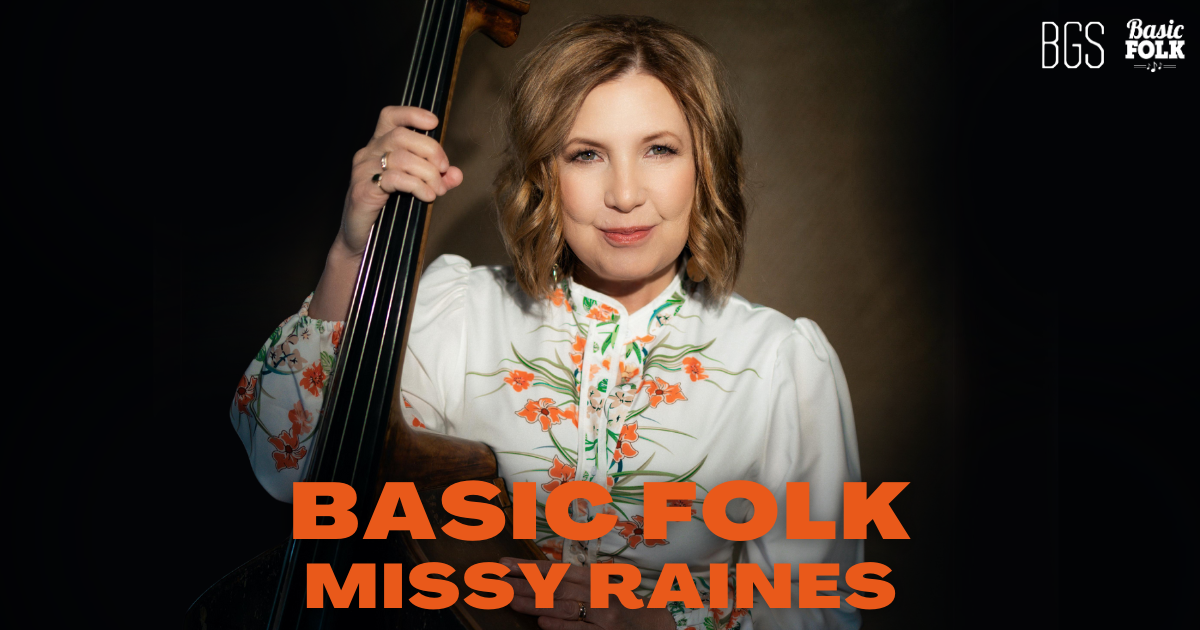
Acclaimed bluegrass musician Missy Raines is also a very cool and funny lady, originally from West Virginia – not far from the Maryland border and the city of Cumberland. First of all, I had questions for her about why people from West Virginia are so into their state. She gets into that and also explores the influence of the vast and varied bluegrass music scene she found there, as well as the scene in nearby Washington, D.C..
Raines has made a significant impact on the genre, earning 14 International Bluegrass Music Association awards, including 10 for Bass Player of the Year. Her latest album, Highlander, showcases Raines’ mastery of the bass alongside an ensemble of top-tier musicians from Nashville – her home base for the last 34 years – and plenty of special guests, too, blending traditional bluegrass with innovative twists.
Throughout our conversation, Raines reflects on her deep connection to Appalachian culture and the Appalachian Mountains, which have profoundly influenced her music. We explore her experiences performing live at music festivals and the evolution of bluegrass music as a genre and community. We recount the passion her family felt for music, touching on the story of her mom and aunt crying their eyes out over John Duffey leaving their favorite bluegrass band, The Country Gentlemen.
Raines also talks about taking care of her late brother Rick, who died of HIV-AIDS in 1994 at the age of 39. Through that experience, she was empowered to help others whose loved ones were also dying and suffering from HIV and AIDS. With her unique blend of banjo and fiddle music, and her activism in a normally conservative genre, Raines continues to push the boundaries of the genre while staying true to its roots, making her a trailblazer in the world of Americana and folk music. Our conversation was in depth, fun and enlightening – I had high hopes for this one and I was not disappointed!
Missy Raines is one of the winningest musicians in the 30+ year history of the International Bluegrass Music Association’s annual awards. She’s a 10-time recipient of the Bass Player of the Year trophy and has taken home a couple of Collaborative Recording of the Year and Instrumental Recording of the Year awards, too. She’s been an omnipresent creative in bluegrass, in Nashville, and in American roots music as a whole for the majority of her life. Even so, many are heralding her new album, Highlander, made with her new band, Allegheny, as a “return to bluegrass.” The thing is, Raines never left.
It’s true that she spent more than a handful of years touring with an experimental, new acoustic-inflected string band, The New Hip, intentionally devoting more than a decade to highlighting her songwriting, her role as front person, and her smoky, patina-ed alto. Throughout that time, no matter how far afield the music may have explored beyond the stone walls and steel bars of bluegrass, Raines always had both feet firmly planted in the genre. While fronting and touring the New Hip, she remained a mainstay at bluegrass and acoustic camps across the country, founded and performed with several bluegrass and old-time supergroups, and “moonlit” as a bassist-for-hire for a laundry list of notable bluegrass, country, and Nashville stars.
So, however exciting it may be – and, it is truly, very exciting – that Raines and Allegheny have intentionally guided her sound back to traditional, straight ahead, mash-tastic bluegrass for her new album, Highlander, it’s important to remind Raines’ audience, the new initiates and diehards alike, that whatever music may emanate from the strings of her upright bass or from her tender and expressive voice, she has always been and will always be bluegrass. And effortlessly so. Highlander isn’t so much a return to the genre as it is a reminder that Missy Raines’ goal in music, first and foremost, is to make great bluegrass music for great bluegrass folks – her kind of folks.
This is your first album with the new band and I wanted to talk about how your creative process and how your collaboration process looks nowadays. I sense a lot of changes in how you’ve approached making music as an ensemble, but I wonder how it has felt to you, on the inside of the sonic and lineup shift from the last album to this new lineup, with Missy Raines & Allegheny?
Missy Raines: The collaboration process we have within this band, Allegheny, and for this album is the collaboration process that I’ve always dreamed of and wanted to have in a band setting. You know, I wanted to have my own band for years and years and then, after I waited a really long time, when I finally did do it in like 2009, I had in my mind that it would be like this, that it would be this collaborative thing and I’d have people who were invested. The short story is that I have that now, and that’s the beauty of it.
In the past, I did have elements of that, for sure. There were definitely folks who came into the different configurations that I had who were invested and collaborative. [That] was definitely there, but I will say, to have a moment in time when you have actually like five people sitting in the room and they’re all equally invested – that is pretty magical.
So yeah, the process for this record was very different than for Royal Traveller, because on Royal Traveller I didn’t really have a band when I started that recording. I was sort of ending the New Hip and I knew that that record wasn’t going to have the sound that the New Hip had, it was going to be very mixed, in terms of styles. There were all these different guests on every single song and there was no one solid backing band, because I actually wasn’t touring at the time. All of the main decisions and stuff were basically made by me and [producer] Alison Brown.
I think part of why this album feels so strongly like a band album is not just because of the Missy Raines & Allegheny rebrand, but also because you’ve been playing with this lineup – Ben Garnett, Eli Gilbert, Ellie Hakanson, and Tristan Scroggins – now for several years. This project feels like it was made by a band. And I think part of that feeling comes from you having worked together for as long as you did before you made the album.
I think it does. I don’t know if it also has anything to do with the fact that me, just by default– yes I’m the leader, but I’m also a bass player and my tendency and my way of thinking about any band is I come into it as a support player, because that’s what I’ve done all my life. This came up the other day online, because we’re getting lots of really great reviews from the record. Like one reviewer called my “backing” band “magnificent.” They are magnificent, but I don’t think of them as a backing band. I told them that and of course, Tristan said, “Well, that’s what we are.” And I was like, “No!” I still don’t think of [the band] that way. I don’t know if it’s just because I’m maybe still a little uncomfortable being out front, or it’s a combination of things.
It’s also just been this bass player mentality that – not that bass players can’t be out front, it’s just like, “No, we’re making this stuff together. We’re making this together.” And so I don’t see it as me standing up there doing something and they’re backing me up. I feel that if I’m not playing with them and they’re not playing with me, then we have nothing.
What was the process like as you sat down with this sequence of songs and were imagining who you wanted to have guest on the album? How did you navigate that with your producer, Alison Brown? This is a stout lineup of special guests appearing with you and Allegheny.
The only thing I knew in the very beginning, before I even talked to Alison about making the record, was that I wanted to do “These Ole Blues” with Danny Paisley. [Laughs] That was already in my head. I had this vision, I heard Loretta Lynn’s version of it and then I also knew that I wanted to change it a bit to make it more bluegrass. And it came out exactly the way I was hoping. I wanted to sing it with Danny Paisley. That was an easy one. Well, all of them were easy, because when we sat down we just listened, thought about the song, and thought who would be the right singer. And, who would also represent what it was that I was trying to say with this record.
Like, Dudley Connell on “Ghost Of A Love.” Of course, he’s playing with the Seldom Scene these days – he’s just so good that he can do anything. And no one loves the Seldom Scene more than me, but what I was looking for was Johnson Mountain Boys Dudley. [The Seldom Scene] was one of the big inspirations to this band, but so were the Johnson Mountain Boys and nobody captures that better than Dudley.
And I did want to say something about Laurie Lewis, too.
I wanted to ask you about “I Would Be a Blackbird,” the track that features Laurie, so yes, please, let’s definitely get into that!
So, Nathan Bell, he’s a friend, a great songwriter, and he wrote “American Crow” [from 2013’s New Frontier]. He wrote “I Would Be a Blackbird.” He’s written several songs with bird themes, but this song, he actually sent to me literally years ago and I loved it, but I couldn’t make it happen before, because it just didn’t fit whatever I was doing at the time. But it found its way to this band and it felt right.
Then again, when we thought about who I should sing with it, I thought of Laurie Lewis and it was perfect. I also really wanted Laurie to be part of this record because she was so much a part of Royal Traveller, she wrote “Swept Away” and it was like the star of that album. Laurie said to me, “You need to record ‘Swept Away,’ you should do that! It would be a great song for you.” So that felt extra special, that she thought of me for that.
When I was just starting out to play, when I was a teenager and stuff, I didn’t really know much about her music, because at that time I was such an east coaster and she was such a west coaster. I didn’t really know much about what was going on out there. But then soon after that, when I started hearing more of her music, got to meet her, and heard Love Chooses You, that was one of the first moments that I had in my mind that made me go, “Oh, you know… I would like to do something like this on my own someday.”
And then she became a really dear friend! Anyway, it was just really important to have her on this record.
I wanted to ask you about “Who Needs A Mine?” Not only because of Kathy Mattea joining you on that track, but also because of your ties to West Virginia and the very ideas behind Highlander. When I first heard you play that song probably a year and a half ago now, I think my jaw hit the floor. It’s such a perfect song and it’s so clearly in this tradition of women songwriters from West Virginia, from Central Appalachia, and the Mid-Atlantic who use folk songs and folk lyrics as a vehicle to speak truth to power. For me, it’s the focal point of the record. I think it’s one of the best socially aware and politically aware bluegrass songs that’s ever been written, in my humble opinion.
Wow. Well, your humble opinion means a lot over here. So, thank you.
I definitely thought of Kathy immediately, because of the West Virginia part, but also because she has championed this drug crisis for a long time. Her own life has been affected by it, personally, with family members. She speaks openly about that and has done a lot of really great things. That resonated with me.
One of the really extra special things that happened the day that Alison brought us together in the studio, I walked in and [Kathy] was there and she looked at me and she said, “I really, really love this song.”
I felt the sincerity in her voice. Like she said, it is really, really meaningful and powerful. I was just overwhelmed with that. Then she also said, “And it’s really nice to hear another alto singer!” [Laughs] I thought, “Well, that’s cool that you would even put me in the same breath as you.” I’ve always been drawn to singers like her, with the range of her voice and stuff. It seemed like a very natural fit for the song.
And as for me wanting to write it, I’ve been thinking about this song for probably the last five, six years or maybe a little bit more. I tried to write this song on my own, right from the beginning, but I realized that I was just way too close to it and I needed to have some perspective. I still wanted to have a bit of control over it, because I knew what I wanted from it. But I realized I also needed somebody to give me some perspective. So, I thought of who I knew that I would like to write with and who would get it and come from that same place, and I very wisely chose Randy Barrett. He was absolutely perfect to help me write that.
Of course, you know I cited Hazel, because she’s such a hero and my ties to West Virginia will be forever. I honestly don’t ever see myself living back there ever again, but on the other hand, I will always cherish all the things precious from my early life there. This issue is just so incredibly important to me and the reasons it happened – that people can Google, as to why this is such a horrific and atrocious thing. And it wasn’t just by accident, [opioid marketing] was actually targeted.
I’m glad you bring up Hazel. I think she is such an important touch point for this song. And I also think of Jean Ritchie, but there’s also this current moment happening where songwriters and roots musicians from rural places are taking up similar issues in their music. I’m thinking of Dori Freeman’s “Soup Beans Milk and Bread,” of Willi Carlisle’s “When the Pills Wear Off.” I think that there’s this really important moment of songwriters telling stories about these regions that are critical and that are seeking justice and a better future, but are also approaching it from love.
There’s something really interesting about “Who Needs A Mine?” because it feels like there’s some sarcasm and sass in it, but I still sense that the song is very, very loving – even in the way that there’s bitterness and anger in it. Do you see that too?
I love that you bring that up, because I was just sitting here thinking that I grew up listening to Hazel and hearing her songs, mostly about poverty and about mining and black lung and all of the travesties that came with the mining industry. While I knew that was part of my state’s history, it really wasn’t part of my own story, because my family weren’t miners. They were farmers and they were railroad men, but they weren’t actually miners.
The part of West Virginia where I grew up had more strip mining than it did deep coal mining. And so there was some level of understanding for me, but at the same time, I was fascinated. When I was a teenager, I used to read all the stories about the mines and unionization – and Mother Jones. I was really into that. And again, one of the reasons that I loved Hazel is because she championed all of that so much. At the same time, it wasn’t my story. When I started becoming emotionally involved with what was happening in the world today, seeing the West Virginia that I knew and the devastation when I go back home to see my family. I hear the stories about the drug infestation and all that. I see the poverty and see the children and all those things. Then I started getting angry and started getting upset about it. I realized this is my story. This is my time. This is what’s happening now. We all thought that the mines were going to be the worst thing that ever happened to us, but we at least kind of lived through that. And in many ways, we triumphed through that. But now, this is more powerful – a pill that makes you feel like nothing, a pill that takes you out of reality is way more powerful than anything else.
I love the joke going around regarding this lineup of your band being “Mashy Raines.” I think it’s hilarious.
[Laughs] Thank you.
I think it’s interesting, because it seems like people use that joke to note how trad this band sounds, because you’ve spent a lot of time dabbling on the fringes of bluegrass. So it’s notable that you’re making bluegrass straight down the middle with this lineup. I think part of why it works so well is because you’re using this really trad aesthetic with such emotionally intelligent songs.
That is exactly what I was trying to go for, to have this hopefully artistically and intellectually interesting subject matter on top of really traditional sounds and aesthetic. That’s the most fun in the world to do, and hopefully you get some messages across without folks even knowing it.
I understand why some people might think this is new for me or something, the mashing thing, but we, of course, know that it’s not. I’ve been doing this for a long time, but it’s just that a lot of the mashy stuff or the real traditional stuff I started out with. I was doing it back then, you know, when not everything that anyone ever did was recorded and put online. There’s so much of that in my history that only the people who were there will remember. When I finally did start to make records and stuff, either on my own or with other people, yeah, it tended to be a lot more explorative, for sure. I had already played a lifetime of traditional bluegrass before I even made my first album.
The New Hip was bluegrass, but I never tried to make it be bluegrass. I just knew that I was bluegrass and I was a bluegrass bass player and I was playing this other kind of music. The entire time, I was thinking of all of it as a bluegrass bass player. In my mind, I never left bluegrass, but I do understand how it was perceived that way by some.
When Highlander started coming out, I started seeing the stuff being written and they were using this “return to bluegrass” thing. I fought it a little bit, at first. But now I’m like, “It’s okay, because you’re right.” This is unique. This band and this sound, it is unique. In that regard, it is a definite return to something that I haven’t done for a long time – with a specific sound that we have now. It’s exactly what I was looking for, but because of the people involved, it’s better than I ever imagined it could be.
To celebrate one of the most roots music-y times of year – the winter holiday season – we’ll be showcasing the best in new and classic holiday music from our BGS family with a weekly BGS Wraps round up. Welcome to its first edition!
Whether you adore or abhor holiday music – and we certainly understand both of those mindsets – we hope you’ll find plenty to love with our BGS Wraps playlist (below) and these bluegrass, country, folk, and Americana albums, songs, videos, and shows all celebrating the most wonderful time of the year. From Irene Kelley to Jon Pardi, Wynonna to Brandy Clark, Daniel Donato’s Cosmic Country Christmas to Warren Haynes’ Christmas Jam, BGS Wraps is a splendid roots music family reunion. Plus, don’t miss our weekly Classic Holiday Album Recommendations to close out each edition of this mini-series. Check it all out:
Brandy Clark, “My Favorite Christmas” / “I’ll Be Home For Christmas”
Brandy Clark’s self-titled, Brandi Carlile-produced album released earlier this year has been a favorite good country record of the BGS team this year. For the holidays, Clark has followed up the success of her full-length 2023 release with an A side / B side single of an original, “My Favorite Christmas” and a classic, “I’ll Be Home for Christmas.”
Helene Cronin, Beautiful December
Singer-songwriter Helene Cronin has released an EP of six original holiday songs entitled Beautiful December. This track, “I Could Use a Silent Night,” is described by Cronin as “a song for all who are holiday weary, tired of the commercial chaos that comes around every year at Christmas.” We can certainly relate! Roots music is always a perfect reminder of what really matters this time of year: People, love, kindness, and togetherness.
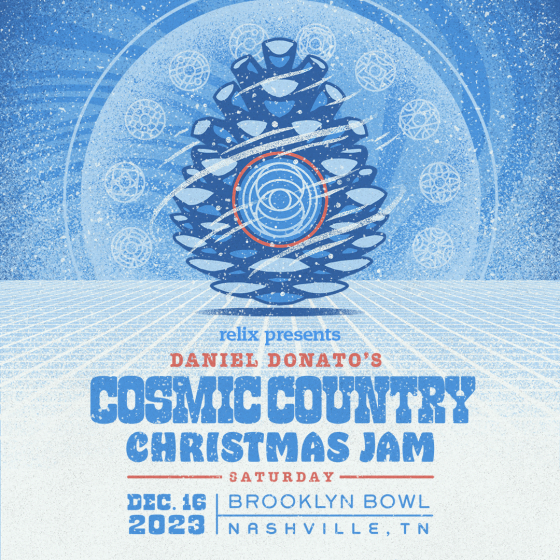
Daniel Donato’s Cosmic Country Christmas Jam (December 16, Nashville, TN)
If you’ve been enjoying Daniel Donato’s recent Cosmic Country Mixtape – a BGS exclusive – you won’t want to miss his Cosmic Country Christmas Jam at Brooklyn Bowl in Nashville on December 16. (Tickets and info here.) It’ll be pickers’ polar paradise with appearances by Sierra Hull, Duane Trucks, Grace Bowers, Willow Osborne, and many more.
Steven Gellman, “Jewish Christmas”
An adorable and delightfully cheesy holiday song – as all of the best holiday songs are – that reminds us how cultural traditions blend and transform, not only in the American “melting pot,” but all around the world, too. Hear more from this award winning folk singer-songwriter with our October premiere of “Little Victories.”
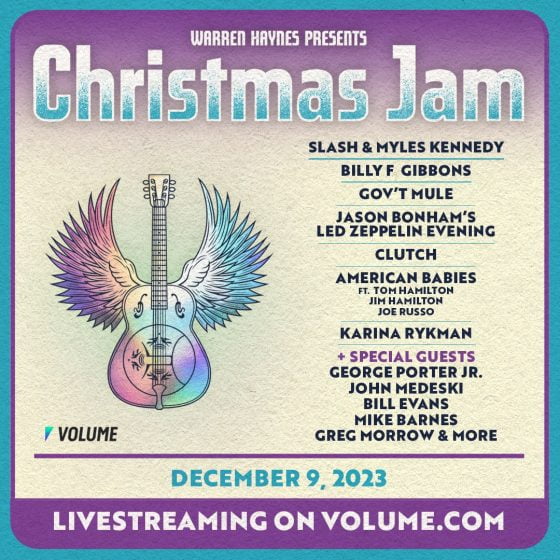
Warren Haynes Presents: Christmas Jam (December 9, Asheville, NC)
If you’re in North Carolina’s High Country, here’s a rockin’ Americana Christmas Jam you won’t want to miss. The annual event, organized and hosted by Grammy Award winner Warren Haynes, will be held on December 9, benefits Asheville Area Habitat for Humanity, and will feature appearances by Billy F. Gibbons, John Medeski, Gov’t Mule, Bill Evans, and many more. Plus, its bonus/offshoot event, Christmas Jam by Day, will showcase a handful of fast-rising roots artists including Colby T. Helms and Red Clay Revival. Tickets are still available and, if you don’t happen to live within striking distance of the Blue Ridge Mountains, you can stream Christmas Jam live on Volume.com.
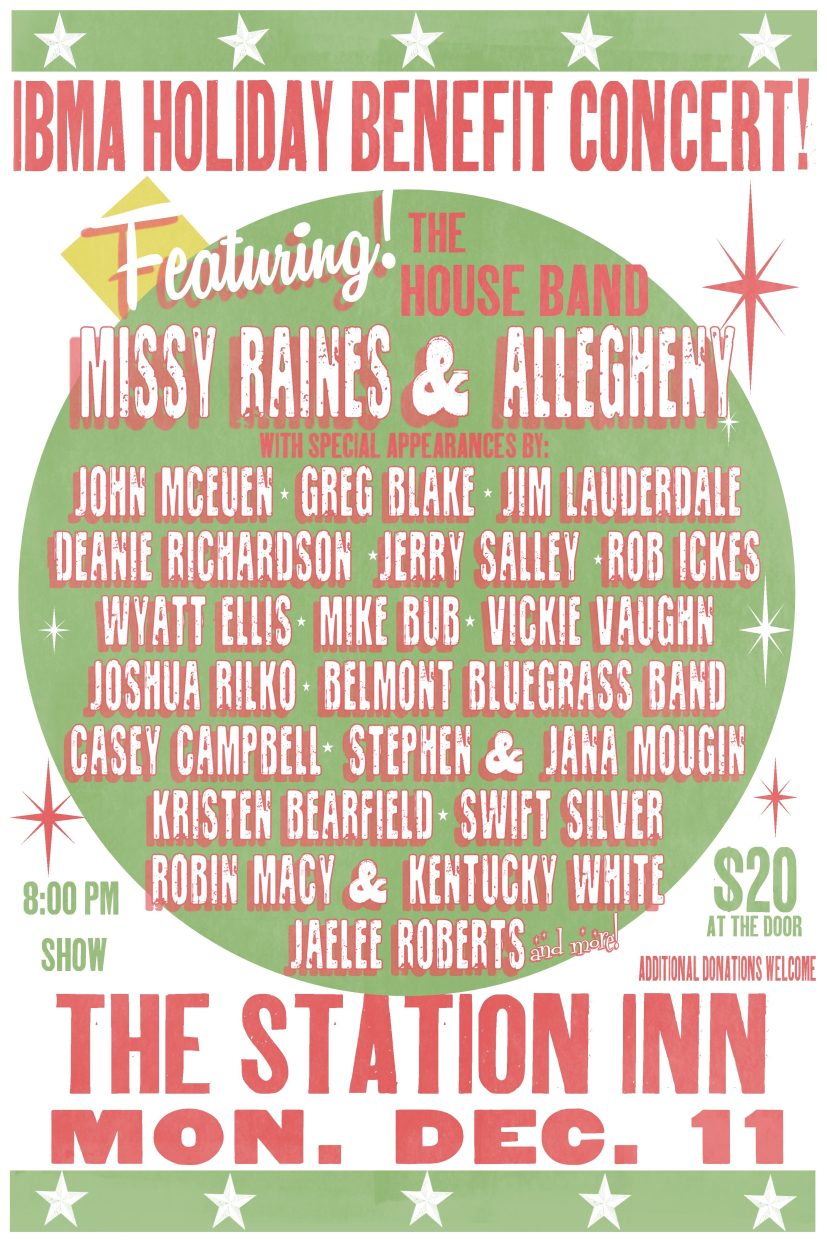
A heavenly host of our bluegrass buddies will be convening at the World Famous Station Inn in Nashville on December 11 to raise funds for the IBMA Trust Fund and the IBMA Foundation. The lineup – anchored by house band Missy Raines & Allegheny – features a wide swathe of artists and community members from reigning IBMA Award winners to acclaimed songwriters to exciting up-and-comers. Holidays in Nashville are truly incomplete without a visit to a festively decorated Station Inn.
Irene Kelley and the Kelley Family, The Kelley Family Christmas
Staying with bluegrass for another moment, venerated bluegrass songwriter Irene Kelley has brought along her two talented daughters, Justyna and Sara Jean – both successful artists and songwriters in their own right – for a cozy and comforting album of holiday classics, Kelley Family Christmas. The project benefits Patio Records’ Healing Gardens initiative, with a goal of raising funds to build healing gardens at hospital treatment centers. It’s a lovely family-centered album that showcases how much great music runs in the veins of the Kelleys.
Paul McDonald & the Mourning Doves, “Maybe This Christmas”
If the holidays make you blue, you’re not alone. There’s plenty to enjoy in this tune of Christmas misery from Paul McDonald & the Mourning Doves. “So maybe this Christmas folks will just leave me alone,” he sings, plaintively. “And quit asking how I’m doing without her and if I’m ever going to let that girl go.” There’s a delicious quality to holiday melancholy and that’s on full display here, in this languid and loping alt-country holiday song of lost love.
Mr Sun, Mr Sun Plays Duke Ellington’s Nutcracker Suite
We’re big fans of the bluegrass, old-time, and new acoustic tradition of artful and virtuosic cover albums. Here, Mr Sun bring the form to its highest level, synthesizing and transforming Duke Ellington’s Nutcracker Suite into compositions fitting of a four-piece, ostensibly bluegrass string band. We premiered a track from this collection, “Shovasky’s Transmogrifatron (Ballet Snow Scene),” earlier this week, so we can guarantee Grant Gordy, Joe K. Walsh, Aidan O’Donnell, and Darol Anger’s rendition of this classic record will make your jaw drop – and your toe tap!
Jamie O’Neal & Ty Herndon, “Merry Christmas Baby”
Pop country is often good country too, and this collaboration from Jamie O’Neal and Ty Herndon demonstrates how artful the format can be – that ear-grabbing chromaticism in the melody of the first line, for instance. “Merry Christmas Baby” is another holiday lament, but packaged in a radio-ready production style that belies the loneliness in the lyrics, co-written by O’Neal and Allen Mark Russell. If this track came on the local Top 40 country station, none of us would be complaining. Merry Christmas, BGS readers – wherever you are!
Jon Pardi, Merry Christmas From Jon Pardi
We can’t believe just how perfect this intro is played on pedal steel and, despite the fact that we don’t think Jon Pardi could hit Mariah’s whistle notes, his rendition of this quintessential holiday smash hit is ideal for Christmas boot scootin’. Pardi is a definitional example of timeless country traditions packaged for the mainstream. His entire holiday album, Merry Christmas From Jon Pardi, is a heavy dose of joy, fun, and delight executed with flawless old country musicality. Twin fiddles on “All I Want For Christmas?” Yes, a thousand times, yes.
Wynonna, “Beautiful Star of Bethlehem”
While we argue over which modern version of this track is the exemplary version – The Judds’ or Patty Loveless’, of course – the holiday season is the perfect time to hold our fond memories of Naomi while we celebrate how Wynonna and her husband/producer Cactus Moser pay tribute to 1987’s Christmas Time with The Judds with this new iteration of “Beautiful Star of Bethlehem.” No matter who sings the song, its bluegrass bones and Stanley Brothers touches are obvious, and we adore how simple and unpretentious this recording by Wynonna and Cactus is.
Our Classic Holiday Album Recommendation of the Week: Sharon Jones & the Dap Kings, It’s a Holiday Soul-Party
We miss Sharon Jones desperately. Each year, when the holidays roll around, we go back to our (now classic) Non-Crappy Christmas Songs playlist and, in general, try to remind ourselves just how much actually good Christmas and holiday music exists out there. As we do, this album from Jones & the Dap Kings is one of the first to come to mind. It’s iconic, it’s traditional, it’s far out, it’s comforting, it’s surprising, and it’s effortlessly inclusive in its scope and its sonics. We come back to this record year in and year out, so it’s a perfect first pick for our Classic Holiday Album Recommendations.
More BGS Wraps are coming your way next week!
Photo of Jon Pardi: John Shearer Photo of Wynonna: Eric Ryan Anderson Photo of Brandy Clark: Victoria Stevens
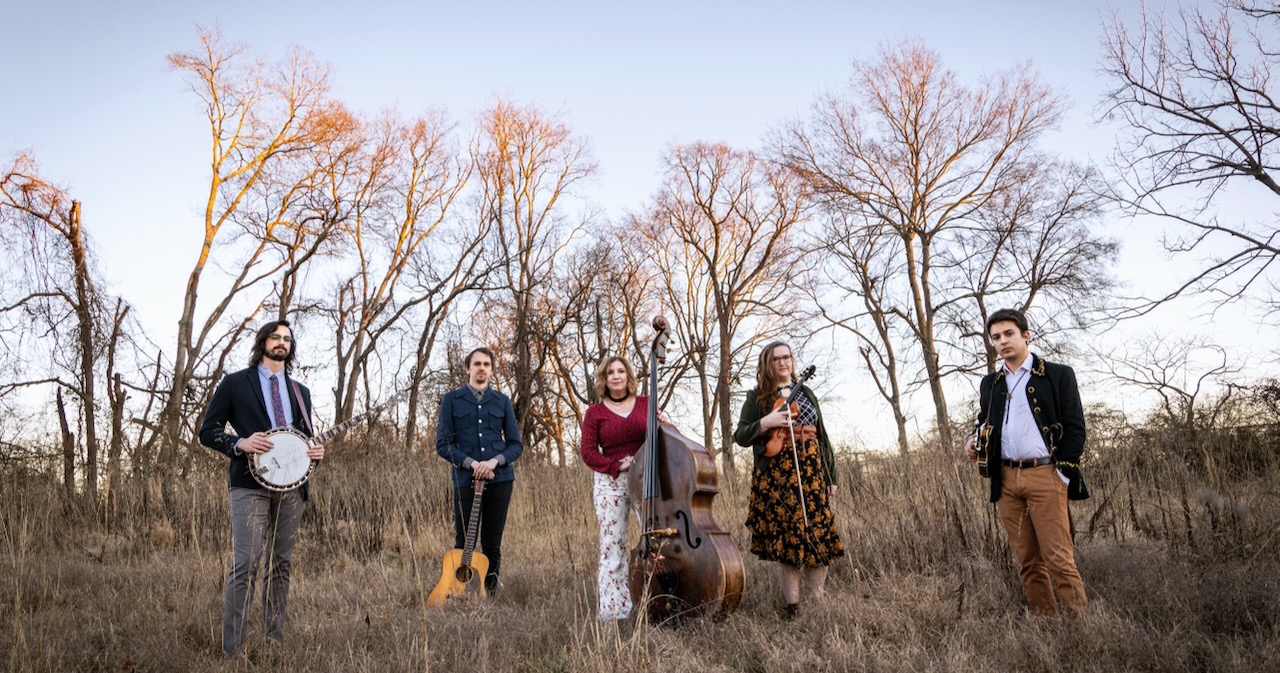
Artist:Missy Raines & Allegheny Hometown: Short Gap, West Virginia Song: “Fast Moving Train” Album:Highlander Release Date: September 22, 2023 Label: Compass Records
In Their Words: “Train songs have long been a staple in bluegrass music and finding a good one – that sounds like it could have been around since Jimmie Rodgers’ day, but is actually new – is a rare gem. ‘Fast Moving Train’ is exactly that kind of song. It describes the lure of life as a traveler and the unrelenting longing to see what’s on the other side. It’s all about the journey and not so much about the destination — with the hope that you’re ‘gonna ride these blues away.’
“The song was written by the extraordinary, multi-talented Shad Cobb. I first heard it while I was playing in the Helen Highwater Stringband with Shad, David Grier and Mike Compton a few years back. I tucked it away in my mind as one of those songs I knew I wanted to sing one day and waited for the right time to bring it to life. That time is now! It came together so naturally with this band that it immediately fell into regular rotation on our setlist. We’re so excited to share it with everyone.” – Missy Raines
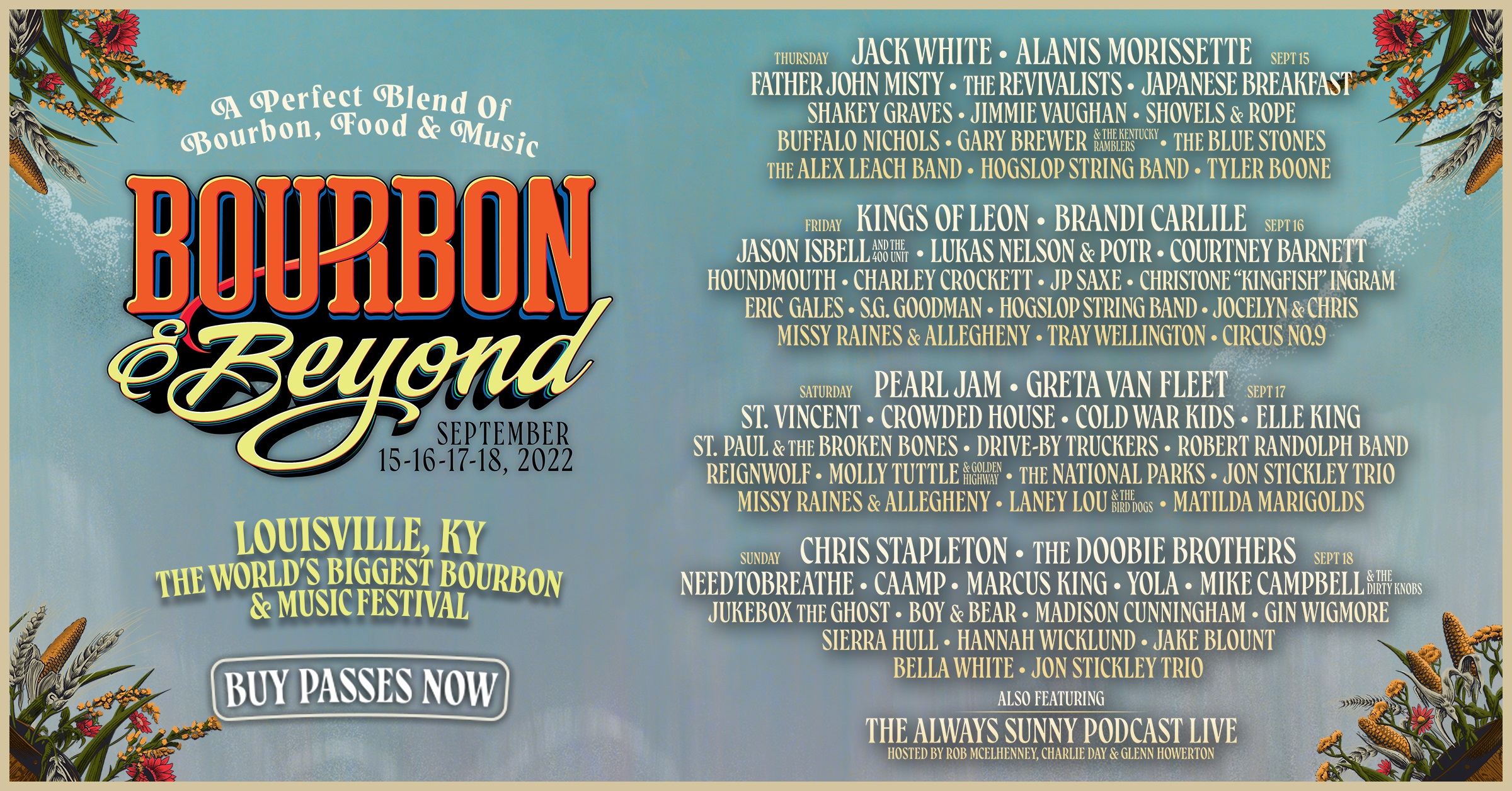
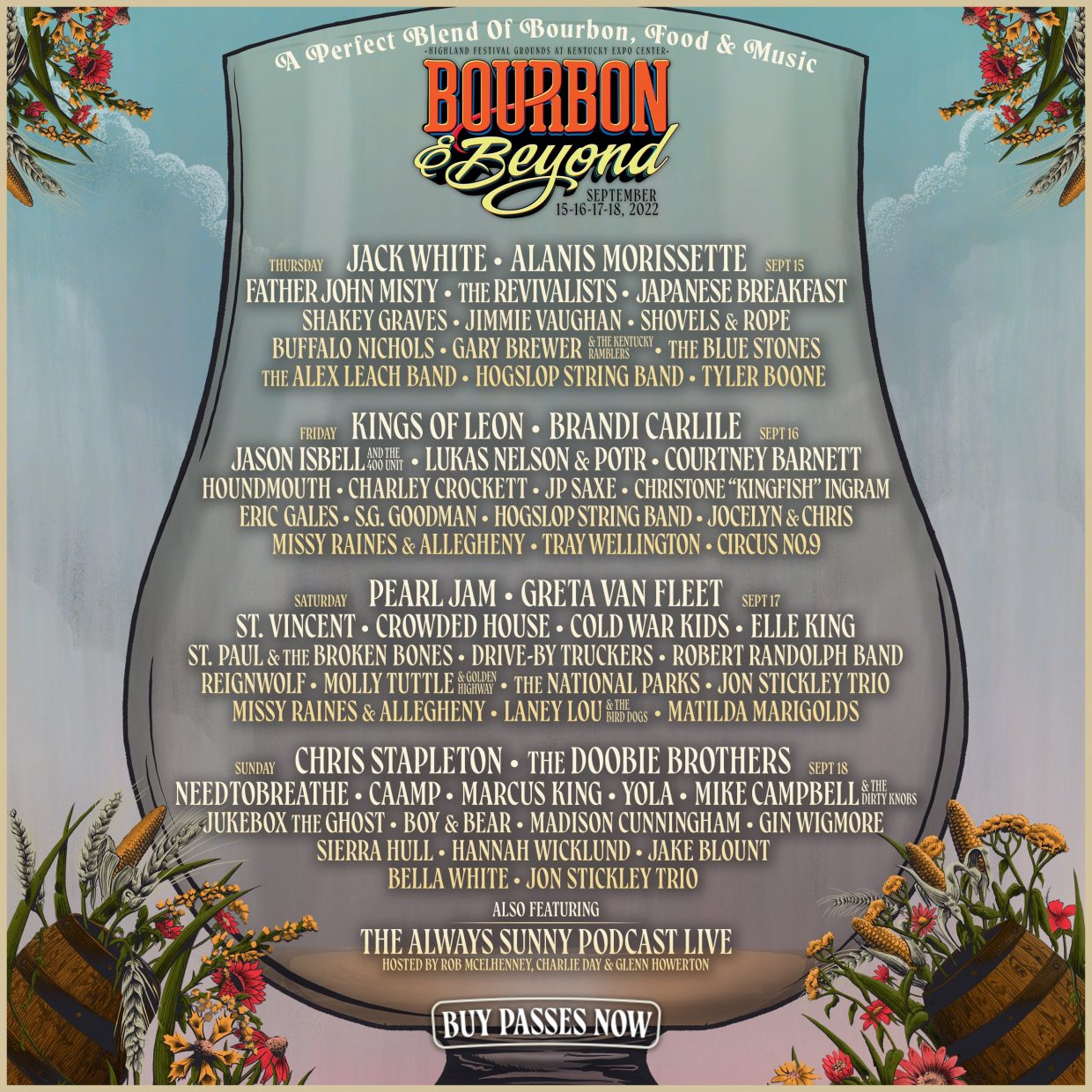
For the fourth year, BGS is thrilled to be back in Louisville for another round of Bourbon & Beyond to be held September 15-18, 2022!
In addition to featured chefs, local food stands, and seemingly unending stalls of bourbon distilleries, the lineup includes mainstage sets from the likes of Jack White, Brandi Carlile, Chris Stapleton, The Doobie Brothers, Caamp, Yola, Jason Isbell, Charley Crockett, and many more, plus four days of bluegrass goodness on the BGS Stage located inside the Bourbon Tent.
Check out the complete Bluegrass Stage schedule below:
THURSDAY Tyler Boone Alex Leach Band Hogslop String Band Gary Brewer & the Kentucky Ramblers
This website uses cookies to improve your experience. We'll assume you're ok with this, but you can opt-out if you wish.AcceptRejectRead More
Privacy & Cookies Policy
Privacy Overview
This website uses cookies to improve your experience while you navigate through the website. Out of these, the cookies that are categorized as necessary are stored on your browser as they are essential for the working of basic functionalities of the website. We also use third-party cookies that help us analyze and understand how you use this website. These cookies will be stored in your browser only with your consent. You also have the option to opt-out of these cookies. But opting out of some of these cookies may affect your browsing experience.
Necessary cookies are absolutely essential for the website to function properly. This category only includes cookies that ensures basic functionalities and security features of the website. These cookies do not store any personal information.
Any cookies that may not be particularly necessary for the website to function and is used specifically to collect user personal data via analytics, ads, other embedded contents are termed as non-necessary cookies. It is mandatory to procure user consent prior to running these cookies on your website.