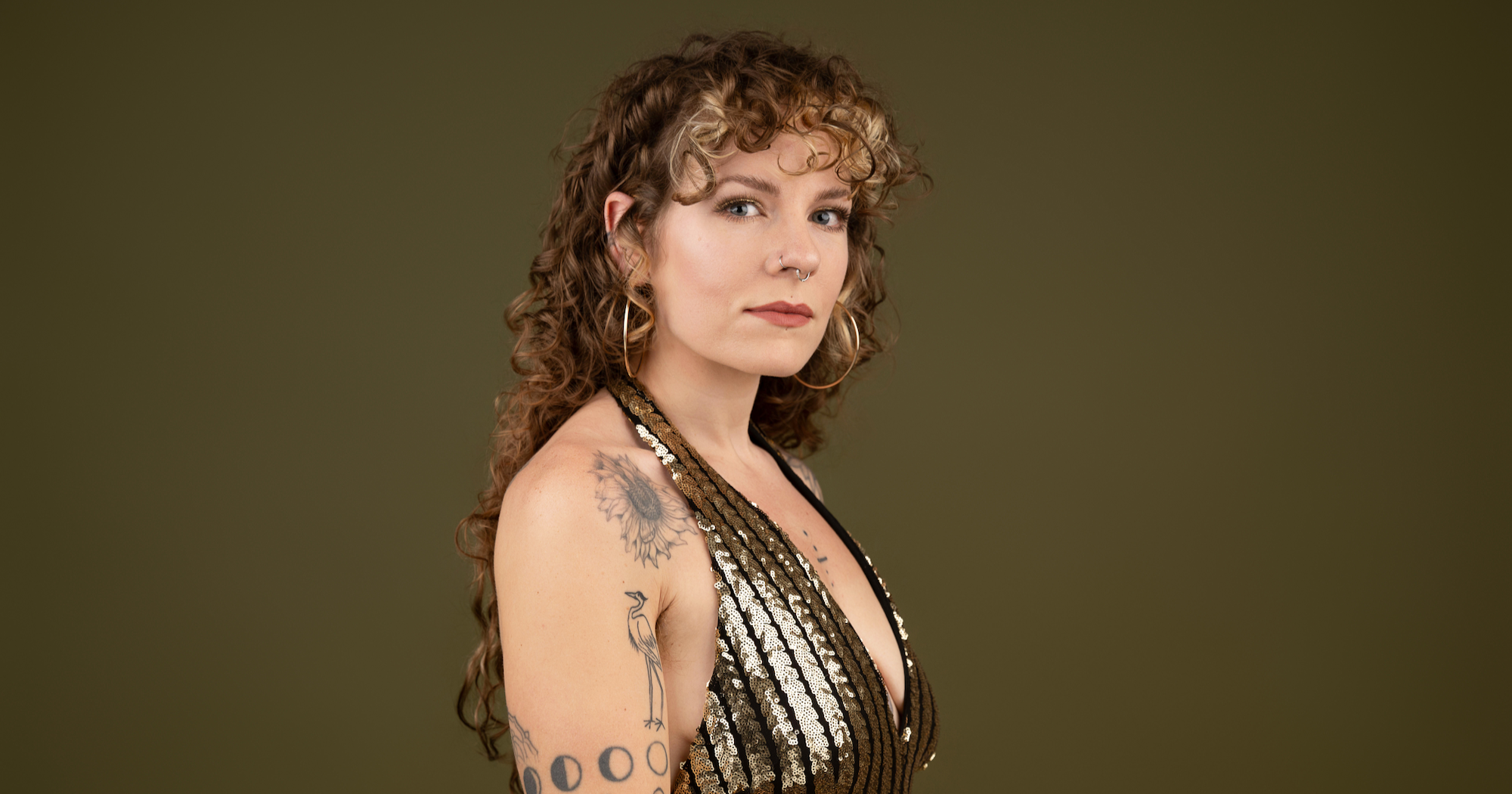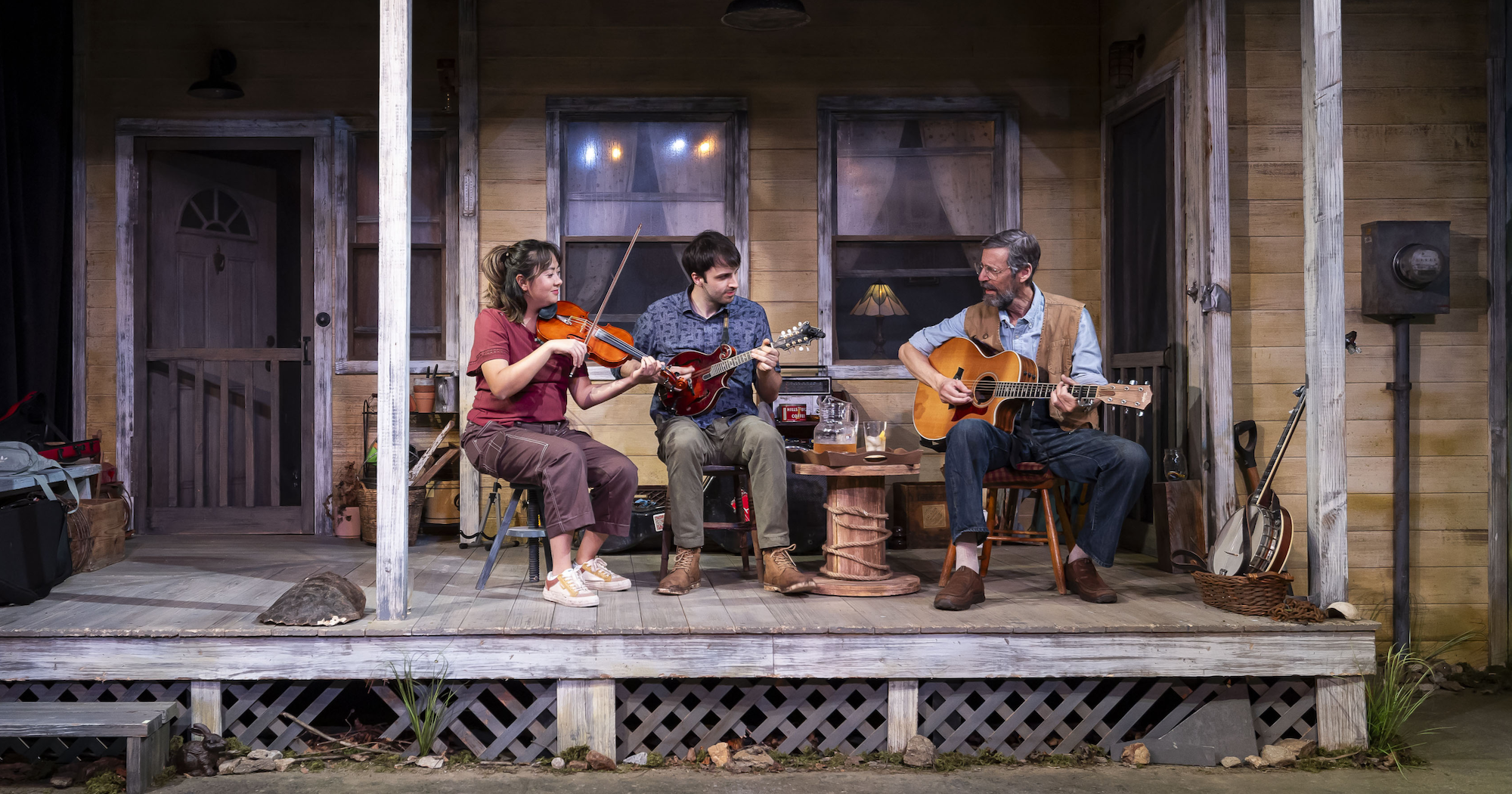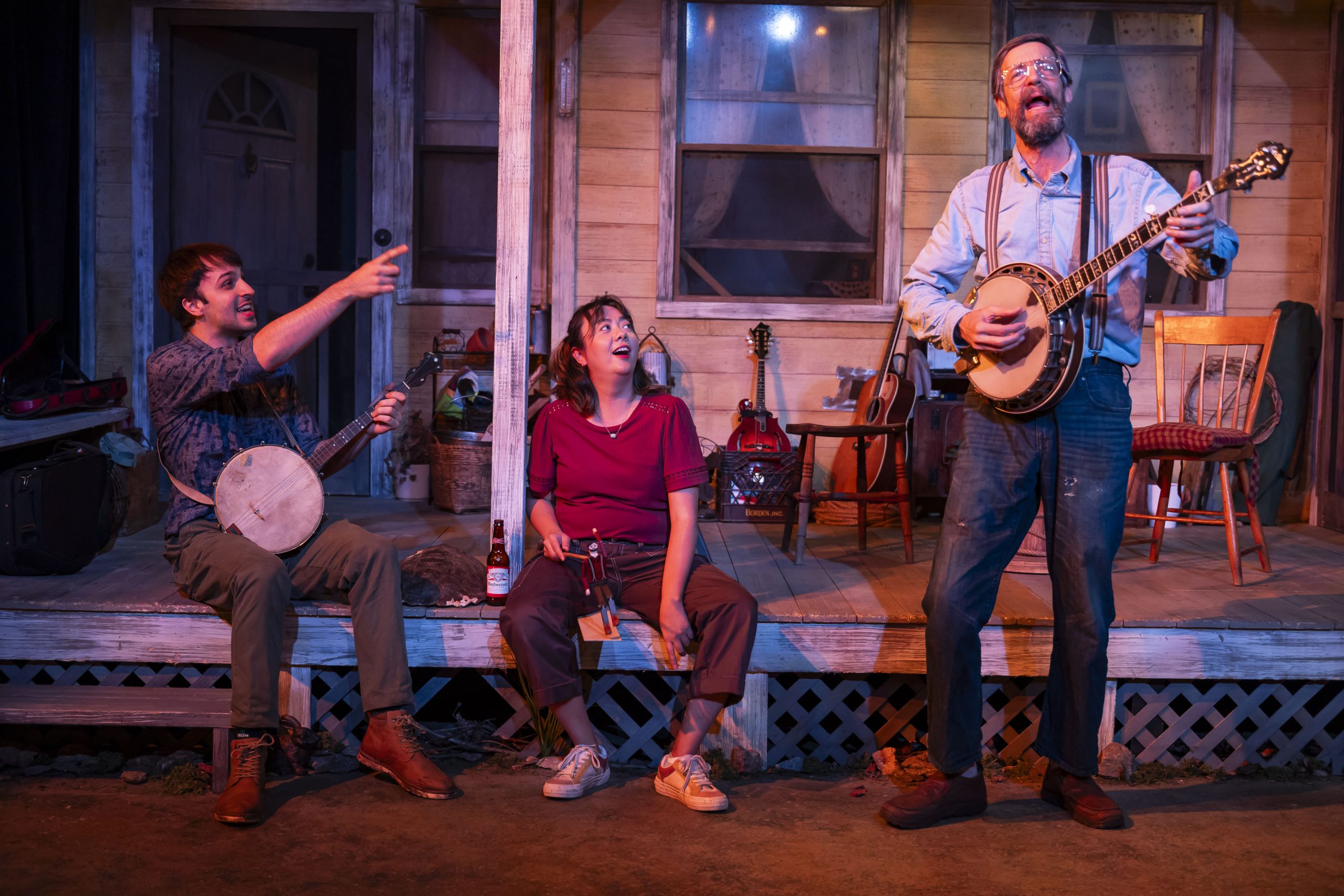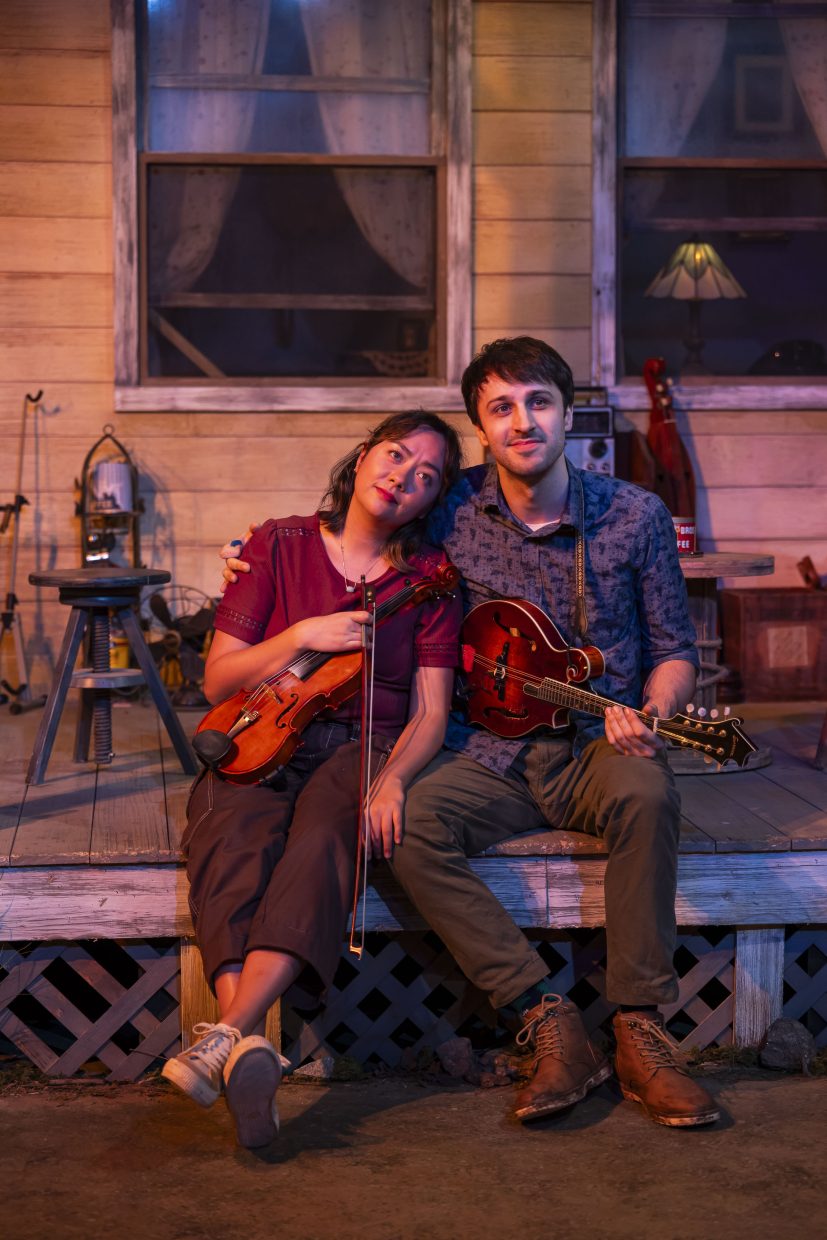
Heather Aubrey Lloyd’s Guide to Murder Ballad Survival

As you might guess, there’s tens of dollars to be made working in folk music. One of the more macabre ways I’ve made a living is… um… off the dead, performing educational programs on gender inequality in murder ballads for more than a decade with my band, ilyAIMY (i love you And I Miss You).

Maybe I was just born spooky (Halloween birthday!), but I’ve made the most of my curiosity for folk music’s unnerving and often misogynistic underbelly. All while collecting a few outliers that turn the old tales on their heads.

First found in Europe in the 1600s, murder ballad poems and songs have since become heavily associated with traditional American music. A mainstay in country and folk – whether it’s Polly or Omie falling prey to poor choices, or “Stagger Lee” (a staple since 1897), or Brokeneck Girls: The Murder Ballad Musical selling out its 2023 run – we’re still pressing play on cautionary tales of love inextricably woven with violence and remorseless outlaws. But we’re also starting to look back at the facts, wondering more at why the women of murder ballads are voiceless victims and rarely vigilantes.

I’ve kept the body count relatively low on my new album, Panic Room with a View, but there are a few graves. It is October after all. So, witches, black widows, and wanton women – who makes it out from this Mixtape alive? – Heather Aubrey Lloyd

“Bang, Bang” – Nancy Sinatra

This one might be a metaphor, but the messaging sure isn’t. Love is interlaced with violence right from childhood: “He would always win the fight,” and she should have known better. P.S. Sinatra may be singing it, but this lament from the “female perspective” was written by Sonny Bono.

“Come All Ye Fair And Tender Ladies” – Odetta

In rare cases, it’s not a man’s voice behind the mask, but women warning one another to “lock their hearts” against lying lovers. Cause of death here will eventually be sorrow, but don’t worry – we’re getting to the grisly bits and what happens when you don’t heed the warnings.

“Pretty Polly” – Coon Creek Girls

Appalachian, music academic, or horror movie fan, we all know the rules: the girl getting “busy” is the first body to drop. This song has roots in 1750s English ballads, where the pregnant and unwed victim at least sometimes gets revenge as a ghost. Not so with most American versions of Polly, or North Carolina’s Omie Wise, where the vague-but-violent tale is told with little remorse or consequence.

This is the blueprint of the classic American murder ballad. He’s dug the grave in advance or brought her to the river (no obvious sin-cleansing symbolism here) and “her blood, it did flow.” In some versions of “The Knoxville Girl,” his friends still try to bail him out of jail. Though countless renditions exist (The Byrds, Béla Fleck & Abigail Washburn, etc.), this stark presentation by the Coon Creek Girls has always been my favorite.

“Barbara Allen” – Joan Baez

Controversial opinion alert! I’ve always had a huge problem with the claim of “the world’s most-collected English-language folk ballad.”

Barbara Allen doesn’t die because she loves a man, but because she simply doesn’t. When women refuse there are still consequences, and “hard-hearted” Barb’ry follows “sweet” William to his grave, where he entwines with her in death. Ew. Still, it’s hard to argue with Baez’s perfectly mournful vocal take on this tune.

“The Dreadful End of Marianna for Sorcery” – Malinky

Or, if she says no and doesn’t die of sorrow, you can always cry “witch” and get her burned at the stake. Happy Halloween! You might think it’s a traditional, but this modern murder ballad from the year 2000 has a feminist twist; Marianna gets to tell on the men who wronged her, their hypocrisy revealed, her virtue extolled. This is a significant evolution from the third-person narrator (or male murderer’s perspective) pervasive in classic murder ballads.

“Frankie and Johnny” – Pete Seeger

Let’s get to a murderess. What if I told you Pete Seeger was singing you a lie? Did Frankie shoot her cheatin’ man? Yup, on October 14, 1899, Frankie Baker did. Was she sentenced to the electric chair for it? No. Songwriters didn’t bother waiting on the verdict. Besides, what ideas might women get if they thought they might get away with it?

Just days after the shooting, the streets of St. Louis were already singing. Frankie’s philandering beau, Allen, became “Albert” then “Johnny.” And Frankie, who unsuccessfully sued once a movie was made, was hounded by hundreds of renditions before she died in 1952.

“The Valley Is Ours” – Heather Aubrey Lloyd

Does a folk singer owe listeners absolute truth, or do we use bits and pieces of honesty to shed light on greater truths? As a songwriter and a former journalist, I’ve spent a while reconciling that question. This song from my freshly released album is a perfect example. I weave true stories from various eras of flood-ravaged Ellicott City, Maryland – a news article about a drowning victim, my time sanitizing debris from my friend’s submerged apartment – into a fictional family, unifying the experiences for the greater story representing all those who brave disaster and rebuild.

“Independence Day” – Martina McBride

If you’re an ’80s baby like me, this 1995 CMA Song of the Year (and one of Rolling Stone’s 100 Greatest Country Songs of All Time) was probably the first murder ballad you heard on the radio. Domestic violence, the standard trope, drives the battered wife to finally burn down the house with them both in it, leaving their surviving daughter to wonder, “I ain’t sayin’ it’s right or it’s wrong/ But maybe it’s the only way.”

I’ve spent years thinking about just how many other ways there should be for that woman. And maybe that’s the point of a great line like that. (I was too nervous to ask Gretchen Peters, the song’s writer, when I opened for her in 2022.)

“Silent Little Bells” – ilyAIMY

We all start by mimicking the art we loved growing up. So, it’s no wonder that in 2010 when it came time to write a murder ballad for my own band, ilyAIMY, I couldn’t seem to let the murderess get away with it, either. But my questions were starting. How do I reconcile my love of murder ballads with their problematic or outdated ideas? Can the women get more say in their stories?

“Can it be a sin/ For a woman done wrong to do the man done it/ Do that man right in?”

“Country Death Song” – The Violent Femmes

And I probably threw my fictional characters down a well, because I subconsciously remembered it from this song. We are all the culmination of everything we’ve ever heard and only think we’ve forgotten. This song’s presentation is so deadpan it’s almost parody, like a scary Halloween costume. An innocent daughter falls victim to a father’s starvation and madness. And when the victim is a woman child, at least, the murderer can’t live with the guilt and punishes himself.

“Delia’s Gone” – Johnny Cash

You can’t have a murder ballad Mixtape without Johnny Cash. The man in black – also a kind of persona/costume – put plenty of women in the ground through song, with a vocal delivery that’s dead serious. We know little about Delia’s actual “trifling” offenses, and as with early American murder ballads, much is left to the imagination.

“So if your woman’s devilish/ You can let her run/ Or you can bring her down and do her/ Like Delia got done…” references the old trope that men are somewhat justified killing sinful women, be it 1762 or 1962.

“Church Bells” – Carrie Underwood

Between 2000 and 2016 women got a lot of mixed messages about spousal abuse and murder ballads. The Chicks’ infamous “Goodbye Earl” was met with 14% of Radio & Records reporting stations refusing to play it with accusations the song “advocated premeditated murder.” Um … “Folsom Prison” much?!? Why not the same uproar for 2007’s “Gunpowder & Lead” wherein Miranda Lambert shows she’s willing, but we never get the actual trigger pull, or Underwood’s similar poisoning of an abusive husband in 2016?

Answer: It’s all about the aftermath and the attitude. The Chicks were too undeniably happy. “Church Bells,” meanwhile, walks the line that the bells toll for her in remorse and damnation, or that she finds absolution in the church.

“Pocket of God” – Cory Branan

When asked how the genre is evolving, I can’t hit play fast enough on this tune, featured on BGS in 2022. It has all the vicious, remorseless teeth I want in my bloody ballads – along with a surprising respect for its female victim. “Pocket” is reminiscent of a narcocorrido (Mexican drug ballad), narrated by a dealer who falls for a woman that becomes “a punch” he “couldn’t counter” and someone he “admired” for her intelligence. It’s only when she double-crosses him in business that he’s forced to kill her, like any other rogue henchman, as an example. But she haunts him.

“Oh (Field Recording)” – Laurel Hells Ramblers

Young artists keeping old Appalachian song traditions alive might be killing off a new kind of character – their former selves. Trans songstress Clover-Lynn follows up this boy’s murder by asking her father, “Oh, tell me daddy/ Can you ever forgive/ The death of your son/ So your daughter can live?”

“The Ballad of Yvonne Johnson” – Eliza Gilkyson

Trigger warning: this one’s a hard listen, but the truth always is. Instead of exploiting “Stagger Lee” as a Black anti-hero powerful enough to usurp the devil, or fetishizing Frankie in her kimono, we get the thorough, unflinching story of a Canadian Cree woman’s childhood abuse and the murder it drove her to, told in her words (Johnson shares a writing credit) through Gilkyson. All so that listeners can “awaken to themselves and to all people of this world.” When it comes to the fate of women in murder ballads, we’re starting to make room for greater complexity.

“Sisterly” – Jean Rohe

I’m skeptical that a song can change the world, but this song definitely changed me. When Rohe witnesses an assault on a woman from her window, she hesitates to get involved “in the name of it wasn’t me.”

“I’m not known for being sisterly/ Let the strong girls win and cut the weak ones free/ The boys lie, they say the boys are mean / Said I better get myself a spot on the boys’ team.”

We’re left uncertain of the girl’s fate, but mine was revealed. I was Rohe at the window, who didn’t like women I viewed as weak. I’d learned the rules to survive and they hadn’t. After I couldn’t look away from that part of myself, I started performing with more women, looking harder at where I stand in life and in the songs I love.


Photo Credit: Rob Hinkal
What Is a Cowboy Ballad?

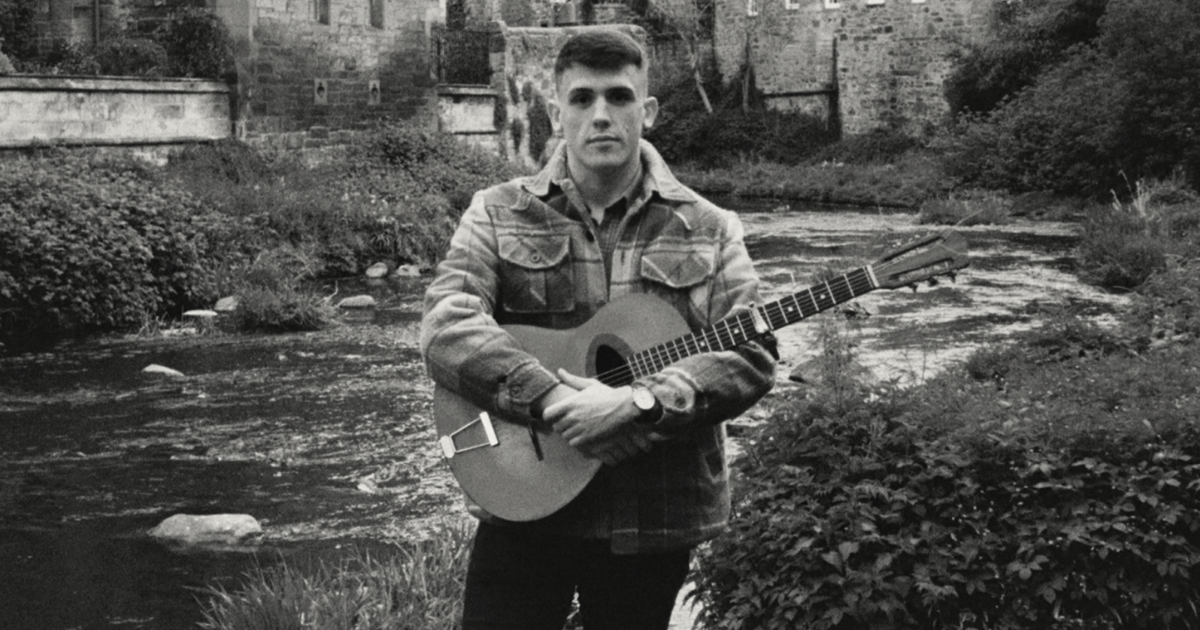
Sam Shackleton is a good example of the successful contemporary songwriter – a Scottish traditional folk singer with some formal education in musicology. He posts excellent, moody clips online; he goes viral enough to open for bands and artists like the Mary Wallopers or Willi Carlisle; and he releases music on Bandcamp. Though he could easily slide into a minor but culturally significant record label, he released his new album Scottish Cowboy Ballads and Early American Folk Songs independently; when a writer emails him, the answers come back on a plain Hotmail account, his avatar a famous 19th century painting of Robbie Burns.

There is something telling in this amalgamation: the 200 years of cowboy songs, the move between America and Scotland, the slightly old-fashioned email address. Even Shackelton’s very contemporary distribution methods envelop other kinds of tradition, the busker as troubadour or a work song floating across oceans. For example, when he sings “The Butcher Boy,” his framing includes that Mary Wallopers’ cover from a couple of years ago, the Sinead O’Connor version before that, and the Tommy Makem version before that. And he also echoes those who sang before them. “The Butcher Boy” is not even a cowboy song, though. When he offers songs like “Chisholm Trail” or “I Ride an Auld Paint,” something shifts in how he sings them.

The cowboy song is muddled – it is the expression of poor, often Black, Hispanic, or Indigenous agricultural workers, telling explicit stories about their lives – but like a shanty, it is also a song that aids labor, in passing the time and moving the livestock along. These dual instincts of work and entertainment gathered into an oral tradition, which was translated into grand public spectacles. These spectacles were later depicted on radio, film, and television, abstracted and cleaned up. When a singer chooses to return to these songs, their versions are always paratextual – they are making choices of interpretation. When Shackleton sings the verses in “Chisholm Trail” about punching bosses or selling cowboy gear, he is foregrounding a kind of economic subtext, which might be less fun and seems more serious.

It reminds me a bit of growing up in Alberta (maybe because on “Roving Cowboy” Shackleton sings about crossing the Rockies and the “cold and distant plains”), or my relations in Calgary, that city mostly named after Scottish figures, romantic still for a set of cultures that doesn’t exist. How much easier it is to consider the romance of the West without considering the isolation of it all. Men would be sent from places like Scotland to the prairies as part of a great colonial project; the rascal sons of minor aristocracy, rampaging across the land. That roving grew into myths of grand cowboy narratives. The big rodeo turned into a banal bacchanal. When Shackleton sings in “Roving Cowboy” about leaving “his good old father” or “his friends and home there,” he refuses the grandeur and returns to the profound isolation. A kind of homecoming in place and in time that may never occur.

Talking to Shackleton via email for Good Country, I learned that an album I first thought was a small jape was really a sophisticated conversation with these traditions, lands, and desires.

I am curious about why cowboy ballads and also how you define a cowboy ballad – some of the songs seem very clearly part of that tradition, but some to be an extension of it. Is “Butcher Boy” a cowboy ballad?

Sam Shackelton: I’ve always been a fan of cowboy music since spending many hours watching old Westerns, when I’d go through and spend the weekends with my dad as a kid in a wee Scottish town called Bridge of Alan. For me, the best part about them was the music, singing, whistling, and yodeling. Even to this day I think it’s pretty hard to find anything cooler than Dean Martin singing “My Rifle, My Pony and Me” in Rio Bravo.

Much of my early musical influences were inspired by my father. I remember vividly the first time he showed me the excellent Woodstock: 3 Days of Peace & Music documentary of the 1969 festival, which first led me down the path of learning to play and wanting to be a musician – though at the time I didn’t think I’d ever be good enough to step on a stage. In regard to the album title, I originally was going to just call the album Scottish Cowboy Ballads, but decided to throw in the “Early American Folk Songs” to allow me to add a broader range of songs to the album such as “The Butcher Boy” or “O Death.”

Could you talk a little bit about the loops of influence which exist in folk music circles. The Scottish ballads which end up in Appalachia, from the 18th century onward, but also the dual folk revivals in the 1950s and 1960s? Where do you see your place in the ebb and flow of these revivals or these conversations?

Mainly through my own research and watching many hours of old music videos and documentaries on YouTube as a teenager, I discovered the American and Scottish folk revivals of the 1950s and ‘60s and knew I’d finally found my musical home, so to speak. I strongly believe that what you put in is what you get out, as a musician, when it comes to inspiration, so I deeply immersed myself in this music for many years. Still to this day only really listen to music from this period or those who can capture a similar sound today. I was deeply inspired by Woody Guthrie and also by his close friend, Cisco Houston, especially his album, Cowboy Ballads, which was a big influence on my latest album and much of my earlier music too.

I’ve always been drawn to less commercially popular musicians, such as Walt Robertson or Alex Campbell, those with incredible talent but whose work went generally under the radar in favor of bigger, more commercialised folk artists. People often talk of Guthrie when referring to the folk revival, but even his songs were greatly aided by Cisco’s harmonies and Sonny Terry’s whooping harmonica, another huge inspiration of mine.

I also had the great privilege of studying at the School of Scottish Studies at the University of Edinburgh for 5 years, where I got both my undergraduate and master’s degrees. The School of Scottish Studies was founded during the Scottish folk revival in the 1950s and was based on a vast collection of field recordings collected primarily by Calum MacLean – brother of the legendary Gaelic poet Sorley MacLean – and renowned ethnomusicologist and poet Hamish Henderson. [Henderson] made many of his early Scottish recordings with Alan Lomax during his time in Scotland in the ‘50s.

I focused primarily on Scottish/Celtic studies, Scots-American emigration and musical traditions, and ethnomusicology, with a specific focus on the work of Alan Lomax – and what I identified as the new “digital folk revival,” which is happening right now on social media. In my masters thesis, I argued that modern online digital communications technologies (such as social media platforms like YouTube) are facilitating multiple new folk revivals. Lomax prophetically identified this in his 1972 paper “Appeal for Cultural Equity,” where he identified both the risk of mass communication technologies to traditional folk cultures, but also their extraordinary ability to preserve and facilitate folk revivals by allowing everyone to share and participate in folk traditions on a vastly more even playing field. All you need now is a mobile phone and you can participate in the digital folk revival, sharing and listening to songs from every corner of the world.

In relation to your original question, it is indeed true that many of the songs that were sung during the folk revival in North America at that time (and throughout American history) also had a very close and deep connection to the mass emigration of people from Scotland, Ireland, England, and Wales during the 18th and 19th centuries and beyond. This is evident in songs such as “Pretty Saro,” which is also on the album. This was a song sung commonly in England but was lost to time, only to be rediscovered being sung in the mountains of Appalachia by early song collectors. And, as such, the song became popular again across the Atlantic. This is a perfect example of how these early folk revivals facilitated this full circle of cross-cultural transfer.

How was this album affected by the large-scale American touring you have done in the last few years?

My time spent touring in the USA and Canada was certainly a big influence on this album. I traveled all over the states, starting in Nashville, where I then traveled through Kentucky and Tennessee with my good friend and director of the YouTube channel GemsOnVHS, Anthony Simpkins – his channel being another great example of the digital folk revival in action. We recorded a bunch of amazing music in the hollers and I met many amazing musicians during my time there, such as Benjamin Tod and Ashley Mae from Lost Dog Street Band.

[They] kindly invited us to spend the night at their house in rural Kentucky along with Jason O’Dea to shoot some guns (my first time doing so in the USA) and play some songs around the campfire. I remember playing Benjamin Tod an old Scottish ballad called “Tramps and Hawkers” on the banjo by the fire, to which he then responded that he was also aware of versions of the same song that had been sung in the American folk tradition. Again, highlighting this close cross-cultural connection between the Scottish and American musical folk traditions. I then toured all across the East and West Coasts of the USA and Canada with my good pals, legendary Irish folk band the Mary Wallopers, before selling out a couple shows of my own on the East Coast.

I noticed that the album’s songs are mostly very short – some under two minutes. Can you talk a little bit about that? Is that related to busking? How else does busking appear in these kinds of recordings? How does busking online relate to busking in person?

Since this is the first ever album I will be releasing on 12” vinyl LPs, I decided to try and fit as many songs on it as possible. Obviously, due to the physical limitations of the vinyl medium, I had to make sure my album was within a certain length of time, hence why some of the songs may seem shorter. Although there are a good few short songs on there, you will indeed find a few longer ones such as “Old Rosin the Bow” or “The Blackest Crow.”

I know that the Mary Wallopers sing “Butcher Boy,” and it is often a touchstone for Irish singers (the Mary Wallopers, Lankum, Lisa O’Neil, Sinead O’Connor, the Clancy Brothers), but also the Irish diaspora. In fact, in a live recording from the Clancys, Tommy Makem calls it, “Well known in America.” What is your relationship to both the song and the people listening to it? How do you make songs thought commonly to be American or Irish to be Scottish?

“The Butcher Boy” is a class wee ballad and you are right in noting that it is indeed popular amongst Irish artists such as The Clancy Brothers, their version being my favorite. However, the history of this ballad and its origins are far more complex, as this ballad is actually derived from multiple old English broadside ballads such as “Sheffield Park,” “The Brisk Young Sailor,” and “The Squire’s Daughter,” to name but a few. Many versions of this song have been collected across England, Ireland, Scotland, and North America. It is perhaps one of the best examples of a cross-cultural folk ballad I can think of.

I had actually stopped singing this song for a long time after what happened with my dad, as the later verses were far too similar to what I had experienced with my father’s suicide. But, despite how hard it was for me to sing again, I felt it absolutely needed to be included on this album. If anything comes from people hearing that song in particular, I hope that they show some love to the people in their lives who may be struggling. It’s not easy being a human on this cruel old rock hurtling through space, so we all need all the love and support we can get.

I noticed that you dedicated this album to your father – what was your relationship to him?

Yes, I dedicated this album to my father, as it’s my first major release since he tragically took his own life in the summer of 2023. We also used to sing many of these songs from the album together when I was younger. As I mentioned at the start, my father has always been a huge influence on my music and I can say for certain that I wouldn’t be a musician today if it weren’t for him. From buying me my first guitar to constantly taking me on stage to perform with him as a child.

My mother and father actually used to be in a band together before I was born called Big Shacks. My mother, Kim, was the singer and my father, Norman, was the lead guitarist. I have many fond memories of busking with my dad on the streets of Edinburgh and Glasgow as a child, too. It was something that brought us very close together over the years. When he died, it really took a huge toll on me. I was actually down in England opening for Willi Carlisle when it happened and I was also in the process of getting my American O-1 visa at the time. I decided to still go ahead with the first American tour a few months later, regardless. However, afterwards I was in a really bad place mentally, so I decided to take a long break from performing until I finally felt ready to return. In that time, I recorded this album and as such I have dedicated it to his memory. I’ve now also returned to touring in the last few months and will be announcing a really big tour of my own in the very near future!

What makes a Scottish Cowboy different than other cowboys?

Scotland has a very long history of cattle droving, going back many hundreds if not thousands of years. There is indeed much to be said on the topic of Scottish cowboys and their influence on the conceptualization of the American cowboy and the Wild West. A good place to start, if you want to research this fascinating topic further, is the fantastic book by Rob Gibson called Highland Cowboys: From the Hills of Scotland to the American Wild West. In it, he details the links between the two cultures, as not only did the thousands of emigrants from the Scottish Highlands and Lowlands bring with them their musical culture and songs to the New World, they also brought with them their unique way of life and cattle-herding culture and practices. Not to mention the practice of cattle rustling, which although not unique to Scotland was a very common yet serious crime throughout Scottish history.

To further emphasise this connection, I included the song “Chisholm Trail,” as this song is sung about the historic cattle trail that runs from Texas to Kansas, which is named after the famous half-Scottish, half-Cherokee cowboy, Jesse Chisholm.


Photo courtesy of the artist.

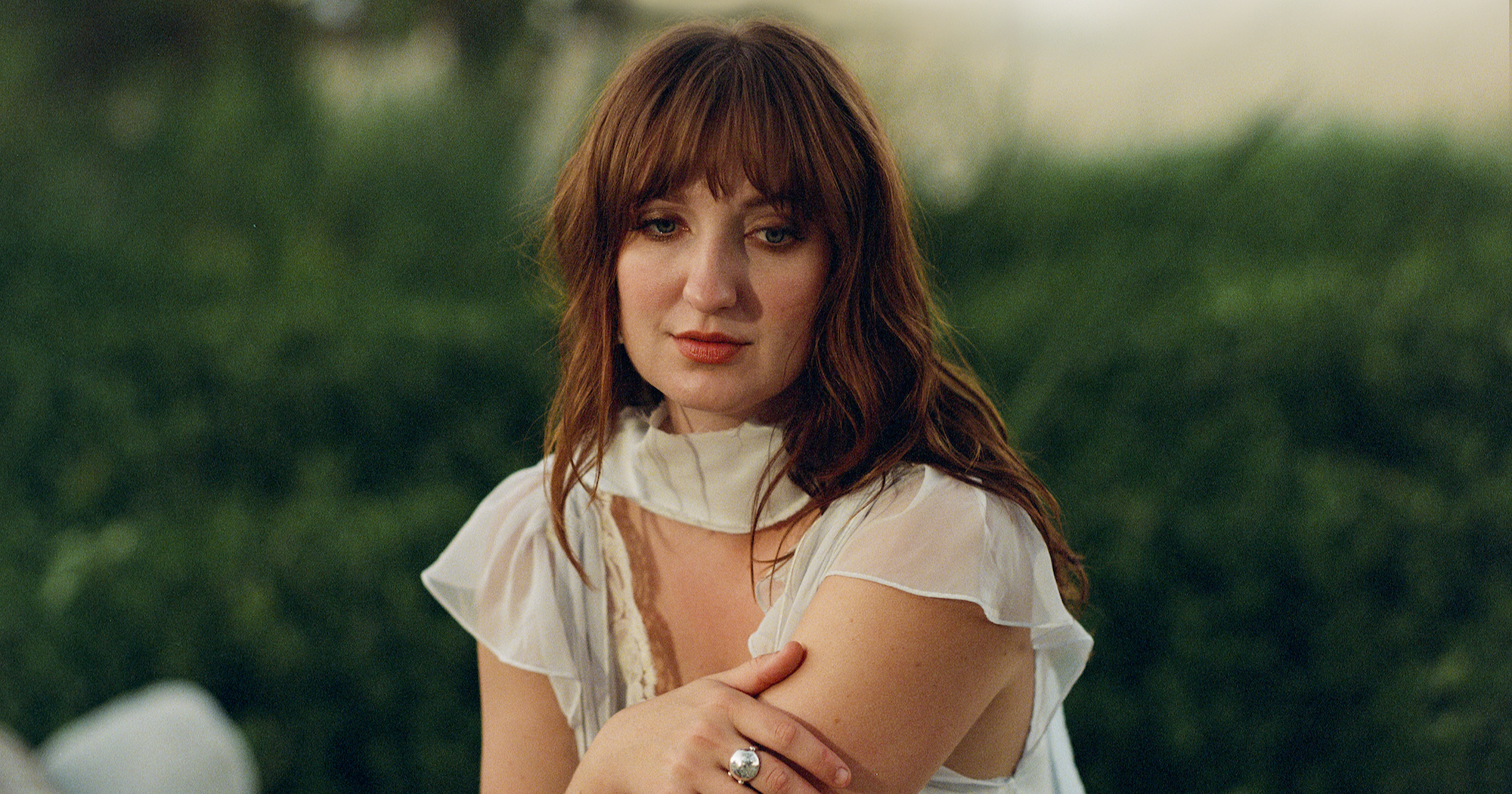
BGS 5+5: Meredith Moon

Artist: Meredith Moon
Hometown: Toronto, Ontario, Canada
Latest Album: From Here to the Sea (released September 12, 2025)

Which artist has influenced you the most – and how?

I’m a bit of a deep-dive Dylan archivist. I’m one of those people who knows every bootleg series and can never get enough of the intricacies and nuances surrounding the various versions of his works. So while I know I’m not unique in this answer, I’d have to say Bob Dylan.

Which elements of nature do you spend the most time with and how do they impact your work?

I spend most of my time outside in an attempt to maintain my humanity, but I’m pretty sure I’ve spent the majority of my most meaningful/intentional time in nature up in the lake country of Ontario, canoeing in places like Algonquin Park, The Kawartha Highlands, Northwestern Ontario, etc. I’ve gone on quite a few trips that are generally about a week or two in duration; I did one solo trip (with my dog) in Southern Algonquin Park that lasted five nights and six days. When you’re out there, you know exactly why you’re there and everything you need just comes to you. If you know you know! My belief is that when we put ourselves in vulnerable positions we can access something way back in our DNA that sort of guides us on how to survive. So I like doing that every once in a while, just to remind myself that I’m still connected to that.

What’s the most difficult creative transformation you’ve ever undertaken?

Getting sober, hands down. It took me months after quitting drinking to remember that I was still a musician and that I could still craft songs. I think part of that is the sort of “biopic culture” that follows you around as a musician. That we all have to be drunk cowboys in bars in order to have validity within the Americana scene.

However, as soon as I got sober and actually talked openly about it, it turned out that the majority of musicians I looked up to in the scene were actually sober, too, all along. It came back to me eventually, but there was definitely a period of reinvention before I could get anything out.

What is a genre, album, artist, musician, or song that you adore that would surprise people?

I was real big on ’90s grunge as a teenager. Some may be surprised that there’s actually a pretty strong connection between that stuff and traditional American folk tunes – the structure, some of the changes, etc. When I was a kid, I would have songs by Hole next to songs by Odetta and Doc Watson on the same playlist. I just like songs that have a strong melody and focused lyrics. And if you look at the song that way, there isn’t much difference.

If you didn’t work in music, what would you do instead?

My first love was painting and probably always will be. I’ve done photography professionally as well through the years, as well as other crafts. So I suppose if the music weren’t around, I’d just switch to the visual arts.


Photo Credit: Someari Benson-Jaja

Mumford & Sons Continue to Matter, In Americana and Beyond

“Well, we’ve been here before…”

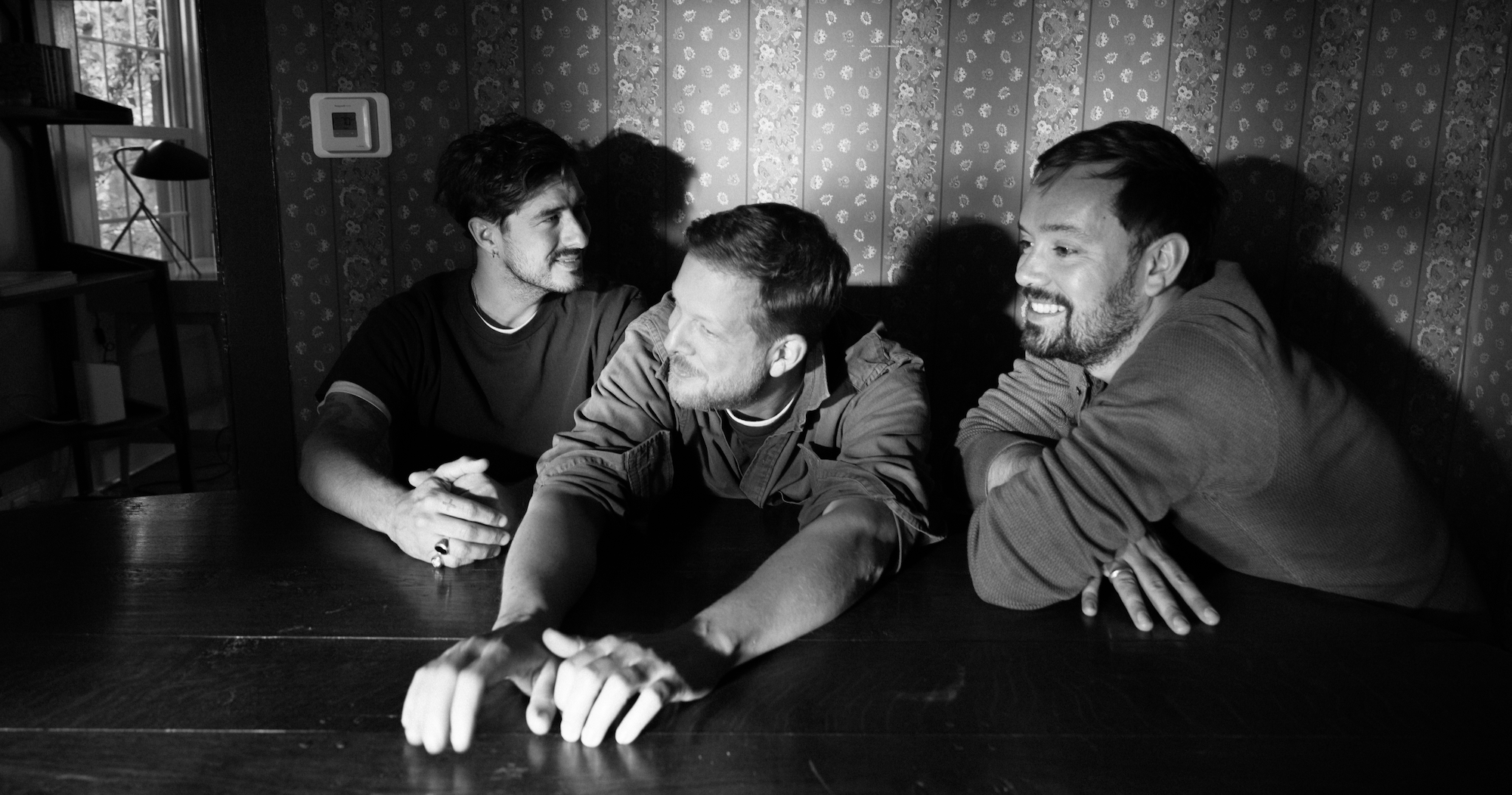
When Rushmere was released in March of this year – Mumford & Sons’ first album in seven years – critics noted its homecoming feel. The songs, the sound, the oh-so-yearning lyrics; they all combined to take the listener back to the beginning.

Tracks like “Malibu” and “Caroline” do not, perhaps, hit the wild highs of “Little Lion Man.” There’s a subtler expression at play in the album, reflecting an evolution from youthful exuberance to the quiet wisdom that only comes with experience. But a decade and a half on from Sigh No More, the band have clearly doubled back from their more experimental forays – 2018’s Delta; Marcus Mumford’s solo project, (self-titled) – to celebrate what brought them together in the first place. In Rushmere they had returned to their rootsy roots, and found peace there.

This month, the band heads back out on tour to Chicago, Philadelphia, Montréal, and more. In November, they’ll return to Europe, and ultimately to the UK, where their final leg will climax at London’s 20,000-capacity O2 arena. Months on the road this year and playing to sold-out venues have proven one thing: people still can’t get enough of them.

And yet the world is a very different place to when their debut album hit the shelves in 2009. When Mumford & Sons first toured Sigh No More, Barack Obama was President of the United States. In the UK, the biggest question on people’s lips was what Kate Middleton would be wearing at her royal marriage to Prince William.

Today’s social backdrop feels meaner, more fractious, less optimistic. Widening rifts in society have made it harder for people to celebrate shared values, even cherish the same moments together. Mumford have split with one of their own band members as a direct consequence of our rapid political polarization. What is it, then, that felt so fresh back then – and that still appeals today?

Matt Menefee first encountered the Mumford sound when his progressive bluegrass band, Cadillac Sky, were at their peak. “We were heading up out of Texas to play Telluride in 2010, and we played some gigs en route,” says Menefee. “So we’d stopped at a hotel, and there was Marcus on MTV, and someone said, ‘Oh, this band’s headlining the festival.’ Our lead singer already had the record and so we listened to it all the way up there.”

For a group of musicians that favored a raucous, punk rock vibe, Mumford’s gleeful-yet-soulful energy was something new. “We were like, ‘Oh man, this is something else!’” Menefee recalls. “To hear these cohesive, in-your-face anthems… it was raging. The melodies and the lyrics were beautifully crafted as well. It was a force that blew our guys away.”

Mumford’s Telluride set became an instant classic (it’s still spoken of in awe today). “It was just a party,” remembers Jerry Douglas, whom the band had asked to join them on stage. “The guys looked so excited. I’ve been to that festival so many times and you can get jaded. But I’m watching them jump up and down and I’m going, this is what it’s supposed to feel like.” He describes that electric closing set as one of the best he’s seen in Telluride’s 51 iterations.

Douglas is one of the many Americana musicians that Mumford and bandmates Ben Lovett, and Ted Dwane sought out to learn from in their early years and have built enduring relationships with. They included Douglas in their performance at the SNL 50th anniversary show, after he had recorded lap steel for Rushmere track “Caroline” – although he laughingly points out that it didn’t make the final mix. “It changed it, it took the band away from just sounding like themselves. I kind of Jackson Browne-ed them a little bit…”

Those collaborative relationships are one of the reasons that Mumford & Sons continue to matter, not least to the musical communities they’ve done so much to elevate. After their first meeting, Menefee became a regular guest artist with the band and has been their go-to banjo player since Winston Marshall’s departure. “You watch them interact with people,” says Menefee, “and they’re so humble, so sweet, so encouraging. They really look after everybody. They’re good, good dudes.”

In August, Mumford & Sons relaunched their Railroad Revival Tour, whose 2011 iteration involved travelling the Southwest in vintage trains alongside Old Crow Medicine Show and Edward Sharpe and the Magnetic Zeros. This summer’s rolling festival picked up where that one had left off, traveling between New Orleans and Vermont. The long list of musicians joining them on board ranged from Nathaniel Rateliff and Ketch Secor to Lainey Wilson and Molly Tuttle to Trombone Shorty and Chris Thile.

Lucius’s Jess Wolfe was one of the musicians sharing the stage with Mumford, after forging a bond with Marcus at celebrated, now infamous jams arranged by Brandi Carlile in Joni Mitchell’s living room. “Sitting listening to our hero sing – that’s such a humbling experience, it’s going to bring people close quite quickly,” laughs Wolfe. She describes Mumford & Sons as “natural collaborators – they feel like brothers from the minute that you step foot in the room with them.” It’s that comforting familiarity that expresses itself in their music and forms a major part of their appeal.

Having first heard their sound while working on the Brooklyn open mic circuit, Wolfe was struck by how it reflected the songs that her peers were writing, “except that these were songs that everyone could suddenly, with ease and without thinking, just sing along to. It was like a conversation you were having with an old friend.”

Their pulsing, anthemic melodies, underlaid with a signature stomp, quickly became an in-demand and much replicated sound in the industry. Banjo and mandolin players found themselves getting far more calls for session work. For musicians like Menefee who had spent years justifying their choice of instrument and trying to persuade a sceptical mainstream of its charms, the change was remarkable. “When Mumford hit, it was like, banjo’s cool!”

“I’d go do demo sessions for songwriters on Music Row and for years the publishers would ask you for ‘like, a Mumford thing,’” Menefee continues. “And I should say that’s not all they do – their Delta record is one of my favorites, with its beautiful marriage of electro pop and effects. But I witnessed the success of the other bands that followed in Mumford’s wake. They had a huge influence.”

Douglas believes it’s no exaggeration to say they changed the sound of the musical landscape. “And people either liked it or they didn’t. But it’s a heartbeat, you know? That’s the thing about it. It gets people excited and it makes them feel good. That endorphin rush happens and everybody goes to their happy place. And we need that right now. We need to go to our happy place.”

There, perhaps, lies the key to their successful return after seven years away from the limelight. Every night they play, Menefee sees crowds “losing themselves” in the singalongs. “There’s an anger and a vulnerability that really pierces the heart,” he says. “And it’s so freaking singable.”

The band themselves have admitted to be “stoked” to be headlining festivals in the UK again and there’s little sense of ego at their appearances. Instead, they host shows that have the feel of a party at which they themselves are enthusiastic guests. “It’s just so much fun,” says Menefee. “There’s a real joy in it, a rest from all the chaos.”

Perhaps, right now, we all need a bit more Mumford in our lives.


Photo Credit: Marcus Haney

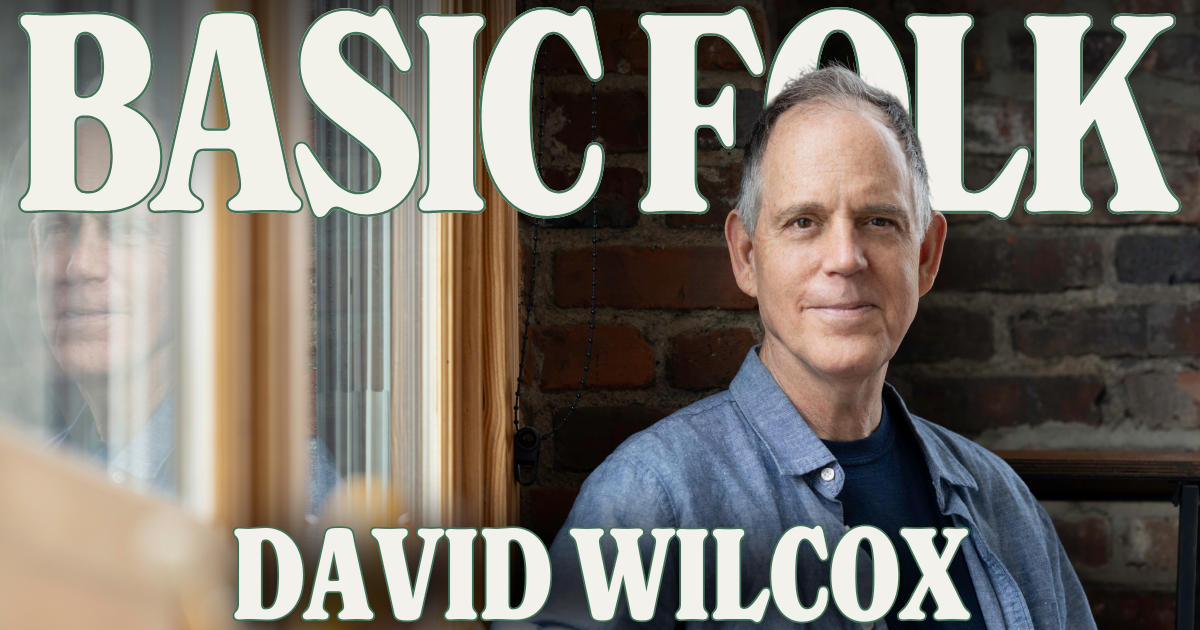
Basic Folk: David Wilcox

Asheville, North Carolina-based songwriter David Wilcox has been through some s-h-i-t. A difficult childhood in Northeast Ohio sent him seeking answers – mostly on his bicycle – in an attempt to get away. He has spent his lifetime leaning into his problems and digging into their roots at the source: his own heart. He decided to see what lessons his heart had been trying to teach him and, at 67 years old, he’s still listening and learning. He claims to have the answer of how to heal your heart and how to do it in two minutes; he lays it out in our conversation.

LISTEN: APPLE • SPOTIFY • AMAZON • MP3

We also talk about his new album, The Way I Tell the Story. Our conversation continues his exploratory journey, through the lens of his wife’s Parkinson’s diagnosis, retelling the story of his childhood, and staying calm in an emergency and in the aftermath of Hurricane Helene, which devastated his community. We discuss how David was able to walk the line of acknowledging his talents without getting too caught up in the hot-and-fast success he experienced at the start of his career. He explains when it’s best to feel the depths of sorrow versus disassociating, and he talks about his lifelong love of cycling and how it continues to be a meditation and a life-saver. David is full of gems and wisdom – I think I’ll be listening back to this edition of Basic Folk many times over.


Photo Credit: Lynne Harty

How “Guidelines” Made Madison Cunningham’s Ace Feel Totally Free

It is no news that Madison Cunningham is among the top tier of artists and musicians doggedly pursuing their craft; her newest record, Ace, casually echoes this. Soberly confronting a mountain of grief at home and transmuting its impressions through her open-minded, mature songcraft, the record encourages listeners through a seamless track list whose performances take on the form of open letters to its subjects. She treats an album as the dignified platform it once was and should be and this stance feels radical in today’s streaming-focused world.

A most striking feature of Ace (released on October 10, 2025) is the presentation of her vocals in a more expansive and spacious light, putting aside her much-associated – and anticipated – guitar for the piano, a more than suitable vehicle for this new terrain. Cunningham returns to her native instrument, the keys, as a “lost sojourner,” using it to strip away all but the most critical aspects of the record’s narrative, while highlighting its grooves and timbres.

All the songs played on piano started on guitar and later migrated to it. This practice seemingly grew out of her fascination with embracing the uncomfortable, like the open tunings she is known to use in her celebrated approach to the guitar as an instrument to be challenged and played with. From a new-to-her tuning, to the piano, and then to her band, this game of telephone still allowed Cunningham to sound more like herself.

The game doesn’t stop there. At a lair in Woodstock, New York, in the fall of 2024, Madison and her band committed themselves to a few simple principles: No demos. No vocal comps. “Do the thing that feels most musically true and curious.” And, “Don’t give a shit about what people have known you for.” These rules, in many ways, allow the anthropology of the moment in time during which this record was made to speak loudest. It goes without saying that this path is impossible to tread without a rigorous knowledge of oneself, trust in the folks around you, and, most centrally, the chops to back it up. The consequence of these choices is a record with a narrative “spine” throughout, animating what Cunningham likens to a ballet in its transitions – something she has been working toward both in the studio and on the road since her triumphant, full-length debut in 2019, Who Are You Now.

The song “Wake,” a duet with Robin Pecknold of Fleet Foxes, evokes the kaleidoscopic nexus of Alison Krauss & Robert Plant’s Raising Sand, the orchestration of Gillian Welch & David Rawlings, and the cinematic flair of Gustavo Santaolalla on top. More stripped-down performances, such as “Take Two” and “My Full Name,” demonstrate Madison’s subtle confidence as both a devoted curator and a fearless innovator. Woodwinds underscore and bookmark this collection’s ethereal climate, thanks to the work of Jesse Chandler. Taken as a whole, Ace brings the listener into the same trenches Madison found herself in and onward toward truth in the face of its hardships.

BGS reached Madison Cunningham via Zoom in mid-September to discuss Ace, its making, and the guidelines and rules by which she brought these songs into the world.

I noticed that you described the record as “light” when making it, despite its sober depiction of difficult subject matter. Which aspects were light to you?

Madison Cunningham: That’s a great question. The mission for making the record was really clear and all the “guidelines” were set up well in advance, which was something I had never done before. In the past, my process has been more about figuring it out as we go. This time, my band and I were very prepared. I used the touring band that I’ve been with for the last five years, and the deep collaboration and shared language we’ve developed over that time made everything feel so fluid.

We were all “cracked open” in this special way and we laughed the whole time. That’s probably what I mean the most about the record being “light,” how joyful it felt. I didn’t feel much fear while we were making it. I just had a picture of how I wanted it to sound, and it already was sounding like that. That felt like a relief.

Did you feel like you had less to prove in a superficial sense?

I guess there’s always something to prove. I don’t mean to erase the feeling that I had, which was, of course, a certain amount of pressure or wanting it to level up in some way. But, in light of being quite devastated in my personal life, everything else felt so small compared to the mountain I felt like I was climbing at home.

And maybe that was the gift and that’s why everything felt like it. For whatever reason, everything felt like green lights. It just couldn’t have been easier. Also, I’d never had a more fluid relationship with my label; there was no argument about how this was going to happen. It just was like, “Go. Do it.”

How would you describe the guidelines you had in place for this record and how did they differ from your usual process? Also, did playing the piano more for this record affect your writing style, perhaps making it more expansive in some ways?

I started as a kid on piano first and it had a resurgence in my life in the last three years. I fell back in love with it and I enjoyed the feeling of being a lost sojourner on it, just being like, “Oh, I’m finding all these things that I now am – I found a style here that I’m injecting into my guitar playing.” I wanted to play guitar more like a pianist.

One of my guidelines was, “Just don’t give a shit about what people have known you for, what they might expect. Do the thing that feels most musically true and curious.” And that sounds a lot like permission, but it was also a guideline. Another guideline was, “Make sure that there’s emotional delivery over anything that sounds too perfect. And don’t compromise on that.”

The other set of guidelines were between me and my band: we did a lot of rehearsal beforehand, but we didn’t record anything, so there were no demos. That was a huge rule. I also said, “I don’t want to do any vocal comps. I just want to sing the songs live.” That was helpful. It was another way of being like, “Okay, focus, and be in the room for the moment that these songs are being captured.” So, yeah, there was no previous, “Ah, but shit, we gotta out-beat that one demo we made.” Because that slate was so clean, I think everything was clearer.

During the recording process, do you listen to other music for comfort or do you stay entirely within the feedback loop of your own project? I’m also curious if the recording period was a continuous block of time, which would obviously influence your ability to listen to music.

We did record it continuously, and I don’t usually listen to music while I’m making a record. Honestly, destination recordings help so much with that, because you’re just immersed in the physical and spiritual environment of the whole thing. We were up at a lair and it was fall – it was this time last year – and there’s this beautiful hike that allowed you to look over the reservoir and the golden, brown, red leaves. I felt so romantic that whole time. Even if there was something that wasn’t working, I just had such faith it was going to get there.

We also had a crazy sort of work cycle, which was [that] we would start the skeleton of the song in the morning and then we would record until 2:00 AM and finish it. Again, I think because we all had the guidelines, we were like, “We want every song to have woodwinds pretty much, unless it doesn’t call for it, so we’re going to try and flesh it all out in the same day.”

Jesse Chandler did all that. He’s a genius. We would both talk through things we were both hearing, and then he would just play it all. It was like building a puzzle in real time, and it felt so wonderful to be able to see it all and to feel moved by it. We barely did any overdubs. We did another session in LA a month later after those two weeks up at Woodstock and did a few little overdubs, but we had mainly done everything while we were there.

Ace feels like a return to the “record” as a dignified format. In the lead-up to making it, did you think about the songs as individual tracks – as it relates to streaming culture – or did you focus on creating a cohesive narrative for the entire album?

There are so many examples of records that feel like a full statement and we’ve lost that. That feels radical now. I feel like I’ve made records that have been molded to the current format and I was so disinterested in that this time. I am so over the, “Hey, let’s just do what everyone else is doing,” and, “It’s guaranteed to work.” I really mistrust people when they say that to me, and that mistrust has usually been right.

Even if I see the “format” working for someone else, I’m like, “But that’s not me. That’s not my music, so we can’t say that’s the target, that’s the answer.” I was so interested in making the record feel like a ballet and feeling like the transitions were seamless. It was the first record I felt like I made that had a spine that connected the whole thing and I still find such value in that.

To be honest, we also made efforts to make sure that the songs were not too long. They were separated from their instrumental tracks so that it could work for playlisting. We weren’t, like, fully in protest.

When working on a song like “Wake,” where did that start? How different does it look from when you’re playing it on the couch, versus sitting down with Robin [Pecknold] to record it? Could you walk me through how that song got made? I love how active the guitar parts are, the closeness of the vocal harmonies, and how relaxed everything feels in the recording.

MC: I love that. I really appreciate that it comes across that way. That was the goal and the way that it was written. I wrote it with another songwriter named Will Taylor and we were both just playing these counterparts. And that’s where the seamlessness of it kind of took place; on the recording, that’s the direction I wanted it to go in. Then I just added some different flavors.

All those guitar parts you hear were added and layered, but I didn’t do very many takes of them, so that’s how it might feel live. I didn’t get in there and try to overly correct things. I wanted it to breathe. That has to be one of my favorite songs on the record because we wrote it in a Nashville blizzard and it sounds like that. The guitar part sounds like snowflakes falling in different directions to me, and Robin’s voice is just like a warm fire.

Did you record that in Nashville, or did you just write it in Nashville?

Wrote it in Nashville, recorded it in Los Angeles a year later, and we did all of that, everything that you hear, in one day. I recorded the main guitar and sang at the same time and then Robin sang in the other room. And once we figured that out, we added all the guitars, then Daniel Rhine added upright bass, and then we did the foot stomps at the end. And that was the song.

For the guitar-centric people, is “Wake” in an open tuning, and do you mind sharing what that is?

No, I always forget it, but I’m going to pull it up on my “favorite tunings” column.

It is C-G-D-F-A-C, from low to high. It’s basically an open suspended chord and it’s so tricky. At first, you’re like, “There’s no possible way through this tuning.” And that’s the tuning I wrote all the record on. Every guitar here, it’s in that tuning.

Your music contains rhythmic feels that seem to be informed by drums or percussion, outside of the guitar. I know you’ve played percussion – does your drumming experience influence your songwriting on other instruments? Do you workshop things back and forth with your drummer, Kyle [Crane] in this way?

I feel like if I were to show you the original demos of these songs, there was already such a strong, informed rhythmic thing, more than in the past for me. And Kyle, I think he was playing into, “How do I make this feel like we thought of this at the same time? Or, “How can it feel like that?” For example, “Break the Jaw” came out of a band jam. I wrote the lyrics to it, but the feel of the song wasn’t something Kyle tried to figure out after the fact. We were figuring it out in real time and I think that’s why it came out so cool. Everybody put their stamp on it.

The whole process was us trying to figure out the skeleton of rhythm and how to make it feel like it wasn’t fighting with itself.

I’m wondering how you approach sequencing an album. When you consider the interludes, the streaming world, live performance, and recording, are there specific ideas, people, or records that have helped you learn how to think about the flow and energy of a record from start to finish?

Ooh, yeah, I’m sure. Radiohead is a big one for me. I think the sequencing of their records is so specific. Their opening track is always perfect to me and their closing track is always perfect. From the beginning of making this record, before all the songs were written, I knew which was going to be the first and which was going to be the last. And then Robbie Lackritz – who made the record with me – and I spent a lot of time delineating over sequencing.

The story of the record is important. Obviously, the tempo arc, and the keys melded together. The story has a plot, so that was a big thing. I wasn’t trying to write it like that, but from an aerial view, I was like, “Oh yeah, this is how it connects.”

In the song “Take Two,” you mention a fear of writing simple songs. Did this perceived fear influence the guidelines you set for yourself when writing the album? Also, were the initial ideas for the songs primarily written on guitar or piano?

For every song that ended up on piano, it actually started on guitar – with the exception of the instrumental pieces, which were formed from the piano.

For example, “Shore” started on guitar and so did “My Full Name,” but they felt like piano songs to me because I was doing a lot of transposing between instruments to see if the song was good. I would transfer it between instruments and say, “Yeah, it still has a message.” In doing that, I fell in love with “My Full Name” on the piano.

“Take Two” also started on guitar, and I was like, “I don’t like this song very much. I love what it’s saying, but I find it to be so boring.” It was a song that everybody on my team was attached to. When we got to Woodstock, the song came together on the piano before we were going to record it and I was like, “I love this song.” Something made me say, “Hell yeah.”

On a more technical note, I’m curious about the guitar sound for “Skeletree.” It sounds like a low-tuned nylon string guitar with a contact mic. What was it?

Killed it. That’s exactly what it is. There was this big bedroom with a tall ceiling and that’s where we stored the amp. The contact mic was also sitting in a really big room, which contributed to the fairy dust.

Very cool. Were there any other notable guitars on the record that were new to you or were just lying around the studio?

I used a hollow body for the bridge of “Break the Jaw.” I think it might have been a 330 or something. I really love that you can hear a crunchy, kind of reverb thing just break out for a second. I also used my Collings acoustic. I know I had that for a few, but mainly it was just that nylon string that I stuck with. A little bit of the Collings, and then that electric guitar once, for one section of a song, and then all piano after that.

I did play electric bass for “Golden Gate” and “Mummy” too.

Do you ever write on bass or play along with records on bass?

I do, and I wrote “Golden Gate” on bass. That line that you hear at the beginning, it started with that.

Do you have any advice for people who want to feel like they don’t have anything to prove, especially if they are working toward a platform in the process?

I feel like the thing that I’ve learned the most from is, even if you don’t fully have your sound yet, make it a mission to just make music you like the sound of. Even if you haven’t fully found yours yet, you will, by way of learning what it is that you love and what you like coming out of your own body and mouth and fingers.

I think the things that have spoken the most to people is going, “I can tell that you love what you’re doing.” And even though in my earlier years, you could definitely see a lot of comparisons, I needed those because those were the things that made me believe in music and what I was doing. And then I think those faded away and now this record is the first time I’ve ever been like, “This is what I’ve always wanted to make. This sounds like me.” It just took a minute, but I enjoyed the whole ride.

I also feel like I was never not myself. Everything that I did, I felt was a risk in some way or stretched me as an artist. … What I loved the most about making this record was that all of it felt in balance. Finally, my voice was the loudest.

That’s just because I finally, like you said, trusted myself, trusted the process. I knew enough to know that even if something isn’t working the first time, there’s always a second, third, or fourth to try. So, trust your curiosity and do whatever it takes to make sure your curiosity is above the fearful, negative self-talk.


Photo Credit: Sean Stout

Ray LaMontagne After 20 Years of Trouble

In the fall of 2004, it seemed like everybody was getting into Trouble. Even with that major label debut album, Ray LaMontagne managed to keep a low personal profile while maintaining the rigorous pace of a promising new artist. Meanwhile, the title track of Trouble got covered by that season’s winner of American Idol and ended up in an inescapable but kinda cute insurance commercial. Other cuts on the album ended up in films such as The Devil Wears Prada, Prime, and She’s the Man. In addition, Zac Brown Band recorded “Jolene” and Kelly Clarkson often performed “Shelter” in her shows (and recently revived it for Kellyoke.)

Now, LaMontagne is bringing Trouble back around for a 20th anniversary remaster and re-release (which dropped this summer) and North American and European tour dates set for 2026. He’ll be singing every song on the record to commemorate the collection two decades after its release.

“It’ll be interesting to see how my spirit reacts to learning these songs again, to going back and listening to them again in that way, to bring it to people again,” LaMontagne tells BGS. “I’m looking forward to it. And I feel like it’s important to do to mark this moment, because these are the songs that brought people to my music in the first place.

“Listening to it again now after all these years, I’m very proud of my younger self, for having the strength of will amidst all the pressures of the music business at the time, and about my writing and the way I wrote, to make the record that I did, and to leave the songs the way I wrote them and not take any advice.”

What was your day-to-day life like before Trouble was released?

Ray LaMontagne: Well, we lived off the grid. I was already married for six or seven years at that point. My two boys were five and three and we lived on a piece of land I bought in Maine. I had built a small cabin on it and we had a hand-dug well that we used for water. We had an outhouse. It was back-to-the-land living and that was just because I couldn’t stand renting. I wanted to have my own piece of ground. But it was really hand to mouth, and we were broke. And that’s putting it mildly. I mean, we were broke, broke, broke. I was working carpentry, sometimes seven days a week, because I would take anything I could get on the weekends just to get a little extra money, because I constantly was trying to improve the cabin. And I never had a car that ran.

You’d made some independent records before Trouble and I’ve read a couple of accounts of how you got your music in front of Chrysalis Music. How did that actually happen?

Someone heard me at a festival and they gave a disc to a college friend who was in the music business. Then he brought it to his boss. I went out and met with Hollywood Records first. I felt that I was in a room with a bunch of cynical people who made me feel kind of gross. I went back home and that guy called and said, “I think they’re gonna offer you a record deal.” And I said, “I don’t want to do it.” He said, “Are you crazy? What do you mean, you don’t want to do it? They’re gonna give you a record deal!” And I was like, “I didn’t like them. They made me feel gross.” So I went back to being a carpenter again, as I was, and went back to my life.

Then it was close to a year later when that guy called me again and said he had gone to a different company. Now he was with a publisher and that was Chrysalis. He said, “I played your stuff for my boss and he really likes your songs and is interested in you as a songwriter. Would you come out and meet my boss?” I talked to my wife about it and then I said, “Okay, I’ll come out.” I went out and I met his boss and played a couple songs in the office. We talked about songwriting and he said, “We want to help you as a songwriter.”

So, they were looking at you as a songwriter rather than as an artist.

And that’s how I got into the studio to make this record, because I was supposed to go in and make demos. What happened was, Ethan [Johns, who produced Trouble] and I met each other for the first time. We’re very different people and we couldn’t quite read each other. Especially at that time, I was very much a closed book, very much an observer. And he’s a type A personality, big ego, big presence, loves to talk – mostly about himself. And I don’t say that critically, I say it with humor! Anyone who knows Ethan will agree with me!

So anyway, it was this strange thing, but I began to realize as we were starting to record demos or talk about songs, that they didn’t really feel like these songs were finished. They thought they were promising. But I was getting a lot of input coming at me very quickly about, “This song doesn’t have a bridge. This song is just two verses. Is that even a song? This song just has four verses and then it ends. Is that a song?” And it was like that right down the line.

The first demo we recorded was “Hold You in My Arms.” We got to a point in the song where Ethan stopped me and said, “This song is just not finished. It needs a bridge.” He started throwing lyrics at me for this bridge and my shield started to go up. I thought, “These lyrics, first of all, aren’t right…” I was resisting and resisting, and he was getting more frustrated with me. He said, “I’m gonna go make a cup of tea. You write a bridge.” So, he went to make a cup of tea and I wrote an instrumental bridge by the time he got back. I said, “It’s just gonna go into an instrumental bridge and then back into the chorus again.” And he said, “OK. I’ve always been told you gotta do this in the moment. So how many points do you think that’s worth?”

I knew nothing about the way these things happen, but in that moment I knew what was going on and I knew why I was there. From that moment on, I was a brick wall. Nothing was changing. I was changing nothing. I’m recording the songs exactly as I had written them and then I’m going home. If you like them and you want to shop them around, great. If you don’t like them, I’m still going home. It doesn’t matter to me, but I’m not playing this game. So that’s what we did. We recorded this record, which is basically the demos the way I wrote them.

How did the recordings go from demos into becoming the Trouble album?

Six months easily passed and the publisher called me and said, “You know, the songs are just… no one wants to sing the songs. No other artists are gravitating towards the songs, but weirdly, record labels are coming forward because they like your voice and they like what they’re hearing, but they like it delivered by you. It works when you sing it, but it’s not working for any other artist.” And that led to the next step of going back and meeting record labels and talking to people about me as a performer, which was not even on my radar.

So it was a whole other challenge. It was like me against my biggest fear. I was much more interested in being a songwriter at that time. So, that’s how it happened. Slowly, and one step at a time, and one thing led to another, and led to another. But again, that’s why, when I hear these songs at this point in my life, listening to it again for the first time, it really hits me, just where that 28- or 29-year-old guy had that strength of will to know at a gut level that what I was doing had value. Just me being me had some value and I wanted to protect that. And it just makes me very proud of him.

It’s interesting to hear that no other artists wanted to record your songs, because when this record came out, a lot of people were singing these songs. What’s the personal reward for you as a songwriter when someone does take one of these songs from the album and makes it their own?

I really like that. It always makes me happy. I think any songwriter would be happy if even one song gets covered by someone else. You feel lucky if one song you wrote even makes it into people’s lives in some meaningful way. If you’re a songwriter and that happens to you once, you’re grateful. I mean, it’s just the truth of it. It’s like any other art form. It’s not easy, and it either will work or it won’t work, because music is a complex language. … It’s probably the same with painters, with dancers, with writers. You just don’t know if it’s going to connect to people, or if people are going to understand what you’re saying, or if it’s going to speak to them in a real way, speak to their spirit in some way. So I’m very grateful. I’m so glad that there are people in the world, all over the world, who understand my language.

Something that struck me about this record, then and now, is that dynamic in your voice. At what point did you become aware of that range, that you could go loud when it when you needed to?

I don’t really know. I feel like I learned to sing just by doing it. There’s some truth to this, that I really didn’t know how to sing even when I went in to make the record. But I was learning by doing it. I had gotten to a certain point where I knew when I was singing incorrectly because I would be uncomfortable or something would hurt in my throat. And I knew that that wasn’t the right way to do it. At some point, I realized you had to really breathe and sing from your gut.

In 2004, before streaming and social media, how did you find an audience?

It was just live shows. I mean, I toured a lot. A lot. And in the beginning, even being signed, I was still just like anyone. I was in a rental car, just me and my guitar, a box of harmonicas, and getting myself from one gate to the next. Those early shows, again, it’s no different than anyone. It’s two or three people and the next year you go back and there’s 20 people and the next year you go back, there’s a hundred people. When people connect to what you’re doing, they will tell their friends about it, and they’ll bring them the next time you come around. But there’s nothing anyone can do outside of yourself to make that happen. It either works – people connect to what you’re doing, to your performance, to the music, and then they’ll tell their friends – or it doesn’t work. But being signed to a record label doesn’t mean anything. It just means they’re investing and they’re gambling. And if you build a career for yourself, then they win that bet, and if you don’t, then they move on.

I’ve read that you saw Townes Van Zandt play a show in the mid ‘90s and I wondered how much of an influence did he have on your writing and your musical direction for Trouble?

I don’t think he had a real heavy influence. I wouldn’t say that, especially at that time. It was too early. I just remember being really moved by watching him play, for a few different reasons. It’s kind of tragic in some ways. He was right at the end, but I could hear the poetry in the songs. That’s what moved me the most, to hear a song and be so close to somebody, eight feet away from him, and hear “Pancho and Lefty.” That story was completely immersive and took me somewhere else. That was really the most powerful thing I took from that particular night. He transported me. That’s powerful. Music can be really powerful if you’re receptive.

To me, your song “Narrow Escape” feels like a spiritual brother to “Pancho and Lefty.”

Yeah, I’m sure it is. I mean, it’s my take on a story song of this kind. They’re very different stories, but I’m sure that’s my “Pancho and Lefty.”

There’s a reference to “Liula” in that song and I noticed that fictional town shows up again, now, as the name of your own record company. So, are you fully independent these days?

I am, yeah. I still have all my same team around me, but I’m making records on my own and releasing them on my own. That’s a natural progression, too, in the way the music business has changed. It was a very different business when I entered it and at this point, especially for me, there’s no reason to be with a publisher or a record label at all. I left my publisher a long time ago, 10 years ago probably, and the record label followed.

I did want to ask about the illustration on the cover of Trouble. It’s not a picture of you. It’s this beautiful image from Jason Holley. What was it about that image that worked for you?

I just thought it was poetic. I saw the poetry in it. You can take lots of different things from that image, but it’s also just a powerful image. And of course, I have always been reticent to have my photograph taken, or to use my photos anywhere. Which, you know, we all have these things. If you’re comfortable doing it, that’s great. If you’re not comfortable, you should feel you have the right to say no.

Other than seeing you in concert, I don’t know that I really saw your face that much back then, when Trouble was out.

I remember telling my manager, “I want to be like the Lone Ranger. I don’t need to be seen and to be known. Just leave them with the music. And that’s it.” You can imagine how that went over. It was really, really difficult, and there were a lot of frustrated people, I’m sure, at the record label and with management. It frustrated a lot of people because they felt like I missed a lot of opportunities that I could have otherwise had. I knew that at the time as well.

But I’ve always felt like I know who I am. I could say no to a magazine cover back then because I know that that’s going to be a day out of my life where I’m going to be miserable, and it’s going to make me uncomfortable. … I’ve never felt like anyone in the press or who had a camera really cares about you as a person. They’re not sensitive to you, and your well-being doesn’t matter to them. They’re just doing their job. And whatever they capture there, they choose what they want. If you have your head in your hands, if you’re doing this, if you’re looking miserable. That’s power and they’re going to use it.

So, I turned down all of that stuff. You lose that opportunity, but I felt, well, I’ll lose that opportunity, true, but you know what? I’ve got a show tomorrow night, and I’m going to sing my ass off, and people are going to feel it. And if they feel it, they’ll come back next time. That’s what’s important, to build a career that is sustainable. And to do that, you need people to fill the seats. If they don’t come out to see you live, you have no career. That’s all there is to it. So that’s the most important thing. And that was then, and it still is.


Photo Credit: Brian Stowell

“Ohana Means Family”
to Ohana Music, Too

When Ohana Music founder Louis Wu says, “Ohana means family,” it’s not hyperbole; it’s the tenet upon which the company was built.

“On an unspoken level it drives everything, including staff, dealer interactions, customers, and products,” says Chris Wu, who oversees the ukulele company’s operations and product marketing.

The Ohana story, which is also Louis Wu’s story, is an inspiring journey of determination and accomplished goals. Wu grew up in Hong Kong and relocated to the U.S. after high school to study engineering. In 2006, after twenty years in his chosen field, he decided on a career change, primarily to spend more time with his wife and two young children. That priority – family – became and remains the basis of Ohana.

Chris Wu was 10 years old when his father launched Ohana. He spent his teen summers alongside his father “doing a little work here and there.” In 2018, after college and a career in accounting, he says, “Things fell into place where it made sense to come onboard full-time.”

From Louis Wu’s Long Beach, California, garage to a 6000-square-foot warehouse, Ohana’s slow and steady growth has taken them from a small business serving one customer at a time to leaders in their field with both their expansive product line and custom shop.

“I have to give full credit to Louis as the visionary leader of the company since day one,” says Wu. “He knows how a company should and needs to be run. Myself and all the staff are here to support that vision, and that really drives the growth. As a team, we’re improving internally every day, and that has been life-changing. It’s wonderful seeing our employees grow in what they do and in their passion for their jobs.”

Ohana’s international reach stems from the dedication of a surprisingly small workforce. “We’ve never had more than ten people at one time,” says Wu. “It is a small company, but the size helps our operation run smoothly and efficiently.”

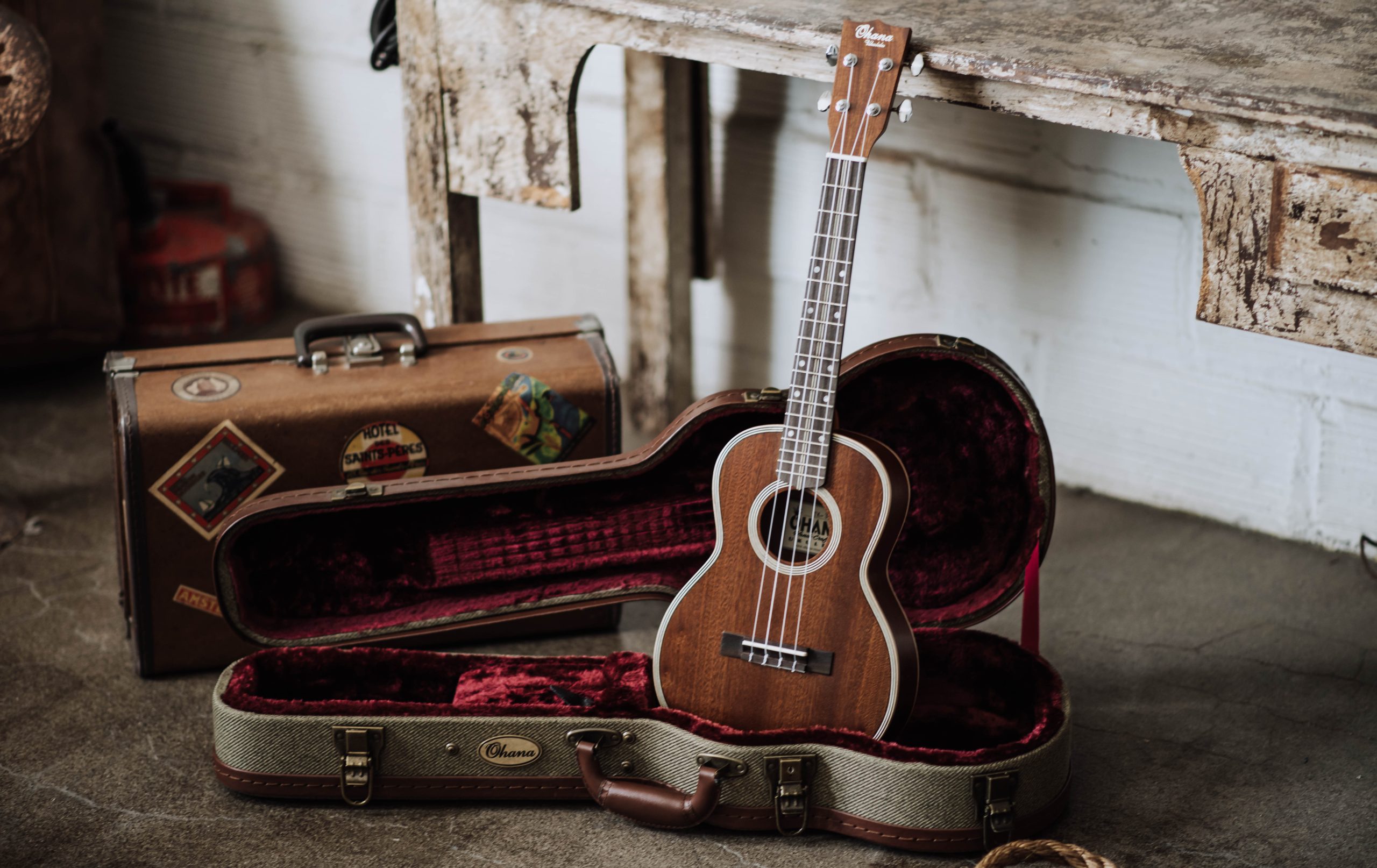
Ohana ukuleles are available across a spectrum of styles and price points, from beginner models to pro series. Built overseas, the instruments are individually inspected in Long Beach to ensure flawless playability. “At the core, again, we view our customers as family, and we don’t want family to end up with subpar instruments,” says Wu. “Every instrument is given a full inspection and proper setup before it goes to our worldwide dealers. This does affect our output, our capacity, per day, week, month, or year, but that is the way it should be done. We’ve always been proud to do things that way.

“When you receive your Ohana ukulele, you can rest assured that you can take it out of the box and start playing. At the end of the day, being able to connect people to their instruments and spread the joy of music – it feels like introducing another family member to something we love, something we know they will love, and that will work for them.

“As a disclaimer, I will say that there are manufacturers who offer things that we do not, for example, plastic or carbon fiber instruments. Those materials can take a beating on long journeys or camping trips, if you need an instrument to meet those needs. Those ukuleles have their place, but we stay away from making them.

“We focus on sound, acoustics, wood choice, and the quality of the instrument you’re getting right off the bat. Between our 150 to 200 different models, there’s something for everyone. When you buy an Ohana ukulele, you know there is love behind it. Our team has set it up with you, our family, in mind. We want you to have a good instrument, plain and simple, for the right price and the right value. With our custom shop we’ve expanded that range while still keeping the value, the quality setup. We’re just covering a larger market.”


Ohana Music founder Louis Wu peruses the Ohana showroom.

All Ohana tonewoods are sustainably sourced. Most popular, says Wu, are redwood variations from the Pacific Northwest, which feature prominently in limited-edition models. They also source Hawaiian Acacia Koa, Canadian Engelmann spruce, and mahogany, cedar, and other wood sets from local harvesting companies. “We take our time to go through which sets look and sound the best, but are also in compliance with CITES,” he says. “Anything on that list, we won’t touch.”

Ohana Ukuleles will celebrate their twentieth anniversary in 2026. The lead-up to that milestone began unofficially this year at the 2025 NAMM Show with the introduction of their Custom Shop electric tenor and baritone ukuleles.

“Louis and our master luthier, Brad Kahabka, go all out when it comes to planning and executing things that come from the custom shop,” says Wu. “After building acoustic instruments and getting the shop going, it was a question of ‘What’s next?’ We made simple custom instruments, more elaborate custom instruments, and we even built one with wood from The Tree. We had explored the whole range of acoustic instruments and electric was the natural progression. We were excited to enter the market with electric instruments this year. That’s really been our focus for 2025.”

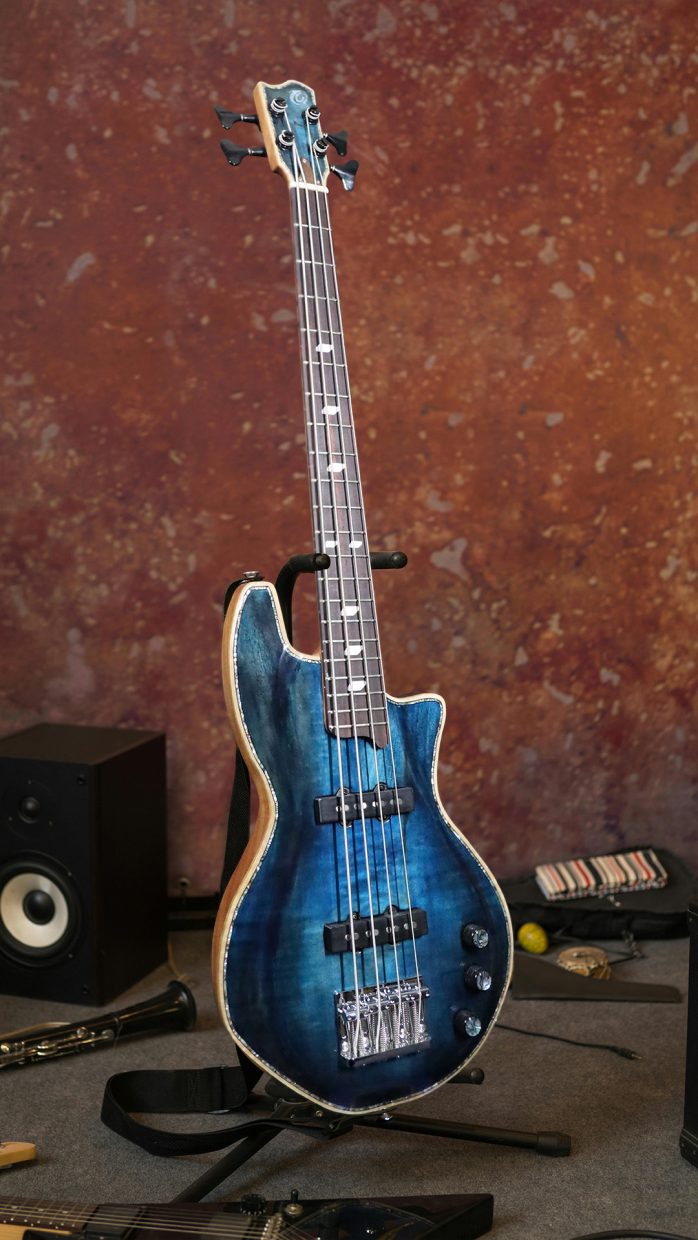
This month, Ohana debuts their Custom Electric Bass, also built by Brad Kahabka. The new instrument, which the company describes as “a counterpart” to their OBU-22 short-scale acoustic-electric bass, features a solid mahogany body, maple top, custom pickups, cutaway design, and 28-inch scale.


The brand new Ohana Custom Shop Electric Bass, which launched this month.

“We’re super excited to bring the first 28-inch-scale bass to market,” says Wu. “There are short-scale basses out there, but after trying different scales, Brad and Louis wanted something portable that we could make here in the shop. We wanted to come to market with this middle ground that still gives you the proper electric bass sound, but is more affordable and still does a lot.”

NAMM 2026 will mark the official kickoff of Ohana’s 20-year celebration, with other events and activities planned for the coming months. “We’ve been thinking about how we want to expand the family brand, ways we can look at to differentiate ourselves,” says Wu. “We’ve been successful in trying that out with our custom electric instruments, which can be additionally customized with different finishes, tuners, and other features. I think the future is in offering options to buyers and customers. We’re looking forward to exploring that more and offering some exciting things for our 20th anniversary.”

Once a wildly popular, then somewhat more niche, instrument – and, to some generations, an accouterment for tiptoeing through tulips – only to regain and increase its “cool factor” during the 2000s, the ukulele continues riding the crest of its popularity. (What could punch the uke’s “hip card” more than Taylor Swift…?)

“They call this the ‘third resurgence,’ this explosion of attention and rise in the number of ukulele players,” says Wu. “The pattern of history is that, in the last century, there were a couple of other rises and falls in popularity and maybe that’s the natural lifecycle of any instrument.

“What really pushed it along this time was the import side – specifically, affordable instruments made overseas, usually in China, but now also in Vietnam and Indonesia. You can pick up a ukulele for anywhere from under a hundred dollars to a few hundred. Making the instrument accessible that way, people took a new interest in ukuleles and stuck with them. There are also companies with longer histories that kept the torch going, and they, too, are part of this resurgence. Ohana began in 2006 and we’re proud to be a part of it.

“It’s been a community effort to get the instrument back on its feet and it’s staying popular. Music is somewhat recession-proof, at least on the stringed instrument side. Throughout COVID, also, people needed music and the ukulele community was able to provide that.”

Ohana keeps eyes and ears on the changing wants and needs of their growing family of customers. “The stereotype of a ukulele player was someone maybe a little older, or retired, or a person with disposable income and the time to play and collect different instruments,” says Wu. “Now, however, we have a younger demographic that is eager to get out there and explore. They see ukuleles all over TikTok, and that’s something we can’t ignore.

“We see patterns, we get feedback from our dealers and customers, and we also see that people of all ages like the baritone ukuleles, the larger instruments. Or they’re developing tastes for certain features: beveled edges, slotted headstocks, armrests, cutaways, different pickups. The options and combinations are endless.

“All of this plays a factor in our innovation, coming up with new combinations and new instruments that people are after. Going back to the baritone, for example, what used to be a one percent demand for that size instrument is now ten percent or more. That number doesn’t sound large on its own, but it is a significant jump. We keep a pulse on what’s out there, what people like or dislike, and we innovate based on that.”

One of Chris Wu’s personal and professional goals is to further expand upon the relationship between bluegrass and ukuleles. “I’ve learned a lot from our bluegrass players, including local players,” he says. “I don’t have a background in bluegrass, but I’ve learned from watching them play bluegrass on ukuleles how much can be created musically from that and in combination with other instruments as well.

“One of our new team members, who helps us with social media, played in a bluegrass band. Watching them go at it was just amazing, and I would really love to explore more of that. Ohana makes banjoleles, and we tried our hands once at a resonator ukulele. It might be time to bring that back. Who knows? As a company, I think bluegrass is something we could tap into.”

@ohanaukuleles @Bernadette from Bernadette Teaches Music demos the Ohana BK-70-8 Baritone from the More Than Four series! #baritone #baritoneukulele #multistring #morethanfour #ukulele ♬ original sound – ohanaukuleles

Integral to Ohana’s legacy and footprint as they enter their third decade is their philanthropic work and community involvement, including ongoing assistance with music programs following the Los Angeles wildfires of 2025.

“As often as we’re able, we love supporting the ukulele community far and wide,” says Wu. “It’s not such a big world, once you’re in it, and it is closely knit. Brands, manufacturers, artists – everyone knows each other, and it becomes even closer when organizations need our support. We do that whenever we can. It’s one of the crucial foundational things that Louis has always worked for with Ohana.

“A lot of times it’s local – schools and, lately, libraries that have started ukulele programs or clubs. We’ve partnered multiple times with the Los Angeles Public Library System as individual libraries have started programs. We provide support and ukuleles.

“A couple of years ago, after the unfortunate wildfires in Maui, one of our music store dealers on the island contacted us about helping rebuild school music programs. We shipped two large pallets of ukuleles to them. We’ve also partnered with Four Strings At A Time, a ukulele nonprofit in Hawaii, to help their local schools. On the continental U.S. side, there’s Ukulele Kids Club, which provides music therapy to children and also instruments to children in hospitals.

“As small as the ukulele community can feel sometimes, especially compared to the guitar community, there are still endless ways that people need support. It’s a blessing and an honor to be able to provide that to them.”

As Ohana moves into the fourth quarter of 2025, prepares for holiday sales, looks ahead to NAMM 2026, and plans its upcoming anniversary, Wu reflects on the year-to-date as “interesting, especially with the tariffs. Everyone has responded a little bit differently, but everyone has also been hanging in there, as much as I can speak for our music stores, our retailers, and the players,” he says.

“We’re looking forward to next year for new things, exciting things. It’s been interesting, but we’ve been getting through it and that’s all we can ask for.”


Ohana Vintage Line, 39 Series.


All images courtesy of Ohana Music. Lead image: Ohana O’Nina and Pineapple models lounge on the beach. 

You Gotta Hear This: New Music From Brit Taylor, Benson, and More

We’re back with another excellent edition of our weekly roundup of new music, fresh videos, and sneak previews of tracks to yet to come.

Bluegrass power couple Benson – Wayne Benson and Kristin Scott Benson – call on Zack Arnold of Rhonda Vincent & the Rage for their new single, “Bully of the Town,” which drops today. You may recognize the track, which is usually performed as an instrumental, but its unique chord progression shines with Arnold’s vocal as the somewhat unexpected cherry on top. Also in a bluegrass space – bluegrass saxophone, of course – Eddie Barbash continues his mini-series with us of classic bluegrass and old-time fiddle tunes rendered superlatively, as only he could, on sax. This time, we’re sharing his new performance video of “Tennessee Mountain Fox Chase,” shot at Larkspur Conservation in Westmoreland, Tennessee. We can’t get enough solo saxophone fiddle tunes!

From the bottom of the globe, progressive New Zealand string band You, Me, Everybody returns to the pages of BGS with a new music video. “The Rest of Us” is a contemplative, introspective song set to sparkling newgrass that’s about leadership, abandonment, and rising above – if you can. From country, our friend Brit Taylor also debuts a new music video this week for “All For Sale,” her most recent single that released just last month. The new video, which only features a short cameo by Taylor, a new momma, is a fun-fueled yard sale spurred by heartbreak and readiness for a blank, clean slate.

To round out our collection this week, legendary blues master Robert Finley is celebrating a brand new album via Easy Eye Sound today, so of course we’re highlighting a track from Hallelujah! Don’t Let the Devil Fool Ya to mark the special day. “Can’t Take My Joy” is an infectious song with a perennial message that Finley holds at the core of his values system – you really can’t steal his joy. And, with music like this in our weekly roundup, you won’t be taking our joy, either!

It’s all right here on BGS and, just like every week before this one, You Gotta Hear This.

Eddie Barbash, “Tennessee Mountain Fox Chase”

Artist: Eddie Barbash
Hometown: Nashville, Tennessee
Song: “Tennessee Mountain Fox Chase”
Album: Larkspur
Release Date: November 28, 2025 (The album will be released one song at a time with the last track coming out Nov. 28.)

In Their Words: “This song was recorded during a spring sun shower on the porch swing at Larkspur Conservation’s cabin headquarters. A barn swallow was nesting in the rafters just over my head and I was inspired by all of the bird songs around me to improvise this introduction.

“I learned the tune late one night from Ric Robertson after a party/concert in his Washington Heights apartment in NYC. I believe he learned it from Nate Leath and my version is also inspired by his recording. I decided to slow it down a bit and give it a lazier, swingier feel that just feels so good to play on the saxophone.” – Eddie Barbash

Video Credits: Shot and edited by Jeremy Stanley. 

(Editor’s Note: Watch the first video in our mini-series with Eddie Barbash here.)


Benson, “Bully of the Town”

Artist: Benson
Hometown: Boiling Springs, South Carolina
Song: “Bully of the Town”
Release Date: October 10, 2025
Label: Mountain Home Music Company

In Their Words: “I’ve always loved to play this song and didn’t even know it had lyrics for years. The chord progression is just different enough to make it work either way.” – Wayne Benson

“‘Bully of the Town’ is a good example of a song that wasn’t originally a part of the bluegrass genre, but is versatile enough that you can play it many different ways and it sounds like it belonged there all along. Wayne and I are pickers first and this arrangement is really built around being able to play around this fun chord progression, but the vocals are the icing on the cake, because prior to this cut, people typically played it as an instrumental. A lot of people don’t even know it has words, so adding vocals differentiates it and we got a young gun to sing it! Zack Arnold, from Rhonda Vincent & the Rage, did such a great job. He delivers it with a lot of energy, power, and a spirit that accompanies youthful musicianship. He really added excitement to an already-grooving track.” – Kristin Scott Benson

Track Credits:
Wayne Benson – Mandolin
Kristin Scott Benson – Banjo
Cody Kilby – Acoustic guitar
Kevin McKinnon – Bass
Zack Arnold – Lead Vocal


Robert Finley, “Can’t Take My Joy”

Artist: Robert Finley
Hometown: Bernice, Louisiana
Song: “Can’t Take My Joy”
Album: Hallelujah! Don’t Let the Devil Fool Ya
Release Date: October 10, 2025
Label: Easy Eye Sound

In Their Words: “There’s an old saying that I used to hear folks say, ‘There’s joy in the world, can’t take it away.’ Joy is something that can’t be measured by man and can’t be controlled by man. That’s why I say, ‘You can’t take my joy.’ You can take everything else, but you can’t take that. You can take my freedom and I can still be happy. Though there are problems, there is still a way to look beyond the faults and accept the good things in life. Joy is something that no man has the power to give and no man has the power to take away.” – Robert Finley


Brit Taylor, “All For Sale”

Artist: Brit Taylor
Hometown: Hindman, Kentucky
Song: “All For Sale”
Release Date: September 5, 2025 (song); October 9, 2025 (video)
Label: RidgeTone Records/Thirty Tigers

In Their Words: “We wrote this song like a script. There’s so much imagery in the song that it just seemed natural for the video to follow the lyrics. I decided only to make a quick cameo in the video and let my friends be the stars of the show! While it seems counterintuitive to what the rest of the industry is currently doing, it felt right to me. After all, the song isn’t about me, it’s about a story that wants to be told. And, honestly, my friends should probably move to Hollywood, because they really nailed their parts!” – Brit Taylor

Video Credits:
Robert Chavers – Producer, director, cinematographer
Steve Voss – Director
Solar Cabin – Production company


You, Me, Everybody, “The Rest Of Us”

Artist: You, Me, Everybody
Hometown: Ngāruawāhia, New Zealand
Song: “The Rest of Us”
Release Date: October 10, 2025
Label: Southern Sky Records

In Their Words: “I woke up with the melody and the lyric in the chorus, ‘If you’re the one who’s going to give up, what are the rest of us doing here tonight?’ And as much as the melody kept hooking me in, it took a while to find an angle for a song that could only really be about leadership. Even though it’s from the perspective of the people who are left when a leader abandons them, I was writing this with an awareness of how I felt I was letting people down at a time when I wasn’t following through on a commitment I had made. That’s why it’s less about blame and more about the heartbreak of watching someone lose faith in something they’d once worked so hard for.” – Kim Bonnington

Video Credits: Produced and edited by Kim Bonnington. Filmed by Ethan Bryant.


Photo Credit: Brit Taylor by Sammy Hearn; Benson by Sandlin Gaither.

A Musical, The Porch on Windy Hill, Tells an Impactful Story with Bluegrass and Old-Time

Default icon

A fantastic new off-Broadway play, titled The Porch on Windy Hill: A New Play with Old Music, has been performed across the U.S. in Vermont, Pennsylvania, and Illinois, before landing at Urban Stages on West 30th Street in New York City where it’s currently playing until October 12, 2025. Written by Sherry Stregack Lutken, Lisa Helmi Johanson, Morgan Morse, and David M. Lutken, and directed by Sherry Lutken, The Porch on Windy Hill was born during the pandemic, when Sherry Lutken found herself having extensive conversations with one of her closest childhood friends, one who happens to be biracial, about their personal perspective and experiences. Sherry Lutken’s formal idea coalesced around April 2021 and the first full performance took place that September in Ivoryton, Connecticut.

The show centers on Mira, a biracial Korean-American classical violinist, and her boyfriend Beckett, a Ph.D. student passionate about the history and connections of folk music in America, as the couple leave their isolated apartment in Brooklyn and head for the lively pickin’ parties and folk festivals in Atlanta, Georgia. When their navigations and a fussy van engine take them on a detour into the Blue Ridge Mountains of North Carolina, a pit stop leads to a run-in with Mira’s estranged white grandfather Edgar, and Mira and Beck both find more than they bargained for. The encounter goes on to change the three characters in incredibly profound ways.

The music serves as a beautiful and powerful reflection of the many emotions that run high throughout the play, as well as a story-rich catalyst that fills in the blanks of who these people are, what they know and don’t know about one another, and, of course, why Mira and her grandfather grew apart after being so close during her childhood.

The boldness of The Porch on Windy Hill comes from its many contrasts and complements. The story unfolds entirely on the front porch of Edgar’s North Carolina home, which sits in the shadow of an unseen Mount Mitchell. David Lutken, Morgan Morse, and Tora Nogami Alexander – who play Edgar, Beckett, and Mira respectively – move in, about, and out of the setting in very natural ways. A tension rises between Mira and Edgar for most of the first half and the confined space only heightens the impact of the actors’ moods on the audience. The discomfort, though, isn’t just social anxiety. The core narrative mysteries and tensions of Porch are tied to its real world relatability around the ways different folks view race, politics, and in this story especially, folk music.

The first half of the play is also music-heavy, with an abundance of different folk tunes showcasing Lutken, Morgan, and Alexander’s skills on a potpourri of instruments from banjo to guitar to violin to the Chinese erhu, to dulcimer – an instrument that’s key to the story and one special aspect of the cross-generational bond between Mira, her mother, and Edgar. Over the course of the show, Edgar’s home becomes part pickin’ stage and part time capsule for Mira and Edgar to rekindle their long-lost connection. This isn’t without its thorny moments, which peak at the revelation that Mira and Edgar’s estrangement comes from trauma she experienced as a child when her cousin cruelly called her a racial slur, only for her grandfather to turn a blind eye to the incident. The subsequent chasm that formed left Mira and Edgar unsure of how to even begin addressing their discomfort, before their musical connection – and a bit of moonshine – helped to clear the air and start to mend decades-old wounds.

The Porch on Windy Hill isn’t about safe spaces. It isn’t about breaking into folk song to comedically cut the tension, and it isn’t about being a modern PSA for Asian-Americans. But what it does do is give its audiences a reminder of what it means to share space with people who don’t hold a carbon copy of one’s own views. It also gives permission to express anger, hurt, and confusion over the unique pain that comes with discrimination and ignorance of others’ lived experiences.

These characters think, react, question, demand, and forgive in wholly believable fashion. The Porch on Windy Hill gets and keeps you invested. From the first time Mira, Beck, and Edgar play “Little Old Log Cabin in the Lane” together to the moment Mira walks off saying, “Kamsahamnida” – “thank you” in Korean – to Edgar, before he goes inside to finally call Mira’s parents. It’s everything a stellar musical is: thought provoking, entertaining, emotionally stirring, and something that imparts a feeling of growth. The depth of personal stories that hold The Porch together make this play ideal for partnering with the legacy-laden nature of folk music.

David Lutken, Sherry Lutken, Morgan Morse, and Tora Nogami Alexander jumped on a group call and spoke with BGS about the multi-layered nuance behind The Porch on Windy Hill and how all the aspects of the play, from the conflicts to the specificity of the music utilized – even the story behind one made up fiddle convention! – had meaning and purpose to enhance the impact of the characters and the story.

Default icon

What drove the decision to set Porch on the Windy Hill in the mountains of North Carolina, as opposed to another part of Appalachia or even a completely different part of the U.S.?

David M. Lutken: [Porch on The Windy Hill] could be set in many different parts of the United States, but [choosing North Carolina] had to do with several things. The music that I have been most familiar with all my life kind of emanates from a little bit of bottleneck down in the southeastern United States. And also it had to do with the specific instrument – the dulcimer – being something that comes from the Appalachian region, even though its earlier ancestors come from different places as well.

But it had to do with that, with instrumentation, the draw of the entire Appalachian region of the United States, and the metaphor in the show of Mount Mitchell and the highest point in all of the Appalachian region of the United States and all of those things stated there. I have to say, the fact that North Carolina is a decidedly “purple” place these days also has to do with it, particularly Western North Carolina, where you have places like Asheville that are very, very liberal, surrounded by counties that are very conservative, which happens in many other parts of the United States. But all of those things together I would say, pointed me [toward choosing North Carolina as the play’s setting.]

Morgan Morse: I’ll add one last very silly reason that influenced our decision, which is just geography. We have this couple, which is traveling from the East Coast, and they’re on their way to Atlanta, [Georgia], and that’s their next goal. So in general, we were also looking to find a location that sat pretty nicely between those two places.

(L to R) Morgan Morse, Tora Nogami Alexander, and David M. Lutken perform ‘The Porch on Windy Hill.’ Photo by Ben Hider.

When it came to determining how the music of the show would not only link the characters and the scenes together but also keep them together, how did you discern the balance of realism, optimism, idealism, and cynicism in the pickin’ performance scenes – particularly the early ones when Mira hesitates to participate – especially given how uncertain and outright tense the characters’ interactions become over the course of the play?

Tora Nogami Alexander: That is the most difficult part of the play and that is the thing that we focused on the most, with me being sort of the new addition to this version of this play. We practiced a lot of this music before we really dug into how the performance would translate. And so, as we were in the real meat of the rehearsals, [director] Sherry [Lutken] was really, really helpful in crafting the balance of the emotional baggage that Mira has and that everybody has within the play.

For me, what’s awesome about doing this play and what’s really fun for me, is that I do think I discover something new every time I do it. Every night, I really listen to my partners and we all listen to each other. It might change every day – how certain things hit us, how we process things. The bones are there but it’s been really interesting to try and tightrope that every night because it is a little bit different every single night, which is exciting and cool. Working with Sherry, she was so helpful in translating it because she’s watching the play and so she’s able to give us tools to help tell a story in a way that people can understand.

MM: Because there are so many emotions sitting under the surface in the first act, especially the first half of the first act, you want to strike a balance of making sure that it’s coming through without feeling like you’re overselling everything that’s happening underneath. So, throughout the results of that – Tora said “tightrope,” that was a word that we used a lot during rehearsals – especially for the character of Mira, she is figuring out what she wants from this situation and she’s figuring out how comfortable she is, how much she wants to engage. It’s something that Tora [does] so beautifully and it’s so fun to watch every night to see exactly how [the emotions] are hitting her and how she translates that to the way she plays [her violin].

DML: Well, the interesting part to me has been Tora’s ability to convey things musically. We set out to make a musical play where the music is a part of the dialogue and the ability to express vulnerability and frustration and a spectrum of emotions without opening your mouth, just playing violin, or even the erhu, or the other things that we all play. But particularly for Miss Alexander, I think that’s a unique talent of hers, and a unique thing to this show, particularly the first half of the first act. That’s a big part of what is happening with the music; it’s [songs] that certainly [Morse and Alexander] are familiar with, and they’re having to play them in a really weird situation.

You all mention in another interview that you wanted music that was “intrinsic rather than performative.” That the songs “aren’t decorative.” That said, the folk songs selected for Porch On The Windy Hill seem like they aren’t exclusive in their ability to convey or heighten the specific emotions desired in a scene. As such, what is it about the songs in the play that make each of them essential in a way other folk songs are not?

MM: On one hand, I can tell you all the reasons why these particular songs ended up there. And I do think that they work very well and they serve very specific purposes. At the same time, you’re kind of right that there are a billion other folk songs that could also fit into those slots. To me, that’s actually the amazing thing: American folk songs cover so many themes and some of them are universal themes and that’s what was so cool about putting these songs into the show.

There’s consideration like, “We need a fast song here.” “We need a slow song here.” “We need a song with this particular mood.” “Okay, we want to break up the flow of things by having an instrumental, what instrumental can we have?” So there’s those kinds of nuts and bolts and there’s the little ways in which, even though these songs were not written for the show, they still managed to reference and inform the action within their lyrics as well, because we’re singing about these universal things like love and loss and family and travel and childhood.

The question is, “What’s going to move these characters in this moment?” Whether that’s moving them emotionally or moving them forward story-wise. And sometimes it’s something like the history or the context of this song that can lead to a really interesting conversation. There’s a couple moments like that in the show, where the history of the song [being played] then becomes a catalyst for conversation between the characters and that leads to explorations of the themes of the show in that discussion because they’re all intertwined: the music, the country, and all those various things.

At a certain point, Beck abruptly recalls from where he recognized Edgar’s name. It was on a specific live recording of the 1972 Charlestown Fiddlers’ Convention, where Edgar is credited as performing with the likes of Roscoe Holcomb, Ola Belle Reed, Lily May Ledford. What was the inspiration behind this fictional recording and why select Holcomb, Reed, and Ledford as the artists meant to be Edgar’s connection to the real world?

DLM: I had met Bascom Lamar Lunsford on a couple of occasions when I was a boy and went to the Asheville Folk Festival regularly in the late 1960s. The others, Roscoe Holcomb and Ola Belle Reed, I will confess they had partly to do with Edgar’s politics. I was trying to keep Edgar a bit ambiguous in his set-in-his-ways old guy [personality] and make him a little bit more open-minded.

The particular selections we chose for the fictional Charlestown Fiddler’s Convention of 1972 were to try to make something that sounded real and give it a little bit of a historical novel perspective, and also to raise Edgar’s banjo playing – elevate it greater than mine could ever be – and to make it so that he would have been in on something like that if it indeed had existed. And with West Virginia being a little bit different from Virginia in its history, and also the history of music there, we just tried to pile on the old-time music references without skewing too much in one direction or the other. In terms of picking for the Bill Monroe Bean Blossom Festival or the Newport Folk Festival, if you know what I mean. So it was really just to put all of that together in a little bit of a historical novel sense and also to paint things with a little bit of an open minded brush.

Over the course of scene five to scene seven, the show moves from the American folk song, “Mole in the Ground,” to the Korean children’s mountain rabbit folk song, “Santokki (산토끼),” and finally the murder ballad “Pretty Polly,” which brings the unique sound of the Chinese erhu from the former into the latter and prompts a conversation about musical traditionalism – which instruments “fit” in a pickin’ party and which don’t.

What are your thoughts on Edgar’s view on the sounds that belong at a pickin’ party or jam? Furthermore, what do each of you think of as the central quality that makes something “folk” music and, in what way do you think people who may share Edgar’s view might be persuaded to consider a wider scope of sonic acceptance?

DLM: Well, I wish you had been at our last post-show hootenanny. Morgan, Tora, Hubby Jenkins of the Carolina Chocolate Drops, and a couple other folks were there and we all did a version of [Chappell Roan’s] “Pink Pony Club.”

It’s instrumentation, it’s sonic qualities of what’s going on, and it’s also the people who are doing it that are all part of how music becomes what it is. I personally am all for the erhu and the tuba and the bagpipes at a hootenanny all playing “Pink Pony Club,” because, it’s as Louis Armstrong said, “All music is folk music. I don’t see no horses listening to it.”

MM: I’m very much in the same boat. And it’s a very, for lack of a better term, fiddly question because it’s another one of these moments where it’s like, “Okay, [Edgar’s] got an open-minded streak about him but he still has limitations, you know?” Like, “Don’t bring an electric guitar, don’t play stuff out of your computer.” So there’s that technological line, which I think you could make an interesting argument for in this day and age, that this technological line maybe shouldn’t exist as much as it does.

You can make the argument that the kind of musicians who could really be considered to be making folk music at this point, and who definitely share a lot in common with the evolution of American folk music, are those who write hip-hop and rap. It’s the same kind of communal development where all of these different people are getting together for essentially, jams, where they’re taking things that they know and they’re remixing them, they’re learning from each other, and advancing with each other. So, you know, I’d be curious to have somebody come in with a little turntable to a hootenanny one time – that could be fun!

TNA: Folk music has to do with people and folk music exists everywhere, not just here. So yes, you know, mixing it up doesn’t seem too crazy to me, since organically it’s what would happen as our world gets more globalized.

Tora Nogami Alexander and Morgan Morse perform an intimate moment during ‘The Porch on Windy Hill.’ Photo by Ben Hider.

When Edgar, Beck, and Mira all exchange heated words with each other and Mira eventually picks up her mother’s dulcimer to play “My Horses Ain’t Hungry,” she’s obviously coming down from a tense and vulnerable place. What combination of emotions is Mira leaning into when she turns to the dulcimer and this song for a short reprieve and, as an actor, what kinds of thoughts and/or experiences are you calling upon to bring out the expression Mira is feeling at that moment?

TNA: In that moment, I think a lot about Elmira, [Mira’s grandmother]. I think a lot about her grandmother and the relationship of her grandmother and Mira’s mother. And I think about that relationship a lot during that song. For me, I think that moment is basically when all the shit blows up, it sucks, and Mira’s in this place where she’s finally alone and working through what happened. But [she’s] also realizing, through this song – one that was her mom’s favorite song and that maybe Mira learned from her grandma – that [it] wonderfully encapsulates the whole story. That [Mira’s] mom needed to get out of North Carolina and she chose the life she did for whatever reason. For me, that moment is sort of thinking about the mom-and-grandma relationship, how they got there. That also is why it leads to Mira calling her mom. She’s thinking through this song and then realizing that she needs to tell someone about it, someone who understands, and that would be her mom.

Sherry Lutken: I think for me, sort of what we talked about is that the dulcimer is the embodiment, in some ways, of Elmira – this sort of ghostly figure that hangs over the play and is there and ever present. They keep talking about her, they keep going back to her. That moment is very much about the matriarchy.

Mira’s surrounded by men the entire show and so the dulcimer and that line of women – of her mother, her grandmother, and the women before who are the reason for Mira’s birth – they mean that emotionally. That’s what I think Tora captures so beautifully and what that moment really embodies, that need to reach out to her mother even though she doesn’t really know what to say, even though she’s in a moment of flux, and even though she knows it’s going to be an upsetting thing. Still, she wants to talk. She’s not gonna let her mother evade the subject anymore. And she’s not gonna let Edgar avoid talking about it anymore – it’s time. That’s a wonderful moment of decisiveness. We get to see Mira’s decisiveness and this is a moment of the emotion really informing what she does next and the choices that she makes in the moment.

Given that the polarization of the U.S. has only become more aggravated since Porch On The Windy Hill was first performed in 2021, how much and in what ways would you say the impact of the story’s vision for self-reflection, forgiveness, and understanding has been affected?

DLM: When we were talking on opening night, Lisa’s [Helmi Johanson] husband was there with us at the party and he said it was ironic that what was written in 2021 has now become a period piece in several ways, because things have changed.

SL: Our relationship to the pandemic and to that time has changed. It’s amazing how quickly we forget that when we were in it, we thought we would never get out of it. We would never get to move forward because we were all stuck and it felt like forever. And now everything has changed. I think the thing for me is that, yes, the play rings differently now, but it’s still such a universal story. I think everyone can see themselves in each one of these characters in some small way, if they’re open to it. I think the play lends itself to self-reflection and also what we still want is the idea that there is hope and that there is a possibility of seeing each other’s humanity.

MM: I completely agree. I think it’s very easy right now to feel like there is no hope and that the wounds are just too deep. And whether it’s realistic or not, whether or not you think it’s idealistic or not, I think the thing that’s wonderful about the show is that it does open up a space where reconciliation is possible. Growth is possible. Forgiveness is possible. Owning up to your mistakes is possible, which is something that we’re missing a lot right now.

That and I think being really willing to admit that one is wrong and to take accountability for those things as well. I think stories like Porch on the Windy Hill do exist in the world and also I want more of them to exist in our world. So it’s a wish for how I think the world is in some ways and very much for how I wish the world could be.


The Porch on Windy Hill is showing off-Broadway at Urban Stages through October 12, 2025. Tickets and more information are available here. The official cast recording is available now via Bandcamp.

All photos courtesy of The Porch on Windy Hill and shot by Ben Hider.