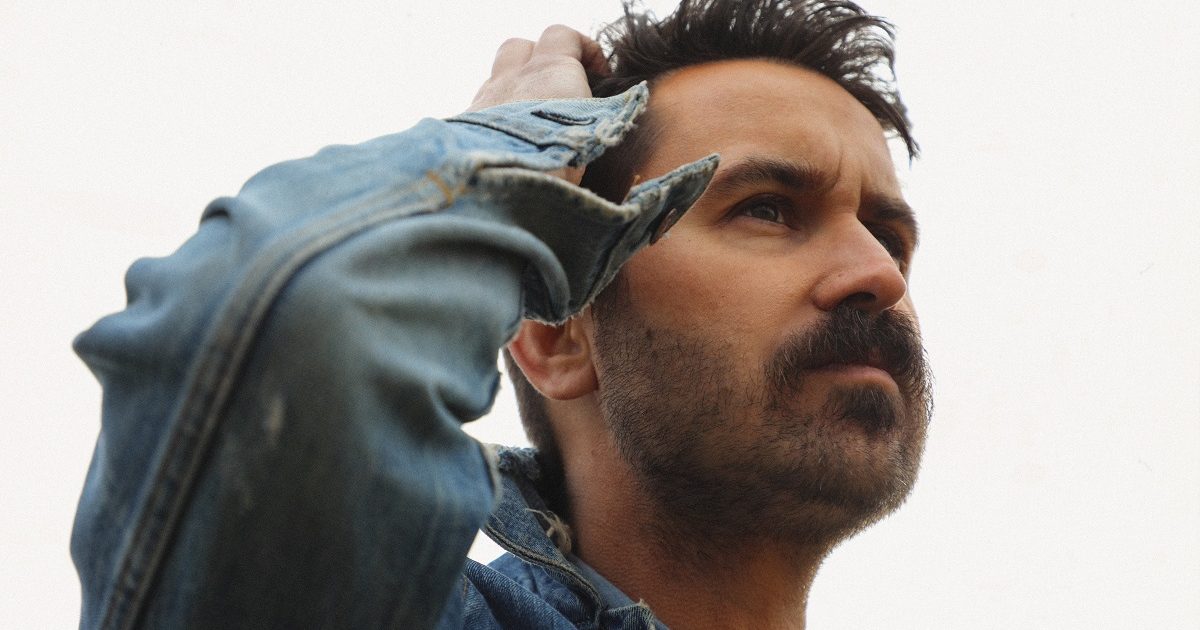
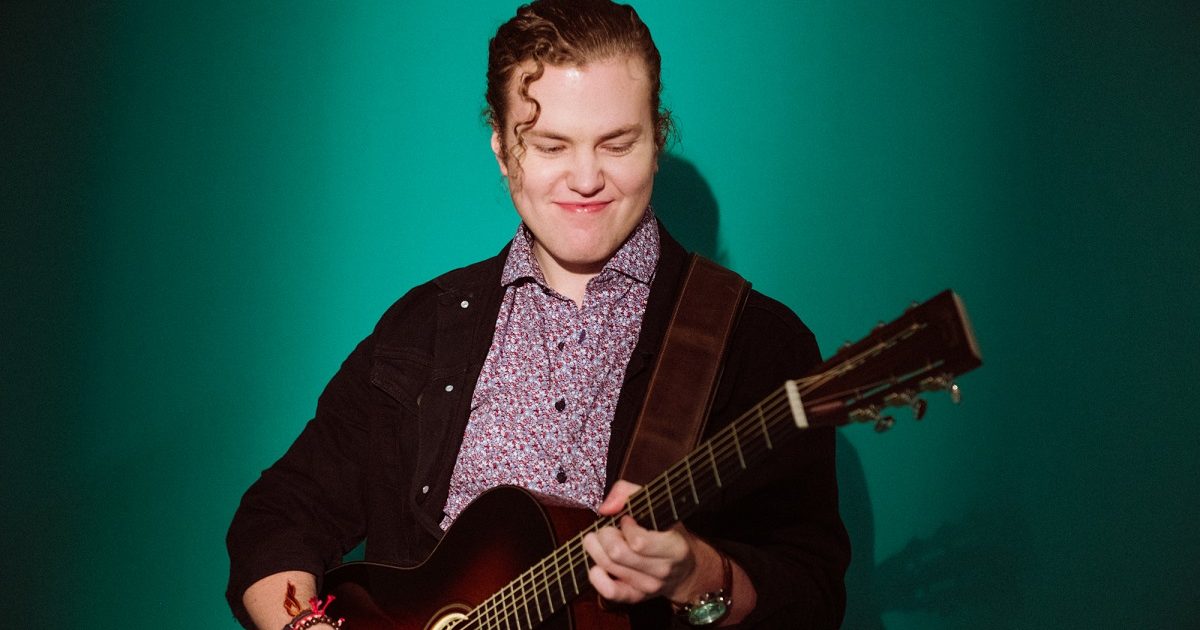
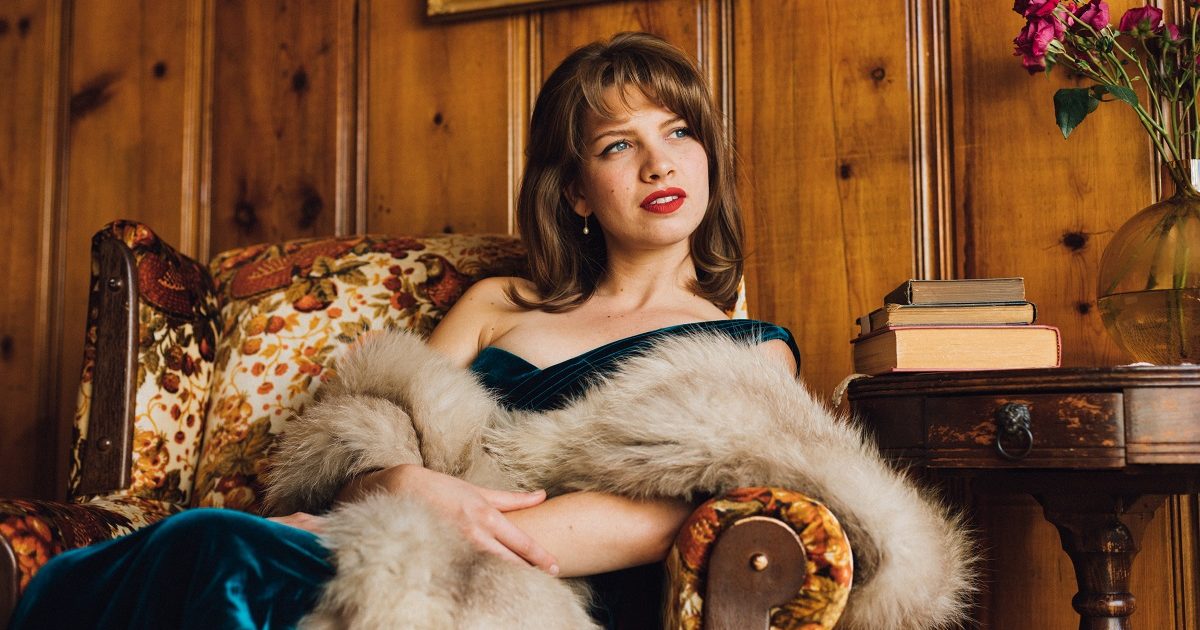
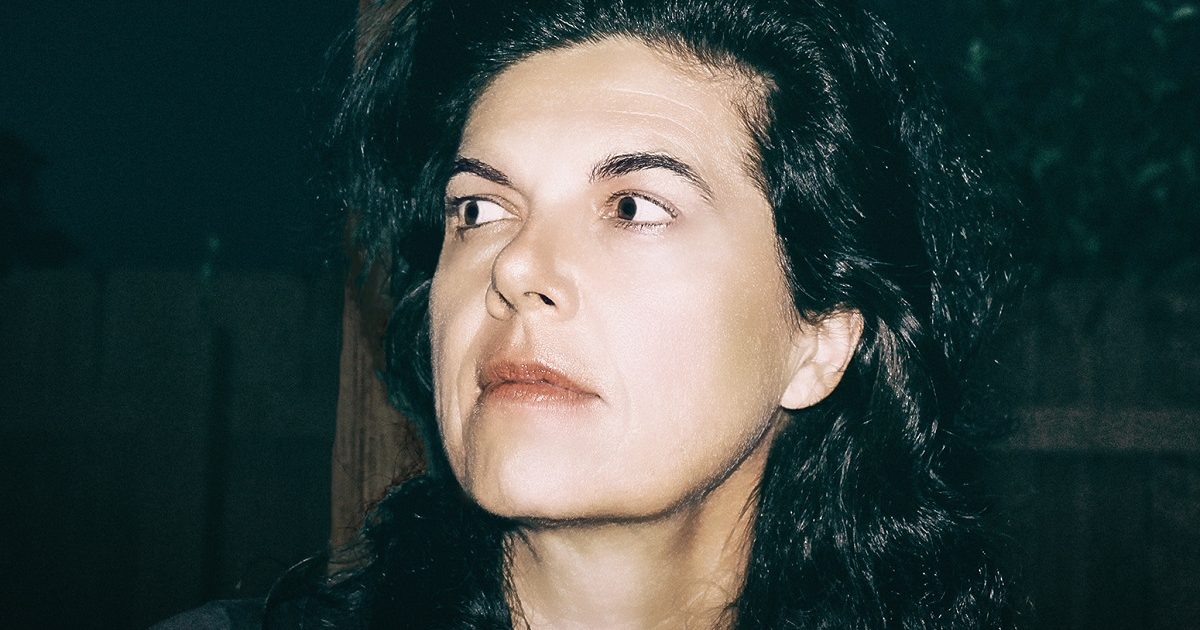
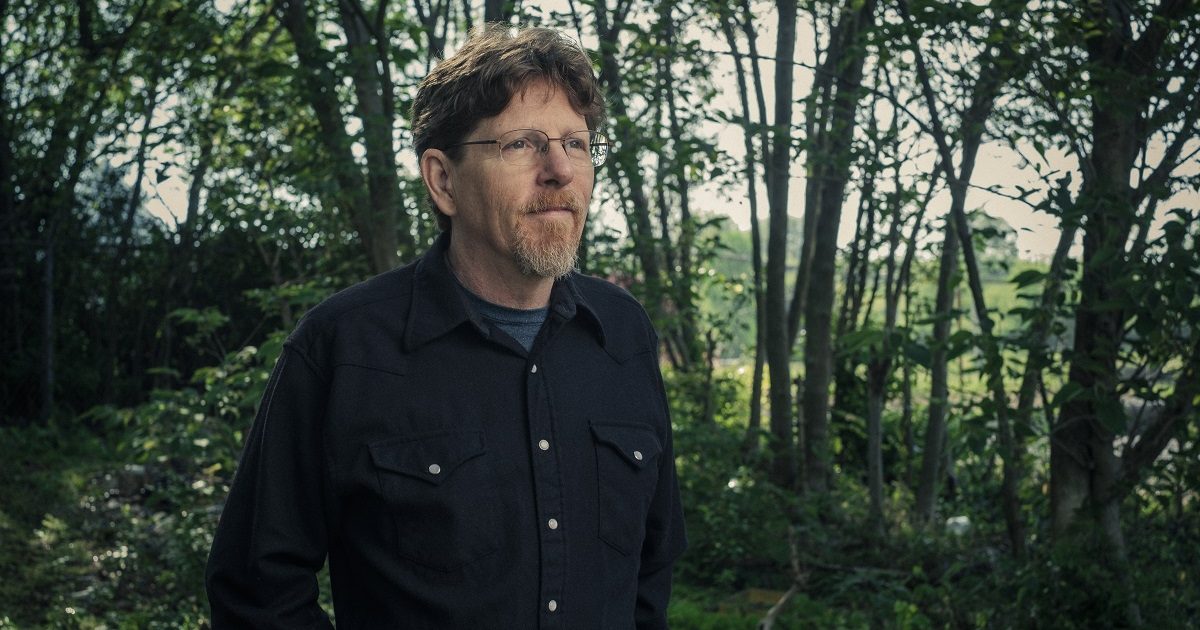
Artist:Tim O’Brien Hometown: Nashville, Tennessee Song: “I Breathe In” ft. Mike Bub (bass), Shad Cobb (fiddle), and Jan Fabricius (harmony vocal) Album:He Walked On Release Date: June 25, 2021 Label: Howdy Skies!
In Their Words: “The project is about what you need to do to survive in America. We all need a roof over our head and something to eat, of course, but we also need love. I’ve been grateful to have Jan beside me during the pandemic. The song stresses the need to take things one step or one breath at a time, and to keep those you love close as you do so.” — Tim O’Brien
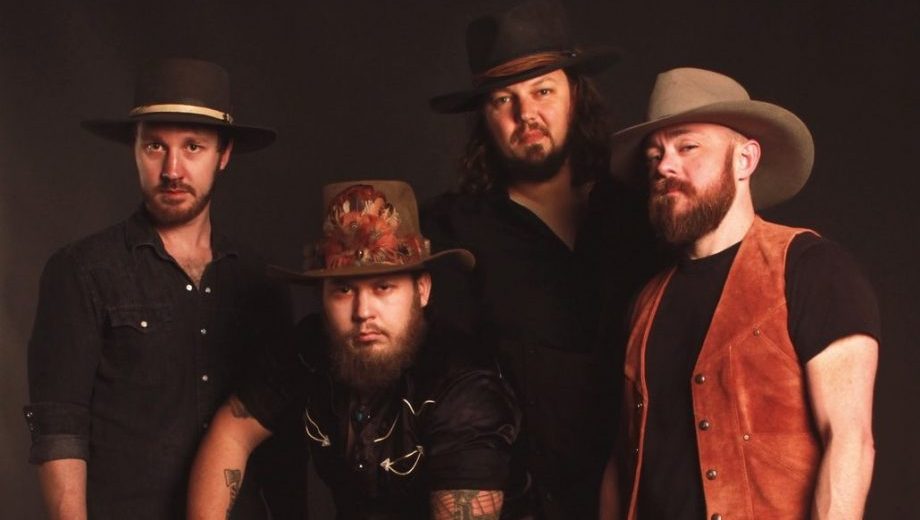
Artist:The Steel Woods Hometown: Nashville, Tennessee Song: “Baby Slow Down” Album:All of Your Stones Release Date: May 14, 2021 Label: Woods Music/Thirty Tigers
In Their Words: “‘Baby Slow Down’ is a song written from the perspective of a mother whose child has lost his or her way. She can see the path of the thing she loves most is getting rocky, so to speak, and knows she must intervene. Rowdy would tell the story of the car wreck he had one night headed home from a show the two of us had played about an hour outside of Nashville. It had been snowing and the roads were slick so when his mom told him, ‘baby, slow down’ the following day, he said, ‘I wasn’t even speeding,’ to which she replied, ‘No, in life, in everything, just slow down.’ I think too many times parents can see their kids heading down a path of destruction and never say anything in fear of rejection and resentment. I, for one, am glad that’s not the kind of parents I had, and I know Rowdy would say the same for his.” — Wes Bayliss, The Steel Woods
I met Allison Russell briefly several years ago during AmericanaFest here in Nashville, Tennessee. Years later on a masked up photoshoot with Yola during the COVID pandemic, I talked with this wonderful friend of Yola’s who introduced herself as Alli. We talked off and on during the shoot and had a wonderful time, only towards the end realizing that we did indeed meet before. That’s the funny thing about masks, I guess!
This particular shoot was the second one we had together within several months. Alli has since become a wonderful friend, and beyond her own ferocious talent and musicalities, she’s a gentle and whimsical spirit. We met in downtown Nashville this spring for our friends at BGS. Enjoy! — Laura Partain
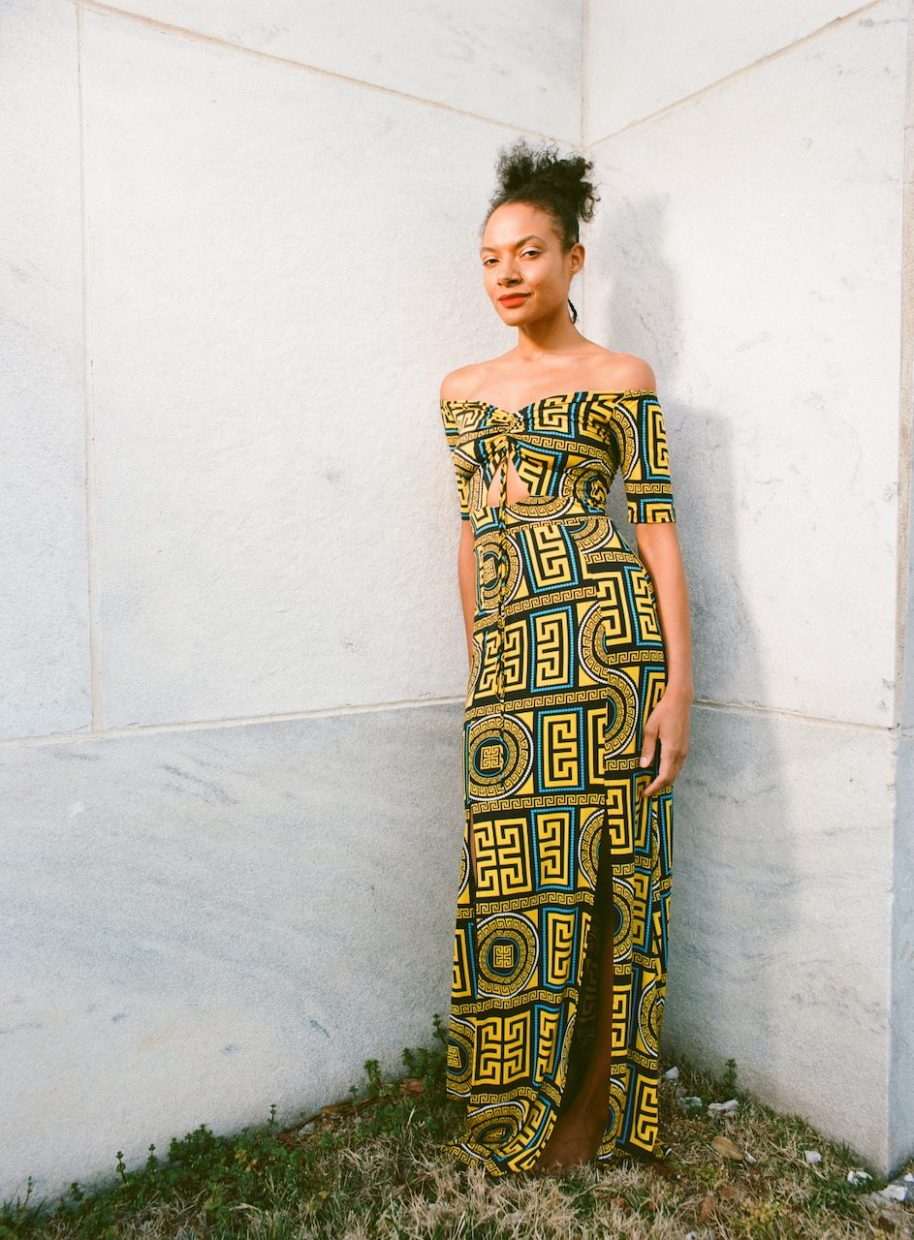
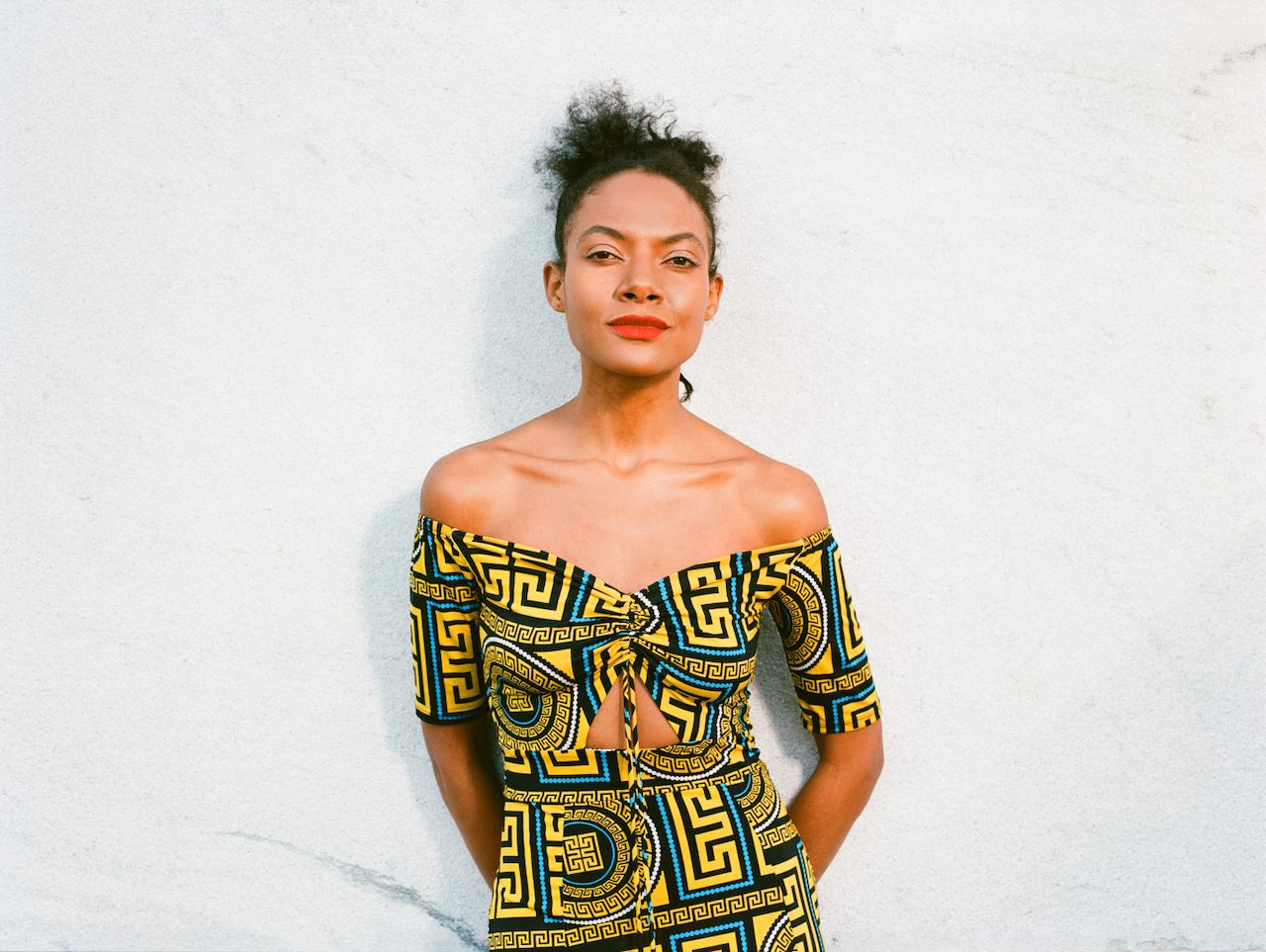
Allison Russell, wearing a dress designed and purchased from Kenyan American-owned Kings and Queens Boutique in Madison, Tennessee.
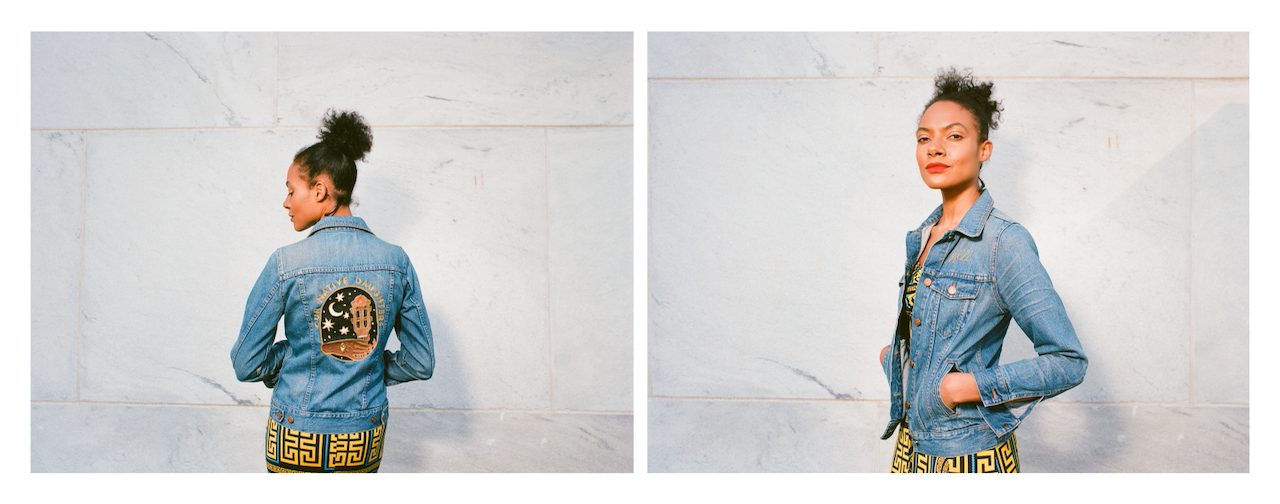
Allison in her custom Fort Lonesome jacket, which was gifted to her during the 2019 Newport Folk Fest, where she performed with Our Native Daughters.
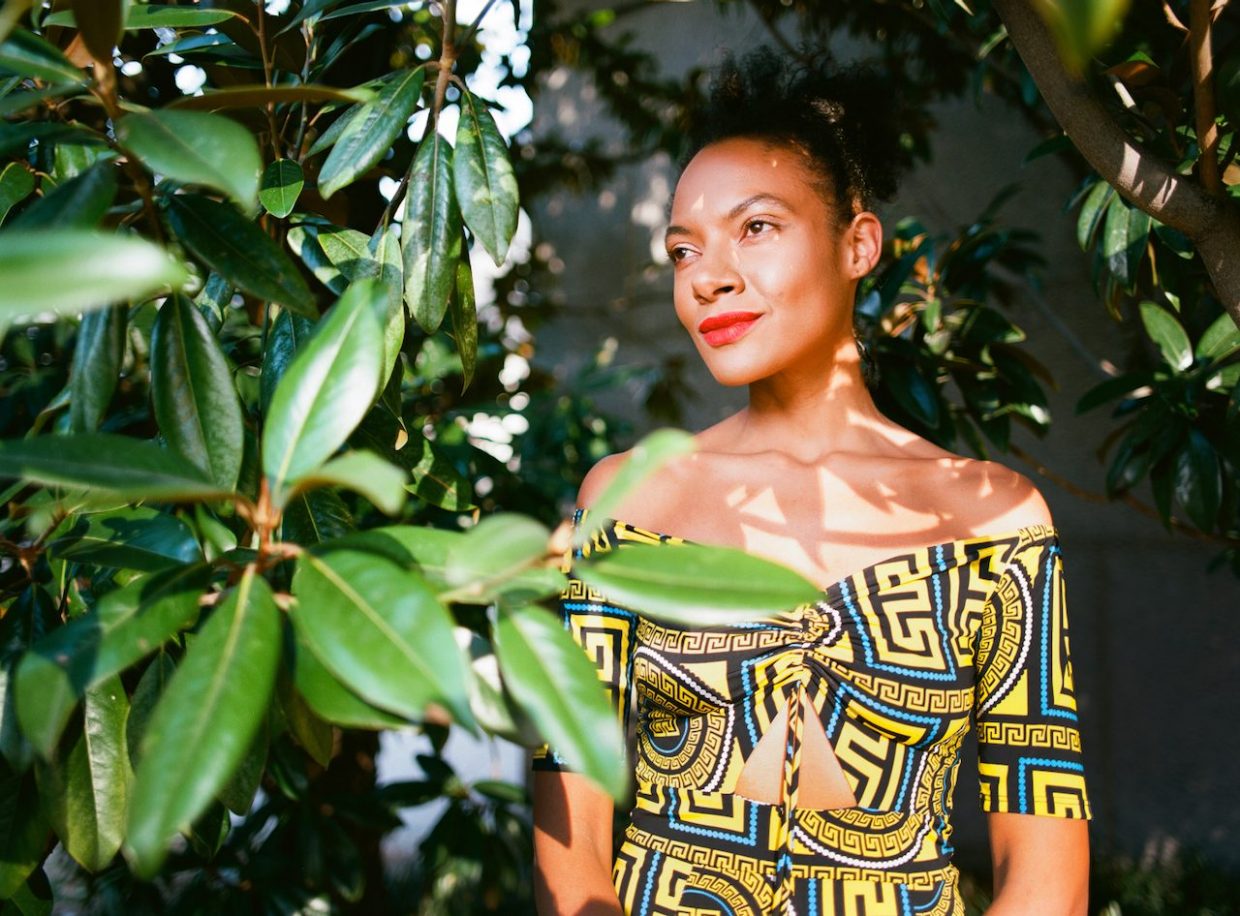
Once again, wearing the dress designed and purchased from Kings and Queens Boutique.
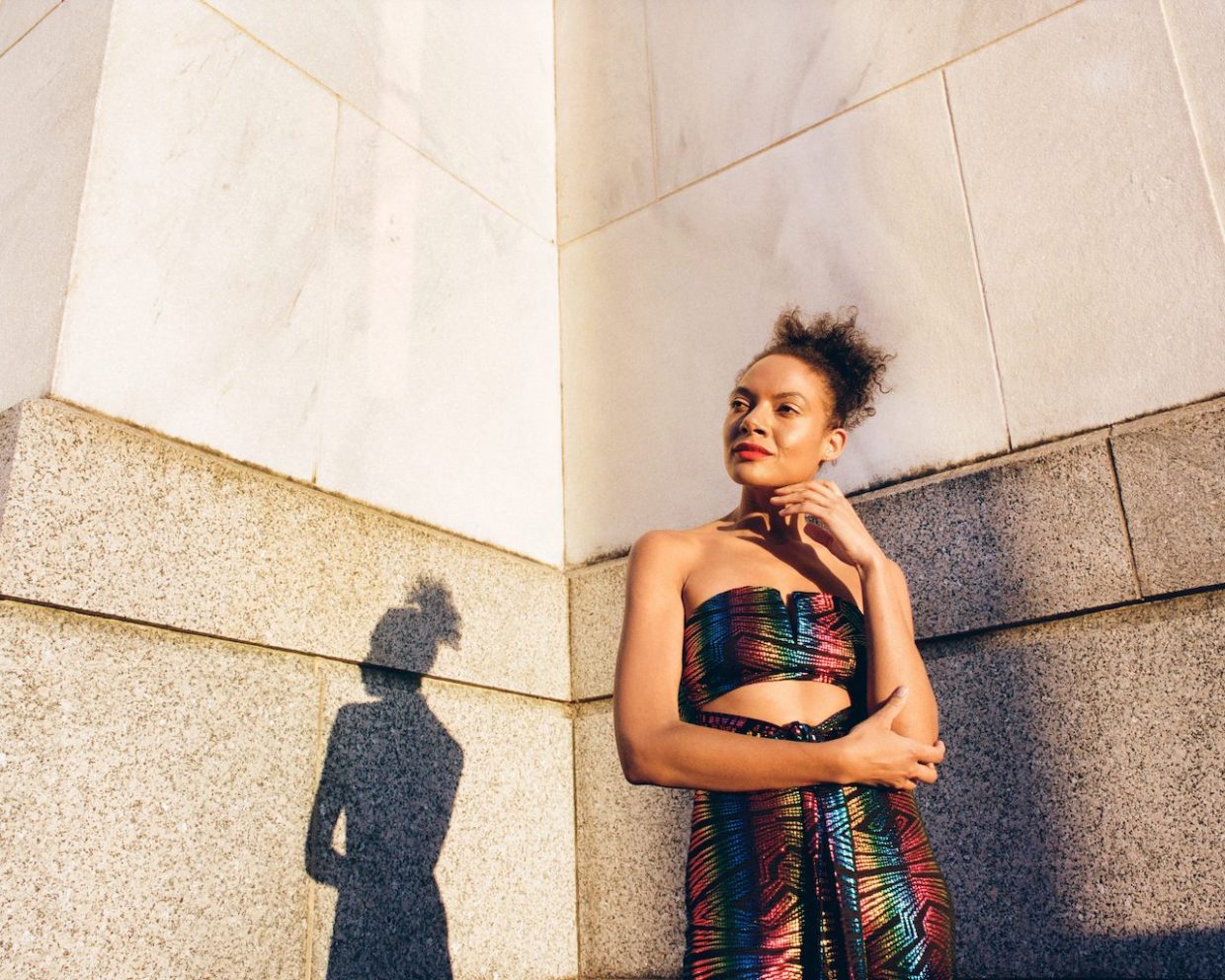
Allison wears a shiny, rainbow jumpsuit she scored from a local thrift shop in Nashville, Tennessee.
Artist:Sean McConnell Hometown: Nashville, Tennessee Song: “Price of Love” Album:A Horrible Beautiful Dream Release Date: August 6, 2021 Label: Soundly Music
In Their Words: “‘Price of Love’ is a direct result of a conversation I had with my mother on the phone one day while was driving on tour. I was missing my wife and little girl back at home. We talked about the price your heart pays for giving itself fully to someone. It’s scary, you know? Scary that something could happen to them. That something will eventually happen to all of us. But yet, most of us decide to risk that. To take the jump. To give up your heart completely. It’s heavy shit.” — Sean McConnell
Artist:The Accidentals Hometowns: We split hometowns of Traverse City and Nashville; we have houses in both (Sav and Katie) and Michael is from Grand Rapids Newest Album:TIME OUT (Session 1) Nicknames: Savannah is Sav, Katherine is Katie, Michael is ALWAYS Michael. haha. Rejected band names: Flavor Monkeys, Savage Kittens (now our publishing company), Go Dog Go, Jalapeno Honeymoon, Comfort and Dismay. We were The Treehuggers before.
Which artist has influenced you the most … and how?
Katie: Brandi Carlile is one of those through-line artists we bonded over when we were teenagers and have never stopped learning from. I’ll never forget hearing “The Story” for the first time and doing a double take when the music drops out and she belts the chorus like there’s no tomorrow. As a socially anxious kid I wanted nothing more than to be able to hurl my feelings out of my lungs the way she does. Over the years we’ve watched her do everything from producing records to making her own music festival in order to support women artists.
One of the last shows we saw before the lockdown was Brandi playing with Kim Richey at the Ryman Auditorium in Nashville. We had just moved to town and as we sat on the worn wooden pews overlooking the stage, I was moved to tears watching the young girls in the front row throwing their heads back and belting along to “The Story.” Never in a million years would we imagine that a few months later we’d be writing music for our TIME OUT EP with Kim Richey, but we’ve learned even our heroes are humans who we can talk to on Zoom while wearing sweatpants and talking about bread baking. When we cancelled all our tours in 2020 we started feeling lost, but so many artists including Brandi reminded us that you never have to give up collaboration, activism, hard work, and heart.
What’s your favorite memory from being on stage?
Katie: Looking back, I have to say that 90% of my favorite moments were the unplanned ones. In 2018 we had the opportunity to sing on stage with Joan Baez for the Ann Arbor Folk Festival. I had just finished reading her biography and was starstruck, but once we were onstage her voice made everyone at ease and soon there were thousands of voices singing along. While everyone was walking off stage she grabbed my hand and I felt like my feet were floating.
Another favorite memory was playing Summerfolk Festival in Ontario — they have a tradition of pairing up two bands at the festival who’ve never met, and put them on stage together to play an after-party set. We had no idea what to expect when we loaded in our gear, but ended up playing an insanely fun hour-long set with Turbo Street Funk, a five-piece brass funk band including electric guitar, drums, sax, French horn and a hand-painted sousaphone plugged into a bass amp. We improvised on each other’s tunes all night, throwing in covers of “Ghostbusters” to The Yeah Yeah Yeahs to the Black Keys. We’re friends to this day, it was amazing.
What other art forms — literature, film, dance, painting, etc — inform your music?
Sav: Katie and I pick up inspiration everywhere we go. Usually every song is a culmination of things we’ve picked up around us – a piece of an Edgar Allan Poe poem here; the first sentence of Markus Zusak’s The Book Thief paraphrased; a story in the New York Times about an endangered kind of parrot; an art piece made entirely of thread in the Crystal Bridges Museum, or if you’re Katie, sometimes a perfectly made plate of zucchini noodles is all it takes to be inspired.
We never really know where the moments of inspiration strike. I keep voice memos on my phone of little ideas as they come to me (usually in a public place, so I have to mumble them into my phone like a nerd) and a whole list of sticky notes of random billboards saying ominous phrases or things I pick up in conversation. There’s an episode of the Song Exploder podcast featuring John Darnielle of the Mountain Goats, who talks about keeping a whole list of song titles written down at his disposal, so I started picking that up recently, too.
I will say that being in the music industry requires you to know a little bit about other art forms like film and visual art, because you never know when you’re going to be writing a treatment for a music video, or brainstorming / creating an album cover from scratch. Seeing how projects like TIME OUT EP or our upcoming album Vessel translate into film or visual art is fascinating, because it shows how when an art piece becomes multimedia, it starts to feel like you’re not just looking at a picture anymore – you’re standing in a room full of color, and you can see how it all fits together.
What’s the toughest time you ever had writing a song?
Sav: I think the answer would be different for both of us — our processes for writing vary song-to-song, but also Katie and I are really different writers. Katie usually takes her time with writing, and she’ll work on the same song for months at a time until it’s perfect. I usually like to knock out a song by sitting down once in a blue moon and just getting it down in two hours. So a process like “Night Train,” co-written with Dar Williams over the course of many Zoom calls, was pretty tough for me. That song had a Leonard Cohen-like aspect where it had infinite verses; the stories Dar told would have amounted to at least ten different songs. It was really hard to pick and choose what best told the story we were trying to tell.
Ultimately the version we kept is a travel journal about the power of community, the magic you experience in meeting strangers and finding common ground. The song is about coming to the realization that we are more alike than not, and there is more goodness in the world than we might believe. We wanted a song that would speak to every generation and community, a song about healing and investing in our future, because there’s still work to be done.
How often do you hide behind a character in a song or use “you” when it’s actually “me”?
Sav: This is one of the very first things Beth Nielsen Chapman called me out on when Katie and I were doing our first co-write with her (which was also our first co-write in general). Beth made a good point that using “you” too many times in a song starts to sound pretty accusatory. If that’s what you’re going for, great! Ha ha. She went further to say that saying “I” makes it more personal. I definitely have a habit of doing this — putting “you” where “I” should be — and sometimes I still do it, but I’m watchful of it now.
One thing we picked up this year is that songs don’t always have to be about us, necessarily. They can be from someone else’s perspective, while still using “I” and “me.” On one of our weekly Monday writes with Tom Paxton, he told us one of the best ways to get started was to pick up a newspaper, read a story, and write like you’re a person standing in the room where it happened. There will always be some personal piece of you invested in it by the time you’re done. The goal is to get outside of yourself for a moment and write for the sake of the story. That was a good lesson to take away after a year of isolation. It’s human nature to tell stories — whether that story is to heal, to inspire, to relate, or to learn from. So even if it’s “me” or “you” or “they” or “we,” the goal is for someone to walk away feeling like they got something out of that story, so that they may retell it in their own way.
Artist:Sam Robbins Hometown: Portsmouth, New Hampshire, currently Nashville, Tennessee Song: “Raining Sideways” Album:Finally Feeling Young Release Date: May 14, 2021
In Their Words: “‘Raining Sideways’ is one of the songs that means the most to me on the album, and it’s probably the most requested song I get live. It all just sort of came out at once, and it unlocked a new depth in my writing. I had never tried to write a song about my dad, or my relationships to the men in my life. ‘Raining Sideways’ is weird, doesn’t have a real chorus or hook, but that’s what I love about it. It’s just a stream of consciousness song that is one of the most real things I’ve ever written.” — Sam Robbins
There’s some serious sleight of hand going on with Tony Joe White’s new album, Smoke From the Chimney. Well, sleight of sound, really.
Listening, you can easily picture the sessions: the musicians playing together with White, taking cues from him as they spin out a tableau of characters and scenes that flow as if they were chapters in a book. It’s the latest volume in a legacy of witty, gritty songs stretching back more than 50 years to “Polk Salad Annie,” “Willie and Laura Mae Jones,” and “Rainy Night in Georgia.”
And leading it all with a sly grin is the Swamp Fox himself, as he’s known, with his still-strong, speak-sing baritone voice echoing his origins in the tiny town of Goodwill, Louisiana — a barely-there dot on the map a bit east of Shreveport.
Only one thing.
These sessions were done in the summer of 2019, a year after White died of a heart attack at age 75. Producer Dan Auerbach built the record around basic vocal-and-guitar demos that White had made over a period of years before he died. The illusion, though, is by design.
“I approached it very much the same way I would have any other album we do here,” Auerbach says from his Easy Eye Sound studio in Nashville. “I hired a band and we played live. And instead of Tony being in the room, he was in the headphones with us. You are hearing performances.”
He pauses.
“I’ve had people in the room that were less ‘there’ than Tony Joe was!” he says, laughing heartily.
The results are vibrant, a lovingly made set bringing out the full richness of White’s signature storytelling, steeped in his singular brew of soul, blues, rock and backwoods boogie. It’s the kind of stuff that over the decades led to his songs being recorded by dozens, from Elvis Presley to Waylon Jennings to Dusty Springfield to Tina Turner, but which had something extra when sung by White himself.
It’s not the only bit of deception going on in the album. There’s the matter of some of the most moving, affecting songs in the set. Take “Over You,” a heartwarming-turned-heart-wrenching ballad of love and loss. White sings touchingly of a relationship that started as friends at 7 years old, later growing into romance and a wonderful life together — until the woman, his soulmate, became ill and died.
Only one thing. Again.
“That’s not true,” says Jody White, the son of Tony Joe and, if you would have it from the song, the woman who died.
“No,” he says in a separate interview from his Nashville home. “My mom is still alive.” In fact, Tony Joe White and Leann White were married in 1964, raised three kids and were together until the day he died. “And they didn’t meet when they were 7,” Jody says. “There’s nothing true about ‘Over You.’”
It’s as big a whopper as the record-size widemouth bass that mercilessly taunts its would-be conqueror in “Bubba Jones,” another highlight of the new album. But even Jody, who at 46 has spent his whole life surrounded by his dad’s work and became his manager 20 years ago, could get sucked in to the depth of the song.
“That’s the great thing about Tony,” he says. “He’d write these songs and you’re like, ‘Oh man. Poor guy!’ Like he must have been going through it now.”
This is nothing new. There’s a lot of did-it-really-happen running though his vast, vaunted catalog. “There was a ‘Rainy Night in Georgia,’” Jody says, noting at least some truth behind the song his dad wrote, which was a big hit for soul singer Brook Benton in 1970. “But a lot of his best songs are just fictional tales. Sometimes you can’t differentiate. ‘Polk Salad Annie,’ is that a real girl or not? And ‘Over You’ is kind of the same thing.”
Smoke from the Chimney, in both the songs and sound, builds on a resurgence that started in the early 2000s when, after laying low some, White had resumed touring and recording, finding enthusiastic receptions among both older fans and new ones. Auerbach, now 41, was among the latter. “I was a little bit of a latecomer to his music,” Auerbach says. “But as soon as I heard his original version of ‘Rainy Night in Georgia,’ I was hooked.”
Having established himself both as half of the Black Keys and as an in-demand producer (his extensive credits include Yola, Valerie June, Ray LaMontagne, Lana Del Rey, the Gibson Brothers, and dozens more), Auerbach started pushing to produce a Tony Joe album years ago.
“Dan and I met probably 15 years ago,” Jody says. “And he said, ‘For the last 10 years I’ve been wanting to produce a Tony Joe White record.’ And it just didn’t happen. He only co-wrote with a few people, like Jamey Johnson. They would come out to the farm and sit by the fire with him. That sort of thing. He wasn’t going to go to a studio and collaborate with someone. It just wasn’t what he did.”
Even after Auerbach moved from Ohio to Nashville a while back, it still didn’t work out. “We did get a chance to meet, though,” Auerbach says. “We were on tour with the Black Keys and we were both on a festival in Australia. Hung out backstage. I played his Strat. We hung out and talked. Pretty awesome, actually.”
When Tony Joe White died, Jody’s job changed, he says, “from ‘What are we going to do next?’ to ‘What did he leave behind?’” What he found was daunting. “I discovered that there was probably more unreleased music than there was released music,” he says.
Sorting through the archives, Jody found hundreds of songs put down on tape over decades of time — experiments with electronic keyboards from the 1980s among them. Some will surprise even the most devoted fans. But he was drawn to several reels from a few years before his father’s death.
“There was really no rhyme or reason why he recorded all those songs in that period of time,” he says. “Some are old, some were new. It’s all over the place. But it was weird how they all lined up.”
In July 2019, he texted Auerbach the demo of the song “Smoke From the Chimney.” Auerbach loved it and asked for more. “I sent him probably 11 songs and he said, ‘They’re all perfect.’ My dad knew what he was doing when he recorded those songs together.”
The timing was perfect, too. Auerbach had an unexpected break in his normally crammed schedule, and about four weeks later he told Jody he had most of the songs finished. “I’ve never seen anything happen so fast,” Jody says.
Auerbach says it was simply a natural fit for him and his label, Easy Eye Sound, which is releasing the album. “He embodies everything I’ve tried to do, and everything Easy Eye is,” he says. “It’s steeped in what he was about — diversity and the love of music, of all kinds. He so obviously loved so much music. Diversity and soul. That’s what he had. Boy. Some people just got it, you know?”
It’s a mission for him.
“I’m figuring out the big part of the reason you find people who didn’t know about Tony Joe,” Auerbach says. “Tony Joe had no category, which made it hard for labels to market him. Calling him swamp-rock doesn’t do him justice. Country doesn’t do him justice. Calling him blues doesn’t do him justice. Which is maybe why we need to tell his story a little bit louder.”
That’s played out through the wide emotional and musical range of the nine songs he picked. From the wistful title track to the swamp-voodoo chooglin’ of “Boot Money” and the campfire-side “Scary Stories” to the border ballad “Del Rio You’re Making Me Cry.” The achingly evocative “Someone Is Crying” is arguably the album’s sentimental peak, with strings swelling over the story of a young girl walking into the sunset after seeing her village burn.
With the band he assembled, Auerbach threaded that diversity of material together, consciously connecting, or transcending, genres. There are slide guitars (some by him, some by Marcus King) and steel (Paul Franklin) — a little touch of George Harrison here (the title song), Duane Allman and Dickie Betts there (“Listen to Your Song”). There’s Ray Jacildo’s Hammond B3 organ, a foundation for a wealth of Southern traditions touched on throughout.
On that ensemble he hangs such touches as the background vocals by Mireya Ramos and Shae Fiol of the all-women mariachi ensemble Flor de Toloache and evocative fiddles by Ramos and veteran Stuart Duncan on “Del Rio You’re Making Me Cry;” the strings on “Someone Is Crying” are the work of Matt Combs. Ultimately, it’s all there to illustrate the stories White tells.
Speaking of… there’s the closing “Billy,” a farewell to a life of drifting and to a lifelong friend “just like a brother to me.”
That has to be real.
“Didn’t happen,” Jody says of the song that’s the oldest on the album, having been recorded by Waylon Jennings back in the 1970s. “My mom and I were laughing about that. She came over and listened and she is like, ‘I don’t know how he makes this stuff up.’ She and I were speculating over who Billy could possibly be. And he was never homeless, walking the streets. None of it happened. None of it ever happened.”
Photo credit: Jim Marshall (black and white); Leann White (color)
Artist:Rachel Baiman with Atwood Quartet and Kyshona Hometown: Nashville, Tennessee Song: “No Good Time for Dying” Album:Cycles Release Date: June 11, 2021 Label: Signature Sounds
In Their Words: “Of all the songs on the record, this one felt the most cinematic, production-wise. Perhaps because I see this as the real story (of my late grandmother) playing out in my head each time I sing it. That’s why it seemed so fitting to collaborate with Atwood Quartet for this special live version of the song. Ben Plotnick wrote the incredible string parts, which both mimic and enhance the original album production. Kyshona was an artist I thought of immediately for the vocal harmonies, because of the quality of her voice and general spirit as a human. I was really grateful that she was up for it! After a year in which we’ve all had to face so much tragic death, this song feels like a reckoning of sorts, and a moment to process and hope for better in the future. I also want to give a special thanks to my neighbor Mike Malkiewicz for letting us transform and use his beautiful backyard stage.” — Rachel Baiman
Artist:Angela Autumn Hometown: Nashville, Tennessee (originally from Zelienople, Pennsylvania) Song: “Sowin’ Seeds” Album:Frontiers Woman Release Date: June 4, 2021
In Their Words: “‘Sowin’ Seeds’ is the oldest song on the record; I wrote it in 2017. It explores the could-be life of the musician; one of imagined ease, free from sacrifice. Once, after a show, a construction worker asked that I play this song again. It was in Pittsburgh, a town full of blue-collar workers. The chorus is a reference to the African American spiritual, ‘Working on a Building,’ which was recorded and later popularized by The Carter Family. The song features Nate Leath on fiddle, Keagan Justice on banjo, Mickey Justice on mandolin, and Kate Haldrup on drums.” — Angela Autumn
Artist:Maia Sharp Hometown: Nashville, TN (originally Los Angeles, CA) Song: “Things to Fix” Album:Mercy Rising Release Date: May 7, 2021 Label: Crooked Crown
In Their Words: “When I moved into my place in Nashville in 2019 (from California where I had lived all my life) there was, of course, a list of things to fix or upgrade or just tailor to my taste. This was all while I was trying to process the end of my 21-year marriage. I knew there were things I said that I wish I hadn’t and things I should’ve said that I didn’t. I wasn’t sure how to fix that yet so instead I painted a room and then another room, I replaced locks and hinges and repurposed picture frames, you get the idea. I brought this situation as a song idea to my co-writer, Noah Guthrie (who has a great version of the song on his new album) and we saw it all the way through. Eventually I did get to say the better things to my ex and we are lifelong friends but in the meantime I had the cleanest house ever.” — Maia Sharp
Photo credit: Emily Kopp
This website uses cookies to improve your experience. We'll assume you're ok with this, but you can opt-out if you wish.AcceptRejectRead More
Privacy & Cookies Policy
Privacy Overview
This website uses cookies to improve your experience while you navigate through the website. Out of these, the cookies that are categorized as necessary are stored on your browser as they are essential for the working of basic functionalities of the website. We also use third-party cookies that help us analyze and understand how you use this website. These cookies will be stored in your browser only with your consent. You also have the option to opt-out of these cookies. But opting out of some of these cookies may affect your browsing experience.
Necessary cookies are absolutely essential for the website to function properly. This category only includes cookies that ensures basic functionalities and security features of the website. These cookies do not store any personal information.
Any cookies that may not be particularly necessary for the website to function and is used specifically to collect user personal data via analytics, ads, other embedded contents are termed as non-necessary cookies. It is mandatory to procure user consent prior to running these cookies on your website.
 Allison in her custom Fort Lonesome jacket, which was gifted to her during the