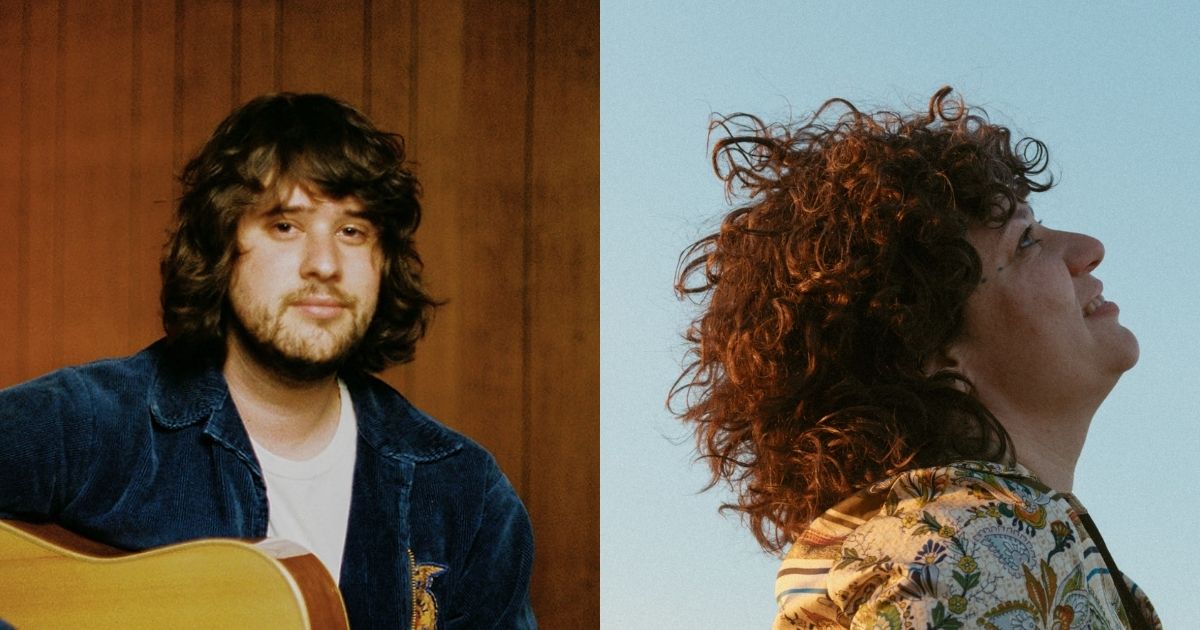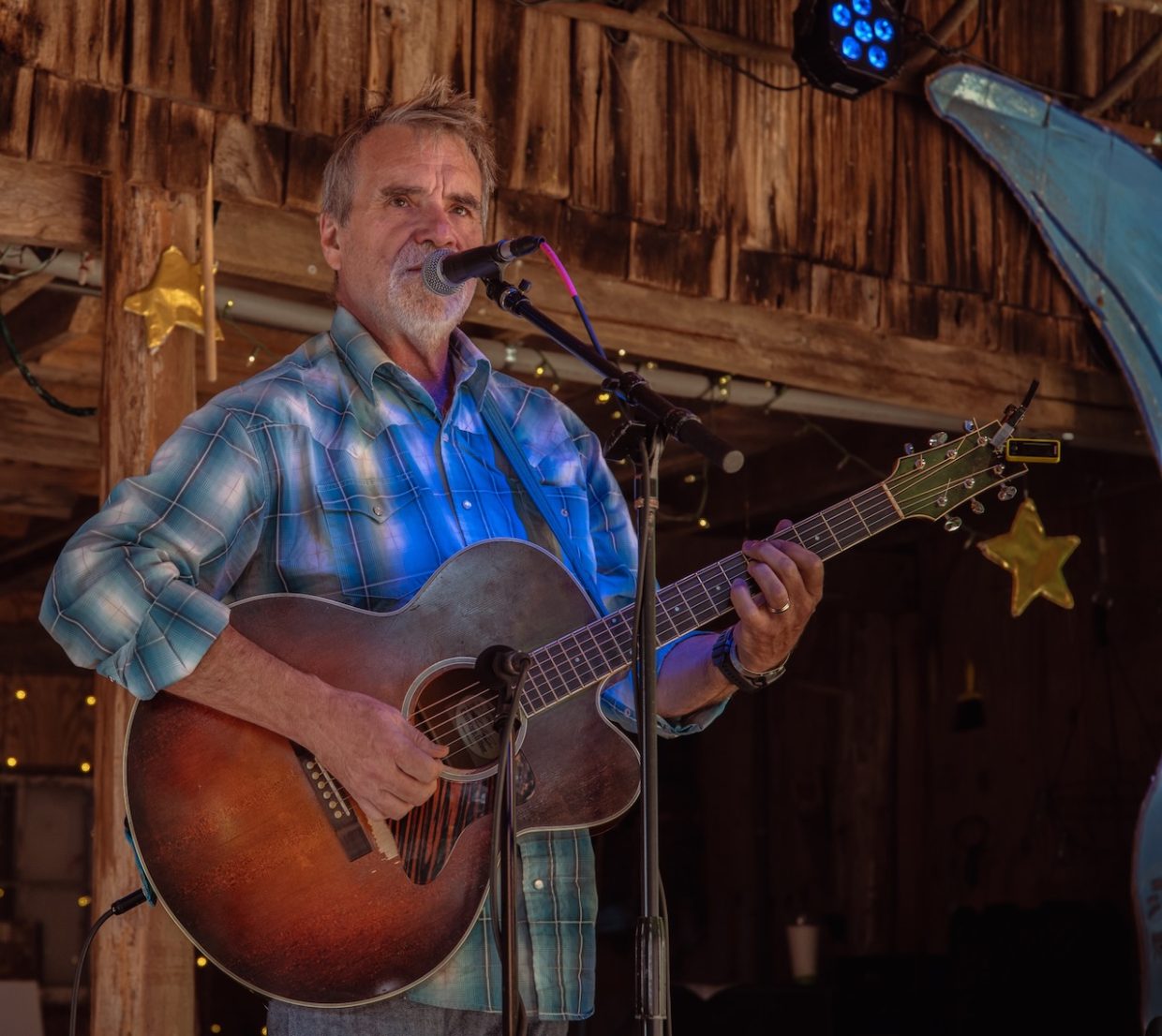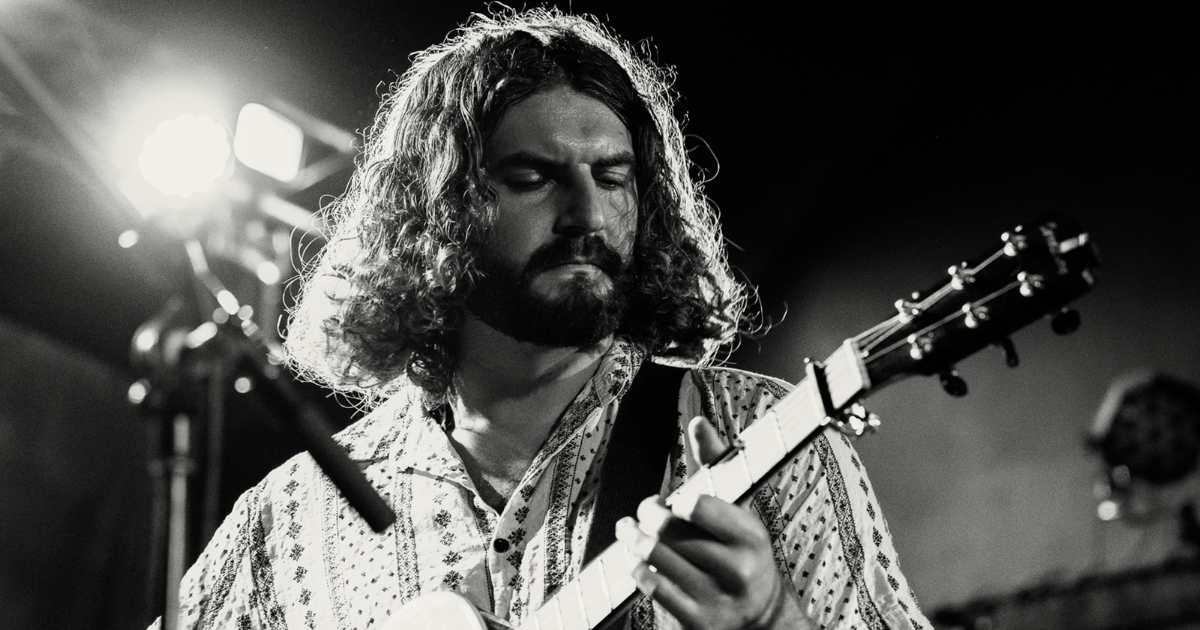
Cole Chaney is
“Anti-Machine”

While many young talents, willingly or hesitantly, bow down to music industry boardroom suits who promise stardom if they’ll follow a professionally curated path, Cole Chaney takes a hard pass. He knows exactly who he is, what he does, and how he wants to get there. He creates songs, not content. He’s a career musician, not a brand. And the only thing he hopes to influence, maybe, is someone, somewhere, who wants to make music for all the right reasons.

Chaney grew up in Catlettsburg, Kentucky, surrounded by the legacies and storytelling of his elders. After graduating high school he worked as a welder, uncertain of his career path, but already fueled by his passion for music. Today, he keeps one musical foot in the bluegrass traditions of his Appalachian roots and the other in guitar-centric, amplified bands like Soundgarden, Nirvana, Alice In Chains, and Stone Temple Pilots.

His debut album Mercy and subsequent OurVinyl Sessions reflect his love of acoustic music and showcase his leanings toward introspection and melancholy. In the Shadow of the Mountain, released last fall, takes that darkness to a new place, balances it with moments of light and leans into the aforementioned rock influences, while never losing the origins of his sound. All of this shines at peak level onstage, captured by Western AF on a Live AF Session.

Sitting outside at home on an April morning, drinking coffee and surrounded by the sounds of birds and a breeze, Chaney spent a couple of hours on the phone with Good Country. He spoke candidly about his music, faith, values, mental health, and the intertwining of inner peace and inner turbulence that make all these things uniquely him.

When you were ready to do this professionally, you went to Lexington. Most songwriters would have chosen Nashville. Was yours a deliberate decision or a natural one?

Cole Chaney: To understand that decision, you have to look at who I was looking up to at the time – and still do – and what drove that decision. When I was in high school, probably around my freshman or sophomore year, 2014 or 2015, I started getting into this band called Sundy Best. They’re from Prestonsburg, Kentucky, which is just down the road from me. This was pre-Tyler Childers. At the time, in Eastern Kentucky, these guys were the biggest thing coming and going. They leaned heavily on being from Kentucky, the same way I do, and they moved to Lexington to get a foothold.

That was my early example, watching those guys. I knew they weren’t going about it the traditional way, which was to go to Nashville and pray somebody picks you up. They did it in Lexington. A couple years later, Tyler Childers comes along – another super-influential figure in my musical upbringing. Of course, he’s anti-Nashville – not the city, but the machine, if you will. I’m pretty sure he lived in Lexington, or at least around the area in the scene, for a while. So did Sturgill Simpson. The list goes on.

I was like, “What business model makes more sense to me? Do I go to the place where there’s more songwriters than the rest of the entire planet or somewhere where people will actually understand what I’m saying and I can maybe build myself a little bit of a foundation?”

The way I saw it is if I started building a sort of fan base or if I had enough ticket buyers, places like Nashville or Denver, these big music scene cities, what choice would they have other than to book us? That’s the way I looked at it.

And it worked.

It did work. It’s a simple business model, but the difference between that model and the other is you’re not sitting around waiting for something to happen. It’s on you to go out and make your own connections. It’s a very grassroots and organic way of doing it and that’s the way I like to do things. I’m anti-machine. Even though I work with some bigger companies, I keep it as limited as possible. That’s so I can play pretty much wherever I want, whenever I want, and they understand that.

On the Whiskey Riff Raff Podcast you said, “Music found me.” Would you mind expanding on that just a bit?

It did. I never would have dreamed at 16 years old that I would be doing this as my full-time job at 25. That was never on the horizon for me. I didn’t know what I was going to do. I knew I was going to weld for a little bit, see what happened, and maybe try to start my own business. And I did. But I really didn’t think it was going to end up like this.

I started realizing that people liked to hear me play and sing around the same time that COVID hit really hard. That gave me an opportunity to sit down, write some songs, and think about what I wanted to do with the rest of my life.

I’m very much a subscriber to the Bible, and I think the Lord has a mysterious way of working. He put me on a path without me even realizing it way back then and I do my best to stay on it now. I think my job while I’m here is to create as much good stuff as I can, stuff that means something, get it out to the people, and get out in front of them and play it for them. As somebody who enjoys going to shows in their free time and watching my favorite bands perform live, I know how that feels, and it’s truly a privilege to be able to offer that same service to other people.

There is music in your bloodlines, not professionally, but family members who played in church and at home. You obviously assimilated the sound of the area, and also this wider scope with bands like Alice In Chains and Stone Temple Pilots. When did all of that begin seeping into your songwriting?

We listened to the radio when I was growing up. I didn’t get educated on music or how to play until I started really getting into it. To this day, I’m still being educated and learning how to play on a daily basis. Part of what keeps it so fun to me is how much I don’t know and constantly learning about things.

Mercy was my first album, and I had access to what was around me. I had just moved to Lexington and I was really into bluegrass. There’s a band called the Wooks that, to this day, Glory Bound is one of my top three favorite records of all time. I was infatuated with that sound and that was what I wanted Mercy to sound like, or at least as close to it as I could get. A lot of the Wooks ended up playing on that album, plus Michael Cleveland. It was crazy.

Alice In Chains has been a mainstay in my musical taste since I was probably 15 or 16 years old. Since I first found them, I was very drawn in by the tone of Layne Staley’s voice and the weight of Jerry Cantrell’s guitar. It feels like you could bite it and chew on it. I don’t know how to describe it.

I’ve also always loved bluegrass, so it was [figuring out] how to bridge the gap of what I listen to and where I want to go with my writing without completely abandoning that sound. And bringing the alternative rock sound into the folk realm, where you have mandolin, upright bass, fiddle, acoustic guitars, and drums. The biggest change in the sound has been the addition of drums over the past two years, navigating that and seeing how it fits into the whole equation. It opened up a lot of avenues for me as a songwriter.

You began playing guitar at 13 or 14. Did you always play acoustic?

The thing about electric guitar, for me, is that it’s such a deep realm of gear and a deep dive. I’ve always been attracted to good-sounding acoustic guitars and players like Tony Rice, so I felt my effort was best spent getting really good at playing the acoustic guitar.

That will carry over whenever I decide to pick up an electric guitar, more so than if I only played electric guitar and tried to write some bluegrass-style acoustic lines. It would be a tougher transition to come over from light gauge strings on an electric guitar to .013s on a dreadnought and trying to play “Blue Railroad Train” or something like that.

Do you have an electric guitar?

I have several electric guitars. I’ve got a ’57 reboot Stratocaster, an American Professional Telecaster, my old Paul Reed Smith that I learned how to play electric on, and a nice Vox amp. I don’t know all that much about electric guitars. I still have a lot to learn.

Prior to this interview, you sent over your touring rig: a Gibson J-45 Banner in standard tuning with a K&K Pure Mini pickup, and a Breedlove sitka/rosewood Custom Dreadnought in drop D/double drop D, with an LR Baggs Element VTC pickup. Also two Grace BiX DI’s and a Lampifier Model 711 cardioid mic for lead vocals.

Those are my road guitars. They aren’t the ones I recorded everything with, but those are what you see at the shows.

In addition to the Gibson and Breedlove, do you have other acoustics?

I have two Gary Cotten guitars. [On] OurVinyl [Sessions, that] was my first Cotten I recorded with. On In the Shadow of the Mountain, many of those songs are my newer Cotten, which is sinker mahogany and an Adirondack top. “Alone?,” “In the Shadow of the Mountain,” “Into,” “Feels Like Rain,” and “Spirit” [were all recorded] on the Cotten.

That guitar sounds huge. It’s an outstanding guitar. I don’t tour with it because I’m scared something would happen to it and it’s too special to me. And Gary’s a great dude. He’s always taken really good care of me, and I want that guitar to stick around for a long time.

I don’t have any electronics in it, either. It’s a very traditional style, it’s a dovetail, and I want to keep it as traditional as I can and keep as much weight out of it as I can, because the more weight you add, sometimes it makes them sound worse.

What makes the Gibson and Breedlove right for touring?

They’re super-versatile and they both sound fantastic plugged in. That Breedlove is the longest-standing guitar I have that I’ve consistently played shows with. I got it in 2019 from 4 o’clock Rock Guitar Shop in Ashland [Kentucky]. It’s a custom dreadnought that they shop-ordered and it’s got the LR Baggs VTC Element in it. It has always sounded so good plugged in. I mean, all guitars sound bad plugged in, but it’s a matter of how much of the original sound can you actually preserve when you plug it in.

I’ve gotten to the point where I am almost starting to desire a little bit of that direct input texture. Maybe it’s because I’m listening to too much MTV Unplugged, but I’m starting to desire that kind of cardboard bad sound.

The Gibson, I put a K&K Pure Mini in and it sounds really close to what it sounds like not plugged in. Man, that Gibson is a beast. I love that guitar. It’s been to every show with me since I bought it last year.

I still have a Paul Reed Smith acoustic guitar and it’s a damned good little guitar. I’ll probably end up using it again on some stuff. It’s one of those that you plug in and it sounds great, too. But when I got into the whole bluegrass thing, I knew I needed something with a little more body.

Sometimes you use a pick, sometimes fingers. Either way, your attack is strong. How did your technique develop?

It’s one hundred percent out of necessity. I had a really bad injury in 2015 and I damn near cut my index finger completely off at the knuckle. I can’t wholly bend my index finger and I can’t feel the picking side of that finger. If you watch some of my older videos, my index finger is flailing around all the time. It’s because I’m picking with my thumb and middle finger, and that’s where I’m holding the pick. That took me long enough to learn how to do.

In recent years I’ve learned how to use my middle finger to lock my index in place and be able to hold a pick. It looks normal, but if you could see how the sausage is made, it’s not that pretty. I wish I had that dexterity in my finger. The takeaway message from that is, “Take care of your hands, y’all.”

Let’s talk about the through line from bluegrass to bands like Stone Temple Pilots and Alice In Chains. You blend the genres seamlessly and it all makes sense. Did you always feel that connection?

If you listen to any playlist I’ve had, I’ll go from Ralph Stanley to Chris Cornell in a heartbeat. Obviously the music is different, but there are common themes between the two. Mountain folk music, hard rock, and that era are very dark and brooding, and they can be heavy in their own ways too.

What is heavy? What makes a song heavy? You’ve got people drop-tuning their guitars, but it’s still not as heavy as Pantera or Black Sabbath or something like that. So it’s not necessarily the sound that makes it heavy. It’s the vibe of the song.

I feel like a salesman a little bit, trying to sell this idea that this stuff can be brought together and related in an authentic capacity. Let’s take [Stone Temple Pilots’] “Big Empty,” for example. To do a cover of that and be looked at as a folk artist or an Appalachian artist, or some people will even say country – which I disagree with, but whatever – it always seems like somebody will start into a cover of this great song, but then they’ll get hokey with it and it loses all its purity.

That’s not at all the intended purpose for me. It’s to say, “This is a fantastic song and it fits the vibe that we’re all going for in this realm.” A lot of people probably didn’t know that a mandolin or fiddle sounds great on “Big Empty,” but now they do, because it fits. That’s the way I listen to that kind of stuff. It’s just how to pull that off without being cheesy or coming off in a capitalistic way. More so in a way of, “I love this song and you guys should listen to it.”

Was it challenging to find musicians who understand going from bluegrass to Stone Temple Pilots and back again?

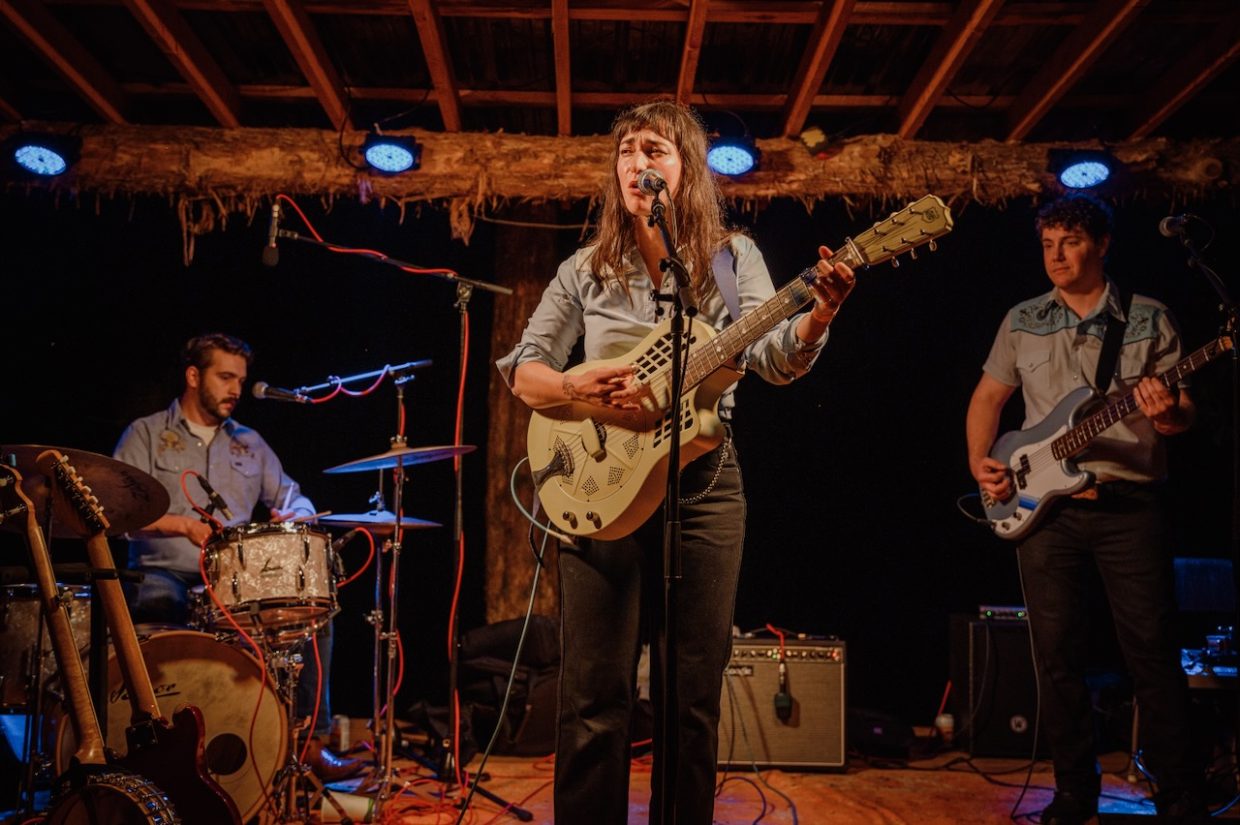
The band, I think through a lot of prayer/manifestation, has come together and, as you hear, they’re fantastic. They can play anything in any style. Ella [Webster] and Kyle [Kleinman] come from a more traditional folk music side of things. Kyle is a bluegrasser and Ella is an old-time fiddle player. Lars [Swanson] and James [Gooding] are jazz cats, so they have infinite vocabulary when it comes to music. If you can play jazz, then you’re going to be all right. If you can pull off that stuff, you don’t have anything to worry about when it comes to my type of music. Stone Temple Pilots is a walk in the park for you.

In our van, the most listened-to bands between us are Soundgarden, Pantera, whatever James’s choice of jazz is, and Alice In Chains MTV Unplugged. That’s a really good piece of music. But yeah, they’re a great band and they can play anything.

Did Lars and James know each other before they joined your band? To lock in a rhythm section…

No, they didn’t. Once you start playing with a jazz drummer, you need somebody who can comprehend the stuff he’s laying out and answer that on the bass. To have those two sit in a room and jam is really something to witness and listen to, because they speak a language to each other that I don’t understand. But I love when they do it, and it’s great to hear.

I’ll be playing onstage, singing and doing my thing, those guys are behind me and I’ll hear them back there, talking to each other while we’re doing this thing, and it’s awesome. They’re special. Those two dudes – they’re incredible. They’re the unsung heroes of music in general. That’s your metaphorical offensive line right there. If you don’t have a Lars and a James, then your quarterback’s getting sacked all the time.

This is you in 2025 on The Western Side, talking about Shadow: “a lot of darkness and an equal amount of joy in other songs. It’s a good depiction of where I’ve been for the past two years. A tumultuous and chaotic time period, but also great. And I’m still here.”

Then, In 2021, on With A View: “I load the pressure on. It’s how I operate. My brain lives in constant turmoil.” In 2020, talking about “Fever Dream,” “a song about trying to keep it all together. … the way I deal with this is isolation. And when you isolate yourself, you don’t have much of a choice but to hash some things out in your head.”

You are no stranger to the dark place.

Hearing those things, I look at that younger version of myself almost as I would look at a younger brother. Part of me wishes I could put an arm around that kid’s shoulders and be like, “You’re going to be all right, buddy.” Times got a little tough, as they probably should for anybody at points in their life. You can’t really enjoy the great parts of your life without having a little bit of adversity to overcome or deal with. The darkest part, for me, was maybe just growing up and gaining a new understanding of the way the world actually operates and how hopeless that can be at times, but also how beautiful it can be in the same stroke.

What I’ve realized is you get out of this world what you pay attention to, because whatever you want to find, you can find it. It’s there and it’s aplenty, whether you want to find the negativity and suffering, or whether you want to find the positive and the good. I don’t have the answer to where folks are supposed to operate and live, but I think it’s good to help people who are in that suffering side of things. But you can’t let that dominate your existence, and for a little while, I was maybe dominated by the darker side of life.

I try to be as empathetic as I can, but with that comes feeling a lot and also accidentally hurting people sometimes. That’s really tough, because then you have this cycle of guilt that you deal with trying to make it right in your head. As I’ve gotten a little older and maybe figured a couple things out, I try to have a lot more grace for myself. What I’ve learned about the pressure is that it’s really just perceived pressure and none of that exists, and you should just care less what people think.

Obviously, music is where you go during those times.

Absolutely. If something is eating at me that I’m having a hard time getting out in a linear fashion, a lot of times I find myself writing about it without even realizing it. My mom is an abstract painter, so I grew up with an understanding of what “abstract” means and abstract concepts. That’s how I materialize a lot of that stuff, because some of it is things I would never come right out and literally write down, for multitudes of reasons, but things you want to indirectly address. That’s when [abstraction] becomes a great tool for addressing those kinds of things. Metaphors.

It seems, when it comes to expressing those things, you’re in the balance between the emotionally open world of Cornell, Cobain, and others and the world of bluegrass, country, hunting, fishing, and those stereotypes of “manly men” – and not so much emotional transparency.

Not necessarily. I don’t know about the whole “alpha male” personality type. It’s always seemed to me that a lot of times the guys who are trying to be perceived as macho are probably the ones who need a hug the most. Now it’s everybody else’s problem because their dad didn’t do it, and that sucks.

As I’ve emotionally developed a little bit, I’ve really started to respect individuals like Chris Cornell. If you look into him as a person and watch some of his interviews, he’s intelligent and seemingly self-aware. I respect the way he conducted himself, especially in interviews, and the way he made sure to pay attention to people and make them feel seen. The only way you can empathize with people like that and make sure of those types of things is if you’ve been on the other end of that stuff and you’ve felt looked over and brushed off.

I may not be the best at answering Instagram DMs, and I definitely don’t stay on the internet because I think it sucks, but if I talk to somebody in person, I always try my best to give them that and be present in the moment. Somebody else that does a fantastic job of that is Nicholas Jamerson, the frontman of Sundy Best, who’s a mentor, friend, and hero of mine.

Have you ever felt any hesitation about publicly ripping off the mental health Band-Aids? Or, conversely, is there a feeling of opening the door to people having these conversations?

Sure, there’s hesitation about a lot of things. There’s a lot of decisions about, “How do you want to portray yourself in a public light?” But my main goal is and has been to just be as authentic as I can, as representative of how I feel about things as I can, and to be accepting of people and understand that they come from different places and have different perspectives.

With that hesitancy, there’s also much more in the way that when we were talking about 20-year-old Cole, the way I want to put my arm around that kid and comfort him, that’s what I want my music to do for people that feel the way I was feeling at that time.

Listening to you, I’m reminded of something Charlie Daniels said to me during an interview years ago: “Music is too precious for me to prostitute it.”

Oh, yeah. Absolutely. And, too, Charlie Daniels is one of the greatest country musicians ever. I want to go on record saying that.

The way I look at it is, could I see my heroes, people I look up to, going online and being like, “Comment what song you think I should release next”? No, I don’t think I could. When I see someone who has musical and artistic integrity, that’s how I’m going to operate. I’m going to try my hardest to uphold my integrity and not do the TikToks and the really cheap stuff.

You absolutely will suffer financially for not playing the game and if you don’t kiss the right ass, but, to me, that suffering is not negative suffering. I’m honored to be able to suffer like this, because if my options are suffer or have to watch Country Central’s “Hot Take Tuesday,” then give me suffering all day long, because I’m not paying attention to that bullshit. It’s ridiculous. I don’t care who’s beefing and I don’t care what dude is playing cowboy this week.

That’s why I’m trying to get out of the country scene. It’s becoming so fake and there’s so many people trying to be carbon copies of other people. There’s no authenticity. Everybody’s full of shit. We went through this period where people like Tyler [Childers] drove the spear through the heart of this mainstream country thing and it was akin to when Nirvana came on the scene and effectively killed hair bands for a while. But then the Nirvana copycats came along and garnered a lot of the same attention.

I’m not saying that just Tyler Childers is responsible for this. People like Sturgill, and a lot of smaller artists in their own scenes, are responsible for the turning over of the dirt, if you will. But it’s getting stale. It’s past getting stale. It is stale and it’s bad. There’s a lot of really shitty music being put out right now and I don’t want any part of that.

If I’ve got to step away and back off and be out of the internet eye, then fantastic. That doesn’t bother me one bit. If it means a few less people know who I am, then so be it. But I hold out hope that people will eventually realize how cheap and bad a lot of the music is that is being promoted right now, and there’ll be another turning of the dirt soon.

Yes, art is subjective, but art is subjective. Not this corporate bullshit that they’re trying to push. That’s not art. That’s six dudes in a room trying to come up with a song that’s going to sell on the radio or sell on the internet, or “We’re going to put thirty tracks on this album” so they can set streaming records. It’s like, “Man, y’all have lost the complete plot of the whole thing.” There’s nothing interesting about that to me. I’m all about authenticity. I want to believe the person on the other side of the microphone from me, and if I don’t believe you, then I’m out.


Photo Credit: David McClister
2025 Good Country

What is Good Country?

We wouldn’t ever begin to even try to define it. Good Country is a place. A feeling. A sense of knowing it when you hear it. Whatever you consider to fall under the term or qualify for the moniker, there certainly is plenty of Good Country to be found these days – and especially in 2025.

To wrap up the year in country, we asked our GC contributors not to simply select their favorite country song or album of the year, but to consider that titular question. We gave our writers no parameters or qualifiers for what their picks could be or include, leaving the prompt as open-ended as possible, asking our folks to focus in on the music that stuck with them, whatever the reason or impulse or staying power. Most selections are albums and songs, but some are artists, books, soundtracks, live shows, or other more intangible moments.

The results perfectly illustrate how much easier it is to triangulate the location of Good Country by showing, rather than telling. Spanish-language and Mariachi-infused country fall alongside twangy Mississippian working class messages over hip-hop beats and contemplative singer-songwriter mental health reckonings. Bluegrass pickers can be found beside books and motion picture soundtracks and songs sung in te reo Māori. Smash hits and household names bump up against newcomers and fresh discoveries. It’s all here. It’s all Good Country.

As you scroll, we hope you enjoy the broad, borderless, and endlessly entrancing territory we’ve come to know as Good Country. As we turn the page from 2025 to 2026, we’re proud of the community of folks who love and make Good Country – and beyond excited to hear what they’ll continue to bring to us in the very near future.

Sammy Arriaga, “Before The Next Teardrop Falls”

Freddy Fender’s masterful 1974 hit, “Before The Next Teardrop Falls,” with its Tejano guitar and half-Spanish chorus, is so cemented into the history of the place it was made that it sounds as contemporary as Willie in Austin, and older than the Carter Family, even maybe older than Nashville itself. Recording a cover of it, especially in this era of ICE raids and xenophobic facism, is to argue for a kind of double heartbreak – where the loss of a lover and the oppression of a culture work concurrently. I would have never thought that Sammy Arriaga was capable of this, his previous work was often vapid and derivative, but 2025’s Heart in Texas has an immediate, difficult tenderness.

If Fender’s work has hope that his lover will eventually need him in the same way that country music will need him, then Arriaga’s work is devastating because he knows that he will not be asked to be there at all. – Steacy Easton

William Beckmann, “Por Mujeres Como Tú”

Few things brought me more joy this year than videos of country crooner William Beckmann performing Pepe Aguilar’s “Por Mujeres Como Tú” at Floore’s Country Store in Helotes, Texas, in September. Beckmann was joined by Mariachi Campanas de America, a San Antonio-based group that’s been active in different iterations since 1978.

A native of Del Rio, Texas, Beckmann has made no secret of his bilingual roots – he sang Vicente Fernández’s “Volver, Volver” during his Opry debut in 2023 and included a cover of “Por Mujeres Como Tú” on his major-label debut, Whiskey Lies & Alibis, earlier this year. But this was clearly a special moment, as evidenced by the triumphant expressions on Beckmann’s and the mariachis’ faces and the sounds of the delighted crowd singing along. It offered proof of what many generations of Texans already know to be true: Mariachis make everything better. – Will Groff

Luke Bell, The King is Back

Luke Bell was a country music chameleon like no other. Western swing, country blues, classic country, outlaw, cowboy, trucker songs, and rowdy barroom country – he sounded at home in it all. Enigmatic and tough to pin down, Bell was a quintessential driving force in the Americana and independent country scene as it blossoms now. He also struggled with mental illness and substance abuse, and was found dead at 32, truncating his musical contributions.

Now, a posthumous double album, The King is Back, delivers both Bell’s ineffable joie de vivre and his remarkable songwriting in the most complete form yet. The King is Back’s 28 tracks range from bravado on “Rattlesnake Man,” “Long Gone Love,” and “Cold Stew,” to vernacular country with “Roofer’s Blues” and “Irrigator’s Blues,” and classic country weepers like “Seven and Steady” and the album’s spectacular, tragic closer, “Tiger’s Mouth.” Bell’s songwriting was often stunningly prescient. And on the album’s title track, it’s easy to imagine Bell’s just stepped back on stage with a wink and a grin: “I heard things just ain’t the same without me/ Hold your hats, the party’s on, the king is back,” he sings. This album is as close as it gets. – Meredith Lawrence

Cole Chaney, In The Shadow Of The Mountain

In 2023, as I was wrapping up an interview with music industry counselor JT Nolan about the mental health benefits of playing music, he asked, “Have you heard Cole Chaney? Go to YouTube and listen to ‘Spirit.’” When friends and family turn away, houses of worship slam-lock their doors, and society at large stigmatizes and ostracizes, the broken take refuge in the arts. Sometimes it’s complex work. Sometimes it’s the gentle strumming of an acoustic guitar and a high lonesome refrain: “I want to let go, I don’t want to hurt no more, I want to let go … spirit … I’m tired of holding on …”

A lot can happen in two years. Cole Chaney grew his hair, plugged in, turned up, and released In The Shadow Of The Mountain. The result owes as much to Cobain and Cornell as it does to Doc and Merle. Chaney describes it as “a little bit of a darker album.” That’s saying something, considering the emotional outpouring that is his debut, Mercy. Settled in midway on the new release is a revisited “Spirit,” somehow even more plaintive than the OurVinyl session.

Albums like In The Shadow Of The Mountain, in all its aching beauty, are reminders that while our brokenness may never truly leave us, music is the kintsugi that helps fill its deepest cracks. – Alison Richter

Tyler Childers, Snipe Hunter

Sure, Tyler Childers’ grungy Rick Rubin-produced masterpiece, Snipe Hunter, has been nominated for a GRAMMY Award in the Best Contemporary Country Album, but placing the project alongside releases by fellow nominees Miranda Lambert and Kelsea Ballerini illustrates how limiting this buzzworthy category split really is. To this listener, every single fascinating song on Snipe Hunter is built upon a centuries-old foundation of country and Appalachian tradition.

While the album has certainly had a polarizing effect among those who describe themselves as Childers fans, folks “in the know” inside and outside of the region – be it central or southern Appalachia, Kentucky, the South, or rural haunts in general – found endlessly artful complications and narrations of country (and country-ness) throughout the collection. Childers’ lyrics are all at once demonstrable and fantastic, far-fetched and absolutely grounded in reality. Over the half-year since its release, I find myself returning to Snipe Hunter over and over again to delight in new discoveries and freshly raised eyebrows and first time laughs-out-loud as I find more and more whimsical magic flowing from Childers’ true country pen. You may not see yourself reflected in this EP, but to those of us who do, the sensation is joyous – and addicting. – Justin Hiltner

Madeline Edwards, FRUIT

When Madeline Edwards started turning in songs for her 2025 album, FRUIT, an “industry leader” on her team suggested she package the project as a “grief EP” – a moment of catharsis in the wake of her younger brother’s death that would not distract her from more commercially viable musical pursuits. But the grief songs kept coming and the suits lost faith.

Edwards stuck to her guns and delivered the brilliant concept album independently. The pangs of mourning ring out throughout FRUIT, but so do hard-won determination and joy. Edwards’ range as a storyteller is on marvelous display from the instantly memorable piano ballad “Just A Dream” to the wall of guitars on “American Psycho” and gospel timelessness of “Holy Fire.”

Edwards is at home among the many different shades of contemporary country, while also dipping her toes in soul, rock, indie and her very own brand of classical pop vocals. Somebody please put this multifaceted performer on a massive headlining tour ASAP so we can watch her soar to even greater heights. – Lizzie No

Sierra Hull, A Tip Toe High Wire

With the release of her latest album, A Tip Toe High Wire, Sierra Hull has broken through a new level of national and international notoriety. With a songbird voice and soothing stage presence, the mandolin virtuoso took her deep bluegrass roots and blended it with a heady helping of Americana and indie-folk stylings.

Always cognizant of her traditional bluegrass foundation, Hull continues to use that steady footing to step over musical fences and into new realms of sonic possibilities, as seen with her appearances onstage in recent years with the likes of Slash, Cory Wong, and the Allman Betts Family Revival. If anything, A Tip Toe High Wire is, in many respects, Hull finally arriving into her own space and signature sound, something she’s chased after since she was a young kid playing alongside legends like Alison Krauss, Sam Bush, and Béla Fleck. The album itself is a testament to the unlimited possibilities she possesses and radiates with such ease and pure enthusiasm.

Not to mention, Hull also took home her seventh Mandolin Player of the Year honor at this year’s International Bluegrass Music Association Awards. – Garret K. Woodward

Nicholas Jamerson, The Narrow Way

Those plugged into Kentucky’s music scene will often put Nicholas Jamerson’s songwriting on the same level as that of Tyler Childers, Chris Stapleton, and Sturgill Simpson. With his latest record, The Narrow Way, it’s easy to see why.

On the 12-song project, the singer’s humility shines through as he tackles topics like the bond he’s built with his partner (“One With You”), remaining hopeful in life’s dim moments (“Dark In Every Day”), not taking your time for granted (“Running Out Of Daylight”) and reflecting on moments you can’t get back (“Prater Creek”).

Further recognition of Jamerson’s prowess as a writer can be found in the feature spots littering the project, which range from its producer Rachel Baiman to Ketch Secor (Old Crow Medicine Show), Tim O’Brien, Shelby Means (Molly Tuttle & Golden Highway), and his sister, Emily Jamerson (another artist to keep your eye on). Altogether, The Narrow Way follows the same formula Jamerson has rode to success for over a decade now – serving the song above everything else – and the best part is he’s showing no signs of slowing down. – Matt Wickstrom

KIRBY

@singkirbysing Did you know Mississippi has the most food deserts in America ? A food desert is where residents have limited access to affordable healthy & nutritious food options due to a lack of grocery stores. Spread the word. #fyp #foryou #foryoupage #fypシ #fypppppppppppppp #viraltiktok #viralvideo #fypdongggggggg #singing #relatable #singer #fypage #mississippi ♬ The Man – KIRBY

I spend more time on TikTok than I’d like Good Country’s readers to know, and it seems like most country artists’ content sits on a continuum between “here’s a bonfire scene that cost two million dollars to produce” and “pardon my PJs, the label made me post this :(.”

Mississippi songwriter KIRBY, however, used short-form vertical video as a canvas for her Southern Gothic storyscapes to great effect all year, turning album promotion into an opportunity for site-specific performances. In July, KIRBY posted a lyric video for “The Man,” a song from her then-forthcoming album, Miss Black America. She sings straight to camera in front of the yellow Dollar General sign you see on every block in the hood. Her vocal winks at Ann Peebles and the caption explains the prevalence of food deserts in America.

This fall, clips of “Na$ty” created their own cultural moment on the Black Internet. You kinda had to be there, which is a lesson in itself. On KIRBY’s internet, everything is text and anything can be useful. Hair, thighs, grooves, intertextual comparisons, and accents are thick, and AAVE will not be translated. We are cordially invited to keep up. – Lizzie No

Olivia Ellen Lloyd, Do it Myself

West Virginia native, now New York-based songwriter Olivia Ellen Lloyd taps into a deeper sense of love, heartbreak, liberation, and resilience on her sophomore album, Do it Myself. The release features an all-star band with Dave Speranza on bass, Connor Parks on drums, Duncan Wickel on fiddle, James Woodall on pedal steel, Sarah Glades on percussion, and Mike Robinson as producer – as well as playing guitar and pedal steel.

Lloyd’s storytelling is vivid, emotional, and quite powerful. Listening to both this album as well as her first, it’s beautiful to watch her story unfold in sentimental songs, which have a country twang, but you can also hear influences from other genres. Whether punchy songs or soft ones, all of her music has a groove that makes you want to sing and dance along – while also giving you a space to experience your own feelings, as she does while singing. – Emma Turoff

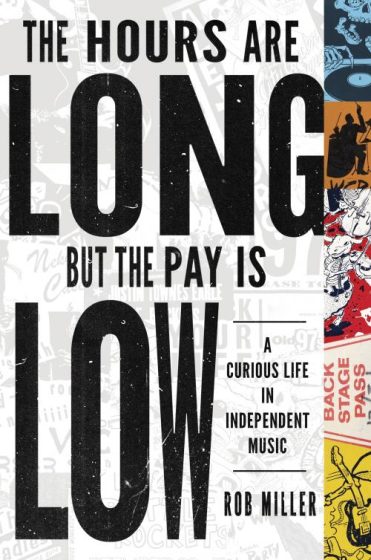
Rob Miller, The Hours Are Long But The Pay Is Low: A Curious Life in Independent Music

A question anyone who pursues a creative life will ask themselves: Why do we take a vow of poverty to put art into the world? As put forth in Bloodshot Records co-founder Rob Miller’s memoir, The Hours Are Long But The Pay Is Low, it’s because not doing it is not an option.

Chicago-based Bloodshot caught the wave of mid-1990s alternative country, releasing seminal works by Old 97s, Waco Brothers, Robbie Fulks, Sarah Shook, and more. Miller comes across as an OCD character straight out of High Fidelity, and his memories of the label’s hardscrabble early days are refreshingly unpretentious.

Bloodshot’s story wasn’t entirely positive. Its original incarnation ended badly amid disputes between Miller and his business partner (the label was ultimately purchased by Exceleration Music, which operates it now under new management). But Miller summarizes the bad-vibes part only briefly, concentrating instead on telling one man’s love story for music. It’s honestly impossible to imagine him doing anything else. And as the cherry on top, Miller dedicates the book to a pair of late friends including Dex Romweber, who he writes “left this world before he could read what his music meant to me.” – David Menconi

Kristina Murray, Little Blue

Little Blue is an understatement. Kristina Murray’s sterling third LP could convincingly have been called “Huge Bummer,” which is coincidentally the mark of a great country record.

“It’s gonna get worse, just give it time,” Murray incants on “Has Been,” a cheekily dour turn-of-phrase that just may stop you in your tracks. (Surely she means it’s gonna get better, right?) Later, on the dreamy “Fool’s Gold,” Murray tries her best at seeing beyond the proverbial grey skies, only to come up short: “It’s just more clouds,” she sighs. Such moments are appropriately slathered in pedal steel, but there’s also a swampy, rock ‘n’ roll groove to tracks like the deliciously jaded “Watchin’ the World Pass Me By” that makes the whole set go down easy. – Will Groff

Drew Parker

My introduction to Drew Parker was his 2020 single “While You’re Gone,” about missing a girl and drinking a gas station PBR while waiting for her to come back. That song had the classic hallmarks of a contemporary country breakup song. Little did I expect the curveball to come five years later.

For over a month earlier this year, Parker teased a big announcement with cryptic social messages like, “Some chapters end. Some chapters begin. This one… isn’t about me. 9•15•25.” The day came and Parker revealed in a short film testimonial that he’s felt God speaking to him, culminating in Parker’s non-religious manager calling and saying Parker should record Christian (country) music. This “moment” stuck out to me not only for the unexpected manner in which Parker revealed his decision, but because it’s obvious this isn’t a creative “phase.”

I don’t see Parker putting together a “token” record about believing and then going back to just girls, beer, and his pickup. Furthermore, Parker exudes unwavering peace about it all – whether he loses fans or faces mean-spirited judgment. There’s tangible risk to this move and there’s something to be said for Parker’s resolve and frankly, his faith in making this change. – Kira Grunenberg

Nathaniel Rateliff & The Night Sweats Live at the Kia Forum

Thinking back on all the great music I saw this year, the concert topping my list is one I saw at Los Angeles’ Kia Forum in February. The amazing triple bill – a solo Sam Beam, Waxahatchee, and headliner Nathaniel Rateliff & The Night Sweats – all delivered dynamic performances. But it was the unexpected parts of the concert that really made it so memorable.

During his set, Rateliff welcomed several special guests: Lucius’ lead singers Jess Wolfe and Holly Laessig, Taylor and Griffin Goldsmith from Dawes, and Grateful Dead bassist Bob Weir. What especially impressed me, however, was how Rateliff generously let his guests take the spotlight – a gesture that conveyed his joy for making music, particularly in a “more-the-merrier” collaborative way.

The Colorado-based Rateliff and his band also made the extraordinary gesture of using the concert to raise funds for victims of Southern California’s January wildfires as well as partnering in a purchase of a mobile food pantry to assist those left homeless by the destructive fires. This night reminded me how musicians can not only create a genuine sense of community through their rousing performances, but also through their inspiring actions. – Michael Berick

Sinners (Original Motion Picture Soundtrack)

Ryan Coogler’s Sinners is the horror film of 2025. It’s been hard to ignore, and for good reason. Michael B. Jordan, who plays double duty as twin outlaws Smoke and Stake, leads the cast which also includes Hailee Steinfeld, Wunmi Mosaku, and Thomas Pang (also known by his stage name, Yao). The film ultimately raked in $367 million in worldwide box office receipts. From its unique spin on vampires to its rootsy, blues-driven music, Sinners excels in celebrating the rich history of Black music and connects the dots between African tribal music to modern day hip-hop and R&B.

Songs like “Travelin’” (a standout moment from newcomer Miles Caton as musician hopeful Sammie) and the mind-blowing time-traveling song “I Lied to You” (paired in the movie with a visual mixing all the styles of Black-made music throughout history) mark the soundtrack as one of the year’s best releases. It’s sure to give the audience a renewed sense of Black history that’s often correlated to specific moments and eras in time. The film and its soundtrack will be talked about for decades as being a vital cinematic moment. – Bee Delores

Ringo Starr, Look Up

Way back at the beginning of 2025, Ringo Starr reminded us how different the world would look today if not for his love of American roots music. Teaming up with GRAMMY-winning producer T Bone Burnett, Starr’s country album Look Up is a love letter to the sound that drove his imagination.

Over 11 new songs written mostly by Burnett for the occasion, a classic American art form got a British Invasion makeover, with modern masters like Billy Strings, Molly Tuttle, and Alison Krauss joining Starr’s fun. Yet, what made this project a year-end highlight was not just the tunes. It was what they represent. As Starr openly declared, his first musical love was American blues and country. Artists like Lightning Hopkins sparked a creative impulse that would ultimately help redefine pop forever. From releasing music as a self-contained band and writing their own songs, to making youth culture a dominant force, The Beatles would change the world – and who knows? With a different drummer behind the kit, maybe none of it happens. Look Up shows where Starr was coming from. – Chris Parton

Vandoliers, Life Behind Bars

Vandoliers’ fifth studio album, Life Behind Bars, is both joyous and contemplative as the raucous country-punk band dive deep into themes of gender, grief, and sobriety in equal measure. “Dead Canary” blasts eardrums with a Mariachi flavor that barrels full steam ahead, setting the stage for their most impressive record to date. Other essentials such as “Bible Belt” and “Thoughts and Prayers” take aim at the current social and cultural moment, addressing religious fanaticism and how it clouds any sense of empathy.

Songs like “You Can’t Party with the Lights On” and “Valencia,” another Mariachi-intoned moment, are just plain fun. These round out the album into a well-crafted snapshot of the group right now and where they fit into the ever-changing world. Additionally, Vandoliers have never sounded so in tune with one another, vocally and musically, opting for compelling and intricate choices that expand their style without sacrificing what’s made them so good. – Bee Delores

Kelsey Waldon, Every Ghost

As the editor for Good Country and BGS, I listen to hundreds of albums a year, but they rarely stop me in my tracks. That happens even more rarely when album creators are longtime close friends of mine. But despite having met Kentuckian singer-songwriter Kelsey Waldon nearly 15 years ago and adoring all of her LP releases in that time, when Every Ghost first arrived in my email inbox earlier this year, I was floored.

In a world – and industry and genre – absolutely dripping with affectations of country music in lieu of the “real deal,” Waldon’s sixth studio album is dyed in the wool, but unconcerned with meeting those expectations or checking the boxes of trends and salability. These honky-tonking songs are infused with old-time, bluegrass, outlaw, confidence, and Prine-ian philosophizing. Waldon somehow turns introspection and identity into gritty and engaging wit and metaphor, without ever needing to obscure her messages to make them feel artistic or serious or poetic.

Even listeners like myself, who have been in Waldon’s fan club for a decade and a half or who have swapped vegetable seedlings and chicken pics with her, or who have crisscrossed her Ohio river floodplain homeland dozens of times, will learn much more about Waldon, her approach, her sonic loves, and her inner machinations as she pulls back the curtain for all of us on Every Ghost. – Justin Hiltner

Marlon Williams, Te Whare Tīwekaweka

Down here at the bottom of the globe in Aotearoa and Te Waipounamu (the North and South Islands of New Zealand), 2025 has very much been the year of the Māori singer-songwriter Marlon Williams (Kāi Tahu, Ngāi Tai).

Back in April, I interviewed Williams for a Good Country cover story to celebrate his stunning fourth solo album, Te Whare Tīwekaweka (The Messy House) and director Ursula Grace Williams’s equally affecting documentary film Marlon Williams: Ngā Ao E Rua – Two Worlds. Since then, he’s brought his antipodean blend of country and western, folk, rock and roll, and mid-to-late 20th-century pop to audiences across the U.S., UK, Australia, and at home, culminating in taking home the coveted APRA Silver Scroll songwriting award for his single “Aua Atu Rā” in late October.

Written and sung entirely in te reo Māori, the indigenous language of New Zealand, Te Whare Tīwekaweka is a masterful example of how music can use mood and emotion to cross geographic borders and linguistic barriers effortlessly. Even when we don’t speak the same language, we can still find common ground. Sometimes a sense of connection is only a song or two away. – Martyn Pepperell


Photo Credit: Tyler Childers by Sam Waxman; Kelsey Waldon courtesy of the artist; Olivia Ellen Lloyd courtesy of the artist.

You Gotta Hear This: New Music From Jack Schneider, Elexa Dawson, and More

Bluegrass and folk, Americana and country – it’s another excellent serving of new music in our weekly roundup!

Beloved long-running bluegrass group Lonesome River Band have a new single out today, “Square Dance Friday Night,” which you can hear below. Written by LRB member and artist-songwriter Jesse Smathers, it’s the perfect track for New Music Friday whether or not a square dance is in your future – and of course, one should be. You’ll also find a preview of an upcoming track from singer-songwriter Elexa Dawson, “Roots Grow,” in our collection. Drawing on connections to land and ecology, it’s a string-Americana examination of the cycles of life; it readily shows how and why Dawson can often be found on the folk charts.

Don’t miss Kentucky’s Nicholas Jamerson joined by Rachel Baiman on his new song, which drops today. “How Sunday Feels” is more than apt in its vibey, grooving observations of toxicity and duplicity in religion and belief systems. Impeccable guitarist, singer, and songwriter Jack Schneider, who’s a delightful collapser and combiner of genres and eras, also debuted a new single this week as well.  Check out”Stone’s Throw Away,” a Barbara Keith cover that fits Schneider – and his upcoming album, Streets Of September –downright perfectly, shining with an indie-folk gilt.

We also have a special video treat this week, as we’re picking up and sharing a few performance videos from singer-songwriter Rachel McIntyre Smith from her Honeysuckle Friend Sessions series, which has been running on her social media and YouTube channel since October. Starting today and continuing over the next several weeks, we’ll share a series of three Honeysuckle Friend Sessions by McIntyre Smith and her musical friends and collaborators celebrating her recent EP. This edition features Smith in duet with Rebecca Lee Daniels offering a lovely rendition of Dolly Parton’s “Coat of Many Colors.”

Wherever you like your roots music to grow, there’s always a superb song just a stone’s throw away in our weekly roundup. You Gotta Hear This!

Elexa Dawson, “Roots Grow”


(Click to listen)

Artist: Elexa Dawson
Hometown: Emporia, Kansas
Song: “Roots Grow”
Album: Stay Put
Release Date: August 15, 2025 (single); September 12, 2025 (album)
Label: Turns Out Records

In Their Words: “‘Roots Grow’ is a celebration of the cycles of life. It can’t be all ‘love and light’ all the time. When times get hard, I look to the world around me, to the trees and animals, and I see lots of things that thrive in darkness. I think we can channel that energy and get through the dark times facing us with the help of the tree folk, who are a lot older and smarter than we are.” – Elexa Dawson

Track Credits:
Elexa Dawson – Vocals, acoustic guitar
Melissa Tastove – Vocals, shaker, djembe
Peter Oviatt – Vocals, shaker, claps, Juno 6 Polyphonic synth, banjo
Kelby Kimberlin – Bass
John Depew – Claps, mandolin
Sarah Bays – Melodica


Nicholas Jamerson, “How Sunday Feels” featuring Rachel Baiman

Artist: Nicholas Jamerson
Hometown: Prestonsburg, Kentucky
Song: “How Sunday Feels” featuring Rachel Baiman
Album: The Narrow Way
Release Date: August 8, 2025 (single); September 12, 2025 (album)
Label: Cloverdale

In Their Words: “This song was inspired by some keyboard warriors who use religion as a weapon of condemnation, rather than a tool of liberation from their own ego. Universally, I hope anyone who’s using their beliefs, whether religious, political, or philosophical, as a shield to judge and harm others will hear this song and maybe stop and think before speaking so critically about others.” – Nicholas Jamerson

Track Credits:
Nicholas Jamerson – Vocals, acoustic guitar, songwriter
Rachel Baiman – Fiddle, vocals, songwriter
Josh Oliver – Electric guitar, organ
Steve Haan – Bass
Mark Raudabaugh – Drums


Lonesome River Band, “Square Dance Friday Night”

Artist: Lonesome River Band
Hometown: Floyd, Virginia
Song: “Square Dance Friday Night”
Release Date: August 8, 2025
Label: Mountain Home Music Company

In Their Words: “‘Square Dance Friday Night,’ written by our bandmate Jesse Smathers, is a story of years gone by in rural America. Growing up in the 1970s, I played so many square dances and gatherings attended by the unique characters described in this song. So many friendships were built in the VFW halls and community centers that lasted forever. Music and dancing was the main source of entertainment for working class folks and it was the way to end the week with celebration!” – Sammy Shelor

“The tie between playing music and dancing is a huge part of the culture along the Appalachian mountains. Growing up, I remember cutting my teeth playing music for dancers at local venues along the North Carolina/Virginia line. It has always been a beautiful community event. ‘Square Dance Friday Night’ is your invitation to a night full of fun and tells of some of the interesting characters you may meet while there.” – Jesse Smathers

Track Credits:
Sammy Shelor – Banjo
Jesse Smathers – Acoustic guitar, lead vocal, songwriter
Mike Hartgrove – Fiddle
Adam Miller – Mandolin, harmony vocal
Kameron Keller – Upright bass
Rod Riley – Electric guitar


Rachel McIntyre Smith, “Coat of Many Colors” featuring Rebecca Lee Daniels (Honeysuckle Friend Sessions)

Artist: Rachel McIntyre Smith with Rebecca Lee Daniels
Hometown: Oliver Springs, Tennessee
Song: “Coat of Many Colors”
Latest Album: Honeysuckle Friend (Deluxe)
Release Date: August 13, 2025 (video); June 27, 2025 (deluxe EP)

In Their Words: “Rebecca Lee Daniels is one of my favorite singer-songwriters, so I was thrilled when she agreed to be part of my series, the Honeysuckle Friend Sessions. Since moving to Nashville, she has become one of my closest friends in the music scene. We chose this song because we are both East Tennessee girls who love Dolly Parton. I think we recorded this in just one or two takes, because it’s such a go-to song for both of us. I’m so excited for BGS to partner with me on three sessions in this series. Keep an eye out in two weeks for another Honeysuckle Friend Session right here on BGS as part of ‘You Gotta Hear This.'” – Rachel McIntyre Smith

“It’s so meaningful to sing with one of my closest friends and collaborators – on my favorite Dolly Parton song, no less! Rachel and I share a common thread with Dolly in that we’re all three Appalachian women raised in the foothills of East Tennessee. As an artist who writes and releases Appalachian- and bluegrass-centric music, being featured in BGS is more meaningful than I can put into words and I’m so grateful to Rachel for the opportunity!” – Rebecca Lee Daniels

Track Credits:
Rebecca Lee Daniels – Guitar, vocals
Rachel McIntyre Smith – Vocals

Video Credit: Filmed and edited by Rachel McIntyre Smith.


Jack Schneider, “Stone’s Throw Away”

Artist: Jack Schneider
Hometown: Atlanta, Georgia
Song: “Stone’s Throw Away”
Album: Streets Of September
Release Date: August 6, 2025 (single); September 19, 2025 (album)

In Their Words: “My mission as a singer-songwriter is not to just perform my own compositions, but to preserve the music that inspires me, especially the hidden gems that deserve to find their way out into the world.

“Discovering Barbara Keith, who wrote and originally performed ‘Stone’s Throw Away,’ was serendipitous. I was in New York record-shopping with guitar historian Maple Byrne and it was he who stumbled upon a copy of Barbara Keith’s self-titled record. He insisted that I check it out, so I bought it at his recommendation. When I listened, it was almost spiritual how deeply Barbara’s songs moved me, specifically ‘Stone’s Throw Away,’ because of the line, ‘Georgia never looked so good as it does in Tennessee.’ Every now and then someone else’s words align with your own lived experience and this song is a perfect example of that for me.

“Recording it on my new record was also serendipitous. I had made a 4-track cassette demo of this song at one point, purely for my own amusement, and when my producer Matt Andrews (Gillian Welch, Dawes) came across the demo in a folder, we put it in the mix. Matt, never having heard the original version, liked how well it connected to the narrative theme of the other songs we’d selected. I am thrilled with how it turned out. Above all I am just hopeful to be able to draw more people’s attention to the music of Barbara Keith. She is incredible and I hope this version of her song does it the justice that it deserves.” – Jack Schneider

Track Credits:
Jack Schneider – Electric guitar, lead vocal
Camille Thornton – Electric guitar, vocal harmony
Wendy Moten – Vocal harmony
Dominic Billett – Drums
Jared Manzo – Bass
Matt Andrews – Organ


Photo Credit: Jack Schneider by Annie Loughead; Elexa Dawson by Lifeleak Visuals.

DISPATCH: An Intimate and Essential Kentucky Festival, Sleeping In The Woods

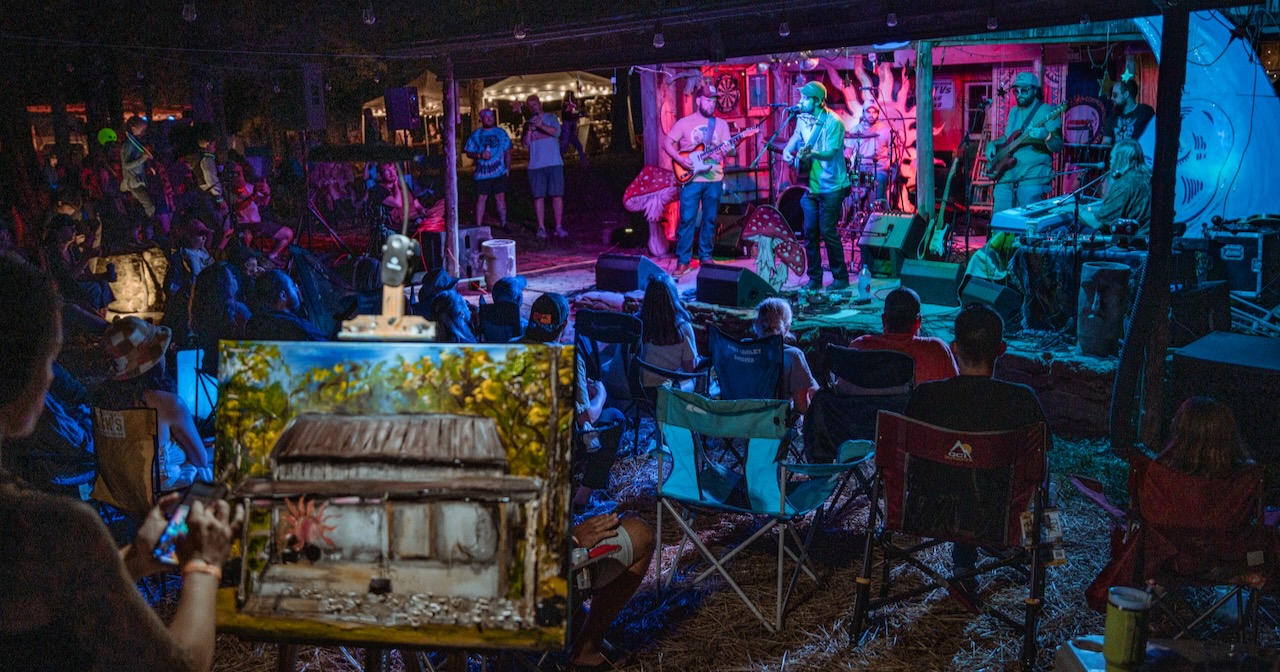
There’s something in the water in Kentucky that’s conducive to making great songwriters, and the second annual Sleeping In The Woods Festival — held May 17-19 in Monticello — was no exception.

Hosted by artist and songwriter Nicholas Jamerson, the gathering has quickly become a can’t-miss attraction featuring a mix of the Commonwealth’s most revered songwriters, as well as the ones they’ll eventually be handing the reins off to. The setting of Hidden Ridge camping — a birch tree-covered campground nestled along Lake Cumberland — further elevated its intimate feeling (in addition to providing a canopy of shade during a deluge of rain Friday).

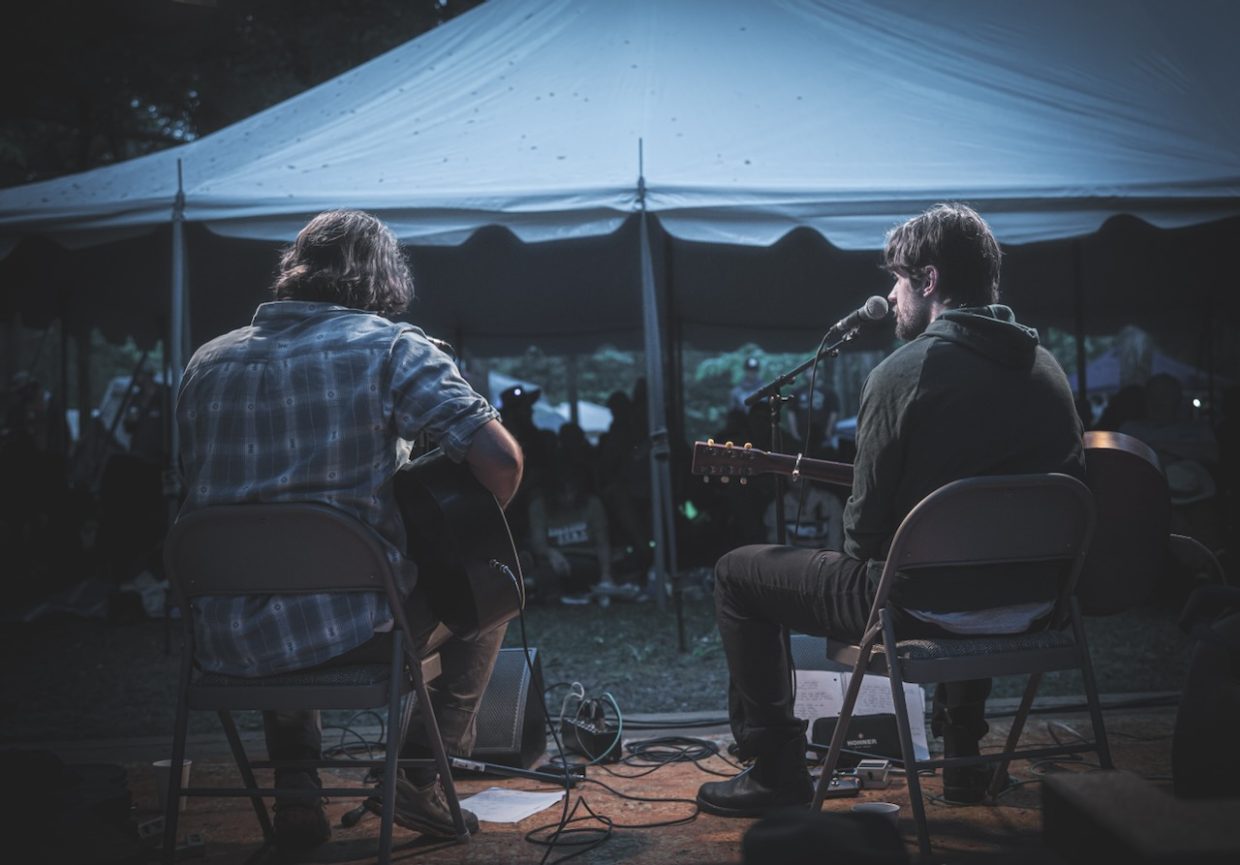
However, despite Mother Nature’s best efforts on day one, the few hundred in attendance didn’t have their spirits dampened by the soggy forecast, instead filling out a massive tent by the festival’s second stage for a songwriter round to open things up. Featuring Ryan Anderson of Louisville rock band Bendigo Fletcher alongside Jamerson, in a last minute change of plans, the two opted to debut entirely new and unrecorded music during the hour-long round, further putting a microscope on their superb songwriting, the stories behind them, and the creative process at an event built for exactly that. Outside of rain pattering on the tent above, you could hear a pin drop. Even though fans weren’t familiar with these songs, it was obvious they were captivated by the occasion, a sign of the duo’s songwriting prowess and power of getting caught up in the moment.

Nicholas Jamerson and Ryan Anderson (Bendigo Fletcher) open Sleeping In The Woods festival with a songwriter round.

“Getting to play all new songs with Ryan Anderson felt like the perfect way to set the tone for the festival,” Jamerson tells BGS. “I’ve admired him so getting to share that space meant a lot.”

Following the round of new material was one of the festival’s few non-Kentucky acts, Cristina Vane. As a result I found myself talking with countless folks as she set up about what to expect from the electrifying slide guitar and banjo picker, but even my best of introductions couldn’t have prepared them for the show she gave them.

Working as a trio with drums and bass guitar, Vane tore through originals like “Blueberry Hill” and “Small Town Nashville Blues” alongside new songs like “You Ain’t Special” and sweltering covers like James McMurtry’s “Choctaw Bingo.” Through it all, she had the crowd at her will, seemingly unaware of the rain falling around them, including myself.

Cristina Vane performs at Sleeping In The Woods.

Although I’ve seen Vane perform several times, each occasion always feels like a first due to the versatility of her band setups. I’ve seen her play solo, with a full electric band, a full bluegrass band, and now as an electric three-piece; each show feels so different. Her songwriting is built for a festival like Sleeping In The Woods, but how she’s able to plug and play, presenting her music in many different ways is what truly sets her apart. Fans on Friday seemed to agree, giving Vane a ferocious standing ovation at her set’s conclusion, something that even she didn’t seem to expect.

“It was cool seeing people react to acts they hadn’t seen,” shares Jamerson. “I felt like Cristina Vane, The Dick and Tammy Show (Justin Clyde Williams and Tyler Hatley), and Josh Slone all made really huge impressions on people.”

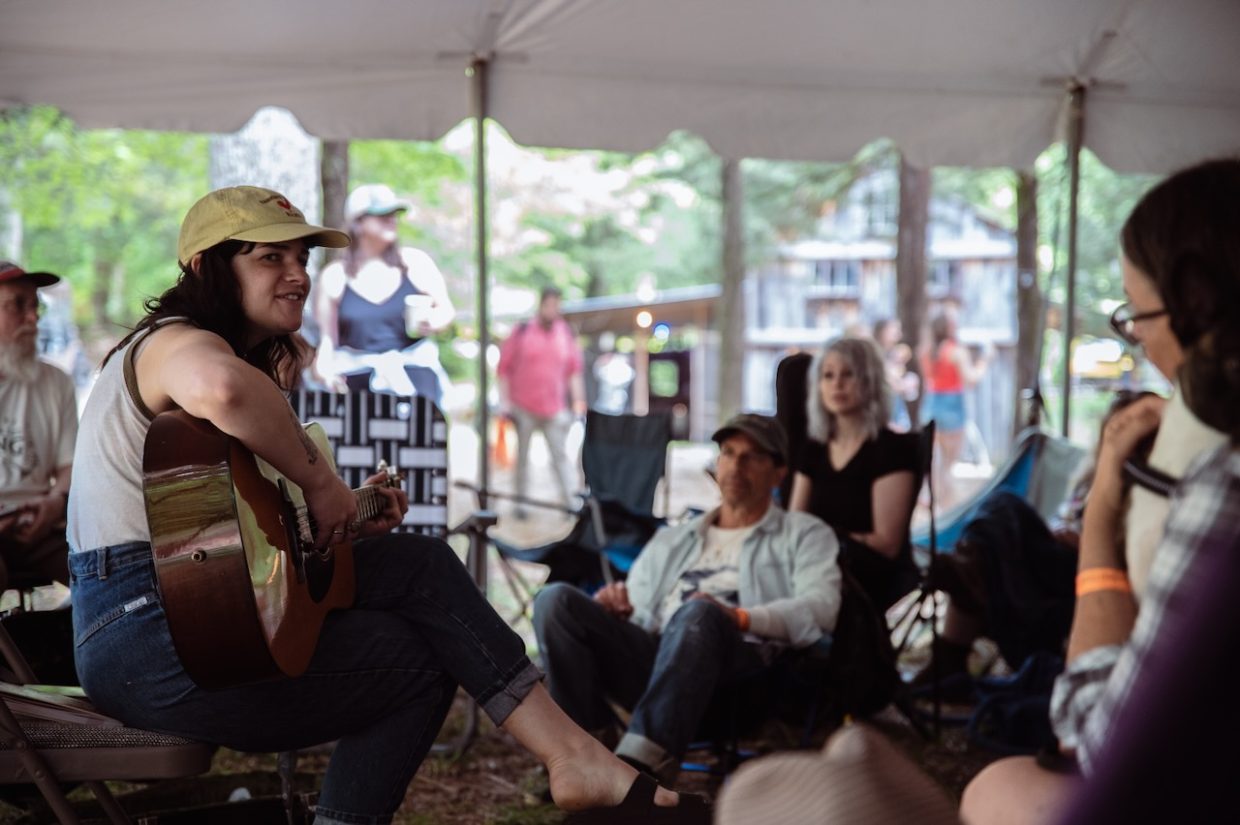
Another out-of-state act integral to the weekend was Rachel Baiman. The Nashville-based multi-instrumentalist was everywhere over the three-day event, starting with a songwriter workshop she led to begin Saturday’s musical menu. Attended by around 50 under the tent that Cristina Vane rocked out the night prior, the croissant-fueled workshop saw Baiman working with fellow songwriters and aspiring ones alike to take internal conflicts and turn them into external ones via song.

This drew a mix of interesting inspiration from the heavy — a man trying to fit in with his different groups of friends and a mom and pop trying everything to keep their small business afloat — to tongue-in-cheek ones, like a prompt about how losing your Chapstick makes you feel like an inadequate lover.

“The songwriting workshop was both a complete joy and completely terrifying,” recalls Baiman. “Trying to ‘teach’ songwriting to some of my favorite songwriters felt a little crazy, but I think it really contributed to the class, because we could hear ideas from newcomers and seasoned professionals side by side.”

Rachel Baiman leads a songwriting workshop on day 2 of Sleeping In The Woods festival.

Outside of the workshop, Baiman also led a songwriter round of her own on Sunday afternoon that she used to showcase recent co-writes with Pony Bradshaw (“Equine Elvis”), Caroline Spence (“Throw Away The Moon”), and Jamerson, who joined her for a performance of their song, “The Vine That Ate The South,” due out next month. Additionally, she took to the stage with Leah Blevins, an Eastern Kentucky singer by way of Nashville, prior to Sunday’s round, fiddling with the Sandy Hook native on a selection of songs including the nostalgic “First Time Feeling.”

The set was a grounding one for Blevins, who expressed a longing to return home from Nashville in recent months even as she’s hit a breakthrough, signing a publishing and management deal with Major Bob Music in April. She expects to begin recording a new album soon.

“Any opportunity to be back home in Kentucky is a true sense of comfort,” says Blevins. “There are so many unbelievably talented artists there and this weekend was a true representation of that. It’s inspiring and always humbling to share the stage with folks that you genuinely respect like Nicholas. He’s always made me feel welcomed and his kindness alone is influential on a human level.”

Other Kentucky luminaries that stood out included Somerset’s Cody Lee Meece, brothers Wes and Aaron Smith — who were joined by Anderson on synth for an intriguing acousti-tronic sound — along with Ryan Allen & Maggie Noëlle’s stripped down versions of songs from their band, Magnolia Boulevard, and a Saturday evening round featuring three of the state’s stars of tomorrow: Salyersville native Zoe Howard, Hindman’s Josh Slone, and Central Kentucky’s Ireland Owens.

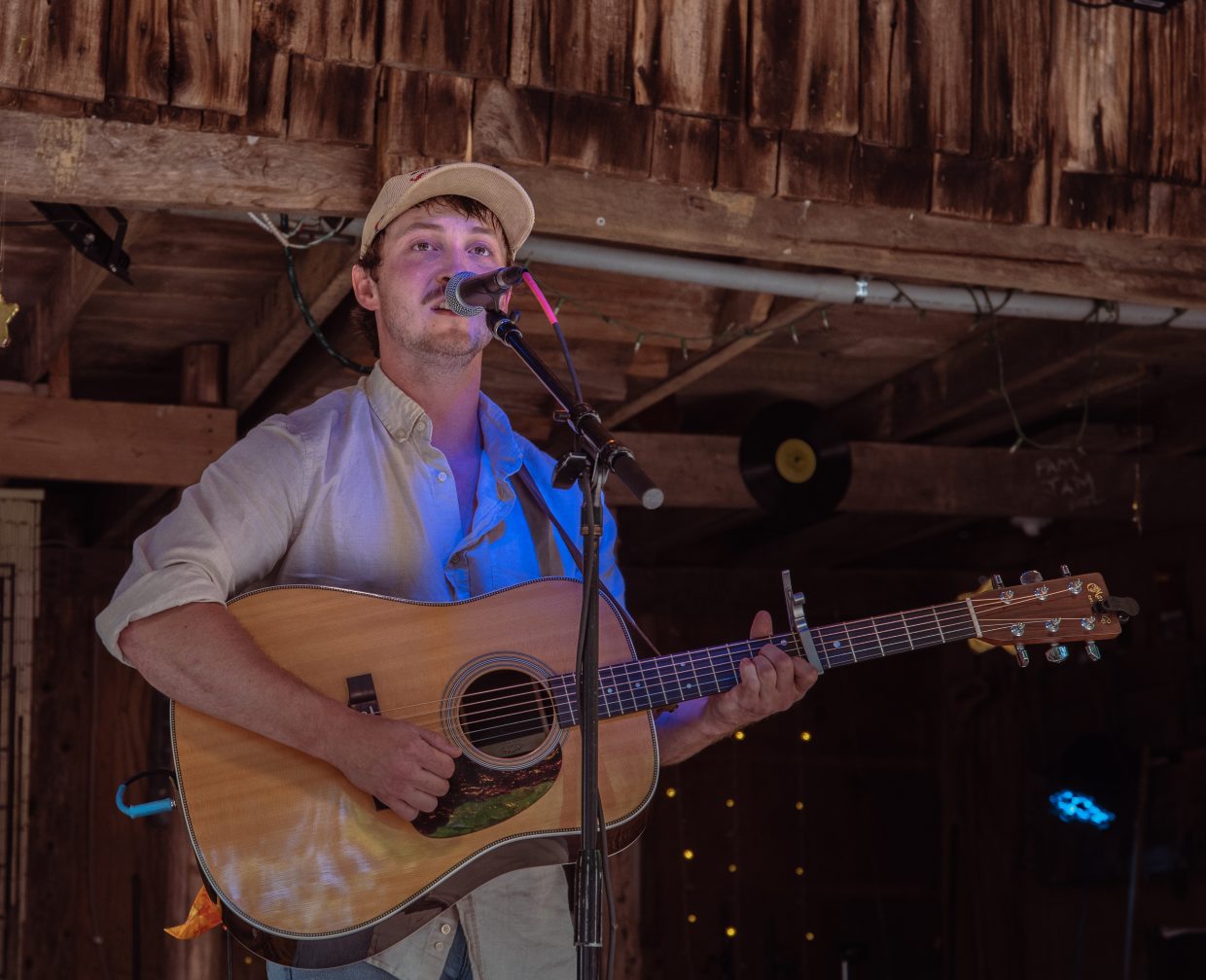
But it was Hunter Flynn, one of the state’s other promising young talents, that garnered the most attention. A local boy from just up the road in Somerset, Flynn’s Sunday afternoon set showcased the singer’s sensational songwriting and holler yell on cuts like “Spanish Street Signs” and “Fucked Up Brain” that have earned him recent gigs on the road with Zach Top and Ian Munsick, among others.

Hunter Flynn performs Sunday afternoon at Sleeping In The Woods festival.

In a pay-it-forward fashion similar to how Jamerson is platforming new artists with the festival, Flynn — who won a recording package from festival sponsor Jamm Nation during the event — plans to serve up his studio time to young artists in need on a collaborative EP that Jamerson will produce. According to Flynn, he wouldn’t be where he is today without Jamerson’s music and guidance.

“Before I knew Childers, before I knew Sturgill, before I knew Stapleton; I knew Nicholas Jamerson,” explains Flynn. “He might not have been the first to do it, but he was the first person that I knew from the Appalachian region that was writing songs and playing them for a living. Now I don’t know a single singer/songwriter from this region who doesn’t cover at least one of his songs. He could win six Grammys next year and it wouldn’t be as much recognition as he deserves.”

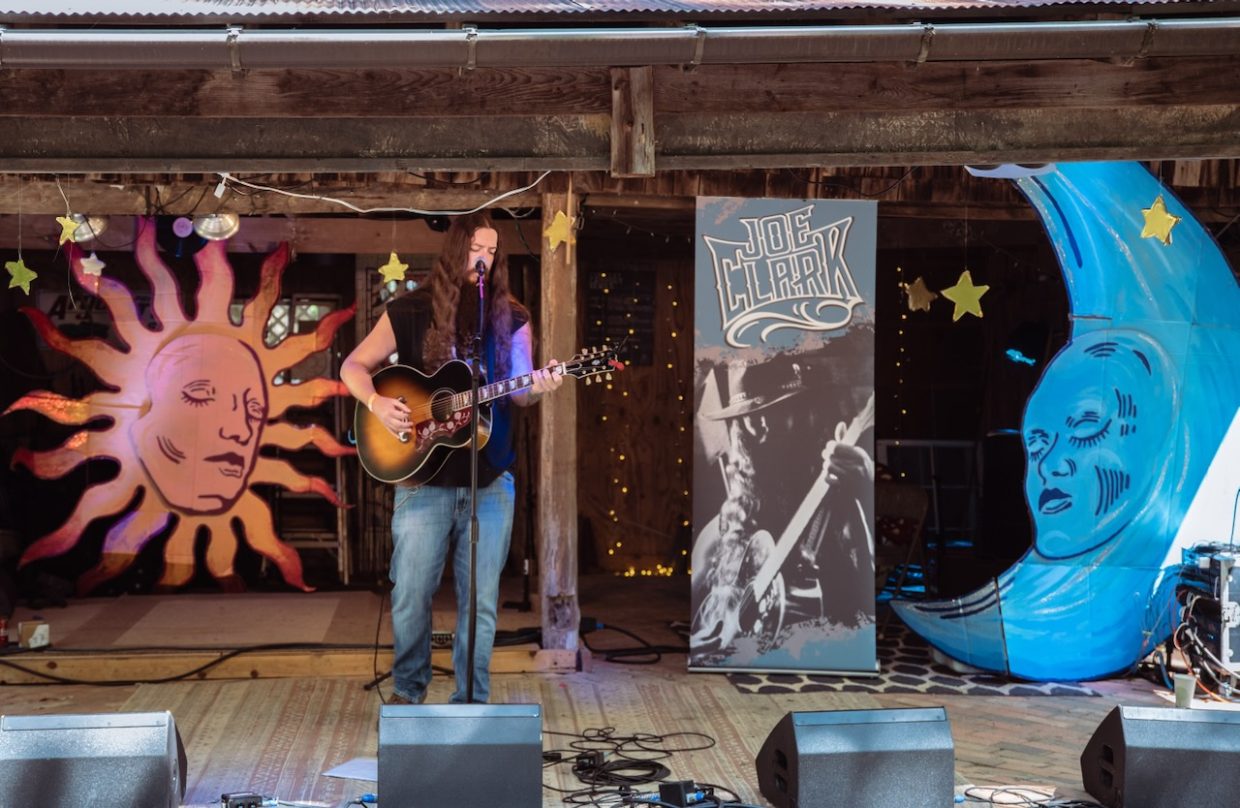
A more seasoned Kentucky artist that also turned heads was Henry County’s Joe Clark, who pulled back the curtain on songs typically backed by his country rock band, The Peacemakers, that touch on everything from drug addiction to the love he has for his father. Clark was hard to miss all weekend due to his towering presence, but heartfelt songs like “Wishin’ Well” and “Battlefield” showed a soft side to counter his hard exterior, one of the many things a powerful song can do.

Joe Clark takes the stage at Sleeping In The Woods festival.

“Music is my therapist. Along with my children and family it’s kept me sober and alive for years,” confides Clark. “I owe my life to songwriting. It is a power greater than me and I’m honored to put pen to paper each time a lyric comes to me. My biggest hope is to be able to take my real life experience and translate it through song in a way that someone else can take it and make it theirs and use it in a healing way for themselves. Music is medicine, and I believe everyone needs a daily dose to stay healthy.”

Closing out Sleeping In The Woods was one of the most iconic and influential Kentucky songwriters ever – Darrell Scott. For nearly two hours on Sunday afternoon the trailblazer showed off his fiery picking skills on iconic songs like “Never Leave Harlan Alive” and “It’s A Great Day To Be Alive,” giving all of the artists and fans in attendance something to look up to and aspire to in the process. The performance also left many in the audience visibly emotional including Jamerson, who could be seen tearing up throughout it.

“Having Darrell there really meant a lot,” reflects Jamerson. “It felt like we had the full spectrum of musicians, from green, next generation, seasoned vets and a master in Darrell. We are hoping to expose the youngins to a sustainable path in this industry, so having someone like Darrell was really validating for me.”

Darrell Scott headlines Kentucky’s Sleeping In The Woods festival.

From vets like Darrell Scott to youngins like Josh Slone, Zoe Howard, and Hunter Flynn, and present day stars like Nicholas Jamerson, Sleeping In The Woods was proof of many things — that Kentucky music is in as good a place it’s ever been, that smaller, niche festivals do have a place in today’s music landscape, and that great songwriting will never go out of style.

“It feels like the best way to kick off the year,” describes Jamerson, who’d been laying low since his two-night Hollerday Gitdown in December. “It’s such a great group of people that makes it all happen. It’s also really grounding, inspiring and a nice reminder of the community of people that I’m a part of, which is uplifting and gives me life going into the busy season.”


All photos by Joe Wilkins, courtesy of Sleeping In The Woods festival.