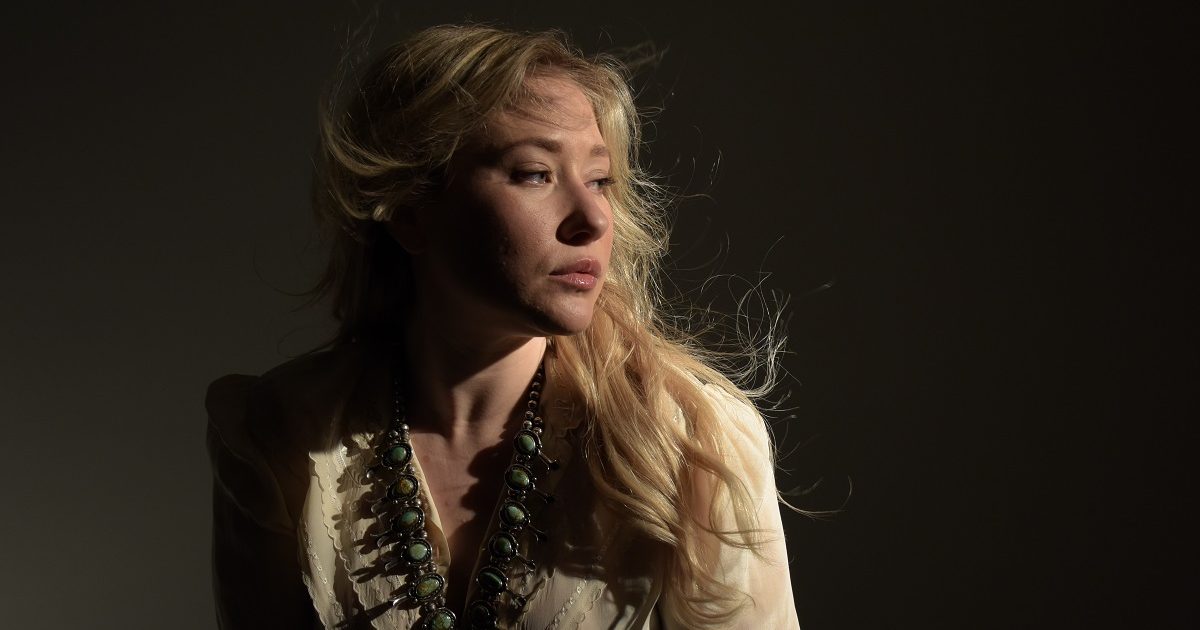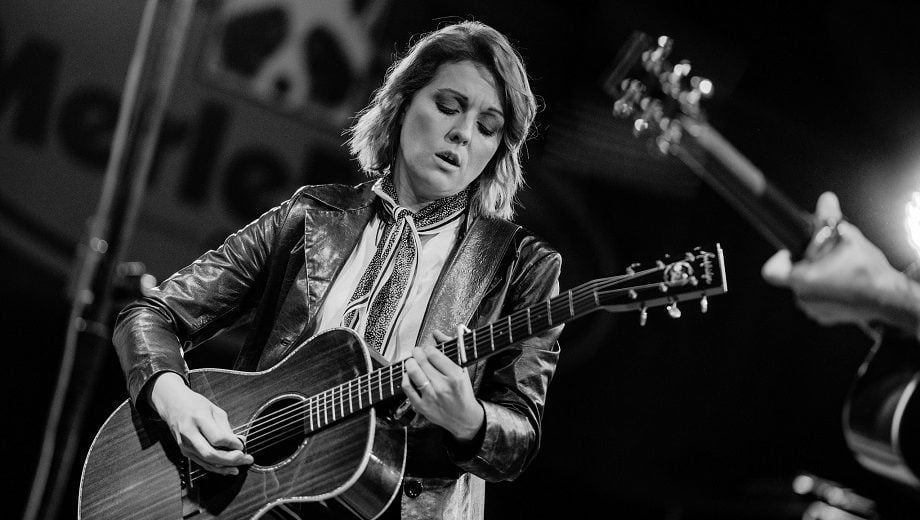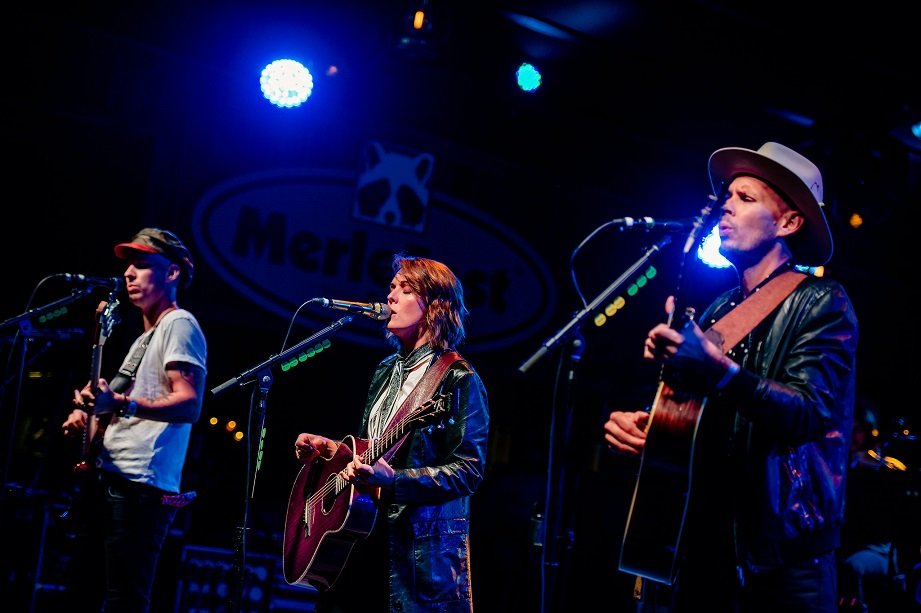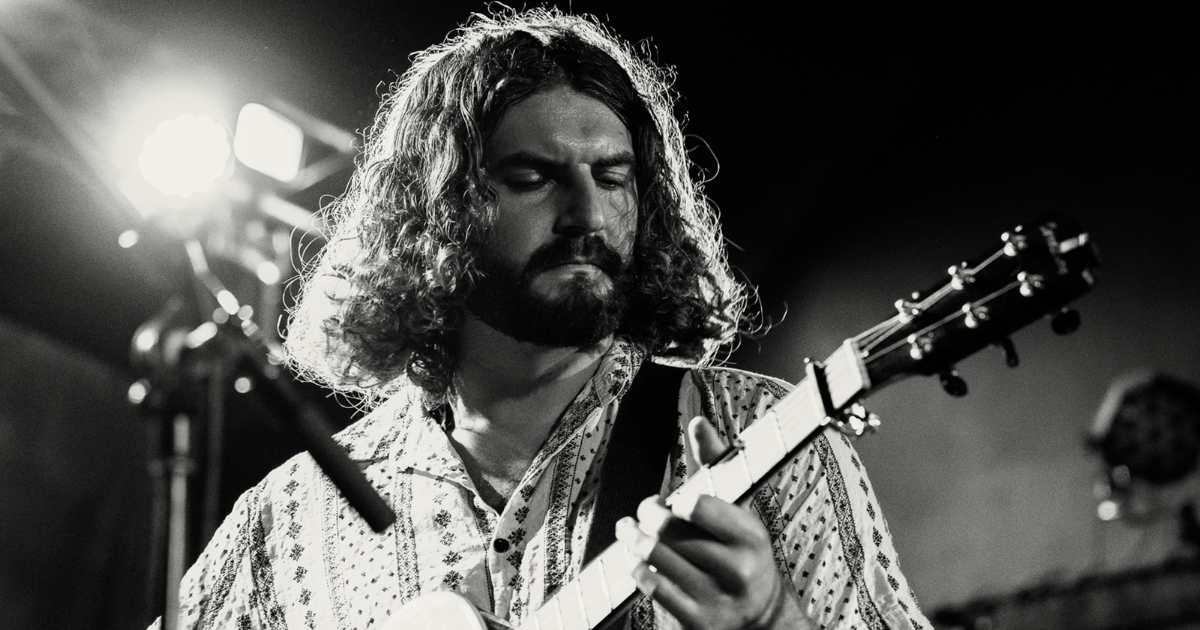
Cole Chaney is
“Anti-Machine”

While many young talents, willingly or hesitantly, bow down to music industry boardroom suits who promise stardom if they’ll follow a professionally curated path, Cole Chaney takes a hard pass. He knows exactly who he is, what he does, and how he wants to get there. He creates songs, not content. He’s a career musician, not a brand. And the only thing he hopes to influence, maybe, is someone, somewhere, who wants to make music for all the right reasons.

Chaney grew up in Catlettsburg, Kentucky, surrounded by the legacies and storytelling of his elders. After graduating high school he worked as a welder, uncertain of his career path, but already fueled by his passion for music. Today, he keeps one musical foot in the bluegrass traditions of his Appalachian roots and the other in guitar-centric, amplified bands like Soundgarden, Nirvana, Alice In Chains, and Stone Temple Pilots.

His debut album Mercy and subsequent OurVinyl Sessions reflect his love of acoustic music and showcase his leanings toward introspection and melancholy. In the Shadow of the Mountain, released last fall, takes that darkness to a new place, balances it with moments of light and leans into the aforementioned rock influences, while never losing the origins of his sound. All of this shines at peak level onstage, captured by Western AF on a Live AF Session.

Sitting outside at home on an April morning, drinking coffee and surrounded by the sounds of birds and a breeze, Chaney spent a couple of hours on the phone with Good Country. He spoke candidly about his music, faith, values, mental health, and the intertwining of inner peace and inner turbulence that make all these things uniquely him.

When you were ready to do this professionally, you went to Lexington. Most songwriters would have chosen Nashville. Was yours a deliberate decision or a natural one?

Cole Chaney: To understand that decision, you have to look at who I was looking up to at the time – and still do – and what drove that decision. When I was in high school, probably around my freshman or sophomore year, 2014 or 2015, I started getting into this band called Sundy Best. They’re from Prestonsburg, Kentucky, which is just down the road from me. This was pre-Tyler Childers. At the time, in Eastern Kentucky, these guys were the biggest thing coming and going. They leaned heavily on being from Kentucky, the same way I do, and they moved to Lexington to get a foothold.

That was my early example, watching those guys. I knew they weren’t going about it the traditional way, which was to go to Nashville and pray somebody picks you up. They did it in Lexington. A couple years later, Tyler Childers comes along – another super-influential figure in my musical upbringing. Of course, he’s anti-Nashville – not the city, but the machine, if you will. I’m pretty sure he lived in Lexington, or at least around the area in the scene, for a while. So did Sturgill Simpson. The list goes on.

I was like, “What business model makes more sense to me? Do I go to the place where there’s more songwriters than the rest of the entire planet or somewhere where people will actually understand what I’m saying and I can maybe build myself a little bit of a foundation?”

The way I saw it is if I started building a sort of fan base or if I had enough ticket buyers, places like Nashville or Denver, these big music scene cities, what choice would they have other than to book us? That’s the way I looked at it.

And it worked.

It did work. It’s a simple business model, but the difference between that model and the other is you’re not sitting around waiting for something to happen. It’s on you to go out and make your own connections. It’s a very grassroots and organic way of doing it and that’s the way I like to do things. I’m anti-machine. Even though I work with some bigger companies, I keep it as limited as possible. That’s so I can play pretty much wherever I want, whenever I want, and they understand that.

On the Whiskey Riff Raff Podcast you said, “Music found me.” Would you mind expanding on that just a bit?

It did. I never would have dreamed at 16 years old that I would be doing this as my full-time job at 25. That was never on the horizon for me. I didn’t know what I was going to do. I knew I was going to weld for a little bit, see what happened, and maybe try to start my own business. And I did. But I really didn’t think it was going to end up like this.

I started realizing that people liked to hear me play and sing around the same time that COVID hit really hard. That gave me an opportunity to sit down, write some songs, and think about what I wanted to do with the rest of my life.

I’m very much a subscriber to the Bible, and I think the Lord has a mysterious way of working. He put me on a path without me even realizing it way back then and I do my best to stay on it now. I think my job while I’m here is to create as much good stuff as I can, stuff that means something, get it out to the people, and get out in front of them and play it for them. As somebody who enjoys going to shows in their free time and watching my favorite bands perform live, I know how that feels, and it’s truly a privilege to be able to offer that same service to other people.

There is music in your bloodlines, not professionally, but family members who played in church and at home. You obviously assimilated the sound of the area, and also this wider scope with bands like Alice In Chains and Stone Temple Pilots. When did all of that begin seeping into your songwriting?

We listened to the radio when I was growing up. I didn’t get educated on music or how to play until I started really getting into it. To this day, I’m still being educated and learning how to play on a daily basis. Part of what keeps it so fun to me is how much I don’t know and constantly learning about things.

Mercy was my first album, and I had access to what was around me. I had just moved to Lexington and I was really into bluegrass. There’s a band called the Wooks that, to this day, Glory Bound is one of my top three favorite records of all time. I was infatuated with that sound and that was what I wanted Mercy to sound like, or at least as close to it as I could get. A lot of the Wooks ended up playing on that album, plus Michael Cleveland. It was crazy.

Alice In Chains has been a mainstay in my musical taste since I was probably 15 or 16 years old. Since I first found them, I was very drawn in by the tone of Layne Staley’s voice and the weight of Jerry Cantrell’s guitar. It feels like you could bite it and chew on it. I don’t know how to describe it.

I’ve also always loved bluegrass, so it was [figuring out] how to bridge the gap of what I listen to and where I want to go with my writing without completely abandoning that sound. And bringing the alternative rock sound into the folk realm, where you have mandolin, upright bass, fiddle, acoustic guitars, and drums. The biggest change in the sound has been the addition of drums over the past two years, navigating that and seeing how it fits into the whole equation. It opened up a lot of avenues for me as a songwriter.

You began playing guitar at 13 or 14. Did you always play acoustic?

The thing about electric guitar, for me, is that it’s such a deep realm of gear and a deep dive. I’ve always been attracted to good-sounding acoustic guitars and players like Tony Rice, so I felt my effort was best spent getting really good at playing the acoustic guitar.

That will carry over whenever I decide to pick up an electric guitar, more so than if I only played electric guitar and tried to write some bluegrass-style acoustic lines. It would be a tougher transition to come over from light gauge strings on an electric guitar to .013s on a dreadnought and trying to play “Blue Railroad Train” or something like that.

Do you have an electric guitar?

I have several electric guitars. I’ve got a ’57 reboot Stratocaster, an American Professional Telecaster, my old Paul Reed Smith that I learned how to play electric on, and a nice Vox amp. I don’t know all that much about electric guitars. I still have a lot to learn.

Prior to this interview, you sent over your touring rig: a Gibson J-45 Banner in standard tuning with a K&K Pure Mini pickup, and a Breedlove sitka/rosewood Custom Dreadnought in drop D/double drop D, with an LR Baggs Element VTC pickup. Also two Grace BiX DI’s and a Lampifier Model 711 cardioid mic for lead vocals.

Those are my road guitars. They aren’t the ones I recorded everything with, but those are what you see at the shows.

In addition to the Gibson and Breedlove, do you have other acoustics?

I have two Gary Cotten guitars. [On] OurVinyl [Sessions, that] was my first Cotten I recorded with. On In the Shadow of the Mountain, many of those songs are my newer Cotten, which is sinker mahogany and an Adirondack top. “Alone?,” “In the Shadow of the Mountain,” “Into,” “Feels Like Rain,” and “Spirit” [were all recorded] on the Cotten.

That guitar sounds huge. It’s an outstanding guitar. I don’t tour with it because I’m scared something would happen to it and it’s too special to me. And Gary’s a great dude. He’s always taken really good care of me, and I want that guitar to stick around for a long time.

I don’t have any electronics in it, either. It’s a very traditional style, it’s a dovetail, and I want to keep it as traditional as I can and keep as much weight out of it as I can, because the more weight you add, sometimes it makes them sound worse.

What makes the Gibson and Breedlove right for touring?

They’re super-versatile and they both sound fantastic plugged in. That Breedlove is the longest-standing guitar I have that I’ve consistently played shows with. I got it in 2019 from 4 o’clock Rock Guitar Shop in Ashland [Kentucky]. It’s a custom dreadnought that they shop-ordered and it’s got the LR Baggs VTC Element in it. It has always sounded so good plugged in. I mean, all guitars sound bad plugged in, but it’s a matter of how much of the original sound can you actually preserve when you plug it in.

I’ve gotten to the point where I am almost starting to desire a little bit of that direct input texture. Maybe it’s because I’m listening to too much MTV Unplugged, but I’m starting to desire that kind of cardboard bad sound.

The Gibson, I put a K&K Pure Mini in and it sounds really close to what it sounds like not plugged in. Man, that Gibson is a beast. I love that guitar. It’s been to every show with me since I bought it last year.

I still have a Paul Reed Smith acoustic guitar and it’s a damned good little guitar. I’ll probably end up using it again on some stuff. It’s one of those that you plug in and it sounds great, too. But when I got into the whole bluegrass thing, I knew I needed something with a little more body.

Sometimes you use a pick, sometimes fingers. Either way, your attack is strong. How did your technique develop?

It’s one hundred percent out of necessity. I had a really bad injury in 2015 and I damn near cut my index finger completely off at the knuckle. I can’t wholly bend my index finger and I can’t feel the picking side of that finger. If you watch some of my older videos, my index finger is flailing around all the time. It’s because I’m picking with my thumb and middle finger, and that’s where I’m holding the pick. That took me long enough to learn how to do.

In recent years I’ve learned how to use my middle finger to lock my index in place and be able to hold a pick. It looks normal, but if you could see how the sausage is made, it’s not that pretty. I wish I had that dexterity in my finger. The takeaway message from that is, “Take care of your hands, y’all.”

Let’s talk about the through line from bluegrass to bands like Stone Temple Pilots and Alice In Chains. You blend the genres seamlessly and it all makes sense. Did you always feel that connection?

If you listen to any playlist I’ve had, I’ll go from Ralph Stanley to Chris Cornell in a heartbeat. Obviously the music is different, but there are common themes between the two. Mountain folk music, hard rock, and that era are very dark and brooding, and they can be heavy in their own ways too.

What is heavy? What makes a song heavy? You’ve got people drop-tuning their guitars, but it’s still not as heavy as Pantera or Black Sabbath or something like that. So it’s not necessarily the sound that makes it heavy. It’s the vibe of the song.

I feel like a salesman a little bit, trying to sell this idea that this stuff can be brought together and related in an authentic capacity. Let’s take [Stone Temple Pilots’] “Big Empty,” for example. To do a cover of that and be looked at as a folk artist or an Appalachian artist, or some people will even say country – which I disagree with, but whatever – it always seems like somebody will start into a cover of this great song, but then they’ll get hokey with it and it loses all its purity.

That’s not at all the intended purpose for me. It’s to say, “This is a fantastic song and it fits the vibe that we’re all going for in this realm.” A lot of people probably didn’t know that a mandolin or fiddle sounds great on “Big Empty,” but now they do, because it fits. That’s the way I listen to that kind of stuff. It’s just how to pull that off without being cheesy or coming off in a capitalistic way. More so in a way of, “I love this song and you guys should listen to it.”

Was it challenging to find musicians who understand going from bluegrass to Stone Temple Pilots and back again?

The band, I think through a lot of prayer/manifestation, has come together and, as you hear, they’re fantastic. They can play anything in any style. Ella [Webster] and Kyle [Kleinman] come from a more traditional folk music side of things. Kyle is a bluegrasser and Ella is an old-time fiddle player. Lars [Swanson] and James [Gooding] are jazz cats, so they have infinite vocabulary when it comes to music. If you can play jazz, then you’re going to be all right. If you can pull off that stuff, you don’t have anything to worry about when it comes to my type of music. Stone Temple Pilots is a walk in the park for you.

In our van, the most listened-to bands between us are Soundgarden, Pantera, whatever James’s choice of jazz is, and Alice In Chains MTV Unplugged. That’s a really good piece of music. But yeah, they’re a great band and they can play anything.

Did Lars and James know each other before they joined your band? To lock in a rhythm section…

No, they didn’t. Once you start playing with a jazz drummer, you need somebody who can comprehend the stuff he’s laying out and answer that on the bass. To have those two sit in a room and jam is really something to witness and listen to, because they speak a language to each other that I don’t understand. But I love when they do it, and it’s great to hear.

I’ll be playing onstage, singing and doing my thing, those guys are behind me and I’ll hear them back there, talking to each other while we’re doing this thing, and it’s awesome. They’re special. Those two dudes – they’re incredible. They’re the unsung heroes of music in general. That’s your metaphorical offensive line right there. If you don’t have a Lars and a James, then your quarterback’s getting sacked all the time.

This is you in 2025 on The Western Side, talking about Shadow: “a lot of darkness and an equal amount of joy in other songs. It’s a good depiction of where I’ve been for the past two years. A tumultuous and chaotic time period, but also great. And I’m still here.”

Then, In 2021, on With A View: “I load the pressure on. It’s how I operate. My brain lives in constant turmoil.” In 2020, talking about “Fever Dream,” “a song about trying to keep it all together. … the way I deal with this is isolation. And when you isolate yourself, you don’t have much of a choice but to hash some things out in your head.”

You are no stranger to the dark place.

Hearing those things, I look at that younger version of myself almost as I would look at a younger brother. Part of me wishes I could put an arm around that kid’s shoulders and be like, “You’re going to be all right, buddy.” Times got a little tough, as they probably should for anybody at points in their life. You can’t really enjoy the great parts of your life without having a little bit of adversity to overcome or deal with. The darkest part, for me, was maybe just growing up and gaining a new understanding of the way the world actually operates and how hopeless that can be at times, but also how beautiful it can be in the same stroke.

What I’ve realized is you get out of this world what you pay attention to, because whatever you want to find, you can find it. It’s there and it’s aplenty, whether you want to find the negativity and suffering, or whether you want to find the positive and the good. I don’t have the answer to where folks are supposed to operate and live, but I think it’s good to help people who are in that suffering side of things. But you can’t let that dominate your existence, and for a little while, I was maybe dominated by the darker side of life.

I try to be as empathetic as I can, but with that comes feeling a lot and also accidentally hurting people sometimes. That’s really tough, because then you have this cycle of guilt that you deal with trying to make it right in your head. As I’ve gotten a little older and maybe figured a couple things out, I try to have a lot more grace for myself. What I’ve learned about the pressure is that it’s really just perceived pressure and none of that exists, and you should just care less what people think.

Obviously, music is where you go during those times.

Absolutely. If something is eating at me that I’m having a hard time getting out in a linear fashion, a lot of times I find myself writing about it without even realizing it. My mom is an abstract painter, so I grew up with an understanding of what “abstract” means and abstract concepts. That’s how I materialize a lot of that stuff, because some of it is things I would never come right out and literally write down, for multitudes of reasons, but things you want to indirectly address. That’s when [abstraction] becomes a great tool for addressing those kinds of things. Metaphors.

It seems, when it comes to expressing those things, you’re in the balance between the emotionally open world of Cornell, Cobain, and others and the world of bluegrass, country, hunting, fishing, and those stereotypes of “manly men” – and not so much emotional transparency.

Not necessarily. I don’t know about the whole “alpha male” personality type. It’s always seemed to me that a lot of times the guys who are trying to be perceived as macho are probably the ones who need a hug the most. Now it’s everybody else’s problem because their dad didn’t do it, and that sucks.

As I’ve emotionally developed a little bit, I’ve really started to respect individuals like Chris Cornell. If you look into him as a person and watch some of his interviews, he’s intelligent and seemingly self-aware. I respect the way he conducted himself, especially in interviews, and the way he made sure to pay attention to people and make them feel seen. The only way you can empathize with people like that and make sure of those types of things is if you’ve been on the other end of that stuff and you’ve felt looked over and brushed off.

I may not be the best at answering Instagram DMs, and I definitely don’t stay on the internet because I think it sucks, but if I talk to somebody in person, I always try my best to give them that and be present in the moment. Somebody else that does a fantastic job of that is Nicholas Jamerson, the frontman of Sundy Best, who’s a mentor, friend, and hero of mine.

Have you ever felt any hesitation about publicly ripping off the mental health Band-Aids? Or, conversely, is there a feeling of opening the door to people having these conversations?

Sure, there’s hesitation about a lot of things. There’s a lot of decisions about, “How do you want to portray yourself in a public light?” But my main goal is and has been to just be as authentic as I can, as representative of how I feel about things as I can, and to be accepting of people and understand that they come from different places and have different perspectives.

With that hesitancy, there’s also much more in the way that when we were talking about 20-year-old Cole, the way I want to put my arm around that kid and comfort him, that’s what I want my music to do for people that feel the way I was feeling at that time.

Listening to you, I’m reminded of something Charlie Daniels said to me during an interview years ago: “Music is too precious for me to prostitute it.”

Oh, yeah. Absolutely. And, too, Charlie Daniels is one of the greatest country musicians ever. I want to go on record saying that.

The way I look at it is, could I see my heroes, people I look up to, going online and being like, “Comment what song you think I should release next”? No, I don’t think I could. When I see someone who has musical and artistic integrity, that’s how I’m going to operate. I’m going to try my hardest to uphold my integrity and not do the TikToks and the really cheap stuff.

You absolutely will suffer financially for not playing the game and if you don’t kiss the right ass, but, to me, that suffering is not negative suffering. I’m honored to be able to suffer like this, because if my options are suffer or have to watch Country Central’s “Hot Take Tuesday,” then give me suffering all day long, because I’m not paying attention to that bullshit. It’s ridiculous. I don’t care who’s beefing and I don’t care what dude is playing cowboy this week.

That’s why I’m trying to get out of the country scene. It’s becoming so fake and there’s so many people trying to be carbon copies of other people. There’s no authenticity. Everybody’s full of shit. We went through this period where people like Tyler [Childers] drove the spear through the heart of this mainstream country thing and it was akin to when Nirvana came on the scene and effectively killed hair bands for a while. But then the Nirvana copycats came along and garnered a lot of the same attention.

I’m not saying that just Tyler Childers is responsible for this. People like Sturgill, and a lot of smaller artists in their own scenes, are responsible for the turning over of the dirt, if you will. But it’s getting stale. It’s past getting stale. It is stale and it’s bad. There’s a lot of really shitty music being put out right now and I don’t want any part of that.

If I’ve got to step away and back off and be out of the internet eye, then fantastic. That doesn’t bother me one bit. If it means a few less people know who I am, then so be it. But I hold out hope that people will eventually realize how cheap and bad a lot of the music is that is being promoted right now, and there’ll be another turning of the dirt soon.

Yes, art is subjective, but art is subjective. Not this corporate bullshit that they’re trying to push. That’s not art. That’s six dudes in a room trying to come up with a song that’s going to sell on the radio or sell on the internet, or “We’re going to put thirty tracks on this album” so they can set streaming records. It’s like, “Man, y’all have lost the complete plot of the whole thing.” There’s nothing interesting about that to me. I’m all about authenticity. I want to believe the person on the other side of the microphone from me, and if I don’t believe you, then I’m out.


Photo Credit: David McClister

BGS 5+5: Ocie Elliott

Artist: Ocie Elliott
Hometown: Victoria, British Columbia, Canada
Latest Album: Bungalow (released October 24, 2025)
Personal Nicknames (or rejected band names): Jon and Ra

What has been the best advice you’ve received in your career so far?

Keep playing, keep writing. Don’t be precious with songs. There isn’t one right way, be yourself goddamnit!

What’s your favorite memory from being on stage?

Somewhat unexpectedly being invited to join Zach Bryan for his song “28” when we opened for him at Red Rocks this summer. We were handed wireless mics backstage and, not knowing when to sing or where to stand, were instructed to “just go for it!” – in front of thousands of people wrapped in towers of sandstone formations enveloping the sound. It felt like my sense of self dipped and pure elation took its place… like there was nothing I could do to stop my entire body from singing.

Another experience that comes to mind was one of our earlier shows, playing for 10 to 20 people in a secret locker room during a local festival in Victoria, BC. – Sierra

What other art forms – literature, film, dance, painting, etc. – influence your music?

For me, it’s mainly literature and films that influence my music and I suppose they do so more in a lyrical sense, by informing how I see the world and interact within it. I know for me, the times I feel most inspired in life is when I have been reading a great book or have just finished watching a really inspiring film. I love foreign films, especially, because they can often give such unique and also universal perspectives and open your frame of mind. – Jon

What musician has influenced you the most – and how?

Kurt Cobain. When I first heard and saw Kurt Cobain in the “Smells Like Teen Spirit” video my life changed forever. I can still recall the weird feeling of hearing his voice and almost not understanding it, in a way, and being so pulled in that I was dumbfounded. Kurt Cobain and his songs and voice made me really fall in love with music in an intense way. The fact that sound could have such an effect and inspire such feelings of pleasure and energy was life-changing and life-affirming.

What is a genre, artist, song you adore that may surprise people?

I love hip-hop/rap music, not that that should really surprise anyone, since the vast majority of musicians listen to every style of music, I think. But there was definitely a long period of my life (four to five years, at least) where I mostly listened to hip-hop. A Tribe Called Quest, Wu-Tang Clan, De La Soul, People Under the Stairs, and Outkast being my favorite artists overall.


Photo Credit: Jordie Hennigar

BGS 5+5: Anna Rose

Artist: Anna Rose
Hometown: New York, New York
Latest album: In the Flesh: Side A & Side B
Personal nicknames (or rejected band names): The Electric Child, AR

Which artist has influenced you the most … and how?

It’s impossibly hard to pick just one, as so much of my love for the creation of music has to do with the understanding of its history and the shoulders I stand upon. I’ve looked a lot to The Beatles, Joni Mitchell, Tom Petty, Kurt Cobain, Warren Zevon, Sheryl Crow, Jackson Browne, and Dolly Parton as songwriters, though again I feel like it’s almost criminal to stop there. As a guitarist, I’ve idolized Jimi Hendrix, Tom Morello, Jimmy Page, Jack White, Son House, Muddy Waters, Sister Rosetta Tharpe and Bonnie Raitt. As a vocalist and as a performer, Robert Plant, Prince, Janis Joplin, Stevie Nicks & Fleetwood Mac as a whole, Alison Mosshart / The Kills, Tina Turner, Debby Harry, Stevie Wonder … again, these lists are endless and only speak to the tiniest tip of the iceberg. A mentor of mine once told me that there can never be too much good music in the world and I believe that to be true, now more than ever.

Which elements of nature do you spend the most time with and how do those impact your work?

The woods and the water — I can survive without both if I’m on the road or stuck in a city, but I think I am the best version of myself when I’m in nature. I’m a more present person when I can go for walk in the woods or sit by a river or swim in the ocean and I think that helps my writing. Taking care of animals is also a big part of my connection to the natural world, as well as riding horses.

What’s your favorite memory from being on stage?

I’ve been touring for a long time and so much of my life has been lived out on stage, the good moments, and the darker ones. I don’t often get to perform with my dad and those shows hold a special place in my heart, for sure. Many years ago, I got to open for Jackson Browne … I’ve been thinking a lot about that show lately. I was so young and completely in awe of him.

I guess recently the most precious memory I’m holding onto, though, is one from my last tour before quarantine at the beginning of March with the late, great Justin Townes Earle. Our last show of the run was in Asheville, North Carolina, at Salvage Station and Justin came out during my set, sat down on stage, and just listened to me. When I finished the song he stood up, got on the mic and said, “Girl’s got balls like church bells.” For him to come out and hype me up to the crowd like that meant a lot and I hold that tour very close to my heart. He was a truly brilliant artist and songwriter.


View this post on Instagram


A post shared by Anna Rose (@annarosemusic)

What other art forms — literature, film, dance, painting, etc — inform your music?

I really try to experience many different forms of art pretty often, but I find myself most inspired by dance, film, poetry, and theater. I was a professional dancer and choreographer for a long time and my mom was a dancer, as well, so if I’m writing and I can picture movement it informs the direction of a song a lot. It’s sort of ingrained in my spirit.

I also grew up around film and theater and work in those fields currently, so I find myself influenced a lot by strong, captivating characters on screen/stage and wanting to write songs for them. On the poetry front, I circle back to the beat poets all the time — Jack Kerouac and Allen Ginsberg have always been two of my favorites.

How often do you hide behind a character in a song or use “you” when it’s actually “me”?

I think writing for a character is not hiding, first of all. Assuming a character can be a really powerful way of working and getting outside of your own perspective, or expressing certain parts that might not come out when thinking of yourself in the most habitual context. It can be like wearing a costume on Halloween. So, I guess the answer is that I write for characters all the time but those characters often have aspects of my own personality and I’m not trying to “hide” any of that. Some dream experts believe that you are everyone in your dreams and I think of it that way, sometimes.


Photo credit: Shervin Lainez

BGS 5+5: Carolina Story

Artist: Carolina Story
Hometown: Nashville, Tennessee
Latest album: Dandelion (to be released September 4, 2020)
Personal nicknames (or rejected band names): Ben – Big Ben, Kingfish, Burly; Emily – Emmy, Em, Merley

Which artist has influenced you the most … and how?

This is a toss-up between Neil Young and Kurt Cobain. When I was a kid, my dad and I used to go fishing south of town from where I grew up in Arkansas. I’ll never forget the day he put CSNY’s 4 Way Street cassette into the tape deck. I was impacted by it all, but once I heard Neil do “Cowgirl in the Sand” I was hooked. I’ve been trying to play the acoustic and harmonica like him ever since. As far as Kurt goes, once I heard “Smells Like Teen Spirit” I begged my mom to get me a guitar and lessons so that I could start a band as soon as possible. – Ben

What other art forms — literature, film, dance, painting, etc. — inform your music?

If I’m feeling uninspired I will turn to any outlet that brings me a way to be creative. I have taught myself how to macrame, which is ropes tied in tedious knots to make a beautiful wall hanging. I always have canvas on hand to paint using acrylics and watercolor paper for watercolors. I love interior design and really spend a lot of time creating an aesthetic that is pleasing to the eye but also relaxing and inspiring. Most of what I find for our home is from hours of me at antique or thrift stores to find pieces that weren’t made in mass productions. Last fall I took my first pottery class and look forward to when I can sit in another class again. And most recently, I have taken an interest in woodworking. We have a pile of scrap wood and I am determined to make some sort of wood sculpture. All that to say, I would love to go to art school someday. – Emily

What was the first moment that you knew you wanted to be a musician?

In the summer of ‘97, once I had discovered Nirvana, Oasis, Stone Temple Pilots and many others, I started guitar lessons. I was 11 years old. After I had taken four or five lessons, I quit and just stayed in my room most of that summer with my ear glued to my jam box learning new songs. I took “Wonderwall” and made up all new words and played it in my 6th grade talent show and got some great applause from my peers. It was called “Another Night Downtown.” (I know, I know. What in the hell does a 6th grader know about a night downtown, much less another one?) That was definitely a defining moment for me. – Ben

Which elements of nature do you spend the most time with and how do those impact your work?

About a year ago we moved just outside of Nashville. We have about three acres of land with two small children so the outdoors has become a dear friend. We spend a lot of time outside our own home saving turtles crossing the road, burying a blue bird who looked to have fallen peacefully from the sky, or removing a snake on its way to eat bird eggs. But also just down the road from us is our family farm, Harpeth Moon Farm. We spend a lot of time there helping harvest and pack produce for the upcoming farmer’s markets or spend relaxing days canoeing down the Harpeth River. This lifestyle has helped give us some major mental clarity and to really treasure the things that matter most. – Emily

Since food and music go so well together, what is your dream pairing of a meal and a musician?

Unfortunately my ultimate meal pairing with a musician will never happen. I would have loved to have written a song with John Prine and see if we could get it finished before they ran out of meatloaf that day at Arnold’s Country Kitchen here in Nashville. But to take that a step further, the cherry on top would have been to have John and Anthony Bourdain over to my house outside of town for a Nashville Pt. 2 episode of Parts Unknown. I would have smoked an 18-hour brisket and made collard greens fresh from Harpeth Moon Farm. We would have all had one or two too many vodka and ginger ales. – Ben


Photo credit: Chrissy Nix

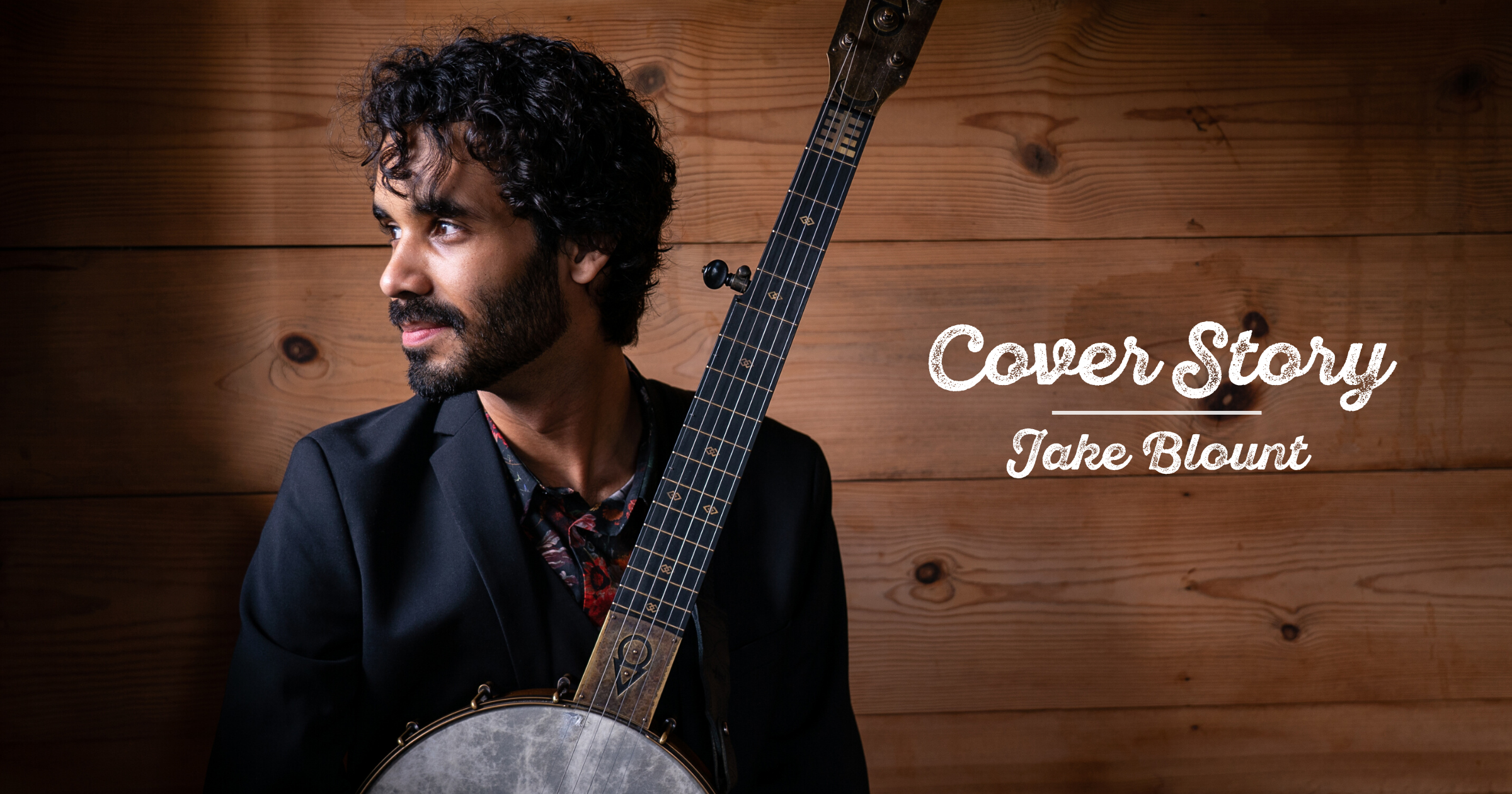
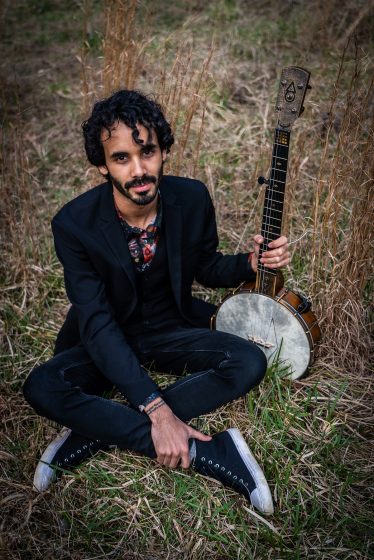
Jake Blount Looks Deeper into the Black Traditions of Old-Time Music

It is long known that Black artists in the twentieth century who spoke out against white supremacy often paid for it with their lives. As a Black man and a queer person, Jake Blount is intimately familiar with this history. In the liner notes of his new album Spider Tales, Blount predicts “escalating patterns of violence and ecological crises that threaten the survival of our species.” In the same breath he urges us to remember the ancestors who felt “the same grief, powerlessness, and fury” — and found a way to survive through wit and wisdom.

Spider Tales features a band of mostly queer artists, with Blount on banjo and fiddle. His tune and song choices introduce us to musicians long ignored. Familiar songs are reinterpreted, their fangs reinstated. Through this process, he takes us on a journey of rage, revolution and muffled voices made louder. We are the better for it.

BGS spoke with Blount, who grew up in Washington, D.C., but is now based in Rhode Island, about Spider Tales and his focus on the marginalized among us.

BGS: The title of Spider Tales is a nod to the trickster of Akan mythology, Anansi, who as you stated in your liner notes, weaponizes his wit and wisdom against oppressors more powerful than himself. And that’s what Black folks have had to do since the Middle Passage. Everything had to be subversive as a matter of survival. Can you speak about your process and musical choices in bringing that subversion to the forefront on this album?

Blount: For me the tricky part of bringing out these kinds of hidden meanings, and the mass significance of a lot of these songs, was that I had to pick songs that spoke in metaphors but put them together in a way that the metaphors became obvious. Finding a way to be loyal to the art form and not just be totally explicit with what was being said, but still make the message apparent to people, was really difficult.

I think a lot of that came down to how I framed things in the liner notes, but also the songs that I picked. Picking some things that were more familiar, some things that were not…some things that are more explicit and more direct and some things that are not. Being mindful of the track order helped tie things together and, I would hope, clarify the common thread between all the songs.

I want to ask you about your arrangement of “Where Did You Sleep Last Night” by Leadbelly. I hear this song a lot at jams. Some people refer to it as “In the Pines” and it’s often framed as being from one embittered lover to another. Your version of the song has this kind of bereft energy, almost frightening. What drew you to interpret this song in the way you did?

It’s partially an artifact of the fact that I first heard the song from hearing Kurt Cobain play it… I’m sure there’s some Nirvana energy lingering from middle school Jake in this recording. [Laughs] But even aside from that, when I listened to the Leadbelly version, I heard that song in a vacuum before I was ever involved in traditional music in any particular depth. I never really thought of it as a love song. It’s spoken, ostensibly, from one romantic partner to another sure, but it seems like it’s about disappearing and dying.

To me, you’re losing somebody — somebody is going away from you. That resonated because I grew up hearing stories from my dad about how there were people who just disappeared. I think we have this picture in our heads of racial violence in the south as lynchings; that of course did happen, but also there’s this other narrative of people just vanishing in the woods, and everyone would kind of have to assume what had happened.

I wound up connecting to that strongly because I came up during high school and college working with LGBTQ advocacy groups, volunteering my time and organizing with other youth. Doing that, you see a lot of people lose their homes, get kicked out of their houses, get incarcerated. You see a lot of people die. That song spoke to me on that level of “these are people who are just going away.” It reminds me of all the times that a friend would just drop off the map. A week or two later, you realize “Oh, I haven’t seen this person.” That kind of thing happened frequently when I was younger. It definitely still happens to people in that age group now, so that’s where my interpretation of the song comes out of.

This version of “Boll Weevil” is one of the best I’ve heard. I always knew it as coming from Tommy Jarrell, but I read in your liner notes that he learned the tune from a Black woman at a festival backstage. He never saw fit to credit her, which is why she’s still unnamed today. Reading that made me feel some type of way about the manner in which Black people — and Black women — have been forgotten by history, forgotten now. I wonder if it was a similar feeling for you. How did you deal with emotionally processing what you were learning while you were researching these tunes?

I think I’ve been so immersed in the ephemera of old-time fiddle music for long enough that it almost doesn’t surprise me anymore, which is sad, but Tommy Jarrell is someone who has a pattern of doing that. I feel like there are multiple older source musicians from that generation who would reference having learned from Black people but wouldn’t name them or wouldn’t give a complete name.

“Brown Skin Baby” is another tune like that on the album. Jabe Dillon learned it from an older Black fiddler and the only name he gave was Old Dennis. You can’t Google “Old Dennis.” There’s very specific information that oftentimes [white musicians] give with other white sources. But Black sources don’t get treated the same way.

Part of the reason I was so meticulous about the liner notes here is to avoid doing that a second time, because it still sometimes happens where people don’t credit the sources or sometimes don’t look up the sources. I’ll be the first to say that you don’t have to learn everything from a source recording — that’s not necessarily honest to the way the tradition has worked throughout history either. But I think it’s important to have a relationship with the musicians who cultivated the music we are now enjoying.

Yeah, I think especially with people like Cecil Sharpe and [John] Lomax, it’s like, Cecil Sharpe made his way through West Virginia. In his diaries he was so obsessed with this purity of old-time music, and white people, and actively refusing to record anyone else. It must have been such a sliver of what was going on at the time and of the knowledge that could have been passed down.

Exactly. Even like the later folks, there are folks who made a lot of recordings of Black people and were like “I need to find the Blackest music that I can so I’m going to go to prisons!” and it’s like, “You’re only really Black if you’re in jail for it.” [Laughs incredulously] That’s the mentality that carries through in that sort of scholarship and even today.

I always think it’s best to focus on the most marginalized among us and it’s really important that the working-class traditions be emphasized and accepted and made part of the canon. But I also think it’s really important for today’s Black people to know that there was prosperity in our communities going back that far. The Black middle class, which was ascendant at the time many of these first recordings were being made, never got examined by the folks making the recordings. It’s a tremendous loss to me because you would get to hear from people who were maybe articulating the experience of navigating how to become, in a capitalist sense, successful for a Black person in the late 1800s and early 1900s.

What would have been the songs about the Greenwood District in Tulsa? There are all of these really incredible things that happened and these really horrifying ways that white supremacists would crack down on Black people for attaining that level of success that are part of the story and ought to be told. Because we focused so narrowly for so long on Black musical traditions that were coming out of super rural country places, even though a lot of Black people had moved to the city by that time — I feel your pain that there is a great deal that is lost when we focus so narrowly on this thing that fulfills our stereotype notion of what we should be looking for.

I love the last song on the album, “Mad Mama’s Blues,” which comes from Josie Miles. That first line, “I want to set the world on fire,” is so great, the melody is flirtatious, but the lyrics are furious. Can you talk about why you chose that song as the album closer?

I feel like the album couldn’t have been timed better if we’d known about what was going to happen in Minneapolis. My whole mission with this album was to show people that this has been coming for hundreds of years. There’ve been warnings and people have been trying to speak on it and they haven’t been heard. I think putting [this song] as the closing note on the album felt perfect to me because it is very explicit in its emotional expression and what it gets across to the listener — but at the same time, it is masked in this jumpy upbeat, sort of silly presentation. It’s like the 1920s “Hey Ya!” [Both laugh] It’s like a bop, and you’re like “Yes Queen!” and then you’re like “Oh, he’s killing people.”

I think that’s a really valuable part of the Black musical tradition. To me it provides us an interesting lens to look back on the fiddle tunes. For so many people when they hear fiddle and banjo, they’re like “Oh this is a happy song! I’m going to start dancing now” and really there can be so much hidden inside of that.

People are sometimes more concerned with their expectations for what a piece of music is going to be than what it actually is. Putting this song at the close is saying: “Your musical assumptions about the content here would not be correct.” You then have to go back and examine the other [songs] with the idea in mind that perhaps you need to look more deeply than you otherwise might in order to understand what’s being said.


Editor’s Note: Blount will be featured in the Bluegrass Situation Presents: A St. Patrick’s Day Festival at New York’s New Irish Arts Center, participating in an opening night jam session with clawhammer banjoist Allison de Groot, fiddler Tatiana Hargreaves, and traditional dancer Nic Gareiss on March 17 as well as a headlining performance with Gareiss on March 18.

All photos: Michelle Lotker

Brandi Carlile: An Interview from Doc Watson’s Dressing Room

Give or take, it’s about 2,800 miles from Brandi Carlile’s native Seattle, Washington, to Wilkesboro, North Carolina, home to the renowned music gathering known as MerleFest. (See photos.) And as the Saturday night headliner this year, the award-winning singer-songwriter took to the Watson Stage during the 32nd annual MerleFest, surrounded by the Blue Ridge Mountains and an overzealous audience in the neighborhood of 30,000.

Backed by her rollicking Americana/indie-rock band, which includes founding members Phil and Tim Hanseroth (aka: “The Twins”), Carlile held court during an unforgettable performance that led to one of the festival’s finest moments — Carlile around a single microphone with North Carolinians Seth and Scott Avett for an encore of the Avett Brothers’ “Murder in the City.”

But a few hours before that performance, Carlile found herself standing backstage alone in the dressing room of the late Doc Watson, the guitar master who founded MerleFest. Gazing around the small square space, she looked at old photos of Watson and other legendary Americana and bluegrass performers that have played MerleFest over the years: Earl Scruggs, Alison Krauss, Peter Rowan, Rhonda Vincent, Tony Rice, and so forth.

Carlile smiled to herself in silence, truly feeling humbled in her craft and taking a moment to reflect on her wild and wondrous journey thus far, all while possessing a once-in-a-generation talent — something broadcasted across the world during her staggering performance of “The Joke” in February at the Grammys, and amid a standing ovation from the music industry. Remarkably she also picked up all three Grammys in the American Roots Music categories.

We met Carlile in Watson’s dressing room before the show for our interview and surveyed the steps she’s taken from Seattle to the MerleFest stage.

BGS: It seems as big as your career has gotten, the humble nature of where you came from still remains within you, as a headlining performer now.

Carlile: It does. Part of that reason why I feel that is part of who I am is because of the people that I’ve surrounded myself with — The Twins, our families, our kids, and our folks. They’re not going to let anybody get too heady or too ahead of themselves. Everybody puts you right back in your station if you’re getting there.

Growing up around Seattle, was Kurt Cobain’s songwriting or specifically the Unplugged in New York album by Nirvana ever a big influence on you as a performer?

It was later in life. It’s so funny, like when you live in the [Pacific] Northwest, the intensity that was directed towards country music for me was big because I didn’t have proximity to it. I was so far away from it. People in the South, I think so often they love country and western roots music, bluegrass, folk, and Americana music. It’s not that they take it for granted, but they don’t realize sometimes that they’re so close to it — it’s right here. And we don’t have that proximity, so I think we love it a little more intensely in the Northwest.

Because you’re seeking it out maybe?

Yeah. And [it’s] even more concentrated in the [United Kingdom]. I mean, if you want to meet some of the most potent country music fans, you go to the UK. And Seattle is kind of that same vibe. So, when I discovered grunge music and rock ‘n’ roll music, it was after it had already happened in my city, which had its own grief period with it, but also kind of an intense celebratory thing because I had missed it. I wanted to know everything about what happened in my city. And what I came away with was realizing we came up with something new. We didn’t repeat anything. We didn’t throw back to an era. We didn’t put on a Halloween costume. We did something brand new.

So, how does that apply to where you are today, in terms of what you want to create with your art?

I’m kind of a hybrid thinker, in general. I like putting ideas together and posing thoughts, things like that. I’ve never really been a great or very successful genre person.

You don’t want to be pigeon-holed…

It’s not that I don’t want to be pigeon-holed, it’s just that I don’t know if I’m able to be. Unfortunately I’ve always wanted to fit in, but I don’t know if I ever will.

Well, to that point, this last year, at least from an outsider’s perspective, has seemed like a whirlwind in your career, with the trajectory it’s on now. Has it been a slow burn to this point or is this a whirlwind, and how are you dealing with all of that?

That’s a good question. It’s both. It’s been a slow burn to this point. I’ve been working for a long time. But it was a really big change. That Grammy moment changed my life, and in a really, really big way. I can’t even catch up to it yet — I don’t even know how to catch up to it yet.

Or if you even want to embrace it. I mean, how do even wrap your head around something like that?

No, dude, I want to embrace it — I love it. I’ve always loved everything about music and the music business since I was such a little girl. I sat in my room wanting the biggest and the best of opportunities for myself, my family, and my friends. And so I’ll find a way to embrace it. And I want to — I’m really insanely grateful for it.

What do you remember from that moment? I was thinking, the stunning way your voice and the energy was going up and down, any frustration, any love or sadness you’ve experienced was put out through that microphone at that moment…

Yeah. I think I’m going to live to be 100 because that is how I do it, you know? I just let it all out. And in that moment, I don’t know — I was just so ready for it. I’m 38. I’m not a kid anymore. I’m not going to get too nervous or too excited and come undone. But, I am going to enjoy it while it’s happening. Like so many big things in your life you don’t really get to enjoy it.

Or maybe in hindsight you realize how important it was…

Yeah, man. Like loving everything in retrospect, enjoying everything in retrospect. And I was just so right there, right in the moment at the time — more so than maybe ever before while performing.

So, does that mean you subscribe to the idea of “the now,” to learn to be present, rather than worry about what was and what could be?

Yeah, but I’m horrible at it. But for some reason, that day I was able to get there. And I think it’s because I had been so nervous and then I won those three [Grammys]. I was like, “What do I got to lose? I’m just going to do this. I’m just going to show everybody [who I am].”

What is the role of the songwriter in the digital age, in all this chaos that is the 21st century?

To try to be as permanent as you can in a temporary environment.

In all the years you’ve created and performed music, traveling the world and meeting people from all walks of life, what has it taught you about what it means to be a human being?

Well, it’s taught me so much. I think you need to travel, in general, in life. You cannot stay put and not see the way that people live and then try and create an assumption about the way the world works. Travel, in general, has taught me so much about social justice and empathy. It’s enhanced me spiritually as a person, and that’s the thing I think I’ve garnered the most out of it. But I’ve met some really wise and special people as well. And to get to meet your heroes, people that you’ve admired – to find out if you were completely wrong about how much you admire them or being completely right — has been so enlightening.

And what about being in Doc Watson’s dressing right now, being at Merlefest?

Being in Doc Watson’s dressing room is really moving. I’ve been looking around at the pictures and the gravity of it. And when you’re here at this festival, you feel the reverence and you understand what it’s all about. And it’s something I’m coming to later in life. Just like I missed the greatest rock ‘n’ roll genre of all-time — grunge — in my very own city, I missed this experience, too — and I’m looking forward to diving in with both feet.


All photos: Michael Freas

SHIFT LIST: Chef Victor Albisu Proves He Is Clinically Obsessed with Pearl Jam

Listen carefully to the soundtrack playing in Del Campo — a South American-inspired steakhouse in Washington, D.C.’s Penn Quarter that Esquire named one of the best new restaurants of 2013 — and you’ll hear a Pearl Jam song every once in a while. That’s because they’ve been chef/owner Victor Albisu’s favorite band since he first heard their debut, Ten, in high school. He related to the Seattle quintet instantly. “Being a teenager is when everything is either the greatest or the worst,” he says. “It’s the time you feel the most. Pearl Jam, as a band, reflected those extremes. I also liked that they didn’t sound like anyone else. There was a little blues underneath their Seattle sound, along with the baritone of Eddie Vedder’s voice.”

It wasn’t until the Vs. tour on April 8, 1994 that Albisu had a chance to see the band live at the Patriot Center at George Mason University in Fairfax, Virginia. It turned out to be a momentous evening beyond what he could have possibly imagined. As he was making his way to the venue, he began hearing a shocking rumor: Nirvana’s Kurt Cobain had been found dead of an apparent suicide. It seemed too impossible to be true, but when the Seattle fivesome took the stage, it was confirmed. “Eddie Vedder was crying through the whole show and was clearly affected by it,” Albisu says. “It was rough, but it firmed up this bond I had with Pearl Jam.”

Since that intense inaugural experience, the award-winning chef, who has cooked for Michelle Obama on multiple occasions, has seen the band 15 times. “You know you’re going to get everything they’ve got for as long as they’ve got when you see them live,” he says. “They give back to their fans.”

To take a break from helming the kitchen at Del Campo or one of his Taco Bamba taquerias in nearby Virginia — where you’ll also hear plenty of Pearl Jam playing — Albisu has gone to shows in D.C., Baltimore, Philadelphia, New York City, Chicago, and Amsterdam — and he has a t-shirt from every one. In the Dutch city, he had the chance to meet bassist Jeff Ament at the Ziggo Dome in 2014. “It was a great experience for me,” he says. “I just talked to him. I didn’t ask him to sign anything; I’m not that guy.”

The best gig he may have seen was this past April at Philadelphia’s Wells Fargo Center, when the band opened by playing Ten in its entirety to mark their 10th consecutive sold out concert at the venue. “It was the unicorn of shows,” says Albisu.

He was thinking about his favorite shows when he created this playlist. “It’s my ideal set list,” says the chef, who hopes to see the band when they play gigs in Chicago and Boston this August. “They do 32-33 song concerts, so this is in the realm of possibility. When I go to a Pearl Jam show, it’s a profound thing for me. This may be overstating it, but it’s like going to church.”


Photo credit: Rey Lopez