Four Women Producers and Engineers On Studio Challenges and Successes

Over the past couple of decades, the music industry has seen more women rising to become leaders in audio engineering and producing. However, even as access, acceptance, and opportunity continue to improve, women are still painfully underrepresented in these career paths, making up just five percent of engineers and producers worldwide. Over the past few weeks, I’ve talked to a handful of these remarkable women, in person at coffee shops, over the phone, and via email, about how they built their careers and the challenges they have faced in a male-dominated industry. These women are trailblazers, often without career models to follow, often the only woman in the room when they work. Their tenacity, talent, and dedication are evident, and I feel honored to share their stories.

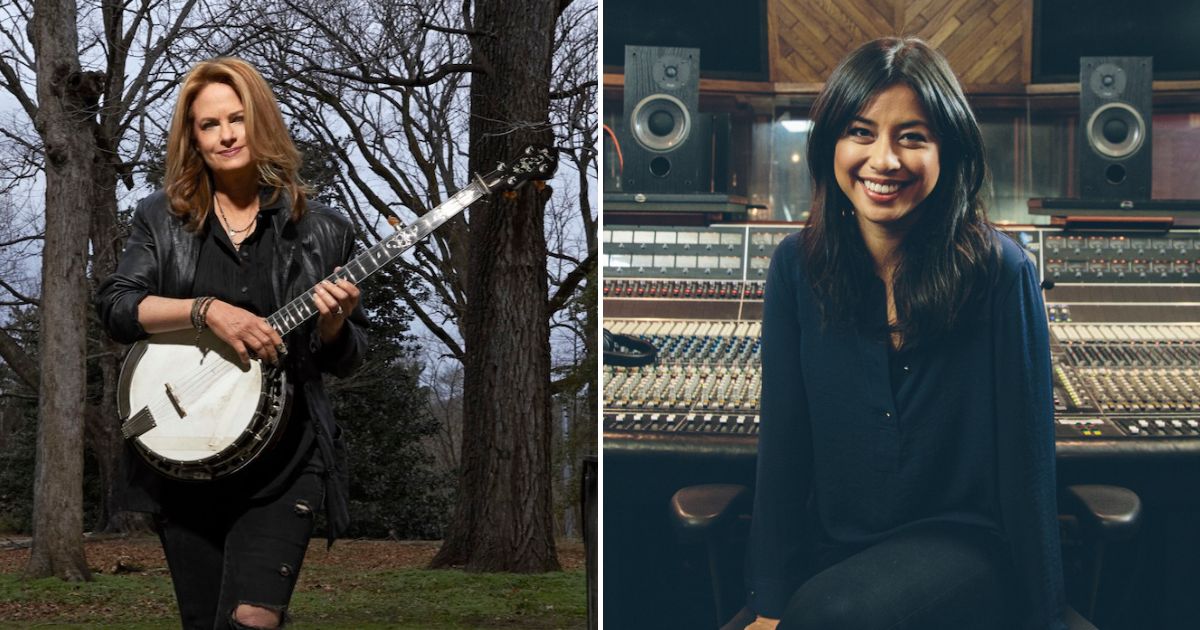
As a musician who came up in the the bluegrass scene, the first female producer I ever knew of or worked with – and now that I think of it, the only female producer I’ve worked with who was not hired by me – is the legendary Alison Brown, virtuosic banjo player and co-owner of Compass Records. Since Brown has seen a lot of generational change over her tenure in Nashville, I thought I should start by getting her perspective.

Brown had already solidified her reputation as an instrumentalist, winning IBMA’s Banjo Player of the Year award in 1991 and touring with Alison Krauss, when she decided to start a record label along with her husband, Garry West. “We were talking about how to have a sustainable life in music,” she said, “And it was one of those napkin drawing in a coffee shop moments.”

The two were on tour in Sweden with Michelle Shocked, for whom Brown was the bandleader. “When I look back, I can see how a lot of the opportunities I had were carved out for me by other women. I was about to go to law school when Shocked asked me to be her bandleader and then we went on a world tour. At Compass, I never thought of myself as a producer, Garry was more interested in that role. But when Dale Ann Bradley was going to make an album she asked me to produce it, so I said yes, and that’s how I started producing.”

Since then, Brown has produced seven Grammy-nominated records, as well as winning a Grammy for her own song, “Leaving Cottondale,” off of her 2000 record, Fair Weather.

When asked about her production style, Brown interestingly observes that she may come at it from a traditionally female perspective, by observing and predicting other people’s feelings and needs. “Especially in the studio, you need to make people feel at ease…” she explains. “Ultimately your job is to draw the best out of the musicians. Everyone has that thing they’re afraid of having to do under the microscope, but the goal is to make the musician feel comfortable enough to reach out and hit something new.”

“Sometimes with the older guard guys, I’ll say, ‘OK, lets try to play through the chart’ and they will act like they don’t understand me. ‘What did she say? What does she want to do?’ … Like they want someone to translate it for them, because it’s coming from a woman. It’s annoying, but I know they’re acting that way because they are nervous and they don’t want to look stupid. So when I’m producing, I try to intuit those things about people, and stay focused on the end goal of making a great record.”

Engineer and producer Shani Gandhi has been in Nashville since 2011, and has been been nominated for two Grammys, winning Best Engineered Album (Non-Classical) for her work on Sierra Hull’s 2020 album, 25 Trips, which she engineered, mixed, and co-produced with Hull. Originally from Singapore, Gandhi was raised in Perth, Australia. She moved to the U.S. in 2007 to attend Ithaca College, where she received a BA in music with a concentration in sound recording technology.

Gandhi was drawn to engineering and production because of her love of music and her simultaneous dislike for performing. “As a kid, I didn’t even know that that side of music existed as a career, but once I found the Audio Engineering Society, I immersed myself in it, I was obsessed.”

Gandhi told me about her philosophy for building a community you can learn from and create with. “It’s really important to have a strong community of both mentors and peers,” she explains. “I had people that I was looking up to that were holding me to a very high standard, and then I had friends and colleagues where we were all working really hard and trading favors, and that’s how I built my freelance career. So you need really good people at all levels to make it work. You don’t want to feel like the smallest person in the room all the time, but you also need someone around to tell you, ‘I know you think what you’re doing is really cool, but it’s really not,’” she laughs.

Although she works on every stage of recording and producing, Gandhi’s great love is for mixing. “My approach is to always remember that it’s not my record, it’s the artist’s art when it comes down to it and they’re the ones who have to live with it for the rest of their lives. I do like things to be lush and tall and wide and pristine. I don’t go immediately to that tape or garage sort of sound, but I can do it. If that’s what the artists wants, that’s what the artists gets.”

Also hailing from Australia, producer and engineer Clare Reynolds – AKA Lollies – came to Nashville via LA, where she was signed as a songwriter for hip-hop producer Timbaland’s company. She essentially taught herself production and engineering on the job. “I was in a lot of big studios with big producers over those three years. It was really intense, I was almost always feeling out of my element, but I learned a lot. I would be writing the song, but also watching the others work, asking questions like, ‘Why are you using that mic?’ ‘How are you getting that sound?’ And trying to absorb everything they were doing.”

In Los Angeles, Reynolds tells me, she learned how to enter a room like a man: “I was with so many different, very big personalities that were at the top of their game and their egos were massive. They were just hyped … and if you want to be respected, you can’t go in tentative, you can’t code yourself as female. You have to act how they act, which is to say, you can’t care if other people like you. I would have this attitude like, ‘We don’t need to be friends, but we’re gonna write the best song ever.’”


Reynolds says that she will always love writing songs, but at least for now, production and engineering have taken a hold on her. “I will be forever learning,” she says, “But I do think that my experience with writing helps me approach the audio side from a very musical and song-based perspective.”

Engineer and producer Diana Walsh echoed Reynold’s sentiment about the typical energy in a recording studio. “With women being so critically underrepresented in these technical roles, it can sometimes take a minute for the gender biases in the room to dissipate,” she told me. “My focus is always on doing great work, and treating everyone in the room with the same respect I expect in return.”

Growing up in Houston, Texas, Walsh played guitar, but was always more interested in how she could record her guitar than how she could perform with it. Her mom bought her very first Shure SM57 microphone, which still gets used today in her sessions.

Walsh recorded her own music at home before heading to Belmont University to study music business, with an emphasis on production. While in school she started freelance recording for friends and classmates and after graduating, she began working at the historic RCA Studio B, where she is now the Studio Manager, as well as maintaining a busy freelance engineering schedule.


View this post on Instagram


A post shared by Diana Walsh (@dmwalshmusic)

Her engineering and production credits include Matchbox 20, Amanda Shires, JD McPherson, and Sister Sadie. Walsh believes that representation is key for getting more women into the studio: “Working at RCA B, I have the opportunity to talk to a lot of school groups. After our sessions, I often speak with the students and ask about their goals for their future in music. Through these conversations, I’ve been thrilled to hear that more and more young women are taking an interest in engineering/producing.”

Throughout my conversations with each of these women, one point they all emphasized was the importance of staying focused on making great work in the face of difficult environments. “Nobody can argue with good work,” they each told me in their own way. And as we continue to see beautiful records being made by women, I have to agree.


Photo Credit: Alison Brown by Russ Harrington; Shani Gandhi by Joshua Black Wilkins.

Rachel Baiman On the Importance of Women in Studio Control Rooms

(Editor’s Note: BGS contributor, picker, and singer-songwriter Rachel Baiman brings us into the production process for her new album, Common Nation of Sorrow — her first recording on which she’s credited as sole producer — for this op-ed feature.)

Take a look at the credits for your favorite records by artists of any gender, and you may notice that there are very few women listed. Maybe there’s a female singer, photographer, or graphic designer – possibly a violinist in a string section, but it probably stops there.  

While great strides have been made in the last decade with more women on festival bills, in radio programming, and even as instrumentalists in live bands, when you look behind the scenes, you rarely see women involved in making records, unless they are the featured artist or part of the featured band. That’s because the studio is invisible to the audience. 

Societal pressure is driving folks to do better when they are working in public lineups, but in recording studios, there’s nobody watching, and no face on the sounds that come out of the box. The audience sees a diverse band playing a live show, yet none of those musicians are featured on the record.

For example, I was thrilled to see Sarah Jones absolutely slaying the drums for Harry Styles live, but when I looked at the record credits, they had a male drummer listed. Why? It’s as if the industry is saying “We love to have you on stage, but when it comes to the real work, let the men get down to business.”

To Harry’s credit, there are a couple of female instrumentalists (violin and keys, and a conga player) and assistant engineers (“Move that microphone for me please!”) featured on his albums (which is huge progress, believe it or not), but I would have loved to see Jones included as a true backbone of the sound, especially when she’s such a fundamental part of the live show, and clearly more than capable. That kind of record credit is a career maker – not that Jones needs it, she’s doing great anyway – but why couldn’t she have that?

I’ve had a dream for a few years now of being a producer. Over the last decade of working in the studio in various roles, I’ve fallen in love with the production process: Starting with the songs, honing and editing until you’re left with only the meat, selecting the perfect musical voices to bring the song to life, and working with amazing engineers to get the sonic pallet perfect. I can’t get enough of it, and I want to do more.

According to a 2018 study by the University of Southern California, and reported on by GRAMMY.com, only 2% of music producers and 3% of engineers/mixers in popular music are women. These are roles that require real trust, as they are roles of power. There’s no turning down, editing, tuning, or washing out a producer or lead engineer. The project is in their hands.

Typically, male artists (as opposed to engineers, another role that leads to producing jobs) are asked to be producers when other musicians like the records that they’ve made or been a part of. It’s a role of mentorship and guidance, as well as artistic influence.  I started to realize, though, that because I am a woman, nobody was going to naturally think of me for that role, even if they liked my music. People fit people into the molds that we’ve been shown, and people trust people who others trust. Everyone wants to make the right decisions, and it’s hard to be the first one to believe in somebody – I know this trap because I’m guilty of it myself! If I wanted to be thought of as a potential producer, I was going to have to build my own platform and show people that I could do it. 

When it came time to make Common Nation of Sorrow, I saw it as an opportunity to take a bet on myself. Although it’s terrifying to produce one’s own music (you have to be both the speaker and the listener at the same time), I knew that if I could produce something great under my own name, perhaps others would start to see me in that role outside of my own music. After all, if you can’t trust yourself with your own work, how can you ask others to trust you with theirs? 

With the support of my awesome label, Signature Sounds, I was able to record this project exactly the way I wanted to. I had a variety of musicians in mind for the rhythm section, both male and female. I hypothesized that when considering the sessions, I needed to make sure that there was a feeling of social balance in the room, for my own sake as well as for my fellow musicians’ sake. Something that was interesting to me about this theory is the stark difference between “including” women on a project because you feel that you should, and believing that empowering women and asking for their contributions will actually result in the best art.  

When I get called for sessions to play fiddle or banjo, I am usually the only woman in the room. I walk in feeling like I have to be better than good in order to counteract the assumption that I will be sub-par, that I don’t know what I’m doing, that I won’t know how to read a chart, that I can’t solo, that I won’t know anything about sound or gear. Working from a position of insecurity, or “trying to prove something,” is a terrible way to make music. I might overplay, or underplay, or try to play the way I think men want me to play, not in my own voice. I might be trying to tamp down rage at a comment that somebody has just made about their wife being retired from music because, “She’s a mom now.”  

Contrastingly, when you’re suddenly the producer, the only one you have to impress is yourself. Everyone in the room has been hired by you, and therefore, it’s in their best interest to support your vision. Nobody has incentive to diminish your work. Suddenly, I’m able to work from a place of confidence and artistic integrity. In a position of power, it’s not as likely that I’ll overplay, or change my sound based on others, or second guess my abilities. I’ve taken the bet, and now I have to come through for myself. That’s the difference between token inclusion and empowerment. You’re going to be able to hear it in the album made this way, too. 

Recently, I was asked by a male musician who I love and admire to produce his next record. It was completely unexpected, and it took a minute for me to realize that my bet on myself was actually paying off. I’m starting to believe now that this could be a real career path for me. I think most people want to believe in, and support each other, but we, as women, have to have the courage to take those first steps and put ourselves out there for consideration. From my standpoint, it can work. 

I’m thrilled to see so many incredible women working as producers and engineers these days in Nashville. Mary Bragg, Rachael Moore, Clare Reynolds, Shani Ghandi, and of course Alison Brown at Compass Records, who has been leading the charge for years. I look forward to one day having the opportunity to work in a studio environment inhabited by only women, completely by chance. The more we can show each other what’s possible, the more likely that will become. 

(Editor’s Note: Rachel Baiman’s latest album, Common Nation of Sorrow, is available now wherever you stream or purchase music.)


Photo Credit: Natia Cinco

MIXTAPE: The Women in Roots Music Who Inspired Justin Hiltner’s ‘1992’

For the past eight or so years I’ve been making this joke that we (the music industry) should “Give women Americana.” As in, if we gave the entire genre — and bluegrass and country and old-time and folk, for that matter — to women and femmes and non-men, I wouldn’t so much miss the men and the music would certainly be well cared for and well set up for the future. 

My point, as I continue to make this joke year after year to many puzzled reactions, is that women and femme roots musicians have and will always be my favorite artists, creators, songwriters, and pickers. As I crafted my debut solo album, 1992 – often with incredibly talented women like producers and engineers (and pickers) Cathy Fink & Marcy Marxer, mastering engineer Anna Frick, photographer Laura E. Partain – the music that inspired, informed, and challenged me most through this release was all made by women. (Ask me sometime about my monthly Spotify playlist, Don’t Need No Man.)

When BGS approached me to make a Mixtape to celebrate 1992, I knew I had to share some of the women who helped me realize, musically, artistically, socially, emotionally, that there could be a home for me in bluegrass, largely because they had created such a home exactly for me. Here are a few of my bluegrass, old-time, and country inspirations, all of whom have filtered into this album in one way or another. – Justin Hiltner

Ola Belle Reed – “High On the Mountain”

1992 was tracked in Ashe County, North Carolina, in a little town called Lansing nestled into the Blue Ridge Mountains, right where Tennessee, Virginia, and North Carolina meet. I love it out there on the mountain, in the wind, in the clouds, on the rocky little road cuts and switchbacks through the hills. Lansing also happens to be the hometown of a legendary Appalachian musician and bluegrass forebear, Ola Belle Reed. A banjo she once owned and had signed hung on the wall beside me while I tracked every song. I definitely see my album as stemming from the lineage of Ola Belle, humbly and gratefully.

Cathy Fink & Marcy Marxer – “Hold Each Other Up”

I’ve been so lucky to collaborate with folk icons, Grammy winners, and children’s music legends Cathy & Marcy in so many different contexts and scenarios, every single one delightful and fulfilling. They’re amazing mentors and encouragers and while we recorded 1992 we had to take the chance to channel their amazing attitudes and worldviews into a COVID-inspired (or -instigated) track, “Hold Each Other Up.” I love getting to pick and sing with these two, and their engineering, production, wisdom, and guidance all made this record possible.

Laurie Lewis – “I’m Gonna Be the Wind”

Long before I ever got the chance to tour and perform with Laurie Lewis she was a hero of mine, someone I looked up to and knew would be a bluegrass legend and stalwart who could or would accept me for who I am. Turns out, often in bluegrass, it is okay to meet your heroes, because when we met and I got to work for her, it turned out I was absolutely right. Her writing style, her artistic ethos, and the way she infuses pure bluegrass energy and her personality into everything she does reminds me I can be who I am, play the music I play, and write the way I write. This song picks me up whenever I’m down and gives me self-confidence and optimism when I need it most.

Alice Gerrard & Hazel Dickens – “Mama’s Gonna Stay”

I never had the honor of meeting Hazel before she passed in 2011, but Alice Gerrard and I have become friends over the past six years and honestly, if 17-year-old Justin knew he’d become friends with this Bluegrass Hall of Famer, he’d die. We happen to share a birthday, too. Alice is a gem, a trailblazer, an unassuming and unrelenting activist and organizer and community builder. She inspires me in all of the above, but especially in her willingness, across her entire career, to write music about things no one else was writing about. This song, which Laurie Lewis turned me onto (she performs it as well), is a perfect example.


View this post on Instagram


A post shared by Justin Hiltner (@hiltnerj)


Elizabeth Cotten – “Wilson Rag”

Playing shows and recording totally solo is often terrifying. Especially as a bluegrass banjo player used to playing in five-piece lineups. It took many years and lots and lots of practice time and experimental shows to figure out how exactly I wanted to arrange songs, build shows, create and ride a storytelling arc during my shows, guide an audience, and do all of that confidently with just a voice and banjo. Artists and pickers like Elizabeth Cotten gave me frames of reference for what I was doing that felt solidly bluegrass, but still building a show and sound that feels fully realized and not lacking for being minimal.

Missy Raines – “Where You Found Me”

Missy Raines is another hero of mine that I feel so lucky to now call a friend. Despite coming from different generations and very different circumstances we have so much in common. It just sometimes astounds me that we can have seemingly endless conversations around if bluegrass (or country or roots music) are accepting and open; meanwhile one of the winningest pickers in the history of bluegrass and the IBMA – that is, Missy Raines – has always been both accepting and open. Who needs the sexist, homophobic, womanizing, problematic elements of bluegrass when you have absolute badass legends like Missy!? I once covered this song for a “Cover Your Friends” show and it continues to devastate me to this day.

Caroline Spence – “Scale These Walls”

When I first moved to town, Caroline Spence was one of maybe four or five people I knew in all of Nashville. We spent a lot of time together in those early years, back in 2011 and 2012, and pretty soon after that we wrote a song together, “Pieces.” We both loved it a lot, performed it here and there with different lineups and bands, but it never landed on a record ‘til now. “Scale These Walls,” from Caroline’s most recent album, is constantly stuck in my head. I love how it showcases her jaw-dropping skill for writing dead-on hooks that feel so organic and never corny. I love this song.

Molly Tuttle – “Crooked Tree”

Molly Tuttle and I wrote “Benson Street,” a track off my new album, together about five or six years ago. It’s a cute little number about longing told through the lens of an idyllic Southern summer. I love every chance I get to make music or write music with Molly. She’s a constant source of inspiration for me and proof positive that you can be a proverbial crooked tree in bluegrass and still carve a pathway to success. Plus, she’s another great example of a picker who can command an entire audience totally solo. Trying to steal tricks from Molly Tuttle? Couldn’t be me.

Rhiannon Giddens – “Following the North Star”

Rhiannon Giddens is the blueprint. When I think about my artistic future and the way I want to be able to glide between media, between contexts, between areas of expertise and subject matter, between pop and roots and so many other musical communities, I think of Rhiannon. The way she has built her career around her artistic and political perspective, so that no matter what she does it feels grounded in her personality and selfhood is exactly how I want to be as an artist and creator. Plus, I always want to be as big of a music nerd and as big of an old-time nerd as her. 

Maya de Vitry – “How Bad I Wanna Live”

Maya is one of those writers and musicians who just makes me feel seen and heard and understood, and I know I’m only one in a huge host of people who would say the same. The vulnerability and transparency in her writing and the emotional and spiritual availability within it are astounding. Plus, she’s almost always, constantly challenging herself to consider the ways she creates and makes music outside of consumerism and art as a commodity. I moved to Nashville to be challenged, musically and artistically, by those around me and I feel so lucky to have Maya around me and a member of my community.

Courtney Hartman – “Moontalk”

Courtney Hartman’s “Moontalk” makes me feel like every single song I’ve ever written about the moon is good and right and allowable. (We both have quite a few songs about the moon, actually.) “Moontalk” feels like Mary Oliver incarnate in bluegrass-informed picking and singing. It feels meditative and contemplative, but not timid or insular – something I’m always trying to accomplish in solo contexts. I’m constantly inspired by Courtney and the way she centers community building in her music and life. She’s another one who, though she thrives performing and making music solo, you know that music came from a multitude of folks pouring through her.

Dale Ann Bradley – “He’s the Last Thing On My Mind”

I thank a few artists who have inspired and influenced me in a huge way in 1992’s liner notes and Dale Ann Bradley is one of them. I feel like I am constantly ripping off and (poorly) mimicking her vocal runs, phrasing, licks, and delivery. I think she might have the best bluegrass voice of all time, or at least it’s very very high up on the list. When I first moved to town I worked as an intern at Compass Records and just getting to be a small part of the team that worked a handful of her records meant so much to me.

Lee Ann Womack – “Last Call”

Lee Ann Womack is another who I thank in the album’s liner notes, another who I emulate vocally as much as I can get away with. I used to wear out this track and this album, Call Me Crazy, listening on repeat over and over. When I found out this song was co-written by an openly gay songwriter, it rocked my world. I already heard so much queerness in LAW’s catalog, and this confirmation came at a time when I needed to feel like I was given permission to exist in bluegrass, country, and Nashville. I know now that no one needs that permission, but it was critical then.

Linda Ronstadt – “Adios”

During the 1992 recording session I recorded a solo banjo rendition of this song, one I’ve been performing for years at shows. It means so much to me and Linda’s performance is stunning in its power and tenderness, a combination I’m often striving for. I hope to release it some time soon as a single, then again on a deluxe vinyl edition of 1992. It will not be the last time I pay tribute to Linda and her incredible career and catalog – plus, she is a huge bluegrass fan! It just makes sense to me.

Dolly Parton, Emmylou Harris, Linda Ronstadt – “Wildflowers”

When I had the pleasure of being a guest on the hit podcast Dolly Parton’s America, I sang this song and “Silver Dagger” among a few other from Dolly’s catalog that I felt had queer under/overtones. The response to my on-air picking was enormous, and there were immediate demands to release my versions of the songs. Cathy, Marcy and I recorded “Wildflowers” together during the 1992 sessions and it’s one of my favorite tracks that resulted from that week on the mountain. It’s gotten quite a lot of play, which I’m so grateful for, and always gives me an opportunity to talk about Trio and Dolly and how the story in “Wildflowers” parallels many a queer journey. It’s the perfect track to round out this Mixtape and I thank you for reading and listening along.


Photo credit: Laura E. Partain

Jason Eady: Down to a Single Point

There are two songs about dying on Jason Eady’s new I Travel On, but he insists this isn’t a downer album. Neither the contented “Happy Man” nor the rambunctious “Pretty When I Die” flinch as they depict the end of life, but Eady says the songs “put a positive spin on it. I think they’re both very positive songs. Live life to the fullest. Leave it all on the table when you go.”

Positivity was the conscious theme of the Fort Worth-based singer-songwriter’s seventh record, yet these songs aren’t naïve or blindly, blandly uplifting. What makes I Travel On so poignant and so memorable is Eady’s willingness to look something like death right in the face and find that silver lining. “It’s going to happen to everybody, so why not talk about it? It doesn’t have to be this unspoken thing that’s sad and depressing. Life is life and death is just a part of it. That shouldn’t be ignored.”

It helps that those two songs, along with every other one on the album, are expertly and even jubilantly picked and strummed and bowed and plucked and sung by Eady’s road-hardened touring band, with special guests Rob Ickes and Trey Hensley. “This album,” Eady explains, “is very specific to our last year. We traveled so much during that time, and we listened to Rob and Trey’s two records, which were a big part of our lives at that time. So it seemed like the perfect thing to call them up and see if they wanted to be on the record. These two guys were with us out on the road, even if they didn’t know it.”

Just as Eady writes within the parameters of positivity on I Travel On, the band played only acoustic instruments: guitars, bass, drums, Dobro. Their limited arsenal forced them to be more creative, to find new ways to use their instruments. As a result, the playing on these songs is somehow both loose and tight, technically precise yet lively, focused but eclectic. “We all sat down, miked everything up, and just went for it. There are no punches, no overdubs, nothing. When you hear something on the record, that’s what happened.”

The record is a document of getting lost out in America, gauging the climate of the country touring out-of-the-way places like Calaveras County, California, which gets its own song. It’s about finding silver linings in the gray clouds overhead. It’s about traveling on. And it has one of the finest album covers of the year: an evocative and psychedelic image that was one of many subjects he discussed with the Bluegrass Situation.

First of all, can you tell me about “Calaveras County”? What about that place inspired you to write that song?

That song is a mixture of some things that happened last year and another thing from my childhood that I always wanted to get into a song. We played a festival there last summer, which was the first time I had been there. I fell in love with the place. We were touring up the California coast, and every place was blazing hot. But it was breezy and nice and the weather was beautiful. The people were great. We had a chance to catch our breath and relax. The night before the show we had a big bluegrass jam. When we were leaving, it just struck me how awesome the place was.

Of course, the name Calaveras County doesn’t hurt. It just sounds good. I wrote the song when I got off the road. I can’t really write much on the road, so I just collect notes and thoughts. When I get home, I sort it all out. And the first thing I did after that tour was sit down and write that song.

What’s the other story? The one from your childhood?

There’s a verse about the man in the multicolored Volkswagen bug. That’s a true story from my childhood. I was maybe 6 or 7 and my dad was driving us through the Mojave Desert. We had run out of gas, and it was thirty miles to the next gas station. This was before cell phones, not that cell phones would have done us any good out there. So my dad had to hitchhike to get gas, while we sat in the pickup on the side of the road. People just kept flying by him and flying by him.

The guy who finally stopped was an old hippie who looked like Santa Claus. He was driving a Volkswagen bug and every single panel on the car was a different color. He gave my dad a ride into town, and then he gave him a ride back and wouldn’t take any money for gas. This guy goes sixty miles out of his way just to get us a tank of gas! That always stuck with me. My dad called me the other day and told me he couldn’t believe that I actually remembered that story.

How could you forget something like that?

It was my first experience of not judging people on appearances. This guy was nothing but helpful. Completely selfless. I’ve always wanted to get him into a song. I tried before to find ways to mention that story, but it never fit until now. It just went with the spirit of “Calaveras County.” The people up there had a similar spirit to them: Anything you needed, they would run into town to get it. They would do anything to make sure you enjoyed your stay in their town. The song fell into place pretty quickly.

I get the sense that most of these songs were written pretty quickly.

I did something this time around that was pretty terrifying. We booked the studio before I had the songs. So I gave myself a deadline to write this record. We got off the road in October, then we went into the studio in December. I wrote them all in those two months in between. It was a challenge, but I’ll tell you what I love about it: This is a very intentional album. These songs were all written in the same space, so it makes for a very cohesive record. I didn’t have to just take the best twelve songs I’d written in the last two years. Everything was written to be on this record.

A lot of the songs relate to things we did over the last year. I didn’t realize that until later. I called it I Travel On because that’s what we did. That’s where the spirit of the record comes from, and I think every song is about getting from one place to another, whether it’s physically traveling or mentally shifting ideas. “Always a Woman” is a good example. It starts off very tongue-in-cheek, very dark, but by the end of the song you’ve traveled from that idea to a very different idea. You’re using the same words but putting a positive spin on them. You move from one position to another in that song.

It inverts the country convention of the woman doing wrong to a man.

Well, I didn’t want to be negative on this record. That’s not where I’m at in my life, and the world doesn’t need any more of that right now. I wanted this to be a positive record. With that song, I didn’t know where it was going after that first verse, but I knew I wanted to take it somewhere different. I didn’t want it to be a dark song, so I had to find some way out of that.

You’ve mentioned that you recorded these songs completely live in one take, with no overdubs. Was that a difficult process? Were there any songs that proved especially hard to get through?

“Always a Woman” for sure. It’s a one-chord song, and I knew when I wrote it that it was going to be tricky. How do you make a one-chord song interesting for four minutes? I just do the same picking pattern for four minutes. Who wants to hear that? For that reason it was the last song we recorded. It was a daunting thing, but I think they all did an unbelievable job of finding ways to change it from verse to verse and add dynamics. Kevin Foster on fiddle did these things where he muted the strings but still rubbed the bow against them. Rob Ickes did something similar on Dobro. It sounds like a distorted electric guitar. I think some people just assume that’s what it is, but it’s all acoustic. I think everybody thrived under that constraint. It made us all more creative.

Way off topic, but this is one of my favorite album covers of the year. What can you tell me about that image?

It’s one of my favorite things I’ve done since I’ve been working in music. For years I had this concept, but I’m not a visually creative person. I can barely draw a stick figure. But I had this idea and I took it to a couple of graphic artists. It’s this universal concept: Everything starts from many, then filters down to a single point, then explodes back out to many again.

You’re going to have to elaborate for me.

Genetics is an example. It took an infinite number of people to get to me being here right now, and from here I’ll have offspring who’ll have offspring and it multiples back out. Events are the same way. All of these events in the history of everything have made this conversation we’re having right now possible, and then from this conversation will come other things that will spread back out. It’s a universal idea. It applies to everything.

But the only visual idea I could come up with was an hourglass, which I didn’t want it to be. But then Casey Pierce, who did the video for “Why I Left Atlanta” and documented the sessions for I Travel On, he’s a graphic artist and his work is very abstract. That’s exactly what I was looking for. I explained the concept to him and what you see on the cover is his first draft. As soon as I opened the email, I couldn’t believe it. It’s the coolest thing I’ve ever seen. He got it all. He got the vagueness of it.

It’s very different from your typical country album cover.

Yes, but Casey made it look like a road, like you’re going down the road and these clouds are in front of you. The road is disappearing into the horizon, which goes along with the title of the record. That’s the beauty of what he did. There’s a lot going on inside of it. It’s art.


Photo credit: Scott Morgan

Reading the Room: A Conversation With Trampled by Turtles

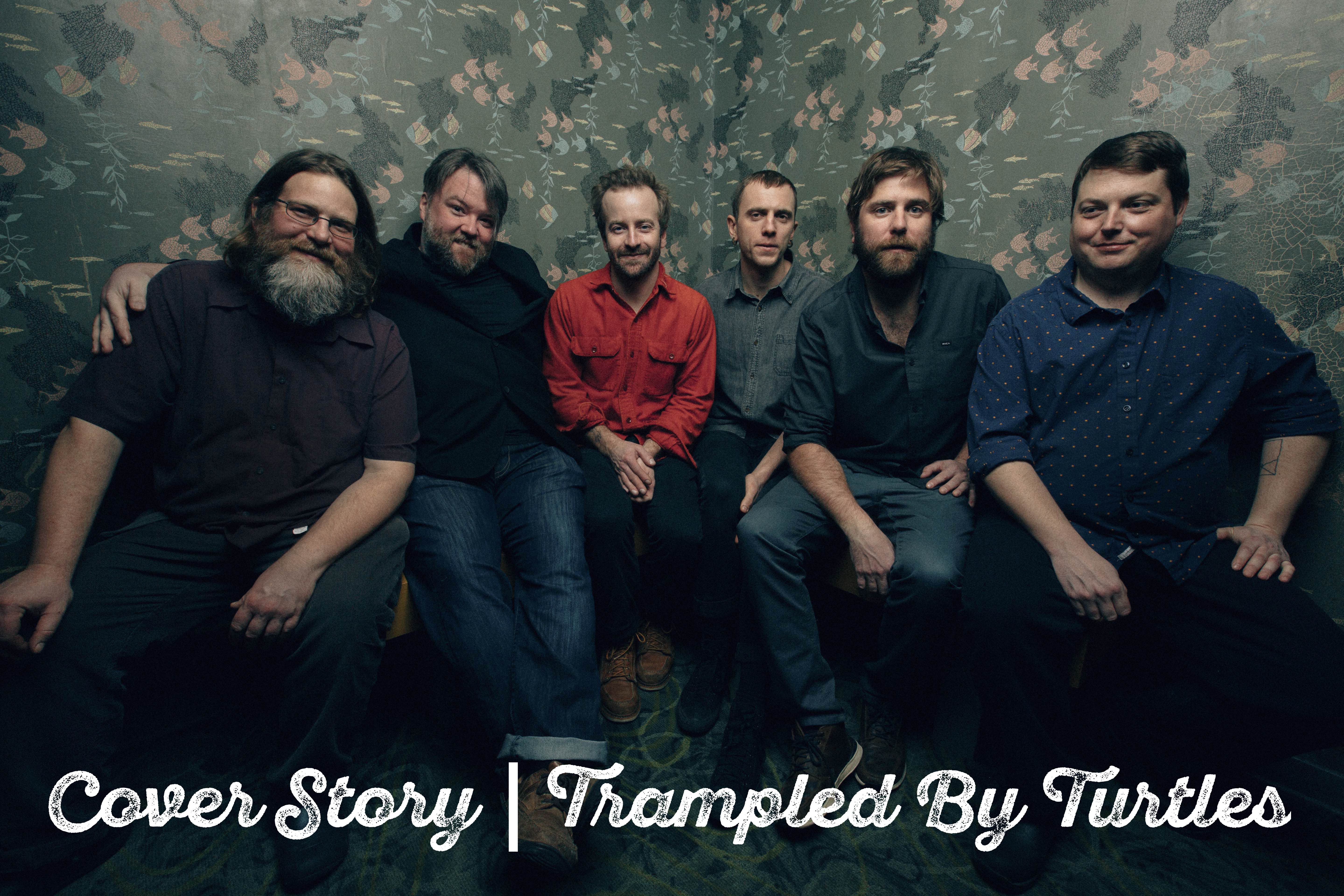
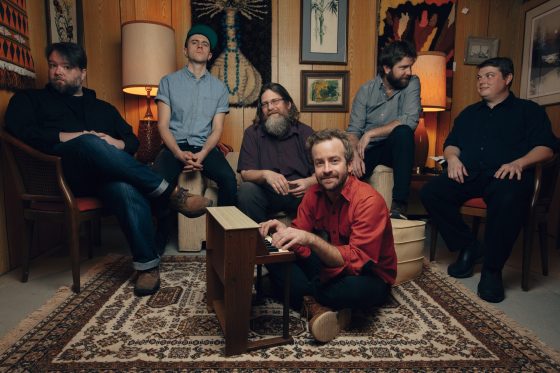
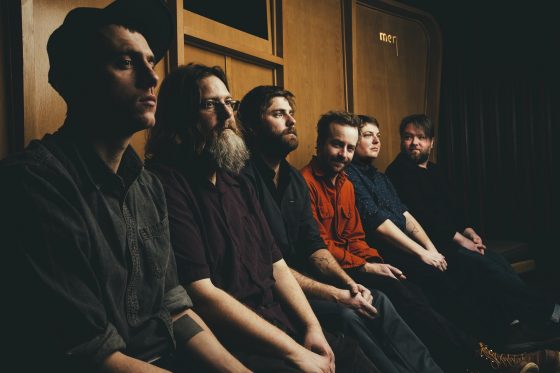
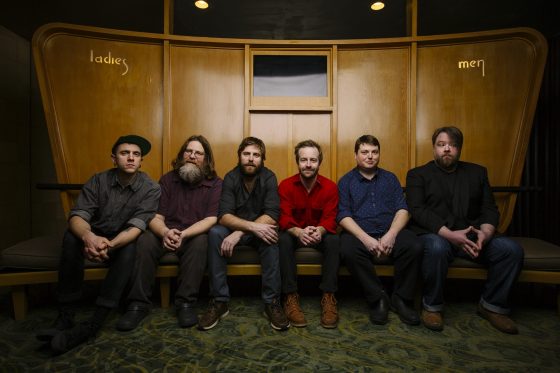
Trampled by Turtles are living up to the title of their newest album, Life Is Good on the Open Road. The Minnesota-based band parked the bus for nearly 18 months after touring behind their prior album, 2014’s Wild Animals. Leading up to the new project the six-piece group gathered at a lakeside cabin and rekindled their connection forged over more than a decade of performing together. Those positive vibes carried over to the new album, which emphasizes their exceptional acoustic chops. On the afternoon of their Ryman Auditorium show in Nashville, frontman Dave Simonett and mandolin player Erik Berry visited backstage with the Bluegrass Situation.

I know you cut this new album live-to-tape, but I was still surprised to see it took just six days to record it.

Simonett: We were surprised too. We had two weeks booked in a studio, which I think for a lot of people might be fast as well. For us that’s plenty of time, usually. But we ended up mixing the whole thing while we were there too.

Berry: Yeah, there was a dinnertime meeting where it was like, “Gentleman, I think we’re done. We got one more song to record tomorrow.” “Really?”

Other than just the general efficiency, what’s the upside to that?

Simonett: I enjoy lots of parts about live recording. I like to do it quite a bit. When I produce other people, I try to get bands to do it as well. It’s always spoken about in a vague way because I think it’s really hard to describe. But you do capture some kind of energy, a vibe. People play differently, if you want to get practical about it, when they’re all playing with each other, rather than playing to something that’s already been recorded.

The rhythm is one. You’re not following anything, you’re all just kind of moving in the same direction at the same time and it’s elastic. Nowadays it might be considered risky because it’s so easy to make things perfect now. But I’ve never felt like that really benefits that many people anyway. But especially us who have been playing together for a while. When we all sit and play and look at each other and play with each other, it sounds different than if we don’t, I guess.

Berry: To add to it, we hadn’t played together for about a year, outside of the weekend retreat we did. To build on what Dave’s saying, when people are playing together live, there’s also something different when something’s happening for the first, second, third, or fourth time, than when you’re playing that tune for the 50th time. Stuff grows on it; they move together differently.

Simonett: Yeah, I’ve always loved trying to capture a song before people start to really think about what they’re doing. Before people come up with parts to play. Before it gets dissected too much. It’s cool to see what happens naturally. I’m burnt out after a fifth take. That’s as far as I want to go.

Dave, how do you introduce your new songs to the band? From what I understand, you had songs already in your back pocket when you got together to record. How do you show the band, “Here’s some songs I’ve written”?

Simonett: That’s about as simple as that. Sit down and…

Berry: I use the phrase “coffee house ready.” Dave’s got them to a point where you could go to a coffee house and play the song.

Simonett: Yeah, I can play them. Core structure, melody, lyrics are pretty much done. And then I just sit there and play it a few times, and people join in when they feel like they have the hang of it, and it’s pretty organic.

That seems cooler than recording a little demo and emailing it to everybody.

Simonett: Yeah. I do that too, just so people can get the vibe, or at least know what’s coming – maybe if I have the song done in time to do that kind of thing. That is a nice thing to be able to have. I don’t think the real learning of it happens until we are all in the same space, though.

Berry: The real benefit of having stuff in advance is like in “Annihilate,” where I have a part that I wrote on it because I had the time to think about it.

Simonett: I also don’t know how to write music down on paper, so it’s all pretty simple anyway.

You guys seem to operate a lot on instinct. Is that something you had to develop and learn?

Simonett: Oh, I think it’s the absence of learning for me. I don’t really know any other way to act.

Berry: I hate the word “easy,” but there’s been a certain easy chemistry that all of us have always had with each other. On the very early shows, I’m like, “That’s pretty good. I could see doing that again.” So there’s something like that, too, now that it’s 15 years down the road.

Simonett: There’s a lot of bands in the string band world, if you want to call it that, that are amazing at that kind of stuff. I guess I don’t want to list examples because I’ll probably leave somebody out, but I think we’re pretty comfortable being a band that’s not that. It’s maybe more song-driven than upfront-playing driven, if that makes sense. That’s just where we naturally fit, I think.

Berry: I’ll name a couple names. When we first started, I didn’t know what I was doing. So I went across the street from where I worked to the Electric Fetus Record Store in Duluth and said, “I’m just getting this bluegrass band starting. I don’t know what to listen to.” So they sold me a Bill Monroe CD and they sold me a Yonder Mountain String Band CD. They were like, “This is your basis. Here’s what’s happening right now.” That Yonder Mountain disc was Mountain Tracks, Volume 2. That’s a live one. There’s some really great stuff on there. It didn’t take me very long for me to realize I couldn’t play like that. [laughs]

You guys are good at reading the room by now, I’d imagine, after 15 years on the road.

Simonett: Yeah, I think so. It’s always kind of a mystery. You can play the same set list two nights in a row and the response could be completely different. My goal as a performer is to get as far away from caring about that as possible. Any true performer will tell you that you can’t please everybody and that’s really not your job anyway. My job onstage – I don’t view it as to be up there to make everybody in the room happy because I can barely keep myself happy, you know? But I feel like we tailor to rooms, though, with our set list.

Berry: If we were going to do a set that no one was going to watch, I think that what we would prefer to do would be like, “OK, let’s take a break with a little slower one, now. Now we’re going to kick it up again.” I think people like our tastes. We’re pretty lucky … I don’t know, I’ve had to come to grips with it, too, because people aren’t shy about letting you know they’re disappointed.

Simonett: They love it, actually.

Berry: People have been telling me after shows that it’s bullshit that we didn’t play “Song X” or “Song Y” since the year 2005.

Yeah? What do you do when that happens?

Berry: You play a 90-minute show. If you have more than 90 minutes’ worth of material, the odds of dropping a song are high. … If we played every original song we have, that’s a four-hour show. That’s not going to happen. So I could challenge any Trampled fan: “Here. Write your ideal set, 24 songs.” I know that I could read it and be like, “But you left off… Now you know how it feels.”

Simonett: A listening crowd – it’s a weird relationship, man. It feels great generally. I like performing. It took me a while to like it. I still get freaked out about getting up on stage. But I enjoy the act of it now. But you can’t go up there with the illusion that everybody in the room is going to enjoy what you do. I think if you start thinking about that too much, you start changing yourself and you’re really close to becoming a cover band.

Do you mean like a cover band of your own material?

Simonett: Of ourselves, yeah. To just go up there and try to do what you think people are going to like. That’s not the point. For me, I like to think as an artist, I want to be able to feel totally comfortable. This tour is a good example – to go up and play new music every night. That’s holding on to still being valid in some way.


When I listen to this record, there does seem to be a sense of motion in the writing and the songs. Do you agree with that?

Simonett: I agree with it, yeah. I think even the title. But all of that came about after we made it. It’s happened to me before. You write a bunch of songs and make a record and you have no clue of any kind of thread that binds them all together until you put it in order and listen to it. “I guess I was singing about traveling a lot.” [laughs] I don’t really notice it as it’s happening.

Listening to “Thank You, John Steinbeck,” I heard a reference to the book Travels With Charley. What are the literary influences you draw on for inspiration?

Simonett: Steinbeck is really high on my list. That book in particular. It’s been a couple of years since I’ve done this, but I used to read that book before every tour. Hopefully this isn’t too long-winded of an answer, but after a certain amount of time touring, maybe the traveling part of it starts to lose its sparkle a little bit, and you forget … It’s amazing how easy it is to have a life like this become predictable, which it’s not supposed to be. At least I don’t want it to be that way. [I want to] remember that it’s still an adventure. You’re still roaming around the world playing music. I think the core of that book is appreciating the adventure of a road trip. It made me want to pack my camera, you know?


Photos by David McClister