‘Careful Of Your Keepers’ Is an Autobiographical Glimpse at This Is The Kit

It feels like the protests are following Kate Stables around. Mere weeks ago she was in Paris, the city where she lives, when it was brought to a halt by the May Day march against pension reform, which ended in violence on the streets between police and demonstrators. Then, she arrived in the UK just as it embarked on a week-long series of national strikes against low pay and poor working conditions.

Stables does not disapprove of the disruption. “People have to remember that this is how change happens,” says the 40-year-old behind the British alt-folk outfit This Is The Kit. Whatever inconvenience Stables may face as a touring musician who currently can’t get around by public transport, she says, only helps to make the point. “It’s more inconvenient not getting paid enough and not getting treated properly.”

Since Stables relocated to France 17 years ago, the difference in national attitudes towards civil disobedience has been an eyeopener. “The UK has got a bit comfy over the decades and taken things for granted, they assume the government will look after them. In France, the slightest threat, people hit the streets and protest.”

Stables’ skills as an observer of the human experience is the golden thread that runs through her songs for This Is The Kit. Her 2018 fourth album, Moonshine Freeze, earned her a nomination for a prestigious Ivor Novello songwriting award, and her follow-up, Off Off On, saw her break further into the mainstream as critics applauded its depth and complexity.

A rarely overt but nevertheless keen political awareness is ever-present. And while Stables describes her new release, Careful Of Your Keepers, as “slightly more personal” than her previous albums, she’s aware that this is more in the way people will experience the songs than the way she necessarily intended them.

Take the track “More Change,” which was released as a single in early June. It is accompanied by an utterly delightful animated video made by her talented family friend, Benjamin Jones, in which various inanimate objects from sneakers to pieces of fruit search yearningly for connection and meaning.

“It sounds like a relationship song,” admits Stables, “But it started off with me thinking about situations in society, and people trying to decide if those are better now than 100 years ago. It’s an impossible question – there’s so much that’s worse and so much that’s better. You have to choose which one gets you through the day.”

The lyrics on the opening track, “Goodbye Bite,” include the memorable image of a “‘How shit is this?’ measuring stick” – and the question of change becomes a recurrent theme throughout the album. “I’ve been thinking about how we deal with it, how we quantify it,” says Stables, who compiled the songs over the past two years. “We make decisions by comparing things against each other… and it’s all meaningless, because any decision is a decision! You’re following your nose and hoping for the best.”

And yet, to quote a famous French writer, plus ça change, plus c’est la même chose. The hypnotic sound and elliptical lyrics that have won This Is The Kit its cult following fanbase remain their trademark and Careful of Your Keepers is a joyous example of the acoustic folk and clubby groove that Stables’ (stable) line-up has been blending over the past decade.

The opportunity to rehearse together for 10 days at a friend’s house in Cork, southern Ireland, proved the power of the band’s long-lasting relationships. “We all live in different places now, but it did us all such a lot of good to be there together, so far away from our other lives,” says Stables. “As the years go by we’ve got better at giving and taking criticism, and you’re able to communicate better which isn’t always the case, in bands or in life.”

She herself has gained a reputation as a musicians’ musician, a favorite of Elbow’s Guy Garvey, The National’s Aaron Dessner, and Gruff Rhys of the Super Furry Animals, who produced the latest album at her request. “I love his live shows, he’s so articulate and thoughtful. And in the studio he has just the right balance of sense of humour and total creative work ethic.” He also turns up in the “More Change” video, transmuted into a long-eared plasticine toy singing backing vocals.

Other influences on the album included punk-folkster Naima Bock, and Horse Lords (“the way they mess or play with rhythm and timing, it makes me so excited and alive”). At home in Paris, Stables has found creative community among a group of French and English artists that include Halo Maud, Mina Tindle, and Belvoir – a duo who, like her, hail originally from the west country of England, but now sing “really loud, super energy stuff” in their adopted French tongue. “Which is really nice, because the outside world doesn’t get exposed to enough non-Anglophone music.”

Stables herself found it slow-going to learn a new language, paralyzed by her fear of making mistakes or speaking with too English an accent. “I didn’t make any progress until I had my daughter,” she admits. “But after you’ve got over the shock of having a baby your inner punk wakes up and you don’t care what anyone thinks. So I got better quite quickly!”

She also found her new environment altered the way she made music. By her own admission, Stables is “quite a drone-y songwriter” by instinct– “I’ll have the same note all the way through,” she laughs. “But French songwriting has tons of chords in it. So now I try and write songs with more than two…”

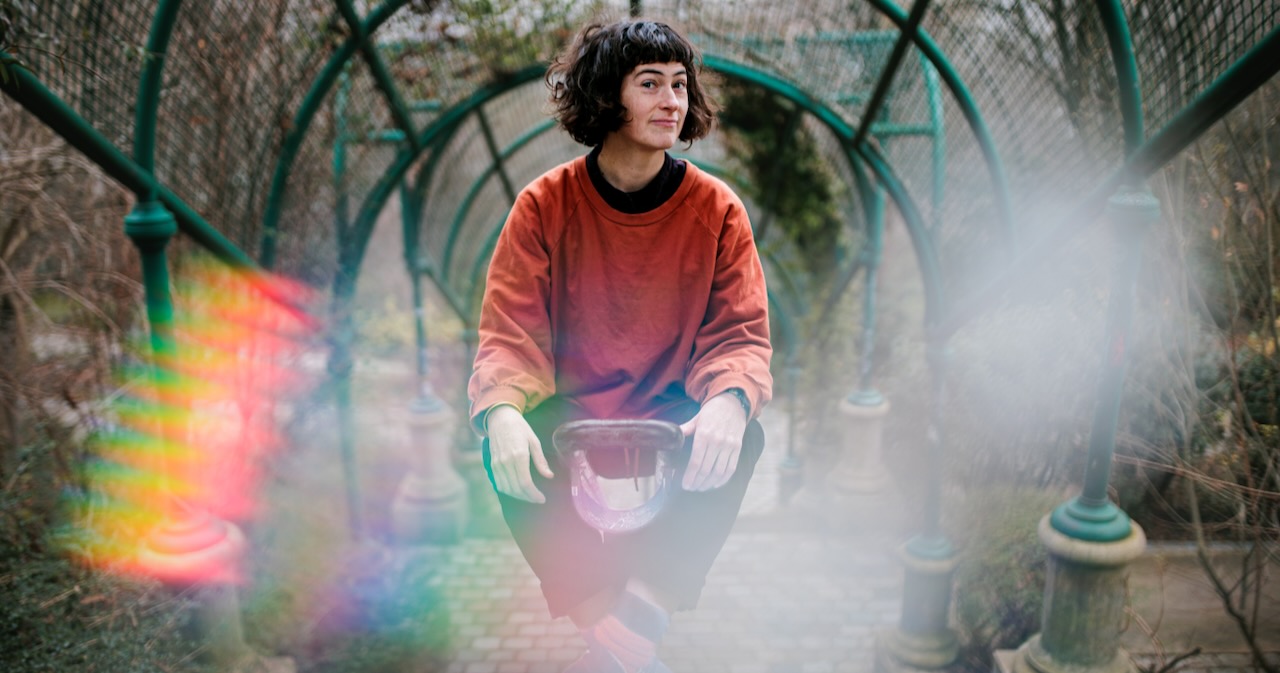
One track from Careful Of Your Keepers offers an unusually autobiographical glimpse into her daily life. “This Is When The Sky Gets Big” was inspired by a favorite park near her home: “A rare place in the city where there’s loads of sky because there’s no immediate tall buildings.” “It’s not a classic Paris park of gravel and pollarded trees in rows,” She says. “You’re allowed on the grass which is pretty unusual.” The sight of people sharing food, playing card games or dominos – even those who live in the park, because they have no other home to go to – inspires one of the album’s most reflective tracks.

When we spoke, however, she was in Bristol, staying at the home of her friend and fellow musician Rachael Dadd ahead of a show at an open-air amphitheatre on the Cornish coast. Stables loves being on the road; her favourite touring destinations include Seattle, Hamburg, and Japan, a place she, Dadd, and her partner (the musician Jesse D Vernon) toured together in the very early days of the band. “I’d just moved to Paris at the time and I was in culture shock,” remembers Stables with a laugh. “So it was so good to be in a place where people were respectful and nice and said sorry and thank you as much as I did. I’d love to go back…”

There will just be time, before the main tour in support of the album kicks off, for a family wedding in Europe, where she and her twin sister will celebrate their birthday together. (Her two other siblings are also twins – they all spent a lot of their youth, she says, filling in questionnaires from research scientists). As someone with a teenage daughter of her own, the question of the future, and the legacy her generation will leave for the next one, is uppermost in her mind.

You can hear it in the final track of the album, “Dibs,” which ends with the apocalyptic thunder of washing machine drums and the line, “Since the beginning of time, man out of time.” Here is the real change that is coming: the music resonates with the sense of climate crisis without ever explicitly referencing it. “There’s no avoiding it,” agrees Stables. “It’s on everyone’s mind, it can’t help but dribble out into the songs we write, the worry. There’s no stopping the train.”

But as a lifelong fan of the science fiction author Ursula K Le Guin, she can, too, see a brighter future. “Her books are really reassuring, and Kim Stanley Robinson’s books have given me hope, too. Life does carry on. We’re currently living in absolute sci-fi conditions for people who were around 100 years ago. It would just be nice if we knew how to respect that, and carried on in a way that doesn’t create more suffering.”


Photo Credit: Cedric Oberlin

WATCH: Billy Bragg, “I Will Be Your Shield”

Artist: Billy Bragg
Hometown: Barking, Essex
Song: “I Will Be Your Shield”
Album: The Million Things That Never Happened
Release Date: October 8, 2021
Label: Cooking Vinyl

In Their Words: “To me this is the heart and soul of the album. I’ve come to the conclusion that empathy is the currency of music — that our job as songwriters is to help people come to terms with their feelings by offering them examples of how others may have dealt with a situation similar to that in which listeners find themselves. After what we’ve all been through, the idea of being a shield, physically, emotionally, psychologically, really resonates.” — Billy Bragg


Photo credit: Jill Furmanovsky

WATCH: Misty River, “Walk Me to the River”

Artist: Misty River
Hometown: London, England
Song: “Walk Me to the River”
Album: Promises
Release Date: October 1, 2021
Label: The Workshop

In Their Words: “Sometimes I think the desire for fundamental change is very like a river; at times its hardly there at all, yet at other times when it’s in full flow it can take your breath away with its ferocity and speed, promising new adventures and transformation. I wrote this song at a time of great change in my personal life. I was questioning if I was to take a leap, who would come along and who would be left behind. I’m a great believer in the power and strength of community and how that helps us to be become more resilient, even during times of great adversity. I am so grateful for the amazing people and new friends I have made on this new musical journey.” — Carmen Phelan, Misty River


Photo credit: Arthur René Walwin
This video is presented by British Underground, filmed at Real World studios by Northern Cowboys Films

WATCH: Christina Alden & Alex Patterson, “Hunter”

Artist: Christina Alden & Alex Patterson
Hometown: Norwich, UK
Song: “Hunter”
Album: Hunter
Release Date: May 7, 2021

In Their Words: “This is a story of unusual friendship and strength in companionship, inspired by the beautiful work of Finnish photographer Lassi Rautiainen. In Finland’s northern forests a grey wolf and a brown bear — two typically solitary animals — were found to have formed a magical bond; playing, eating and hunting together. We loved the imagery of old pines and misty lands setting the scene for this natural wonder. Recorded at home in Norwich during the lockdown of 2020/2021.” — Christina Alden & Alex Patterson


Photo credit: Ben Alden

MIXTAPE: The Wandering Hearts & The Golden Tonic

Inspired by the reaction we received from our fans to our new single, “Gold,” The Golden Tonic is a selection of songs that have helped us through tough situations, inspired us, or take us back to a specific moment in time. The past year has been heavy and we hope The Golden Tonic works its magic on you. — The Wandering Hearts (Chess, Tara, and AJ)

Editor’s Note: See the video premiere of “Gold” below.

The Tallest Man on Earth – “The Gardener”

This song lifted my spirits at a very low point of my life. I’d just lost my cousin who I lived with and it made me feel like he was everywhere I went and with me in nature and in all of the beautiful things. I have no idea what the song was actually written about, but that’s what is so powerful about music — it will mean very different things to different people. – Chess

Willie Nelson – “On the Road Again”

The song that always accompanies long journeys. When the band is on the road a lot, it reminds me of how lucky we are to be doing what we do but also gets me hyped for whatever adventure awaits! – Chess

First Aid Kit – “My Silver Lining”

My uncle introduced me to a lot of music which has had a huge influence on me, including this song. I was blown away by the rawness and flawless harmonies. The band had just [gotten] together and this song really made me realize that Tara and I have something special when we sing together. I was working all the jobs under the sun at the time, but it gave me such hope that music was possible and that it was all worth it. – Chess

Sister Sledge – “We Are Family”

During the endless UK lockdowns over the past year, when we were feeling down, demotivated or just fed up, my sister and I would FaceTime each other, put disco music on and dance around our kitchens! It really did the trick of getting me out of a funk and also cheering her up with my silly dancing! This song has featured every time and I will, from now on, blast this song if I’m ever having bad day. – Chess

Jason Isbell & The 400 Unit – “If We Were Vampires”

A sad song, but one of those songs that makes me feel so grateful to have what I have in life. It reminds me to make the most of the time we’re given. – Tara

Cyndi Lauper – “Time After Time”

When you feel hard to love or unworthy, a song about not giving up on yourself. It’s about letting yourself be loved. Reminding you that you are enough. – Tara

Dolly Parton – “The Grass Is Blue”

A cathartic song for me. A sad song about survival and heartbreak but also about not allowing that ache to consume you. To find a way through, even if you have to lie to yourself to begin with. – Tara

Ella Fitzgerald – “Blue Skies”

Ella’s voice is a tonic for me. This song is restorative in her tone and phrasing as much as in the hopeful lyrics of a new beginning. – Tara

The Beatles – “Golden Slumbers/Carry That Weight”

Technically two songs, but you really can’t listen to one and not the other and they run in like one track, so there!! Going through “Golden Slumbers” into “Carry That Weight” has a whole journey for me of going through the reflection associated with loss or sadness, transitioning into the self-realization that we only have ourselves, so it encourages me to suck up the pain and keep going. – AJ

Randy Crawford – “One Day I’ll Fly Away”

Randy Crawford’s performance on this song, as so many of her recordings, just has a perfect energy. She sounds so peacefully resolved despite this sad exhaustion in the lyrics. This resolve is so infectious and when I hear her singing through a smile it makes me want to fly away and leave all my troubles to yesterday too! – AJ

Stone Poneys – “Different Drum”

Maybe it’s just me, but I notice when I look for music to lift me out of a rut, it often ends up including songs that feature escapism or leaving. This is no exception and there’s something about the way this song just ploughs on and Linda Ronstadt sings like she’s sticking two fingers up to her problems while driving off into the horizon. I’d like that to be me. – AJ

Shakey Graves (feat. Esmé Patterson) – “Dearly Departed”

Such a tune. It has a really lairy way of facing down feelings of loneliness and subduing them into a kind of angry but empowering joyfulness. I always find this one picks me off the floor a bit and gets me doing the useful easy things, like getting up and making a cup of tea. Might not be the big push I need but just enough to get that movement going. It’s a start and that’s a lot sometimes! – AJ


Photo credit: Shane McCauly

WATCH: Lady Nade, “Willing”

Artist: Lady Nade
Hometown: Bristol, UK
Song: “Willing”
Album: Willing
Release Date: June 18, 2021

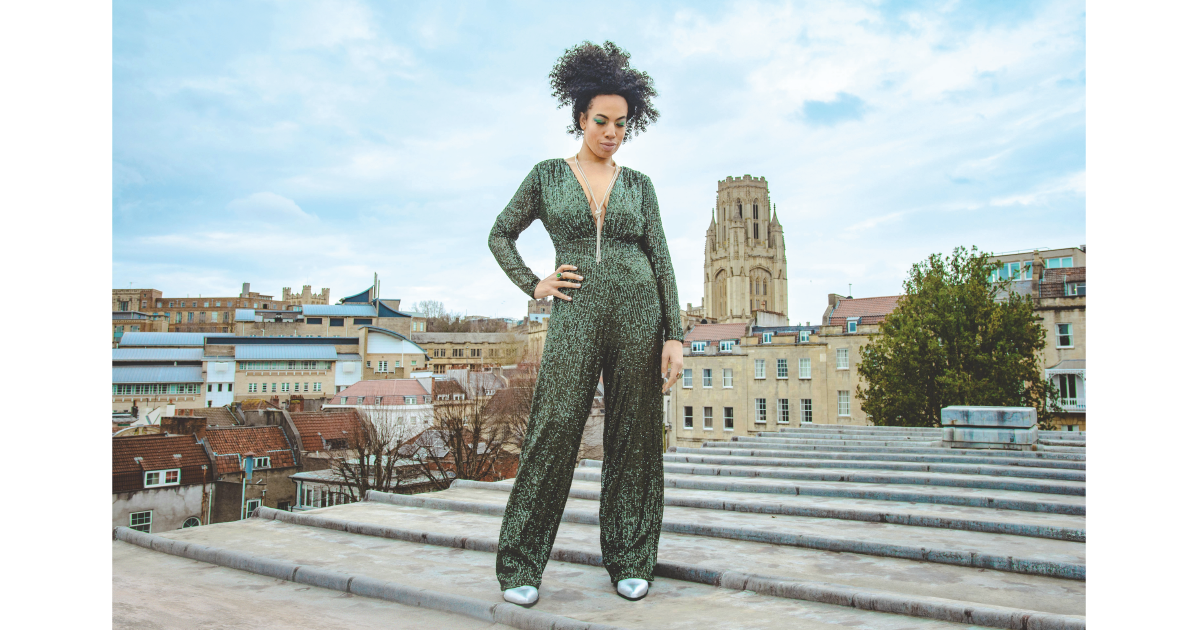
In Their Words: “I wrote ‘Willing’ as a message of acceptance, loyalty and friendship. I’ve often tried to fit in, which has meant I lost myself for a while, I’ve been working really hard in the last couple of years to be aware of that. Realising being individual is what being human means, these feelings are particularly poignant for everyone after this prolonged period of separation we’ve all been through. The video was filmed in my hometown in Bristol along the route of the BLM protests last summer. I end the video at the base of the statue of Slave Master Edward Colston, which was dismantled during those protests. The way the video and song came together portray the message of self, as well as community.” — Lady Nade


Photo credit: Arthur René Walwin

True to Her Activist Roots, Folk Legend Peggy Seeger Still Longs for Peace (Part 2 of 2)

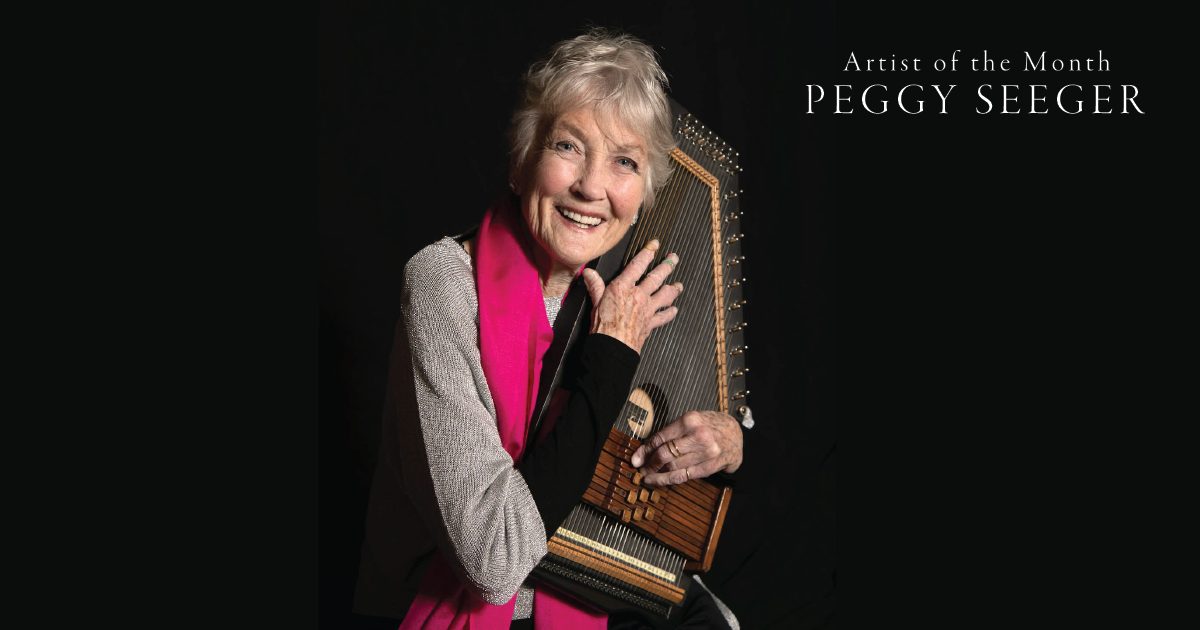
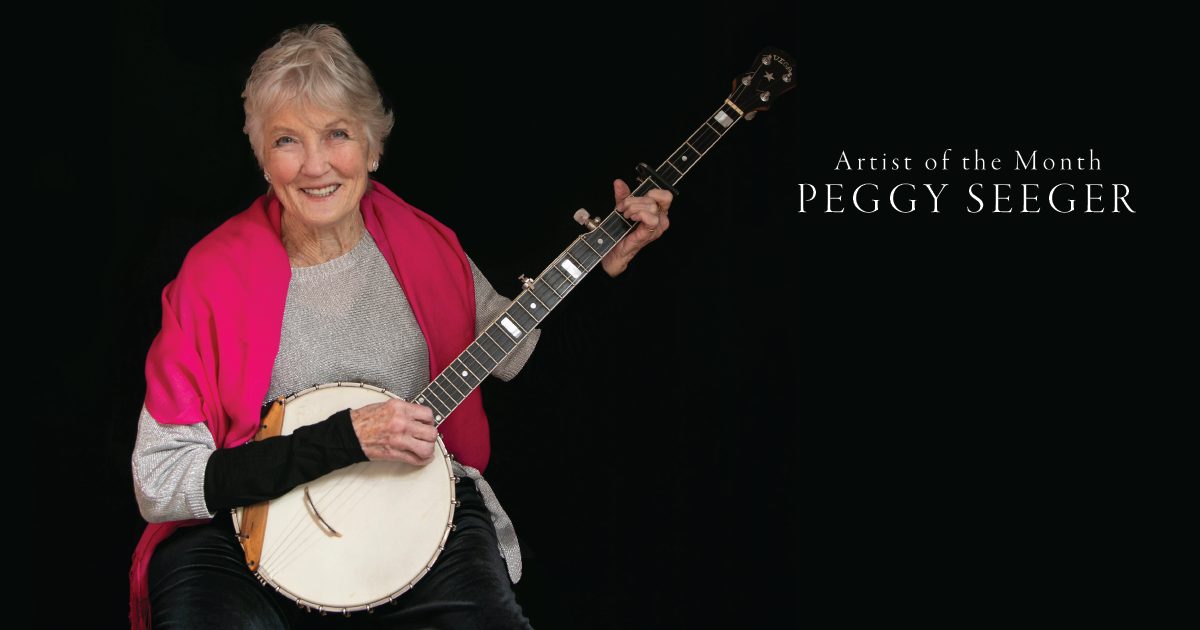
At 85 years old, Peggy Seeger stands as one of the most accomplished figures in folk music. She has recorded 25 solo albums, plus dozens more with her late husband, Ewan MacColl, along with collaborations with her siblings and generations of other folk musicians. She is a multi-instrumentalist who has edited and compiled folk music anthologies, and she ran a well-known magazine featuring contemporary songs for 20 years. All that while touring, writing more than 200 songs, raising three children and serving as an immoveable force for peace and human rights. And hers was the face that inspired MacColl to write “The First Time Ever I Saw Your Face.”

From her home in England, Seeger spoke to BGS about her new album, First Farewell, and what that title really means.

(Editor’s Note: Read the first of our two-part Artist of the Month interview with Peggy Seeger.)

BGS: You wrote “How I Long for Peace” 20 years ago, but it’s really appropriate now. Can you talk about it?

When we decided to make a new CD, my son Calum had me sing to him any song that I hadn’t recorded. Because I lived in the United States for 16 years and wasn’t touring England, I wrote quite a number of songs that my kids never heard. “How I Long for Peace” was one of those. And when Calum heard it, he loved it. So, it went on the album, and so many people are commenting on it. It’s kind of like a hymn, and it has a very singable chorus, and it ties up nations and politics with climate change and the plunder of the planet. When I sing it, I feel such a longing in my heart. I feel the violence of the world. We’ve just had a horrendous murder here. In this country, a young girl who was walking home by herself disappeared. She was found two counties away in a woods. And there’s been a tremendous uprising here on the part of women. But it’s not until men uprise against this that it’ll ever be changed.

Can you talk about the project’s title, First Farewell?

I remember my brother Mike, who was with New Lost City Ramblers — once they broke up they had an annual farewell concert every year. I thought that was marvelously funny. So, I thought First Farewell will make people think. But it’s based on the two farewells that you give at the airport. You know, if you stay to wave goodbye to the person at our airport, you hug, and then they go through where only passengers are allowed. And they walk about 40 yards away, and then they turn to the right. So, the first farewell is the hug, and there is a second farewell where they wave goodbye just before they turn that corner.

In lots of ways at my age, I’m saying farewell to a lot of things, almost daily. When you’re my age, you see your body doing this, doing that, and you feel you’re slowly decaying. And it gives you a new feeling of togetherness with nature. I really have more of an attachment to nature and the birds and the daffodils and the trees than ever I did before. And I’m doing a lot of listening to books about nature. I’m beginning to feel that humanity is this very, very powerful paper-thin sandwich filling between what happens above the earth and below the earth, and we are just this kind of bacteria that is sitting along the edge of the earth. [Laughs]

Because I do feel that nature is calling us. Nature realizes that we are a danger. The same way as we’re trying to get rid of COVID, nature’s trying to get rid of us. And power to her if that’s her best way of teaching us anything, because we don’t learn at all. We just repeat everything that we’ve done before. But the first farewell is the recognition that I am near the goalpost. And within sight of the goalpost. I’ve been running like hell. But I run more slowly now.

Why did you move back to the United States in 2006, and then why did you return to Great Britain?

A tumultuous love affair brought me here permanently in 1959. I became a British subject in 1959 and settled down here. After Ewan MacColl died, 30 years ago, I had a new partner, a woman, my best friend, the only person that I’ve been head over heels in love with. And after four or five years, I had an incredible urge to go to America to find out who I had been before I came here – because I was a child when I moved here. And I immediately became totally involved in England. I grew up in England from age 24 and 54. That’s when I really became an adult. (I shouldn’t say that, because I’m not an adult yet.)

In 1994, I got this terrific urge to go back to America. I wanted my partner to come with me, but she couldn’t. So, I said, I’ll go and see what it’s like. It was the first time I’d lived on my own ever in my life. I toured America endlessly for 16 years. Then I began to realize that I really, really, really missed my kids. So, I just felt that urge to come back here. And now that I’m back here, I’m so glad I came back.

My children live in three corners of London. I can reach any of them in two hours. We talk on the phone, and I’m part of my family that I created again. My American family is very big, but very scattered. And the ones that I was really attached to are all gone. So, what made me move back was a gut feeling of where I belonged. And it’s so wonderful that my children are helping. They’re making it possible for me to keep going.

What do you see as the bright spots in today’s political and social movements? What gives you hope?

On all of the really big issues, what’s happening is small grassroots groups. People who want something done, want something changed, want something different are realizing that the government says it will take care of it — but it doesn’t. So, small groups are forming everywhere, saying, “We have to do this ourselves because our government is not doing it.” I’m part of a group like that here where I live, near the edge of Oxford. And Oxford has just spread and spread and spread and spread until it has incorporated one beautiful old village and then another old village. Then they become surrounded with new housing. And they have taken away the green land, taken away the beauty of the old villages.

I live in an old village called Iffley. Its church was built in the 1100s. And since 1964, 16 of its green spaces have been sequestered for housing. Plunk, they put 20 houses here; plunk, they put 50 houses there. Well, there are four acres left, two ancient fields that have not been touched for 1000 years. And our council wants to put 50 houses on them. I’m part of a group that is acting out of incandescent rage at this. If the housing is put in, it will be the end of our village – the end of it. I’ve always tried to be part of a small group that does something locally.

Parting words?

I’d like to thank you for the attention you gave to Laurie Lewis, because she is so good. She’s wonderful. I love that kind of music. I really, really do. And it’s something that I really miss over here, joining in on the radio with all of that wonderful singing that you can sing along with. I do miss the whole American scene, I do. But I’m a Gemini and I’ve chosen one of my twins, so I live here.

What I would like to say is that I have been very privileged in my life, extremely privileged, unlike a lot of people who need to struggle to make their names recognized. My name was recognizable due to my brother Pete, and my mother, my father. And I came at the end of other musicians who had smoothed the path out for me. I have had every possible advantage: two wonderful life partners, both of whom contributed to my career, and who have pushed me on and helped me. And children who don’t hate me! [Laughs] And a country that I kind of understand.

And enough money that I’m not in need in my old age. “First Time Ever I Saw Your Face” brings in a reasonable amount of income. People still hear it all over the place with some very funny covers. Oh, my god, it’s been covered over 400 times that we know of. There’s a rap version. There’s a country and western version. There’s a gospel version. There’s what I call a barbeque quartets version. There’s one with Scruggs banjo on it. I am just so fortunate, and I’m thankful that I’m being given an old age that makes me visible and worthwhile.

(Editor’s Note: Read the first of our two-part Artist of the Month interview with Peggy Seeger.)


Photo credit: Vicki Sharp

Peggy Seeger Gathers Her Created Family for ‘First Farewell’ (Part 1 of 2)

Peggy Seeger began her life surrounded by brilliant and groundbreaking musicians: a mother who was an internationally known composer; an ethnomusicologist father; half-brother Pete, legendary for both his songs and his political courage; brother Mike, musician and song-catcher. In the latter years of her career, she is making music with what she calls her “created” family — her three children who share her delight in songwriting and performing.

Like Pete, Peggy was an outspoken leftist who was blacklisted in the 1950s, and she has never stopped speaking her mind through lectures, interviews, and her music. On the occasion of her newest release, First Farewell, we were honored to speak with her from her present home near Oxford, England. Here is the first of our two-part interview with BGS Artist of the Month, Peggy Seeger. You can read part two here.

BGS: Listening to your new recording, I was struck by how beautiful your voice is. Do you have to work at keeping it that way?

Seeger: I don’t feel it’s beautiful. It’s so reduced from what it used to be. What’s happened is I’ve moved down into the lower ranges where it’s more vibrant. And there I can, for some reason, feel more emotionally connected. I practice every day. I actually sit down and sing as if I’m giving a concert every day. It’s like any muscle: if you keep it to keep it working, you won’t lose it. And I walk every day. And I walk quite fast, so sometimes I get out of breath. You need to build your lung capacity. I’m pleased that you think it’s beautiful. I never thought it was.

What prompted you to create this new album?

My children have realized that there’s nothing else that I enjoy as much as singing. I don’t have any other way of expressing myself. I don’t cook well. I do make sourdough bread. … Five years ago, they asked me what I wanted for my 80th birthday, and I said I want to tour with my two sons. They said they would do a week of touring – and it worked out to be 16 days. But they said we needed an album to tour with. So that was when we recorded my previous album called Everything Changes, and I realized how strong it is, working with an entire family network.

Everyone in my created family one generation down is involved: my two sons, my daughter and two daughters-in-law perform all that I need: a manager, a minder, accompaniment, co-writing, graphics. It’s all there, including doing the recording. If you’re a singer for a living you need to put out a new recording periodically. And so that’s what we did [with this new project]. We took a couple of songs that were quite old. “The Tree of Love” I made up about 10 years ago; “How I Long for Peace” I made up 20 years ago and never recorded. “Gotta Get Home by Midnight,” that was created strictly to be an encore. Now, that’s about the most egotistical reason! We had about 20 songs, and we just chose what was best for this album.

Can you talk about the song “The Invisible Woman”?

That was written with my son Neill. When he came to work with me on a song, we just looked at each other and said, “What should we write about?” And neither of us jumped at anything. So, then we started talking about our joint lives. He’s 61. And he said, “You know, Mum, I’m beginning to feel invisible.” It worked out that young women weren’t interested in him anymore. You know, in actual fact, they are. It’s just that he doesn’t necessarily sense it. So, I said, “Try being an 85-year-old woman, if you want to be invisible.” Because, you know, as older women, the baby factory is shut. We’re redundant as far as productive units are concerned. So, what have we got to offer? We’re not looked on as wise. We’re shunted off, and we have been ever since we’ve been living under a patriarchal system.

Do you visualize any specific incidents from your life when you think about that song?

Well, of course, I am both visible and invisible. I’m visible in in my career, although folk music is a fringe music. It’s not way up there like classical music, and it’s not so broad or in-your-face as pop music. So, I am visible in that field. But the minute I walk out in the city, or when I’m just a member of the public, I’m invisible. Occasionally a nice man will ask if I want help crossing the street. I became aware of this once when I was walking with my daughter. She was absolutely dressed to the nines. She would have been 20 or 25, so I would have been in my 60s. And we kept passing men who would do this: They’d look at me and they’d see my hair and then they’d look immediately to her and go like that [rolls her head up and down and up]. Their eyes were on her. They were not on me. Yeah, I’m very grateful for that. I’m tired of being under male scrutiny. From age 15 to about the age of 45, I put up with the groping and being pushed up against a wall. And I’ve had it! They don’t do that anymore. I’m an old woman and I don’t mind at all.

I imagined folk music as being, in a way, above gender discrimination.

Folk music is no way free of gender discrimination. It is packed with it. Full of it, hugely full of it. In the music, women are dismissed. We are victims. In some of the folk songs we were sent off for nagging our husbands. We were battered and beaten in some of the songs. Women were left with children in their arms. We were endless victims. I have a three-hour lecture on the position of women in folk songs. And it is despairing. And some of it is so outright misogynistic.

There was a song Pete used to sing, and he thought it was funny. At one point, before I became a feminist, I thought it was funny.

Oh, I had a wife and got no good of her,
Here is how I easy got rid of her,
Took her out and chopped the head off her
Early in the morning.

Seeing as how there was no evidence
For the sheriff or his reverence
They had to call it an act of Providence
Early in the morning.

So, if you have a wife and get no good of her
Here is how you easy get rid of her
Take her out and chop the head off her
Early in the morning.

It was so vicious that it was funny. You couldn’t believe that anybody would sing about this. So, if we really look at a lot of the content of the songs, women are just handed from man to man and were killed by a lot of the men. And a lot of the folk songs actually document real murders, like “Ellen Smith” and “Omie Wise” and “Pretty Polly,” and the other ones like Laura Foster in “Tom Dooley.” Endless murders — especially after we get pregnant. I still love the songs unfortunately. To me, they’re historic pieces. And they talk about what we’re battling now.

Your album sounds like you’re acknowledging loss, and at the same time, acknowledging contentment. Is that a fair characterization?

Well, people in my family who lived to the age of 85 generally live into our 90s. So, I’m looking at maybe another, hopefully, 10 or 15 years of life. And the recognition and acceptance of that makes a whole new frame of life. You live differently with that. I have mental snapshots of my past. I have oceans of them. So, the pictures in my head and what I’ve learned and experienced just flow back and forth with the tides.

That’s where songs like “Dandelion and Clover” come from. I didn’t set out to make a song about memory with “Dandelion and Clover.” All of a sudden, the thought of a little boy coming to our kitchen door just flew into my head. He died when he was 8. He had a seizure on the schoolroom floor. He and I used to sit out in the field — there was a four-leaf clover field. We’d sit out there and talk about marriage and having babies when we were 8. And then the tragedy of him dying … but I didn’t feel it was a tragedy because I knew he was going to come back and marry me because I was told that’s what he would do.

In writing we try to marry up opposites or marry up correlated subjects, as in the song “Lubrication.” Or marry up diverging thoughts as in “How I Long for Peace,” contrasting peace with acts of violence and profit and greed. And to put those into a quiet, peaceful song.

What has it meant for you to be, as you say, in lockdown?

Nothing, because I’m a hermit anyway. I miss going into town, I miss going to the hairdresser. I miss going shopping, because other people shop for me, although now I’ve had two vaccine shots. So, I think I’m going to start shopping for myself again. But I’ve always been a hermit, I’m happy with my own company. My partner lives in New Zealand and I haven’t seen her for two years, because of COVID. And we’re not compatible for living together. So, I live on my own. I take care of myself. I keep busy. My god, I keep busy. There’s so much to do. And I talk to nice people like you.

(Editor’s Note: Read part two of our Artist of the Month interview here.)


Photo credit: Vicki Sharp

WATCH: Teddy and Richard Thompson Swap Songs on ‘Woodstock Sessions’

As we begin to roll into a new year, it is important to remember the important things in life and to be thankful for the goodness around us, like health, family, and music. In this edition of Friends & Neighbors, father and son Teddy Thompson and Richard Thompson grace the camera and perform a lovely set of songs for a Woodstock Sessions crew. With familiarity and comfort that only kinship can produce, the two share laughs, smiles, and charming songs that have decorated each of their respected careers.

The sessions kick off with the title track from Teddy Thompson’s new album, Heartbreaker Please. It’s his first solo release since 2011 and a complete representation of what he describes as a catholic taste in music, enjoying sounds and styles from many eras and genres. In addition, this Woodstock Session includes two of Richard Thompson’s landmark songs, as well as a cover of “Cut Across Shorty.” The fun and joviality this duo has while performing together is enough to warm the heart and kindle the flames of thankfulness and reflection. Watch these British icons share the frame here.


LISTEN: My Darling Clementine, “I Lost You”

Artist: My Darling Clementine (with Steve Nieve)
Hometown: Manchester / Birmingham, UK
Song: “I Lost You”
Album: Country Darkness
Release Date: November 6, 2020
Label: Fretsore Records

In Their Words: “‘I Lost You’ comes from [Elvis] Costello’s 2010 album, National Ransom, and is co-written with Jim Lauderdale, who was also part of the touring ensemble Elvis put together at that time. Lou and I shared a festival bill with Jim at the River Town Festival in Bristol in 2017 and joined him on stage for a few songs. Our paths have crossed a few times since. Most recently I met him at a songwriter festival in Lafayette, Louisiana. Jim is one of the sweetest and funniest guys, a master of the high harmony, and has the closest living voice to that of the great George Jones. He is also a very fine country songwriter.

“The original version of ‘I Lost You’ opens with a guitar riff which then reoccurs later throughout the song. We replaced that with Steve [Nieve]’s arpeggiated piano motif. Although written originally for one voice, the song works particularly well as a conversational duet. The male character is regretting taking the woman for granted who, due to his negligence, ‘goes to strangers.’ He is feeling bereft and foolish having lost her. Of all the 12 songs we have reinterpreted as a duet for this Country Darkness album this was possibly the most straightforward to adapt for two voices. It also served as a timely reminder to both Lou and I, especially me, not to take each other for granted!” — Michael Weston King, My Darling Clementine


Photo credit: Marco Bakker