Del McCoury – Toy Heart: A Podcast About Bluegrass

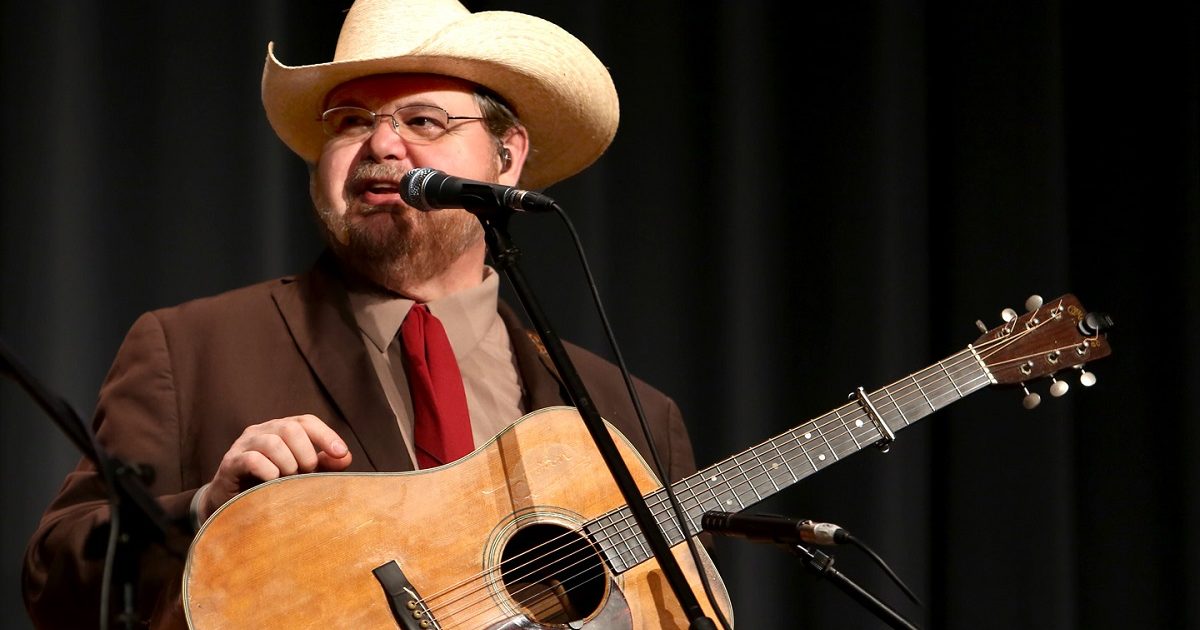
In an interview backstage at the Grand Ole Opry host Tom Power talks to Bluegrass Hall of Famer and Grammy award-winner Del McCoury about how he started playing banjo, his (interesting) time in the military, joining Bill Monroe’s band, being replaced by Bill Keith, starting over, playing music with his sons, and how he found his way to becoming a legend of bluegrass music — and to some, defining the whole thing.


Listen: APPLE MUSIC • STITCHER • SPOTIFY • MP3

Subscribe to TOY HEART: A Podcast About Bluegrass wherever you get your podcasts. New episodes drop every other Thursday through May.


The Breakdown – Alison Krauss & Union Station, ‘So Long, So Wrong’

Advertisement

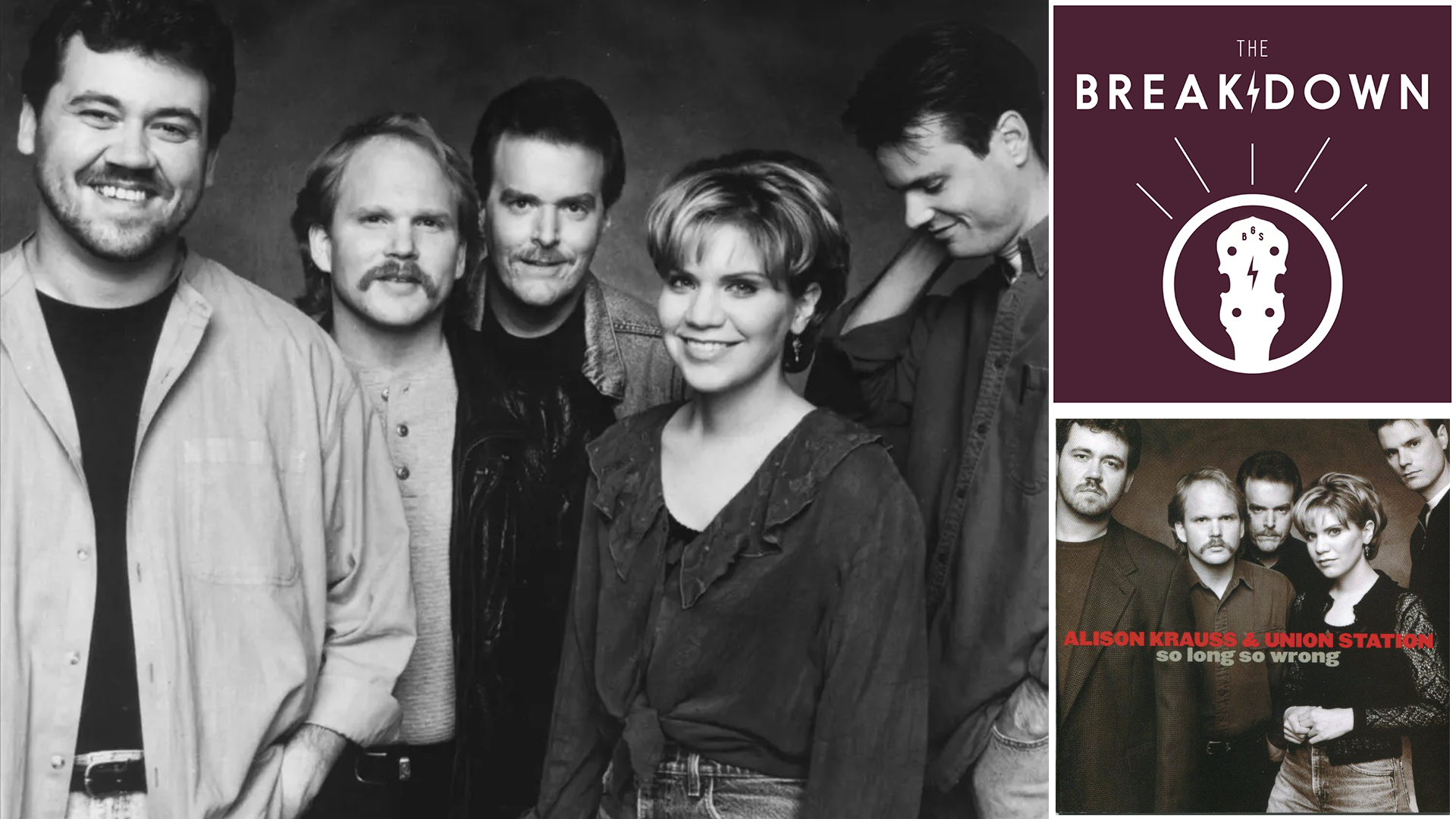
Episode 3 of The Breakdown’s second season explores Alison Krauss & Union Station’s 1997 album So Long, So Wrong.

LISTEN: APPLE PODCASTS • MP3

It was the album that nearly broke them – but instead, it made them. If you weren’t in love with Alison Krauss and Union Station by the end of their third album, So Long, So Wrong, you needed to check your pulse. Patrick and Emma find out the stressful story behind the second best creation of the ’90s (after Pop Tarts, of course).

Season 2 of The Breakdown is sponsored by The Soundtrack of America: Made In Tennessee. Visit TNvacation.com to start planning your trip.

WATCH: Bryan Sutton Declares He’ll “Lay Down My Old Guitar” on ‘Live From Here’

If you find yourself stuck in the late-winter blues, this video is for you. Ten-time IBMA Guitar Player of the Year Bryan Sutton visited Live From Here with Chris Thile recently, and the result was nothing short of breathtaking. Sutton and Thile teamed up on a classic bluegrass number, “Gonna Lay Down My Old Guitar,” but there was nothing ordinary about the performance. The in-the-moment communication between Sutton and Thile is truly a sight to behold as they trade blazing leads, soulful harmonies, and curious facial expressions. From the moment it kicks off, the audience is treated to an experience that only two prodigious instrumentalists like these can provide. If you’re in need of a little extra to get through the day, week, or month, look no further.


Junior Sisk Hitches His Wagon to the Stars of Traditional Bluegrass

Junior Sisk is on a mission. Although he’s been a fan of traditional bluegrass since childhood, he’s now fully focused on keeping that history alive. That passion for tradition is evident in Load the Wagon, the award-winning vocalist’s first release since disbanding Ramblers Choice.

“The Stanley Brothers, Flatt & Scruggs, Jim & Jesse, and all of them had big hits, but they also had hidden treasures on all those LPs. A lot of them that were never played and they’re not a jam tune. That’s what I’m looking for,” Sisk says. “It’s going to be like new tunes to a lot of folks. That’s what I’m after – to still pay tribute to the founding fathers of traditional bluegrass music, but in the Junior Sisk style.”

The Virginia musician’s recovery mission has unearthed a number of gems on Load the Wagon, like Flatt & Scruggs’ little-known “Lonesome and Blue” and the heartfelt “Lover’s Farewell,” a Carter Family gem suggested by his new bandmates Heather Berry-Mabe (guitar, vocals) and Tony Mabe (banjo, guitar, vocals). Jonathan Dillon (his mandolin player from Ramblers Choice), Gary Creed (bass, vocals), and Douglas Bartlett (fiddle, vocals) round out the lineup.

Sisk also re-cut the song that remains his most requested number, “He Died a Rounder at 21,” from his time with Wyatt Rice & Santa Cruz in the mid-‘90s. Leading up to a show at Station Inn, he invited BGS on the bus for a chat.

BGS: The first song on this album, “Get in Line, Buddy,” will be a familiar tune for fans of the Country Gentlemen. What made you want to record it here?

Sisk: Me and Bill Yates got to be good friends there for a long time right toward the end, and every time we’d play together at a festival, I’d always get together with him and ask him to do “Living on the Hallelujah Side” that he’d done with the Country Gentlemen, and this one right here — “Get in Line, Buddy.” Those are a couple that he sang solo on. It was just great, great singing.

It’s like what I’m trying to do right now. I’m in line with Flatt & Scruggs, the Stanley Brothers, and all that. I’m way down the line, but I’m in line anyway. And it still rings true today when you come to Nashville. When you walk the streets, you see them on the streets. You see them in all the clubs and everything. Everyone’s standing in line. I feel like I’m still standing in line for traditional bluegrass music.

With “Get in Line, Buddy” and “Best Female Actress,” there’s a sad story there, but you find a way to put humor into those songs. It’s not an easy thing to pull off. How do you approach that?

Well, when I go into the studio and start to record, I’ve always done a lot of tongue-in-cheek songs. I’m noted for that, but I sing with a lot of emotion. I sing with a lot of feelings. That’s why a lot of times I’ll lose my voice, to tell you the truth, because I’m singing so hard and with as much feeling as I can.

I love to look out in the crowd and see them either crying, if I’m singing a pitiful song, and if I’m singing a tongue-in-cheek song, I like to see them laugh and carry on. It just makes for a good show, I think. And Charlie Moore has been one of my favorites. He’s one of the most underrated bluegrass artists ever. He’s a great singer.

You also have some songs on here, like “Just Load the Wagon,” which are plain-and-simple funny. I’m curious, where did you get your sense of humor? Was there someone in your family where you picked that up?

Yeah, my dad. He’s a songwriter. He’s probably got a thousand songs at the house for me to choose from. But every song he writes, at the top of the page he writes the date he wrote it, and he writes, “Sing in the key of D and sing like Carter Stanley.” [Laughs] I said, “Dad, you can’t sing ‘em all like Carter Stanley and they can’t all be in D!” But if he had his druthers, that’s what it would be. That’s pretty much me, too. I was raised, born and bred, on the Stanley Brothers’ music.

This one here, I thought the folks would really enjoy, and now that I’ve gotten rid of the Rambler’s Choice name and went to the Junior Sisk Band, I’m trying to pay tribute to traditional bluegrass music, so we brought back the old-style banjo, the mountain-style banjo-playing with the clawhammer on this one. And it’s turning out to be one of my favorite tunes that we’re playing now. It’s a lot of fun and the crowd can react to it. It’s a toe-tapping tune.

You mentioned that the Ramblers Choice name is gone. Why was that an important move for you to shift to Junior Sisk Band?

Well, Jason Davis, Kameron Keller, and a couple of guys left. My dad always says when wintertime comes around and things start getting slow, somebody blows a whistle and everybody switches. It’s pretty much like that. If you don’t have any work, I’m going where the work is. But I was actually straying away from my heart – I was straying away from traditional bluegrass music a little bit. I just did not want to do that. I finally came to the conclusion that what I’m going to do until the end of my career is pay tribute to traditional bluegrass music, and try to keep it alive as long as I can. That’s what we’re trying to do today, is keep it straight-ahead bluegrass, right in the middle of the road, and turn the younger fans onto traditional bluegrass music.

Why is it important for you to carry that torch for traditional bluegrass?

I’m just tickled to death to see the young’uns out here today that come to our shows, or to see them out jamming at festivals and playing the old-style music. You don’t see that a lot anymore. It seems that the younger generations is trying to play every note they know. …When I hear somebody with real emotion, and real feeling, who’s a traditional young’un coming up, I love it. Because we’ve lost so many — Ralph Stanley, James King, and a lot of traditional artists here lately. I think I’m a torch holder and that’s what I hope to be until the end of my career. As long as I’m able to breathe and sing, I’m going to keep their music alive.

It hurt to lose James King, didn’t it?

Oh, it was hard. I was there holding his hand on the day he died, in the hospital. I was on one side and Dudley Connell was on the other. And we told him we would keep his music alive. I’m getting chills now, but it meant the world to me, just to be there. He was a torch holder as well.

You re-recorded “He Died a Rounder at 21” from your days with Wyatt Rice & Santa Cruz. What’s it like to sing about that guy now, 24 years later? Does it bring out a different emotion in the song for you?

It’s still the same. The story in that song is awesome. I’ve grown up with a lot of folks in the bluegrass industry and I’ve seen a lot of ‘em pass away from alcoholism and just the hard life, the bluegrass life. People around home say, “Wow, you’ve got it made. You go on stage and play 45 minutes…” They don’t know about the 15 hours you travel to get there. It’s a hard life. You don’t eat right. You don’t take care of yourself. And I can understand where this guy came from. He only lived 21 years – but 21 years was like a thousand years in his time. I understand that, and that’s why I put everything I got in that song. Because it rings true.

Was there a pivotal moment for you when you decided to go into bluegrass full-time?

In my early teens, I lived and breathed it. I sat at the end of the bed in my mom and dad’s room with an old LP player and played Dave Evans, Larry Sparks, the Stanley Brothers, just trying to learn everything George Shuffler ever did on guitar. I was in it hot and heavy, and eat up with it.

In the early ‘80s, I moved up around the DC area and that’s when the Johnson Mountain Boys came on the scene. I followed them everywhere they went. They brought me back to life, and still today if I get to feeling sad, or get down about the music, I can put a Johnson Mountain Boys DVD in, and it will bring me right back. There was so much excitement and energy, they just tore me all to pieces. That’s what it’s all about.


Photo credit: Susie Neel

LISTEN: Kristy Cox, “Finger Picking Good”

Artist: Kristy Cox
Hometown: Adelaide, Australia originally (now Nashville, TN)
Song: “Finger Picking Good”
Album: No Headlights
Release Date: February 28, 2020
Label: Mountain Fever Records

In Their Words: “Since I was a girl, I have been a huge fan of Tommy Emmanuel. When my co-writers Jerry Salley, Bill Wythe, and I were writing this song we spoke about how great it would be if we could feature Tommy on the different fingerpicking tunes throughout the track, I was so incredibly excited when he said yes. I love this song; it was so much fun to write and even more fun to perform.” — Kristy Cox


Photo credit: Billy Joe and Clockwork Photography

The Breakdown – Jim & Jesse, ‘The Jim & Jesse Show’

Advertisement

Season 2 of The Breakdown continues with an in-depth exploration of Jim & Jesse McReynolds’ 1975 live album, The Jim & Jesse Show.

LISTEN: APPLE PODCASTS • MP3

Bluegrass and Japan are like peanut butter & jelly – it might not seem the most obvious match up, but boy, does it work. Patrick and Emma talk to Jesse McReynolds, one of the oldest living Opry members, about Jim and Jesse’s 1972 trip to Tokyo – and the awesome live album it resulted in.

Season 2 of The Breakdown is sponsored by The Soundtrack of America: Made In Tennessee. Visit TNvacation.com to start planning your trip.

The String – Leftover Salmon

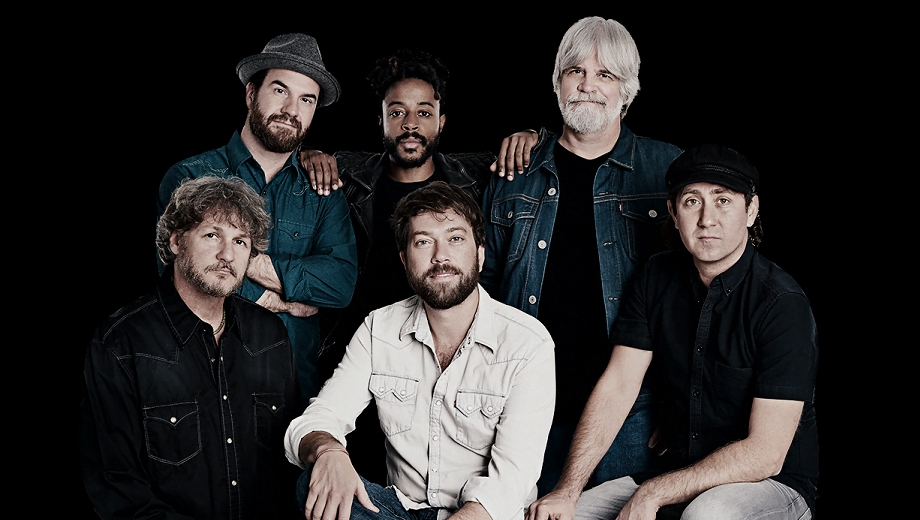
Vince Herman and Drew Emmitt met in 1985 on Vince’s first night in Boulder, CO and formed a lifelong musical bond. With banjo player Mark Vann they merged two bands into one and became Leftover Salmon at the dawn of 1990.

LISTEN: APPLE PODCASTS

In the 30 years since, they’ve earned the respect and partnership of the highest levels of the bluegrass and acoustic worlds while playing music that’s as adventuresome as it is laid back. Herman and Emmitt marked the anniversary with a duo acoustic tour. The String’s host Craig Havighurst caught up with the pair at Nashville’s City Winery for a wide ranging talk about their years together.

New Singer, Same Edge: The SteelDrivers Deliver on ‘Bad For You’

The SteelDrivers’ new lead singer, Kelvin Damrell, already grasps the driving force behind the band, which is marking its 12th year with a brand new album, Bad For You.

“You couldn’t play our songs if you weren’t passionate about what you were doing,” the Berea, Kentucky, native believes. “It wouldn’t sound right at all, in any position in the band. From the mid-range harmony part to the hardest-playing guitar riffs, to the hardest-playing fiddle, it wouldn’t sound nearly as good as it does if you didn’t love what you were doing, and playing with as much passion as you could.”

On Bad For You, Damrell steps into a role once filled by Gary Nichols and Chris Stapleton for the group’s first album since winning a Grammy with 2015’s The Muscle Shoals Recordings. All five of the SteelDrivers — Richard Bailey, Damrell, Mike Fleming, Tammy Rogers (whose daughter discovered Damrell on YouTube), and Brent Truitt — invited BGS over for a chat.

Kelvin, how long had you been in the band by the time you went into the studio?

Kelvin: Goodness, how long has it been now? I joined in October 2017. I was just so looking forward to the release date of the album that I’d forgotten when we went in.

Mike: He had to go to boot camp first. [Laughs] Bluegrass boot camp! We had to take him out of Kentucky. He had his first airplane flight. You saw the ocean for the first time, right? You left a lot of things laying around. [All laugh] You went through airports with knives when you shouldn’t have. But listen, it was good! We all got comfortable with each other, and we needed some time just to feel that, and it got to that point.

Kelvin: When I joined the band, I was really unsure about what was going on, about my position. I had made the cut as far as getting to be in the band, but Brent kept telling me we needed a couple of months to see how we jibe together. I thought that was just him saying that, but it was the truth. We switched vehicles pretty regularly and I rode with different people. We really saw how we jibed together before we made a full decision on whether we were going to keep me, or if I was going to go back to sweeping chimneys.

The song “Bad For You” has such a cool groove. You sent it out as your first single and you named the album after it. What is it about that song that is special to you?

Brent: To me it was the perfect fit for this band. It was the song that hit me right out of the chute. It encapsulates the sound. It’s really edgy, and we’re a little bit on the edgy side of bluegrass.

Mike: It was one of the strongest songs, as far as that kind of feel. It’s like a “Here we are!” kind of song. You know, “Look out!” The way Kelvin sang it, Tammy told him, “Sing it like a rock ‘n’ roll singer.”

Kelvin: I almost got emotional when we played it for the very first time. I really did, that’s the truth. The first night we debuted it, after we hit that last big note, I almost did get a little emotional because it’s like something is finally coming to fruition with my position in the band. I’d done all this other stuff that vocally belonged to Gary and vocally belonged to Chris, and now this one vocally belongs with me at the lead. And man, that three-part harmony! Everything about it was good, and it really did make me emotional.

I’m glad you mentioned harmony because that’s a really important component of this band that doesn’t get talked about enough — how well you can stack those voices.

Tammy: Thank you. But you’re exactly right, I think that’s always been a really strong facet of the band. It’s this rock ‘n’ roll lead singer with this really strong three-part harmony coming in on the chorus. From a writer’s perspective on this album, I thought about that a lot, and how that was still a big part of the sound, and to keep that consistent because I think that does set us apart.

Brent: In our live set, I’m thinking of one or two songs that end with the vocal trio by itself, doing the swell and bending into a note, and the crowd loves it every time. It’s a big part of bluegrass, period, but it’s a big part of our music too.

Brent, how would you describe the SteelDrivers’ sound?

Brent: For me, personally? It’s gritty, grind-y bluegrass. With a lot of soul.

Tammy: Think about the Rolling Stones if they were to play with bluegrass instruments. That’s us.

Mike: With a blues/rock ‘n’ roll singer. … It’s intense! I’m tired after our set. It’s a workout. We keep the emotion and the intensity going quite a bit, but we let up occasionally and do a nice song.

On this record, you do have that slower moment on “I Choose You,” which brings out another side of the band.

Tammy: Yeah, we’ve always had a song or two like that. On the first record, “Heaven Sent” has always been one of our most-requested and popular songs, and it has that great, easy, rolling feel to it. We call it the hippie dance. And when Thomm Jutz and I wrote “I Choose You,” that was definitely musically where I wanted to go with that, to have that feel to it. But it’s still a very serious lyric, even though it has a positive message, in a way. It has a lot of depth and meaning to it.

Richard, do you have a favorite track on this album?

Richard: Umm… “Forgive.”

What do you like about that one?

Richard: I like what I played on it. [All laugh]

Tammy: See, it’s all about the banjo! We joke about it but people love the banjo!

Mike: It’s got a great groove.

Brent: It’s one of my favorite songs too.

Kelvin: It’s funky. It’s like “Bad For You” is rock ‘n’ roll and “Forgive” is funky!

Kelvin, what were you listening to about three years ago, before joining the band?

Kelvin: Three years ago I was on a really big Cinderella kick. [All laugh] I’m still on the kick. I still listen to mainly rock ‘n’ roll when it’s just me in my truck, driving for hours on end.

Did the band prepare you for the honesty of bluegrass fans, and how they’ll tell you what they think?

Kelvin: I was ready for it before I started! I knew how much of a following they had. I know how much people loved Gary. I know how much people loved Chris. And I was ready for it – I prepared myself for people saying, “This guy sucks. You need to get somebody else.” [I’ve heard that] twice, I think, the whole time I’ve been with the band. It’s been great — because I was expecting it at every show!

Tammy, do you have young women coming up and telling how cool it is to see a woman on stage?

Tammy: Yeah, it’s really awesome and I appreciate it a lot. Because when I was growing up there were very few women playing, and the ones that did were usually bass players. Mama might be back there thumping on the bass or whatever. There were very few women role models for me, of that generation. There were a couple — I remember Lynn Morris was playing and Laurie Lewis was playing a few years ahead of me in those circles. Not many in the country world. I was a huge Mother Maybelle fan and part of that was because she played the guitar. That was fascinating for me as a kid.

And now in the generation after me, there’s just unbelievably talented women – not just singers, but instrumentalists. It’s phenomenal, the jump from mine and Alison Brown’s ages, to Sierra Hull, who is a genius on the mandolin, and Kimber Ludiker and all the Della Mae girls we love, and Molly Tuttle is absolutely slaying it on guitar. Sara Watkins, I’m With Her, Sarah Jarosz … it’s just on and on and on. If I in any way influenced any of those players, I am deeply honored.

What would you want bluegrass fans to know about this new record?

Tammy: We’re excited this year to get out and we’ll be playing a lot of different kinds of venues. We don’t play that many traditional bluegrass festivals anymore, but it’s my hope that people hear the music and still see the thread that’s in there. The subject matter that we choose to sing about is not as cleaned up as some other stuff, but to me it’s just another facet of the music, and I think we’re hopefully carrying it forward and carrying a torch.


Photo credit: Anthony Scarlatti

WATCH: Darin & Brooke Aldridge, “Emmylou”

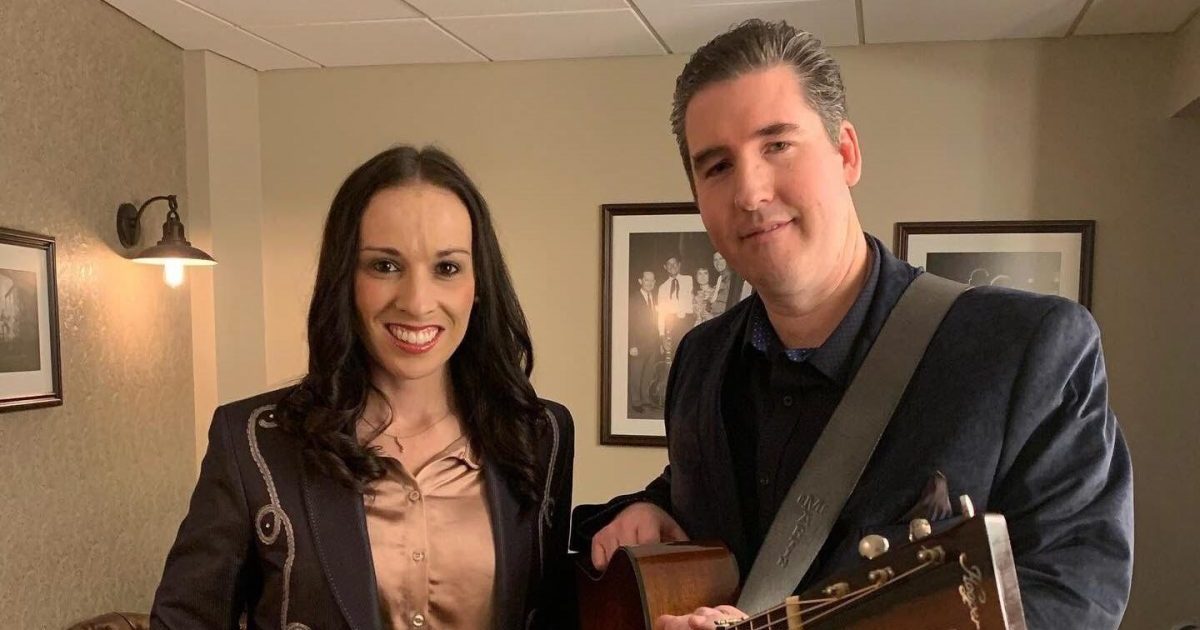
Artist: Darin & Brooke Aldridge
Hometown: Shelby, North Carolina
Song: “Emmylou” (First Aid Kit cover)
Album: Inner Journey
Label: Rounder Records

In Their Words: “When we were choosing songs for this album project, Brooke and I were poring through YouTube videos looking through Emmylou Harris songs, when this tune popped up. We immediately were drawn to it and decided to record it.” — Darin Aldridge

“The song seemed perfect for us as a couple that makes music together. There’s not a day that goes by that Darin and I don’t share a smile and wonder how we got lucky enough to find each other. Years of searching and praying for that exact moment when love would find us. Little did we know what started out as the same musical goals and ambitions would bring our hearts together in a marriage and a career of music.” — Brooke Aldridge


Photo courtesy of Darin & Brooke Aldridge

Sam Reider, “Trio Sonata”

All disbelief suspended, composer and accordionist Sam Reider’s work is essentially string band music. Yes, he’s an accordionist (which shouldn’t really be remarkable, because… Sally Ann Forrester), and yes, Eddie Barbash plays saxophone on the most recent album, The Human Hands EP, but we’ve suspended disbelief here for a reason. Whether the rest of the band were rounded out by Dominick Leslie, Duncan Wickel, Alex Hargreaves, Dave Speranza, and Roy Williams or not, these tunes would feel fiddle-y. They’re folky and down-to-earth and approachable and danceable and they cheekily, defiantly traipse across the borders of bluegrass. 

The truly remarkable thing about this music is not this feat in the face of (gasp) an accordion and a saxophone!? It’s that these folky-feeling tunes are… composed. These melodies and ideas are directly tied to a musical history and tradition often regarded as devoid of any idea rootsy or vernacular. “Trio Sonata,” a two-part composition on the new The Human Hands video EP, draws from the Baroque trio sonata, a 400-year-old musical form that derived from popular dances of the day. The three parts of Reider’s “Trio Sonata” are I. Reel, II. Jig, and III. Breakdown, amounting to an unlikely, four-century-old parallel to modern fiddle contest song selections. 

In this way, there’s a satisfying sense of symmetry to Reider’s idiosyncratic approach to fiddle-oriented instrumental music. It defies any so-called logic we might try to use to justify certain genre designations, it mocks the idea that we ought try to delineate between “classical” versus “folky” approaches to writing and creating music, and perhaps above all else, the music centers dance. Movement is certainly a unifier, and in this case, it unifies all of these musical eccentricities — from squeezebox to Bill Monroe to Baroque compositions to sax — in a perfectly digestible package.