Season 2 of The Breakdown has arrived! Fiddler Patrick M’Gonigle and music journalist Emma John uncover bluegrass music one iconic record at a time, premiering with an in-depth exploration of Dolly Parton’s Grammy and IBMA award-winning album, The Grass Is Blue.
In the heart of the Smoky Mountains, Emma gets to interview Dolly herself, who explains that bluegrass is so important to her that she risked it all to release her groundbreaking 1999 record. Of course, we’re glad that she did – who else knew that Billy Joel would go great with banjo?
Season 2 of The Breakdown is sponsored by The Soundtrack of America: Made In Tennessee. Visit TNvacation.com to start planning your trip.
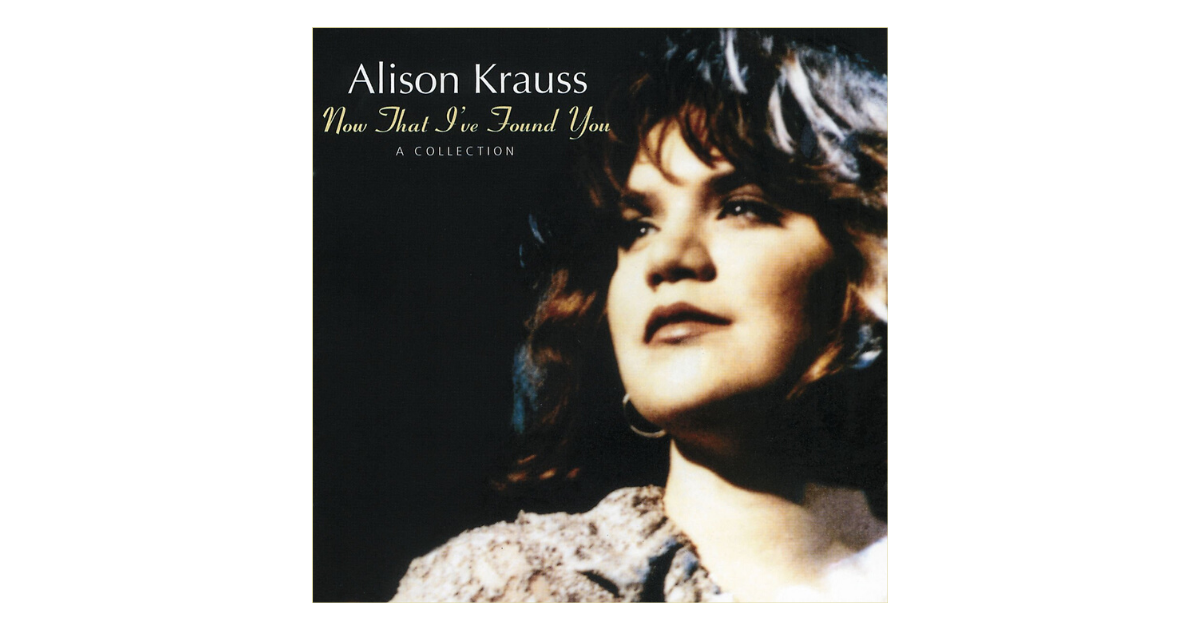
Twenty-five years ago this month, Alison Krauss glided into the mainstream with Now That I’ve Found You: A Collection. Did you wear out your copy, too?
Envisioned as a way to highlight the songwriters who were important to Krauss, according to a Billboard article published a few weeks before release, the project included what many would consider her signature song: “When You Say Nothing at All.” Originally recorded for a Keith Whitley tribute album, Krauss’ version positioned her as one of the finest ballad singers of her generation, a skill that wasn’t quite on full display on her bluegrass albums with Union Station.
She told Billboard that, as a producer, Now That I’ve Found You gave her “the chance to record material we do that doesn’t necessarily fit within the structure of our [other] records.” Along with “When You Say Nothing at All,” the double-platinum project offered “Oh, Atlanta,” “Broadway,” and “Baby, Now That I’ve Found You,” as well as exquisite selections from her prior Rounder albums.
In the article, Krauss explained that she turned down a chance to open for Garth Brooks because the arenas “were just too loud for me,” although she thought it was “pretty neat” that he would ask a bluegrass band to open his shows. She also reiterated that the album “is not a representation. It’s missing the other half of what I do with Union Station.”
Taking the music business perspective into account, the article addressed the anticipation for “When You Say Nothing at All” at country radio and CMT, as well as the label rollout and the expected sales of the album. In some ways, it’s still the same conversation surrounding any critically-acclaimed artist poised for crossover appeal: How do you retain the core audience without being “too commercial”? Or in this case, how do you market an artist that Billboard describes as having “soft, lush ballads on one side and her bluegrass band work on the other”?
At the end, Krauss offered her own opinion among all the industry input: “We just try to do whatever fits the song,” she said. “I don’t think selling out either way is good.”
Artist:Sierra Hull Hometown: Nashville, Tennessee Song: “Beautifully Out of Place” Album:25 Trips Release Date: February 28, 2020 Label: Rounder Records
In Their Words: “I remember Justin [Moses, (husband)] saying to me, ‘I believe in you, so you’re just going to have to learn to believe in yourself.’ That inspired the first line for me, and the song just wrote itself from there. …There were some songs that we created from the ground up, where I’d go in and play by myself, and from there we’d bring in other musicians to add more and more layers. It was really wonderful to work that way, where we started from a place of mystery and then just let the song show us what it wanted or needed to become. However, with ‘Beautifully Out of Place,’ we cut that in the studio with some great musicians.” — Sierra Hull
Artist:Cup O’Joe Hometown: County Armagh in Northern Ireland Latest album:In the Parting Personal nicknames (or rejected band names): Mug O’Tay
Answers provided by Tabitha Agnew
Which artist has influenced you the most … and how?
I would have to say that it would be Alison Krauss! Her solo recordings and recordings with Union Station have been some of the most impactful recordings for me. The first introduction to bluegrass music that I remember hearing was “Every Time You Say Goodbye” from Now That I’ve Found You: A Collection. Her releases have swayed within the bluegrass/country/gospel realms and I’ve been enjoying her music for years.
What’s your favorite memory from being on stage?
One of my favourite moments being on stage with COJ was probably getting to play at IBMA in North Carolina back in 2017 in a lineup with our good friend Niall Murphy on fiddle. It was a hoot! Glancing around on the workshop stage representing the international scene and trying to not get too nervous when we saw legends and some other top pickers walking by!
What rituals do you have, either in the studio or before a show?
I try to have had at least one cup of sharp black coffee before a show and lots of water! (Both are definitely needed!) Yep, I know it sounds like a cliché, but I definitely run on coffee!
Which elements of nature do you spend the most time with and how do those impact your work?
This question has really made me stop and think, but I think I can safely say that trees are a big source of inspiration that impact our songwriting. Two songs off the new album refer to the concept of change happening as quickly as the changing of the leaves on the trees in each new season. Currently living in the countryside of County Armagh is a big source of inspiration in general, with rolling green hills and plenty of apple trees (County Armagh is “orchard county”).
Since food and music go so well together, what is your dream pairing of a meal and a musician?
Oooh! What a tough tough question! After getting to know Mr. Ron Block, I would have to say that I would pair him with a Scottish Cheese board (with Rough Scottish Oatcakes). I think that’s a pretty 10/10 combo in my opinion and I think he would totally be okay with that!
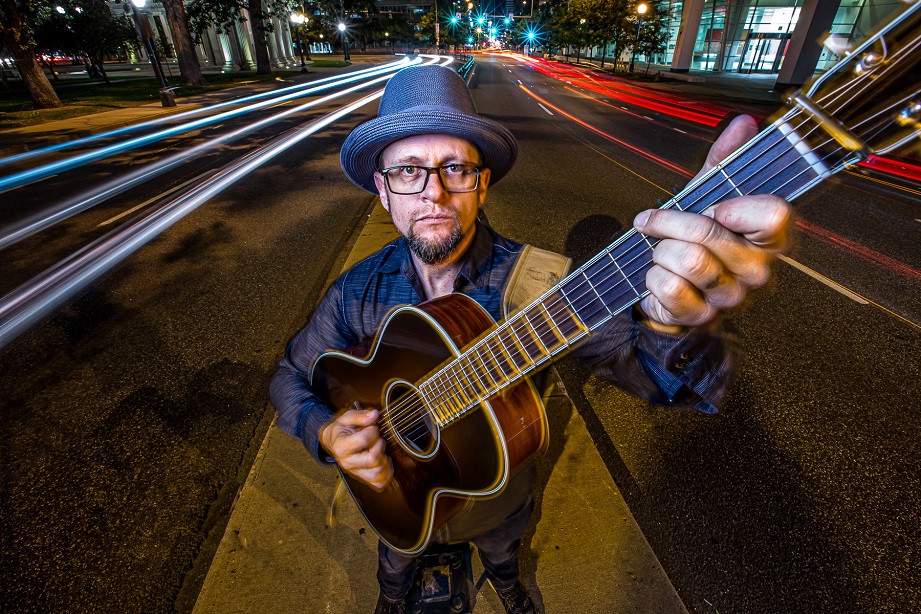
Welcome to Gig Bag, a BGS feature that peeks into the touring essentials of some of our favorite artists. This time around, Jeremy Garrett details the items he always has nearby when out on the road.
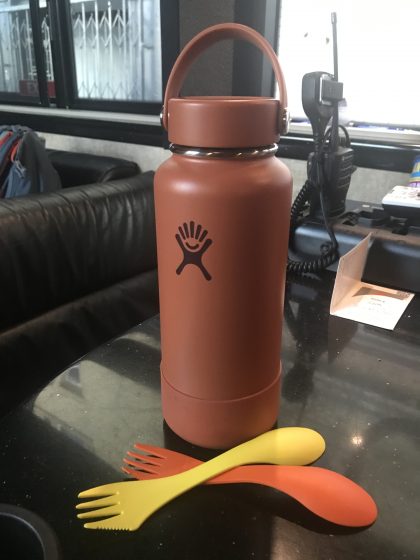
The main thing I take on the road in my gig bag is some reusable utensils and a water bottle. So much waste can be generated while traveling, and it’s important for us all to do our part to curb that waste as much as possible. Cutting down on one-time-use water bottles and plastic ware can be a great way to reduce our impact on the environment.
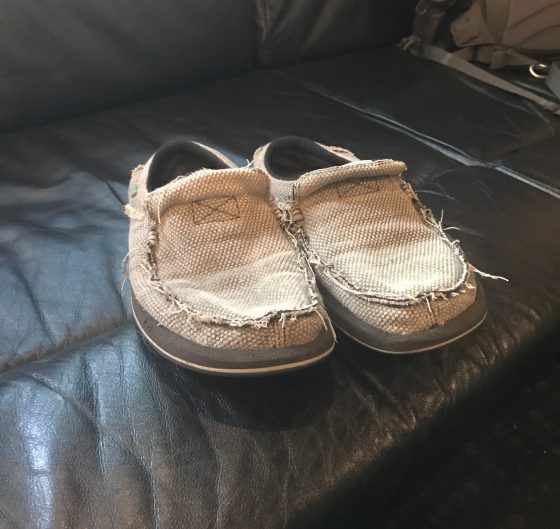
Another thing that I bring on the road always, especially when riding in a bus, is a very comfortable pair of “house shoes.” Sometimes even just bringing one small familiar thing from home on tour can help tie those two worlds together a little better and keep you grounded.
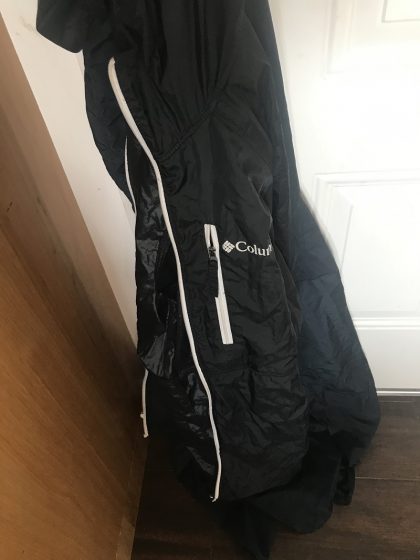
I always pack two raincoats. Especially during festival season. There’s been more than one occasion where the extra one has come in handy, for a crew member, band member, or even a second dry one for you to wear. They are small and light weight and wrapped up, take almost no room in a suitcase.
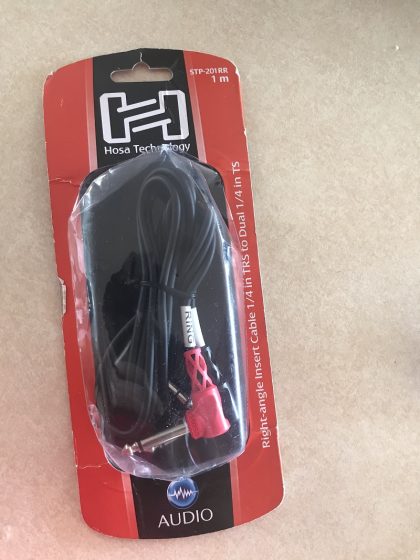
This extra insert cable never leaves my suitcase. These things can stop working on a pedal board sometimes and leave you in a bind. Not me!!
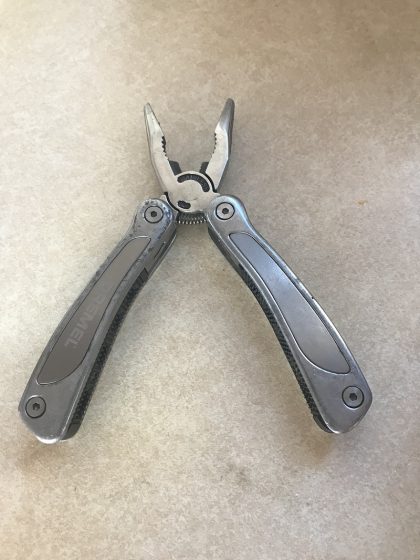
A multi-tool is a great thing to have along.
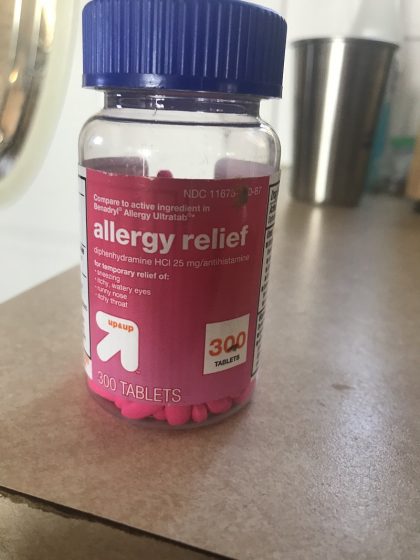
I throw this bottle of Benadryl in my case, because you never when you might eat something or get bit by something that you are allergic to. Last year I found out was allergic to shiitake mushrooms. The hard way. Having Benadryl on hand really helped with this matter.
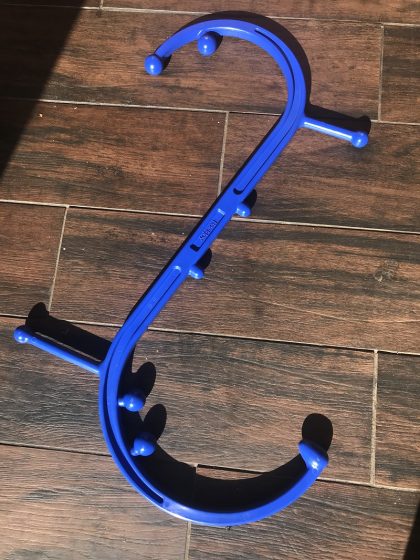
One more thing that I’ll try to squeeze into my suitcase at the end if there is space, is a Theracane. Sometimes a back can get sore playing music a lot or sleeping in a different place every night and this has helped me to be able to work those playing knots out after the show.
With her new album Far From Home, Aubrie Sellers is living up to its title. Raised in Nashville as the daughter of musicians (Jason Sellers and Lee Ann Womack) and now living in Los Angeles, she absorbed bluegrass and country while still exploring genres with a harder edge. That spectrum of influences is apparent in her new music, which ranges from the softer sounds of the title track to the electrified vibe of “My Love Will Not Change,” a duet with Steve Earle.
Adding another meaning to “Far From Home,” Sellers wrote much of the album in Texas, and she’ll launch her national tour by opening for Tanya Tucker in New York City. BGS caught up with her just before she hit the road.
BGS: You recorded Far From Home at Sonic Ranch in Texas. What made you interested in working there?
Sellers: I was listening to a lot of what I call “desert music.” Tarantino soundtracks and The Ventures and stuff like that. I had taken my camper out to Marfa, Texas, and wrote some of the songs on this record there. I was very inspired by that vibe. My whole family is from Texas, so that kind of feels like my home.
Also I wanted to get outside of Nashville and I loved that idea that the whole band stays there while you’re recording. You immerse yourself in the making of the music. It’s really important for me to focus on making a record and having a cohesive experience. I feel like all that stuff tied together.
Why did you feel like you needed to get out of Nashville, do you think?
It’s nice to have no distractions. It’s nice to have a new environment. Your environment affects what you’re doing and I felt like it was important to have that vibe, since that’s what was in my brain already. It’s just nice to escape and make sure that you’re really focusing on making the record, and focusing on the music, and doing something different.
Is that the reason you moved to L.A. as well?
Yeah, I grew up in Nashville and I’ve been around that scene my whole life. It felt important for me to get out of there and experience some new things, and surround myself with a totally fresh energy. Also I went to acting school growing up and I’ve always wanted to do that. I find the film industry here really inspiring. I tried to come here when I was younger and I wasn’t quite ready, so this time it stuck.
You draw on a lot of influences and genres in your sound, but where do you think country music comes into your musical vision?
For sure I think my songwriting is country. I think it’s a little of that personal touch — and you don’t find that as much in other genres. There’s a simplicity to it, in a good way hopefully! And then sonically, steel guitar is one of my favorite instruments. I don’t want to make a record without steel guitar on it.
I listen to a lot of traditional country but I also really love that era of country with Steve Earle and Dwight Yoakam and Lucinda Williams. I love Buddy Miller — he’s kind of on the fringe of country. Buddy and Julie Miller have been a huge influence on me. All of those, and of course, classic country like George Jones and Merle Haggard. Those were my biggest country influences.
Are you a fan of bluegrass?
Yeah, I play the banjo! I thought for a while when I was in high school that that’s what I was going to do. I love bluegrass. Ralph Stanley is my favorite singer. My dad grew up playing with Ricky Skaggs so I was around it a lot. I’m really inspired by bluegrass. On this record, I did “My Love Will Not Change,” which was written by Shawn Camp, but I knew the Del McCoury version. For me, there’s just a similarity in the intensity and the drive behind some bluegrass and rock and blues music. It’s got a simple, emotional feel to it, to me. All of those things connect in my brain and my heart. I love bluegrass.
What was your entrance point to Ralph Stanley? That’s a big catalog to navigate.
I guess just listening to old Stanley Brothers records. Fortunately I grew up in an era where I could explore all music on the internet, you know? So I would go into a bluegrass rabbit hole and listen to that. And then of course, I love the banjo. I think it’s like the electric guitar of bluegrass.
You co-produced this record, too [with Frank Liddell]. What kind of textures did you hope to capture?
I don’t bring in references or anything like that when I’m making music. I think it’s more important to have a vision in your head and make sure you’re bringing in the right players, putting them in the right environment, and having the right songs. Let it evolve, take your time, and let it breathe.
It’s the same with writing and choosing songs. I try not to make it like a factory. I try to let it happen organically. I think it’s making sure you’re putting together the right people in the right environment. You know, I had four guitar players on this record! Sometime it’s about having someone sit out for a song. Letting everything have room to breathe is my philosophy.
Artist:Appalachian Road Show Hometown: Appalachia Song: “Goin’ to Bring Her Back” Album:Tribulation Release Date: March 27, 2020 Label: Billy Blue Records
In Their Words: “‘Goin’ to Bring Her Back’ tells the tale — in quite a humorous way — of a mountain boy who has fallen in love. Unfortunately, he doesn’t realize that the girl he loves might not feel the same way, seeing as how she has run off and caught the train across ‘them yonder mountains!’
“I wanted to create a piece that made the album more dynamic and this chorus jumped into my head! An hour later, the song was complete. I felt pretty confident it was something that Darrell Webb and Barry Abernathy would play and sing the daylights out of. We felt that this song fit right into the Appalachian aesthetic and into the overall narrative we’ve been developing within this band and especially this project. It feels ‘classic’ to us, but the ink has barely dried, and we love that!” — Jimmy Van Cleve, Appalachian Road Show
The Lil Smokies’ long-awaited album Tornillo reflects the vast openness of the Texas desert town in which it was recorded, possessing all of the energy that comes with a renewed creative spirit. In a phone interview with lead singer Andy Dunnigan, BGS discussed rule-bending, burnout, and how recording at Sonic Ranch in Tornillo, Texas revitalized the Montana-based band.
BGS: It sounds like this album is really special to you. Can you tell me about the process of making it? What’s memorable about this one?
AD: Yeah, this is a special one. We were coming off of two or three solid years of extensive touring. We were pretty road-worn and dare I say a little burnt out. When we came into this session we needed to become a little more unified than we had been while on the road. We were looking for somewhere that we could go and get outside of the box creatively.
Texas was somewhere we had never spent a lot of time. We wanted to go down to the desert and we wanted to be able to live on the compound. These were all [realities] that Sonic Ranch in Tornillo was able to provide us, so when we got down there we didn’t really leave for ten days.
We lived a stone’s throw away from the studio. We’d wake up and eat huevos rancheros and then head over to the studio. We were kind of autonomous in the fact that we could make our own hours. It really brought us back to life. We were really unified in our work and the production of this album, and I think that’s really ostensible throughout the songs.
How much does a new album like this, where you have brand-new material and are fresh off the experience of recording, help motivate you to keep going out on the road?
I think it’s just that we toured the last album for a couple years and got a little tired of some of those songs. We were playing so much that we didn’t have all that much time for writing. I found myself trying to juggle between writing, being on the road, solitude, hobbies, and having a girlfriend. I was thinking, “Man, there’s just not a lot of time.”
So now that we were able to hammer out some new songs, getting back out on the road seems so much more enjoyable. I think when we’re having fun on stage there’s a direct correlation to the audience. They’re feeding off us and the pillars of reciprocity are strong.
This album definitely sounds like you’re having fun and doing things your way. You sort of bend the rules of bluegrass, but always in a way that adds something to the music. How do you keep an open mind about trying new things without being gratuitous about it?
We wanted to think outside the box for this record, but we didn’t want to do it in a contrived way where we say, “OK, this is going to be a weird album, so we’ll just make it intentionally weird.” We wanted to cater to the songs and adhere to what each song needs.
On the title track, “Tornillo,” we had originally worked up our traditional way of doing it with the bluegrass ensemble, but when we started playing it, it sounded like something that should be on the soundtrack of Ken Burns’ Civil War documentary. We were thinking, “This just isn’t going to work.”
Then Rev, our guitar player, worked up a piano arrangement and brought it to us towards the latter part of the session and we were like, “Oh man, this is so awesome. We have to use this.” We were just serving the song, and that was the ethos. Once we had the piano foundation, we started experimenting with drums and horns and some baritone guitar.
It was really fun for us. We intentionally gave ourselves a surplus amount of time in the studio so we could tinker around a little bit. We wanted to experiment sonically, and I think the results are really fun. It opened our minds to what you can accomplish in the studio if you have enough time and patience.
This album has a clear overall sound. Big, open, and full of space. Is that something you went into the studio wanting to accomplish, or did it develop more on the fly?
It’s a little bit of both. We wanted to create something big from the get-go, but we weren’t sure how we were going to do that. We knew we wanted to record live because that adds a little more energy, we had it in mind to drench a lot of it in reverb to create sort of a Fleet Foxes vibe or something a little more alt. That’s the kind of music that a lot of us have been listening to and getting inspired by for the last few years. We’re all listening to a lot of different music and we wanted to expand outside of the bluegrass domain in the production at least.
In your bio it’s mentioned that you “draw on the energy of a rock band and the Laurel Canyon songwriting of the 1970s.” How did bluegrass become the avenue that you express those influences?
Well, I think we all started out playing bluegrass. I came to it in my latter years of high school. I went down to the Telluride Bluegrass Festival. I had gotten an electric guitar from my dad. He plays music for a living, so he gifted me a Strat, and then a lap steel. I listened to a lot of David Lindley and Ben Harper. Those were kind of the gateway into bluegrass music. Then when I went down to Telluride it blew my head open.
I think we all have our pioneer stories of how we got into the music. That’s how you meet the community of players. There’s this whole vocabulary attached to it but as you get older you expand your musical library. I think we listen to a lot of songwriters and a lot of rock. We still happen to play these bluegrass instruments, and we love bluegrass, but we’re just trying to express what we want to say while wielding bluegrass instruments.
Do you find that you’re an introduction to bluegrass music for a lot of your fans?
I do, and it’s one of my favorite remarks after shows. People say, “Man, I hate bluegrass, but I love you guys.” I hear that a lot and I think it’s funny and ironic, but it’s cool because I think there has to be somebody to pull you in and make you realize that you’ve been wrong about the stigma perhaps. I know I was that person at one time. I thought, “Man, bluegrass music? My dad plays the banjo. This is really lame.”
I think we’re seeing bluegrass kind of blossom into its adolescence and beyond, because for a while I think it was restricted by the staunch purists who were slapping everyone’s wrists for playing minor chords. Now we’re seeing Punch Brothers, Greensky Bluegrass, Infamous Stringdusters, and of course now Billy Strings, who all have obviously done their homework religiously and can pay homage to the traditional godfathers, but they’re also putting their spin on it. It’s really cool and it’s getting people excited. I think to be included in that group is really awesome and I think it’s an exciting time to be riding the wave.
How much do you rely on melody, texture, and other instrumental factors to further the meaning or story within a song?
A lot of it happens in the arranging as well, but a lot of times when I’m writing a song there will be a hook line, and that’s sort of from a rock standpoint. You have your verse-chorus and then there’s a riff or something. You know, this band was almost an instrumental band for a short period in the beginning. We were listening to a lot of David Grisman, Strength In Numbers, and a lot of that music.
We loved writing instrumental music, and then when I started singing and writing songs we kind of fused the two worlds together. Those little melody parts and arrangement parts are still so fun to incorporate in songs. In a tune like “Giant” on this album, we wanted something kind of spacy to create a dream-like state, so we tried to write something that sounded kind of spacey and sleepy.
Some of these songs are intentionally ambiguous in their origins. What is the intent behind that ambiguity?
I went to school at the University of Montana for creative writing and poetry and I love the way words sound together as much as I love melody. Sometimes the words and just the assonance, what they sound like, will dictate the melody and vice versa. Once I have a word in my head and I’m kind of ad-libbing on the guitar I try to steer away from some words and how they sound.
I like to write stories and have some ostensible narratives, but I also just love words and how they sound. “World’s On Fire” has a couple meanings in there but I also like to keep it intentionally ambiguous because I think it’s fun for people to create their own story.
You’ve said your time at Sonic Ranch “encapsulates all of the good things about being in a band and making music.” How did the band grow from the experience of making this album?
To circle back on what I said in the beginning, it’s a huge a sacrifice to be in a band. There’s the greatest ups and the greatest downs, kind of married to each other. Coming off of those past three years of touring we were all a little tired and burnt out, and maybe questioning if we were on the right path. During our studio session in Tornillo I think we were all realizing that this is why we do it.
When you make an album it’s like setting a bug in amber. It’s this fossilized preservation of your life at that point. The word tornillo literally means “to fasten” and refers to a screw. We named it after that place. The place really tightened us up together as friends and as a band. I remember leaving there and feeling really proud of what we had accomplished. I think it’s the most unified we’ve ever been as a band.
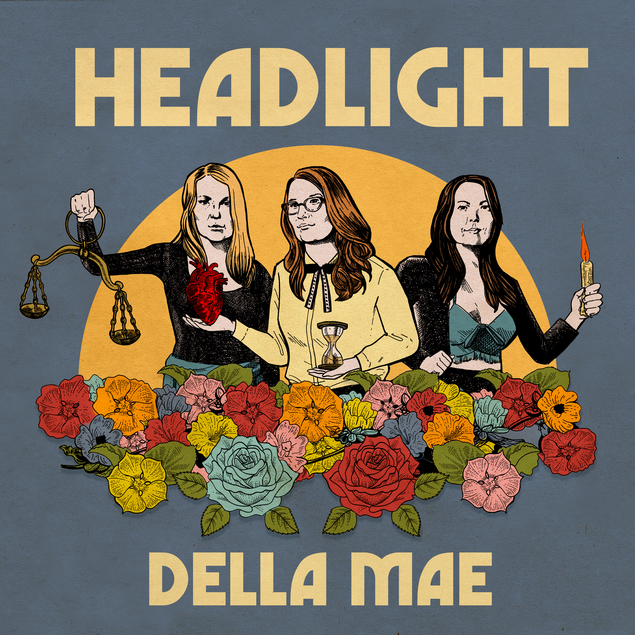
Time and again Della Mae demonstrates that of their indisputable strengths as a dynamic, powerhouse string band, a conglomeration of some of the most talented musicians and writers in bluegrass and roots music, their most impressive trait must surely be their unrelenting taunting of every convention handed down to them by those genres. Even now, as they make what some would call “the pivot to Americana,” they laugh off that very idea on Headlight, the record tasked with the brunt of that rebrand. The subtle, crooked smile of self awareness makes appearances throughout this collection of songs, but is flaunted outright on “Peg Monster,” the record’s sole instrumental.
Written by fiddler Kimber Ludiker, “Peg Monster” is an impressively ancient-sounding tune, drawing on Ludiker’s deep fiddling pedigree and the expansive musical vocabularies that have won her two Grand Master Fiddle Championships. The melody strikes listeners as haunting, as if emanating from a shady holler or a decades-old campsite at a fiddle convention. It builds like a campsite jam, too, with a dash of Jenni Lyn on mandolin and a ripple of Avril Smith’s flatpicking. Then, as seamless as the rest, through the crack left in tradition’s door by that haunting vibe — and beckoned through by the Dellas’ virtuosic irreverence — organic, campfire percussion and low rumbling organ pads fill in the spaces artfully left by each instrumentalist.
Pigeonholing and “recommended if you like” habits will always attempt to relegate Della Mae to countless ones versus others, but, as they consistently and artfully remind us, this band refuses to give up their autonomy and self-expression for the sake of tidiness and clean labels. “Peg Monster” shows it — hell, their entire catalog does; Della Mae loves living in the spaces in the middle, and with Headlight that’s exactly where they’ve made their home.
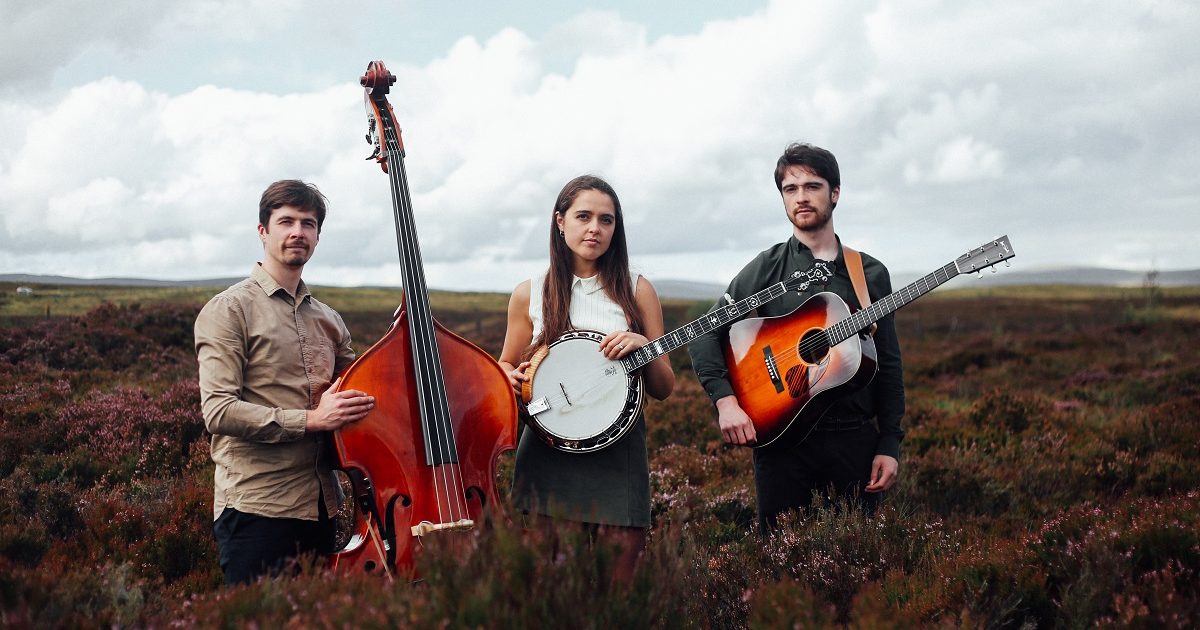
Artist:The Barefoot Movement Hometown: Based in Nashville, Tennessee Song: “At the End of the Day” Album:Rise & Fly Release Date: February 7, 2020 Label: Bonfire Music Group
In Their Words: “’At the End of the Day’ is one of those songs I needed to write for myself. Growing up I was taught a lot about ‘turning the other cheek,’ which I think is a beautiful ideology and I still try to embrace it, but the lesson I think I missed was how to stand up for myself, to express frustrations, and to do it in a loving way. It’s one I’m still learning. I tend to avoid conflict. But as the song says, ‘the truth is all we have’ and I’ve realized that one of the most kind things you can do is to be honest. Even when your honesty might sting a bit.” — Noah Wall, The Barefoot Movement
Photo credit: The Barefoot Movement
This website uses cookies to improve your experience. We'll assume you're ok with this, but you can opt-out if you wish.AcceptRejectRead More
Privacy & Cookies Policy
Privacy Overview
This website uses cookies to improve your experience while you navigate through the website. Out of these, the cookies that are categorized as necessary are stored on your browser as they are essential for the working of basic functionalities of the website. We also use third-party cookies that help us analyze and understand how you use this website. These cookies will be stored in your browser only with your consent. You also have the option to opt-out of these cookies. But opting out of some of these cookies may affect your browsing experience.
Necessary cookies are absolutely essential for the website to function properly. This category only includes cookies that ensures basic functionalities and security features of the website. These cookies do not store any personal information.
Any cookies that may not be particularly necessary for the website to function and is used specifically to collect user personal data via analytics, ads, other embedded contents are termed as non-necessary cookies. It is mandatory to procure user consent prior to running these cookies on your website.