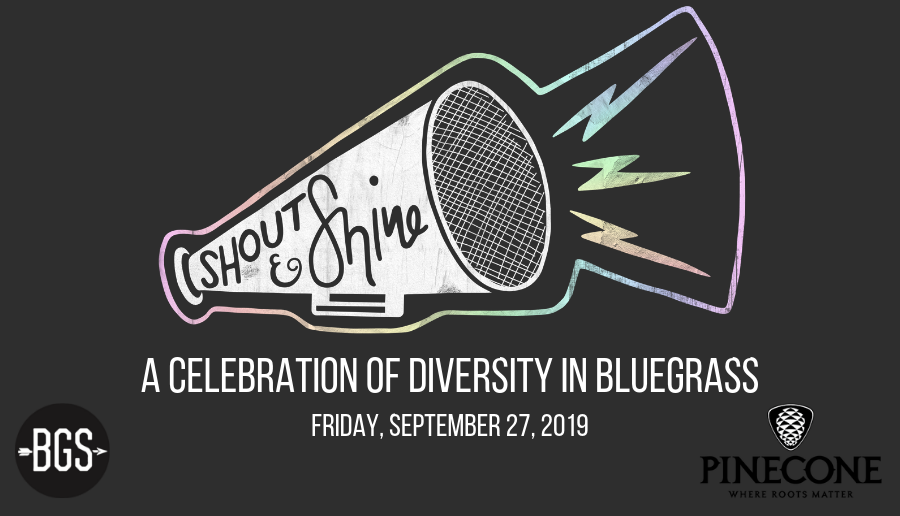
ANNOUNCING: BGS and PineCone Present Shout & Shine 2019

Along with our partners at PineCone, the Piedmont Council of Traditional Music, we are proud to announce our Fourth Annual Shout & Shine: A Celebration of Diversity in Bluegrass. The 2019 iteration will be the event’s biggest year yet, taking over the Dance Tent during IBMA’s Wide Open Bluegrass festival in Raleigh, North Carolina, on Friday, September 27, from 12 noon to 11pm. (See full schedule below.)

In 2016 Shout & Shine became the first event of its kind at the week-long bluegrass business conference and festival. Born as a direct response to the North Carolina General Assembly’s controversial “bathroom bill,” HB2, Shout & Shine’s fourth year continues the showcase’s growth and strengthens its mission of highlighting and reincorporating the voices and perspectives of underrepresented and marginalized artists, musicians, and performers — not only at the showcase, but throughout the convention and festival.

Headlining the year is the Shout & Shine Square Dance Party, led by banjoist and ethnomusicologist Jake Blount and jaw-dropping fiddler Tatiana Hargreaves. The dance will feature Michigan-based square dance caller Boo Radley (AKA Brad Baughman), who specializes in using gender neutral directions for dancers, opening up the square dance — traditionally regarded as a conservative, white, heteronormative space — to non-binary and non-heterosexual participants. All are welcome to participate, with no prior experience or partner required!

The day will kick off with Crying Uncle Bluegrass Band, prodigies from the Bay Area led by Asian American brothers Teo and Miles Quale, who have just returned from a tour of Finland and are fresh off an appearance on the Grand Ole Opry. Percussive dancer and ethnochoreologist Nic Gareiss will give a step dancing performance with old-time banjoist Allison de Groot, followed by a set of music from Hubby Jenkins, who is a blues and old-time multi-instrumentalist, Grammy winner, and veteran of the Carolina Chocolate Drops.

Prolific folk, children’s music, and bluegrass stalwarts Cathy Fink & Marcy Marxer bring their Grassabilly Rockets, featuring Jon Weisberger and George Jackson, to the dance tent as well, followed by their friends, compatriots, and IBMA Momentum Award nominees Cane Mill Road — North Carolina natives who will be joined by Williette Hinton, buckdancer and son of acclaimed blues musician and dancer Algia Mae Hinton.

Realizing a longtime goal of Shout & Shine’s producers, the showcase will feature an Indigenous artist for the first time, Lakota John, a local North Carolinian and his trio with deep roots in Piedmont blues and old-time, down-home acoustic music. Finally, bluegrass legend and trailblazer Laurie Lewis will headline the evening with her band, the Right Hands, before the night’s rollicking, square dance conclusion.

Shout & Shine is made possible by these partners: the Raleigh Convention Center, the Greater Raleigh Convention Center and Visitors Bureau, and IVPR. Shout & Shine 2019 presenting sponsors are Ear Trumpet Labs, Jamie Dawson of ERA Dream Living Realty, Pre-War Guitars, and Straight Up Strings. The Dance Tent is sponsored by WakeMed, FOX50, and Golden Road.

Shout & Shine 2019 is dedicated to the memory of dancer, choreographer, innovator, and roots music luminary Eileen Carson Schatz. Admission is FREE. More information can be found through IBMA at worldofbluegrass.org.

Full Schedule:

12:00-12:45pm – Crying Uncle Bluegrass Band (open dance)

1:15-2:15pm – Nic Gareiss & Allison de Groot (step dance demonstration)

2:45-3:30pm – Hubby Jenkins (open dance)

4:00-4:45pm – Cathy Fink & Marcy Marxer and the Grassabilly Rockets (open dance)

5:15-6:15pm – Cane Mill Road with Williette Hinton (open dance, buckdancing demonstration)

6:45-7:30pm – Lakota John (open dance)

8:00-9:00pm – Laurie Lewis & the Right Hands (open dance)

9:30-11:00pm – Shout & Shine Square Dance Party with Jake Blount, Tatiana Hargreaves,
Boo Radley (caller), and friends (inclusive square dance)
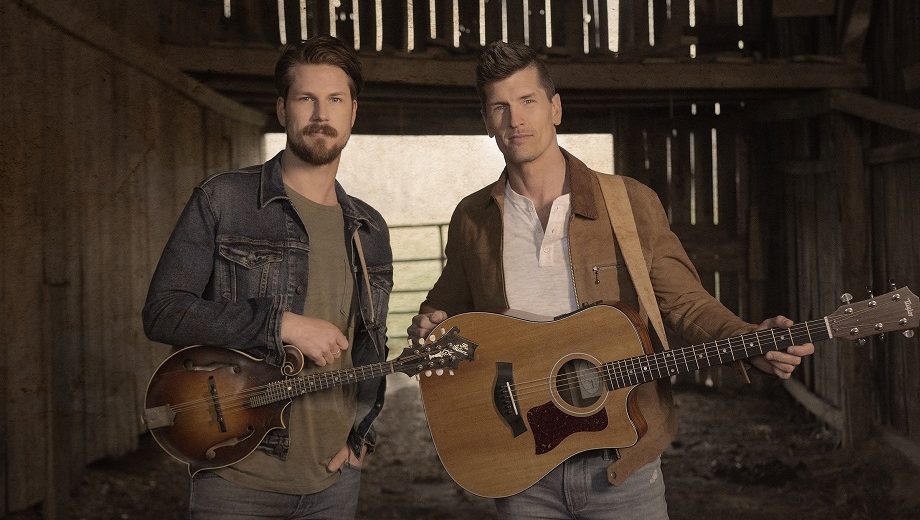
 

LISTEN: High Valley, “Single Man” (Bluegrass Version)

Artist: High Valley
Hometown: La Crete, Alberta, Canada
Song: “Single Man” (Bluegrass Version)
Label: Warner Music Nashville

In Their Words: “We grew up surrounded by bluegrass music. Ricky Skaggs was our hero thanks to a few records our parents introduced to us. When our town finally got a radio station, I spent a few years as a DJ hosting a bluegrass hour. Recently, Curtis and I called up a few of our friends and some of Nashville’s finest bluegrass pickers to turn them loose and let them show off! Recording this bluegrass version of ‘Single Man’ was easily the most natural moment we’ve ever had in the studio. When it came time to work on the mix and make sure everything was produced properly, it was so great to have Ricky Skaggs offer his help as the executive producer on this track. Talk about a full circle moment!” — Brad Rempel, High Valley


Photo credit: Mike Stahl

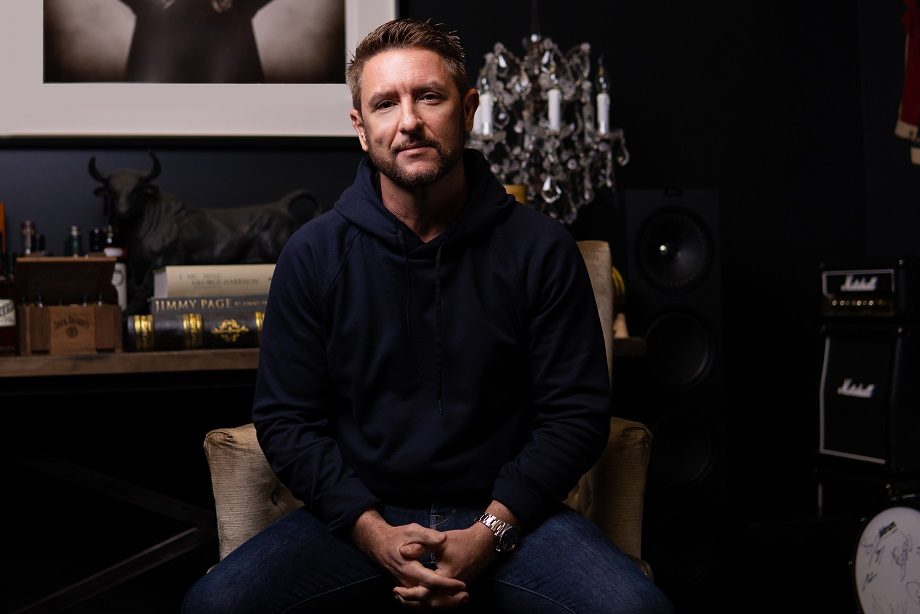
Festival Founder Danny Wimmer Infuses Bourbon & Beyond with Bluegrass

This month, Bourbon & Beyond will descend upon Louisville, Kentucky, for its third annual event, attracting tens of thousands for a weekend of music, food, and brown liquor. Alison Krauss, Greensky Bluegrass, Preservation Hall Jazz Band, and more top-notch talent are slated to grace the stages over a newly-expanded three-day stretch, but the bourbon and food lineups are just as impressive.

Bourbon aficionados can sample tastings from more than forty labels, as well as partake in workshops that range from cocktail-making to history lessons. Meanwhile, culinarians can spend an evening at supper club with acclaimed chef Edward Lee or sample local fare across the grounds.

To prepare for the weekend, BGS caught up with festival founder Danny Wimmer, whose namesake production company puts on more than a dozen annual festivals throughout North America. We spoke about how Bourbon & Beyond got its start, what makes it a must-attend event, and why he thinks the Louisville festival is here to stay.

Editor’s Note: Be sure to check out the Bluegrass Situation Stage at Bourbon & Beyond

How did Bourbon and Beyond come together in the beginning?

My love for bourbon is really where it started. About eight or nine years ago, we had the idea to start our own bourbon [label], and started meeting with master distillers. I spent a year in Louisville and I fell in love with the city — well, really, I fell in love with the community. So we put the bourbon on hold and we launched Louder Than Life, a hard rock festival. Through that, we saw an opportunity for something that centered around craft — music, culinary, spirits.

Making bourbon isn’t just something you can do overnight. It takes about four to seven years before you can even drink any of the product. It’s a true art form and it’s something that takes patience. Kentucky produces 95 percent of all bourbon, and we saw an opportunity to further connect the dots between the bourbon industry and the state. When you say “Napa Valley,” you think of wine. When you say “Kentucky” or “Louisville,” you should be instantly thinking bourbon. We wanted to create an event that incorporated bourbon, food, music, and this beautiful state.

You worked with two people who are really in touch with the bourbon and culinary scenes in Louisville — bourbon writer Fred Minnick and acclaimed chef Edward Lee, respectively. What made it important to have their involvement?

We really wanted to have a five-year festival in year one, from the way it operated to the way the community was to engage in it. When you’re talking about launching a bourbon festival in the heart of bourbon country, there’s going to be a lot of skepticism. These guys from LA. Why are they doing it?

It wasn’t like we had an idea and [Bourbon & Beyond] just happened. It took a lot of different players to bring this together and make it happen — the mayor’s office, the bourbon community. Bringing [Minnick and Lee] in as partners gave the festival the credibility it needed. They’re really our gatekeepers, between the city and the state and the bourbon and the culinary worlds.

Music-wise, what are your priorities when booking Bourbon & Beyond, and how does bluegrass fit in?

The soul of Kentucky is bluegrass, and it was very important to have the genre be a centerpiece of this festival. We wanted the respect of the [bluegrass] community, but also to put these acts in front of a whole new crowd. One of the things we hope for is that artists can use our festivals as a way to really grow their awareness — as a vehicle to come back and headline a bigger room. Bluegrass, specifically, is something I’ve fallen in love with. It’s a genre that we’re going to stay very focused on, and focused on growing. Don’t be surprised if soon we’re doing bluegrass events in other places in the country.

You said you fell in love with Louisville as a city. Of course, a bourbon event there feels like a no-brainer, but what made you think this festival, with the music and culinary elements intertwined, would work there?

The people. Listen, I’m from Jacksonville, Florida. I’m a Southern boy. Louisville is a gateway to the South. Ever since we got here, the city, the mayor’s office, and now the governor’s office, has opened their arms. There are not a lot of communities that are so welcoming to the arts. The reason we now have three festivals here is really the community.

But Louisville also sits in an area that has five or ten major cities around it. We have Indianapolis, Cincinnati, Nashville. We have St. Louis that’s six hours away, we have Chicago that’s five hours away. We’ve got some major markets that are really close by. With the explosion of the bourbon industry, a lot of people really want to come experience Louisville — we believe it’s where Austin, Texas was ten to fifteen years ago; where Nashville was ten years ago. Both of those cities started with music. And I think we have the right recipe to help this city become the next [big music and food destination].

Are there any unique advantages to producing festivals independently?

I’m in a place where I can follow my heart fast. I don’t have to get approval. Sure, I have to run a business — me and my partner have a really great relationship between business and art — but I’m in a place where I can make a decision [based on what I’m aiming for] five years from now or ten years from now. I love independent companies. They’re usually great at creating niches; they’re specialists in certain genres. I think independent promoters are very crucial to the food chain of our industry.

[For example,] I don’t like that there are three radio stations that really control the listening and the programming of our country. One of the major downfalls is that we lost localization in markets. Before the [consolidation], I loved the local aspect that radio would bring to certain markets. [On the label side,] I loved that you had records signing certain genres — they were specialists. Right now, we’re missing that, but there will be a day when you see indies rising again.


Photo credit: Sam Shapiro

WATCH: Old Crow Medicine Show Unplug for “Methamphetamine”

Have you heard? Old Crow Medicine Show has a live album in the works! Scheduled for an October 4th release, Live at the Ryman is designed to feature selections from their many shows at the mother church of country and bluegrass. As a teaser for the project, the band stopped into the Ryman to record this special performance of their 2008 song “Methamphetamine.” Watch it right here, on BGS! 

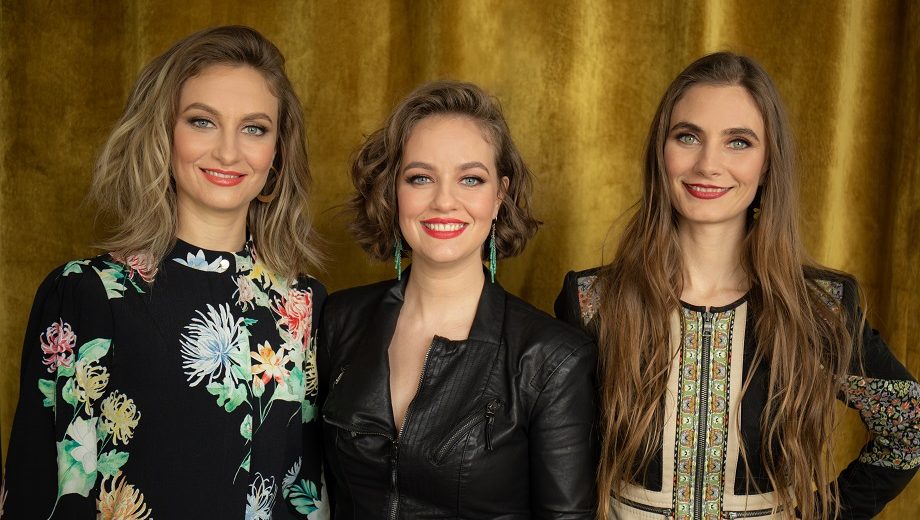
WATCH: The Quebe Sisters, “Pierce the Blue”

Artist: The Quebe Sisters
Hometown: Dallas, Texas
Song: “Pierce the Blue”
Album: The Quebe Sisters
Release Date: September 20, 2019

In Their Words: “This album represents several ‘firsts’ for us, and it captures a new phase and the start of a new direction for our sound. In many ways the process of making this album felt like starting over; deconstructing what we knew about music and then trying to put it back together again. Making and producing this album was a very collaborative effort where we sought to diversify our sound using our same instrumentation. It features solos from everyone in the band as well as originals, including ‘Pierce the Blue.’ This song has two parallel themes running through it. It’s about a difficult season of our lives we went through, and it’s also about universal pain we all feel that brings about our longing for reconciliation, change, and a better tomorrow.” — The Quebe Sisters


Photo Credit: Katherine Chiu + Bill Stipp

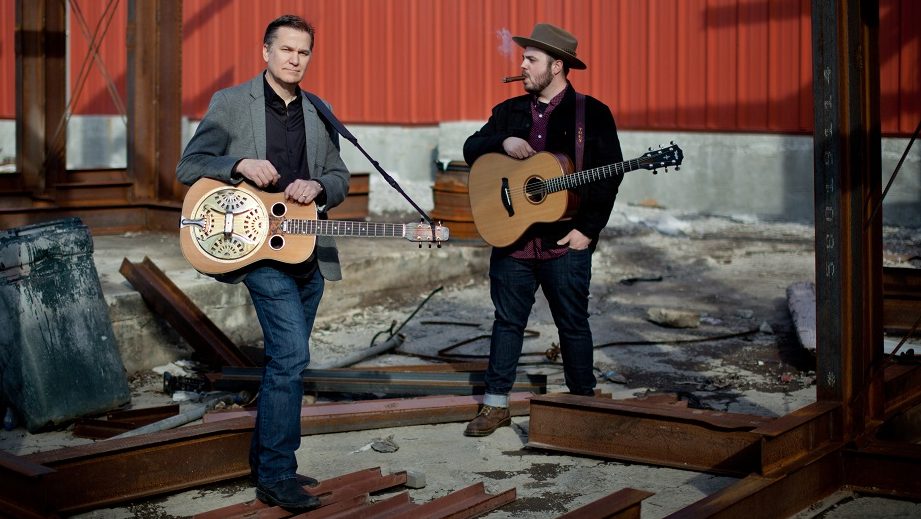
LISTEN: Rob Ickes & Trey Hensley, “Born With The Blues”

Artist: Rob Ickes & Trey Hensley
Hometown: Nashville, Tennessee
Song: “Born With The Blues”
Album: World Full of Blues
Release Date: October 4, 2019
Label: Compass Records

In Their Words: “This was a song that we wrote with a good friend of ours, Bobby Starnes, a few years ago and from the moment we finished it we just knew we had to record it on our next album. It always reminds me of a Clint Eastwood Western movie or something … and the percussion and horn section solidify that. This song has been a high point in our set list for a year or so now, as it always gives us some room to improvise and stretch out musically. That’s exactly how we recorded it also … totally live and totally ‘in the moment.’ We thought this was the perfect song to kick off our new album and we hope you all dig it!” — Rob & Trey


Photo credit: Stacie Huckeba

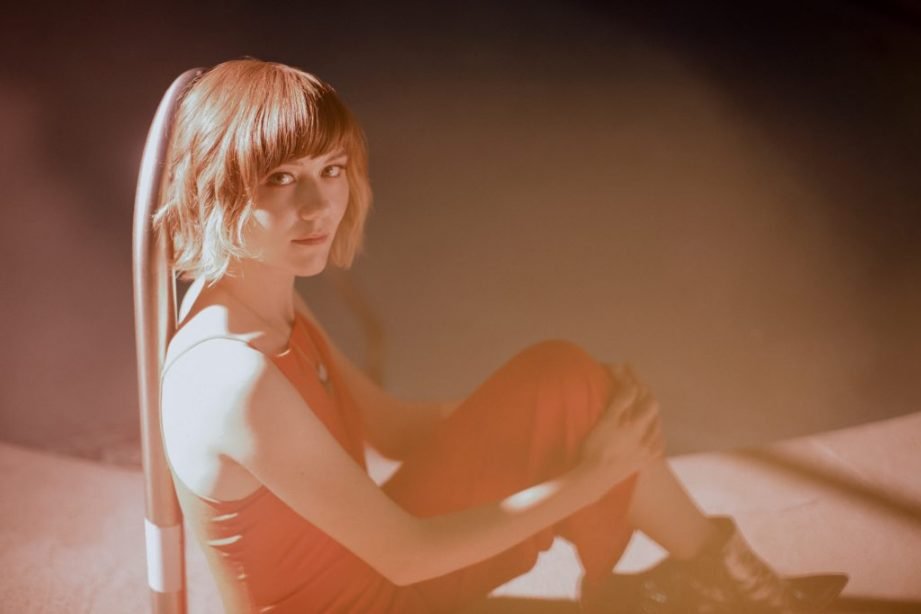
WATCH: Molly Tuttle Plays Clawhammer Guitar on ‘CBS This Morning’

From Newport Folk Festival to network TV, it’s been a huge summer for Molly Tuttle. She’s blazed a trail through modern bluegrass, become one of the most prominent pickers around, and now she’s taking on roots music realms further and further from the string band territory in which she grew up. Feel the rhythm and energy in Tuttle’s national television debut performance  of “Take the Journey,” which showcases her unique frailing, “clawhammer guitar” technique, live from CBS This Morning‘s Saturday Sessions.


Photo credit: Courtesy of CBS

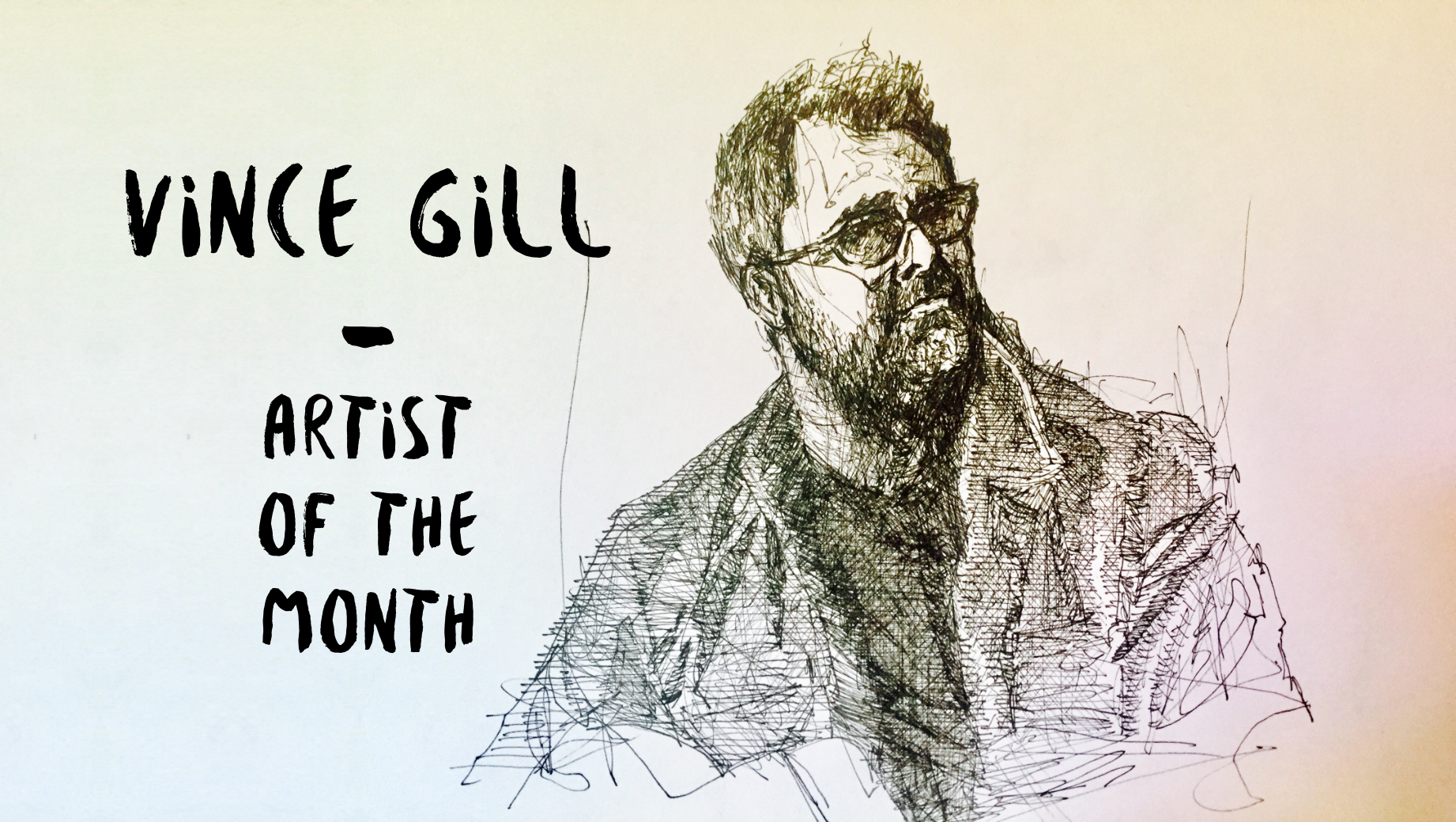
Vince Gill Looks Back on His Bluegrass Years (Part 2 of 2)

In the second half of our interview with Vince Gill, the country legend reflects on his bluegrass history, explaining how he became interested in the music, what he learned by listening closer, and why it led to one of his most famous songs.

Editor’s Note: Read the first part of our Artist of the Month interview with Vince Gill.

BGS: “Go Rest High on That Mountain,” in my opinion, is going to live forever. And I think the bluegrass audience loves hearing Patty Loveless and Ricky Skaggs sing with you, too.

Gill: You know, I wouldn’t have been able to write that song if I hadn’t played bluegrass music and learned the structure of that music and how it works — and the emotion of it. Bluegrass music is so honest and so real. Some of those morbid murder ballads and the saddest of the sad songs are what I love most. Give me “Mother’s not dead. She’s only a-sleepin’. Patiently waiting for Jesus to come.” That’s about as good as it gets. “The Little Girl and the Dreadful Snake.” I could just go on and on and on.

All these tortured songs, but you know they’re real life. They’re not somebody going, “How can I slip one up on the world and make a bunch of money having a big hit record?” They’re so honest and real. And the fact that my past had so much to do with Ricky and Patty, they were the only two people that I would’ve consider it singing on that song.

I still love it when Patty comes to do the Opry.

There’s a really unique thing that happens when our voices sing together. It’s so… obvious. I sang on her very first record in the early ‘80s. I sang on her first hit record and she sang on my first hit record. So it’s my little sis.

Tell me about how you found bluegrass. Was there an entry point for you?

Yeah, I knew of it because my dad played the banjo a little bit. He never could figure out the three-finger, Scruggs-style banjo. He cussed Earl his whole life because he couldn’t figure it out. He played more of a folky banjo. Not drop thumb, not old-timey, but more of a frailing kind of banjo. So I was always around the music, as best I can remember, forever. There were obviously the Flatt & Scruggs things from The Beverly Hillbillies that were in everybody’s DNA. Then I was playing mostly in rock bands in junior high school and high school.

A kid named Bobby Clark was the one that really got me pointed towards bluegrass. He had a little band in Oklahoma City and his father was a repairman. I had broken the string on my dad’s banjo, messing around with it, and I didn’t know how to change it. So I took it to Charlie and he put a string on it pretty quickly and everything was fine. I wasn’t gonna get my butt kicked. Then I started talking to Charlie, and he says, “You play music, don’t you?” And I said, “Yeah, I love to play. I play electric guitar and play in rock bands and stuff.” He goes, “My son Bobby is a really fine mandolin player and plays bluegrass. You ever played any bluegrass?” I said, “No.”

They stuck an acoustic guitar in my hands and Bobby said, “We just had our lead singer leave the band and we’re looking for a singer.” So they did a pretty good job of raising me and teaching me and showing me how bluegrass worked. I played in their band for the last couple of years of high school. Then in another bluegrassy kind of band called Mountain Smoke. And I started playing all the festivals down around Oklahoma and Texas and Kansas. And ran into all the people that I’ve known in my whole life since I was 15, 16 years old.

Wasn’t that how you met Cheryl White [from The Whites]?

Yeah, I used to carry her bass around the festivals. I always had a thing for the girl bass players for some reason. There was another family band from Missouri called the Calton Family. Got sweet on Brenda. Then I got sweet on Cheryl. And she says I should’ve picked a harmonica player. [Laughs]

Those were such fun days and innocent. I loved the camaraderie that went on in that music. Not only with the people that came to the festivals, but the musicians. Everybody jammed together. There wasn’t a whole lot in it for anybody. Everybody was just kind of getting by. It was amazing, as I look back, what it did for me in the way that I respected other musicians and listened to other musicians. It was really important that I had a lot of that in my past. I haven’t forgotten it.

When I first heard bluegrass, I was just blown away by musicianship of it.

Yeah, I mean Stuart Duncan was as great as he was at 12 or 13. So was Mark O’Connor when he was 12 or 13. And Marty and Ricky and Jerry and on and on and on and on of these wonder kid pickers. Unbelievable. I kind of squeaked in because I could sing a little bit and figured out how play as I went. I kind of played whatever was left over in a lot of the bands I was in, and that was fine.

I saw you play mandolin on quite a few songs when you played Bluegrass Nights at the Ryman. What is it about that instrument that you really enjoy?

I think the mandolin is the most important drive of a bluegrass band. The banjo and that are the two most definitive sounds. In bluegrass, mandolin players are like the drummer, even more so than the guitar player to me. It’s that backbeat and driving it. Sam Bush was a great teacher of how you drive that music, you know? I loved the ferocity and intensity that he played with. When he played, that was powerful to watch as a 15- or 16-year-old kid.

That’s what I like. I like making it dance. I liked the importance of playing that instrument in bluegrass. I’m probably a much better guitar player in bluegrass than I am a mandolin player. But in some bands I had to play banjo. Sometimes I had to play, unfortunately, fiddle on a few things. Terrible! I played Dobro, I played everything. I played bass with Ricky’s band for a minute and then got to play some other instruments, but had a love for all of it. I still do. Probably I love it more now because it reminds me so much of my early days, and those first forays into learning about playing music.

Did Dobro come naturally to you?

It all kind of did. I mean, I put in the hours and I practiced hard. The neat thing was, you had such good people to learn from. I always had big ears and could always hear well and find what I was hearing in my head, figuring out how to play it.

There are so many brother duos that came up in bluegrass. Do you think that rubbed off on you with your harmony singing now?

Absolutely, yeah. I was trying to either be Ralph Stanley or Phil Everly or Ira Louvin or whoever. Don Rich and Buck Owens should’ve been brothers. I was a high singer so bluegrass was a natural fit. There have always been predominant high singers that were the focal point. Whether it was Ralph and Carter or whoever, man, that was a blend. You didn’t understand it when you were 15 or 16, what it was that made that blend so beautiful. It was the blood, you know. The DNA was the same.

I didn’t get to experience that until my oldest daughter was 18, 20 years old and we started singing together. I started calling her my little Everly because I’d spent my whole life trying to be Phil. You know, singing the high parts for everybody else, and blend perfectly, and every nuance they did, I’d do. And I’d just want ‘em to think I was related to ‘em. She wound up naming her daughter Everly because of that, because I called her my little Everly.

But yeah, I love sharing music. I love the collaboration of music more so than I like it by myself. It’s not as interesting by yourself, but when you get to play off somebody, and play with somebody, it’s very powerful.


Photo credit: John Shearer

LISTEN: Fireside Collective, “She Was an Angel”

Artist: Fireside Collective
Hometown: Asheville, North Carolina
Song: “She Was an Angel”
Release Date: September 6, 2019 (single)
Label: Mountain Home Music Company

In Their Words: “‘She Was an Angel’ is a song about losing someone you love and seeing them fall into a bad crowd. On the surface, it deals with the emotional repercussions of watching someone sliding down a troubled path. It also explores the feelings of being rejected and left behind, while also hoping for some intervention or circumstance where the one who’s leaving realizes they are on a dark path and turns it around. The music begins as a contemporary bluegrass song which takes a sudden journey into unknown territory during the bridge. The bridge is supposed to serve as the symbolic struggle of the lost lover, and eventually culminates in the realization that it’s time to move on.” — Jesse Iaquinto, vocalist and mandolinist


Photo credit: Heather Hambor

LISTEN: Staci Griesbach, “Blue Moon of Kentucky”

Artist: Staci Griesbach
Hometown: Los Angeles, California
Song: “Blue Moon of Kentucky”
Album: My Patsy Cline Songbook

In Their Words: “This classic country staple from Bill Monroe is one that has been covered by so many artists, we wanted to really take it in a new direction by adding more of a funk beat to it. The tempo and groove allow for the musicians to really dig in, and whenever I’m listening back to this, I find myself in the groove completely. Michele Weir helped me with the arrangement and first we started with the bass line. I knew I wanted something funky, but also that we could incorporate pedal steel, guitar and fiddle. Once we had that groove established with the bass line, we knew we had it.

“As I’m thinking about it, it could also be fun to do a little traditional bluegrass feel up front and then go into the funk or vice versa for the solos. Perhaps that’s something I’ll think about for the live performances. Again, to me, a good song can present a playground for many interpretations and that’s the joy of creativity right there at its purest form.” — Staci Griesbach


Photo credit: Kim Thiel