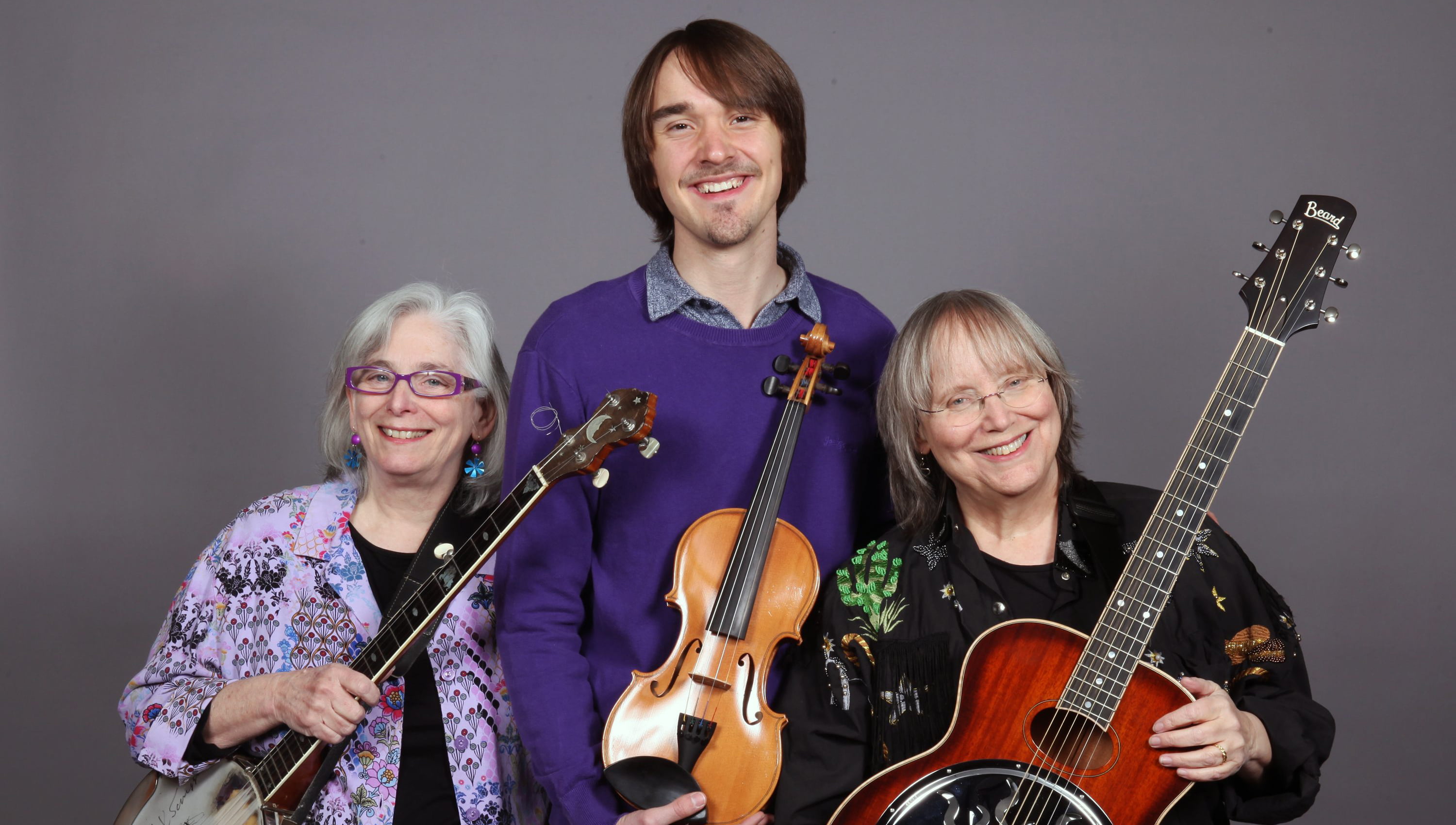
Fink, Marxer & Gleaves: Connecting Songs, Connecting Stories

Intersectionality is the keystone of activism and action. Banding together across whatever barriers our identities present strengthens and energizes the mission, stripping away the isolation that all marginalized folks feel on the day-to-day. In bluegrass and old-time, many, many activist-minded artists, creators, and songwriters have carried the banner for inclusion and an action-forward, open community since the very beginning of these genres.

Cathy Fink & Marcy Marxer are a prime example of those forebears, having fought for the inclusion of queer identities and women in folk music and bluegrass for decades. Shout & Shine, their new collaboration with youngster-yet-old-soul Sam Gleaves, is a perfect illustration of cross-generational mind melds — and musical melds. Messages of social justice, feminism, working class empowerment, and activism through music are so viscerally powerful because the trio shows that anyone can connect with each other across the rifts and barriers that many would assume were insurmountable. In this case, age and experiences are most strikingly disparate, but the core concept should apply to gender, religion, orientation, cultural background, or banjo right hand playing styles, too.

BGS is proud to be a place where these intersections are encouraged and celebrated, whether editorially or, for instance, on stage at our Shout & Shine: A Celebration of Diversity in Bluegrass showcase, held in Raleigh, NC during the International Bluegrass Music Association’s business conference for the past two years. Fink, Marxer & Gleaves — before they officially donned that moniker — performed for the showcase in 2017. The theme song they penned for the event is indeed the perfect ethos for their band, their album, the showcase itself, and the types of connections we’re all trying to foster as we press ever forward.

Some folks might not know that the Bluegrass Situation is already connected to this album and its title track!

Cathy Fink: I think it’s a pretty simple connection — I would even say that the Bluegrass Situation and the Shout & Shine showcase at IBMA were the reasons that brought Cathy & Marcy back to IBMA. [It gave us] a big feeling that the door was opening wider for more inclusion in every direction at the conference. Needless to say, once I found out about the showcase I made the connection with you about having us involved. And I made some suggestions for other artists [you] could have, which turned out well. We had worked with the Ebony Hillbillies and they came.

So I was just sitting on the back porch one day and I thought, “You know, this event needs a theme song!” Sometimes you think about a song for years and sometimes it takes a couple minutes and there it is. This happened to be one of those songs. It really popped out. There were several lines that I kept working on after that time, but that’s really what happened. In all serendipity, it fit our trio perfectly, in terms of what we stand for: loving traditional music, loving contemporary music that is formed on top of traditional music, and what we want to accomplish as a trio, playing bluegrass-related music that has a deeper meaning than, “I lost my girlfriend.” [Chuckles]

It often feels like this is a newer, growing movement for inclusion and diversity in bluegrass — it’s happening across roots music genres right now — but I wonder what it looks like to you, Cathy and Marcy, since you have been on the frontlines of this fight, this battle, this dialogue, for your entire lives? It’s often difficult for younger folks to appreciate how long and hard-fought these issues have been, and you two can bring this perspective, so I wonder, too, how this influences your mentorship?

CF: I want to start by saying the mentorship of Sam is a two-way street. We learn as much from him as he learns from us. Sam is an incredible inspiration to us, because he walks the walk, not just talks the talk — in terms of the songs that he’s written, the songs that he chooses, and frankly, how he treats people. These things are all interconnected.

Historically, for us, Marcy and I started to play out in the ‘70s, in days when women didn’t really play bluegrass music. I know that there are other women who had similar experiences, even though there were amazing women in country music on the radio beginning in the 1930s. One of our friends and mentors, Patsy Montana, was the first woman in country music to sell a million records. She was really the first woman in country music to start writing songs from the female perspective. Marcy and I spent ten years performing with and working with her, but we also played a lot of bluegrass festivals where people would come up to Marcy and say, “Wow! You’re a girl and you’re playing lead guitar!” They’d come up to me and say, “Wow! You’re a girl and you’re playing bluegrass banjo.” While we’d say, “Yeah, we’re people and we each have ten fingers that work!”

Marcy helped me with a release on Rounder Records in the late ‘80s called, The Leading Role. We did a lot of songs that people didn’t know had been recorded by these amazing women, like Ola Belle Reed, the DeZurik Sisters, Lily May Ledford, the Coon Creek Girls, and the Girls of the Golden West — there was an amazing heyday of women in country. Patsy made sure that they were getting the respect that they deserved. Then, later in the ‘80s, we did the Blue Rose album. Marcy and I put that together out of a desire to highlight some of the great women who we felt had been making amazing music but not getting any recognition. That included Sally Van Meter, Laurie Lewis, and Molly Mason.

Moving forward now, after thirty years, the cool thing is that we have the Justin Hiltner’s, and the Sam Gleaves’s, and the Jake Blount’s, and the Amythyst Kiah’s and a long list of people who are the next generation. They’re going to bring up the generation after them in a more inclusive world.

Marcy Marxer: My view is that in the early days of country music, the music better reflected who was actually out there playing. Then, when the record business got serious — not just 78s, but smaller, independent record companies started popping up and recording people — they might have recorded, say, just one or two fiddlers in an area, and because they were the two who got the record contract, that’s what people thought was happening over that whole area, when there could have been fifty other fiddlers within a mile. One of the reasons why it went to all-male was that that’s who was getting the record contracts. It wasn’t that women weren’t playing anymore, it’s that there were companies who were successful, then other companies wanted to copy that success, and it grew into being a male-dominated field.

This issue keeps coming up as I do these interviews. The reason we’ve ended up where we are today, with these ideas of who “owns” roots music, is largely because of revisionism and erasure. What I appreciate about what you three do, and what this record stands for — at least in my eyes — is that we’re avoiding that sort of erasure as we move forward, because you two are collaborating with Sam, who is almost four decades your junior, so we aren’t losing these stories and this institutional knowledge. I see this as the most important message of this record. Do you agree?

MM: I do agree. Absolutely. I think that, additionally, the bonding of the friendships is the best part of this record and the joy that we feel from this music is an extension of [that]. What Sam brings to this project — and music in general — is that he’s done such extensive research and background. Often we’ll meet younger players and they don’t have that background at all. Sam knows all of the greats and has gone to see everybody that he can. Not that one is better than the other, because you have to start somewhere, but with Sam, we feel like we bonded immediately artistically, musically, and emotionally.

Let me bring you in Sam, I don’t mean to talk about you so much as if you aren’t also on the line. [Laughs]

Sam Gleaves: No! My nature is to listen and I’m just very honored to work with Cathy and Marcy because they really are my She-roes. It’s the truth. I’ve always admired their work promoting diversity in roots music, with their presence in the community and their advocacy.

One difficult aspect of making roots music in this day and age is that so many listeners just write it off as nostalgic and they don’t see it as something that’s present and in the here-and-now. There are so many folks primed to hear this kind of protest music or counter-cultural music right now, but they write off these genres as being for someone else. As you formed this series of songs, how consciously did you work to make this music relatable in a modern era?

SG: I think it’s very organic for us. We love playing music together and we know what sort of material is fun and exciting for us to play and what kind of messages we want to promote. We recorded a song that Maybelle Carter wrote, “Buddy’s in the Saddle”; we recorded a song from Jean Ritchie’s repertoire and Elizabeth Cotten’s repertoire. There’s a theme of matriarchs in these songs, which always feels powerful to share. I was honored to get to record three songs that I wrote, one about moonshine, one about a hot pink house trailer — which is super fun and zany — and a song called “Welcome Table,” which uses lyrics from African American spirituals. Cathy’s “Shout & Shine” is kind of the [album’s] ethos, it brings the theme all together. All of the material seems to have a balance of the joy of playing music together and messages of social justice and lifting up voices from the traditional music community.

Let me put the same question to you, Cathy.

CF: It did organically happen, but what organically happens between the three of us musically leans in the direction of wanting to make good music and speak social justice without having a hammer over people’s heads. We didn’t sit down and say, “Hey, we need to do a bluegrass album about social justice.” We sat down and said, “What are the songs we enjoy singing the most?” There was this list. There were some surprise songs, but they fit in beautifully. We knew that “Shout & Shine” was first and foremost, but the title of the album took on additional meaning when one night, after recording, I said, “Look Sam, I know you’re holding out on us, I know you have more songs and you haven’t shared them.” Sam in his usual, humble way played “Moonshine.” We said, “Bingo! Let’s figure that one out right now!” It made Shout & Shine more than just the agenda, but also just looks at real life for a lot of people and the fun — we all enjoy a little hit of ‘shine now and then! I think it shows Sam’s versatility as a songwriter. This song is just a great piece of Southern storytelling. One of the things we also did on this album is that we connected a bunch of stories that we felt drawn to. To a large extent, their about people that we know or knew.

Connecting stories is what keeps music that is focused on social justice from being bogged down by the weight of those topics.

CF: Exactly! I think you just nailed it. We try to do this in a celebratory way as opposed to a bogged down sort of way.

How do we take a message like this and connect it to people who maybe couldn’t automatically relate to a record, band, or collection of songs like this?

MM: For years I’ve felt like an icebreaker and I know that Cathy has, too, because we’re an openly gay couple and my being a woman in guitar and flatpicking, I found that by relaxing, being myself, and putting the best I have out there, people gain a glimpse of understanding and they don’t see stereotypes quite as much as they might have otherwise. One of the things that’s been on my mind is that I’ve been a cancer patient now for over three years and how that has really, totally changed my life and perspective. There’s one song called “Closer to the Light,” the last song on the record, that I really adopted. I did not write the song, but when I heard it I knew it spoke directly to me. That’s the beauty of a song. It doesn’t say “cancer.” It says, “I’m going through this dark time and I don’t mind as long as I keep moving toward the light.” That applies to everything. It applies to social justice; it reminds me of the days of the civil rights movement, when music would keep us going. There are so many individual songs that mean so much to individual people. It’s great to have open, gentle songs that just encourage us to keep going.


Photo credit: Michael G. Stewart

LISTEN: “He Was a Friend of Mine” from ‘Epilogue: A Tribute to John Duffey’

Artist: Dudley Connell and John Cowan
Song: “He Was a Friend of Mine
Album: Epilogue: A Tribute to John Duffey
Release Date: June 20, 2018
Label: Smithsonian Folkways

In Their Words: “It’s hard to believe John Duffey left us more than two decades ago now and that there is a whole generation of Bluegrass fans and artists who never saw John perform. If this tribute album causes those young people to turn on YouTube and listen to John, I would say my mission has been successfully completed. On the other hand, for an older generation member like me, it’s sweet to stroll down memory lane with John.” – Akira Otsuka (producer, curator, and musician)

WATCH: Balsam Range, “The Girl Who Invented the Wheel”

Artist: Balsam Range
Hometown: Haywood County, North Carolina
Song: “The Girl Who Invented The Wheel”
Label: Mountain Home Music Company

In Their Words: “I’m a fan of great lyrics and great writers, and Adam Wright’s ‘The Girl Who Invented the Wheel’ is a creative example of taking a song subject such as relationship struggles to a new and engaging place. A fun and upbeat song, ‘The Girl Who Invented the Wheel’ portrays a masterful character in the art of breaking up and like her previous partner, you must appreciate and recognize her skills while she leaves you wanting more.” – Buddy Melton, Balsam Range


Photo credit: David Simchok

New Freedom Blues: A Conversation with Town Mountain

The very first instrument you hear on “New Freedom Blues,” the new single from Town Mountain, is a kick drum. Wait, what?! As the title track of their upcoming album (out on October 26), it’s a mildly, slyly defiant poke at bluegrass tradition (or, more precisely, one interpretation of that tradition) before the full band piles in behind Robert Greer’s gruff, wry lament from a guy who just can’t win for losin’. (Stream the song below.)

Yet as a conversation with banjoist Jesse Langlais makes clear, the members of Town Mountain are more determined than ever to dish up a different take on the bluegrass legacy—one that hearkens back to some of the greatest work by some of the music’s greatest masters during their times of greatest creativity. That should come as no surprise to those who have followed the independent-minded group since they first attracted attention in and around their hometown of Asheville, North Carolina, more than ten years ago.

For while it’s easy to hear the individual progress they’ve made as players, singers and songwriters, and the collective progress they’ve made as an ever more confident and tightly-knit band, their unrestrained energy and freewheeling approach were there right from the start. Whether you’re talking about their shows or about their growing body of recordings, they’ve always had one foot in the honky-tonk and one foot in the jam band world, all the while following the rambunctious roads paved by the King of Bluegrass, Jimmy Martin, as well as his best-known banjo man, J. D. Crowe.

That’s a powerful combination, and it’s taken Town Mountain on a unique journey—one that’s found them as much at home in muddy festival fields filled with energetic dancers as at ground zero for traditional bluegrass, Nashville’s World Famous Station Inn. Still, they’re like almost everyone else when it comes to trying to figure out the 21st century music business, and that’s where our conversation began.

Twenty years ago, it was clear what making a record would do for you as a band: you’d sell it, and hope to get some airplay, so the writers at least would make some royalties. But there was a much bigger economic component to making records back in the day than there is now. So what motivates you guys to make a record?

You’re completely right about the business. I don’t know, it’s just to get that stuff out. The record sales are not what drives the reasoning behind an album for bands at our level anymore; financially, it doesn’t make a lot of sense. The bulk of the material that gets sold is such a small percentage of the music out there. A lot of independent artists are just trying to get people to come to their shows—and one catalyst to do that is to release music. And personally, it’s also gratifying, just to be able to have that tangible object with which you as an artist can say, this is my material.

You guys pretty much write all your own material?

Yes. Phil Barker and I tackle the bulk of the material, Robert contributes a couple of songs here and there, and then we sprinkle a couple of covers in. But yeah, that’s been the premise of the band from the beginning: let’s utilize the songs. And really, for the longest time, songs would come to the chopping block and we would say, well, how bluegrass is this song? And that would be the parameters for how we would choose our material; we succumbed to the ways of the bluegrass world. That was almost dictating the material that we would choose, and all the while, there was all this other material that you’re turning the page on, so it’s just sitting in song notebooks, which we finally realized. So our last album and previous albums are much more of our brand of bluegrass, while I’d say half of the new one is more of a departure from that, but still maintaining the Town Mountain sound.

That’s funny, because it sounds very much like a bluegrass album to me. What are the ways you feel like these songs are less bluegrass than in the past?

There is some bluegrass material on this album, hands down. But if you sit down and analyze the songs musically, you would probably understand a little more of what I’m saying. I would say one thing is that we’ve got a full drum kit in there, which changes the feel immediately. Adding a snare in a bluegrass band totally works, and sometimes you bury it in the mix and can’t even tell it’s there. But with a full kit, it allows some of these tunes to breathe a little bit. We just said, OK, let’s not chop these songs at the chopping block because they don’t fit the mold; let’s move forward with them. And I guess that still maintains some bluegrass integrity, which is good to hear.

It’s not imitative but it reminds me of what the Osborne Brothers were doing, or what J. D. Crowe was doing, in the 1970s—the Starday album, You Can Share My Blanket, the Keith Whitley stuff. And then I notice you hit that low C note on your banjo more than a lot of other banjo players I hear these days, and that’s kind of a throwback thing to Scruggs, J.D., and Sonny. It sort of skips back a generation.

That’s the highest compliment we could be paid. I don’t think anyone could say anything that would make us feel more proud. If you’re getting that vibe of the Osborne Brothers and J.D., that’s totally what we’re going for. Everybody in Town Mountain just loves that ‘70s music so much; My Home Ain’t in the Hall of Fame, anything that Crowe put his stamp on is like the best stuff ever in my opinion, and I know Robert and Phil and the other guys feel the same. Now, I am a huge Osborne Brothers fan; not everyone else in Town Mountain is a huge Osborne Brothers fan, but I am. I’ve personally always loved the mix of hardcore country and the hardcore grass sound—and yeah, collectively Town Mountain is trying to emulate and bring some of that sound back into the scene.

One of the things about the classic bluegrass band creation pattern was that people played in somebody else’s band, went through an apprenticeship, played with people older and more experienced, and then went off to do their own thing. And around the turn of the century, something new started to happen—bands began more like garage rock bands, where people heard the sound of bluegrass and wanted to do it, but they didn’t go through the apprenticeship. How did Town Mountain get started?

None of us grew up in the ranks of the bluegrass community, doing what you’re describing. None of us have. Did we all play in other projects prior to Town Mountain? For sure. But they weren’t products of that hardcore bluegrass environment. Robert and Phil and I were all in bands based out of Asheville, but they were more like pick-up bands—buddies playing music. I’ll say, there’s nothing wrong with what you describe but it does create parameters when everyone’s coming through the same sounds and is being taught how to play the same way—I’m generalizing—and it creates this precedent and guidelines to adhere to, and all the musicians and bands end up kind of getting into that sound. I dig that sound, I get it for sure, and it’s a lifestyle and a way of music and a genre, and totally cool. But developing in that garage rock kind of way allows for a little more outside influence, a little more of a creative approach to the music. And that is how Town Mountain started, for sure.

One of the implications of that is that you have to be more deliberate about learning the older stuff. How’d you guys find your way through the bluegrass canon? How’d you get into that Crowe stuff?

Digging, lots of digging. Personally, my foot was put in the door through Old & In The Way. But as soon as I found out Old & In The Way, I found out who Flatt & Scruggs were, the Stanley Brothers, Jimmy Martin, Jim & Jesse and Bill Monroe. And I found a banjo teacher who would tell me to check out stuff. So then, for five to seven years, the only thing I would listen to was classic bluegrass, or bluegrass in general. I dug in full force. Because at that time in my life I had no idea what it was. I grew up in Maine; it wasn’t part of my life. So I immediately immersed myself in it. And after that period, I could cover so much of the bluegrass canon; I knew by then who J.D. was, and the sound that I love. And then, when I moved to Asheville and met Robert and Phil, it was like, oh, these guys would love Jimmy Martin, too. You know how everybody loves everybody, but this one’s a Monroe guy, this one’s a Stanley guy? We were all Jimmy Martin guys. So our musical taste in bluegrass was very similar from the beginning of the band.

When I look at the band’s recording career, you self-released, then you signed with Pinecastle—that’s a hardcore bluegrass label—and then you made your way kind of back out of the bluegrass mainstream. I look at the variety of material on the album, but right in the middle there’s a very straightforward bluegrass instrumental. I looked at your schedule – you’re playing a lot of clubs and music festivals, but then you’re playing mainstream bluegrass events like Festival of the Bluegrass or Joe Val. Do you feel like you’re in a balanced place between the bluegrass world and all the other stuff?

That’s something we’ve always toiled with, making sure that we’re maintaining a foot in all these different scenes. But we’ve always kind of been a fringe band within the bluegrass world. I don’t think anyone’s ever looked at Town Mountain and said, “There’s traditional bluegrass.” So we’ve always kind of been right where we are right now. We maybe used to do more bluegrass festivals. We made a conscious decision to balance that out with other, all-around, eclectic music festivals. But we hope to get some play on the bluegrass radio stations, and that that will help to keep us in that scene. We certainly want to be part of that music scene as much as it wants us to be part of it.


Photo credit: Sandlin Gaither

LISTEN: Randy Steele, ‘Mabbitt Springs’

Artist: Randy Steele
Hometown: Chattanooga, Tennessee
Song: “Mabbitt Springs”
Album: Moccasin Bender
Release Date: July 13, 2018

In Their Words: “I’ve had this song in my back pocket for a while, so I’m excited for people to hear it. I wrote it after reading an old wooden sign on a property down here in Tennessee. It described a father who bought a 300-acre tract of land for a spring he thought had healing powers. I really enjoy playing with this full band set-up, and I think it fits this song particularly well.” — Randy Steele


Photo Credit: Mark Herndon

STREAM: The Slocan Ramblers, ‘Queen City Jubilee’

Hometown: Toronto, Ontario
Album: Queen City Jubilee
Release Date: June 15, 2018

In their words: “My favourite music comes from watching ‘working bands,’ bands that play all the time—they get tight musically and stay loose in spirit and approach. The music presented is a deliberate statement but there’s a real spontaneity in the details. Therein lies the aesthetic for Queen City Jubilee, the culmination of three years on the road since Coffee Creek came out. We had a ball putting this record together, writing a lot of new songs, unearthing old obscure gems, and generally trying to stay out of the way of the music. And check out the artwork! Done by our very own Frank Evans, it offers a rare glimpse into the dark mind of the contemporary bluegrass banjo player.” — Adrian Gross


Photo credit: Jen Squires

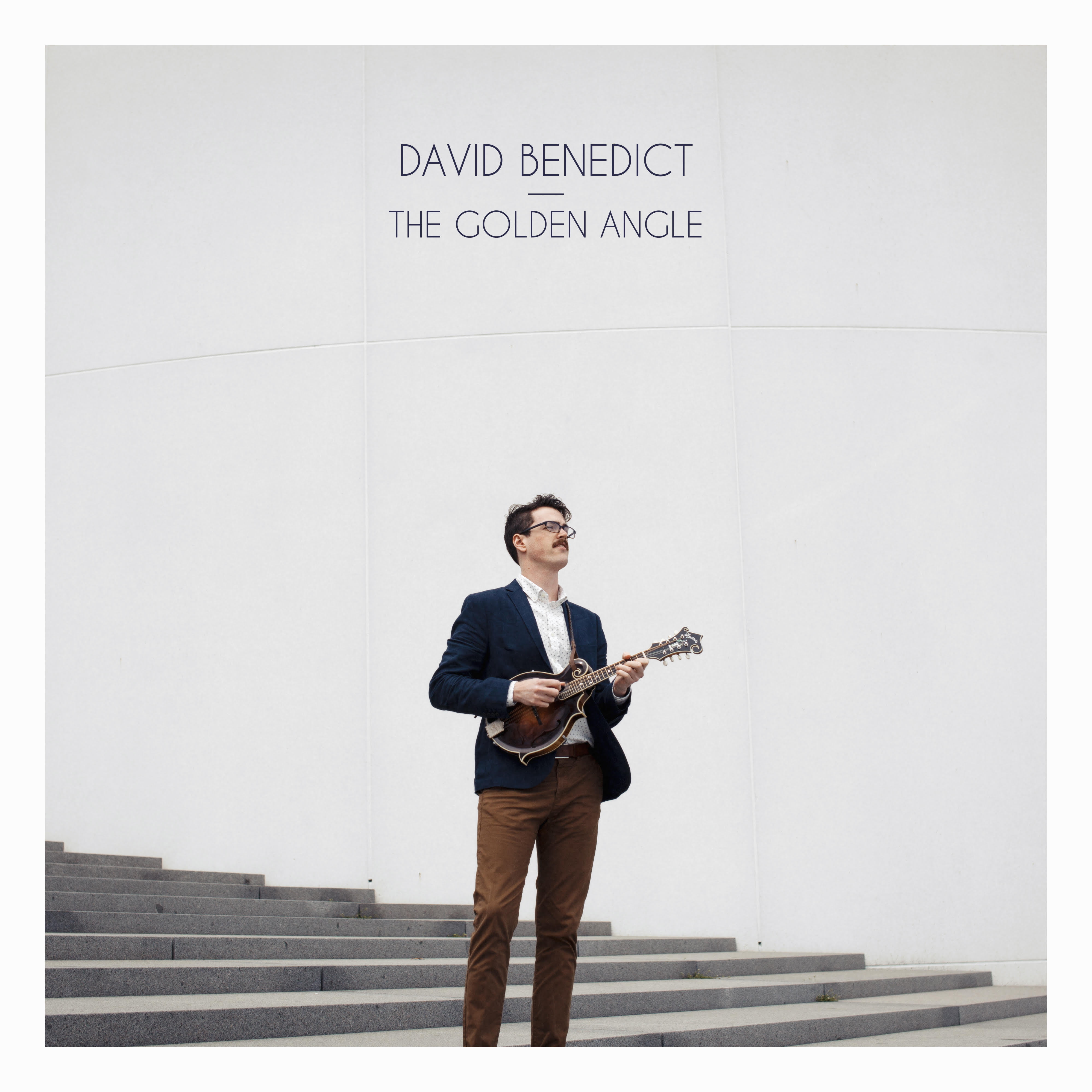
David Benedict, ‘The Golden Angle’

How does that old adage go? The one about “the company we keep” and all that? Based on the roster for his tune, “The Golden Angle,” it would seem mandolinist David Benedict had grown up with this principle as his cardinal rule. The title track of his upcoming album features bassist Missy Raines, the winningest bass player in the history of the International Bluegrass Music Association; Stuart Duncan, perhaps the most prolific fiddler and session player in Nashville and every bluegrass musician’s favorite musician; Wes Corbett, a former Berklee banjo instructor and one of the contemporary five-string’s most clever pickers; and Ross Martin, a flatpicker who impeccably combines the workhorse qualities of bluegrass with a more deft, subtle, jazz-flavored approach.

At the helm in the producer’s chair was another mandolin seer, Matt Flinner, whose fingerprints are found aplenty on the whimsical, Fibonacci-inspired tune. Like Flinner’s compositions, Benedict’s “Angle” is centered on a strong, cyclical melodic idea while it plays out linearly, each of the players listening intently to and building on what’s come before. It simultaneously registers as a danceable breakdown or a new acoustic chamber piece; it’s not better taken as one or the other, rather, its pliancy offers more varied perspectives on the song and its interpreters. Benedict’s voice as a composer and musician is remarkably mature and individualistic, without flirting with becoming too gratuitous — something that cannot be said for many pickers his age. It might be a safe bet to guess that these qualities are also thanks in part to the wildly phenomenal company he keeps, but either way, he should keep doing what he’s doing.

10 Young Banjo Players You Aren’t Paying Enough Attention To

We don’t blame you. Banjo is typically all about praising the masters, mimicking their technique, and playing “it” — whatever tune, song, lick, or fill — exactly the way the heroes did it. Of course it’s easy to overlook up-and-coming pickers who are innovating the instrument and letting their own personalities shine through their playing. Rest assured, we’ve been keeping up with a panoply of younger banjo player virtuosos for you, just in case you’ve overlooked ’em.

Gina Clowes

The most recent addition to Chris Jones and the Night Drivers, Gina Clowes’ debut album, True Colors, is a surprising departure for anyone who might be expecting songs along the lines of the more traditional-leaning material of the Night Drivers, but Gina’s playing refuses to be pigeonholed.

Catherine “BB” Bowness

BB has a chameleon-like ability to deftly shape her playing to fit any number of styles. With her Boston-based bluegrass band, Mile Twelve, she tends to lean into a more traditional approach, hard driving and uncompromising. In other contexts, she demonstrates she’s as progressive and outside-the-box as any Fleck/Pikelny acolytes out there.

Tabitha Agnew

Based in Northern Ireland, Tabitha Agnew and her two brothers tour and perform as Cup O’Joe. The subliminal transatlantic touches through her playing are like Easter eggs, keeping listeners on their toes, never quite sure what’s coming next.

Victor Furtado

Typically on banjo, when your aim is speed and intensity you give up some measure of precision and nuance. Not Victor Furtado. Whether he’s playing an emotive, pensive tune, or a foot-stomper like this, he never sacrifices any of his intricate, unexpected musical ideas. Oh, and remember Gina Clowes? Victor and Gina are siblings. Go figure.

Matthew Davis

There are plenty of young banjoists out there in the world right now who are obsessed with learning and transcribing every note they can from progressive trailblazers like Béla Fleck and Noam Pikelny. (And rightly so!) However, National Banjo Champion Matthew Davis (of new acoustic, bluegrassy string band Circus No. 9) is one of very few whose own imaginative voice on the instrument comes through louder than any of his influences, which gives his playing a remarkable maturity.

Little Nora Brown

This ain’t your usual, “aw this kid is playing an instrument as big as they are!” cutesy sh*t. It is a compelling case for reincarnation, though. It almost sounds like Little Nora Brown has a host of roots music legends pouring out of her fingertips and through her lips. Leave it to the young people to remind all of us that old-time music is relevant in any context, but especially poignant and transformative when it’s allowed to be in the present.

Steven Moore

A two-time National Banjo Champion, Steven Moore is a career biochemist who plays the banjo with downright effortless command, combining modern styles with classic, timeless licks and tricks. The moral of the story here is that when a banjo player plays an utterly stunning Don Reno cover, you oughta pay attention.

Uma Peters

She may be stoic, quiet, and generally shy, but Uma Peters is not one to overlook. At 11 years old, her old-time banjo skill level is already so high we can hardly imagine the heights to which she’ll take it. Again, this music stands for a whole lot more than just cuteness. Uma Peters for President.

Gabe Hirshfeld

More than just a bluegrass meme master, Gabe Hirshfeld is another example of a banjo player who refuses to let his playing style fit neatly into any of the molds already set forth by bluegrass forebears. On the five-string he can be unflinchingly traditional, totally off-the-wall, borderline insane, and/or all of the above all at once.

Alex Leach

Playing an arch-top banjo player in the Clinch Mountain Boys is quite the mantle to take on, but Alex Leach does it with ease and aplomb. The world needs more right hands backed up against bridges, more raised heads, and more playing and filling while singing lead. Just follow Alex’s example.


Lede image: courtesy of Mountain Home Music Company

LISTEN: Junior Sisk with Del McCoury, “The Guilt Was Gone”

Artist: Junior Sisk (with Del McCoury)
Hometown: Ferrum, Virginia
Album: Brand New Shade of Blue
Release Date: June 8, 2018
Label: Mountain Fever Records

In Their Words: “When I first heard the demo of ‘The Guilt Was Gone,’ Shawn Camp was singing the fire out of it! I thought to myself, ‘That sounds like a Del McCoury song if I ever heard one.’ Then I remembered asking Del if he’d sing a song with me some time and he said, ‘Anytime! Just holler.’ So, I did and here it is!” — Junior Sisk


Photo credit: Kady C. Photography

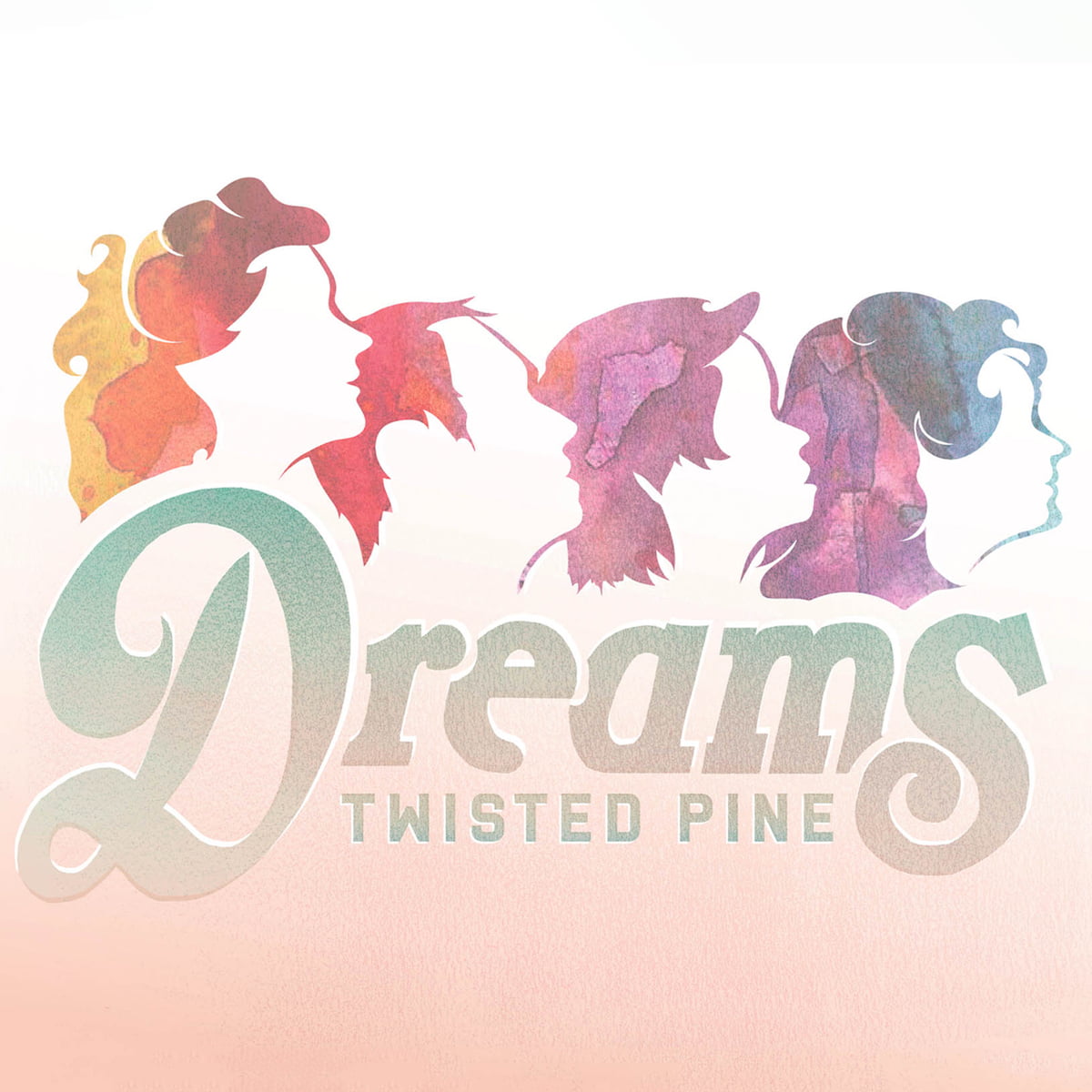
STREAM: Twisted Pine, ‘Dreams’

Artist: Twisted Pine
Hometown: Boston, MA
Album: Dreams
Release Date: June 8, 2018

In Their Words: “As a band, we have a diverse range of influences in many genres of music. Dreams is an experiment in stretching our stylistic boundaries, mixing bluegrass instruments with some of our favorite pop music, and represents just a glimpse of the many artists we are inspired by.”