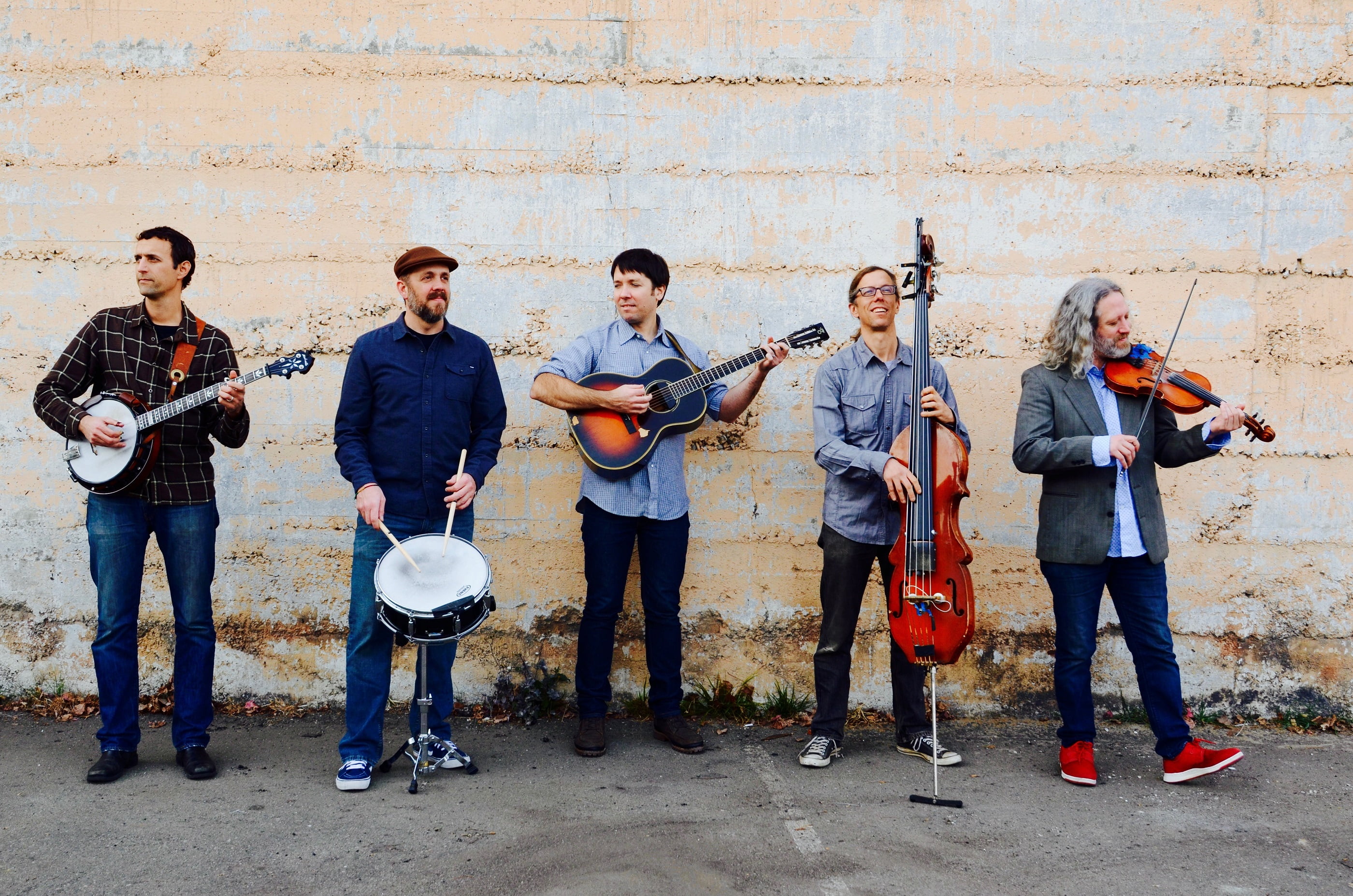
Pappy, “Susquehanna Breakdown”

If it ain’t broke, well, you ought not fix it. Pappy (AKA Patrick Biondo), being a bluegrass-centered musician and songwriter, understands this timeless adage. On his most recent release, Back to Basics, he reinforces the wisdom intrinsic to this clichéd phrase through five tracks that each remind that it’s difficult to go wrong if your focus is on the primal, bare bones elements that make up an art form — in this case, jammy, high-flying, swift-going bluegrass.

“Susquehanna Breakdown,” one of two instrumentals on the project, may not return to the elemental origin point of breakdowns — it hardly conjures “Foggy Mountain” or “Earl’s” or “Shenandoah” — but instead focuses on the nuance and detail of this breakneck format by letting the instruments and their handlers shine. The entire EP was cut straight to tape, without the requisite over-analyzing or rehashing that comes hand-in-hand with modern multi-tracking and overdubbing. As a result, the tune crackles with live energy, rushing ahead with its listeners on the edges of their seats, as if careening down roiling, adventurous rapids on the Susquehanna River itself.

Pappy’s jam-grass background, informed by his time with popular Scranton-based string band, Cabinet, informs his banjo playing in so many unexpected and exciting ways, bringing the free, unencumbered, exploratory tendencies of more jammy acts into what already feels familiar: The breakdown’s foundational bluegrass sensibilities, its solid picking, and Pappy’s hard-driving (though deliciously oddball) banjo.

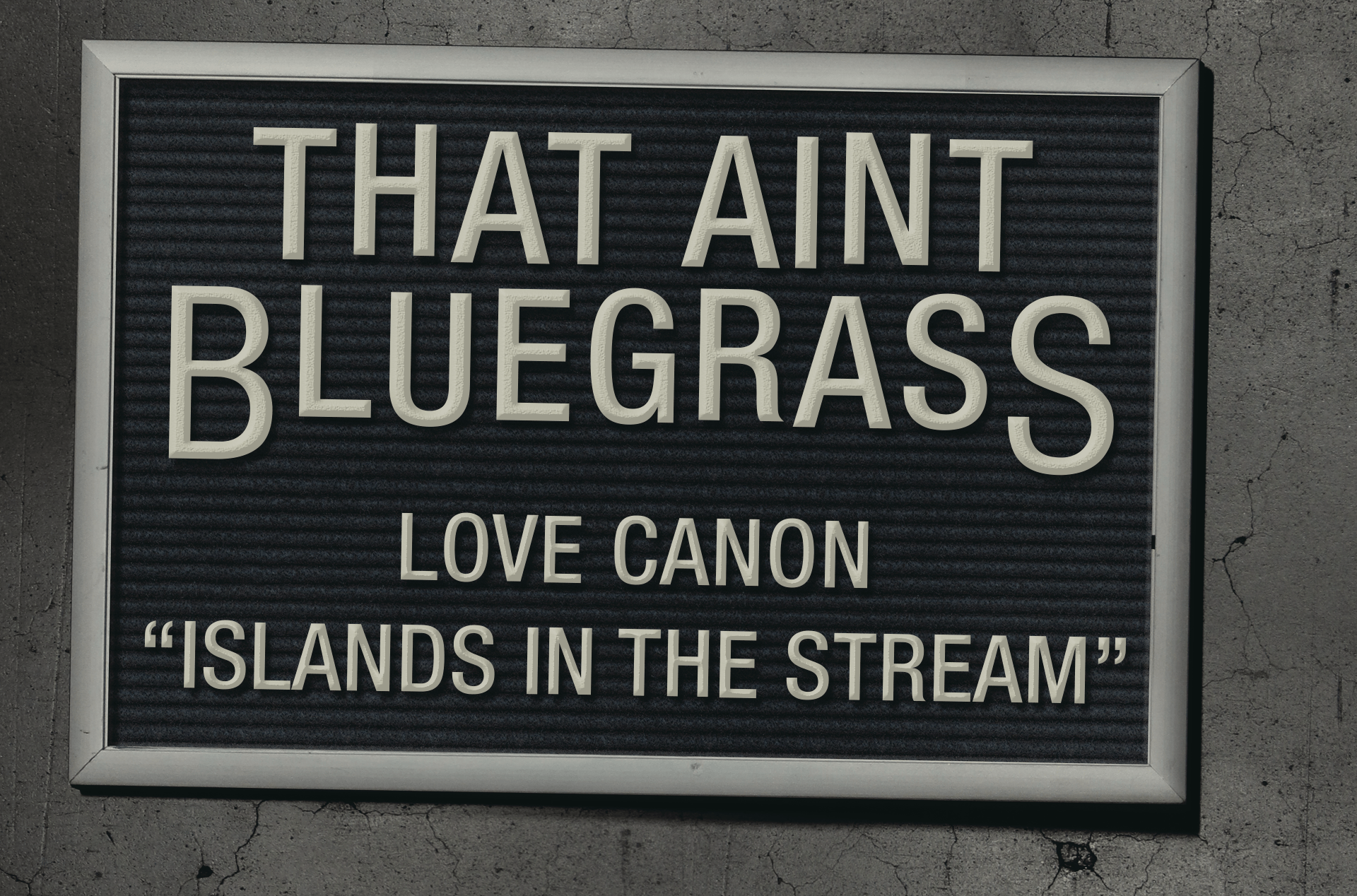
That Ain’t Bluegrass: Love Canon

Artist: Love Canon
Song: “Islands In The Stream” (Originally recorded by Kenny Rogers and Dolly Parton)
Album: Cover Story

My first question is normally, “Where did you first hear the song?” But with a song as ubiquitous as this, how could anyone actually recall when they first heard it? So, maybe a better question is: How did you all decide that this was a song you wanted to record?

Jesse Harper: I’ve always loved the song, for as long as I can remember, but at a truck stop somewhere we got a Bee Gees greatest hits record and there was a live version of “Islands In The Stream” on it. I was like, “This is ridiculous! Why would the Bee Gees cover a Dolly Parton/Kenny Rogers number?” When we looked it up, it was Barry Gibb and his brothers who wrote the tune and he produced Kenny Rogers’ record, brought Dolly in on it, and pitched the tune to Kenny. It was the Bee Gees that brought the song back to my memory.

I worked it up when I was teaching at a fiddle camp in the summer, on an island, and it just happened that my friend Lauren Balthrop, who sings it with me [on the record], was on this island. I wanted to sing the song as a camp sing-along, because I was teaching a vocals/choir class and she was helping me out. I brought it back to the [band], like, “Man, this is an ‘80s hit, let’s do it.” That’s how it all came about.

What makes this song a good bluegrass song — or a good fit for bluegrass instrumentation?

There’s not much of a departure, music-wise, from what they had. The things that usually work about a song are whether or not we can transcribe the parts and work them out on our instruments. When we get into a song, we put it under the microscope and find every little detail. We try it on every instrument to see which should play which part. This one, in particular, there weren’t that many parts to it; the vocal part is what stands out. It’s more of a bluegrass jam than a lot of things that we do, towards the end of the song and it was more about the chords and the melody than the parts. In certain songs where there’s an instrumental hook, or a synth part — or think about “Africa” [by Toto] and how many parts are immediately recognizable. This tune, the recognizable part is the chorus and its melody.

One of the differences to our approach is that bluegrass music is typically a [2/4 time] feel or a waltz feel, and there’s a scripted role for every instrument, but we approach it with the instruments we already have and the music that already exists and the roles just need someone to fill them. Rather than just taking the chord structure and make it bluegrass, we take all the music that’s there and figure out how to deal with it. It always feels cheesy to me to take a song and just turn it into a bluegrass feel. “Boom-chick” works for disco, maybe, but it wouldn’t work for any of the other feels that we do.

There’s been this tradition since the early days of bluegrass of taking songs that were pop hits or radio hits and bringing them to bluegrass audiences–

Like Bill Monroe covering a Jimmie Rodgers tune.

Exactly. So I wonder how what Love Canon does follows that tradition — and why do you think this tradition still exists today?

I think that it goes beyond bluegrass. I would say that all musicians who are involved or dedicated to the craft of learning their instrument will almost always have to learn a piece, like in classical music — classical music is almost exclusively covers. The London Philharmonic, for example, is really a cover band, if you think about it in those terms. Jazz groups that are playing standards, well, standards are just covers. They’re tunes that become vehicles for improvisation. Bluegrass music and acoustic music that uses bluegrass instrumentation deserve to be elevated to the place where jazz and classical are, because of the technical aspect that’s required.

If you watch Bryan Sutton or David Grier play the guitar it’s every bit as impressive as seeing Eliot Fisk, or some amazing classical guitar player. It takes a lifetime of dedication to the craft. Or you see Béla Fleck play the banjo, or Jim Mills, and you realize, “Man that takes a lifetime of learning that craft.” I feel that ‘80s music is worthy of being played on these instruments. The melodies are great, the compositions are great. When we dig into the actual tune, as students of music, there’s so much amazing information, harmonically, in the chords and the melodies, that are sort of lacking in radio music right now. The popular music of today is not what it was in the ‘80s. What I wanted to uncover through what Love Canon — canon of course, being a body of work —  is, “We are studying the canon of this particular era.” There were just some great songs!

Similarly, “Islands In The Stream” is a great piece of music with great lyrics and a great chorus. That’s worthy of being studied by any serious musician, including bluegrass musicians.

What’s your favorite thing about performing it live?

Watching people unable to sing the verses, but as soon as the choruses come around, everybody knows it. It’s like, everyone remembers it, but they don’t know why they remember it. It happens with a lot of the songs we play. “Break My Stride” by Matthew Wilder is a perfect example. Nobody knows what the hell is going on. They’re like, “Why do I know this?” And if you look at their faces, they’re like, “Aaaah, I know what this is? I know what this is?” Then as soon as the chorus comes, they throw their hands in the air and they know all the words.

Now, you know that ain’t bluegrass, right?

I mean, I know that it’s not. Absolutely it’s not bluegrass. One response I have is that I love the old bluegrass. I love J.D. Crowe, I love Ricky Skaggs. I listen to that music incessantly, but I’m not Ricky Skaggs and I’m not J.D. Crowe. And I’m never going to be them. It’s never going to happen, no matter how much I want it to. The best I could do would be equivalent to me putting on a fake British accent right now. So the best thing for me to do is to use the voice that I have and play the music that I’m… you know, decently prepared to play.

I remember sitting at a festival not far from where I grew up — I could ride my bike there from my house as a kid. This festival is more traditional and I remember seeing Nickel Creek there years and years ago and there was a woman seated in front of me who turned to the person seated next to her and said, “They’re good, but I hate it.” [Laughs] I dunno if you’re going to win that conversation. Maybe the problem extends wider, into our entire culture, but it doesn’t do me any good to have that argument. I usually just say, “Yeah, it’s definitely not bluegrass.”

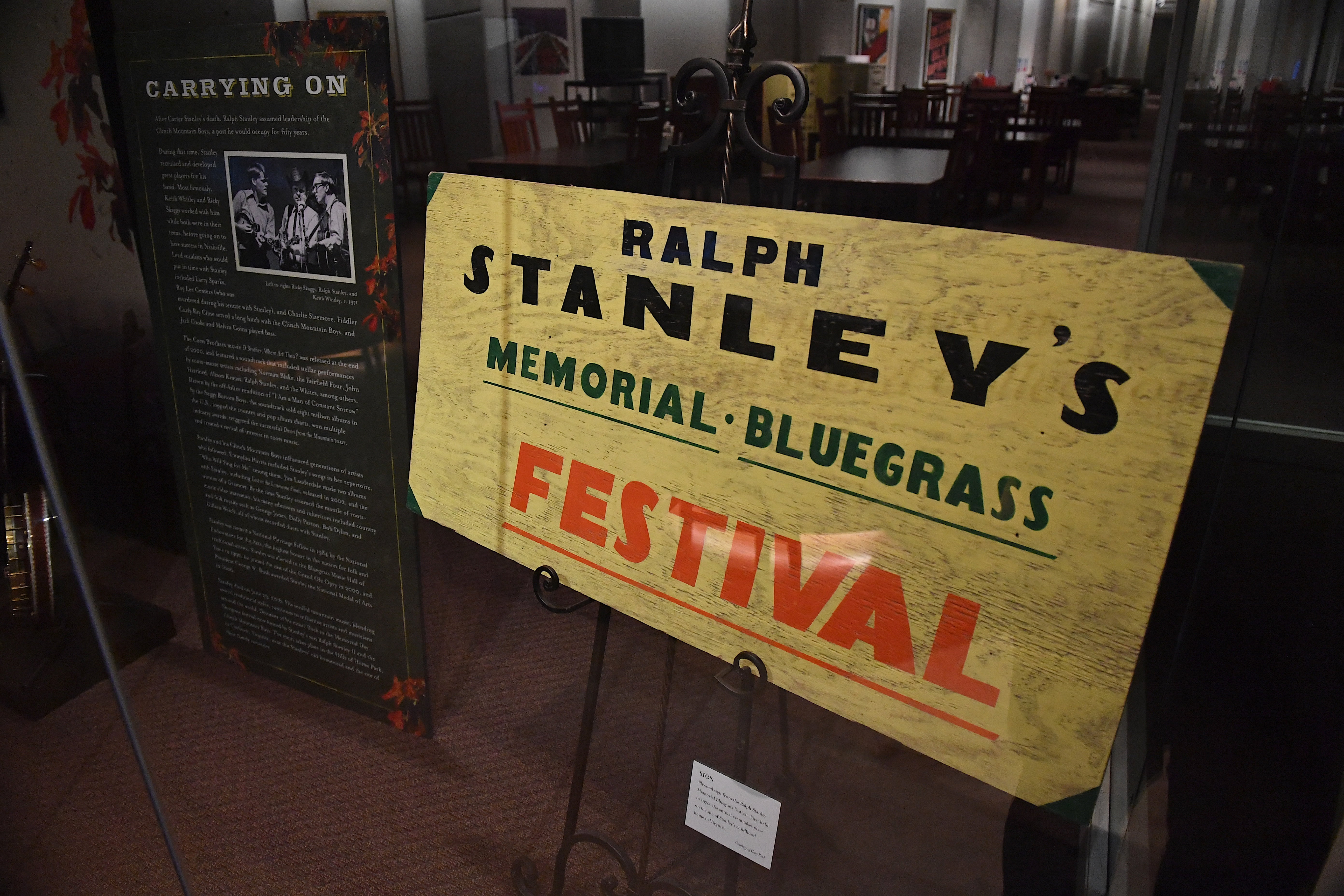
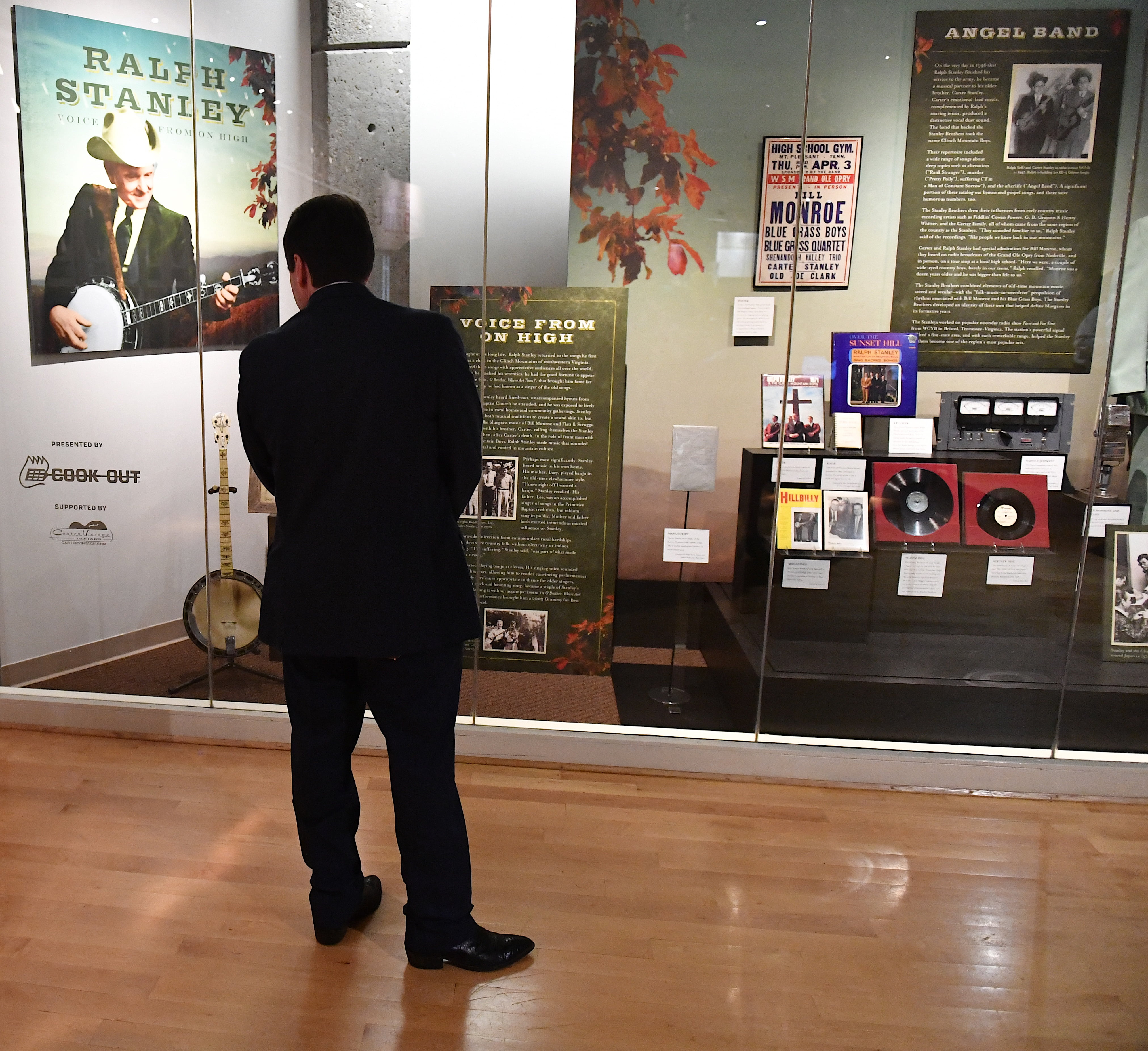
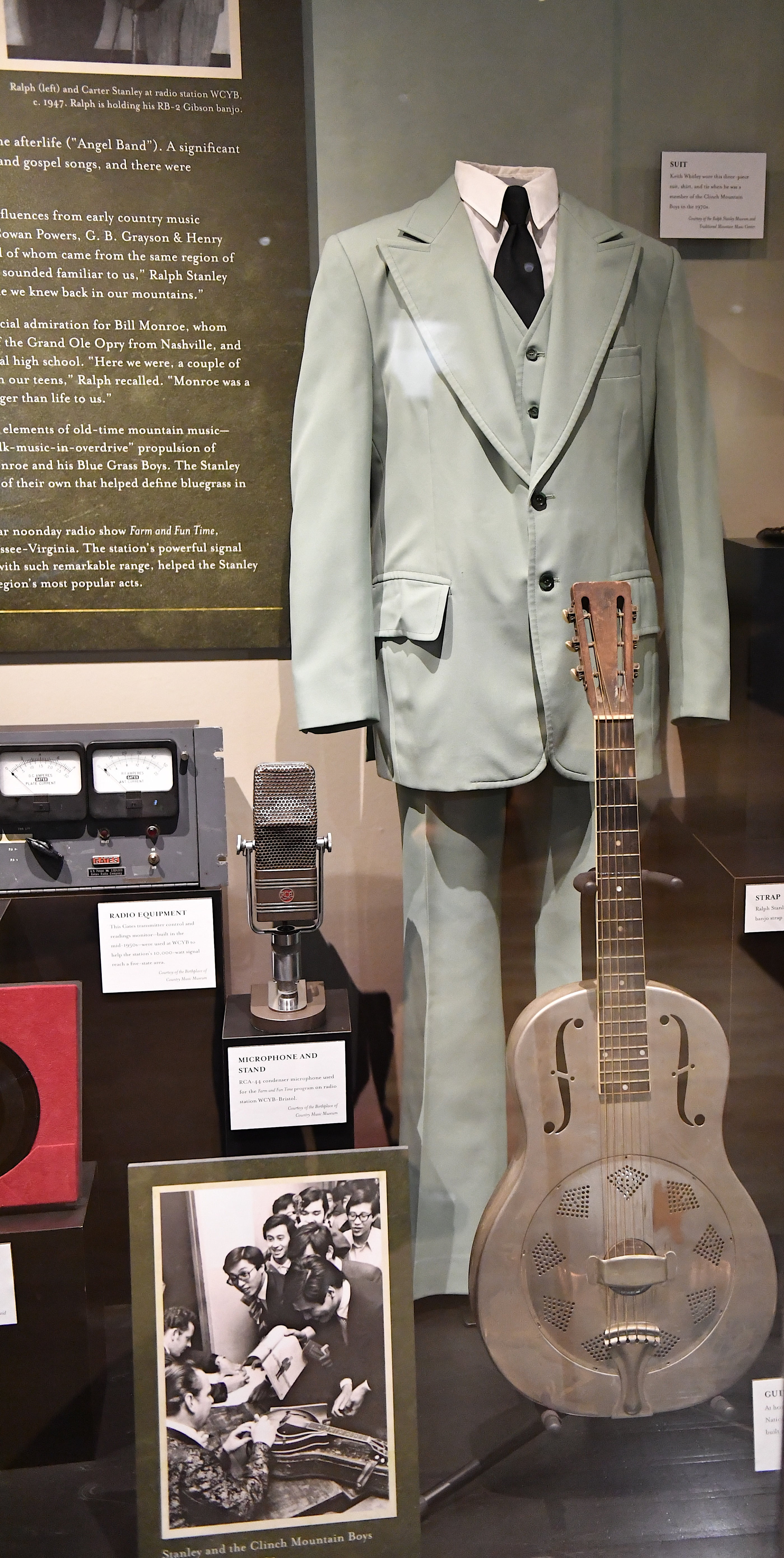
Ralph Stanley Exhibit Opens at Country Music Hall of Fame

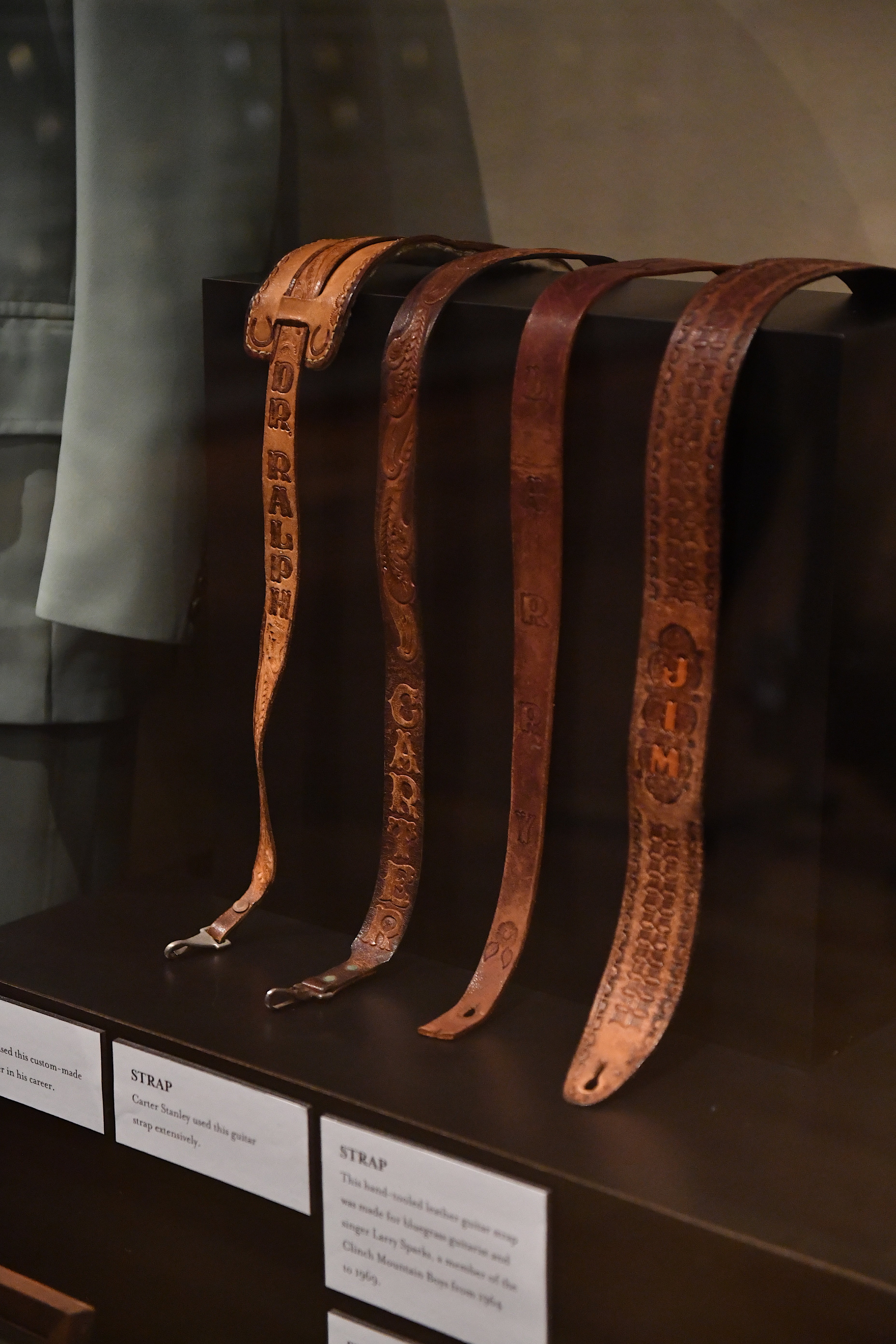
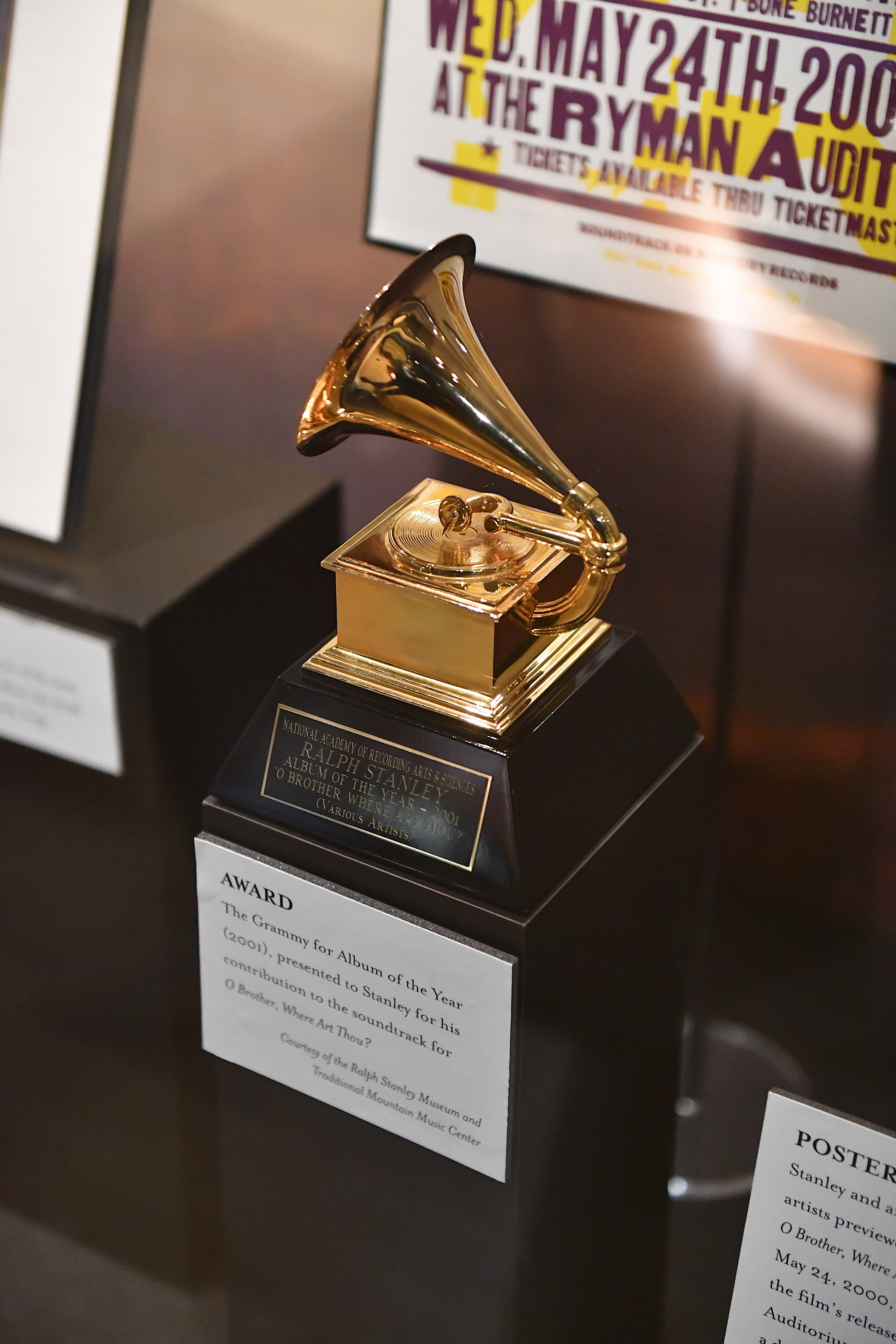
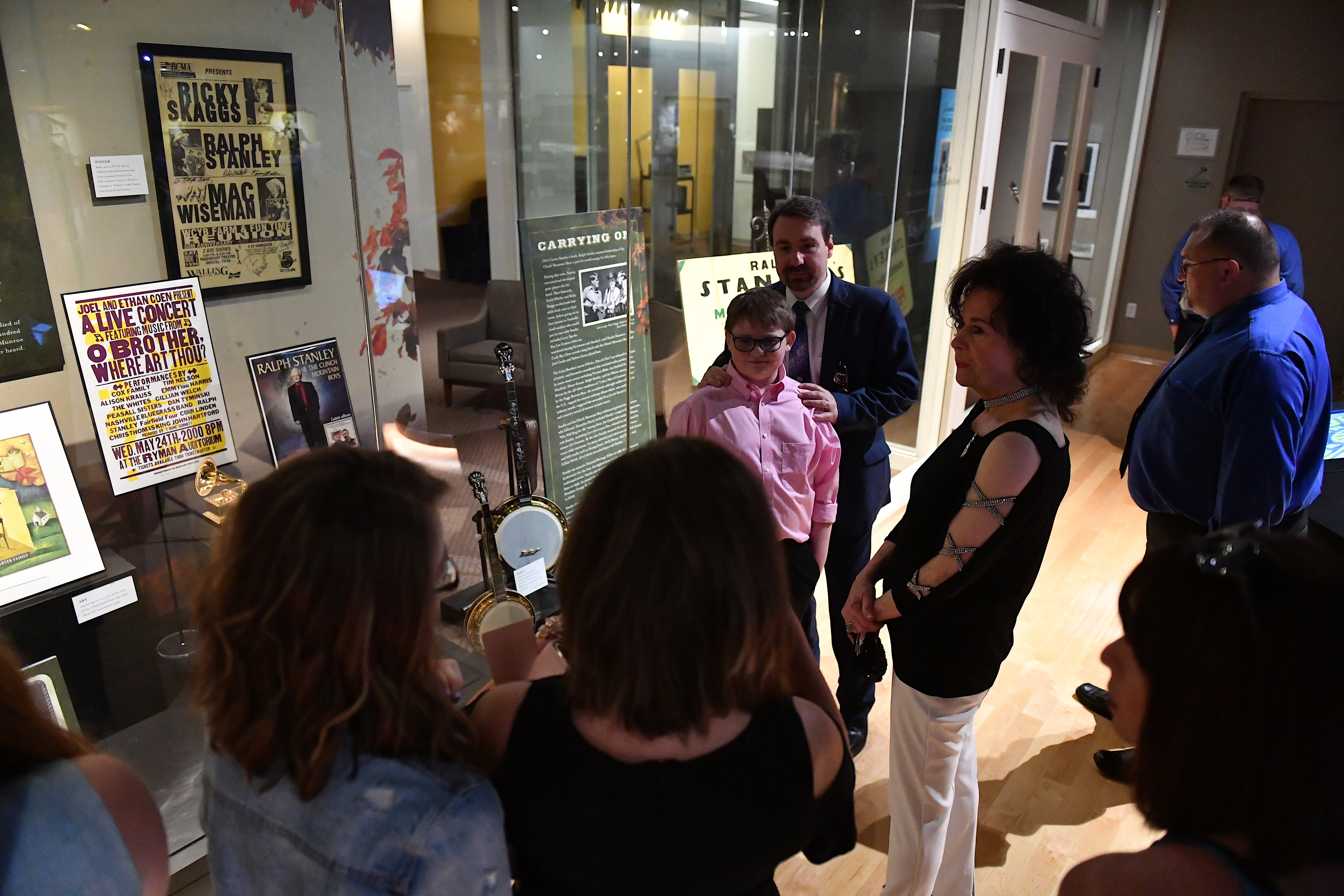
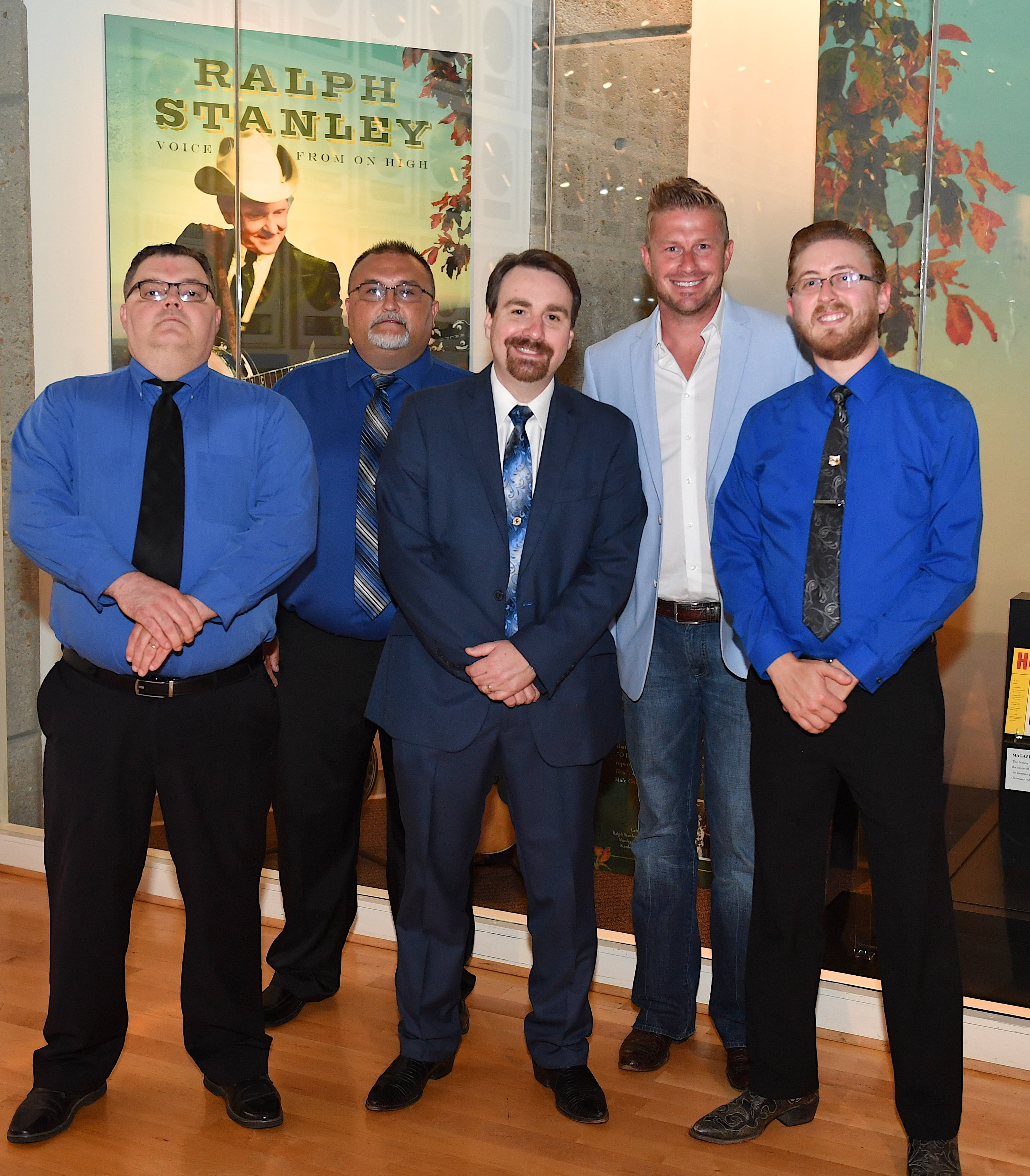
The Country Music Hall of Fame and Museum is shining a light on a bluegrass legend in the new exhibit, Ralph Stanley: Voice from on High. Presented with the participation of the Stanley family, the exhibit will remain open through January 9, 2019.

For generations, Ralph Stanley found a home in bluegrass music, starting with the influential recordings made with his brother Carter as The Stanley Brothers. Following Carter’s death in 1966, Ralph’s own journey led him to the Grand Ole Opry and the Bluegrass Music Hall of Fame, with national recognition ranging from the Library of Congress to the Grammy Awards.

“I just want to say that I’m so glad to see this happen for Dad,” said Ralph Stanley II at the exhibit’s opening party. In his remarks, he remembered receiving a banjo from his father as a boy, although ultimately Ralph II ended up gravitating toward the guitar. Ralph II reminisced about falling asleep to the Clinch Mountain Gospel album while growing up – a ritual that led to dreams of sharing the stage with his father.

“Thanks to the good Lord, I got to do that,” he stated. “There’s been a lot of great banjo players and a lot of great singers. But nobody could play it with the emotion and feel that Dad had. That’s for sure.”


Photos by Jason Davis/Getty Images

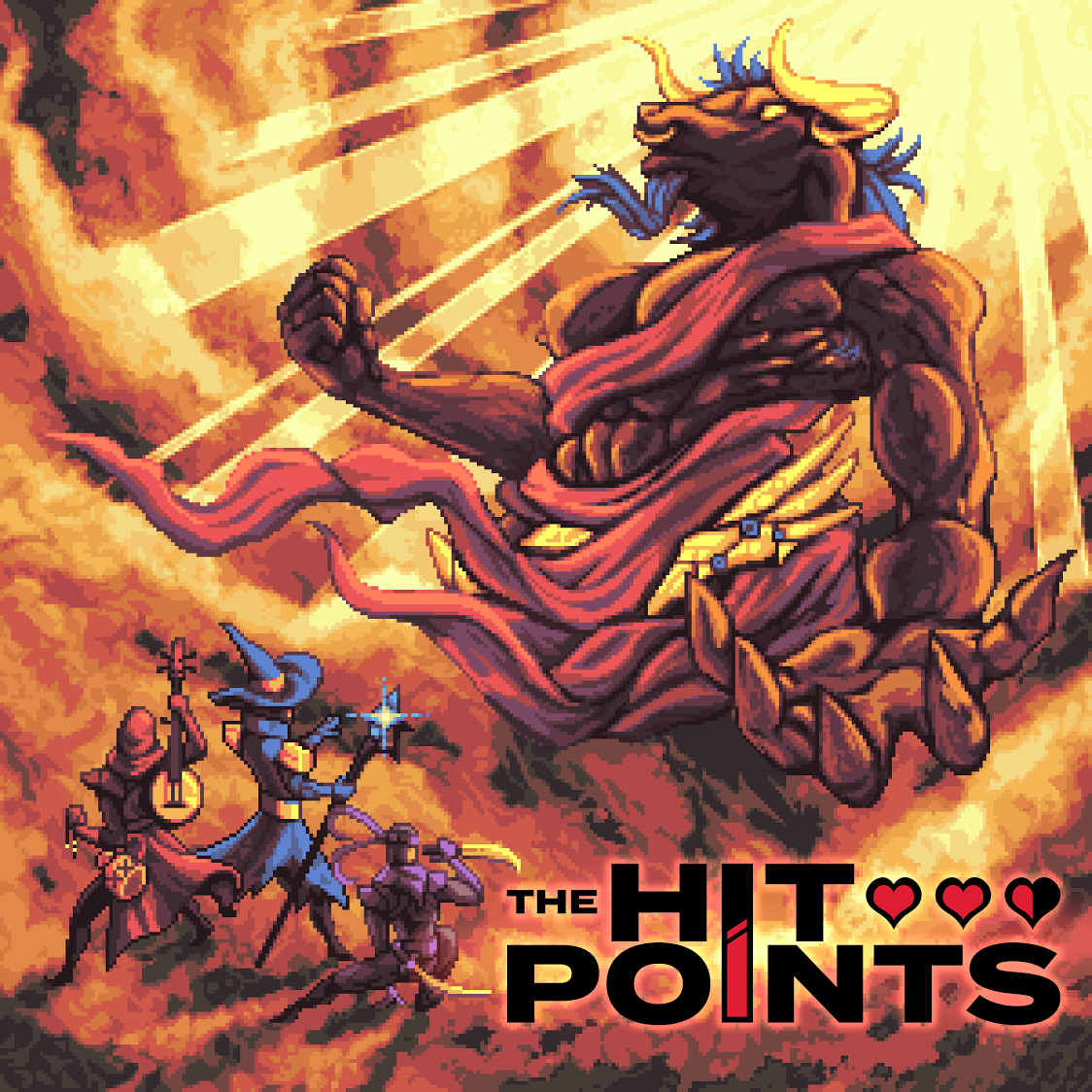
The Hit Points, ‘Guile’s Theme’

Bluegrass, as a genre, is built upon nostalgia. Especially in its contemporary iterations. Modern bluegrass plays like a primer of the form itself, referencing the genre’s founders, its historical moments, its popular songs, and all of its favorite themes and buzzwords, no matter how trope-ish — because nostalgia is a commodity.

But, what’s that sound? It’s not pining for the hills and home, it’s nostalgia for an entirely different time, place, and feeling. The feeling being a creeping dread at the inevitability of your loss at the hands of Ryu, E. Honda, or Chun-Li. The decadent, joyful nostalgia that The Hit Points — fiddler guru Eli Bishop (Lee Ann Womack, the Deadly Gentlemen) and banjo wizard Matt Menefee (Cadillac Sky, ChessBoxer) — conjure on their blazing cover of “Guile’s Theme,” from Nintendo’s iconic video game, Street Fighter, will send you careening back in time. You’ll land on a couch, or high pile carpet, or flimsy futon in front of a TV, where as youths (or as youthfuls), you consumed hours and hours of video game entertainment. And with it, you also consumed hours and hours of incredible music, without ever realizing that the otherworldly, impossibly complicated tunes could actually be performed by human beings. Let alone by bluegrass musicians, on bluegrass instruments, with such ease and aplomb that it would nearly strike listeners as just another new acoustic, Dawg-grass tune.

The Hit Points’ debut, self-titled project is chock-full of nearly note-for-note covers of 8-bit music, crafted with loving care and aggressive creativity — and surrounded by a talented cast that includes Jake Stargel (Mountain Heart), Sierra Hull, Royal Masat (Billy Strings), and Paul Kowert (Punch Brothers), it shouldn’t be a surprise. This is instrumental acoustic music and bluegrass pickin’ at its best.

LISTEN: Hot Buttered Rum, “Sitting Here Alone”

Artist: Hot Buttered Rum
Hometown: San Francisco, California
Song: “Sitting Here Alone”
Album: Lonesome Panoramic
Release Date: July 20, 2018

In Their Words
– “I’d long had the dream of having a cabin in the woods. Removed from the busy rat race, I’d be able to have a clear vision to make my masterpiece, right? Well, I got the opportunity a few years ago to do this on my friend’s 100-acre farm in the Santa Cruz Mountains. I poured a foundation, built a wall tent, doors, an outdoor kitchen. I put in a desk, wood stove, a bed, a couch. It was a ten-minute walk uphill through a redwood forest to reach the place. Epic! Remote! Serene! I’d finally have the headspace to make my best music…I did write a lot of music there (most of Limbs Akimbo), but I was also struck by how life feels about the same even when your dreams come true. I’m still an insecure, distractible dude, no matter where I am! “I thought I’d have it made if I could only get away/and find a little cabin in the woods/I’ll be so content with no entanglements/and life will flow freely as it should.” All this fits into a general trend in my life of being less of an aspiring loner and more engaged with and committed to other people, and all the good and bad things that come with them.” – Nat Keefe


Photo credit: Matt Sharkey

A Desire to Inspire: A Conversation With Molly Tuttle

I can’t pin down the year I first heard Molly Tuttle picking a few tunes in a Sugar Hill Records suite at the IBMA’s World of Bluegrass, but I know it was before the event’s 2013 move to Raleigh, and I know I wasn’t the first to pay attention to her guitar playing. Indeed, it was only a few more years until Bryan Sutton called her name as a picker to listen to in the course of accepting one of his ten IBMA Guitar Player of the Year trophies—and just two years after that, last fall, she accepted the same award herself.  

Even so, her growing recognition among bluegrassers has led to a higher profile for Molly in the broader musical world; she earned the Folk Alliance’s Song of the Year award in February, and a nomination for this year’s Americana Music Association’s Instrumentalist of the Year title, too. Between that, her own eclectic outlook, and the predispositions of journalists unfamiliar with the bluegrass world, it’s not hard to see why the musical substance of her engagement with the genre can sometimes be given short shrift. Yet the fact is, she appears to be as happy tearing through a bluegrass classic in the company of her youthful contemporaries—or with a certified bluegrass legend or three—as she is playing anything else.

I was reminded of this shortly before our interview, when Instagram presented me with a snippet of video that showed her sitting in with the East Nashville Grass, a collection of pickers who mostly work in other bands, at a ‘grass-friendly’ Madison club—and since the next Molly Tuttle record is still likely months away, it seemed like a good place to start the conversation.

Just this morning, I saw a video of you sitting in with the East Nashville Grass guys, ripping on some bluegrass—“White Freightliner Blues,” which I know you’ve been doing for a while—and it got me to wondering. Your dad was a music teacher when you were growing up; was he more of a folk guy, or an acoustic guy generally, or a bluegrass guy?

What my dad always loved was bluegrass. He grew up playing bluegrass, and that’s really what he studied and what he loves. But he did end up playing some folkier music; he played in a band called the Gryphon Quintet, which was all people who worked at Gryphon Music, the store he teaches out of. And that was jazzier stuff, some swing stuff, four-part harmony arrangements, and some of their stuff was kind of folky, too. So he ended up playing a bunch of different styles, but he really comes from bluegrass.

So when the family band got started, it was a bluegrass band.

Yeah!

You’re getting out beyond the bluegrass audience these days, into the larger musical world, and there’s been a whole line of people over the years who have done that. What do you think you’ve learned as a bluegrass musician that you carry with you when you do all this other stuff?

I think one of the most valuable things I learned was improvising and making up my own solos. Just being creative, really, because it’s such a creative genre. Some of the most incredible improvisers in the world are bluegrass musicians and you can really carry that into any genre—those improvisational concepts, you can take those in so many different directions. So that’s something I feel bluegrass really taught me, something I can use for the rest of my life.

And also, technique. I think it’s so important in bluegrass to have great technique, to be able to play fast, slow…I think that was really helpful for me to learn. And the style itself is so authentic. It has this raw feeling to it, and my favorite bluegrass is old bluegrass, where it’s all so live and energetic—just real, authentic stories from their lives. I think that’s really inspiring.

I’ve heard from some younger musicians that when they found a bluegrass jam or something like that when they were getting started, the older guys were really encouraging and supportive—and then, when they started getting into other kinds of music, those folks weren’t so supportive. Have you run into that?

A little bit. People just like what they like, so people who love traditional bluegrass aren’t as supportive as others about me branching out and doing new stuff. But I haven’t run into too many people who are openly discouraging me from doing what I want—it’s just not their cup of tea, so they’re not as excited.

When you started putting the Molly Tuttle Band together, how did you decide what you wanted? Was that a question in your mind—am I going to have a banjo player?

It kind of was! But it was like the right musicians just sort of presented themselves to me. I’ve played with Wes [Corbett] for three years now and he’s such an amazing musician—he’s so versatile. He plays amazing stuff on my songs that are more singer-songwritery, but he’s an incredible bluegrass musician, too. So it’s been a great fit for me. I think the bluegrass band just made sense. But then, I’ve been working on a new album that has drums on everything, and electric guitars, so I think going forward I’m going to be trying out different band lineups.

Are you working on your new record a few days at a time, or did you set aside a big block of time to make a whole record?

We had six days where we got all the tracks done; eleven songs, all with the same band. We did that at Sound Emporium and it was mostly all live. And then I went in and did harmony overdubs, I overdubbed some vocals, put some other instruments on, tracked strings—that was really fun. Nathaniel Smith worked out these really great string arrangements with Rachel Baiman and Mike Barnett, so they came in. And then we got some special guests on it—Sierra [Hull] came in and played, which was fun. So it’s just been going into the studio and finishing things up whenever I’m back from touring.

So maybe the next big release coming out that you’re on is a Roland White tribute project. And there was definitely an element there of you kind of playing the part of Clarence White on the tunes that you did. How do you prepare for that, for playing the part of Clarence White?

I just went and listened to recordings of Clarence. And with “I Am a Pilgrim,” there’s this great YouTube video of Clarence and Roland playing it, and Clarence was playing the coolest stuff ever. I teach at camps sometimes, and last summer, I thought it would be fun to teach a workshop on Clarence White, so I transcribed his rhythm playing on that, and was teaching it to people. So that was a good one to get to do, because I already knew some of the licks, and I’m obsessed with his playing on that song—it was fun to try to get into that mindset.

It seems like you really succeeded in being Molly Tuttle, but also Molly Tuttle playing Clarence White.

That’s what I was trying to do, so that’s good to hear.

We played a house concert a few weeks ago, where [12-year-old fiddler] Clare Brown and her dad came out and opened for us. I heard her doing a soundcheck with “White Freightliner Blues,” and I thought, I’ll bet I know where she learned that. Does it freak you out that there are even younger musicians coming up who are influenced by you?

I think that’s so exciting and that’s what I wanted to do with my music since really early on: inspire the younger generation, especially younger girls. I think it’s really important for them to see the generation of women before them doing it. So that’s one of the things that keeps me going with my music, to see something like that.

Who were you seeing that way? Who did you look up to?

When I was a kid I looked up to Laurie Lewis, Kathy Kallick, Keith Little, Bill Evans, my dad—all these Bay Area people. There’s a really great scene there and they were all so supportive of me. But especially Laurie and Kathy, seeing them lead their own bands and play shows. They were my biggest heroes and I thought they were the coolest, and I still do.

Is it important to you to keep an eye on and try to inspire young musicians to play bluegrass in particular?

I think it’s a really great tradition, especially for kids, because it’s such a supportive community. And there are jams, so you can get together with other kids your age. That’s a really healthy thing for kids to do for fun. For me, it was really great in high school to have that, to go to festivals, and get together for jams, and play shows—that was a great outlet for me. It’s a great genre for kids to play, and it’s really important to keep carrying on the bluegrass tradition, to keep it alive, so I think it’s great to encourage kids to play it.


Photo credit: Kaitlyn Raitz
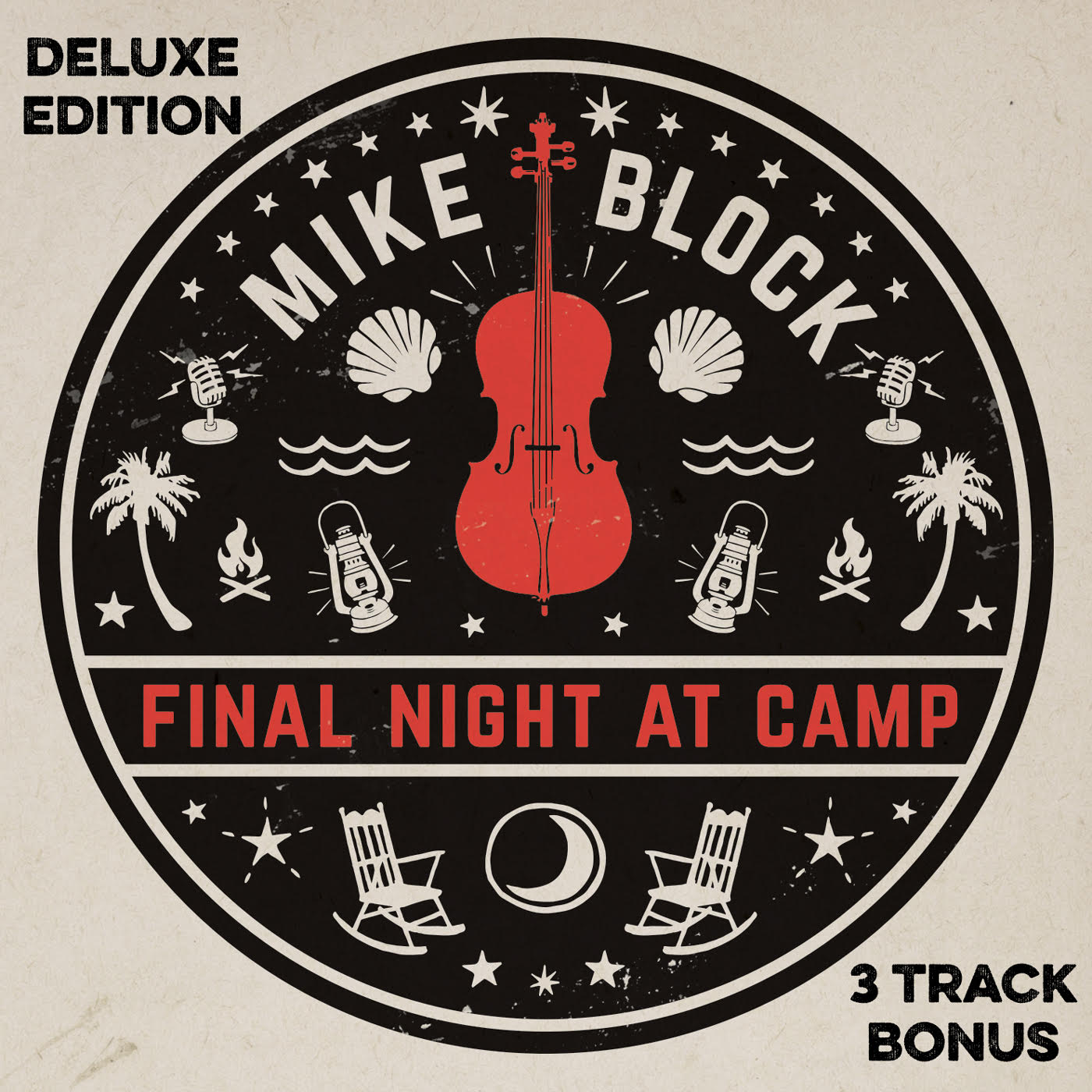
Mike Block, ‘Final Night at Camp’

Summertime = summer camp, doesn’t it? To musicians, though, camps of summer are only marginally related to The Parent Trap or Wet Hot American Summer motifs. Music camps borrow the familiar grounds, dormitories, and wood panel-clad mess halls and classrooms for a week or two here and there, when they would otherwise be left vacant, and then fill them with pickers and tunes. It’s an entirely different summer camp category, but they’re never less nostalgic, or memorable, or convivial, or sweltering than their more mainstream counterparts, even if they are a special breed of their own.

Mike Block, an acclaimed and traveled cellist, is a founder, proprietor, and curator of just such a music camp, and an experienced instructor at many others as well. His latest album, Final Night at Camp: Deluxe Edition, plays exactly like an end-of-week faculty concert, drawing on musicians and pickers who are just as familiar with the wonders and woes of folk music camps as he is. The title track seemingly mirrors a week a camp, for just as you begin to become comfortable and familiar with your surroundings, the craziness (sleep deprivation? One crazy, all-night jam? That one student who refuses to ask an actual question, opting for, “This is more of a comment, really…” instead?) sets in! On the cello-centered, original instrumental, that “craziness” is a wildly dissonant, dynamic breakdown, that reharmonizes the tune’s melodic hook fantastically and frenetically mid-song. But, just like camp, when everything settles, everything is finally sorted out and the time has elapsed, we’ve learned something — and we wish that the “Final Night at Camp” hadn’t come to a close so soon.

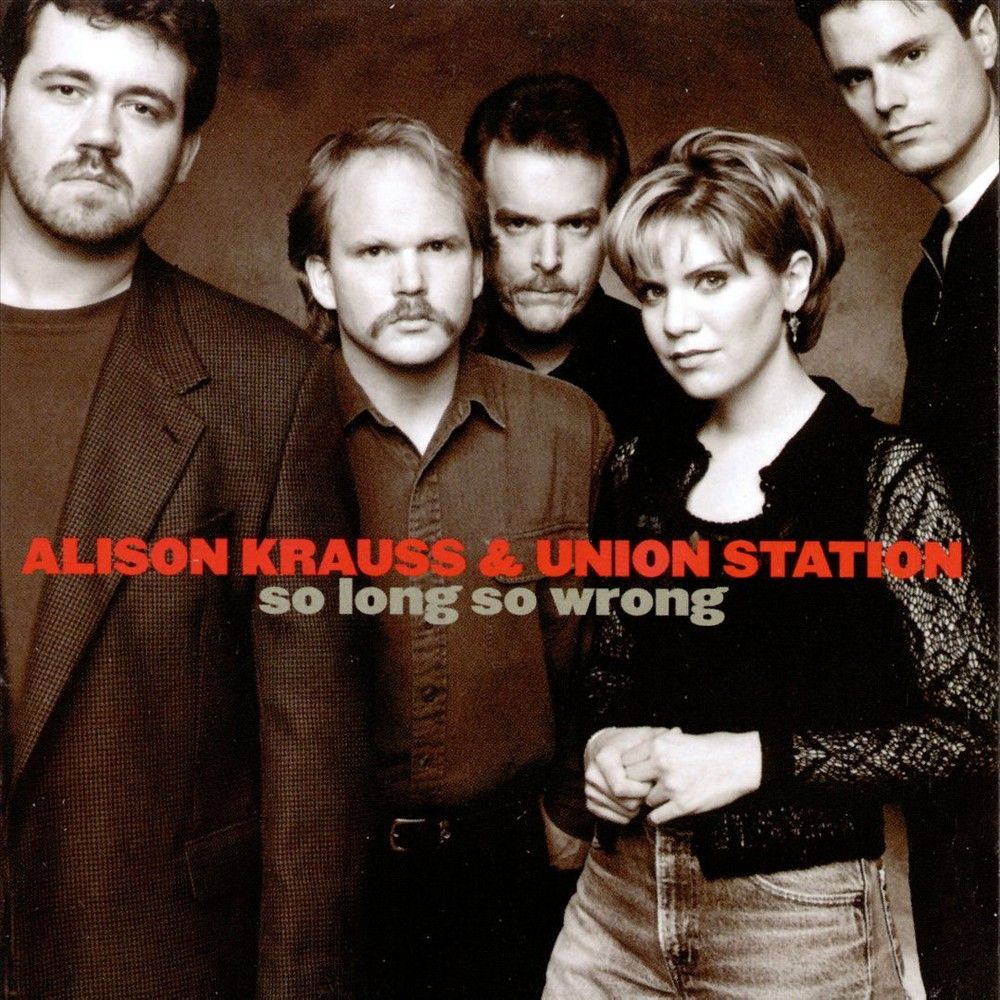
The Songs of ‘So Long, So Wrong’ Ranked

So Long, So Wrong is an iconic album. It signaled Alison Krauss & Union Station’s shift from a bluegrass-centered aesthetic to the signature post-grass, adult contemporary, mainstream sound that solidified their astronomical success. Ostensibly a bluegrass album, it rose through the ranks to land at number 4 on the Billboard Top Country Albums chart in 1997, the year it was released. But the objective markers of its success really don’t matter here. What does matter is that this album brought up a generation of bluegrass pickers, and mashers, and emotive songwriters who are rabidly, unapologetically, all-encompassingly in love with this album. This author falls into more than one of the categories listed prior.

So it’s a given, then, that we’re going to rank the songs of So Long, So Wrong from worst to best, right?

Right.

Keep in mind that even the lowest ranked of this set of fourteen songs are still superlative and are beacons of bluegrass artistry for all who adore the form. Yes, even you, “Looking In the Eyes of Love.”

14. “Looking In The Eyes Of Love”

Yes, you read that right. It’s cheesy, it’s overplayed, and it’s time bluegrass had a better go-to wedding song. Oh, and it’s in Ab. Whyyyyy?

13. “There Is A Reason”

The cinematic intro and reprise that bookend this song are absolutely delectable. It’s a faith-oriented song with a compelling message and it would rank higher if it didn’t, by its nature, exclude folks of differing beliefs from enjoying its whole delectability.

12. “I’ll Remember You, Love, In My Prayers”

Besides giving us a rare glimpse at a world in which the grammar of bluegrass song titles is formatted correctly (except for the capitalized preposition), this track has only given us scores upon scores upon scores of mash jams pounding the everlovin’ shit out of what once was a nuanced folk song, sung in a timeless Appalachian style.

Damn, but it’s good.

11. “I Can Let Go Now”

It’s a gorgeous, deft, brooding testament to the beauty of reverb. And we know not to ever turn down an opportunity for Ron Block to pick up his guitar. Still, this is Alison Krauss we’re talking about, and we’ve been taught to demand a higher level of quality from our brooding, reverb-soaked, AK songs. Sorry if this offends you, but someday, you’ll no longer care. You can let go now.

10. “Pain Of A Troubled Life”

It’s actually quite nice to hear each of the boys sing lead on this album (except Barry?), but this poor song is up against some steep competition. And that strange internal rhyme (double/troubled) is just… strange.

9. “Happiness”

You can’t always trust happiness. This one, you can trust — with those ethereal fiddle pads and the impeccable harmonies and swooping and swirling “ah’s” and “oo’s.” It’s immaculate. “Happiness” only happens to fall this low in the lineup because of the strength of its competition. Splitting hairs and all that.

8. “Blue Trail of Sorrow”

The mark of a truly adept bluegrass band is being able to play a song at this exact tempo. They didn’t just find the pocket, they pulled up a chair and sat down in it.

7. “Little Liza Jane”

Moral of the story? DON’T SLEEP ON ALISON’S FIDDLE PLAYING SHE IS A BEAST. And that chop though. (Honorable mention goes to Steffey’s picking being so clean you can make your brain tune into his pick noise alone just by thinking about it.)

6. “Deeper Than Crying”

What is this intro?? How does it conjure a DVD home menu soundtrack loop while still sounding like pure delight?? What is this voodoo? Well, no, the true voodoo in this song is the harmonies. These are not your mama’s harmony contours, but we are here for them.

5. “No Place to Hide”

This, my friends, is what mash can be. The Spotify embed for this song ought to be next to the entry for “mash” in the dictionary. And they may have captured the very best banjo intro ever played. Just give me more of that mando chop, that molasses voice (Steffey, Steffey, Steffey!!), that head-bobbin’ groove, and that catchy af hook.

4. “Find My Way Back To My Heart”

“I used to laugh at all those songs/ ‘bout the rambling life, the nights so long and lonely/
But I ain’t laughin’ now./”
And in 17 seconds, you’re already crying. And there’s no one but me gonna take my part!

3. “The Road Is A Lover”

The combination of somewhat random subject matter with the asymmetry of the lyrical structures and the odd chord progression makes this an absolutely classic AKUS song. What’s with that overdubbed fiddle bowing during the banjo solo? WHO CARES, IT BOPS. If you haven’t screamed a third part to this song along with Dan and Alison at some point, you haven’t yet lived.

2. “It Doesn’t Matter”
The angst. The minor-key nihilism. The sheer melodramatic depression of it all. The breathy, gasping, echo-y background vocals with the arco bass. It’s everything — at least it was to a certain 16-year-old who used to die for the reharmonization beneath the vocal tag. It doesn’t matter if I pleeeeeeeeeaaaaaaaaad!!

1. “So Long, So Wrong”

That vibey fade in. That hook on the flattop. That unflinching right hand on Ron Block. That signature wonky chord progression. That bridge. Those twisting and winding background vocals. That reverb. Those bends on the banjo solo. This stunner is pulling much more weight than a typical title track. Wow, put it on repeat. A well-deserved number one.

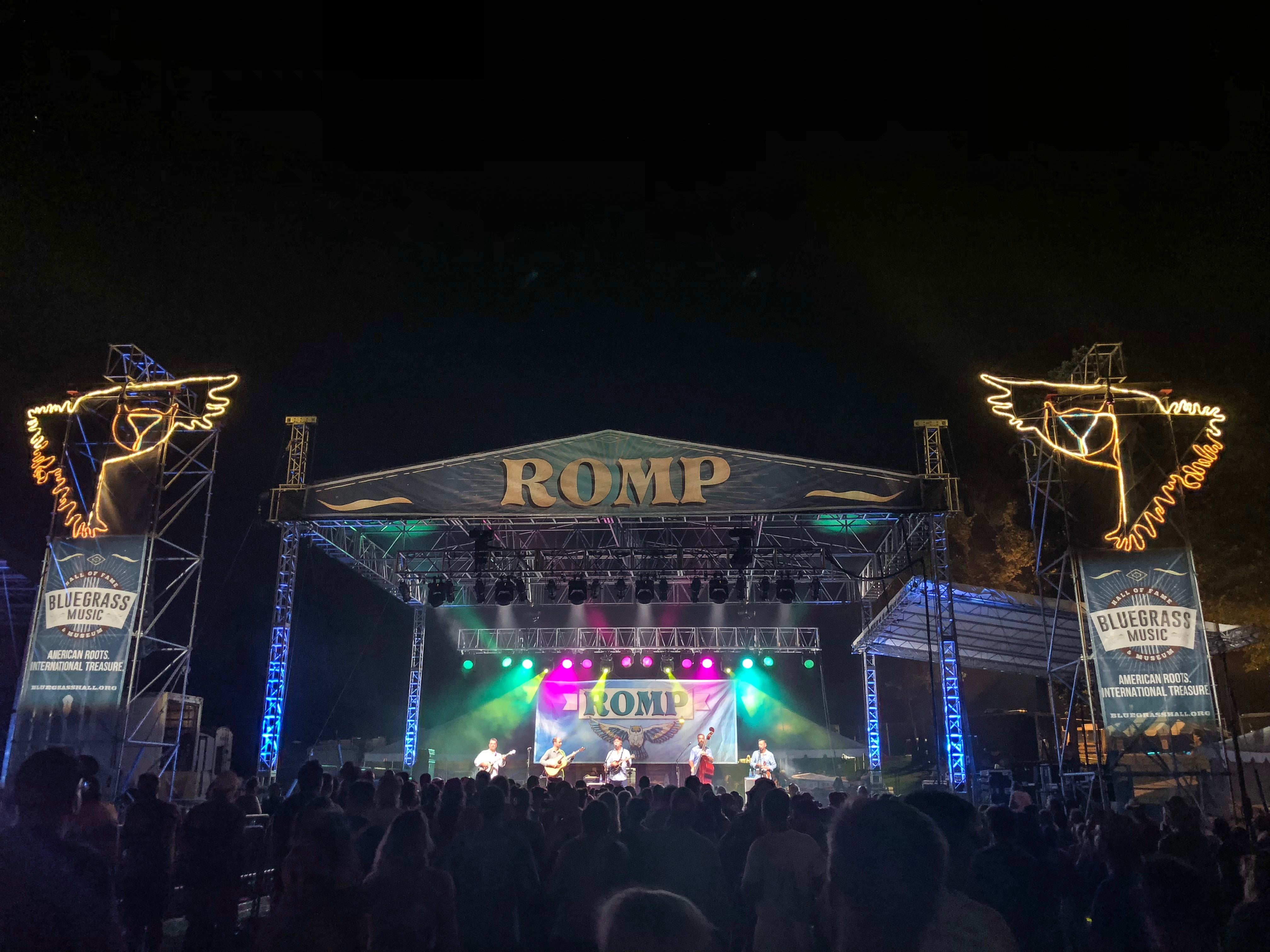
ROMP 2018 in Photographs

The Bluegrass Hall of Fame and Museum’s annual ROMP Festival celebrated its 15th anniversary with more than 27,000 people attending the four-day bluegrass roots and branches music event at Yellow Creek Park in Owensboro, Kentucky. Those lucky 27,000 were treated to a a sunset performance by the iconic Alison Krauss, a split set of bluegrass and country by newly-minted Country Music Hall of Famer Ricky Skaggs, a rowdy and non-stop dance party by Ireland’s We Banjo 3, a rocking finale performance by the ‘Father of Newgrass’ Sam Bush, and much, much more. Check out our photo recap to relive the highlights or to find out what you missed.


Lede photo by Alex Morgan

Nefesh Mountain, “Eretz’s Reel”

For forty years now the Station Inn has lurked in Nashville’s Gulch, carrying the bluegrass banner in a town with pop country and cover bands to spare, while condo high-rises, wine bars, rooftop lounges, and organic groceries have sprouted up around the small, unassuming stone club. On any given night of those forty long years a bluegrass fan or a nonchalant passerby could step through the door and expect the best in bluegrass and old, real country. Luckily for every roots music fan in the universe, that fact is still true — and will be for the foreseeable future.

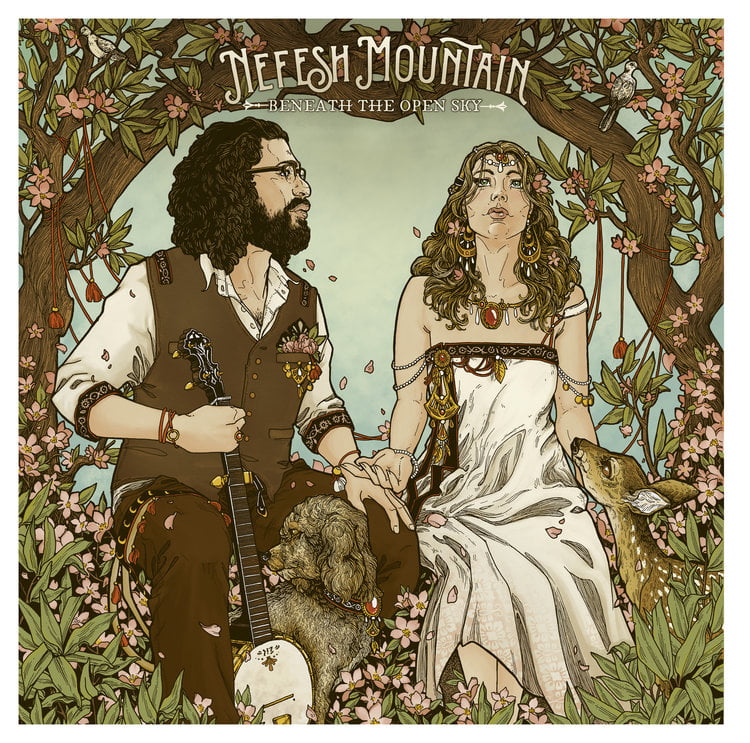
What one would not, perhaps, expect upon entering the Station Inn is vocals sung in Hebrew, or bluegrass songs based on Jewish traditions and turns of phrase. But on a recent evening, these were the sounds wafting from that fabled stage, as Nefesh Mountain performed songs from their new album, Beneath the Open Sky. It’s not as though bluegrass as a genre isn’t already predicated upon subverting expectations — it’s arguably a core precept of the form — but an average Station Inn patron might still be surprised by the Jewish-infused, modern ‘grass of Eric Lindberg, Doni Zasloff, et. al. “Eretz’s Reel,” an instrumental off the new record, is a less overt example of their Jewish perspective, but brings in a transatlantic flair, Tony Trischka-esque melodic turns, and a potent dose of originality and imagination. On the record, bluegrass phenoms Sam Bush, Jerry Douglas, and David Grier lend their talents to the track, but live at the Station, Lindberg stands apart as the imagineer and linchpin of this stripped-down version of the tune.