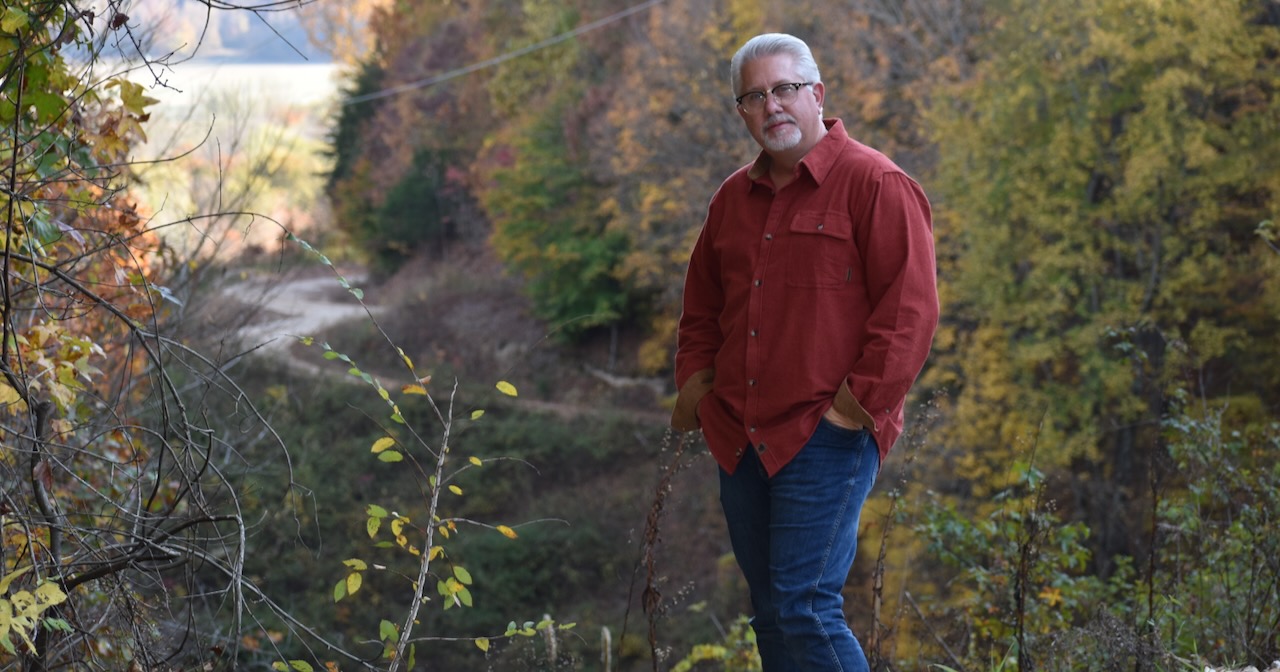
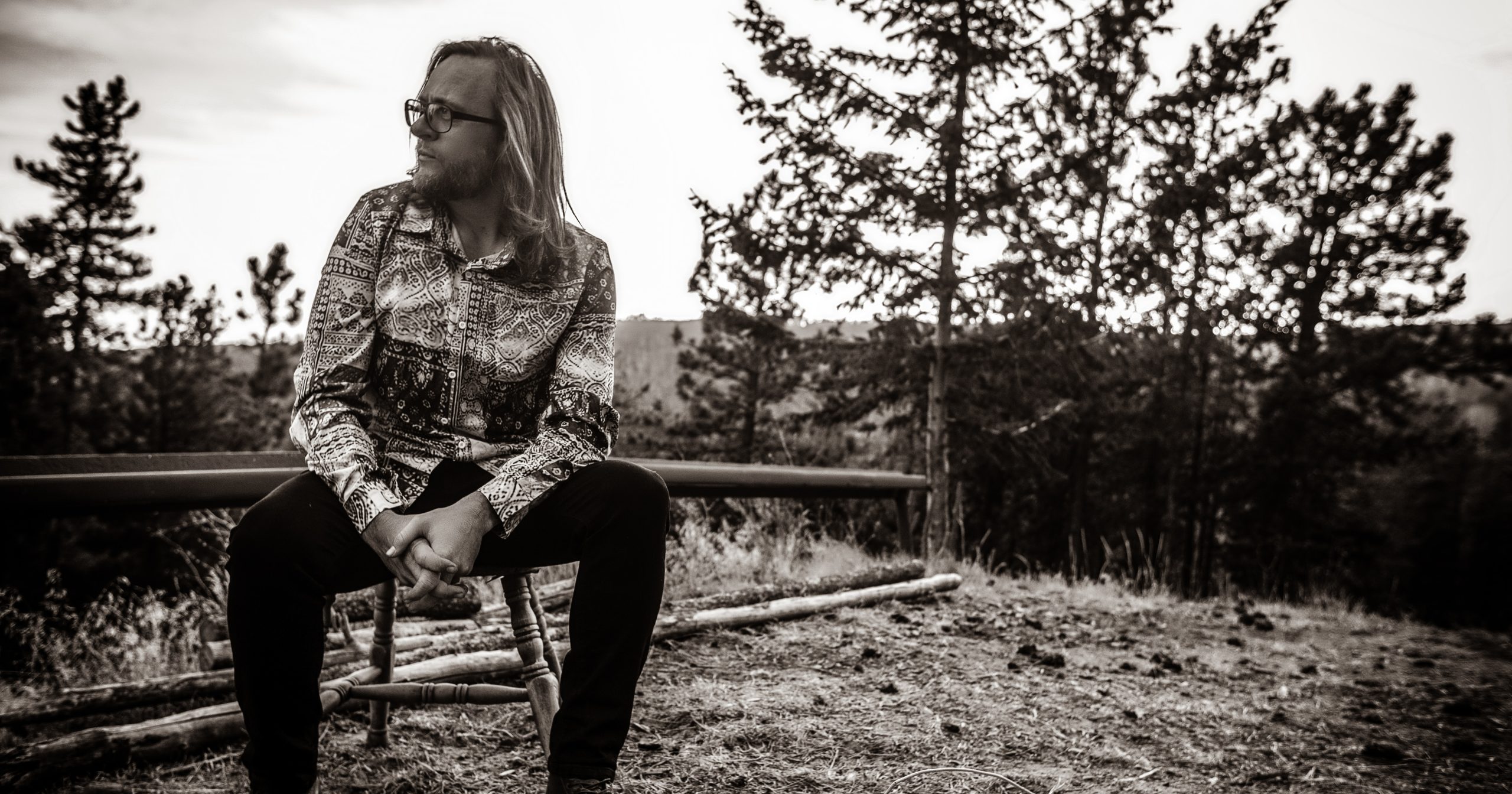
LISTEN: Jeremy Garrett, “How Low” (feat. Bonnie Sims)

Artist: Jeremy Garrett
Hometown: Loveland, Colorado
Song: “How Low” (featuring Bonnie Sims)
Release Date: July 7, 2023
Label: Organic Records

In Their Words: “‘How Low’ is a cover of a solo artist named José Gonzalez. He describes the song as being about ‘mindless consumerism.’ I fell in love with the vibe this song encompasses and had a vision to see what it would be like to produce the song as a bluegrass-type ensemble piece. I brought in a couple of special guests for this one — Bonnie Sims of Taylor and Sims, Everybody Loves An Outlaw, and Big Richard is my singing partner (and she tears it up!) I also had Ryan Cavanaugh guest on banjo. I hope you dig it!” – Jeremy Garrett


Photo Credit: George Trent Grogan, Mountain Trout Photography

Black Opry’s Holly G in Conversation with BGS’s Amy Reitnouer Jacobs

(Editor’s Note: This conversation between Black Opry co-director Holly G and BGS executive director Amy Reitnouer Jacobs was moderated by journalist Jewly Hight and marks the culmination of our Artist of the Month coverage of Black Opry. Find more on Black Opry here.)

“I just wrote this down, because I need to look at this every single day,” Amy Reitnouer Jacobs informs Holly G while scribbling on a sticky note: “Your name’s on there. You get full credit.”

Holly G, the creator of the Black Opry, has just dropped a gem of practical, principled wisdom that she’s developed through dealing with event organizers, entertainment companies, and institutions who expect her to lend them her presence, while withholding her critiques of the racial biases baked into how they operate. Her hard-line posture? “My participation is not an endorsement.”

Even in a matter as small as pinning that sentence to her wall, an act we observe on the Zoom screen, longtime BGS leader Reitnouer Jacobs knows well the importance of receiving proper credit, and compensation, as a persevering music industry dreamer and doer who’s also a woman.

These two founders of influential, community-shaping music platforms have crossed paths on plenty of occasions, but they’d never before stopped to compare notes. Their work addresses the insularity of music scenes in different ways, Holly G’s taking aim at country music’s exclusion of Black performers and Reitnouer Jacobs’ at bluegrass’ fierce protectiveness of perceived threats to its purity. Still, the similarities between what they’ve experienced, how they’ve responded and who they’ve paid attention to pile up rapidly in our Zoom conversation. 

By the time we’re through, Reitnouer Jacobs signing off from her Los Angeles home office and Holly G abandoning her laptop to check on guests she’s invited to a Black Opry mixer at a rented house in Nashville, they’re feeling a significant overlap in their labor and making plans to actually, some day, do something together.

Jewly Hight: You both had careers completely outside of music and then your own fandom drove you to start blogs and put your stakes in the ground in the digital space. I was thinking back to the crossroads moment that you each must’ve reached where you were starting to get a response and see other ways that you could decide to get involved in those musical spaces. What really mattered to making the decision to expand each of your missions?

Holly G: I don’t feel like it was a decision for me. I’ve never consented to any of this. [Laughs]

I feel like it really, really shifted right after you interviewed me for the first time, and that article went up on NPR. That’s when everybody was like, “Oh, this is serious.” And because what we were actually doing was so vague, because I didn’t have a plan, people were just asking me to do everything; I had never said what I could or couldn’t do. By the time people started asking me for heavier lifts, I had already met these artists and I was so invested in the artists and seeing how hard they worked. I was like, “I’m never gonna say ‘No’ to anything. What could be good for them? What could push them forward?” A lot of it just went over my head, ‘cuz I was just saying “Yes.” And then I was like, “Oh shit, how did we get here?”

Amy Reitnouer Jacobs: That actually really resonates, when you said once you started meeting the artists that suddenly you saw where the needs were. That was a huge shift for me. I mean, I got into this as a fan, but I really didn’t think about writing about this community, this genre until I started to become friends with the artists that were involved and get to know them and become kind of part of their circles.

I think there was definitely a moment of, “Oh wait, you’re not being served? We’ll work on that. We’ll start covering that. Wait, you also are not being represented over here? Let’s cover this, too.” I’ve had to learn how to say “No” over the years, but my immediate instinct is always to say “yes” and then figure it out.

HG: My rule is if it’s not gonna negatively affect my mental health, then I say, “Yes.” That’s where I draw my line at. As an outsider, when you come in, you see the gaps, but then you also see how easy it would be to fix them. Sometimes people don’t know or they’ve just never been asked to do the right thing. But if you can have somebody [involved] that’s not an artist, they’re like, “There’s no ulterior motive.” Nobody thinks that I’m asking for Black people to get on stage so that I can go sing, ‘cuz we all know I can’t. 

JH: It changed everything when you each were put in close proximity to artists who were working toward things, and had ambitions and scenes that they were part of or wanted to be a part of. What did it actually look like to turn your desire to help into strategies?

ARJ: When you’re actually given real responsibility that you have to show up for and deliver, suddenly it all becomes a lot more real. I had to go through a perspective shift.

I would say producing the IBMA Awards was a really big thing, because it was suddenly very, very real. It wasn’t just me being like, “What the fuck, IBMA? Come on, get your shit together.” It was like, “Now they’ve handed me something that I can make a change in, and I have to do it and I have to do it right. And I have to do it to not only to an industry standard, but to the personal standards with which I wanna move forward and I wanna see this industry move forward.” So that and doing a [BGS] stage at Bonnaroo, doing a lot of the curatorial stages, like what Black Opry does as well. I think when you suddenly are putting this out in a packaged way for everyone to see, it kind of makes it all a little bit more real.

HG: It’s really cool to hear your perspective, because as you know, there’s not a lot of people who have journeys that are like ours.

When you say going from yelling about it to being in the room and they’re asking you what to do about it is a very weird feeling. Especially because I wasn’t criticizing [the country music industry] with any intent for anybody to ask me any questions. It’s like going into somebody’s house and you’re like, “I hate this wall color.” And they’re like, “Okay, well paint it.” And I’m like, “Well, I’m just giving you my opinion.” You know what I mean?

JH: There’s a big difference between critiquing from a distance and being handed a thing and asked to work on changing it. That raises the stakes.

HG: I was speaking before I knew what I know now, but as a fan, you’re not thinking about how the industry works. You’re just seeing the flaws and you’re like, “Well, this doesn’t make any sense.” But you’re not ever thinking with the expectation that you’re gonna have to be the one to fix it.

When we started booking shows that we were actually getting paid for, as soon as money started coming in, I was like, “Whoa, that always feels like a big responsibility to me.” Because it wasn’t a career aspiration of mine, not in any real substantial way. Once money started coming in, I’m like, “Number one, this needs to be distributed fairly.”

It took me a long time to take money from shows. My agent would yell at me all the time. She’s like, “Why aren’t you paying yourself?” And I’m like, “Well, because I wanna make sure the artists get paid.” And she’s like, “This is a business. You’re doing work. You have to pay yourself.” Finally, after exhausting myself and realizing that the exhaustion was because of the work that I was putting into it, I’m like, “Okay, I’ll pay myself.” 

ARJ: Holly, that really struck a chord with me, what you said about the money. When those stakes came in, it was like, “Oh, this isn’t just a blog anymore.” There is something on the line and there’s someone investing in me and in this idea, too, and they’re investing with the trust that I’m gonna do the good work. 

It took me over five years not to start necessarily paying myself, but to start prioritizing myself and considering myself part of that package, rather than just putting everything I had into it, at the sacrifice of personal life and sometimes physical and mental health and financial choices. 

HG: I wouldn’t have made it that long. But you know why, though? I got to that point so much quicker, only because a lot of the things that people were asking me to do were so emotionally draining, like to constantly go through racial trauma and explain myself. That shit is so exhausting. I very quickly was like, “What am I getting out of this?” I do not mind taking money from that at all. 

I still don’t think that I’ve seen the changes I would like to see overall – in any facet of the industry. But what I have seen is individual artists’ lives completely changed. They can tour in a different way because of the way that we tour. Our tour minimum is $400 per show. So they can go out and play a show with us for $400, and that means that they can go to that area and play a couple other bars where they might not really get paid anything, but they’ve gotten something to get up there to help them get a little bit of a leg up.

JH: You were talking about learning how things work in the industry. I imagine that part of that involved coming to understand the established pipelines that exist in country music, in bluegrass, and in roots music, how they work, who they work for, and who they don’t work for. Realizing that they are not built in a way that is meant to serve everyone. You didn’t just accept that those established models are the only options. What kind of relationship do you each have to the industry? And where do you place your trust?

HG: I don’t trust anybody. My mission is to serve the artists. My personal feeling is that we need to build systems outside of what exists and so that we can build it in a better way. Because you’re not gonna go into an institution that’s been around for a hundred years and fix things that have been wrong for a hundred years. It’s not gonna happen, especially not gonna happen quickly. 

However, it is not my right or privilege to tell an artist that they shouldn’t participate in the industry. So that being said, I have to work in parallel. Yes, I’m building things, but I also have to interact with the industry in a way that I can advocate for the artists that wanna participate in that.

And so when I do interact with the industry, it’s basically like, “What can I get out of you?” Because I know this is how they look at me. And so my first thing is, “What do you have that I can get that will serve me, that will serve my artists, that will serve my mission and my brand?” If what I can get from you feels like it’ll be worth whatever it is that you want to take from me, then I do it. But if I can’t get something back, that’s gonna make that exploitation worth it–because that’s what the whole industry is, exploitation–then I just move on.

ARJ: It took me a while to realize that, when I was talking about not prioritizing myself and not paying or taking care of myself, that in doing so I was actually falling into the trap that so many of these institutions had established of not paying women the same amount, not paying us what we’re worth.

I know that there are industry standards of not paying Black women what they’re worth, even less. I thought for a while that just by being part of this panel or whatever, I’m doing the right thing, ‘cuz I’m there and I’m representing something new and different and fresh and modern.

But by accepting an honorarium that I would find out later was less than some of the male names also appearing at a conference, I was falling into the same trap. It still enrages me, still gets me mad and so I feel like now I can be in, but not of a lot of these institutions. I’m happy to work with them if they’re gonna pay up and have us there for a reason, but I’m not going to serve them. I am not going to help, assist or fix what is institutionally wrong.

That’s partially why I’m really proud that BGS has continued to be independently run and owned this whole time, because we don’t answer to anybody, and nor do I plan to.

HG: I’ve pissed quite a few people off, ‘cuz I’ll work with them, but then after it’s over, they do something else. Then I criticize them and they’re like, “But wait, you came and did a panel for us.” And I’m like, “My participation is not an endorsement.” My presence does not mean you are off the hook for everything that you have done or going to do in the future. And so it has been interesting to watch them fall apart as I continue to criticize them and to see which ones come back after that. And that’s how I can tell whether or not they actually wanna do the work. If I criticize you and you come back for more, that tells me how you wanna do the work. That’s been a really good filtering tool for me.

JH: Even with the healthy skepticism that you’re each describing, you’ve managed to execute really massive events and partnerships. How do you make those decisions about what powerful people or institutions are worth partnering with?

HG: There’s no science to it, I feel like, because the other thing is there’s good people at bad places and that’s across the board. If I can find the good people at the bad place, then I’ll work with those people. And that’s just kind of how I do it. 

I’ve gotten to the point now where I tell them that part up front: “This does not absolve you from anything that you do. I’m still gonna speak up.” One of the things that I’m afraid of happening is for people to look at what I’m doing and be like, “Okay, well she got in the room now, so I guess everything’s fine. She’s not speaking out anymore.” I don’t want it to look like I’ve closed the door behind me. If you can’t handle that, then we don’t have any business together. And as long as you find those good people, they’re gonna understand that and they’re gonna push forward anyway.

And sometimes because of that, I’ve had people tell me, “Please continue to criticize us, because that’s the only way I can get my bosses to do [anything] is when you won’t shut the fuck up on Twitter.”

ARJ: For the most part, I find that there are really good people on the ground, doing the work and for me, a lot of it just comes down to – I don’t know – intuition. It’s not necessarily a financial thing. It’s not necessarily a visibility thing. I think that’s kind of my unofficial business strategy, which is probably not something that they teach you to do when you have an MBA. But I never planned to get into this job to begin with, so I just go on intuition and I work with people I love. I return to things that I love and places that take care of our artists and take care of our community and take care of us. Those are the people that I will continue to invest in and go back to.

JH: Bluegrass, Americana, roots, and country are so often spoken of as though they are strongholds of authenticity insulated from commerce, to an extent. But we know that all of these spaces are inherently commercial if anyone’s trying to make a living off of them. So as people who are very invested in building community where it doesn’t exist in the ways that it needs to, how do you hold those two things next to each other?

HG: I do not. I think that also the whole conversation about authenticity is bullshit. It’s a way to move the goalpost, so that they can keep the people they want in and keep the people they want out out: “That’s not real country. That’s not real Americana.” It doesn’t fucking matter, because what makes it real is usually who makes it. If they look at somebody and they recognize that person as somebody that they want in that space, they’ll accept anything. It doesn’t matter what it sounds like if it comes from the right person. It’s a tool that they use so that if somebody comes along that they don’t feel like fits in because of their gender, their sexuality, their color, whatever it is, they can then say, “Oh, well then it’s not real X, Y, Z,” and they can get away with it. 

JH: I also want to get at how you’re acknowledging that this is commercial, but also insisting that building community matters. How do you do both at the same time?

HG: Very easily. ‘Cuz you do things where you bring people together behind the scenes when you know everybody’s in town. That’s what we do. We get a house and we make sure everybody has somewhere to come together. But when you ask me to show up at the thing, I’m gonna ask you for a check. You’re gonna pay me to have official participation, but behind the scenes, we do things that build community. I feel like that’s all relative, right? So I’m not gonna go to a festival that’s just starting up and be like, “We need $20,000.” But if you’re paying everybody, make sure you pay us what’s fair in relation to what you have. So it’s just figuring that part out, but also always making sure you’re asking for it. I’ve learned to ask upfront, “What’s your budget?” Because that way I know where the conversation is gonna go.

JH: That’s sort of like reverse gatekeeping, in a sense. When you put together events or decide to gather artists to participate under the name of Black Opry, some of those things are for the public, outward-facing performances. Then there are things you do, like rent this house and invite who you want to be here, where you’re creating a safe, private space.

HG: The way that I curate the shows is more community driven. I try to pair up artists, especially if they’re traveling for a tour, that I feel like their personalities either mesh or there’s something in their story that I know would [connect] with each other or like things like that. It doesn’t matter if two artists’ music would sound great on the same bill, if those people don’t connect. I mean, I can put people together that sound completely different. I’ve had Jake Blount and Kentucky Gentlemen on a show together before, and they all were so excited to be with each other. The best part of our shows is usually the green room. That’s kind of a private, intimate space.

ARJ: You keep saying a lot of parallel things to what we do. I didn’t realize how parallel some of our experiences have been, and it just makes me love you more, Holly.

So much of what we’ve done over the years, it will never be public facing and the public will never even know about, because it’s not why we do it. And I think it’s what makes artists continue to come back to BGS events or wanna be covered on the site. Artists that, 10 years ago, I would’ve never thought I’d ever get the time of day from will say “Yes” to things because we put them first and we have given them a safe and fun and communal space to be together.

When I started BGLA originally, and then BGS, I wanted it to be this place for modern fans, for younger fans, for all fans that I didn’t think were being served or represented. I think for a while I was really susceptible to this yarn that they were spinning of, “There’s just not enough women in bluegrass. There’s just no Black people in bluegrass.” And I’m like, “Wait, I don’t know if that’s right.” And then the more you dig and the more you get involved, you’re like, “These communities have been here the whole time.” This is not only about creating community, this is about connecting community. This is about bringing communities together, representing them, and, and connecting the dots, whether it’s a digital community or artists in a green room or in a house to hang out for a jam.

HG: It’s so funny, like how the parallels keep coming up. Cause people have asked me a lot recently in interviews, “How do you feel about this revolution in country music?” And I’m like, “It’s not a revolution. It’s recognition.” This has been here the whole fucking time.

JH: There are deeply entrenched perceptions about what the country fan base looks like that are based on the continual and artificial segregation of the industry. And there are equally entrenched perceptions of what a bluegrass fan base looks like, based on the fervent reverence for the models laid down by the first generations of musicians. How have you developed ways of speaking to audiences within audiences, those that have gone unseen and overlooked?

HG: I’m telling you, I thought I was the only one when I started Black Opry. It was more like a search and explore mission than it was like an intentional, “I’m gonna find these people.” Because as a Black person that loves country music, I promise you, anytime you tell somebody that, you get looked at like you just fell out of a UFO.

I was equally surprised when I found artists. I didn’t think there were more than five artists. I was like, “We got Mickey, Jimmie, Kane and Darius.”

There was so much passionate relief when people started seeing you and feeling seen. It still surprises me. And I’ll be honest: We still haven’t gotten to where we need to be as far as the fan base with country music. There are a lot more queer fans simply because there are a lot more white, queer people that like country music. So we’ve built up a really, really big white, queer fan base. 

A big priority for me this year is how do we connect with Black fans? Because the Black publications and the places that Black people go to for music typically don’t interact with country music.

But I will say, every show that we’ve had that I’ve been to, there’s at least one Black person that comes up to me and goes, “I thought I hated country music, but I saw the word Black in front of it, so I came just to see what it was. ‘Cuz it sounded weird. And I loved all of this. If I knew country music was like this, I would’ve known I liked it.” We’re trying really hard to figure out how we get to those people in a more broad way and get more of them. We need our audiences to look like what we want our stages to look like.

A lot of the places I’ve been to, regardless of how kind the organizers have been, it doesn’t always feel safe. And so there’s no part of me that wants to advocate for Black people to come into some of these spaces, because I can’t guarantee they’re gonna feel good. At Newport [Folk Festival], we felt good, even with being all white people. It’s just the type of people that they attract; they’re good people. And so we’ve really, really been interested in seeing how we can figure that piece of it out, where we get more Black people to these spaces. But, I can’t consciously advocate for too much of that yet, because I need to see the institutions doing the work to make it safe.

JH: So it’s still very much an open question of how you find, reach, and speak to Black country fans.

ARJ: Something that we asked ourselves very early on was not how do we reach other Bluegrass fans or where do we look for other Bluegrass fans, but where are we not looking? Who are we not reaching? What’s gonna be unexpected in that crossover Venn diagram of fandom?

Because like you were saying, you felt like you were the only one. I felt like I was in a minority of young, urban dwelling, West Coast, female fans that didn’t grow up in the South, you know? I started the whole thing from a need to connect with other people. I mean, it really stemmed out of loneliness. But I realized that my online demographics wouldn’t have made me a targeted fan if I were launching BGS. Like, any advertising or any kind of targeting we would’ve been doing, I myself wouldn’t have been found.

I think we just realized within our first three, four years, we have to turn ourselves outwards and reject everything that we’ve been told of who fans are and who communities are. And we have to be looking elsewhere, and we’re continuing to do that. It’s a question that we’re constantly asking ourselves, and I think it’s something that you’re never done searching for because there’s always someone else who feels like they have been excluded or that they are alone in this, whether they’re a fan or a player, or they don’t know what they are yet.

I remember one of the first meetings that I had with some IBMA folks. They were like, “You keep putting up all this like modern stuff and this isn’t real bluegrass.” And I’m like, “You’re gonna tell me if a kid walks in to McCabe’s guitar shop in Santa Monica and wants to buy a Deering banjo and pick up a banjo for the first time ever because he watched a Mumford and Sons video, that you’re gonna tell him ‘No’? That you’re gonna say ‘No’ because that’s not bluegrass?” Fine, we don’t have to put a label on it. Why don’t you open up that door and introduce ’em to Earl Scruggs. Let’s take them down that rabbit hole and connect the dots once again for that person. How about we take their hand and help guide them through this expanse of everything?

JH: Since you mentioned a first-generation bluegrass icon, something that’s baked into country, bluegrass and roots music is venerating elders and creating canons. And that’s just as much about excluding people as it is about who belongs in the canon. 

You each make elders very present in what you do. Holly, you recently advocated for the Country Music Hall of Fame exhibit that includes the Black Opry to also include its predecessors, Frankie Staton and the Black Country Music Association. Amy, you make decisions about meaningful coverage of multiple generations of performers all the time, and BGS just published an appreciation of an underappreciated first-generation picker, Gloria Belle. How do you think about ways of doing that better than you’ve seen it done? 

HG: I don’t wanna make it seem like I strong-armed [the Country Music Hall of Fame and Museum]. I would not have had a problem strong-arming them, but they were gonna do it anyway. So they said, “We’ve already sent a letter to [Frankie]. Calm down.” And I was like, “Oh, okay.”

I don’t really think of it so much in that light that you’re describing as I do that we don’t have a record of Black country music history. For me, it’s about building that record. There’s so many people – like Wendy Moten. Wendy’s been singing with Faith Hill and Tim McGraw and Vince Gill for years and years and years. She’s part of Black country music history to me, and we have no record of that. Nobody’s ever talked about it. It’s about finding those people from the other generations that have been doing this long before it was something I ever thought about, and making sure they’re included in this narrative so that whoever comes up after us doesn’t have to work so hard to find these things out.

There’s no reason I shouldn’t have known the things that I’m finding out now until I had to literally dig for them — and I get access to a lot of it, ‘cuz people see what I’m doing and will bring stuff to me. But it’s not out there and ready for the public.

ARJ: Building that history is such an important part. And because we have a platform, because we have this online record that we are building, that’s part of our responsibility, is to help maintain that. 

Gloria Belle, like we heard about her passing and then we waited and there were no obits. And we were like, “Who’s, who’s gonna cover this? Oh wait, it’s us. We have to be the ones to cover it.” I should know that 10 years on. But I still get reminded time and time again, we still have to do the work. 

I am not one to venerate folks who maybe don’t deserve it. But I do think it’s the same idea of you’ve gotta know the rules in order to break them. You have to know the history in order to figure out where you’re going and how to break out of that and how to change it.

JH: You both are continually adapting how you present and position what you’re doing. Do you feel like you have come up against the limitations of genre? And have you looked for ways to free your efforts up from those limitations?

HG: Yeah, that one’s been tough. I know what kind of music I personally like, and I like music that would be described as Country music by literally anybody who heard it. It’s usually not a gray area, the things that I like personally, and that’s what brought me to where I am.

But also, all of the artists that I talk to across the board say that genre is a harmful concept to their careers. And so it’s deconstructing that concept, but also realizing too that the advocacy, everybody needs all of this stuff. It’s not just people in this space. So it’s like, “Where do I fit into that?” Regardless of how I feel about anything, there’s enough people in [all parts of] the industry telling Black people “No.” And so if a Black artist comes to me and wants to work with us, I really don’t give a shit what they sound like. The answer is gonna be “Yes.” I’m never gonna turn anybody away. Right now where I’ve kind of settled is anybody can come and play with us with any style, but the advocacy work that I do is going to focus on country music spaces and institutions, just because that’s where my passion is and that’s where I see the greatest need for it. I do acknowledge that there’s problems across the board. If you look at the work that the Black Music Action Coalition does, they’re doing it across all genres. 

I’m sure you get this too, Amy, where it’s like you want to work on the things that you care about and you like, but also once you have this level of responsibility, that really doesn’t matter anymore. It’s out the window. It should never be about what personal taste is. It should be about what’s best for the group at large.

ARJ: It was very confusing, I think, for folks to initially come to the site and realize that it wasn’t just Bluegrass. And our whole point was like, “This is pulling from the traditions of the genre that is called Bluegrass.” But that has taken on different incarnations and iterations over the years since it was established. I guess you could say, by the IBMA standards of 1945, you know, Bill Monroe. For a while it was about bucking people’s expectations when they would get to the site of what they thought they were gonna get versus what they were given on the website.

Then we made a very conscious shift to be called BGS. We still use the Bluegrass Situation. A lot of people still know us as that, but we have really made a conscious effort to switch over to BGS, in the long tradition of things like CBGB, or NME Magazine. After a while, it just becomes those letters. So that’s always been my hope, that it becomes more of an umbrella organization and that it’s not limited. I still lean on genre when I feel like it’s advantageous. Because at the end of the day, I’m not going to stop it from existing. It exists. It’s how certain people can identify what they want to listen to or how we search for a playlist, even. It’s just how things are organized, whether we like it or not.

So when I can be disruptive within those structures, I will utilize it. I know that I can make certain calls, or I can show up to certain conferences and I can make an impact within this community and I can have some kind of small change within this community. And that is what drives me, and that is when I’m willing to use genre, if it means that I can insert myself and continue to be a part of that and enact change.

HG: A lot of artists tell me that they feel like genre is weaponized against them. I feel like we have an opportunity to take that and then weaponize it back against the industry itself. Because it’s literally just a marketing tool, so you just have to figure out how to play the game so that it helps the artist more than it hurts him.


10 Old-Time Fiddle Tunes With Outrageous Names

I love a great fiddle tune as much as the next person, but sometimes their names simply do too much. It’s not hard to imagine how these titles might have been changed and twisted over the years, in the game of telephone that inevitably exists in oral traditions. Some tunes, like “Shove That Pig’s Foot a Little Closer to the Fire,” have multiple rumored explanations for their names. Clawhammerbanjo.net discusses some of these possibilities in this lengthy explanation. We may never know for sure where these names come from, but here are 10 tunes that exhibit old-time at its most absurd:

“Jaybird Died of the Whooping Cough”

This may be a slightly traumatizing title for a post-pandemic society, but it’s still scientifically interesting. Can a jaybird, indeed, contract whooping cough? Here, the fabulous Foghorn Stringband research the situation. 

“Dick’s Handspike”

What exactly was “Dick’s Handspike”? Do we even want to know? Hilary Burhans demonstrates, with a beautiful tune undeserving of such a blunt (or sharp?) name. 

“Bullfrog on a Puncheon Floor”

Reportedly from the fiddling of Estill Bingham, Mark Gilston plays this lovely tune on mountain dulcimer. According to the University of South Carolina, a puncheon is an Appalachian term meaning “A split log or rough timber having one face smoothed by an adze, used for flooring, benching, siding of log buildings, etc.”  

“Sal’s Got a Meat Skin”

In addition to meaning a literal meat skin, the term can also be used as an insult, according to Urban Dictionary. If you want to know more, you’ll have to Google it. Here, the Snake Hollow Stringband from old-time hot spot Floyd, Virginia, performs “Sal’s Got a Meat Skin.”

“Soapsuds Over the Fence”

Taking its place in a longstanding tradition of “naming the tune whatever is actively happening within eyesight at the time of writing” we have “Soapsuds Over the Fence.” Played in this video by the equally wonderfully-named renowned fiddler, Harry Bolick.

“I’m a Nice Old Man”

Nothing says “I’m not a nice old man” more than proclaiming, “I’m a nice old man.” This tune is credited to the playing of Melvin Wine. No shade on Melvin! He just played the tune, and allegedly was a nice old man. Here we have it reimagined on Leicestershire smallpipes by Moira Bracknall. 

“Don’t Drink Nothin but Corn” 

I feel that this tune’s title is missing its last word – “liquor” – but as a Midwesterner, I can’t put it past folks to drink straight corn. Nevertheless, this tune somehow made its way all the way to Sweden, here we have the Hot Corn Band performing it. 

“Shove the Pig’s Foot a Little Closer to the Fire”

Perhaps the best-known of these outrageous tunes, “Shove the Pig’s Foot” has become a classic. Here is old-time royalty Bruce Molsky’s recording of the tune.  

“Big Footed Man In the Sandy Lot”

This tune sounds like a clue in a murder mystery. Why exactly was that big-footed man in the sandy lot? Here’s a beautiful rendition from Lukas Pool.

“Hell and Scissors”

What is it about Hell and scissors, they just go together like bread and butter! Here we have The Moose Whisperers featuring BGS favorite Jake Blount playing a great version at Clifftop.


Background image by Wes Hecks via unsplash.com

LISTEN: The Chuck Wagon Gang, “I Will Not Cry Today”

Artist: The Chuck Wagon Gang
Hometown: The current members are pretty scattered, but The Chuck Wagon Gang originated in Fort Worth, Texas
Song: “I Will Not Cry Today”
Album: Come Go With Me
Release Date: June 30, 2023
Label: Mountain Home Music Company

In Their Words: “Our main focus for this Chuck Wagon Gang recording was to find new songs. We had received several from writer Tami Pockstellar, who had written ‘Two Gardens’ from our previous project. Tami’s lyrics and melodies capture the freshness we were searching for, and ‘I Will Not Cry Today’ is a perfect example. It was challenging but fun to add this exciting bluegrass-styled song. I really believe these lyrics will be uplifting to listeners because they encourage us to keep pressing on, no matter the situation we find ourselves in.” – Shaye Smith, The Chuck Wagon Gang

“’I Will Not Cry Today’ was a great opportunity to feature The Chuck Wagon Gang as a trio and bring in some bluegrass-styled accompaniment, which the group wanted to feature on this album. The bluegrass world has always had a kinship with the music of the original Chuck Wagon Gang and it was special to be able to blend the two worlds together on this new song for the Gang.” – Jeremy Stephensproducer


Photo Credit: Jared Pyfer

From the Archives: Jesse McReynolds Shares Memories of His Grandfather’s Fiddle

(Editor’s Note: Bluegrass Hall of Fame inductee and Grand Ole Opry member Jesse McReynolds passed away on June 23, 2023 at the age of 94. In his honor, we’re re-sharing this incredible first-person video from early 2020 that features McReynolds telling stories of his grandfather’s fiddle.)

A true legend as one half of iconic brother duo Jim & Jesse, 90-year-old musician Jesse McReynolds has inspired generations of pickers. But who influenced him? In this interview clip, the Grand Ole Opry star and Bluegrass Hall of Fame member reminisces about walking through the woods to visit his grandfather in Possum Holler, Virginia, near Coeburn. About a half a mile away, the sounds of his ancestor’s fiddle would greet him.

McReynolds further explains that his grandfather played on the Bristol Sessions, which ushered in artists such as the Carter Family and Jimmie Rodgers. Now, McReynolds has inherited that treasured fiddle, which can be heard on his latest Pinecastle Records album, The Bull Mountain Moonshiners’ Way. “I don’t know how long it’s been around, but it’s sounding better all the time, I think,” he says.


(Originally published in February of 2020.)

On ‘Quiet Flame,’ Caitlin Canty Finds Truth and Hope in the Middle

Caitlin Canty is in the middle — in the middle of moving houses (behind her when we connected on Zoom this spring is a Jenga tower of bankers boxes) and in the middle of prepping an album release, which we’re in the middle of talking about when she isn’t in the middle of pushing a pair of overeager dogs from her lap (“These dogs!”), all of which is taking place in the middle of her toddler’s nap.

The moving, the music, and the motherhood are taking place in the middle of her life (Canty turned forty-one in January) and the middle of her career: Quiet Flame, her latest record, is her fourth.

Oceans of ink have been spilled on beginnings and endings, on best new artists, and lifetime achievements. We rarely think about the middle, write about it, or sing about it. But Caitlin Canty does.

Quiet Flame is a dispatch from — and a celebration of — the middle; it is a testament to the in-between, to the precious spaces between day and night, birth and death, here and home. It is also a rallying cry, a call not to run from middle moments, but to revel in them. “Breakneck boy goes speeding by / In a hell-bent race to some finish line,” Canty sings on the album’s opening track, “Blue Sky Moon.” “I ain’t going with him… Gonna take my time in the middle of the road.”

This is a new message for Canty, one that asks the listener not to “get up before the road pulls you under,” as Canty sang on 2015’s Reckless Skyline, but to accept the road as it is, accept that it may pull us under, and enjoy the ride. “If the pandemic and [2020 Nashville] tornado taught me anything,” Canty says, “It’s all the things I thought I could control are out of my control. The natural world is beautiful. It’s also terrifying,” she exclaims with a half laugh, “it can just crush you in a second.” (That tornado missed her house by thirty feet.)

This new vision, however, hasn’t diminished Canty’s optimism. With a heightened sense of all that is lost and lose-able, Canty offers not less hope, but more. “Let it roll, let it ride / Let your sweet heart open wide,” she sings on “Pull the Moon.”

“I let go of a lot of things I thought were my fault, or my responsibility, things I thought I could do everything about, or take care of, or succeed at,” she explains. “And what I found was an ability to be happy in devastating moments in time. Even when it gets dark and troubled, to find a way not to ignore that — to address it — but to stay buoyant.”

It is this clear-sighted courage — what amounts to Canty’s profound musical and lyrical authenticity — that not only sets Canty apart, but draws so many of the acoustic world’s greatest artists into her corner. “Caitlin just has such a magnificent view of the world,” Grammy Award-winning guitarist and Quiet Flame producer Chris Eldridge says. “It’s so strong and true and clear and honest. You just believe it.”

Among those drawn to Canty’s vision — to her clarity, honesty, believability — are some of the greatest artists in contemporary music, making the Quiet Flame band a bona-fide acoustic supergroup: on banjo, mandolin, and harmony vocals you have singer-songwriter Sarah Jarosz (another Grammy winner); on bass, Paul Kowert of Punch Brothers and Hawktail (yet another Grammy winner); and on fiddle, Brittany Haas (also of Hawktail and the newest member of Punch Brothers), who is widely considered the greatest fiddler of her generation.

“Every artist has a vision,” Kowert says, “But I specifically would say I believe Caitlin. I believe her about what she’s seeing in the songs.”

“There’s such conviction,” Haas adds. “It’s so clearly from the heart.”

For Jarosz, Canty’s super-distinction is the totality of her authenticity and an unusual ability for Canty to “sound like herself” in every domain of her artistry. “Her ability to be herself within her songs has always been very obvious to me, before I even knew her,” Jarosz says. “My favorite singers sound like themselves when they’re talking — their singing voice is a genuine extension of them, their personality. Tim O’Brien has that, Gillian Welch has that, Caitlin has that. It’s almost like Caitlin’s voice is so true —it’s like it’s not an option for her to be anyone but herself. And the songs are also that way.”

The songs of Quiet Flame mark not only a musical achievement, but an achievement of spirit. “It takes a very self-assured, fully realized human being to be able to make a record that’s this exposed,” Jarosz continues. “The record takes its time. It takes a very mature musician — and person — to have the courage to let these songs unfold the way they do.”

It is no small feat that Canty manages to make this deliberately slow journey, this taking our time in the middle of the road, so arresting. Such is a testament, of course, to the music as music; to Canty’s voice (“Caitlin, in her way, is as good a singer as exists,” Eldridge says); to her effortless melodic sensibility; to what Haas calls the unusual “variety and diversity of what [her] songs are like, what they allow and make room for texturally.” It is also a testament to the production vision of Eldridge, who Canty calls the perfect “co-pilot,” and to his attention to the “big picture.”

Each member of Canty’s band offers a tour de force on their instruments. In Canty’s words, Kowert is a “Multi-instrumentalist on his instrument… essential, the strongest foundation… my favorite bass player I’ve ever played with”; Haas is a “Flamethrower! Her fiddle is an electric guitar! It’s grit and mournfulness — not sad, defiant; not sorrowful, defiant”; Jarosz is “Just insanely good — insanely good singer, insanely beautiful instrumentalist — the most solid partner; she held it down!”

In turn, the band is quick to praise the rare musical freedom Canty affords them. “She makes so much space for other musicians in her music,” Haas says. “She’s really good at being like, ‘I hired you to be you,’ instead of, ‘I want you to do this very specific thing that involves only playing these four notes.’”

The result? The band gets to see their true selves in the work — even their best selves. “‘Odds of Getting Even’ is one of my favorite performances I’ve ever played,” Kowert remarks. “My playing on that song is really exemplary of something that I am uniquely able to do, which is bowing the bass that way, driving the rhythm with the bow.” Multi-instrumentalist Noam Pikelny (still another Grammy winner), who is featured on “I Don’t Think of You,” says much the same: “[It’s] easily one of my favorite examples of my playing captured on record.”

Most of all, however, the success of Quiet Flame’s slow burn is owed to the trust Canty engenders in her audience. It is a trust natural to Canty, but made all the more affecting by her decision, for the first time in her career, to make an entirely acoustic record. “Intimacy is just kind of baked into the nature of acoustic music,” Eldridge explains. “You just intuitively understand that what you’re hearing is what can happen in somebody’s living room. So when you commit to doing a string band record, you’re committing to a certain kind of intimacy. It casts the artist, and the songs, in a different light—in a light that asks the listener to lean in a little bit more, asks the listener to be a part of a moment.”

It is with the listener leaning in close, grounded in the moment with Quiet Flame, that Canty offers a vision both audacious and convincing, that she shares the unmistakable and unshakeable sense that all will be well; that even in the face of so many black holes, we too will be okay; that we, like Canty, will arrive “by the highway home” – a lyric after Robert Frost.

“They all told me love could feel this way,” she sings. “I never thought I would see the day.”

It is the peculiar gift of Caitlin Canty that when she says love can feel “this way” – or even that “nothing’s gone, only changed” – one can’t help but think she’s right.

LISTEN: APPLE • SPOTIFY • STITCHERAMAZON • MP3

(See our full post on Caitlin Canty’s episode of Basic Folk here.) 


Photo Credit: David McClister

WATCH: Bibelhauser Brothers, “Place In The Sun”

Artist: Bibelhauser Brothers
Hometown: Louisville, Kentucky
Song: “Place In The Sun”
Album: Close Harmony
Release Date: June 15, 2023

In Their Words: “In the past few years, Louisville, Kentucky has been shaken to its core, amid a global pandemic, racial inequity, gun violence, and the fallout surrounding the death of Breonna Taylor. Our hometown, seemingly a microcosm of the country at large, has struggled with social justice and a level of political unrest not seen since the 1960s. During a time when it felt impossible to find bits of optimism on social media I stumbled upon a video from way back in 1969. It was an epic duet with Stevie Wonder and Tom Jones singing ‘Place In The Sun.’ In the video, the two superstars traded off singing powerful lead vocals, then switched back and fourth singing harmony parts. This reminded me of how Aaron and I have traded singing parts on many of our songs over the years. The lyrics gave me hope that we might soon find ourselves moving to a better place, and the image of Stevie & Tom singing together at the height of the civil rights movement was beyond inspiring. I knew right away, this was a song we should sing together, and I hope our interpretation of it moves and inspires a new generation.” – Adam Bibelhauser


Photo credit: Winston Garthwaite
Video credit: Brennan Clark

WATCH: Larry & Joe, “Linda Barinas”

Artist: Larry & Joe
Hometown: Durham, North Carolina
Song: “Linda Barinas”

In Their Words: “’Linda Barinas’ is a song so well known that most Venezuelans can sing along.

“Eladio Ramón Tarife composed ‘Linda Barinas’ to honor his homeland, Barinas. It’s part of the Llano region and where this style of music, llanera, originated.

“The typical música llanera rendition would include harp, cuatro, maracas, bass and vocals, which makes our harp and banjo version quite unorthodox. Nonetheless, many Venezuelan traditional musicians have taken note of how seamlessly the five-string banjo melds with their instrumentation.

“Though Venezuela and Appalachia are thousands of miles apart, our folk traditions aren’t so different, and the sounds of our strings come together like old friends. Who would’ve thought?” – Joe Troop


Photo Credit: Billie Wheeler

Zoe & Cloyd Made a Traditional Album – But Not the Way You Think

If you were to try to typify bluegrass as being about any one singular thing, that one thing might be family. Not just biological family, but musical family, chosen family, and the way the music survives generation to generation, passed down as a folkway and aural tradition. Often, though not always, this music is a family tradition, passed along family trees like an heirloom or like more typical family businesses.

John Cloyd Miller and Natalya Zoe Weinstein, bluegrass duo and band leaders of Zoe & Cloyd, have made a brand new album that, on the surface, might just seem like a standard bluegrass album paying homage to the folks who came before them, their forefathers. But Songs of Our Grandfathers is so much more complicated and nuanced, wrinkling a format that’s as old as these genres themselves: the tribute album. 

On the new record, released in May on Organic Records, John and Natalya pull songs from the catalogs of their musician grandfathers. Miller’s grandpa, Jim Shumate, was a renowned Western North Carolina fiddler who played a stint in Bill Monroe’s Blue Grass Boys and can be accurately credited with helping get Earl Scruggs the banjo gig that made him famous. Natalya’s grandfather, David Weinstein, was a working klezmer musician who fled unrest in Russia, moving to the U.S. 

The artful way this pair of musicians and life partners combine the styles of their families, of their youths, and of their present lives together, as touring, professional musicians, feels expansive, rich, and bold, like newgrass that’s never been newgrassed before. But, there’s a timelessness here, a patina, that speaks to the greater tradition this record can lay claim to perpetuating. (Thank goodness.) 

Songs of Our Grandfathers isn’t just nostalgia, heritage, lineage, legacy- and canon-building. It’s not just carrying on tradition for tradition’s sake. It’s effortlessly and wholly bluegrass because it innovates, it complicates, and it challenges its listeners to think outside of preconceived notions of what bluegrass, string band, and old-time music are. Because that’s exactly what bluegrass’s grandfathers, grandmothers, and grandparents were doing as they invented this music. 

We began our phone chat about the new album discussing each of their grandparents and their musical idiosyncrasies.

Can we start by talking about Jim Shumate? His presence is throughout the record and he’s influenced you both, can you tell us a bit about him and his music making? 

John Cloyd Miller: He was born in 1921 in Wilkes County, North Carolina, on a mountain called Chestnut Mountain. He started playing fiddle as a young boy, as a teenager. His older brother Mac, who was 10 years older – the same age as Bill Monroe – got him his first fiddle, which is a fiddle he kept his entire life and we actually have, now. It’s an old Sears & Roebuck Strad copy, but he played some tone into it! His Uncle Erby played fiddle so he heard him a lot growing up and then he got into Arthur Smith and all that kind of stuff. He moved to Hickory when he got older, when he was a young man, and was playing on the radio down there when Bill Monroe heard him and asked him to be in the Blue Grass Boys. That was the time that Stringbean was in the band and Sally Ann Forrester, too.

When Stringbean decided to leave the band and go off with Lew Childre, Bill needed a banjo player and it’s now a pretty well known story that Jim knew a banjo player – he knew Earl Scruggs – and really pushed, begged him really, to audition for Bill. Earl was pretty reluctant to do it, but he did, and the rest is history. Later on, when Flatt & Scruggs broke off [from the Blue Grass Boys], Jim was their first fiddler, as you know. He recorded on their Mercury sessions. But he didn’t like touring, he wasn’t a touring kinda guy at all. He had four kids at home – three at the time, when he was younger, and one later. 

Natalya Zoe Weinstein: He liked Mama’s cookin’. 

[both laugh]

Jim Shumate, L (John Cloyd Miller’s grandfather); David Weinstein, R (Natalya Zoe Weinstein’s grandfather)

JCM: He did! He liked his own bed and grandma’s cooking, for sure. He liked to go up on the mountain. He worked in the furniture industry pretty much his whole life, but he also had his hand in the music. He ran a place called “Cat Square,” kind of a small town sort of Hickory Opry, a music show. He was always playing. I have photos of him through the late ‘40s and through the ‘50s with all sorts of people, Don Reno – all those guys. He made records and he had his own band called Sons of the Carolinas, which had George Shuffler in it and some other guys. He was always playing. He played with Dwight Barker and the Melody Boys; he did some sides with Don Walker, who he played with before he met Bill Monroe. He was always making music. 

After Flatt & Scruggs it was largely regionally, because he wasn’t out touring, but he said people would always come by. Any time guys like Lester and them were in town they would always drive the bus and park it right in the yard. He was always in the music, but his influence was not felt as widely later on, I think because he wasn’t out [touring]. He did come back to recording in the ‘90s and made five cassettes for Heritage Records and those got disseminated kind of regionally. Michael Cleveland cut one of the songs that was on one of those tapes a year or so ago. People know his music, but we enjoy getting his legacy out there a bit more. He’s got such a unique style and certainly was influential. 

He was a great songwriter, too! He was my main musical influence. I heard him play a ton growing up. He was so bluesy and slidey, he was a real master of syncopation, which is something that got ingrained in me. People always forget about his songwriting, but the way I grew up, I always thought that being a musician meant that you sing stuff, you write songs. You pick, too, but you do all of it. It was just part of being musical and I think that came from him as well. 

It makes me think of, well, I talk a lot about how the most “bluegrass” someone can be is being innovative and being themselves, whether that comes across as “traditional bluegrass,” genre-wise or not. 

JCM: That’s really insightful and it’s so true, when you look at those early players – everybody always looks at the first generation and, that’s good, that can be very grounding, but those guys were all unique! They were all unique artists, they had their own styles – sure, they were listening to one another, but Lester Flatt doesn’t sound like Bill Monroe who doesn’t sound like Carter Stanley. They don’t sound like each other!

Natalya, I wanted to ask you about your grandfather, too. If you could tell us a bit about the musical influences that represent him on this record, as well. 

NZW: He passed away when I was fairly young, my dad had me when he was fifty-one, so my grandfather was quite older than me – I think I was eleven when he passed away. [My father and he] had an interesting relationship; he wasn’t always a well-liked man. He escaped a lot of violence and poverty in Russia, so he wasn’t a very kind man and my dad didn’t have a very close relationship with him. I don’t have any audio recordings of his music, I have a couple of audio interviews that my dad and uncle did with him, but I don’t have any recordings of his music. 

My dad was moving a few years back and found all these old music notebooks from my grandfather. He asked me, “Do you want these old, handwritten, junky notebooks?” And I was like, “Yes!! Please give those to me!” [Laughs] That was the source, for me, for my grandfather’s music. I didn’t have one-on-one experiences with him, I didn’t have recordings of him, so these notebooks are really the only link to his music that I have. We have about five or six notebooks that have songs in them – they’re pretty hard to decipher, they’re forty or fifty years old. They have all different kinds of material in them, from klezmer to mambos and tangos even to “Tennessee Waltz,” which shows up in one of them as a jazz standard. He also played some classical music, he didn’t do just one singular thing. Klezmer players were like the wedding band musician of their time, where they had to play a bunch of different styles based on who their audience was. 

JCM: We definitely got a little bit of a sense of who he was from these audio interviews that her uncle and dad had made with him. We got to hear his voice, you know he didn’t speak English very well so it’s mostly in Russian and Yiddish. You get a sense of some of the stuff he saw, in these interviews. You can tell it hardened him. 

NZW: He had a tough life for sure, he struggled a lot and music was really the only thing [he did]. He wasn’t really educated. He talked about how when he came here [to the U.S.] he tried to be a plumber and he tried to be an electrician, but he kept making mistakes. He said, “I couldn’t do anything except play music.” He felt almost like he was stuck with it. He loved it and he was passionate about it, but I got the sense that it was his only option. 

There’s a similar energy from both grandfathers around being musicians, but not just in a traditional touring, “road dog,” sort of lifestyle. 

NZW: You’re right, and they were both kind of skeptical of the past. 

JCM: They both came from very humble beginnings. My grandfather didn’t have any education, either. Natalya’s grandfather, apparently, escaped the Bolshevik revolution on a hay wagon. He was a teenager and they were trying to conscript him into the army to fight – it’s crazy stuff! 

Bluegrass is always considering lineage and tradition and how those things are passed along. One of the things that I think is really interesting about it is there aren’t a lot of marginalized identities represented in the historical record of bluegrass, but there are Jewish identities represented. There’s not a whole lot of representation as you go back through the years, but it’s there. How do you connect the music you’re making, that’s infused with Jewish influences and has that cultural identity, to past Jewish music makers in bluegrass and string bands? You’re clearly thinking about lineage and family with this record, and that’s so bluegrass, but through a different lens with your Jewish identity and the other cultural music styles on the album, too. 

NZW: David Grisman was one of my biggest musical influences early on, he was a big bridge, for me, between my dad – who plays jazz – and the bluegrass connection as well as the Jewish connection. We talk about how this album was inspired by Songs of Our Fathers, the 1995 album by David Grisman and Andy Statman. Andy Statman, who played on the record, is another one – one of the first shows that John and I went to see when we met in Asheville in 2005 or 2006 was to see Andy Statman at the Black Mountain Center for the Arts, which is this tiny little listening room. It was an incredible show, I remember just being blown away. I remember thinking, “Wow! What a cool fusion.”

JCM: That was the first time we heard that fusion with klezmer music. He was also playing clarinet, he was playing mandolin. He is the bridge between these kinds of music. David doesn’t do as much klezmer, but those two guys together for sure. 

NZW: John and I both came into bluegrass through the Grisman/Garcia connection then I kind of worked my way back from there. Someone gave me a burned CD of Bill Monroe and I was like, “Oh my God, what is this!?” [Laughs]

JCM: So many people have stories like that. That Old & In The Way album was such an influential record, it was like the number one selling bluegrass record for a long time. 

NZW: Yeah, the way I got into bluegrass, I was out in Tacoma, Washington, for an anthropology conference in college and somebody at my hotel was like, “I’ve got an extra ticket for Wintergrass, which is happening right next door.” I said, “Okay, cool!” So we go and I saw Old & In The Gray there [Peter Rowan, Vassar Clements, Grisman], it was an incredible experience. I didn’t really know what I was seeing at the time, because I was so new to bluegrass, but that was my “Ah ha!” moment. Someone handed me a fiddle and I dunno, I played “Angeline the Baker” and that was it! [Laughs]

JCM: When I first heard Grisman play mandolin, his tone and everything, that was like sinking a hook into me. That’s why I even wanted to play mandolin. I wanted to work on getting tone like that! He was a huge influence on so many of us.

Going back home one time, when I had been living out West or whatever, I was listening to Old & In the Way or something and I asked, “Grandpa, do you know this stuff, like ‘Pig in a Pen,’ and all this?” And he was like, “Oh yeah! I know everything on this record!” And he would play them, and that was so cool to me. I hadn’t quite made the connection before. He asked me, “Who’s playing fiddle on that record?” And I said, “Vassar Clements!” He says, “Oh yeah, that’s a good friend of mine!” I was like, “WHAT!?” 

[both laugh]

JCM: I was just this stupid, deadhead college kid – I mean, I’m still a deadhead – but it really clicked. This is a bridge between grandpa’s world, which had always seemed like something in the past, to my world as a young, coming-of-age musician, realizing, “Oh, it’s all the same stuff!” 

To an uninitiated listener, they might hear your record and they might hear the influences that aren’t “traditional bluegrass” as modern cross-pollinations, as something that’s coming from you both and your generation and your own creativity. But, I really wanted to unpack the lineage of the music, because I can sense even in the playing on this album that colors “outside the lines,” it’s clearly part of this bigger tradition in bluegrass of being a bridge between these kinds of disparate parts. Even this “nontraditional” album you’ve made is based on so much tradition – familial tradition, cultural tradition, musical tradition. 

NZW: I think we wanted to honor those traditions and where these songs came from, but we also wanted to put our own spin on it. We hope our grandfathers would have liked that! 

JCM: [Jim Shumate] was very much a traditional musician, but he was always innovative at the same time. Some of the things he did in the ‘50s were very jazzy, with electric guitars playing with him. And he always loved Natalya’s playing. You know, Natalya came from a classical background and anytime she would play something classical for him– 

NZW: Or a waltz. 

JCM: He just loved to hear her play. They didn’t sound like each other, they had very different styles, but he was always very open and he loved everything. 

NZW: I think he would like [the album]. John’s mom texted us yesterday as she was listening to it and said, “I think grandpa would’ve enjoyed that!” So hopefully our grandparents aren’t rolling over in their graves. 

[Both laugh]


Photo Credit: Sarah Johnston

Telluride, the Most Beautiful Bluegrass Festival, Turns 50

(Editor’s Notes: Headline image of Béla Fleck & the Flecktones. Scroll to see a photo gallery.

To mark Planet Bluegrass’s 50th annual Telluride Bluegrass Festival, we asked author and music journalist David Menconi to reflect on its impact – and the vibrant community that’s grown up around this iconic roots music event.)

The circuit of roots music festivals in America has some similarities to the Professional Golf Association. There’s at least one festival as well as one golf tournament pretty much every week of the spring, summer and fall. But a few stand out as special and even career-making – golf’s four major championships, and the handful of prestigious main-event music festivals. North Carolina’s MerleFest is like The Masters, the early-season springtime kickoff each April, while late-season festivals like San Francisco’s Hardly Strictly Bluegrass line up nicely with the British Open.

But there’s no question which music festival stands as the summit of the circuit, and not just because it’s in the mountains of Colorado. That’s the Telluride Bluegrass Festival, which marked its 50-year anniversary with the 2023 edition last weekend, June 15-18. The fact that Telluride has prospered for half a century makes Telluride something like golf’s U.S. Open championship, the big one that everybody wants to be a part of. Telluride’s status is something that the musicians who play it are well aware of.

Del McCoury Band performs Thursday, June 15, at the 50th Annual Telluride Bluegrass Festival.

“Festivals and musical trends come and go, and acoustic music has been through some serious peaks and valleys the last 50 years,” says Chris “Panda” Pandolfi, banjo player for Telluride regulars The Infamous Stringdusters, who were on this year’s lineup. “The one mainstay throughout has been Telluride Bluegrass Festival. When we started out, Telluride was the place to be and the definitive crossroads we aspired to, and it still is. Lasting 50 years is an amazing testament to its importance. Bluegrass is more popular than ever now, and Telluride is a big part of that.”

There are literally hundreds of music festivals spanning every style imaginable nowadays, including massive annual gatherings like Bonnaroo in Tennessee and Coachella in the California desert. But there were just a small handful of festivals when Telluride Bluegrass Festival started up in 1973 in the scenic Colorado mountain town that bears its name. And even though Telluride’s daily capacity of 10,000 fans is significantly smaller than a lot of the other major festivals on the circuit, it has still maintained its prestige status.

A drone shot of the festival grounds of Telluride Bluegrass Festival.

In spite of that smaller size, Telluride does have a few structural advantages that set it apart. One is a picturesque setting of surpassing natural beauty on the western edge of Southwestern Colorado’s San Juan Mountains. For performers as well as attendees, there’s not a better view anywhere than what you see at Telluride.

“The view from the crowd is amazing, but from the stage it’s the most incredible view imaginable as an artist,” says Pandolfi. “It’s this multi-layered inspirational snapshot of some of the best music fans, at the best-run festival, in the most beautiful environment in the world. I think a lot of people have this experience, knowing of Telluride as this iconic festival with an outsized reputation, but it more than lives up to the hype. First time we played there, I remember feeling intimidated because so many heavy-weight players we looked up to were there. But as soon as we got onstage, everything clicked.”

Yasmin Williams performs on Telluride Bluegrass Festival’s main stage – its sole stage.

Another major difference between Telluride and its festival peers is scale, and not just in terms of the size of the crowds. Most festivals cram as many performers onto as many stages as possible, all of them running simultaneously, resulting in sensory overload as well as the fear that you’re missing out on something elsewhere. By contrast, Telluride still has just one stage. Every act gets a solo spotlight at Telluride.

“Every year’s festival lineup is an interesting thing,” says Craig Ferguson, who oversees Telluride Bluegrass Festival under the auspices of Planet Bluegrass. “I’ve always said, just watch and it will book itself, and that’s really true. Our process is unique because we have just the one stage and not a bunch of bands, so everybody in the crowd gets to have the same experience. There’s not 18 different stages, so we can create one festivarian experience that everyone shares. We do the booking one act at a time, and we often wind up with interesting combinations.”

Robert Plant & Alison Krauss perform at Telluride Bluegrass Festival.

Indeed, those interesting combinations can venture well beyond what you see at a typical folk or bluegrass festival. Along with Sam Bush, Emmylou Harris, Peter Rowan, Del McCoury and The Infamous Stringdusters doing a Sunday morning gospel set, this year’s lineup features ringers like the West African ngoni master Bassekou Koyate and the venerable jam band String Cheese Incident. Some of the anomalous acts from previous years include pop-star jazz pianist Norah Jones, the comedic folk duo Tenacious D and even singer/rapper/actress Janelle Monae. Even with the unlikely acts, the Telluride experience sells itself. It doesn’t take much convincing to get any artist to play.

“Janelle Monae was the most interesting person to talk to,” Ferguson says. “I snuck into her RV just as she was sitting down to a meal by herself, and I was able to sit and talk to her for an hour. I think she would’ve signed up to play every year if she could have, she was so enthralled by the fact that there were elk in the park. It was the most wonderful conversation, and she was great. We’re famous for our curveballs and she was the oddest, I’ll give you that.”

BGS’s own Ed Helms with Sam Bush and Jerry Douglas at Telluride Bluegrass Festival.

Apart from the change-ups, multiple generations of musicians in the world of acoustic music count Telluride among their major artistic, career and personal milestones. One of them is Sarah Jarosz, a four-time Grammy winner who first went to Telluride as a fan at age 14 and played it herself for the first time two years later. Telluride is where Jarosz first connected with idols and future peers like Gillian Welch and Abigail Washburn. It’s also where Gary Paczosa saw Jarosz for the first time at her 2007 Telluride debut. He subsequently signed her to Sugar Hill Records and produced her first four albums.

“It’s the quintessential place to see your heroes, and even get to jam with them,” says Jarosz, who is back on this year’s lineup. “You’ll hear, ‘There’s a jam at this house down the street after the shows.’ So I brought my mandolin and before I knew it, Chris Thile was showing up. Also Jerry Douglas, Tim O’Brien. That was really life-changing, this proximity to heroes that allowed me to become friends with them. And even though Telluride is rooted in bluegrass, they always bring in artists from beyond that world – Janelle Monae, Decemberists, Alison Krauss and Robert Plant. It feels like anything can happen, and the audience that goes is very supportive of that.”

The stalwart House Band of Telluride Bluegrass Festival.

Still, no matter how far afield the lineup wanders, Telluride is ultimately rooted in bluegrass.

“Bluegrass is a fable, and a team sport,” says Ferguson. “That informs how we create the lineup. Looking to the future, socially as well as musically, we think of bluegrass as an allegory. It’s a context that is invitational to all these other styles, country or jazz or classical, and it complements all of them. That remains the heart and soul of this festival, surrounding bluegrass with these other complimentary musics. We are fortunate to be of service to the festivarian community. It’s an annual privilege to see how much it brings to people’s lives, the connection to community.”


All photos by Maya Benko, courtesy of IVPR