IBMA Announces 34th Annual Awards Nominees and Recipients

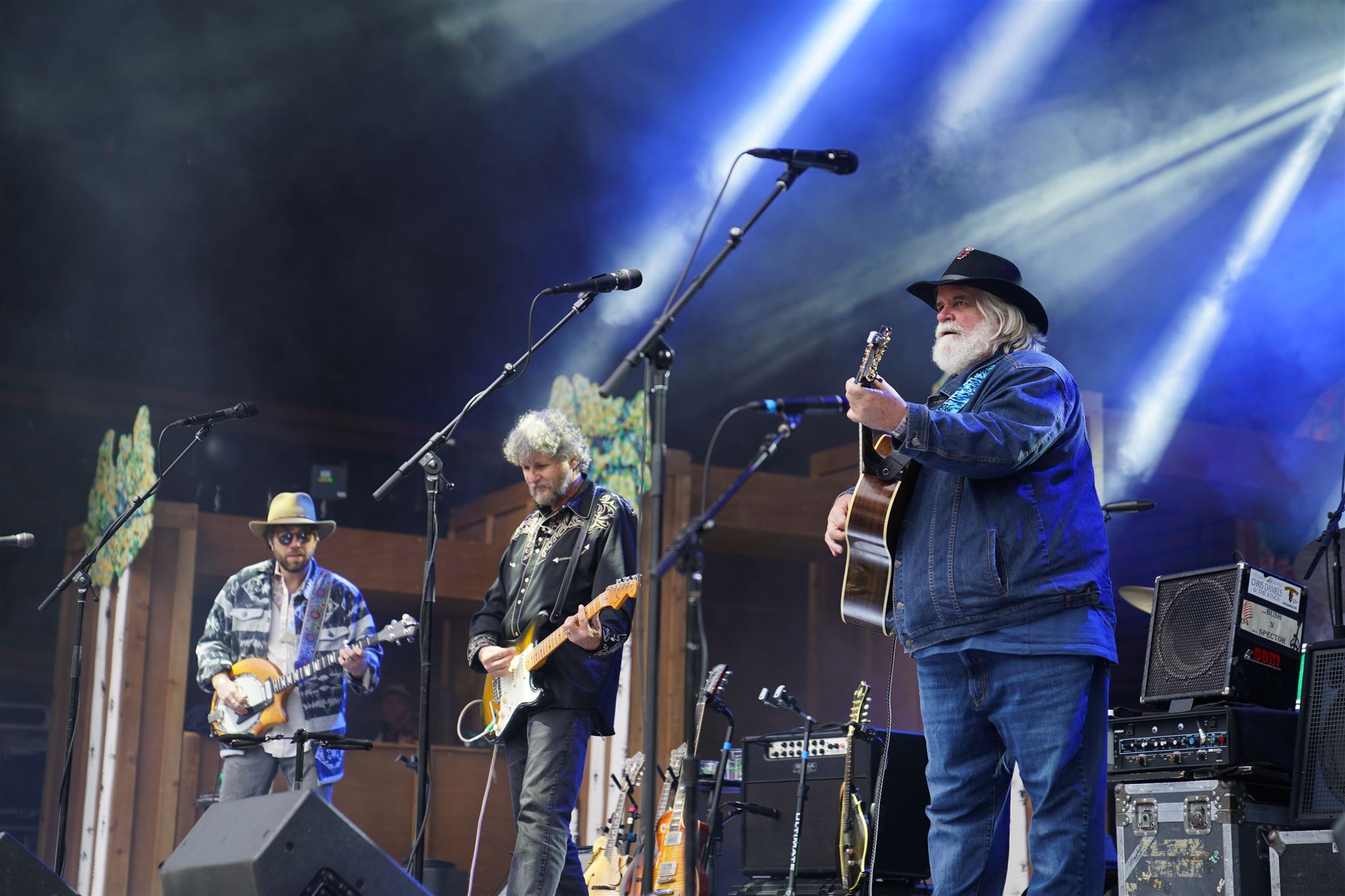
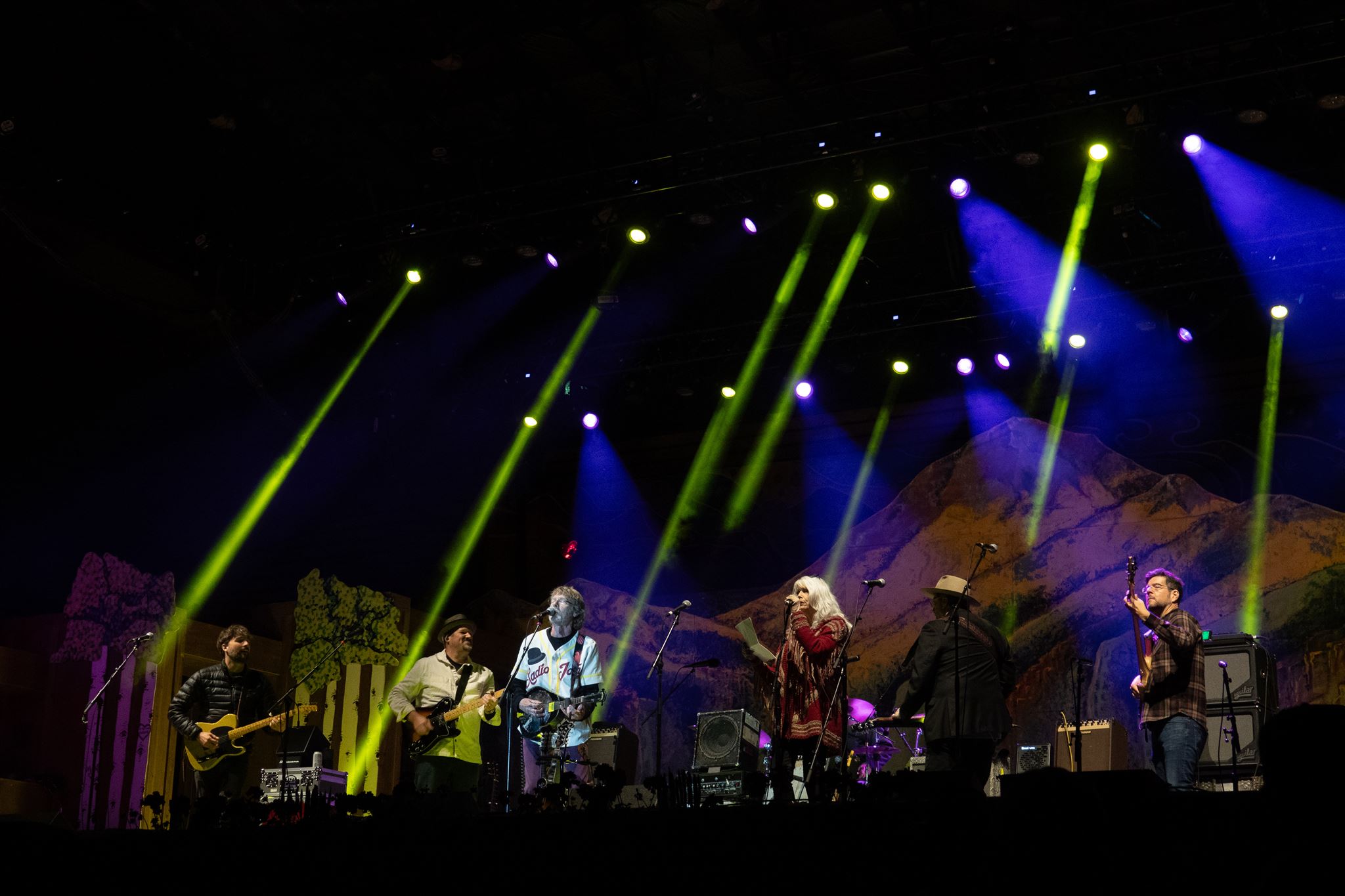
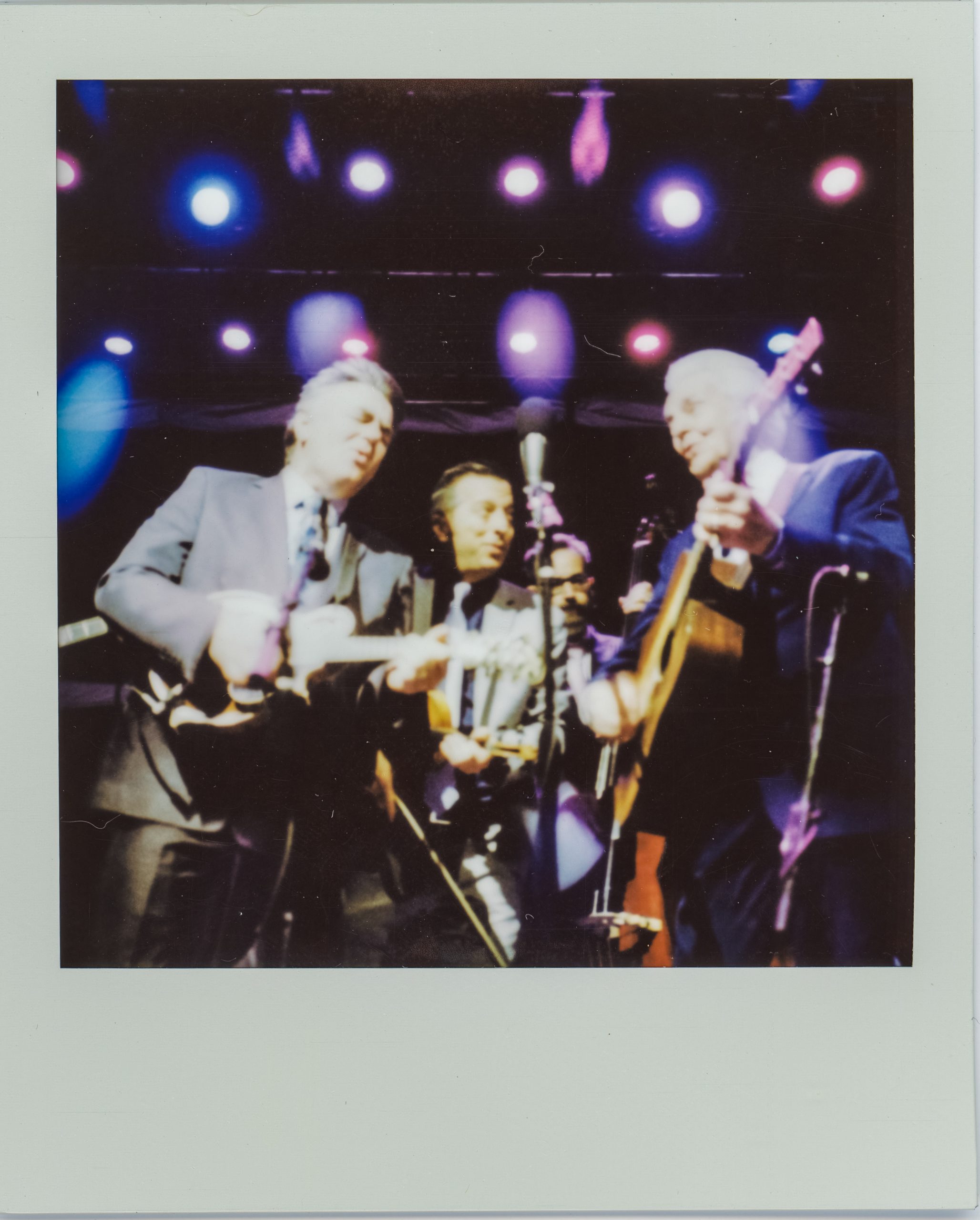
The International Bluegrass Music Association announced this year’s nominees and recipients for the 34th Annual IBMA Bluegrass Music Awards today in downtown Nashville at SiriusXM’s Music City Theater. The announcement ceremony included live performances by nominees the Lonesome River Band and Sam Bush, who will be inducted into the Bluegrass Music Hall of Fame at the IBMA Awards show in Raleigh, North Carolina, this September.

Additional inductees into the Hall of Fame, which is housed at the Bluegrass Music Hall of Fame & Museum in Owensboro, Kentucky, include first-generation bluegrasser and country chart-topper Wilma Lee Cooper and an innovator and virtuoso who has expanded the borders of bluegrass and acoustic music throughout his career, David Grisman.

Recipients of the Distinguished Achievement Awards – IBMA’s highest honor outside of Hall of Fame induction – were also announced, highlighting the significant contributions of artists, musicians, and organizations such as Red Wine (Italy’s foremost bluegrass group), banjo player and band leader Terry Baucom, author and musician Tom Ewing, promoter and organizer Carl Goldstein, and media outlet and online hub BGS, The Bluegrass Situation.

“We are so honored and humbled by this recognition,” says BGS managing editor Justin Hiltner. “Bluegrass is all about community, and to have our community – the genre that built us – recognize our efforts in this way means the world. What Ed [Helms] and Amy [Reitnouer Jacobs] have created and brought all of us into is something truly special. Thank you to IBMA, the organization and its membership, for this award.” (Read more here.)

In the Instrumentalist, Recordings, and Artists’ categories, Molly Tuttle & Golden Highway, Billy Strings (and his father, Terry Barber), Michael Cleveland, Del McCoury Band, and Sam Bush Band lead the nominations. View the full list below and make plans now to attend the IBMA Awards Show in Raleigh, North Carolina, as part of IBMA’s World of Bluegrass conference on Thursday, September 28, 2023.

ENTERTAINER OF THE YEAR:

Appalachian Road Show
Billy Strings
Del McCoury Band
Molly Tuttle & Golden Highway
The Po’ Ramblin’ Boys

VOCAL GROUP OF THE YEAR:

Authentic Unlimited
Balsam Range
Blue Highway
Del McCoury Band
Sister Sadie

INSTRUMENTAL GROUP OF THE YEAR:

Billy Strings
Michael Cleveland & Flamekeeper
The Infamous Stringdusters
Molly Tuttle & Golden Highway
The Travelin’ McCourys

SONG OF THE YEAR:

“Blue Ridge Mountain Baby”

Artist: Appalachian Road Show
Songwriters: Barry Abernathy/Jim VanCleve
Label: Billy Blue Records
Producer: Appalachian Road Show

“Crooked Tree”
Artist: Molly Tuttle & Golden Highway
Songwriters: Molly Tuttle/Melody Walker
Label: Nonesuch Records
Producers: Jerry Douglas and Molly Tuttle

“Diane”
Artist: Sister Sadie
Songwriters: Jeffrey Nath Bhasker/Samuel Tyler Johnson/Cameron Marvel Ochs
Label: Mountain Home
Producer: Sister Sadie

“Heyday”
Artist: Lonesome River Band
Songwriters: Barry Huchens/Will Huchens
Label: Mountain Home Music Company
Producer: Lonesome River Band

“Power of Love”
Artist: Rick Faris
Songwriters: Johnny Colla/Huey Lewis/Christopher Hayes
Label: Dark Shadow Recording
Producer: Stephen Mougin

ALBUM OF THE YEAR:

Crooked Tree
Artist: Molly Tuttle & Golden Highway
Label: Nonesuch Records
Producer: Jerry Douglas and Molly Tuttle

Lovin’ of the Game
Artist: Michael Cleveland
Label: Compass Records
Producers: Jeff White, Michael Cleveland, and Sean Sullivan

Lowdown Hoedown
Artist: Jason Carter
Label: Fiddle Man Records
Producers: Jason Carter and Brent Truitt

Me/And/Dad
Artist: Billy Strings and Terry Barber
Label: Rounder Records
Producers: Billy Strings and Gary Paczosa

Radio John: The Songs of John Hartford
Artist: Sam Bush
Label: Smithsonian Folkways
Producer: Sam Bush

GOSPEL RECORDING OF THE YEAR:

“The Glory Road”

Artist: Joe Mullins & The Radio Ramblers
Songwriters: Paul Martin/Harry Stinson/Marty Stuart
Label: Billy Blue Records
Producers: Joe Mullins and Adam McIntosh

“Jordan”
Artist: Darin & Brooke Aldridge with Ricky Skaggs, Mo Pitney and Mark Fain
Songwriter: Fred Rich
Label: Billy Blue Records
Producer: Darin Aldridge and Mark Fain

“The Scarlet Red Lines”
Artist: Larry Sparks
Songwriter: Daniel Crabtree
Label: Rebel Records
Producer: Larry Sparks

“Take a Little Time for Jesus”
Artist: Junior Sisk
Songwriter: David Marshall
Label: Mountain Fever Records
Producers: Junior Sisk and Aaron Ramsey

“Tell Me the Story of Jesus”
Artist: Becky Buller with Vince Gill and Ricky Skaggs
Songwriter: Fanny Crosby, arrangement by Becky Buller
Label: Dark Shadow Recording
Producer: Stephen Mougin

INSTRUMENTAL RECORDING OF THE YEAR:

“Contact”
Artist: Michael Cleveland with Cody Kilby, Barry Bales, and Béla Fleck
Songwriter: Michael Cleveland
Label: Compass Records
Producer: Jeff White, Michael Cleveland, and Sean Sullivan

“Foggy Morning Breaking”
Artist: Alison Brown with Steve Martin
Songwriters: Alison Brown/Steve Martin
Label: Compass Records
Producers: Alison Brown and Garry West

“Gold Rush”
Artist: Scott Vestal’s Bluegrass 2022
Songwriter: Bill Monroe
Label: Pinecastle Records
Producer: Scott Vestal

“Kissimmee Kid”
Artist: Jason Carter
Songwriter: Vassar Clements
Label: Fiddle Man Records
Producers: Jason Carter and Brent Truitt

“Scorchin’ the Gravy”
Artist: Frank Solivan & Dirty Kitchen
Songwriter: Frank Solivan
Label: Compass Records
Producer: Frank Solivan

NEW ARTIST OF THE YEAR:

Authentic Unlimited
East Nash Grass
Henhouse Prowlers
The Tennessee Bluegrass Band
Tray Wellington

COLLABORATIVE RECORDING OF THE YEAR:

“Alberta Bound”
Artist: Special Consensus with Ray Legere, John Reischman, Tisha Gagnon, Claire Lynch, Pharis & Jason Romero, Patrick Sauber
Songwriter: Gordon Lightfoot
Label: Compass Records
Producer: Alison Brown

“Big Mon”
Artist: Andy Leftwich with Sierra Hull
Songwriter: Bill Monroe
Label: Mountain Home Music Company
Producer: Andy Leftwich

“Foggy Morning Breaking”
Artist: Alison Brown with Steve Martin
Songwriter: Alison Brown/Steve Martin
Label: Compass Records
Producer: Alison Brown and Garry West

“For Your Love”
Artist: Michael Cleveland with Billy Strings and Jeff White
Songwriter: Joe Ely
Label: Compass Records
Producer: Jeff White, Michael Cleveland, and Sean Sullivan

“From My Mountain (Calling You)”
Artist: Peter Rowan with Molly Tuttle and Lindsay Lou
Songwriter: Peter Rowan
Label: Rebel Records
Producer: Peter Rowan

MALE VOCALIST OF THE YEAR:

Greg Blake
Del McCoury
Danny Paisley
Larry Sparks
Dan Tyminski

FEMALE VOCALIST OF THE YEAR:

Brooke Aldridge
Dale Ann Bradley
Jaelee Roberts
Molly Tuttle
Rhonda Vincent

BANJO PLAYER OF THE YEAR:

Kristin Scott Benson
Alison Brown
Béla Fleck
Ned Luberecki
Scott Vestal

BASS PLAYER OF THE YEAR:

Mike Bub
Todd Phillips
Missy Raines
Mark Schatz
Vickie Vaughn

FIDDLE PLAYER OF THE YEAR:

Jason Carter
Michael Cleveland
Stuart Duncan
Bronwyn Keith-Hynes
Deanie Richardson

RESOPHONIC GUITAR PLAYER OF THE YEAR:

Jerry Douglas
Andy Hall
Rob Ickes
Matt Leadbetter
Justin Moses

GUITAR PLAYER OF THE YEAR:

Chris Eldridge
Trey Hensley
Billy Strings
Bryan Sutton
Molly Tuttle

MANDOLIN PLAYER OF THE YEAR:

Alan Bibey
Jesse Brock
Sam Bush
Sierra Hull
Ronnie McCoury

DISTINGUISHED ACHIEVEMENT AWARD RECIPIENTS:

Terry Baucom
The Bluegrass Situation
Tom Ewing
Carl Goldstein
Red Wine

BLUEGRASS MUSIC HALL OF FAME INDUCTEES:

Sam Bush
Wilma Lee Cooper
David Grisman


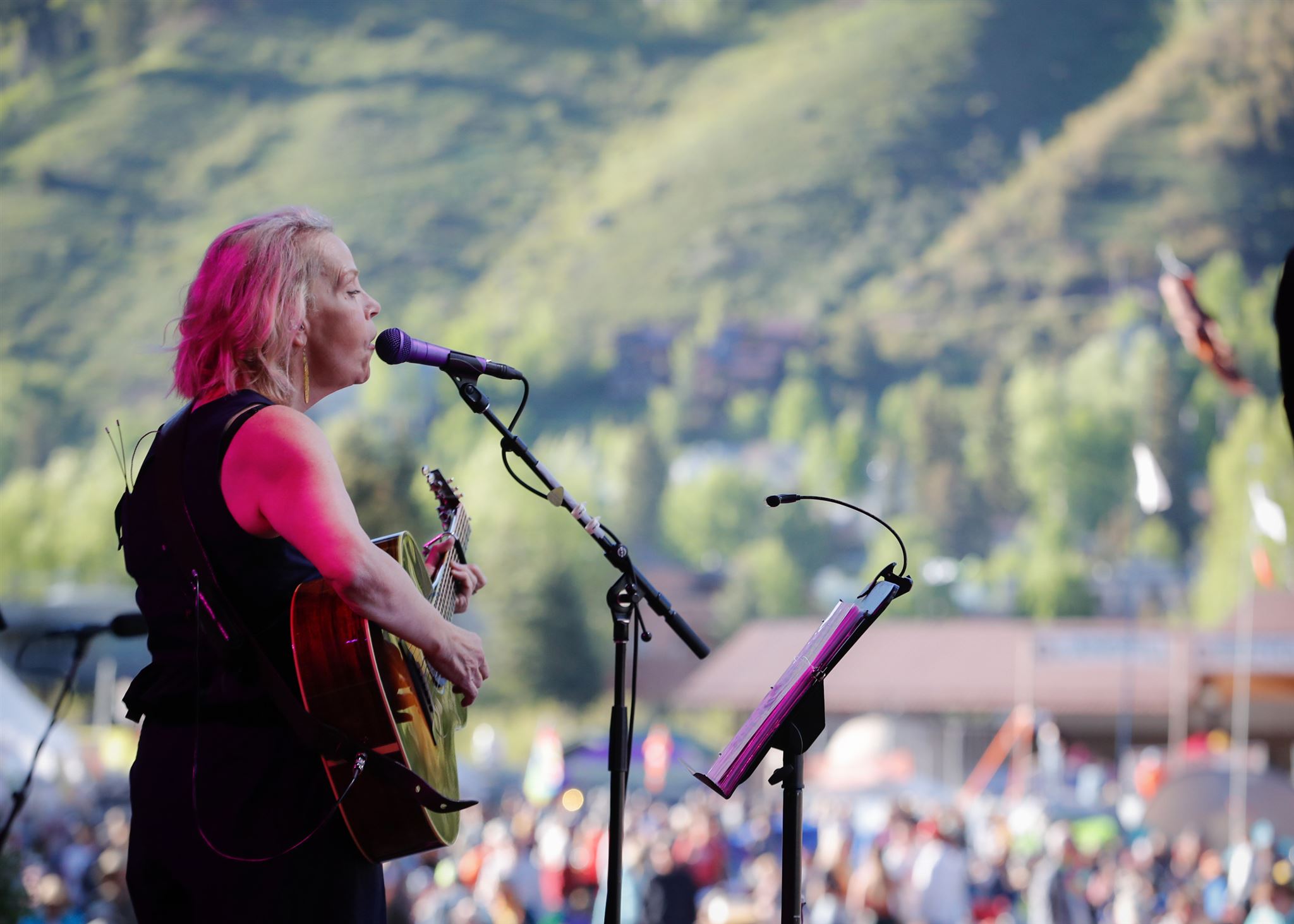
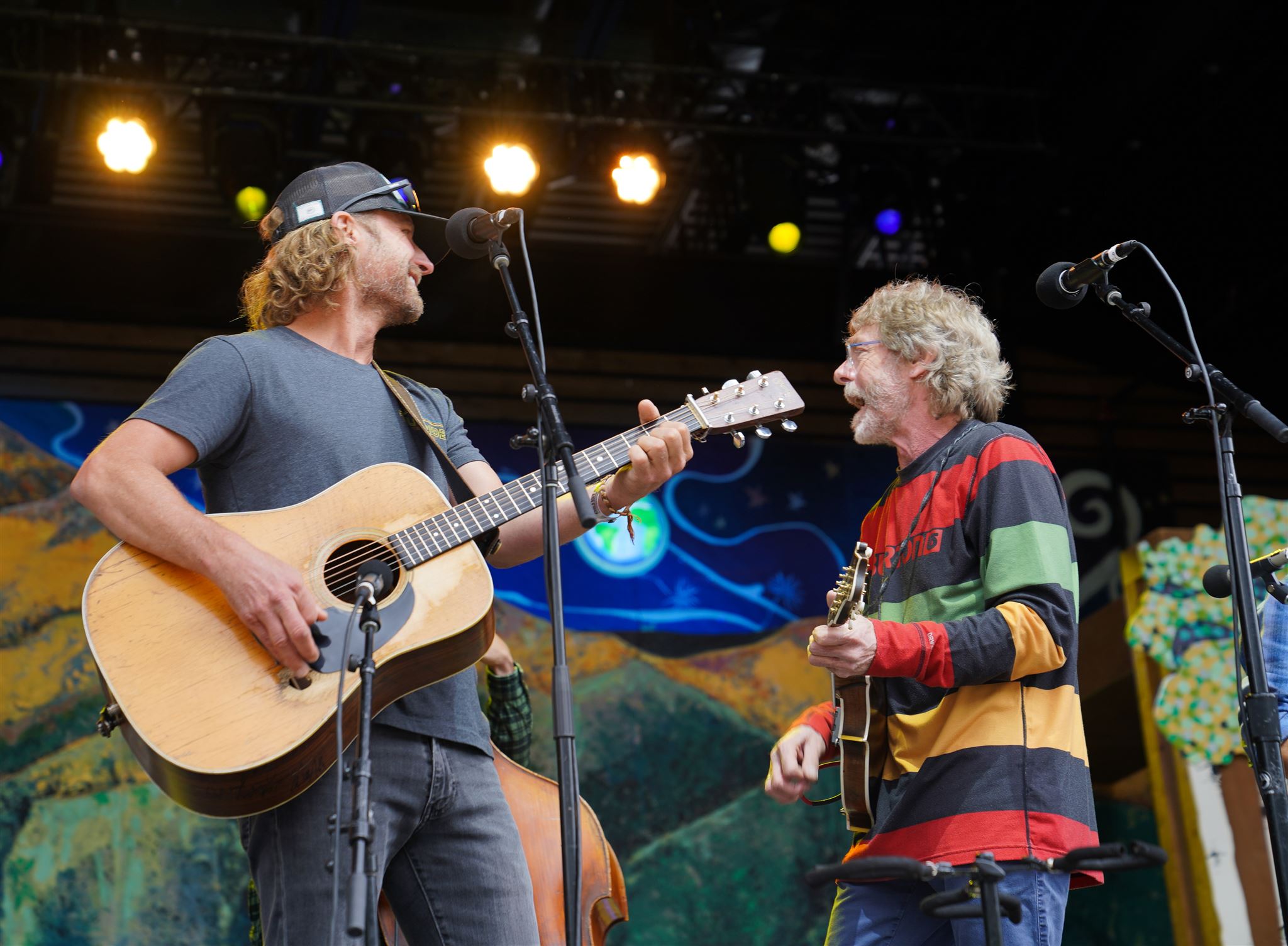
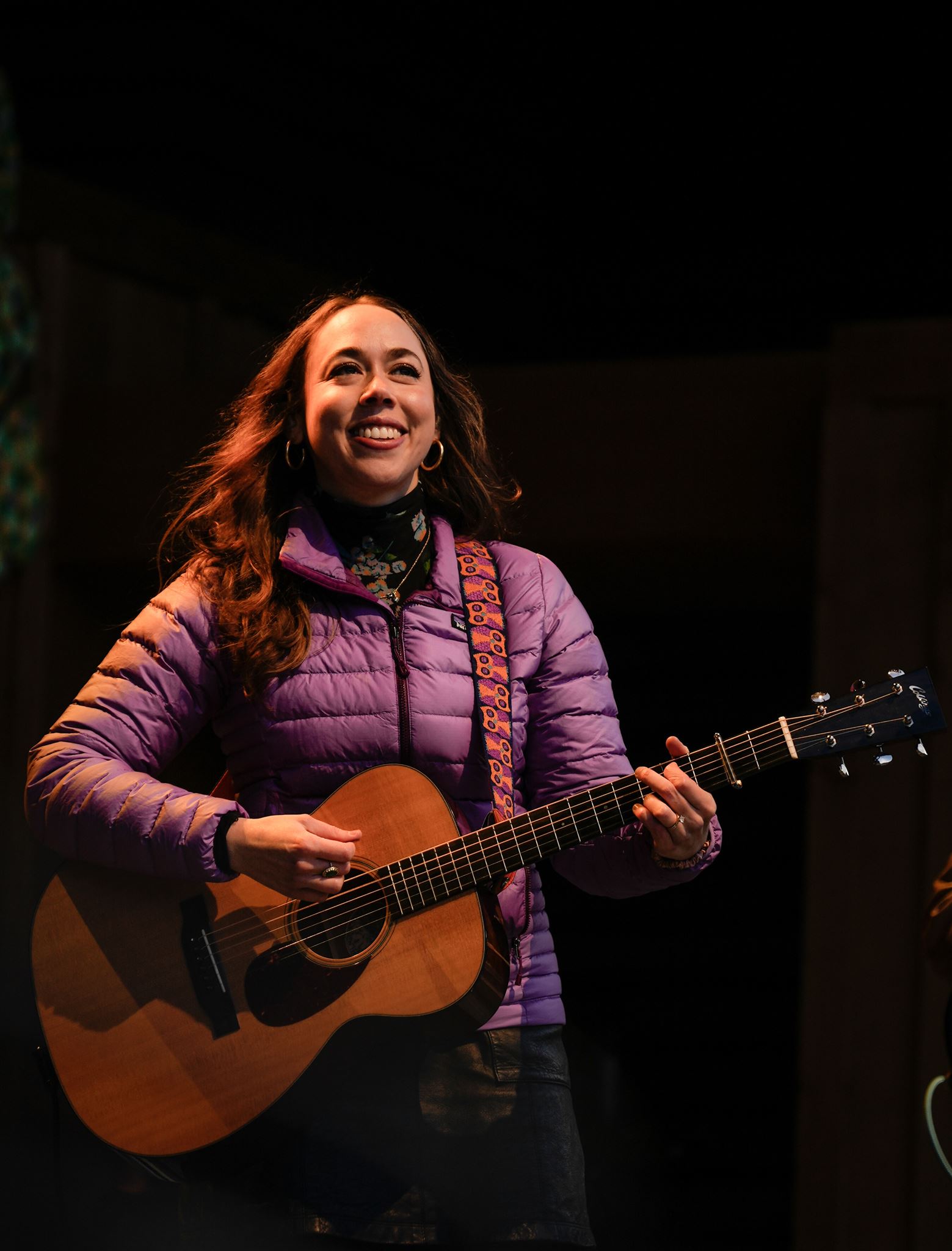
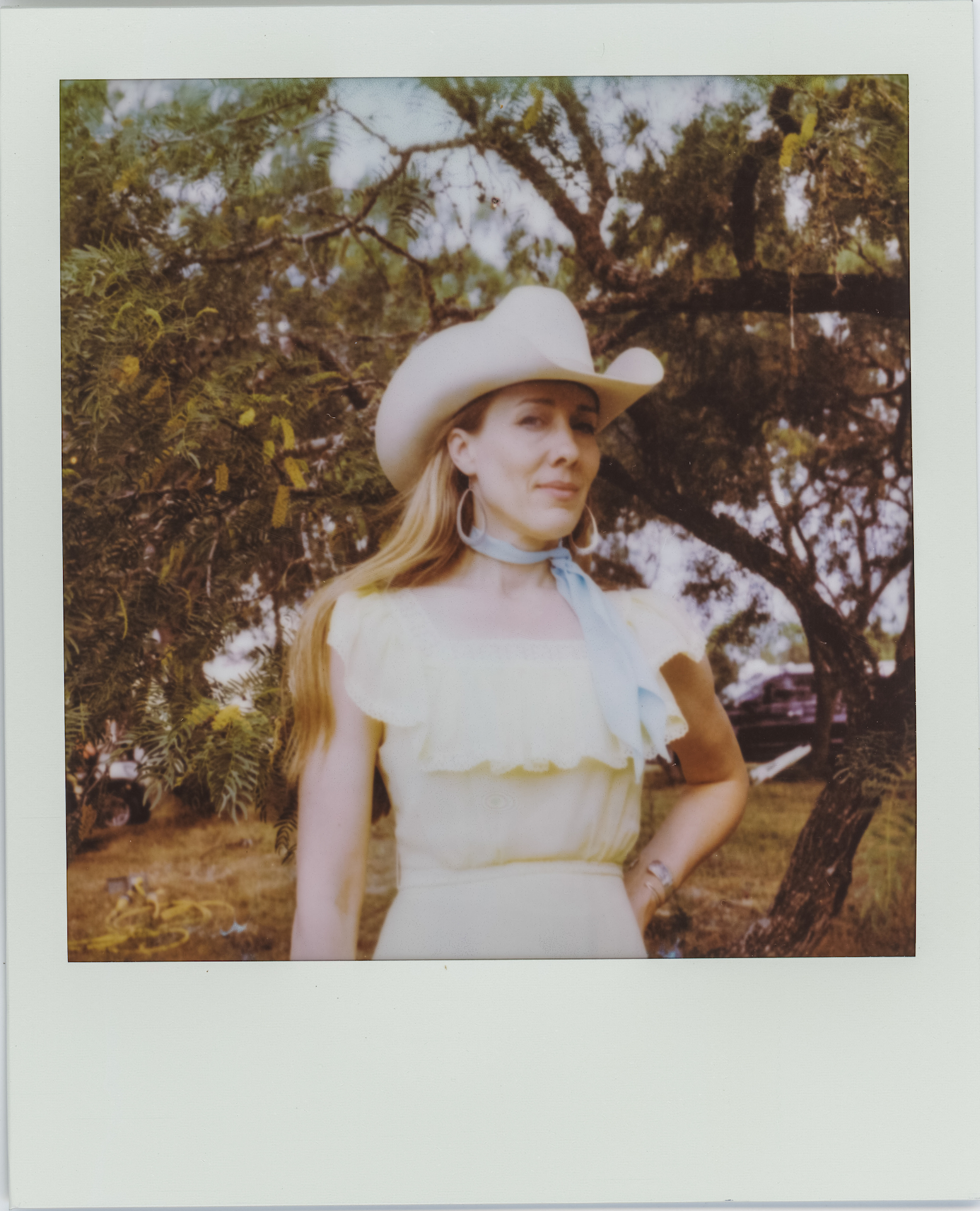
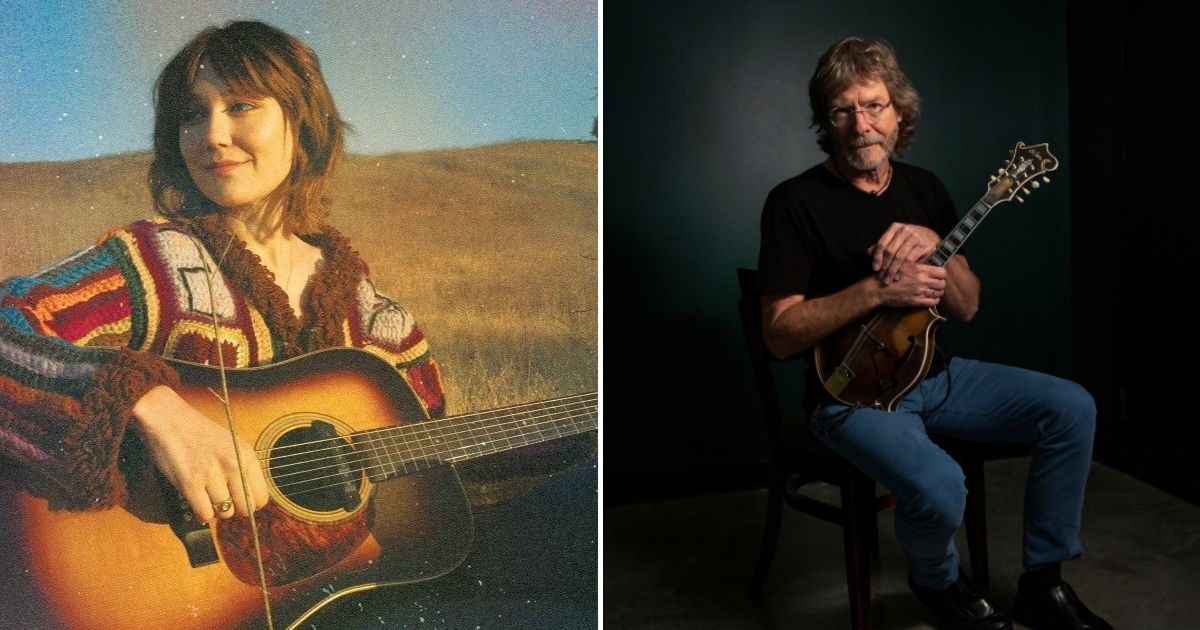
Photo of Sam Bush by  Jeff Fasano; photo of Molly Tuttle by Samantha Muljat.
Telluride, the Most Beautiful Bluegrass Festival, Turns 50

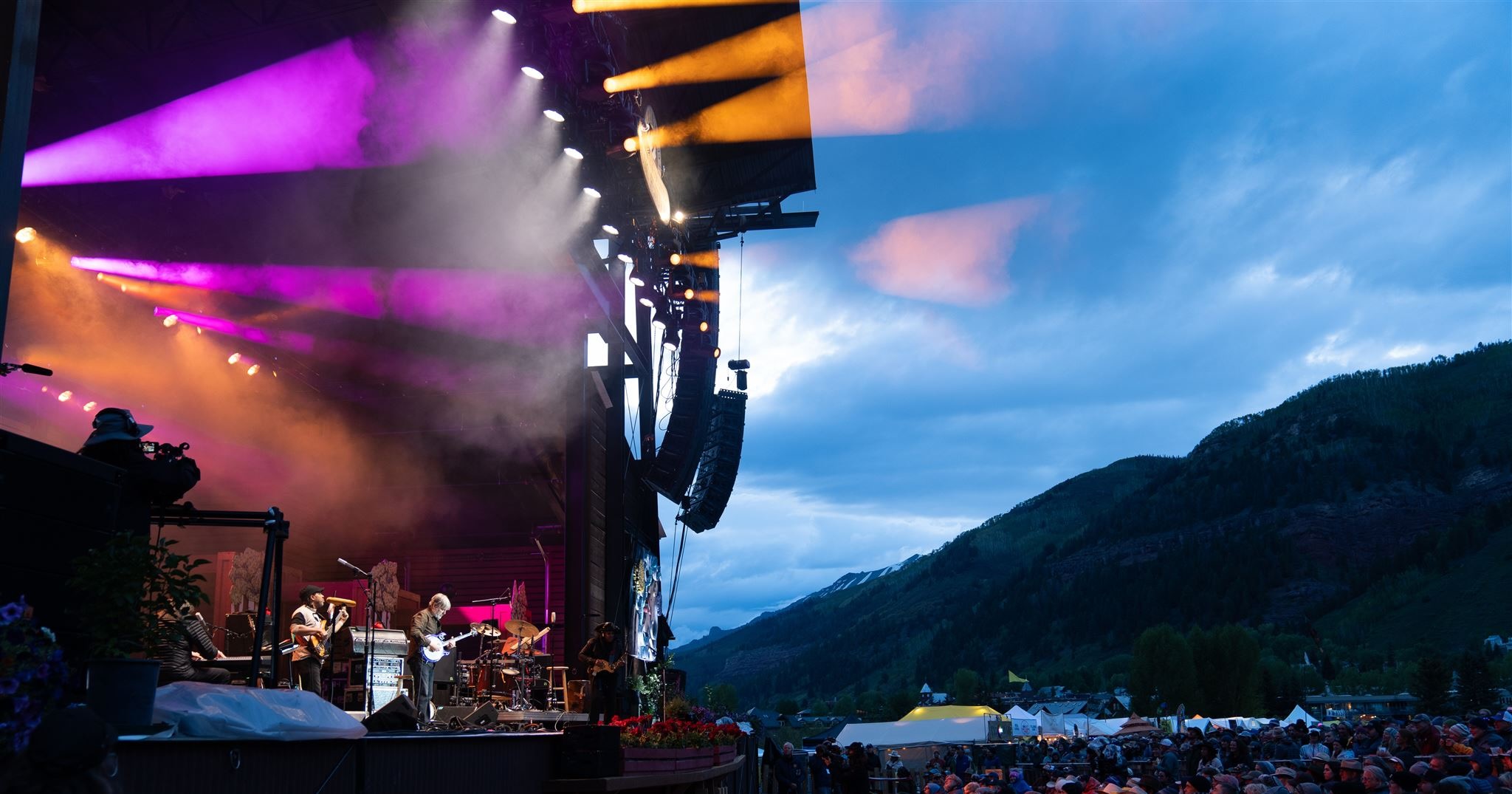
(Editor’s Notes: Headline image of Béla Fleck & the Flecktones. Scroll to see a photo gallery.

To mark Planet Bluegrass’s 50th annual Telluride Bluegrass Festival, we asked author and music journalist David Menconi to reflect on its impact – and the vibrant community that’s grown up around this iconic roots music event.)

The circuit of roots music festivals in America has some similarities to the Professional Golf Association. There’s at least one festival as well as one golf tournament pretty much every week of the spring, summer and fall. But a few stand out as special and even career-making – golf’s four major championships, and the handful of prestigious main-event music festivals. North Carolina’s MerleFest is like The Masters, the early-season springtime kickoff each April, while late-season festivals like San Francisco’s Hardly Strictly Bluegrass line up nicely with the British Open.

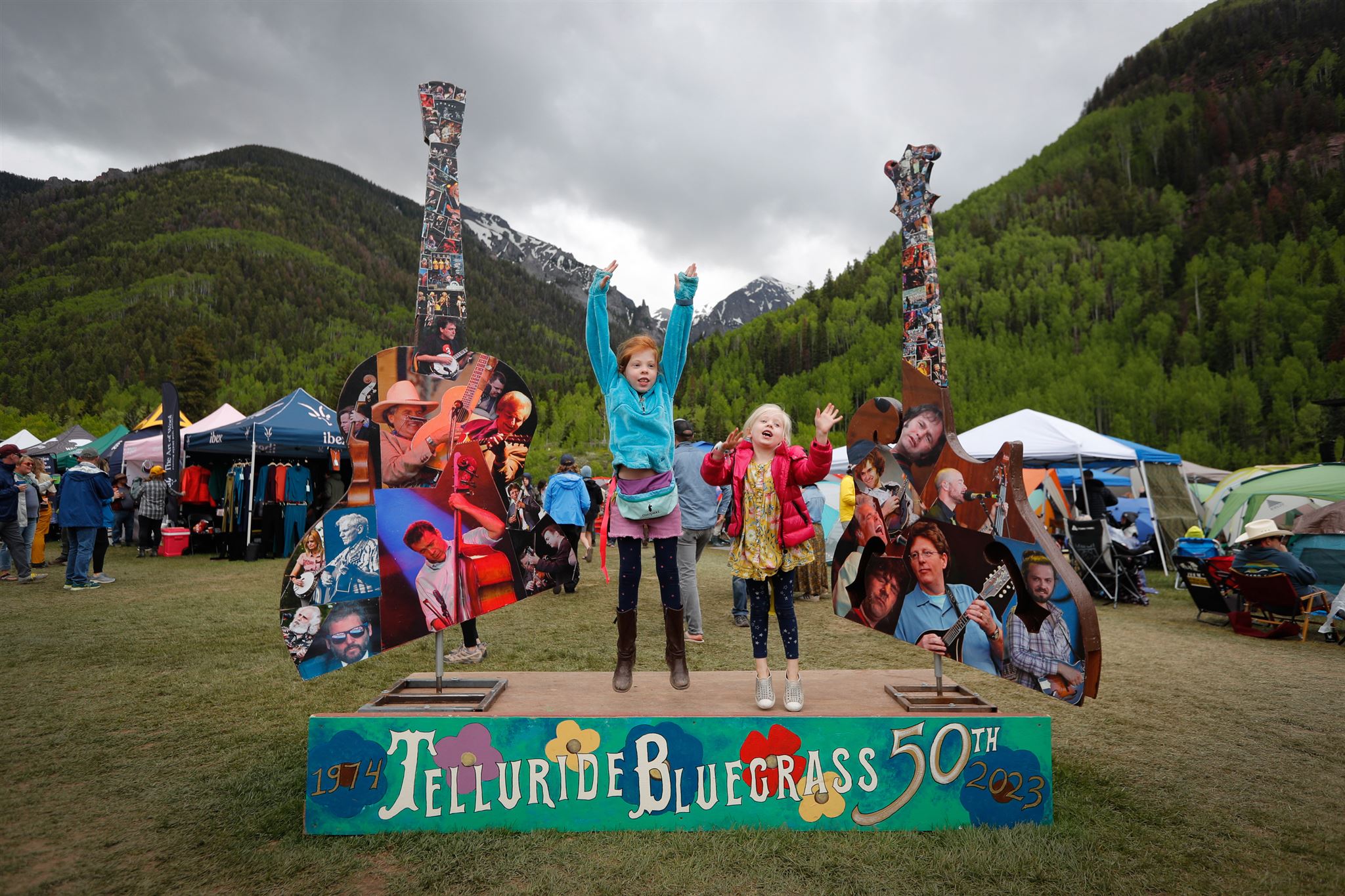
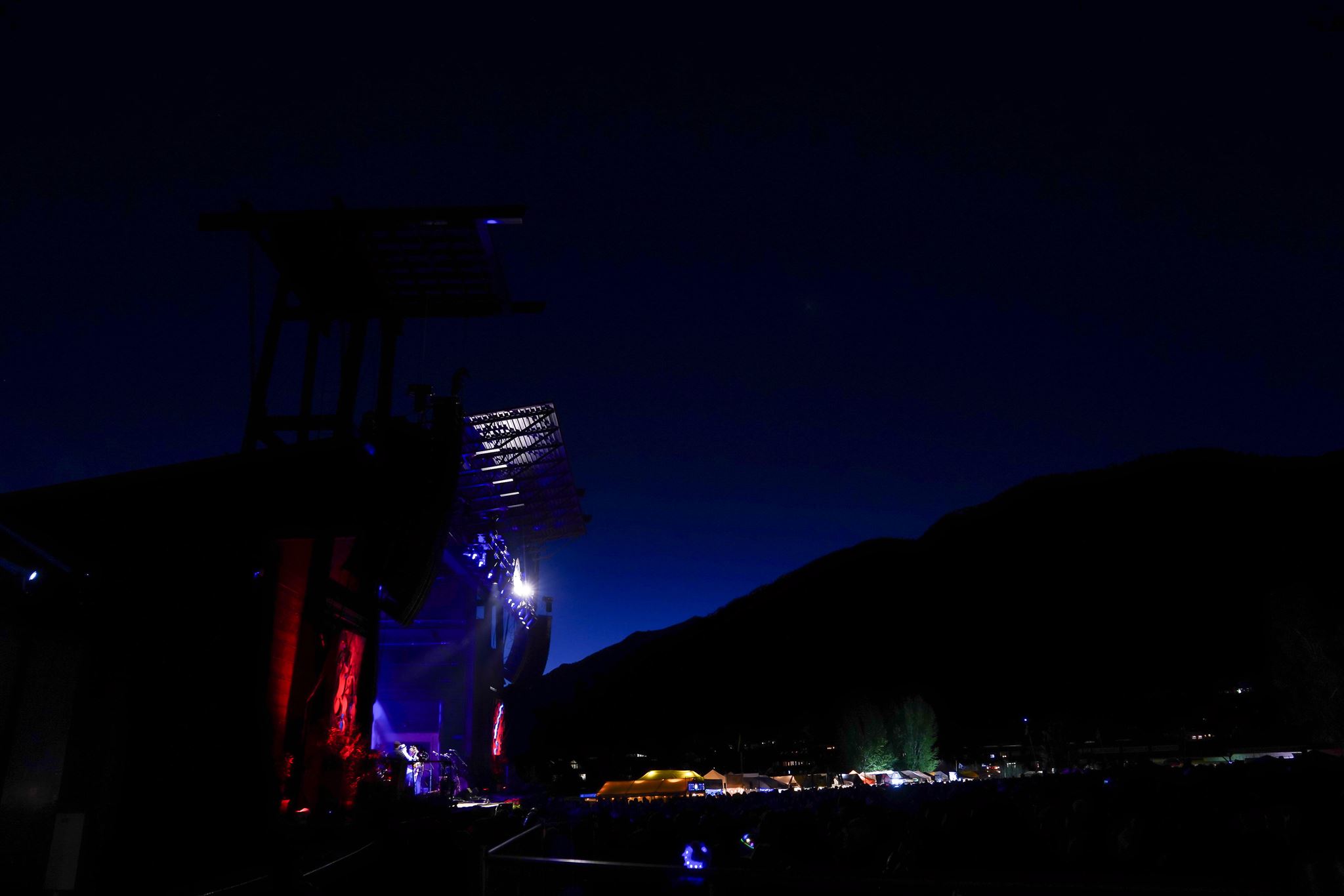
But there’s no question which music festival stands as the summit of the circuit, and not just because it’s in the mountains of Colorado. That’s the Telluride Bluegrass Festival, which marked its 50-year anniversary with the 2023 edition last weekend, June 15-18. The fact that Telluride has prospered for half a century makes Telluride something like golf’s U.S. Open championship, the big one that everybody wants to be a part of. Telluride’s status is something that the musicians who play it are well aware of.

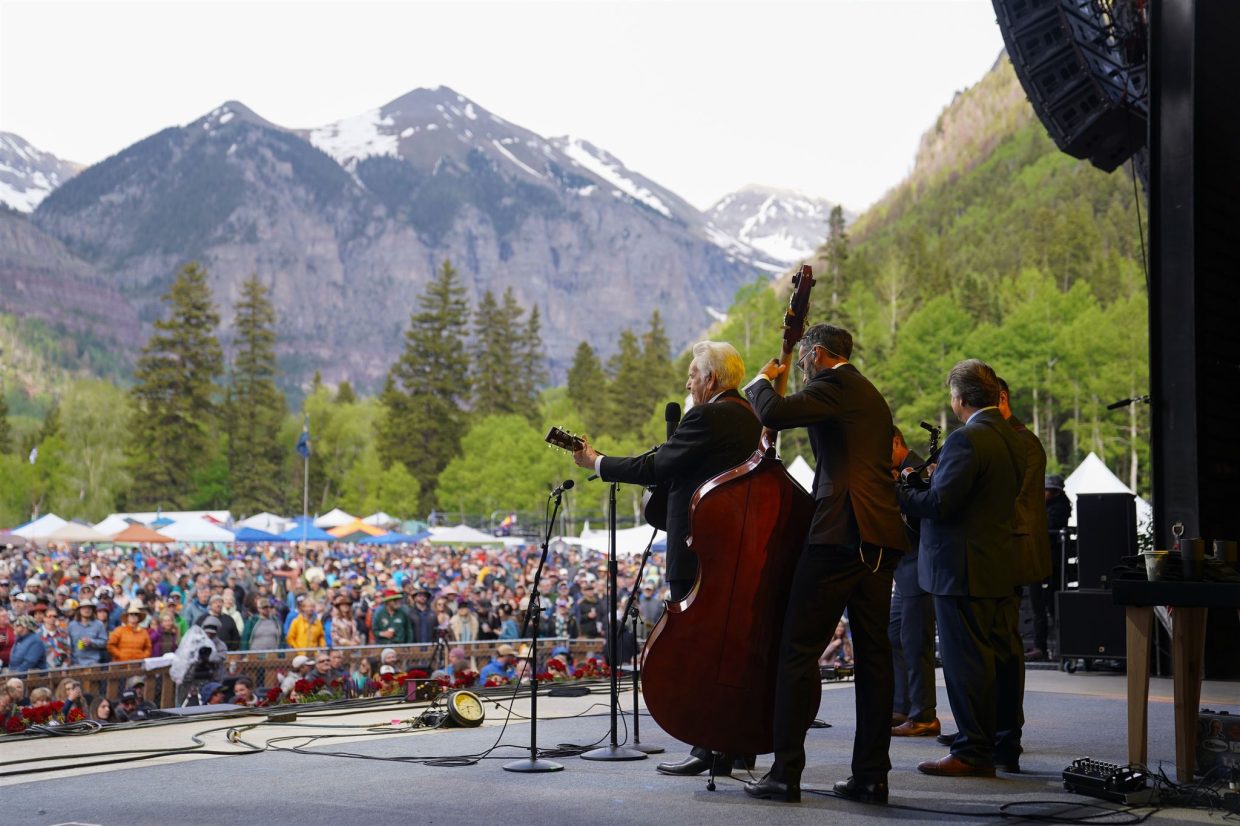
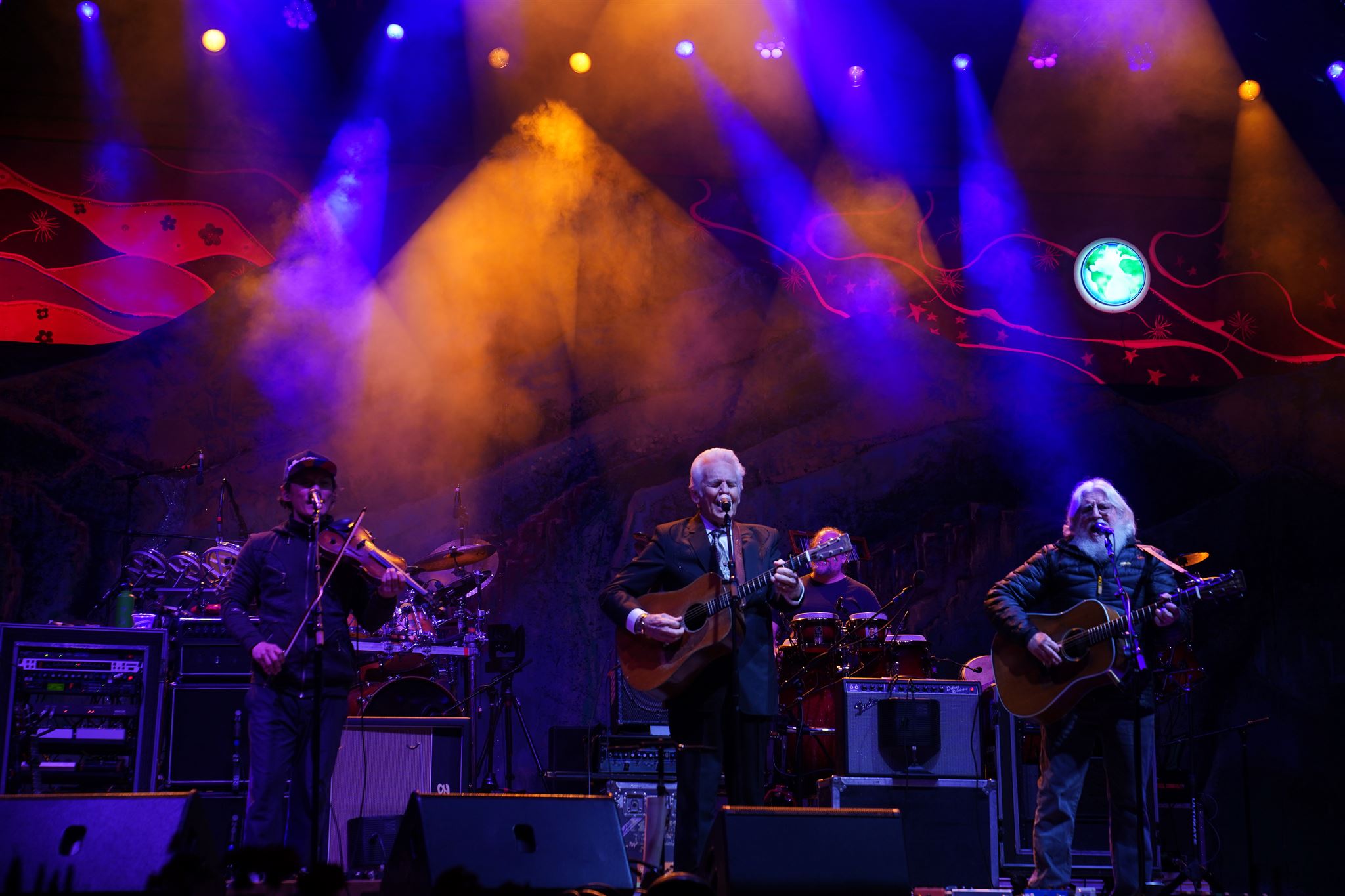
Del McCoury Band performs Thursday, June 15, at the 50th Annual Telluride Bluegrass Festival.

“Festivals and musical trends come and go, and acoustic music has been through some serious peaks and valleys the last 50 years,” says Chris “Panda” Pandolfi, banjo player for Telluride regulars The Infamous Stringdusters, who were on this year’s lineup. “The one mainstay throughout has been Telluride Bluegrass Festival. When we started out, Telluride was the place to be and the definitive crossroads we aspired to, and it still is. Lasting 50 years is an amazing testament to its importance. Bluegrass is more popular than ever now, and Telluride is a big part of that.”

There are literally hundreds of music festivals spanning every style imaginable nowadays, including massive annual gatherings like Bonnaroo in Tennessee and Coachella in the California desert. But there were just a small handful of festivals when Telluride Bluegrass Festival started up in 1973 in the scenic Colorado mountain town that bears its name. And even though Telluride’s daily capacity of 10,000 fans is significantly smaller than a lot of the other major festivals on the circuit, it has still maintained its prestige status.

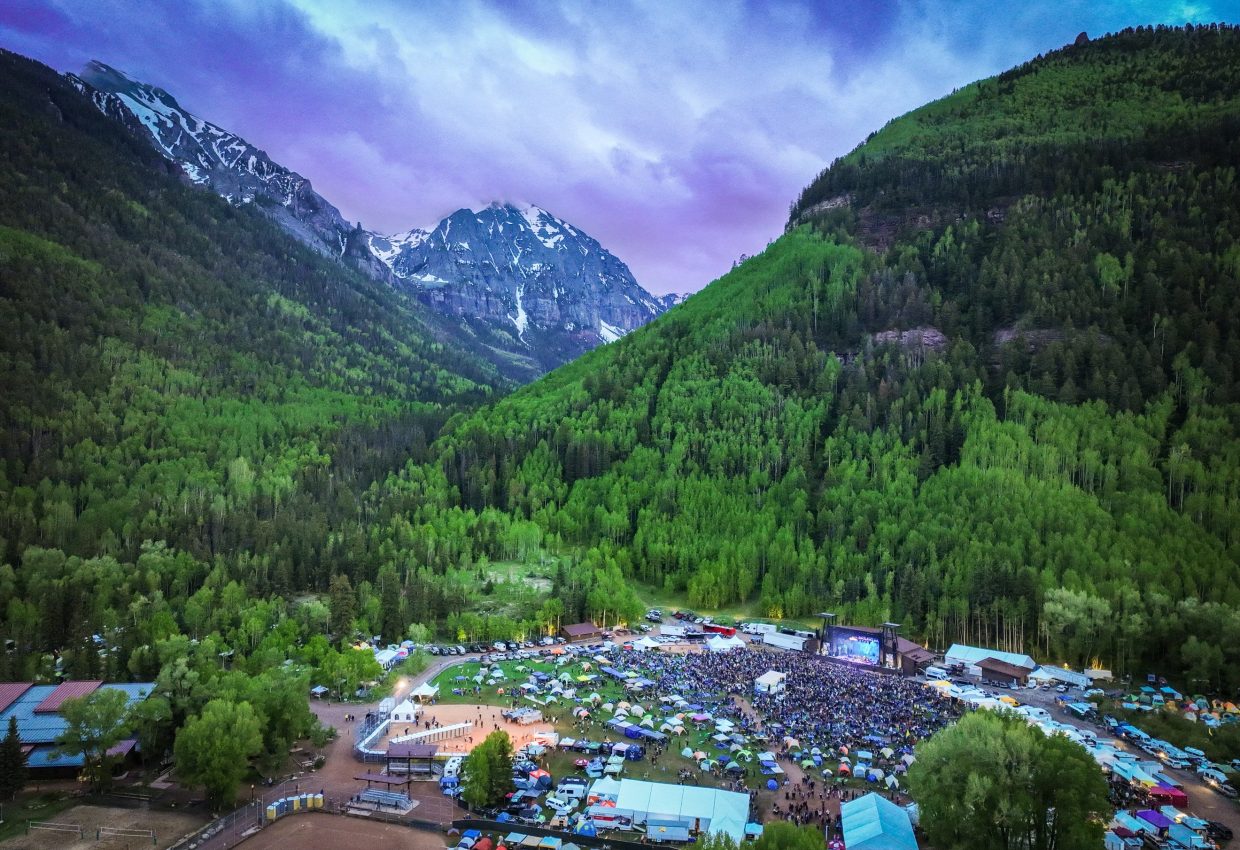
A drone shot of the festival grounds of Telluride Bluegrass Festival.

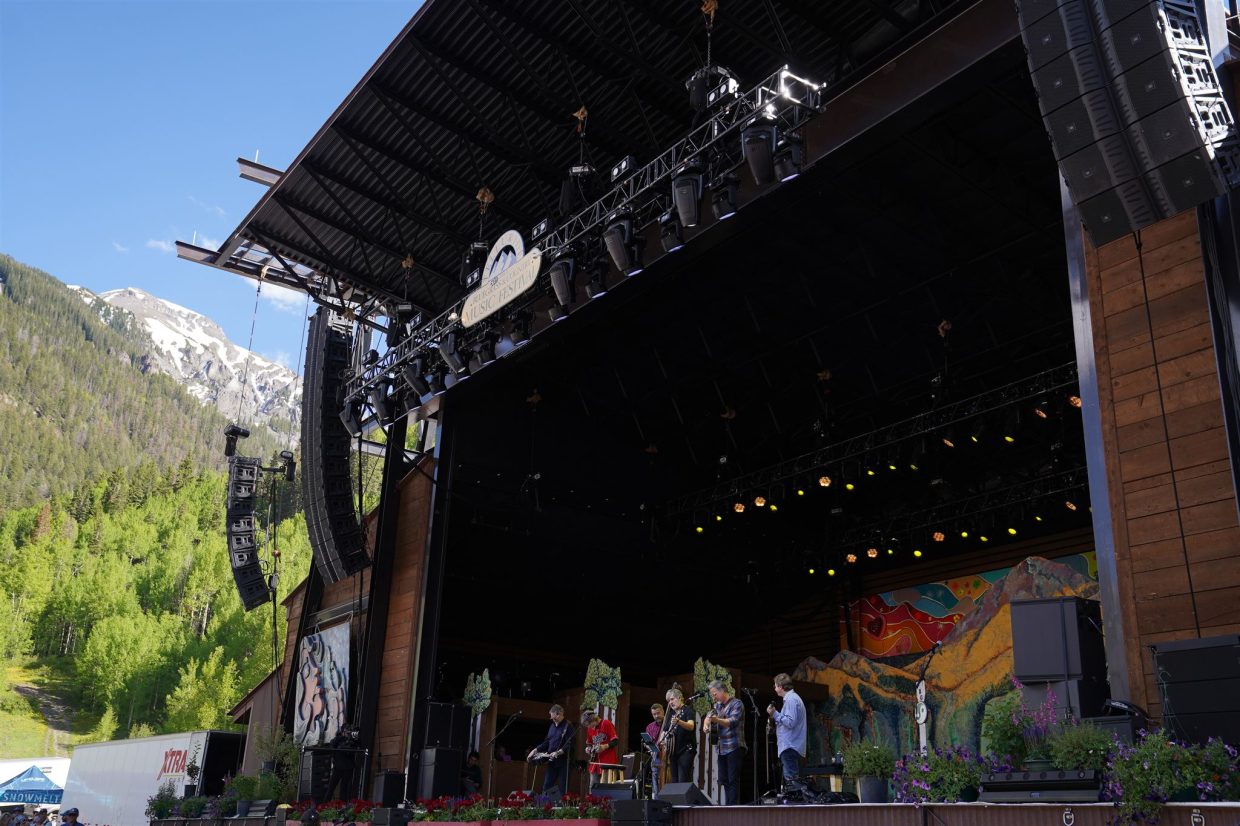
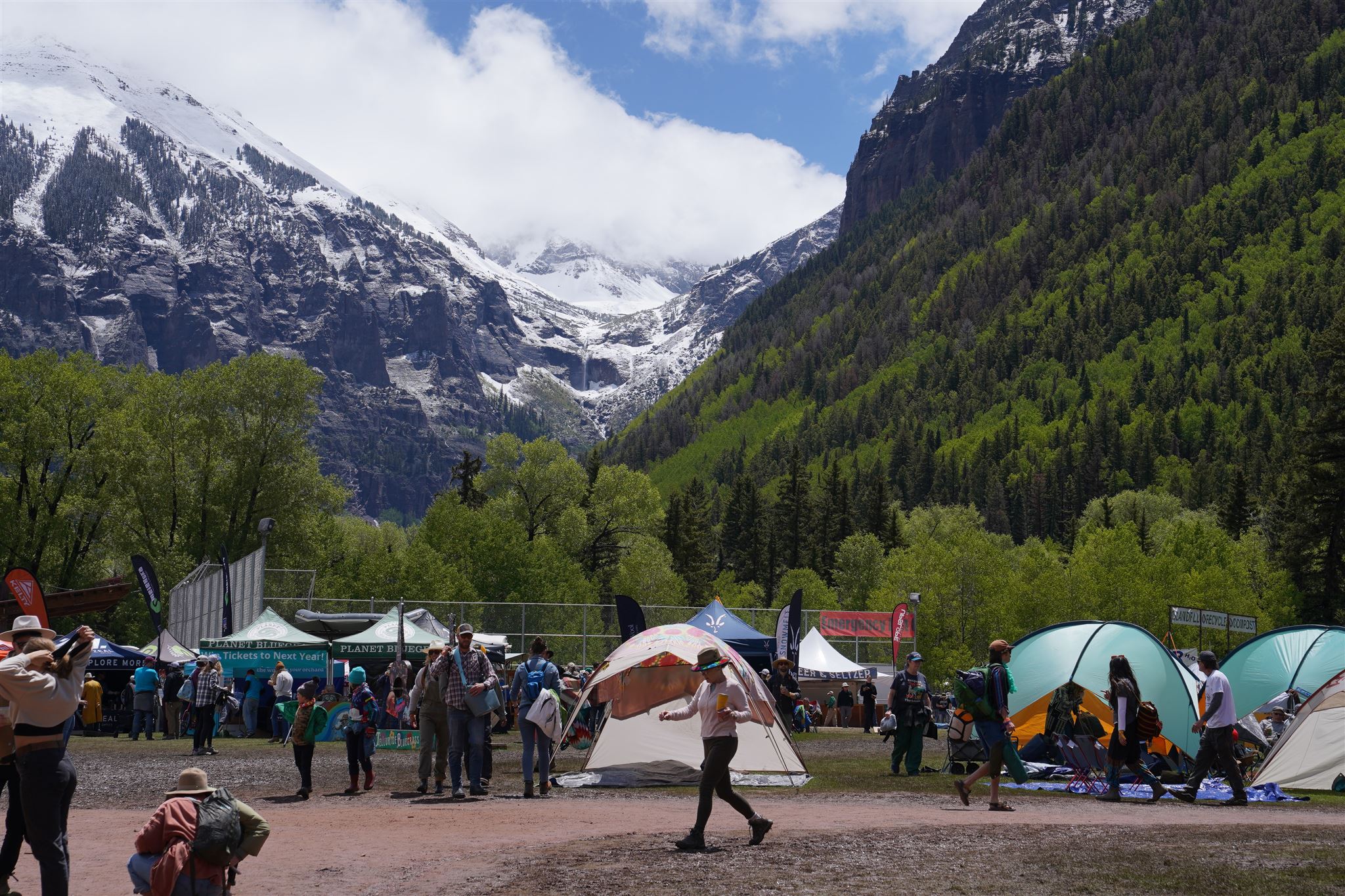
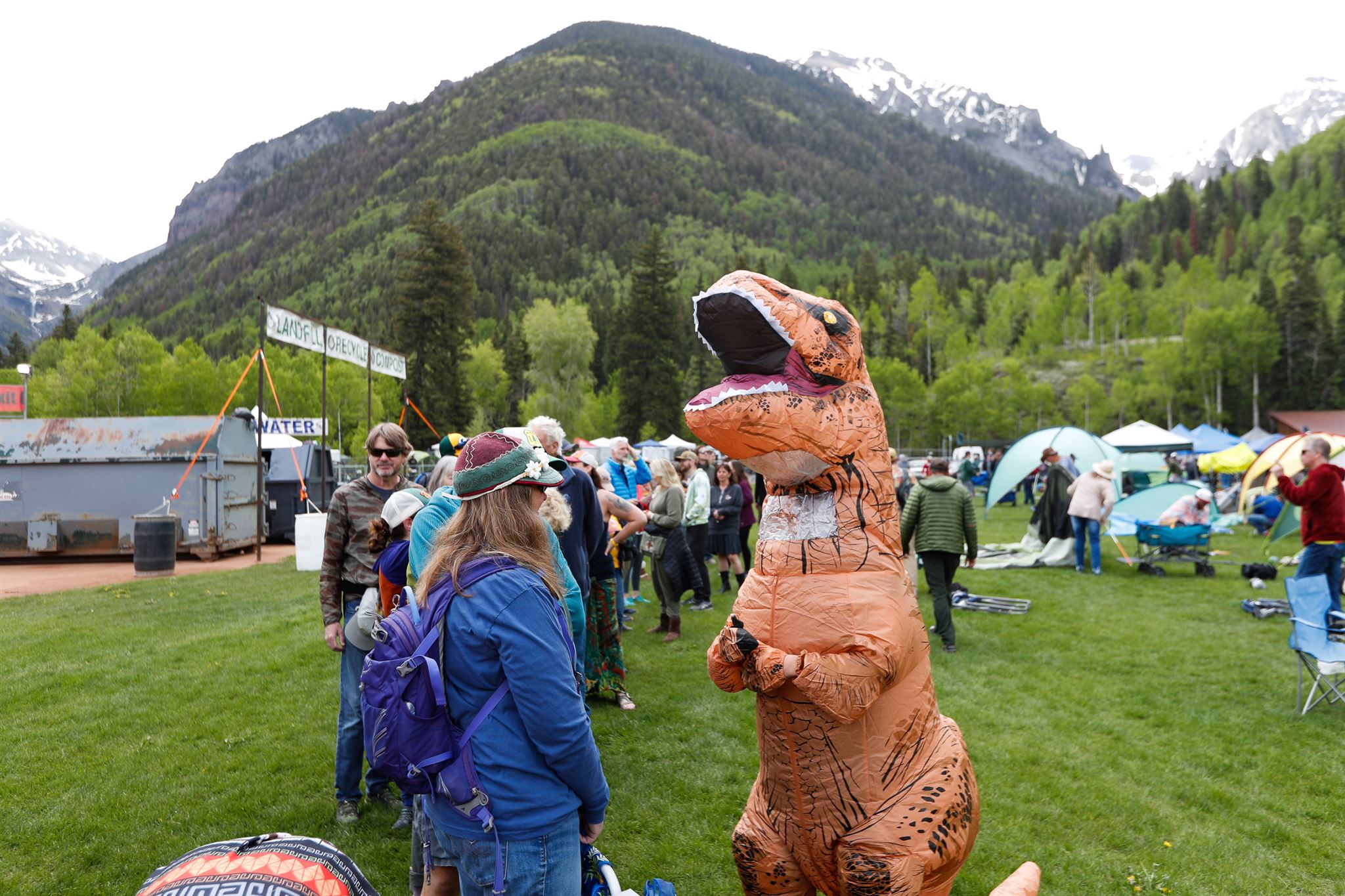
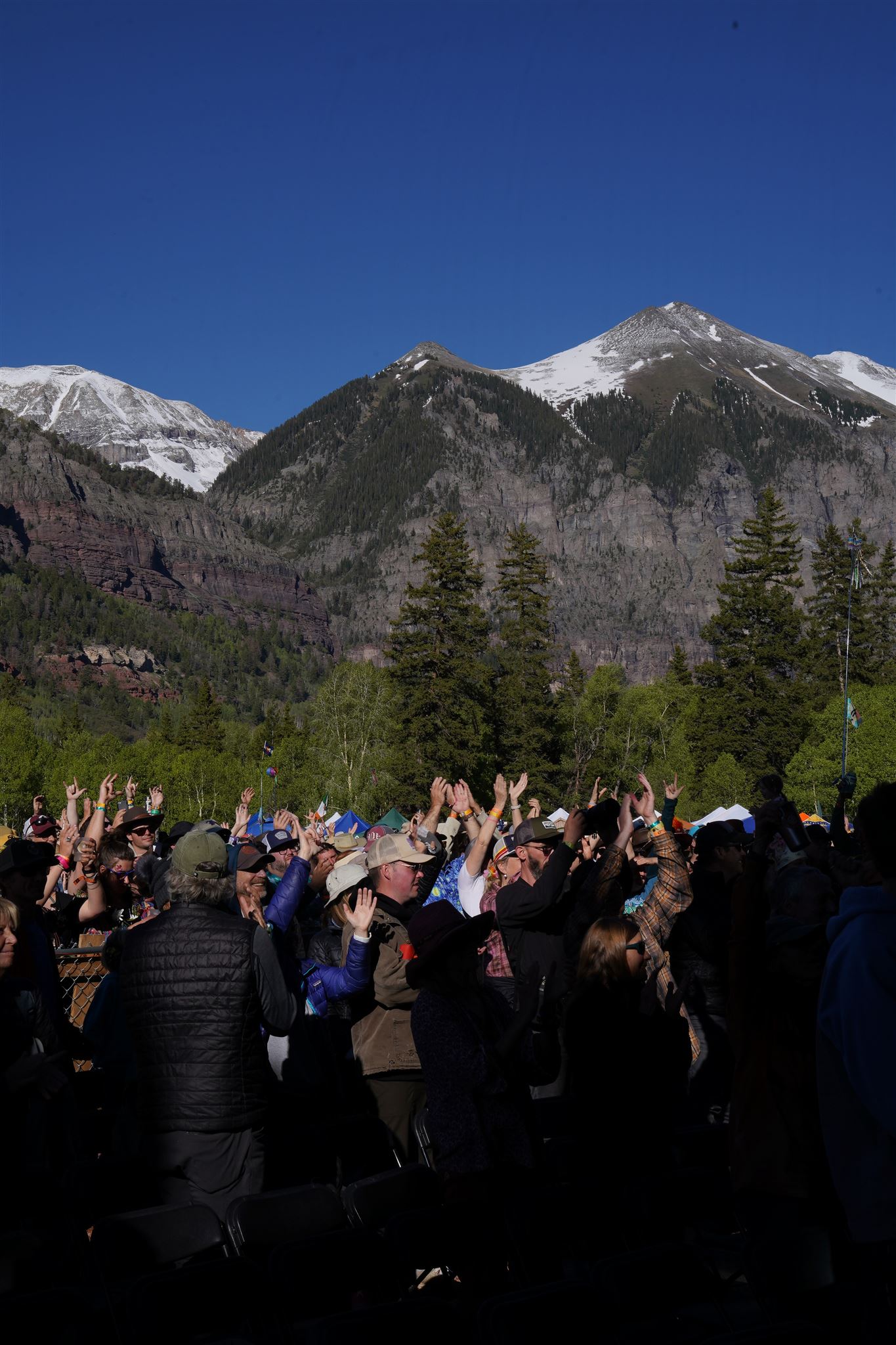
In spite of that smaller size, Telluride does have a few structural advantages that set it apart. One is a picturesque setting of surpassing natural beauty on the western edge of Southwestern Colorado’s San Juan Mountains. For performers as well as attendees, there’s not a better view anywhere than what you see at Telluride.

“The view from the crowd is amazing, but from the stage it’s the most incredible view imaginable as an artist,” says Pandolfi. “It’s this multi-layered inspirational snapshot of some of the best music fans, at the best-run festival, in the most beautiful environment in the world. I think a lot of people have this experience, knowing of Telluride as this iconic festival with an outsized reputation, but it more than lives up to the hype. First time we played there, I remember feeling intimidated because so many heavy-weight players we looked up to were there. But as soon as we got onstage, everything clicked.”

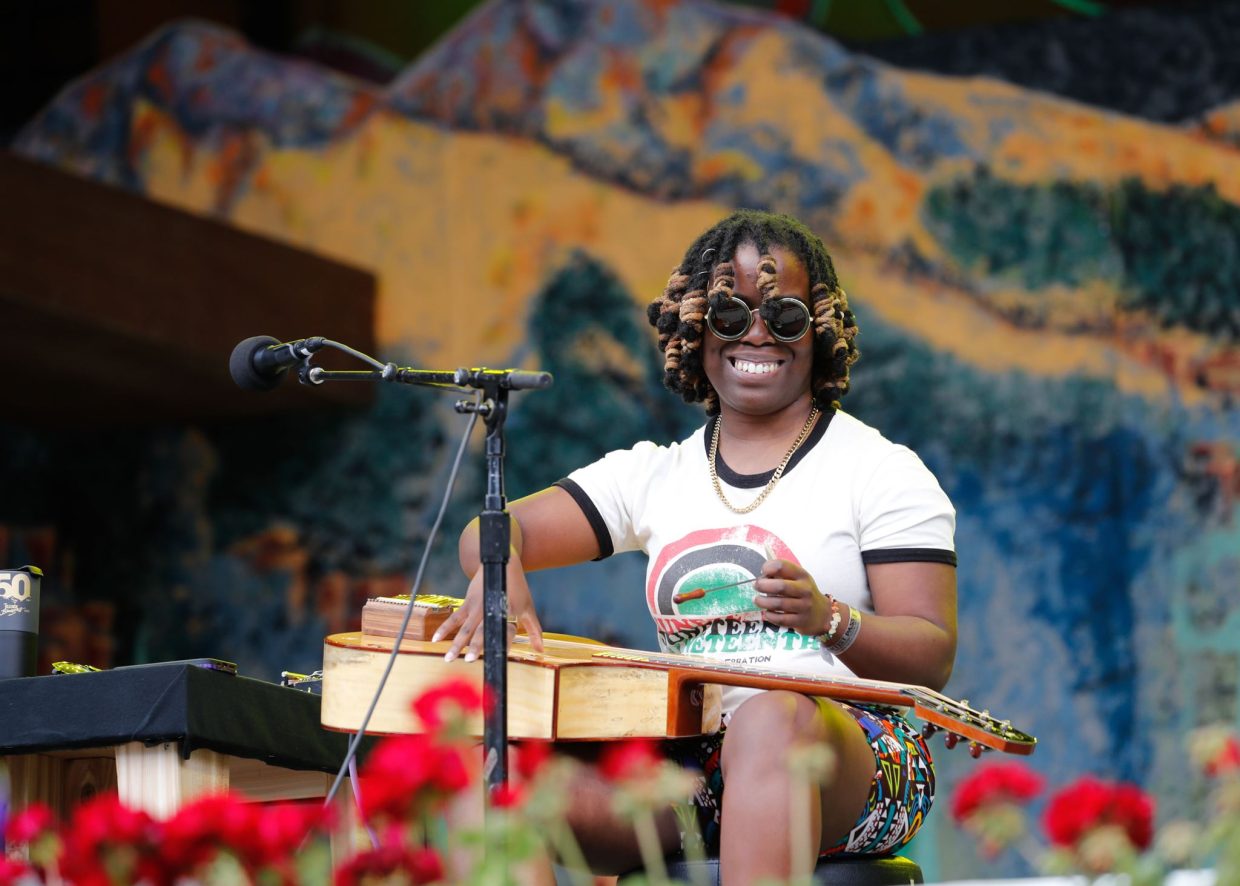
Yasmin Williams performs on Telluride Bluegrass Festival’s main stage – its sole stage.

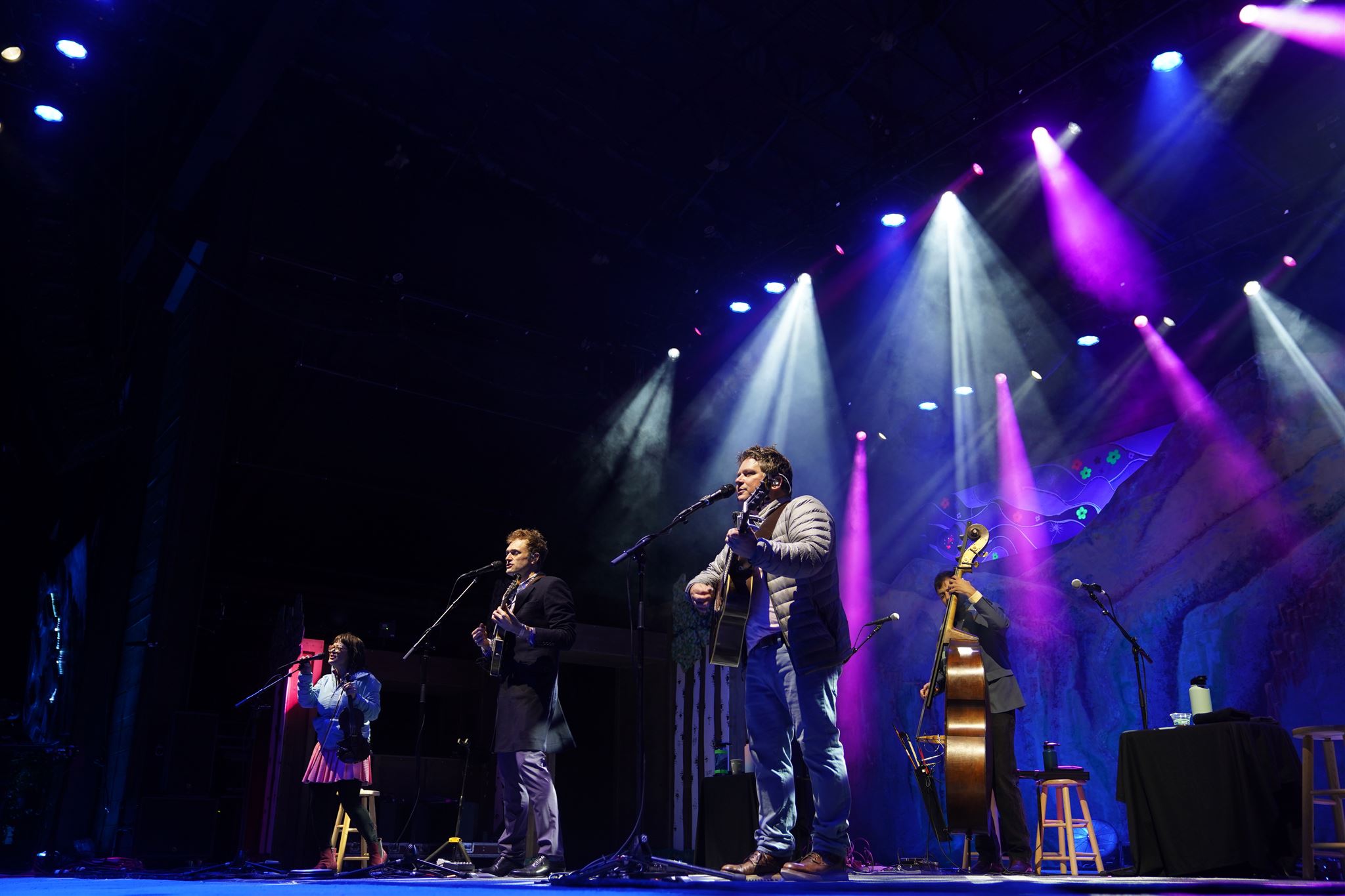
Another major difference between Telluride and its festival peers is scale, and not just in terms of the size of the crowds. Most festivals cram as many performers onto as many stages as possible, all of them running simultaneously, resulting in sensory overload as well as the fear that you’re missing out on something elsewhere. By contrast, Telluride still has just one stage. Every act gets a solo spotlight at Telluride.

“Every year’s festival lineup is an interesting thing,” says Craig Ferguson, who oversees Telluride Bluegrass Festival under the auspices of Planet Bluegrass. “I’ve always said, just watch and it will book itself, and that’s really true. Our process is unique because we have just the one stage and not a bunch of bands, so everybody in the crowd gets to have the same experience. There’s not 18 different stages, so we can create one festivarian experience that everyone shares. We do the booking one act at a time, and we often wind up with interesting combinations.”

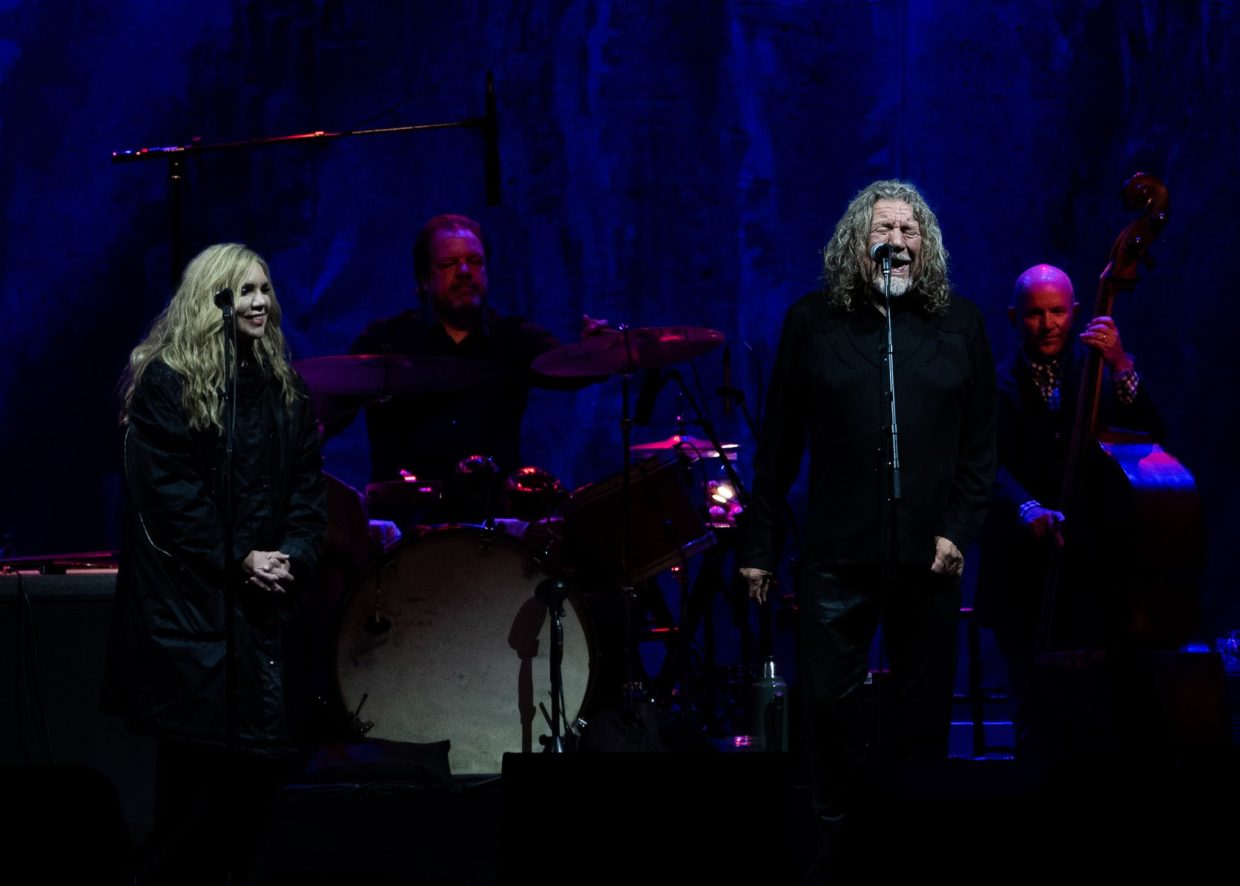
Robert Plant & Alison Krauss perform at Telluride Bluegrass Festival.

Indeed, those interesting combinations can venture well beyond what you see at a typical folk or bluegrass festival. Along with Sam Bush, Emmylou Harris, Peter Rowan, Del McCoury and The Infamous Stringdusters doing a Sunday morning gospel set, this year’s lineup features ringers like the West African ngoni master Bassekou Koyate and the venerable jam band String Cheese Incident. Some of the anomalous acts from previous years include pop-star jazz pianist Norah Jones, the comedic folk duo Tenacious D and even singer/rapper/actress Janelle Monae. Even with the unlikely acts, the Telluride experience sells itself. It doesn’t take much convincing to get any artist to play.

“Janelle Monae was the most interesting person to talk to,” Ferguson says. “I snuck into her RV just as she was sitting down to a meal by herself, and I was able to sit and talk to her for an hour. I think she would’ve signed up to play every year if she could have, she was so enthralled by the fact that there were elk in the park. It was the most wonderful conversation, and she was great. We’re famous for our curveballs and she was the oddest, I’ll give you that.”
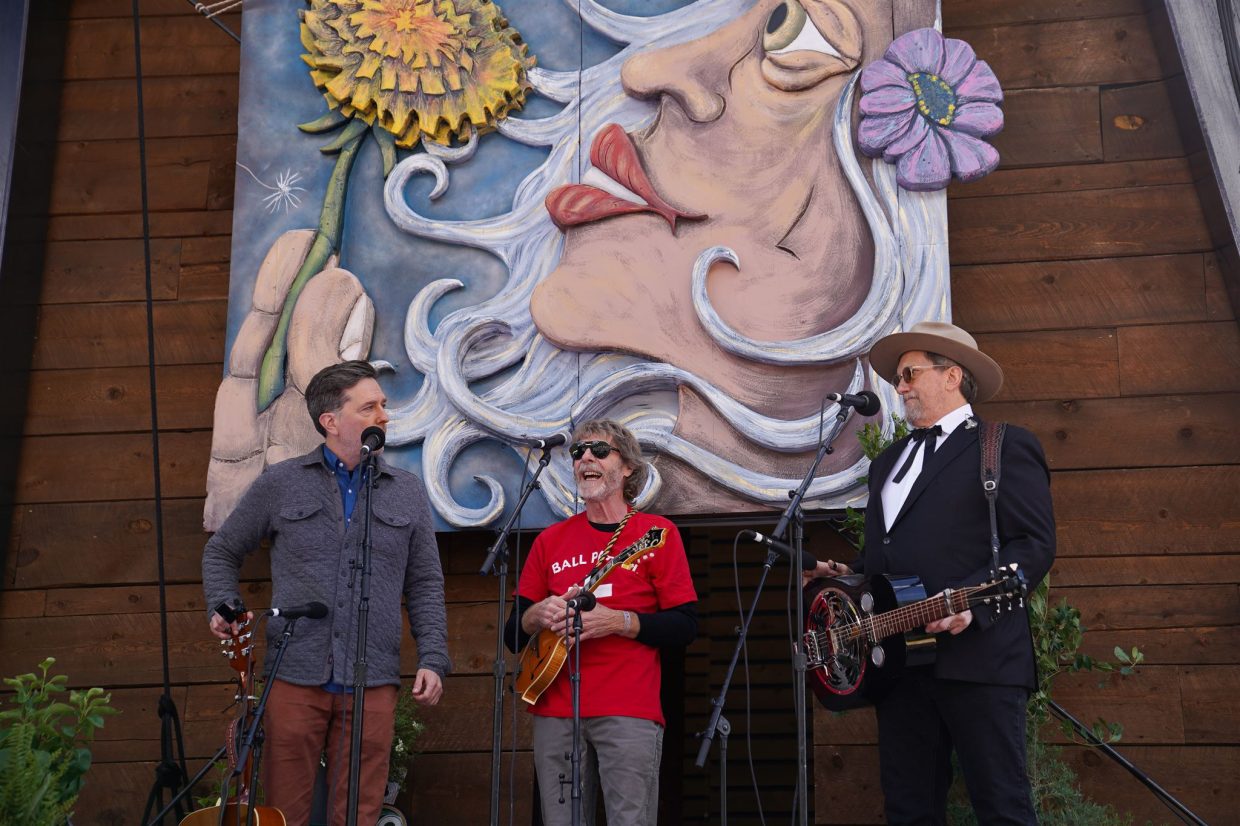
BGS’s own Ed Helms with Sam Bush and Jerry Douglas at Telluride Bluegrass Festival.

Apart from the change-ups, multiple generations of musicians in the world of acoustic music count Telluride among their major artistic, career and personal milestones. One of them is Sarah Jarosz, a four-time Grammy winner who first went to Telluride as a fan at age 14 and played it herself for the first time two years later. Telluride is where Jarosz first connected with idols and future peers like Gillian Welch and Abigail Washburn. It’s also where Gary Paczosa saw Jarosz for the first time at her 2007 Telluride debut. He subsequently signed her to Sugar Hill Records and produced her first four albums.

“It’s the quintessential place to see your heroes, and even get to jam with them,” says Jarosz, who is back on this year’s lineup. “You’ll hear, ‘There’s a jam at this house down the street after the shows.’ So I brought my mandolin and before I knew it, Chris Thile was showing up. Also Jerry Douglas, Tim O’Brien. That was really life-changing, this proximity to heroes that allowed me to become friends with them. And even though Telluride is rooted in bluegrass, they always bring in artists from beyond that world – Janelle Monae, Decemberists, Alison Krauss and Robert Plant. It feels like anything can happen, and the audience that goes is very supportive of that.”

The stalwart House Band of Telluride Bluegrass Festival.

Still, no matter how far afield the lineup wanders, Telluride is ultimately rooted in bluegrass.

“Bluegrass is a fable, and a team sport,” says Ferguson. “That informs how we create the lineup. Looking to the future, socially as well as musically, we think of bluegrass as an allegory. It’s a context that is invitational to all these other styles, country or jazz or classical, and it complements all of them. That remains the heart and soul of this festival, surrounding bluegrass with these other complimentary musics. We are fortunate to be of service to the festivarian community. It’s an annual privilege to see how much it brings to people’s lives, the connection to community.”


All photos by Maya Benko, courtesy of IVPR

What’s Del McCoury Really Like? We Asked Three People Who Know Him Best

There might not be a more universally beloved figure in the bluegrass world than Del McCoury. Offstage as well as on, he carries himself with a self-assured grace that is both regal and welcoming — bluegrass royalty in every sense. We talked to three of the people he’s closest to about the experience of really knowing Del McCoury up close.

Alan Bartram, bassist in The Del McCoury Band

“Joining the Del McCoury Band was one of those fortuitous right-place-right-time things, and they made it so easy. He’s as laid-back as you imagine. The same happy-go-lucky guy you see on stage is like that all day. There’s no ‘stage persona’ he changes into, and he’s not strict about anything so long as you’re taking care of business. Just do your thing and everything’s cool. I couldn’t think of a better boss.

“If he ever gets mad, it’s real subtle. Unless you’re around him a lot, you’d never even know it. There are days when he might not be in the best mood, but there’s never an outburst or a rampage. You’d have to know him to pick up signs he’s annoyed about something. Going on 84 years old, he can still get up at 4:30 a.m., fly somewhere, drive a rental van to the gig, soundcheck, go through the whole day and then get onstage at 9 p.m. and just kill it for two hours. I’ll be just whupped, but he’s still crushin’ it. And the longer he sings, the stronger he gets. God, I hope I have that stamina at his age. He hasn’t lost anything, even after we were shut down for most of 2020. Taking a lot of time off at his age, you can lose a step. I swear he didn’t.

“I’ll tell an embarrassing story on myself to show how cool he is. A few weeks ago, there was a Grand Ole Opry show on a weeknight – and I somehow forgot all about it. Had it on my calendar but just completely spaced it. So I get a call: ‘Hey, man, you playing with us tonight?’ And you know that feeling when your heart just drops? Oh my God. At that point, there was no way I could get there in time. I’m 40 minutes away, they’re on in 10. Mark Fain from the Opry house band had to fill in for me that night. I still can’t believe I did that.

“Now Del does not really use a cellphone, so I had to wait until he got home to call him. So I call, Jean answers: ‘Alan, is something wrong?’ ‘Nothing’s wrong,’ I said, ‘except I forgot I was supposed to be at the Opry tonight.’ And she giggles just as Del walks in. ‘You wanna talk to him?’ ‘Oh yeah, I need to.’ So he gets on the phone and I say, ‘Del, I am so sorry. There’s no excuse. I really blew it, just completely spaced on it.’ And he says, ‘Oh, that’s all right. If I didn’t have Jean telling me when to be down there, I’d have probably missed it, too.’ He could not have been sweeter, which was a relief. I was able to sleep that night. That’s a pretty good picture of who Del is.”


Rhonda McCoury, daughter of Del and Jean McCoury

“I don’t play music, no. Dad showed me a few things when I was a kid. But then I realized I didn’t want to get on stage and do that: ‘If I learn this, I’ll have to get on stage like Dad does! Uh uh, not for me.’

“Mom handled most of the discipline, while Dad was very easygoing. He was the one who’d help us with homework after dinner. If mom ever said, ‘Wait ’til your father gets home,’ we’d just get talked to. And we’d rather have taken a beating, we never wanted to disappoint Dad.

“He’s the epitome of greatest father in the world. Patient, working his tail off all the time. If someone’s car wasn’t running, he would fix it. If there was some math we didn’t understand, he would explain it. Back then we had to put covers on our school books, and he’d help do that.

“He had the logging day job for a long time but didn’t seem frustrated by that. He’d grown up on a farm, working from the time he was a kid. I never heard him complain. He worked for our uncle’s company and could take any time off he needed. But over time, he did realize, ‘This is a little dangerous and maybe I should not do it for the rest of my life.’ Then when the boys started playing, too, that’s when he really got focused on music more.

“He’s not really different, offstage or on. What you see is what you get. He’s always been laid-back and funny, loves to tell stories. He doesn’t change much – except for his suit. There’s no grey area, this is him and it’s the way he’s always been. Like anybody else, you don’t want to make him mad. But 99 percent of the time he’s calm and mild-mannered. About all he does is think about music.

“About the only time he ever gets nervous before a show is when it’s the Opry – especially at the Ryman, where he played with Bill Monroe. But mostly, he never gets too nervous. Maybe a little frustrated if allergies kick up and affect him, not that anyone else would notice the way he does. ‘I’m not of right voice today.’ He just enjoys music so much, nerves never boil to the surface. It became even more enjoyable when the boys started playing, and they’ve just gotten better and better over the years. That’s the most fun for him, onstage with them.

“Mom and Dad have a pool, which Dad loves. He’ll be tinkering with the bus and jump in the pool to cool off. Deer and turkeys are always around the house; he’ll feed them, and he likes to deer-watch. You’ll wonder where he is and then see him standing in the pool watching the deer or turkey walk by, and all you see is his head.

“When we were kids, Dad was just our dad and music was what he did for a living, no different from anyone else’s dad’s job. Ours plays music and sings. But he’s always loved it so much. He had music on all the time, the band guys were over to rehearse inside and outside the house. School nights, we’d go to sleep hearing the band play downstairs.”


Dierks Bentley, Country Artist and Friend


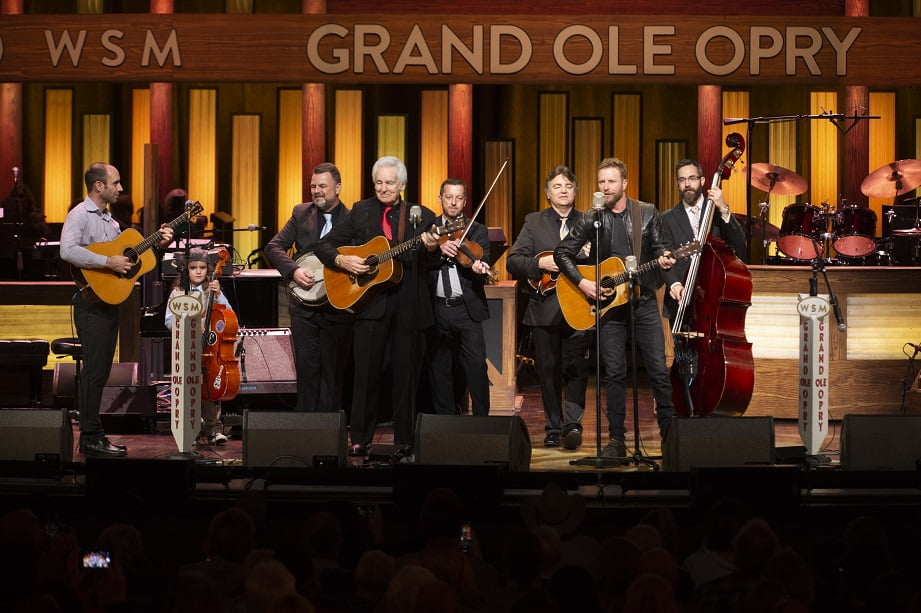
Photo by Chris Hollo, Courtesy of the Grand Ole Opry

“I moved to Nashville in 1994 to be a country singer and was really disillusioned with the scene at the time. It just did not feel authentic and I didn’t know how it would fit for me. I was having a hard time until I randomly went to the Station Inn on a Tuesday night. Walked in and saw these guys wearing loose, baggy clothes and playing bluegrass. I just fell in love with it on the spot. Jason Carter, who was the fiddler for Del McCoury Band, became one of my best friends and turned me on to a lot of bluegrass. It quickly became my favorite genre.

“That’s how I got to know Del’s band. I drove with Jason out to the Telluride Bluegrass Festival in 1997, which is where I finally met Del himself. Nicest guy ever, always with a big smile. Del just is who he is. Driving back cross-country in my truck afterward, we got pulled over by the Arkansas State Police, who claimed they smelled marijuana as we drove by at 75 miles per hour. They had the dogs out sniffing the tires, doing the big search. ‘Man,’ I said, ‘we’re just going back from the Telluride Bluegrass Festival.’ To them that meant we were a bunch of hippies. But they finally let us go and I got Jason back in time for the Tuesday night gig at the Station Inn.

“They say Nashville’s a 10-year town, and it took me almost that long to get a record deal. That was 2002. My first record, I brought the Del McCoury Band in to cut a song for it. Second record, too. I also suggested to Del that he cut Sinatra’s ‘Learnin’ the Blues’ and got a credit in the liner notes, which was about the biggest moment of my fledgling career up to that point. I have yet to get my own Del McCoury Band cut, but it’s on my wish list. Some songwriters want a George Strait cut, but I want the Del McCoury Band – and I’ve made enough money that it’s actually true! As you know, there’s no money in bluegrass. I’d like to do a Del & Dierks album at some point, too.

“I tell people all the time that Del McCoury really is responsible for the success I’ve had in country music. His work ethic is something everybody can learn from, and also the way he doesn’t compete with anybody else. That’s why he and the band are always laughing, having fun, in a good mood. The only person you’re competing with is yourself from the day before, trying to get better. In a town where everybody else talks shit all the time, they all enjoy what they’re doing because they’re not looking at what others are doing. Sure, Del looks back to Bill Monroe. But as far as contemporaries go, I’ve never seen a group of guys more present and having more fun. That’s an approach I’ve taken with country music, just trying to compete with myself. Whatever success I’ve had, it’s because of that.”

Photo credit: Daniel Jackson

Del in December: BGS Celebrates a True Bluegrass Legend All Week Long

With a welcoming smile and an incredibly expressive tenor voice, Del McCoury has enchanted audiences since the 1960s. He’s that rare entertainer who’s both confident and humble, giving him the ability to fit in anywhere from bluegrass festivals to Bonnaroo. Every time we’ve been able to spend time with Del over the years, it’s been a privilege. In a small gesture of gratitude, we celebrate his artistic endeavors this week in a series we’re calling Del in December.

In the days ahead, look for a decade-by-decade recap of McCoury’s exceptional life and career written by North Carolina journalist David Menconi. We’ll also share one of our favorite interviews with Del about his album, Almost Proud, which just received a Grammy nomination. In addition, there’s an exclusive holiday video coming up, as well as a testimonial from Del’s inner circle who tell us what he’s really like as a boss, a father, and a friend. (No surprise: He’s a great guy!)

We’ve been fortunate to share many of Del McCoury’s most recent collaborations on BGS, including his recordings with Vince Gill, Junior Sisk, and Billy Strings. We even got an invitation to his 80th birthday party at the Grand Ole Opry. Perhaps our favorite moment, though, is this special video from The Bluegrass Situation archives of McCoury teaming up with fellow bluegrass legend Sam Bush. Stick around ’til the end and check out Del’s banjo pickin’ skills, too!


Photo Credit: Daniel Jackson

BGS 5+5: Jason Carter

Artist: Jason Carter
Hometown: Lloyd, Kentucky
Latest Album: Lowdown Hoedown
Personal nicknames: Fiddler

Which artist has influenced you the most … and how?

Del McCoury. I first heard Del when I was around 15 years old. At that time I was playing guitar and knew I wanted to play music for a living. When I heard Del I knew that was the band I wanted to join, and knew his sons played banjo and mandolin, so the only options were bass and fiddle. My dad had a fiddle and he started teaching me to play around that time. For the next few years I spent most of my time learning fiddle solos to Del McCoury songs. My parents were very supportive. My Mom would drive me to school and I remember we listened to “I Feel the Blues Moving In” every day of my senior year. She said she never got tired of the song either. I was obsessed with his music from an early age!

The February after my graduation I hired on with the Del McCoury Band. I think the stars aligned. At that time Del still drove the bus. There were many nights I would sit and practice fiddle through the night while he drove. Lots of times I wouldn’t know what to play for a solo on his songs. I’d ask for his help and he’d sing melodies for me to play. Over the years watching how he’s run his band, giving them the freedom to express themselves musically and how open he is to exploring different genres of music through bluegrass. I feel very fortunate to have been able to spend the last 30 years in his band.

What’s your favorite memory from being on stage?

One of my favorite memories is when the Del McCoury Band played Oswego, New York, with Phish. They invited us to play on their main stage set and after seeing a sea of 80,000 people in front of the stage I got pretty nervous. We played a couple tunes with them and someone broke a string. Trey said, “Hey, play one of those fiddle/banjo duet things you guys do.” The thoughts of breaking down the wall of sound from this rock band to just fiddle and banjo scared the hell out of me until Rob and I started playing. The crowd continued dancing as if the entire band was still playing. It was pretty cool how that crowd and that band accepted our music. We got to play several more times with them and Jonathan Fishman has actually played entire sets with the Del McCoury Band and The Travelin’ McCourys and most recently he recorded on my solo record Lowdown Hoedown.

Which elements of nature do you spend the most time with and how do those impact your work?

Whether it’s gardening, golfing, hunting, or fishing, I like to be outdoors. All those hobbies seem to clear my mind of anything else going on in the world. Sometimes I hunt a farm around Goodlettsville, Tennessee, not far from Grandpa Jones and Stringbean’s old houses. I’ve sometimes wondered if I was crossing the same paths that they walked when they hunted together. It’s also nice to put the boat in and go down the Cumberland River. The view of Nashville from the river is pretty cool! Sometimes I pass by John Hartford’s house. That always brings back memories of all the jam sessions we used to have. Those are great memories.

What was the first moment that you knew you wanted to be a musician?

From my earliest memories I remember my dad’s band The Buffalo Creek Express playing shows. I tried to mimic them as a kid. When I was 8 years old one of dad’s friends, Mike Parsons, came to our house and his son who was only a couple years older than me was playing guitar. I thought this kid is good! I wonder if I can do this. I asked my dad if he would show me how to play. After Mike left my dad showed me the chords to the song they were playing. “The House of the Rising Sun.” The next time Mike came to the house I was the kid playing.

What has been the best advice you’ve received in your career so far?

In 2001 we were on the Down From The Mountain tour. Bobby Hicks was the fiddler in the Ricky Skaggs band that was also on the tour. It seemed like every day we were playing tunes together. Bobby was very generous about teaching me his style of fiddling. One day I was having a hard time with something he had showed me. He straightened me out pretty quick and before he left and before I walked on stage he said, “Just get out there and play from the heart and those people are gonna love you.” I’ve never forgotten that moment or the encouragement he gave me.


Photo Credit: Michael Weintrob

Billy Strings, Béla Fleck, Dolly Parton Win IBMA Bluegrass Music Awards

Three of the most innovative artists in roots music — Billy Strings, Béla Fleck, and Dolly Parton — were revealed as IBMA Bluegrass Music Award winners on Thursday night (September 29) in Raleigh, North Carolina.

Billy Strings received the coveted Entertainer of the Year Award for the second year in a row, along with Song of the Year honors, at the 33rd Annual IBMA Bluegrass Music Awards Presented by Yamaha. In addition, Béla Fleck claimed awards for Album of the Year, Instrumental Group of the Year, Instrumental Recording of the Year, and Banjo Player of the Year. Dolly Parton’s recent recording of the gospel classic “In the Sweet By and By,” featured on the 2021 Country Faith Bluegrass album, won Gospel Recording of the Year and Collaborative Recording of the Year honors.

Other familiar musicians to win awards include Sierra Hull, Bronwyn Keith-Hynes, Cody Kilby, Doyle Lawson & Quicksilver, Del McCoury, Justin Moses and Molly Tuttle. Rick Faris was named New Artist of the Year. Jason Moore, a member of Sideline who died of a heart attack last November at age 47, was named Bass Player of the Year. Previously announced inductees into the Bluegrass Music Hall of Fame are beloved instrumentalist and vocalist Norman Blake, broadcast pioneer and recording artist Paul “Moon” Mullins, and eclectic, influential singer-songwriter Peter Rowan. Hosted by Ronnie Bowman and Dan Tyminski, the show was held at the Duke Energy Center for the Performing Arts.

The recipients of the 2022 IBMA Bluegrass Music Awards are:

ENTERTAINER OF THE YEAR: Billy Strings
(Editor’s Note: Read our BGS Artist of the Month interview with Billy Strings.)

SONG OF THE YEAR: “Red Daisy,” Billy Strings
Written by Jarrod Walker/Christian Ward

ALBUM OF THE YEAR: My Bluegrass Heart, Béla Fleck
(Editor’s Note: Read our BGS Artist of the Month interview with Béla Fleck.)

INSTRUMENTAL GROUP OF THE YEAR: Béla Fleck My Bluegrass Heart

INSTRUMENTAL RECORDING OF THE YEAR: “Vertigo,” Béla Fleck featuring Sam Bush, Stuart Duncan, Edgar Meyer, and Bryan Sutton

VOCAL GROUP OF THE YEAR: Doyle Lawson & Quicksilver
(Editor’s Note: Read our BGS interview with Doyle Lawson.)

NEW ARTIST OF THE YEAR: Rick Faris
(Editor’s Note: Watch the BGS video premiere of “Deep River.”)

COLLABORATIVE RECORDING OF THE YEAR: “In the Sweet By and By,” Dolly Parton with Carl Jackson, Larry Cordle, Bradley Walker, and Jerry Salley

GOSPEL RECORDING OF THE YEAR: “In the Sweet By and By,” Dolly Parton with Carl Jackson, Larry Cordle, Bradley Walker, and Jerry Salley

FEMALE VOCALIST OF THE YEAR: Molly Tuttle
(Editor’s Note: Read our BGS interview with Molly Tuttle.)

MALE VOCALIST OF THE YEAR: Del McCoury
(Editor’s Note: Read our BGS interview with Del McCoury.)

BANJO PLAYER OF THE YEAR: Béla Fleck

BASS PLAYER OF THE YEAR: Jason Moore

RESOPHONIC GUITAR PLAYER OF THE YEAR: Justin Moses

FIDDLE PLAYER OF THE YEAR: Bronwyn Keith-Hynes

GUITAR PLAYER OF THE YEAR: Cody Kilby

MANDOLIN PLAYER OF THE YEAR: Sierra Hull


Photo Credit: Joshua Wilkins Black

At Old Settler’s, Roots Music Gathers in Central Texas

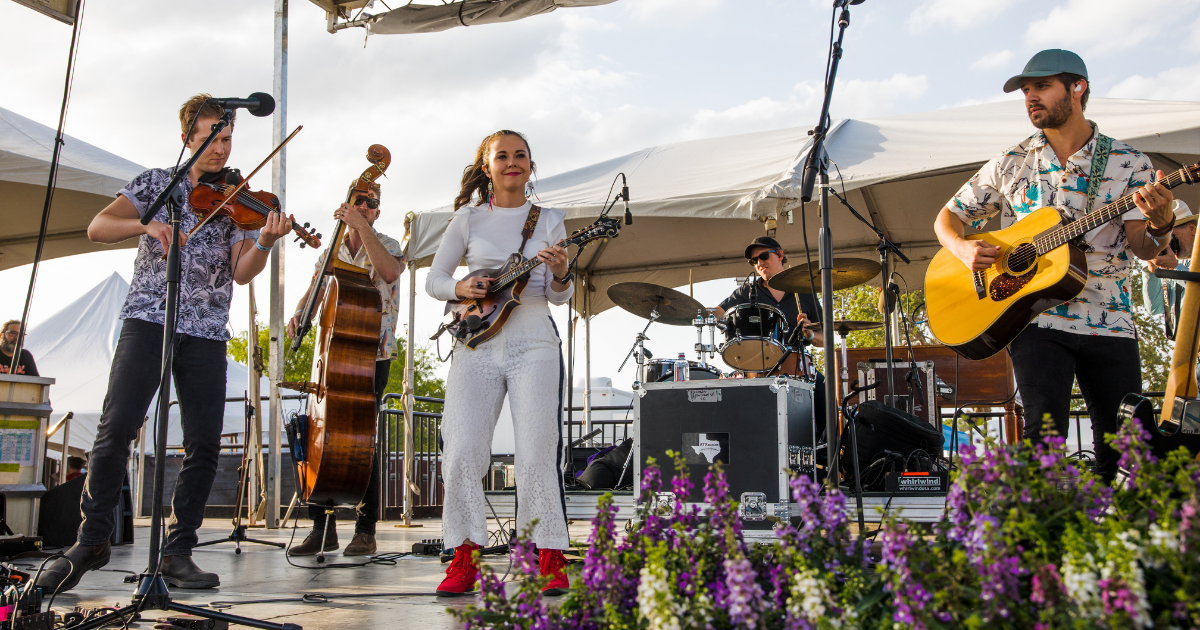
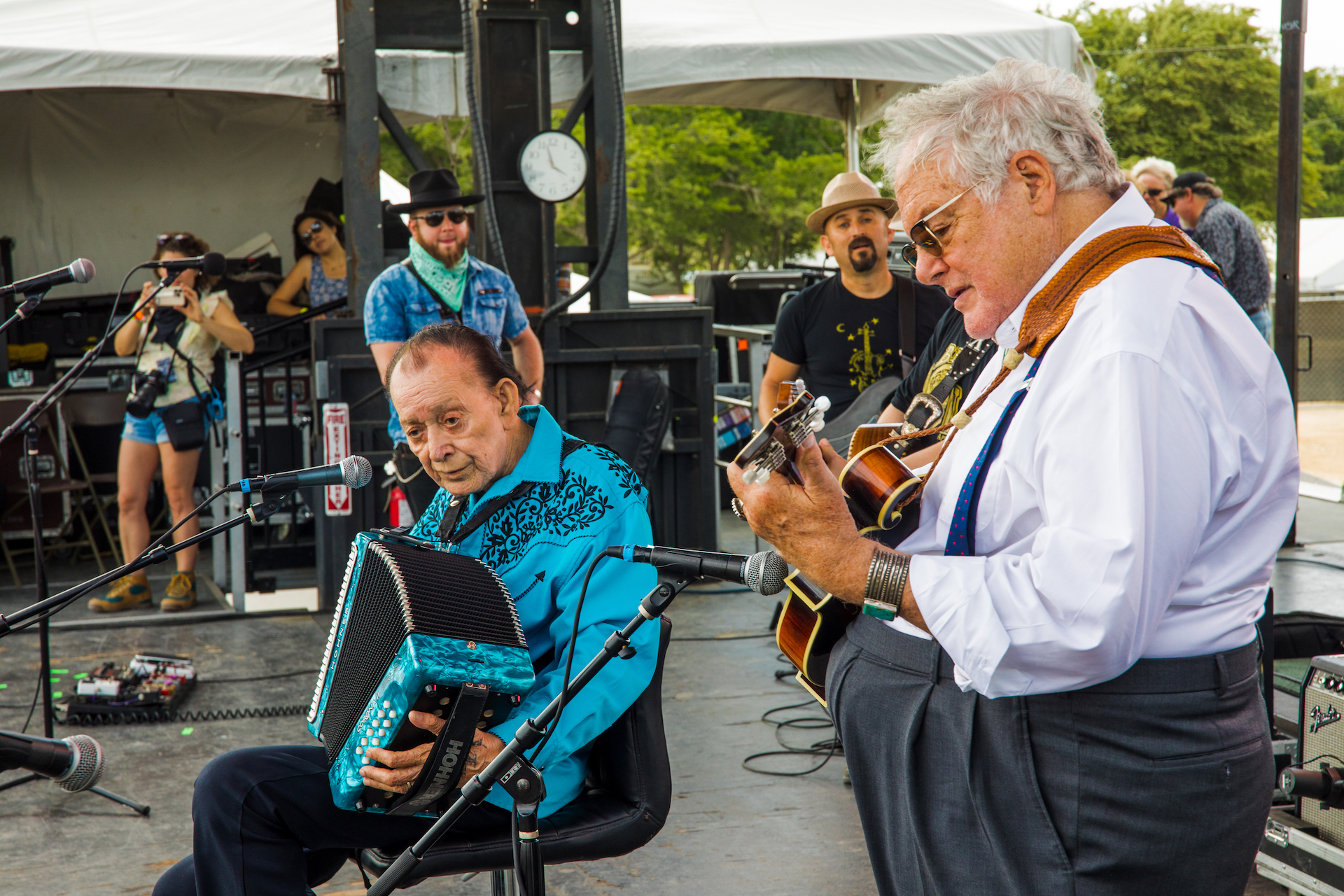
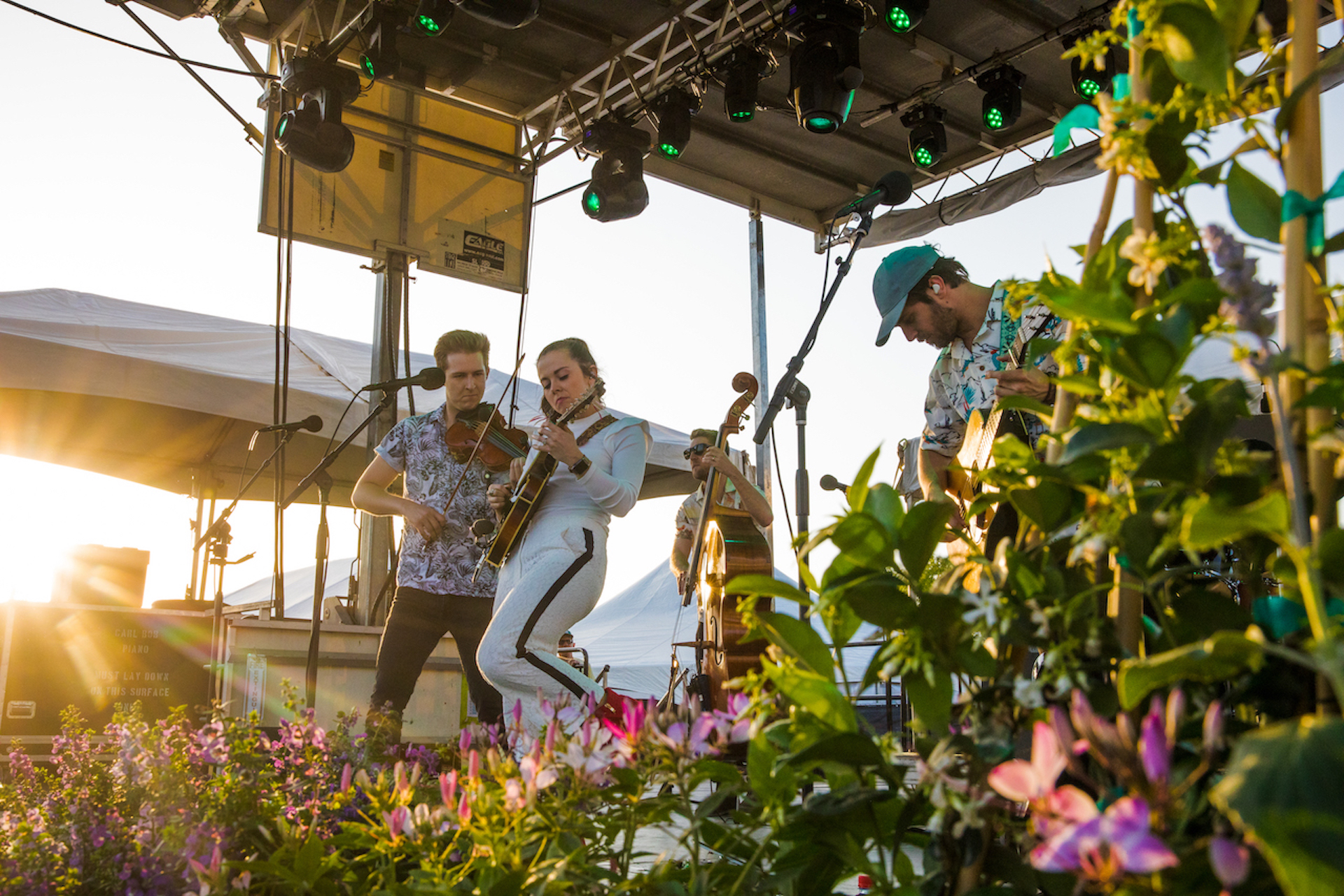
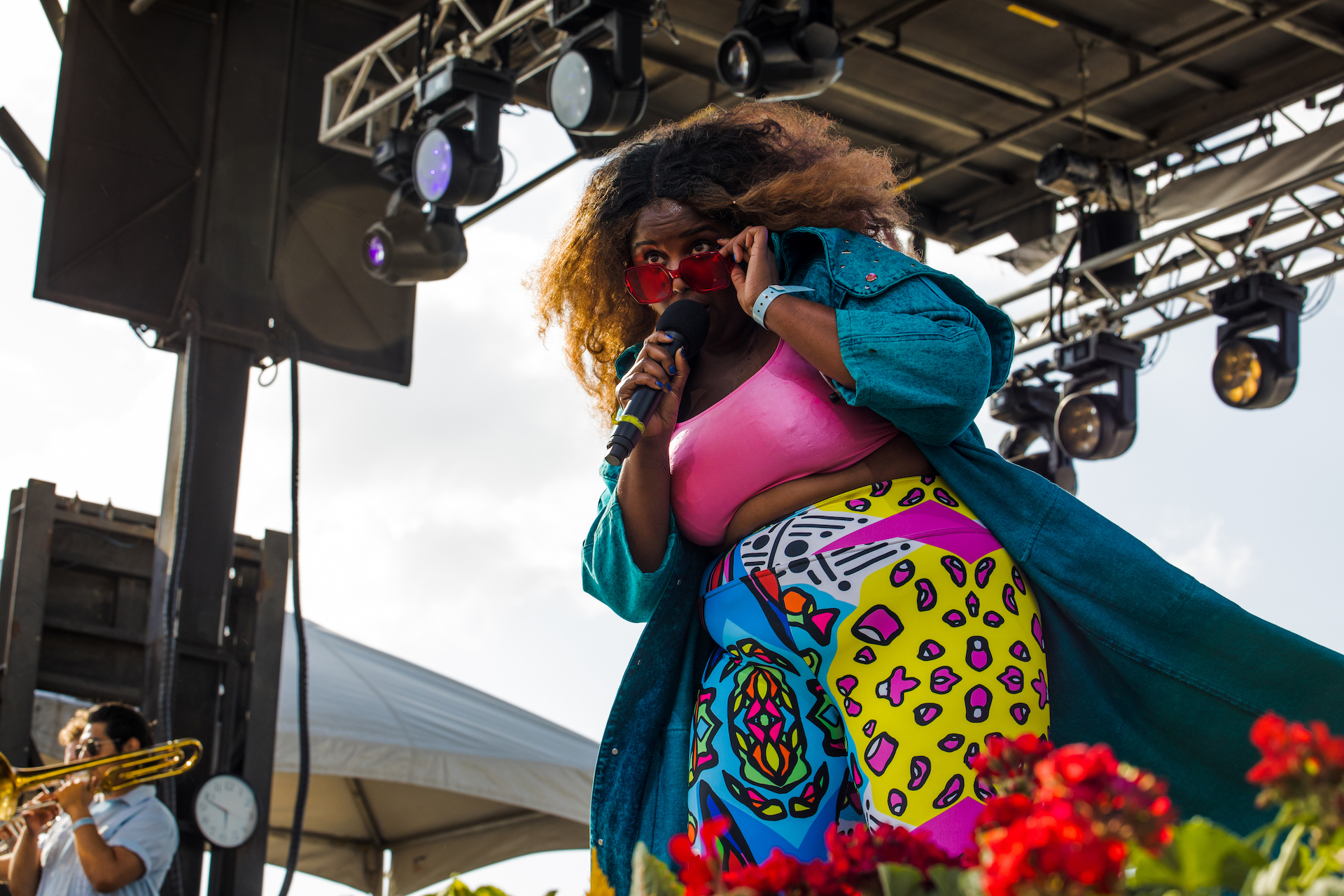
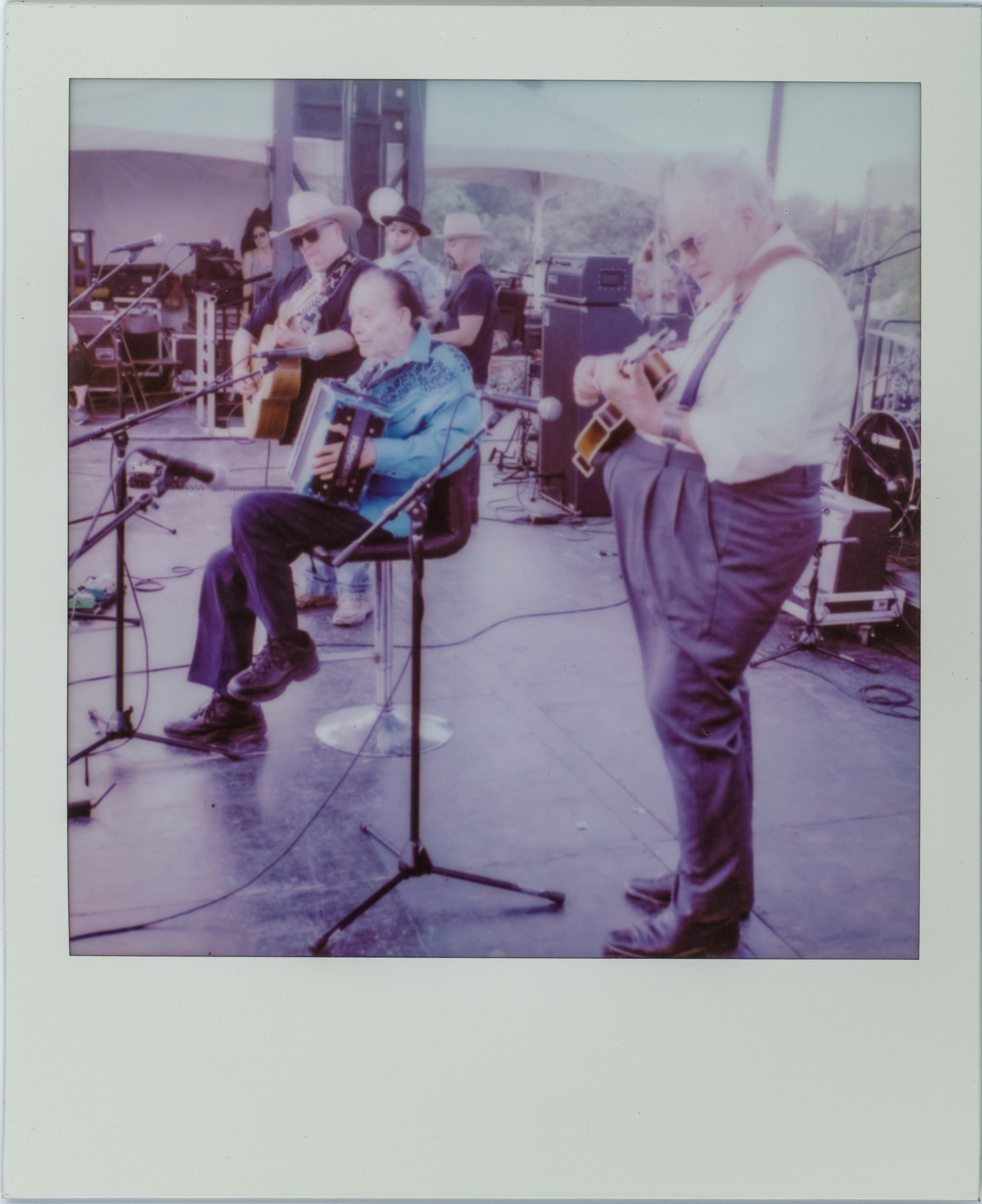
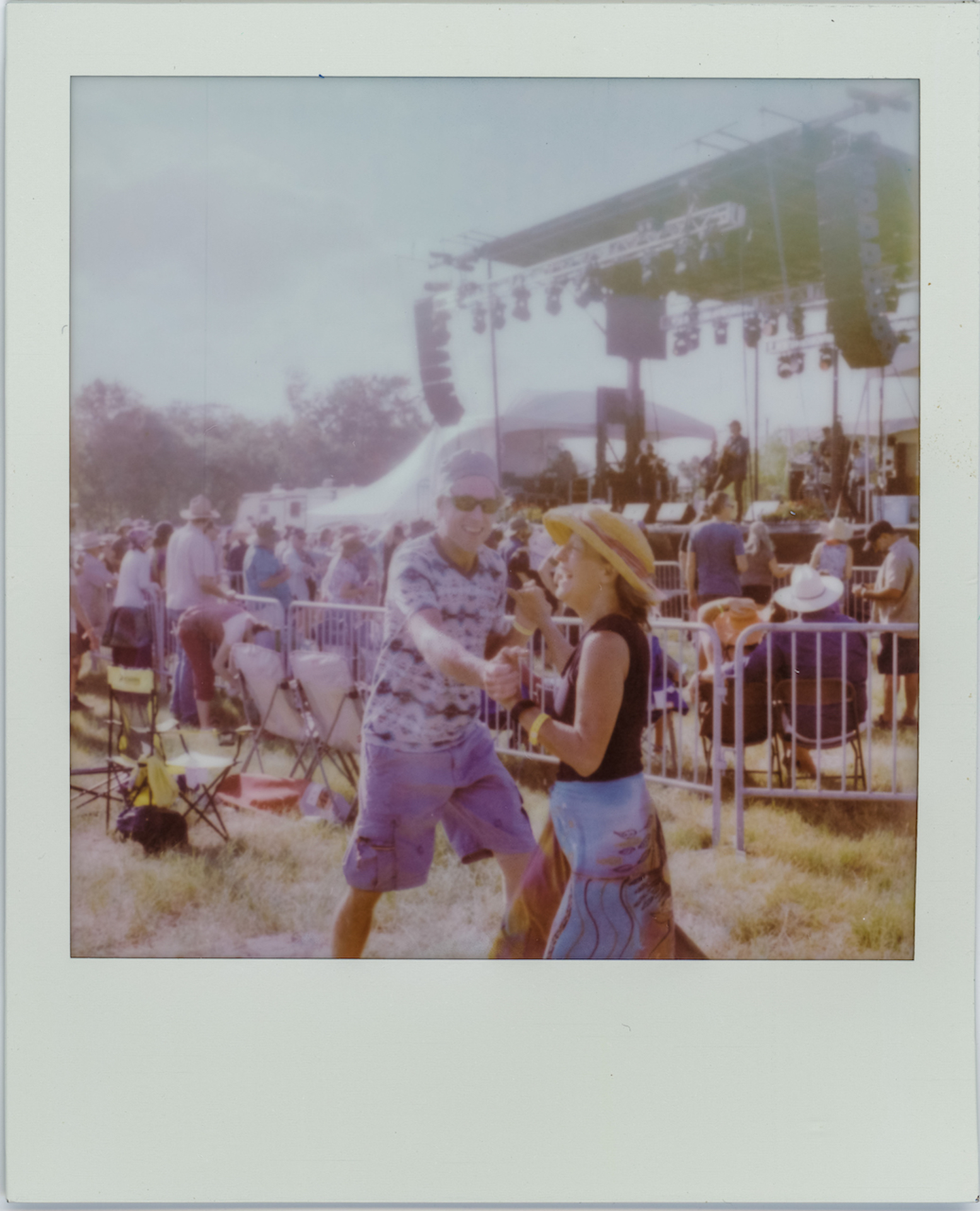
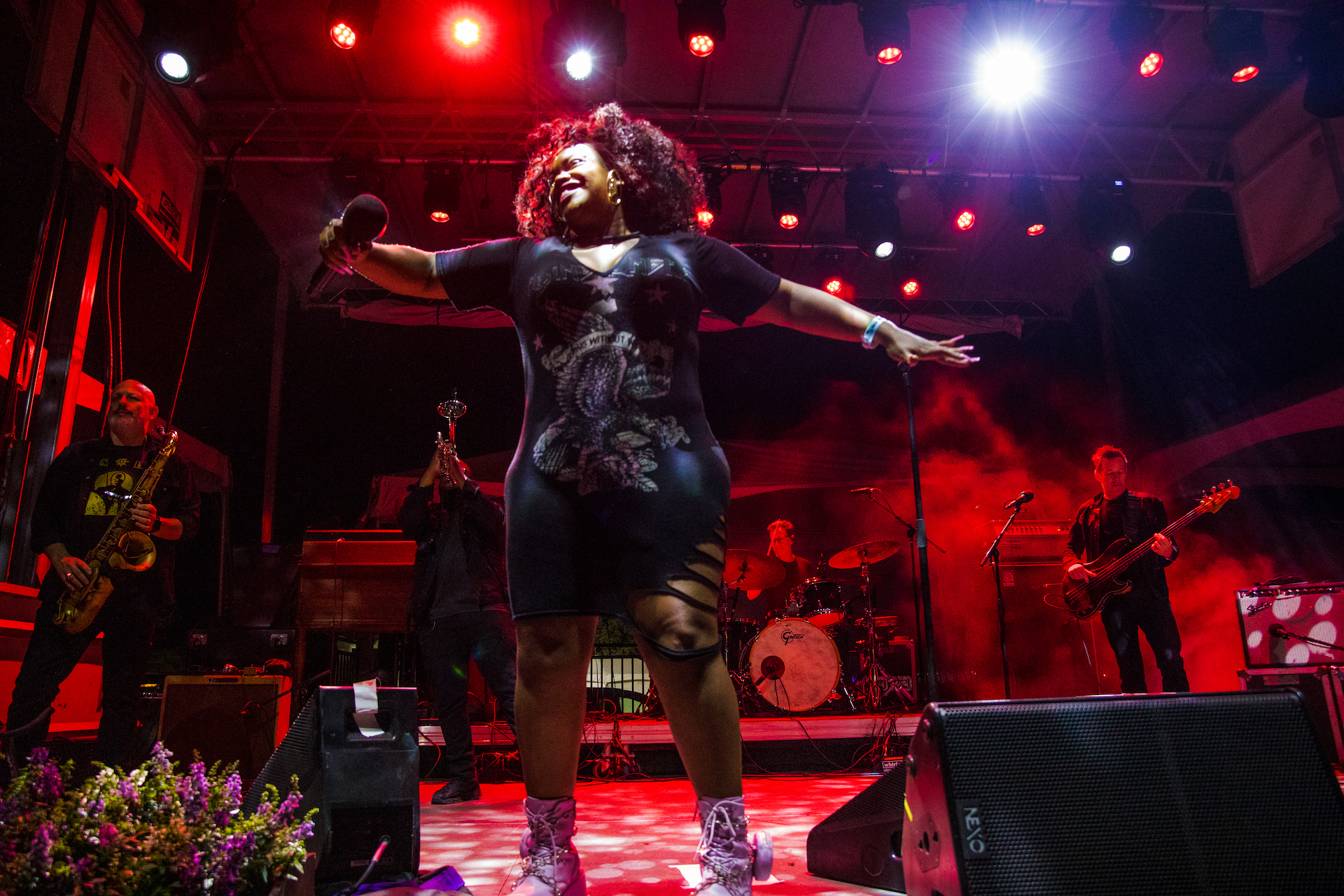
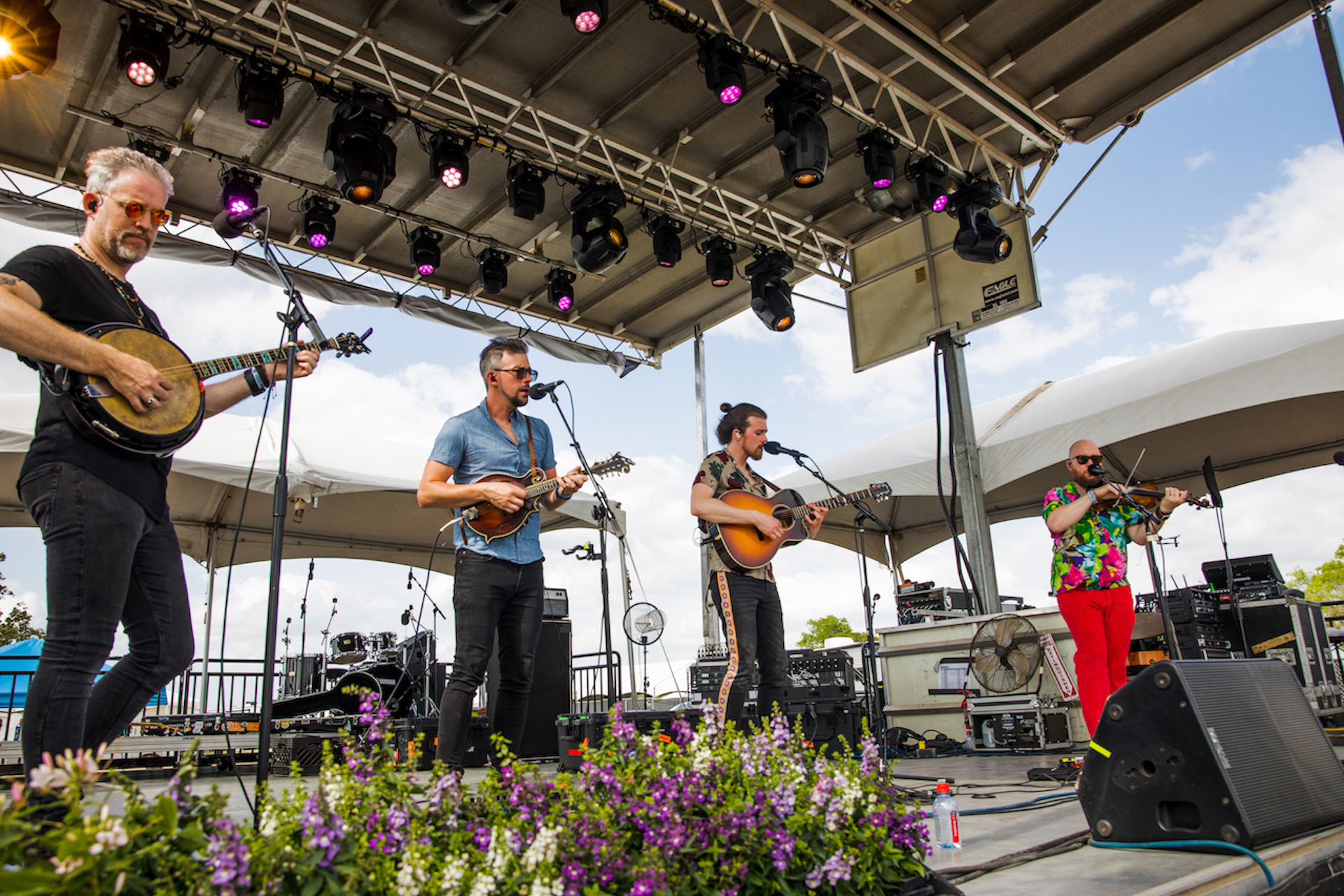
This past weekend in Tilmon, Texas, not too far from Austin, legends, up-and-comers, and local artists alike gathered for the Old Settler’s Music Festival, a celebration of roots music of all stripes that’s been happening since 1987. The Del McCoury Band, Flaco Jimenez, Peter Rowan, and other greats were joined by the likes of Sierra Hull, The Suffers, Brennen Leigh, American Aquarium, and so many others. Take a look at our photo recap below.


All photos by Daniel Jackson

What Del McCoury and Ronnie McCoury Took From Monroe, Flux, and the Dawg

Del McCoury is a legend many times over. A snapshot from any period of his life would be enough to earn him a place in the history books. From his time playing with Bill Monroe in the early ‘60s to fronting his own band with his sons Rob and Ronnie McCoury, Del’s career is a triumph. The Del McCoury Band is the most-awarded band in IBMA history, and Del has been honored with a Grammy Award, induction into the Bluegrass Hall of Fame, and a lifetime achievement award from the National Endowment for the Arts.

Since moving to Nashville in the early ’90s, The Del McCoury Band has recorded more albums than they can remember. (Literally. I asked them and they couldn’t remember. It approaches near two dozen.) Their latest album, Almost Proud, furthers their musical legacy. In a visit with The Bluegrass Situation, Del McCoury and Ronnie McCoury talk about recording it during the pandemic, digging through a big box of submissions for material, and learning a trick from Jerry Douglas that they still use to this day.

BGS: Del, you’ve fronted a band for many decades and this version with your sons has been around since the ’90s. How has the process of picking the material and arranging it changed over that course of time?

Del: Well, I’ll tell you, we used to do a lot of prep before we went in the studio, years ago when it was just me and the band. But now the boys have their own band and they’re a lot busier now. For the last several records, I just kind of picked the material and I’ll try to find the right key and tempo and all those things. And we won’t even have a rehearsal or anything until we get in the studio. We just mainly do all of the hard work in the studio after we’re in there.

I’ve always been in awe of how this band not only picks great material but also plays it in a way that makes it unique and often an instant bluegrass classic, no matter the original genre. What goes into how you pick material?

Ronnie: I still don’t know what Dad’s going to like. I found “1952 Vincent Black Lightning” through a guy named Dick Bowden. He gave me a tape of it after the band had played a show. It was just Richard Thompson playing solo guitar on a radio show. Dick said he thought it’d be a good song to cover and as soon as I heard it and the fingerstyle guitar I thought, “Wow, this could be good.” Well, I took it to Dad, and he passed on it for the record we were making. But then the next record, he pulled it out and said, “You know, I’ve been listening and I think that would make a pretty good song.” So, like I said, I don’t know what’s going to hit him and when it will.

But with my dad, it doesn’t matter what he plays or sings. Number one, it’s going to have strong guitar rhythm. Number two, it’s going to be his voice. Through the years, I figured he can sing about anything. For example, when he played with the Preservation Hall Jazz Band, everybody was like, “I wonder how this is going to work.” Well, he just opens his mouth and does what he does, and it is what it is, and it’s great! People will pigeonhole others for their style of singing. My dad’s got a high lonesome sound, but it always seems to work.

My dad taught us how to have that feel and the elements of first generation bluegrass. The drive, how to play fast and when you need to, how not to overplay, and how to back up behind a singer, things like that. People don’t always have a teacher that really knows that stuff, so it sometimes doesn’t come easily or at all. We were just lucky to have this guy who was so well-rounded. A great guitar player but a banjo player first and such a good singer. He can sing any part, and he loves to sing bass, too.

Those elements are all very present in this band for sure. The fiddle is a very lyrical instrument to begin with but I’ve always particularly considered Ronnie’s mandolin playing and Rob’s banjo playing to be a really interesting combination of melodic/lyrical and still very traditional sounding.

Del: Yeah, I know what you mean. They don’t strictly depend on melodic notes to do something, but they make their style work around the melody that they’re trying to play. They do that. They try to keep it fairly simple.

It’s very masterful, the subtlety of all of it. I imagine you had a hand in guiding them when they were younger.

Del: I tell you, I never even thought about my sons playing music. I don’t know why I didn’t, but I just didn’t. Maybe it’s because when I was learning to play, I had a lot of cousins. They’d hear me and they’d want to learn to play, and I’d show them something. And then, of course, next week they’d be into baseball or something else. They forgot about music that quick. And I guess I thought they might also lose interest in this music. But they never did. Rob started playing banjo when he’s about 9. Of course, I started playing guitar when I was 9, too. My older brother taught me the chords. But I was not really all that interested in playing until I heard Earl Scruggs. I was about 11 then. And that really switched something up in my brain.

But my boys, they were always around music. Ronnie played violin in school when he was really young, but he also was in Little League and he was their star pitcher. And you know what happened? His violin teacher told me, “He’s really doing good on this.” And I said, “Really?” She said, “Yeah, he learned so fast.” Well, it comes to where there is going to be a recital in school at the same time there’s going to be a big Little League baseball game. And he was supposed to be in both of them. He chose the baseball game. And, oh, his teacher called! She was so disheartened because he was one of her finest students. But he kind of forgot about music just for a little while.

And I took him with me to New York City. I was playing a show and Bill Monroe was one of the acts there. It was during Ronnie’s school vacation between Christmas and New Year’s so I brought him with me. Bill took an interest in Ronnie. He put his hat on him and he put his mandolin in his lap and he said, “Now you play me something on this mandolin.” I didn’t think nothing about it at the time. But when we got back home, Ronnie asked if he could have this old mandolin I carried around on the bus. And once Ronnie got that mandolin, he never laid it down.

Well, now those guys, when they did start learning to play on their own, I could hear them in my spare time—I was pretty busy in those days. And I hear them playing and I could tell they were missing a note here and there and I’d just tell them where to find it and then let them go on their own. I just didn’t bother them much. Boy, they learned fast.

That’s great. I think all of that is a big part of the sound but there’s something about the arrangements that has always made you all stand out, I think.

Ronnie: As far as arranging things, when we got to Nashville and did that first record, Jerry Douglas produced it and one of the first things that we did still sticks with me. I wound up singing “A Deeper Shade of Blue.” Flux is the one that gave us the beginning and end of it, this lick. And I was like, “Oh, wow, we can put a lick on tunes.” I was just so straight-ahead that I had never even thought to do that. I credit Flux with opening my ears to that because he’s so musical.

That is interesting because that kind of thing is usually associated with pop-adjacent music. Your music is so traditional but having those hooks does make the songs stick in your mind.

Ronnie: It probably also comes from listening to all kinds of music. I’m a product of the ‘80s. When I was in school I was hearing all of the rock and newer stuff that was being played on the radio. I never gravitated to it as much as I probably did to Southern rock. We loved the twin guitars of the Allman Brothers. What’s interesting is that those guys were listening to this stuff. Dickey Betts was a bluegrass fan and I remember he and Vassar had a duet thing. They used to play together in Florida.

That makes sense. There’s a full-circle element there as well. The Allman Brothers are sort of the prototypical jam band and now you guys are playing shows with Greensky, The String Cheese Incident, Railroad Earth, etc.

Ronnie: You’re right about that. Part of the reason we got into that world we’re in is that there’s already a Del McCoury Band, and we wanted to do something different, but we couldn’t call it the “Del-less McCoury Band.” So we had to do something that was different sounding. When I grew up I had no idea that mandolin players were doing anything but what Bill Monroe did. I was around 15 years old when the Dawg came out with that first record, the David Grisman Quintet album with Tony Rice on it.

The arrangements and playing on there were really influential and all that stuff squeaks into your music. You’re a product of what you hear, I guess. Those guys changed so much. There’s the guys that don’t get credit on the banjo like Bobby Thompson and then the next guy was Bill Keith. From Bill Keith comes [Tony] Trischka and Béla [Fleck], and it just moves on. But the Dawg, man, he was kind of the first one to take the Monroe and Wakefield stuff and stir it up like that. I’m a big proponent for him to be in the Hall of Fame.

The ensemble abilities of this group are some of the best in the business. Having so much family in the band lends itself to that, but Jason Carter and now Alan Bartram have been in the band so long I imagine that you all can anticipate what each other will do next.

Del: That’s true. It makes it easier, because I think we all kind of think alike and are satisfied in what we’re doing. And I’ll tell you something, I think it helps keep them interested. Like on live shows, we never have a set list, and they never know what’s coming next. When we get on stage, we just go up there and do a few tunes. I like to introduce each member of the band. I’ll let them tune or choose a song to sing after I get the four of them introduced. Then a lot of times we just start doing requests from the audience, and all through the set, we’ll try to work in things that we just recorded or had released, whatever. But for the most part, we’re doing requests from the audience. They know that when they go up on stage, they don’t know what’s happening next, and I don’t either, but that’s kind of the fun of it.

You are a link to those older traditions, and those were a lot more about performing than making records and stuff. It seems to me that performing and being an entertainer is what’s important to you.

Del: You know, I think it probably is because that’s what you do most. You’re never in a studio that long but before the pandemic we’d be out every week doing a show. I like talking to the audience. I think they entertain me more than I entertain them. For example, I ask them questions, like, “What would you like to hear next?” And what entertains me is they’ll request a song, but they get one word wrong or two in the title of the song.

For instance, we get a lot of requests for “1952 Vincent Black Lightning,” and what people have problems with is the year. So, I say back to them, “Well, I don’t know that song.” And then it gets real quiet and they’ll think, “Well, I know he knows that song because he’s got it on a record.” I let them wonder for a little bit before I’ll say, “Well, now, look, I know a song entitled ‘1952 Vincent Black Lightning,’” and then they’re relieved and I’ll play it for them. But just little things like that. They’re so funny. People are funny if you listen to them. They will entertain you.

You guys have put out so many records. Is there anything that makes this one stand out or feel special to you?

Ronnie: Well, probably the fact that during a pandemic, my dad worked and he sat down and listened to like 150 songs or something. He didn’t just rest on his laurels. We got him a tape recorder, a nicer one, that he could record his ideas on because he felt more comfortable working with a tape machine.

Del: All through the years, people have sent or given me songs while we were on the road. A lot of the time, I just throw them in a box and say, “Well, when I get time, I’ll listen to them, see what they are.” So, when this pandemic hit that spring, I thought, “Wow, I’ll get all those things out and listen to them.” And then I picked out certain songs and I started to work on them.

Ronnie: During this time, we’re wearing masks and sitting outside doing our radio show six feet apart and not going in the house. Everybody’s worried about my parents so we were careful. But he worked on this stuff and he wrote some songs. So, what’s special to me are just good memories, really. Just being able to be in a studio with Dad in the middle of a pandemic and getting it done and not having so much wasted time. … The hardest thing through the pandemic for me to see, besides the tragedies where people lost their lives to this stuff, was seeing my dad in his golden years, not being able to do what he wanted to do, which is to travel and play for the people. He knocks us all out with how he can play and sing at this age.

Yeah, it’s pretty amazing.

Ronnie: He knocks me out. I can’t get over it. Like I said, it was amazing to be able to go in and do this record through all this and that his health is still with him. So I’m just proud of that. “Almost Proud,” you could say, ha ha.

“Almost Proud,” there you go.


Photo Credit: Daniel Jackson

BGS Top 50 Moments: Del McCoury Plays Banjo With Sam Bush

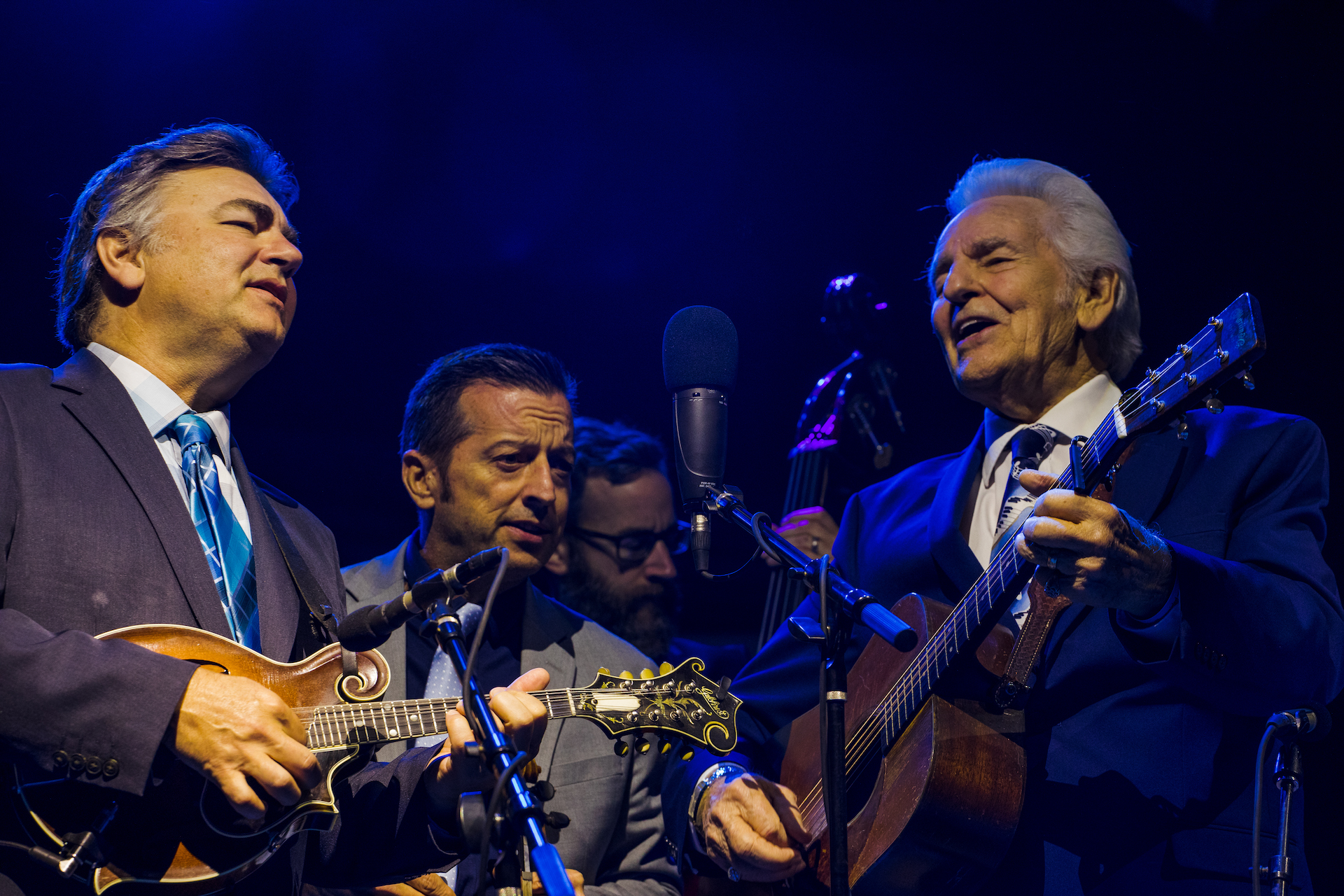
One of the first-ever viral moments on BGS was a special behind-the-scenes Soundcheck video featuring Sam Bush and Del McCoury from their 2012 duo tour, “Sam and Del.” In it, the two legends prepare for the first night on the road at the Birchmere in Alexandria, Virginia, warming up both their instruments and their familial-like banter on stage:

“Friends, he got up out of the bunk this morning and his hair was perfect,” says Sam. “I don’t know how he does it.”

“Well I’ll tell you what, I laid it on the shelf overnight and just put it back on the next morning!” retorts Del, quick as a whip.

But somewhere around the 2:45 mark, magic happens. For the first time in nearly fifty years, Del prepared to play five-string banjo on stage. It was a moment that few had witnessed prior (even Sam), much less known he was capable of. Turns out, the Bluegrass Music Hall of Famer actually started his career in Bill Monroe’s band as the banjo player before being shuffled to guitar and backing vocals, his unmistakable high lonesome tone becoming his calling card.

“It’s just a love fest?” says Sam Bush of their time together on stage.

Same for us, Sam. Same for us.

Video credit: Natalie Fava of Wonderscope.

LISTEN: The Del McCoury Band, “Honky Tonk Nights” (Featuring Vince Gill)

Artist: The Del McCoury Band
Hometown: Nashville, Tennessee
Song: “Honky Tonk Nights” (Featuring Vince Gill)
Album: Almost Proud
Release Date: February 18, 2022
Label: McCoury Music

In Their Words: “I love singing with Vince. We’ve done a lot through the years but this is the first time I’ve found the perfect song to have him on my album. I am thrilled with how this song turned out and grateful to Vince for his friendship and his love and support of bluegrass.” — Del McCoury


Photo Credit: Señor McGuire