LISTEN: ‘Once Upon a River’ Soundtrack

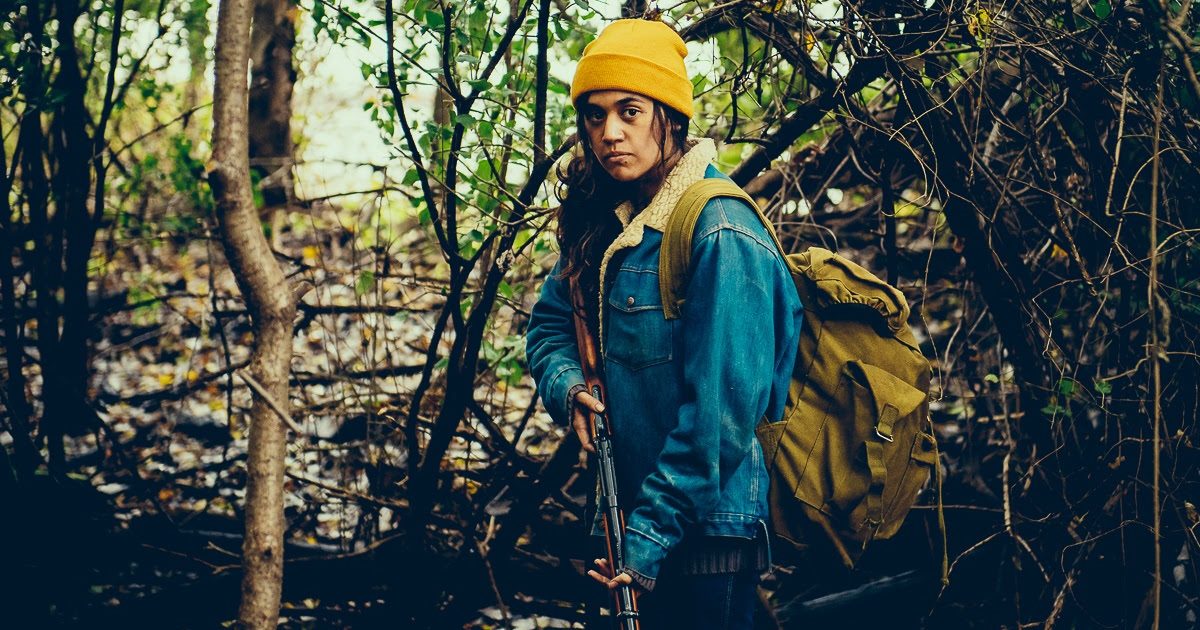
Written and directed by Haroula Rose and based upon a best-selling novel by Bonnie Jo Campbell, the award-winning indie film Once Upon a River tells the story of Margo Crane, a Native American teenager who sets out to find her mother as her own life takes one dramatic turn after another. Margo is portrayed by Kenadi DelaCerna, in her screen debut.

Shot to evoke rural Michigan in the 1970s, the mood of Once Upon a River is frequently elevated by original music from Rodney Crowell, JD Souther, Will Oldham, Bridget St. John, Fran Farley, Peter Bradley Adams, and Haroula Rose, as well as an atmospheric score by Zac Rae. Hear the soundtrack below, and enjoy an exclusive interview with Haroula Rose.

BGS: This story is set in 1977. How did that influence the music you chose for the movie?

Rose: Having it set in the 1970s made me excited about being able to use my favorite era in both music and cinema as inspiration. It was one of the reasons I loved the source material for this very unique kind of road movie, because I knew at once that I could use some psych folk, soul, country and ambient sounds to get into this tale and characters. My film partner at Thirty Tigers (David Macias) was literally the first person onboard for this project, while composer (Zac Rae) and music supervisor (Mike Turner) were also among the first people creatively involved once I had the shooting script. As a musician first, I am always thinking about it as a central element even as I am writing, and the music is deeply embedded into the process from the beginning. I used certain themes Zac had created to play for the actors while we were on set and they were very moved by hearing them.

There are moments of quiet in this movie, too. It reminds me of the adage that a good musician knows when to play a solo, as well as when not to. Can you tell me about your process for placing the music into the film without distracting from the storyline?

I love that analogy! I feel that silence can be as potent as noise, and the pauses in the film all have a voice and are communicating something as well. Margo is not the most traditionally vocal character but is so expressive, thus the music had to parallel that… such that we are still able to feel her subjective experience through the pregnant moments of quiet as much as the action scenes. Ultimately it was about continually paring the story down, sculpting it to its very essence, and the music supported that goal since we were always allowing it to evolve and not give too much away too soon. There was this balance we had to strike with regard to supporting the story and not giving away the emotions before their time. I’m really happy to hear you say it worked!

The placement for Will Oldham’s “Always Bound” works especially well in this film. Can you describe why you felt that scene and that particular recording synched up so well?

Will was the first person to write an original song for the film upon reading the script, and it was this magical piece. In fact “Always Bound” was what I used for our very first scene we shot of the film, which was Margo by the fire when she is eating canned food and camping. I brought these bluetooth speakers out to the woods and played it as we filmed, so we all dropped into this same emotional zone. It was a special moment, having Will as a creative force of support right then at the start. So I already knew which space it would inhabit in the film right when I heard it.

As you were writing dialogue, were there any characters whose perspective, or “voice,” that you particularly enjoyed?

Writing Smoke and Fishbone’s dialogue and banter was super fun, because like so many other parts of this story that inspire me, it is a unique relationship. I loved it in the book too. In terms of perspective/voice, writing Luanne because she is someone who is very complicated and all too easy to depict in a one-dimensional way, was a cool process. I really liked trying to find a way into her that is more complex and nuanced, more empathetic in seeing and understanding her pain, as she struggles to communicate and to exist in the world.

There’s a Rodney Crowell song here, too, and it’s filled with imagery. How did that song, “The Damage,” make its way into the film? And what do you remember about hearing that song for the first time?

Well, Rodney was one of the people considered for acting in the role of Smoke! David Macias reached out and then Rodney and I had a conversation about it. It was surreal because I have long been a Rodney fan. Hearing him play years ago at the Old Town School of Folk literally changed the stream of my life. When he found out he couldn’t do the role, Rodney kindly offered up the idea of a song. I was tremendously honored and then upon hearing it, with its visceral imagery and his manner in singing it, I got very emotional.

He got to the heart of two lonely but loving souls we don’t often see, and their connection. And then recording it — I sang harmonies with him — was so special in many ways. It was similar with JD Souther who wrote a song that Smoke (John Ashton) sings in one of his final scenes. It feels like a dream how this all came together, very fulfilling in terms of making music and making films. I co-wrote a song with Peter Bradley Adams and Zac Rae for the soundtrack as well, that plays in the final scene; that song always gets me emotional too.

To me, cultural identity seems to be a significant theme in this film — in a sense of racial identity, but also privilege. Was that element of diversity part of what attracted you to adapting this film?

Definitely. Bonnie’s novel alludes to Margo’s bloodline, and I thought it would be a great opportunity to showcase talent that would also add a dimension of depth to what the story is saying about “otherness” in her character as well as others, like her father (Tatanka Means) and Will (Ajuawak Kapashesit), who she meets along the way. It’s also part of her journey in coming to know herself and who she will be, that she knows where she came from. Will is the first person who asks her about her own potential, and hence why she makes the choice she does towards the end (no spoilers). In terms of privilege, I think it’s also depicted in terms of the Murrays and how they have interacted with and abused the land and the community, but I hope it’s conveyed that Margo is also someone with skills and talents that she learned from her father, which are a great gift. She has the depth and the comfort in being in the wild, knowing how to survive.

This film will be finding its way to even more viewers in the months ahead. Watching it now, more than a year after you completed it, what are some of the emotions you feel?

I still feel very inspired and emotional, especially at the ending. I also feel beyond proud of every single person involved and their hard work. It’s hard making an independent film and it’s my job to bring out the best in everyone. I hope the world out there sees that as they experience the film, the story, the music. A year after it premiered, 40 festivals and 19 awards later and many years after first reading the book, well it has been a wild and ambitious ride all to support a story that I truly believe we could see more of — seeing one another with compassion, empathy… Margo’s nonjudgmental and generous philosophy of live and let live… even or especially for those who cause you pain. It helps you find your own way.


Once Upon a River is available to watch via Film Movement. You can listen to the soundtrack on all streaming platforms.
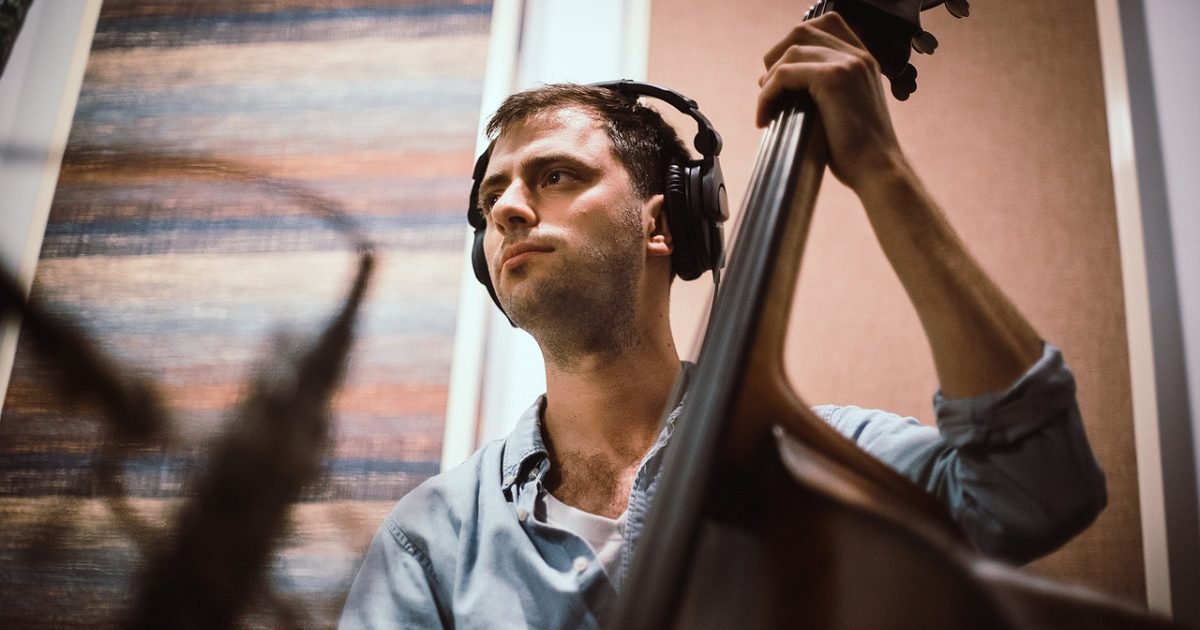

MIXTAPE: Jeff Picker’s Low End Rumblings on the Bass in Bluegrass

Maybe I’m biased*, but I’ve always felt that the bass is the most important instrument in the bluegrass band. It might not immediately draw your ear, but a bassist’s interpretation of the groove and harmony of a song holds substantial power over how the song is ultimately felt by the listener. Without a great bassist, a band full of shredders can sound anemic and sad; a heartfelt lyric can seem tedious and derivative. But add some tasty low end, and the same band will soar; the lyric will swell with passion! (Attention sound engineers: simply cranking the subs won’t cut it.) As such, the bassist’s importance in a bluegrass band is considerable.

Even so, great bassists are rarely given their due, unless they also happen to be virtuosic melodic players. Well, that ends today! Here are some examples of masterful low end artistry from some of my favorite denizens of the doghouse. Please excuse the shameless inclusion of one of my own tracks, because, well… I have an album to promote. Enjoy! — Jeff Picker

*I’m definitely biased.

Tony Rice – “Shadows” (Mark Schatz, bass)

Mark is one of my favorite bluegrass bassists. His tone is huge and clear, and his bass lines are subtly creative. On this track, listen to the fluid transitions back and forth between standard bluegrass time and a more open feel. Also note his slick fills and voice leading throughout.

Nashville Bluegrass Band – “Happy on the Mississippi Shores” (Gene Libbea, bass)

If aliens came to earth, demanded to know what bluegrass bass sounded like, and stipulated that I had only one song with which to demonstrate it, I’d play this. Gene Libbea’s feel is perfect; his note choices are just varied enough to add a bit of intrigue to the basic harmony of the song, while never sacrificing the pendulum effect that drives the bluegrass bus. The occasional unison fill with the banjo adds to the fun.

Ralph Stanley and the Clinch Mountain Boys – “Loving You Too Well” (Jack Cooke, bass)

I love this approach to the bluegrass waltz. Jack Cooke’s playing here is busier than what you might hear from many bluegrass bassists these days, and there’s a certain playful and casual quality to it, which I find refreshing. He bounces around between octaves, and between full walking lines and half-notes. Old-school, “open air” bass playing.

Matt Flinner – “Nowthen” (Todd Phillips, bass)

This song may sound slow and simple, but make no mistake: to groove like this, at this tempo, in this exposed instrumentation, is HARD. Todd Phillips demonstrates his mastery here: clear tone, impressive intonation, and intentional, direct timing. I also love how softly Todd plays — at times, he seems to barely touch the bass. To me, that conveys maturity and experience.

Patty Loveless – “Daniel Prayed” (Clarence “Tater” Tate, bass)

I had fun studying the bass playing on this track when I got to perform it with Patty and Ricky Skaggs a few years back. Clarence “Tater” Tate played both bass and fiddle for Bill Monroe’s Blue Grass Boys over the years, and had about as much pedigree in bluegrass as can be achieved. I dig the playing here, because it feels like an old-school, 1950s approach (bouncy, busy, slightly loose bass playing), but with contemporary recording quality. If you focus on the bass, you can tell how much fun he’s having with the slightly crooked form and joyous lyric — it sounds like a musical smile.

Anaïs Mitchell and Jefferson Hamer – “Clyde Waters (Child 216)” (Viktor Krauss, bass)

The first time I heard this song, I didn’t even realize there was bass on it. But I found myself coming back to it, drawn by the story-like quality of the musical arrangement, and I realized that the bass plays a major part in that dynamism. Viktor Krauss displays impeccable taste in his musical choices here. He knows when to play, when not to, when to articulate an additional note, when to sustain. For a player as technically proficient as Viktor, such restraint is impressive. His playing serves the song, first and foremost.

Del McCoury Band – “Learnin’ the Blues” (Mike Bub, bass)

As everybody in Nashville knows, when Mike Bub and his Kay bass show up at a gig, a fat groove is imminent. This track showcases Bub’s rock solid hybrid feel — he bounces between 4/4 walking and half-time, triplet and ghost note fills, and even has a little two-bar break in the middle. This is the type of bass playing that makes it virtually impossible to sound bad (not that Del and the boys needed any help in that department). Bub is also a great guy with a sense of humor and tons of knowledge and stories about Nashville’s music history.

John Hartford – “Howard Hughes’ Blues” (Dave Holland, bass)

Bluegrass as a musical style is pretty specific — there’s room for a wide variety of personal voices, of course, but there are definitely some foundational qualities and vernacular that indicate whether a player is truly versed in the style. On this track, jazz legend Dave Holland sounds like exactly what he is: a jazz musician playing bluegrass. Normally a recipe for disaster, here somehow it works. His tone, feel, note choice, and general approach sound foreign in the style, but they actually mesh with Hartford’s loose and jovial manner quite well. A slightly bizarre but enjoyable approach to bluegrass bass.

Ricky Skaggs – “Walls of Time” (Mark Fain, bass)

I’ve spent a lot of time studying Mark Fain’s playing for my job with Ricky Skaggs, and I’m always finding subtle little musical gems in his bass parts. It’s Mark’s tone, taste, and timing that anchor most of the canonical Kentucky Thunder recordings that we all love. This track showcases his mastery of the bluegrass groove at a slow tempo — listen to the way he spruces up what could be a one-and-five-fest with ghost notes, fills, and syncopation.

Jeff Picker – “Rooster in the Tire Well” (Jeff Picker, bass)

When I was making my new record, With the Bass in Mind, one of my musical goals was to find some space for the bass to shine and for me to use some of the technique I don’t use very often as a sideman. As such, the record has many bass solos. This song has no bass solo, however, since this Mixtape isn’t about bass solos! There are some cool bass lines in it, though (if I do say so myself). I tried to choose my notes carefully, to help anchor the band through the song’s many metric changes.

Robert Plant and Alison Krauss – “Let Your Loss Be Your Lesson” (Dennis Crouch, bass)

This track is not exactly bluegrass, but what an incredibly grooving bass part. Here is a rare example of a time when slap bass was musically appropriate! Dennis is a friend of mine and a great guy and bassist. He plays with gut strings, punchy tone, and undeniably solid time. He’s also the master of throwing in a couple creative measures of voice leading at exactly the right moment in the song. I try to catch Dennis out playing in Nashville whenever I can.

Stan Getz and the Oscar Peterson Trio – “I Want To Be Happy” (Ray Brown, bass)

This is obviously not bluegrass, but no bass-centric mixtape would be complete without tipping the hat to King Ray. His half-time feel throughout the melody is flawless, and just listen to that crushing avalanche of groove beginning around 00:37. Ray is a bluegrasser’s jazz bassist because he plays on top of the beat, and his playing has a relentless forward motion, like the banjo playing of Earl Scruggs. I’ve loved this recording since I was 15 — you won’t find better bass playing anywhere.


Photo credit: Kaitlyn Raitz

LISTEN: Cf Watkins, “White Nights”

Artist: Cf Watkins
Hometown: Westfield, North Carolina (Currently in Nashville, Tennessee)
Song: “White Nights”
Album: Babygirl
Release Date: October 16, 2020
Label: Whatever’s Clever Records

In Their Words: “‘White Nights’ is based off of one of my favorite Dostoevsky short stories. On this album, I was trying to explore shifting the way I write music and, in a sense, share myself. I felt a lot of my music was coming from a place of my own longing, unrequited love, and heartbreak. Though I think all of those topics are worthy of our time and attention, I felt, as a woman especially, it was important for me to explore and show my strength as well. I started by simply shifting the focus from myself, and writing songs about something outside of myself. This was one of the first songs to come from that effort. I am singing from the male perspective, who has unrequitedly fallen in love with the female character. There was something very powerful for me to recontextualize romantic longing — to sing the male voice, and to have it honoring the power and magic of a woman.” — Cf Watkins


Photo credit: Griffin Hart Davis

LISTEN: The Honeygoats, “Hummingbird”

Artist: The Honeygoats
Hometown: Plymouth, Wisconsin
Song: “Hummingbird”
Album: Four Years in Three Days
Release Date: October 16, 2020

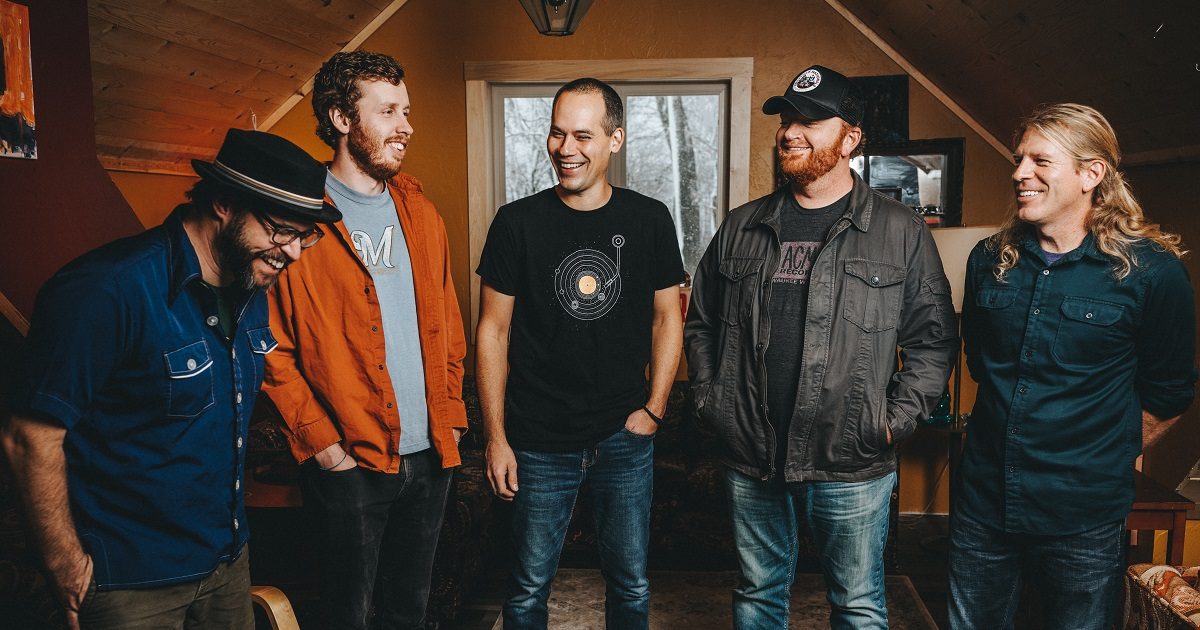
In Their Words: “’Hummingbird’ was written out of a love for songs that get people dancing and singing along to them the first time they hear them, which makes it great opening track for our album. Upbeat, straight to the chorus, no messing around. It almost sounds innocent enough at first listen, but there’s some innuendo in its theme that gives it some edge when you take a closer listen. The idea was sparked simply by watching some hummingbirds as they buzzed around a feeder one morning, and it turned into a song about a certain type of relationship between two people. Old blues musicians mastered the art of using metaphors to sing about edgy themes in their songs, and that was something that we tried to capture with this.” — Jamie Odekirk, The Honeygoats


Photo credit: Flyover Vigilante

LISTEN: Peter Mulvey with SistaStrings, “What Else Was It”

Artist: Peter Mulvey with SistaStrings
Hometown: Milwaukee, Wisconsin
Song: “What Else Was It”
Album: Live at the Cafe Carpe
Release Date: Oct. 9, 2020
Label: Righteous Babe Records

In Their Words: “‘What Else Was It?’ was a gift, a trance, a song that came straight through me in a time of need. I’ve been alternating two different third verses for years now, and we finally got the other one on record. This might be the best we’ve ever played this song, so I guess we won. What else was it we were looking for, anyway?” — Peter Mulvey

Yellow Couch Management · What Else Was It?

Photo credit: Matt Dayak

WATCH: Josh Shilling, “(Go to Hell) 2020”

Artist: Josh Shilling
Hometown: Martinsville, Virginia
Song: “(Go to Hell) 2020”
Release Date: October 9, 2020
Label: Josh Shilling Music

In Their Words: “This song wrote itself. It fell out one morning while waiting for a Skype writing session to start with another songwriter. It felt like a personal and heavy conversation with an old confidant. I was positive this would impact people. Each verse is something I’ve faced personally since spring regarding the pandemic: societal unrest, facing loss and grief, and relationship tension throughout 2020. The chorus provides hope and belief that life will get better and ‘someday soon we’ll be free and this will be in the rear view.’ The song is where I am; it’s where I think we all are right now. No tricks, no big production, this was a live take, three chords and the truth … the truth for everyone, I think.” — Josh Shilling


Photo credit: Sebastian Smith

LISTEN: Bahamas, “Half Your Love”

Artist: Bahamas
Hometown: Living in Halifax, Nova Scotia; from Barrie, Ontario
Song: “Half Your Love”
Album: Sad Hunk
Release Date: October 9, 2020
Label: Brushfire Records

In Their Words: “It’s a love song. Doesn’t the world need another one of those? My first co-write with the massively cool Pat MacLaughlin. Every line in this one feels well-earned and true and like it’s been there for 1000 years. Hope it’s half as good as I think it is.” — Afie Jurvanen


Photo credit: Dave Gillespie

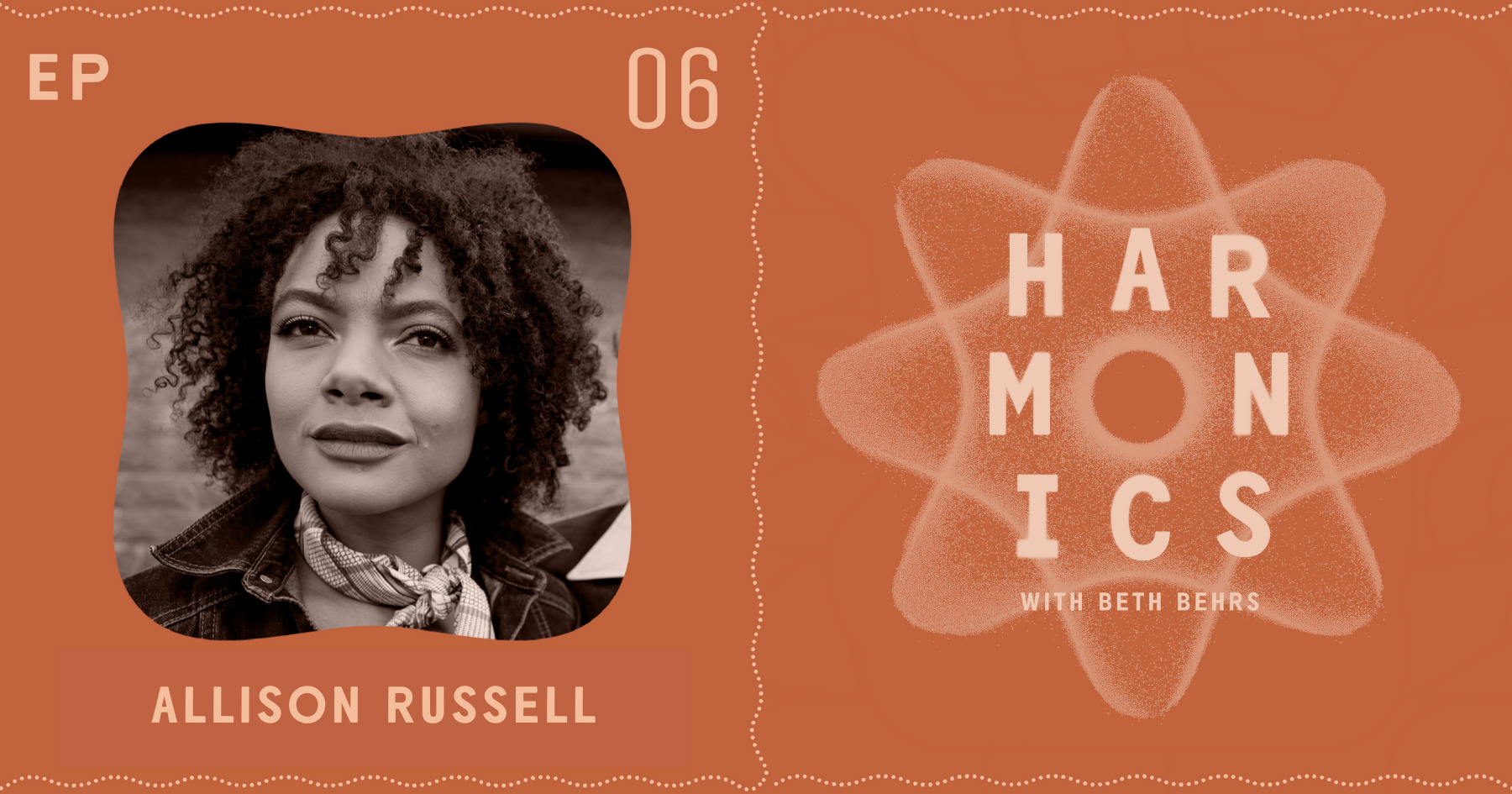
Harmonics with Beth Behrs: Episode 6, Allison Russell

Allison Russell is one half of acclaimed roots music duo Birds of Chicago, with her husband JT Nero, and a member of Americana supergroup Our Native Daughters.

Powered by RedCircle

LISTEN: APPLE • SPOTIFY • STITCHERAMAZON • POCKET CASTS • MP3

Editor’s Note: This episode contains intense and honest descriptions of trauma that may be triggering to some listeners. While there is nothing directly explicit in the content, listener discretion is advised.

Born and raised in Quebec, Allison Russell survived a traumatic childhood, teaching herself various instruments as a way to cope before eventually finding her voice within the Vancouver music scene. On this episode of Harmonics, Russell talks with host Beth Behrs about those traumas, the healing power of music and artistic community, the history of the banjo, the intersectionality of the honest conversations currently being had in our culture, and much, much more.

In addition to her career with Birds of Chicago, Russell is one quarter of Americana supergroup, the Grammy-nominated Our Native Daughters, with Rhiannon Giddens, Amythyst Kiah, and Leyla McCalla, and is preparing to release her first solo album. She and JT Nero live in Nashville with their daughter.

Listen and subscribe to Harmonics through all podcast platforms and follow BGS and Beth Behrs on Instagram for series updates!


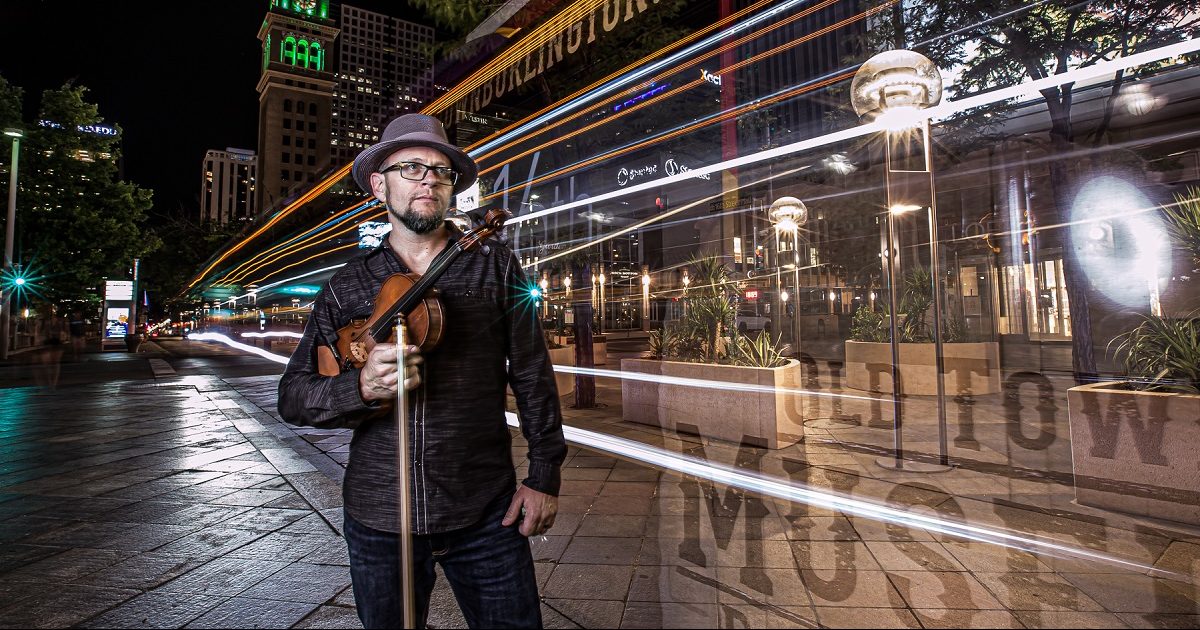
LISTEN: Jeremy Garrett, “The World Keeps Turning Around”

Artist: Jeremy Garrett
Hometown: Loveland, Colorado
Song: “The World Keeps Turning Around”
Release Date: October 9, 2020
Label: Organic Records

In Their Words: “These days it just seems like we are going around in circles with many of the conversations we are having — especially online. Someone has a good idea for good change, and then the barrage of disagreements on how to achieve that fires up. When we look at the big picture though, are we all just beating our heads against a brick wall, so to speak? Never realizing how powerful all of us truly loving one another could be? Maybe that message is too simple and naive, but perhaps we need to break it all down, go back to the basics and realize that we are one country, one world. We can’t ever escape that, and when we learn from each other, we would never want to. So the goal of this song for us was to simply ask that question: are we going to keep heading down a path of division over and over and over again? Or can we ask ourselves what we can do to break this cycle?” — Jeremy Garrett


Photo credit: J.Mimna Photography

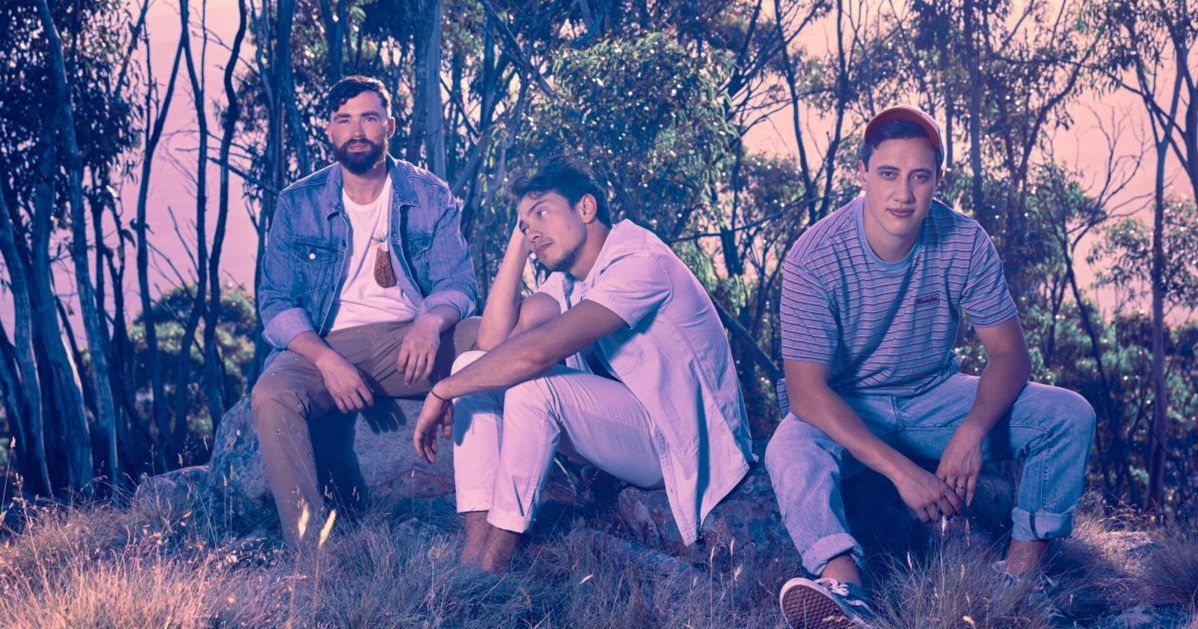
LISTEN: Woodlock, “Normal”

Artist: Woodlock
Hometown: Melbourne, Australia
Song: “Normal”
Album: Collateral EP
Release Date: October 9, 2020
Label: Nettwerk Records

In Their Words: “I wrote ‘Normal’ a few years ago in Adelaide after a friend came to a show, and we were chatting about relationships. I wasn’t married at the time, but I was thinking about taking the next step. My friend opened my eyes on how marriage, after all the glamour, needs serious work, and how he still loved his partner, but it expressed itself differently over the years. I loved the idea of describing a deep love for someone without saying the word ‘love.'” — Eze Walters, Woodlock


Photo credit: Kane Hibbered