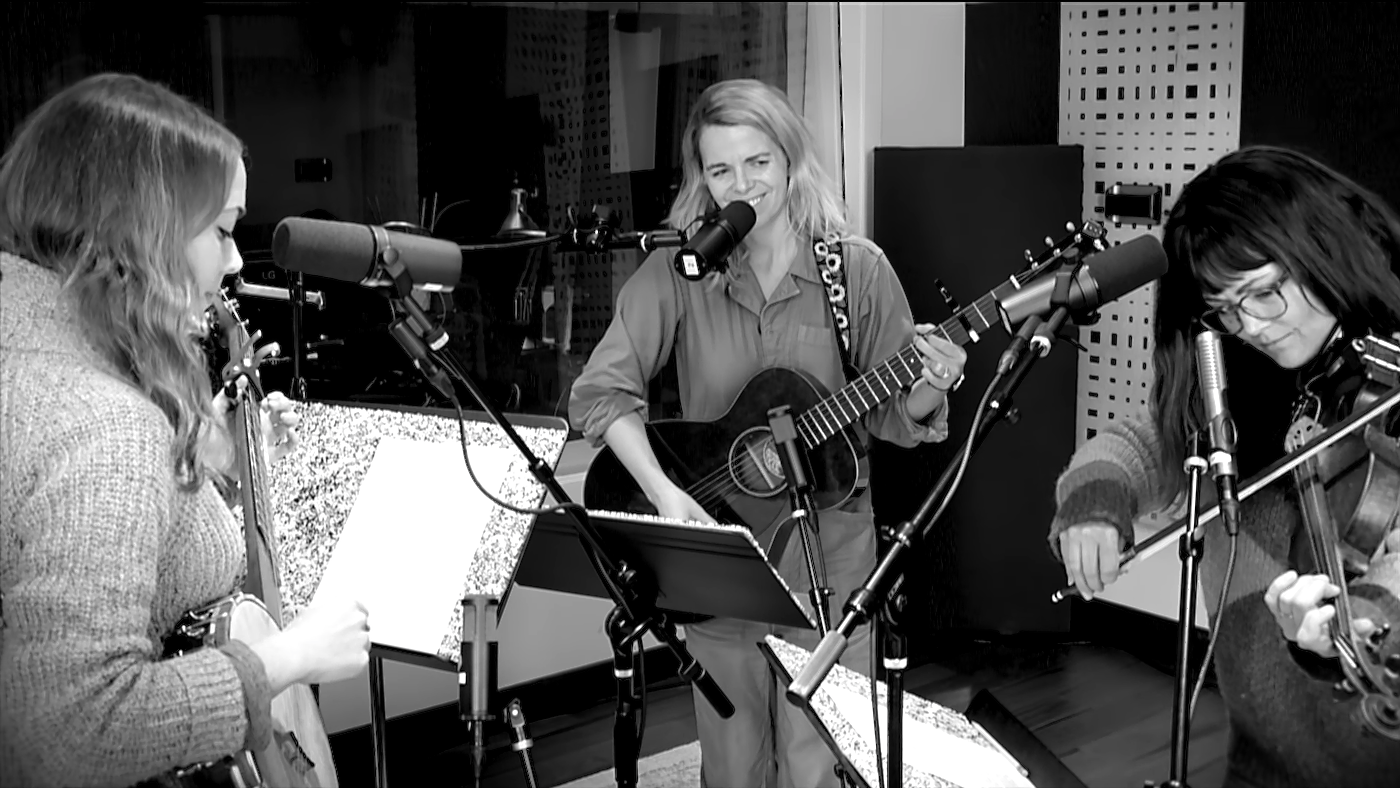
The beautiful voices of I’m With Her paid special tribute to the illustrious icon Dolly Parton in their latest visit to the studio for Live from Here. In an intimate performance, I’m With Her sing “Lover’s Return,” originally a Carter Family song, which Dolly, Emmylou Harris, and Linda Ronstadt revived only a few years before the turn of the century on Trio II. Now as a new decade is settling in, I’m With Her look back and remember, breathing new life into music that inspired so many — including Sarah Jarosz, Aoife O’Donovan, Sara Watkins, and of course, Dolly herself.
Tag: Folk
LISTEN: Watkins Family Hour, “Just Another Reason”
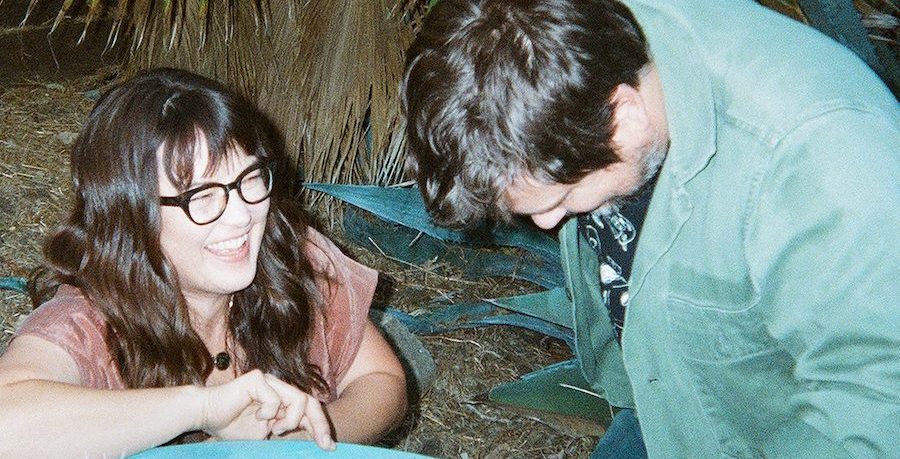
Artist: Watkins Family Hour (Sean Watkins and Sara Watkins)
Hometown: Los Angeles, CA
Song: “Just Another Reason”
Album: brother sister
Release Date: April 10, 2020
Label: Family Hour Records/Thirty Tigers
In Their Words: “It felt really good to dig into the potential of two people… the primary goal of this record became to see what we could do when it is just the two of us. The arrangements and the writing were all focused on that. Listening now, I’m really proud of what we did. These are songs that would not have come out of either one of us individually and it feels like a band sound, like this is what we do, the two of us.” — Sara Watkins
BGS 5+5: Tattletale Saints
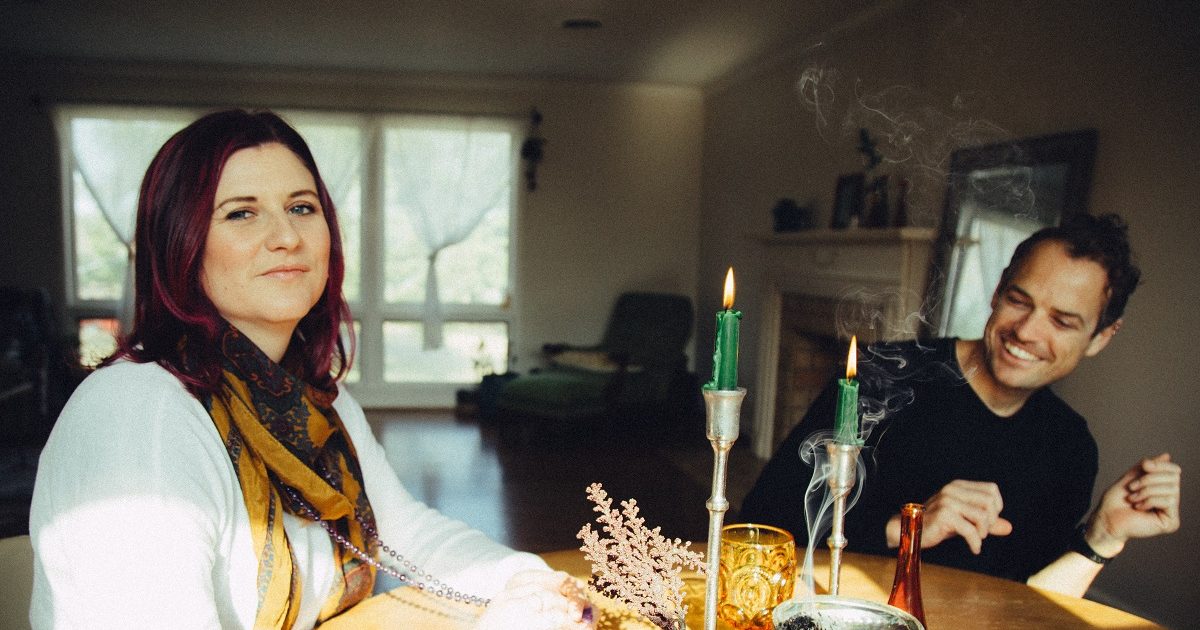
Artist: Tattletale Saints
Hometown: Nashville, Tennessee via Auckland, New Zealand
Latest album: Dancing Under the Dogwoods (January 24, 2020)
Personal nicknames (or rejected band names): Broken Bells (rejected name). Cy is trying to nurture the nickname “Big Daddy C,” but it’s struggling to catch on.
Answers by Cy Winstanley
Which artist has influenced you the most … and how?
It’s no secret, but I love the music and lyrics of Paul Simon. As a jazz kid growing up, his use of varied harmony and its tasteful symbiosis with vivid and often impressionistic, poetic lyrics just blew my mind. His themes too, there are so many dimensions to them — I just get lost in his stories.
What other art forms — literature, film, dance, painting, etc. — inform your music?
I’m an avid reader and like to start my day with non-fiction and close my day with fiction. The more regular I am with that, the more those colors run through my writing. I tend to go through phases with the kind of books too: one of my fav authors is Roberto Bolano; after I read his oeuvre, I cycled through his contemporaries, influences, and other South American authors.
What was the first moment that you knew you wanted to be a musician?
I think as soon as I started playing guitar as a 13-year-old I just loved it so much that I knew it would be a big part of my life. But it wasn’t until later when I developed carpal tunnel in my hands that I had to stop playing guitar, then it was songwriting that became the focus.
What’s the toughest time you ever had writing a song?
Every song feels like the toughest time! It’s very rare that they just ‘fall out’. But perhaps those that are directly about my life are the hardest, because I want to be as faithful to the memory as possible and am constantly fighting with myself over what I want to present.
Which elements of nature do you spend the most time with and how do those impact your work?
Being from New Zealand and also being a long distance runner have given me a pretty strong connection to being outside. When I’m in nature, there is a calmness, and sense of earthly perspective and belonging that pervades my every waking moment.
Photo credit: Natia Cinco
The Show On The Road – Dar Williams
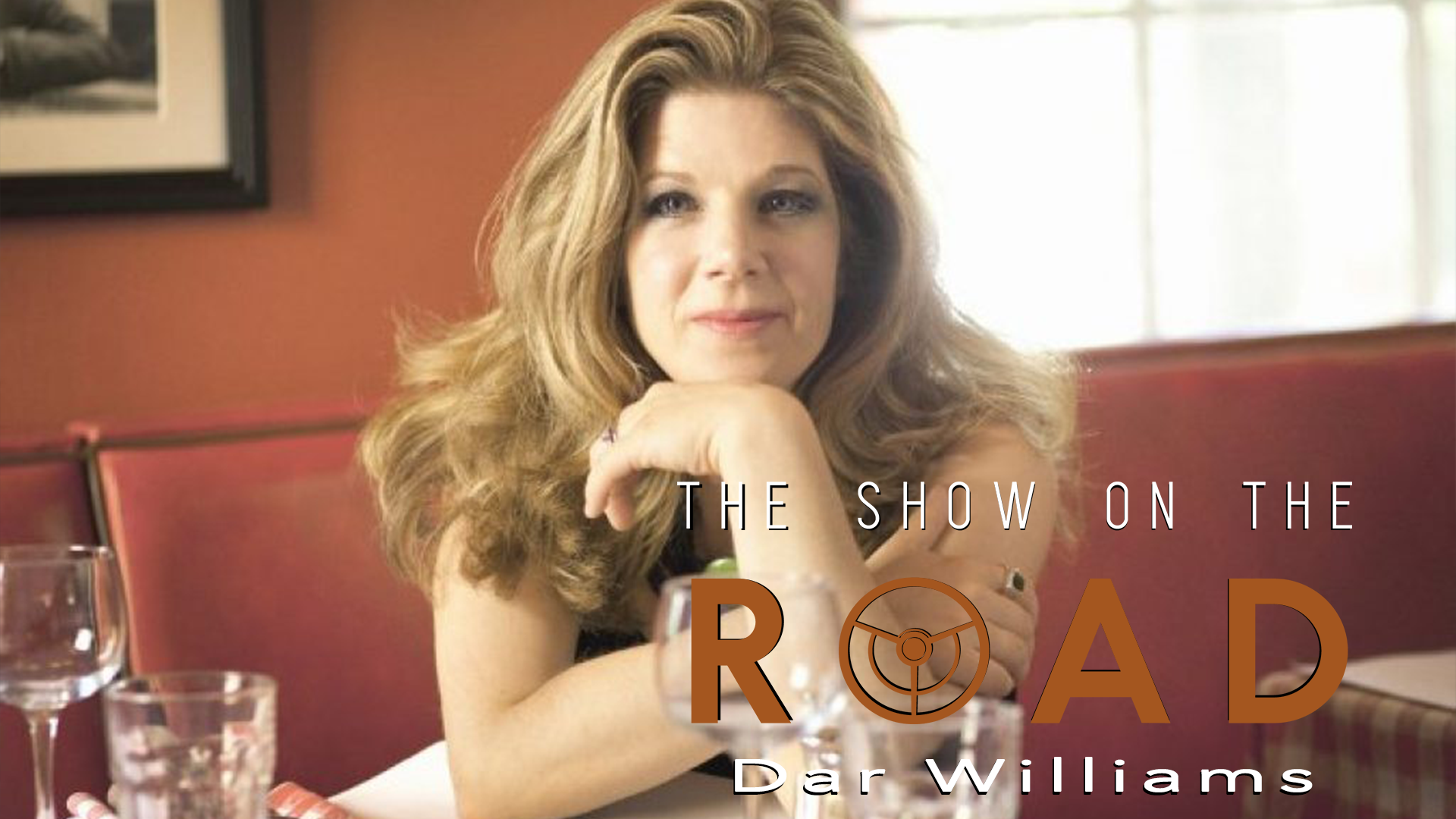
This week, Z. Lupetin’s conversation with revered singing songstress and deeply wise wordsmith, Dar Williams.
LISTEN: APPLE PODCASTS • MP3
Coming out of the Hudson Valley outside New York City, Williams has released over thirteen albums across a quarter century as one of America’s touchstone folk poets, first bursting out of the famed Lilith Fair folk rock scene in the mid 1990s with contemporaries like Ani Difranco and the Indigo Girls and gaining a devoted following. She has toured with luminaries like Joan Baez and Patty Griffin, written a book about what makes communities resilient, she runs her own songwriting retreats, and has inspired generations of women to fearlessly embrace their creativity and exercise their limitless potential. Z. was able to catch up with Williams in the green room at the historic McCabe’s Guitar Shop before her second show of a sold out weekend in Los Angeles. A new album is on the way.
STREAM: Alan Barnosky, ‘Lonesome Road’

Artist: Alan Barnosky
Hometown: Durham, North Carolina
Album: Lonesome Road EP
Release Date: January 17, 2020
In Their Words: “I typically have a less-is-more approach when it comes to writing music. My first record from 2017 definitely reflects that, it was a stripped-down songwriter album with all songs performed solo or as a duo. However, when it came to recording again I felt that six of my songs really worked best in more of a full-band arrangement, so I pulled together some of my musical collaborators and good friends and we recorded this EP to showcase those songs specifically. The focus of this record is still very much on the song, but it also features musical aspects that are harder to achieve as a solo or duo, like instrumental solos, some three-part harmonies, and an instrumental tune that highlights the individual players. Although there are more musicians on this record than my last, it is still very simple in terms of production.
“Since the EP compiles a variety of songs that I felt would work best with a band, not all of these songs are new to me. In fact, one, in particular, is pretty old. I wrote ‘Might Be a Call’ over 10 years ago using my mom’s old Gibson Hummingbird guitar that has long since been sold at a garage sale. I sat on the song knowing that it would only sound right if it was on a full-band recording. Other songs were written within months of recording, including the third track ‘Ain’t It a Shame’ and the instrumental ‘Sawtooth Ridge.’ Though the timeline of these songs spans a wide period of my life, the themes are actually pretty consistent. They carry imagery of weary traveling and a search for something better.” — Alan Barnosky
Photo credit: Mick Schulte
BGS 5+5: Christopher Paul Stelling
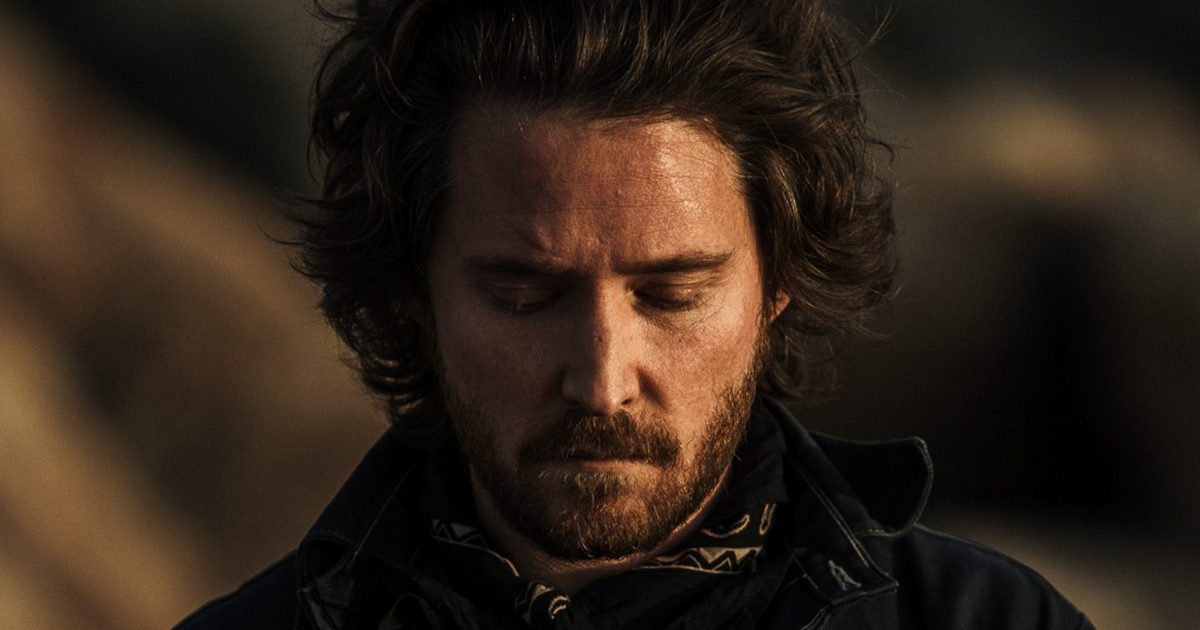
Artist: Christopher Paul Stelling
Hometown: Asheville, North Carolina (lately)
Latest album: Best of Luck (February 7, 2020 on Anti-)
Personal nicknames (or rejected band names): Chris, CP, CPS, CP Stelling, Dude
What’s your favorite memory from being on stage?
Proposing to my partner Julia at the end of my Newport Folk Fest set in 2015, that was wild. So much love at NPFF.
What other art forms — literature, film, dance, painting, etc — inform your music?
I really rely on the other art forms sometimes more than music for my inspiration, so I’m glad you asked… all of the above, really. I try to read as much as possible. I see all creative pursuits as having more in common than not.
What rituals do you have, either in the studio or before a show?
I have rituals when I write. Less so in the studio or before a show, but since writing is what takes me to the studio or the show, I think it’s fair to answer this way… I just make myself available, try to turn off my defenses, try to be honest, and try to listen. It’s a feeling, the process, it’s less methodical than maybe one might expect, but for me I just try to show up, be honest, play my instrument, and sing words improvisationally, and then work those raw materials into something when I find a thread. I’m no expert, but I’m certain that there’s no right or wrong way to write a song.
If you had to write a mission statement for your career, what would it be?
Keep going. I’ve kept going. I just gotta keep going. It’s not always easy. Sometimes it gets really difficult. Sometimes it’s the most natural thing in all the world. I’m so lucky to even be able to make a living at this — that I owe it to my luck to keep it up.
How often do you hide behind a character in a song or use “you” when it’s actually “me”?
Typically not characters (with names) per se, but “you” and “me” are almost always interchangeable. I try my best not to hide in songs. I try to find the similarities in things… friends/enemy, good/bad, ugly/beautiful, maybe I’m at odds with duality and concerned with mending differences — I hadn’t really considered that before. Thanks for asking.
Photo credit: Chris Phelps
Barbaro Brighten the Midwest Bluegrass Scene
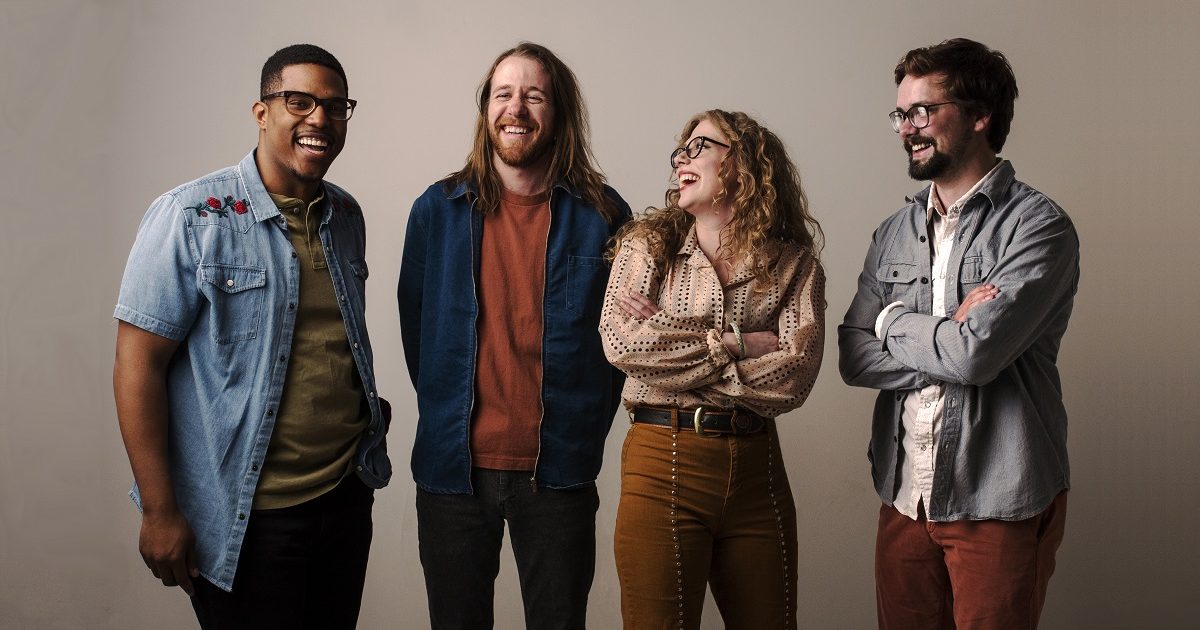
Barbaro’s first full-length studio album, Dressed in Roses, stands as a true testament to their musical identity and the sound that has launched one of the Midwest’s most in-demand acoustic acts. In a phone interview with Kyle Shelstad, the Minnesota group’s guitarist and lead singer, BGS discussed the arranging process behind these songs, how the band has grown, and the current state of the Midwest bluegrass scene.
BGS: You’ve released singles and an EP in the past, but tell me a little about this album. What was the impetus for making Dressed in Roses?
Kyle Shelstad: In general, I feel like the album is a good testament to our sound right now, and also to where we’re hoping to go. We recorded this with the unit being together for about a year. Some of the songs Isaac [Sammis, on banjo] and I had for a couple years prior, before Rachel [Calvert, on fiddle and vocals] and Jason [Wells, on bass] joined the band. After they joined the band these songs kind of had a new life and developed their own sounds.
You re-recorded the songs “Barbaro” and “Loathe.” Did that experience shine a light on how you’ve developed as a band in the past few years?
Exactly. While the arrangement was pretty similar, I think the way we play it as a group has definitely changed. So I think our goal in doing that was to pay homage to the sound we have now and the work we’ve been doing on it.
I think this is your most consistent album yet. When the band first came together did you have an idea of what you wanted the sound to be like, or has that organically grown over the years?
It’s definitely organically grown, but I’ve also always had an idea of what I wanted to do. Isaac and I started playing together as just a guitar and banjo duo, and we had to find ways to make that… well, not super annoying. So we tried to focus on texture and arrangements.
I’m glad to hear that you think it has a consistent sound because part of it, for me, I was concerned. It has a lot of different thoughts and ideas thrown at it. In that sense I think this album is a lot about us trying to figure out our sound. Developing it that way.
Some of your songs seamlessly turn from folk ballads to sections of straight-up funk. How much discussion was there in arranging these songs that are so texturally complex?
I think it’s twofold on that. A lot of these songs I come into with an idea of how I want them to progress and where I hear the song going. But adding Jason on the bass throws some of these ideas on their heads, because he had literally never listened to bluegrass before we got him to play with us. He’s done a lot of studying and research on his own to figure out how that sound works, but at the same time that’s not necessarily what he wants to play. There will be times where I’ll say, “Hey dude, maybe you should just play the root note four-on-the-floor,” and he’ll say, “I don’t know, man, I don’t really like that.”
He really brings a different flavor. When I think the song is going one way he’ll take it a completely different direction. I’ll come in with the ideas and the direction of the tune. That main idea and where I want it to go. But sometimes how we get to that point changes because of the players we have, with Rachel and Jason having such a classical background. These songs moving in all these different directions is part of us trying to figure out our sound and how to cohesively bring these ideas that we enjoy together.
Also, I listen to a lot of jazz trios, and while there’s form there, it’s not like it’s verse-chorus-verse-chorus-bridge-chorus-out. I guess part of me feels like I can’t write that kind of stuff very well. Or when I do it sounds too corny to me or something. I enjoy that certain jazz music goes somewhere. There’s always a little thing thrown in there to catch your ear or catch you off-guard.
One thing I’ve noticed when seeing you live is that, while you do have these very cerebral arrangements, you have no problems engaging the audience and taking them with you through these songs.
Yeah, that’s our goal and what we’ve always been trying to figure out. How to write a set list that can put forward what we’re trying to accomplish with these songs but also keep people engaged. I think that took us a little while to figure out. Unfortunately we can’t play songs that we want to play all the time. It depends on the crowd and we need to figure out how we’re going to best get these songs across to this crowd or that crowd.
Did you have any epiphanies or learning experiences in the course of making this album?
As far as epiphanies go, I used to play with Kitchen Dwellers, which is a completely different type of music from what I’m playing now, but a lot of it was based on improvisation and free-flowing. So when you bring in people like Jason and Rachel who are very classically-focused — that’s sometimes an uncomfortable place for them to be. That’s something where we’ve figured out how to work together. We can still have some solid structure, but then find opportunities where we can open up and allow the music to flow in whatever direction that might be.
Speaking of different types of music, what was it like working with your producer Adam Gruel? Horseshoes & Hand Grenades [Gruel’s band] is such a different sound from what you play. How did he influence you as a producer?
I’ve known Adam and the Horseshoes guys for a while. I first met them when we were in the Telluride band competition years back, so he’s always been a buddy of mine. He heard that we were recording an album and reached out to let us know that he had done some producing work and would be super interested in working with us.
That was kind of my first thought, too: “The kind of music you do is completely different from what we’re doing.” But I thought about who Adam is as a person and I thought having that type of energy in the studio would really help us out. Sometimes we’ll sit in rehearsal and spend four or five hours on one section of a song and just beat it to death. To the point where we hate each other and we hate the song.
So bringing Adam in there was a good idea because he knows when to move forward and he has this incredible energy and positivity that allowed us to not fall into that dark hole. After two takes he’d be like, “All right, we got it, let’s move on.” I think that really helped us accomplish what we needed to accomplish in the amount of time that we had.
The Midwest is a hidden gem for bluegrass music with bands like yours, Barbaro and Horseshoes & Hand Grenades. What do you wish people knew about the bluegrass scene in the Midwest?
I think there’s a lot of different bands and a lot of people who are passionate about the music. I moved out here because of the scene. I moved to Minneapolis because of Pert Near Sandstone and what they’d done here. I think that knowing there’s a lot of really great music up here and a lot of big music fans.
There are amazing local bands that play really good tunes and bring people out and keep it full at the bar until the end of the night. It’s a lively scene and it’s only growing. One of our goals is to bring more diversity to the scene and open people up to the idea that this music spreads really wide. There’s lots of different ways that this music can be interpreted. We’re just trying to grow and build this scene even more.
Photo credit: Jeff Mateo
WATCH: Nora Jane Struthers, “Nice to Be Back Home”
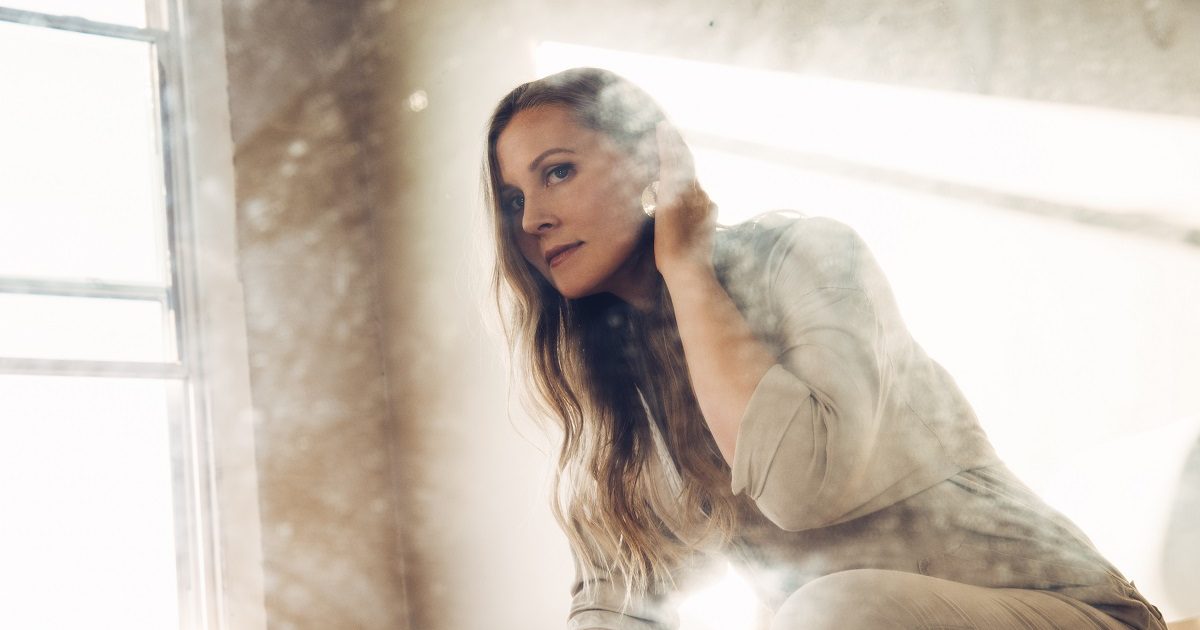
Artist: Nora Jane Struthers
Hometown: Nashville via New Jersey
Song: “Nice To Be Back Home”
Album: Bright Lights, Long Drives, First Words
Release Date: February 21
In Their Words: “Neilson [Hubbard] produced Bright Lights, Long Drives, First Words as well as my previous album, Champion. Josh [Britt, who filmed and directed the video] has also worked with us before, so there was already a comfort level there. It made it easy for me to have fun and feel relaxed, especially since I was in a room full of people I love! I think the video shows off our drummer Drew Lawhorn really well, which is fitting. This was actually a finger-picking, soft and mellow love song when I wrote it. Then Drew took it in a new direction.” — Nora Jane Struthers
Photo credit: Joseph Llanes
WATCH: Nathaniel Rateliff, “And It’s Still Alright”
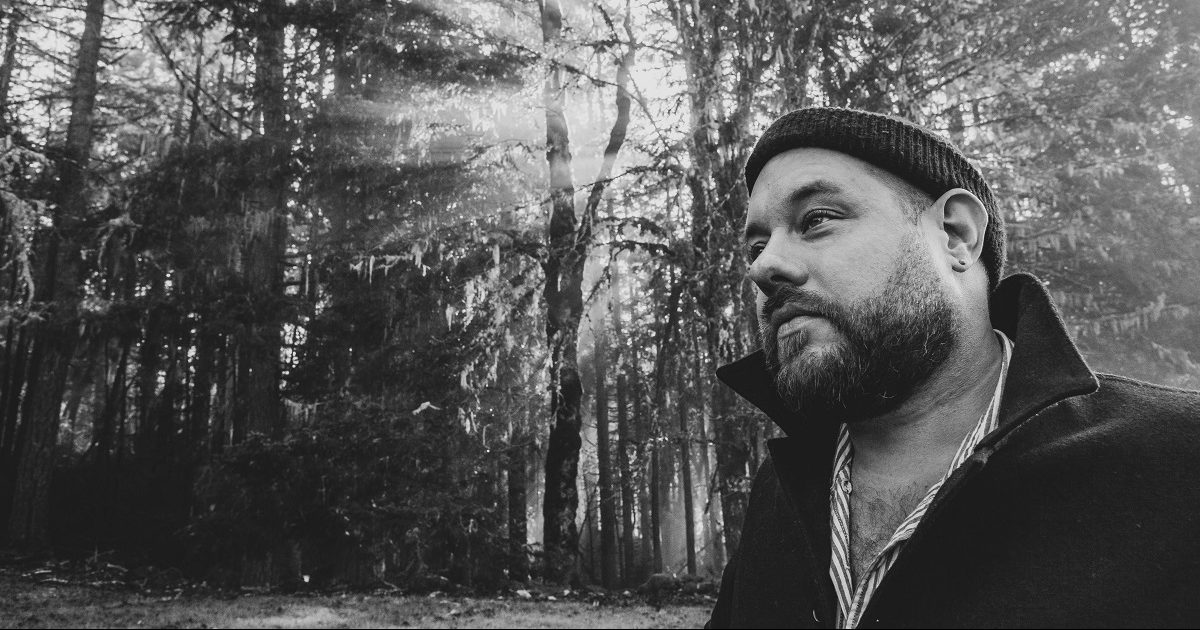
Artist: Nathaniel Rateliff
Song: “And It’s Still Alright”
Album: And It’s Still Alright
Release Date: February 14, 2020
Label: Stax Records
In Their Words: “I think I always want to see hope in the darkness, and I like to try to share that. … I always try to write from a perspective of trying to approach everything very honestly, even if it leaves me vulnerable. But overall, it’s almost like I’m a different character when I’m writing for myself. … I think this album is a reminder that we all go through hardship, but regardless of the hardship everything ends up where it’s supposed to. I still continue to live and I still continue to find joy. I think that’s the theme of the record.” — Nathaniel Rateliff
Photo credit: Rett Rogers
The Show On The Road – The Steel Wheels
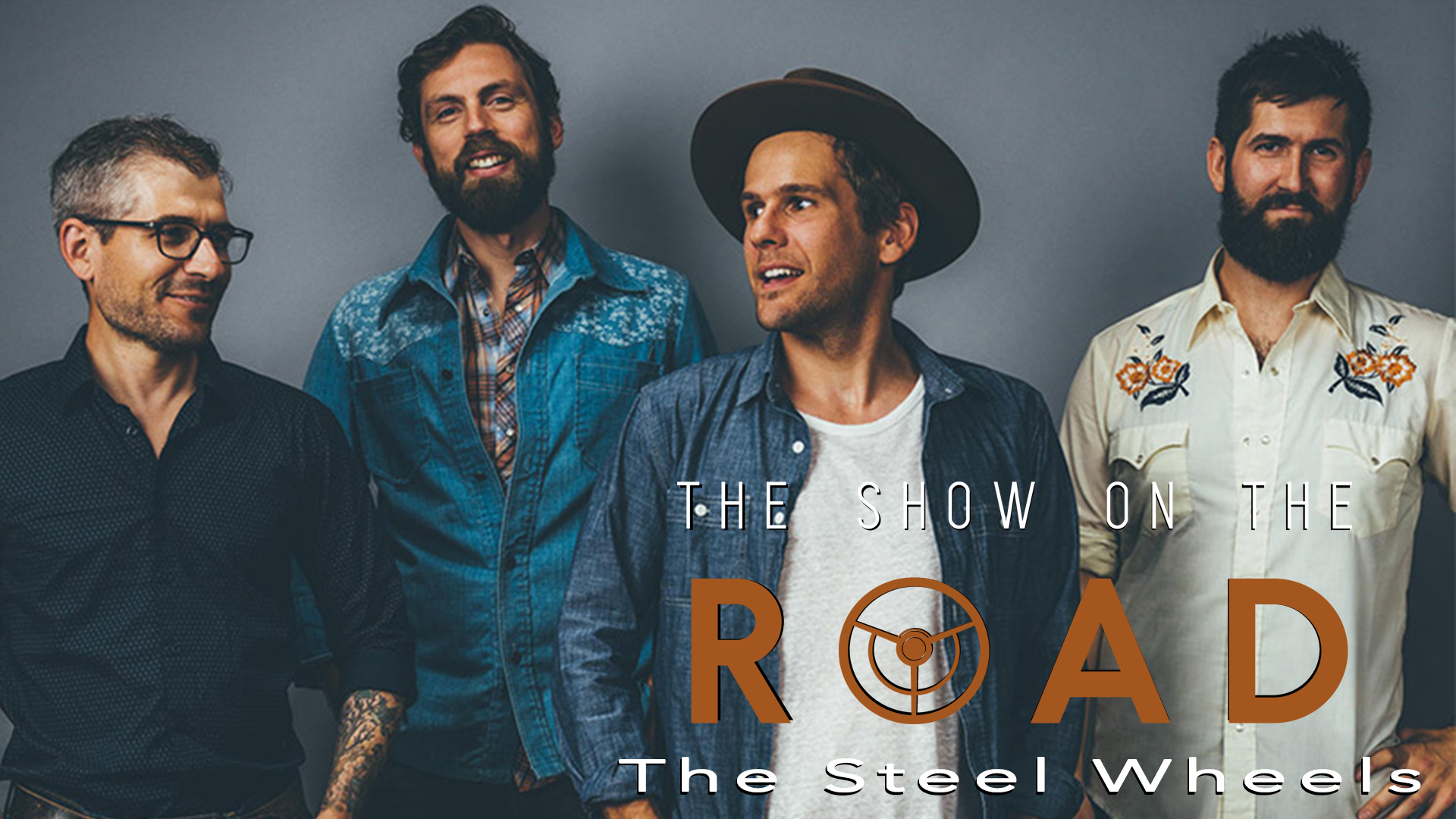
This week on the very first episode of The Show On The Road in 2020, we welcome The Steel Wheels, a Virginia-based band of harmony masters and savvy string band experimenters who have quietly put together an impressive body of work over the last decade, corkscrewing their way across the country supporting seven diverse, acoustic-based albums. Along the way they’ve gained gangs of devoted fans of their big-hearted, peace-promoting songs.
LISTEN: APPLE PODCASTS • MP3
Taped live at historic Mccabe’s Guitar Shop in Los Angeles, Z. Lupetin gathered the boys around the mic to dive into their boundary-pushing 2019 release, Over The Trees, how they once toured on bicycles to spread climate change awareness, and how they survive 15-hour drives to strange shows in Iowa. They end the episode with their gorgeous acapella song, “This Year”.