MIXTAPE: The Musical Inspirations Behind Darlingside’s New Album

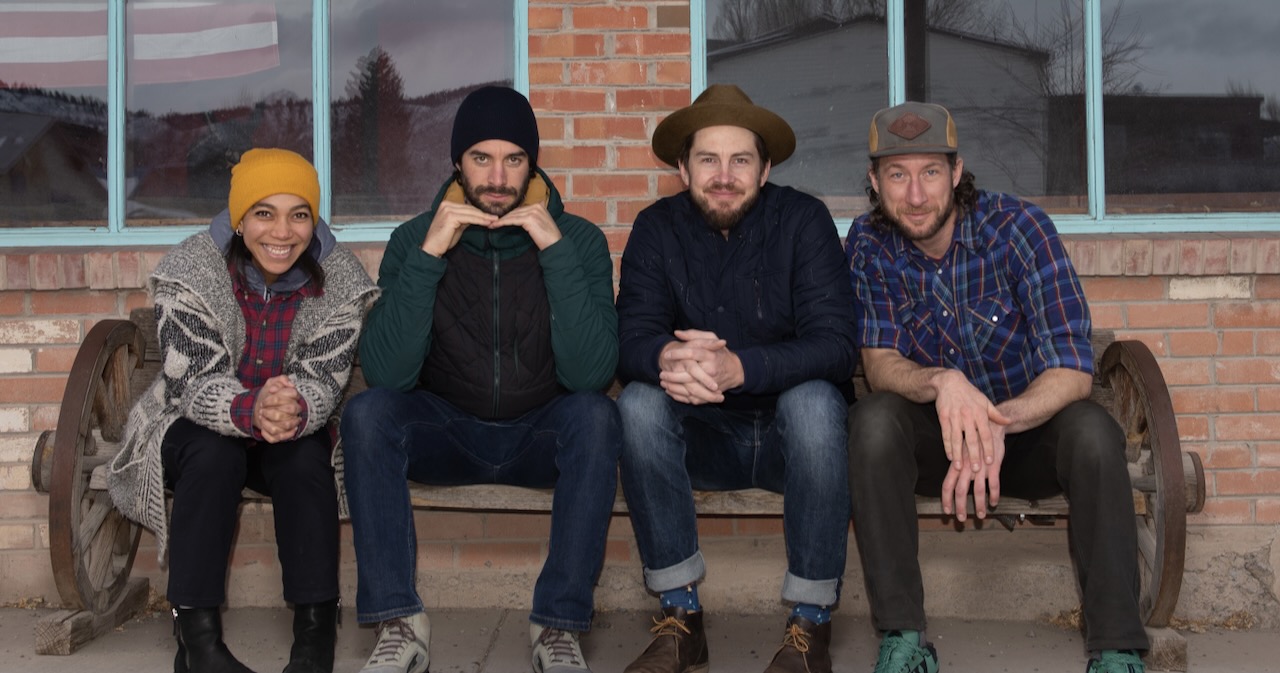
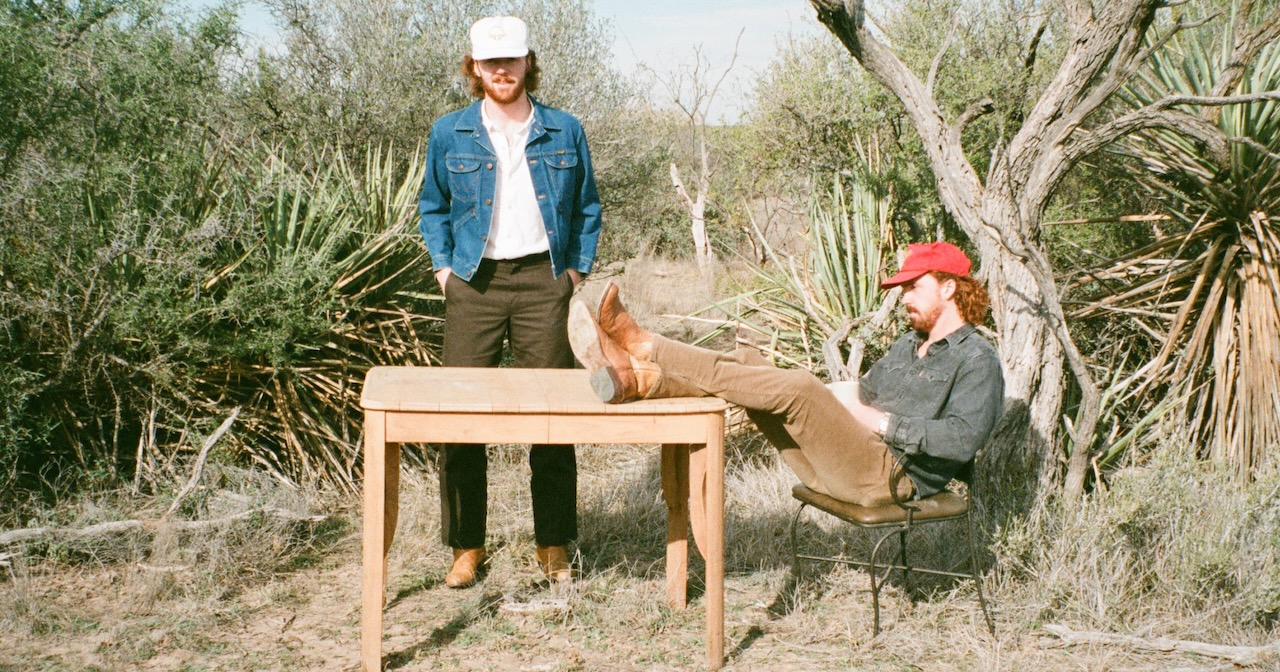
Our past albums were written very collaboratively and we sang together almost all the time, whether in harmony or unison, trying to create a unified voice where individuals were difficult to pinpoint. For our new album Everything Is Alive, we made a conscious effort to let the individual voices and minds of our four singers/writers show through. Here are some of the recorded songs by other artists that inspired us in writing and producing the album, to give you (and maybe each other?) a sense of where we were coming from and who to blame if you don’t enjoy the results! – Darlingside

“Cecilia” – Simon & Garfunkel

I enjoy how the energy of this song comes from snaps, claps, and non-traditional-drum-kit percussion — it’s uptempo, but also sparse. I referenced it a number of times while working on “Eliza I See,” whose percussion is mainly the sound of slapping my legs and banging on a desk in my bedroom. – Harris Paseltiner

“A Rose for Emily” – The Zombies

I’ve always been sweet on the key change into the chorus here combined with the entrance of the harmony vocals. I love a moment in a song where I get transported into a whole new place, even while the basic instrumentation maintains course — that’s the same basic move I tried on our song “Darkening Hour,” where the minor chord you’ve been hearing in the verse pivots to major right at the downbeat of the chorus and the harmonies drop in all at once right on top. – Don Mitchell

“King of Carrot Flowers Pt. 1” – Neutral Milk Hotel

There’s so much in this track that I love, but the two easiest things to point to are the double-tracked vocal and the louder-than-expected Uilleann pipes that come in at 0:46. “Right Friend” features both double-tracked (triple-tracked, even!) vocals and a loud, buzzy pad coming in on the second verse. – Auyon Mukharji

“I Love You Always Forever” – Donna Lewis

I heard this song for the first time in years at a friend’s wedding and was reminded of how incredible it is. A few days later I asked Don (middle name Lewis, no relation) to come up with a “Don(na) Lewis” guitar part (mimicking the guitar that comes in at 0:38) for “All the Lights In the City,” and he did, and I love it! – Dave Senft

“Simple Man” – Graham Nash

I’ve always loved the distant, nostalgic piano sound at the beginning of this song — it brings memories immediately back to life, like the sound of my brother practicing piano down the hallway in another room of the house. For our song “Sea Dogs” we decided to stick with a distant iPhone recording of the piano rather than a hi-fi recording because it had this same quality. – HP

“Santa Fe” – Beirut

I love how angular and buzzy the brass is on this track — it was definitely in the back of my head while I was putting an early, MIDI, brass-heavy demo of “Baking Soda” together. – AM

“We Did It When We Were Young” – Gaslight Anthem

We listened to this song on a loop when our band was in its early youth, and something about that insistent eighth-note pulse stayed lodged deep in our brains. A decade later, Auyon was learning guitar and sent out a voice memo with that familiar rhythmic feel which became the starting point for “Lose the Keys.” (The vocal melody doubled in octaves later in the song also points back to Gaslight origins!) – DM

“If You Could Read My Mind” – Henry Jamison, written by Gordon Lightfoot

This song was a guiding light for me while I was working on “Can’t Help Falling Apart,” and I think it influenced “All the Lights In the City” a bit as well. It feels honest and confessional and unresolved in a way that I’ve always admired and just feels like an emotional gut punch to me. I love the original, but the version I have been listening to more recently is this great cover by Henry Jamison. – DS

“Amie” – Damien Rice

There were a good few months of my early 20s wherein I was listening to this track daily. The plaintive, orchestral strings in “Down Here” can claim lineage. – AM

“Gulf War Song” – Moxy Fruvous

I think of this song as the gold standard for handling controversial/political subject matter in an effective way. “How Long Again” was very consciously informed by it from its inception. – DS

“Dancing and Blood” – Low
Some songs make me feel things by sounding “real” — humans playing music in a room. This song goes the opposite direction: Everything is surreal and a little unsettling and it seems like things are about to go off the rails at any moment. I think this Low album inspired me to push the boundaries a bit with gated/distorted/off-kilter sounds around the margins of songs that still have a real human performance at the core. – DM

“Bloom” – Radiohead

This song is built on a few measures of extemporaneous piano noodling looped over and over, like an infinitely repeating moment of humanness. For our song “Green Light” we used an old voice memo of a mandocello that I was trying to learn how to play in Dave’s basement, which, when looped, resulted in the rhythmic core of the song. – HP


Photo Credit: Shervin Lainez

Out Now: Skout

It was a Tuesday night in 2021. I was sitting in The Lipstick Lounge, Nashville’s local lesbian bar, attending RNBW, a weekly LGBTQ+ showcase. I sat near the stage at a large table amongst strangers and friends, one of whom was Laura Valk. Naturally, after introducing herself as an indie-folk singer-songwriter, I knew I had to find her music and see if she was compatible with Queerfest, my local LGBTQ+ music showcase and festival. I was stunned. Not only to find a phenomenal, local queer musician, but upon the realization that I had already liked one of her videos on TikTok! If there’s one thing I’ve learned, it’s that the queer music industry is small – and TikTok’s algorithms had me figured out.

Skout is a duo composed of Laura Valk and Connor Gladney. They played the first festival I hosted, a virtual event livestreamed in collaboration with Club Passim, and they were one of the first artists to play a live Queerfest show, back when I was hosting performances in a friend’s backyard before working with established venues.

It’s been an honor and a pleasure to watch them join the local Nashville community, take off on tours, and release new songs. Their music is laced with intricate guitar lines, hard-hitting lyrics, and warm, catchy melodies. I’m proud to present our Out Now interview with Laura Valk of Skout.

@skoutoutloud I have it for 24 hours, what do you wanna hear? #rubberbridge #acousric #phoebebridgers #ethangruska #allisonponthier #cover @Allison Ponthier ♬ original sound – Skout

What’s your greatest fear?

Laura Valk: Living a life with regret. It’s so insane that we’re all here to begin with, and I just want to make sure I’m taking full advantage of my time here. I know I’ll stumble along the way, but I want to live a life where I took some chances and big leaps of faith instead of always playing it safe. In the words of everyone’s favorite grassroots folk hero, Eminem, “You only get one shot, do not miss your chance to blow. This opportunity comes once in a lifetime.”

What would a “perfect day” look like for you?

LV: The year is 2012. At 8 a.m. I wake up to a text from Ben Howard asking us to open for him on his Every Kingdom Tour. Literally anything else could happen that day and it would still be perfect. Maybe some blueberry pancakes somewhere in there, too.

What’s your current state of mind?

I’ve been going through a rough patch the last few months both personally and professionally. So I’m trying to be really intentional this summer about how I spend my time and energy. Re-focusing on the things and people that fill me up and letting go of everything else.

Why do you create music? – What’s more satisfying to you, the process or the outcome?

Process 100%. There’s truly no higher high for me than the moments when a song is starting to take shape. It’s like an out of body experience. Connor and I constantly get lost in the process and it’s just this addicting feeling. Don’t get me wrong, we love sharing new music. It’s magic when you play a new song out and someone shares a personal experience that relates. But I think the formal release of a song into the world can feel like slapping all these benchmarks and metrics onto something that really is beyond measure.

Do you create music primarily for yourself or for others?

It’s all about ME. I’m kidding. Except it is, really, about me. Whoops.

I guess what I mean is that I hardly ever write with other people’s opinions in mind. A mentor once gave some great advice, that the best way to write widely relatable songs is to get as personal and specific to you as humanly possible. So I always try to write with that in mind.

Who are your favorite LGBTQ+ artists and bands?

Gahh there are so many!! But recently Allison Ponthier, Joy Oladokun, and Leith Ross have been on repeat.

For anyone reading this who might not be out of the closet, were there any specific people, musicians, or resources that helped you find yourself as a queer individual?

This is going to be specifically unspecific but, for me, it was all about individual friends when I was first coming out. When you share this new part of your identity with a trusted friend and instead of turning their back on you, they reinforce their love and support for you, that changes everything. That process, repeated enough times, was truly the thing that made me start feel safe while exploring my identity.

What are your release and touring plans for the next year?

We have two new singles coming out later this year! We’re psyched, we think we’re writing our best music yet and can’t wait for you to hear it.

“But if I come up short like I fear/ Will you still be proud you brought me here?” is a lyric from your latest single, “I Am Here.” How have you found the challenges of pursuing a music career and how do you cope with the slow process of growth? With that, how do you define success?

Ugh, it’s hard, man! It sounds cliché, but really celebrating the little wins is everything. The thing is, I’ll never stop making music. Ever. I’m in it for the long haul, and I think that mentality helps when I’m frustrated by slow growth. Some seasons feel like rapid-fire while during others, the motivation is harder to find. But I think knowing that the opportunity to create will always be there helps relieve some of that pressure. I’m just trying to be kinder to myself in this area.

For me the definition of success has always been a moving target. When I was in high school, success in music meant selling out Madison Square Garden. Tour busses, the Grammys, our faces tattooed on your chest, etc. Today it looks a little different. I think if I can make a full-time living off of music, in all of its forms, that, to me, would be success. And the tattoos of course. Someone tattoo our faces on yourself already so I can feel successful!!

Drawing from another lyric from the single, “But a song I wrote, it changed one life/ And the friends I hold, I hold them tight,” do you feel that changing one life is enough to make all of your time, efforts, and pursuits worth it?

Does changing a single life make all the hours, the investment, the rejections, the crashing on couches, the blood, sweat, and tears worth it? No. Probably not. But it’s still worth reminding myself of every once in a while. It’s one of those little wins I talked about above.

I think this verse captures the essence of “I Am Here,” and really touches on the success question above. It’s admitting that no, life doesn’t necessarily look like I thought it would. But there are some absolutely beautiful, redeeming things about my new reality that I need to celebrate harder. And it’s the sum of all the hundreds and thousands of little things that does, in fact, make it all worth it.


Photo of Skout courtesy of Skout.

Bluegrass & Roots Songs to Strike To

Hot. Strike. Summer!!

It was just announced that hundreds of thousands of Teamsters driving for shipping and logistics company UPS will avert a strike after their negotiations came through, but even so, dozens of strike authorization votes are happening all across the U.S. as workers the world over watch WGA and SAG-AFTRA strikes, Amazon and Starbucks unionization drives, and smaller pickets like that at dinner theater Medieval Times. Union membership and public opinions toward unions are at highs not seen since the ’60s, and millennial and Gen-Z workers are joining unions, striking, and picketing at astronomical rates.

It’s important to remember that, although bluegrass in its modern iteration can often feel staunchly conservative, militantly patriotic, and delusionally nostalgic for “old-fashioned values,” it’s a genre that was born from the creativity of working class and impoverished Southerners, Appalachians, and immigrants – and it has always had a pro-worker, leftward bent. Singers, pickers, songwriters, and performers like Hazel Dickens, Ola Belle Reed, the Country Gentlemen, the Johnson Mountain Boys, Mac Wiseman, Earl Scruggs, and so many more were ardent supporters of the working class and hostile towards corporations, mines, and management. There are truly countless, never ending pro-worker, pro-labor songs to choose from in the bluegrass, old-time, and roots-music canon.

Bluegrass and old-time music, though entangled in a dense constellation of roots music and occupying space adjacent to folk music and the folk revival, were anti-corporate greed since before they had names, before Pete Seeger, before the folk revival itself. That legacy is important to place at the very center of bluegrass, a genre of music that was born out of industrialization (see also: Industrial Strength Bluegrass) as mountain folk, Appalachians, and Southerners migrated out of their rural homeplaces to urban industrial centers. Bluegrass was born from radio stations, railroads, from company towns and workers’ barracks. Whether rubber or auto plants in Ohio and Michigan, factories in Chicago, cotton mills and tobacco warehouses in North Carolina, or anywhere else in the region, as poor folks bled out of their ancestral homes to find work and upward mobility, they brought their music and their community mindsets. As bell hooks puts it in Belonging: A Culture of Place, the mountains and rural spaces are where mutual aid and anarchy are concrete, everyday practices, not just philosophies or concepts.

With those people and their music came a penchant for workers’ and labor rights, suspicion of management and company stores and towns, and a vehement, righteous anger at the injustices suffered by working class Southerners no matter where they migrated. It’s easy to find pro-Union songs, songs in support of workers’ health and agency, lyrics that espouse conservation and environmentalism in old-time, bluegrass, and string-band traditions. So easy, in fact, we quickly amassed a 4+ hour playlist featuring some of our favorite songs (bluegrass and beyond) for marching the picket line, raising a fist, and redistributing the power – and wealth – back to the world’s 99%.

Scroll to find the full playlist of Bluegrass & Roots Songs to Strike To. Below, enjoy a few selections from the list.

“In Tall Buildings” – John Hartford

John Hartford describes the doldrums of daily work as almost no one else can. (John Prine gets close with, “How the hell can a person/ Go to work in the mornin’/ And come home in the evenin’/ And have nothing to say?”) At the end of our 30-some years working, what will we have to show for ourselves besides a suit, haircut, and no more life left to give to our “retirement?” Plus, as any career musician can tell you, planning a life around retirement isn’t exactly a good option to begin with.

“Ain’t Gonna Work Tomorrow” – Wilma Lee Cooper

Ain’t gonna work tomorrow, cause it’s STRIKING day! Wilma Lee Cooper will, at long last, join the Bluegrass Music Hall of Fame this September. A bluegrass forebear who saw broad commercial success before the genre had a name or an understood identity, she regularly landed tracks with decidedly bluegrass aesthetics on Billboard‘s early country charts.

“Lazy John” – Bruce Molsky

Under capitalism, laziness is a radical act! Be like Lazy John! If you’re working all week in the noon-day sun just for 16 cents, yes, it’s strike time.

“Cotton Mill Man” – Jim & Jesse

As we remember the life and legacy of Jesse McReynolds, who recently passed, it’s striking that although he and his brother Jim performed largely cover songs and tracks written by others, they were still able to express with great subtlety their own points of view through the material they chose. Like “Cotton Mill Man” and Prine’s “Paradise,” which was a hit for the duo, their catalog of recorded and performed material is dense with class awareness.

“Black Waters” – Jean Ritchie

A truly timeless classic that remains as relevant today as in the time of its writing, as clean water protections across the U.S. have been repeatedly gutted since 2016 – and before. Our country continues to show where its priorities are, beating down protests and demonstrations even as popular and supported as Standing Rock, in order to force us to acquiesce and give up protection of our waters. The lyrical hook is even more poignant to someone, like myself, living in Tennessee Valley Authority territory in the Tennessee River Valley – where coal ash and pollutants are still regularly dumped into our waterways. These tales, these experiences, are best told directly from their sources, as in Ritchie singing this song.

“Carpal Tunnel” – Tristan Scroggins

One can find many a recording of “Carpal Tunnel” from across the years, but mandolinist Tristan Scroggins, in his mid-twenties, pointedly places this track in the present, delivering the lament in stark a capella accompanied only by body percussion. He deftly ties the lyric to embodiment and agency and reminds all of us – especially in an age governed by devices causing carpal tunnel writ large – we’re all merely one injury away from bankruptcy. Musicians know this fear intimately, as many a livelihood has been threatened by tendonitis and carpal tunnel.

“Tear Down the Fences” – Ola Belle Reed

A perfect encapsulation of solidarity across our differences – differences constructed by the ruling class to keep us quibbling amongst ourselves while they amass their wealth. This sort of community awareness often feels like a pure byproduct of the internet’s version of globalization, but even a woman banjo player from a tiny town in rural Western North Carolina understood that “all we have is each other,” way back before the worldwide web. It feels obvious to state. It shouldn’t seem remarkable, except that we’ve accepted the narrative that such compassion and ideas couldn’t possibly be born from rural spaces or the South.

“Blue Collar Blues” – Joe Mullins & the Radio Ramblers

From the shop steward of Industrial Strength Bluegrass himself, Joe Mullins, a classic working-man-blues-style bluegrass number about that paycheck to paycheck life. An all-too-common reality for so many pickers! Though that might be more accurately described as blueGRASS collar blues.

“Dark as a Dungeon” – The Country Gentlemen

Bluegrass mining songs are just as iconic in the bluegrass songbook as train songs, cheatin’ songs, murder ballads, and singing about moonshine. This version of “Dark as a Dungeon” by the Country Gentlemen is one of the best examples of the form – many of which made it onto our full playlist.

There are so many more bluegrass, old-time, string band, folk, and Americana songs for striking. Check out our full playlist below and let us know: What is your favorite pro-worker roots song?


Playlist selections by Justin Hiltner, Shelby Williamson, Jon Weisberger, and Amy Reitnouer Jacobs.

Photo Credit: By John Vachon in 1938. “Untitled photo, possibly related to picket line at the King Farm strike. Near Morrisville, Pennsylvania.” Courtesy of the Library of Congress.

WATCH: Davy Knowles, “Speak Softly, Tread Lightly”

Artist: Davy Knowles
Hometown: Isle of Man
Song: “Speak Softly, Tread Lightly”
Album: If I Should Wander
Release Date: August 25, 2023

In Their Words: “I feel the only way to talk about this song is frankly and honestly, as every one of its words is a truth for me.

“I have struggled with depression for a long time, although it’s only in recent history that I’ve accepted that and called it what it is. It was my wife, Amber, who persuaded me to find help and for that (and a million other things), I am so thankful to her. I’m honestly not sure I would be here without her.

“With depression, sometimes it’s hard to look past your own nose so to speak, and to see how the condition may be affecting those closest to you. If and when you do notice, you can then start to feel guilty for feeling the way you do. Thus creating a vicious circle within yourself.

“This song was/is my way of trying to comfort Amber during my struggle, to thank her and to reassure her that she’s perfect the way she is, that this is an internal fight. That I’m the problem, and while I’m learning to navigate it I may need a little extra comforting. It’s also to apologize to her for how this internal fight may materialize on the outside.

“Sounds depressing right? Guess it kind of is. It’s a sad song, written from a loving point of view. Kind of like – ‘Bear with me. You’re perfect, but I’m not right now.'” – Davy Knowles


Photo Credit: Michael Coakes

STREAM: Rachael Sage, ‘The Other Side’

Artist: Rachael Sage
Hometown: Hudson Valley, New York
Album: The Other Side
Release Date: July 21, 2023
Label: MPress Records

In Their Words: The Other Side is my 15th album and yet, in some ways, it felt like I was starting all over again with this particular collection of songs and recordings. After we were all emerging from lockdown, I noticed there was such an intense awareness that nothing would ever be quite the same, but nor should it be. As a songwriter, how do you chronicle a time of so much loss, but also so much gratitude – just to still be able to live, anticipating all that you will see, do, and experience once you’re able to move freely, beyond a time of immediate crisis?

“My goal in creating this record was to channel a kind of zealousness and to transcend limitations, which we had all largely become accustomed during the pandemic – and, in so doing, to reignite hope. How does music and creative expression in general help us get back to the business of living, with renewed joy, courage, appreciation and even idealism? The dozen originals on the album all circle the theme of transcendence in some way, as do the handful of covers I selected. Yearning, forgiveness, breathing itself – only human beings can thoroughly understand the miracle it is to do all of these with reverence and uplift, after enduring trauma. I hope when people listen they hear not only my voice, but the echoes of refrains so many of us clung to over the last several years: Hopes and imaginings that kept us going, and family and friends, who we were reminded the hard way are the most precious legacy anyone can create in this lifetime.” – Rachael Sage


Photo Credit: Bill Bernstein

LISTEN: Birds of Play, “Stargazer”

Artist: Birds of Play
Hometown: Telluride, Colorado
Song: “Stargazer”
Album: Birdsongs of the American West
Release Date: August 25, 2023

In Their Words: “‘Stargazer’ is the first song I ever wrote, and it’s been such an incredible experience bringing it to life with the band. I initially didn’t care much for it, but my bandmates thought it had a lot of potential, and I came around to appreciating it more as each of them added their own sounds to it. It has grown quite a lot since we first started performing it, and it’s an exciting part of each tour to see how it will continue to grow and change.” – Anneke Dean


Photo Credit: Sarah Schwab

LISTEN: Handsome Ghost, “Tonight Comes Round Again”

Artist: Handsome Ghost
Hometown: Boston, Massachusetts
Song: “Tonight Comes Round Again”
Album: Handsome Ghost
Release Date: July 14th, 2023 (single); August 25, 2023 (album)
Label: Nettwerk Music Group

In Their Words: “Eddie and I were chatting through plans recently – tours, recording, etc. – and we realized that we’ve been making music together for over 10 years. Which, in band years, is more like a thousand, in my opinion. Most of the songs on our new record are about my life in music in one way or another. ‘Tonight Comes Round Again’ is about a time many years back, when we were in New York a lot. Neither one of us actually lived there, but we just kind of claimed it as our home base until there was a tour to do or a record to make. The song itself is about a brief relationship of mine during that time. She wanted casual, I wanted more – and frustration naturally ensued as we tried to make something work. It’s rich looking back on it now, given that I was hoping for something serious while I was crashing on couches every night.” – Tim Noyes


Photo Credit: Seb Keefe

BGS Class of 2023 Favorites So Far

Somehow, it’s July and more than half the year has already blown by! In many ways it feels like 2023 is still brand new, despite the calendar saying otherwise and the overabundance of amazing music that has soundtracked the past (nearly) seven months. With many more albums and songs yet to come, we wanted to reflect on the music that has stuck with us and become new favorites of ours since January. It’s a stout list – if we do say so ourselves.

We want to hear from you, too! What albums, songs, and artists have been the underscoring of your 2023? Who’s missing from our list? 

(Editor’s Note: Scroll to find our complete BGS Class of 2023 playlist, which is updated every week.)

Rachel Baiman, Common Nation of Sorrow

Fiddler, songwriter, and activist Rachel Baiman has been a part of the BGS family for quite a while now, but recently she joined the ranks of our contributors, as well. (See her writings here.) Her new album, Common Nation of Sorrow, has been a standout for the entire team since it arrived in late March. Though she’s always helmed her creative and musical projects, in many capacities, this record marks the first time she’s been the sole producer on one of her own releases. Her fingerprints are indelible and striking; challenging and convicting. It’s introspective, but expansive. 

boygenius, the record

An album so nearly perfect we just have to include it, even though some may believe its connections to roots music are tenuous at best. (We disagree, of course– and wrote an entire list of folk bands for boygenius fans to prove our point.) Julien Baker, Phoebe Bridgers, and Lucy Dacus somehow, against the odds, rise above the simple sum of their parts while reminding of former folk supergroups like Trio (that is, Dolly, Linda, and Emmylou) and Crosby, Stills, Nash, and Young. 

Caitlin Canty, Quiet Flame

With its acoustic aesthetic and simple, string band underpinnings, Caitlin Canty’s Quiet Flame is a surprise superlative among bluegrass records released in 2023. Her past albums aligning more with folk, Americana, and singer-songwriter traditions, Quiet Flame was produced by Chris Eldridge and though the production values were quite intentional, the bluegrass result was more a happy byproduct than a deliberate destination. Filmmaker and playwright Noah Altshuler spoke to Canty about the project for a recent feature

Brandy Clark, Brandy Clark

The BGS team has been fans of country singer-songwriter Brandy Clark for quite some time, so it’s more than a little bit enjoyable to watch as more and more listeners and fans discover Clark. And they have so many pathways to find her, whether through her hit, Tony Award-winning Broadway musical, Shucked, her collaboration with Brandi Carlile – who produced the new, self-titled album – or her many charting hit songs. There’s a point of view on Brandy Clark that we never knew we missed before, a maturity that she never lacked, but she has certainly distilled. It shines in its many spotlights. (Watch for a feature on Clark coming soon to BGS.) 

Michael Cleveland, Lovin’ of the Game

Michael Cleveland has won IBMA’s Fiddle Player of the Year award more times than any other fiddler in the organization’s history. His obvious adoration for the instrument – and the life it has led him to – is front and center on his latest album, Lovin’ of the Game. Though he’s collaborated with virtuosos like Chris Thile, Béla Fleck, Billy Strings, and many more over the past handful of years, his perspective remains markedly down-to-earth. As is on display in our Artist of the Month interview from March.

Cat Clyde, Down Rounder

In mid-February, we premiered the music video for the lead single off Canadian alt-folk singer-songwriter Cat Clyde’s album, Down Rounder, and this collection has stuck with us since. For those of us with an affinity for a good red-dirt or red-rock hike, and for western, nomadic, cowboi (that is, all-gendered cowboys) aesthetics – since long before the recent rise of yeehaw culture – this album will provide such perfect daydream scoring. It’s ideal music for journeys internal as well as external. 

Iris DeMent, Workin’ On A World

An album of hope – but zero toxic positivity. Iris DeMent knows how it feels to be burnt out, bedraggled, exasperated, defeated. But hope is a radical act and, in those dark moments where hope seems so ethereal and distant, existence is a radical act. The songs of Workin’ On A World never feel preachy or condescending, even while they remind of weeknight church – all-denominational, of course – and raising voices together in the face of oppression and fascism. DeMent isn’t just workin’ on a world, she’s imagining one, too. It’s our job to bring it to fruition, even if we never see it. 

Amanda Fields, What, When and Without

Amanda Fields’ voice is impossibly tender, but do not let your guard down or it will bite you just the same. Especially when delivering a bittersweet, southwest Virginia-tinged lyric equally at home played by a bluegrass band or, like on What, When and Without, backed by a vibey, homespun, alt-country sound bed. For a voice and perspective as traditional as her’s, Fields still finds endless new ground to break and lines to color outside of. Her collaboration with guitarist and producer Megan McCormick (who has new solo music coming this year, as well) finds Fields’ musical output climbing to even higher levels of realization, innovation, and professionalism.

Ashby Frank, Leaving Is Believing

Mandolinist, singer, and songwriter Ashby Frank is in the running for IBMA’s Best New Artist award this year, and while reaching the second ballot in this category is certainly a well-deserved recognition, it’s a bit… inaccurate! Frank is not exactly a “newcomer,” as he has been a near permanent fixture in bluegrass, country, and Nashville for the greater part of two decades, performing with outfits like the Likely Culprits, the infamous Darrell Brothers, Special Consensus, Mountain Heart, John Cowan, and so many more. He’s even subbed regularly with the Earls of Leicester – and he’s a hit bluegrass songwriter, too, with charting cuts by Junior Sisk, Dale Ann Bradley, and more. His emerging solo career is where he’s truly hitting his stride, though, and in real time, with this outstanding “debut” on Mountain Home Music. 

Brittany Haas & Natalie Haas, HAAS

Genre is dead, we know, but if it hadn’t already been dead, chambergrass, classical-meets-fiddle, string band music such as this would have killed it. It’s a glorious musical territory and is no better inhabited by anyone in this particular scene than sisters Natalie and Brittany Haas, who return to collaborating with one another in an “official” format on HAAS. Sometimes it’s easy to lose sight of just how toxically masculine improvisational, jammy, virtuosic bluegrass and chambergrass have become. An album like HAAS quickly grounds this aesthetic – so far outside the realm of similar more performative, self-indulgent projects – and reminds just how much newgrass and chambergrass are still out there to be discovered and made. 

Jaimee Harris, Boomerang Town

A glut of queer country records are being released at this particular moment in time and Jaimee Harris’ Boomerang Town stands out in a niche that’s becoming more and more crowded. No one welcomes this quick change in country music more than ourselves – and Jaimee, too, we’re sure – but with more voices to be heard, one like Harris’ certainly cuts through. Boomerang Town isn’t exactly autobiographical, but it drips with Harris’ lived experiences and plays as if you’re sitting quietly with her, alone in her room, as she picks each intro on her favorite guitar and every track grows into a fully-realized number. It’s a not-so-idyllic snapshot of a hometown, like country does so well, and, like queer folks the world over know so intimately, the exact hometown really doesn’t matter. 

Brennen Leigh, Ain’t Through Honky Tonkin’ Yet

We hope Brennen Leigh, a multi-hyphenate picker, performer, and songwriter, is never through honky tonkin’. With her latest Signature Sounds recording Leigh has raised the bar for honky tonk sounds – a bar that should never be re-lowered. Equally at home as a “sideman,” a bluegrass picker, a songwriter (with cuts by Lee Ann Womack and others), and as an in-town Nashville picker, Leigh typifies the country everyman archetype – or, perhaps, the country “renaissance man” archetype. Or both! – while doing it better than nearly everyone else in the game, currently. With Nashville’s best on the album’s roster – as band members or featured artists – Ain’t Through Honky Tonkin’ Yet is a gem. 

Darren Nicholson, Wanderer

Mandolinist Darren Nicholson recently left Balsam Range, the North Carolina bluegrass group for which he’s known, after criss-crossing the country – and the globe – with the IBMA Award-winning and Grammy-nominated band for decades. He announced his departure from Balsam Range in 2022 and his first release as a solo artist, Wanderer, is a huge success. Nicholson stakes out and lays claim to his own brand of bluegrass – which is rooted equally in the high country of Western North Carolina (Nicholson hails from Haywood County) and in an effervescent joy. Besides his old-time influenced, traditional mandolin picking, his smile and laugh might be his most recognizable traits. The humor he relishes in life comes forward in his playing, too. Wanderer is a harbinger of many fine solo projects to come from Darren Nicholson.

Nickel Creek, Celebrants

Nickel Creek returned and millennial roots-music fans everywhere rejoiced, joining in the Celebrants celebration. After a nearly ten-year wait since 2014’s A Dotted Line, Celebrants seemed to once again impossibly capture the Nickel Creek lightning in a bottle. A Dotted Line felt mature and confident, self-assured but not cocky. On Celebrants, the throughline could be described as gentleness and gratitude; perhaps from Thile and Sara Watkins both becoming parents in the interim. Nevertheless, Celebrants would have been one of the most notable albums released this year – and for good reason – even without these subtle growth points and nuances.

Mighty Poplar, Mighty Poplar

If ever a bluegrass, old-time, and/or string band supergroup convenes with a pun for a name and we do not react with unabashed glee, please check the collective team BGS pulse. Mighty Poplar checks all of the boxes and then some. Yes, with its particular convention of pickers this album could be seen as a “return” to bluegrass, but that’s perhaps the most boring angle on this fascinating record. It’s not merely a return to the format that musically birthed each of these instrumentalists (Chris Eldridge, Greg Garrison, Alex Hargreaves, Andrew Marlin, and Noam Pikelny), it’s a demonstration in bluegrass not just as an aesthetic and tradition, but bluegrass as expression. 

Molly Tuttle & Golden Highway, City of Gold

Though we still have a couple of weeks until City of Gold drops, Molly Tuttle is our current Artist of the Month and we would be remiss to not include the most buzzed about bluegrass album of the year on this list. Singles “El Dorado” (above), “Next Rodeo,” and “San Joaquin” are out now, tempting and teasing another record influenced so heavily by Tuttle’s growing up in the bluegrass scene of California and the West Coast. Her band, Golden Highway (Bronwyn Keith-Hynes, Dominick Leslie, Shelby Means, and Kyle Tuttle) are featured heavily on City of Gold, for which Jerry Douglas returns to producing. Turns out it’s been Molly Tuttle & Golden Highway at the end of the rainbow this whole time!

Kassi Valazza, Kassi Valazza Knows Nothing

Kassi Valazza Knows Nothing, but she does know the power and magic of live recording. Her brand new album, tracked with backing band, fellow Portland, OR-based artists TK & the Holy Know-Nothings, was all tracked live, including vocals. As a result, the entire record buzzes with energy, whether toe-tapping or subdued. Sometimes, it’s a calm, warm, and honeyed patina that feels solemn and poetic, but ultimately, the entire collection is danceable. It’s tear-in-your-beer country and boot-scootin’ country – but that doesn’t make it simplistic. Which might be surprising, from someone who famously knows nothing. 

Sunny War, Anarchist Gospel

Sunny War’s latest album, Anarchist Gospel, finds her sound having grown and expanded, while still held together by the most fantastic of glues: Her confounding and entrancing right hand. Yes, War combines DIY music, punk, and grunge with roots music and fingerstyle blues, but that’s decidedly not the point – certainly not the centerpiece – of her art-making. (Despite what the guitar bros might tell you.) The truth is, at times, so much more complicated. At others, it’s really quite simple and literal. As she told us in an interview from earlier this year, she just plays the songs, the licks, the hooks, the lyrics as they’re meant to be played. And anarchy isn’t just a concept. 

Bella White, Among Other Things

Bella White’s breakout debut, Just Like Leaving, had already been released when she signed to Rounder Records, who then picked up and distributed the album. It received widespread acclaim as her Alberta- and Virginia-influenced bluegrass sound and Gillian Welch-like lyrics resonated with listeners and critics alike. Her brand new album, Among Other Things, then, feels like both a debut and a sophomore outing, devoid of any sort of “sophomore slump,” but capitalizing on the excitement she continues to generate in the bluegrass realm and well beyond it, too. We featured the new project with an interview in May.

Julie Williams, Julie Williams EP

We first became acquainted with Julie Williams’ music through Black Opry, the artist collective and revue who were our June Artist of the Month. In the Black Opry Revue’s simple, writers’ round format, her songs shone, gorgeous even in their very simple trappings. On her new EP, each of her songs are given the full treatment they deserve. Though they never feel lacking when delivered intimately and stripped down, unencumbered, Williams’ songs in this context soar, especially because they each give us an individualized window into her creative process, her songwriting imagination, and the production landscape she’ll continue to conquer into the future. 

Jess Williamson, Time Ain’t Accidental

In May we premiered “Chasing Spirits,” a delightfully hooky number from Jess Williamson’s latest album, Time Ain’t Accidental, which we are glad to return to here. (Williamson, you may know, is one half of duo Plains with Waxahatchee’s Katie Crutchfield.) Time Ain’t Accidental finds its home base where Williamson was raised, in Texas, and while it processes and puts under the microscope a past, failed relationship, this album is about movement, regeneration, and forward momentum. That she accomplishes this with imagery that’s pastoral, stark, and bristling is not an accident, either.


​​


‘Careful Of Your Keepers’ Is an Autobiographical Glimpse at This Is The Kit

It feels like the protests are following Kate Stables around. Mere weeks ago she was in Paris, the city where she lives, when it was brought to a halt by the May Day march against pension reform, which ended in violence on the streets between police and demonstrators. Then, she arrived in the UK just as it embarked on a week-long series of national strikes against low pay and poor working conditions.

Stables does not disapprove of the disruption. “People have to remember that this is how change happens,” says the 40-year-old behind the British alt-folk outfit This Is The Kit. Whatever inconvenience Stables may face as a touring musician who currently can’t get around by public transport, she says, only helps to make the point. “It’s more inconvenient not getting paid enough and not getting treated properly.”

Since Stables relocated to France 17 years ago, the difference in national attitudes towards civil disobedience has been an eyeopener. “The UK has got a bit comfy over the decades and taken things for granted, they assume the government will look after them. In France, the slightest threat, people hit the streets and protest.”

Stables’ skills as an observer of the human experience is the golden thread that runs through her songs for This Is The Kit. Her 2018 fourth album, Moonshine Freeze, earned her a nomination for a prestigious Ivor Novello songwriting award, and her follow-up, Off Off On, saw her break further into the mainstream as critics applauded its depth and complexity.

A rarely overt but nevertheless keen political awareness is ever-present. And while Stables describes her new release, Careful Of Your Keepers, as “slightly more personal” than her previous albums, she’s aware that this is more in the way people will experience the songs than the way she necessarily intended them.

Take the track “More Change,” which was released as a single in early June. It is accompanied by an utterly delightful animated video made by her talented family friend, Benjamin Jones, in which various inanimate objects from sneakers to pieces of fruit search yearningly for connection and meaning.

“It sounds like a relationship song,” admits Stables, “But it started off with me thinking about situations in society, and people trying to decide if those are better now than 100 years ago. It’s an impossible question – there’s so much that’s worse and so much that’s better. You have to choose which one gets you through the day.”

The lyrics on the opening track, “Goodbye Bite,” include the memorable image of a “‘How shit is this?’ measuring stick” – and the question of change becomes a recurrent theme throughout the album. “I’ve been thinking about how we deal with it, how we quantify it,” says Stables, who compiled the songs over the past two years. “We make decisions by comparing things against each other… and it’s all meaningless, because any decision is a decision! You’re following your nose and hoping for the best.”

And yet, to quote a famous French writer, plus ça change, plus c’est la même chose. The hypnotic sound and elliptical lyrics that have won This Is The Kit its cult following fanbase remain their trademark and Careful of Your Keepers is a joyous example of the acoustic folk and clubby groove that Stables’ (stable) line-up has been blending over the past decade.

The opportunity to rehearse together for 10 days at a friend’s house in Cork, southern Ireland, proved the power of the band’s long-lasting relationships. “We all live in different places now, but it did us all such a lot of good to be there together, so far away from our other lives,” says Stables. “As the years go by we’ve got better at giving and taking criticism, and you’re able to communicate better which isn’t always the case, in bands or in life.”

She herself has gained a reputation as a musicians’ musician, a favorite of Elbow’s Guy Garvey, The National’s Aaron Dessner, and Gruff Rhys of the Super Furry Animals, who produced the latest album at her request. “I love his live shows, he’s so articulate and thoughtful. And in the studio he has just the right balance of sense of humour and total creative work ethic.” He also turns up in the “More Change” video, transmuted into a long-eared plasticine toy singing backing vocals.

Other influences on the album included punk-folkster Naima Bock, and Horse Lords (“the way they mess or play with rhythm and timing, it makes me so excited and alive”). At home in Paris, Stables has found creative community among a group of French and English artists that include Halo Maud, Mina Tindle, and Belvoir – a duo who, like her, hail originally from the west country of England, but now sing “really loud, super energy stuff” in their adopted French tongue. “Which is really nice, because the outside world doesn’t get exposed to enough non-Anglophone music.”

Stables herself found it slow-going to learn a new language, paralyzed by her fear of making mistakes or speaking with too English an accent. “I didn’t make any progress until I had my daughter,” she admits. “But after you’ve got over the shock of having a baby your inner punk wakes up and you don’t care what anyone thinks. So I got better quite quickly!”

She also found her new environment altered the way she made music. By her own admission, Stables is “quite a drone-y songwriter” by instinct– “I’ll have the same note all the way through,” she laughs. “But French songwriting has tons of chords in it. So now I try and write songs with more than two…”

One track from Careful Of Your Keepers offers an unusually autobiographical glimpse into her daily life. “This Is When The Sky Gets Big” was inspired by a favorite park near her home: “A rare place in the city where there’s loads of sky because there’s no immediate tall buildings.” “It’s not a classic Paris park of gravel and pollarded trees in rows,” She says. “You’re allowed on the grass which is pretty unusual.” The sight of people sharing food, playing card games or dominos – even those who live in the park, because they have no other home to go to – inspires one of the album’s most reflective tracks.

When we spoke, however, she was in Bristol, staying at the home of her friend and fellow musician Rachael Dadd ahead of a show at an open-air amphitheatre on the Cornish coast. Stables loves being on the road; her favourite touring destinations include Seattle, Hamburg, and Japan, a place she, Dadd, and her partner (the musician Jesse D Vernon) toured together in the very early days of the band. “I’d just moved to Paris at the time and I was in culture shock,” remembers Stables with a laugh. “So it was so good to be in a place where people were respectful and nice and said sorry and thank you as much as I did. I’d love to go back…”

There will just be time, before the main tour in support of the album kicks off, for a family wedding in Europe, where she and her twin sister will celebrate their birthday together. (Her two other siblings are also twins – they all spent a lot of their youth, she says, filling in questionnaires from research scientists). As someone with a teenage daughter of her own, the question of the future, and the legacy her generation will leave for the next one, is uppermost in her mind.

You can hear it in the final track of the album, “Dibs,” which ends with the apocalyptic thunder of washing machine drums and the line, “Since the beginning of time, man out of time.” Here is the real change that is coming: the music resonates with the sense of climate crisis without ever explicitly referencing it. “There’s no avoiding it,” agrees Stables. “It’s on everyone’s mind, it can’t help but dribble out into the songs we write, the worry. There’s no stopping the train.”

But as a lifelong fan of the science fiction author Ursula K Le Guin, she can, too, see a brighter future. “Her books are really reassuring, and Kim Stanley Robinson’s books have given me hope, too. Life does carry on. We’re currently living in absolute sci-fi conditions for people who were around 100 years ago. It would just be nice if we knew how to respect that, and carried on in a way that doesn’t create more suffering.”


Photo Credit: Cedric Oberlin

WXPN’s ‘Artist to Watch’ Podcast Highlights Black Opry – and Dispels a Stubborn Roots Music Myth

(Editor’s Note: Find all of WXPN’s Artist to Watch Black Opry Residency podcast episodes on their website.)

Founded just two years ago, the Black Opry has a simple, but deceptively-difficult mission.

Simple in that it seems straightforward enough: To challenge the idea Black voices are only under represented in roots music because there’s little interest or talent in the black community. 

But deceptive, in how hard that myth is to refute. 

The truth is that Black and Brown voices have always (and continue to) contributed mightily to the pantheon of Americana music, but they are often overlooked by the very media channels needed to bring about a change.

That’s where a new a new podcast from WXPN comes in. 

Using the Philadelphia-based public radio station’s new Artist to Watch podcast to highlight a Black Opry Residency in the City of Brotherly Love, both organizations have teamed up to celebrate and elevate current Black artists, and to educate roots music fans on what they’ve been missing.

Over five weeks, host John Morrison seeks to introduce a new generation of talent to the broader listening public, telling some truly remarkable stories in the process. And, according to Black Opry founder and co-director, Holly G, it was just the type of partnership that could create a lasting trajectory change.

“Working with WXPN was great because they really let us take the lead on what the needs were for our community,” she says.

As a journalist/artist manager and self-identified “country music disruptor,” Holly G knows those needs better than just about anyone. She’s been shining a light on this community for years, which the podcast does a good job of explaining.

Holly G founded Black Opry as a blog and artist directory back in 2021, recognizing a blind spot in the genre and working to profile Black artists in the roots space. But it quickly became something more, and has now grown into a web of inter-connected talent and supporters which even includes a nationwide touring production – the Black Opry Revue. The WXPN show helps tell that story in a broad sense, but also zooms in to introduce a handful of artists individually. 

In a five part series, each weekly episode features a different Black artist or act, taking listeners on a “deep and personal dive into the real-life struggles of emerging performers.” Along the way, each gets the chance to tell their story and let listeners see the unique contours of their world – namely, trying build careers from the ground up, in a genre that has all but said they don’t exist. 

It’s part of a new drive WXPN has to help develop (and actually support) talent in the pandemic’s wake, since it exposed how precarious an emerging artist’s life can be. According to Bruce Warren – Assistant GM for programming at WXPN and World Cafe’s Executive Producer – featuring Black Opry artists is a natural place to begin.

“WXPN has for a long time had a reputation as a tastemaker, and part of that has been its ability to identify and curate new and emerging artists from across the country and connect them to wider audiences,” he says in podcast’s first episode. “We wanted to give [artists] an amazing, immersive experience that will help change their careers, and at the same time showcase a deeper piece of who they are above and beyond the actual music they play to our audience.”

The Artist to Watch season profiling The Black Opry kicked off on June 8, highlighting Nashville’s Tylar Bryant. Other episodes introduce Denitia and The Kentucky Gentleman (both also out of Nashville), plus Boston’s Grace Givertz and hometown Philly talent, Samantha Rise.

As part of the show, each artist sat for an extensive interview, and also took took part in a week-long creative residency in Philadelphia, writing songs, meeting with mentors and ultimately performing their work at a live showcase.

It’s a remarkably detailed and enlightening podcast, giving some talented and deserving artists a carer boost while also expelling an outdated premise about country music and the black community. New episodes continue to air weekly on Thursday nights, and although it’s just one more step in tackling a big and complex problem, Holly G says every little bit counts. 

“It was great feeling empowered to provide the artists involved with resources specifically catered to them,” she says. “Our knowledge and understanding of our community paired with the extensive industry knowledge that WXPN provided enabled us all to have a great experience that was meaningful and substantial to everyone involved.”


Photo Credit: Rah Foard