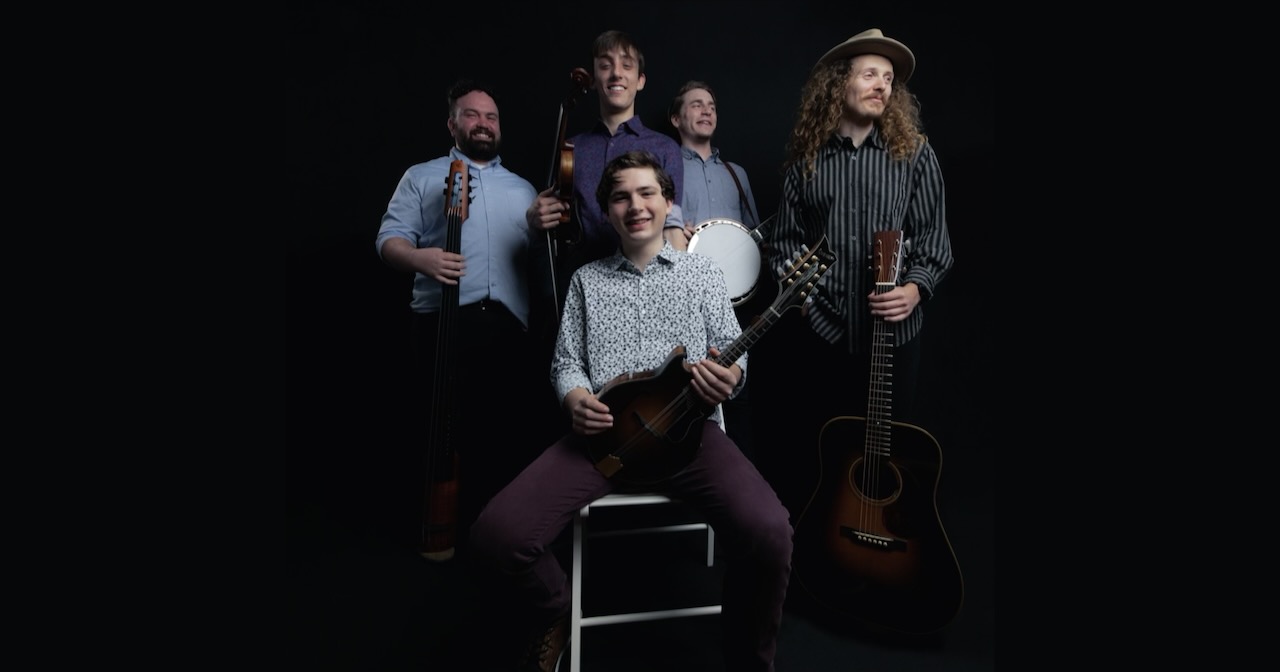
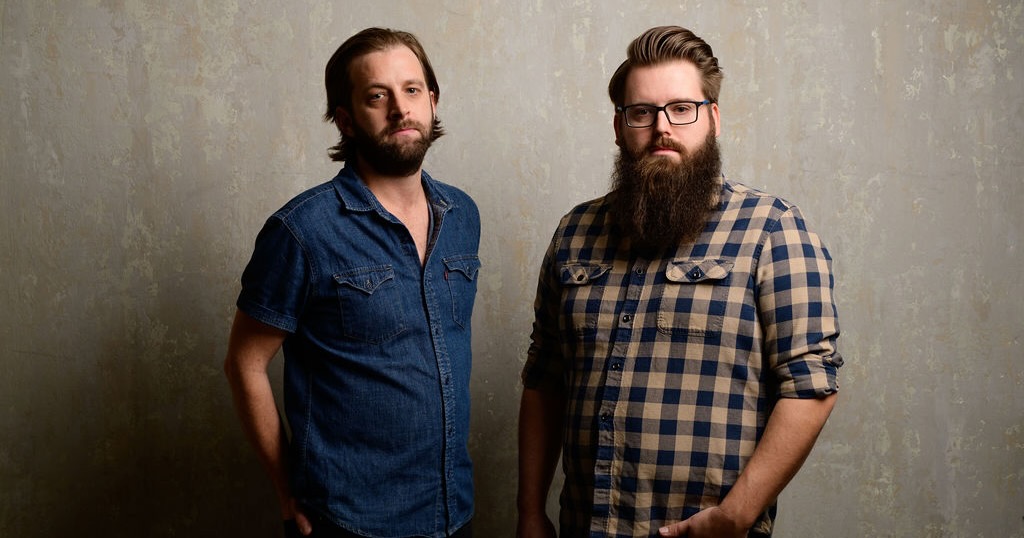
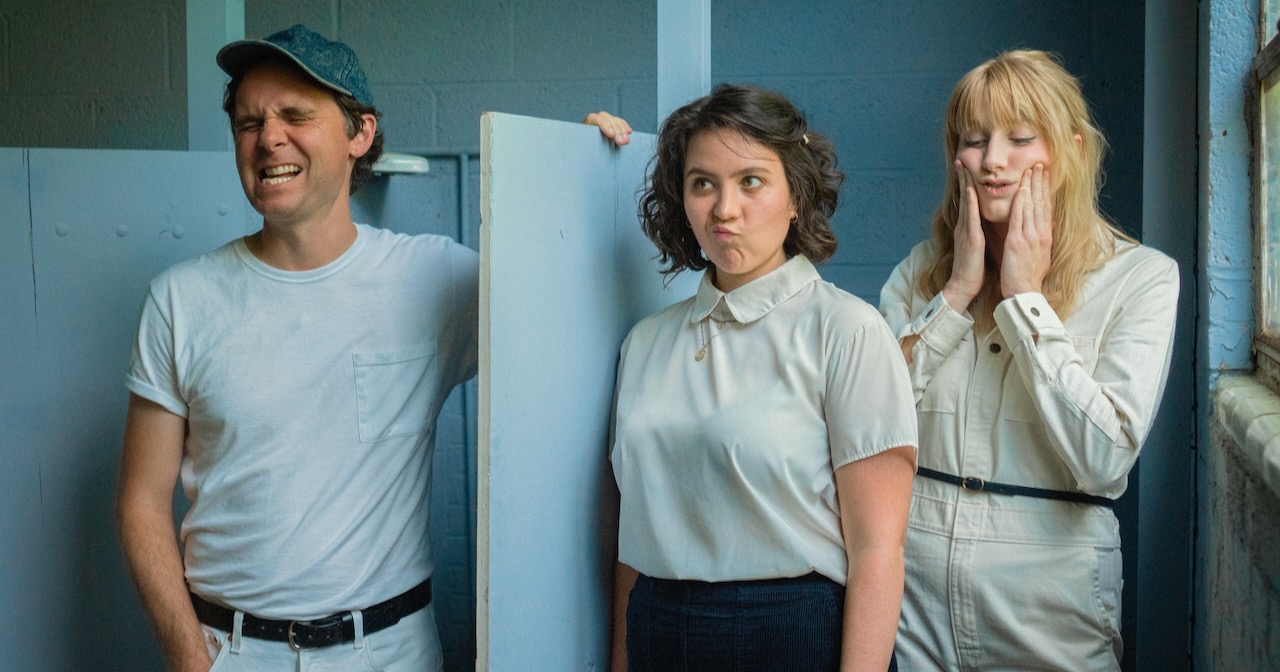
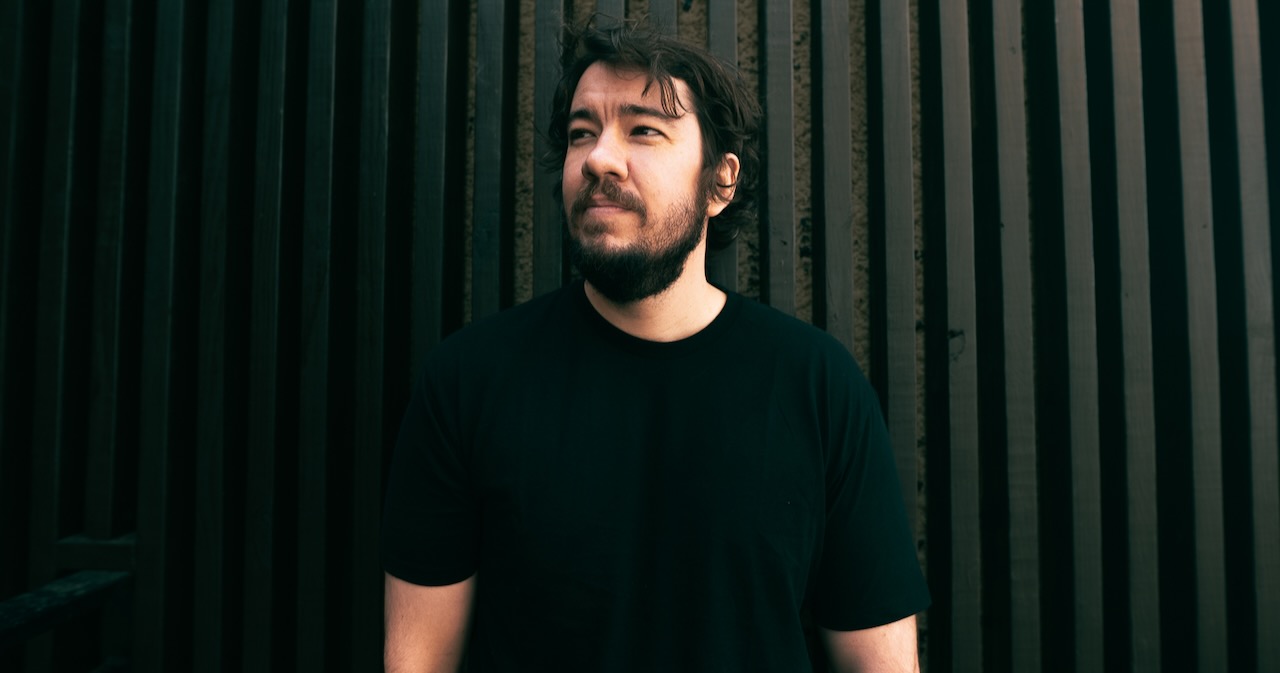
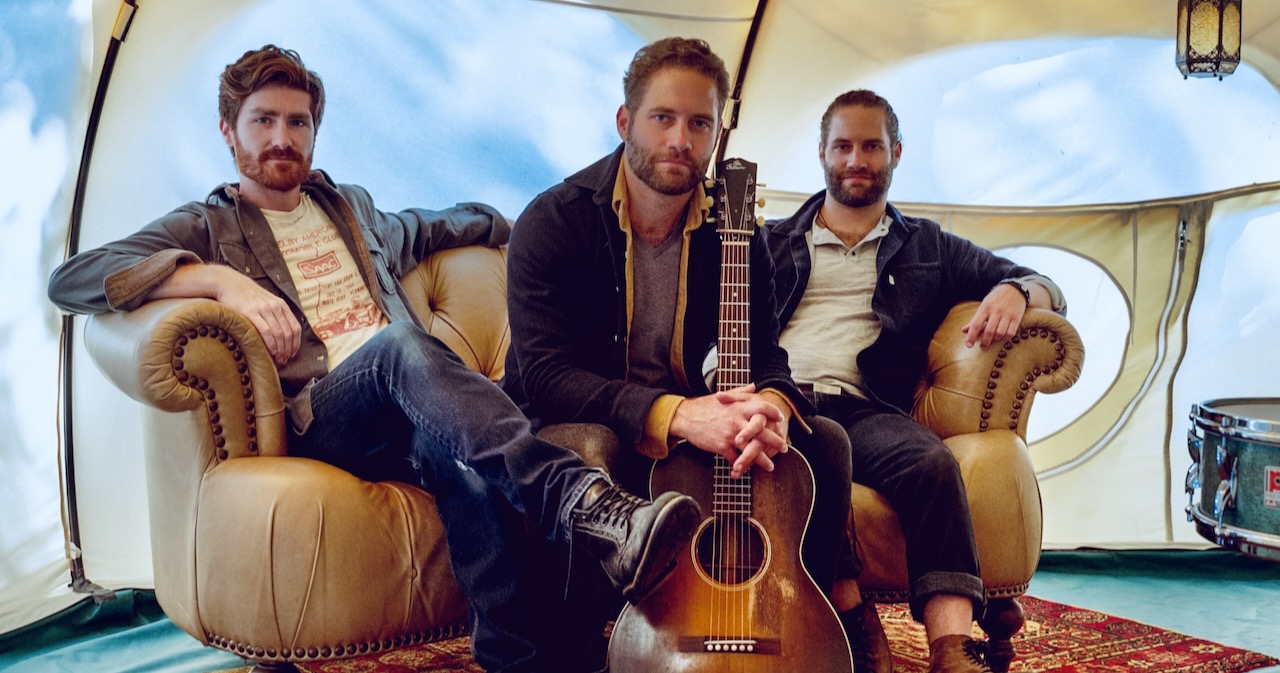
Artist:Liam Purcell & Cane Mill Road Hometown: Deep Gap, North Carolina Song: “Crooked As You Go” Album:Crooked As You Go Release Date: September 1, 2023 (single)
In Their Words: “‘Crooked As You Go’ is a lively song with its musical roots in the fiddle tune tradition we grew up in. The lyrics outline a simple truth learned in early adulthood, that life is neither straightforward nor predictable. It’s not a journey in a straight line, rather a crooked path filled with twists and turns. As touring musicians, we can all relate to this through the eyes of the industry we operate in, but the implication rings true for many folks in many different situations. In the end, these unexpected adventures, trials, and sidetracks are often the most beautiful parts of the journey as one reflects on the path that led them to the present moment.” – Liam Purcell
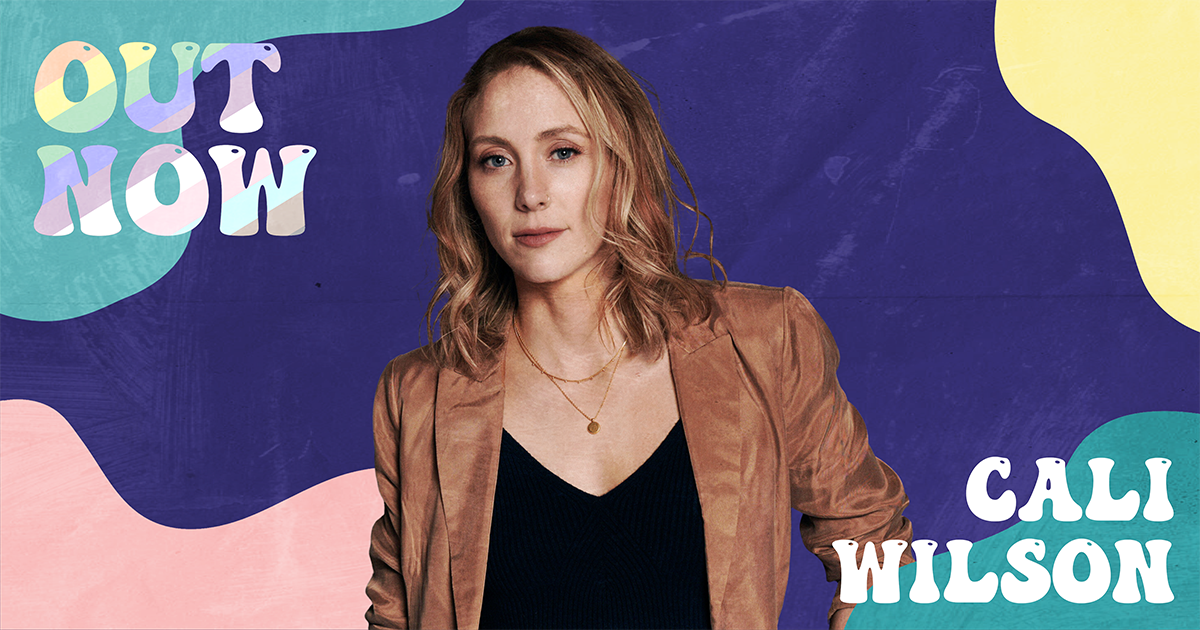
Cali Wilson is the kind of artist who starts playing and the rest of the world melts away, leaving you with her phenomenal voice, warm guitar, and captivating lyrics. The first time I heard Cali play, she was doing her soundcheck for our monthly Queerfest showcase at Vinyl Tap in Nashville. Of course, I had listened to her music before, but I was stunned by how strongly her voice felt live, her vibrato resembling Brandi Carlile’s.
Following Cali’s appearance at Vinyl Tap, I was proud to book her for Queerfest 2022 and Nashville Scene‘s BEST FEST.
Cali’s latest release, “Old Fashioned,” was co-written with Chris Housman, another queer artist in Nashville known for his single “Blueneck.” It’s exciting to see LGBTQ+ artists collaborating and growing together.
Our Out Now conversation touches on the process of creating music, the challenges around promoting it, and finding a balance between social media and mental health.
Why do you create music? What’s more satisfying to you, the process or the outcome?
CW: I think creating music, for me, is one of my forms of communication. It’s a way I can look inward and reflect on my emotions. Often we are so caught in our own experience, it’s hard for us to be objective. Music has a way of letting me see more points of view. It helps me get outside of myself to find the story in the situations of life.
I think the process is always amazing and inspiring. It’s art that can keep evolving. To have a song or a record you can physically hear and feel is truly incredible, of course. But I’ll always love the act of writing and feeling it in the moment – a moment that you’ll never have again with that idea. Either by yourself or with co-writers, it’s the challenge of finding the best words to express that. I love that challenge. I love getting better at that process and soaking in how other writers flow, too. It’s the best thing about songwriting.
Do you create music primarily for yourself or for others?
I think that’s a really difficult question to answer. I find it’s mostly for me as I’m creating it, but then when I play it out, I hear how others connect with it. Then it becomes something else entirely. The best way I can describe it is, it feels like it’s for me, because it is at first. It’s what I feel. It’s my idea. But then it grows to be bigger than that feeling when people connect with it. That’s why music is so universal and beautiful. People can see something in a song that is totally different than what I wrote it for.
What’s the best advice you’ve ever gotten?
No one is going to promote you if you won’t promote yourself. And you can always be better. I don’t care if you’re the biggest hit writer, you can always learn something from someone in a room or on stage. Don’t get too big for your britches!
What are your release and touring plans for the next year?
I am planning some more single releases and maybe even an EP in the near future. Touring will be mostly around Nashville, but I’m heading to other states as well. Looking forward to creating more and broadening my fan base.
What would a “perfect day” look like for you?
I wake up, take my dog for a walk, and have my morning coffee or matcha. Then I head to co-writes on the row. Grabbing lunch, spending time with my wife and friends after a day like that is my slice of heaven.
Where did the idea for “Old Fashioned” come from? And how have you found the process of this release from writing to recording and promoting?
“Old Fashioned” was the first song Chris Housman and I wrote together. We had the title first and then wrote it as a love song. I’m super proud of it. The process was pretty simple. The production and how I wanted the record to sound was the hard part. Promotion is always going to be a challenge. You don’t want to overstimulate your audience, but you also want them to listen when it’s released. It’s tricky.
Independent artists like myself have nobody else to help with promo, social media, etc. It’s a lot of work, but it’s worth it.
Over the past year you’ve seen substantial growth on social media. What has that been like for you? Do you enjoy the process of creating content and promoting your work? Do you ever find it tiring or exhausting? How do you balance social media and mental health?
To be honest, I think social media was so much lighter on my soul when it wasn’t exactly “part of the job” in music. I have a hard time with it, but it’s getting better. I get overwhelmed and it’s hard for me not to compare myself to the peers that are doing better on socials. I get anxious cause I’m not posting enough and then I just get so anxious I don’t post at all. It’s such a hard balance and can really take a toll on you mentally. I try to balance it out with creating posts ahead of time when I can and just floating them up there on a schedule. That has helped a lot with the overthinking.
I’ve also found it’s okay to be silly and not take yourself too seriously. People want variety in your content regardless of what the “professionals” say. I always try to remember that as well.
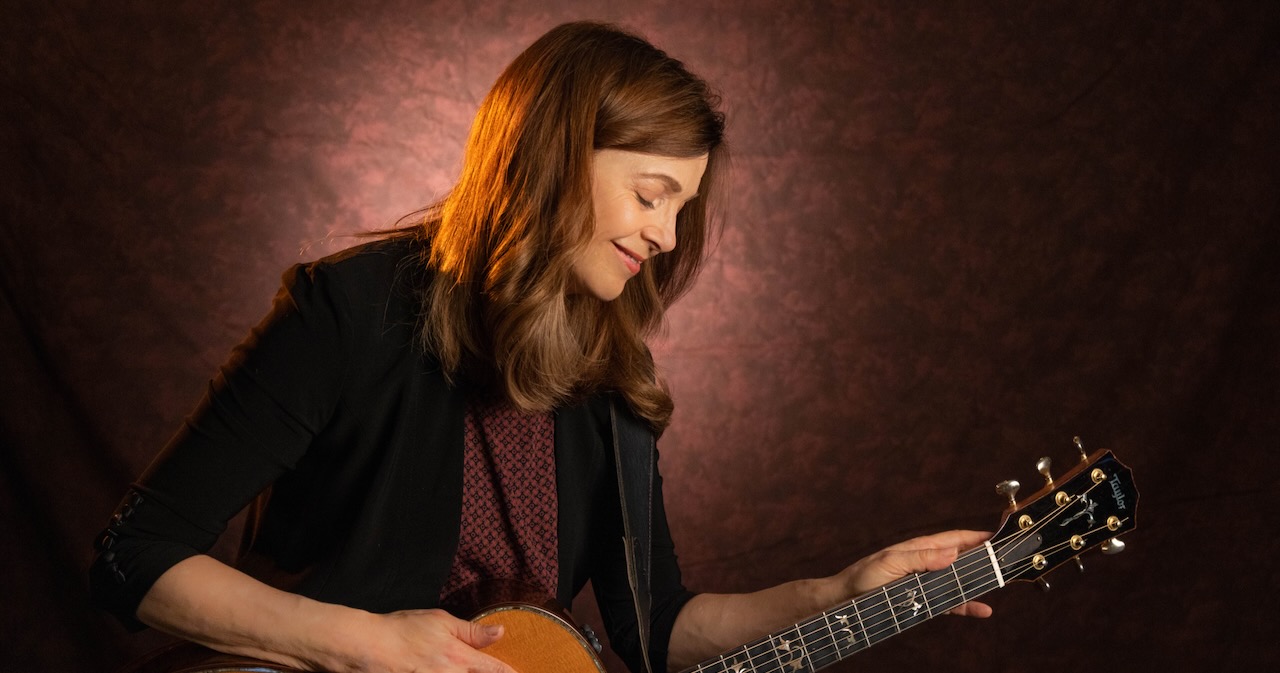
Artist:Carrie Newcomer Hometown: Bloomington, Indiana Song: “Potluck” Album:A Great Wild Mercy Release Date: August 28, 2023 (single); October 13, 2023 (album) Label: Available Light Records
In Their Words: “Writing and recording this song felt like a magical collaboration with of some of my favorite musicians on the planet to work with creatively (Jim Brock, Brittany Haas, Paul Kowert, Jordan Tice, Gary Walters, & Siri Undlin). ‘Potluck’ was co-written with a luminous new writer Siri Undlin from Humbird. We were both musing one day about the spirit of Midwestern pitch-in gatherings. Essentially, you choose to trust whatever people bring to the table. In times when there seems to be so much distrust and division, a potluck is still a place where we welcome one another with a bit of grace and humor, a place where we still meet folks right where they are — with all their joys and sorrows, quinoa, kale, chocolate cake, and deviled eggs.” – Carrie Newcomer
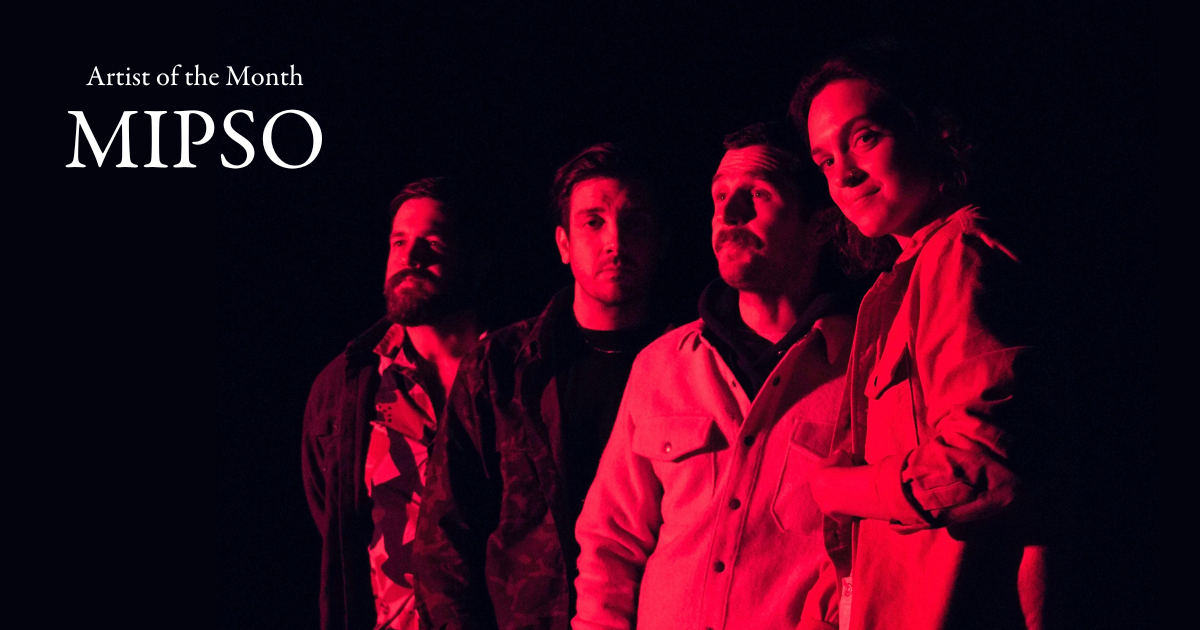
Mipso’s new album, Book of Fools, pushes and pulls away from and toward the band’s sense of home, musically and geographically. There is a kinetic energy in this collaboration that is only achieved from years (10, to be precise) of hard-won work and the evolution of four people who choose each other. Though their sonic palate has shifted from earlier folk and bluegrass influences, this is less of a sea change and more a showcase of transformation and exploration amongst a group that has purposely allowed itself the space to shift.
Speaking with members Wood Robinson, Libby Rodenbough, Jacob Sharp, and Joseph Terrell is a fresh reminder that a band, no matter how harmonious their music may be, consists of individual humans with their own needs, their own ideas of home, and their own personal evolutions. Bands that survive and thrive through the grueling work of creation to commerce are those that carve out the space for people to move and change and shapeshift.
BGS reached Wood and Jacob via Zoom in their homes – in Salt Lake City and Los Angeles, respectively – and some days later spoke with Libby and Joseph on the phone from a van in Virginia at the start of their tour.
BGS: You all clearly have so much reverence for North Carolina as home base but you’ve also shifted around a lot, geographically. How have the changes of being rooted in one place, but then shifting around affected the music and how you operate as a band?
Jacob Sharp: There was a moment there where we all intentionally spread all across the country, all four in different locations. But the Triangle is home. Almost always, even when tours don’t start in the Southeast, we meet there to regroup and rehearse before we hit the road. And it is pretty obvious that whether we are there or not, North Carolina is the centerpiece spiritually and musically, too. We look behind and see our music and a lot of our search over the first couple of albums was peeling back the layers of what we thought we were supposed to be, being from North Carolina and playing acoustic instruments. Since then it has been about taking away things and adding things that actually feel more like us. These last two albums especially feel like we are honing in on that side of it. What is the North Carolina that we are a product of and that we hope we are creating? What is the new North Carolina? It is less about reinterpreting the past.
Wood Robinson: Life kind of inevitably draws you away from the place you are originally from, where you identify as your home. Even though I live in Utah and Jacob lives in California, we still feel like North Carolina is the home that will always be home. Fortunately for me, I still get to go home about six times a year. But spreading out doesn’t make our logistical lives easier.
Joseph Terrell: It’s frustrating. I wish we lived in the same place. We’d be able to play more. We’d be able to write and practice more. But what it has given us is the ability to take time and get together really seriously and for it to feel like summer camp when writing or touring.
Libby, particularly with the song “East” off this record, I was thinking about this question and how that plays into it. How have the geographical shifts affected the music for you?
Libby Rodenbough: What’s important about the geographical changes is less about where anyone went and more that we’ve had some separation in our personal lives, which has certainly been useful, but logistically complicated. Getting together for tours or during COVID was pretty difficult. In terms of what the overall course of our lives has been over the last decade, it was pretty important that we feel like our lives can have twists and turns and changes and that the band could accommodate that. Symbolically, what it means is just as important as the actual physical space between us.
Jacob, I had the pleasure of speaking with you earlier in the year for BGS to talk about the state of touring in 2023. I wanted to hear from you all about any differences you foresee in touring this new record from past record cycles, or if you feel like it is going to be similar.
WR: We haven’t done more than 10 days at a time on the road in about a year and a half. We are all very excited about it. Before then, we had all reached a point where it just felt like going to work. Which is fine, most people do it every day, but this new tour is really exciting. We are playing a lot of really cool rooms. And for the first time in a long time, we are really trying to be intentional about every little thing. Artistically it is really exciting. Logistically, not much has changed. It is still going to be difficult. It is still going to be trying on relationships like it always has been. And there is no panacea for making it work financially other than the grind but you do all of it in spite of those realities. You find a way.
JS: It is funny, because I can imagine ways for touring to be easier, but I can’t imagine doing it because it wouldn’t feel right ethically or artistically. There was a while when we weren’t really aware we were making all those decisions for the same reasons when we were saying “No” to certain things, or looking in a different direction than what was being presented as the high growth strategy. Now it is very clear to us what we are willing to do and what we are not willing to do.
JT: I just had some boiled peanuts from a gas station in Virginia.
LR: So basically nothing has changed.
One thing that is different for us is that we are doing an acoustic pre-show event where people can pay extra money and spend more personal time with us. We’ve been noticing a lot of bands doing this and I think it is mainly because it has been harder and riskier, post-COVID, to tour. Not that tours were ever not risky. It is to pad out the tour budgets, but we are looking forward to it because it is giving more personal contact to the touring experience and helps us to feel like we are doing something new and alive every night. When you only just leave the green room to go to the stage and back again, it can be harder for it to feel that way.
JT: It is really hitting home for me more in the past couple of years that this system of touring and music making and profit generation around music is fundamentally not designed to benefit the artists. Our very first album release show in October of 2013 was, to this day, the most physical media we ever sold at a show. It didn’t make us a ton of money, but it paid for the record. It was easy to see; you make a thing that people want and they come and buy it and they have a good time together and that’s part of how you do it again. We paid ourselves back. It is so much more difficult to do that now.
LR: It is true on a general, larger scale, culturally, that everyone deserves to be able to live in the richest country in the history of the world. It’s logically obvious that that is possible. I’m not trying to propose an alternative economy myself, but it is obvious that we could do what we are doing and be comfortable and everyone could and should. That’s morally true.
There is a palpable sonic evolution on this record. What are some of your current influences as a band or as individuals (that can mean musical, literary, visual arts) that played into the shift?
WR: All of us are kind of obsessed with Kim Stanley Robinson. He’s the most important science fiction author of our time. He is not only dystopian but he also is very utopian within his visualizations of the future. You have to see the bad in the world we see today while simultaneously imagining how it can be infinitely better.
Right, otherwise what’s it for?
WR: And I think the process of making music is inherently hopeful. You have to find the light at the end of the tunnel.
JS: We all really like Big Thief and take a lot of comfort in how they eschew the industry and the model. It hasn’t cost them anything on the success side. That’s definitely a band whose music and the way they center themselves ethically within their career, we really look up to them.
LR: Another book that I’ve been thinking a lot about for the last three years is The Dawn of Everything by David Graeber and David Wengrow. It is a review of the last decade or so of advancements in understanding early human civilizations. It is a very hopeful book. It is a great time in history to be cynical, but that book allows you zoom out and remember the truth, which is that the things that are fucked up about now are not necessary or essential to human life. And it could work in a totally different way in the future and that’s really essential to believe. I would say that was an influence on some of the songs I wrote for this record, like “The Numbers” and “Book of Fools.”
JT: I’ve been thinking a lot about the feeling of playing together when something is really happening, not when you are just reciting your line but when something emergent and effervescent is taking place. In the last year or so I’ve been heavy into The Band, The Fairport Convention, and The Grateful Dead. Those are some bands that do this beautiful dance of communication on stage.
You’ve just passed the decade mark of being a band this last year. And this is in an age when so many bands fall apart because of the economic realities of music or interpersonal relationships, the extreme hardships of touring… What is the glue that keeps you together, or if you want to frame it this way, what advice would you give to bands that haven’t been around for a decade?
JS: We are acutely aware of how hard it is right now to keep it on the rails. It is something that we talk about. It is a part of the ride. We’ve made some mistakes, but the one thing that hasn’t been a mistake is that we are always willing to slow down to make room for how someone has changed and how you need time to understand that. To have ignored it would have been the end. It is crazy that we get to do this. Four really good friends continuing to find ways to share our music with each other and then to share it with this global community that we’ve built. It is so wild that it exists.
WR: I think that also, you have a limited number of years of being “Yes men.” Every “Yes” is at a cost. My worst days on the road have always been ones that end in a show where I’m not thinking about the music I’m making. And if everything else in life is getting in the way of the main thing that you are supposed to have absolute, unbridled joy in doing, then it is worth re-evaluating. I think we are at a high point now of really being able to cherish those moments together.
LR: Just like in any kind of relationship, there are certain rewards that you can only experience after years and years and years go by. I remember reading this Joni Mitchell quote about why she likes to have long-term relationships as opposed to an endless string of short affairs. She talks about how falling in love at the onset is more about falling in love with yourself. But as time goes on, you learn to actually love another person. Loving another person is a long-term pursuit, foundationally.
The work of the four of us loving each other has been some of the hardest work of my life and then some of the most rewarding. There is a lot of freedom in quitting things. Growing up I felt a pressure to never quit. That was a bad thing because it made it harder for me to understand my own internal compass. I think people should leave situations that are causing them harm, for sure. But another equal and different truth is that if you can find a way to still have enough space for yourself, working alongside people long-term is a beautiful possibility in life that not everybody gets to do.
JT: The main ingredient of love is listening and it has made me a better person to listen to these friends of mine for a long time. That is also what I love about being on stage with people that I know so well. All of us have lived a decade of huge changes in our lives. It’s one of the best things you can do with your life and the hours of the day, is to listen to somebody else.
Artist:Listening Party Hometown: Milwaukee, Wisconsin Album:Been a Long Time Comin’ Release Date: August 25, 2023
In Their Words: “Been a Long Time Comin’ is a collection of experiences and stories gathered over the last five years that have been immersed in the styles of folk, Americana and country. Representing the people, the places and the roads traveled, the songs display our personal growth as we entered our 30s and had to start confronting some of the hurdles that life tossed our way. The goal was to approach a few of these issues with a light-hearted storytelling voice so they didn’t have to seem so daunting, while hopefully leaving some room for the listener to feel hope and redemption. We did our best to acknowledge life’s trials, but also celebrate the positivity that the long journey has to offer. For us, Been a Long Time Comin’ will always be a polaroid of a time in our lives when we relied and leaned on each other to get by.” – Listening Party
Artist:Bill and the Belles Hometown: Johnson City, Tennessee Song: “Gotta Get Drunk” Album:To Willie From Billy Release Date: September 8, 2023 Label: Ditty Boom Records
In Their Words: “Our upcoming album, To Willie From Billy, is a tribute to Willie Nelson, released in honor of the icon turning 90. We like to think it’s a bold and playful meeting of our string band origins and genre-defying arrangements, and a celebration of Nelson’s songwriting and musical ethos. It is that musical ethos that ties Willie and Billy together: A commitment to timelessness and simplicity, with a good dose of rebellion. Picking out just 12 tunes from Willie Nelson’s catalogue proved to be tough if not impossible, but eventually we got there. Most of the tunes are lesser known cuts from Nelson with a few hits thrown in for good measure. ‘Gotta Get Drunk,’ a raucous bar shout, wobbles and sways right in the middle.” – Kris Truelsen
It’s remarkable that a prolific artist such as Rhiannon Giddens could reach this juncture in her career and still be accomplishing notable firsts. This time, she’s putting out her first album of all original material – called You’re the One – since she began her post-Carolina Chocolate Drops solo career in the 2010s. On a recent airing of CBS Saturday Morning, Giddens and her band performed two tracks from the album: “Too Little, Too Late, Too Bad” and the project’s title track, “You’re the One.”
From a genre perspective, You’re the One is one of Giddens’ most expansive works to date, drawing on her endless knowledge of folk and vernacular musics to craft a sound that’s rootsy, yes, but ultimately demonstrates the down home, everyday, and Black origins of all popular American musics. “Too Little, Too Late, Too Bad,” for instance, was co-written with Giddens’ longtime friend and collaborator, fiddler Dirk Powell, to channel the late, legendary Aretha Franklin. The album includes accordions, horns, globally-inspired percussion (by Giddens’ partner Francesco Turrisi), countrypolitan strings, and so much more. Produced by Jack Splash, You’re the One seems to draw on Giddens’ penchant for the theatrical more prominently than previous outings. She did, after all, just win a Pulitzer Prize for her opera, Omar, so the performative elements of this record seem to draw equally from folk and stage traditions.
Among a discography chocked full of essential works, You’re the One is still a landmark release by Giddens, further establishing – and complicating – her unique and indelible voice and once again highlighting the diverse and representative lineages that gave rise to all American roots music forms, with joy and love centered in every note.
Artist:Jon Danforth Hometown: Dallas, Texas Song: “Can’t Stay Here” Album:Repetitions Release Date: August 18, 2023 (single); October 27, 2023 (album)
In Their Words: “‘Can’t Stay Here’ is a bit of a rambling song, but it is also self-aware enough to know that rambling is typically not a solution to life’s problems. The song acknowledges the strong impulse and the feeling of needing to get away while admitting that, most of the time, that won’t solve anything. It’s a reminder that most of our problems need to be addressed by doing the work on ourselves. At the end of the day, as the saying goes, ‘wherever you go, there you are.'” – Jon Danforth
Artist:The Clements Brothers Hometown: Gloucester, Massachusetts Song: “As the Crow Flies” Album:Dandelion Breeze Release Date: August 25, 2023 Label: Plow Man Records
In Their Words: “’As the Crow Flies’ is a tune written by George and finished by Charles. George came up with the Celtic-inspired tune on the guitar and brought it to the band. Then we played and improvised around on it until we had something we thought was exciting and interesting. The metric modulation and build in the middle of the tune was something George had conceived-of from the initial demo, but it took some playing around and experimenting with until the current progression and bass solo with the fiddle weaving around it emerged. The great fiddler Jenna Moynihan lent her beautiful playing and creative energy to the fiddle part, which we think really tied the tune together in the end. In terms of the tune name, we thought the melody had a kind of soaring and darkly quirky quality to it, so the title “As the Crow Flies” seemed to fit the mood and spirit of the sonic journey. Our late father, who passed just before the album was coming into shape, always loved crows with their intelligent and family-oriented qualities, so it also serves as a little memory capsule to him.” – The Clements Brothers
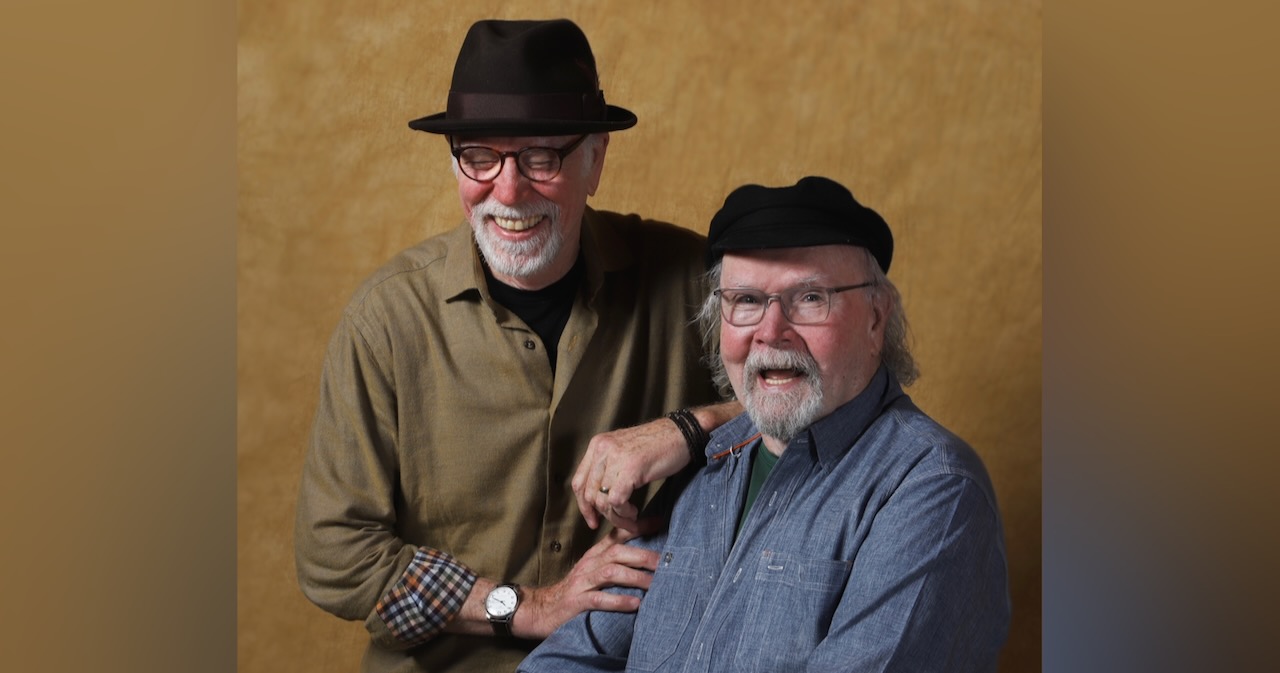
Artist:John McCutcheon & Tom Paxton Hometown: Smoke Rise, Georgia; Alexandria, Virginia Song: “Life Before You” Album:Together Release Date: October 13, 2023 Label: Appalseed
In Their Words: “Tom Paxton and I started writing together early on during the pandemic and, with seemingly endless time on our hands, we tackled all manner of subjects and ideas. This one started out as a pretty standard love song. But, often, along the way, one of us will say, ‘Wait a minute, what if this turned left instead of right?,’ and we’ll bravely go down that blind alley. Sometimes it works, sometimes it doesn’t. Tom was particularly enamored of the way the ending comes out of left field to the listener, a real surprise. He breaks into a big grin every time the end of verse three rolls around. One of the great joys of songwriting teamwork is to see your partner so delighted with the final result. Doesn’t get any better…” – John McCutcheon
Photo Credit: Michael G. Stewart
This website uses cookies to improve your experience. We'll assume you're ok with this, but you can opt-out if you wish.AcceptRejectRead More
Privacy & Cookies Policy
Privacy Overview
This website uses cookies to improve your experience while you navigate through the website. Out of these, the cookies that are categorized as necessary are stored on your browser as they are essential for the working of basic functionalities of the website. We also use third-party cookies that help us analyze and understand how you use this website. These cookies will be stored in your browser only with your consent. You also have the option to opt-out of these cookies. But opting out of some of these cookies may affect your browsing experience.
Necessary cookies are absolutely essential for the website to function properly. This category only includes cookies that ensures basic functionalities and security features of the website. These cookies do not store any personal information.
Any cookies that may not be particularly necessary for the website to function and is used specifically to collect user personal data via analytics, ads, other embedded contents are termed as non-necessary cookies. It is mandatory to procure user consent prior to running these cookies on your website.