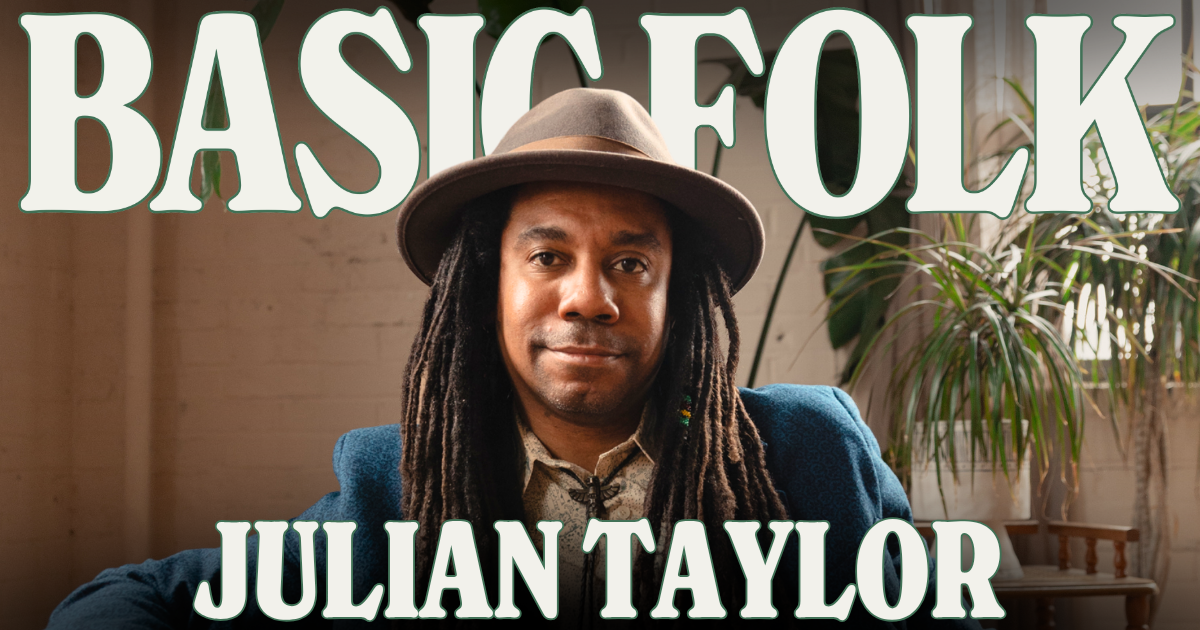
One of the things I really enjoyed about interviewing Toronto-born singer-songwriter Julian Taylor is his relationship with the truth. He has a really peaceful attitude towards learning and sharing new information. For example, at the beginning and the end of our interview, there were biographical facts about him that I had gotten wrong in my research. Gently and matter of fact he fact-checked me and we just moved on. It was such a cool example of, “Oh, you’ve got this a bit wrong and it matters that we get it right,” but nothing about that is personal. In an era of misinformation and alternate facts, it feels really grounding to have an hour-long conversation with someone who really cares about getting it right. That shows through in his songs and in his storytelling.
Julian experienced an eclectic musical upbringing thanks to his classical-and-gospel musician father, his mother’s love of Motown and folk, and wide influences from pop to blues. Oral tradition in his family shaped how he tells a story. Especially on his mother’s side with his Mohawk grandfather, a pastor who told incredible stories. He also discusses being pigeonholed by race and genre. Oftentimes, people will think that he performs a certain type of music because he looks a certain way. He mentions that audiences can be shocked when he pulls out a country song while sporting hair that looks more reggae than Johnny Cash. Taylor discusses his breakthrough 2020 album, The Ridge, he talks about his writing process (often starting with lyrics), and the intent behind his latest release Anthology: Volume Two – including “Hunger,” “Don’t Let ’Em” (with Jim James), “Dedication,” and “Weighing Down” – addressing mental freedom, identity politics, and self-forgiveness.
When it comes to fiddlers, we all know that more is more is more.
Lonesome fiddle? Great. Twin fiddle? Even better. Triple fiddle? (Who called Bob Wills?)
But with all this great fiddling, it’s hard to keep up with who is who. We are here to help. It turns out that for all the fiddlers that you may know and love, there are probably 10 more that you haven’t heard of – even if you’ve heard their playing!
Here are some fiddlers making big waves and sawin’ big figure eights who may be flying under your fiddle radar.
Ellie Hakanson
Originally from Portland, Oregon, Ellie Hakanson grew up playing music in her family band. Bluegrass fans will have heard her blazing solos as part of Jeff Scroggins & Colorado, with whom she toured and recorded for five years. She now lives in Nashville, where she plays with Missy Raines & Allegheny and Kristy Cox among many other artists.
Ellie’s fiddling is defined by its traditional bluegrass sound and deep study of the genre. The International Bluegrass Music Association agrees, as Ellie has been nominated for several IBMA Momentum Awards – in 2017 for Instrumentalist of the Year, in 2018 for Vocalist of the Year, and in 2019 for both Vocalist and Instrumentalist of the Year.
Here, she plays “Sally Goodin” with the incredible Michael Cleveland during a workshop at Cowichan Valley Bluegrass Festival in Lake Cowichan, British Columbia, in 2024.
Evan Snoey
Multi-instrumentalist Evan Snoey approaches music with a wide lens. Equally comfortable playing old-time fiddle and jazz saxophone, Snoey’s breadth of musical knowledge finds him playing with everyone from young shredders (like the Litch Brothers) to country artists (like Dylan Gossett). Originally from Seattle, Snoey’s stylistic interests include old-time, bluegrass, Scandinavian, Scottish, swing, jazz, and contemporary improvisational music.
In this video, he performs a medley of tunes – “Busta,” “Sjøvald,” and “Primrose Lass” – with Alex Wilder on piano for the Nashville Contra Dance.
Omar Ruiz-Lopez
Chapel Hill, North Carolina-based fiddler and multi-instrumentalist Omar Ruiz-Lopez may be best known for his work with folk duo Violet Bell. Ruiz-Lopez is currently making a name for himself as a sideman (playing cello, guitar, and fiddle) with artists such as the War and Treaty, Franklin Jonas, Lizzie No, and Langhorne Slim. And he has just announced a crowdfunding campaign for his first record of original music. Born in Panama and raised in Puerto Rico and Florida, Ruiz-Lopez is a bilingual singer-songwriter who brings a cross-cultural perspective to his music.
In the above video clip, Ruiz-Lopez performs “Panavueiro da Rabeca” and “Panariqueño,” an original fiddle tune, accompanied by Jamey Haddad and Clay Ross at Casey Driessen’s Blue Ridge Fiddle Camp in 2025.
Josie Toney
Soon after moving to Nashville, Josie Toney hit the road as part of Sierra Ferrell’s band, which went from a DIY van tour to a bus operation during her tenure. In 2022 she released her solo album, Extra, featuring her songwriting and guitar playing as well as extraordinary fiddle work. Originally from Olympia, Washington, Toney studied at Berklee College of Music before moving to Music City. She now tours with country star Hailey Whitters and appears often around Nashville fronting her own band and picking with others.
In 2022, she was a guest on Cameron DeWhitt’s podcast, Get Up in the Cool, performing a version of “Smith’s Reel” that perfectly shows her style.
Libby Weitnauer
Libby Weitnauer grew up in the shadows of the Great Smoky Mountains and studied classical violin in Chicago before returning to her roots in Tennessee to play old-time and country fiddle. An endlessly curious and evolving musician, she has played for Margo Price and Kelsey Waldon and has performed on Broadway in New York City, as well as founding indie band Dallas Ugly and fronting her own songwriting projects. A solo album is rumored to be on the way.
In this video, she performs “Swannanoa Waltz” for the YouTube channel The Old-Time Fiddler.
Amy Alvey
Old-time expert Amy Alvey is a fiddler from California who focuses on building community wherever she goes. In addition to recording and touring with her duo, Golden Shoals, and her indie solo project Mild Windago, she fronts the string band Hometeam Advantage, hosts a radio show on Middle Tennessee’s WMOT, and has cultivated a weekly old-time jam in Nashville. Amy is an encyclopedia of old-time tunes and sources with a wide range of stylistic ability.
Here, Hometeam Advantage includes George Guthrie (banjo), Charlie Fuertsch (guitar), and Ethan Hawkins (bass) performing “Tanner’s Farm.”
Jamie Fox
Montana-based fiddler (and pilot and aircraft mechanic) Jamie Fox grew up on the Fort Belknap Indian Reservation and is part of the Agniih and Nakoda tribes. Jamie, along with her brothers, learned Métis fiddle styles from traditional players on the reservation such as Old Fatty Morin, as well as Métis fiddlers like Jimmie LaRocque, Mike Page, and Johnny Arcand. She currently tours with her band The Fox Family Fiddlers, and as a solo performer.
This video, uploaded in 2019, showcases three reels in the Métis style performed in Denmark with Malene D. Beck accompanying on piano.
Katie McNally
Scottish fiddler Katie McNally grew up in the Boston area and was mentored by the legendary Hanneke Cassel. Her style is fierce and energetic, drawing inspiration from traditional Scottish and Cape Breton styles – as well as Scottish-American players. Katie records and tours her own music and is also a member of The Pine Tree Flyers with Emily Troll (accordion), Benjamin Foss (guitar), and Neil Pearlman (piano).
In 2024, the Pine Tree Flyers performed “Vidita” together for Seirm during Celtic Connections 2024, taped for BBC Alba. Watch above.
Austin Derryberry
As deeply rooted as they get, old-time fiddler and luthier Austin Derryberry plays with the groove of generations. Originally from Unionville, Tennessee, Derryberry’s duo album with Trenton “Tater” Caruthers focuses on the less well-known fiddling of the Middle Tennessee area. He apprenticed with legendary fiddle maker Jean Horner and now makes and plays fiddle in the region.
In this video, Derryberry is joined by his wife Courtney Derryberry and Greg Reish to perform an Ed Haley version of “Chinese Breakdown” in Ireland for the Westport Folk & Bluegrass Festival in 2023.
Connor Murray
Originally from the Chicago area, Connor Murray Ostrow polished his bluegrass chops studying with Michael Cleveland and he can currently be found gigging all over Nashville and around the country. Connor’s playing is clean and focused, with bluegrass drive and country sensibilities.
A graduate of Belmont University, for his senior recital in 2022 he performed a hot club jazz rendition of a Kenny Baker tune, “Bluegrass in the Backwoods,” illustrating the way his approach to the instrument has cross-pollinated with many styles.
Photo Credits: Lead image (L to R): Ellie Hakanson by Nico Humby; Josie Toney by Natia Cinco; Omar Ruiz-Lopez by Phyllis B Dooney, PHOTOFARM. Alternate image: Ellie Hakanson by Nico Humby.
Artist:Elexa Dawson Hometown: Emporia, Kansas Latest Album:Stay Put (released September 12, 2025) Personal Nicknames (or rejected band names): A lot of my friends call me Lexy
If you had to write a mission statement for your career, what would it be?
“Music is Medicine.” My songs and the ideas behind them are almost always in response to a heartache or mental puzzle that I find myself working out through lyrics and music. Some of my most positive and uplifting songs were written during times when I was experiencing a lot of hopelessness and depression. The songs are medicine for me, first, and then it’s a privilege to get to share these songs with people who reflect that healing effect back to me.
The most common comment I get from audiences is that they were able to cry during my set and, while that’s not what I set out to do, I lean into it, because in our Potawatomi traditions, tears are healing waters that need to flow through our bodies to help us move on beyond difficulties. So really, it’s an honor to be able to guide someone through an emotion like that.
Which elements of nature do you spend the most time with and how do they impact your work?
I’ve always been obsessed with food, foraging, and natural medicines, so I’d have to say plants. They are older than us humans and they remember how to survive through experiences that haven’t happened to them, but happened to generations before them, which is fascinating to me. They work with mycelium, the fungal strands that transmit messages and food through the soil network between their roots.
“Roots Grow” is all about how roots support life in darkness, and how important compost is to life, which teaches me what to do with the dead and decaying parts of myself that need composting. Plants are one of my greatest teachers.
What’s the most difficult creative transformation you’ve ever undertaken?
This is an interesting question, because the creative transformations that I’ve already undertaken are in hindsight. The obstacles have been overcome and the one I’m currently staring down is always the one I’m having the most difficulty with. The perennial theme is that there is always a tense relationship between the creation of music as a cathartic human exercise and the presentation of the music to the music industry and fans.
I think there’s always an insecurity that the artist feels when they put out new things. With Stay Put being released, I’m feeling simultaneously on edge about reviews and immensely proud of this really unique and singular moment in my creative process where Peter Oviatt (Moonflower Sounds) and I were able to create something that I think stands out, whether the response is as big as I think is deserved or not. I create for myself, but who doesn’t want to see their name on a chart?
If you didn’t work in music, what would you do instead?
I’d be working with the land more and hopefully not alone. I’ve got a degree in sustainable agriculture and while I love my messy garden outside my house, I would love to work with a team on a farm. I started a nonprofit called Good Way Gardens where we produce a monthly lawn concert series that’s free and open to the community and provides access to our educational garden spaces where we grow a lot of pollinator-benefitting plants, as well as a lot of native plants like the four sisters (corn, beans, squash, and sunflowers). It has been on a very small scale and we are working to increase our capacity for next year. So really, I found a way to put music and gardening together, which is a dream come true.
Since food and music go so well together, what is your dream pairing of a meal and a musician?
I’m a big Walnut Valley Festival evangelist. I’ve been attending this bluegrass festival in Winfield, Kansas, for 27 years. My all-femme bluegrass-adjacent vocal group, Weda Skirts, is performing on the main stages for the fourth year in a row. That’s where Heyleon, another group I’ve had the pleasure of recording a lot of material with, was born.
Food and music are all over that place there and one of my campmates is famous for his smoked meat. At the time of my writing this, the festival is approaching and I have to say my perfect pairing is Dusty’s bacon and a jam session at my campsite, which is home to Weda Skirts and also members of The Dewayn Brothers, Bad Chuck and the Bad Dreams, The Bennett Brothers, and Cowgirl’s Train Set. I am also really looking forward to sitting in the grandstands, eating a big plate of greek salad and dolmas, and watching John Depew Trio on Stage 1, who are friends and also phenomenal players. It’s their first time on the big stages and I’m ecstatic that more folks will be able to hear their genius. Winfield is home, and I can’t wait to go back.
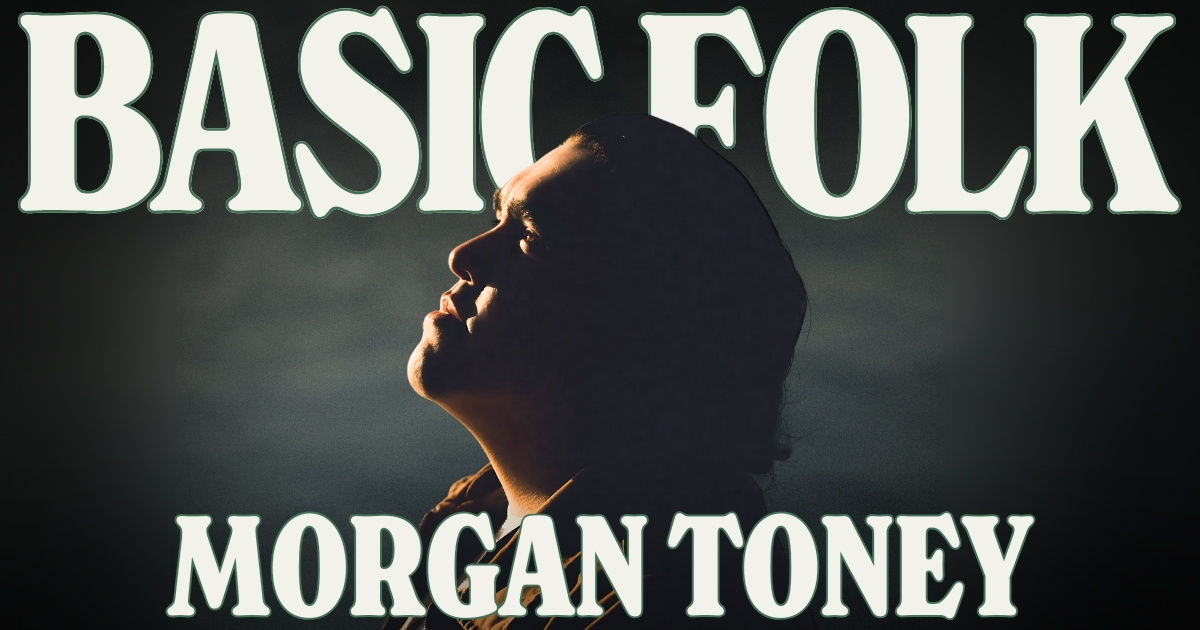
Circles have played a huge role in fiddler and singer Morgan Toney‘s life thus far: from drum circles, to talking circles, to the Earth itself (a circle!). In our Basic Folk conversation, Morgan talks about his L’nu (also known as Mi’kmaq) heritage and growing up on what’s now called Cape Breton, Nova Scotia, where his ancestors have lived since time immemorial. He elaborates on the significance of the terms ‘Mi’kmaq’ and ‘Nu,’ explaining the shift in terminology among his people. As a teenager, he discovered his Indigenous heritage and cultural roots from his elders after he moved to Wagmatcook (a First Nations reserve) and learned about how the power of music could shape his life. He shares the story of first hearing Phil Collins at his uncle’s house after school, which inspired him to take up the drums. He soon discovered First Nations drumming by directly learning the songs from elders in talking circles. Morgan also talks about his transition from a shy teenager to a confident musician deeply immersed in both Mi’kmaq and Celtic musical traditions, creating a unique fusion which Morgan calls “Mi’kmaltic.”
We also talk about Morgan’s emotional connection to his community and the importance of music in rediscovering and celebrating his Indigenous heritage. He recounts how his exposure to traditional Mi’kmaq songs and ceremonies as a teenager was a transformative experience that reignited his cultural pride. In music and in our conversation Morgan pays homage to his family members, especially his elders, who played pivotal roles in nurturing his musical talents and helping him embrace his cultural identity. Finally, Morgan reflects on his musical collaborations, including his close partnership with producer Keith Mullins, and the creation of his new album, Heal The Divide. He further explains the innovative process of blending Mi’kmaq and Celtic musical elements, the album’s thematic focus on community and healing, and his aspirations to inspire the younger generation of his community. This was truly an inspiring conversation exploring the intersections of culture, history, and music with a very special musician!
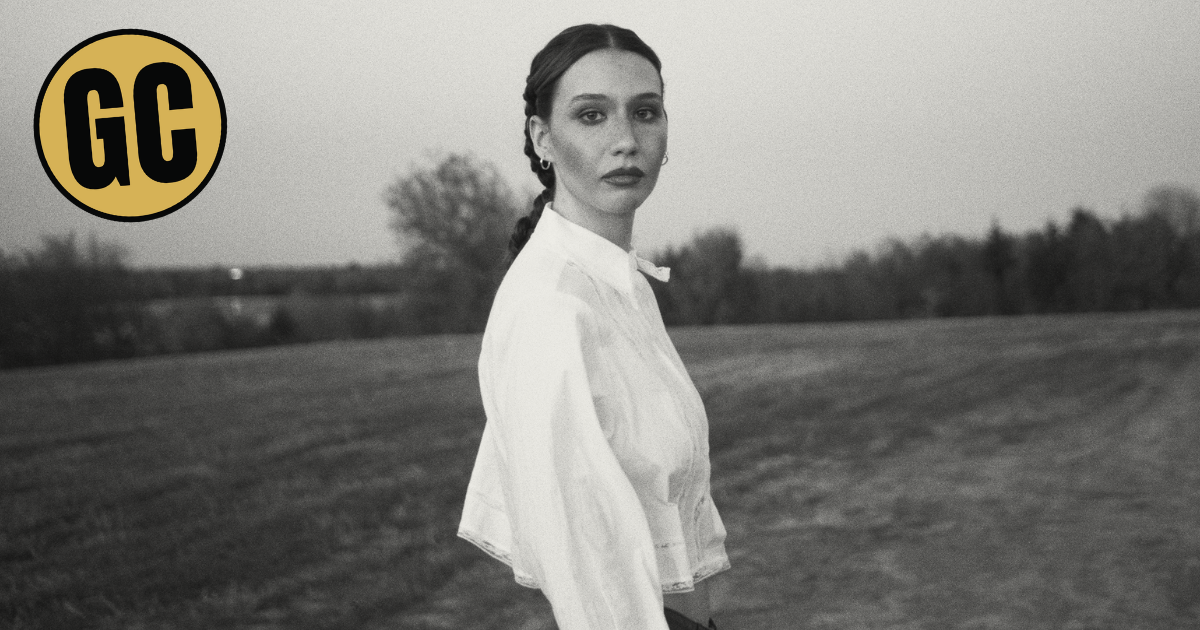
As an artist who believes the sad songs of the world could be a little sadder, of course there’s a haunting beauty to the work of Ken Pomeroy.
With her debut album, Cruel Joke, the 22-year-old Oklahoma-born Cherokee Nation member gives fans a gorgeous tribute to inner unease rooted in the wisdom of her own hard times. Pairing a feathery, lilting vocal with an earthy folk sound – plus metaphoric themes filled with animals and the lessons of nature – she looks back on a difficult upbringing, turning tears into sonic transcendence.
Pomeroy’s “Wall of Death” was featured in the 2024 film Twisters, and she’s been on the road with everyone from Lukas Nelson and Iron & Wine to American Aquarium and John Moreland. Good Country even featured the track “Cicadas” back in 2024. But with Cruel Joke, the world finally gets a full look at a “deep feeling” talent on the rise.
Speaking from her home in Tulsa, Pomeroy fills us in on the making of her debut album and an origin story with no punch line.
For folks who don’t know, tell us a little bit about where you’re coming from. You grew up in Oklahoma and you’re part of the Cherokee Nation, right? Does that show up in the tunes?
Ken Pomeroy: Oh, yeah. I never really tried to put it in anywhere. I think it just fits in naturally with how I write music in general. There are a lot of themes of nature and traditional storytelling elements that I include – animals and things of that sort – that I think carry through just naturally. And storytelling is such a huge part of pretty much every tribe, and specifically the Cherokees are huge storytellers. So I don’t think it’s a coincidence I’m writing songs and telling stories.
No, I bet not. I love the way you’re able to use animals. It seems like a great way to talk about yourself or other people, but through metaphor. Does [the use of animals] make that a little bit easier?
Absolutely, yes. I think kind of assigning someone something, it makes it 10 times easier, not so direct.
Like an artful way of saying something that’s hard to say?
Yes, absolutely.
Tell me a little about where your sound comes from. So many moments on Cruel Joke are hushed and haunting. What did you grow up listening to? Where did you pick up music?
Well, honestly, I’ve been playing music and writing for longer than I haven’t been. I really got started from hearing John Denver when I was 6 or 7 years old. That was the start. I wanted to do that and I wanted to make people feel like he made me feel at that moment. It was like a third eye opening about maybe I could do this. And the album, when I sit down and write a song, I am not thinking about production really. I just kind of write the song, me and my guitar, and then that’s the song. My partner, Dakota McDaniel, produced most of the record. It’s such a natural working. … It’s been so easy getting to the right final form of the song with Dakota and I’m really thankful that that worked out. For the record, we were listening to Big Thief and Buck Meek and Jake Xerxes Fussell. Jake was a huge inspiration with the instrumentation we used. It was a very steel-heavy approach.
I can hear that for sure.
It’s called Cruel Joke. What do people need to know about this album from your perspective?
I think from the beginning, with any of my music in general, I just don’t want people to feel alone in anything. I am a real deep feeler, so sometimes I feel like it’s just the tip of the iceberg with sad songs in the mainstream. I feel like they’re not as sad as they could be. I try to make people not feel so alone in those really deep feelings, just because I’ve kind of had to feel that.
Your songs definitely cut pretty deep, emotionally. Have you always been the type of person to root around inside yourself and stir things up?
Oh, yeah. Yes. I grew up very quickly and I had a lot of adult-sized feelings as a kid that I didn’t really know how to deal with. And dealing with these unresolved childhood feelings later on is not for the weak. I feel like everyone goes through it, and I’ve really always tried to stay in touch with just how I’m feeling, or what goes on in my head. Songwriting is how I feel like I do that.
You’ve had some big things happening, like with Twisters and being on the road with John Moreland. How do you feel about today’s appetite for the music you make? Are we ready for another folk revival?
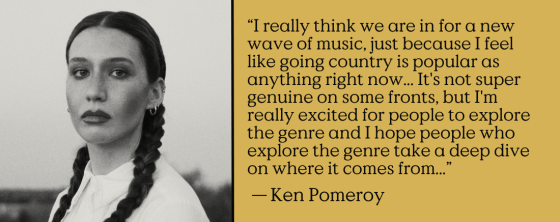
That’s a great question. I really think we are in for a new wave of music, just because I feel like going country is as popular as anything right now. Everybody is going country, which can be a little disheartening. It’s not super genuine on some fronts, but I’m really excited for people to explore the genre and I hope people who explore the genre take a deep dive on where it comes from and who were the pioneers, because it has so much history. I feel like country and bluegrass and folk music have so much history.
I read that you wrote one of these songs at 13, right? Does it still speak to you or still feel true?
Yeah, totally. It’s “Grey Skies.” I remember that being the first song I was ever proud of and I think that’s really special to have still around. Even though I might get tired of it, I have to remember my 13-year-old self was proud of it. But yeah, that was also the first time I feel like I really found “my thing” with writing. I included a lot of imagery with nature and animals and that was the first time I was like, “Maybe this is kind of my vein.”
Tell me about “Wolf in Sheep’s Clothes.” This one is a love song, but which person is the hidden wolf?
Oh, gosh. … Everyone laughs, because I say it’s a love song and then it’s called “Wolf in Sheep’s Clothes.” So it’s kind of like, “Well, is it?” But it definitely is. The person I’m writing to is a protector of some sorts, can see through all of the bullshit in the world that maybe I can’t see sometimes, and has my best interest. Whenever this wolf, whoever or whatever it may be, when the dark parts of life come around, this person can kind of clear through it and say, “You’re just a dog. Just get out of here, shoo.”
That’s interesting. How about “Coyote” with John Moreland? You guys toured together and I love the idea of looking at yourself like a coyote, sort of scared of the world. Why do you feel that?
I actually asked John to be a part of this before we started touring together and it was a huge deal for me, because I’ve been a fan of him for so long. I went out on a limb and texted him like, “Hey, I have this song and totally chill if you don’t want to do it, but I figured I would just stick my arm out and ask if you wanted to be a part of it?” And I think that he just said, “Yeah.” And I was like, “Okay, cool.” So that was a really cool thing.
That song was– so, my mamaw gave me the name [ᎤᏍᏗ ᏀᏯ ᏓᎶᏂᎨ ᎤᏍᏗᎦ], which means Little Wolf, but she called me Coyote. That was a big thing, because coyotes are not the greatest omen at all. They’re kind of like the trickster. So I grew up a little bit and remembered that that was my nickname and I was not happy with myself at that point. I think it was two or three years ago. I was just like, “Man, I need to do something different, because this is not who I want to start being or get on this path. I just don’t feel comfortable in my skin.” So I wrote a song. I wrote the song “Coyote” kind of being all right that I can be the coyote and also be the person I wanted to be.
Did it help?
Yeah, absolutely. I think so.
That’s good. How about “Cicadas.” This is one of the most energetic songs, in my opinion, and it’s got this line in there about the cicadas crying out to you. Why were they crying to you?
“Cicadas” was actually the first song that we recorded when we started the record. We weren’t even sure if we were going to do a record, but after that song, [we knew]. It was such an experience, because the ending of the song, when it kind of goes back and forth, that was a total accident. I did not mean to do that, but beautiful things kept happening in this song just completely by accident, so it was a really great sign of reassurance that we were doing something in the right direction. I was so, so worried. I had been working on my music for a bit, and I was like, “Man, I really hope this is the one.” … I wrote that song as I was about to turn 20 years old, and cicadas were always a constant in my childhood. That was one of the only constants that I just knew 100 percent they were going to be there every summer. And I wanted a reminder of that a little bit, just to maybe prove to myself, that there was something stable.
“Innocent Eyes” is such a beautiful track about, I guess, looking back on life with clarity. When you look back, what does the story look like?
Yeah, so “Innocent Eyes” is totally about taking off the rose-colored glasses. Looking back at some of the things you had gone through growing up, or even looking at your parents in a different way. Growing up, it’s really difficult to just see parents as people. “Innocent Eyes” is when you’re a kid, you think your parents can do no wrong and they’re there for you and that they want everything the best for you. And then you grow up and you realize they’re just people. They’re just people that had a kid. And in my case, I was a complete accident and kind of a product of something very quick, and so I was not necessarily meant to be here. And the two people that brought me here did not love each other whatsoever. And so I looked back at that wondering how that shaped me a little bit. And I think that’s where the song started.
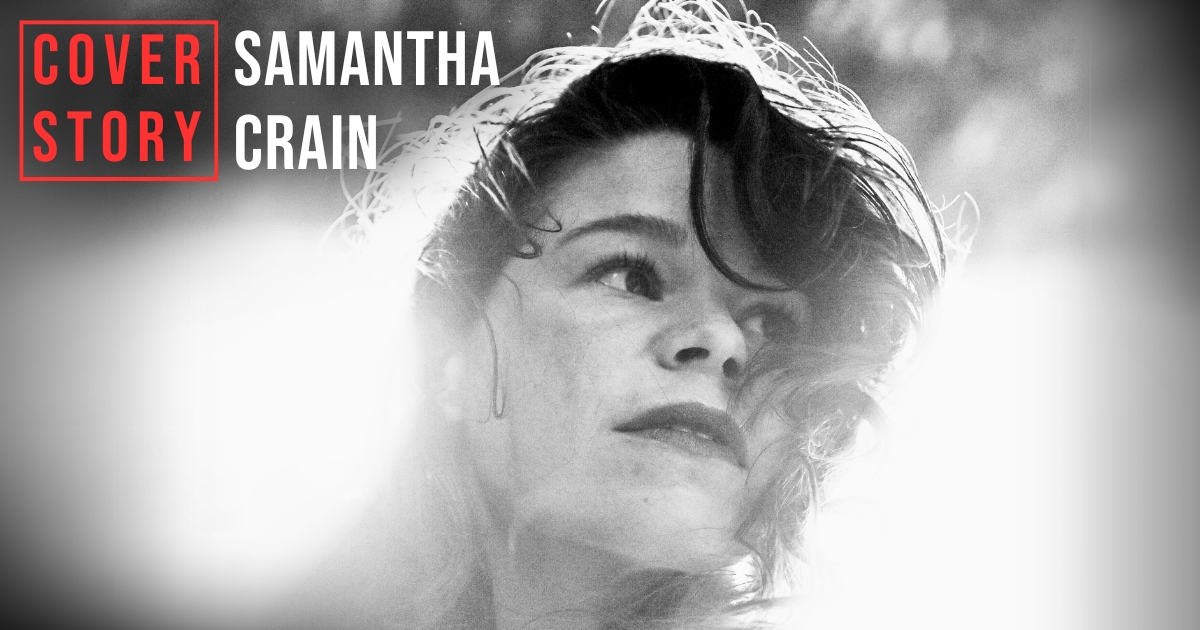
Growing up in Oklahoma, Choctaw singer-songwriter Samantha Crain found solace and calm in mid-20th-century film noir, Westerns, and Broderbund Software, Inc.’s cult Where in the World Is Carmen Sandiego? media franchise. Along the way, she developed a soft spot for the vernacular term for a private detective, “gumshoe.”
“I’d always write it in my notebooks, thinking I’d use it one day,” she says.
During her teenage years, Crain taught herself how to play guitar and began writing songs before embarking on a lifestyle on the road as a singer-songwriter, performer, and recording artist as she entered adulthood. Over the last seventeen years, she’s released seven albums and a bevy of EPs, singles, and collaborations, while evading any sense of hard stylistic classification. “Honestly, I don’t know that I have a lot of understanding of genre,” she explains. “I write the songs and then I think about what will serve them best.”
When she was in the early stages of writing her recently released seventh album, Gumshoe, Crain watched American film director John Huston’s storied 1941 mystery thriller, The Maltese Falcon. Afterwards, when she was scribbling down some ideas, she found herself returning to Humphrey Bogart’s portrayal of Sam Spade. “He’s the quintessential, emotionally detached private investigator,” she says. “I can see a lot of that personality in myself.”
From there, Crain felt compelled to write a song about two people with that disposition falling in love. “I immediately thought, maybe this is where I finally get to use gumshoe,” she says. “It became a song about the mystery of trying to solve interpersonal relationships.” Rendered through a dreamy concoction of guitar, percussion, strings, eerie sound design, and her yearning tones, that fact-meets-fiction scenario became the titular track on Crain’s new album.
From using the dragonfly as a metaphor for flexibility and resilience (“Dragonfly”) to exploring her relationship with the natural world (“B-Attitudes”) and revisiting memories that still haunt her, Gumshoe reveals itself as a mercurial blend of alt-country, Americana, breezy psychedelic rock, and close, bedsit folk. It’s one of those records that feels perfectly designed for the introspection of late-night drives, solo walks, or wherever else you find your moments of reflection.
Co-produced with Brine Webb and Taylor Johnson at Lunar Manor Recording Studio in Oklahoma City, the album documents a period of profound transformation within Crain’s personal life and how she relates to those closest to her. In late April, BGS spoke with Samantha Crain about all of the above and more.
How are you doing?
Samantha Crain: Good, yeah. The town I live in has a big free music festival going on right now. It’s always interesting maneuvering your way around town when it’s happening. I’ve spent my morning trying to get things done. This happens every year. I should really know better by now.
To paraphrase the late, great Sharon Jones, some of us have to learn the hard way.
Yeah. That’s probably a good example of most things in my life.
Do you have a philosophical stance that underpins what you do as a songwriter?
I don’t think of what I do as a songwriter as being separate from how I live my life. I’ve spent so much of my life being a lone wolf, very hyper-independent. Lately, I’ve started to explore the ideas of vulnerability and reciprocity within my personal relationships with my friends and family members. I’m trying to embody that there is no “is” and we can change by the minute.
In my ancestor’s language, the Choctaw language, there are no words for “is” or “are.” That speaks to their value. You can’t ever describe anything with certainty. You can only pair something with descriptors that describe it as it appears in a moment. Living in a less defined way feels more mentally and spiritually sustainable. It’s also more sustainable for me as an artist to embody that flexibility and impermanence.
At this point, you’ve been a musician for over half your life, right?
Yeah. Honestly, I have a pretty poor memory of growing up. I’ve got a bad memory in general. I don’t remember much about my life apart from what I’m doing currently.
Lately, I’ve been thinking a bit more about the relationship between someone’s lifestyle and the music they make.
Sometimes I’m very aware that even if I didn’t have this desire and ability to write songs and make records, I’d probably still be living pretty close to how I am now. I have this very deep curiosity in me to experience as much of life as possible while I’m still on this mortal coil. I don’t know that everybody has that same curiosity or desire, and that’s completely fine. I just think I’m lucky to have an outlet and an instigator to justify how I go about living through music and songwriting.
When you think about making Gumshoe, what are some of the first experiences that come to mind?
The first memory I have from this album is having to set an alarm really early in the morning, so I could have quiet time alone and try to be a lightning rod for whatever was awaiting me. I did that every morning for three or four months to make sure I could get the active writing part in. I remember sitting at the kitchen table in the wee hours of the morning with my iPad and my guitar, trying to make demos and get these songs out.
At the same time, I was working forty hours a week at another job and dealing with all these stressful things that kept happening. I’m still slightly surprised that I was even able to make this album, because over the last two or three years of my life, I’ve had a lot of really difficult things going on. I’ve been dealing with health, interpersonal relationships and family stuff. Amidst all that, I had to find a way to answer the call of active writing time, which felt impossible.
I always get fairly offended whenever it’s been a year or two between records and people want to talk about how long it’s been since I’ve had a record. It’s like, “Excuse me, I’ve just been living my life.” I don’t know what to tell you. It hasn’t felt that long to me. I’ve felt like everything is moving right on time.
There can be a level of cross-cultural confusion around what time even means.
Western societies run on capitalism’s watch. What good are you to those societies if you’re not producing something? It’s just not a value I have in my life, so I find it hard to match that energy.
I like that you made the distinction around active writing time earlier. You’ve got to have space for yourself as well. You can’t give everything away.
Not only can you not give everything away, but you can’t constantly be in bloom. Flowers are not constantly in bloom; there’s a good reason for that. There’s energy that has to be sustained through the seasons of life. If you can’t close up and protect that periodically, you’re never going to make anything for anyone else or yourself.
Can you talk a bit more about what you were exploring across the album?
The songs I was writing were me trying to wrap my head around what it means to be in really close relationships with people. This was something I hadn’t really let myself do before. I thought it would be really strange if I wrote all these songs about how I’m trying to get better at connecting, or allowing myself to be vulnerable with other people, and then I went and made it how I usually make records – which is a lot of single tracking, or people that are isolated in their own booths. That led us to all recording together in one big live room. That also led me to bring co-producers in, rather than being the main driver of all the ideas. It was really important for me to have the experience of being able to lean on other people. I just felt like I needed to match what was going on with me personally with the recording process as well.
After listening to the album and talking to you, it sounds like you’ve had a heavy few years.
Nobody can tell you about these experiences ahead of time. There are things you have to live through to understand. You can’t tell an eighteen-year-old that their sense of invincibility is an illusion. You can’t talk someone into having that knowledge. It’s just something they have to live long enough to understand.
Imagine how paralyzing it would be to understand these things at a young age?
I think if I’d had a full idea of what this life path – being a singer-songwriter and musician – would look like at the age I started, I don’t know if I would have done it. Now, I don’t regret any of it. I still wake up every day and choose to keep doing this because I love it, but I think the naivety, greenness, and blind confidence of younger people is a massive help in pushing us off in any sort of direction at all.
What do you think have been the significant turning points in your journey through all of this?
There’s an experience I’ve had that happened many times over the last twenty years. As an artist, you get to a point where you have a set of people helping you: labels, booking agents, managers, etc. Inevitably, people end up moving in a different direction. Every time somebody like that has to leave my circle, I feel like I’m being abandoned in some way. What has always somehow happened afterwards is that I’ve always been able to link up with someone else who helps me keep carrying on.
I am forever in awe of that pattern of feeling that I am in the right place, doing the right thing. I don’t just mean this with business people. I really mean this in life as well. A lot of times, the people who end up helping me in my journey as a songwriter and a musician also play a huge part in my life as friends, mentors or things like that. It really gives me a sense of comfort and trust in myself. If you’ve run out of gas and you’re on the side of the interstate with your thumb out, someone is going to come and help you quicker if you have a smile on your face and a positive attitude about it all.
Some people evoke the idea that you shouldn’t go into business without already having an exit strategy in place. Obviously, not many of them are musicians.
I never have an exit strategy. I’m just forced into the next thing.
It’s worth noting that in recent years you’ve been working on film and television soundtrack projects, such as scoring for Fancy Dance and Winding Path.
When you’re working in film and television, the amount of collaboration you have to do is so intense. It’s beyond any level of collaboration I’ve ever done with my own records. A big portion of making my records occurs in solitude. When you’re scoring films, the number of people you have to pass ideas through, or get the OK from, is massive.
Also, all the films I’ve scored for are about community and family in a way. They’re about connection and reciprocity. So far, they haven’t been about the lone wolf character, which I find good. If my first dip into scoring films had been for a detached, lone wolf character nobody understands, I think I could have gotten a bit too emo for my own good. So, I think it’s good that the projects I’ve been brought into so far have been more about connection.
What does it mean to come from Oklahoma at this point in your journey?
It is to exist somewhere you both can’t live without and can’t wait to return to. At the same time, you want to get as far away from it as possible. That dichotomy is the thing that got me on the road as a young person. I don’t want to only understand this one existence, but it’s also one of the only places where I feel like I make sense. If I were going to grow out of the ground somewhere, this is the only place I could envision myself sprouting out of. Unfortunately, being here reminds me of how hard it has become to be in nature. When I say, be in nature, I don’t mean trying to connect with something outside of myself. I feel like I’m a part of the planet’s ecosystem.
Growing up, I spent a lot of time in southeastern Oklahoma, in the Kayami Street River Valley with my cousins. Even as kids, we were living in a respectful communion. We knew if you saw a diamondback rattlesnake, you don’t mess with that rattlesnake. We were taught to walk softly through the forest and disrupt as little as possible, because we were passing through. I’m still in those same physical spaces, but as I’ve gotten older, knowing I’m becoming more and more disconnected from the natural world feels really strange. I haven’t thought about this much, but maybe this is why I feel this pull to remain here. Maybe it is because I haven’t resolved that, or gotten back to a place that feels right in that aspect of my life.
It sounds like there’s a bigger set of questions at work here. I will say this, though: there’s not much that’s more grounding than walking barefoot on the grass or dirt.
It is. I do it every weekend when I do Tai Chi at the park across from my house.
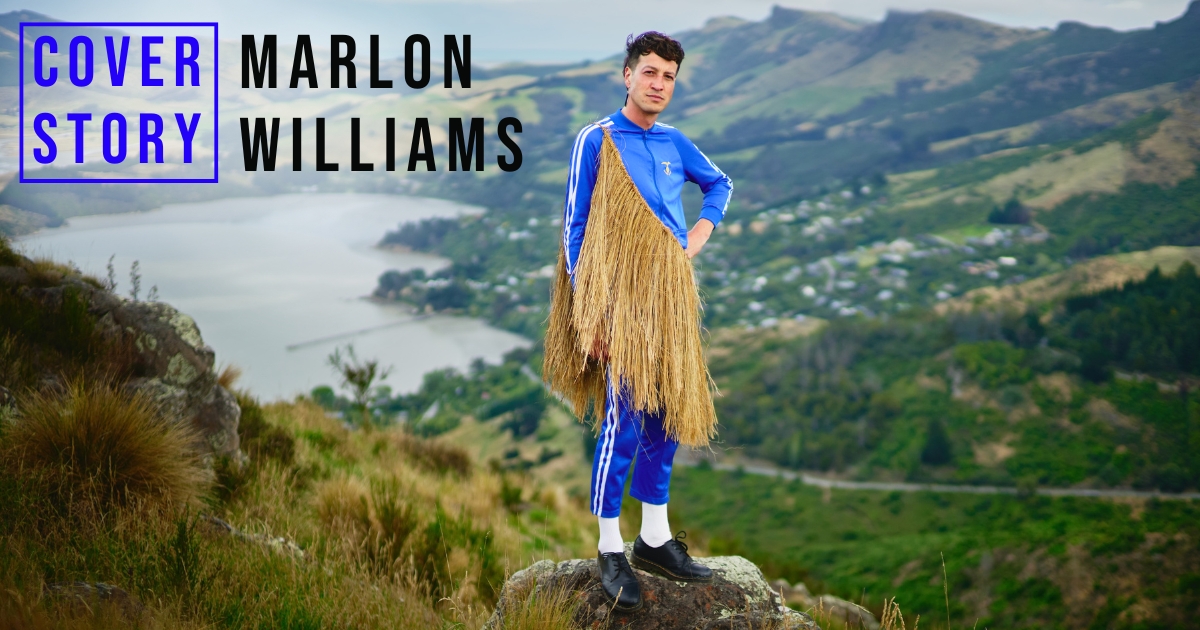
When he was in his early twenties, Marlon Williams watched a series of major earthquakes flatten Ōtautahi/Christchurch, the largest city in Te Waipounamu (the South Island of New Zealand). In the wake of that tragedy, the Māori New Zealand artist ascended onto the national and later international stage as a singer-songwriter, guitarist, and actor with a million-dollar smile and a golden, heaven-sent voice.
As a narrative device, it would be easy to enshrine his experiences during the earthquakes as a baptism by fire, a star emerging from the flames. However, as he puts it, “It’s tempting to say that experience fostered the folk scene here, but we’d been building something for a while before the earthquakes. When you look backwards through the haze of time, it’s easy to start telling yourself stories.” It’s a fitting reminder that things are never as simple as they look on the surface.
Now, fifteen years on, Williams is on the brink of showing us how deep things go with the release of his fourth solo album, Te Whare Tīwekaweka (The Messy House). In a similar tradition to the outdoorsy, range-roving sensibilities of his previous three records, the album represents an antipodean blend of country and western, folk, rock and roll, and mid-to-late 20th-century pop, connecting the musical dots between America, Australia, and Aotearoa (New Zealand).
This time around, however, Williams – a member of the Kāi Tahu and Ngāi Tai iwi (Māori tribes) – made the decision to step away from English and sing in his indigenous tongue, te reo Māori. Therein, his guiding light was a traditional Māori whakatauki (proverb), “Ko te reo Māori, he matapihi ki te ao Māori,” which translates into “The Māori language is a window to the Māori world.” As displayed by the album’s lilting lead singles, “Aua Atu Rā,” “Rere Mai Ngā Rau,” and “Kāhore He Manu E” (which features the New Zealand art-pop star Lorde), he’s onto something special.
During the reflective, soul-searching process of recording Te Whare Tīwekaweka, Williams found solidarity in his co-writer KOMMI (Kāi Tahu, Te-Āti-Awa), his longtime touring band The Yarra Benders, the He Waka Kōtuia singers, his co-producer Mark “Merk” Perkins, Lorde, and the community of Ōhinehou/Lyttelton, a small port town just northwest of Ōtautahi, where he recuperates between touring and recording projects.
From his early days performing flawless Hank Williams covers to crafting his own signature hits, such as “Dark Child,” “What’s Chasing You,” and “My Boy,” Williams’ talents have seen him tour with Bruce Springsteen and the Eagles, entertain audiences at Newport Folk Festival and Austin City Limits, and appear on Later with Jools Holland, Conan, NPR’s Tiny Desk, and more. Along the way, he’s landed acting roles in a range of Australian, New Zealand, and American film and television productions, including The Beautiful Lie, The Rehearsal, A Star Is Born, True History of The Gang, and Sweet Tooth.
From the bottom of the globe to the silver screen, it’s been a remarkable journey. The thing about journeys, though, is they often lead to coming home, and Te Whare Tīwekaweka is a homecoming like never before.
In early March, BGS spoke with Williams while he was on a promo run in Melbourne, Australia.
Congratulations on Te Whare Tīwekaweka. When I played it earlier, I thought about how comfortable and confident you sound. Tell me about the first time you listened to the album after finishing it.
Marlon Williams: It was that feeling of nervously stepping back from the details and seeing what the building looks like from the street. I felt really pleased with how structurally sound it was.
What do you think are the factors that allow you to inhabit the music to that level?
I’ve spent my entire life singing Māori music. No matter my shortcomings in speaking the language fluently and having full comprehension in that world, the pure physiology of singing in te reo Māori has been my way in. There’s a joy and a naturalness that has always been there. That gave me the confidence to take the plunge and really enjoy singing those vowel sounds and tuning on those consonants.
We’ve talked about this before. Part of what facilitated this was singing waiata (songs) written in te reo Māori by the late great Dr. Hirini Melbourne when you were in primary school (elementary school).
Those songs are so simple and inviting, especially for children. They really help you get into the language on the ground level. A lot of what he did for this country can feel quite invisible, but most of us have some knowledge of the sound and feeling of the language as a result. It feels like a really lived part of my upbringing. His songs gave me a push forward into something that could have otherwise felt daunting and deep.
For those unfamiliar, could you talk about who Dr Hirini Melbourne was?
Hirini Melbourne was a Tūhoe and Ngāti Kahungunu educator and songwriter from up in Te Urewera [the hill country in the upper North Island of New Zealand]. He was born with a real sense of curiosity about the world and a sense of braveness and self-belief about taking on Te ao Māori [the Māori world] and bringing it to people in a really straightforward way. Hirini decided the best way was writing songs children could sing in te reo Māori about the natural world around us.
If you listen to his album, Forest and Ocean: Bird Songs by Hirini Melbourne, you’ll also see a lot of Scottish influence in terms of balladeering, melodies, and instrumentation. Later, he started collaborating with Dr. Richard Nunns. They’d play Taonga pūoro [traditional Māori musical instruments] and go into some very deep and ancient Māori music. Hirini’s whole career was this beautiful journey that was tragically cut short [in his fifties].
When I think about your music, I think about historical New Zealand country musicians like Tex Morton and John Grenell, who emerged from Te Waipounamu before finding success in Australia and America in the mid-to-late 20th century.
I wasn’t super aware of that tradition until I learned about Hank Williams and completely fell in love with country music. After that, I realised there was a strong tradition back home. I guess it gives you a sort of reinforcement, a sense of history, and a throughline you can follow to the present moment.
I also think about New Zealand’s lineage of popular singers. People like Mr Lee Grant, Sir Howard Morrison, John Rowles, and Dean Waretini, who I see as antipodean equivalents to figures like Roy Orbison, Scott Walker, and Matt Monro. What does it say to you if I evoke these names around your album?
A lot of the celebration around this record is the celebrating the ability of Indigenous people – in this case, Māori specifically – to absorb what is going on in the world and make something from it. You can think about it in other terms, but I think about it in the sense of creativity. If you think about Māori religions like Ringatū [a combination of Christian beliefs and traditional Māori customs], there’s this willingness and this sort of epistemological elasticity to be able to go, “Oh, these things make sense together.” I can wield this tool. I’m going to come to it with my own stuff and create something unique and strong that is a blend of worlds. The main energy that was guiding me on this record was that tradition of synchronisation.
When do you consider to have been the starting point for Te Whare Tīwekaweka?
The literal start point was May 2019. That was the first time I sat down, had the melody and the structure of “Aua Atu Rā” and realised there was an implication in the music of what the song was about. This lilting lullaby was emerging. I’d say it was boat stuff. That was the first moment when I realised I was writing a waiata. I didn’t quite have it yet, but the phrasing was in [te reo] Māori, and I knew where it was telling me to go. At the time, I had a [Māori] proverb in my head, “He waka eke noa,” which means, “We’re all in this boat together.” I’ve always struggled with it. I believe it’s true, but we’re also completely alone in the universe.
From there, everything locked into place.
It strikes me that feeling connected could be considered an act of faith. You have to believe that it’s more than just you.
If I think about faith, I think about surrender, being humble, having humility, and going to a place I can acknowledge as new ground. I think faith is a useful word here.
Tell me about the conditions under which Te Whare Tīwekaweka came together.
It was pretty patchy in terms of the momentum of it. Once I had “Aua Atu Rā” loosely constructed, I took it to Kommi [Tamati-Elliffe], who helped me make sense of the grammar. After that, it sat there for a bit.
Kommi is a writer, rapper, poet, activist and lecturer in Māori and Indigenous Studies and te reo Māori. They perform te reo Kāi Tahu, the dialect of the largest iwi (tribe) within Te Waipounamu (the South Island of New Zealand). How would you describe them?
Kommi is a shapeshifter. I can’t work out how old they are. I found it hard to work out what they thought of me, but I knew there was this lovely softness there that belies a lot of deep thinking and some real sharpness. They’re very enigmatic as a person and a creative entity. One time, we got drunk at a party and talked about some work they were doing on phenomenology through a Te ao Māori lens. We were talking about that and making the most crass puns imaginable. There was this dichotomy of high-level and low-brow thinking that felt really playful.
What you’re telling me is you felt safe with them?
I guess. That’s all I can hope for in a collaborator.
Let’s get back to Te Whare Tīwekaweka.
After I’d been sitting on “Aua Atu Rā” for a while, my My Boy album came out. In retrospect, you can also hear a lot of the direction that eventually went into Te Whare Tīwekaweka was already starting in My Boy. That took off for a bit, but all the while, I was back-and-forthing on songs in [te reo] Māori with Kommi. They’d send me lyrics all the time and I’d play around with them without really committing anything to paper.
Once I was near the end of touring My Boy, I started to turn my attention back to Te Whare Tīwekaweka. Then I agreed to let the director Ursula Grace Williams make a documentary about me [Marlon Williams: Ngā Ao E Rua – Two Worlds]. I thought, “Right, they’re filming me, so I better do what I’m saying.” Part of the intentionality was that the documentary would frame it into a real thing and make it happen. There was nowhere to hide.
Across the album, you sing about living between worlds, love, the land and sea, the weather, solitude, and travel, often through metaphors that invoke the natural world. Why do you think you gravitate towards these themes?
On a very basic level, I’m a very sunnily disposed person in terms of the way I comport myself. I feel desperately in love with people in the world and feel terrified of losing people, situations or understandings. These are the things I think about. The fact that I write songs like this is my outlet for ngā kare-ā-roto [what’s going on internally] and my darker side. I like to be warm and friendly in how I deal with people, but a little bit more severe when it comes to matters of the heart.
What do you think it has meant to make an album like this right now in Aotearoa and Te Waipounamu (New Zealand)?
Personally, I have a sense of achievement from having built something in that world. It also does something for my sense of family, in terms of representing a side of them very publicly that hasn’t always been accessible to them. There’s a lot of Kāi Tahu dialect on the album, so in terms of iwi, it feels good to put something on the map that speaks directly to the region. At the same time, this all sits within a very heated and fractious national conversation. On one level for me, it’s by the by; on another level, it’s great to have Māori music accepted into the mainstream. Whatever the political conversation going on is, if you can compel people with music, you’re really winning the battle on some level.
Taking things further, what do you think it means to be presenting Te Whare Tīwekaweka to a global audience?
Most places I go overseas, there is a sense of goodwill and excitement about marginalised languages being platformed. There’s a broader appetite due to people having instant access to a range of music through the internet. The threads you can draw together now are so vast and ungeographically constrained that I think people’s Overton window of what they’ll sit with and take in, even without knowing they’re not fully comprehending it, has shifted. I think people are generally either really open to that or completely shut off, which is something I don’t personally understand.
We can’t get around talking about Lorde singing on “Kāhore He Manu E.” It felt like she really met you where you were standing.
This speaks to the album in general. It was about bringing things to where I was standing. I didn’t want to jump into anyone else’s world. I had it in the back of my mind that I wanted her to sing on it. In the past, she kindly offered, “If you ever want me to sing on something, I’ll do it.” I could hear her on it from the moment I started writing it. There have been a few songs like that which have been very easily labored. They don’t take much writing and are always my favorite songs. It was important to me to get her involved in a way that wouldn’t be a post-hoc addition. She had to be part of the stitching of the record itself.
How do you feel in this moment, as you prepare to see what happens next?
I’m just excited to get these songs out into the world and see what they morph into when I start getting on stages and seeing what they do in a room. That’s going to change the way they feel and the way they want to be played. The second creative part of it is getting to the end of the tour and realising that the songs have become completely different from on the record. That can be a fun thing. Sometimes, it leads to remorse that you didn’t record them in the way they’ve gone. Other times, you realise you’ve completely ruined the song and gone away from what was good about it. I’m excited for the deployment.
Jake Blount & Mali Obomsawin’s new album symbiont is a dense nest of references across a century of Black and Indigenous music and sound making, worked into the warp and weft of synthesizers and electronic production.
The liner notes detail Obomsawin’s trips to Blount’s apartment in Providence, Rhode Island, where the two would work through music, books, and other texts they had collected, compiling sounds and ideas, building up the whole project’s sound. The album bridges the hyperlocal and the global, across time, in a historically-minded, futurist radical gesture, refusing the silence of official archives and restoring voices lost to colonial violence.
The album was released by Smithsonian Folkways, which has a history of preserving a worldwide range of music, but also industrial sounds, the songs of birds, and the noises of frogs and toads. Obomsawin’s previous band Lula Wiles was also on the label. Folkways is an archive that is institutional though, literally funded by the government, and it is often colonial – they gave money to white officials who collected songs on reservations, in prisons, and among communities where saying no was an economic or social impossibility. The official archivists, given imprimatur by the Smithsonian, and the unofficial archive, compiled by these two musicians who are working personally, across time and space, to commemorate the social and political will of marginalized people, is a difficult balance.
In a conversation over Zoom, Blount makes the archival practice explicit saying that the process “became a way for me to co-opt this thing that I have often felt; [that] archives exist to deny dead Black people our agency and cut off our communal traditions from the community.”
The community here is as small as two people in a room, or in a Zoom call, but also collapses historical pasts, the apocalyptic now, and a possible, hopeful Afro/Indigenous future. When asked about how this album was in conversation with the colonial history, Obomsawin makes the political claim as explicit and as communal as Blount, saying that this album is “in conversation and asserting continuance for our colonized ancestors and our future descendants who have overthrown their colonizers.”
How to do that overthrowing is not an abstract or intellectual consideration here. There are calls for direct action. In one of the album’s spoken word sections, an ancient outside of time and space discusses how humanity cannot be either created or destroyed, but it is like a great river (like Langston Hughes’ river) that the energy flows through.
The material throughout this album is part of that great river, and so it includes texts like Slave Songs of the United States (ed. William Francis Allen, Charles Pickard Ware, and Lucy McKim Garrison) and Indian Melodies by Thomas Commuck, who is described by Obomsawin as a “Native American author, Commuck (Narragansett/Brothertown), [who] began his life in a community heavily influenced by the Methodist Episcopal Church with the tradition of singing shape note hymns.”
The ancestor work here is nuanced as Obomsawin refuses to view Commuck as a simple victim of settler violence, acknowledging the intellectual work of his hymnal, while also acknowledging that his learning the shape note involved an erasure of more traditional forms. Obamsawin’s inclusion of western plains singing on the recordings of Commuck function like Jeremy Dutcher’s album Wolastoqiyik Lintuwakonawa, who traveled to the settler capital of Ottawa to access wax cylinders of the almost extinct songs of his people – cylinders stolen from them. Maggie Paul, an elder and song keeper from Dutcher’s community, told him to bring the songs back. symbiont does something similar.
The songs gathered here are a model of how stories from the Atlantic Triangle and from the expulsion of Indigenous people from their native homelands can be made new. These songs are stories, of stars falling out of the skies, but also of the gathering of community or private devotions. The gathering of the community is a successful part of the project.
On this album, Blount and Obomsawin inherit the hymns of colonization, hymns that were remade by Indigenous and Black writers, performers, and thinkers. On “Mother,” there is an interleaving of singing over drums and synths; a gorgeous version of the hymn “In the Garden” is scarred with feedback, synth interruptions, and technological glitches, emphasizing the shift from male to female pronouns. These formal choices interrupt the edenic expectation of the song’s tradition, while still acknowledging where the text originated from. Jazz and electroacoustic performer Mantana Roberts did similar work with the hymn in her work Coin Coin Chapter 5 – there are always riffs, always new ways of working out old songs.
The expulsion from the garden into new sounds can also be seen in the song “Stars Begin to Fall,” with the jazz stalwart Taylor Ho Bynum. Percussion and gourd banjo undergird Obomsawin’s rich harmonies singing, “When you hear the master fall as he topples from his throne…” There is a profound impact, a direct route to the kind of political work of community.
Obomsawin is in conversation with Blount; Blount and Obomsawin are in conversation with Bynum; Bynum, Obomsawin, and Blount are in conversation with Slave Songs and William Francis Allen, Charles Pickard Ware, and Lucy McKim Garrison. And, the history of the slave song, which originated American popular music. This is an album about the earth, so when “Stars Begin to Fall” talks about horns, Bynum makes his cornet flutter, speed, appear and disappear. He turns that instrument into a bird, with all of the contradictory metaphors of containment and freedom within it.
The river which carries these stories is one which loops, breaks, and returns – it has not one source, but dozens. This borrowing, this community, the pulling out of narratives, the flow, has been blocked.
There are two songs here by Alan Lomax, the folk song collector, whose relationship to the medium has become incredibly vexed. Blount, when asked about what it means to include Lomax in this canon making, his response is as patient, as angry, and as generous as the rest of the record: “I understand that this may be something he did with the best of intentions. I don’t mean to impugn that in any way. I think we are now at a point where we need to start examining. If there’s a solution to release those copyrights. I don’t know legally if that can be done, but something’s got to change, because at the point where you have Black people sampling recordings of our ancestors on their songs and they have to credit John and Alan Lomax as co-writers on that song… I had to credit a white man for my song that I wrote, because he happened to record some other Black people one time.”
This album is a reclaiming, not of authorship, but a collapsing of time and space. It’s an album of new narratives of creations, against copyright, and against Euro-centric narratives of how we imagine folk music to sound like and about what the audience means. This is an album intended for liberation, one in conversation across time and place. Specific time and place are key to the aesthetic and political work of Blount and Obomsawin – work that refuses to ask permission.
When they sing, “Come down ancients and trouble the waters/ Let the saints come in…” on the perfect, revelatory, and haunting track “Come Down Ancients,” the invocation towards the saints is as small as two people in an apartment, as smart as a grad school seminar, and as expansive as centuries of art making, both heard and unheard, censored because it scared or intimidated those who colonized.
That symbiont has no interest in asking permission anymore makes it a most radical act of reclamation.
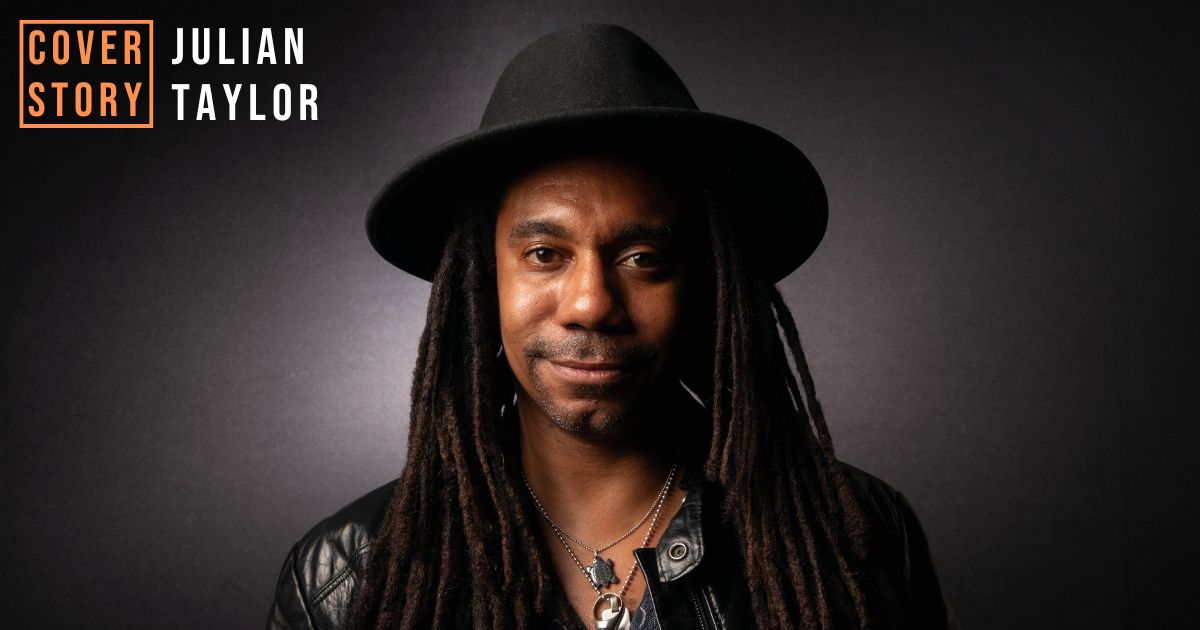
Much like the songs on his latest album Pathways, the sounds swirling around Canadian singer-songwriter Julian Taylor on our recent phone call for BGS were also filled with curiosity, emotion, and the subtle, intrinsic tones of a modern world unfolding.
Walking the streets of his native Toronto, the introspective depths of Taylor’s voice and pure sentiments radiated in conversation were only complemented by the organized chaos of an international city in motion. Honking of taxi cabs at clustered intersections; the thrust of train cars on the underground subway; other conversations of varying degrees of volume in passing. And Taylor himself.
“Don’t the grass look greener on the other side/ but be careful of what you wish for could get left behind,” Taylor weaves through “Ain’t Life Strange.” “I see where I went wrong and all I could have done. There’s a fine line between a broken and beautiful mind.”
Those lyrics in particular speak to the long, arduous, yet bountiful road for Taylor. At 46, he’s spent his entire adult life in pursuit of creative fulfillment and stability in an often haphazard industry. In his tenure, Taylor’s seen the high-water mark and complete collapse of the music business – and then some.
Co-founder of 1990s Canadian alt-rock act Staggered Crossing, Taylor found himself in big meetings with even bigger record label executives. The band was signed by Warner Music Canada and earned some limited success before being dropped by the label not long after their debut album hit the streets.
From there, it became a DIY ethos at the heart of Staggered Crossing. But, after a handful of albums and plateauing popularity, the group split in 2007, ultimately leaving Taylor out on his own. But, he trudged ahead, even if he was unsure of his next move, whether personally or professionally.
Frustrated and burned out by the music industry, Taylor circled back to a beloved bar of his, the Dora Keogh Irish Pub in the Danforth neighborhood of Toronto. There he summoned the courage and energy to start an open mic night. With a stripped-down set of simply Taylor and his guitar, he quickly found this new path of intent and purpose for the music within him.
From there, it’s been this ongoing journey of self and of song for Julian Taylor. What has resulted is this soothing voice of determination and compassion pushing steadfast into this latest chapter of his sound and scope.
I was recently in Toronto for the first time and it felt like one of the most culturally and sonically diverse cities I’ve ever come across.
Julian Taylor: Yeah, definitely. It’s been that way ever since I was a kid. It was a real small town when I was born, but it’s just grown exponentially. The music thing has been extremely positive. People really do support each other and everything. Like, it doesn’t really matter where you’re coming from.
What does it mean to be a songwriter from Ontario and greater Canada? I mean, you have some of the best of the best. Gordon Lightfoot, Gord Downie, Neil Young, Joni Mitchell, Leonard Cohen. The list goes on.
It’s an honor. I’m happy to be from here. You have the rich heritage that I have and the rich musical landscape that we grew up with. A lot of people don’t really know that so many of these artists, like the people that you’ve mentioned, are Canadian. We’ve had such an incredible influence on the world. I think a lot of that has to do with the cultural mosaic and landscape we live in. I mean, it is not easy to tour this country. And we sort of grind our teeth here a lot of the time. So, when you do that, it makes you a little bit more appreciative of any sort of accolades or any sort of impact that you may have on the world.
When I was reading your backstory, you must have been a teenager when you started Staggered Crossing.
Yeah, I was pretty young. When we first got signed, it was at the tail end of, I guess, what you would want to call the high-water mark. We didn’t get to really experience that. We experienced the very last little bit of it. And then the entire industry changed. I’ve seen it change so many times in my career. And I started when I was 16.
What was it that kept you going after Staggered Crossing broke up? Was it just this idea that, “Hell or high water, this is what I’m going to, no matter what”?
Part of that was it. The other part of it was encouragement. The fact that any of my songs resonated with anybody really was the main point. You’re like, “I’m going to do this no matter what, because this is my calling and this is my passion, this is my purpose.” But, when you have those things validated by other people? That’s just a huge gift. The fact that people would continue to book me and play my stuff on the radio or people would come to shows and tell me that my music meant something to them. With that kind of encouragement, it’s really hard to stop going.
With Staggered Crossing being signed and going through the motions of very large corporations, what were some of the things you took away from that experience you applied to your solo career?
I think it all happened afterwards, really. Not during that period of time, because afterwards we had to fend for ourselves. But, it was the first time that the do-it-yourself mentality was put into place. We didn’t even know what DIY was. I just ended up doing it because I wanted to get my music out there. I wanted to keep touring, to continue to create records. So, I did anything and everything I could to keep that happening. I learned a lot about the business, about promotions, marketing, and distribution. Basically, everything a label would do for an artist, I learned how to do it alongside my friends and we kept on pushing ahead. It was hard and also easy at the same time, because it was something I wanted to do. It certainly tired me out at one point in time. I was so disenchanted with music that I stopped and then I came back with a brand-new sort of outlook on it.
What does it mean to be at this juncture of your career and still be just as curious, and always mining for the next song, as ever?
That’s a good question, man. It’s really about the job and the task at hand. And the job is to document the human condition through my experiences. World domination is still on the back burner. [Laughs] As an artist, it’s about putting in the work and that work is really hard to do. It’s emotionally exhausting. It’s physically exhausting. But, at the end of the day, when you look at yourself in the mirror and think about it, “I’ve written these beautiful songs and they’ve brought beauty to people’s lives.” And these performances have brought beauty to both of our lives – not just theirs, but to mine. It’s a two-way street.
Where does that work ethic come from within you?
Maybe it’s the Jamaican side of me. [Laughs] It’s definitely a family thing. My family on both sides have worked so hard. My mom’s side of the family has sacrificed and worked so hard. And my dad’s side, who migrated [to Canada]. On my mom’s side, we were here to begin with. And my dad’s side, they came here with not a lot to go on, and discrimination and things like that. They worked their asses off and always told me I would have to work 150 percent harder than anybody else because of my background.
And have you?
From a very young age.
Do you find they were correct with that assessment?
Yeah, they’re still correct about that. And, I don’t really know how and when that’s going to change. There are more opportunities reported to people now that are minorities, but the reality of having to work that much harder is still a truism. That’s unfortunate. But, you know what? I dare to ask anybody from the minority to say that something hasn’t benefited them from that work ethic.
As you were trying to move forward after Staggered Crossing, you started this open mic at a bar in Danforth. Were you kind of circling back to where it all began and recalibrating things?
Yeah. I used to work at that same Irish pub in the Danforth. I was a bus boy and also a server. One day, some old guy came in and he was just so rude to me, so racist. And I thought to myself, “What am I doing? I’ve got to do something about this.” That was the catalyst that got me back into performing music. The proprietors of that establishment offered the open stage to me on that Monday to help me get going again. They’re some of the greatest friends I’ve got in this world. And it was funny because, after Staggered Crossing, I just couldn’t go on. I had tried so hard to “make it” and it was such an uphill battle. Pushing a boulder up a hill. I gave up and needed some time. And then when the open stage came back, it was a community thing. I rallied around people and they rallied around me. And it’s still a musical community out here in the city. It all comes down to community.
Why did you title the album Pathways?
Pathways felt like a journey. It’s been so long getting here, you know? I’ve got 12 studio records in my name and a couple of live records. I’ve toured extensively for the last 20 years. And this felt like a record that I needed to go inward, rather than outward. Some of my records are very contemplative of the outside world. And this one, I was contemplating my inside world – what was in my head, my heart and soul. Trying to battle through some of the things that go on in everyday life decisions and choices I’ve made. The pressure of the last two records and creating a new record was on me. I was feeling that and decided Pathways was a really good metaphor for where I was headed, where I’ve gone, where I’ve been. I’m not sure where it’s going to take me next, but it just felt like a nice walk in a cool breeze.
Since the 2020 shutdown, there’s been, thankfully, a lot more conversation in the music industry about mental health and physical wellness. Does that play into where you’re at right now?
It does, yeah. I think about it every day. It’s really hard to make it as a musician. And it’s really hard to be a human in this world. I’ll be the first to admit that I go through a lot of stuff in my head. I’ve never been diagnosed with a mental illness, but I wouldn’t be surprised if I have something. I feel it a lot, the pressure to keep making a living, so that I can keep a roof over my head and my family fed. I could walk away from music if I had to, but I don’t want to. I don’t know if that would make me happy or not.
But, when it comes to fiscal responsibility, that’s a lot of stress. And then, there’s the stress social media puts on us, where you get attacked for no reason by people who don’t even know you. Sure, there’s a lot of praise going on, but there’s a lot of the other stuff, too. And now everything’s sort of been put into the musician’s hands. It’s a bit of a mental dilemma. I’ve lost a lot of people this year and that was part of that as well. You know, it’s life. People think people in the public eye or musicians putting themselves out there have rhino skin and they’re superhuman — but we’re not.
Today, critically acclaimed roots musicians Jake Blount and Mali Obomsawin (Odanak First Nation) have announced their upcoming collaborative album, symbiont. The news comes with a first listen, “My Way’s Cloudy,” featuring Joe Rainey (Red Lake Ojibwe) and an entrancing video directed by Lokotah Sanborn. (Watch and listen above.)
The album, set for release September 27 on Smithsonian Folkways, builds loosely on the storytelling of Blount’s lauded 2022 project, The New Faith, imagining a not-so-distant future world marked by climate disaster and civil unrest. Utilizing Blount’s expertise on discovering, uncovering, and showcasing vernacular music often forgotten or overlooked by folk, old-time, and the greater roots music communities, the duo look forward by looking back. “My Way’s Cloudy,” for instance, is described in a press release as “a spiritual collected from formerly enslaved Black people at the Hampton Institute – mere miles from where Jake’s family originates.”
But, as the track demonstrates, Blount and Obomsawin defy expectations and longstanding traditions of “song collection” or colonialist archiving that’s typified this type of repertoire building in the past. As they declare in the album materials:
“symbiont is a remix album,” they explain. “The works included here synthesize instruments, songs, teachings, and oratory from different traditions with modern literary, political, and compositional sensibilities (and even a dash of ‘hard’ science). The interactions between these disciplines give rise to the musical, ideological, and spiritual synergisms that undergird symbiont – and also to points of intense conflict.”
It’s clear this “genrequeer” project will be transformative and revolutionary – literally and figuratively. “My Way’s Cloudy” is ethereal, grooving, and dark, but with a glint; a slight sheen that denotes even in the proverbial (or demonstrable) end times, there’s art to be made, conversations to be had, and stories to be told, kept, and carried on. Between Blount’s curatorial and ethnomusicological knowledge, Obomsawin’s remarkable compositional and free jazz chops, and the duo’s multi-instrumentalist skills, these old-time folk remixes – made with assists from incredible collaborators and often, plants as music-makers! – symbiont will illustrate so many of the intricate ways by which music can transcend time, alter history and the future, while having a striking purpose in the present.
symbiont is impeccably described as “Indigenous and Afrofuturist folklore,” but do not mistake these songs and their inspirations for fantasy. If there’s one thing Blount and Obomsawin can accomplish together, it’s grounding such a high concept project in reality and the everyday. This will be a must-listen album, as “My Way’s Cloudy” foretells in so many ways.
Photo Credit: Abby Lank
This website uses cookies to improve your experience. We'll assume you're ok with this, but you can opt-out if you wish.AcceptRejectRead More
Privacy & Cookies Policy
Privacy Overview
This website uses cookies to improve your experience while you navigate through the website. Out of these, the cookies that are categorized as necessary are stored on your browser as they are essential for the working of basic functionalities of the website. We also use third-party cookies that help us analyze and understand how you use this website. These cookies will be stored in your browser only with your consent. You also have the option to opt-out of these cookies. But opting out of some of these cookies may affect your browsing experience.
Necessary cookies are absolutely essential for the website to function properly. This category only includes cookies that ensures basic functionalities and security features of the website. These cookies do not store any personal information.
Any cookies that may not be particularly necessary for the website to function and is used specifically to collect user personal data via analytics, ads, other embedded contents are termed as non-necessary cookies. It is mandatory to procure user consent prior to running these cookies on your website.