If You Love Boygenius, You’ll Love These 18 Folk Bands

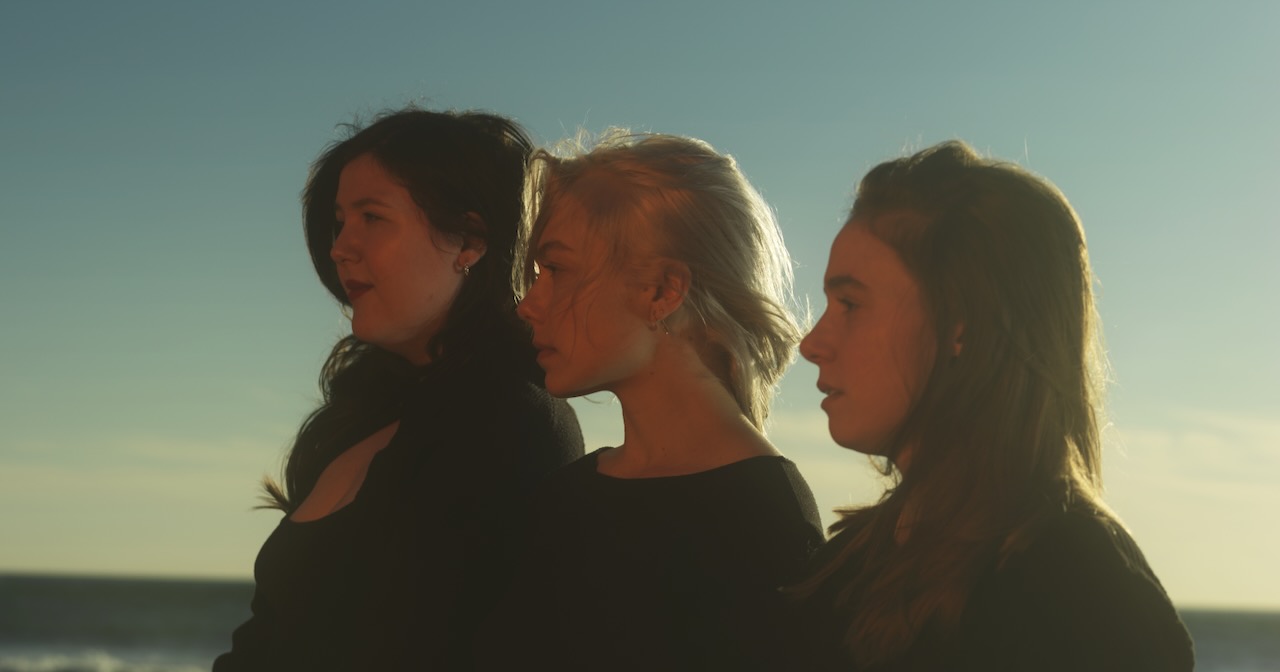
Can’t get enough of the record by boygenius? We understand and empathize. Did your ears perk up immediately when you heard the twinkle of the banjo on “Cool About It?” Do you rewatch the video of Julien Baker, Lucy Dacus, and Phoebe Bridgers performing The Chicks’ “Cowboy, Take Me Away” over and over and over again? If so, this list is for you. 

It’s not hard to place boygenius within the universe of folk music and its endless variations, with their perfectly blended, nearly familial harmonies, their lyrics and song structures that are so singable, cyclical, and relatable, and the way, together, they exceed the sum of their individual parts by leaps and bound. Comparisons to other iconic supergroups – Dolly, Linda, and Emmylou’s Trio, or Crosby, Stills, Nash, & Young – illustrate further that boygenius are often a string band and always a folk group. 

We’ve collected songs from 18 other folk groups that also center female and femme friendship, slippery harmonies, and egalitarian ensemble arrangements in their music. If you adore boygenius, these acoustic bands are for you. 

(Editor’s Note: Scroll for the playlist version of this collection.)

JOSEPH

The band JOSEPH’s latest release, The Sun, is perhaps their furthest foray into pop- and indie-folk, with a sound that’s not just adjacent to “the boys” of boygenius, but often parallels the genre and aesthetic territories explored by the latter trio. These songs are rich and fully realized, from the tender and contemplative to full-bore rock and roll. Remind you of anyone? 

Rainbow Girls

We’ve loved watching this California-based group grow and expand their listenership across the country and around the world, from the Bay Area to Cayamo and beyond. Like boygenius, Rainbow Girls have quite a few joyous, smile-inducing cover videos that are wildly popular on the internet, but the group really shines while singing sad, introspective songs that still make you feel so good. 

The Wailin’ Jennys

Since their first studio album in 2004, the Wailin’ Jennys have become one of the most beloved vocal trios in bluegrass, old-time, and folk music, with a robust, devoted international fan base. Perhaps best known for their appearances on public radio, the Juno Award-winning ensemble is in a phase of part-time, infrequent touring while balancing motherhood and solo projects, too. Their cover of “Wildflowers” remains one of the most popular BGS posts in the history of the site. 

The Chicks

An important addition to this list – the aforementioned “Cowboy, Take Me Away” cover by the boys notwithstanding – the similarities between the Chicks and boygenius are many. Righteous anger, agency, and collective rebellion, flouting gender roles, “tradition,” and industry norms – the list could go on and on. But perhaps the most striking throughline between both trios are their evident prowess as instrumentalists, whether guitar, fiddle, banjo, or voice. And there’s a tambour to Phoebe and Julien’s vocals that certainly conjures the crystalline, one of a kind singing of Natalie Maines. 

Mountain Man

What would boygenius be, together or separately, without longing? Without lost or waning or fading or burning or lustful or ethereal love? Love that’s sexual and romantic and hungry, but love that’s tender, platonic, and eternal, too. Mountain Man, who describe themselves as a “trio of devoted friends,” conjure all of the above within their catalog and certainly on “Baby Where You Are,” with a vocal arrangement that could have been pulled right from the record. 

Plains

Country-folk duo Plains, a duo made up of Katie Crutchfield (Waxahatchee) and Jess Williamson, could be described, in a boygenius-centric way, as sounding like that band dragged through… well, the plains. There’s an agnostic, informal country aesthetic here that sounds just like the prairie of which they sing on “Abilene.” And, their origin story matches the boys’, as well, with Crutchfield and Williamson first admiring each other’s music before joining forces. There are far worse impetuses to start a band than mutual admiration.

I’m With Her

Does the transitive property apply to trio supergroups? Because, if I’m With Her is a band of bona fide bluegrassers playing delicious indie-folk and folk-rock, then that makes boygenius, a delicious indie-folk and folk-rock band that much closer to being bluegrass, right? Right? Okay, it’s nonsense, but genre is dead. (Long live genre!) We love how our friends in I’m With Her, Sarah Jarosz, Aoife O’Donovan, and Sara Watkins have colored outside the genre lines across their entire careers, not just in their collaborations together. Now, for a collaboration between I’m With Her and boygenius. Please.

 Trio 

While Dolly Parton, Emmylou Harris, and Linda Ronstadt collaborated on Trio and Trio II at the heights of their careers, boygenius came together as a supergroup when each of its members were on steep ascents, launching into the stratosphere. Somehow, as with Trio, the collective art boygenius has created supersedes even their heightening fame, not just as artists and musicians but as celebrities, too. These are just some of the reasons Trio comes to mind in the same train of musical thought as boygenius. Another is the “True Blue” friendships underpinning both groups.

case/lang/veirs

Our hearts, be still, because a few short days ago kd lang shared a photo on Instagram with Laura Veirs captioned: “Waiting on Mr. @nekocaseofficial to bring the love…” Whatever they’re working on, it will be must-listen and anxiously awaited! There are so many connection points between this incredible assemblage of musicians and the boys. Queerness; ethereal production; poetic lyrics; swapped lead vocals; oh-so-much text painting. If you’ve never given case/lang/veirs’ 2016 self-titled album an in-depth listen, there’s no better time. But the lead track, “Atomic Number” is an excellent audio swatch for the entire record.

Lula Wiles

Though on indefinite hiatus, Lula Wiles remains one of BGS’ favorite folk groups to emerge from the New England / northeast string band scene in the 2010s. Like boygenius, Isa Burke, Eleanor Buckland, and Mali Obamsawin each have vibrant and widely variable (while interconnected) solo careers, so despite their music making as a group being on pause, there’s a wealth of music in their combined and individual catalogs to binge your way through. We suggest starting with “Hometown,” a track that’s stuck with us since its release on What Will We Do in 2019. 

Lucius

One in the solidly pop/pop-rock category, Lucius still have dabbled often and intentionally in Americana, folk, and country, as demonstrated by this track from their latest album, Second Nature, which features their friend and tourmate Brandi Carlile and country star Sheryl Crow. It listens more similar to Phoebe Bridgers’ or Lucy Dacus’ genre aesthetics overall, but still calls on two roots musicians and vocalists, highlighting the mainstream success such cross pollinations attract.

Kate & Anna McGarrigle

Known for their iconic, self-titled 1975 album Kate & Anna McGarrigle, often referred to as the McGarrigles or the McGarrigle Sisters, epitomized the post-folk revival appetite for sincerity, authenticity, and literature in song, but their music never felt trope-ish, cheesy, or painfully earnest at the same time. Instead, its impact comes from its vulnerability and raw emotion, as in “Go Leave,” a song written by Kate for her unfaithful husband (Loudon Wainwright III). The lyrics drip with an indelible pain, reminding of Lucy, Julien, and Phoebe all, who for ours and hopefully their own benefit, often bare their entire souls in song.

Our Native Daughters

There’s a quality to boygenius’ music that reminds of church, of songs intentionally crafted for group singing and raising our voices up together. Perhaps it’s their bond as friends or their love of seamlessly blended harmonies and unisons, perhaps it’s their own histories with and upbringings in/around the church, perhaps it’s the relatability of their lyrics, but whatever it is their music begs to be joined. The same is true for Songs of Our Native Daughters, by roots music allstars Rhiannon Giddens, Leyla McCalla, Amythyst Kiah, and Allison Russell. You can hear their voices twining not only in sound, but in message and mission, and listeners can’t help but feel the urge to sing along. Music by community and for community, that centers and celebrates the friendships of those creating it. 

The Secret Sisters

 The Secret Sisters have a penchant for the macabre, the spooky, the longest shadows and the darkest nights, often sung to a gritty minor key. They highlight the classic Southern Gothic aesthetics of their Alabama homeland with a groundedness and hair-raising realism. It’s not difficult to picture them, say, wearing rhinestoned skeleton suits. This collaboration with their friend and (sometimes) producer Brandi Carlile soars, highlighting the similarities between Laura Rogers’ and Lydia (Rogers) Slagle’s and Lucy Dacus’ voices. 

Larkin Poe

Now, from which folk and acoustic group can you get the rock and roll, shredding guitar solo, writhing on the ground, leaping into the crowd, pyrotechnic, Julien Baker-sprinting-across-the-stage, grand finale level energy for which boygenius is becoming known as they tour the record? It’s that caricature of a caricature of rockism that boygenius do so well. Look no further than blues duo Larkin Poe, made up of sisters Rebecca and Megan Lovell (who, the diehard fans will remember, began their careers as a family bluegrass band). Every song on their albums or in their live sets is dialed to eleven on the face-melting meter. They skewer the performative masculinity of the genres they inhabit – just like boygenius – not by mocking, but by doing it better. And we love the genderfuckery and queerness they bring performing a lyric like “She’s a Self Made Man.” Again, just like boygenius.

The Roches

What could be more archetypically boygenius than exploring familial trauma? A gutting hook standalone, taken in this context sung by sisters Maggie, Terre, and Suzzy Roche, “Runs in the Family” is jaw-dropping. Another group lauded and adored for their releases in ‘70s and into the ‘80s. Their music runs in the family, too, with Lucy Wainwright Roche (daughter of Suzzy), who is an accomplished singer-songwriter. Keep Dacus’ “Thumbs” and the record’s “Without You Without Them” in mind as you listen.

The Burney Sisters

Fuzzy, full, and angry guitar is the sound bed for this, the title track from The Burney Sisters’ latest album, Then We’ll Talk. One of the hallmarks of boygenius’ generation of women and femme rockers is that their expressions of anger, justice, agency, and self advocacy feel real, not just like costuming for a genre that prides itself on counterculture and middle fingers literal and proverbial. When you hear women express anger in rock and roll, it doesn’t feel affected or constructed, and that’s one of the main reasons why women continue to lead – and revive – the genre.

Shook Twins

Part of the appeal of a group like boygenius, and Shook Twins as well, is the beauty in lyrics simply stating exactly what they mean. These songs are accessible, listenable, resonant, and thereby incredibly impactful. “Safe” by Portland, Oregon-based twin sisters Katelyn Shook and Laurie Shook is one of their most popular numbers – especially their acoustic version. The singer cries out to be seen, heard, and loved. A common refrain for Phoebe, Lucy, and Julien as well. 


Photo Credit: Matt Grubb
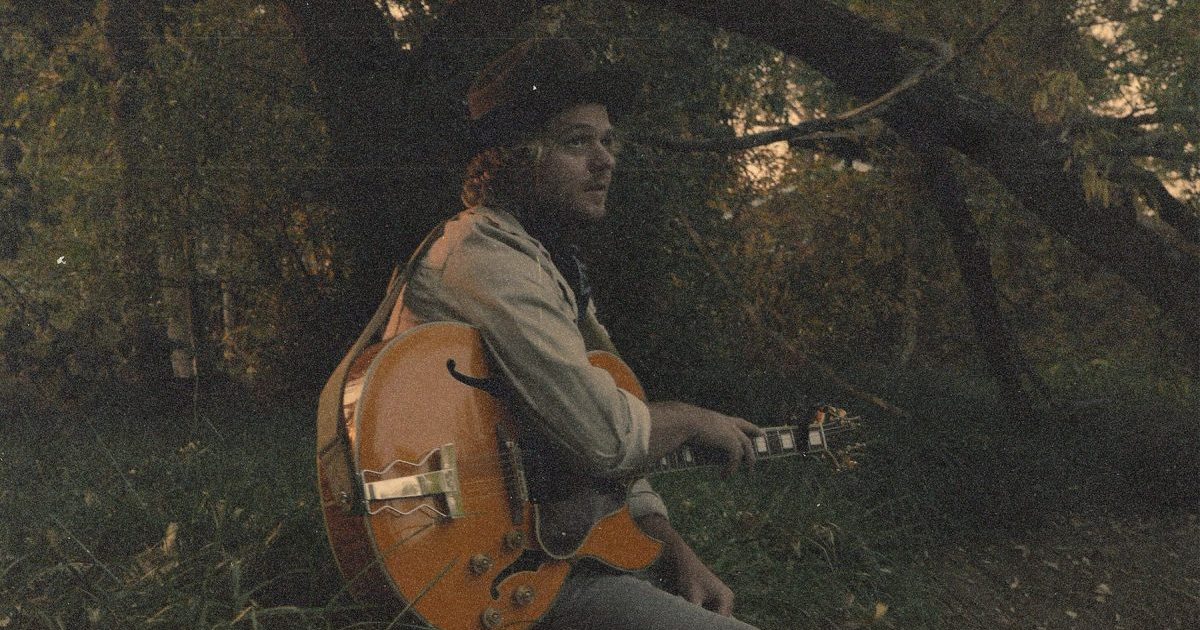
LISTEN: Cole Scheifele, “All The While”

Artist: Cole Scheifele
Hometown: Boulder, Colorado
Song: “All the While”
Album: The Hideaways
Single Release Date: July 22, 2021

In Their Words: “This song is about living in the present and chasing the things that invigorate you in life while you can. This record revolves around themes of feeling stuck by life and this song is about not letting life get in the way and just going and doing what your heart tells you to and watching it all fall into place as you go. This is one of the only songs I’ve ever written that really breaks open and gets big, and a little bit rock and roll and we made it that way on purpose. I wanted it to feel like that feeling of really cracking your heart open and letting go of all the things in life that weigh you down and just going for it.

“I had the first verse done for years and could never finish the song, but then one day I sat down during quarantine, and the last 2/3 of the song just sort of poured out of me. It’s interesting, it happened while I was furloughed and sitting in this seemingly stagnant state of being, where the world was entirely at a halt, this song about getting out and going for it just sort came out of me. It’s funny how it works out that way. I hope we captured some of that feeling.” — Cole Scheifele


Photo credit: Kate Petrik

WATCH: Last Year’s Man, “Still Be Here”

Artist: Last Year’s Man
Hometown: Eugene, Oregon
Song: “Still Be Here”
Release Date: April 30, 2021

In Their Words: “I wrote this song after a conversation with Ben Allen. Ben is a really fantastic composer and musician who recently started a sync agency in Vancouver, Washington. We talked about me writing something for his company that walked the line between burdened and hopeful and this song is what came almost immediately. I think we’re all eager for life to get back to what it was in some way or another and this is a love song built out of the idea that it will.

“For the video, I spent hours on archive.org not really knowing what I was searching for. It was dumb luck stumbling on these public domain videos from the 1930s and 40s. I started with a clip just to see and the music happened to line up with the dancing for a moment and it felt really beautiful. I pieced it together from there and was surprised by the wide range of emotion I felt from watching people dance in these old movies along with my song. It’s one of those happy accidents.” — Tyler Fortier, Last Year’s Man


Photo credit: Tyler Fortier

LISTEN: Hey, King!, “Get Up”

Artist: Hey, King!
Hometown: Ontario, Canada and Tucson, Arizona
Song: “Get Up”
Album: Hey, King!
Release Date: April 2, 2021
Label: ANTI-

In Their Words: “I feel like every serious, emotionally raw album can use a breath of lightness. When Taylor dared me to write a song from our dogs’ perspective I thought it would be a fun experiment, but we fell in love with the track and are so happy it made it on the record!” — Natalie London, Hey, King!


Photo credit: Richard Fournier

LISTEN: Beth Lee, “Birthday Song”

Artist: Beth Lee
Hometown: Houston, Texas, now residing in Austin
Song: “Birthday Song”
Album: Waiting on You Tonight
Release Date: February 12, 2021

In Their Words: “I wrote this just before my birthday in 2018 for a songwriter game I am a part of, given the prompt ‘close my eyes.’ I sent it to Vicente Rodriguez, my friend and eventual producer, on his birthday a couple weeks later, and he loved it. It seemed apropos that we ended up booking studio time the week of his and guitarist James DePrato’s birthdays the following year. The song came together quickly in the studio with some minimalistic percussion, James’ guitar magic, some hand claps, and my favorite finishing touch, the glockenspiel. It was the first song we really finished and I remember thinking, yeah, this is going to be a good record.” — Beth Lee


Photo credit: Eryn Brooke

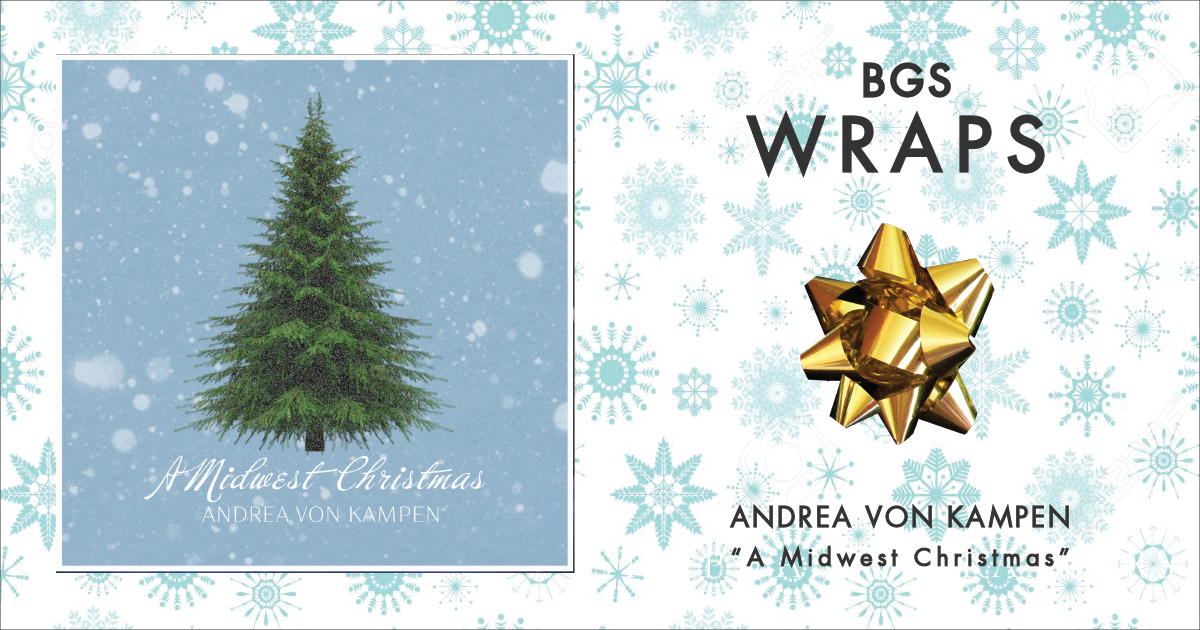
BGS Wraps: Andrea von Kampen, “A Midwest Christmas”

Artist: Andrea von Kampen
Single: “A Midwest Christmas”
Release Date: November 6, 2020

In Their Words: “When I sat down to write my first-ever original Christmas tune, I felt at a loss for what to even write about. This year has been tough and disappointing in so many ways for everyone. I wanted to lift spirits of people, but I didn’t feel like sleigh bells, ice skating, or any of the other quintessential Christmas topics were relatable right now. I started to think about what really makes me happy and feel at peace during the holidays. It hasn’t ever been the shopping or the big light displays, but the simple moments that show human kindness. That’s what ‘A Midwest Christmas’ is really all about.” — Andrea von Kampen


Enjoy more BGS Wraps here.

LISTEN: Darlingside, “A Light on in the Dark”

Artist: Darlingside
Hometown: Cambridge, Massachusetts
Song: “A Light on in the Dark”
Album: Fish Pond Fish
Release Date: October 9, 2020
Label: Thirty Tigers

In Their Words: “The lyrics open with the question, ‘Are you swimming with the fish pond fish, looking for oceans in the saltlessness?’ When we wrote that, we were thinking about social atomization and the idea that people become trapped in these false enclosures — fish ponds of our own making. The world outside one’s home or even outside one’s self can become a darkness to be warded off and shut out, and I’ve certainly been guilty of turning inward and making the world even darker as a result. But I’m desperate to break that cycle and I think a lot of people are; a light can’t shine only on itself. When the pandemic started, suddenly that idea of shutting out the world became in one sense much more real, and we really did become trapped in our own physical little fish ponds — but I think it also heightened our desperation and willingness to turn outward, to really connect with one another wholeheartedly.

“The second verse pulls some ideas from a writing exercise in which I was given a prompt to write about being a ‘cellar master’ and so I wrote a sort of open love letter to my plumber, who embodies a number of traits and competences that I lack. The tune itself has been around since 2016 and was originally sung over an arpeggiating line from a little synthesizer called a Septavox. We ended up stripping away that synth part in favor of more traditional instruments, with the exception of one section where Auyon meticulously recreated the synth line using sped-up, plucked violin.” — Dave Senft, Darlingside


Photo credit: Robb Stey

LISTEN: James Elkington, “Sleeping Me Awake”

Artist: James Elkington
Hometown: Chicago, Illinois
Song: “Sleeping Me Awake”
Album: Ever-Roving Eye
Release Date: April 3, 2020
Label: Paradise of Bachelors

In Their Words: “The lyrics of this song have to do with that moment in the middle of the night where you’re briefly awake, but trying to bat conscious thoughts away in the hopes of getting back to sleep. In my case, these thoughts can usually be collected under the heading ‘What should I be worried about right now?’ Some of these concerns are real, some are imagined, and some are a combination of the two. I accidentally sang the wrong backing vocals on the second chorus and it’s one of my favorite parts of the whole record.” — James Elkington


Photo credit: Timothy Musho

How Andrew Bird Assembled ‘My Finest Work Yet’

Sometimes you have to be willing to make sacrifices for your art. Sometimes you spend extra hours rehearsing or extra days touring; sometimes you have to become a martyr for a larger cause. Sometimes all you have to do is wax your chest.

On the cover for his latest album, the cheekily titled My Finest Work Yet, the Chicago-raised, LA-based multi-instrumentalist and virtuoso whistler Andrew Bird lies in an old tub, his head hanging askew: the poet on his deathbed, expiring after scribbling his final testament. He recalls, “A few days before the shoot, the photographer said, ‘OK, you have to wax your chest!’ She wanted me to be as smooth as a dolphin. My first thought was, ‘Oh lord, is she just testing me? Is she just seeing how committed I am to the concept?’”

Bird’s chest hair. “We just ran out of time,” he says, no small amount of relief in his voice. Despite his hirsute torso, that image is startling, beautiful yet gruesome, and strangely fitting for an album that examines in a roundabout way the artist’s responsibility to his audience.

The cover is based on Jacques-Louis David’s 1793 painting The Death of Marat, on view at the Royal Museums of Fine Arts of Belgium. “I stumbled across that image in a book called Necklines, which is a funny title for a book about the French Revolution. I had already decided to go with My Finest Work Yet for the title, and I was trying to find an image that would make that title work, that would make it funny. When you don’t know the history of that painting, you just see the suffering poet on his deathbed penning his last words with his dying breath. I thought it was pretty tongue in cheek,” he says.

The more research he did on David’s painting and its subject, the more it revealed a slightly more serious, slightly less self-deprecating undercurrent running throughout these new songs. Jean-Paul Marat was a radical journalist during the French Revolution and one of the leaders of the insurgency against the Crown. He took frequent medicinal baths to soothe painful skin infections, and he wrote most of his most famous works while soaking in his tub. That’s where he was assassinated by the conservative royalist Charlotte Corday; shortly after, David painted him as a martyr, a stab wound to the chest stained his bathwater red. “We went to great lengths to re-create the painting,” says Bird. “There’s a lot of detail, but we drew the line at blood. It felt like if I had the wound and a bathtub full of blood it would go just a little too far.”

An album that might actually live up to that title, My Finest Work Yet, makes clear that we are living in revolutionary times, that we are at the precipice of some great calamity, some great upheaval. “The best have lost their conviction, while the worst keep sharpening their claws,” Bird sings on “Bloodless,” a sober, even scary examination of American factionalism. “It feels like 1936 in Catalonia.” That last line might sound cryptic, but it is a reference to another revolution – not the French uprising, but the Spanish Civil War. “There’s a lot to unpack in these songs,” Bird admits. “Maybe you don’t know what happened in Catalonia in 1936, but you’ve got Google and three minutes to figure it out. I think that makes people a little more invested, maybe not quite knowing what the references are but hopefully thinking, ‘I need to find out.’”

His lyrics have always been brainy, often bordering on merely clever, but the allusions to the French Revolution and the Spanish Civil War — not to mention to Greek mythology, J. Edgar Hoover, Japanese kaiju, and whoever Barbara, Gene, and Sue are — lend the album weight and timeliness, as though we might better understand our current political predicament simply by looking to the past. And the artist in 2019 might understand his duties by looking to past examples like Marat. “The flipside to music being devalued as a commodity these days is that it can maybe make even more of an impact than any other medium can. Everything is commodified, but music is slipping away, but it’s still this thing that is very powerful. It helps people get through hard experiences,” Bird says.

Released back in November following the midterm elections, “Bloodless” was the first song on which he found just the right vocabulary to sing about issues that he and so many other artists are pondering. It was also the moment when a sound gelled alongside his lyrical strategy — a sound that incorporates bits of folk, pop, gospel, even jazz. Bird was fascinated with what he calls the “jukebox singles of the early ‘60s,” when jazz vocals were popular, when the piano was a prominent pop instrument, when bands worked out songs and recorded them live together.

“The piano contains so many references, a couple centuries’ worth,” he says. “Our ear gets taken in certain directions, but something was happening during that period in terms of not overly complicated jazz and gospel. I knew I wanted to make a piano-driven record with Tyler Chester, and I knew I wanted to make a jazzier record with a good room sound. And ‘Bloodless’ was the first time we got it right.”

Bird and his small jazzy combo recorded live in the studio, which wasn’t easy. It involved rehearsing heavily and using only a handful of microphones. He says, “There is so much work before you record the first note, so it’s risky. But if you spend the time, you end up with something that I think is weightier and has more value, even if it goes against the last 34 years of production trends.”

There is a lot of bleed between the instruments, which creates an intimacy even when you’re listening over your computer speakers. However, it means you have almost no opportunity to make changes after you’ve recorded a song. “If you want to change the vocal sound, you have to change the drum sound. If you want to change the drum sound, you have to change the bass sound. Everything is connected,” he explains.

It became a house of cards. Remove one and the whole thing tumbles. That meant Bird had to surrender his usual self-criticism to focus on other things besides listening to his own voice. “When you record, you have to have something to fixate on and fetishize — something that has some ceremony to it. Maybe it’s a certain microphone that gives you a certain sound, or a tape machine. It helps you remember who you are,” he says. “I tend to forget who I am when I’m recording. I know exactly who I am when I step onstage, but you have to trick yourself into being yourself in the studio. I liken it to hearing your voice on an answering machine, and you’re like, ‘That doesn’t sound like me.’ Same thing happens when you’re recording: You hear yourself back and you don’t recognize yourself.”

During the sessions for My Finest Work Yet, Bird focused on the piano and more generally on the live-in-studio approach to keep himself centered. Rather than make him more prominent, however, it only makes him one musician among many: the singer and creative force, certainly, but only one member of a lively band. That connectivity — that sense of musicians joining together in a common artistic goal — is “philosophically important,” says Bird, as are the pop references he’s making with that approach. “The music I’m referencing was deep in the Civil Rights era, the beginning of all this activism and turmoil. I wasn’t thinking about that when we were in the studio, but I think it makes sense,” he says.

In other words, those connections weren’t planned, which means My Finest Work Yet lacks the self-seriousness of a concept album or the self-righteousness of a political album. Instead, Bird wrote and arranged and recorded intuitively, as though posing a question to himself that would be answered on this album. “I’ve always had a tendency to say, ‘Here’s some stuff I’ve been thinking about,’ but I’ve always trusted that the listener has the curiosity and intelligence to think about what I’m bringing up.”


Photo credit: Amanda Demme
Illustration: Zachary Johnson

BGS 5+5: Wild Rivers

Artist: Wild Rivers
Hometown: Toronto, Canada
Latest album: Eighty-Eight
Personal nicknames (or rejected band names): Wolf Island, Chancey Shoegaze (Andrew’s guitar pedal obsessed alias), Cortez the Killer (Khalid’s wannabe cowboy persona)

What other art forms — literature, film, dance, painting, etc. — inform your music?

The primary influences that inform our music are really our musical heroes. Many of the songs I write come out of listening to some piece of music, getting inspired by one part of it and examining and working around that. Film and TV are other inspirations that I think find their way into the songs. I’m intrigued by movies and TV that examine a specific character. There are so many movies right now that do an amazing job of showcasing a complex, flawed character, while allowing the audience to empathize with them. I think a lot of songwriting is doing just that, telling a story while unapologetically showing both the good and ugly sides of it. — Khalid Yassein

What’s the toughest time you ever had writing a song?

There have been many tough times writing songs. Not so much in an emotional sense, often the most difficult songs emotionally songs are the easiest for me to write. A lot of times in the last few years we’ve written songs where one part of it is really strong, so writing the rest of it to live up to that standard can be exceptionally hard. I’ve got some songs that have been in the works for a few years now, and you can absolutely hit a wall. It can be a lot of frustration, and sometimes 90% [of your time] can be spent toiling and thinking, and then in the span of a few minutes it suddenly becomes perfectly clear what you have to say. It’s about persistence and trying not to put too much pressure on what should be an organic experience. — KY

What rituals do you have, either in the studio or before a show?

We start every show with an off-stage huddle. We get into a circle, and whoever is feeling the most energetic will say a few words to pump us up. Then we count to 3, bonk our heads together and say “team!” It sounds pretty ridiculous, but it really gets us focused and in tune with one another. We haven’t developed many studio rituals yet, other than consuming lots of coffee and making Khal drink some whiskey when we want him to sound more raspy. — Andrew Oliver

Which elements of nature do you spend the most time with and how do those impact your work?

Living in Toronto, we experience the extremes of each season. From harsh winters to hot summers, and the beauty of mild springs and falls, it’s easy to be inspired by the changing landscape. Having distinct seasons also allows for memories to be tied to a specific time of year. I think this definitely informs my songwriting, as it creates a sort of nostalgia associated with each season. I know I definitely write more sad songs in the winter when I’m longing for a little sun. — Devan Glover

Getting away to spend time outside of the city is something we all love to do. Clearing your mind by spending time in nature can be very therapeutic, and always helps to put me in a creative headspace, so it probably indirectly informs a lot of my music and writing. Sometimes when I’m feeling stuck creatively, I’ll drive up to my cottage for a change of scene. — KY

How often do you hide behind a character in a song or use “you” when it’s actually “me”?

I usually write in first person, but I don’t think I’m fooling anyone with a sneaky pronoun change. If you think switching up “I” and “you” is going to protect yourself you’re probably in the wrong business! Most of our songs are really about us and our lives so we have to accept being vulnerable in a very public way. It can be difficult and scary but I think people can tell if you’re being authentic or if something is contrived. Some of my favourite writers say things in songs that are so raw and unashamed, and it’s incredible. Those are the lines that stick with you forever, they make you feel something. — KY


Photo credit: Laura Partain