Emily Scott Robinson Stays Hopeful Through the Thick of It

Before embarking on a music career, Emily Scott Robinson worked as a social worker. The two occupations, she says, really overlap with who she is as a person. Talking from her home outside of Telluride, Colorado, Robinson shares that being a performing artist and playing shows has “a similar quality of service to it and connection that being a social worker did…”

“One of the things I loved about being a social worker is being able to help people,” she continues. “[Music] brings me a lot of joy and purpose. I get so much feedback from people that my songs help them. That’s the most important and meaningful thing that my music could do in this lifetime.”

On January 30, Robinson will launch Appalachia, her third release on Oh Boy Records and her fifth album overall. Its 10 tracks reveal her uncanny knack for conveying empathy, comfort, and compassion through a set of songs that explore topics such as a friend’s suicide, a grandparent’s death, her own divorce, and the destructive effects of Hurricane Helene on her home state of North Carolina.

Robinson recorded Appalachia with producer/musician Josh Kaufman (Bonny Light Horsemen, Josh Ritter) in late April and early May of 2025 at his Dreamland Recording Studios, near Woodstock, New York. Having loved his production work on Anaïs Mitchell’s 2022 self-titled album, Robinson wanted to work with him. “I want to make my version of what [Mitchell’s] record is,” she explains. She was thrilled that Kaufman not only was available to produce the album, but was also very excited about working with her.

Robinson’s road to becoming a singer-songwriter began when she was 14, when she went to a “super hippie summer camp,” as she describes it, in northern Michigan. There she fell in love with acoustic music she heard the counselors play at night during “mellow time” – songs by folks like Cat Stevens, Joni Mitchell, Dar Williams, and Ani DiFranco. After camp ended, she learned to play her mother’s old classical Yamaha guitar. Robinson loved to sing, but only played cover tunes whenever she would perform at coffee houses and open mic nights.

Her life changed, in many ways, when she took a Planet Bluegrass Song School workshop in 2014 while working as a social worker in Colorado. Besides learning about the art of songwriting, Robinson also discovered how to make a living as a musician. She quit her social worker job the next year and didn’t look back. “I felt such a strong sense of connection and purpose when I sang for people. Their response was so powerful, and I just thought this really feels like something I should pursue.”

That Robinson has a gift for words feels like a genetic inevitability. Her mother worked as a journalist and her father taught English. As she describes it, Robinson learned how to tell and edit a story from her mother, and how to write in a direct and active style from her father. “My parents taught me how to write… that stuff is burned into my brain,” she states. “I’m my parents’ child.”

2026 represents a significant career moment for Robinson with the new album arriving in January and tours crisscrossing the U.S. throughout the year. She took time out from a snowy winter morning to speak with BGS about Appalachia and the roads she took to make her album.

It has been several years since your last full-length album, 2021’s American Siren. How did this album come into being?

Emily Scott Robinson: It took me about four years to write this record. These are the songs written in the aftermath of a lot of upheaval and change in my life. I went through a divorce in 2021 and then moved away from Telluride the next year. And even though I didn’t move that far – I moved about an hour away – I left the only community that had really been home for me for about a decade.

And there were a lot of endings that felt really sad. Both my grandmothers passed away. [But] I also became a parent. I am now engaged to my partner, who has a nine-year-old son. And that has been amazing. So, my life kind of completely changed. These are all songs written in the thick of that – and [the] surrender and joy and grief all happening at once.

Was there a song that really kickstarted this album?

The first song I wrote for this album – and then it was the only one I had written for like a year and a half – was “Hymn for the Unholy,” which is, of course, the opening track. And that felt like my anthem. I wrote that song [when] I was going through this divorce. It was New Year’s Eve and I just couldn’t even fathom this whole movement of setting plans and goals for the new year when so many things felt like they were ending or becoming really unsure for me. It was the only new song I had for quite a while. And then, in about the last year and a half, I wrote almost all of the rest of the songs.

“Appalachia” I wrote right after Hurricane Helene hit Western Carolina. There were a couple songs that I wrote at a writer’s residency in Texas, [including] “Time Traveler” about my grandmother who passed away. I wrote “Cast Iron Heart” on another songwriting retreat. “And Bless It All” was really one of these songs that emerged that I wrote really quickly, like an homage to this chapter of life [about] raising a kid [and having] parents aging – like my generation is now doing the same.

“The Time For Flowers” is a song that you had for a while. How did that find its way on the album?

“Time For Flowers” is on here because it’s a song that has never lived on a full album. A lot of my fans would come up to me after shows and go, “Which record is ‘Time for Flowers’ on?’” … I released it in 2020 in the summer [during the pandemic as a single] and it grew legs and traveled far and wide. People started to perform it at funerals and with their choral groups and they started to sing it in church and ask for arrangements. It became a song that meant a tremendous amount to a lot of people.

I put a lot of heart and a lot of craft into that song. But the song has taken on its own life and that’s really beautiful for me to be a part of. And it means a lot again in 2025, to people who are living in what feels like an increasingly dark time. I wanted to put that on the album and to sing it in the way that I perform it at my shows, which is just acoustic.

I felt like, on this album, there was a feeling of expressing compassion and forgiveness and reassurance. A message of “finding a sense of strength” not only for yourself, but for listeners as well.

The one cover on the album is “The Water Is Wide” and I was wondering why you chose that old folk song to include.

I love that you wondered that because, to be quite honest, I felt a very strong instinct to put this song on here and I didn’t really know why. Sometimes I just feel a deep sense that needs to happen and so I just trust it and do it. I love that song and I had planned on putting it on there. I think, if I were to explain it on a more logical or grounded level, I would say that I felt that song – as old as it was – still speaks in both a deep and a fresh way. The lyrics strike me as being fresh and a little unusual every time. And it felt very timeless but also fresh, and so I just was drawn to it.

Sometimes I write a song, or I put a song on the record, and I just go, “I will find out later why I had to do this.” But, genuinely, I’ll find out along the way why it is that that song begs to be on this record. Also, Josh Kaufman, my producer, was so excited when I told him I wanted to put that song on there. He loves old folk songs and making them feel a little bit new or breaking them down a little bit and rebuilding them. And so do I, so it just kind of felt like it fit.

“The Fairest View,” which follows “The Water Is Wide,” closes the album. It holds an old folk song vibe although listening to it, you realize that it’s not.

“The Fairest View” was actually not a song that even existed until the last 24 hours that we were in the studio. My friend [songwriter Lizzie Ross] and I have a mutual friend who died before we were in the studio together. He really loved music and had grown up in Western North Carolina. He died by suicide and we were really writing this song for him, and to him. … We finished it the night before the final day. We were in such a great groove of creative flow that this just made total sense

I sent [Josh Kaufman] this voice memo. I think it was like 11:30 at night. I was like, “What do you think about putting this on the album tomorrow?” And he goes, “I dig it. Let’s do it!” He said that there was nothing really like this on the record, but it felt like it still fit sonically, lyrically, and melodically.

What were the important contributions that Josh Kaufman brought to the recording process?

Really the magic of working with Josh – the thing I love the most – is when we first had our first conversation. We were talking about how we work in the studio and he said something along the lines of, “You know, you play the song and we all start just kind of experimenting and playing around on instruments. We’ll know it when we find it, because you can hear it and you can feel it in your body when you have found the thing.” And that for me is exactly how I work creatively and in the studio. I’m comfortable with that kind of workflow and so I was like, “Yep, that’s exactly how I want to work.”

There is a wonderful intimacy to your vocals. I got the feeling I was sitting on a couch and there you were singing from just across the room.

D. James Goodwin, who is the [album’s] recording engineer and who mixed the record, created a specific reverb treatment based on the room in Dreamland, based on the actual recording space. … He started to measure the exact EQ and decay of all these different points in the room and then created his own reverb setting that he calls “the Dreamland reverb setting,” which is just meant to sound exactly how it sounds in the room.

You do a great duet with John Paul White on the track “Cast Iron Heart.” How did he get involved on this project?

John Paul White is a great interpreter of songs, because he doesn’t put too much on them. This is like an acting principle, which is “the more you’re trying to act, the worse it is.” But if you’re allowing the song to come through you, and you’re not getting in the way of that and you’re being honest to that song, then that’s when the powerful performance really happens. And John Paul is experienced enough to really know that.

I knew that I couldn’t have somebody with a fully polished country voice singing this. I wanted it to sound like somebody who had lived. I know John Paul and I know that he has lived and he has a family and he’s been making music for years. He embodies the person singing the song – the actual voice of the narrator of the song – and it was such a gift that he said yes to this. He’s the sweetest, most generous artist and human, so that’s how he got involved.

This is your third release for Oh Boy Records – how did you get involved with them?

I got a message from Jody Whelan [head of Oh Boy Records and John Prine’s son] and he said, “We’re really big fans of yours at Oh Boy and if we can ever help you in any way let us know – we’d love to work with you.” And I was like, “Did I just get offered a record?”

I reached out to Jody and I said, “I would love to talk to you. I have a record that I’m about to make and we should connect.” I’m a huge fan of Oh Boy and John Prine. I signed a fantastically supportive and artist-friendly record deal with Oh Boy. And I go on the record to say that as often [as I can]. … I genuinely hit the jackpot when I signed the deal with Oh Boy. I love working with them. Their heart has been, and always will be, in the right place. I’m really, really lucky.

Are there things you hope listeners take away from the new album, or from your live performances as well?

I hope that people do feel fortified, encouraged, and hopeful when they listen to these songs because this record is about finding those bright spots and finding that hope in the thick of all the other parts of being a human. It’s about leaning on other people and finding that in relationships and in community. I also hope that this record will comfort people who’ve lost somebody they loved recently.

I want this record to be of service to people. I want it to reach them in ways that they need to be reached. I don’t want people to give up hope in this time in history or this time in our country. I don’t want them to give up hope in themselves and each other.

I think we’re increasingly in a corporate media landscape and a very engineered social media landscape that has a lot of voices that say there’s no hope; there’s no reason to fight, it’s too late. And I think the social worker in me and the political activist in me wants to yell, “That’s fucking bullshit!”


Photo Credit: Angelina Castillo
A Force
To Be Reckoned With

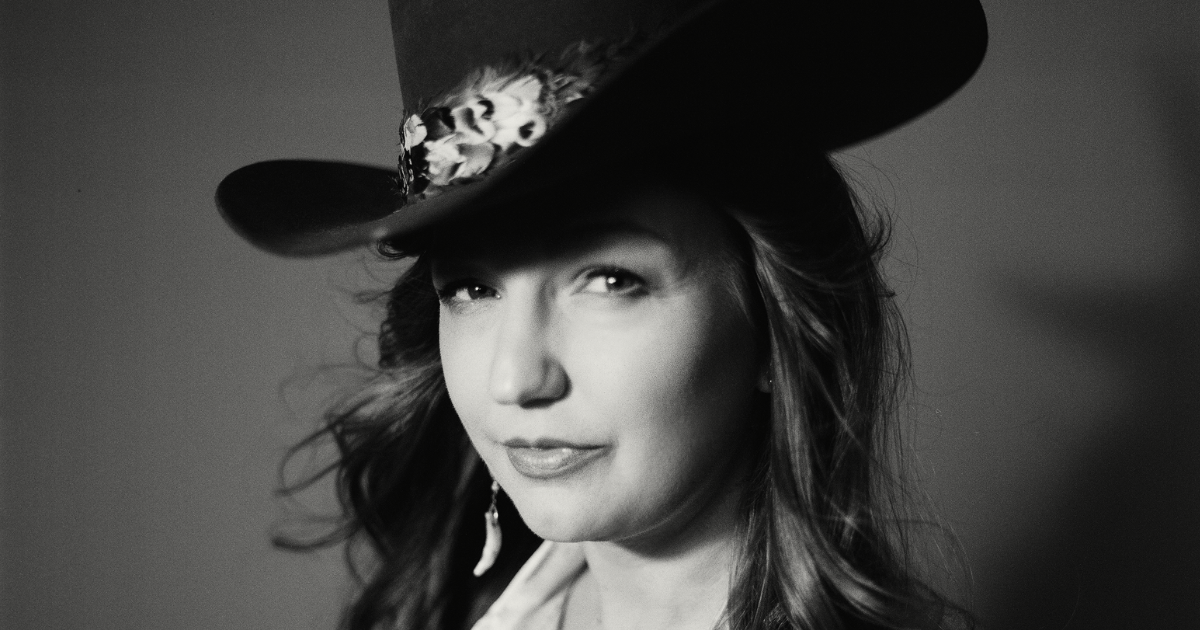
Ghosts are so much more than spooky or goofy animations; they represent lived histories, past selves, and the ever-unfolding work of becoming. With her latest album, Every Ghost, country singer-songwriter Kelsey Waldon gives grace to all the women she’s been along the way, entertaining their urgent lessons as she considers who she is today.

“There’s good ghosts and there’s bad ghosts. Some of them have unfinished business and maybe they feed off fear, or maybe they feed off your happiness. I certainly have them, I have a lot of ghosts,” Waldon says. “It’s those types of ghosts, but also the ghost of every version of yourself that you’ve been and just being proud of where you came from, where you’re going, and honestly, where you’re at; meet yourself there.”

On the album’s first track, “Ghost of Myself,” she lays out how she got here:

I had to get tough so I could get wise
I’ve been a thousand women in my own time
Been a thousand women and I’ve loved them all
I had to get low so I could walk tall

From the album’s first lush, ebullient guitar run, Every Ghost is thick with layers of twang, accompanied by driving fiddle and classic country sounds. Waldon’s velvety voice, which has always been self-assured, sings clear and powerful. She’s standing on her own two feet; this is the album she’s been working toward over the last decade of hard work and meticulous touring.

Modern pop country is rife with men behaving badly or selfishly while extolling the unholy virtue of big truck worship. But long before their unceremonious relegation to the role of disingenuous machines, good for little else than scoring sex and drinking cheap beer, truck songs (usually about big rigs, not pickups) made poetry out of the long haul and produced some of country music’s most interesting characters. Look no further than Red Simpson and C.W. McCall’s catalogues, Jerry Reed’s “East Bound and Down,” Red Sovine’s “Phantom 309,” the Willis Brothers’ “Gimme 40 Acres to Turn this Rig Around,” or Kay Adams’ “Little Pink Mack.”

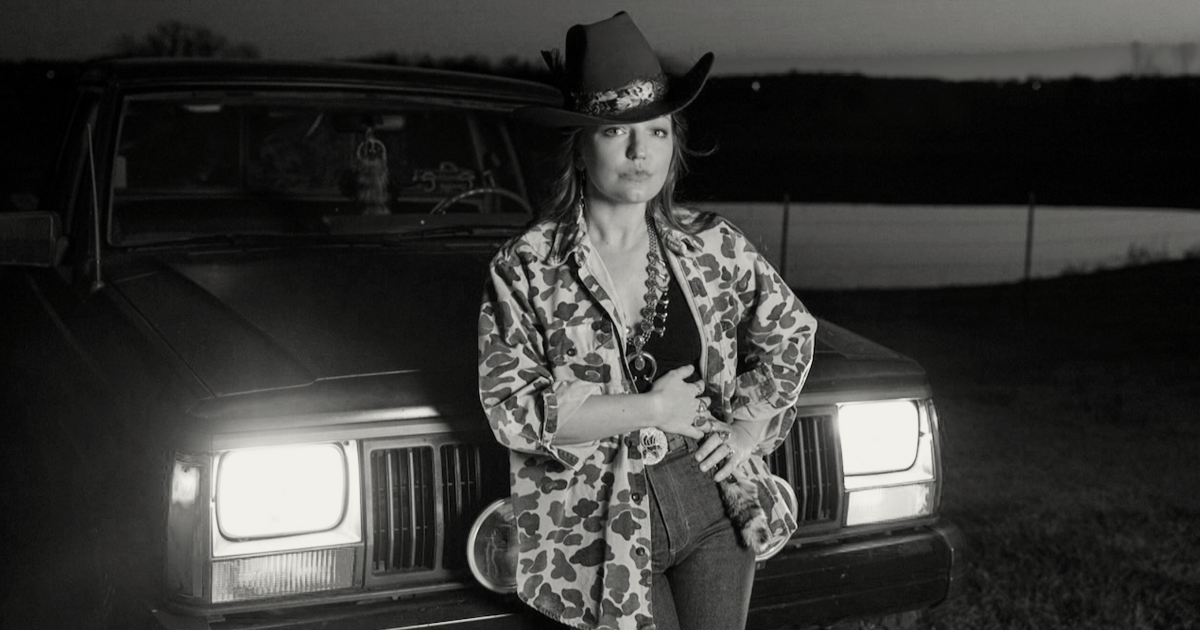
“Comanche,” track 2 on the new album (named after the 1988 Jeep Comanche Waldon bought recently) joins that lineage. “The rumble of the engine feels like my soul smooth when it’s runnin’/ A little rough when it’s not movin’,” Waldon sings.

Get behind the wheel on the open road, relax, blast some music, sort out your thoughts – there’s nothing like it. “We’ve all got our own amends to make/ We’ve all got our own hearts to break/ That’s the way it is,” Waldon continues, letting go of someone no longer in her life.

Spending time with an old, well-crafted object is a privilege and a joy in a commodified quick-fix world, one which Waldon manifests throughout the album as she tackles lessons and ghosts from a life lived deeply and broadly. The specters of Every Ghost include lost loves, of course; demons and vice; and also loved ones who are no longer earthside.

“Tiger Lilies” was written for her grandmother, whose beloved lilies she now tends in her own garden. Gardening and growth figure heavily in Waldon’s lyrics and worldview (notably “Season’s Ending,” off No Regular Dog and her cover of Jean Ritchie’s “Keep Your Garden Clean” on There’s Always a Song). “I think it’s sexy to know how to feed yourself and grow things,” she says. “What’s more country than that?” Later, she dwells more broadly on what we inherit generationally on “My Kin.”

The ghosts of vice have a particular way of lingering. “Happy new year, I’m scared to death/ My ol’ demons, they give me no rest,” Waldon sings on “Lost in My Idlin’.” Waldon has been, as she puts it “booze sober” for four years, but for her, the allure of letting loose and getting drunk lingers: “Wishin’ I was fucked up in some honky tonk/ Where they let me play my music way up loud.” Beyond an ode to temptation – and in some ways to simpler times – it’s an acknowledgement of those who’ve slipped and the hard work of holding the line. (Not to confuse resisting vice with moral superiority, addiction is a disease.) “I loved getting tore up from the floor up, that’s in my blood,” Waldon says; but staying sober is what’s best for her.

“I don’t wish for pain/ And I don’t dream of war/ When will it all end?? What are we killin’ for?” Waldon demands on the chorus of the wrenching, mournful “Nursery Rhyme.” “I honestly wrote that song after seeing pictures of children being bombed,” she says. Pertinent and direct, Waldon’s premise is simple: please, be kind and decent to each other. “How can you climb when you ain’t got a dime? / Workin’ your life away till you die/ Can’t pay what you owe ‘em, not in this lifetime/ Darlin’, it’s a nursery rhyme,” she continues in the song, lamenting the dissolution of the “American Dream” and economic parity for average people. “I’m a very, very proud American, but I know that sometimes the ‘American Dream’ does feel like a nursery rhyme,” Waldon says.

In 2019, that ability to zero in on the human condition landed Waldon the first new artist slot in 15 years on Oh Boy Records, founded by John Prine, who was likewise rivetingly dialed in to suffering and joy. Waldon’s bona fides include a bevy of appearances with Prine before his death in 2020. Before this she’s released six albums – Every Ghost her seventh – including 2020’s They’ll Never Keep Us Down, a cover album of protest songs including Nina Simone’s “Mississippi Goddam” and Prine’s “Sam Stone.” More recently, she released 2022’s No Regular Dog and 2024’s There’s Always a Song, covering some of her greatest musical influences.

Waldon’s been named a Kentucky Colonel, too. The highest title of honor awarded by the governor of the state, it’s often given to artists who guard Kentucky’s cultural traditions and further their future. She’s toured with Vincent Neil Emerson and 49 Winchester, the latter of whom she will join at the Ryman later in the year. She’s also looking forward to a long list of headlining shows, including at Under the Big Sky and FloydFest.

“That’s the only place that I do feel true freedom, honestly, is in the studio and then on stage doing whatever the fuck I want to, singing my heart out,” Waldon says. “I want the show to be a force to be reckoned with.”

Myriad wonderful songs have been written about ramblin’, but they’re all about men, Waldon says. She ends the album with one of the few exceptions, Hazel Dickens’ “Ramblin’ Woman.” At its release in 1976, the song represented a bold manifesto for female independence. As an album closer for Waldon, it acts as a bookend with “Ghost of Myself.” Waldon started the album telling listeners where she’s been and concludes with where she’s going.

“Hazel’s just saying ‘I got shit to do,’” Waldon says. “Women can ramble, too. I feel like we’re more than a girlfriend, a wife, a mother, even – and all these things that are so beautiful. We know we stand on our own. And we don’t have to explain it to anybody.”


Photo Credit: Alysse Gafkjen

Palmyra Shakes Off Anxieties With Oh Boy Records Debut, ‘Restless’

Palmyra is a bit restless. Their emotions knot into a mangled ball, almost suffocating them.

“Early hours in the morning, tossing and turning/ Everyone else in this house is asleep,” Sasha Landon pours into the microphone. “Palm Readers” emerges integral to the band’s new musical chapter. Aptly titled Restless, this album marks their debut with Oh Boy Records. It’s like reintroducing themselves to the world.

The trio – rounded out with Teddy Chipouras and Mānoa Bell – pounces from the get-go. Similar to The Lone Bellow’s tightly wound vocal work, their harmonies exude a vintage richness throughout as they do on the title track and opener. It’s quite evident that they take their work seriously, down to the lilt of their voices as they glide through the air. Palmyra makes you believe they’ve been singing together for decades, their harmonies are so electric and full of life.

“We definitely put a lot of effort into our harmonies. It’s something that always feels super important when we’re arranging a song,” shares Landon. “The three of us weren’t people who sang with others a lot before this band. When we formed, we learned a lot from old recordings of other bands and all sorts of stuff. We did a lot of transcribing harmony early on in the lockdown. The record needed to start with our voices and we wanted that to set the tone for the album.”

Perfectly performed harmonies underpin the album’s emotional currents. The trio builds guilt, frustration, and hope into the project’s backbone to create a coming-of-age story. “There was a moment when we understood what the album was about. There were separate songs that we found homes together through playing them live,” says Chipouras. “‘Palm Readers’ feels great right after ‘Restless.’ And those songs then became a pair. Their energies matched. The coming-of-age narrative emerged from the time period that the songs were written.”

Restless sprouts from the cracks between each song. Where “No Receipt” meanders through sun-caked uncertainty, the cheeky “Dishes” sees the band accepting domestication and finding peace. Along the way, they agonize over being present while time yanks them this way and that – the pressure that comes from being a working musician crushes their shoulders. The album, based on a “period of leaving college, going out on our own, starting a band, going out on the road, and just trying to figure out what the life of a musician looks like,” captures brutal truths of living, loving, and losing time.

Hopping on a Zoom call, Palmyra spoke to BGS about feeling restless, reenergized creativity, and mortality.

What is it about the title track that made sense to be the opener?

Sasha Landon: It made a lot of sense for us to have this song that starts with the three of our voices kicking off the record. Also, it is a song that has a through line to the record from the jump. The emotional center for this record is pretty heavy. And that’s not to say that there’s not a lot of light in the record. I think there’s a lot of fun on it, as well. But the overall emotional center is pretty heavy and restless, felt like a good way to jump into that.

In “No Receipt,” you lament that there just isn’t enough time. As you’ve gotten older, what’s your relationship with time been like?

Mānoa Bell: That’s the central theme of, not only the record, but questions we’re always asking ourselves. Specifically, the last line there about finding those quieter moments has proven to be such a challenge, to put it all to the side. Being an artist is such a consuming experience. Every moment of your day is a part of that journey and it can be hard to have separation from it, which is a really beautiful thing, but frustrating at times as well. You can’t get away from it.

“Can’t Slow Down” deals with a similar thematic thread. How did this one come together?

Teddy Chipouras: This one was a song that I wrote after a couple of years of not writing songs. I don’t think I wrote hardly any songs during COVID. This tune kind of came out all at once after being fed up with not writing anything for a while, and I think we had just gotten off the road. It was kind of like just throwing words at the page of how I was feeling at the time, just feeling exhausted.

That one’s funny, because it was a really big moment for me and I felt very accomplished that I had written something and finished something. I remember being nervous to send it to the band and then really not thinking anything would come from it. I did not think we would be playing that song every night. It’s one of those tunes that has changed meaning, or it means more to me now than it did when I wrote it.

“Buffalo” roots itself in a phone call during a show in Buffalo after one of your friends had taken their own life. Was this song a necessary cathartic exercise?

MB: There are songs that you try to write and then there are songs that you just have to write. I remember very clearly writing the beginning of it and immediately feeling better. It was a very therapeutic experience, not feeling good but feeling better. It’s a song that’s still hard to play. I feel a responsibility to try to connect emotionally with it every time we play it and not just phone it in. Sometimes, when you’re on stage, you’ve done something so many times, there’s a muscle memory aspect to it. But that song never really feels like muscle memory.

When someone dies, you begin questioning your mortality. Did that happen to you?

MB: I think suicide, specifically, when it’s someone who you see yourself in, and someone who you grew up with, makes you wonder what life would be like without them. It’s not just suicide. It’s just about loss and grief. There was never a point where I was like at such a level of grief that I didn’t want to continue living. But it definitely makes you wonder what life will be like moving forward.

The closing track, “Carolina Wren,” feels like a big sigh to let all the things on the record go. Why does it appear as primarily the demo you recorded?

SL: [Producer] Jake Cochran did such a great job of trying to make sure that the songs sonically matched their emotional core and that the version of the song that we were putting out felt really authentic to the lyrics and our live performance of it. This was a tune that I hadn’t played for anyone in the band yet. I wrote it right before we went to the lakehouse [to record] and played it on a whim. I think Teddy was out getting groceries or something and Jake pressed record. Mānoa is holding the bass and I think plays one note on it, and I am playing guitar and singing. We just felt, after hearing it, there was a consensus that that’s how the song is supposed to exist. It’s how it’s supposed to sound.

And Jake helped us get there, too. With some songs, like “Shape I’m In,” for example, we had to be mindful of how many performances we gave it before we exhausted it and weren’t going to get any more. When you have a song that takes a lot emotionally to perform, you can only do it so many times before it loses its meaning, or becomes muscle memory, or just wears you out from overuse. We had one take that felt earnest. It speaks to the song. It honors the song in a good way and it belongs as it is. Then we decided that it made sense as the last tune on the record. It is a nice little breath at the end.

What have been the biggest realizations you’ve had of being working musicians?

MB: I think maybe for me, I’ve learned that there’s kind of an endless amount of resilience needed. You’re constantly faced with just things you need to get through, to solve. I don’t even know if I would call that a music thing, though. I think that’s just like a growing-up thing.

TC: One thing for me is I didn’t realize how hard it would be to find creative time when you’re a full-time creative. We are full-time musicians, we’re on tour a lot of the time, and then we get home and there’s a lot of work to do. It’s almost harder to schedule the creative time than it is to schedule the work. I never thought it would be hard to find that balance.

Did this album change you in any way?

MB: This record showed all three of us that there was another level to get to and that there are endless places of growth that we will find. I think we dug deep as a band and it has continued to be rewarding for those reasons. The further we dig, the better it is. It does just keep getting better.

With the release, the songs no longer belong to you, but the world. What’s that experience?

TC: It will be interesting to see how this one feels, because this one feels bigger than our previous projects. We talk about this a lot with our songs going through different phases of us letting them go. I think the biggest one for me of letting songs go is starting to play them live. We’ve played all of these songs live before for a while. That moment, for me, is the biggest in terms of feeling like releasing full control of it, and it becoming the world’s and not ours anymore.

MB: We haven’t released something at this level before, so I don’t know. I’m excited to see how it feels releasing the whole project. Last year’s release was an EP. I think that if I’m defining what feels different about an EP versus an album, it’s like Teddy saying that this feels bigger than anything before; it’s the amount of energy we put into creating the music – the amount of energy we’ve put into getting it out to people. It’s just like we’re putting so much behind it.

SL: I’m so excited to see, to know that a listener’s first experience of Palmyra could be Restless, that the first thing that they hear is something that of all of the music we’ve put out, we have been proud of, and has been a really good snapshot of where we are at the present time.


Photo Credit: Rett Rogers

Ride With Kelsey Waldon in Her Jeep “Comanche” as She Announces Her New Album

Kentuckian singer-songwriter Kelsey Waldon has announced her upcoming album, Every Ghost, (June 6, Oh Boy Records) with – you guessed it! – a song about a pickup truck. Do not worry your pretty little heads, though, as this is a truck song that’s definitely Good Country.

“Comanche” text paints a common image in country, long languid drives down rural backroads in your favorite truck. Your four-wheeled security blanket, your best friend with a tailgate. (Watch the brand new music video above.) Listeners can imagine riding along with Waldon, in the passenger seat, down some gravel track in far Western Kentucky, as she hums the tune, formulates the hook, and builds the song around her relationship with her trusty 1988 Jeep and the contemplations that keep her company as she drives. Did she write it while behind the wheel? If not, it certainly sounds that way.

Waldon has no concerns about her “authenticity” or being perceived as dyed-in-the-wool country; she’s been exactly who she is her entire life, and certainly her entire musical career. She leverages this confidence to take up a tired radio trope – the quintessential truck song – and turn it into something earnest, relatable, engaging, and somehow brand new. It’s a perfect song to take into the summer, for rolling the windows down, sipping a cold (soft) beverage out of a glass bottle, and blasting Good Country as the miles fly beneath the floorboards.

“Comanche” is an excellent debutante ball for the upcoming Every Ghost, a nine-track album that promises to continue Waldon’s penchant for real, raw, original country that’s not too concerned about being mainstream or outlaw, “legit” or “poser.” The Kentucky native doesn’t make music or write songs for that reason, anyway. For Waldon, it’s all about expression. About finding a thread that feels grounded, down to earth, and emotive and pulling for all its worth. Doing so, she untangles plenty of simple and resonant songs that straddle alt-country, bluegrass, mainstream sounds, old-time, and much more. “Comanche,” on the surface, is a truck song, but even a moment with the lyrics shows the subjects it turns over are much more complex and in-depth.

This kind of creative work isn’t the only thing she’s been hauling. Every Ghost finds the artist challenging herself and growing beyond the sonics, production, and recordings, too. “There’s a lot of hard-earned healing on this record,” Waldon shares via press release. “I’ve put in the work not only to better myself and leave behind bad habits, but also to learn to love my past selves. It took time and experience, but I’ve come to find compassion for who I was, and that’s a major part of this album.”

Waldon’s music has always been honest, it’s always been confident, but Every Ghost still feels like the dawning of a new era. Where that honesty and confidence are underpinned by a fresh sense of ease and a trust in herself. Like the trust she has in her reliable old friend, the Jeep Comanche.


Photo Credit: Alysse Gafkjen

13 Roots Music Book Recommendations From 2024

2024 served up a treasure trove of great music books – too many to encapsulate in a concise way. However, it’s still worth a try! So, here is a look at some notable books (in no particular order) that should hold an appeal to the BGS community. This baker’s dozen hopefully provides a diverse and interesting sampling of what has been published over the past year.

There are biographies of superstars like Joni Mitchell and Dolly Parton alongside important if underappreciated figures, such as guitarist Jesse Ed Davis and the Blind Boys of Alabama. Look into the lives of bluegrass icons Tony Rice and John Hartford led by those that knew them while Joan Baez, Lucinda Williams, and Alice Randall each released memoirs that told their life stories in fascinating ways.

There are books here, too, that examine sub-genres like the world of busking and the outlaw country movement, as well as scenes from the musical history of Greenwich Village and the story of a little-known but significant music project that was part of FDR’s New Deal.

There’s a little something for everyone, whether for your holiday shopping list, your winter break stack of books “to be read,” to use up those bookstore gift cards, or for your 2025 resolution to sit down and read more.

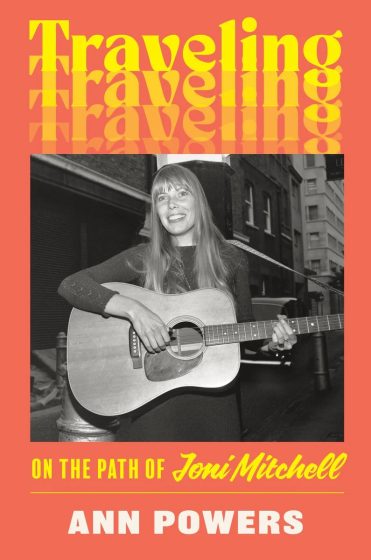
Traveling: On the Path of Joni Mitchell by Ann Powers (Dey Street Books/HarperCollins)

2024 was a big year for Joni Mitchell, with her captivating appearance at the GRAMMY Awards representing another major milestone on her amazing recuperation from her 2015 brain aneurysm. NPR music critic (and occasional BGS contributor) Ann Powers extensively examines the many sides of Joni Mitchell in this stimulating and provocative book. Powers makes it clear from the get-go that she isn’t a biographer and compares her work here to being like a mapmaker. It makes total sense then that Powers entitled the book Traveling. The word not only references Mitchell’s tune “All I Want,” but it also reflects the numerous paths that Mitchell has traveled down during her long, storied career – a journey Powers incisively and insightfully explores over the course of some 400-some pages.

Dolly Parton’s White Limozeen by Steacy Easton (Bloomsbury)

Steacy Easton followed up their Tammy Wynette biography, Why Tammy Matters, by tackling an even larger female country music icon: Dolly Parton. Part of the acclaimed 33 1/3 book series, this compact tome focuses on Parton’s popular 1989 album White Limozeen. Easton views it as a pivotal work for Parton as it represented a triumphant rebound from her roundly disappointing 1987 release, Rainbow. Besides delving into how the Ricky Skaggs-produced White Limozeen found Dolly returning more to her country roots from the more pop-oriented Rainbow, Easton also uses her album as something like a prism to look at Dolly’s wildly successful career and her iconic persona.

Don’t Tell Anybody the Secrets I Told You: A Memoir by Lucinda Williams (Crown)

Fans of Lucinda Williams’ songs may think they know her through her lyrics, which are often drawn from Lu’s own experiences. Williams’ memoir, however, reveals more about her extraordinary life than even her deeply felt lyrics have expressed. The book is especially strong in covering her quite turbulent childhood involving her father Miller Williams (a poet/professor long in search of tenure) and her mother, Lucille, who suffered from manic depression. Fittingly, Williams prefaces her book by listing the many places where she lived (a dozen before she was 18) which reflects her rootless childhood and set her up for a home in the Americana music pantheon. While the title suggests a racy tell-all, the book feels more like having the great pleasure of listening to Lucinda intimately tell stories from her life – what more could you ask for?

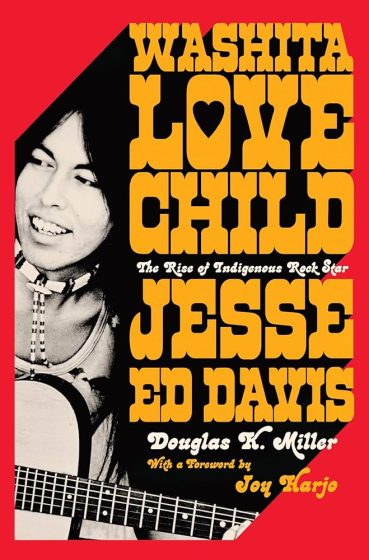
Washita Love Child: The Rise of Indigenous Rock Star Jesse Ed Davis by Douglas K. Miller (Liveright)

Jesse Ed Davis is a name that probably is not familiar to most music fans. Lovers of ’70s rock might recognize his name as a guitarist who worked with the likes of Taj Mahal, Eric Clapton, Neil Diamond, Ringo Starr, John Lennon, and George Harrison (Davis performed at the fabled Concert For Bangladesh). Those who know him from those gigs, however, might not even know that Davis was a rare Native American in the rock ‘n’ roll world. He only really made his Indigenous heritage prominent when he teamed with Native American poet/activist John Trudell during the ’80s in the Graffiti Band. Sadly, Davis’ career was derailed due to alcohol and drug abuse, which also led to his death in 1988 at the age of 48. In this vividly told biography, Douglas K. Miller, a professor of Native American History at Oklahoma State University, turns a spotlight on this ground-breaking and underappreciated musician.

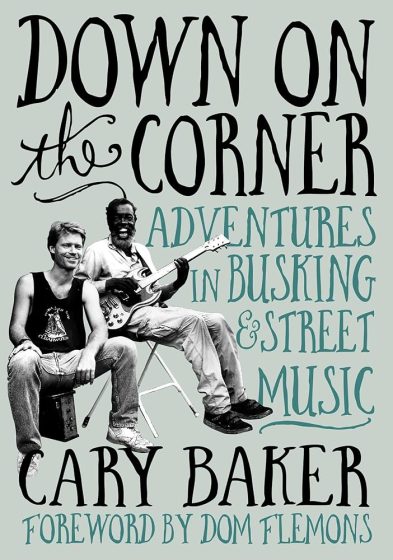
Down On The Corner: Adventures in Busking & Street Music by Cary Baker (Jawbone Press)

For his debut book, longtime publicist and journalist Cary Baker turned to a lifelong music interest of his: street musicians. Early on in this book, he relates the transformative moment when, as a teenager, he was taken by his father to Chicago’s famous Maxwell Street where he saw bluesman Blind Arvella Gray perform on the street. This experience not only led to his first journalism work, but it also launched a love for street music. His enlightening book, which is broadly divided geographically, profiles buskers from across America and Europe. Down On The Corner is populated with colorful characters like Bongo Joe, Tubby Skinny, and Wild Man Fischer along with well-known musicians, such as the Old Crow Medicine Show, Rambling Jack Elliott, Billy Bragg, Fantastic Negrito, and Peter Case, who share tales about playing on the streets.

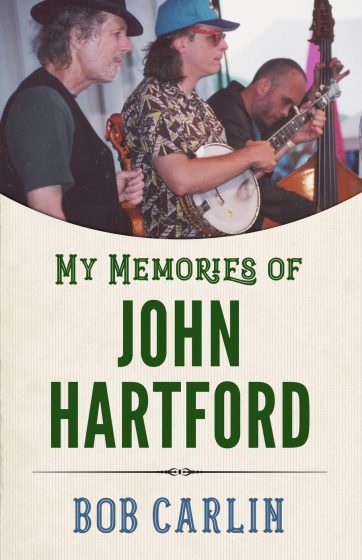
My Memories of John Hartford by Bob Carlin (University Press of Mississippi)

My own memories of John Hartford are of him playing on Glen Campbell’s TV show. He seemed so cool and laidback – and he could play banjo with lightning-fast virtuosity. Happily, Bob Carlin has more interesting memories about the legendary musician, and he comes to this book from a pretty unique perspective. Carlin first met Hartford when he interviewed him in the mid-1980s for the radio program Fresh Air. Carlin (himself an award-winning banjoist) later performed with Hartford and even became his de facto road manager. In his book, he deftly balances his background as a journalist and position as a longtime friend in telling the story of Hartford, who was a true crossover star bluegrass musician of his time.

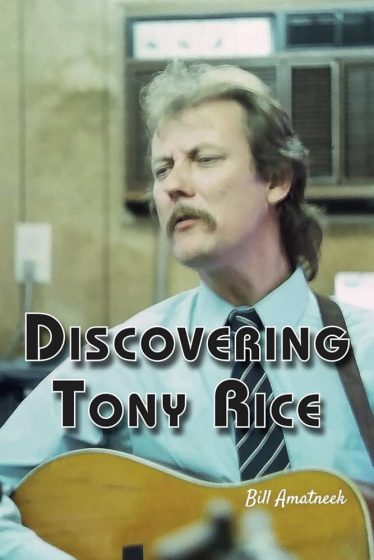
Discovering Tony Rice by Bill Amatneek (Vineyards Press)

Like Bob Carlin with John Hartford, Bill Amatneek has a privileged perspective when it comes to writing about his subject, the late, great Tony Rice. Amatneek, a musician as well as writer, spent several years playing with Rice in the David Grisman Quintet. Rice was one of the best-ever flatpicking guitarists (and a terrific vocalist) whose career was undercut by illnesses and his own personal demons. Amatneek constructed his book as an oral biography, built around stories told to him by fellow musicians who knew Tony, like Sam Bush, Béla Fleck, Peter Rowan, and Jerry Douglas along with Rice family members, allowing readers to discover the bright and dark sides of this bluegrass master.

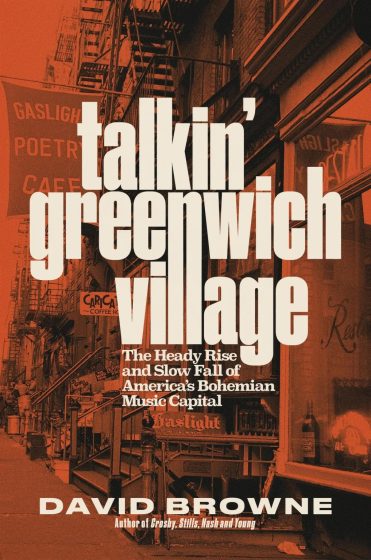
Talkin’ Greenwich Village: The Heady Rise and Slow Fall of America’s Bohemian Music Capital by David Browne (Hachette Books)

As its title plainly states, Talkin’ Greenwich Village discusses the renowned area of New York City that has been a center for bohemian arts culture for decades. The book can be described as a “biography” of both the people (Dave Van Ronk plays a prominent role throughout this story) and the places (particularly the clubs, such as the Bottom Line, Kenny’s Castaways, Gerde’s Folk City, and the Bitter End) that populated the Village’s music scene from 1957-2004. (Browne here basically concentrates on the West Village.) The author of books on the Grateful Dead, CSN&Y, and Sonic Youth, Browne does a masterful job at bringing this neighborhood to life during its many eras. The Village holds a special place in Browne’s heart; he discovered the neighborhood as an undergrad at NYU just as the new folk scene of the early ’80s was brewing. His passion shines through in his storytelling.

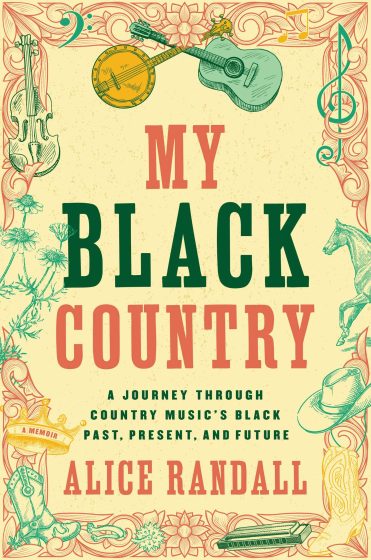
My Black Country: A Journey Through Country Music’s Black Past, Present, and Future By Alice Randall (Simon & Schuster)

You may have already heard about Alice Randall and her book right here, on BGS and Good Country. My Black Country has received great acclaim (NPR listed the book among its “Books We Love” for 2024) and justifiably so. An author, professor, and songwriter, Randall tapped all her talents in creating this inspiring work that addresses her life story and investigates the history of Black country music, which she traces back nearly a hundred years to when DeFord Bailey performed on Nashville’s WSM radio station. It should be noted, too, that this isn’t just a Nashville-centered book; it explores Black country music made all across America. Besides enjoying Randall’s literary creation, you can also enjoy her songwriting craft too; Oh Boy Records released an eponymous compilation of Randall-penned tunes interpreted by such artists as Rhiannon Giddens, Allison Russell, Valerie June, and Leyla McCalla. (Of which, Giddens’ performance of “The Ballad of Sally Anne” is nominated for a GRAMMY for Best American Roots Performance.)

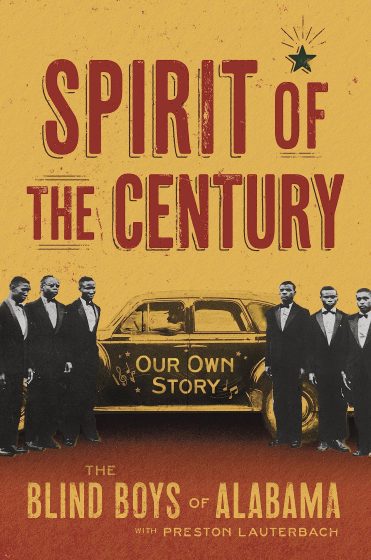
Spirit of the Century: Our Own Story by The Blind Boys of Alabama & Preston Lauterbach (Hachette Books)

The Blind Boys of Alabama are a remarkable story. Remarkable in the sense that the vocal group came into existence around 1940 at the Alabama Institute for the Negro Deaf and Blind and made their way out into the world through the gospel music circuit. And it is remarkable, too, that the Blind Boys of Alabama not only remain a group today (they describe themselves as the “longest running group in American music”), but they have earned five GRAMMYs (and a Lifetime Achievement Award) as well as an NEA National Heritage Fellowship. Preston Lauterbach (author of books like Beale Street Dynasty and The Chitlin’ Circuit) has done an eloquent job weaving together stories from band members and other musical colleagues, and turning them into this absorbing biography.

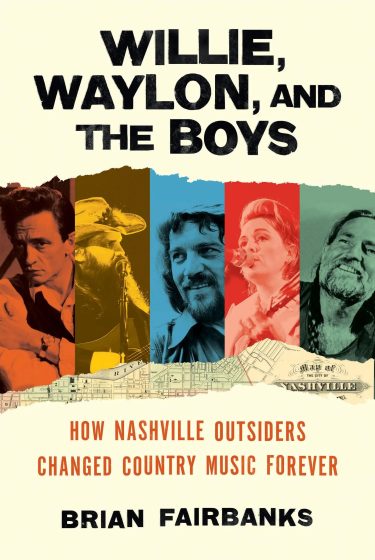
Willie, Waylon and the Boys: the Ultimate Outlaw Country Primer by Brian Fairbanks (Hachette Books)

This book is something of a biographical combo platter. The first nine chapters concentrate on the “Mount Rushmore” of outlaw country: Willie, Waylon, Johnny, and Kris. Those 240 pages are packed with colorful tales of the foursome, whether on their own or together as the Highwaymen. At that point, the book pivots and explores outlaw country’s legacy in the form of the alternative country scene that was burgeoning during the ’90s, as the Highwaymen were ending their run (their third, final, and least successful album came out in 1995). Fans of alt-country and “new outlaw” artists might wish for a deeper dive into this scene. The chapter on “The New Highwaymen” (built upon the idea of guys like Chris Stapleton, Jason Isbell, Ryan Bingham, and Sturgill Simpson as a new outlaw quartet) feels a bit too speculative. Fairbanks, however, is on stronger footing with his “Highwaywomen” chapter, which looks at the actual supergroup collaboration of the Highwomen, featuring Brandi Carlile, Natalie Hemby, Maren Morris, and Amanda Shires that, among other things, countered the male dominance of the original outlaw movement.

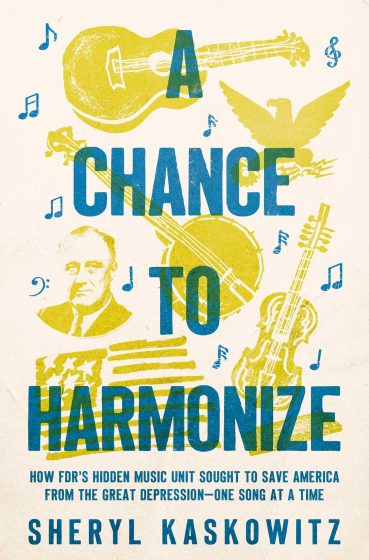
A Chance to Harmonize: How FDR’s Hidden Music Unit Sought to Save America from the Great Depression—One Song at a Time By Sheryl Kaskowitz (Pegasus)

This is a book for history buffs who love music – and vice versa. Author Sheryl Kaskowitz (who previously wrote a book on the history of the song “God Bless America”) has dug up the story on a little-known music unit that was part of the New Deal. This U.S. government program led by Charles Seeger (yes, the father of Pete) sent out musician/agents (noted American ethnomusicologist Sidney Robertson was one prime participant) to gather up folk songs around the country. The goal was to use these songs to build community spirit at homestead communities launched by federal government under the auspices of the Resettlement Administration. The projects were considered radical and controversial back then and, consequently, were very short-lived. Fortunately, however, more than 800 songs were recorded and have been stored away in the Library of Congress.

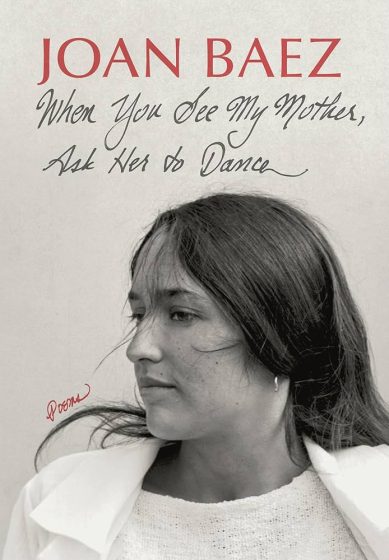
When You See My Mother, Ask Her to Dance by Joan Baez (David R. Godine)

Joan Baez spent over 60 years making music and touring. While she has basically retired from music, Baez hasn’t put an end to expressing her creativity. In 2023, she released a book of drawings and in 2024, she published this book of poetry. There are at least a couple of notable aspects to this poetry project. Baez has long been known more for being an interpreter of songs rather than a songwriter, so it is intriguing to see more of her writer side expressed in this collection. Also, she has struggled with dissociative identity disorder (AKA multiple personality disorder, a topic addressed in the powerful documentary Joan Baez: I Am A Noise). Baez candidly states in the Author’s Notes that some of the poems are “are heavily influenced by, or in effect written by, some of the inner authors,” adding intriguing layers to her creative process – which she displays through the pieces collected in this book.


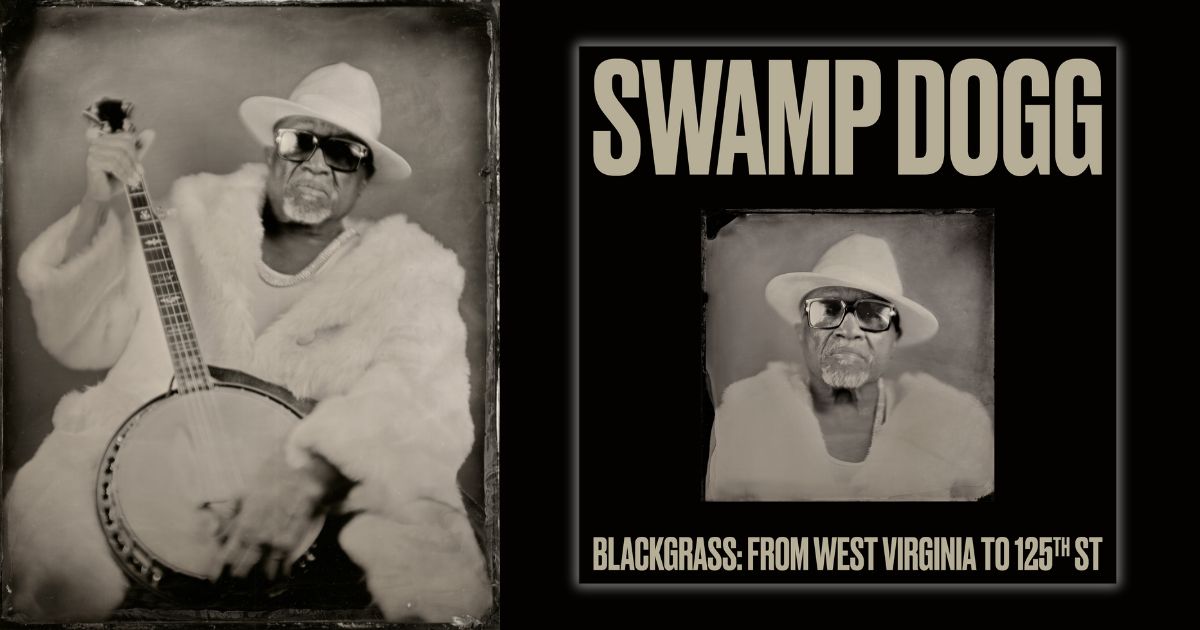
The Delightful Rebellions of Swamp Dogg’s ‘Blackgrass’

Early in my recent interview with Swamp Dogg, the iconoclastic singer-songwriter and producer makes a self-aware confession: “I have read columns about Swamp Dogg and so forth, and I try to find out what they classify me as,” referring to the veritable grab-bag of hyphenated micro genres that music writers use to classify him. We connected a few days out from the release of his latest album, Blackgrass: From West Virginia to 125th St, and the artist, born Jerry Williams Jr., seems unbothered. Later he adds, “When I do the Swamp Dogg albums, I really don’t try to please anybody but myself.”

He has known from the jump that the music industry doesn’t know what to do with him. Working as a singer and songwriter under the name Little Jerry Williams, Swamp enjoyed some success with his 1964 soul 7 inch, “I’m The Lover Man,” and was subsequently invited to perform at clubs in the Midwest. As Swamp remembers, “When I showed up they found out I was Black and the audience was lily white. They were good about it, they paid me and said I didn’t have to do a second show.” The small-mindedness of industry gatekeepers would follow him into his first musical steps as Swamp Dogg.

In 1971, Swamp released his second album, Rat On!, on Elektra Records. He was dropped from the label immediately after the release. At issue was the provocatively titled, “God Bless America For What,” track six on the album, which Elektra had pressured Swamp to leave on the cutting room floor. He kept the song, and his brief stint with Elektra was over. (The album cover, featuring Swamp in a victory pose astride an enormous white rat, might also have earned him some detractors in the office.) Asked if he considered caving to the label’s demands, he quickly sets me straight. “No! No. Nuh-uh. I’m dealing in truth!”

The controversy surrounding Rat On! did nothing to slow Swamp’s momentum as a creative force and in the years since its release, has proven itself a classic of left-of-center soul. He produced artists like Patti LaBelle, Z.Z. Hill, and Irma Thomas. Swamp also continued working in A&R. He signed a still-mostly-unknown John Prine to Atlantic Records in 1968, later reuniting with Prine for what would turn out to be the final recording made by the legendary storyteller. Swamp built a cult following among indie music fans in the know, collaborating with artist-tastemakers Justin Vernon and Jenny Lewis – the latter of whom returns as a guest on Blackgrass, as well. He dunked on the snobbier side of the mainstream with albums like Love, Loss, and Auto-Tune, and I Need A Job… So I Can Buy More Autotune.

A list of Swamp’s credits tells the story of one of the most fascinating music careers of the last century, but he himself tells an even deeper one. He speaks about painful failures, like when he became a millionaire in the 1970s and the sudden reality of wealth gutted his mental health. “The right word is obnoxious, I really became obnoxious, my wife pointed out to me. I was running so much that I would run in my sleep and run out of the bed.”

When the nine cars in the family garage proved insufficiently curative, she got him to see a therapist, a “who’s who psychiatrist” in Swamp’s words. He tells me so many sweet things about the great love of his life, Yvonne Williams. “My wife, she was a Leo. She was a strong Leo, she was a leader. Everybody loved her. Everybody feared her when it came to brain-to-brain. She could knock your shit right out the box. She was the reason I made a little money. Her name was Yvonne and I still think about her.” Subsequent girlfriends have told him he is still in mourning, and a second marriage was short-lived.

Discussing his musical roots, Swamp lists “blues, soul, R&B, pop, just about everything except classical and polka, and gotta add country there, cause country is what I was listening to growing up as a kid.”

His brand new record, Blackgrass, released May 31 on Oh Boy Records, is an inventive, often moving exploration of the genre. Sensitive instrumentation by Jerry Douglas, Sierra Hull, Chris Scruggs, and Noam Pikelny, among others, pairs beautifully with Swamp’s varied vocal performances across all 12 tracks. “The Other Woman,” featuring Margo Price, is an elegant update of the classic written by Swamp and first performed by Doris Duke. And Swamp himself is at home as a country vocalist, playing characters like the neighborhood ne’er-do-well on “Mess Under That Dress,” the lovelorn crooner on “Gotta Have My Baby Back,” and delivering a breathtaking country gospel performance on “This Is My Dream.”

Even as Blackgrass offers country music moments that should please even the most determined traditionalists, Swamp Dogg remains committed to surprising his listeners. “Rise Up,” for example, a Swamp original first recorded by the Commodores – “Atlantic didn’t know what to do with them!”– is reincarnated as a country-meets-alternative rock and roll foot stomper, with a guitar solo by Living Colour’s Vernon Reid, which readers should listen to in a safe and seated position.

One of the great rebellions of Blackgrass is the singer’s assumption, on an album that is being marketed to country and roots media, of a Black audience. He explains, “I’m calling it Blackgrass … mainly because of the banjo. When I was coming up the minute somebody said ‘country music’ or ‘banjo’ … we turned our nose up at it, way up until Charley Pride came along.”

As Black listeners, we are being made to understand that this record is for us, decades of deliberate exclusion from the genre be damned. Its creator is equanimous about how the art will be received. “If this one sells enough, there will be a next record. If it doesn’t, there will still be a next record. I’ll put it out myself.”

Fifty years since “I’m The Lover Man,” Swamp Dogg remains curious about, and frequently explodes, the boxes into which small-minded gatekeepers of popular music have attempted to place him. As he recalls some of the more colorful antagonists along his musical journey, Swamp is gracious in the knowledge that he has had the last laugh. He speaks with refreshing pettiness about his early critics, reasoning, “The people that I dealt with back in the day are either dead or don’t know who they are. And I know I’m in line for that, but I keep jumping out of line. When I see myself getting near the front of the line I jump out and go to the end of the line.”

As usual, Swamp Dogg plays in his own time. He has finally outlived the haters.


Photo Credit: David McMurry

40 Years Of Mountain Stage’s ‘Outlaws and Outliers’ Laid Out On Compilation Record

Born out of humble beginnings in 1983, Mountain Stage has blossomed to become not just one of Appalachia’s most sought after musical platforms, but one of all of Americana and roots music’s most cherished stages. Broadcasting bi-monthly to nearly 300 NPR stations nationwide, the program has welcomed everyone from John Prine to Wilco, Wynonna Judd, and even Widespread Panic during its historic 40-year run. To celebrate the achievement, Mountain Stage and Oh Boy Records have partnered to release the 21-song Live On Mountain Stage: Outlaws and Outliers (released April 19).

According to Larry Groce — Mountain Stage host from 1983 to 2021 and one of the compilation’s curators — distilling 40 years of music into one album was quite the task. Deliberations began with a list of over 150 songs before landing on the 21 that made the album.

“At first we just looked at the artist named and began to narrow it down from there,” Groce describes the process to BGS. “After several narrowings we began listening to some of them, getting the list down to about 30 before cutting it further down to the 21 that made the album.”

Sticking close to the country, folk, and bluegrass sounds of the show’s West Virginia home, the album includes performances from Appalachia’s own – like current Mountain Stage host Kathy Mattea, Tyler Childers, Sierra Ferrell, and Tim O’Brien alongside A-listers like Prine, Eric Church, Alison Krauss, and Jason Isbell. Helping to attract and keep such a diverse array of talent returning has been the program’s artist-first approach, which caters to the performers and platforms great songs over all else.

“We’re not trying to be trendsetters and we aren’t trying to be hip,” asserts Groce, who broke onto the scene as a singer-songwriter with his song “Junk Food Junkie” in 1976. “We try to look at things in the long run by booking talent we think will last. Our goal has always been to put the artist at the center of the show rather than myself, the program, or anyone else. There’s people that would argue that we should always be pushing the brand, but that’s not the way we — or anyone else — operates in West Virginia.”

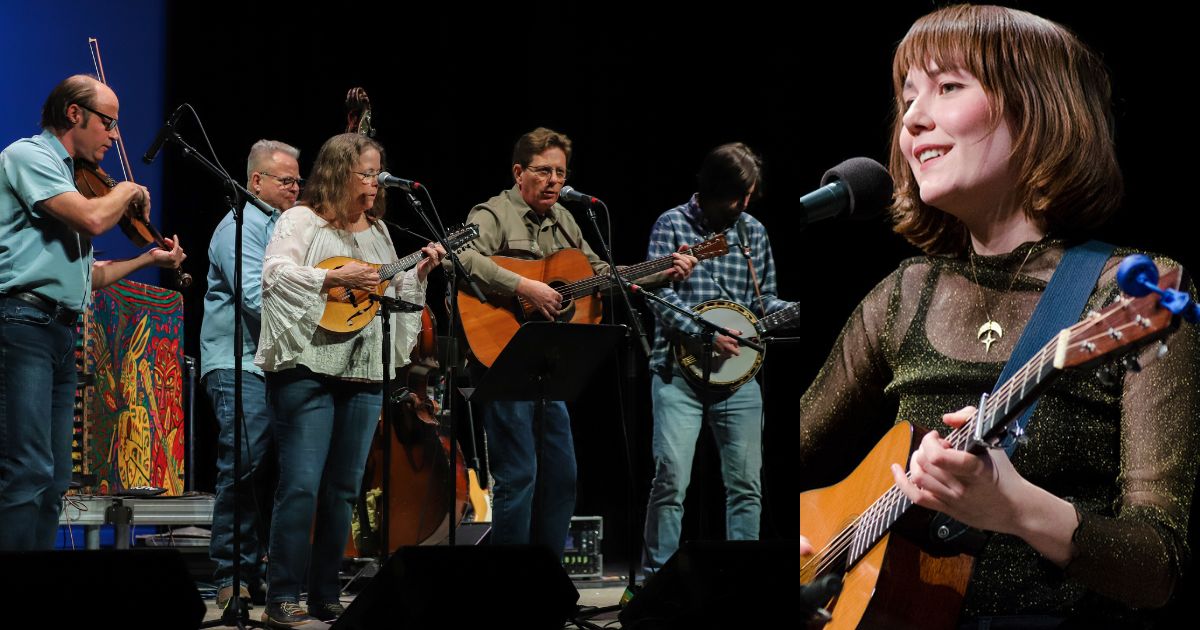
One of the many artists appreciative of that approach is Molly Tuttle, who last appeared on Mountain Stage in 2023 to support her album City Of Gold, which has since earned her a second Grammy win for Best Bluegrass Album. Born in California, Tuttle didn’t become aware of the show until moving to Nashville in 2015. She’s gone on to play the show three times, the first being a visit in 2018 that provided the performance of “You Didn’t Call My Name” that made the compilation.

Of the show, Tuttle says what she’s cherished most about her time on it is the chance to collaborate and catch up with her colleagues.

“It’s one of the few places where you get to meet, converse and collaborate with other musicians, which typically only happens for us on the road at music festivals,” explains Tuttle. “That really speaks to the trust Larry Groce and the entire Mountain Stage team have in giving the artists freedom to do what they want. What results is a well curated show that’s become one of the most important showcases around for this kind of music.”

In agreement with Tuttle is Tim O’Brien, a native West Virginian who made his Mountain Stage debut in the late ’80s with Hot Rize, an occasion he credits to his mother that has sparked too many follow-up visits to count.

“She called my sister and I — who were living in Colorado at the time — to tell us about it after hearing about it on the local radio back home,” recalls O’Brien, whose song “Cup Of Sugar” from a 2021 appearance is featured on the record. “She immediately thought we’d be a good fit for it, so she wrote them a postcard one day asking when they were going to get Hot Rize on. It was a good fit the first time, and always has been.”

“I remember writing her back saying ‘Your son’s band is much more famous than we are,” Groce jokes as he looks back on the moment. “The question is, does he want to go on the show, not whether we’ll have him or not. And sure enough, we booked Hot Rize shortly thereafter.”

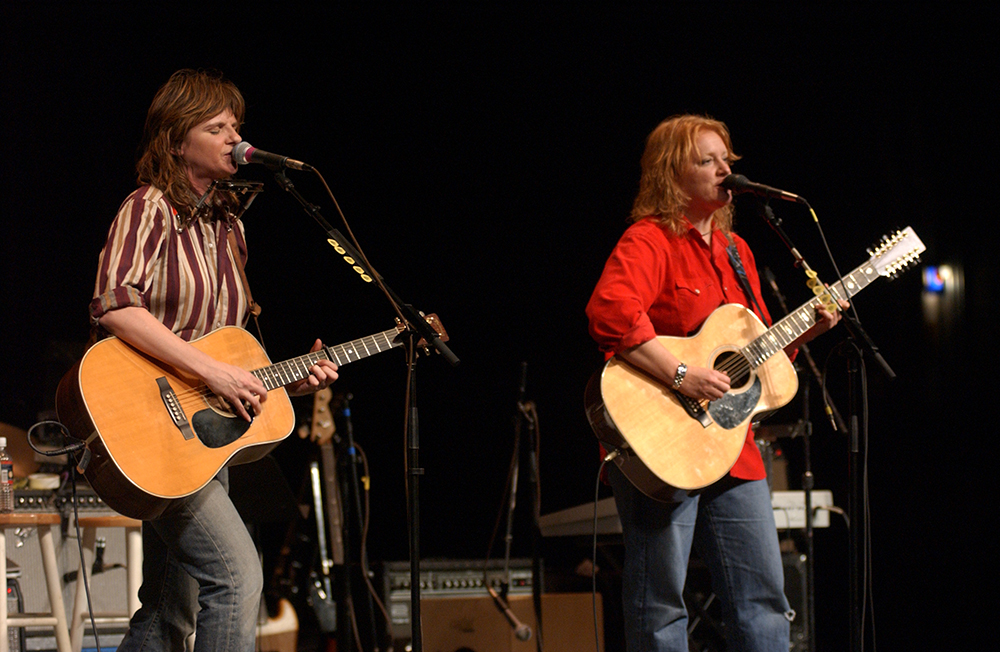
The Indigo Girls perform on Mountain Stage. Photo by Brian Blauser.

It’s that attitude of never feeling above anyone or anything that has helped Mountain Stage to excel and have the lasting legacy that it does. It captures its home region of West Virginia and Appalachia better than most any other music-related program does, both in sound and in sentiment. It’s the latter that’s arguably been the biggest asset in attracting bigger names as the show taps into the majestic mountains around them.

“There’s many different kinds of people that live in Appalachia, but one thing that’s really bedrock is supporting one another, and that shows with Mountain Stage and how they put the program on,” reflects O’Brien. “It’s intimate and friendly, just like the state.”


Photo Credit: Tim O’Brien Band performing on Mountain Stage by Chris Morris; Molly Tuttle performs on Mountain Stage by Josh Saul.

Open Mic: Tommy Prine Finds Artistic Acceptance at the Grand Ole Opry

(Editor’s Note: Open Mic is a new series from BGS with a simple premise – to remove all the filters between artist and audience and give musicians and creatives an Open Mic. With each installment, we’ll hold space for musicians to say whatever they’d like on any topic they like in any format that moves them most. It’s about facilitating real conversations and genuine insight with our roots music community.)

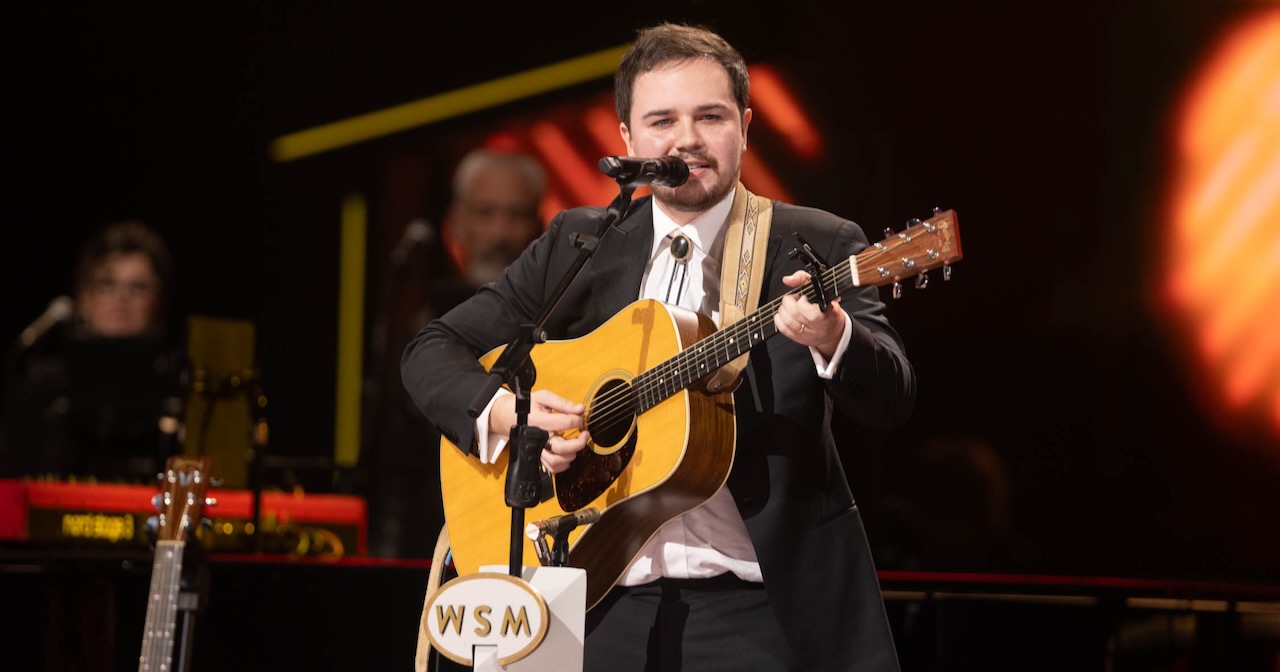
For our first edition of our new series, we set up an Open Mic for Americana newcomer Tommy Prine, an emerging singer-songwriter who walks a unique tightrope. The son of folk legend John Prine and an artist with a creative vision all his own, his work both builds on an established tradition and breaks free from the past – a contrast in full view at his December 2023 Grand Ole Opry debut.

Here, Prine reflects on his winding and not-at-all anticipated path into the artistic world – and into the ability to stand on his own creative feet.

Tommy Prine: “I have learned many things over the last few years, but the most important lesson I have learned is that no one gets anywhere without a lot of support.

“My wife, Savannah, is the embodiment of support. We decided in 2020 that we were going to give this music thing a shot, and by ‘shot’ I mean throwing every ounce of our hearts and spirit into making it work. She has taken on so many roles and worn a thousand hats (still does) during this music journey and it amazes me everyday how graceful and effortlessly she navigates the strange world that we operate in.

“My mom, Fiona, has been the guiding hand through so many new and scary events ultimately enabling me to gain the needed self-confidence to be an artist. She also played that role in raising me, and I owe a whole lot to her for any and all success in my life.

“My dad, John, set a standard of manhood that I will always strive to attain; gentleness, respect, and a lot of listening. As I walk the path that he walked, I learn more about him each day and his lessons unfold time and time again. Thank you for a lifetime of love and teachings, Dad.

“My brothers, Jody and Jack, have seen me in every shape and form I have ever taken on and been nothing but loving and understanding. They both have taught me so much about patience, wisdom and any and all cool music/movies. Without them I would be an entirely different person with different interests, and I couldn’t be prouder to be their little brother.

“My friends, who have been there with me since I was just a kid who played guitar by himself with the doors closed, all of you have influenced me to be a better and smarter man, and have never missed an opportunity to support me. For these reasons, I consider myself the luckiest man alive, and I feel undeserved of such incredible and loving company.

“When I reflect on my Opry debut, the word that comes to mind is acceptance. Acceptance into the community of artists that I admire so much, and acceptance of the life path that I chose which led me to the Grand Ole Opry. Growing up in Nashville, the Grand Ole Opry stage is the stage that you tell yourself, ‘One day, I’ll get there.’ When those thoughts crossed my mind as a teen, all it ever felt like was a dream. An unattainable dream barricaded by years of the most vulnerable and terrifying work I could imagine.

“Part of me knew who I had to be in order to get there, and the other part of me found that to be impossible. My journey in music has provided the personal growth I always wanted – and if all else fails, at least I found out who I really am. When an artist gets the opportunity to step into that circle, they light their own torch. On December 8th, 2023 I lit my own torch, and I intend to carry it to the end of my road.”


Photo Credit: Courtesy of the Grand Ole Opry, shot by Chris Hollo

MIXTAPE: Mick Flannery on Melody and Meaning

Most songs stay in one musical scale or “key.” In this key there are 6 chords which are widely used. The 1 chord is the root chord, usually used to end the song and give a definite feeling.

Chords 2 and 3 are sad sounding minor chords in most cases. Chord 4 and 5 often give a feel of expectation to the ear, willing the melody back to the root (1) chord. The 6 chord is a relative minor to the root, often sad sounding.

In my opinion, some of the most successful moments of empathy occur when the feel of the chords and melody marry in harmony with the meaning of the lyrics. The lyrics themselves can also provide a musical feeling, the choice of vowels can marry to emotions, the consonants selected can give a nod to drum-like rhythm. I will try to give some examples here. – Mick Flannery

Bob Dylan – “Changing of the Guards”

Dylan uses a mixture of metaphors for social struggle and revolution in this epic song. The frequent use of the root chord and its relative minor at the end of phrases helps to add weight to the lines. This gives the song a definite feel, as he is ending on these strong chords as opposed to chords 4 or 5, which suggest a question unanswered.

Bob Dylan – “Baby, Stop Crying”

An example of melody marrying to feeling. The line, “Please stop crying,” is expressed with a longing in the melody concurrent with the meaning of the words. Also, “You know, I know, the sun will always shine” has a comforting feel in the melody with the word “shine” being on the root chord, helping it to sound definite and consoling.

Adele – “Someone Like You”

The top of the chorus in this song works very well between meaning and melody. The word “nevermind” is dismissed in quick order, as it would be in common parlance, giving a natural, talkative feel. The internal rhyme of “mind” and “find” gives a rhythmical feel to the line as a whole, allowing the listener to imagine a snare sound on the “I” vowels. The use of this internal rhyme makes the song universally easy on the ear, even to non-English speakers.

Lana Del Rey – “Video Games”

“It’s you, it’s you, it’s all for you, everything I do…” This whole line is placed on a 5 chord, which gives a feeling of something needing to be resolved, so the listener doesn’t know if the narrator is placing her trust in the right place.

“I tell you all the time” lands on a 4 chord – again, an expectant feel – making the listener wait for the line, “Heaven is a place on earth with you” landing on the 1 chord. This gives a definite note to the feeling, but narratively the listener is still left unsure if the feeling is requited, owing to the amount of time spent on uncertain footing in the melody.

Arctic Monkeys – “Fluorescent Adolescent”

The quick, rap-like nature of the verses are aided by the use of short vowels (“I” “E”) and short-sounding consonants like “T” and “K.” The line, “Flicking through your little book of sex tips,” almost sounds like a rhythm played on a high-hat, because of the choice of words.

Tom Waits – “Martha”

The chorus here leans on long vowels to intone nostalgia, “Those were days of roses, poetry and prose and… no tomorrow’s packed away our sorrows and we saved them for a rainy day.” The choice of words echoes a longing and almost sounds like a groan of regretful realization, as per the theme of the song.

Blaze Foley – “Clay Pigeons” 

In this soft and low intoned song, Foley utilizes “T” and “K” with short vowels to inject a spot of rhythm in the line, “Gonna get a ticket to ride.” The line, “Start talking again when I know what to say,” lands on a 4 chord which has an unresolved feel, marrying well to the meaning of the line, wherein we hear that the narrator has not yet reached a certain point.

Anna Tivel – “Riverside Hotel”

“Someday I’m gonna laugh about it, looking down from heaven’s golden plain,” moves from the 4 to the 1 and then 4 to 5. “Someday” marries nicely with the unresolved feel of the 4 chord. Ending on the 5 leaves the listener waiting for a resolve, which comes on the root chord in the line: “But for now I’ve found some piece down by the water, just to watch a building rise up in the rain.” This line uses a root chord on “for now” which gives a reassuring, steady feel concurrent with the sentiment.

Anna Tivel – “The Question”

The title of this song in itself sets the listener up for an unresolved feeling. The use of long “A” sounds (razor, saved, saving, hallelujah waiting, raise, etc.) leading up to the line, “A prayer that never mentioned,” works very well, as it sounds like an expectant chant. On the last words, “The glory of the question and the answer and the same,” the word “glory” lands strongly on the sad sounding relative minor chord, while the line ends on an expectant 5 chord. This gives a juxtaposition, the narrator has seemingly answered a question, but also left it open to further thought because of the use of this uncertain chord underneath.

Eminem – “Lose Yourself”

This song is a masterclass in internal rhyme. The lines of the verses are so phonetically intertwined that they begin to sound like the components of a drum kit. This is easy for the human ear to digest even in an unknown language. The fact that the lines make perfect sense narratively is the “icing” achievement.

Tom Waits – “Hold On”

Long vowels in the chorus marry to the meaning of patience and perseverance. In meditation, long vowels are used in calming chants, which is echoed here in the repetition of  “Hold on.” This feel is broken up slightly by the words “take my hand” where Waits accentuates the “T” and “K” to give a burst of drum-like rhythm.


Photo Credit: Susie Conroy

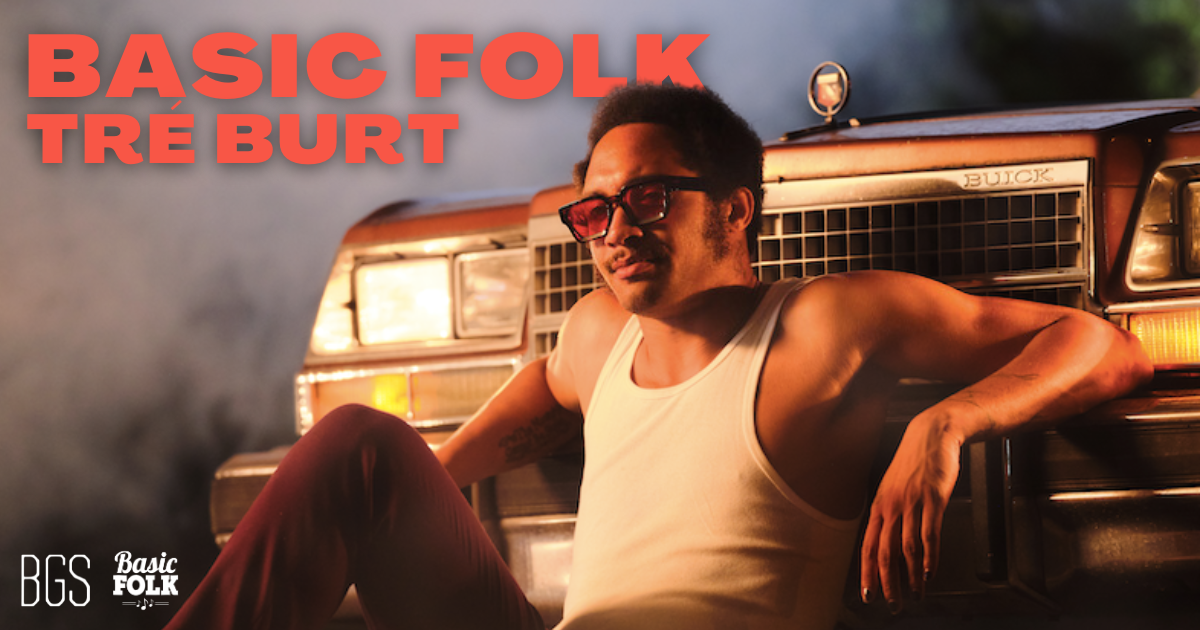
Basic Folk: Tré Burt

This week we have a Basic Folk hero returning to the pod! Tré Burt is back today, going track by track through his new album, Traffic Fiction. I am a longtime fan of Tré’s music, and this new release on Oh Boy Records is my favorite of his records so far. It combines what fans have come to love about Tré’s writing and unmistakable vocal performances with a new infusion of soul and Motown-inspired styles. The soulful grooves of Traffic Fiction are souvenirs of Tré’s close relationship with his grandfather, who recently passed away. Tré recalls listening to his pops’ favorite records and invites us into his family’s musical lineage.

LISTEN: APPLE • SPOTIFY • STITCHERAMAZON • MP3

The heart of the album are field recordings that Tré made of his grandfather while he was still alive. Just two people, talking about music, talking about life, encouraging one another. The simple moments that mean the most when somebody is gone. And they give us insight into one of the greatest triumphs of Traffic Fiction, which is the transformation of melancholy into dancing. You can’t help but move your body when you hear this music, even as Tré deals with profound loss. He reminds us that being an Important Artist is not incompatible with having fun. And isn’t that what great Black artists do? Tell you the story of a tragedy in a way that somehow makes you feel joyful?


Photo Credit: Justin Hughes