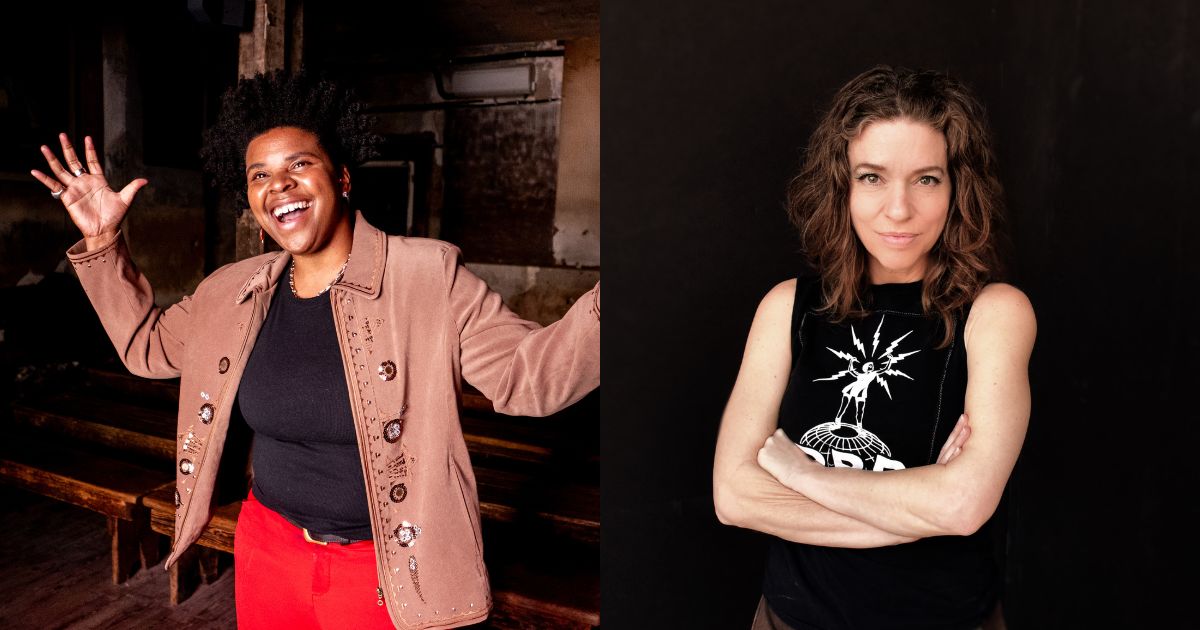
The Creative Freedom Behind Leyla McCalla’s ‘Sun Without the Heat’

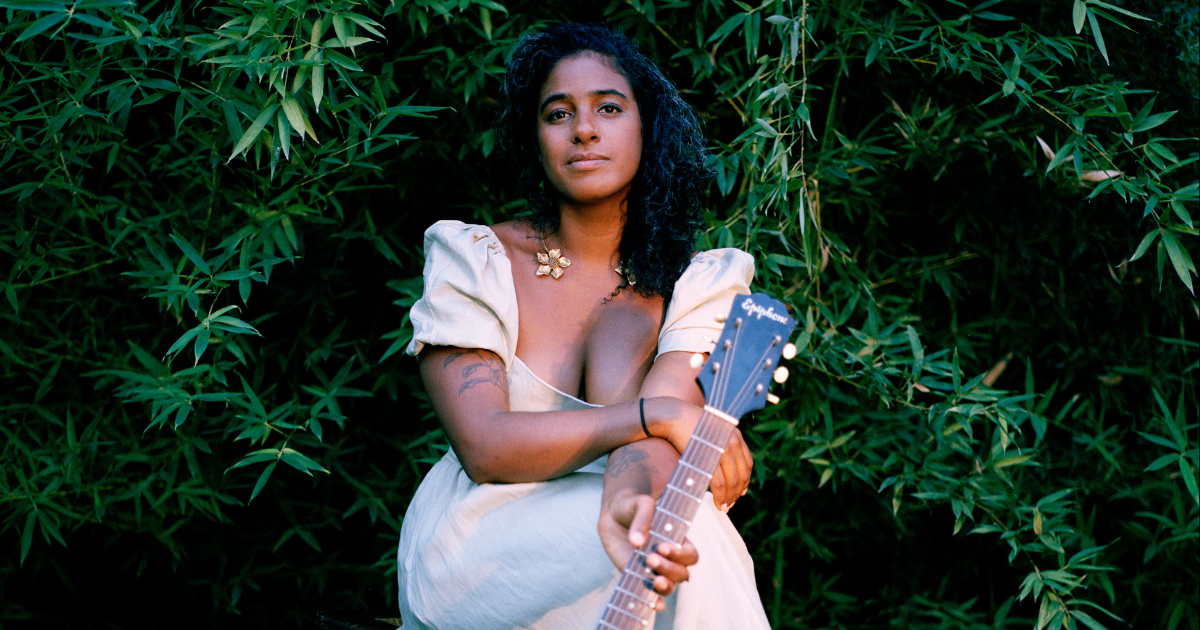
Sun Without the Heat is Leyla McCalla’s fifth solo album, but it is different from past efforts and she brings the listener through the transformative process with her. Produced by Maryam Qudus at Dockside Studio in Louisiana, McCalla dug into her personal history, primary sources from Amistad Research Center at Tulane University’s archives, world musical influences, and her creative trust in her long time bandmates to bring forth a bright, kinetic, and meditative project.

The studio, nestled along the Vermilion Bayou, offered an insular, bucolic setting for the nine days McCalla and band were recording; a place where friends and children could visit and local fishermen provided fresh catch for dinner. Qudus’ direction provided McCalla with space and vision to piece together her research and personal edification, while her relationship with her band allowed a deeply creative process to unfold. McCalla spoke wistfully about the experience, “It was very luxurious to have that kind of space. And it’s just really a very nurturing environment.”

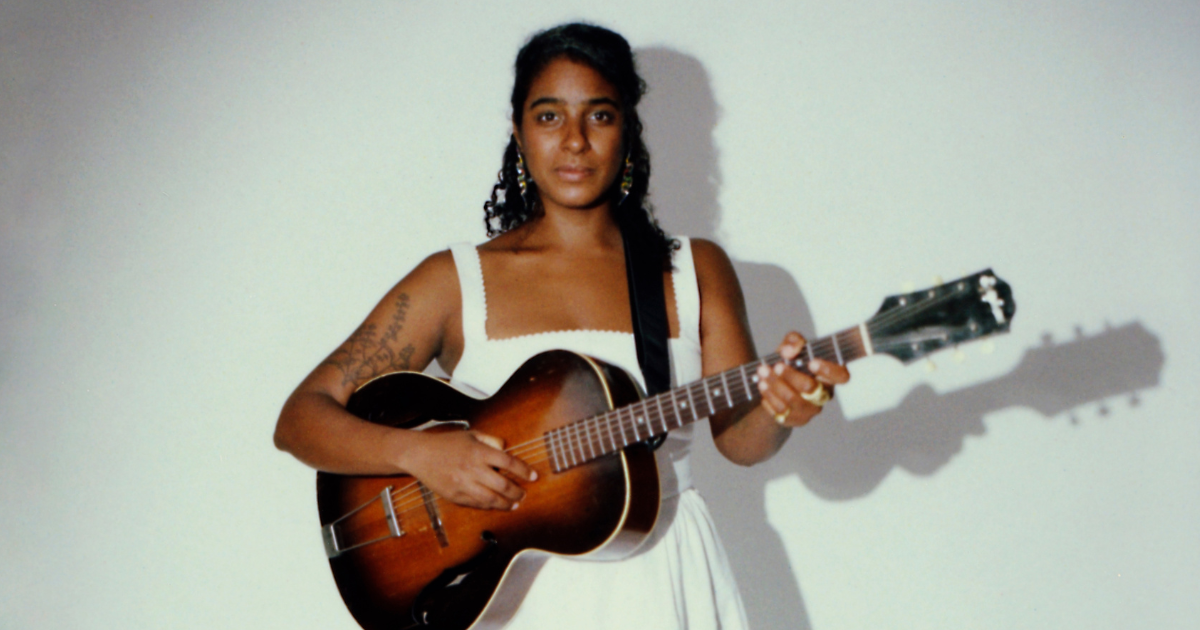
Traditionally a cellist, on this project, McCalla explores her relationship with the guitar. She delves into West African and Brazilian polyrhythms flowing underneath lyrics that, at times, feel like a repetitive prayer or mantra. She balances the seemingly unanswerable aspects of life with the sometimes illusive, but simple notion that many contradictory feelings can be true at once.

BGS spoke with McCalla via Zoom from her home in New Orleans earlier this month. McCalla discussed the experience of researching, writing, and recording, her relationship with fans and supporters, creative freedom, and trusting the process.

I’ve been listening to all your music the past couple of days and I’ve noticed that the sonic palette of this album is somewhat of a shift for you. It seems like there’s a transformation theme running through it, both lyrically and musically, and it seems like even in the process of recording it. So I wanna talk about that on multiple levels, but can we start with the process for this? It sounds like you went into the woodshed and didn’t come out until the record was done.

Leyla McCalla: This is an album that was mostly finished in the studio. I had a pre-production session with Maryam Qudus, who produced the record. It was also just this really crazy time in my life. I was on tour a lot and coordinating with kids’ schedules. We really only had 36 hours of workshopping songs. Maryam was really amazing at being like, “Okay, let’s play with this idea, and come up with a verse and a chorus.” So I think we came out of that pre-production session with about 7 different demos that were just these rough sketches and we sent them all around to the band. When we went into the studio, everyone contributed what they were hearing to the songs. I’ve been working with my band now for about six years. I think that we have developed fluidity in our process of coming up with parts and talking about music. And so I knew that I had these sort of vague notions of delving into psychedelia and Afrofuturism and mining, this incredible music from Africa, ultimately. I think that that’s been a consistent through line in all my work is connecting my music through the ancestral lines of the sounds themselves.

I played a lot more guitar on this record than any other record. For me, it was really about delving into the songwriting and figuring out what I wanted to say. I’d been doing a lot of reading of Black feminist thinkers, and contemporary thinkers like Adrienne Maree Brown, Alexis Pauline Gumbs, and Octavia Butler. I think this record for me was really about, “How am I going to survive life? What does it mean to be resilient? What does it mean to transform and change? And give myself the space to grieve and also to hope and to dream.” There are a lot of things that I was meditating on when I wrote these songs.

I remember feeling very vulnerable, because I was really going back into this more beginner’s mind. I’ve never gone into the studio and been like, “I don’t know what it’s gonna sound like on the other side.” I’ve always had the band pretty well rehearsed and gone in. This time it was like, “These are the things that are emerging in real-time.”

Did you feel nervous about it? It seems like you have a lot of trust with your band, which is a great starting point. And you had the 36 hours of workshopping and all the ideas that you came up with. But were there nerves about it walking in to record?

Oh, yeah. It was not nerves about, “Can I trust my bandmates to be awesome?” It was more nerves of, “Do I suck?” Which is classic imposter syndrome that artists have as part of the process of writing. You get an idea. It’s a good idea. You question whether it’s a good idea.

I’m trying to do a new thing. I’m trying to break new ground in my creative life and in my sonic expression. Within that, I think that there’s a lot of room for self-doubt. That’s why for this album it was critical to have the support of my bandmates and of Maryam, who didn’t have that kind of attachment to any of the songs. They were just there to help execute what I wanted.
I think this album really has strengthened my trust in my songwriting and in my creative process. And just knowing that you don’t always have to know what’s gonna happen to know that it’ll be good.

Absolutely. I was just going to say when you said it was a sort of meditative for you, I think that really comes across, lyrically and sonically. There are these phrases that you repeat that are meditative and it seems like you’re asking questions, you’re answering the ones you can, and you’re submitting to the ones that you can’t. What you are saying you wanted to happen comes across.

Yeah, I think so. I think that there is, on a spiritual level, deep healing for me in writing these songs. I was calling that in. I was navigating single motherhood, divorce, breakups, and big deaths in my family. It was like, “How do I call myself back to myself, what is gonna guide me through that?” I think for me, doing a lot of sort of ancestral healing work and meditating on the the gifts and the things that I’ve inherited from my ancestors, those made their way into the songs.

Speaking of process, you mentioned in your liner notes that you are grateful for creative freedom on this project. And I’d love to know what creative freedom looks like for you and how it impacts your work. And maybe what a lack of creative freedom has felt like in the past for you.

I think creative freedom, for me, was kind of twofold. I have a label that is mostly doing stuff outside of the commercial realm. Obviously, we’re part of the music industry, but I never felt like I needed to make a particular album. I felt like the question from the label was, “What kind of album do you want to make? What is coming through right now for you? What do you want to say?” Being able to come from that place is very different than, “Try to take over this part of the market,” or something. It’s a lot more empowering experience. Also, not being afraid to go in different directions. Not being afraid to use weird pedals on my guitars, experiment with synths, have a freaking psychedelic freak out, or have piano on the songs or organ. It was just sort of intuitive, “Yes, this belongs.” And not feeling like anyone was going to disapprove of that.

I never felt that there was a particular agenda outside of the agenda that I wanted to fulfill. That has been a really empowering experience for me, coming off of my previous record where it was like, “Okay, these are these ancient rhythms that are Haitian and African, and this is a mapping of where Haitian people come from.” I felt empowered by that, but in a very different way, almost like I wanted to serve this music. For this record it felt like, “Okay, how can this process really serve me and serve my creative genesis?” Returning back to like a more beginner’s mind, “What are the things that really I love about music? What are the things that make me wanna write songs?”

I didn’t have as much of a mind for that with Breaking the Thermometer, because it had been such a longstanding collaboration that I had been working on for five years with a crew of theater makers and different musicians and then going into the studio.

I always felt like that project was like a garden of weeds that are growing out of control. It could be a book. It could be a theater project. It could be a dance piece. I explored the intersection of all those things together. Whereas this was like, “Okay, I’m just returning back to this one format. We’re making an album.”

It meant connecting with some of my earliest influences. That’s why I went back to listening to a lot of artists from the tropicalismo movement in Brazil, in the ’60s and ’70s. There was all this experimentation with traditional music forms and rock and roll and psychedelia. I love that music. There’s something about it that just really speaks deeply to me. And I think that it’s also because of my generation, who I am, and where I am. I’m drawn to things that are out of the box. And I’m also drawn to really solid groove and feel and deep emotional content. I never had an agenda other than to figure out what I want to sound like and being able to have that space. A lot of these songs were about like, “How do I get out of my own way?”

When you started thinking about making this record did you know that you’d be playing more guitar than cello? Did you write on guitar? What was the relationship with that instrument like?

I was writing a lot on guitar. I wasn’t like, “I’m gonna play guitar and not cello.” I didn’t have an agenda in that way. I really wanted to explore different shapes in my fingers and try different rhythmic structures. Guitar is exciting for me in that way.
I’ve done a lot of finger-picking in my work and there’s plenty of that on this record. But I’m like, “What about this inflection? What about this texture? And what about this feel? What does that conjure?” That was really fun for me.

Fun was also really central to the process. I was like, “I want to heal, I want to be creative, I want to expand my sonic palette, and I also want to have fun.” I do this work to have fun. I don’t do this work to be the “king of the capitalists” or something. I want to have a good experience with it and find it enriching. I feel like the guitar is the ultimate symbol of liberation and freedom. It has a different meaning to me than the cello. With cello, I know the notes. I am thinking about technique and I have to think about how I’m holding my body. Guitar is just like, “This is who I am.”

For sure. Partly because the guitar is so mobile. You can walk off into the woods with it.

Yeah, totally. You should see me walk through an airport. I’m carrying my guitar, my banjo, and my cello, and I’m always like, ”Man, life would be so much easier without this cello.” But it’s such a powerful thing. When I’m playing cello, it feels totally like, “Wow, this is also home.”

Cello moves so much air. It can completely change the vibration of a room.

Totally. I always tell my bandmates, “Oh, we gotta be careful with that cello. It’s like melting a dark piece of chocolate on stage.”

I think a lot about sense of place and how a place can affect the creative process. Since you were sort of in a “lock-in” at Dockside Studio, I want to know if that studio and that place had an effect on this record.

Oh, yeah. Dockside is an incredible place. There’s a house with a pool and then a whole other house with a studio. The grounds are beautiful and well-kept. You’re right by the river.

There was a sense of deep relaxation for me there, because it is kind of separate. If it were in the middle of a city, there would be so much more distraction. But because there isn’t, I felt like it really helped me to focus and to tune in. We burnt candles there every day. We were calling in a lot of spirits and support. I did a lot of just sitting by the river and writing and reading in order to write.

And Maryam is amazing. If it had just been me producing the record, it would have been way more disorganized. Maryam was amazing at being like, “Okay, Leyla, we don’t need you in the studio right now. What we really need from you is to go and write.” I feel like I do best in those sorts of relationships, when someone is gently nudging me in the direction of what’s gonna be most productive for me. I was really able to get to a place of being productive and feeling quiet enough to actually hear whatever was coming through. If we had made the record anywhere else, it would have probably sounded completely different. We are all pretty well versed in the different styles of Louisianan music, so we kept thinking, “What is this sound that we’re coming up with?” And we were like, “This is Louisiana tropicalia.” It’s a fun construct.

Tell me a bit about what your relationship is like with fans and supporters of your music and the impact that they might have on your creations or your career.

For my first record, I did a Kickstarter campaign and I asked for $5,000, because I didn’t know how expensive it is to make albums. I ended up making over $20k. That whole process of doing the Kickstarter was such a boon to my career. At that point, I had been touring with the Carolina Chocolate Drops. No one really knew who I was, but I realized that there was support and space for me to be doing these projects that combine research and intellectual pursuits with making music. That’s the line that I have been toeing this whole time. And it is incredible, over the years, the number of connections that I have made from pursuing two things at once and growing this academic life within my body of work as a recording artist.

People have brought me, over the years, limited edition Langston Hughes, Haitian Creole poetry from the 1800s, translations of Zora Neale Hurston books that are in French or German. Those are the kinds of connections that feel so sustaining creatively for me and really enriching. The music industry is so inundated with artists, and everyone’s trying to stand out. That kind of symbiosis, I think, is really critical not only to me as an artist but to me seeking support.

That’s wonderful. There’s something sort of clinical about the traditional record label rollout of material in the past, but now it feels like, because of social media, because of things like Kickstarter and house shows, a wall has broken down.

Totally. And I feel people really connect to that, even sometimes more than the actual songs. Which may be problematic in one way. Everything is kind of about more of this “cult of personality” thing. Not that I’m super invested in developing that, but I do feel like the fan base is invested in me as a person, and wants to want to support the music as a result of that.

Can you talk a little bit about the collaboration with the Rivers Institute and the Amistad Research Center at Tulane, and how that might have informed this project, or what you’re working on in general?

I was invited by the Rivers Institute to be their first music fellow. They have this incredible artist-in-residence program that is in concert with the Amistad Research Center at Tulane University, which is an incredible archive of stuff from all over the South, particularly Louisiana Black culture. There are so many oral history interviews. I discovered writers that I didn’t know about, particularly a guy named Tom Dent, who feels like he’s kind of like the Langston Hughes of Louisiana.

I’ve always known how important archives and libraries are, but it’s just so much information. There’s a woman named Jade Flint who works there who helped me. She was like, “What are you interested in?” I’m like, “I like poetry. I like organizers. I like movement work.” I found myself down this path of discovering letters that Fannie Lou Hamer had written to her best friend. She was from the Delta in Mississippi and in the ’60s was really active in registering Black voters at the height of Jim Crow. She was attacked. She was beaten really badly for that. She just kept on fighting her whole life for Black people to have the right to vote and for political participation for Black people at a time where that came at a great cost to her mental, emotional, and physical health.

There’s an organization called Core New Orleans, which actually did a lot of COVID testing during the pandemic, but they were also working on voter registrations. I was reading their pamphlets that were like, “This is how you deal with potentially violent situations. This is how you approach people about trying to get them to vote.” I was doing that and concurrently reading things about emergent strategy and pleasure activism and comparing notes like, “These are the activists of yesteryear and the organizing principles.”

And then I was reading Adrienne Maree Brown’s books. She’s like, “You’re gonna need to masturbate before reading this chapter, because otherwise you won’t be connected with your pleasure center. That is essential to this activist work.” You could see this sea change in the attitude about what is actually going to aid our collective liberation the most.

During this time, my grandfather passed away and he [had] started a Socialist Haitian newspaper called Haiti Progress. Both of my parents are activists. I’ve been immersed in a lot organizing and activist stuff my whole life like going to protests throughout my childhood, especially regarding Haitian immigrants and human rights issues in the United States.

All of these things just really filled me with this feeling of, “Wow! It’s taken so much bravery to be able to fight the good fight and keep these conversations moving forward.” I think we still have a long way to go. I did a lot of reflecting on that. And that song, “I Want to Believe,” was written during that residency. It’s a simple song, but I wanted to write something that was almost a song that could be sung at a protest, something that was not quite gospel and not quite protest music, somewhere in the middle.

I love a library, I love an archivist, and I love being in that space and finding things that feel like a secret. How you process that as a person in the present, feeling the history in the present, and how it comes across – that is reflected in your lyrics. We have access to so much information today, but that information is very much filtered by these multinational corporations. There’s search engine optimization and all that, and we can’t really dig down until you go into a place like that where those regional details exist, like in an archive or library.

It just is incredible to me, because there’s so much to keep track of. And you know, even the different categories like oral histories or audio interviews or drafts of books or poems. There are unpublished pieces that may only be read by five people every year.
Those five people then know about this thing and can share it with their community, and make work from it, or include it in their research papers. There’s there’s endless ways to see the world and then filter this information.

I feel like my job as a musician is looking for those bits of information that feel like the diamond in the rough, like the thing that I’ve been looking for my whole life. That’s really the chase. It really keeps me in the archives.

Can you talk specifically about the title track, “Sun Without the Heat?” In your liner notes, you dedicate the song to Susan Raffo and Frederick Douglass. I’d love to know more about that.

Susan Rafo released a book called Liberated to the Bone: Histories. Bodies. Futures. I went down this rabbit hole of progressive thought. Her book is written for healers, people working within the medical industrial complex, and anyone who’s engaged in healing work, whether that be on a community level or on a one-on-one basis. I read that book, and it was really fortifying for me.

She has this theory of the original wounds of our society, which are the genocide of Indigenous peoples and the enslavement of African people through the transatlantic slave trade. It’s about our inability to grapple with the harm that has been perpetuated and is being perpetuated from those original wounds. It is holding us back from larger systemic change. There’s a chapter where she references a speech that Frederick Douglass gave in 1857 to a room full of white abolitionists. He said, “You want the crops without the plow. You want the rain without the thunder. You want the ocean without the roar of its waters.” I was immediately like, “Those are song lyrics.” I just heard it immediately. Those were just such beautiful words and and phrases and concepts, and I kept on singing that.

It occurred to me, “You can’t have the sun without the heat.” I was like, “There are only three phrases, and I need that one other thing.” I was also thinking about how so many of these songs to me are about transformation, and are about what change really requires of us. And it felt like those phrases spoke so well to that theme.

I read a book called Undrowned by Alexis Pauline Ghums. It’s a Black feminist study of marine mammals off the coast of South Carolina and Georgia and the things that we can learn from them about survival, resiliency, living on this planet, and our inherent connection to nature — you know, how to thrive on this seemingly unsustainable planet. It is also about our connections to each other and community.

For a long time, I think in my own personal life I was like, “I just can’t help but feel like I’m drowning.” But I didn’t want to just make a record about that feeling. I wanted to make a record about getting through that feeling: about breaking through the overwhelm.


Photo Credit: Chris Scheurich

Artist of the Month: Leyla McCalla

Since her solo debut in 2014, Vari-Colored Songs: a Tribute to Langston Hughes, multi-instrumentalist, composer, songwriter, and thought leader Leyla McCalla has routinely and consistently expanded her own sonic universe. But these have not been gratuitous or ambitious artistic reinventions. Instead, the cellist and multi-instrumentalist intentionally and organically brings in new and exciting textures, influences, stories, cultural touch points, and text paintings into her work. On April 12, she’ll continue in a similar vein, once again broadening her own endless musical horizons with a brand new record, Sun Without the Heat, available via ANTI-.

After Vari-Colored Songs, a collection of thoughtful, dense, and engaging adapted Hughes poems, Haitian folk, and originals, the critically acclaimed and “fan favorite” collection, A day for the hunter, a day for the prey (2016), brought in still more French, Haitian Creole, and bilingual material, underpinned by string band sounds that recalled her days performing and recording with the Carolina Chocolate Drops – but with many iconoclastic wrinkles and touches uniquely her own. At no point has there seemed to be any floundering or self doubt, musically and otherwise, in McCalla’s releases, but still their progression points to a growing confidence, an indelible sense of self, and an unwavering commitment to telling often untold stories. Time and again, she plumbs the depths of her own soul, her family, her lineage to discover and honor narratives regularly left in the shadows.

Sun Without the Heat certainly finds McCalla – who is based in New Orleans – covering exciting, tantalizing new ground that  neither feels entirely new or, again, like any sort of attempt at frivolous reinvention. Instead, this album is a re-distillation of the personal journey – whether inward or outward – that McCalla has invited us to join her on since Vari-Colored Songs. Over 10 tracks, Sun Without the Heat is fiery while inviting, with limitless sparks and an intractable gravity. Building on her Haitian roots, which remained front-and-center in 2019’s incredible The Capitalist Blues and also anchored her theatrical sort-of-concept album, Breaking the Thermometer (2022), on Sun Without the Heat McCalla again subverts antiquated ideas around “world music” and global folk by grounding Afrobeat, Ethiopian music theory, Brazilian Tropicalismo, and more in her American folk and string band expertise.

The result, like on The Capitalist Blues and Breaking the Thermometer, is as charming as it is dense, crave-able and nutritious, entirely one-of-a-kind while obviously interconnected with so many constituent musical traditions. There are clearly lessons learned and perspectives gained from her time collaborating with supergroup Our Native Daughters – with Amythyst Kiah, Allison Russell, and Rhiannon Giddens – here, too. On the new album, with her arm-length resumé at her disposal, McCalla remains the industrial-strength adhesive holding together all of these seemingly disparate parts. Sun Without the Heat’s current singles, “Scaled to Survive” (listen above), “Tree,” and “Love We Had” are a perfect aural triptych to demonstrate McCalla’s deft combination of inputs to create a singular output.

It’s nearly impossible to overstate the impact the Carolina Chocolate Drops and its now legendary alumni have had on American roots music and global folk. Giddens, Dom Flemons, Rowan Corbett, Justin Robinson, and more each continue to increase their audiences’ scope of understanding well after their time in the Grammy Award-winning group. But the niche McCalla has carved out and built a home for herself within since branching out from the band is truly her own.

Sun Without the Heat is timeless while Afrofuturist, essential but never essentialist. This is folk music crafted in the spirit of folk musician activists the world over since time immemorial. When you listen to McCalla, whether Sun Without the Heat or Capitalist Blues, or any of her five studio albums, you can rest assured what you’re hearing is truly idiosyncratic, while she never lets her listeners mistakenly assume she and she alone is the sole arbiter of these sounds, genres, and traditions. It’s a deft balancing act that perhaps only she can execute with such ease and such entrancing music.

All month long, we’ll be celebrating Sun Without the Heat and Leyla McCalla as our Artist of the Month. Enjoy our Essential Leyla McCalla Playlist below and stay tuned for our AOTM interview to come later in April.


Photo Credit: Chris Scheurich

Chatham County Line Say Goodbye to Bluegrass, ‘Hiyo’ to Synth-grass

For nearly a quarter century, North Carolina-based Chatham County Line have pushed the boundaries of American roots music, but with their new album, Hiyo, they’ve finally knocked them down.

Released January 26, the album contains some of the band’s most far-flung soundscapes to date, as they introduce synths, drums, and other sonic elements to their repertoire for the first time ever. The resulting creations sound more like synth-grass than bluegrass, with everything from drum machines to stretched out harmonicas, harmoniums, and other oddities guiding the way. According to guitarist, vocalist, songwriter and founding member Dave Wilson, the drastic shift in direction stems in part from the departure of banjo player Chandler Holt, who stepped away from the band following 2020’s Strange Fascination to spend more time with family.

“We listen to all kinds of music so I wanted to make an album that reflected that,” Wilson tells BGS. “We knew when Chandler left that we didn’t want to just do the same thing we’d always done with a different person on banjo. That’s not how artists grow in the world. You instead look at something as a springboard for change, which is exactly what we did in moving toward a sound that more closely resembles the music we enjoy playing when nobody’s watching.”

The experimentation on Hiyo was further encouraged by its producer, Rachael Moore, who the band met during their time portraying George Jones’ backing band on the Showtime series, George & Tammy. Both the opportunity to be a part of that show — which manifested itself through a friend of a friend — and meeting Moore were complete happenstance, with the latter seeing the two parties build an instant rapport.

“Anybody that works in the studio with T. Bone Burnett that many times and has been a part of records like [Robert Plant & Alison Krauss’ Raise the Roof] is alright by me,” praises Wilson. “That’s the kind of music I listen to, so us making that connection to Rachael made us realize how hard a worker she is and how much she understood the sound we were going for. We knew then she was who we wanted to record our next album with.”

Speaking with BGS from his home near Raleigh, Wilson further touched on the band’s connection to George & Tammy, the similarities between the recording process and being on a film set, Phoebe Bridgers’ influence on one of Hiyo’s songs and more.

Who are some of the bands you’ve been listening to that helped inspire the sonic shift of Hiyo?

Dave Wilson: That last Sarah Jarosz record really blew me away. She’s just a phenom. There’s also two radio stations that I listened to religiously throughout the writing process for this album. Whenever I’m messing around with a guitar or building a tube amp in my basement I listen to the radio, and one of the stations I tune into is called “That Station” here in Raleigh. They play everything from us to Mipso – and a bunch of other local acts – in addition to bigger Americana artists making waves. That’s where I heard the Sarah Jarosz stuff.

Being tuned into what people are doing today is very important to me, because I’m a part of this too. If I’m asking people to listen to me instead of Led Zeppelin then I need to listen to Sarah Jarosz instead of Led Zeppelin, because she’s a living, breathing artist that deserves that respect. I take a lot of joy out of not only buying modern albums, but listening to radio that supports those artists as well.

On the flip side, I love WWOZ 90.7 FM in New Orleans. That’s on constantly and is full of crazy, disparate sounds, old songs, funny blues stuff and more. I never get bored of DJ Black Mold down there.

How did the rapport working with Rachael Moore on George & Tammy translate to the studio with these songs?

I’ve listened to a million records and I really wanted this one to sound like the ones in my head. In the studio we tracked three or four songs per day, then at night I’d lay in bed in disbelief at the way the music sounded better than I had ever imagined us doing. We demoed the songs, so we had an idea of what it was going to sound like, but with the additions of [Jamie Dick and John Mailander] there was a huge leap forward that outpaced my wildest imagination. I’m so glad we were able to capture that, and it wouldn’t have happened without Rachael’s knowledge and connections.

Did you notice any similarities between your experience recording this album and time on set for George & Tammy?

It was really about seeing how hard all these people work, plus the whole concept of down time vs. on time, where you have to deliver an emotional performance before sitting around for 20 minutes as the cameras get moved around before jumping right back into your role like you didn’t miss a beat. It shows you that that is the job. It’s more about sitting around mentally preparing yourself and managing your emotions between those two extremes.

That rubbed off, because in the studio it’s a lot like that, too. In most cases the songs are written long before you go to record them, so when the time comes to get in front of the microphone you’ve got to deliver it with an intensity like it’s still brand new. That’s how George Jones delivered a vocal. He left no doubt that he was the character in his songs, not just the person singing them. That’s the approach we’re trying to take so we can deliver the goods when it matters most.

One of my favorite songs on Hiyo is “Heaven,” which I understand is somewhat inspired by Phoebe Bridgers, of all people. How’d that come about?

I live about three hours from Charlotte, which is where I grew up. My father, who’s in his early 90s, started going through some Alzheimer’s stuff during COVID that had me driving back and forth often to take care of him with my mom. During those trips I got to listening to Phoebe Bridgers to the point I’d have one [album] on repeat each way of the drive. I really dig her style of writing and think some of that influence rubbed off when piecing together “Heaven.”

The song was actually more of a country shuffle in the beginning, so in the weeks prior going to the studio I got my drum machine out of the basement to make some demos for Jamie, so he’d have a template of it to reference. One day I decided to try the Fender VI on it, hit the drum machine, and got playing. Something about those sonic elements, how the words came out and the harmonica completely shifted my perspective of it.

That’s another way we approached this record when we added a drummer. We went back through our catalog and redid a bunch of old songs entirely different as if we were covering ourselves. So with this album, I approached it as if I were covering these songs and how we could change them up, because my favorite cover songs are completely different from the originals except for the story and melody.

You mentioned earlier the influence of New Orleans’ WWOZ on this record and I feel like no song better embodies that than “B S R.” Would you agree with that assessment?

It was a huge part of that song. I actually also play banjo on it in open G tuning. One day I also tuned my Stratocaster to it and began playing the opening riff, which isn’t necessarily what the song is built around, but did help it to pop when we first brought it to the studio. Since then, I began playing Stratocaster in open G with super heavy, flat line strings on it and it’s become one of our favorite songs to play.

I also have family in Mississippi and my mom’s from Alexandria, Louisiana, so I traveled there a lot as a kid and have a general knowledge of the area. To be honest, New Orleans is the coolest city in America. It’s the one that’s got soul. There’s other towns with soul, but none that can match New Orleans. There’s live music in literally 40 places every night!

I’m also fond of the change of pace provided by the instrumental “Under the Willow Tree.” How does your approach change when writing songs with lyrics vs. composing an instrumental piece like this one?

I think some songs just lend themselves to having a story told over them and some, instrumentally, can tell a story from their melody alone. When Chandler left the band it was a sign to me to up my game and dig in a little harder, because until then I’d deferred to banjo and mandolin for most of the solos and heavy lifting. I’m a huge fan of Leo Kottke and other guitar virtuosos, so “Under the Willow Tree” is my homage to players like him.

Despite not being an instrumental, another song that gives me the same feel of “Under the Willow Tree” is “Stone,” both for the wisdom it imparts and its ballad-like feel. What was the motivation behind it?

That is the one song that I wrote during the pandemic. It was informed by all of the protests that were going on and the idea that when it comes down to it, you have the ability to change not only yourself, but you can change those around you with whatever power you have at hand. That can come from a deep conversation and from exchange of ideas and respect for the other person’s opinion, but in this case it comes from our music.

Music has a way of bringing people together in a way that few other things can match — just ask Taylor Swift fans! At the end of the day, we’re all gonna be a piece of dirt that a tree grows out of, so just relax. “Stone” was born out of a simple riff and that idea questioning what is permanent in this world, because all want something positive to persevere when you’re done and your story is getting told.

One thing that I regret about the advent of recorded music is the families that used to sit around, everyone playing an instrument and singing. There’s a therapy in that that went long overlooked. It’s just really positive and healthy for everyone included to sing a bit and let the world go for a minute.


Photo Credit: York Wilson

BGS Wraps: Ruby Amanfu, Billy Strings, Old Crow Medicine Show, and More

Farewell 2023 and hello 2024! While we all relish the week that doesn’t exist – that delightful no-man’s-land between Christmas and New Year’s Day – there’s perhaps just one activity beyond abject laziness that’s appropriate for the turning of the year: Music! Whether you’re still in “pajamas hermit” mode or you’re antsy and ready to go back out into the world, we’ve got songs and shows to recommend for your New Year’s Eve/New Year’s Day festivities in this special edition, final week of BGS Wraps.

Thank you for spending another stellar year with BGS! We can’t wait to enjoy all that 2024 has in store with all of you. Celebrate safely and enjoy the holiday, we’ll see you in the new year.

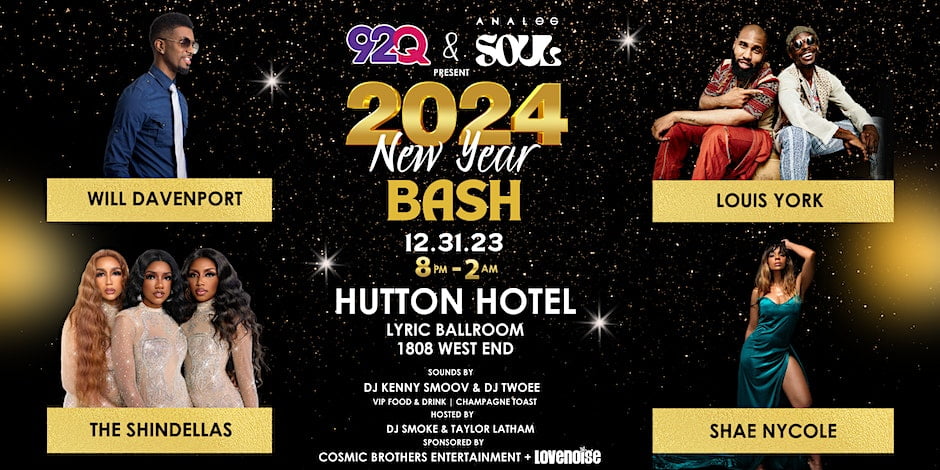
92Q & Analog Soul 2024 New Year Bash, Hutton Hotel, Nashville, TN, December 31

There are seemingly wall-to-wall parties, concerts, and happenings in Music City for NYE, and one certainly worth spotlighting is 92Q & Analog Soul’s 2024 New Year Bash, happening December 31 at Analog at the Hutton Hotel. From 8pm to 2am, guests will hear production, songwriting, and music-making duo Louis York, roots-tinged girl group The Shindellas, Shae Nycole, and more ring in the new year with performances, DJ sets, food and drink, and a champagne toast at midnight. Tickets are available here.


Ruby Amanfu, “Winter”

A dreamy and gauzy neo-folk song from singer-songwriter Ruby Amanfu feels frosty and magical, but warm and enveloping, too. It finds joy in often gray and bleak winter landscapes and vignettes we all know so well. The pulsing piano gives the track a forward-leaning energy, even while it relaxes into its groove and builds to a tender, energetic and lush sound.


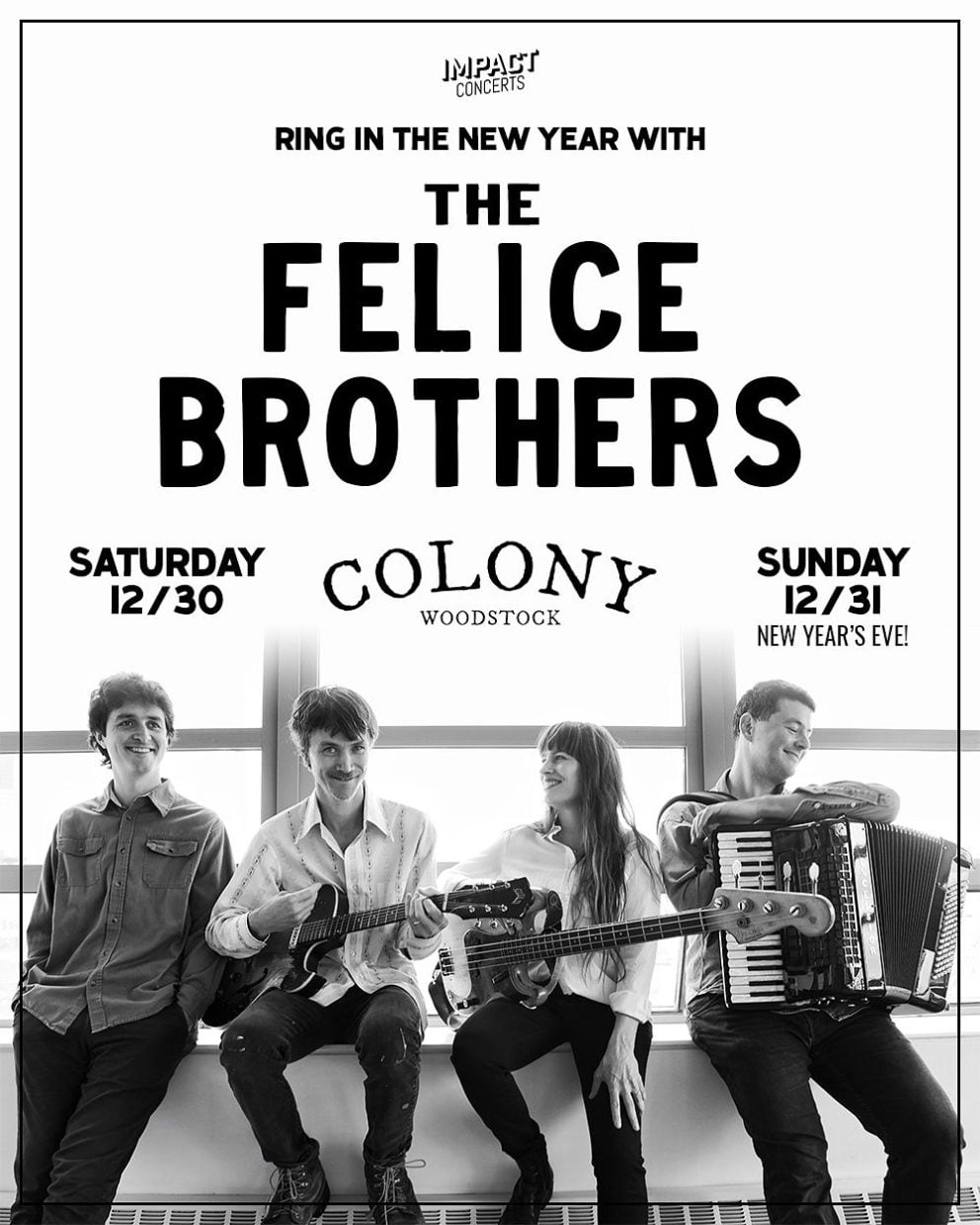
The Felice Brothers at Colony, Woodstock, NY December 30 & 31

Spending your New Year’s Eve in upstate New York? Don’t miss the Felice Brothers’ two year-end shows at Colony in Woodstock! Both dates appear to be sold out, but you can join the wait list here. Based in the Catskills – so this is something of a holiday homecoming for the group – the Felice Brothers put out a Bandcamp-exclusive album, Asylum on the Hill, earlier this month. Celebrate ushering out the old and in the new with the Felice Brothers in Woodstock.


McKowski, “Auld Lang Syne”

Mark McCausland – AKA McKowski, also of The Lost Brothers and formerly of The Basement – released an album of ethereal and contemplative holiday instrumentals for guitar this month that features a gorgeous rendition of “Auld Lang Syne” that’s perfect for your NYE playlists. The album, Winter Guitar Hymnals from the Boneyard, certainly listens as a kind of guitar-centered ecclesiastical service, featuring a handful of Christmas carols alongside original arrangements and compositions, too. It’s a lovely collection, one we just had to spotlight for this final BGS Wraps.


Nashville’s Big Bash on CBS and Paramount+, Nashville, TN December 31

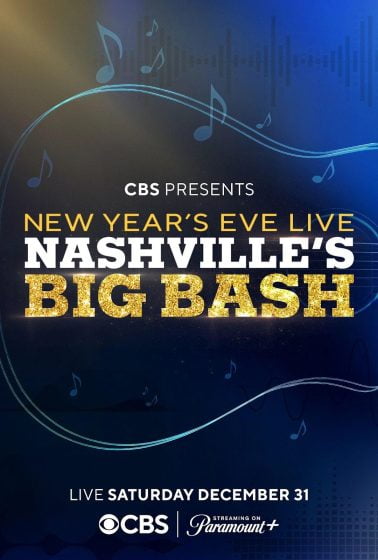
If you love big crowds, bright lights, and stunning pyrotechnics, Nashville’s Big Bash is for you! Or, stay home and avoid the crowds by streaming the show on CBS and Paramount+. See and hear Parker McCollum, Brothers Osborne with Trombone Shorty, Jon Pardi, Carly Pearce, Kane Brown, and many more. Hosted by Elle King and Rachel Smith, the five-hour production will feature more than fifty artists, bands, and performances. Oh and of course there will be the music note drop – Nashville’s version of the famous ball drop – over the stage at the Bicentennial Mall at midnight! More info available here.


Nefesh Mountain, “More Love”

What better to take with us into the new year than “More Love”? A Tim O’Brien cover by Jewish bluegrass string band Nefesh Mountain, the track was released with a mission of supporting organizations working to end the violence and ongoing war in Israel, Gaza, and Palestine while supporting Palestinians and Israelis impacted by the conflict. In a press release, Nefesh Mountain made a commitment to “donate a quarter of proceeds from ‘More Love,’ the ‘Love and Light’ Tour, and their forthcoming EP to charities and foundations that are dedicated to promoting peace, coexistence, and a way forward for Israelis and Palestinians.”

With more than 20,000 killed in Gaza and hundreds and hundreds more killed in Israel, the West Bank, and the greater region, we certainly believe the world could use “More Love” – and far, far less war – in 2024.


The Nields, “New Year’s Day”

We’ve been “saving” “New Year’s Day” from the Nields’ new album, Circle of Days – which was released in June – for more than half a year, just for this moment! It’s a truly perfect song for this point of transition. The feeling of helplessness we all feel at the inevitable march of time is captured like lightning in a bottle, with feelings of regret, despair, and exhaustion. But ultimately, they find hope in these lyrics, even while they explore emotions often opposed to hope and its regeneration.


Old Crow Medicine Show at The Ryman, Nashville, TN December 30 & 31

It wouldn’t be New Year’s Eve without Old Crow Medicine Show at the Ryman! It’s a long tradition, this year bolstered by supporting acts like former Old Crow member Willie Watson (30th & 31st) and Kasey Tyndall (30th) and Harper O’Neill (31st). Tickets are somehow still available – so grab yours while you can! You never know what special guests Old Crow will trot out at these rollicking, rowdy, joyous shows. Though it’s probably safe to bet there won’t be a Belle Meade Cockfight either night, don’t rule it out entirely.


Portland Cello Project, “What Are You Doing for New Years?”

The Portland Cello Project is joined by soloist, vocalist Saeeda Wright, for an epic, jazzy rendition of “What Are You Doing for New Years?”, perhaps the only generally accepted New Year’s “carol” besides “Auld Lang Syne.” (We’re open to argument on that point, of course.) The track is from their holiday EP, Under the Mistletoe, a collaboration with Wright and drummer Tyrone Hendrix. It certainly demonstrates the broad contexts in which chamber music such as this can thrive.


Amanda Stewart, “One Hell of a Year”

A thought we have had every year since 2020 – and, honestly, since long before, too – is this: That was one hell of a year. If you’re feeling that same exasperation, mixed with fatigue and pride and a sense of finality, as we turn the page on the calendar, Amanda Stewart has a bluegrassy send off to 2023 and the holiday season just for you.


Billy Strings at Lakefront Arena, New Orleans, LA December 29, 30, 31


View this post on Instagram


A post shared by Billy Strings (@billystrings)

A New Orleans New Year’s extravaganza helmed by bluegrass shredder Billy Strings feels like an apropos way to ring out the old and ring in the new. For the past few years Strings has defined bluegrass music, with his skyrocketing fame, mass appeal, and ever-growing fan base. During that time, his shows around New Year’s Eve have been unparalleled. Now, they have grown into multi-night runs in arenas and stadiums – like the Big Easy’s Lakefront Arena. As is usual for Billy’s shows, there are no openers, so buckle up for nothing but rip-roarin’ Billy Strings each night as we say a final goodbye to 2023 and bid good morning and good day to 2024! Tickets here.


Photo Credit: Billy Strings by Christopher Morley; Ruby Amanfu courtesy of the artist; Old Crow Medicine Show by Joshua Black Wilkins.

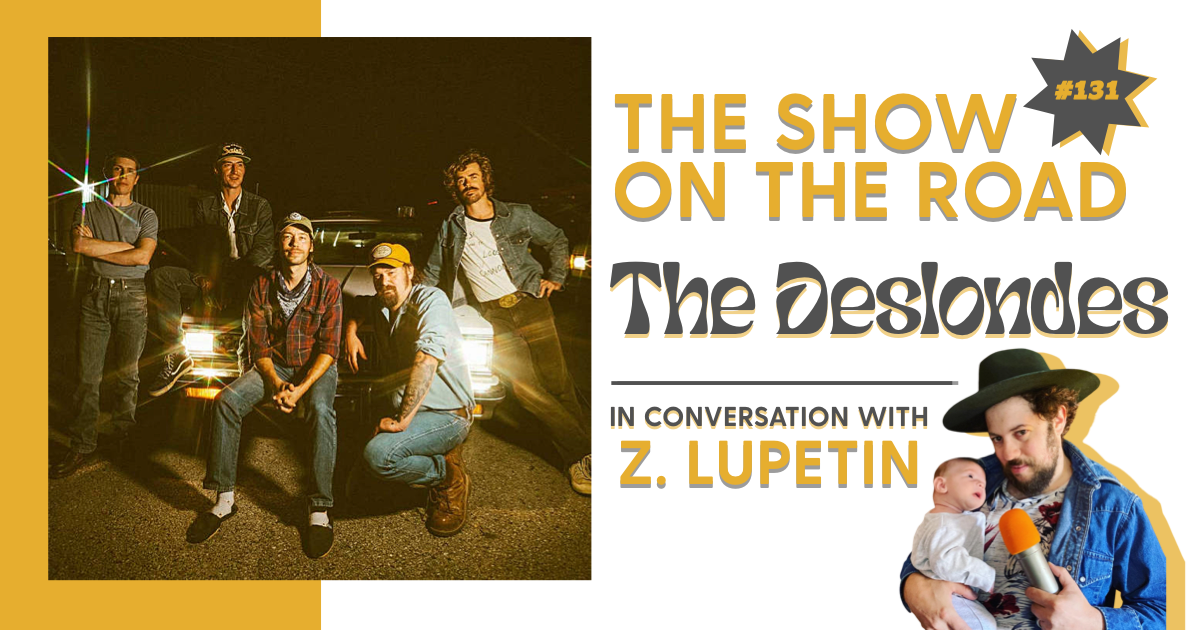
The Show On The Road – The Deslondes

This week, the show is back in New Orleans for a special talk with Sam Doores, one of the talented founders of well-traveled roots-rockers The Deslondes. We dive into their newest LP Ways & Means and how California-born Sam — who plays various instruments from electric guitar to keys, and sings in seven bands and counting throughout the Crescent City — collected many of its slow-burn soul-adjacent songs like “Five Year Plan” while holed up in a storage unit studio squat, questioning his place as an adult with real responsibilities who also happens to be a soul-searching artist criss-crossing our beautiful (or crumbling) almost-post-pandemic world.

LISTEN: APPLE PODCASTSSPOTIFYSTITCHER

Imagine if you will, you walk into a saloon lost somewhere between 1930 and 1975. The band onstage has three distinct lead singers, and the songs feel like hard lived-in tales that could live in a TV western or the soundtrack to Boogie Nights, with vibes that would inspire both Ray Charles and Woody Guthrie, Tom Waits and The Beatles. If you’re confused, good. Algorithms can force music upon you at any time these days and I’ll admit, Spotify wants me to listen to The Deslondes, at all hours. They’re not wrong. If I have one job in this podcast it’s to share the music that lights a fire in me as a fellow songwriter and has me grasping for genre-descriptor straws. I have no idea, clearly, how to describe this band. I will say, songs like “Howl at the Moon” make me feel like I’m somehow still proud to be an American, plying my trade somewhere in the still kind of Wild West.

Starting with their charmingly ramshackle and bluesy self-titled debut in 2015, the band, which formed in New Orleans’ Lower Ninth Ward, has always made a point to write democratically and spread songs around to their singers. Sam for one, Dan Cutler (bass) for another and notably the always compelling Riley Downing, whose ancient deep drawl sounds like it should be its own character in Yellowstone — and all harmonize gorgeously together. Downing and Doores also both have duo and solo albums which are lovely, but what they create here in The Deslondes — especially in timeless story songs like “South Dakota Wild One” about Riley’s wandering youth — are special in the way accidental supergroups make music that somehow shouldn’t exist.

It was a pleasure getting together with Sam for a rare in-person chat just off Frenchmen Street. If there’s one thing I love most about New Orleans, it’s that it creates new artists that seem to follow the beat of their own drummer, genres be-damned. Give Ways & Means a spin — it might transport you somewhere you need to go.


Photo credit: Bobbi Wernig

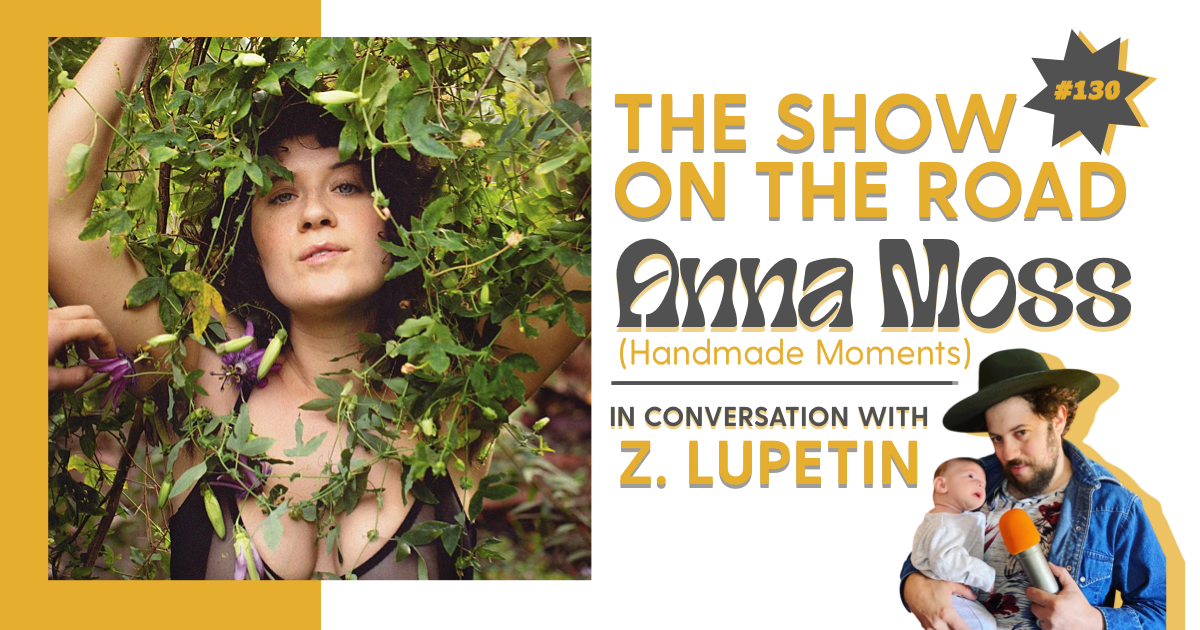
The Show On The Road – Anna Moss (Handmade Moments)

This week, we feature a conversation taped live in New Orleans with Arkansas-born multi-instrumentalist and roots-soul singer Anna Moss, who has criss-crossed the country in recent years with her sonic partner Joel Ludford in their band, Handmade Moments.

LISTEN: APPLE PODCASTSSPOTIFYSTITCHER

Growing up as a bathroom-singing nerd playing saxophone in the school band, Anna admits that if she could wield any superpower it might be invisibility. Not necessarily the first thing you think of for an openly political, big-voiced folk festival favorite who has made a name for herself sitting in with some of the biggest names in the Americana scene. A recent collaboration with Rainbow Girls bore especially potent fruit — and if you read my Music That Moved Me in 2022 list, you’ll see at the very top was Anna’s thorny “Big Dick Energy.”

Rarely does a song make you laugh and then dance and then follow with a sucker punch about how unsafe many women feel just taking up space in the world. The video also illustrates the song’s deft twist: Women can gang together to mock and minimize the men who for so long have taken away their agency and power. And yet, the song also makes you want to forget it all and just groove to the sexiest flute solo in recent memory. If this is a foreshadowing of what’s to come with Anna’s solo work, call me quite intrigued.

Whether she’s playing crunchy bass clarinet or upright bass, electric or acoustic guitar, or singing with Joel in Handmade Moments or her other jazzy group, the Nightshades, Anna is never shy about speaking her mind in her music. Take a listen to Handmade Moments’ rapidly rhyming, gorgeously harmonized climate-change banger, “Hole In The Ocean,” which wouldn’t feel out of place in a slam-poetry jam. A song on their forthcoming record End Of The Wars (coming in May) directly confronts Trump’s cult-like status, again not pulling any punches. Want to see an early version of the song played with sax in a cave? Sure you do.

The dangers of the road are not lost on Anna and Joel of course. They were hit head-on during a freak accident on a run in Northern California years back and were lucky to make it out relatively unscathed. She’s trying to keep things a bit mellower these days. It was special talking to Anna in her adopted new home of New Orleans, and the soulful sounds that trickle into her living room on Frenchman Street can be heard throughout the songs she’s working on. Fittingly, a slow burn live track she released, “Slow Down, Kamikaze,” is a great reminder to stop trying to do too much and focus on what actually matters.

LISTEN: Acantha Lang, “Ride This Train”

Artist: Acantha Lang
Hometown: New Orleans, Louisiana
Song: “Ride This Train”
Album: Beautiful Dreams
Release Date: April 14, 2023

In Their Words: “At its core, ‘Ride This Train’ is about never giving up on your dreams. We all get disheartened, and certainly on my journey in music, I’ve had times when I felt like giving up. I wrote this song as a reminder and an affirmation — ‘I’m gonna ride this train all the way to the end and when it stops I’m gonna start all over again!’ My dreams have taken me from my hometown in New Orleans to New York City, and on to London where I live now. I’ve been ‘riding trains’ and chasing dreams for a long time! It’s my love of music that has carried me through. It’s my calling. And I believe that we owe it to ourselves to follow our calling. Life is too short not to. (Also, it doesn’t hurt that the idea for the song came to me when I was traveling on a train to a studio writing session).” — Acantha Lang


Photo Credit: Katy Cummings

WATCH: The Revivalists, “Kid”

Artist: The Revivalists
Hometown: New Orleans, Louisiana
Song: “Kid”
Album: Pour It Out Into the Night
Release Date: June 2, 2023
Label: Concord Records

In Their Words: “‘Kid’ is about capturing the essence of life. We all go through ups and downs. Sometimes, we don’t believe in ourselves. We’ve got skeletons in the closet trying to drag us down. But you’ve got to believe in yourself. You’ve just got to live for the spirit. Nothing good ever comes easy. If you don’t have hope, what do you have?” — David Shaw, vocalist/guitarist

“As you get into new phases of life, you’re always learning, growing, having new experiences, trying to achieve something. Everyone has an inner child, or like many of us in the band, we have our own children now, and this song is just saying ‘hey, you got this’ to anyone in any generation who may need to hear that.” — George Gekas, bassist

“David and I wrote the bulk of ‘Kid’ on January 6, 2021. My wife was one month pregnant with our twins, and I had a fire lit under my ass to write a great song. But also, we were getting real-time updates on the insurrection at the Capitol. There was a lot of intense energy swirling around us that day as we were trying to stay focused on this exciting, beautiful thing we were channeling.” — Zack Feinberg, guitarist

“For this video, we wanted to focus on crafting something artistic and visually engaging, without really trying to tell a story or worrying too much about how it lines up thematically with the lyrics or anything like that. We were looking for ideas that were driven more by art and imagery than literalizing the text of the song. The specific concept came from a member of our management team named Adam Smith, who was inspired by a short video by a group of artists called Sunday Nobody Art where they used a series of stencils along a heavily graffitied tunnel to achieve a flipbook-style effect. We teamed up with director/animator Johnny Chew, who was really excited about the concept and totally understood what we were looking for. We wanted to use the city of New Orleans as a backdrop in order to showcase the character and color of our city. We debated the merits (and legal implications) of making physical stencils and using washable paint, but Johnny was confident that he could achieve the desired look by filming us individually in front of a green screen and then adding the wheatpaste effect in post and planting us on shots of the city. He knocked it out of the park. He took a lot of liberty with those little animations and artistic flourishes, and it really brought the video to life.” — Rob Ingraham, saxophonist


Photo Credit: Alysse Gafkjen

WATCH: Golden Shoals, “Ain’t No New Orleans”

Artist: Golden Shoals
Hometown: Nashville, Tennessee
Song: “Ain’t No New Orleans”
Album: Treading Water/Ain’t No New Orleans (Single)
Release Date: November 4, 2022

In Their Words: “I think New Orleans is the most important city in the US. It’s the birthplace of jazz, essential to the blues, and is one of the few places where chaos and spontaneity still thrive. It’s below (rising) sea level, and constantly sinking because of the way it was built by the first colonizers and those who came after. For me it’s a place where I get pushed out of my comfort zone, and learn about life, humanity, and American music. I don’t think the people in power are very concerned with protecting a place like this, or the people in it (the response to Katrina point to that fact). I tried to express all of this in four verses and an anthemic chorus. Hopefully the video, made up entirely of public domain clips from archive.org, reinforces these points. Hopefully things will change before the next Katrina happens.” — Mark Kilianksi, Golden Shoals


Photo Credit: Mike Dunn

The Show On The Road – Rebirth Brass Band

This week, we return to the Crescent City to talk to one of the new leaders of the Grammy-winning Rebirth Brass Band — trumpet player Glenn Hall III, who is part of a deep New Orleans musical family.

LISTEN: APPLE PODCASTSSPOTIFYSTITCHER

Rebirth will be coming from NOLA to LA to help headline the inaugural Paramount Ranch Sonic Boom on October 15th. It’s a brand new music festival co-created by yours truly and Dustbowl Revival (along with Tiny Porch Concerts and the Santa Monica Mountains Fund) that will celebrate the confluence of American roots music by bringing together diverse acts like Grammy-winning folk-blues master Dom Flemons, and notable local Southern California-based acts the Eagle Rock Gospel Singers, string-band Water Tower, Cuban group Yosmel Montejo y La Caliente and singer-songwriter Abby Posner.

Set in the green hills of the Santa Monica Mountains, partial proceeds from the fest will go to restoring historic Paramount Ranch, which lost much of its Western movie sets during a devastating wildfire.

Few bands of any kind can claim an unbroken lineage from their 1983 start. Phillip “Tuba Phil” Frazier, his brother Keith Frazier and renowned trumpet player Kermit Ruffins formed the group out of Joseph S. Clark Senior High School, located in the Tremé neighborhood of New Orleans. If you watched the acclaimed HBO series of the same name, you no doubt heard Rebirth as the brassy backdrop to the city as it constantly evolved and survived traumas like Hurricane Katrina. Members of the Frazier family still join the band on tours.

Glenn Hall III takes us through the fascinating history of the group, describing notable shows like opening for the Grateful Dead, recording with John Fogerty, kicking off the Grammys, and recently joining the Red Hot Chili Peppers onstage.

Their 2022 single “New Orleans Girl” shows how they never stop experimenting, lending their big sound to a hip-hop mashup featuring Cheeky Blakk and PJ Morton.