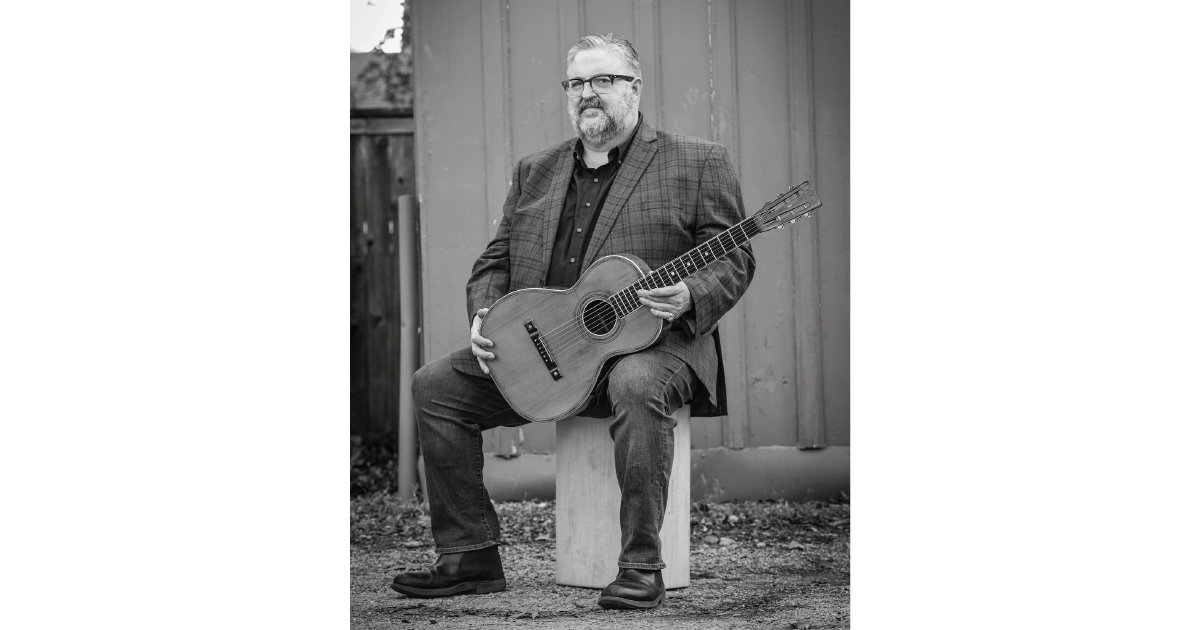
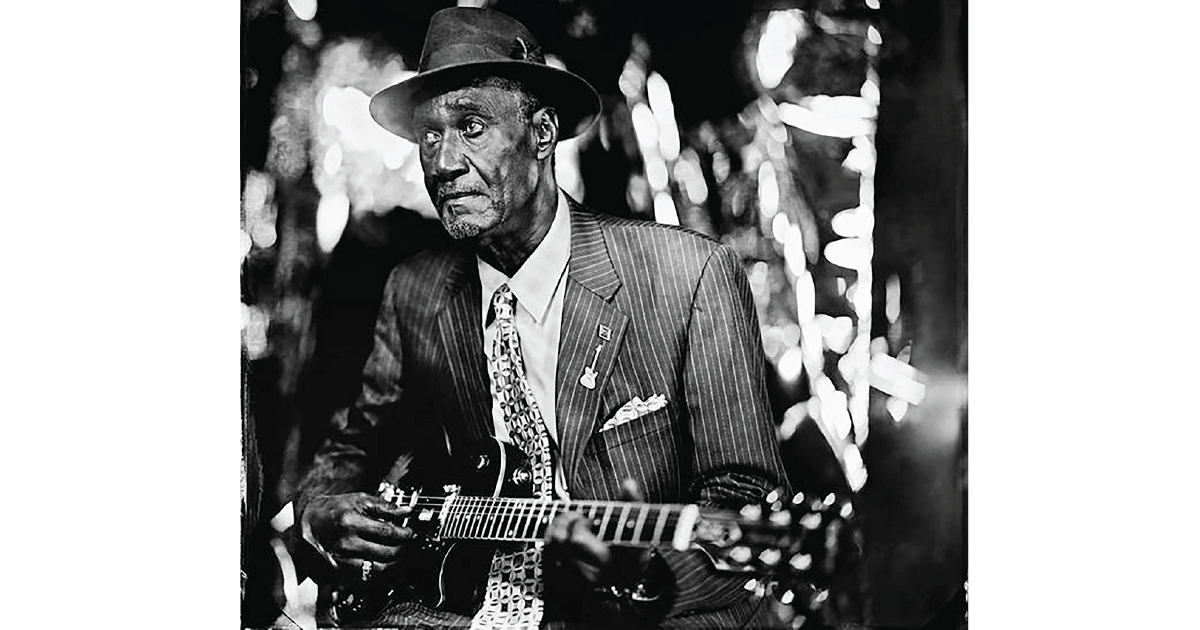
BGS 5+5: Riley Downing

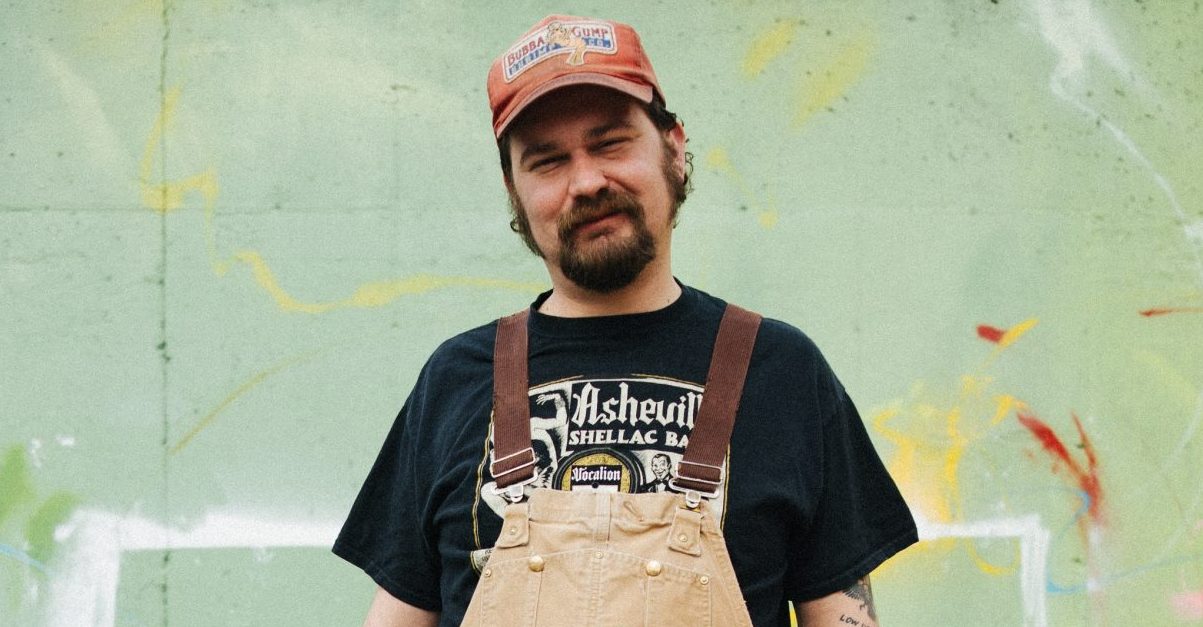
Artist: Riley Downing
Hometown: Kansas City, MO
Latest album: Start It Over

Which artist has influenced you the most … and how?

It is hard to pick just one artist that has influenced me the most. I am a fan of all kinds of music and genres as well as underdog musicians, current and long since lost in time. It might sound cliché, but if I had to pick one who influenced me the most it’s gonna be Woody Guthrie. If it weren’t for finding Woody Guthrie in high school, I never would have started to appreciate folk, blues, and roots music that made me think the same way that punk rock did at the time. I also never would have ventured out to Okemah, Oklahoma for the Woody Guthrie Folk Festival when I was 18 and met the guys that eventually would form the Deslondes. Woody is an American hero who tried to save the world with a song that gave people hope, morals, an education, a good laugh, and thoughts to chew on to get them through lean times. Woody, as simple as some of his music seems, was much, much more than just a musician. I never stop finding more and more meaning and inspiration from his life’s work. I always loved his copyright law, too. He basically said, warning, if you sing these songs you might just be a friend of mine, which I do and I am.

What’s your favorite memory from being on stage?

I have a lot of good memories of being on stage, whether late at night in a small club or a backyard or opening up for and getting to hear some of my favorite musicians every night. But I will never forget the first time we got to play the New Orleans Jazz Festival. That was kind of an epitome of all the hard work and hard traveling the band had done in the previous years all leading up to that one moment. It felt good to be accepted and supported by the New Orleans music community all those years and finally playing the biggest show you can really get down there. It was a surreal honor and never stopped being or feeling like it.

What was the first moment that you knew you wanted to be a musician?

The first moment I knew I wanted to be a musician was probably when I learned how to finally tune the guitar. Ha ha. I got my first electric when I was 13 and would just smash my fingers all over the strings and thought to myself, this almost sounds like I’m shredding. I thought all strings must have different sounds and tried out different kinds until my cousin finally showed me how to tune the guitar. Then came the power chords and once I was able to put a few together, I knew I needed to write words over them and attempt to sing them even though I didn’t know how to do that either. I did it anyway. Then came the buddies who also wanted to play music as well as different instruments and the realization that this is what we really love to do. I have been hooked ever since and honestly the process of doing that and the joy I get from it hasn’t changed much.

Which elements of nature do you spend the most time with and how do those impact your work?

The elements of nature that I spend the most time in that affect my work are in the rolling hills of Missouri. I love small town life, sitting in the sun fishing all day, or on a back deck BBQing and taking my time driving slow through the backroads that I don’t have to look up GPS, or listening to music or just making up songs and singing a line over and over until I have to stop and write it down. It is true, there is no place like home. I traveled all over the US and world, wide-eyed and wondering where I should end up, but Missouri is home and I always feel a great weight lifted off my shoulders when I’m there. Even when I’m not there I can always write a song that takes me back. I am sad I missed morel mushroom season this year though, but hopefully that means there will be more to find next year.

Since food and music go so well together, what is your dream pairing of a meal and a musician?

Food and music do go hand and hand. If I had to make a pairing it would be a small BBQ festival that all my friends bands could come play at and ‘lightheartedly’ compete for who does it right. My Alabama buddies will tell you it’s all about the white sauce and my North Carolina friends will argue that it’s all about the hot pepper vinegar or Carolina Gold sauce. I grew up with a BBQ squirt bottle in my hand and it’s one of my favorite pastimes and meals. Whenever people ask me where to get the best BBQ in Kansas City I have a hard time answering that question because the answer is at my house. I’m not sure who invented the red sauce but I first had it in South Carolina and pick it up any chance I get. I am loyal to KC, but South Carolina definitely gives us a run for our money. KC is spoiled though with wide variety of BBQ sauces and seasoning selections at grocery/hardware stores. I have almost successfully left or sent a bottle of Head Country, an affordable Oklahoma dry rub, to all of my friends’ houses all over the US so when I visit it’s always within reach.


Photo credit: Joshua Black Wilkins
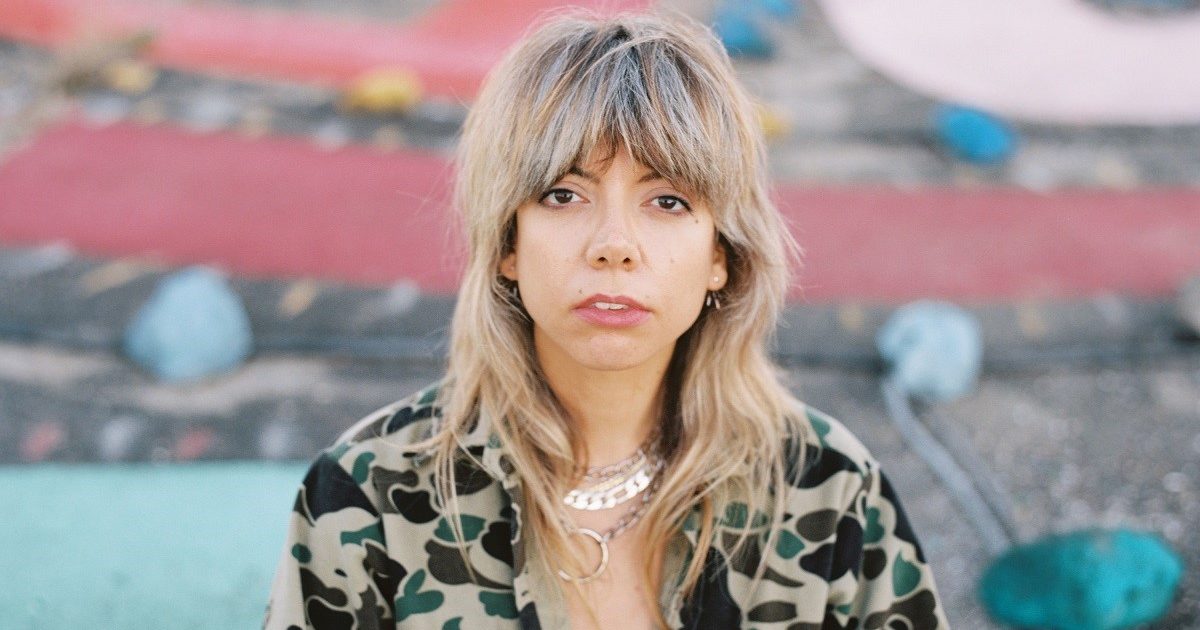
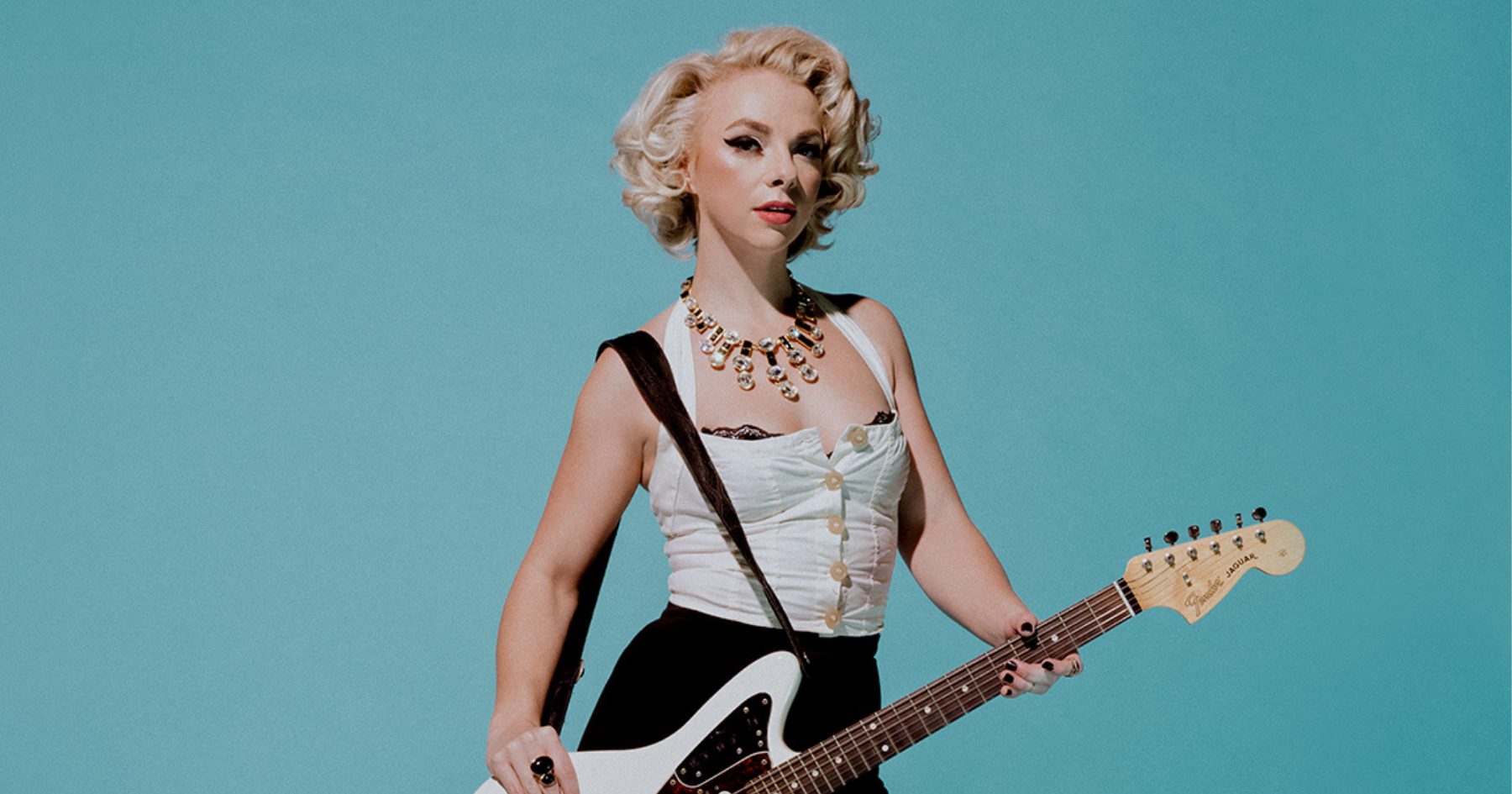
The Show on the Road – Samantha Fish

This week on The Show On The Road, we jump in our podcast time machine for a face-to-face interview (remember those?) with acclaimed blues and roots guitarist and singer-songwriter Samantha Fish.

LISTEN: APPLE PODCASTSSPOTIFYSTITCHER

Now based in New Orleans, the SOTR caught up with Samantha Fish at the Sugar Magnolia Music Fest in Mississippi before the world shut down — and to be real, until recently, the very idea of airing this interview seemed inappropriate. Two songwriters speaking into one mic at close range? With everyone crammed into a little trailer? No sanitizer in sight? Indeed.

And yet, as in-person interviews are set to recommence and venues are reopening at last, it felt good to remind ourselves what a real Show On The Road conversation feels like. There are no Zoom glitches or quick edits needed here. We talk about favorite restaurants in New Orleans, dream festival lineups, and guitar solo self-esteem pep talks. We question if Elvis’s ghost is watching over us as we record — and you’ll notice the sound is not pristine, but maybe that’s the best part. You can hear the squeak of the seats, the grit in the voices before they are warmed up for an upcoming set. There’s a band warming up in the background and you can hear Samantha tuning her acoustic guitar just off mic before playing her favorite forlorn love-song, “I Need You More,” near the end.

For folks who are not familiar with Fish’s work, she’s been one of the hardest touring bandleaders on the blues and Americana circuit since she started recording out of her hometown of Kansas City a decade ago. She was still slinging and delivering pizzas then, but now she’s an award-winning veteran of various music scenes and a headliner at music fests from the Crescent City (where she played her first Jazz Fest) to jazz and blues gatherings across Europe and beyond. With seven albums and counting under her belt, including her Memphis brass-embellished latest, Kill Or Be Kind, and her standout rocker, Belle Of The West, (created with Luther Luther Dickinson, which we discuss at length here) Fish is proving again and again that she is in it for the long haul.

One of the more moving moments of the episode centers on Fish’s memories of growing up playing the drums and jamming with her musical family. Even then she didn’t see many girls like her taking the lead guitar as their destiny. She had to believe in herself before anyone else would, and here she is. Representation matters and Fish is showing a whole generation of young players that despite Rolling Stone barely mentioning women in their ongoing “greatest guitarists of all time” lists there are new people who walk and talk and look a little different taking up the mantle of guitar god (or goddess).


Photo credit: Alysse Gafkjen

LISTEN: Carsie Blanton, “Mercy”

Artist: Carsie Blanton
Hometown: Philly (via New Orleans and Virginia!)
Song: “Mercy”
Album: LOVE & RAGE
Release Date: April 30, 2021
Label: So Ferocious Records

In Their Words: “I wrote ‘Mercy’ for my husband Jon, who I’ve been with for thirteen years. My early experiences of love were a mixed bag; what seemed like love was often more about control. Through Jon, I found out that love can be a gentle force that allows us to become more ourselves. Once I discovered that, I was able to envision a whole world of love; a world that’s less about control and more about compassion.” — Carsie Blanton


Photo credit: Shervin Lainez

LISTEN: Mark Rubin, Jew of Oklahoma, “My Resting Place” (Feat. Danny Barnes)

Artist: Mark Rubin, Jew of Oklahoma
Hometown: New Orleans, Louisiana
Song: “My Resting Place” (Feat. Danny Barnes)
Album: The Triumph of Assimilation
Release Date: June 1, 2021
Label: Rubinchik Recordings

In Their Words: “‘My Resting Place’ is an old-time bluegrass number inspired by the drive of Jimmy Martin and yet based on a 100-year-old Yiddish poem by Morris Rosenfeld. Known as the ‘poet laureate of the slum and the sweatshops,’ Rosenfeld’s ‘Mayn Rue Platz’ was written to commemorate the tragic events of the Triangle Shirtwaist Factory fire in NYC in 1911. The original Yiddish lyric brought to mind the Harlan Howard songs I grew up with as a kid, so the match seemed like a natural. My Bad Livers bandmate and acknowledged five-string banjo master Danny Barnes came in to seal the dark mood to match the lyric. If I’m being honest, I wrote it with Del McCoury in mind as the thought of a 100-year-old Yiddish labor ballad sung on bluegrass stages cheers me to no end.” — Mark Rubin


Photo credit: George Brainard

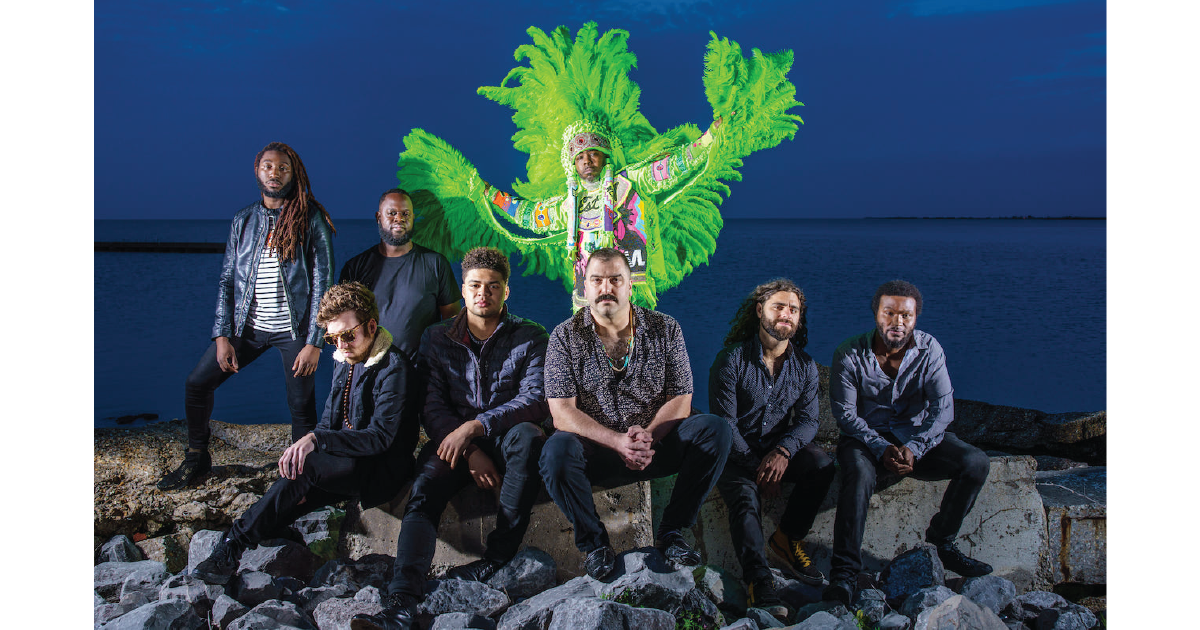
WATCH: Cha Wa, “My People”

Artist: Cha Wa
Hometown: New Orleans, Louisiana
Song: “My People”
Album: My People
Release Date: April 2, 2021
Label: Single Lock Records

In Their Words: “The message I am trying to send with the ‘My People’ music video is based on ancestral recall. This is a phenomenon where people consciously or subconsciously draw on the experiences and lives of their ancestors to perpetuate a certain lifestyle or culture. I am also trying to give the viewer an idea of the different spirits that dominate New Orleans. These are represented by the various elements of New Orleans culture shown, such as the Skull and Bone Gang, the Mardi Gras Indians, and the brass band.

“In this video, I juxtapose the origin story of the Mardi Gras Indians with the present day representation of our Black and Native American hybrid culture. Historically, many Black people who escaped slavery in South Louisiana were taken in, guided to safety, and hidden from slavecatchers by sovereign Native American tribes. From the natives, they acquired new customs, language, and dress, and meshed them with African masking traditions. This not only provided immediate freedom from captivity for the people who escaped, but also would eventually provide an avenue for the Black people of New Orleans to feel free on carnival day despite not being allowed to participate in the official Mardi Gras celebrations. (Read more below the player.)

“Brass bands in New Orleans also represent freedom, as they are the centerpiece of second lines. Second lines are long parades that involve high-energy dancing and music, free of cost to anyone who wants to show up. They happen every Sunday, and for many people, no matter how terrible their week might have been, second lines provide a space where they can dance, rejoice in the music, forget about their troubles for a little bit, and feel free. This is a tradition that dates back to the days of the drum circles at Congo Square, where only in New Orleans, Black enslaved people were allowed to play drums, sing, and dance however they wanted.

“The Skull and Bone Gang’s purpose is to warn people of impending danger to their lives. The idea is that they are there to remind people to lead a good and safe life, or they will be the next to die. What better spirit is there to relay the message than a dead man walking? All of these spirits, plus many more are constantly working in New Orleans to make it what it is. Mardi Gras day is just when they all come out to play.” — Aurelien Barnes, video producer/vocalist, Cha Wa

“In a society that is divided by so many things, ‘My People’ reminds us that no matter who you are — rich or poor, big or small — we’re all in this together as humans. Cause one day we gon’ all be in the same boat.” — Joseph Boudreaux Jr, vocalist, Cha Wa


Photo credit: Zach Smith

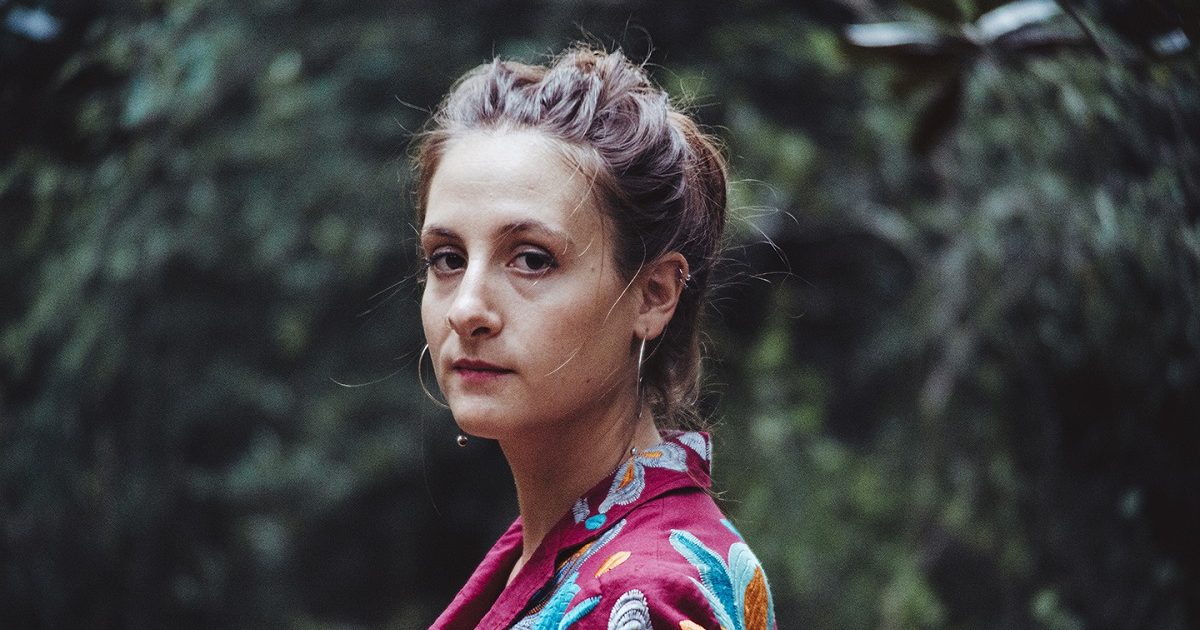
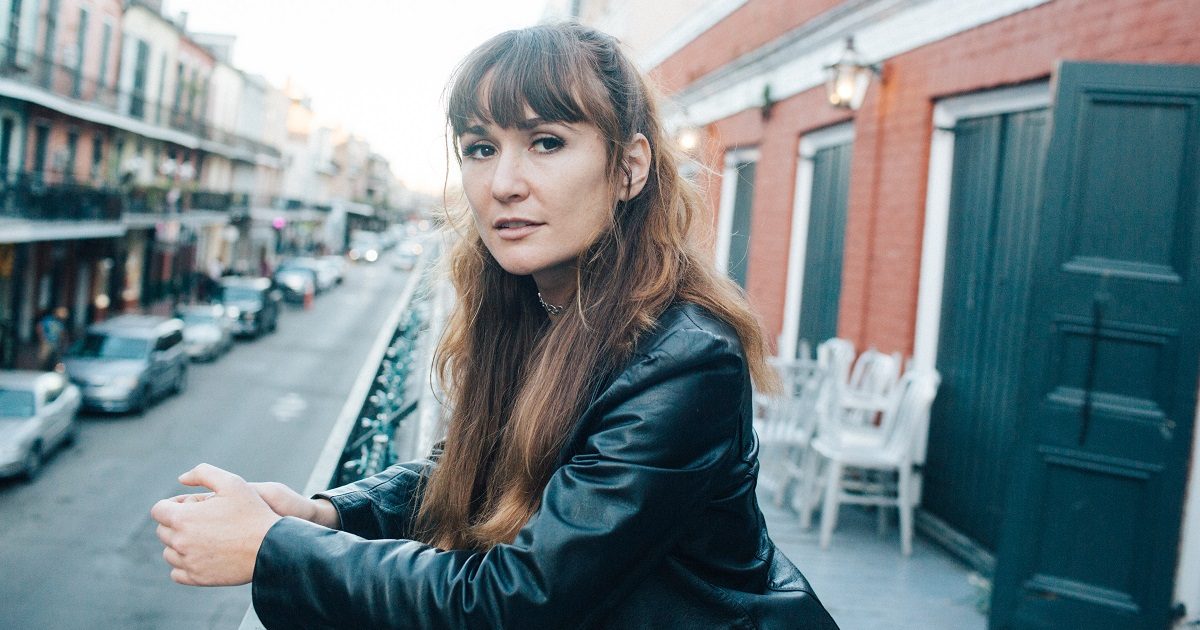
BGS 5+5: Esther Rose

Artist: Esther Rose
Hometown: New Orleans, Louisiana, and sometimes Taos, New Mexico
Latest album: How Many Times
Personal nicknames: Dayfire, Wild Rose

What’s your favorite memory from being on stage?

Seeing as how there haven’t been any stages as of late, my favorite recent performance was singing “Handyman” with my nephew Cedar. Cedar is three years old and he knows every single word.

What was the first moment that you knew you wanted to be a musician?

The moment that I knew I wanted to be a guitar player/songwriter was on my 28th birthday when I wrote a song called “The Game” on piano. ‘Til then I had been a supporting member of my partner’s band, but that morning I wrote a breakup song. I remember thinking I need to learn how to play the guitar immediately and I did.

What rituals do you have, either in the studio or before a show?

In the studio I set up a good-luck altar with little treasures from the past year; pretty rocks from significant places, jewelry, photos, whatever has been close to me for the past year of songwriting I will take off and turn it over to the altar. It is grounding to look over and be reminded of why I wrote the songs, or where I was, or who I was with. I keep a candle burning the entire time. It gives me great satisfaction to blow out the candle at the end of a long day, signifying that the work is over.

What’s the toughest time you ever had writing a song?

Writing “When You Go” was tough. My songwriting golden rule is “no bullshit.” I will write and scratch out lines to get closer to what’s really going on. With this song, I wrote the first verses and then froze. The song starts as this kind of self-assured, “I’m getting over you” song. I was scared to go to the no bullshit place to see what was below the surface. I sent it to my best friend and songwriter soulmate Julia and she urged me to finish it. The next day I wrote the chorus and I remember crying, crying, crying and then crying some more. It’s a very primal feeling; please take me with you.

Since food and music go so well together, what is your dream pairing of a meal and a musician?

I want to have a glass of wine and a cigarette with Joni Mitchell. I don’t even smoke anymore.


Photo credit: Akasha Rabut

LISTEN: Alabama Slim, “Someday Baby”

Artist: Alabama Slim
Hometown: Vance, Alabama / New Orleans, Louisiana
Song: “Someday Baby”
Album: The Parlor
Release Date: January 29, 2021
Label: Cornelius

In Their Words: “‘Someday Baby,’ well, I tell you, when I first heard the record, it was Muddy Waters that did it. I play it the way I want to play it and sing it the way I want to sing it. That’s it.” — Alabama Slim


Photo credit: Jed Finley

Branford Marsalis Did a 1920s Deep Dive for 2020’s ‘Ma Rainey’s Black Bottom’

Ma Rainey wants her Coca-Cola. The microphones have been set up in the Chicago studio, her small band have rehearsed and taken their places, the two white men who run the label have the needle ready to cut the acetate, but Ma Rainey won’t sing until she gets her ice-cold Coca-Cola. Everyone pleads with her, but she won’t relent. So two musicians are dispatched to retrieve cold beverages for her while everybody else just waits. It’s a small scene in Ma Rainey’s Black Bottom, the new film adaptation of August Wilson’s 1982 play, but later Rainey (played with ferocious adamancy by Viola Davis) explains her reasons for delaying the session: If she has power, she is going to exert it. If she is going to let white men profit from her voice, she is going to exact as high a price as possible. Even if it’s just a Coca-Cola.

Despite populating its cast with musicians — including the brash trumpet player Levee (played by Chadwick Boseman in his final role) — Ma Rainey’s Black Bottom is less about music than the business of music: how white businessmen exploit and quash Black talent, how Black men and women navigate an industry and a society that saps so much from them and gives back barely anything at all. To emphasize this point, director George C. Wolfe teases musical performances only to cut away and thwart our expectations. Rainey’s band, sequestered in the basement, talk about rehearsing more than they rehearse. When they do count off a song, Wolfe cuts to a different scene, and their performance becomes the soundtrack. When Rainey finally does perform for the camera, it’s late in the film, but the scene becomes all the more electric for all the anticipation Wolfe has stoked.

It’s a fascinating dramatic strategy, but one that created some headaches for Branford Marsalis, who not only scored the film in the style of 1920s Chicago jazz, but also crafted choreography and auditioned musicians. With barely a month to prepare, he wrote nearly two hours of music for the 90-minute film, knowing that Wolfe would only use a fraction of it. In fact, altogether there is only about 20 minutes of music in Ma Rainey’s Black Bottom. Most of the film is given over to the sound of Black characters talking to one another, cajoling each other, joshing and joking, lying and pleading, delivering lengthy monologues — all of which is its own kind of music, especially coming from such an animated actor as Boseman.

Marsalis is a musician uniquely qualified to bring this era of Black music to life in a way that bridges the late 1920s and the early 2020s. He has spent his long and diverse career bringing the music of the past to bear on the present, first as a sideman in the early ‘80s for Art Blakey and Lionel Hampton and later as the leader of the Branford Marsalis Quartet. With jazz as his foundation, he has branched out into classical, Broadway, rock (Sting, the Grateful Dead), and hip-hop (Public Enemy). To each project — including music for Ken Burn’s Baseball miniseries in 1995 and The Immortal Life of Henrietta Lacks in 2017 — he brings a deep understanding of the attitudes and circumstances of previous eras of American popular music and lets them resonate in the present moment.

From his home in North Carolina, Marsalis spoke with BGS about finding a new appreciation for the music of that era, holding auditions from the other side of the globe, and re-creating 1920s jazz for a modern audience.

BGS: How did you get involved with this project?

Branford Marsalis: The director asked me to write the music and consult with the musicians, help with the choreography, and arrange the songs they were going to use in the movie. It was all pretty rapid. I was in Australia working on a project with the Australian Chamber Orchestra, and that was in early May [2019]. And we had to be in the studio recording in the first week of June! It was not the kind of scramble I like, because everything is being done by telephone or by watching YouTube to hear musicians and hear singers. Not the normal audition process.

But it worked out. I just had to start, man. I didn’t think. To me, it’s like when you play football and the coach makes you do all of these run-throughs. No sane person likes practice! I had a good coach who said, practice is the place to think, and that’s why we keep doing the same things over and over again, so that when you’re on the field, you can just react. That to me is a very cool and very sound philosophy. All of my thinking is done before the gig starts. Once the gig starts, you have the faith that you have a vocabulary that’s good enough to get the job done.

What does all that entail? What goes into a project like this?

First, I had to find a singer to facilitate the process for Viola, and I had to write a song for the end of the movie. I would up writing two songs for the end of the movie, so George would have a pick in terms of style. I had to decide where we were going to record. I quickly decided on New Orleans, because a lot of the musicians there play outside and inside, whereas most musicians don’t play outdoors, especially with acoustic instruments. The sounds of their instruments don’t have an outside sound. The sound is different than it would be if you were playing in a street band or in a parade.

I wanted to get guys that still played in the style that had a feeling reminiscent of what it felt like in the ‘20s. So I called my brother Delfeayo, because he has a big band down there, and he put together a group of musicians for me. Some of them had a great vibe, but weren’t very good at reading music. But that was good. I kind of liked that. It gave the music a certain kind of urgency. Because these guys were scrambling. And panicked! So it had a certain kind of urgency that it wouldn’t have when you have a band full of readers who can read anything.

At what point do you start working with the actors?

That was the next part. When filming started, I met with them to make sure they physically look like they’re playing instruments. As kids, we all aspired to be in pop bands. We idolized those guys, so we had already visualized what it would be like to be on stage and do those things. But no kid dreams of being a jazz musician. No kid says to his mom and dad, “I want to be a jazz musician when I grow up.” And dad says, “You can’t do both!” So we don’t always think about what it would be like to play an instrument like the saxophone.

When people talk about it, they say, Oh, the saxophone’s so sexy, it’s so suave. But it’s not. It’s a very fucking physically demanding instrument, and if you let it, it will manhandle you. There were no saxophones in this film, but it’s the same thing with all of the instruments. There’s a physicality to playing an acoustic instrument. You can’t just be up there with your eyes closed, trying to look as sexy as possible. Because those horns will kick your ass. All of the actors did a really good job of representing physically what it’s like to play those instruments.

Chadwick Boseman was really good at that. His face transforms whenever he puts the trumpet to his lips.

Well, he was actually playing. That’s the point. The trumpet is one that you can play more authentically. It has three positions — combinations of three. You can learn that. The saxophone is crazy because you’re using all your fingers and you’re moving up and down. Chadwick developed good embouchure. His face transforms because the muscles in your face change when you’re blowing air into a little mouthpiece like that.

If an actor isn’t really playing, you can tell. He had to play, and Viola had to sing. Otherwise, the larynx doesn’t vibrate and it’s clear you’re not really singing. People see that, even if they can’t articulate it, and they know it doesn’t look like she’s singing. So everybody had to play. Everybody had to bang on the instrument. They had to be a physical presence.

You’re obviously writing in a style that reflects that era, but with the character of Levee, it’s an era that seems to be changing. How did you approach that historical aspect of the soundtrack?

The music should have an authentic sound. It should sound like the ‘20s, but I wasn’t really interested in faithfully recreating the ‘20s, because then it just becomes a kind of mimicry. I think you have to spend a lot of time immersing yourself in the sound and the style, and then you write. What it becomes, that’s what it is. I’ve been listening to ‘20s music for the last twenty years or more, but in this project I was forced to do a really deep dive. I was listening to ‘20s music from May 2019 until January 2020. A lot of the things that I wrote were based on things that I heard.

Were there any artists that stood out to you during that deep dive?

I locked in on two people: King Oliver and Paul Whiteman. After a couple of months I listened a lot to their music and their bands exclusively. I already had a sense of the ‘30s, and I knew that anything that Levee was going to be doing would be pushing everybody towards the ‘30s. It wasn’t about trying to invent some new sound of music that had never been heard before. It was about recreating a style that would have not been heard in 1927. For the song “Sweet Baby Let Me Have It All,” I used the feeling and the beat of a Jelly Roll Morton recording from the ‘30s called “Jungle Blues,” from his Red Hot Peppers group. It has this beat, and I threw in some horns and all that other stuff, and it fills in around this idea.

Was there any talk about using Ma Rainey originals or trying to recreate the scratchy quality of those early recordings?

It doesn’t make any sense to have a bunch of human beings in a room and make the song sound like a recording. Having them play together in that room would have sounded like what it sounds like in the movie. It would have sounded very different from the recordings. The recordings were so primitive. Everything is mono, and the musicians had to strategically place themselves in distance to the microphones. It must have been fascinating to be in the room with musicians turned in different directions, saxophone players facing the wall. You had to have a perfect sound, because you had at best two microphones. Usually it was only one.

All of the sound from all of those instruments is going into that one mic, so you had to strategically place the musicians in the room to offset. They didn’t have gobos and baffles and all those things they would develop once the recordings became more sophisticated. I think it would be very strange to see a bunch of people in a room and suddenly the singing starts and the playing starts and it becomes a mono recording with scratches. Because it would not have sounded like that. The thing that’s most interesting about those early mono recordings is how you hear the music is not actually how it sounded.

I was limited in a lot of re-creating because of what August Wilson wrote in the play. If you listen to the original version of Ma Rainey’s “Black Bottom,” there are clarinet players, a couple of trumpet players, a trombone, a guy playing wood blocks. There are all these sounds. But this is a play, not a musical. August Wilson wrote for a band with coronet, trombone, piano, and bass. That was it. That’s all I had, so it was like writing for a string quartet rather than a full orchestra. I was limited by that reality, and the arrangements had to reflect that.

How did this project change the way you understand or appreciate the music of this era?

I didn’t really know how great it was. Everybody calls it the Jazz Age, and everything focuses around illegal booze and chicks drinking and dancing and female independence and all these things that had not existed prior to the Volstead Act [the 1919 law enforcing Prohibition]. Most drinking was done in saloons that were like Burger Kings — they were bars that were owned and operated by the people who sold the booze. They were men’s clubs. Women were excluded. Once they passed the Volstead Act, the mobsters were like, Oh, shit, everybody can drink!

So jazz was the music they chose, and that’s what people think about. When I was listening to hundreds of songs from the ‘20s, I was listening to oratorios, comedy sketches, comedy songs, small group songs, big bands songs, string quartets. It struck me as funny how when the society was more socially primitive, there were so many varieties of music and so many ways of expressing. And now as we’ve become more socially advanced, the music becomes more stratified and more limited.

Everything is so stratified now. You can listen to a radio station that only plays the shit you know. That was unheard of in the ‘20s. They played everything, and you could hear everything. That was in the middle of a period when America was in extreme segregation, but you could hear things as diverse as Paul Whiteman’s band or Ethel Waters, Louis Armstrong. There was such a variety, and there was a level of excellence, because you couldn’t overdub back in those days. You didn’t have AutoTune. So everything you heard had to be really good, because there was no way to fix it in post-production.

There’s that great scene where they’re trying to record the kid with the stutter, and they’re throwing out all these ruined acetates, one after the other. It does such a nice job of dramatizing that idea.

There was no such thing as post-production. It was just production. If the kid fucks it up, the recording is destroyed. And that’s costing [the white label owners] money, and they’re pissed off. They don’t really like Black people. Ma Rainey understands that, and in turns she doesn’t like them. And she’s determined to have it her way. At that time in our country, there were not a lot of possibilities for Black performers to play in front of a white audience, and the white audience was the target. Black people couldn’t even come into the same theater as white people.

All of these things were a part of the time that Levee lived in, and his motivation was about ameliorating the shame and the pain of the things that happened to his family when he was a boy. All of his dreams are dashed, and as so often happens in real life, people have a grievance against a thing and they often take that grievance out on the people they’re closest to. Shit, you change the accent and get rid of the swear words, and you could say that this was a Shakespeare play: conflict, rejection, anger boils over, an ending you don’t expect.


Photos of Branford Marsalis: Eric Ryan Anderson (top) and Palma Kolansky (bottom)

BGS 5+5: Leyla McCalla

Artist: Leyla McCalla
Hometown: New Orleans, Louisiana
Latest album: Vari-Colored Songs: a Tribute to Langston Hughes (reissue)

What’s your favorite memory from being on stage?

My favorite memory from being on stage was at the New Orleans Jazz and Heritage Festival in 2019. To be clear, New Orleans shows are always my favorite shows. People LOVE music in New Orleans and the connection you feel with the audience is transcendent. I have played Jazzfest almost every year since 2012, but 2019 was the first year that I got to play the Fais Do-Do stage. I invited Topsy Chapman and her daughters Yolanda and Jolynda to sing with me, which was a total trip, because I had never had background singers on stage with me. I also invited my friend Corey Ledet, the accordion dragon, to play on a couple of songs and the addition of accordion to the sound of my band is something that I continue to long for. We all left that stage flying high.

What other art forms — literature, film, dance, painting, etc. — inform your music?

I am deeply inspired by what I read. Something about reading words on a page and the mindfulness that it takes to absorb that information inspires me to write music. Perhaps it’s the quietness of that activity that helps me to hear music. While I really enjoy biographies, I also love poetry and the rare novel.

What was the first moment that you knew you wanted to be a musician?

I studied classical music very seriously from the age of 12 to 15 and was determined to make a career out of my cello playing. But the moment that planted the seed for the musician that I am today happened when I was 18 years old. I met my teacher and mentor Rufus Cappadocia, a phenomenal cellist who plays a self-designed five-string cello, at a party in Brooklyn. He was playing with a band called the Vodou Drums of Haiti. This experience absolutely blew my mind. Seeing the cello in that context instantly changed the direction of my musical pursuits and gave me a sense of possibility of what cello playing could be outside of the classical context.

What’s the toughest time you ever had writing a song?

The toughest time that I ever had writing a song happened with the song “I Knew I Could Fly.” I had been playing the guitar riff for the song for years, always struggling to figure out what the words, if any, should be to the song. Every path I went down felt insincere and I laid the song to rest several times before bringing it to the Native Daughters session in Breauxbridge, Louisiana. Alli Russell helped me to talk out my idea, which led to a breakthrough and we ended up co-writing the lyrics to the song and recording it the next day. I’ve always been surprised and pleased that of all of the songs on the Songs of Our Native Daughters album, that song ended up with the most plays.

If you had to write a mission statement for your career, what would it be?

I believe in the power of music as a healing force. I use the process of making music to understand the world that we live in and to direct my own healing. I share that process to connect with people and to aid in our collective healing. I am committed to understanding the role that history plays in creating our reality and how music can help us to process our emotions and increase our empathy for each other.


Photo credit: Rush Jagoe

The Show On The Road – Leyla McCalla

This week The Show On The Road features a conversation with Leyla McCalla, a talented, multi-lingual cellist, banjoist, and singer/songwriter.

LISTEN: APPLE PODCASTS


Born in New York, raised in New Jersey, and McCalla is now based in New Orleans, where she raises three kids (she often tours with them in tow). McCalla often honors her Haitian heritage, bringing listeners into a vibrant world of Creole rhythms and forgotten African string-band traditions by introducing them to a new audience with her own powerful creative vision.

You may know McCalla as an integral part of two different roots supergroups: the Carolina Chocolate Drops and Our Native Daughters. But for much of the last decade, she has put out heady, ever-surprising solo projects. The latest, The Capitalist Blues, harnesses the brassy, percussive sounds of New Orleans; her previous record, A Day for the Hunter, A Day for the Prey, was also a standout, putting her gorgeous cello-work center stage while also examining powerful Haitian proverbs and Haiti’s often-overlooked, tragic history.