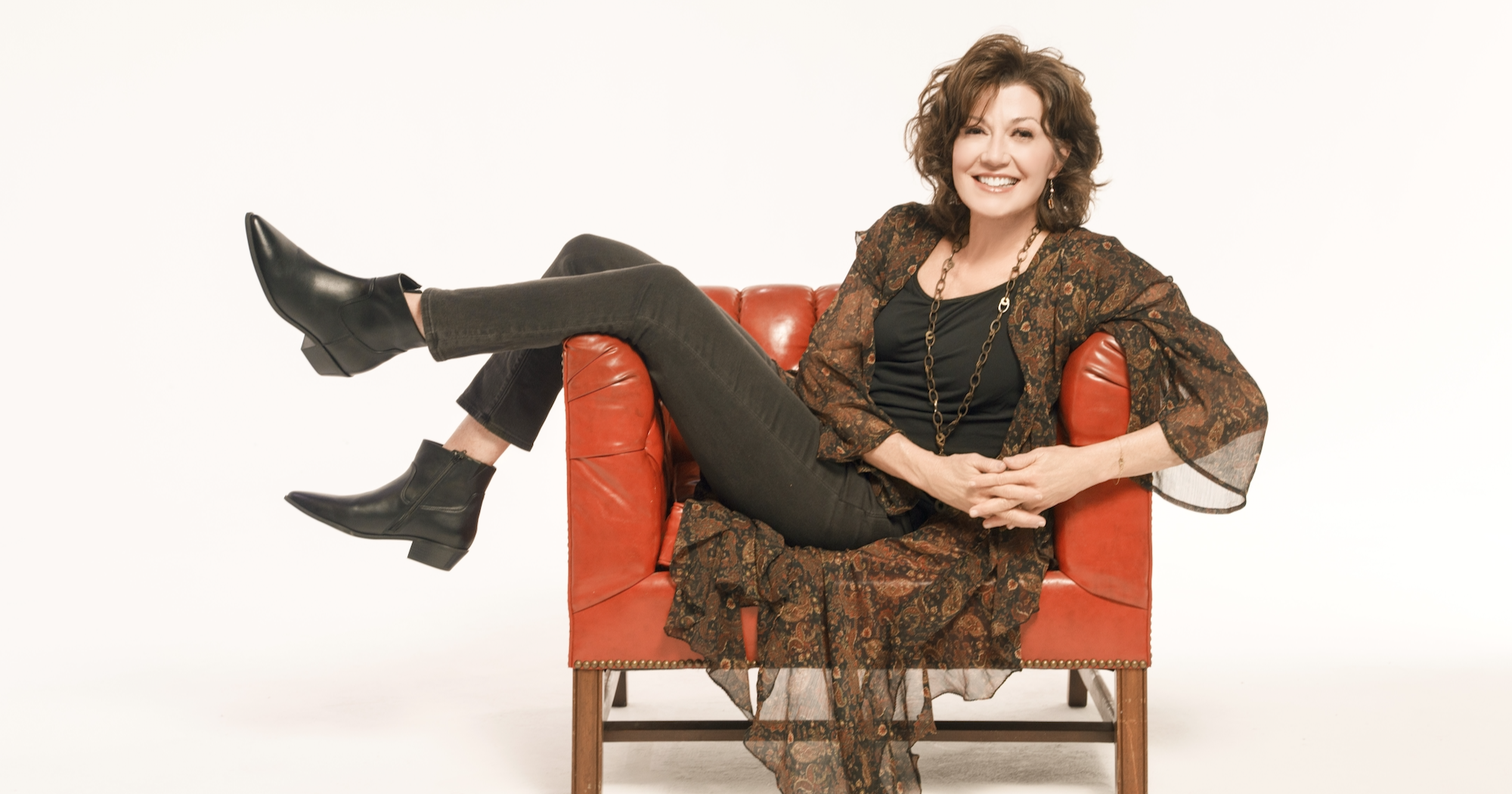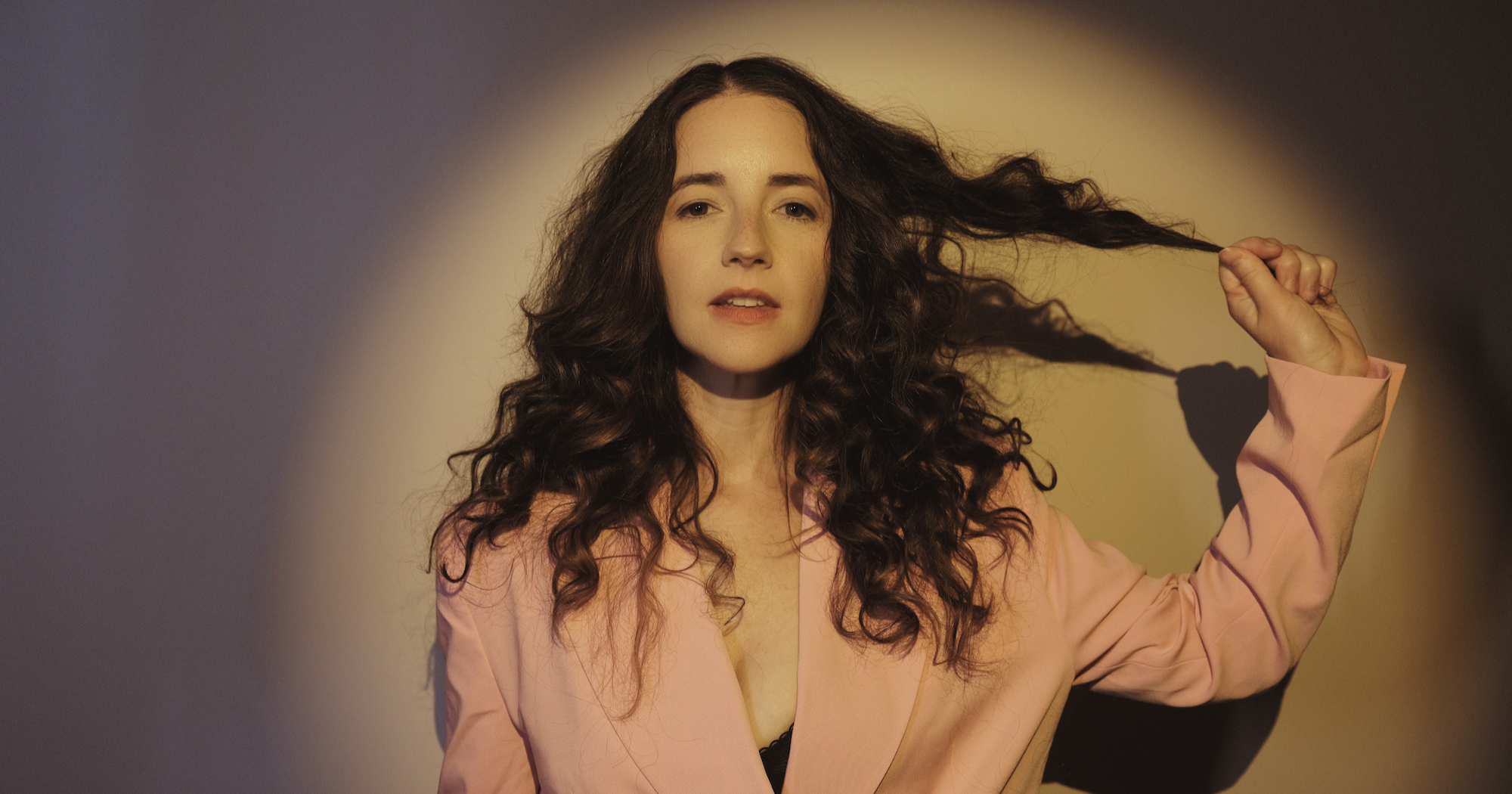
Michaela Anne Finds Tranquility and Clarity in Parenthood

Michaela Anne’s life underwent a cosmic shift over the last several years. She had two kids and quickly learned how “physically taxing” parenting can be, she says. That physical transformation directly feeds into her latest album, These Are The Days, a creatively bold, poetic, and profound set of songs about getting older, fading beauty, and music’s connective tissue.

While out on tour, years ago, Anne stopped by a friend’s house and witnessed several young kids playing, laughing, and making a whole lotta noise. Admittedly, she didn’t know if she’d ever have kids herself. “My friend said to me, ‘Yeah, but this is going to feel like a high for you, like falling in love with these children,’” she recalls.

“I remember the first year of being a mother, texting her, ‘Oh, I know what you’re talking about now.’ And that has really surprised me, that exhilarated feeling that I’ve gotten just from the experience of having children and getting older,” Anne reflects. “What has also surprised me is that you hear people talk about it all the time, how, especially in your 40s – I just turned 40 – you don’t give any fucks anymore. And it’s just whatever. And I’m like, ‘Does that just magically happen?’

“And I have been surprised to feel the progression of ‘it does.’ You start to care less because you just get so exhausted from the energy you’ve spent caring about the things that mattered a lot [before], like status, what people thought of you, or inclusion. That has been very delightfully surprising and freeing.”

These Are the Days swirls with a kind of knowledge you only acquire when you hit your 40s. The changes it reckons with have almost a baptismal effect. Songs like “We’ve Got Bigger Plans” and “Will You Still Love Me with a Broken Heart” reflect her ever-changing self, whereas “Two Pianos,” a song co-written by Caroline Spence, and “B-Sides” capture the magic of music in Anne’s life. “If Your Body Fails You” finds Anne bottling up both her mother’s deterioration post-stroke and our society’s obsession with youth.

The album, produced by her husband Aaron Shafer-Haiss, emerges as a timeless ode to the ephemeral nature of human existence. Letting go, relishing the mundane in busy everyday life, and embracing middle age echo throughout the nine tracks like a starling bobbing and weaving across a rosy sunset. Something is calming about it, and you trust that you’ll get to where you’re going soon enough.

What has been your journey of learning to let go?

Michaela Anne: It is continual. It’s such a common thing to hear people say – and this is kind of woo-woo new age-y saying – “just surrender.” But the actual practice of surrendering to all that is, I have found, incredibly challenging and essential to really being open to what life presents to us. I’m a millennial, and I feel like the way that we grew up is, “Dream big, you can be anything you want.” That was so ingrained in me. I have a song from a previous record called “By Our Design.” It was this whole thing about writing it down, manifesting it, and making it happen. And it didn’t take into account that nothing is actually within our control.

So things happen, like global pandemics or your mother has a stroke. [Or] friends that I witnessed in this age group who want to start a family desperately and can’t get pregnant or deal with pregnancy loss. There are so many things that we cannot control that determine a lot of factors in our lives, and a lot of things about whether or not we can have the life that we envisioned. And accepting it is a daily practice, and really keeping my eyes open to what all that is here, rather than continually looking in my mind to the places I thought it should be, is painful.

There’s also the element of not caring what other people think. I imagine that’s even more difficult as an artist.

I try to consciously reconnect to why I make music all the time. Inevitably, there is an element of wanting to be seen when you’re sharing art that you make and wanting to be loved, wanting to be received and affirmed. And that is beautiful, but it can also be really tricky and detrimental. If we’re looking at it in this transactional way, or also career success– I’m also a military kid. I grew up moving every other year. I was socially conditioned to try and make friends fast and be well-liked, and just fit in and survive the next couple of years before we moved on to the next town. I have to constantly remind myself: it is okay to not be liked by everybody. But I always go back to, “Am I doing my best to show up in kindness and in love and openness?” And you still might not be liked by everybody.

Social media certainly doesn’t help either.

No, it’s corrupting our brains. Now, we have this false sense of metrics to measure ourselves that we translate to our worth. How many likes we get, how many followers, how many streams, and it’s really unhealthy.

Have you ever found that affecting your creativity in any way? Have you ever thought, “Oh, this song has this many streams, maybe if I write something like that, it’ll take off?”

I think I would be lying if I tried to say, “Oh no, it’s separate.” I’ve found that whenever I do try to make something, I don’t actually know what people want from me. And what one person wants from me is different from what the next person wants. Collectively or culturally or music industry-wise, that’s changing so fast all the time that it’s fruitless to try to morph myself into that. I’ve definitely gone outside of the box that I think I was seeing, fitting into, and not seeing the response that I hoped for and have had to do the work of, “Well, that’s okay.”

We can confuse streaming numbers with a measurement of artistic purity. They’re very different things. I always go back to, “Did that feel true to me?” I can only write the songs that feel true that come out. Sometimes that’s well received, and sometimes it’s not. It’s always a gamble.

Another essential piece of the album is enjoying the mundane things in everyday life. What things have you come to appreciate more?

Routine. I used to think I hated routine. I loved being on tour all the time, because there was sort of chaos within a routine. You knew where you had to be every day, but then every show is different and every place was different. I’ve really come to love the routine of waking up around the same time–I have two children, depending on when they wake up. I have a morning routine, that first cup of coffee, just all of that stuff has become really enchanting to me.

When you’re addicted to something, you need more and more to feel the high. I used to need a lot to feel excitement. It’s almost like I’ve come down to stasis, where now, to be totally honest, I sometimes open my compost bin and it’s all these different colors. I think it’s so beautiful. [Laughs]

I don’t go out and get drunk and meet new people all the time. It’s a different high. It’s the calm. Now, bouts of excitement are way more exhausting to me than they used to be. Maybe that’s also just middle age. Kids being asleep, getting a couple of hours to myself or a cup of tea and maybe a bath and a book – that is so exciting.

The wonder of music also comes into play on the album, such as with songs such as “Two Pianos” and “B-Sides.” What moments in your life do you cherish most around music?

Music has always been my companion, my way to cope and understand things. The very first song I ever wrote was called “When Daddy Comes Home.” My dad was a submarine captain and he was out to sea for long months at a time. I always say music was my way of processing longing and sorrow. But it is such a companion for joy. I think about every big moment of my life, there’s a soundtrack, you know? Getting married, there are songs that were part of our wedding. Giving birth, there are specific songs that were the soundtrack that we were playing when both of my children entered this world.

Music is everywhere in our lives. Sometimes, I think when it becomes a career, it can taint it a little bit. I have had to remember this is a relationship on my own that doesn’t need to be influenced by outside forces. Some of the bigger moments are those when we put on songs and just dance in the living room with our kids.

Another thread in the album is the idea that beauty always fades. In your song “If Your Body Fails You” you ask a series of questions about why we avoid the mirror and continue to uphold youth on a pedestal. Why do we do those things?

Capitalism. That song is rooted in watching my mom lose many physical abilities from her stroke. As well as the way that her body looked changing and witnessing her experience that, grappling with my own experience and my own relationship to my mother’s body. It was not something I really thought about. While also experiencing so many changes in my own body, growing a human for the first time. And that paired with this idea that it feels like it’s getting to a fever pitch of this expectation, especially for women, to look preserved, to look frozen, to look so smooth, and not aged at all. And noticing that infiltrates my mindset.

I don’t know why we are obsessed with that, literally, other than powerful marketing campaigns have convinced us to spend a lot of our money trying to freeze our faces and our bodies. But it’s something that I really want to resist, which genuinely feels challenging sometimes, because of those messages.

Numerous celebrities, from Kate Winslet and Meryl Streep to Barbra Streisand, have opposed plastic surgery for just that reason: to resist body standards. Hopefully, that leads to a cultural change eventually.

I hope so. It’s really helpful when public people put that out there in a really positive way, so that we don’t think, “Oh, this unrealistic expectation is what we all need to do.” When I see people owning it, it inspires me and builds my courage to also own it in the same way. When I see women rocking gray hair in their 40s, I’m like, “Okay, I’m going to skip my next hair appointment.” [Laughs] I don’t want to dye my hair.

“Two Pianos” is lyrically hopeful but musically somber. That’s an interesting dichotomy.

The strings were written, arranged, and performed by Kristen Weber, who’s one of my really close friends and has done strings on almost all my records since 2019. I wrote the song with Caroline Spence, who is also a very good friend. Both of those women have been really intimately witnessing my life over the last several years – and vice versa. Some days it’s really hard to recognize all that we have. And I’m going to be honest, sometimes I compare. Sometimes I feel really sad. For what reason, I’m not sure.

But how do I sit in gratitude and keep this kind of, you know, remember to remember – how we say in the song. I actually got it from Chris Wood from the Wood Brothers. He said that in a podcast that I host with my husband. We were talking about all the things in life and how to stay healthy. He said, “Some days, we just need to remember to remember.” Musically, we wanted it to feel expansive, but also be an intimate experience of being really close at your kitchen table, but how universal that experience is for everybody.

The lyric “I never trust my own point of view” stands out. To both remember that you can be an unreliable narrator and to trust your gut.

At least in my experience, my mind can play tricks on me. It can tell me stories that maybe aren’t actually true. Sometimes, it’s good to be distrustful of my own point of view and try to get grounded in what’s reality. Other times, it’s dangerous to ignore my point of view, but that continual challenge and journey to know who I am. And it’s really hard to ground our individual selves in this world.

Other than music, how do you ground yourself?

I have to move my body. Every morning, I work out for a short amount of time, like 15 minutes. Since having a second child, it’s something my husband and I support each other [in]. Every morning, we take turns while the other person is doing breakfast and packing lunches. Fifteen minutes to do yoga, or a little dance video, or go on a run. That stuff is really essential. My ideal would be to be able to meditate and go on hikes more often. Nature really grounds me. But it’s really hard to find the time. And therapy.

“We’ve Got Bigger Plans” reminds me of the saying that “when you know better, be better.” Whether that’s with social issues or in our relationships with others, it’s about actually learning from the past.

That song is very personal, about my experience [over] the last several years of becoming a mother and having a lot of dreams. The first verse opens up with, “I used to be a dreamer who would dream things you couldn’t see.” I stopped believing, and my husband, partner, the producer of my record, Aaron Shafer-Haiss, was the one who was like, “Life is not over. What are you doing?” We can still have so much beauty and opportunity. We can always make art.

The inspiration for the second verse comes from our daughter, and how mystical and magical it was to witness this little child coming to life, and greeting the moon and stars at night. The kind of ritual of seeing the world really opened up my eyes and my heart in a new way. It’s about not getting pulled into unhelpful, unhealthy belief systems and trying to fill your cup where it doesn’t need to be filled. Looking beyond some of these little things that we can get tripped up on and knowing that we’ve got a bigger view.

What’s it been like adding a podcast to your professional life?

It has been so enriching. It is challenging, like balancing the time. But the conversations that we get to have, and the caliber of artists that we get to meet, it feels like such a gift. And I’m constantly like, “This is so cool that we get to do this and that we get to talk to people who create things that mean so much to other people and us.” Then, really get to dig in on what the human experience of it is. And it’s a great source of comfort to me to know that people I admire have a lot of the same anxieties and hopes and fears. And it just reminds us that we are just human beings.


Photo courtesy of the artist.

Basic Folk: Outlaws’ Almanac (Kimaya Diggs & Lizzie No)

Lizzie No, Kaia Kater, Nathan Evans Fox, Olivia Ellen Lloyd, Tray Wellington, A.J. Haynes, and more are featured on the new compilation album Outlaws’ Almanac, a response to the 250th anniversary of the United States of America. Led by executive producer Lizzie No, the project features a diverse range of songwriters and storytellers working in broadly defined folk, Americana, and roots traditions. Lizzie envisioned the compilation as an opportunity to be in conversation with the American project, taking an oft-overlooked perspective. Their curation centers Black, brown, Indigenous, queer, rural, and women’s voices, with traditional and contemporary music melding in a manner that brings to mind America’s promise of being a melting pot.

LISTEN: APPLE • SPOTIFY • AMAZON • MP3

Lizzie No and Kimaya Diggs (who also appears on the album) join Basic Folk for a candid and vulnerable conversation about the project and its inspirations. We talked about how they each relate to outlaws and the difference between them and those tasked with protection within the law. We also talked about the significance of the album art by Mia Kristen, a folk art-inspired painting of a woman with a guitar riding a donkey surrounded by corn and flowers. I get into the details of some of the bungled celebrations of America’s major birthdays (namely the 100th and the 200th) and why those celebrations continually leave out marginalized and overlooked voices. We talk about how there are Black people in the future and why that is actually a radical idea in 2026. We end with a lighthearted Lightning Round called “IS THIS OUTLAW?” Thanks to Lizzie and Kimaya for being so open and honest in this intense and special conversation.


Photo Credits: Lizzie No by Mandi Fountain. Lead image of Kimaya Diggs courtesy of the artist. Alternate images of Kimaya Diggs by Jo Chattman. 

The Other 22 Hours: James Gardin

How do you build a sustainable life around your art when the traditional definitions of success feel increasingly narrow? In this episode of The Other 22 Hours, we sit down with musician, songwriter, and educator James Gardin. While his joyous, infectious music has found a global audience through major sync campaigns for brands like Apple, Tommy Hilfiger, and Saks Fifth Avenue, James’s core creative philosophy is anchored in something much more grounded: community, education, and the refusal to second-guess the spark. Together, we explore the nuts-and-bolts realities of the licensing world, the absolute humility required to teach songwriting to eight-year-olds, and how letting go of the industry’s arbitrary rules allows us to finally blaze our own paths.

LISTEN: APPLE • SPOTIFY • AMAZON • MP3

In This Episode:

– Lizzo
– Marshmello
– J Dilla
– Proof
– Elzhi
– Slum Village
– Liza Garza
– Def Poetry Jam
– SZA
– Chance the Rapper
– Marmoset
– Musicbed
– iSpot.tv
– TuneFind
– Western States Center
– Eric Ward
– All of the Above Hip Hop Academy
– Trails End Camp
– Brooklyn Philharmonic
– Sinners
– Ryan Coogler

Go Deeper: 

Watch: View this entire conversation above or on YouTube.
Explore: Find similar conversations in these themed playlists.
Connect: Join the conversation on Instagram.

The Other 22 Hours is hosted by Aaron Shafer-Haiss (producer, mixer, musician) and Michaela Anne (songwriter, artist, creative coach). More about Aaron’s work. More about Michaela Anne’s work.


Produced by Aaron Shafer-Haiss. Original music written, performed and produced by Aaron Shafer-Haiss.

Photo Credit: Lead image courtesy of the artist. Alternate vertical image by James Gardin. Alternate square image by Victor Manuel.

The Other 22 Hours: Lukas Nelson

It is easy to look at a lifetime spent traveling on a tour bus in a famous family and assume someone’s creative path was completely clear. We sit down with GRAMMY-winning singer-songwriter and guitar player Lukas Nelson (A Star Is Born, Promise of the Real, Neil Young) for an incredibly honest conversation about moving past the shadow of his father Willie Nelson’s towering legacy, and detangling his identity from the cliched drug-induced creative culture.

LISTEN: APPLE • SPOTIFY • AMAZON • MP3

On this episode of the Other 22 Hours, we explore the distinct clarity that arrives with sobriety, the physiological realities of keeping your body moving on the road, and how treating musical discipline like Olympic training allowed Lukas to fully claim his own voice. It’s a masterclass in boundary setting, honoring the natural muse, and discovering that a long-term commitment to your health and your relationships is the ultimate engine for creative longevity.

In This Episode:

– Lukas Nelson
– Promise of the Real
– Willie Nelson
– Merle Haggard
– Lady Gaga
– Neil Young
– Paramount Theater
– The Red Clay Strays
– Outlive by Dr. Peter Attia
– Willie’s Remedy
– All Things Must Pass

Go Deeper: 

Watch: View this entire conversation above or on YouTube.
Explore: Find similar conversations in these themed playlists.
Connect: Join the conversation on Instagram.

The Other 22 Hours is hosted by Aaron Shafer-Haiss (producer, mixer, musician) and Michaela Anne (songwriter, artist, creative coach). More about Aaron’s work. More about Michaela Anne’s work.


Produced by Aaron Shafer-Haiss. Original music written, performed and produced by Aaron Shafer-Haiss.

Photo Credit: Matthew Berinato

The Working Songwriter: Stephen Markley

This week on The Working Songwriter, we’re thrilled to step out of our normal comfort zone by welcoming one of the country’s most acclaimed young novelists. Originally from Mount Vernon, Ohio, author Stephen Markley now makes his home in Los Angeles. He attended Miami University (of Ohio) for his undergraduate degree before being accepted into the prestigious Iowa Writers’ Workshop.

LISTEN: APPLE • SPOTIFY • REDCIRCLE • MP3

Simon & Schuster published his debut novel, Ohio, in 2018. The book was widely praised for its unflinching portrait of post-9/11 Rust Belt America. Then, in 2023, he returned with the massively popular novel, The Deluge, a work of ficiton about climate change that The New York Times named as one of its notable books. The NYT Book Review also said that, “The Deluge shows the range of its author’s gifts: polyphonic narration, silken sentences and elaborate world-building.”

Of the same book none other than Stephen King said, “[It is] simply put a modern classic. If you read it you’ll never forget it.” He also named it as the favorite book he had read the year that he read it.

Markley also works as a screenwriter in LA as a member of the writers room for the Hulu comedy series Only Murders in the Building, which stars Martin Short, Steve Martin, and Selena Gomez.

What a thrill it is to welcome onto the show such a profoundly talented artist who falls outside our normal realm of expertise… I think there’s a lot for songwriters to learn on this cross-discipline episode of the podcast.


Photo Credit: Michael Amico

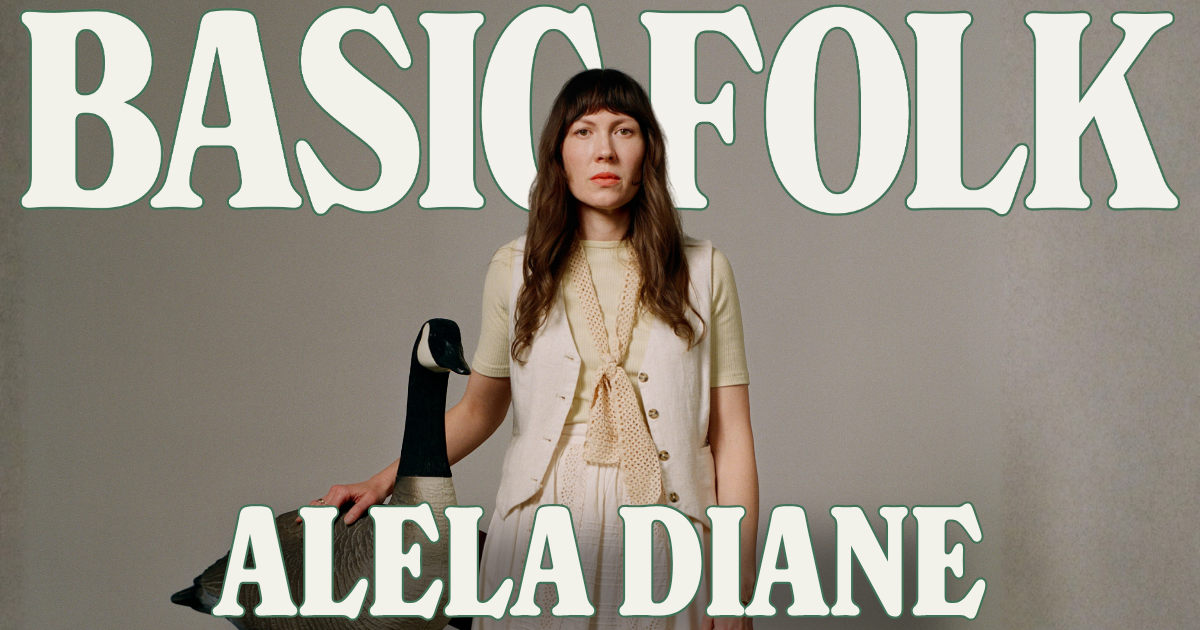
Basic Folk: Alela Diane

Back in the mid 2000s Alela Diane‘s The Pirate’s Gospel album was ringing my bell and, apparently, it was ringing a lot of other people’s bells, too – especially Europeans. Her debut album, it went gold in France and she’s been able to maintain a pretty decent audience and career across the Atlantic ever since. Meanwhile, at home in the States – she’s based in Portland, Oregon – after 2013, she remained relatively unknown and undiscovered. That was just fine with her. She worked on her music, occasionally flew over to Europe to tour, played local gigs, and raised her two daughters with her husband in their 1892 Victorian mansion. While they were renovating their crazy old house, they also got their daughters a landline and a CD player each, along with their gifting them their old CD collections. Everything was pretty chill and great. Then her friend and mentor Michael Hurley, “the godfather of freak folk,” died last year at the age of 83.

LISTEN: APPLE • SPOTIFY • AMAZON • MP3

After playing a tribute show to Michael, she started connecting more with her Portland music community. She would go to shows, invite people like Anna Tivel over, and started collaborating with others in town. This all led to her new album, Who’s Keeping Time? This time around, she is going full bore on a huge tour, traveling roughly 40% of the time from May through December of this year. It feels like a huge return for the singer-songwriter who is feeling so inspired by creating, collaborating, and being in community again.


Photo Credit: Lead image by Caleb Gaskins. Alternate images by Camille Bruya, and Kelsey Gallagher.

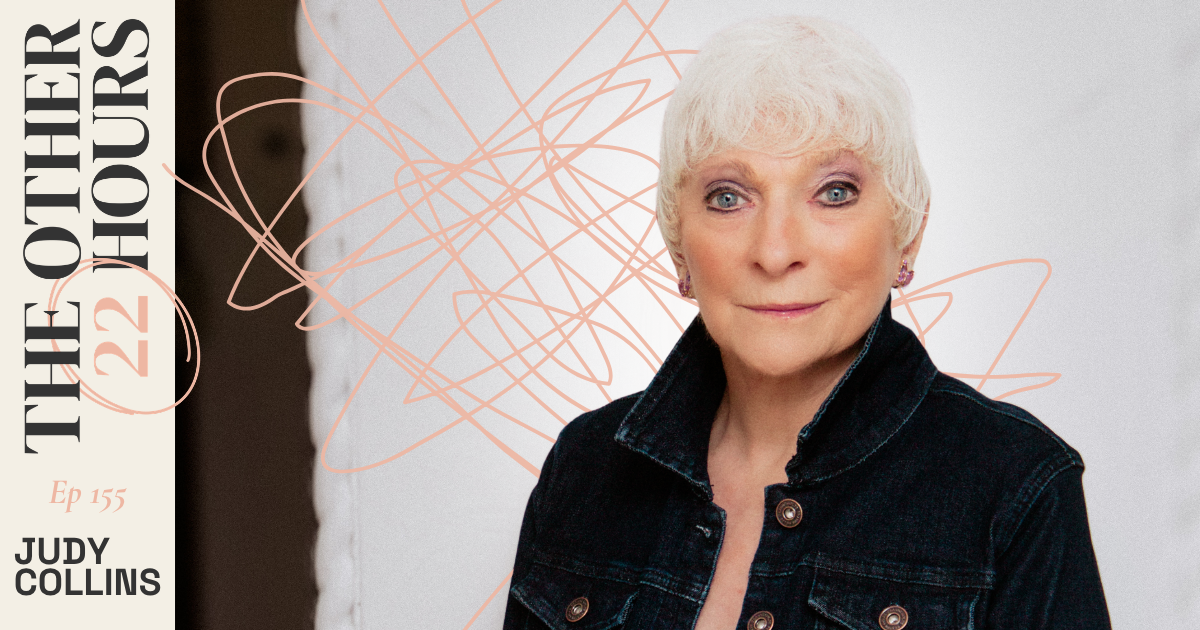
The Other 22 Hours: Judy Collins

“We write to find out who we are.” For over six decades, Judy Collins has been a pillar of American music: from a GRAMMY award for “Both Sides Now,” two platinum records, and an Oscar nomination to writing more than eight books and landing her first No. 1 album at 80 years old.

LISTEN: APPLE • SPOTIFY • AMAZON • MP3

But behind the staggering accolades is an artist who still treats her craft as a sacred, daily blue-collar job. In this episode of The Other 22 Hours, we explore the quiet discipline of her daily routines, the sanctuary of her 48 years of sobriety, and what she calls the “secret channels of songs.” Judy shares her philosophy on processing grief through poetry, the necessity of maintaining community in a solitary profession, and turning off the noise to protect the soul.

In This Episode:

Judy Collins
Catcher in the Rye – J.D. Salinger
Antonia Brico
Mark Ruffalo
Spotlight
Hemangioma
“The Lonesome Death of Hattie Carroll” – Bob Dylan
Ep 100 – Rosanne Cash
Ep 16 – Rodney Crowell
Telluride Bluegrass Festival
Jo Stafford
Barbara Allen
Al Kooper
Al Grossman

Go Deeper: 

Watch: View this entire conversation above or on YouTube.
Explore: Find similar conversations in these themed playlists.
Connect: Join the conversation on Instagram.

The Other 22 Hours is hosted by Aaron Shafer-Haiss (producer, mixer, musician) and Michaela Anne (songwriter, artist, creative coach). More about Aaron’s work. More about Michaela Anne’s work.


Produced by Aaron Shafer-Haiss. Original music written, performed and produced by Aaron Shafer-Haiss.

Photo Credit: Patrick Donovan

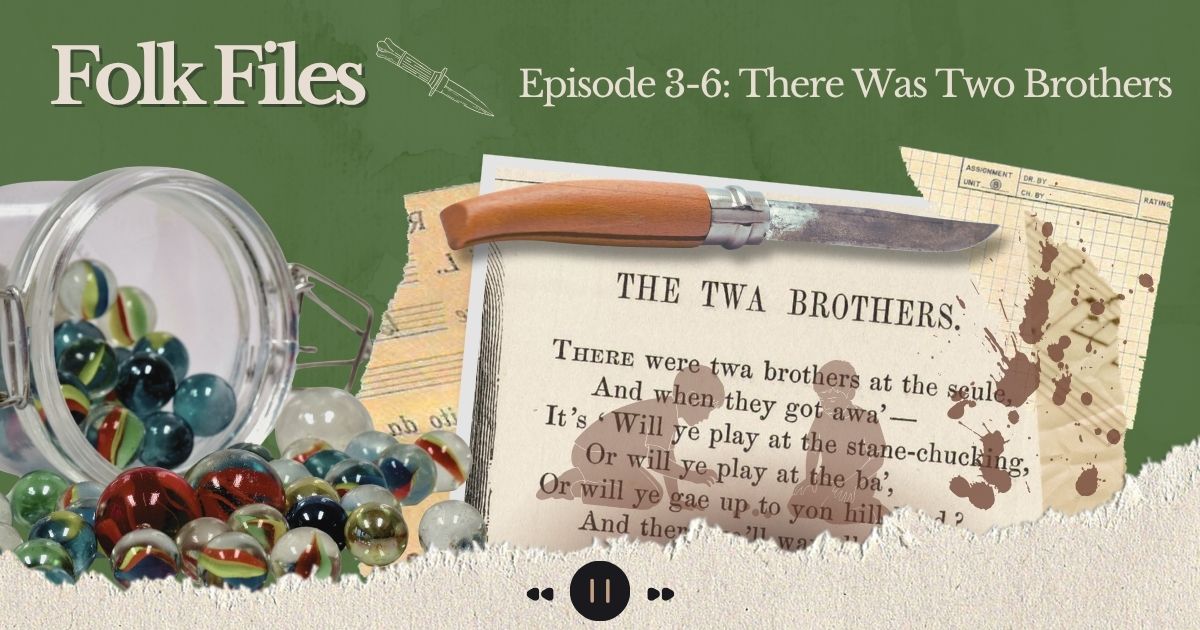
Folk Files: There Was Two Brothers

Whereas “The Two Sisters” murder ballad is a complete, coherent story, “Two Brothers” is messy. What’s the motive? Who are these brothers? Who kills whom?

In this episode of Folk Files, we search for the answers to these questions… and discover a dark hypothesis for why the story is so vague.

(Content warning: this episode discusses themes that may not be appropriate for children.)

LISTEN: APPLE • AMAZON • REDCIRCLE • MP3

For a list of all musical excerpts used in this episode, click here.
Explore the Derek Piotr Fieldwork Archive.
Support Folk Files by joining our Patreon.


Host: Olivia Harding
Assistant Producer: Aaron J. Morton

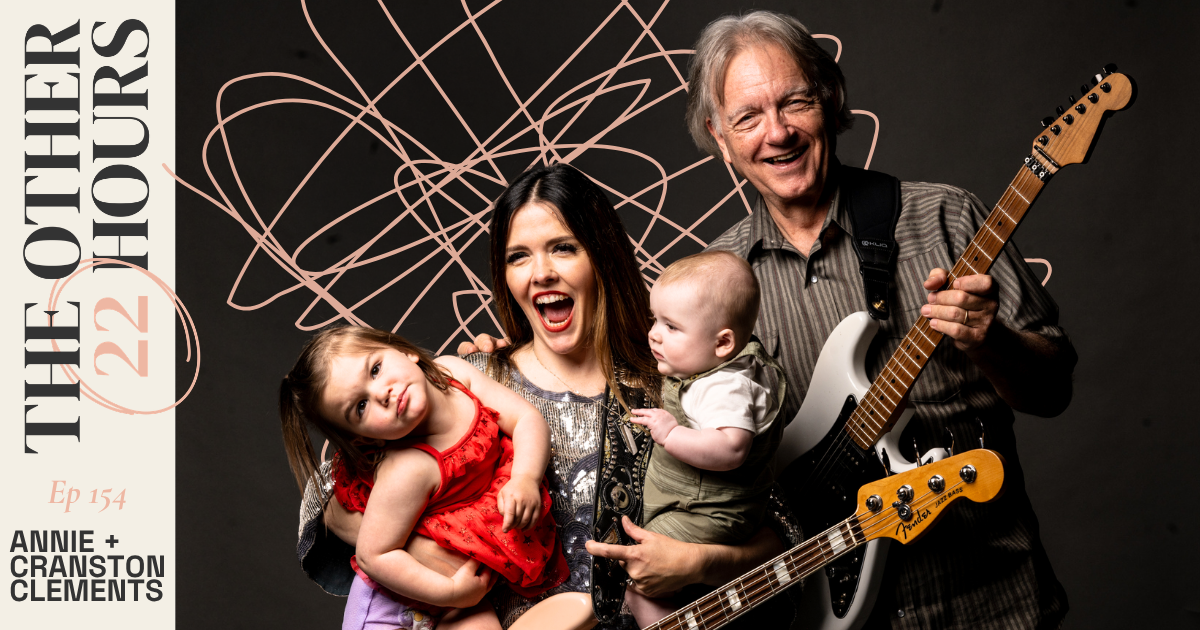
The Other 22 Hours: Annie & Cranston Clements

What does it mean to treat music not as a commodity, but as a multi-generational way of life? We sit down with father-daughter side musicians Cranston and Annie Clements. Cranston, a cornerstone of New Orleans music history, has played guitar with royalty like Dr. John, Allen Toussaint, and Irma Thomas. His daughter Annie is a bass player for massive acts including Sugarland, Maren Morris, and Hootie & the Blowfish.

LISTEN: APPLE • SPOTIFY • AMAZON • MP3

The duo brings a unique perspective on lineage, structural hurdles, and the profound beauty of side musicians’ journeys. Annie shares her vital advocacy work supporting motherhood in the music industry, including working to correct the stark lack of childcare infrastructure in touring. Meanwhile, Cranston details his wild roots in the 1960s counterculture and how a single performance could dismantle a lifetime of prejudice. It is a study on what it truly means to be a “joy facilitator.”

In This Episode:

Annie Clements
Cranston Clements
Ep 151 – Rob Moose
Dejan’s Olympia Brass Band
Tuesday Night Rodeo Club
Maren Morris
Doja Cat
Joy Oladokun
Bad Bunny
Motorhead
Dr John
Boz Scaggs
Maria Muldaur
A Uterus is a Feature Not a Bug – Sarah Lacy
Lucinda Williams
Angine de Poitrine

Go Deeper: 

Watch: View this entire conversation above or on YouTube.
Explore: Find similar conversations in these themed playlists.
Connect: Join the conversation on Instagram.

The Other 22 Hours is hosted by Aaron Shafer-Haiss (producer, mixer, musician) and Michaela Anne (songwriter, artist, creative coach). More about Aaron’s work. More about Michaela Anne’s work.


Produced by Aaron Shafer-Haiss. Original music written, performed and produced by Aaron Shafer-Haiss.

Photo Credit: Michael Weintrob

Amy Grant Launches New Podcast Exploring The Me That Remains

Amy Grant didn’t set out to make her first album of original material in more than a decade. What started as a way to reconnect with herself gradually became The Me That Remains (released May 8), a deeply personal collection of songs about healing and finding ourselves again.

As a compendium to the project and in tandem with host Khalil Ekulona, Grant has launched a new podcast that invites listeners to delve deeper into the stories behind the songs and learn more about what and who shaped the record. (Watch the first episode of the podcast, which has just premiered, below.)

I recently sat down to speak with Grant about the unexpected path that led to The Me That Remains, which she created alongside producer Mac McAnally – full disclosure, that’s my dad. Her candid reflection on some of her life’s most difficult moments was crafted into something that deeply resonates with her fans and is a great reminder that sometimes, when we close a door or two, we open new ones.

Well, I feel very honored to have been tapped to do this, and I also think it’s an interesting perspective because I got to have a backseat to the making of this record through Dad’s eyes. I know he’s told you, but he was just so thrilled and joyful to work on this. We had some screen-free, dedicated listening sessions in the studio and he gave me lots of behind-the-scenes stories about the recordings and some of the stories behind the songs. It was a really special time for me to get to see him through that process, and I hope you know how much it meant to him.

But I was curious as to what led you to pick him for this project.

Amy Grant: I didn’t realize we were doing a project. I reached out to Mac when I had written a song, really the first lyric that I wrote as I was launching into being creative.

To me, this whole project was such a chapter of life that was a recovery journey. I had a bike wreck the summer of 2022 and then not quite two years later I had to go back to Vanderbilt to see a neuropsychologist to get my new baseline. I did a day of testing. I received three different scores. Two were in the 90s, and a third was under 30 percent. I was like, “Oh my gosh, this makes total sense to me.” It makes sense how I’m experiencing life. Everything is happening in the family room, and I’m down the hall in a back bedroom, three steps behind.

The doctor asked how it was exhibiting in my life and I said, “I feel a slow withdrawal in me from everything.” And his advice was, “Lean in. Lean into the things that matter to you, even when you feel uncomfortable. If you feel like you are three beats behind, lean in.”

Within a few weeks, I had created a space in my home to be creative, because creativity is leaning in for me. My watercolors. My dress-up clothes. I know it sounds silly, but my grandkids and I dress up. And I have a record player and my 45 collection and my instruments. Creativity always grounds me, always makes me glad to be alive.

When I created that space, I sat down in the only chair in the room – which is a child’s chair – and top to bottom, I wrote the lyrics to “The Me That Remains.”

Wow.

I was just talking to myself and said, “Hey, this is who you are.” At the time, I was bored with my own musical ideas and still dealing with my short-term memory. I reached out to Mac to say, “I’ve got a lyric. Any chance you would help me with some music?” I think I instinctively reached out to him because he’s fun to be with and a great storyteller. On some level, I trusted him as a person and I felt at ease.

He said, “I’m so busy right now; this could take a while.” Weeks would go by, but he’d say, “I think I’m on to something.” Months went by. I told him, “No sacred cow. Change anything you want.”

In the meantime, I was leaning into creativity and lyrics were coming. So I initiated more conversation with Mac and let him know I was writing more songs. By the end of 2024, life was busy for all of us, but I reached back out and told him that I had two songs I would love to record. “Any chance you would put together a rhythm section? Would you oversee this?” It was such a natural step, and he said yes. But we didn’t have a contract. I didn’t have a record deal. That’s how the whole rest of the record emerged. Weeks would go by, and I would reach out and tell him I had more songs.

“Any chance we can do that again?”

Six weeks later, he’d booked a double session. By then, he was saying, “Hey, I’ve got some songs I’d like to play you.” A month later, we had another session, and then he said, “Hey, we’ve got a whole record.” I so appreciate Mac and his style of producing. It is “come as you are.” He’s very welcoming of everyone’s ideas.

My friends joke about me that it feels like I could hobble together my life, clearly and completely, with a roll of duct tape and a roll of twine. I couldn’t care less if things are perfect. And I really found a great creative match in Mac. He’ll work on something exhaustively. He’ll sing every potential background part until he knows what he wants, and that’s what he’ll ask the singer to do. But he’s also open to things. He looks for honesty and believability over perfection.

And Mac and Vince [Gill] are old friends, and they get in the same room, and the storytelling starts. You feel lucky to be in that space.

That’s wonderful. I find it very inspiring that creating the space for yourself and pulling together the things that make you feel like you helped open those gates. Do you feel like they’re still open?

I do. Yes. I was in that space today. It’s funny. It’s just a little pass-through room, but you can actually close the doors. We live in a house that’s very open and sprawling. There’s not a space that I can close the door and feel like nobody’s going to walk in. I think sometimes, for some of us, that’s important creatively.

I nicknamed that space “Craftopia,” and I was encouraged to create that space by my youngest daughter. She pointed out that there are lots of places to sit, but no place that I can cloister away. She said, “This house, you’ve got a lot of places to sit.” I love to cook, but our kitchen’s wide open. I’ve got my desk with all my books, but it’s a pass-through area. It’s like my life is an open passageway. And just to say it was okay for me to close the doors, be alone, and welcome myself. That’s good for everybody.

Well, that’s a good segue, talking about your daughter. One of the things that gave a twinkle to Dad’s eye was your daughters singing on this record. He loved that process. Can you talk a bit about what that was like for you, and what brought that about?

Well, I have two daughters singing on this project and my daughter Sarah was singing on a song that I wrote with Tom Douglas. Sarah sang underneath me on the song, “The Other Side of Goodbye,” and I wanted Corinna to sing above me. She quietly asked Mac, “I’m not asking to be on the record, but would you let me have the experience of going into the vocal booth? Can I sing with my mom on this song, ‘Beautiful Lone Companion’? I listen to it all the time, and I have all these parts that I sing.”

And I’ll never forget what Mac said to Corinna. He said, “Corinna, you will spend the rest of your life taking what is in your head creatively and getting it out, and then deciding if you like it. I got nothing but time.” She went and got her journal and she had done a chart, just like with solfège. I don’t really know the do-re-me-fa-sol-la-ti-do, like I wouldn’t know how to make a chart with that, but she had made a vocal chart. She ran through it once and asked if she could have another track to double the part and Mac said, “You just saved me from asking you to do that.”

Here’s what was so beautiful. Mac had hired an arranger to do what he was calling a “mandolin symphony” that took up that same space as her parts. His openness to hearing what she had was so lovely. To watch him look at that song, or listen through her lens. At one point, she asked me to come into the vocal booth to listen, and I wrapped my arms around her and she burst into tears. Vince was in the doorway and he came in and we had this three-way hug.

It is true that music comes to us and through us. Creativity is a sacred space. With songwriting, I find that if I’m writing with someone in the same room, you can have an idea musically or lyrically and they’ll say, “Okay, sing it to me.” But I’ll get choked up, even if it is a fun song, because the emotion of landing on something is, well, hard to explain. But it is emotional.

I have this very silly thing that I’ve had since I was a kid, where if I sing gibberish, just words flowing out of my mouth, I cry. It can be the silliest noises coming out. It makes my husband laugh so hard. I can do it at the drop of a hat. Immediately, tears stream down my face. It feels like a deep emotion that I can’t really put my finger on. Not joy, not sadness.

Free. It’s free. We’re all born with a freedom to just be. To classify, not categorize. And we lose that. I think anything we can do to return us to being childlike is good.

Now I want to hear you sing gibberish. I’m not going to ask you to do it right now, but I think I want to try that. It’s funny because, six months ago I started doing a pattern of movements in the mornings, and I do it consistently. It is basically just moving like a child. I call it child’s play. It always makes me laugh.

That’s wonderful.

It is a pattern that I do four times a day: first thing in the morning, last thing at night, and a couple of times during the day. I’m just mimicking the way children move. If you want to be exhausted, follow a 2-year-old around for five minutes and do what they do. There is not a pilates workout that will put you through [that]…

Well, I’m actually really excited that we’re talking after the release of this album, because I’m curious to hear about how you feel about it now that you’ve been able to play this in front of audiences. What has it been like to be out in the world with these songs?

Well, it has felt so comfortable. The response I’ve mostly gotten is that people say, “I feel like I’m stepping into a conversation that’s already going on in my head. You are singing my life.”

I know that there’s such a welcoming, honest observation of life in all these songs. And the songs that are hard are never “us and them.” You know, whatever we’re sitting in, we helped create it. And if there’s moving on, then we will think of a way to move on. The record is very observational and honest and hopeful.

It just makes me so glad to be making music at 65, because my intention is not to try to be center stage anywhere. Job well done is just the experience of creativity. You can’t control it. This project has been met with exponentially more positive feedback than I ever imagined. Well, I didn’t imagine anything. I was just glad for the experience, and that was the gift. The gift was being in the studio with all those incredible musicians, and with Mac.

At the end of the third day of recording, we were just sitting around and Glenn Worf said, “You know, when I first came to Nashville, I wanted to be in a band and I had several misfires, and then that dream kind of went by the wayside. I became a studio player and that’s been great. Time and technology are kind of editing that experience in all of our lives. But we all just had the experience in the studio of feeling like we are in your band.”

I had that same experience. I love my road band. Music truly creates road families. But that experience of being in the room with everyone, Chris Stone at the soundboard, I mean, everybody. I’m so glad we had that.

Yeah, that was a lovely group of deep-feeling people in one room.

Has your relationship to the songs evolved now that they’re out in the world? Have you fallen more deeply in love with any particular song on the album since it’s out there?

Well, first off, these songs all wear well with time, and the relationship I had to develop with the songs was to not get choked up because you can’t sing with a lump in your throat. With “How Do We Get There From Here,” I got to sing that with the Staten Island PS22 fourth- and fifth-graders. I had to steel myself. It’s just hard not to get emotional. Kind of the same as when you are doing your gibberish singing. I feel a greater appreciation for each one of the songs.

The songwriting, whether it’s the songs I wrote alone or with other people, nothing happens without great patience, intention, and time. I know that each one of the writers on this took a great deal of time and attention and patience writing these songs, and I feel very grateful for it.

I’m reminded of the story about Sherwood Anderson and William Faulkner when Faulkner was experiencing some misses, and Anderson encouraged him to write about what he knew. And that is when he created Yoknapatawpha County. It doesn’t matter how specific something is to you. It will resonate with others.

I feel like this record is a great example of that because it is very specific to you. To that pass-through room with the closed doors. To everything that you have been through in the past few years. It is resonating because it is specific.

Let’s talk about the new podcast, The Me That Remains, hosted by Khalil Ekulona. It’s a wonderful companion to the record. Tell me how it came about with Khalil and what it was like to make it.

I met Khalil when he was a guest in our home for Easter one year. My sisters and I all cook. My nieces and nephews add to it. It is definitely a big spread, and I’m always meeting people in my home because somebody else invited them.

I was on a Southwest flight not too long ago, and the flight attendant said, “I came to a party at your house once.” And I said, “I thought you looked familiar.” I’m the youngest in my family, and there were just always people in my parents’ house. And so an open door is the way I grew up.

I met Khalil, and then he invited me to be on [the show he hosted on WPLN], “This Is Nashville.” It’s such a rich exploration of Nashville, and I so enjoyed talking to him that when it was time to create some material, we chose him as the interviewer. He’s such a lovely human, and so thoughtful. I enjoyed my first conversations about these songs being with him.

That’s wonderful. I particularly loved the episode about the album artwork. The way it was pulled together is really beautiful. I strongly encourage readers to check out that episode. It’s wonderful.

Every one of our lives should be turned into a multimedia art piece, because only you know what is important to you.

That’s right.

When you see it all gathered together, it’s extraordinary. I had so many collections when I was younger. Now I’m kind of at the point of passing things on or letting go, and I do think there are stages in our lives.

There’s a collection stage, when you are appreciating that season of life, whatever it is, and the things that you’ve collected. And then there comes a time to lighten the load. And to leave a minimal imprint in some areas, you know?


Photo Credit: Ed Rode