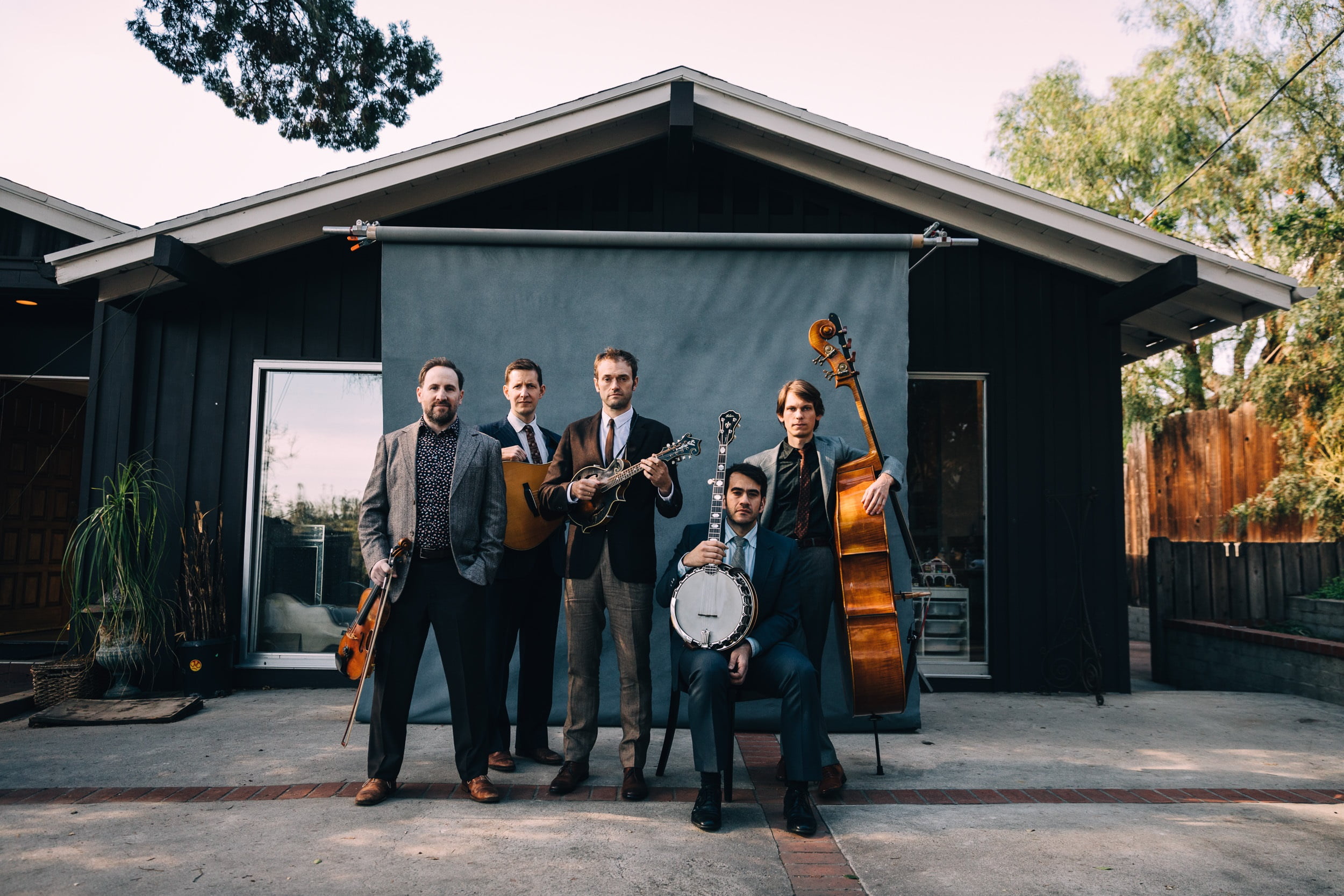
Punch Brothers Explain What Hasn’t Changed

The Bluegrass Situation interviewed all five members of Punch Brothers upon the release of their compelling new album, All Ashore. At the end of the individual interviews, we asked each member just one question that overlapped: “So much has changed in the music world – and even in your band’s musical evolution – over the last ten years. But what would you say has stayed the same between that first record and now?”

As one would expect from Punch Brothers – who are nominated for IBMA Instrumental Group of the Year – every member offered an interesting perspective. (Read the other interviews here.)

Gabe Witcher: “The thing that’s stayed the same is, I think, the level of excitement we all have, still, just to play music with each other. And the shared wish to keep exploring what this ensemble can do, and to keep reaching for new things. Making new discoveries. Finding new sounds. Everyone is so super committed to that on their own, but also, once we get together, it’s kind of a miracle in a way. This kind of spontaneous and natural thing that happens when new, exciting things keep popping up. Like, ‘Oh my God, that’s awesome! What is that? Remember that, save that. Let’s use that. Let’s figure out what that is.’ That has never gone away. And I think that as long as that thing’s there, we’ll continue to make music.”

Chris Eldridge: “To me, in a way it’s all the same and it’s all different. I feel like we’re doing now what we were doing then, and in a way, it doesn’t feel so different to me in terms of how we want to work on our music. … I feel like consistently from then until now, there has been a real sense of wanting to be a band. I think that’s kind of the thing. Whatever is cool about the Three Musketeers – all for one, one for all – that from the get-go was the thing and still very much is a thing.

“Everybody is playing pretty selflessly in Punch Brothers and everybody really just wants the music to be good. At the end of the day, that’s the overriding thing that’s what brought us together as people, that’s what keeps us together as people, as musicians. We all just really love music and we share a common vision about how it should be and what it can be.

“Even as people have different ideas to move things forward, most notably Thile, there’s always been a real shared sense of purpose in this band. It should be that way for any band, but somehow, sometimes, I don’t think it is. And I think that’s been one of the things that has really contributed to us still wanting to make music together and working hard on it when we do. We just love music and we always have.”

Paul Kowert: “So, we live in the most politically tumultuous time of our lifetimes. We’re in our mid-30s, that’s a big change. Among the bandmates, three of us are married and two of them have kids, so that’s a huge change. I mean, that influences the tour schedule a little bit. Besides that, I don’t know what’s really different, you know? I mean we’re just making more music.”

Noam Pikelny: “I think everyone in the band genuinely likes each other. That’s like a rare thing. Paul is in the corner, shaking his head. (laughs). But we genuinely like each other as human beings and I think we really respect each other musically. So there’s this real sense of responsibility to each other to keep this as part of our musical lives. To me that’s a beautiful thing, that this is something that we can keep coming back to over the years. It doesn’t always have to be the main project. It could go dark for a couple of years while people are doing other things, it could come back. And it feels like not that much time has passed.

“The reason we decided to transition from just an album [Thile’s 2006 project, How to Grow a Woman From the Ground] into a band is probably the same reason why we’re still making music together right now. It’s artistically rewarding and I think we decided to keep doing this beyond the first album because we felt we were just scratching the surface of what was possible. … And 12 years later, I still have this sense of, ‘Well, we’re just scratching the surface, so we’re gonna keep doing it.’ There’s still more we want to uncover.”

Chris Thile: “We love making music with each other. We crave making music with each other. When we are in the midst of other projects, no matter how much we are enjoying those other projects, there is always this feeling, like, ‘I can’t wait to get back with my boys and see what they think about this….’ I think that a mutual love and respect has resulted in a partnership that will last until one of us dies.”


Photo credit: Josh Goleman

LISTEN: Joe Martin, “Love Strong”

Artist: Joe Martin
Hometown: Manchester, England
Song: “Love Strong”
Release Date: October 1, 2018

In Their Words:
“I wrote ‘Love Strong’ about asking someone close to you, a partner/friend, to stay strong for both of you in a time of need. When you feel like you can’t pick yourself up, from the bad that life can sometimes throw at you. The lyrics evoke a sense of struggle and also optimism, but the music is driving, uplifting and hopeful.” — Joe Martin


Photo credit: Andy Heathcote

MIXTAPE: Madison Cunningham’s Songs I Hear in Purple

It was difficult to narrow it down to just 12, but here are some songs that were turning points for me as an artist. Songs that made me first realize, and then remember, why I love music. I also hear songs and keys in color. Although it might sound strange all twelve of these songs have aspects that sound purple to me. Enjoy!

Jeff Buckley – “Grace”

My friend Izzi Ray told me about Jeff Buckley over lunch about four years ago. Being late to the game, as I usually am, I didn’t listen to a single song of his until a couple years later. I’ll never forget how astonished I was at his voice. Then come to find out what an innovative guitar player he was. It haunted me for months. Specifically “Grace.”

Radiohead – “Paranoid Android”

“Paranoid Android” was one of the first radio songs I listened too. I’m constantly inspired by how freely Thom Yorke creates and sings his melodies. This is one of those melodies.

Emmylou Harris – “Deeper Well”

“Wrecking Ball” was a life-changing record for me and continues to be in my top 10 favorites. The lyrics of “Deeper Well” make for a perfect song in my opinion.

Fiona Apple – “Fast As You Can”

I’ve never felt cooler than when I walk down the side streets of Los Angeles listening to this song blaring in my headphones. It’s also my airplane turbulence song. It shed a completely new light on songwriting, and songwriting tempos for me. I’ve always felt it was hard to say something important in a fast song. Fiona proved me so wrong.

Joni Mitchell – “Both Sides Now”

Joni was the first person who made me really want to be a songwriter. She set the bar so unreachably high that she made so many of us want to do our best even if we came just short of it. This song is one of few that make a timeless statement that could be sung by a 19-year-old and an 80-year-old.

Bob Dylan – “Just Like a Woman”

Here’s another example of a song that I think is absolutely perfect. Not a word or note wasted.

Ry Cooder – “Tattler”

Ry is another one of my guitar heroes. “Tattler” is my favorite song by him.

Nina Simone – “Feeling Good”

Nina Simone can’t play or sing a wrong note. All of her mistakes were in key somehow. Any song she plays instantly pulls me in. No other rendition of “Feeling Good” matches the sorrow, and power of this one.

Maurice Ravel – “String Quartet in F Major”

This is maybe one of my favorite pieces of music. I heard Chris Thile play it on Live From Here for the first time and it lifted me out of my seat.

Brian Wilson – “Don’t Talk”

This one makes me tear up almost every time. The melodies and voicings on this tune are such a beautiful mystery to me. And the lyrics convey the power of not saying anything and resting in the arms of the person you love

Rufus Wainright – “Poses”

On my way back from the Sundance film festival it started to snow. My friend Mike and I made a wrong turn; as we found our way back he turned this song on. When it was over I asked him if he’d mind if we played it again.

Juana Molina – “Lo Decidi Yo”

Juana is one of my favorite guitar players/writers. She’s truly one of a kind. I listened to one song by her called “Eras” on repeat for four years straight until I uncovered the rest of her record. Here’s one of my belated discoveries.


Photo credit: Paige Wilson

LISTEN: Jim Wyly, “Someone’s Gonna Love You”

Artist: Jim Wyly
Hometown: Austin, Texas
Song: “Someone’s Gonna Love You”
Album: The Artisan
Release Date: October 5th, 2018

In Their Words: “I’ve had this song for 30 years and never recorded it. It’s been a go-to for years as a show opener because people like to sing along with the chorus and it gets them involved. I think maybe people can relate to a song about someone looking for love and always ending up with the wrong person or as the song says, being ‘jacked around by jerks and clowns.’ Only to discover that what they were looking for was right in front of them all along. The narrator is telling them to not worry, someone’s going to love you and it just might be the person that is standing next to you.” — Jim Wyly


Photo Credit: Amberly Russel

WATCH: Ben de la Cour, “Face Down Penny”

Artist name: Ben de la Cour
Hometown: Nashville, Tennessee
Song: “Face Down Penny”
Album: The High Cost of Living Strange
Label: Flour Sack Cape

In Their Words: “Written with Olivia Rudeen, really the only co-write I’ve ever done. It takes more than one broken spoke to stop a face down penny from rolling on, and it’s never too late or too early to give up hope. A strange fever dream of bad luck gone right, of embracing the long odds and playing them anyway… of playing the long odds BECAUSE they’re so long, of laughing in the face of despair and then inviting her in for a nightcap.” — Ben de la Cour


Photo credit: Stacie Huckeba

WATCH: Kate Campbell, “Long Slow Train”

Artist: Kate Campbell
Hometown: Sledge, Mississippi
Song: “Long Slow Train”
Album: Damn Sure Blue
Release Date: September 21, 2018
Label: Large River Music

In Their Words: “‘Long Slow Train’ comes from a phrase you hear from people who have been involved in the struggle for equal rights all these years. The one bit of hope is — ‘It’s a long, slow train, but it’s still moving.’ You have to be involved. You still have to be present to win. It’s not going to be magic and happen instantly. You have to hang in there. No change is gonna just be magic. It’d be nice if it was, but it’s not always that way. In writing about race and what I see happening in our country right now, hopefully, I’ve learned some things about myself, and speaking up, and and doing the best I can to have a conversation.” — Kate Campbell


Photo credit: Michael Wilson

LISTEN: Ashleigh Flynn & The Riveters, “The Sound of Bells’

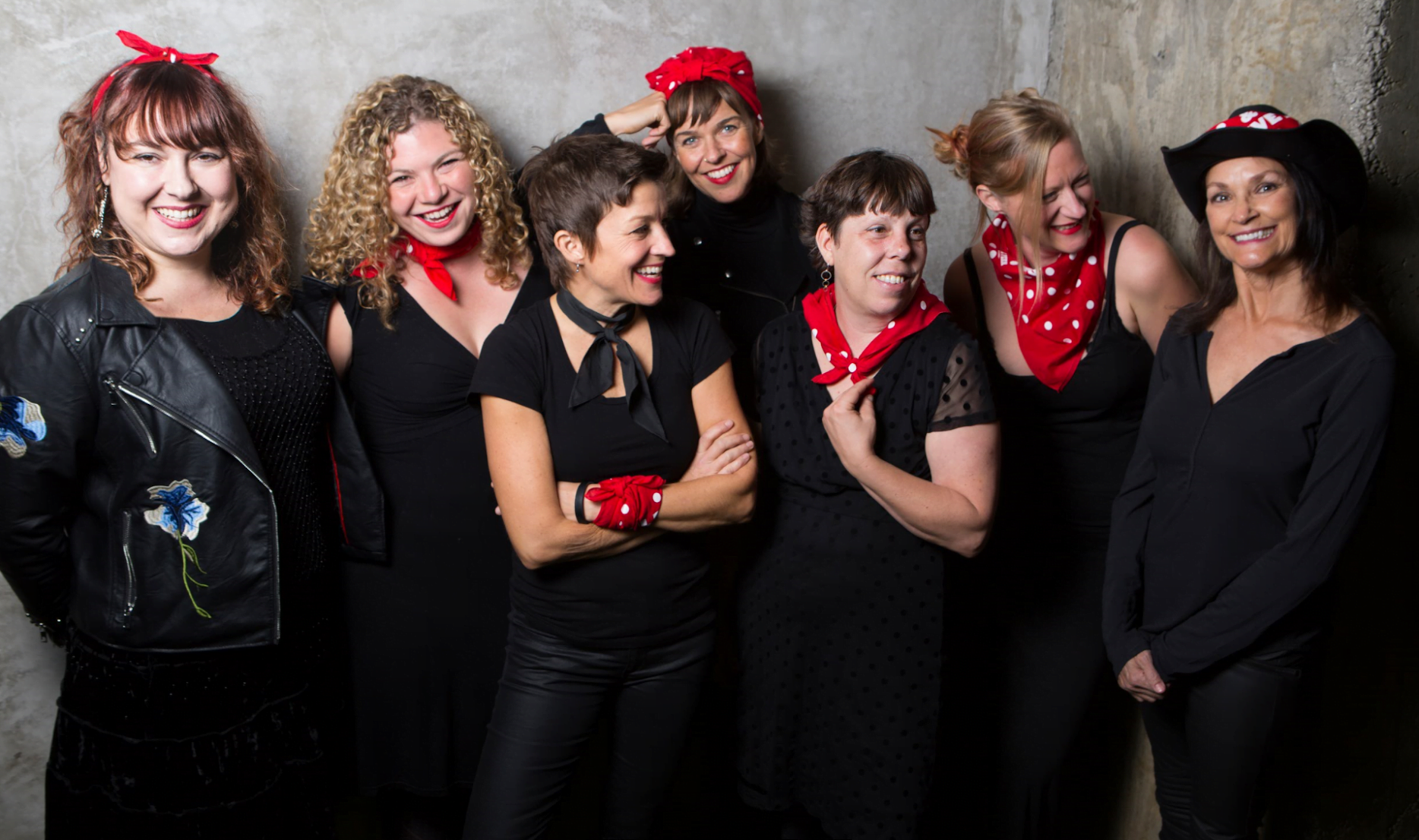
Artist: Ashleigh Flynn & The Riveters
Hometown: Portland, Oregon
Song: “The Sound Of Bells”
Album: Ashleigh Flynn & The Riveters
Release Date: September 21, 2018
Label: Home Perm Records

In Their Words: “‘You’ll hear me in the sound of bells that ring…’ My dear friend was murdered nearly a decade ago. It caused great turmoil, and is still a painful mystery to behold. I dream of her often. In one dream I am driving a 1960 Yellow VW Van up to Gold Hill, Colorado, at the Continental Divide, and catch a glimpse of the Front Range. All those lights from ranches and little cities seemed to blend into the starry night sky. And then I sort of came to and was somewhat lucid and felt the presence of my friend hovering over me. I wanted to reach out to her. As she dissipated, I heard her say, ‘You’ll hear me in the sound of bells that ring.’ I could rest assured that we were still connected thought she is gone from our physical world.” — Ashleigh Flynn


Photo credit: Kat Nyberg

WATCH: Amazon Music Americana Roundtable

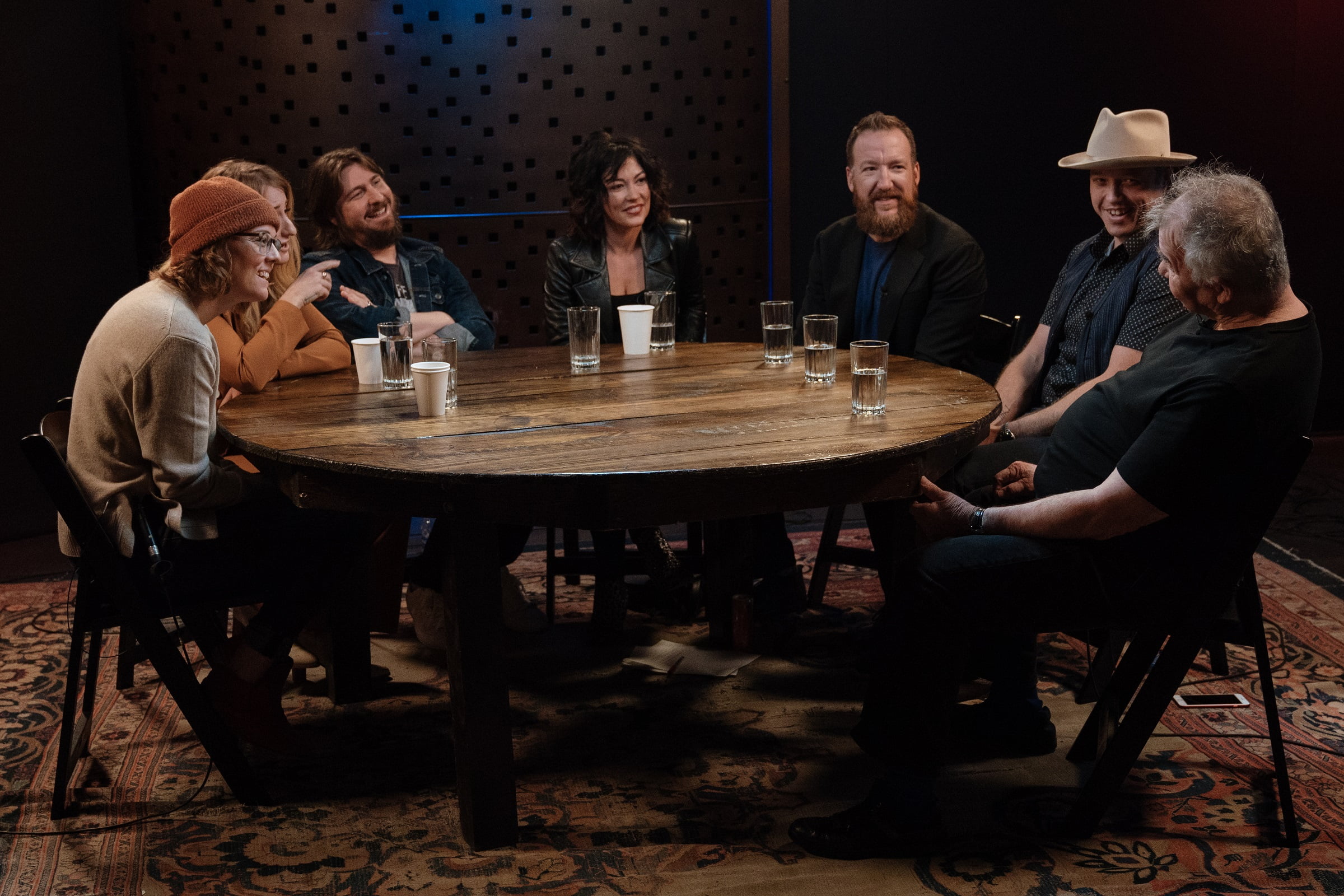
Don’t you wish you could pull up a chair at this table? From Brandi Carlile and Margo Price, to producer Dave Cobb and Amanda Shires, to Jason Isbell and John Prine – these songwriters always have something to say in their music. In a conversation with Amazon Music’s Adam Steiner, these Americana all-stars go in-depth about their early musical influences, the mentors and producers who shaped their sound, and the most important parts of recording – including goofing off.

Carlile kicks off the conversation with this childhood memory: “The first time I fell in love with music probably would have been hearing my grandfather yodeling as a 4- or 5-year-old — yodeling, and playing the spoons, with his mom on piano and his brother on banjo and my mom singing background vocals. Kind of the family jam scene. That’s what I remember — falling asleep on the stairs, thinking, ‘Maybe I can do that – that little trick he does – when I get older.’”

Check out the whole video below:


Photo credit: Ky Elliot

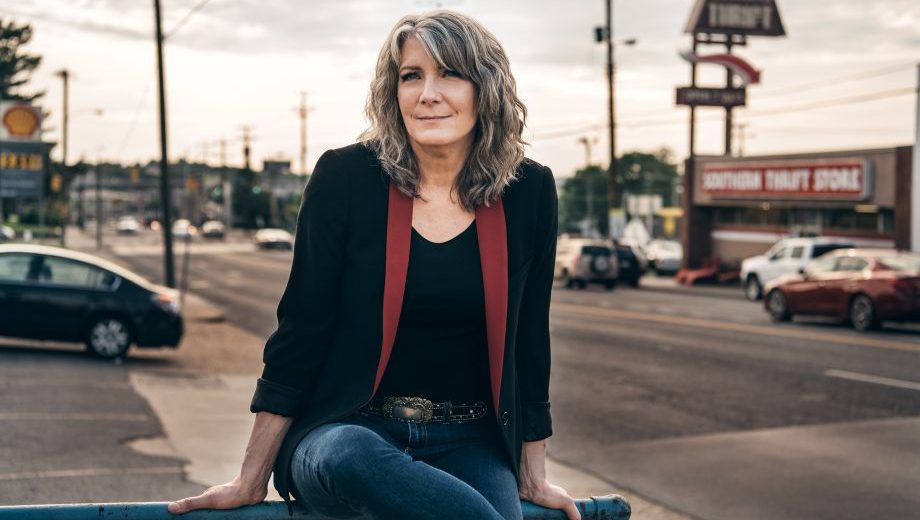
After Struggling to Sing, Kathy Mattea Soars on ‘Pretty Bird’

Kathy Mattea’s latest album, Pretty Bird, is in many ways a continuation of the West Virginia native’s journey back to the simple Appalachian sounds of her homeland. Hints of the region’s acoustic roots have popped up throughout her Grammy-winning country career, best known to most folks for her signature song, 1988’s “Eighteen Wheels and a Dozen Roses.”

With 2008’s Coal, Mattea leaned into the music of the West Virginia mountains like never before, singing about the complicated area export that is still a political hot potato in 2018. The acoustic evolution continued with 2012’s Calling Me Home, but Mattea faced an evolution of a different kind leading up to Pretty Bird.

A few years ago, Mattea suddenly discovered her voice was changing, and she couldn’t hit the notes she once found with ease. In this Q&A, Mattea explains how she worked through her vocal challenges with the eclectic group of songs she recorded for the new project.

In the past decade, you’ve stripped away a lot of the instrumentation from your music to explore more acoustic sounds. Over the past few years, you’ve also had to relearn how to use your singing voice. Did that experience of first stripping away layers from your music help prepare you to later rebuild your voice?

It felt like that, only much more extreme. I didn’t have a choice except to strip away. When I tried to do it the way I always knew how to do it, it wouldn’t work. So, I didn’t know when I began this process if what I was experiencing was the beginning of the end of my singing voice, or if it was just a shift, just a change. For instance, the transition in my chest voice to head voice, not to get too technical, had gone down a half-step after I went through menopause. So, my body has been singing the same songs in the same keys for many years and would just go for the way it knew to hit a certain note, and it wouldn’t happen. I went, “What is going on?”

Was there a physical problem with your voice or was it just part of the process of getting older?

Really, it was the latter. There was nothing wrong with my voice except that it felt wrong because it was unfamiliar. So, it wasn’t like an injury or anything like that. I got to hear Kenny Rogers during this time. He was on his final tour and he was like, “Look, I have no voice left, but I love these songs, and you guys love these songs. So, I’m coming out to sing them for you one more time.” He’s very open about it and I thought, “Yeah, I can’t do that. I’m not wired that way.” If I can’t sing in a way that I feel like I’m really expressing myself, I will have to stop. I knew this about myself. So, I thought, “OK, I’ve got to answer the question.”

Who was there with you as you went through the process of relearning your voice?

Once a week, Bill Cooley, who has played guitar for me for 28 years, would come to my house, and we’d just jam in the afternoon. We’ll just brainstorm, because sometimes, in that open-ended time, that’s when the creative process happens and surprises happen. I said, “Bill, I’ve got to get to know my voice. I’ve got to experiment around and bump up against the edges.” So, I started throwing out songs that were really different than anything I’d ever done. They were God-awful in the beginning, but it started to open up.

You’ve recorded with Tim O’Brien many times, and he’s also from West Virginia. What were you looking for from him as a producer on Pretty Bird?

I realized during this process that I needed to make another record. The songs I’d put together were all so crazy different from each other! I couldn’t figure out how I was going to do “Pretty Bird” and “October Song” and “Mercy Now” and “Chocolate on My Tongue” all on the same record and make it hang together. I’m just chewing on this and chewing on this. Then one night, I woke up at 3 o’clock in the morning and said out loud in bed, “Tim O’Brien has to produce this record! He’ll know exactly what to do!” I’ve heard Tim do jazz-flavored stuff, blues-flavored stuff, bluegrass stuff, mountain stuff — all that. He does it all from a deep understanding.

I definitely see you being drawn to documenting the way of life in West Virginia as well as the music. What’s prompting you there?

When I was growing up, I was completely eaten up by music. But there wasn’t a lot of formal training around me. So, I would learn whatever I could from anyone who would teach me. My friend’s dad had a bluegrass band and he’d jam with me. I did community theater and I did folk music in my church. We had a little folk mass thing. Choral music in school, but there was nobody around to teach me the roots music of my place. So, that woke up in me in a big way later in my life. That last album, Calling Me Home, was about that sense of place that exists in Appalachia that has been lost in so much of the rest of the culture.

Most of my family lives back in the same basic area that we all grew up in and that our parents grew up in. Cousins, second cousins, third cousins now living just a few miles from where our moms were born. So, there is a sense that the contour of the land, the mountains, the river — all of that is like a member of your family. Bill, my guitar player, he’s from Southern California, and he was like, “Kathy, why don’t people move out and move away for jobs and stuff?” I’m like, “Bill, it’s not that simple.” You don’t leave your family. You don’t leave the nest, basically. And there’s a whole exodus of people to Detroit to work in factories and stuff when all the mines shut down. There’s a whole culture of displaced people that pine for what that is and come back home eventually.

I think of it as being an expatriate, you know? Even though I moved to Tennessee when I was 19, I think of myself as a West Virginian who lives in Tennessee.

Getting into the songs you chose, let’s start out with Mary Gauthier’s “Mercy Now.” Why does it appeal to you right now?

As we had this election, and it was very contentious, and there was all this tension and polarization and all the cultural stuff was going on, I just found myself listening to that song. I pulled it out and I would listen to it every day. So, one day I said, “Bill, I’ve been listening to this song, and it really gives me a lot of solace. It’s really different than anything I’ve ever done but I want to try.” I wanted to sing that song because in a time when people are polarizing, it’s really great to say, “I have pain. I have angst. I am scared. I am upset, and I need help from some place bigger than me.”

I love it because it’s not a “You, you, you” song. It’s an “I’m looking at this, and I don’t know what to do, and I need some help from something bigger than me.” Mercy doesn’t come from me. It’s a kind of grace that comes in from somewhere else. And I thought, “Man, how lucky am I? I get to sing that song every night.” The interesting thing is my audience doesn’t know that song. So, I get to bring that song to a whole new group of people. That’s been a really satisfying experience.

I hear a similar theme in “I Can’t Stand Up Alone.” It has a real gospel flavor with The Settles Singers backing you up. It seems to me that it would speak to the community that you’ve been leaning on during your issues with your voice.

To me, “I Can’t Stand Up Alone” is like the straight-at-it gospel version of “Mercy Now.” “Can’t Stand Up Alone” is like, “Honey, you need the Lord!” [Laughs] I love the contrast of two different approaches to basically the same thing. I’m not very overt about it, but a lot of the process of this was really praying. I felt like I was praying a prayer and feeling my way in the dark over and over again.

You start the album with “Chocolate on My Tongue,” which is an ode to the small joys in life, and then you go right into “Ode to Billie Joe.” It’s such a left turn. Tell me about that juxtaposition.

Hey, I’m not pretending that all that stuff makes sense! [Laughs] I love “Chocolate on My Tongue.” It’s so playful and, for me, to have gone through such a struggle with my voice and to come out with something that light and playful — and to allow myself the freedom to do that, was such a gift.

Then, “Ode to Billie Joe,” to me, is like a familiar, old friend. Those of us of a certain age know that and have memories of that song growing up. I found that when I went to sing it, that there’s this low end — this low register in my voice that was always there, but never this rich. When I found that, it was the moment I turned the corner from thinking of my voice as something diminished to seeing that it was opening into something new that was beautiful. I was astonished by how that song brought that about in my voice.

The last song on the record is “Pretty Bird” by Hazel Dickens. You’re singing it a capella. That had to be a vulnerable experience given all that you’ve gone through.

I have loved “Pretty Bird” for a long time and I wanted to do it on my last album. I lived with it. I wrestled with it. I danced with it. It’d pin me down, and then I’d pin it down. I could not find my way into the song. I could not sing it. I could not make it come out. I think the reason is that if you tighten up at all, it will just die in your mouth. It won’t work. I couldn’t pull back enough.

One night, [my husband] Jon is on the road and I’m home alone. I’m taking a shower before I go to bed that night and I just start singing that song. I’m like, “Oh my God! I don’t know! I think I’m singing it! I think this is happening!” But I’m soaped up now and I’m soaking wet. So, I keep singing, and I rinse off and dry off. The whole house is buttoned up for the night and my cell phone is plugged in downstairs. So, I grabbed the landline and I called my voicemail and I sang it into the voicemail so I have a record of what I did — so I’d know which key I was in and where it lay and explore from there. The next thing, I was like, “OK, I’ve got it.”

I haven’t done it live very much. So, it is still super vulnerable. I’ve been making myself pull it out and do it in the show because it’s the title song for my record. It feels like taking all my clothes off. But it’s like, “Well, you’ve been through a process, and what you’ve learned, Kathy, is that it’s not about perfection. It’s about being real.” This is as blatant a demonstration of that as I can give people. You just have to trust that they’ll get it.


Photo by Reto Sterchi
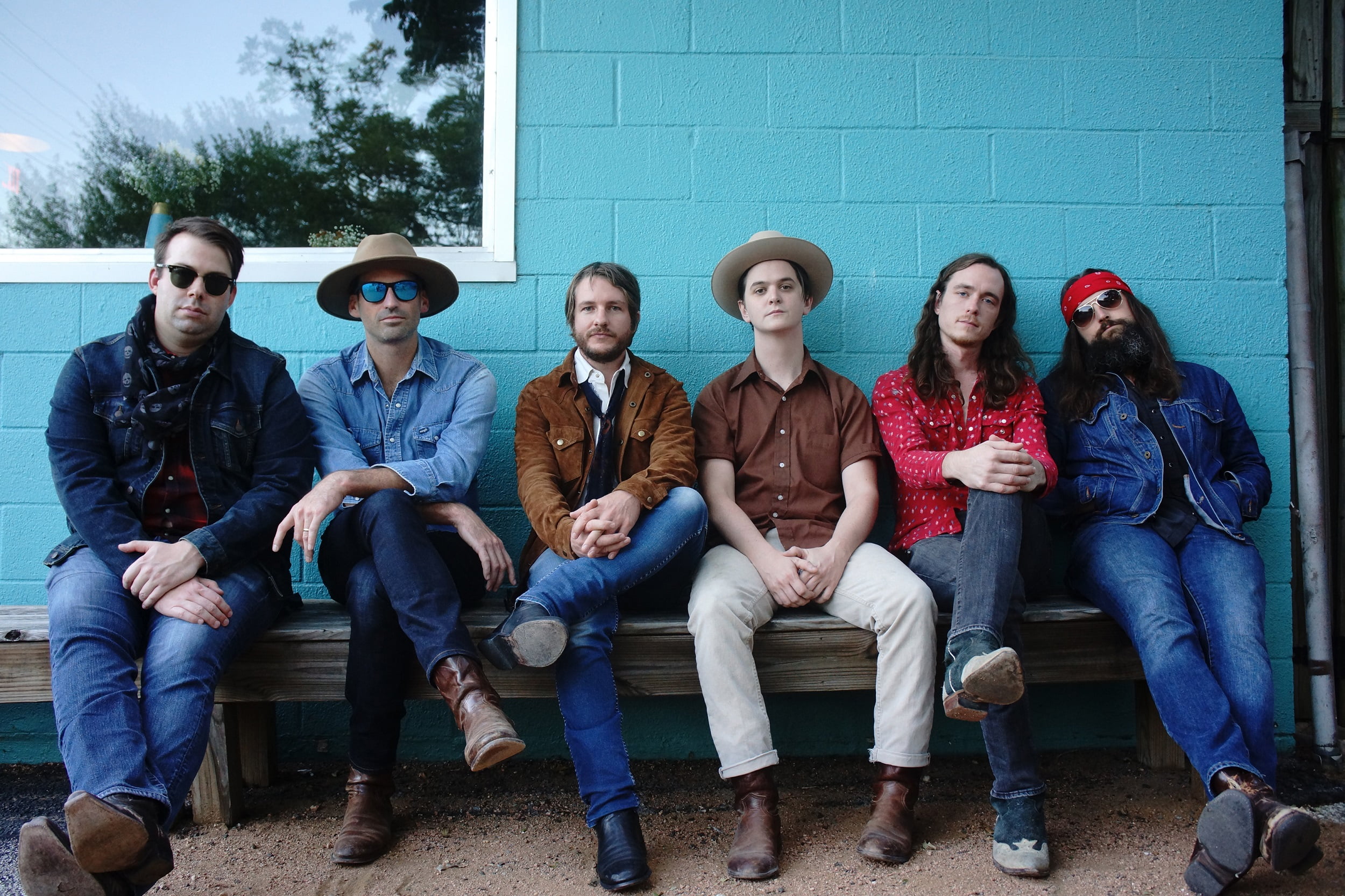
LISTEN: Western Youth, “Let You”

Artist: Western Youth
Hometown: Austin, Texas
Song: “Let You”
Album: Western Youth
Release Date: September 21, 2018

In Their Words: “This is a song I wrote while trying to get my infant daughter back to sleep. It’s a promise to the one person in my life that I hadn’t broken a promise to. It’s aspirational but honest. It’s for her. It’s one of the first songs I recorded with Western Youth and the last song on the album.” — Graham Weber


Photo credit: Steven Alcala