WATCH: Jesse Lynn Madera, “Revel”

Artist: Jesse Lynn Madera
Hometown: LA and Nashville
Song: “Revel”
Release Date: July 23, 2021

In Their Words: “Writing ‘Revel’ changed the way I approach songwriting. It made me understand more about the opportunity we have as artists to positively impact a person’s day. I’ve written a lot of sad, emotional songs, and I’ve seen that those can be therapeutic. Knowing someone is getting cheered up, cheered on, inspired, by listening to one of my songs is pretty mind-blowing. I try to be a source of light for the people close to me, and this is the first time I’ve really been able to tap into that with my songwriting. ‘Revel’ was written around the holidays in 2020, in a living room that was still vibrating with all the good times we’ve had. I needed ‘Revel.’ I needed a reminder of all the light that follows darkness. Being human is rollercoaster enough without a pandemic to further complicate the experience. We’ve all suffered through our share, and hopefully we’ve all experienced the sun coming up over the horizon of despair. This will be no exception. The glow shall return, and we’ll all be reveling in it.” — Jesse Lynn Madera


Photo credit: Alysse Gafkjen

These Members of the Roots Community Embraced Innovation Amid a Pandemic

The roots music community, like the rest of the world, faced an uncertain future as the pandemic essentially wrecked everybody’s plans in 2020. However, a number of musicians and industry leaders figured out a way to navigate the uncharted waters with grace and bravery. The Bluegrass Situation invited five members of the roots community to share their thoughts on how they harnessed their creativity and embraced innovation over the last 12 months.

Billy Strings, Winner of “Breakthrough Artist of the Pandemic” at the 2021 Pollstar Awards:

It was almost kind of a welcomed break, you know? I was tired, man. We had toured our asses off and I was like, I don’t know if I can do this anymore. Then all of a sudden, this stuff happened and we got a big break. And now I realize how lucky I was. Now there’s nothing I’d like more than to be stuck in some hotel room somewhere after a gig with some random folks at 3 o’clock in the morning, just hanging out and having a good-ass time.

For one thing I wanted to get the quality [of livestreaming] better than what I could do at my house. It started with just me on my couch playing, and the next thing you know we’re doing that tour where we’re playing the Exit/In and gigs around Nashville. It was kind of cool and eerie and weird. I’m just thinking, I know there are people out there watching us, but they’re not here and I can’t see them. When you’re used to playing for crowds, it’s like, man, this sucks! [Laughs]

We did debut a lot of songs at the Capitol Theater when we did our gigs there in February. We played like 16 brand new songs when we were over there. … People will go on fan pages and say, “Holy shit, did you hear that song?!” I don’t want to pay attention too much to that, because it just feels like you’re playing for the internet, but then it is good to get a good little gauge on what songs they’re digging.


Mercy Bell, Singer-Songwriter and Cast Member of the New Documentary, The Sound of Us:

I think a fallow season is really important for everyone, or we’re producing from an empty well. Not of creativity, I think creativity is always there, but contrary to popular opinion of the tortured and manic creator, even artists need to sleep and drink eight glasses of water a day. Like all of us, I spent 2020 trying to survive. I had a nervous breakdown. I lost my job. I had a heartbreak. I turned to art, pop culture, movement, exercise, my cats, meditation, to keep me going. …

There was a period of time I didn’t know if I’d make it. I was in a pretty dark place before I got some new treatment for my mental health. I was obsessively walking 14 miles a day, really scared, really not wanting to be alive, in quarantine far from my family, unemployment wasn’t coming through. Scheduling livestreams gave me something to look forward to. Playing music to my supporters, all over the world, it made me feel less alone. I don’t know how any performance will ever beat that. We really needed each other. Singing to people gave me a reason to keep going in the most literal sense. And my supporters also kept me fed! All those $5 tips kept groceries in my fridge. And then Netflix and podcasts, Cardi B’s “WAP,” and my cat kind of saved me. It gave me something to look forward to. That’s the power of art and pop culture, and pets. It cuts through to places we can’t get to. It got me through each day, one day at a time.

Without giving too much away, The Sound of Us spotlights a variety of musicians and the incredible impact their work (or lack thereof because of COVID) has. Some of those highlighted include folks working to bring music to underprivileged neighborhoods, into prisons and hospitals, working on researching lost works of art from the Holocaust and other genocides, and of course, how musicians were affected by institutional racism and the pandemic. When I saw the screening, I cried all my eye makeup off. It’s an incredibly emotional and profound documentary. I am so proud to have been part of it.


Robert Meitus, Co-Founder and VP of Industry Development of Mandolin.com:

Roots music fans tend to have a strong connection with artists and a desire to connect frequently and deeply. Additionally, the nature of roots music itself is built around intimacy, vulnerability and honesty, so that desire for connection really runs both ways. Mandolin’s vision has always been to build a space in the digital world where the noise of the industry fades away; one where a musician and their fans can connect not only through a concert stream, but through other unique experiences like interactive/online VIP events, soundchecks and workshops with artists.

Specifically, Mandolin started with a name that is itself an acoustic instrument and a workforce full of people who had worked a lot with roots music, including among others: myself, representing as an attorney artists such as John Prine, I’m With Her, and Keb’ Mo’; Jason Wilber, longtime guitarist for John Prine; and Larry Murray, formerly of the Luck Reunion. The name and connections naturally led us to develop the roots music connections in our first year, although Mandolin’s technology and services are certainly applicable to all music genres.

I have been a bit surprised at the almost uniformly positive views about integrating streaming into the live festival experience. It helps that cameras have been in place on and around stages for many years already, largely for the IMAG projections on the sides of stages, so musicians are used to this. COVID introduced livestreaming technology and practices to the music world at a much faster rate than would have been the case otherwise, and we have all learned how technology can connect us around the world and accommodate those that may be challenged to attend an event in person. The result is that, coming out of the pandemic, I believe bluegrass and other festivals will be more interested in the hybrid livestream for all sorts of reasons. This may be a bold claim, but I would expect that almost every festival — roots or otherwise — will have a virtual experience component. Think about it: with a phone in hand, every single fan is a digital fan, whether they are streaming at home or on the festival grounds.


Jackie Venson, R&B/Soul Artist and Guitarist from Austin, Texas:

I was pretty well-versed in livestreaming pre-pandemic. I had a series called Jackie Venson Live on Thursdays, which was an effort to help sell tickets to my album release at the Paramount in Austin, Texas, in 2019. I saw the potential in it when it first came out in 2014. I attempted to livestream a concert from Berlin, Germany, but the technology just wasn’t there yet so it was a really bumpy experience. I remember feeling really grateful that the technology existed when the pandemic was ramping up so that I could keep performing once there was no option for in-person shows. There was literally nothing else to do, and when there’s nothing to do I lose my mind and default to the first thing I can think of, which in this case was filling the performance void with livestream performances.

I used my Austin City Limits TV performance as a platform for Black Lives Matter because that episode will be rerun and it’s important to me that this message doesn’t die. The response overall was positive; of course there were some naysayers but that’s why we need to keep repeating the message. During the pandemic I received overwhelming support and positive feedback from the Austin music community. Everyone was on the same page and it seems as though things are changing for the better. I will absolutely continue to stream from home when possible, and I plan to livestream some of my shows from the road for those who want or need to stay home. I think livestreaming will be a staple in the world of live music. It makes live shows accessible to those who are unable to come out due to economic, accessibility, or other issues. (Read the BGS interview.)


Aengus Finnan, Executive Director of Folk Alliance International:

Everything was upside down last year, but the greatest challenge was envisioning and delivering an event we had never done, with half the staff, all new software, no roadmap, and little sense of whether anyone would want to gather online 11 months into a Zoomed-out pandemic. Being able to offer a sliding scale registration fee, including free, was absolutely necessary given how hard hit our community was, and despite that approach, we exceeded our modest revenue goals to cover the costs of the new online systems we used. The most rewarding element was definitely having new artists and industry join us for the first time, and to see a sharp increase in BIPOC and marginalized community representation across all panels. That happened because we were able to extend invitations to participate in more accessible ways. We were also thrilled to finally provide honorariums to all panelists this year, which we are committed to continuing.

Personally, it’s a joy to see FAI play a part in curating, commissioning, and compensating artists for meaningful new content and partnerships, which is the central aim of our Artist In Residence program — playfully renamed Artists in (Their) Residences this year for the pandemic. There were certainly some artists we approached who simply don’t do co-writes, some for whom the online process felt odd, and others who, while flattered, were simply too busy with other projects or recordings. But for the most part, there was instant interest, especially when they knew that one of their peers had selected or recommended them. The cross-border collaboration as part of a bigger collective project, reflecting on a traumatic year, with the added element of raising awareness for The Village Fund to support the community rang a lot of “count me in” bells.

We are already full steam ahead with a hybrid event this year, and we’re not looking back. Our focus will naturally be on ensuring that the in-person event is top-notch and delivers the experience we all know and love, but there are thousands of people who can’t attend each year, for myriad reasons, and providing online content, as well as live-streamed and interactive content enables more community engagement, participation, and inclusion, and builds bridges and connections that folks will use as an entry point leading to the growth of our genre and industry. While daunting, we’re excited about the opportunity to innovate what we do and offer, and who we can reach.


Photo of Billy Strings by Emma Delevante

LISTEN: Matt the Electrician, “Home Again”

Artist: Matt the Electrician
Hometown: Austin, Texas
Song: “Home Again”
Album: We Imagined an Ending (produced by Tucker Martine)
Release Date: November 5, 2021
Label: Burnside

In Their Words: “Like the old adage, the idea of going home again is filled with sentimental longing and unfulfilled promise. Seeing my hometown through the eyes of my teenage daughter, I wrote this song for her and for myself. The conundrum of parenthood, that as you finally start to figure some things out, and try to pass along some of that hard won wisdom, you’re greeted with your own teenage face staring balefully back at you.” — Matt the Electrician


Photo credit: Alison Narro

WATCH: Billy Bragg, “I Will Be Your Shield”

Artist: Billy Bragg
Hometown: Barking, Essex
Song: “I Will Be Your Shield”
Album: The Million Things That Never Happened
Release Date: October 8, 2021
Label: Cooking Vinyl

In Their Words: “To me this is the heart and soul of the album. I’ve come to the conclusion that empathy is the currency of music — that our job as songwriters is to help people come to terms with their feelings by offering them examples of how others may have dealt with a situation similar to that in which listeners find themselves. After what we’ve all been through, the idea of being a shield, physically, emotionally, psychologically, really resonates.” — Billy Bragg


Photo credit: Jill Furmanovsky

With His Son and Special Guests, David Crosby Finds His Way on ‘For Free’

“I think I found my way.”

When a guy about to turn 80 sings that line, you take note. When that guy is David Crosby, who in fact turns that age on August 14… well…

“I don’t know if I would have sung it at any other time in my life,” Crosby says in a Zoom chat from his home north of Santa Barbara, California, where he lives with Jan Dance, his wife of 34 years.

But sing it he does, in the song “I Think I,” a highlight of his new album, For Free. With this, his fifth album in seven years (after just three solo albums in the earlier part of his career), he comes to his 80th in a remarkable creative run. It’s a strong collection featuring the fruits of several creative collaborations, mostly with his son, James Raymond. Among the guests are Michael McDonald on the shining opener “River Rise,” Steely Dan’s Donald Fagen on the jazzy, dark “Rodriguez For a Night” and Sarah Jarosz, with whom he duets on a gorgeously spare version of the Joni Mitchell song that gives the album its title.

It’s that line from “I Think I,” though, that speaks most profoundly to the state of his life. If you know much about that life, you understand. And you might greet those words with a sigh of relief. He certainly does.

“I do feel happy now,” he says. “The thing I love about the song the most is that it’s up. It’s, you know, happy sounding. Normally I record tortured ballads that go on for days. ‘The dog died’ or ‘my truck broke down.’ This is up and happy and positive and it just captures that mood that’s around. That’s a blessing for me. That’s a great thing.”

The life leading to this moment has been well-documented and much discussed. Most significantly, Crosby created some of the most bracing, beloved, and enduring American music of the past 60 years, first as a founding member of folk-rock pioneers the Byrds and then in the various partnerships with Stephen Stills, Graham Nash and/or Neil Young. Along with the essential, indelible songs CSN(&Y) gave us, there was much discord and discontent and it finally blew up, apparently for good, in 2014, sparked in part by some unfortunate remarks Crosby made regarding Young’s personal life. And Crosby’s history is marked by his years of drug addiction and a consequent prison term and liver transplant — and, thankfully, recovery. This was all covered in Remember My Name, the unflinching 2019 documentary that brought him to some painfully heartfelt reckonings.

For better or worse, Crosby’s legacy is tangled up with groups and partnerships. Asked to untangle it, he turns thoughtful.

“A lot of the musical complexity and strangeness comes from me loving jazz and world music,” he says. “I mean, I like a lot of different kinds of music, man. I like bluegrass. I like blues. I like classical music. And that has influenced me very strongly. Particularly jazz, and particularly jazz keyboard players, McCoy Tyner, Bill Evans, people like that. They have had a very strong influence because they played those real dense, big tone, cluster kinds of chords. And I couldn’t do them in regular tuning on the guitar. That’s what made me start re-tuning the guitar into other shapes so that I could get those kind of chords. So the jazz thing really did stack me up differently.”

That influence has been a constant facet, all the way back to the Byrds (“Everybody’s Been Burned” is almost a template for the folk-jazz explorations Tim Buckley would make) and CSN (“Guinnevere,” with its floating harmonics, was covered by both Miles Davis and jazz flute player Herbie Mann).

These days Crosby is not focused on the past, although with last year’s 50th anniversary of the CSN&Y album Déjà Vu and the expanded deluxe reissue, he’s had to do more of that than he’d like.

“I always prefer when it comes to talking about me, I like it to be somebody else doing the talking,” he says.

He’s not focused on the future, either. He says that he likely won’t tour again and with tendonitis in both hands, he expects he won’t be able to play guitar anymore within a year — a great shame as his guitar playing, with its intricate jazz voicings and inventive tunings, is as stunning as his singing, if not as widely recognized.

He’s certainly not looking forward to his birthday.

“No, no, no, no, no, no, no!” he insists. “Birthdays are not happy when you get old. No, no, no, no, no, no! We don’t celebrate. We mourn those.”

Yet he’s utterly bubbly celebrating the new album, as well as the four leading up to it, by far his most prolific stretch in terms of making and releasing his own music. It’s not often that we can say that about someone’s 70s, let alone someone with such a vaunted career packed with songs and albums cherished dearly by millions.

“Isn’t that weird?” he says. “It’s just completely bass-ackwards. But there you go.”

To what does he attribute this?

“I got out of CSN,” he says, never one to mince words. “It was, obviously, a wonderful band and we did a lot of really great stuff. But when it when sour, it went really sour. And it went sour very fast.”

It was rough, but the silver lining shines brightly.

“I don’t make anywhere near as much money,” he says. “But I’m making good music. And that’s kind of what they put me here to do, I think.”

Cue the title song, Mitchell’s loving portrait of a street musician playing for the pure joy of it. This is the third straight Crosby album to include a Mitchell song, following “Amelia” on 2017’s Sky Trails and “Woodstock” closing 2018’s Here If You Listen. Crosby, who was an early champion (and romantic partner) of Mitchell’s, producing her debut album, Song to a Seagull, sang “For Free” on the Byrds’ 1973 reunion album. Now, though, it has a deeper resonance, reconnecting to the essence of music-making. Rather than an observer, he’s the guy in the song.

“Yep,” he says. “There I am standing on the corner. It’s squarely, smack dab in the middle of who I wanted to be, as me. I love what it says. Putting it on as the title track is also taking a little dig at the streamers. Because it is for free, man. They don’t pay us.”

Crosby had become a fan of Sarah Jarosz via I’m With Her, the group in which she’s teamed with Aoife O’Donovan and Sara Watkins. And he loved Jarosz’s 2020 album, World on the Ground.

“I called her up and said, ‘Listen, Sarah. Can we do something together?’” he says. “And she said, ‘Sure! What do you want to do?’ And I said, ‘I don’t know. I just want to sing with you.’ And she said, ‘Oh, you sweetheart.’”

Crosby quickly suggested “For Free.”

“I’ve sung it a bunch, and I’m confident with it,” he told her. “She said, ‘Oh, I love that song.’ So I sent her a tape of it that I went in to the studio and cut. James made this incredible piano track for it. Just beautiful. Sarah sent it back with her vocal on it, and it completely blew my mind out of my ear. It was unbelievably good.”

Clearly, Crosby still craves collaboration. A sense of joyful purpose is unmistakable in his voice and in the voices and playing of those who helped him make the album. Foremost is James Raymond, the producer-composer-keyboardist who has been at Crosby’s musical side regularly since 1997, five years after learning that Crosby was his biological father. His talents have been showcased not only in his father’s solo projects, but also for years with CSN as a full-time member of the touring band, and in the jazzy group Crosby and Raymond fronted off and on with bassist Jeff Pevar, cheekily branded CPR. On For Free, Raymond wrote or co-wrote seven of its 10 songs, including “I Think I” and the somberly beautiful closer, “I Won’t Stay for Long,” inspired by Marcel Camus’ haunting 1959 film Black Orpheus.

“It’s wild to watch,” Crosby beamed. “He’s gotten to be as good a writer as I am, or better. ‘I Won’t Stay for Long’ is the best song on the record. It makes me cry. It just freaks me out.”

Guitarist Dean Parks adds color to “Rodriguez” and “Shot at Me,” the latter a powerful ballad which he co-wrote from Crosby’s words inspired by an encounter with an Afghanistan war veteran, who told him of the most human costs of war. It’s a strong addition to Crosby’s deep catalog of incisive, biting topical songs.

“I seem to run into those guys and talk to them,” Crosby says. “I ran into this guy at the airport and was drinking in the bar and he looked really bummed, really sad. So sure, I talked to him.”

As for not being able to tour anymore, Crosby is sad but sanguine.

“Singing live is the great joy of my life,” he says. “My family and singing live. That’s the top of my world, you know?”

Even if the shows stop, the music won’t, right?

“I don’t know,” he says. “I can still sing. That’s why we’re doing the records, because we love making music. Right? They obviously don’t pay us for them, so that’s the only reason there could be. We’re not trying to win the ratings war or something. We’re just singing exactly the music that really rings our bell and makes our heart sing. And there you go. And if people like it, great. And if they don’t like it, great, we don’t care.”


Photo credit: Anna Webber.
Album cover painting by Joan Baez.

LISTEN: Aoife O’Donovan, “More Than We Know” & “Captain’s Clock”

Artist: Aoife O’Donovan
Hometown: Newton, Massachusetts
Songs: “More Than We Know” (featuring The Milk Carton Kids) & “Captain’s Clock”
Release Date: July 19, 2021

In Their Words: “In January of 2021, I reached out to my friend Joe Henry about some new music I was writing. What transpired from that first conversation was a lot of new music… a lot a lot. I’m so excited to share two songs from those sessions! ‘More Than We Know,’ a new song written with Joe, features the crystalline vocals of Joey and Kenneth (The Milk Carton Kids). The second tune ‘Captain’s Clock’ (yes, it’s a Hook reference) features insanely beautiful woodwinds by Levon Henry. My parts were recorded at Full Sail with Darren Schneider.” — Aoife O’Donovan


Photo courtesy of Shorefire Media

With an Acoustic Guitar in Hand, Joy Oladokun Sings “Judas”

Joy Oladokun, a singer-songwriter based in Nashville, has had a long journey to get to where she is now. The daughter of Nigerian immigrants and the first of her family to be born in the US, Oladokun is fresh off the release of In Defense of My Own Happiness (Complete). The collection features 14 songs, as well as guest appearances by Maren Morris and Penny and Sparrow. The singer’s artistry comes from an incredibly unique experience of growing up as a young woman of color in rural Arizona and fostering her musicianship in the church before leaving the church and coming out of the closet. (Read the BGS interview.)

From Arizona to L.A. then across country to Nashville with a new outlook and perspective, Oladokun’s music stands on a plane with a unique vantage point. Her words are precise and delicate, mirroring her humble yet evocative instrumental style. Oladokun’s music has touched many ears and hearts, evidenced by the reward bestowed upon her by YouTube in 2021 when she received a grant from the #YouTubeBlackVoices fund. In this video release, Joy sings “Judas” off her latest album in the confined familiarity of a porch. She is able to do more with just an acoustic guitar and her voice than many artists can in an entire discography of work. Watch “Judas” performed live by Joy Oladokun below.


Photo credit: Nolan Knight

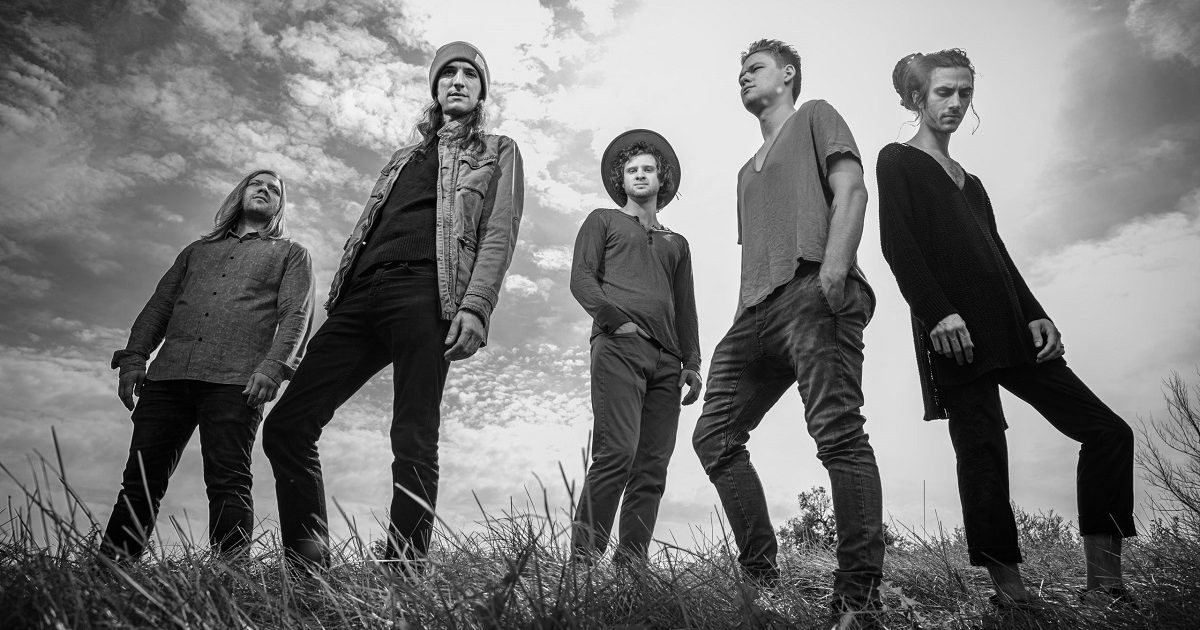
LISTEN: Midnight North, “Silent Lonely Drifter”

Artist: Midnight North
Hometown: Bay Area, California
Song: “Silent Lonely Drifter”
Album: There’s Always a Story
Release Date: July 23, 2021
Label: Americana Vibes

In Their Words: “Here we have a folk melody reminiscent of the timeless string music heard in the Appalachian region. Lyrically simple, the tune gives thanks to the inevitable and natural balance that exists in this universe — no matter the day or the moon. I shared the tune with Grahame [Lesh] on a day off down south a few years back. It definitely still needed something on the lyrical side, and Grahame had the idea to identify each verse with different full moons in the yearly cycle. Each full moon carries a unique weight to those surviving down below — so we made a connection from each moment (verse) to each full moon.” — Nathan Graham, Midnight North

“Nathan would play us snippets of ‘Silent Lonely Drifter’ on tour whenever he would get ahold of a banjo, and once he showed me the full song I always hoped we’d get a chance to play and sing it with Midnight North. The song was close to fully formed when he brought it to the band, and the melody and chord progression were so intuitive that we latched onto it quickly when we finally started tracking it in the studio. It really came together when we made Nathan sing the melody as Elliott [Peck] and I wove harmonies around him. Now that we’ve played it live ‘Silent Lonely Drifter’ is one of my favorite of our songs to sing in harmony!” — Grahame Lesh, Midnight North


Photo courtesy of Midnight North

WATCH: Morningsiders, “This Could Be Good”

Artist: Morningsiders
Hometown: New York City
Song: “This Could Be Good”
Album: Easy Does It
Release Date: July 23, 2021
Label: Nettwerk

In Their Words: “We started writing this project after lockdowns hit, and it was starting to sink in that this was a long-term situation. I wanted to write something about aimless nights out with friends (since there were none coming up anytime soon). We knew we wanted it to feel dance-y and delicate, but also hazy as if you’re kind of floating. The song is meant to capture this rare feeling when you just can’t put a foot wrong with the person you’re with. You’re both laughing at the same things, both on the same wavelength, both equally curious about the other. When that happens the rest of the world recedes away a little, almost like background noise.

“Instrumentally, the challenge was to build an arc out of the same musical pattern that repeats throughout. The entrances and exits of the strings and drums come and go around the steady heartbeat of the tune. We ended up giving the last couple choruses over completely to the instruments, and that’s probably my favorite part of the song. I don’t have to repeat ‘this could be good’ because that feeling is just hanging in the air at that point. For the video we knew that we wanted to bring the tune to life by working with Ilya Vidrin and Jessi Stegall, who are two incredible dancers based in Boston. They totally captured a certain lightheartedness, but also the vulnerability and obsession that come along with falling deeper and deeper into a relationship. Watching them move makes the song feel less like an internal monologue and more like a feeling that is shared and nurtured between two people.” — Magnus Ferguson, Morningsiders


Photo credit: Shervin Lainez

WATCH: Brandi Carlile, “Right on Time”

Artist: Brandi Carlile
Hometown: Seattle, Washington
Song: “Right on Time” (video directed by Courteney Cox)
Album: In These Silent Days
Label: Low Country Sound/Elektra Records
Release Date: October 1, 2021

In Their Words: “Never before have the twins and I written an album during a time of such uncertainty and quiet solitude. I never imagined that I’d feel so exposed and weird as an artist without the armor of a costume, the thrill of an applause, and the platform of the sacred stage. Despite all this, the songs flowed through — pure and unperformed, loud and proud, joyful and mournful. Written in my barn during a time of deep and personal reckoning. There’s plenty reflection…but mostly it’s a celebration. This album is what drama mixed with joy sounds like. It’s resistance and gratitude, righteous anger and radical forgiveness. It’s the sound of these silent days.” — Brandi Carlile


Photo credit: Neil Krug